

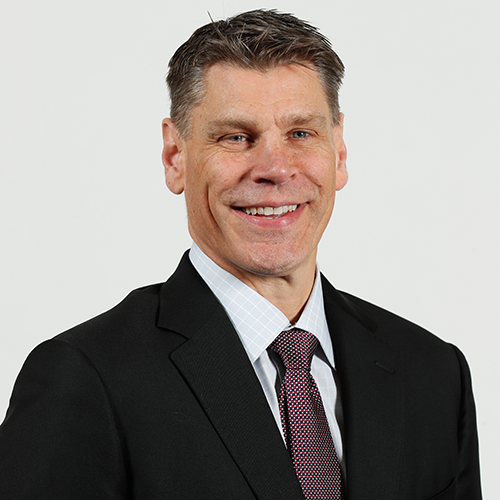
Chicago area native Porter Moser has been at the helm for the most significant moments in Loyola University Chicago men’s basketball history in the last 55 years. During his first seven seasons in Rogers Park, the Naperville, Ill. product has changed the program’s culture and reestablished recruiting in the Chicago area, all while also successfully navigating the transition to the Missouri Valley Conference. Loyola’s 50 wins over the last two seasons are its most over a two-year stretch since 1962-63 and 1963-64.
Moser was named Missouri Valley Conference Coach of the Year this year and also was selected as the National Association of Basketball Coaches (NABC) District 16 Coach of the Year after leading Loyola to the Missouri Valley Conference regular season and tournament championships and a school-record 32 wins. Under Moser’s direction, Loyola also developed and produced its first NBA player in 30 years when former All-MVC guard Milton Doyle saw action with the Brooklyn Nets this season, and the Ramblers continue to achieve at a high level academically, last semester posting a 3.1 team grade-point average.
The 2017-18 season was a historic one for Loyola as Moser piloted the Ramblers to a school-record 32 wins and their first Final Four appearance since winning the NCAA championship in 1963, along with a No. 7 ranking in the final 2017-18 USA Today Coaches Poll.
Welcome to the Athletics of Business, a podcast about how the traits and behaviors of elite athletes and remarkable business leaders frequently intersect. The real stories and hard lessons to help you level up your leadership and performance. Now your host, Ed Molitor.
Welcome to the Athletics of Business podcast and I am your host, Ed Molitor. Today welcome a man who needs no introduction here in Chicago, head men's basketball coach at Loyola University of Chicago, Porter Moser. In this his seventh season at Loyola Chicago, Porter had his most successful year with a 326 record, including a Missouri Valley Conference regular season and postseason tournament title, as well as an appearance in the Final Four as a number 11 seed. Loyola advanced to its first Final Four since the 1963 national title year. After 7862 win or over number nine, Kansas State. Loyola became only the fourth number 11 seed to reach the Final Four after LSU in 1986, George Mason in 2006 and VCU in 2011. Porter, welcome.
Hey, Ed, how are you doing?
I'm doing well. It's great. It is great to have you here. I appreciate you carving some time out of your busy schedule. How crazy has it been and has it slowed down at all since March?
No, it hasn't slowed down, but it's been a good crazy. And you know, when you're, when you're pursuing and chasing, you know, dreams and where we're trying to go to, you can't complain when you get there about everything that comes along with it. And it's been nuts, but it's been a fun nuts. That's just different going in different directions. And you know, you balance in recruiting, you're balancing, you know, development, your players are here, you know, you're still trying to develop your players, your new guys. So it's been one thing after another. But you can't complain if that's what you're chasing. You can't complain and regret it when all those things that come along with it.
So you talk about the new guys coming in and how different of a challenge is it when you have, I believe you have what, six new guys coming in this year.
Yeah, that's, you know, I've been asked that a ton and one of the things that the whole country saw is, was our unselfishness, how close knit group we had, the chemistry. People always said to me, said, man, it looked like you guys are like they were like brothers that your team was so close and that. And it was a huge, our chemistry Our culture, our connected kidniveness has been something that was a positive, but that doesn't happen overnight. You got to work at that. So this summer, I've challenged all our veterans, and, like, we have to be obsessed with getting that back. You know, I'm not talking about getting back to the Final Four. I'm not talking about winning the Missouri Valley.
We've been obsessed about our culture being connected, bringing, like, connecting these new guys with the old guys, because we're going to need the new guys. And that's what our focus has been on with those new guys getting here. And then they're gonna have to learn, like, the culture of the terminology and the little things that we do. But I think you gotta start being connected. And that's what we've been working on since they've been here, which is unbelievable.
Because I think you and I agree on a lot of things when it comes to building greatness. And you talk all the time about the process. And is it safe to say that the run you had last year, the success you had last year, was a byproduct of the process of you guys doing things the right way consistently?
No question. I mean, it's fun to look back and hear the guys and all the interviews that they did, and it would just naturally come out of their mouth talking about the process. And we just. People ask, how did. How did you not get too far into the moment? How did you reign the guys in? Because it was like a reality show. And we really just thought about what was right in front of us. There was so much pressure at heading into the Missouri Valley Conference tournament, because nowadays they start talking about first four in, you know, last four out. They start talking about that in January. And there was so much buildup, talking about the automatic or getting a bid, having to win the tournament to get the NCAA Tournament. It was a great example of not focusing too much on the end.
And the process was. The process we talked about was right in front of us, and everything we talked about was Northern Iowa, the first game of the Missouri Valley Tournament. Everything was about that. Then we. Our process was this. Game goals. We had a process from the beginning of the year that we set game goals. You know, we had four or five each game, and they varied. And the process was were going to try to win those game goals, and that's what we'd focus in on. And that was. That became part of our process. Our process was these get better tapes we had. We started out. We obviously tape every practice, and then at the next day, we start with 15 clips of Get Better tapes, and then the intangible tapes, 15 clips of the intangibles. And our process was those tapes.
And were going to go through that process. Like, even after we beat Miami in the first round, you have a small window to prep for Tennessee. And were all. Guys were like, all right, let's watch our Get Better tape. They wanted to see what we could do. Getting better from the Miami. And whatever your process is, I think it's so important for those guys to believe in the process, to be so focused on that. And our guys was our process. We had a certain way about our process, and it was taking care of business of what was right in front of us.
And it was, you know, and you said this back in October, I believe it was in a press conference before you even started playing games. And it might have actually been right before you started practicing. You said, this team is fun to watch for that very reason. I mean, you. You guys always seem to make the extra pass. You always seem to stretch the defender to where you need to do that. But it was such a fun team to watch, and it was so selfless. And that was the thing. They seem like a very coachable team. And that's not just something that all of a sudden, guys show up on campus and, hey, I'm a coachable player. But I think the way you guys recruited had a lot to do with that.
Can you talk into the fact that you recruited people that were winners and that knew how to win?
Well, my journey as a coach, I've been a head coach at three different schools, and all three had to be a turnaround. They were in last place, you know, Little Rock, Illinois State, Loyola, all we had to have a turnaround. And this was, you know, some of the things we sat down and wanted to bring in. Guys that have won before, come from winning programs, winning cultures, because they've tasted it. We sold them on coming in and doing a turnaround. You know, my experiences at Creighton, you know, were the first team to win 20 games three years in a row. We turned it around. We had a group of people that, you know, wanted to leave their mark, leave their impact, and we sold that here. But it's not easy. You know, it's got to be a relentless pursuit, a consistent, persistent pursuit.
But these guys, you know, let's just look back at Ben Richardson and Dante Ingram, two of our seniors that just graduated. They both won state championships from their prospective high schools. They got here Their first year we won 24 games, won the CBI championship. That was. Just becomes who they are about winning. Over their four year span, they won 89 games. That's the most in a four year window. In 30 some years they won the championship, but it was about the we, not the me. And you just saw that. And then when you have a group of guys that feel like that's when it really became special. And they were unselfish and they didn't care who got the credit and all those things became who we are. And that was. You know, I just think when you. I've said this many times too.
Culture is a big word for me and I've used it and I've lived it of building this program up. But if you want culture, you got to hire culture. Hire coaches that are going to be passionate about your message and you got to recruit culture, you know, recruit guys that it's ingrained in them and who they are is that they want to be as part of something bigger than themselves. They come from winning programs. And that is something that we believe and I believed in as the leader.
Of the program, which you've done an incredible job and it's almost made your job more challenging when you talk about hiring the right coaches. Because, you know, when you were an assistant for Rick and when you were an assistant for Tony at Texas A and M and for Rick at Wisconsin Milwaukee, you were always one of the most highly respected coaches, assistant coaches in the country because of your tenacity, because of your work ethic and really because of how passionate you were about developing relationships with the community kids and their coaches and their families. But as you hired assistants and you did a great job mentoring them at Loyola, there was a time when your budget was tight. It wasn't easy to keep great assistance.
How were you able to, you know, lose an assistant and then turn right around because sometimes their departure was not very. It wasn't very timely. Right. And how were you able to go ahead and bring someone else on board that fit into your culture because you weren't going to compromise what you were trying to build?
Well, you know, hiring assistants is. I have, I didn't. I've always stayed true to what values I wanted as an assistant. You know, I didn't want to just hire a guy to get me a player. I've never felt that I had a coach tell me at a young age, don't hire somebody if you can't get in the car and drive three hours with them. You know and be able to shoot the breeze and talk to them and feel like, you know, that you have a connection. And I've stayed true to what I wanted. I wanted assistants that want to become head coaches. I have assistants who have to have an energy level to recruit, an energy level to coach, a work ethic, a bounce to their step.
And I like guys that have had been in good programs, but I've always stayed true to that. And some people hire for various different reasons. And I've stayed true to. It's just like my recruiting model of the kind of guys I want to recruit. And I've stayed true to that. What I wanted out of an assistant and took my time with it. You know, it's a hard process, but I've never rushed it. And because I think it's huge. I think hiring is such a big part if you're going to have an extension of yourself. Because I can't be around all the time, I've got to trust. I always had this as a mantra.
I've always said to myself, I've got to be able to walk by my assistant coaches room, see him meeting with a player and have 100% trust that message is the same message that would be coming out of my mouth. So when I hire assistants I go, would I feel that way walking past his office, seeing him talking to a player behind closed doors and trust that. So there's certain things that I've just stayed true to. And I think it's so important to have that extension of you, especially when you're building culture. Because it is a 247 all year round relentless pursuit of having your vision and your culture spread. And it can't be a one man job, it can't be just me and my assistants have been crucial in this, you know, quest for where we're taking this program.
And it's not a one man job. And the thing is, I don't think when people look from the outside into the college basketball world or whatever sport, regardless of the sport, but they understand how you're actually the CEO of an organization. Let's be real, college basketball, it is a business and you are the driving force behind that. But building the culture is 24 7. And something that people talk about that you've done an amazing job with is you and I talk about books all the time and is building the culture. Every person that has anything to do with the organization, I mean it could be anybody and it could be the people that work in the front office of your basketball office. It could be the people, the students. I mean, I don't know if I've ever seen.
I don't know if I've ever seen a coach so committed to getting people in the stands when there are so many challenges to do so. I mean, that took a lot of time and energy, but you absolutely drove the culture with the students, with the administrators. You recruit in a landscape. I mean, you changed the landscape of Chicago recruiting, Chicago basketball. How hard was that to do? Or was it something that you just absolutely embraced and had fun doing?
No, I mean, a little both. I mean, you know, when you embrace, to start with, the latter part of it, of embrace and having fun doing, you know, it's like driving towards my goals is fun for me, even the tough parts, because, you know, of my vision of where I want to go. So, I mean, it's been documented. I've done everything from pass hot dogs out on game day during the lunch hours, to telling people that we have a game that night. Freshman orientations come through all in the summer. The incoming freshmen come through orientation. There's six different sessions. For, like, last five to six years, I've spoke at all the freshman orientations coming in there and like, begging the freshmen to jump on board the athletic department. I've done everything.
I've gone to dorms, I've gone to, you know, heck, I dressed up in the wolf costume, you know, the Loyal Rambler mascot costume, and did a, did the wobble dance in front of the students. But, you know, it's just, it's been a relentless pursuit for that. And I think that's something that it's a brand like, I've had a vision of what I want Loyola basketball brand to be. You talk about the business side of it, the CEO side of it. It's marketing, it's selling your brand. It's having people buy into that brand. And, you know, I have a brand that I want is high energy. I want a high character. I want. I want people to feel that we've done it the right way. That's the brand I want.
And there's nothing been more satisfying to me than when the Loyola University about, you know, took out an ad in the Chicago Tribune. It was a full page ad and it had the brand. It had my picture with myself and six student athletes in their cap and gown. And it talked about all the record numbers that we had this year, the champion. And it had an emblem of us being tied with Harvard for the number one graduation rate. In the country for three straight years and the final four emblem. And to me that was a brand. It showed you that we're of excellence in the classroom and on the court. And that's the marketing part of it. That's the relentless pursuit of your vision. That is it hard? Yes, it's hard.
But it's also fun for me because I've been driving towards this and I've just in my mind the fun part about it, when you go through the hard parts is visualizing getting to that point. That's, that's fun for me, you know.
And what you just said about the full page ad and the Tribune. Okay, first of all, you got about 25 minutes ahead of me in the podcast because that was going to be a question of mine, which is awesome. But you know, and for the listener that may not know, Porter and I go back just a couple years, a couple few. We play together at Creighton, we coached together for a couple years at Texas A and M. And I consider him not a best friend, but a brother. And I've seen this whole thing sort of evolve and build.
And I'm going to tell you've had a lot of cool tweets over the last few years, but I don't know any that I've enjoyed more than when you put the ones up when everyone's in their cap and gown and you're taking the picture of them on graduation day. And then when I see their parents tweet and I see the kids tweet and I see you tweet because I think that speaks volumes to the authenticity of your program and of your mission and of your brand and of your culture. But here's my question for you. How challenging was it to stay true to that when you are in a business? I mean, let's be honest, as our late friend Bill Gleason said to me once at a final Four, he said, eddie, basketball is a great game, but it's a shitty business.
Okay, how challenging has it been for you to stay true to that when you know there shortcuts you could have taken or they're no, you know, like. And we'll get to the Illinois State situation and going to work for Rick there you had options for easy way outs but gosh darn it, you stay true to what you believed in. How hard was that to do, Porter?
Well, there's always things that you can, you know, shortcuts that you could take. But you know, one of the things of when I got the job here at Loyola is that the people here, I knew they were going to be patient with me because we both were agreeing, the administration, myself, that, you know, I don't want to bend on the type of young man we're going to bring into Loyola. You know, the academic side, getting student athletes, ones that have a passion to, you know, get a degree. I don't want to spend my time, you know, 24 7, dragging kids to class and, you know, I don't want to put them in a position where they can't succeed here. But also, I put my name on that. I put my name on the people.
It reflects me if I bring student athletes in here that don't give any hoot about the academic part, and that's. That reflects myself. It reflects our program. And I didn't want that as a place at Loyola. This place deserves. I'm not doing anything but continue to add to the academic reputation here. And I wanted to show how athletics could be a positive for the university. And because sometimes academic schools, they don't, you know, they don't want that athletic to grow like that because its reputation is athletic, is academic. I've had this vision and I've sold it to them as we can do both. We can do both. Athletics can be a front torch to the university. And what we just witnessed at the Final Four, I mean, you know, our admissions people just said, it'll never be the same again at Loyola University.
It'll never be. That's like a powerful statement.
Well, it is. What about next year, though?
Next year's admissions?
I mean, are they telling you're not going to get back to a Final Four?
No, they meant like, the admissions. The admissions will never be the same.
Yeah. No. Did they give you some numbers on what? The, like the increased applications and all that? Because I was following that, but I never saw a final stat on that.
Yeah, it's. I mean, obviously this incoming freshman is the highest it's ever been, but that's been going on for two or three years, though. @ Loyola, it's not just this year, but it's at record numbers. And they have all these numbers about how many hits has been on the website. That's like. Like up like 500% on everything. It's like. It's. It is out there, the numbers, and they're. They're staggering. Eddie, it's really cool to see.
So let me ask you this. That buy in. Okay. How hard was that to get on the academic side? Because it's an Amazing. It is amazing academic institution. And, you know, that's a battle that's been going on for years before you even got there. How hard was that for you? And then when did you really turn the corner?
Well, I think, you know, one of the things is. And here goes my recruiting hat is I think it's a positive that we have small classrooms. You know, it's a Jesuit school. There's small classrooms. But having a Jesuit education, myself at Creighton, one of the things that I just. It wasn't hard for me because there was a certain type of person I wanted to be here. You know, I tell you, one of the breakthroughs was this. When I got the job at Loyola, there was one Illinois player on my roster. And. But there hadn't been a Chicago Public league player for 11 or 12 years, and it was David Bailey. So it went David bailey, then, like 12 years loyal of Chicago, did not have a Chicago player, which is crazy, from the Public League there.
So one of the things that I found was hard right out of the gate was. And I said this to my administration, I said, do you know that within certain circles of Chicago, certain demographics, Loyola was perceived, their academics was a negative to the student athlete. And they looked at me like, what? I said, yeah, I'd go recruiting into the Public League, and they'd be like, oh, man, it's too hard for some of these kids. That was a perception that I had to break down right out of the gate. So then I've started, you know, pursuing like, God, you're going to get this much help, small classrooms, you know. So Milton Doyle was our first Chicago Public League player. And Milton graduated.
And that's one of my most rewarding pictures I have in my coaching career is Milton in his cap and gown, bear hugging me with a big smile on his face, and his mother, Lisa. But that opened the door. You know, people like, man, you can go there. Then down to Ingram just walked with his cap and gown. Lucas will walk in his cap from gown Williamson from Whitney Young. So these. These young kids, that. That perception, that barrier that is too hard. No, you can get it on. It's a positive. You can get an unbelievable degree at Loyola Chicago. And I just think, should people get. You know, they'd never let someone shortchange them in athletics with their perception a student athlete. So I was like, why shortchange yourself of what you think you can do academically? I mean, you can do this.
And that was a barrier that I broke down early. And Milton Doyle was The first that helped me break it down.
And is it safe to say that. I don't want to say the floodgates open, but is it safe to say that now there's that understanding out there, that part of the process, like you're over that hump, so to speak?
Yeah. It isn't a negative anymore. I mean, people look at it as a positive because nowadays you got it. I mean, it is once you hang up those basketball shoes. And you know, everybody nowadays, Eddie, I mean, no matter who I'm recruiting right now, wants to play after college. I mean, it's. You're not going to find. Very, very rarely you're going to find anybody. You go into my locker room right now, all 13 scholarship players want to play after college, but it's not realistic. But you got to sell them on. Someday you're going to hang up those shoes. And when you do, you have to have a great degree. And it's not hard anymore, you know, breaking down those, you know, talking that we talk about that openly. We talk about, you know, the connections of having a loyal degree.
And so, you know, that's been nothing but a positive now.
Well, it all goes along with what were talking about earlier, getting the right people on board, you know, and it's not that people are your biggest assets. It's the right people are your biggest assets. And I remember being at an event this fall, this past fall, before the season in Naperville, and you said something, it was pretty. It was pretty interesting. There's all these folks sitting there waiting to hear about the team and waiting to hear about the season, and all you could talk about was how high character kids, how many high character kids that you had. You know, you would talk about a recruit you brought in, but he's a better person than he is a player. And the thing is, you're not paying lip service to that.
How big of a difference does that make to you and your ability to coach them and teach them and help them get to the next level. And not so much next level in terms of playing pros after college, even though that's what everybody aspires to now. But get to the next level, academically, socially, family wise, you know, growing as a man. I mean, how much of a difference does that make?
Well, it was fun to see the journey of. Like you mentioned another thing earlier in the podcast about how I said in a press conference before the season that were fun to watch and like the whole country kind of saw it at the end and saw the character of our team, but it's something that this has been by design with us. This is something that we have seen for a while. And I just think when you're doing a business, when you're in a position to hire people and in a position to have people working for you and with you, that there's a difference between successful people and non successful people. And that's part of it when you hire and you recruit is you want to have those traits of successful people.
And I've looked at that in the recruiting process and I've started with character. I just think in the world of college athletics and in anything, you're going to go through so many ups and downs, so many twists and turns, so many roadblocks with adversity. And I believe in my soul that how you handle adversity, you know, defines your character and defines you. And that's why I've set out. I wanted high character guys. I have these, as you know, this from the way we run the program, from when were with Coach Brony and Mrs. Brony, it's a family atmosphere. We have them over at my house. I have four kids. I have four kids that have come through my basketball camp. Two of them are still going that the players are around so much.
I wanted that family that were, you know, that I'd want them to be around. I want them in my house. I'm not going to sacrifice bringing low character people into this into the program. And that's been from the jump and every year now, we're not bending on the character, but we're getting more and more talented to kids with character. And that's how it's grown. And, but that's been by design. Eddie, is character's at the root of a characteristic of the recruiting process in.
How much time do you spend to them? And you, yes, you have high character kids, but we all, you know, everyone's going to have challenges, everyone's going to have flaws. How much time you guys spend about. Because I really do work a lot with my clients on, you know, how you act and how you behave away from the office is how you're going to perform at the office. So you know who you are off the court is who you're going to be on the court. Do you spend a lot of time talking to your kids about that?
Yes. What we do is we have a bulletin board and you walk in our office and every time a student athlete in the country gets in trouble or something, like it's on espn and we put. Make a copy of it, we put on the board, we talk about it. Look, this kid, you know, he did this, did that, what he did, ever. We don't have a million team rules, but we have a picture in our locker room. It's all of us in a circle, interlocked arms with Sister Jean saying a prayer, just like the whole country saw we did before every game. And it said the three rules. It says, number one is protect the team. That talks so much. We've talked about what that simple statement means. It talks about, you know, like, we just talked about it the other day. We.
About protecting the team and about, you know, off the floor. If you're doing things you're not supposed to be doing, if you're. You're not protecting the team because our reputation, our brand and what we stand for now, does that mean our guys aren't going to make a mistake? No. Just like how, you know, with your own family, with your own kids, your kids will make a mistake. But you achieve what you emphasize. You achieve what you emphasize. And we are constantly emphasizing doing things right on and off the floor. If you put. It's like your homework and your grades, you know, if you put your name on something, make sure it's the best damn product you can possibly do. And we have talked about that with our academics. I'm so darn proud.
Every sport at Loyola, all 13 Division 1 sports, had a team GPA over 3.0 this spring semester.
That's insane.
All 13 sports had a team GPA. We missed so much class due to the NCAA run, but we talked about it so much. We were communicating with our professors. When we got back, everything was about the way we operate, is do things better than it's ever been done before. And if you put your name on it, have it be representative you as a man. And that's been something of how we've talked about and this. But it's been protecting the team. That goes a long way of talking about things off the floor as well.
Right, right. And you're preparing them for life after hoops, and you're preparing them for, you know, whatever field of endeavor they want to go in. I mean, whether it's business, whether it's medicine, whether it's. There's law. But you see that and it's just. You could tell by the way they communicate. That's another thing. The authenticity to me is unbelievable. And I believe authenticity comes down to honesty plus integrity and not just being Honest with yourself.
But when you watch you guys play, the way those kids and the way the coaching staff and everybody communicated to each other, and I had the good fortune to come to watch you practice a couple times, and I saw you practice the day before you went down to Bradley this year at the end of the year, and it was a rough practice, and things weren't going that well for a period of, you know, little stretch of time, but they still listened to each other. They may not have liked what the other one had to say, but they listened. Or they may not have liked what you were going to say to them because they were making mental errors, but they listened. And let's go back to how we started this conversation to in the huddles. Okay.
In the Final Four run during the tournament, I've always believed, and I believe it was Coach Kasheski that said this in his book Leading with the Heart, that the head coach has to be the face that his team needs. And a team absolutely is a direct reflection of the head coach. How was it that you and your team were able to keep your composure and win so many close games? And is that again, I go back to the byproduct. Is that a byproduct of all the really cool things that we just talked about, doing things the right way?
Yeah, there's a lot that goes into answering that question. And, you know, one of the top things is a lot of times, you know, people use those terms, hey, he's an old school player, or all that, or kids nowadays are softer. You can't get on this kid, and you can't, you know, it's not true. Kids want to be coached. They want to be pushed. But now more than ever, they got to know love and trust is there. And that's where I think some people nowadays, they just, oh, I can't get on this kid. But they don't spend any time building a relationship, building that love and trust. And I think that's what Dante Ingram knows I can get. I can push Dante as hard as I can push him, but he knows I love him. He knows I'll do anything for him.
And I think that's some things where in adversity, you know, I can hold people accountable. I always told you knew my father, Ed, and you know, he's CEO of Moser Enterprises, but he told me something at a young age that I told tell my players all the time when they walk into this program. It says, my dad told me, he's like.