

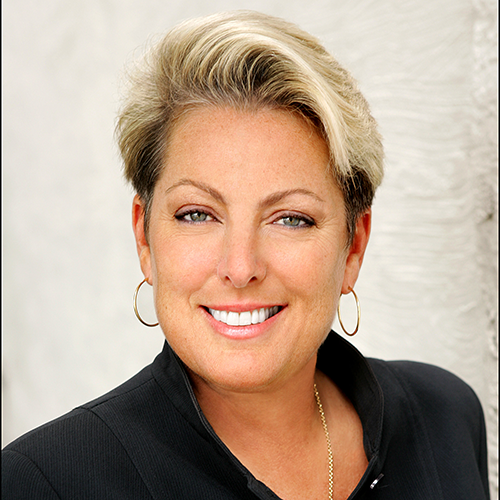
Dina Dwyer-Owens is the brand ambassador (Head Cheerleader) of the Dwyer Group. America also knows her for participating in CBS’s Emmy-winning hit reality show “Undercover Boss” and the first-ever special episode “Undercover Boss: Epic Bosses.” Dina is a certified franchise executive with more than 35 years of industry experience, 15 years as CEO of Dwyer Group. That business, headquartered in Waco, Texas, now includes 20 service brands and supports franchise organizations under the umbrella brand Neighborly in the United States and Neighbourly in Canada. Neighborly is a community of experts who repair, maintain, and enhance properties united under one platform to better meet the needs of today’s consumer. Collectively, those service brands and more than 3,200 franchisees make over three million customer calls a year and account for more than $1.7 billion in system-wide sales.
In 2010, Dina served as the chair of the International Franchise Association (IFA) in Washington D.C., the world’s largest advocacy group for franchising as a business format. She also spearheaded the reintroduction of the IFA’s VetFran program in 2001, which now includes some 645 franchisors that offer franchising financial incentives to veterans of the U.S. Armed Forces. More than 6,000 military veterans now own a franchise through the VetFran program.
Dina is the author of two books: Live R.I.C.H. and Values, Inc. that both share her global message for living and leading with a proven code of values.
Dina is married to Mike Owens and they have two wonderful and entrepreneurial children, an amazing daughter-in-law and son-in-law and praying for many grandchildren.
Welcome to the Athletics of Business, a podcast about how the traits and behaviors of elite athletes and remarkable business leaders frequently intersect. The real stories and hard lessons to help you level up your leadership and performance.
Now your host, Ed Molitoe. Welcome to the Athletics of Business podcast and our guest today is Dina Dwyer Owens. Dina is the brand ambassador, head cheerleader of the Dwyer Group. America also knows her for participating in CBS's Emmy winning hit reality show Undercover Boss and the first ever special episode Undercover Boss. Epic Bosses. Dina is a certified franchise executive with more than 35 years of industry experience, including 15 years as CEO of Dwyer Group. Located in Waco, Texas, Dwyer Group now includes 20 service brands and supports Dwyer franchise organizations under the umbrella brand Neighborly. Collectively, those service brands and more than 3200 franchisees make over 3 million customer calls a year and account for now get this $1.7 billion in system wide sales. Wow. I cannot be more excited about the time we are going to spend together today. Dina, welcome.
Thank you, Ed. I am delighted to be with you today.
Dina, it is so good to have you and I appreciate you taking time out of your incredibly packed schedule to talk with us here today and tell us a little bit about what you have going on right now with the Dwyer Group and the growth that you've had. Because it's been pretty amazing.
Well, yeah. So just. Oh gosh, how do I do a quick synopsis on the excitement at Dwyer. Right now the company has just grown. Beautifully edited. We're 37 years old. The past four years we've grown at about 125%. And that has a lot to do with our CEO Mike Bidwell and this amazing team of people that is broad. So it's not just our employees but our franchisees as well who are working hard to lead with our values, which I believe are the foundation for our success at Dwyer Group. And as a result, we've achieved something that we set out to achieve when we founded the company in the early 80s and that's to have one place consumers can go to buy their services from professionals.
So when you think about your home, you want to be able to have people come in that you can rely on that are professional and licensed and can be trusted in your home. And so we have launched a new brand called Neighborly, a community of home service experts where our now, Gosh, we have 20 franchise brands, but now the 13 North American brands are part of that neighborly community. So you are. Any of your listeners can go to getnaberly.com and learn more about how easy it is to secure professional service providers to come into your home and do everything from your plumbing and drain cleaning to taking care of your grounds. So that's probably the most exciting going on at Dwyer today.
That sounds like a lot of work. What was that process like and how did you as an organization make maintain your focus on what you are currently doing and then coming up with this amazing thing?
Well, it all starts with having clarity of our values. Who are we and how are we going to conduct ourselves? So since the founding of the company in 81, our founder, Dawn Dwyer, began the company with a clear code of values, but they were more emotionally based belief systems. Things like loyalty adds meaning to our lives. But he really did a wonderful job holding us accountable to those beliefs when he passed away of a sudden heart attack in 1994 after just taking the company public, by the way, our biggest fear as a leadership team was how do we keep these values front and center? Because we knew it was the values who really created the culture that we have today. So we created what we call the operationalized code of values under theme of living rich.
And the rich stands for respect, integrity, customer focus, and one of my favorites, having fun in the process below each one of those areas. And we have very specific values. And I'd say that's the foundation for our success that's helped us get where we are today.
Deanna, I love the H. Have fun. Do you believe that people are more successful because they absolutely love what they do, or they only having fun when they're successful?
I think people are more successful because they love what they do. And I do a class here at Dwyer Group to all of our new franchisees and associates called design your life. And one of the first things I say, and it's all about really helping people get clarity about what do you want out of your life, what do you want to be remembered for? And how is this career at Dwyer Group or this franchise business that you own as one of our franchise brands going to help you get there, it should just be the vehicle to help you get there. And I'll say to the whole audience, if you don't love what you do, and there's always going to be parts of what we do that we don't love. I get that.
But if you don't love most of what you do, then go find something else. We are blessed to live in a free country where we can choose what it is we want to do with our time, money, and our energy. And I'VE had a few franchisees who have decided they wanted to go do something else. For example, one franchisee ended up selling their business because they wanted to be missionaries, and that's a wonderful thing. So a couple of team members said, dina, quit saying that because we don't want to lose our franchisees. We're not losing anybody. If you think about it, if they're not happy and really enjoying most of what they're doing, they're not best for us either. So it's good for everybody that people do what they love well.
And that's awesome that you have that perspective. You're so big on values and you have this amazing workbook, Create youe Culture. And by the way, that's going to be free to all of our listeners. You can just go to our website. You can download that for free, as well as Dina's websites, which is Dina, which are. I should say, Dina Dwyer. If you want to check out the Dwyer Group, you can go to dwyer group.com. But this workbook, I went through this. It was phenomenal in number one. Step one, clarify your values. When. When Don passed. And I want to mention that, you know, Don was your father who founded the company. That had to be a very challenging time emotionally and also trying to keep everything on course.
When you first sat down and worked on your values for Dwyer Group, what was the list that you came up with? How many did you first come up with?
Yeah, we came up with a lot. So were trying to take his original values and say, how do we take what he believed that he indoctrinated into us? It was part of our DNA. And how do we create accountability statements? So how do we take these values and make them into something that regardless of whether Dawn Dwyer is here or I'm here or Mike Biddle or current CEO is here, it shouldn't matter. It should be that it's just a way of life for each and every one of us. So how do those guys need to look? So we came up with a very long list. And by the way, we did have some help. Ed, I'm a big believer, and when you don't have all the answers, don't be afraid to ask for help. So we did hire a consulting firm.
Dwight o' Neill was one of the gentlemen that was very helpful and helped us narrow down what are the key values that really are going to make a difference in Dwyer Group and really do align with Dawn's original belief system? We started with a lot and we ended up with a lot. So we ended up with 15. And my friend Ken Blanchard would say, that's a lot, until I reminded Ken that we're really talking about four core values. Respect, integrity, customer focus, and having fun. Yet it's critical to me that you have value statements or accountability statements under each one of those core areas so that people understand exactly what it is that you mean by respect. We're dealing with all kinds of people in our business. Right. Of all ages, all backgrounds.
You might define respect even a little differently than I might define it, Ed. So we want to make sure we're clear about what we mean by respect, and that's why we have 15 specific core values.
And how much participation did you get from franchisees on the core values? Or was that just executive level or who was all involved with sitting down and putting that list together?
Yeah, it initially was six of our executive team members who were part of the committee. But the one thing we had to do was to get the buy in of all the associates before we even thought about taking it to the franchisees. So we actually gamified the values we came up with. We took them to our team, about 125 employees. This is back in 1995, 1996. We said, here are the values that we believe will take the company to the next level. And, employees, we need your help. So we said, for the next 90 days, we want you to study these values. And anytime you catch a management team member violating a value, we want your feedback. And the feedback came in the form of a simple beep. So it said, sounds silly, Ed, but it worked so well.
Even if these employees never studied in their lives, let me tell you, they studied these values. We gave them on a laminated card that they could fit in your pocket. And we said, catch us doing something wrong. And it was comical. We were so bad at these new values. For 90 days, it sounded like the Roadrunner was literally racing through our buildings.
That's great. That is great. Now, so your mantra. Can we talk a little bit about that step two of the culture?
Yes. In the case of Dwyer Group, we came up with Live Rich. And the rich is not about money. Yes, we're in business to make money, but the rich is really all about how we treat people first. So it's about treating people with respect and dignity, providing a quality product and service. And when we do those, well, guess what happens? The profits seem to follow, and we've proven that over the last 37 years.
Yes. Yes, you have. Can we talk about your growth and how. And I Don't want to ask if it was difficult to keep your core values the same because you have grown exponentially. How have you kept that same feel of what your dad started many years ago?
Yeah, that's a great question. And people have told us over the years, the bigger you get, the harder it's going to be. I think it comes down to something very simple. If you're clear about your values, make sure that you're aligning yourself with the executive leaders, the employees, the franchisees that believe in what you believe. And what I find is so many people come to us just because of our code of values. They want to be part of our code of values. And so as we've grown the business from, gosh, you know, way back in the 90s, were doing very little in earnings per share as a publicly traded company. And today we're doing close to 2 billion in system wide sales as a company.
I think the secret to our success in keeping this culture, and it's not the same exact culture because as you get bigger, things do change. They have to change, but the core values haven't changed. And I got the greatest compliment the other day from one of our young employees who works in our marketing department. She said, what I love about the Dwyer Group is it's a big company doing a lot of great things, but it's got a small company feeling. And that to me was a huge compliment.
That's huge. Almost like family and not almost like family. It is family.
It is family.
Yeah. That's great. Well, what you personally, as a growth happened and it was just as I said, exponential. What was your big, what were your biggest challenges personally, as you grew your brand, your business, the Dwyer Group? What were the biggest challenges that you faced?
Yeah, one of the first challenges was when I was invited to be the president and CEO of the company. I was honored. We were a publicly traded company at the time. I was 35. See, was I pregnant with my second child. Anyways, there was a lot going on in my life.
There's a lot of moving pieces.
Yeah, I thought I would be honored to have this opportunity to lead the company. But how do I make the time for that in my young family when I was already traveling like 90 days out of the year away from my husband and young kids? I did something called a time study. Ed. And this might be something. Your listeners will appreciate it. Anytime that somebody complained about not having enough money or not having enough time, our founder would always say, well, why don't you face the truth and do A time study in the case of time. And so that's exactly what I did. I for two weeks tracked what I was doing with my time increments of 15 minutes and put everything down.
And at the end of the two weeks, I went back and I highlighted those things I did not need to spend my time on. And what I uncovered was about 15 hours a week of mostly household related activities that I was doing that I could delegate to a housekeeper. So that was my solution that allowed me to take on the role of president and CEO. But something even more challenging happened when I accepted that position. A group of our top franchisees and our Mr. Reuter brand in particular did a straw poll and they voted against me being the permanent president CEO. That was quite a shock. And I thought, wait a second here I'm trying to do something good for the company and then I've got people that are pushing back and saying, no, we don't want you to be the president CEO.
And when faced with a challenge like that again, I'd like to go back to that term of facing the truth. I asked to meet with the head guy who was leading the cause for not making me president and CEO. And I asked to meet with him personally. And I said, bruce, could you help me understand why you don't believe I should be the permanent president CEO? Two things he said, number one is you've never run a company this size. So when I faced the truth on that, Ed, he was right. I had never run a company that size. Number two, he said, you're not a plumber. He was right again. So when facing the truth, I had to admit he was right about both of those things.
But I also had to know who I was and why I felt I could be the best president CEO for the company at the time. And I said, 60% of the people that we do business with, we're in the franchising business of service businesses. 60% of the people that answer that door and we come into their home is the woman of the house. Who better to lead this company at that time in our history than the person who's the customer? And I asked him to give me six months to prove myself. And if I didn't prove myself, I'd be the first to step away and find the best person to lead the company. He became one of my greatest cheerleaders.
By the way, I was going to ask because that's a pretty powerful statement. And the way you said at it and the way, you know, the way you shifted your thinking One of my. One of my favorite things is the things I looked at changed when I changed the way that looked at him, when I changed the way I looked at him, and when you were able to shift his mind to look at it that way, that had to be a huge aha moment. I mean, if I was him, I probably would have high fived. You would have said that.
Yeah. Well, he was sweating. He had a lot of sweat drops on his forehead. So I think he finally thought, oh, my goodness, there's some truth to that.
There is so much truth to that. And how. How long did you hold that position for DeNA?
15 years with an amazing team around me. You know, I. I know you like to talk about lessons learned, and one of the greatest lessons I learned was actually listening to motivational tape programs when I was a young girl. My father was brilliant at making sure he put good things into our minds so that we would have good things come out. And listening to Ziglar and Robert Schuller, and one of the greatest lessons was when Dr. Robert Schuller said, we can't be good at everything. Great leaders know that, and they surround themselves with people that are better than they are and those things that they're not good at. And so, you know, 15 years of being the CEO, I just happened to be, again, the head cheerleader for the company, even back then.
But I was surrounded by this amazing team of people who were so much better at so many things that I was. I was good at a couple of things, and they were good at everything else.
Was that hard for you to do personally, or did your father model that so much that to you? And we say this all the time, it was just a way of life. It was just a no brainer for you.
Initially, it was annoying. I was a teenager. He's like, I love the transcript. We're going to be listening to this. It was cassette tapes back then, Ed, so you might not remember cassettes, but I do. So we'd have to listen to the cassette tapes six times. So that was, you know, repetition's a mother of learning. And then at the end of the week, he would ask us some questions about the particular, you know, cassette we listened to. And if we could answer his questions, at least enough that he knew he listened, we'd get an additional allowance. So it became a little more attractive when he started to incentivize us. But I really did not understand the power of what he was doing until I got much older. And I look back and I think, thank God.
He understood the power of possibility thinking and positive thinking, and he indoctrinated that into all six of us.
Our dads were quite similar, except I never got the allowance boost. So kudos to them.
He figured it out.
I actually have Ziglar sitting here on my shelf. That was my dad's back in the 70s.
Wow.
But in what? The other part of that question that I meant. Was it hard for you when you first had that position? Was it hard for you to say, okay, I know my strengths, and I know what I'm not real good at. Here's who I'm going to surround myself with?
Not really. I didn't find it very difficult at all. In fact, my mother says I'm a master delegator. So I just know there are people that are just so much better at things. And I find that it's very painful when I try to do something that I'm not good at. Not that I can't learn certain things that I'm not good at, because we all can learn certain things, but I had to look at my unique abilities and say, how can I best serve the company? And I found that using my unique abilities was the best way. So I really didn't have to struggle with that. I know some people do, but I really didn't. And I, man, boy, did I surround myself with some amazing people. And they're still. Gosh, most of them are still here today.
That's great.
One of them is a CEO today, so it's really worked out beautifully.
Now, is that something you work with your franchisees on? Can you talk a little bit about how. Because you folks are very intentional and very diligent about your training. So with the franchisees, is that something that you talk about?
Yeah. Some people aren't clear about what a franchise company does. And what we do is we take what's most important in business and we create systems around it so that those systems can be replicated, so that franchisees can achieve great success on proven systems. And so one of the systems is to help them understand leadership. We have a first day of basic training. I mentioned that I teach a class called Design youn Life, but many of our executive team members teach classes that day, and one of them is specifically on leadership and recognizing that we've got to surround ourselves with people who can complement our strengths and weaknesses.
What are the biggest challenges that your franchisees. And I know it'll be different geographically and which franchise they are, but when they first buy in, when they first say, okay, I'm going to pursue this dream. This is what I think. I have a compelling vision. I know they're going to equip me with the systems and the processes I need. What are the biggest challenges? Is it the ramp up to actually being successful? Is it the frustration? Is it the challenge of actually embracing failure, growing through adversity as opposed to getting through adversity? What do you find are the biggest challenges?
Yeah, fear is one of those things. False evidence that appears real. I think so many times people let their fears get in the way of their success. And so one of the things we have to help them understand is what are the key things you need to start with to make sure that you get off to a successful start as a franchisee. So I would say one of the biggest challenges is getting out of your way. People have to get out of their own way and recognize that we don't need to make this any harder than it is. Let's just follow the system and having the discipline of putting the system in place, listening to their coaches, because every one of our franchisees has a franchise coach assigned to them and following through and implementing the systems.
If they implement the systems, they will have success, Ed. And it's just being disciplined about that process of implementing the systems that is phenomenal.
There's so many lessons wrapped up in that last answer. And let's get back to fear, though. To start with that, do you believe personally that there's something to a healthy dose of fear? In other words, that it's okay to be afraid? It's what you do with it. Can fear motivate you or is that a negative motivator?
It depends on how you take it. Right. And because I was grown up on possibility, thinking and positivity, I think when I'm afraid, I pray. First of all, I work hard in my faith life and trying to make sure that I rely on God when I'm faced with fear and recognizing that at the end of the day, this too will pass. So I think many times and again, it depends on people's. Their thought processes. I think it is a motivator because it challenges you to prove that you can overcome it, whatever that fear may be. If it's a physical fear, if you're on a sports team, or if it's a. Gosh, it's an emotional fear that has to do with your peers and how your peers may see you if you fail at something.
So I think it has so much to do with how we talk to ourselves and belief in ourselves. But I would say that I think probably fear sometimes helps me better.
I work with our clients all the time on that. And I do believe if you are scared or if you have fear, but you are able to dial into your self discipline of your processes and your systems. Okay. Like we're talking about, I think all that does is just. It just raises the level of self confidence which eventually is going to lead to self realization, which, speaking of that, it has to be pretty fulfilling. When you hear, and obviously you're such an enormous company, you don't hear all of them, but when you hear the success stories of all your franchises and franchisees, I should say, how fulfilling is that for you?
It's why I get up and do what I do every day. It's just the mission. The mission of Dwyer Group has remained the same over the past 37 years. And that's to teach our principles and systems of both personal and business success so that all people we touch will live happier, more successful lives. And I can't think of a better way to get up every day than to think about what we do is to help other people have a better quality of life. Whether it's our employees, our franchisees, or the end user customer, we're all about helping people have a better quality of life.
That's amazing. Now, Dina, could you. And you said that so eloquently, could you say that again? Because for our listeners, if folks that may not be in, so to speak, I believe we're all in the service industry, to be honest with you. But for folks that may not be in, quote unquote, the service industry, if they operated their business with that mentality, how much better off that we would all be. Can you repeat what you just said? Because I just really want to nail that and really drive that point home with our listeners.
Yeah. In fact, I'll break it down. So it's to teach our principles and systems of personal and business success. So the first part is teaching our principles and systems of personal success. So when you think about our core values, that is a system for personal and business success. Right. When you get clarity about your values, you have a system around keeping your values front and center. In the case of Dwyer Group, anytime we have a meeting of three or more of our team members or franchisees, we actually review our values. Sometimes all 15, sometimes we'll focus one, maybe one that we need to get better at. The first class that I teach again to franchisees is all about principles and systems of personal success. So the second part is the principles and systems of business success.
So that's all those systems that each one of our franchise brands has put together that franchisees then are trained to. To implement in their businesses so that they too can have a great level of success. So they teach our principles and systems of both personal and business success so that all people we touch live happier, more successful lives.
I love that. I love that we live in such a world now where our personal life and our careers blend, they mesh. And everyone talks about balance. And let's talk about that, because you obviously have a few different balls in the air that you're juggling. Number one, a, do you believe in such a thing as balance? And two, what is your approach? And I know you talked about the time study, which I love that.
Yeah, I think you can have great harmony, which is, you know, balance of sorts. It's not always going to be completely balanced because things can happen in life that are out of your control. For example, I've got an elderly mother and love spending time with her. And, you know, so there are times when my Wheel of life, I call it the Wheel of Life. Right. So you take the six areas of life and you basically measure how you're doing in each area. There are times in my Wheel of Life is very balanced. But let's say she has a stroke all of a sudden, that wheel of life can get shaken up a bit because I'm going to go spend time with her and make sure that I'm doing everything I can to support her as she overcomes a stroke.
But I can bring my life back into balance once we get past that critical situation. So I think it's about being intentional and looking at your Wheel of Life and we can make that available to your listeners. Ed, if you'd like, I could add that to my website as a free download for them. The Wheel of Life exercise, because that's an eye opener. Anytime I do a Wheel of Life exercise with our franchisees or employees, it just identifies where you have flats, where's the wheel not moving so smoothly? And what has to happen is you've got to look at that and say, so in order for me to get, let's call it time with my family, I've got to give up something in another area of life.
So in my case, I financially invested in getting a housekeeper so that I could have more free time with my family. So it was an investment from one spoke of my wheel to another spoke, and that gave me better balance. But you've got to be intentional about it so many times I find people kid themselves, they say they just don't have enough time again or they just don't have enough money, but they don't even know where they're wasting their time because they're doing things that they've always done. They don't even see it anymore. Like the guy who goes and golfs every Saturday and Sunday thinks he's working and he doesn't have any time for his family. Well, take a closer look.
Are you really working on Saturday and Sunday golfing or is that just something you love to do and you're avoiding spending extra time with your family?
Right. And I love the word intentional. I love that. And back to that time study you were just talking about again. When you did the time study, were you surprised by anything when you had the 15 minute increments?
I was shocked that I had 15 hours a week that I was spending on those kinds of things that I could easily delegate to somebody else. And at the end of the day, did my family even care if the toilets were clean? Ed? I had to ask myself that. My kids wanted time with me. Right. They didn't even care if the toilets were clean. But I cared because I need to have a nice, you know, nice household.
Yeah. And the way I went about it, when I launched our business, excuse me, our business was I attached, you know, a dollar value to my time. So whatever the exercises were. And it went back to Stephen Covey, you know, the seven habits.
Yeah.
And I had the four quadrants. And then I would figure out, okay, if I am creating relationship that's going to develop a business partnership or whatever would be, here's what this value is. If I am just doing admin work, you know, low dollar amount. And I did a similar thing with the 15 minute increments and I was blown. I was actually very disappointed in myself. To be real transparent. I couldn't believe the amount of time that I wasted. But like you said, I thought I was doing the right thing. Which, which leads me to ask the next question. We talk in business all the time about key indicators. Right? What, what are some of the key indicators for you personally when your wheel is getting out of sorts?
Key indicators? Well, whether it be physically feel as good, if you're talking about those kinds of things, you know, anytime my will of life is out of sorts, I'm not as happy. Usually there's what I call icky feelings. Right. The icky feelings could be everything from a bit of frustration, anger, even depression because I am kind of annoyingly happy. I'm a very happy person.
That's better than the alternative, though.
It is. But for some people, it's annoying, but it's when I. When I'm not feeling myself or I get up in the morning, I'm just gung ho for the day. Usually it has to do with my will of life being out of whack, and usually my will of life is out of whack because I'm not living up to some of my own personal values and what I call the rules or rituals that tie to those values. What are the behaviors? What are the actions that I'm supposed to be taking? Habits that maybe I'm not doing as well on, and that's causing me to have lack of balance and feeling a sense of ickiness.
Can you talk into the rules and rituals? I love that.
Yeah. One of the things that I teach during the Design youn Life class for our new franchisees and employees is what are your personal values? I want people to have clarity about their personal values. The Dwyer Group's code of values work in every area of life, so don't get me wrong, but everybody's got their own personal set of values, too.
Sure.
And so I help them get clarity about what are your personal values? Then I say to pick the top five. What are your top five personal values? And then what are your rules or rituals? What are the habits you have that support the fact that value is truly important to you? And then I go further and I say, what are changes you might need to make to those rules or rituals? Because sometimes we're still practicing an old rule that's not benefiting our relationships today. And this is a silly example, Ed, but I remember when my husband and I got married, and my rule for happiness, frankly, was the bed had to be made. There might be listeners who appreciate that, but the bed had to be made before I skipped off to work feeling happy. And then we got married.
Sounds good.
Yeah. And he was the last one out of the bed. So I changed my rule to the last one out of the bed has to make it. And it wasn't getting made. So we'd start arguing, as in newlyweds, about the stupid bed not being made. And he's like, really? Do we really? Is this that important? And I had to say, you know what? I need to change my rule. And if I want the bed to be made, it needs to be me making it, because this is not something that Mike worries about, and he's not good at it. And today, of Course, I have a housekeeper who comes in five days a week and makes the bed, and then I have to make it on the weekends. But that's an example of rules and rituals.
Sometimes we need to make changes to loosen up rules that aren't benefiting our relationships or our lives. Sometimes we need to tighten the rules. Sometimes with teenage kids, for example, I find that they actually like rules. They actually like to be held accountable, even though they might complain all day long. At the end of the day, when your son tells you, mom, thanks so much for not letting me go with that group of guys to that particular restaurant that serves alcohol. I'm so glad you didn't let me go, because I really didn't want to be there. So sometimes we have to tighten our rules.
Right? Right. And is it hard to. Because you have so much change around you. Right. In your business, in your industry, there's so much change around you. Is it hard to come home and actually have a presence of mind, be where your feet are and say, you know what, I need to do something different around here. Even though things are going real well, they can go better? Is that hard to have that awareness? Is that a challenge?
Change is always a challenge. Right. For most people. And so what I thought of as you asked that question was talking about my mother earlier. She's in her early 80s, and she needs my time, and so that's a change that I need to make. So one of my targets that I'm working on is to do a better job of giving of my time. It's so easy for me to work at. I happen to love what I do. I happen to love touching people's lives and sharing this message of how values can really make an impact in your world, you know, whether you're a business owner or single mom raising. Raising kids. But I find it very hard to just be still and spend time with somebody. I love my mother dearly, but I have to be honest.
It's hard to hang around the house for four or five hours and really not achieve anything other than being with my mom and loving her, which is probably the greatest achievement in my day. But it's a shift of mentality of what is success. And success really is loving the people. I mean, I wouldn't be here if it wasn't for her and letting go of the stuff, the to do list and saying, what are the things that are most important that I have to do as brand ambassador Dwyer, and do those really well and then be okay spending this other time in what we call Change.
Wow, that's really powerful. And that is a big mind shift. And speaking of mind shifts, what has been your. I'm sure there's been hundreds of them, but your biggest aha moment in your career and your journey, what has been one of your. And if you can't name one, could you name a couple? Because our listeners and we have a lot of business owners, CEOs, sales folks, entrepreneurs, you know, people who are growing people are achieving success. They know if they could do things differently, but they're afraid if they make. As we're talking about, they make that change or they take a step back and reevaluate that maybe the trajectory of their company will stall, so to speak. But what are some of the aha. Moments that allowed you to, even when things were going really well, make a change so they could go better?
Yeah. One of the things, and I don't know if you would call this naha moment, but for the 15 years that I was CEO and president of Dwyer Group, I had a really good habit. I was part of the strategic coach program, and I had a really good habit of making sure that every 90 days I got away from the business. And I took a look at my personal and my professional targets, and I spent a full day working on that. So it was just really revisiting every 90 days, what are my personal professional targets, and then rewriting them. Right. And making notes of progress. And sometimes they would change drastically. Other times it would just be, I'm just going to continue to work on this and get better at it.
But in that process of having a coach, I also got the confidence to say it's okay to not be CEO, to not want to be CEO anymore. It's not what I'm best at somebody else is better at this stage of our company's growth. And I can continue to do what I think provides the greatest value for Dwyer, and it's okay to do that. So it's being surrounded by people who can help you get past the fear of letting go of maybe what you think your identity is. Because I think that happens a lot to leaders. Right. We think when we don't have that title or position anymore, all of a sudden we're losing our identity, and we're not. We need to evolve.
It's part of life, and part of having fun in the process, too, is allowing that evolution and, you know, realizing that whatever seeds you planted in that last chapter are gonna. Are gonna bear amazing fruit. And now it's time to do something new.
There's so many great points in that. And you talk about having a coach and kind of letting go and taking a step back. And so many folks, their self identity is their title or what they do for a living or who they are in the business world or their career. Can you talk a little bit about not just personally but overall, the value that your franchisees see, that your employees see when they have a coach? Because you and I both know in the old days, people like, oh, they have a coach, something must be wrong. But we both know that when you have a coach, it is because you are starting to figure out what is right and how you can grow and how you can even achieve more success.
Oh, I wouldn't be where I am today if I had not had the strategic coach. Not just the strategic coach, but the mentors that I have surrounded myself with who have helped me better. So for our franchisees and our employees, in the case of the franchisees in particular, they are all assigned a franchise coach. And, and many of our franchisees, not all, probably maybe a little under 50% of our franchisees are what we call conversion franchises. People are already in our trades businesses who want to convert their business to become Mr. Electric or Mr. Appliance because they've already been in the appliance repair business, for example. But business is so complex today, life is so complex that our franchisees are looking for the coaching because they want to have success sooner than later.
So if somebody's starting a business from scratch and they don't have any kind of coach at all, as we know Ed, they're going to have a lot more learning than others and it's going to be probably more expensive. So when people think about investing in a franchise and there's so many industries that are represented by franchising today. And you do your homework though, on the franchisor and make sure it's a company you're aligned with culturally. But people come to us again recognizing that they need somebody to teach them these systems. I'll never forget a franchisee who had run his own business for many, many years. He had nine locations of glass repair shops in Montana, and for two years he'd been talking to glass doctor about becoming a franchisee.
And he's thinking, yeah, you know, I can do this, I can figure out my own systems, I can do this myself. Why do I need them? Two years later he finally decided, I cannot. There's no way I'm going to come up with these systems myself. I haven't done it Yet I've been doing this for more than 10 years. He came to basic training and he asked to meet with me and he said, I'm just here to tell you, Dina, I thought that I could create those systems myself. He said, but I needed the glass doctor to help me really accelerate my business growth by having these systems that are already in place, that are already proven and bringing them into my business. And this guy really follows our code of values too.
He just loves the code of values and attracts people to work for him that are driven by the code of values.
That's so cool. Because the code of values, it just empowers you, doesn't that?
It does. And it also helps with decision making because we're all going to be faced with difficult decisions in business and in life. And what I love about the code of values is that once people really internalize the values when faced with a challenge in business or frankly in their personal lives, what should happen is the values come to mind as you think about the solutions to the problems. And sometimes it's painful. Sometimes our values drive us to make a decision that forces us to maybe spend some money, maybe we have to give a customer money back, for example, but it's the right thing to do. So the values really just help streamline your decision making process.
It does. And it's a huge support foundation for when things are going well, but also when things are going not well. And I know we have to wrap up here, we're running out of time, but I want to kind of end with one thing. We're always growing, we're always learning. The most successful people are constant learners. And you just said something in terms of when people give up, when they throw in a towel, so to speak, is when they're doing what you tell them to do, but they're not achieving that instant success. And everything's a process. Right. And everything is about your systems inside of the process. How do you with what you teach your folks, how do you get them to have the discipline to maintain their focus, to maintain their core values?
When things aren't going very well, what do you talk to them about in terms of their mindset?
Yeah, I think it comes down to when there is a big challenge is first helping them identify the cause of the challenge. What is the cause of the challenge? And then identifying action steps on how we can overcome those. And it's not something we can normally do for them. Right. It's going to be up to them to follow through. So I think it's first helping People understand, why are you faced with this challenge, what's causing it and what are the solutions to getting out of it or progressing from the challenge and then coaching them through that. So in that case, probably more frequency of interaction is going to be important because people need that touch. They need that, again, frequency of touch and encouragement and also accountability.
Sometimes people don't follow through, Ed, because they're procrastinators and they need a professional coach, somebody who's going to help move it along. And at the end of day they always appreciate that at the time. Sometimes it's like, would you quit? You know, reminding me that I have to do this. But at the end of the day they say, thank you so much for reminding me and making sure I stay on the course.
Right. And it makes it more productive, it makes them more successful. And to me it makes them a better leader.
Of course.
Yeah. Well, that, Dina, it has been unbelievable. I hope you've enjoyed yourself half as much as I have because you have left our listeners with some incredible and incredible amount of gold. I just thank you for everything. And again, you can find both the Design youn Life and the Culture Free Handbook.
Right.
The Create youe Culture workbook, I should say, on Dina's website. But it'll also be on the athleticsofbusiness.com website with the show notes. We'll have a link to direct you right there. And Dina's websites again, dinadwyerowens.com and if you want to check out the dwyer group, dwyergroup.com Dina, thank you so much for joining us today. We're all better for having you, Ed.
You're a gift. And I'd like to just say to your listeners too, we're always looking for great franchisees. We do still have what we call some white space. So some opportunities where we need great values based franchisees. And they can actually find that information out too@dinadwyerowens.com if they just want to learn more about what is a franchise and what are the opportunities. We're always looking for great people. And I know that's who your listeners are. There are people that are learning and growing and want to better and that's exactly who we'd like to have as part of our company. So thanks again, Ed. God bless you.
No, Dima, I appreciate it. And you know what, on that note, is there a certain franchise that right now is looking a little bit more than the other one? Are they all about the same?
Oh, every franchise is a bit different. So when people consider investing in a franchise, it comes back to, again, what would interest them the most. So we have Molly Maid, which is a housekeeping company. So if somebody really cares about leading a team of women who take care of people's homes to make their quality of life better, that's an option. Then you can go all the way to five star painting, which is a very different business where you work with subcontractors as your painters, but change people's color so you change their world through color. So we have such a variety of franchise businesses. I think it's best that they just kind of go online and check out all the different brands we have and see which one might be most interesting.
And then we'll be happy to have a non obligatory conversation about whether there's available territory where they'd like to be.
That's awesome, Dina, thank you so much. I appreciate it. And you know, cheers to continued success.
Thank you. Thank you for listening to the athletics of business.
Be sure to give us a rating.
And review so we know how we're doing. For more information about the show, visit.
Theathleticsofbusiness.com now get out there, think, act.
And execute at the highest level to unleash your greatness.