

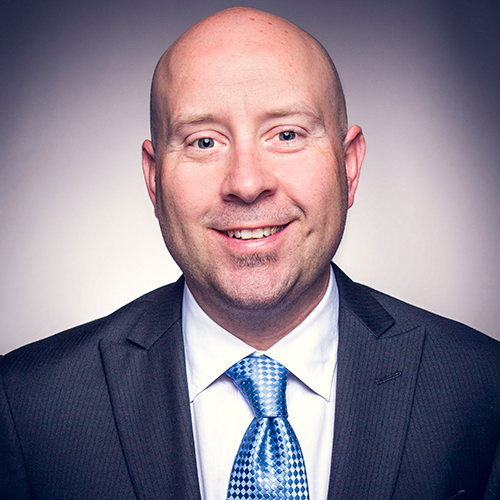
Cody Foster is one of the Founders of Advisors Excel. In 2004, after leaving a corporate job to partner with David Callanan to be independent financial advisors, they realized the support system for independent advisors was dramatically insufficient. So, in 2005, along with Derek Thompson, they formed Advisors Excel with a goal of building a world class support structure for independent financial advisors across the country. Today they have over 500 employees and are responsible for over $7 Billion in annual sales. Their success in achieving this has led to their story being featured in Success Magazine, Darren Hardy’s book “The Entrepreneur Rollercoaster” and Tony Robbins’ #1 New York Times bestselling book, “Money, Master the Game.”
Cody graduated from Washburn University in 1999 and has made Topeka his home ever since. He is a big believer in the future of the Capital City of Kansas, and has been a lead investor and developer in quality of life initiatives including The Cyrus Hotel, The Pennant, and Iron Rail Brewing. He currently serves as the Chairman of the Greater Topeka Partnership and was one of the five founding investors in Top Tank Topeka, a unique entrepreneur challenge patterned after the successful TV show, Shark Tank. As much as he enjoys business, his real love is family. Cody and his wife Jennifer, a Topeka native and fellow Washburn graduate, have been married for 16 years and have two children, Dylan and Ella.
Welcome to the Athletics of Business, a podcast about how the traits and behaviors of elite athletes and remarkable business leaders frequently intersect the real stories and hard lessons to help you level up your leadership and performance. Now your host, Ed Molitor.
Welcome to this episode of the Athletics a Business Podcast and our guest today is Cody Foster. Cody is one of the founders of Advisors Excel. In 2004, after leaving a corporate job to partner with David Callanan to be independent financial advisors, they realized the support system for independent advisors was dramatically insufficient. So in 2005, along with Derek Thompson, they formed Advisors Excel with the goal of building a world class support structure for independent financial advisors across the country. Today they have over 500 employees and are responsible for over $7 billion in annual sales. Their success in achieving this has led to their story being featured in Success magazine, Darren Hardy's book the Entrepreneur Roller Coaster and Tony Robbins1 New York Times best selling book, Master the Game. Cody graduated from washburn University in 1999 and has made Topeka his home ever since.
He is a big believer in the future of the capital city of Kansas and has been a lead investor and developer a in quality of life initiatives including the Cyrus Hotel, the Pennant and Iron Rail Brewing. He currently serves as a chairman of the Greater Topeka Partnership and was one of five founding investors in Top Tank Topeka, a unique entrepreneur challenge patterned after the successful TV show Shark Tank. As much as he enjoys business, his real love is family. Cody and his wife Jennifer, a Topeka native and fellow Washburn graduate, have been married for 16 years and have two children, Dan, Dylan and Ella. Cody Foster. Welcome. Thank you for joining us, my friend.
Hey man, thanks for having me. So I'm excited to be here. I'm excited that our buddy Stephen, our mutual friend, connected us and he said great things about you and excited to be on here and sorry you had to read that long, boring intro.
Well, it's a phenomenal intro with a lot of good stuff layered behind it, underneath it, around it, you know, all over it. So we will get to that good stuff. But I really do appreciate you taking time out of your schedule to join us.
Yeah, no, thanks for having me.
So Cody, you have a great story. I mean, you really do. And I want to get that story to our listener. And can you share a little bit about your journey? I mean you're all the way up here, you know, climbing the mountaintop, but you have a, you know, a great story to share. How did this, where, how did you get to where you are today. Where did that all begin?
Well, so it's a long story that I'll try and tell really quickly. And it's one that I've actually come to realize, kind of reflecting back. I grew up in this really small town in western Kansas. And when I say small town, single stoplight, 27 people, my graduating high school class. So, yeah, really tiny town. But, you know, I grew up around entrepreneurs. My grandma and grandpa moved from Southern California to western Kansas just a couple years before I was. So I was born and raised out there. My parents followed them out there and my grandparents have always been entrepreneurs. So they bought a ranch out there. They were farmers. They bought three restaurants in town, kind of side by side. They own the cafe, the pool hall and a pizza place there in this small town.
So I grew up around just watching them run these businesses. But I say, like, being able to look back now. My journey really started around fifth grade. My grandparents, after about 40 years of marriage, got divorced, sold off a few of those businesses. My grandfather moved to another town about half an hour away, but my grandma kept and ran that cafe. So, you know, picture your classic, like, small town Kansas way. You know, the cafe in town kind of the place the farmers gathered in the morning and, you know, had a busy Sunday after church crowd. And I watched my grandma run that for four years. And I was the oldest grandchild, so I also spent a ton of time kind of side by side helping her there.
Have done pretty much any duty you can do from, you know, washing dishes to running the cash register, so giving you that as a little bit of a background. I went off to college, 1995, here at Washburn University, which is in Topeka, and was majoring in public relations. My dream was really to work for a major league baseball team doing either like sports marketing or pr and so was going to school for that. In my junior summer, I get a call from my mom. And the call, I really wasn't expecting what she said, but she told me that my grandmother was losing the cafe and that she was going to be declaring bankruptcy. So. Yes. So you have. You know, being the oldest grandchild, I like to say I was probably her favorite, but. But she was also my favorite.
You know, I'd spent so much time with her and I'd always been proud watching her kind of run this by herself. Well, you know, I didn't really know this at the time, but she didn't know how to run the business. She had always worked in the business. You Know, my grandpa done maybe more running and operating the business. And she just made bad financial decision because she didn't really know any better. And it was this kind of just series of bad decision after bad decision that led to pretty much financial ruin. So I'm a junior in College. My grandma's 64 years old. She's single because she's been divorced, she's bankrupt, in the sole source of income for the last 30 plus years of her life has been taken away from her. So I made this decision. I didn't know anything about money.
I came from a family without much money. I was the first person in my family to go to college. I just didn't know anything about money. And I decided that I wanted to learn more about money. And I say all the time, I made this commitment that what had just happened to my grandma, I didn't want to have happen to anyone ever again. So I did a couple things. Within a few weeks of that phone call, I went and got a job at a bank. I didn't know really where to start, but where I grew up, the bankers had a bunch of money and the bank was the one that had taken her cafe back. So I went and applied and got a job as a teller and then got promoted into this customer service role.
And my senior year of college, worked full time, worked 40 hours a week at the bank and went to school finishing up. And the other thing I did that's led to some of the other projects I work on today is I started studying real estate because it seemed like every person that I kind of met through college, some of the successful alumni, a lot of them had real estate as this common thing. So I bought a little crappy house my junior summer and I flipped, you know, fixed it up, had a few roommates for a few years, and then flipped it and just have always been into that. So fast forward that a little bit. Working at a bank, getting ready to graduate. David, who's my partner today, were roommates in college.
He said, hey, this company I work at is hiring a few people you got to come interview. I think you'd like it. You know, making pretty good money. I left out in that story. I had met Jennifer, who is now my wife, you know, that year, so wasn't looking to move away anytime real soon. And so I went and interviewed and I didn't even know what they did really. And what they did is they worked with financial advisors and they sat in between the financial advisor and all these insurance companies. And the advisor would call, this group is called pbs, personalized Brokerage Services and say, hey, here's what my client needs. What's the best product for them? And we would go pick from all these different companies we represented and help them find products.
So really kind of aligned with what I was trying to do at that point, which was learn more about finance and money. And so went to work there straight out of college. First job was there with Dave and Derek at the same time there for about four years. Hated going to work every day. So Dave and I decided, let's just leave and go be financial advisors. And so we did, thinking it would be really easy, and it wasn't. We went from, you know, this organization with 150 employees that if you needed something, there was someone to do it to. Just the two of us. And were responsible for everything.
So throughout the course of that first year and struggling a little bit as a business owner, and I say all the time, like having these flashbacks to my grandma's failure and not wanting to duplicate that, you know, really decided we've got to focus on becoming a better business owner. And as were going through that process of how do we become a better entrepreneur? I think saw this opportunity within the marketplace that there's really nobody helping these advisors truly understand how to run and grow and scale a business effectively. Or at least we couldn't find anyone. So we started Advisors Excel, which initially was going to be kind of the side company to our advisory business, but just it blew up. You know, Derek joined us in 05. We started that February 1st of all five with the three of us.
We did about 40 million in sales that first year. This year I think we're at about 550 employees today. Thirteen years later this year, we'll probably actually do about 8 billion in sales. So it's just been this crazy growth that really has always been spurred, I say, from. From that commitment I made of I don't want, and you know, we're working with like my grandma, that they own their own small business that happens to be financial services, but they also support people like my grandma. They're the ones that are there advising them and helping them with the financial decisions they make. So everything for me is kind of driven off of this desire, I guess in some ways making things right, making sure what happened to her, it doesn't happen to other people, as long as I can help it.
Now. There's so much, there's so much in that story. Thanks for sharing that. The first thing that pops up into my mind. Well, there's a couple things. A, you're continuing learning. I mean, you're learner, you're a sponge. You're always trying to learn. But the other thing is you were driven by the lessons you learned from what happened from your grandma. But did it come from a place of fear or just come from more of a place of awareness to, hey, man, I can't go down that rabbit hole. I got to stay, I've got to stay on top of certain things. And here's what I. Here's what I don't know and here's what I need to do to figure that out. I mean, was it ever. Did you ever come from a place of fear or was it the other way around?
Yeah, I don't think it's ever been from like truly a place of fear. You know, with that said, I think there is such a thing as a healthy paranoia of not wanting that. Right. So in some way, shape or form. Yeah, there's some aspect of, I don't want that to happen to me or to people that I care about. Right. So I've been really poor and then had wealth, and having wealth is better than being really poor. So don't let anyone, you know, tell you otherwise. So I think from the standpoint of I want to make sure that doesn't happen to me, there's a little bit of fear factor of that. But I would say, you know, now it's a little bit more of a sense of opportunity and it's a sense of obligation to continue to build upon what has been built.
You know, the thing that changes a lot is when we started and it was just the three of us, you don't have a lot of people counting on you. Well, Today we have 550 employees, you know, whose families count on us. We have 650 financial advisors that we work with and truly support that count on us. So I think as much of it now as this obligation and this desire to continue to build upon what's been built and not let people down probably drives it as much as anything.
Let's speak into that a little bit. So here you are, the three of you start this out and you're going to build this business. You're going to scale this business. When did you realize that, hey, we've got something here. This is, this is working, you know, and now this is the real deal. And what do we do from here? And how challenging was it to stay true to your foundational beliefs? You know, your foundation purpose.
So I think a couple of things that I'll try and unpack there for you. One, and I didn't mention this. When we started the company, we had these four founding principles. We built the company. I won't go into all of them, but we built it on these four things that we saw going on within the industry that we wanted to do differently and what we wanted to be about and stand for. We still talk about those, the new advisors we bring on today. Right. So they're still the driving force behind how we've built the organization and why we started and what we do. So we've done a really good job of trying to remain true to those four things. From that standpoint, the organization has changed.
I say all the time, like, when we started in 05, I don't know why some of those advisors even chose to work with us. We really didn't offer, you know, what we offered is me and Dave and Derek would talk to you. That was kind of it, you know, today, you know, when you look at what we offer an advisor, it's just dramatically different. I think today it's easy for someone to say, like, yeah, why wouldn't I want to do business with them? So. But a lot of it goes back to, we sold on, here's what we're going to be about. It wasn't necessarily, here's what we are. It's like, here's what we want to build, and it's going to be built on these four foundations. And people bought what were selling. Right.
They believed in us and they took a chance on it from that standpoint. So I think those foundations are really important to anyone. You know, what it is that you want to be and stand for. People ask me this a lot. You didn't ask this specifically, but when we started the company, we never envisioned it looking like it does today. And I don't think most people do. Right. Like, I was literally just reading an article on Jeff Bezos and how he started, and he had big plans. But I guarantee you've gone back to when he started Amazon. He didn't envision it looking like it looks today.
So I think one of the, you know, one of the things that's probably the most important thing that I've learned is that you constantly gotta be recasting that vision and have this constant focus on growth, and you'll probably be unrecognizable if you do those things well, you'll be unrecognizable in five or 10 years. And that's really kind of our story. Right. We never thought it would grow to this. Well, now I still think we're on a scale of a 1 to 10, like a 4, where we're going to be, just because I think there's still a lot more opportunity out there.
Now, the four founding principles, are you intentionally not sharing those? Are you willing to share those?
Yeah, super happy to share them. So the first one was.
That was one of the best I've had since I started this podcast. Hey, I've got this treasure full of gold, but I'm not going to open.
Yeah. So I'll share kind of what they mean to us. They may or may not be applicable to other people, but. So our first founding principle was less can mean more. And let me explain real quick what that means. In the financial services industry in general, the approach has always been sign up as many people as possible. Some will make it, some won't. Right. And when. When I left the company that I had worked with before, we had 40,000 financial advisors or insurance agents that were licensed with us, and we would have almost 5,000 do some business with us each year. And the goal was always sign up more, sign up more. You know, we're only getting 10 or 15%, so we need 100,000, and then our business will double.
What never made sense to us is if you were a good advisor who was writing a lot of business and really knew what you were doing, we left you alone. We assumed you knew what you were doing. So we spent all our time with these people who had never done anything and weren't very successful. So when we started, we said, hey, instead of pouring all our time and money and energy and resources into people that don't know what they're doing, why don't we just go find the ones that have already shown they're pretty dang good at this business and help them become even better? So for us, like, we only have 650 advisors that work with us, and we do 8 billion. Our old group that were with or where I worked before had 5,000. We did like 700 million. So we just.
For us, less means more. As if we find good advisors and pour all our resources into them, we thought that we could do more business, and that's proven to be the case. So that was our first one. Our second one, which will probably lead into a whole round of questions or conversations, was surround ourselves with successful people. Right? So our whole organization has been built on this idea of if you come into this organization, you're going to be surrounded by the big best advisors in the country, and we're going to create a platform, and we do. We probably get our advisors together minimum six times a year, where you're going to have the opportunity to learn from other people.
I think in my growth and development, I always talk about this idea of accelerating my learning, and I do that by, you know, surrounding myself with successful people. And, you know, if there's something that I'm not good at or a challenge that I'm having, if I can learn that from someone else and cut my learning time down, I want to do it. So that was really the second thing is we're going to constantly surround you with successful people to where you can learn and grow and develop. The third one was this business is all about prospecting, and that has to evolve. So I think we're constantly working with our advisors on what are the most effective ways to get your message out and bring new people in the door.
Then the final one for us is we say we want to always do the right thing. That's, you know, I don't talk a lot about that just because I think you either do the right thing or you don't. And, you know, after 13 years and the growth and success we've had and working with a lot of really top people, I think that's, you know, been fundamental to that growth of the organization. So, like I said, I don't know that those necessarily will apply to a lot of other people, but those are the four kind of founding principles we built it on.
Those are. No, those are four powerful founding principles. And when you look at that, when you look at the fourth one, do the right thing, and our first podcast, I, Porter Moser, had code at Loyola, and he's a good friend of mine, and were talking about something very similar. Do the right thing. But as you grow and as you scale and as things, it's like lightning in a bottle. There's a lot of opportunities to have blind spots come up to get distracted. And even though you want to do the right thing, man, it's a little bit more. You know, it sounds simple, but that doesn't mean it's easy. Did you have some challenges along the way as you were growing the business?
You know, we've been fortunate in that I say we've never had major challenges or setbacks. Right. We've had a lot of little ones, which makes it a little easier. We've never had this, like, life or death decision. That we've had to make. Right. But there's been challenges along the way just in, you know, what direction we're going to head, which way we're going to go. You know, more of our challenges are probably as the business scales, there's just, you know, going back to what I told you, there's really nothing in my background, first person to go to college, come from a family without a lot of money, you know, graduate with a mass media degree from Washburn. There was nothing really in my background to prepare me to run a 550 employee company.
So I think the biggest challenges for us have just been as that company grows and scales, how do you adapt as a leader? And that's probably been the biggest challenge we've all faced as we've grown this organization is how do you continue to adapt as a leader? Probably one of the things that people struggle with the most is when you start a company and there's three of you're intimately involved in every aspect of the business, right? To like when we started, I made the coffee in the morning and took the trash out at night. To where you hit this phase where you're still trying to hold on to everything, but you realize that's not working anymore and you're holding back all the really good people that you've hired.
So, you know, you probably heard people talk about it, but that ability to hire great people, delegate, not micromanage, let them do their job. It sounds really easy. And everyone says that's what you're supposed to do. It's really tough to do now. I've gotten good at it now, maybe too good at times, but that was a tough stretch, right? That was bigger challenges that we had. I think the idea of constantly upgrading the people that are in your leadership roles was a challenging thing. You know, we probably stuck with some people longer than we should have. And I'll never forget I was in this mastermind group for a couple years and one of the gentlemen in the mastermind group was Dave Lineager and he was the founder and CEO of ReMax.
So very similar business model to us, but I had the great benefit of being able to spend some time with someone who had a 25 year head start on me, right? And I'll never forget we were in Napa Valley. We're sitting at a place called Solosh and we're sitting at the bar having a drink and I was kind of telling him my frustrations around, you know, I just. Things aren't going as well as I think they should be. And, you know, some of these people are struggling and, you know, but they've been with us for a long time. And he looked at me and he goes, cody, I'm gonna give you the best piece of advice I can ever give you. The people that got you here, you know, you can see him raising his hand about to his chin.
Aren't the same people that are gonna take you here? And he raises his hand above his head, right? And he's like that. He goes, I wish I could have went back. He's like, there's one thing I would have done 15 years earlier. ReMax was understand that at times, your organization is going to outgrow the capacity of some of the people in the organization, and it's going to suck to make that change. But that's why you're the leader of the organization. And, you know, you see it a lot. Maybe tying it into your podcast. You see it a lot in sports, right? Look at the New England Patriots, man. They're always upgrading talent. They don't care how long and loyal you've been with that organization or to that organization. If they can get a younger, more athletic player for cheaper, you're gone.
And so, you know, that sounds cruel when you hear it, but the reason they've had that sustained success as an organization is because they're constantly trying to get better. And they're part of getting better as an organization means either your people have to grow, improve, and get better, or you have to get better people in some of those roles.
Let's talk about that right there. Because you just hit the nail on the head, and I sort of misworded the question when I said, hey, have you had any challenges? And you circled right back to it, which was perfect. Challenges in terms of keeping your eye on the four foundational principles as you grow. And here you are talking about, you know, growing and outgrowing your capacity. So how are you able to do that as a leader from a leadership standpoint? Because you're everything, Cody, that I read about you, everything I've heard about you're all about, you know, you're a servant is what you do. I mean, you. You have the servant mindset. You epitomize that. So how do you do that? How do you do that dance when, okay, we've outgrown your capacity.
I need to find something for you, but you need to understand, here's the direction we're heading.
Yeah. So maybe a few different things. One, we have had some People who have taken reduced roles and that's a tough conversation and it takes a unique individual. But what I've also found is oftentimes they're relieved because they love the company. Right? And it's not that they were bad people. They just weren't the right role anymore. It, the role had outgrown, you know, where they were at as a leader. So we have had some that have taken a reduced role and stayed here. We've had others which we've just had to move on from. Right. That wasn't going to work. You know, they weren't going to be able from a ego or personality be able to handle that diminished role or maybe demotion is a better way to truly put that.
So I think, you know, one of the things that we've done all the time learned this lesson kind of early on, just through a situation we dealt with. It's just, why not offer, if you keep in mind, maybe a long term perspective of what you're trying to build as an organization. We offer people a really great severance package if it's a situation like that. When I say that, I mean we've had employees that have been with us for years and years that were good employees. They just weren't good leaders in the role that they were in. And them moving into a new role probably wasn't going to work that we'll pay four, five, six months severances to just because in the grand scheme of things, it's not going to dramatically impact our organization or my life.
It does put them in a position to really be able to take the time to find a new role that works well for them and not, you know, have to worry about how are they going to make their house payment. So I think it's some people will take those diminished roles and be relieved by it. Others, you know, if it's not going to work, just treat them fairly. So they, you know, most of them know that they're in a little bit over their heads. I, I don't know that I've ever had one of these situations where the person's like now, I think I'm incredible at this, right? So. And it's not something like it happens one day. We've probably had multiple conversations around it.
But I think if you treat people well, keeping in kind of a long term perspective of caring about your employees and that's going to be an important thing long term, that everyone leaves those feeling pretty good, I don't know that we've ever had any of those situations that have ended really badly. And I think that's just because we've tried to do the right thing in how we've handled them.
Well. And that speaks, I mean, kudos to you folks, and that speaks volumes to the culture you built, which again, goes back to the four founding principles. But, you know, I always talked about in athletics, building a culture that you're willing to fight for. You know, let's build a culture that we're willing to fight for in how much I always felt that attracted talent and it attracted good people, you know, and how much has your culture attracted a higher level of talent to your organization?
It's, it's pretty incredible, actually. You know, so, funny story, when organization, when we left the place that we had all worked at first job out of College, had about 160 employees, were, all three of us were in different kind of management roles and managing teams and hated it, man. And it was, the culture was, we did things that you read about Zappos doing or something, right? So we had ping pong tables and we could wear shorts, and they did all these things that I say were like lipstick culture stuff. But deep down, if you asked anyone there, they would tell you they did not believe the people that owned and ran that company cared about the employees at all. So I say all the time it was kind of window dressing, right?
But once you got inside, you're like, yeah, they don't really care about you. I think we tried to do exactly the opposite. What we said is like, we care about the people that work here, and we want to try and demonstrate that always do the right thing in everything that we do. But we're gonna make our culture fit us and who we are, right? So, so we don't have ping pong tables, you know, I know you're supposed to. We don't, we don't wear jeans or wear shorts. We actually took this huge step this year to let people wear jeans. We put these kind of big stretch goals out each month, and if we would hit them, they could wear jeans. And so everyone's excited because we've worn jeans most of the year. That was the first time we've done that. Right?
So, so there's some things that, you know, you hear you have to do to attract millennials. You know, if they want to work for you, I think you have to build a culture that's kind of true to who you are. And then you're going to attract those type of people to that culture. So for us, we want people to know that we care about them. We want people to know that we're trying to build an organization that makes an impact and a difference in the world. And it's worked pretty well. So, you know, 70% of our workforce is millennials here. So that's, you know, 350 employees. We've done pretty well. We have turnover around 4%. That's, you know, people who choose, or we choose for them to leave. Both.
Last year, we hired about 85 new positions and had about 1400 people apply for those 85 positions. So, to me, when you look at the competition for talent right now, man, the culture becomes such a critical thing. I read an email this morning from a guy I follow that said, you know, people are leaving their jobs at record rates. And when you think about all the time and energy and money you spend and invest into getting someone really good at their job, you want to do your best to try not to lose them, right?
Yeah. No. And that leads to my next question. So I firmly believe in singleness of purpose. Okay. Is your organization operating with a singleness of purpose, and can you get your employees to not just buy into it, but believe into it and somehow attach. Have a personal emotional attachment to what your organizational purpose is? So from a perspective of 70% of your workforce being millennials? And again, I'm not knocking on millennials at all. Just reality. When you have someone that's not believing in what you're doing, how much time do you spend trying to get them to really buy in and believe in and to attach some, you know, some form of personal emotion to what you're doing? Or is it one of those deals like, hey, we tried. This isn't a fit. It's time to move on?
Yeah, probably a little bit more the second. So here's what I would say there. I. I think we try and be pretty purposeful, and this is maybe one of those lessons that we learned early on making sure they believe before we hire them. So, you know, try. Try and make sure that we're getting really good fits in it. And that was a tough lesson to learn. You know, for first few years, Dave, Derek, and I did all the hiring, and were so busy trying to run the business that we pretty much hired outside of about the first 15 or 20 employees that were kind of friends and family, because nobody else would really come work for us at the time.
You know, then we had to start hiring people we didn't know, and we fell into this trap of the first person who walked in that looked even remotely qualified and smiled. We hired right And. And then as we hired a few people and put them into some kind of management leadership roles, we said, hey, why don't you start doing the hiring? We're not very good. You do it well. What we quickly realized is they weren't either. They fell into the same trap we did, right? They're busy. They need this person for the role. The first person that looks semi qualified, they hired them. So probably about six years ago, we said, wait a second, man. We've got some people here that we don't think fit who we are and what we're trying to do.
So we kind of evaluated everything were doing from hiring process and implemented this for interview hiring process, which is a different person at each level, the final person being one of us as owners. So the three of us for the last five years have done every final interview before we've ever hired any. Now very seldom do, like, no, we don't think that's a good fit. But what it's. It's held everyone else accountable along the way because they know ultimately that person's going to sit with us. But the reason I bring that up is in that fourth interview, it's a little less about me really interviewing them. By this time, three different people have interviewed them. They've spent four and a half, five hours here.
It's more of using that as an opportunity to say, hey, here's what we're about, here's what we're trying to do, here's the things that are really important to us as an organization, and here's the expectations we have of employees who work here. And then we have them. They actually submit a. I don't even remember where we got this idea at, but every person has to send us a letter. So they have to take some time to think out and type out why we should hire them, why they'll be a good fit for our organization and culture, and then what they expect, what they want out of it. That's a long answer to say. Like, we try our best to make sure that the people believe in what we're doing before we bring them into the organization.
But if we do have some, you know, I think that's one of the things that we've gotten very comfortable with. I used to. I remember the first time I fired someone, I think I was nauseous all morning, you know, having to do it now, you know, I think what we realize is you can't have bad people in your organization. I don't want to use a cancer analogy because it's not as serious as that. But if you have bad people in there, they can really impact the entire culture.
Absolutely. And it goes back to taking maybe less talented people who are a better fit and have a better work ethic. And you said something in terms of.
Hey, you see that in sports, right? I mean, that's a. I mean, you have DEZ Bryant, who's uber talented, who isn't playing anywhere because everyone says he's so difficult to get along with. And I know you coached in the Big 12 for a while, so I'm a huge Kansas State fan. And if you look at, you know, what Bill Snyder has done at Kansas State with the football program, he takes these two and three star kids that are kind of overlooked by everyone and, you know, have a little bit of a chip on their shoulder and they come in and they work hard and they're great teammates and leaders and, you know, you have a guy like Jordy Nelson who's a, you know, incredible wide receiver that walked on at K State, didn't even get a scholarship offer. And so I think that's.
You see that everywhere, right? That the character of the people and then buying into what you're doing is probably more important in some way shape or form than the talent.
Oh, it's incredible. I mean, you just hit the nail on the head. I mean, we talk about, in coaching, you talk about recruiting winners and not just in the sense of winning games, but, you know, winning relationships. You know, what are you doing? What are you doing off the court? What are you doing away from the office? And you do see it. And eventually you could be very talented as Bryant. It's going to run its course. And what happens. You just said it. You're going to end up bringing your teammates down. And it's just, to me, I'll take a less talented person all day long if they've got the core intangibles. All day long.
Yeah.
And that's just, you know, it's a leap that some people, and I still don't understand it, why they don't. I don't know if it's an ego thing that they think they can get the person to turn the corner or they can deal with it. I don't know. I don't know. But.
Yeah, I heard Mark Cuban doing this interview and I was just week or two ago and they were talking about the lakers, right. And LeBron and all these people coming here. And he made this comment. He's like, before we anoint them too much, he's like, there's some interesting characters they brought together. And he's like, our rule in Dallas is you can have one knucklehead in your locker room. You can't have two or three.
Right.
Because he's like, if you have one, you can kind of isolate them, deal with it. It's like, if you got a couple now becomes a little tougher from that standpoint. So.
And that's the old. That's the old Van Dundy rule. Then you would have thought he, like, invented the light bulb when he came up with that rule. All of a sudden, everybody in the NBA started adopting that. It was awesome. Yeah, but if you think about it does make sense. I mean, look at the Bulls when they got Rodman back in the day.
Yeah.
You know, Jordan wasn't gonna let Rodman do what Rodman did. It was just, we'll just keep you out of trouble.
Well, and, you know, that's an interesting. Going back to the question maybe a few ago or. That got us on this whole topic. That's where the culture does become so important. Right. That one of the things we talk about a lot is this idea of horizontal accountability. And we tell the people that have been with us since basically day one, you have to help us maintain the culture. The two of us sitting up here at the top now, we can't be involved in all the day to day. And see, you have to know that someone's not a good fit and either pull them in line or make sure that they're identified and we get them out of here.
So I think as you build that culture and people buy into it, what tends to happen is either people adjust and become, you know, really good within that culture, like a Dennis Rodman, or they stick out so bad and, you know, the rest of the teams letting you know that you're able to identify and move them out of the organization.
I don't think there's any question. I don't think there's any question. Yeah, I'm sitting here and I still have about a thousand things that I want to ask you. I know our time is running out, so while I'm thinking about it, Cody, I would love to have you on again somewhere down the road.
Yeah, I'd love to do it.
I would love to. But I have a question, and I'm going to ask it and step aside and let you answer it. If you were speaking to a room full of, let's say, college graduates or young business people and you were to talk a little bit about your journey and give them a couple bits of advice about embracing adversity, embracing change, whatever it is, whatever were the keys to your success, what is it that you would say to them? Cody?
Man, that's a good question. Okay, so this is a group of college graduates or new entrepreneurs or something like that, right?
Yes.
Well, so a couple things maybe. One is there are no overnight successes, I think, you know, more and more with reality TV shows and American Idol and stuff like that. We've become obsessed with this idea of the overnight success. And nothing drives me crazier. I mean, it just like I hear people all the time, even today, they're like, man, you guys just, you've come out of nowhere. And I'm like, I've been doing this for 20 years. That's a pretty long, you know, out of nowhere process from that space standpoint. So I think most people underestimate how hard you have to work to become successful. And I think we tend to, you know, not just reality tv, but I think you see all these like, kind of technology or apps or stuff like that seem to go really quickly, but.
But that's just really not the case. The majority of the world is gotten to where they've gotten by working really hard. You know, the most. The most successful people I've ever met tend to workers also. So don't be afraid to work hard. You know, I think that's how you're going to accomplish the things that you're going to accomplish in life. That would be first and foremost. The second is I really do believe in the idea of being a constant learner. So one of the things that has benefited me a ton is I've always loved to read since I was a little kid. My mom always made me read. And it's paid off in that I try and read it a lot, but I also try and think about who I'm purposefully putting into my life and surrounding myself with.
You know, I used the Dave Lineage example. Being able to spend some time with someone running an organization bigger than ours that we aspire to look like, you know, in a few years, and being able to just simple conversations that you can learn from him, but just constantly trying to put really great people around me that I can learn from. So just being a constant learner is critical to that. You know, it's going to lead to your growth. I think more than anything else from that standpoint, it's just constantly being able to get better and improve from that standpoint. So that would be the second thing I would say.
Probably the final thing is the most successful people I've met, and I know there's some that don't fall in line with it, but generally speaking, also tend to be the most generous people that I've ever met. And I think generosity is a just magnetic thing to people. So being generous, you know, if. When you're starting out, that means generous with your time. You know, I think as you grow, if it means with your. Your talent or treasures, is that continues to grow. Generosity attracts people, and I think that's been a kind of a hallmark of what's really helped us continue to grow and scale. And just I like being around generous people. And, you know, it attracts those types of people into your life. So that would be a.
Work really hard, constantly try to grow and get better by, you know, learning and surrounding yourself with other great people, and then be generous.
That's awesome. That's awesome. Those are four pretty solid. Pretty solid things. And you. You are. You live and breathe generosity. And is there. What is it that you're working on right now that you have going on in terms of giving back? Because that in and of itself, what you have done could be a whole episode by itself. You've done so much, but what do you have going on right now?
Well, I try not to talk about that as much. I think there's a lot of things. You know, one of the things that we talked about a few years ago as an organization, we've kind of recast a vision for what we want to be three times now as an organization, because it's. The company grows. And there's a biblical verse that says, without vision, the people will perish. And what we realized is, you know, our original vision, we kind of hit it, and then we kind of recast this vision. Then we did that. So a few years ago, what we really started talking about is we want to be an organization that makes an impact in the communities that we serve. So that could be identified, really, three communities. One is the advisors we work with.
The second community we serve is the employees that come to work here every day. And then the third is really Topeka and the community that we live in. And so done some stuff. I don't know that it would be generous. It's done as an investment. I don't know if it's a great investment yet or not, but just trying to. We're going through a whole downtown revitalization like so many communities are. So have invested in a few different things there and built a team out that. That helps kind of run that for me. So we're opening this year, 109 room boutique hotel. We just opened the restaurant. We're going to be opening a brewery in a few months. So really trying to invest into making Topeka a great place to live and work. So that's a big one.
And then this week, my wife and I have a foundation set up. A good friend of ours, he was the lead pastor at a big church here in town, but decided to leave and come run that for us. So just trying to do a lot of things with kids, you know, and rethinking how we can make an impact there, whether that's adoption, education, different things like that.
That is phenomenal. I do appreciate, I know you're. You're humble and I appreciate you sharing a little bit and I really love how intentional you are about doing that. And if folks want to find out, if our listener wants to find out more about advisors excel, do you want to point them in certain directions?
Yeah. I mean, you could go to our website. It's advisorsexcel e x c e l advisorsexcel.com and there's usually pretty good stuff on there that you can see about us. We do a little bit of social media stuff, I think on Facebook. I'm not on there much, so I'm not sure, but I know they post a little bit of stuff on Facebook. I'm on Twitter. That's really the only social media platform that I spend much time on. So I think mine's like Cody G. Foster maybe or something. Yeah, I believe that's it. Okay. So I tweet once in a while if I find something good. I like Twitter because, man, I can get great articles and insights from people. I find it more useful than most of them, but it can also be a train wreck.
So I try not to spend much time on it. So that. That would be probably the easiest place. So.
Okay, great. Cody, I really appreciate your time. If you, if you want to find out more about this interview, go to the athleticsofbusiness.com website. You can go find out more about our group, the molitorgroup.com and we appreciate you listening. And Cody, I cannot thank you enough for your time and all the unbelievably valuable information that you share with us today. And it was, yeah, we all need motivation. Okay. But it's the inspiration part, where you move people from here to where you know in the direction that they went ahead. And I think today was phenomenal. So I appreciate your time, Cody.
Yeah, man. Well, thanks for having me. And we'll. We'll have to both hit Stephen up and thank him for the introduction.
We will. We will. Absolutely.
All right. See ya, Ed.
See ya.
Thank you for listening to the athletics of business. Be sure to give us a rating and review. Review so we know how we're doing. For more information about the show, visit theathleticsofbusiness.com now get out there. Think, act, and execute at the highest level to unleash your greatness.