
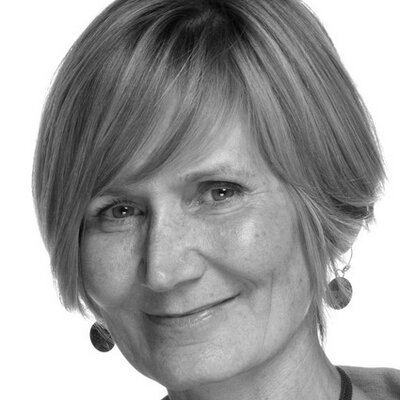
Maureen Monte is an author and team consultant who has been building winning teams for over a dozen years using her Destination Unstoppable® program. She has worked with 25 sports teams resulting in 12 regional champions, 8 state finalists, and 4 state champions. Maureen accelerates team success by reducing the roadblocks to achieving goals and objectives, both in the formal system (what you do) and in the human system (how you do it.) Her journey of helping the Cranbrook Boys Varsity Hockey team go from dysfunctional to state champions in six weeks is documented in her 2016 book entitled Destination Unstoppable: The Journey of No Teammate left Behind.
Maureen leverages an assessment that measures the internal motor of each player (Clifton StrengthsFinder®) so that coaches and teams can align that untapped talent with success. This is a diversity program that operates from the inside out: What does the internal motor of your team look like? How can you leverage that information to help the team reach its full potential?
Her corporate clients include the University of Michigan, Ally, Kellogg’s, La-Z-Boy, IBM, Huntington Bank, Bristol-Myers Squibb, and SalesForce.
Welcome to the Athletics of Business, a podcast about how the traits and behaviors of elite athletes and remarkable business leaders frequently intersect. The real stories and hard lessons to help you level up your leadership and performance. Now, your host, Ed Molitor. Welcome today's episode of the Athletics of Business podcast and my guest, Maureen Monte. Maureen is an author and team consultant who has been building winning teams for over a dozen years and using her Destination Unstoppable program. She has worked with 25 sports teams, resulting in 12 regional champions, eight state finalists, and four state champions. Monte accelerates team success by reducing roadblocks to achieving goals and objectives, both in the formal system, what you do and in the human system, how you do it.
Her journey of helping the Cranbrook boys varsity hockey team go from dysfunctional to state champions in six weeks is documented in her phenomenal 2016 book entitled Destination the Journey of no Teammate Left Behind. Monte leverages an assessment that measures the internal motor of each player. Cliftons strengthsfinders, so that coaches and teams can align that untapped talent with success. This is a diversity program that operates from the inside out. What does the internal motor of your team look like? How can you leverage that information to help the team reach its full potential? Her corporate clients include the University of Michigan, Ally, Kellogg's La Z Boy, IBM, Huntington Bank, Bristol Myers Squibb and Salesforce. Maureen, thank you so much for joining us today. I am thrilled to have you here. Thank you.
Oh, Ed, it's my honor. We go back a ways and I've always been so impressed with your drive, your ability to think about the future and see the future. Something I would like to buy from you and I'm thrilled to hear your own dreams are coming to fru. So thank you again.
They are. And Maureen, we do. We do go way back and you have always been an inspiration to me. Your story is quite fascinating. We'll share that. But for our listener. Maureen and I first met and this is going to be. It has to be a year and a half, almost two years, doesn't it?
I think it's two years.
Two years, yeah. And were introduced by a mutual friend, James Leith, and who was working at IMG at the time. And I was talking to him about different assessments. You know, what do you use here? What do you recommend? He says you have got connect with Maureen. She is a rock star. She is awesome. You know, the Gallup Clifton strengths finders. It's a home run. And so we connected. And you had no idea why I was reaching out to You. And then we talked and we chatted, and you said, do you want to learn about it or do you want to work with me? And of course, I took the easy route. I said, I want to do both. I want to do everything because I'm completely nuts. But it was fun. I mean, it was a lot of fun.
And I know we'll work together again one day, but can you tell us about your journey? Because you were very successful in corporate America. Like I like to say, wildly successful. You made a decision to walk away and jump into that whole entrepreneurial world of the uncertain.
Yeah. Thank you for the opportunity, for those kind words. Yeah. You know, the older I get, the more I realize that I've never really heard the beat. I've always had, you know, a different drum beat than normal quote, normal people. And my background is in engineering. I have a BS and Ms. In mechanical engineering. And it's true, I had a very successful corporate career, but my talents didn't come in the form of engineering, really. I was a good book engineer, but I wasn't a very good product engineer. I was, however, very good at helping disparate people on a team work well together. And if you think about teams, and the world runs on teams, right, and how few of them reach their full potential. And it's rarely talent or knowledge. It's way more often the people part, the human system that they're struggling with.
So even before I worked with the cliftonstrengthfinder, which is my tool of choice, I was at my best. I was employee of the year one year for IBM and had nothing to do with engineering. Even though my role was an engineer, it had everything to do with helping Chrysler suppliers, IBM and a small software company in France work well together. I actually moved to Paris and worked there for a year. And as an American in Paris and a female engineer, I'm almost always, like, on the outside. Even now, in my world of working with sports teams, I'm not. I'm an outsider. Right. People think I'm an outsider, and I don't care. I don't mind being outside because here's the deal. People that understand my value will work with me. And if they don't, they're not ready. So I'm okay with that.
And that was true with engineering as well. But long story short, I'm the type of person that likes to switch careers. I'm innovative, disruptive, and I went back to school and got a master's in leadership and business ethics. And part of that process included Being exposed to the cliftonstrengthfinder for the first time, I was hooked instantly. And we used it to help a capstone leadership capstone team work well together. And how many times have you worked on a college academic project where things don't go well? Right. So when I looked at their strengths, it was clear to me that this guy, were pushing him too hard. He needed more time to think. And this guy was impatient. He needed to act. And so we, I instantly began using it with people in teams.
At that time, I returned back to the corporate world and helped IBM and General Motors build a strong partnership. With that, I brought the strength finder with me. By the time I left IBM a few years later, over 15,000 people had taken the strength finder and it was never my day job. So I had this huge petrie dish of how to help leaders and teams be successful with a strength finder. And then I decided to leave. I'd had enough. I am by nature entrepreneurial and I could see that my future didn't lie where IBM wanted me to go. It lied where I needed to go, which was helping teams.
What helped that light bulb go on, so to speak. I mean, it wasn't, I don't, I want to say this the right way, not that it wasn't all you're doing, but didn't you start to get a sense that they weren't embracing what you were doing? Even though it was working, even though it was successful, it wasn't their idea.
There's two things. There's the role I had, which at General Motors was building a strategic partnership. And then I worked to build strategic partnerships with small software companies. And I love the role, but IBM does not like little companies, so they didn't. There was IBM. And listen, I'm no longer an IBM, but I'll be very clear about this. They were not a good partner to these small software companies who could add a lot of value to us. I hated that about the role. They were terrible. So I was always between IBM and a small partner, and it was never pleasant, right? And then because I'd done strength finder with all those teams on my own dime and on my own time, I was nearly fired.
So both of those things, because the project of helping a global strength movement come alive conflicted with some head of HR who of course was only there for about three months and then left. But they were after me, right? So it was time to look in the mirror and say, this is what I'm great at. My value is not valued by the corporate world in this role at this time in this age. So I left to do this full time work with leaders, teams, and then I got the phone call, as you know, to work with the Cranbrook boys varsity hockey team, talented but dysfunctional. And I spent a total of 2 hours and 45 minutes with them, defining success, creating a trust bank, refusing to let one another fail. And then we did the strength finder and we unlocked their internal motor.
Six weeks later, they were state champs. And then I wrote a book about that. That's niche Unstoppable.
It is an unbelievable book. I have my copy right here, and it is my copy that I read as you, Maureen and I can see each other, obviously. And I have all the earmarks in it. I have all the highlights and all that. And I'm gonna tell you what this. There's about six books that go with me everywhere. And this is one of those books.
Oh, my goodness.
It is an unbelievable book. And destination Unstoppable. We'll talk a little bit more about that, but can you tell a little bit? Because this is really cool, because we're gonna start. It lends well to our brand, the athletics of business. But the joy you took in working with this. It was a prep school hockey team and the joy you took with them because there's a backstory to why it was so fun with that hockey rink, is there not?
Well, the fact that I played hockey.
Well and then isn't. Didn't you grow up at their. On their home ice? Isn't that where you.
Not their home ice. I have three brothers that played hockey and my first job and to add some credibility, right? So here I'm this female, right? You know, and I walk into this team who desperately wants to win. And I took the coach's word that they were talented, right? And I'm not here to talk hockey anyhow. I don't talk brain surgery with doctors. I don't talk accounting with accountants. I talk about teams, right? So to add some street cred, I told them about my Zamboni experience. I drove the Zamboni. I wasn't very good at it, I don't think. I sharpened skates. I wasn't very good at that. I was a very good athlete and had played all sports, including I played on my brother's hockey team when they were short. That didn't happen often, but with a helmet, you couldn't tell that I wasn't.
Young, not when they were young, when they were short.
So that was really fun. To work with a hockey team. I loved it because I do love sports and I enjoyed my brother's experience.
And you are working with athletic teams now. Can you tell us a little bit about that?
Yeah, so I've worked with over 25 athletic teams. That was in January of 2015, so we're just a few years into it. I've now worked with 25 teams, I don't know, five or six state championships, multiple semifinalists or finalists. And then there's now I'm working with boys and girls teams. And so I've got some really interesting data about the internal motor of women athletes versus male athletes if we want touch on it. In the end, I really don't care if they win or lose. I personally do not care. I love that they are learning what makes them unique, how to value who they are. The strength finder measures how you think to solve problems and we can't see that. So that's one huge aspect of it. How you execute TAs, how you build relationships and how you influence others.
And so when these kids who are not necessarily very self aware, they're young, right? They're high schooler, when they get this information, they eat it up and they can also use it later in life. Interviewing for college, interviewing for coaches down the line, right?
That sort of thing, you know, And I love your blog. And you talk about how they eat it up in your blog you have those pictures of some of the youngsters that you work with and there's that little goalie. And I think it was a Moneyball article or.
Yeah, I called it Moneyball. The Moneyball moment.
Yes, Moneyball moment.
Always a moment when teams learn their strengths, that it pays off. Right? And that was one of them. And there is a kid's version of strength finder. It's called Strength Explorer. I worked with this 10 year old hockey team and it was an absolute blast. And that was a Moneyball moment where a goal had been scored on the goalie. Okay. And of course you know what it's like to be a lonely goalie standing there and somebody should have scored on you. And one of the defensemen went back and said something to him. And so I sometimes talk to them afterwards in the locker room. We've defined success. We have three pillars. It's really great what you can do with kids. There's a lot you can do, more than you think you can do with kids.
And so I said, timmy, what did you say to John? He said, I told him, don't worry about it. We Got this. We're going to get it right back. And that's great because you hear people say those things all the time. But then what's the impact on the goalie? I turned to John and said, john, how did that make you feel? And John said, confident. That is a Moneyball moment, and he needs to be encouraged in order to play his best. And that's revealed in his strengths, actually. So once you know that about him, you can support them in the way that they can then be most successful.
And what's really cool about that is the one who patted him on the back and said, it's okay, We've got this. We have plenty of time to get that goal back. He probably thought he was just being nice. He probably didn't realize that he just gave a shot of confidence to his goalie. That's what's really cool about it. You get to know your teammates.
Right. And they're young enough to have these discussions. Right. So it's a lot of fun. I'm going to work with them again this year, so I'm excited.
That is fun. Now, you just said something. You have a lot of data, a lot of statistics, because you are a data guru on the difference between internal motors of male and female. And you're talking in the athletic world. How about the corporate world? Do you see that a lot?
Oh, yeah. I mean, I mentioned to you I'm working with 90 lawyers next week. Right.
Good luck.
I know it is going to be very interesting, and I'm very excited to do it.
Absolutely.
And I can tell, you know, I've got a gender breakdown. And so there's a couple ways the data breaks down. Interestingly, if you look at STEM teams versus sale teams, sales teams. Okay. It shouldn't be. You know, it doesn't take a rocket scientist to say that for the most part, an engineering or medical doctor team is not wired to be a great salesperson. Right. That is just not rocket science. However, the data, because I do have the strength finder data on all these people, and now it's thousands and thousands in the corporate world and hundreds in the sports world, it is fascinating to look at both what a typical STEM science, technology, engineering and math looks like. And then if you even look at the difference between men and women in stem, of course there's fewer women. I was one of them.
So looking at that data and helping teams understand it from that perspective, but specifically helping them understand that the people that go into STEM are wired differently. You can't force it. They have it or they don't. They love math. They think analytically or they don't. Right. And we can measure that. And then salespeople are a different animal altogether. It's a little bit like the wild kingdom, right? You've got eagles, you've got dolphins, you've got horses. They're all part of the kingdom, but they're not the same. And therefore, you cannot treat them the same. You cannot manage them the same. You cannot put them in the same roles. So helping them understand those things about themselves, about the team they're on and how to overcome obstacles. The purpose of a team is to overcome obstacles.
The journey we go on with destination unstoppable, whether it's corporate or whether it's sports, is how you unify as a group by valuing one another's strengths and understanding more about one another. Defining success so that you can overcome those obstacles and achieve your goals. That is. It's that simple. It's not easy, but it is that simple. And this journey we go on helps that a great deal.
Let's talk about defining success, because you and I both agree that's where everything starts. You have to. You talk about self awareness, you know, and I spend a lot of time with my coaching, my executive coaching clients on this. But, okay, where. Where are you at? Let's figure out where you're at, and let's figure out where you want to go. How do you define success? Can you talk about the work? Because you really dig into that with your clients.
I do, and I don't define it. I'm in no position to define success for them. What I am good at is asking probing questions. And so, like, the hockey team, the boys hockey team said, well, we want to win the state championship. When I said, what does success look like? And I said, great. And I wrote that down on the board. You know, I'm like, yes, let's do this. I had no idea if they had the talent or not, but I'm all for it. And then I turned to them, I said, how we behave as we work to win the state championship. Does that matter? Oh, yes, they said that mattered, right? And I let them define what those behaviors were. I wouldn't let them say, work hard. I'm like, tell me what full effort looks like. Right? What does brotherhood look like?
And there was not a lot of brotherhood on that team. We had a lot of competitive people that saw the guy sitting next to them as the bad guy. Not Country Day down the road or Houghton from the up. So we define Success as a team, with the team. But I'm real good at probing and getting real specific about clarity around outcomes, both in what we want and how we behave to get there. And that's rarely discussed. People will have a mission statement, will have a purpose statement, they'll have a vision statement. That's not the same as a team success statement. How does this group of people, this subunit of the universe, behave? What are you aiming towards? What does success look like? And let's be real specific about defining it.
Okay, that is awesome. So let's say you and I are working together. You're also working with our team. I, on an individual level, have to define success, what it means, what it looks like to me. And that obviously needs to be aligned with the team's definition of success as well. How challenging is that for someone to do?
It's not because we begin. The reason we begin with a strength finder is we measure that internal motor. And if you have an internal motor that's inclined to being a great relationship builder, then you're my human glue guy, Right? So one of the best things about that I found most fascinating about writing the book with the hockey team, when I interviewed the boys after they won was nobody talk about the wind. Not a single soul spoke about raising that trophy, which they were dying to do before, right?
Yep.
So they talked about how great it felt to be valid for being valuable, to find a role in the team on the ice and off the ice that was specific for their success. You know, kind of internal motor. And they spoke about Nolan Rogo. And you may remember Nolan. Nolan was a third string goalie, never going to play unless two other goalies, you know, got hit by a bus. And he was dying to help. He had no voice in the locker room. He was not a starter, he was not a senior, he was not a star. He did, however, was only one of two kids that had. He was one of only two kids on the team that had harmony. And harmony can smooth ruffled feathers.
And so as these guys were going at it, trying to do their best to win, and they'd yell at one another over mistakes. Nolan coached. Weinbach went to Nolan and said, when you see these two guys fighting, can you do something about it? He said, I can. And he said, will you? And he said, I will. At that moment, this little miracle happened. And Nolan went from nobody, no voice, to the team captain of team chemistry on this team. And they were expected to listen to him like he was a leader, like a formal leader. He owned that Role. He totally embraced that role. He's good at it, and nobody else on the team was. So that was very easy for him to embrace. And he. Everyone spoke about the role he played on helping this team kind of remain unified.
And that's one of the benefits of understanding people's horsepower internal motor, because that talent was sitting on the bench unused. So when you harness, identify and harness untapped talent on the team, good things happen. And there are always. There are always people with untapped talent on the team.
So let's talk about your aha moments when you're dealing with the corporate bench and the people sitting on the corporate bench, so to speak, and you have the directors or the VPs or the managers, and all of a sudden you start uncovering this. Is there a pushback? Like, whoa, no, you're wrong. Or that's just not. Or do they get excited and get fired up to realize there's so much more talent and so much more depth that they just haven't tapped into it?
It's the latter 99 out of 100 times, and I'm glad to talk about the hundredth one because it's important to know how to handle that. But the energy in the room soars as people get to celebrate who they are, what they bring, and it's understood by the people around them. I'm sure you've been on a team where you're like, I do not get that person at all. And when we don't get them, because we expect everyone to be like us, we dismiss them, we undervalue them, we may avoid them, we may have conflict with them. And this journey instead shows their internal motor. And suddenly, if I'm a dolphin and they're an eagle, I can suddenly appreciate the fact that the eagle sees the earth in a way that I will never, ever see it.
And there's value in being able to look over the horizon and see them world from a thousand feet up. There's value in being a dolphin and being playful and charming and having everybody come to you. How do you harness the talents of both?
Yeah, yeah. So that. That 100th time, 99. What. What happens then? What happens when there is pushback?
So there's only. And I've worked with literally, you know, hundreds of teams now globally. And the other thing about working globally is this works everywhere. This is not a us thing. I have people in Japan, I have people in Argentina, people in Brazil, all over the world because of my work with IBM. And so that was. There's Two cases that I've discovered where there's resistance. One, the team culture is so poor that they don't want anything to change, right? So you have a cultural situation. And I did have one team of 14 women that began being unable to even hardly say, you know, nice things to one another. So when I talked about what does success look like? And you could feel it, right? You could feel this kind of negative energy in the room. And I said, what does success look like?
There's dead silence. And finally, one lady goes, well, I would like it if somebody would say hello to me as I walk by in the hallway. And I was like, you professional women do not say hello to one another in the hallway, right? So then you have to kind of confront that head on. And it took longer. We had to have multiple sessions, but we got there also. Once in a while, someone will have this take the strength finder and go, this strength is not me at all. This is not me at all. And I'm like, okay, well, it's possible that it's wrong, right? Yeah. You want to share your own version of that?
Well, yeah, go ahead. We'll get to there. Because that really was an aha moment for me. It made a big difference. It gave me something to be very intentional about. Well, okay, we'll push pause real quick. So when Maureen and I started working together, you know, my number one, strength is learner. Number two, belief. Number three, focus. Number four is individualization. I like to think that I really, both as a leader and as a. Both as a coach, as a business leader, as a fellow teammate, I'd like to think I know my teammates and I know my people, and individualization, you do. But I also like to think I'm empathetic with them. But when you look at my empathy and it's down at number 23. So I thought I was calling Maureen and Gallup Strength Finders out.
I said, there's absolutely no way that empathy is number 23. She, Maureen, very pointed blank, bluntly says, oh, you're not an empathetic person at all. I was like, okay, why don't you just hit me over the head with a hammer? But it was huge. It was a huge moment, and it helped. So hopefully you can pick up the story where you're, well, no, it's perfect.
And it actually reflects on my strengths as well. I was sharing that, as you know, that my empathy is number. There's 34 talents that the strength finder measures, and dead last for me is includer. So I also Will leave you out. I don't care if you are included. And my empathy is 31. So you are more empathetic than I am. But my point in sharing that with you was that. And I didn't say it very empathetically. Right. I didn't say, oh, that's interesting. Tell me more about how you've shown me empathy. Right.
It resonated with me though, I'll tell you that.
Yeah, it got your attention. But I could have been a little more diplomatic, which is not my, necessarily my strong suit. But what I often do when somebody doesn't, it doesn't resonate with them. I give them permission to pick another strength, go find another one that you think is you. Okay. But I won't let them do that until I've had either them or the group. Talk about, does this person have that strength? Because sometimes it's just a blind spot. You don't see it yourself. Right. So a woman that had, I think it was the strength of context. Looking backwards to go forward and seeking to know the context of the situation, what's happening here. She can't move forward until she understands the landscape. And she's like, that's not me at all. That's not me at all.
And everyone else is in the room was kind of scratching their head going, actually we deal with that every day. Right. It's not a bad thing. But how do you leverage it then? Right. So helping her embrace something that she didn't think was her, but her partners did. I also, I'm glad to let them pick another one. Right.
Go find another one, by the way. And it doesn't shock at all. Great segue into a question I had. We, you and I were, you know, raised in generations where it's work on your weaknesses, get better at your weaknesses. But it's about leveraging your strengths. How do you, and this is a really cool thing to do. How do you leverage your strengths to strengthen your weaknesses? In other words, you're not sitting there. Just like basketball, for instance. You have no left hand, son. Work on your left hand. Okay, I don't. But how do I. Maybe I have a great first step. It creates more space for me so I can use my left hand. But in corporate America, how can you leverage your strengths to level up your weaknesses? And I don't want to say hide them or just to build up your talent.
Yeah, it's a great question. First of all, America is a deficit based society with the very best of intentions. As parents, teachers, and managers, we focus on what's wrong with people in an attempt, in an honest attempt to help them achieve excellence. It's a little bit like if were to use another animal analogy, if I am a rabbit, I can run like heck. Not a great swimmer, not a great tree climber. So don't send me to tree climbing school, send me to running school. Right? We'll find a tree climber. Now, you mentioned the left hand. And should you work on that? So here's. You really need two strategies, and this is what they don't teach in school. You need a success strategy, which is fully exploiting your strengths.
That means you must know what they are and you are actively using them to make them stronger. That is Tiger woods getting practicing his driving. That is Serena Williams practicing her serve. She's great at it. Maybe not the best at the net, but great at that. So make it so that the person. You never have to volley. If they can't return your serve, you never have to volley. Right. So you make your weaknesses less relevant by knowing your strengths really well and leveraging them. But it also helps to know your weaknesses. Like my low. Harmony has been one of my biggest challenges. Out of 34 strengths, harmony is 32.
And so if my inability to be diplomatic, and you've experienced my inability to be diplomatic, if that is hurting me in my role, I need to work on it so that it doesn't undermine my greatness in being a disruptor idea machine, helping people reach their full potential. So I have created little tiny strategies for my lack of diplomacy. When I can tell them about to say something that I might regret, I say, tell me more about their own situation so that I have a pause in my brain, so that I have a way to filter a little bit what I'm about to say, or I don't say anything till I know how to say it diplomatically, or best of all, I partner with somebody's got harmony in their top five, like that kid on the hockey team. How would you say that Nolan?
And Nolan comes up with something that I would. It would take me weeks to come up with. And then we do that.
That's pretty cool. Yeah, that's pretty cool. And all of this is in your book Destination Unstoppable. All the tools. It's incredible. I want to get back a little bit to your journey and how strength finders helped you get into the entrepreneurial world, because you really did get way outside your comfort zone, did you not?
Well, I have actually been an entrepreneur twice. So when I lived in Paris, I decided I had enough of engineering and I picked up use Nikon camera. I'd always been visual in terms of I could see, imagine things, but I had no talent for creativity. Like I couldn't draw. I didn't think I was creative, right? And of course my number one strength is ideation, which is the creativity strength. But I didn't think I was right. This is why it's helpful to know your strengths. Because what you do naturally, you may not even be aware of or aware of its value. Anyhow, I came home and began to shoot professionally and I studied with some great photographers. I came home a photographer, I left an engineer and I came home a photographer. There's nothing better than living in Paris and having of course the French.
They aren't exactly the most welcoming people to new people or Americans. So I had the weekends all to myself and I wandered around that city with my used Nikon camera and black and white film and I was in hog heaven. So I started that business, I started photography and writing business. But I have this 10 year career cycle and I'd been an engineer for 10 years or so. Then I did my writing photography for 10 years and then I went back and got a master's in leadership. And I that I've been doing that now, right, since 2006. So it's my second run at entrepreneurship. But I am a natural entrepreneur. I like creating something out of nothing. My insight report for my strength finder, when you take the assessment, it gives you customized report.
And so one of the lines in it describes my desire to be a champion, which sounds like a desire to win. And this is why you have a dialogue around the results of your strengths results, because it's not, it may mean something different to you when you read it. I am not a champion. I'm not a very competitive person in terms of I want to win and beat the universe. But I do love to generate and champion ideas. Me starting a grassroots movement in IBM for Strength Finder that grew to 15,000 people, that's a champion. I'm championing a movement, right? And so I was determined to leave and champion the movement of building winning teams via this method. Most people use a strength finder for individual coaching. I am a team person all the way through. It's harder and more complicated.
It's also more valuable when teams work together. That's more valuable than an individual reaching its full potential, right? So it was the right thing to do. And I also did want to branch out beyond technology. And since Then I've worked with, I have corporate clients like Kellogg's and Ally and Hindson bank and some are tech and some are not and sports teams. Right. So it's really joyful, it's a wonderful journey.
That's really cool. Now what was your biggest challenge when you walked away? Because the feeling I got the first time with photography. Did you burn the ship? Did you burn the corporate ship?
Oh yeah. I'm smart. I mean I'm not a dummy and I'm not bragging, but I keep my day job or I work part time until that's up and running. Right. That's my methodology. We were very poor when I was young and I never want to be poor again. So I do whatever I need to switch horses and burn, you know, burn the flag of the ship or whatever you call it. But I don't do it cold turkey.
So let's back up a little bit because that aligns with something that a couple guests and I have talked about. Being poor when you were younger, okay. Not having the means, not having the access to the things that you do. Now how did that impact your work ethic, you know, the skills that you developed, your leadership, you know, the way you went about doing things as you built your business?
That's a great question. I think it's first of all, when you're young. My father died when I was 11 and I was the only child, only girl and of four kids and I was the oldest, right. So the oldest and only girl. So I had a lot of responsibility. So first of all, you handle responsibility when you have that at a young age. Right. The it made me do, I think it made me make a bad career choice in terms of engineering. Right. I wanted money and I was good enough in math to do to be a good engineer. I did a master's program in Mechanical Engineering, a two year program in one year with a 4.0 because I was tired of being poor.
So the problem with that though is when you create those patterns of behavior where you just work non stop is that you never stop working. And I still struggle with that today. My work life balance is almost non existent. Almost non existent. And so that's something I still struggle with. But the lessons I gained, being a female engineer and having to face resistance from people, I learned how to overcome that. I don't care what people think of me, I know I'm good at what I do. If it's not valuable to you, I will move on to someone where it is. So those are kind of some of the life lessons, I guess, combined with strength Finder that showed me the true value I have of being kind of a disruptor.
Problem of being disruptor in female is, you know, when the two by four comes out, it's a little bit more difficult. That's all right.
Well, let me ask you a question, and I don't mean to get a little bit deep, but the table is set for this question. So you were attracted to the work ethic. You know, constantly having responsibility and the pattern of when you work all the time, you find it's hard to not work at all. Okay. And honestly, I can speak from experience. One out of every three emails we exchanges. Okay, I can't talk to you for another 200 days because I'm gonna take some time off and it's like an hour.
So no, then I never take time.
Off and then you never take time off. And I don't find that out until after we connect. But it is. No, it's. So my question is, you were attracted to that. So in other words, when I was coaching college basketball, the drive, the energy, the competitive nature, the cutthroat nature, the edge that you live with every day, I missed that. And I kept feeling like in my career, it's kind of what kept pulling me back in a different. I couldn't find it, so I kept going back to coaching. You know, I couldn't find. I didn't dial into my success, I didn't dial into my why. When I was in the mortgage industry, like you and I have talked about, eventually I learned that there's other reasons, I have other interests. But what advice would you give professionals that are having that issue?
Like, I'm in. I'm. I'm stuck in this rut. I'm a massive success, but I'm in this rut I don't necessarily love. You know, we all know there's days we grind. Hey, you and I level, we do, but there's days that are a grind and we do things we cannot stand doing. Right, that's true, but you need to focus on that purpose. But what advice would you give to individuals that are thinking to make an industry change, thinking to make a career change, wanting to step back, but they have the fomo, the fear of missing out. If I take that one week vacation with my family, am I sacrificing something that will benefit my family in the long run? What advice would you give there?
Yeah. So to me, and you Know, this is the pot calling the kettle black. It's lack of self awareness. And what I mean by that is one of the biggest challenges people face when they think they want to do something else. First of all, their instincts are probably pretty good. But I also recommend, if you think you want to go work, you want to quit accounting and go be a social worker, go volunteer as a social.
Worker for a while.
Okay? That's lesson number one is see if you actually like that before you head in that direction. But in terms of if you're miserable in the role you have and you can't figure out why, then you need to do a couple of things you need to change. You should take the strength finder. Which of your strengths are being violated by the fact that you're either in the wrong company or in the wrong role or both. Right. And second of all, tracking. Tracking when the day, throughout the day. And this does not have to be Tulsa's War and Peace, but when were you happy and when weren't you? And was it the people you were with? Was it what you were doing? Was it the time of day? Get real specific, because specificity is what I find. Vagueness.
I'm unhappy, but I don't know what I want to do. Well, come back when you do know. Right. So vagueness does not help you. Vagueness is, I need to spend more time with my family. Okay. So what are you doing about it and what's preventing you from doing it? And maybe there's another issue there that they're not even aware of. Right. In terms of their. That fear of missing out may also be something else. Right?
Right.
So the bottom line is, get to know thyself. You cannot. Physician, heal thyself is not possible until you're really good friends with yourself. This is what I'm great at. This is what I'm not great at. This is what I'm happiest. This is what I'm not. The strength finder helps you wrap words around talent, patterns of excellence and behavior, thoughts, feelings that you can then leverage as you move forward. Right. So that supports you on the journey. But I'm not able to coach people out of. I'm only able to coach people out of knowing what their talents are, that internal motor through the strength finder, and getting real specific. What is it you don't like about your job? What is it that when that manager does that to you, what's happening? Right. What is it that you're so unhappy with?
So that's, I think, really critical. Self Awareness and then awareness of what the situation is. Why is it not working and why would switching better? I had a young man who's a massage therapist come up to me a few weeks ago and go, you saved my life. I have never saved. I have not saved anybody's life. He said I was going to quit massage therapy and go be a. He was going to go be a. We had a conversation about it. He was going to be a worry beat up iron. What do you call that forgery kind of guy? Right. A forge. He's going to forge iron. He's going to go, blacksmith. He's suddenly going to go, I didn't.
Know they still had those. They.
Apparently they do and I am all for it if that will allow him to support a family and achieve his goals. So I suggested he go work for somebody that's a forger guy. Blacksmith. He did and that taught him a ton. And so he's still doing massage. He may eventually head on that direction. But the point being is he didn't just quit and burn the ship because that would not have worked out well for him. He didn't have any experience.
Right, right.
So that's my take on that. I think the more you know yourself, the better decisions you make for your family, for yourself, for your future and for those you work with. I was, it was time for me to leave IBM.
I was unhappy and that impacted those around you. But I think you need to back up a second. I think you need to put I save people's lives on your bio as well.
No, I'm going to leave that for like.
Are you sure? Okay.
An emergency room doctor, a fireman.
We might put that in your show notes though. Is that okay?
Sure.
Okay. That has to be rewarding though, when someone feels that strongly about the impact that. I mean, I speak from experience, Maureen. When we connected, it was perfect. And timing is everything and the timing was perfect and especially I was just really starting full blown in this, you know, I've been doing it for a little bit, but this is where I had burnt my ship and this is it. And I could have went down that rabbit hole of, you know, man, why aren't you doing this better? Why aren't you doing this better? And I realized that there is, there's a foundation of skills that I had that I could build upon and it's helped me immensely.
And I think becoming friends with the way you are without trying to change yourself. Right. That self friendship thing is Huge. We're our own worst critics. We have this voice inside our head that's been there forever telling us why we can't do something or we stink at this or we suck at that. And that is wasted energy. So how do you aim? What are you great at? And how do we aim at what you want?
Well, here's one thing that I talk about a lot, except accept versus settle. So you need to accept who you are. You need to become friends with who you are, but you don't need to settle for that person. Does that. Does that resonate with what you do?
I think we're always learning, right? There's nothing wrong with saying, you know what, I have a problem. Oh, I don't know. Let's. I'm gonna say I have a problem. I have a problem with gambling. Right? That's acceptance. And then you've worked to fix it. So really. And this is back to the purpose of destination. Unstoppable. Life is all about overcoming obstacles. We are put on this earth to overcome obstacles. Sometimes they're internal, sometimes they're external, sometimes we cause them, sometimes they're done to us. There are obstacles everywhere. And if you just say, okay, I don't have to do this. I get to do this. I don't have to stop gambling. I get to stop gambling.
Right.
So really just being a little bit more gentle with yourself and connecting your natural strengths to what you enjoy most and what you struggle with. I struggle with all kinds of things.
Well, and we all do. And we're all flawed. We all struggle with things. But what I love about strength finders, this isn't a quick fix. This isn't. And there are some quick fixes out there that are successful in the short run. But this is about building a sustainable you, a sustainable team. And what I love about it is, okay, there's no outs. I mean, you have this information, you have this ammunition, you have these tools. There are no excuses. All right? It's on you now. You get to make the decision what you're going to do with it. And guess what this is. If this doesn't work out for you, then I don't have much else for you. That's the beauty of strength finders.
Yeah. And it's really the other. It's rare that somebody doesn't go, wow, right? I can really use this information because it's not a personality assessment. It's really important that we differentiate between holistic measurement of. Measurement of holistic talent, which includes how you think, which I cannot see as well as your personality, as well as how you execute tasks, as well as how you galvanize others. And remember that those are all tools in your toolkit to be used. You just need to know how to use them. A fool with a tool is still a fool. A moron with a hammer is a moron. So it's important that we use what we know so that to make our lives better, to make the lives of other people better. But it is a great and rewarding journey. But it measures 34 patterns of excellence.
That is a lot. It takes a while to get our head around all these different things that it measures.
Right.
But people are complex. This tool is complex and it honors that complexity of people, which is what I love most about it.
Well, and if the listener wants to get ahold of you and find out more, what is the best way to do that, I will let you go ahead and tell us the best ways to do that.
There are a couple of ways. Thank you. My website is Maureen Monti M A U R E E N M O N T E dot com and you can find stuff there that I'm doing. Blogs, great stuff. And my email is maureenurenemonti.com so you can reach out. Those are the two best ways. I'm on Facebook, I'm on Twitter. You can find me there as well. But I encourage people to at least head down the path of understanding their natural internal motor. It explains a lot. It's fun with couples, it's fun with kids. It's fun with teens. And at the back of my book, Destination Unstoppable, I didn't just write the book to say, oh, everybody, come work with me, because I'm only one person. Right. I wrote the book to include a roadmap on how to do this yourself.
If you as an individual or if you decide to do it with a team, there's information there on how to do this yourself. The assessment costs $20 to learn your top five, or I believe it's 59. They've lowered the price 59 to learn all 34. So it's definitely worth it. And it's not. It's not going to break the bank.
And if you're a team leader, you can go on this. I've done this for our team. You can go in there and you can purchase either the top five for your team and they get a link to go ahead and do that now. Maureen, on Facebook, you are at Destination unstoppable. Is that correct?
On Facebook, that's My destination stoppable Facebook. I've also got a. I think it's at Maureen Electimante. Either way, just Google, Maureen Monte and Facebook you're going to find either my personal one, my business one or my destination.
And at Twitter you're MaureenMonte. Now one thing I want to end with before we wrap up here is we is greater than me and we all know that, right?
Right.
But I really believe the strength finder speaks into what I am just a firm believer and adamant on. And it takes a while for this to hit home with folks. I know it took quite a long time, as you know, to hit home with me and my journey, but we starts with me and you have to figure out you and you have to figure out where you're at and what makes you go and what your strengths are. And I just. Strength finders is so instrumental in that. Do you want to talk into that just a little bit?
Yeah, it's perfect. It's such a great point. The reality is this, if you cannot lead yourself, you have not earned the right to lead anybody else. You are less value to the team. You are not a good leader if you can't self manage. Right. And the strength finder helps you with managing yourself, regulating your strengths so they're productive, not counterproductive. Somebody who competes every minute of every day is going to annoy the heck out of other people. Just because you have the strength of competition does not mean you get to compete against everyone all the time, every day. So but to be aware to if you're a young kid in particular or even adults that have not made this much of this journey of self reflection, if you're competitive, you assume everybody is and in reality you're annoying the heck out of everyone.
You are unproductive. You are less effective if you don't manage yourself and self lead yourself. So I try to encourage people that the purpose of this is not good or bad. It's not better to have empathy or not have empathy. It's not better or worse to have competition. It is to know what you have and manage it effectively. If I ask a large group of executives and generally speaking executives have fewer relationship talents in their top five. Do you care if you if people like you? Some will raise their hand and some won't. And I'm one of those that I really don't care if you like me or not. The if I raise, I say raise your hand if you care. If people think you are effective, everybody wants to be seen as effective. Right. This helps you with that journey. It doesn't make.
You know, you don't have to be angel and become Mother Teresa with all those relating talents that may not be you, maybe your Spock, but know who you are and do it well. Use it productively.
Right. Right. That is the perfect way to end. And I hate the fact that we. I dislike the fact that we have to end this. Can you tell that I'm the father of a six year old and a four year old? I need to be careful with the word hate and stupid and all that stuff. No, Maureen, this has been a blast. And you know, just to connect with you is one thing, but to connect with you on this podcast and to share your wisdom with our listener is perfect. And I greatly appreciate you carving out today.
Thank you. I appreciate the opportunity. And as you were telling me some of the other guests, I'm definitely not very high on the totem pole, but I like reaching people that aren't on the totem pole as well, but are working their way up there. So I may not be the most famous person you've ever had. In fact, I'm probably the least famous person. But if I'm reaching folks that are not at the top of the heap but are working to get there, this process is for you.
Well, I appreciate it, Maureen, and we will chat again soon.
Okay, thanks again, Ed.
Thank you for listening to the Athletics of business. Be sure to give us a rating and review so we know how we're doing. For more information about the show, visit The Athletics of Business.com now get out there. Think, act and execute at the highest level to unleash your greatness.