

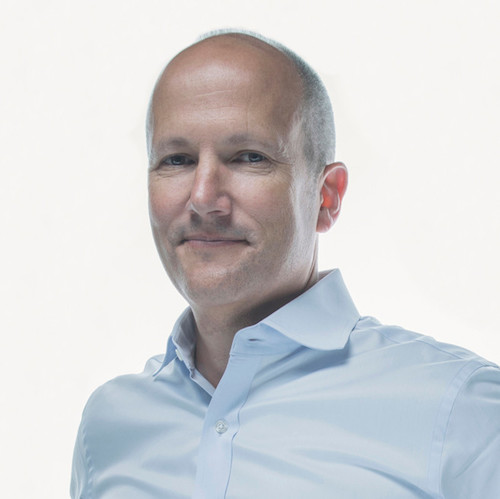
McKeel Hagerty began playing with cars as a boy and hasn’t stopped since, turning his parents’ local insurance agency into an automotive lifestyle brand known internationally for its passion and commitment to the car and driving community.
Since 1997, he has been the CEO of Hagerty, the world’s largest provider of specialty insurance and hobby support to the enthusiast vehicle market. During his tenure, the company also has evolved into a leading automotive media company and the hub of the biggest car club in America, Hagerty Driver’s Club, with more than a million members.
From the beginning, McKeel has felt a responsibility to support organizations and initiatives that help ensure that classic vehicles and the driving lifestyle continue to thrive well into the future. The company’s youth programs have helped thousands of young drivers learn the nearly lost art of driving a manual transmission, and through a new partnership with Skip Barber Driving Academy, thousands more are upgrading their driving skills so they feel more confident and in control on the road. The company also supports the Historic Vehicle Association, which works on behalf of its nearly 600,000 members to protect and celebrate the automobile as a significant part of our culture, and the RPM Foundation, which provides restoration and preservation training programs for the next generation of automotive, motorcycle and marine craftsmen. Most recently, the company has doubled-down on its belief that cars are meant to be driven by acquiring MotorsportReg.com, which is used by millions of motorsports fans to find and register for motorsports events from track days and road rallies to vintage races and motocross.
McKeel is the recent former Chairman of the Board for YPO, the premier global leadership organization with more than 27,000 chief executives in more than 130 countries. During his term, he traveled the world talking about leadership and success with world leaders and innovators, including Hillary Clinton, Justin Trudeau, London Mayor Sadiq Khan, author and philosopher Yuval Harari, and many others. Many of the lessons learned from those discussions are shared in McKeel’s upcoming first book, “Boundless: A Guide to a Flourishing Life in a Disoriented Age,” which will be published by ForbesBooks.
Welcome to the Athletics of Business, a podcast about how the traits and behaviors of elite athletes and remarkable business leaders frequently intersect. The real stories and hard lessons to help you level up your leadership and performance. Now your host, Ed Molitor.
Welcome back to another episode of the Athletics of Business podcast. I am your host and CEO of the Molotor Group, Ed Molotor and we just keep rolling along with unbelievable podcast guests and today I'm so fired up to welcome Michiel Hagerty, CEO of Hagerty Now. McEl has an incredible journey. Such an interesting story as his love for cars began at a very early age and he turned his parents local insurance agency into an automotive lifestyle brand known internationally for its passion and commitment to the car and driving community. As I mentioned, he is CEO of Hagerty, has been since 1997. Hagerty is the world's largest provider of specialty insurance and hobby support to the enthusiast vehicle market. During McKeel's tenure, the company also has evolved. This is so Cool.
Has evolved into a leading automotive media company in the hub of the biggest car club in America, Hagerty Drivers Club, with more than a million members. From the beginning, McKil has felt the responsibility and you will get this sense in this vibe as you listen to him talk. Has felt the responsibility to support organizations and initiatives that help ensure that classic vehicles and the driving lifestyle continue to thrive well into the future. McKeel is the recent former chairman of the board for YPO, the premier global leadership organization with more than 27,000 chief executives and in more than 130 countries. During his term, McKeel traveled the world where he talked about leadership and success with other world leaders and innovators including Hillary Clinton, Justin Trudeau, London Mayor, Sadiq Khan, author and philosopher Yuval Harari, and so many others.
Now what are we going to talk about today? We're going to obviously we're going to address what's going on as we recorded the podcast, which is the COVID 19 the global pandemic. And Nikhil's going to jump right into what he has done with his organization, with his team and how they are not just going through this, but they're growing through this. He's going to talk about how Hagerty is benefiting through the crisis by having built their culture on the idea of being a growth mindset company. And you'll love this. Mciel will talk about what it means to dig the well before you are thirsty and how that's serving them right now. We'll talk about why Makeel's first focus once everything started was to just get his people breathing.
And you think about all the folks, over 1300 employees that they had to send to work remotely. And his first focus was, you know, he said, ed, I just had to get them breathing again. Mikhail will jump into how he likes to go deep with his people, reintroduce them to themselves during this time and allow them to be human and how critical that is. He will share the importance of realizing that you are not just leading people through the reality of the crisis, but you're also leading them through their fears and anxiety. And the last thing I'll throw out there that we're going to talk about is how significant it is. And listen to this.
And this is no different than before the crisis, during the crisis, and what it's going to look like on the other side of COVID 19, how significant it is to embrace the fact that you're not just leading minds, you are leading hearts as well. I hope you enjoy this podcast with.
Thank you so much for joining us today on the Athletics of Business podcast. I appreciate you taking time out of your crazy schedule to be here with us.
It's great to be with you.
So many great things to talk about. But obviously right now we're in the throes of the COVID 19 pandemic, global pandemic. I have to imagine it's impacted your world quite significantly. And one of the things that you and I share a firm belief in is the fact that, you know, we want to grow through this. We don't just want to go through this. So can you talk a little bit about how you're doing that with Hagerty right now?
Yeah, of course, happy to. And you're right, I think this is certainly impacting every sector, every industry, I'm sure every business in some way. Some I think it'll actually accelerate change for the positive for sure. Some it's going to be an existential crisis. And what we're really grateful for is that for years we have built our culture around the idea of being a growth mindset company. And you've probably read Carol Dweck's book the Growth Mindset about the whole idea of taking adversity and setbacks and even just growth and feedback and everything else as a growth tool rather than as a personal attack or on some limitation of yourself and your capability.
And so our culture was built around the idea of really going deep with people, even 1300 employees, of developing one page plans, personal mission statements, all of that stuff, not just showing up for a paycheck. And so it's really helped us have to pivot our organization, which is multidimensional. The bulk of our employees are still in the insurance operation, but a lot in need, lots of different parts of our business and get them out of the offices and working from home and hoping our systems can hold together with this big virtual test. And fortunately, after I think that first bit of adjustment and shock, we're holding our own and really grateful that we had done all of that work prior to this.
Because when you read a lot of the leadership stuff that's getting blasted out now, like I'm sure you're reading, and I am, everybody will tell you that leadership through a crisis is really undersung until you're in a cris. And best I can tell, we've been on this 10, 11 year boom since the last financial crisis and not a lot of leadership literature or leadership practices have been around how to respond to a crisis. So for me, you dig the well before you're thirsty. And I'm very grateful that we've established this growth mindset perspective throughout.
You just made a great point and there's all this content going out right now. Right. And you and I, you know, you dig the well before you're thirsty. But I really believe that during this time, during this crisis is when the ones who are paying lip service to their culture and to leadership and doing things authentically, I think they're the ones that are going to get exposed. And I think folks like yourself and folks like the great leaders at Hagerty, when you get to the other side of this Covid and we don't know when that's going to be. You know, whatever it looks like, whatever it's going to be, I think you're going to be that much stronger and that much better for it. Can you talk into that a little bit?
You know, kind of back to that idea of just what's it mean to be a growth company? Not just the growth mindset concept, which is, I think growth companies have this constant discipline of, you know, you're evaluating, but then you're always looking forward. You know, if anything, sometimes as a growth company, we grow year over year, organically, double digits. Sometimes you actually, you forget to celebrate along the way that you're doing well. You know, because it's like my mind is always forward. I'm always thinking out in front to make sure that if there's a limitation of the business, it's not a limitation of Our vision to create a better future. And so when you're in a situation like this and like the future comes slamming right up to the present, right?
And you don't, you're not sure you're going to have a future and your time horizon kind of shortens. It's tough for leaders who want to get out there and want to think about the future when all of a sudden you're worried about cash or something like this, or cash management. And again, I still think that if you can reintroduce people to themselves as human beings during a process, during a crisis like this, you get them responding to you know, you see in the war movies or whatever, and dramatic representations of a crisis or something terrible happening. And one of the best calm leaders do breathe. Just breathe.
And so one of the first things we needed to do, working remotely with this many employees was I needed to get everybody breathing, you know, because even my amateur reading about neuroscience was that, you know, when people are freaking out and adrenaline is pumping through their bodies and they're not, you know, they're worried about finding toilet paper, they're not thinking about strategic plans or balance sheets or anything else, they're thinking about something else. And so, you know, this little trick I think of taking the time just to have a quiet moment with your team. I started doing these daily videos out to the whole employee group saying, we're going to just take one breath together and tomorrow we're going to take two breaths together.
And it seems a little hokey at first, but you get people relaxed and you just tell them it's going to be okay, we're going to get through this. I don't know how, I don't know when we're going to get through this and we're going to get through it together. But I need you to breathe so you can listen, right? And if you're not breathing or you're taking shallow little breaths, you're not listening, you're not learning. We can't actually make the pivots we want to make if we can't do those things. So I've done a lot of my communication has been around just doing very human stuff, just organizing the basement. Are you making your bed in the morning? Are you sticking to your exercise routine?
Have the habits that we talk about in our one page plans held up or which ones have broken down and are you listening to that? So, you know, I like to go deep with people because I think that's how you get the best business performance out of them.
In going back to you reintroduced people to themselves and allowing them to be very human. And that's very significant. So how do you do that? How do you not only allow them to be human, but almost encourage them?
Well, you know, a lot of, I guess what I've learned about things like this and a lot of the reading and studying I've been done about this, again, I started with just like the physical side, you know, are you sleeping, are you exercising? Are you keeping your little habits? Are you drinking way too much at night? Whatever it is just say, hey, look, feeling fear is okay. Feeling afraid and. Or feeling anger or feeling whatever like tough feelings, difficult feelings right now is very normal. That's human. Acting on it or acting in a really bad way on those negative feelings are where a lot of mistakes can happen. And you know, the beautiful thing about human beings is we have the ability to examine our own thoughts. We can have a thought, and then you can think about the thought.
And so if you can slow people down enough to say, hey, look, remember, we've got a brain for a reason. It's wired to keep us alive. At a time of crisis or when tigers jumping out of the forest after us, you know, we're not in a forest. You know, we're watching things on the news, and while they may seem risky, we've got to slow down, we've got to breathe, we've got to do the physical stuff. So then you can do the real mental work to figure out the best way to respond. And for the leaders of an organization, it's even more important because you're not just leading people through the reality of your business crisis, you are leading people through their fears.
And maybe you don't know when you're going to get out of it or even if you can, but you're responsible for leading both dimensions. You don't just lead minds, you lead hearts. And this is when it works. This is when that kind of effort pays off, right?
There's so much unknown, so much uncertainty. As a leader, you're human as well. And I've always believed that a leader needs to be the face. Well, a coach needs to be the face his team needs to see and when they need to. Can you talk about personally what's been challenging for you as you help your employees cope with working from home and all the pressures surrounding this coronavirus and how you've worked your way through that?
Well, one of the first things we did was institute these kind of daily videos. Just short little two minute, three minute things. What I was working on. I started a journal of kind of just leadership messages. I wanted to get out, and I decided to be very vulnerable in a lot of it. You know, like when I gave myself my first coronavirus haircut, you know, and my daughter helped me. Or one day we started a family practice because we're all here at the house of going for a walk in the afternoon, and you and I were joking about the weather before we got on this interview. And, you know, we had a few days of decent weather. We go out for, like, the third day, and it is just, like, snowing sideways. And I get angry.
Like, I look up at the sky, and I'm like, oh, come on. You know, literally, I'm like out of a movie, you know, shaking my fists at the sky. My wife looks at me like, that's kind of a dumb thing to react to. And I shared that with my team really openly. And so what I did is I said, hey, that after that walk, I came home and I grabbed that great book, the little book of stoicism that Jonas Salzgaber, I think is his name, wrote. And one of them is, you know, hey, look, things like the weather, you have no control over, so don't have reaction to them. You know, it's just not worth it. And just those little reminders. And I just took my employees through that one morning of like, hey, here's the stupid thing I did last night.
You know, how you doing? And I just think showing that vulnerability. My view is that trust in a leader is built by showing some vulnerability. That idea of the mythical strong person who just stands up and is tough and has a perfect vision for the future is a dream, in my view. You got to show vulnerability, too, and then you can lead hearts and minds.
I love that.
And vulnerability is such a big piece of the puzzle here at the Malitar Group and what we do. Can you talk. Let's talk a little bit more about that. Some of what the outcomes when you make yourself vulnerable to your people, some of the things that happen on the other side of that.
You know, I learned a long time ago that helping people identify feelings is a way to get them through things. And I can't remember the consultant or whatever, I was at some YPO gig somewhere, and this guy said, hey, when you ask somebody how they're feeling and they say they're stressed, that is absolute nonsense. He actually said it was bs, right? And I said. He said it's bs. Stress is a BS word that means what you should be hearing when somebody Says, hey, I'm really stressed. What it means is, don't really ask me how I'm feeling. Or it means I'm so frenetic I can't even identify the actual feelings that I'm feeling. And so what a real highlight of someone working through difficult stuff is, can they name their feelings accurately?
Is it, I feel vulnerable, I feel out of control, I feel angry, you know, I'm literally frightened of this virus, whatever it is. Like, can you explain in more detail the more words they can use to describe how they feel? You're getting them somewhere, you're moving them through stress, and that's how you work through vulnerability. Because you know, in this world where everybody is fearing their, you know, their work review, you know, their annual performance appraisal, you know, you're supposed to not show your vulnerability. I think that's nonsense. I like it when people show their vulnerability, but I do it by saying, like, can you name your feelings with more accuracy? Can you tell me really how you're feeling? Because it'll tell you a lot more about them and you can help them grow a lot more.
Well, and that's just it, isn't it? I think when you make yourself vulnerable to your people and they realize that they can trust you, they're going to open up more to you. Like you said, guide them to identify their feelings, but that's going to get more buy in. It deepens the trust and allows you as a leader to put them in a better position to be successful along the way.
Spot on. I mean, that's just it. When people say, hey, I want to be greatly respected, then you have to say, well, you have to be respectable. And a lot of what I think is being respectable is you have pretty good daily habits. You kind of make the bed in the morning kind of person. Doesn't mean you have to be an uber geek about everything. But you tend to have a dependable way that you carry yourself, even if you admit to fault, even if you admit to vulnerability. And then you show what those vulnerable things are. Hey, look, I'm having a tough time with this, or I'm really struggling over here with X, Y, or. And I think that it's the only way to get, is to create that kind of respect. And that feeling of trust is to start by showing vulnerability first.
And we don't know how long this is going to last.
Right?
So you showed a vulnerability. You're helping your folks grow through this. But where does your focus happen? Are you dealing in terms of sprints? Like Two week sprints. One week sprints. Or how are you talking to your people about a timeframe that might be different than what you were doing before all this happened?
Yeah, and that is a great question, right? Because, you know, were fortunate that were able to transition a good bit of our business, you know, to just rely on our online channels so we could work remotely, we could rely online channels, but other parts of it were like all of our events businesses and all of our events just canceled. You know, our. Anything involved with recording television shows, anything involved with our media businesses, they were going to have to become virtual, which like to me, drops the quality very significantly. Advertisers were going to be dropping out of those businesses. Our drive share business, which is this kind of peer to peer, like the Airbnb of collector cars, that's just shut off. Right. And so for a lot of it was, okay, first and foremost, are we going to survive this?
You know, you got to be asking those questions and you have to be answering them soberly rather than just trying to fix it. If I've ever made a mistake in my life, in the past, through these crises, is I start fixing before I understand how bad it could be or just the gravity of how bad it could be. I mean, I've literally stood in front of a weather channel watching a hurricane bear down on something and say, oh, this isn't going to be that bad. Right? We can get after this. Instead of just saying, okay, let's really understand what is it going to be like if this hurricane hits there? And let's really understand it and really let yourself sink down into a potential worst case scenario.
I don't like it any more than anybody else does, but if you rush too much to solution rather than honest appraisal of where you are or where you might be. So for me, I backed it down to these kind of one week sprints, which is, what do I need to know in the next week to know what the next changes need to be? We fortunately didn't have to do it to the day or the hour or anything like this. And then we stretched it out to two week sprints. So it was, what could we pivot in one week, then what could we pivot in two weeks so that we tighten the time horizon down. And then we started looking out months in advance, which is okay, you know, for us, because we're so event driven and just kind of summer driven.
Okay, what happens if this lasts through summer? What happens if it lasts in the fall? What is it that we have to do to manage that. So I think leaders in crisis get a very good handle on their feedback rhythm and then their planning horizon rhythm. And you can't just sit there and bury your leadership team in not being explicit about your time frames. And so for us, it was that one week, then two week, then multi month sprints.
So as we talk about rhythm and we talk about the one week sprints, the two week sprints, one of the things that's so key to being fluid though, is having it's a fine line to walk, being fluid and having the ability to make decisions without all the information. How much does that come into play during this situation?
It's the superpower of the best leaders. You know, it is the superpower of the best leaders. It's the ability to make decisions with the least amount of information. I mean, that is just it. And now they're probably different leaders in peacetime versus wartime. This is probably more like wartime because we're all kind of being attacked or we're under siege. Call it whatever you want to call it, use whatever metaphor you want to use. I think that idea of understanding, again, not only your operating rhythms, but then understanding, okay, what is it that I have to be looking out at to figure out how to survive and then flourish? So it's a challenge. But this is where you draw on the wells you dig.
Well, exactly. And it's also where this amazing culture that you built at Hagerty comes into play. Can you talk about that?
Thanks. Well, for us, when I first started in business, and I've been at this approaching 30 years, I thought culture was a nice to have. Hey, if you have a nice culture, we'll make it really nice. I didn't think it was essential, if not maybe the most important thing of the best businesses. And it wasn't until I can't remember where it was. But it was back in the early 2000s that I saw some speaker at a conference from Gallup talking about how you can measure culture. And I've always been a, you know, if you can measure it, you can get it done. If it measured, it gets done kind of a person. And I thought, okay, now I'm a believer if you can measure elements of culture consistently and over time, you could at least benchmark, you know, what you could do going forward.
So, you know, were a very early proponent of using Net Promoter Score, for example, just as that, you know, kind of ultimate question of customer satisfaction. And there's so much you can learn from that stuff because it forces you to, you know, just kind of every time ask, would you? You know, for those who don't know nps, it's that one question or they say the ultimate question of customer satisfaction, which is, would you enthusiastically recommend us to a friend on a scale of 1 to 10? And then really only eights, nines, and tens are counted in a really positive way. You have these kind of middle grounds, and then everything else is actually negative. So you can actually have a negative net promoter score. And it's a satisfaction rating that you can measure between industries.
If you look at the insurance industry, net promoter scores are pretty low, right? You know, 30s, 40s, we're in 82, very high, just from an insurance standpoint. But we do a lot more than insurance, so it's not surprising. But I like that because that's one measurement of culture that now you can work on, whether it's in a time of crisis or a boom time. We also use the Gallup engagement survey process, where you're constantly asking these surveys of people, do you know what's expected of you? Do you have friends in the office? Do feel like you get regular feedback? It's a fairly consistent set of questions. But then you kind of. I don't think you have to be obsessive about reading every Glassdoor review. I don't think you have to go for every award.
We've been at great places to work business, you know, year over year. And I like putting our business through that process because even just applying, getting all the feedback through the process, you know, you can come back and say, okay, you know, daycare keeps coming up year after year, and we do not have a daycare solution. So, like, you know, eventually this is just not something that you can choose to because there isn't the right real estate state do it. You can't just choose to never do it. So that's one of the things that we will solve in the next year or two. So my view is culture starts with the willingness to measure it, no matter how ugly it might be, and then just basing it down like everything else we do in business, and creating disciplines and habits around making it better.
Now, were there any surprises for you at first when you just began to measure culture?
I think that our impression that being nice is not the same thing as being kind. You know, we're Midwesterners and, you know, that idea of kind of low on the conflict end, not running a real sweatshop type work environment. But I think people would have said were really nice in the early days of the business, and you realize that it's more important to be kind. And sometimes kind means giving tough news to people or delivering honest feedback when they're not making it. Because nice is an easy way to cover up a lot of sins. And what we discovered was were just growing so fast that we would just overlook poor performance sometimes in people, because it's like, well, you know what? We killed it again. We had another good year. We made money. You know, let's get on with it. Let's just keep going.
Never stop long enough to sit there and go, like, hey, but wait a minute. Like, that team sucked. You know, they were bad. Or the leadership is clearly, you know, not right there. So I think switching from a nice to a kind mindset and realizing that honest feedback, if kindly and clearly delivered, is the better way to build a culture.
So along those lines, as you work on your culture and you grow it, I mean, we know today's workforce wants what they want, three things. They want to know that they're valued. They want to know that the work they do has meaning, that's important. And they want to be developed. They want to be coached, which you folks do, all of that. So what is so key to you folks attracting the top young talent in the industry?
Well, it definitely has a virtuous cycle to it, which is when you get known for doing all of those things. For us, the enjoyment of meaningful work has always been a core value. The idea that every single person is going to know what's expected of them, that sometimes I feel we can do better. And then that last piece that everybody wants to be able to grow, we make it very clear. And I talk about it day in and day out when I'm talking to people about culture is that I don't believe in work, life, balance. I think you get life. Some of life you're paid for, and some of life you pay for, and that's it. And it's not about balance. It's not about anything.
It's just, you know, hey, you do need to have a place that you go, earn some sort of income. My job is then to make that a place that you know what to do and that you can grow both in your personal life and your business life. And I think as you have set aside COVID 19, more and more people, you know, those balances of working from home now with all the technology we have, you know, people wanting to do more and more things in their personal life that formerly would have never been allowed in a professional work environment. You know, heaven forbid they want to go to a parent teacher conference or hit an appointment or do whatever.
And our view is we're very flexible with that stuff because, you know, we want you growing and thinking as an overall human being, and your overall satisfaction with your life and feeling like you're learning and growing matters. So, like, our learning model, we call it Agri University, you know, it starts from the day you walk in the door. And it starts with just obviously kind of core training to be able to do your job. But then it starts adding a lot of things that would be considered more personal development things, whether you want to become a better public speaker, whether you want to take yoga, whether you want to do exercise classes, any of those things. We build in something for that. What's amazing, I looked up yesterday, and since the crisis, our gym is from.
Our headquarters is shut down, but our trainers are all doing online classes. And I think we had 50 people in a yoga class yesterday at lunchtime remotely. So how cool is that?
That is so cool.
Yeah, but you got to do that stuff. We need. We need them healthy, we need them ready, and we need them thinking because we a lot of. We got a lot of problems to solve, a lot of opportunity to create.
Yeah. Now, here's a quick question, and this just popped in my mind. So as this extends itself, as the, you know, the coronavirus and the pandemic extends itself and folks are away from the office more, do you find that more are jumping on the different things you offer, like the yoga classes, or are people kind of maybe falling off as it extends itself?
Yeah, I think that's a great question. And I don't know yet. It's still a little early. You know, I think you're starting to get. Some teams are fraying a little bit, probably, you know, just like the novelty of it early on, you're like, okay, gonna survive. Got toilet paper. We're gonna work this out. You know, gonna have the kids on the iPad, on the couch next to me kind of thing. And I think if this went on forever and ever like this, you would struggle maintaining the kind of culture that we need and we're proud of. So it is going to have to come back to some different kind of balance as some people have sort of started to drop off. We've actually had some people, you know, who originally went home, were trying to work remotely, and finally just.
They called uncle and they said, hey, look, you know, I get it. You've been really generous to keep us all going. I need a Voluntary furlough or something, because I just can't manage with a house full of kids and all of that stuff. And we're just trying to be as generous and manage it as well as we can. My hope is that this gives us in our business and in a lot of businesses, a chance to really reevaluate what working from an office or working from home productivity looks like. We've seen a massive jump in productivity out of a number of the disciplines in our business because they're not distracted by meetings and other kind of just crap around the office.
They can sit down even for two or three hours and get a day's worth of work done in a really focused way and then go have lunch with their family. How cool is that?
I mean, that's so cool. And you know, we had talked earlier and one of the things you said to me that really stuck with me was less meetings. Right. And you're discovering these huge efficiencies. And the other thing you talked about is how high you bounce when you hit the ground. Can we talk into that a little bit? Yeah.
You know, there's that great image about resilience which, you know, people talk about. Resilience is, you know, if you were to take a wine glass or something and drop it from shoulder height, it's going to shatter because it's not resilient at all. If you took a rock, it's going to thud and hit the ground. If you drop a tennis ball, it bounces low a couple of times. When you take a super ball, it bounces really high. It may not bounce completely back up to shoulder height, but that's the image you want for people in their mind is that it's. Look, in life, you fall down, businesses fall down. We are going to hit these things. There'll be another pandemic someday, maybe in our lifetime. I bet it'll be managed a lot better than this one. Set that scary thought aside.
But the idea is to make yourself resilient so you bounce really high. You know, another image I've heard before is try to jump really high standing straight legged. You can't. You got to crouch down and jump up. Or, you know, a boxer, you've got to pull your fist back to punch through. And so I think the idea of resilience being that superball is the image of what we need to think about as individuals and as businesses, which is what makes you more resilient. Is it? Well, for us, for clearly we had never really given this remote work enough chance to even Think about it. I mean, what we're doing now was unimaginable to think about it, that it could work so well six weeks ago. Could we make it better had we had more time to plan? Heck, yes. We'll be ready for it.
So, you know, I just think. I think if people just take that inventory, okay, where was my business not resilient before, and where could I make it more resilient in the future? On the other side, it's a great exercise. And you'll feel like you're off defense because you're working on something.
I love that. And that's so important, because what I have found that's happened with some of my clients is like, man, weren't working on this. Is it not too late to start on? But are we behind the eight ball? Because we haven't. As opposed to taking the mindset of being, you know, stop playing to not lose. Stop playing not to lose. But let's figure this out now, and let's start moving in the right direction.
Wow. That's exactly right. You know, I mean, some people, you know, their business is just so vulnerable to this that they just literally have to shut down and wait, hope that it doesn't go very far. But even then, you know, I mean, my wife, she works at Hagerty, but she also has a restaurant that has a charity concept. It's called the Good bowl, where it's a Vietnamese noodle place where every bowl of noodles you buy, you get a dollar that you get to donate to charity.
That's awesome.
And they pivoted very quickly to a bunch of stuff at the restaurant. One, they had to go to takeout only. And then they shifted the charity model to help support hospitality and restaurant workers who were being laid off everywhere and allowing people to buy their tote bags so that they could donate 10 extra dollars to hospitality workers. And what was interesting about it, because everybody's freaking out in the restaurant industry, is even just that creativity of thinking about what they could do. Could they reimagine the business on the other side, or what could they do in the meantime? Like, just the creativity of it was fun. Like, I heard energy in her voice. It's scary, but you heard, you know, it's like her evening job, right? You know, to figure out what the restaurant team, like, what in the world to do.
Other things they learned is that people like to buy takeout, and they buy enough for dinner and enough for leftovers for lunch the next day. They never would have known that had they not gone through this and said, well, maybe take out something we should focus on and maybe we should create that one day meal planning for the day after so people buy a little bit more, the order size is bigger.
How about that?
And get one more meal out of it. I mean, it's awesome, right?
That is. How about that? You know what I'd love to do? And you can just send this to me. I'd love to get the link for her restaurant and put it in the show notes and put a little something in there about what they're doing on the charity side during this pandemic.
Yeah, will do. Yeah. I mean it's a super cool model and you know, nobody dies is dying to go into the restaurant business who's not in it. But she said if I could combine her two passions, which was bringing great Vietnamese food to Americans and then charity, it's a pretty cool business model.
That is really cool. I mean, you folks have done so much great work. And along those lines, you mentioned YPO earlier. Can we talk about some of the amazing work and the roles you've had with ypo?
Yeah, I joined ypo. For those who don't know, YPO is a leadership organization for presidents and CEOs of kind of medium to larger size companies. And it's a 70 year old organization, geographically based, about 30,000 members in 142 countries. I joined back in 2000, the West Michigan chapter. And it was like my masterclass in leadership because I got to know all these much bigger companies than ours at the time and really impressive business leaders and just good people. These are people who aren't just trying to make money. They're also trying to build their lives, their personal lives, their family lives into something really special. I found a lot of extraordinary people. And because of ypo, I can go back year after year and remember all the little things I learned somewhere, some conference or something I went to.
And it's why we're almost 50 times the size today than were when I joined. But I got involved in leadership in ypo and I kind of started in the Michigan and then the region, the Midwest, and then I got on the global board of directors. And then I was global chairman of ypo in 2016 and 17. And I traveled about 180 days in about a year and a half and hit 42 countries and met world leaders and amazing people. And what was cool about leading that organization is one, it was a masterclass in leadership because every member you have to treat like a peer Even though I was chairman, I couldn't force anybody to do anything. I learned how to influence people from a peer to peer perspective as equals. And that was a great, just personal learning opportunity.
But it also exposed me to all different types of leaders in different cultures that I never had interest in. Even though I love to travel, I didn't have that much interest in learning from. All of a sudden I'm like, oh my gosh, I'm about to do a two hour interview with President Paul Kagame, the president of Rwanda, who rescued his country from the worst famine and war situation ever. And now it's like a little mini Singapore. What can I learn from this guy? And so it was really a magical opportunity to not only up my own leadership game, but to get a network of just global level leaders that I was fascinated by but would have never had a chance to actually meet.
So I have to guess that some of the leadership lessons you learned in that masterclass of leadership Less helped you turn Hagerty from a small local insurance agency into a global market leader.
Yeah. Oh, for sure. You know, just all of a sudden I saw like, oh my gosh, there's so much opportunity out there. And again, don't let your own vision for your business be the limitation on it. You know, I mean, maybe you don't have the balance sheet, maybe you don't have other things, but like, don't let your vision be small. You know, I, in fact, one of my YPO trips, I traveled to Israel to this leadership conference and I met the son of Shimon Perez. Kemi Perez Shimon passed away the year before I went. And I asked him, like, what's the biggest lesson he learned? And he had this great quote his father was known for, which is the only thing he fell short on is he didn't dream big enough. The problem is if you dream small, you'll achieve your dream.
And what I love about that is for high performance people who listen to this podcast, you're gonna win a lot. You're gonna have a lot more wins than a lot of other people do. But if your vision of what a win is small, then you're always going to kind of have that little bit of a disappointment in did you achieve enough? Did you go far enough? And so that's. I love that quote, which is just dream big, you know, and if you dream big and you fall a little short, who cares? But if you dream small, you know, you just never quite get there. And that's, you know, that's just one Of a hundred things I learned, but feels right about now.
It does. And you know, speaking of that, let's talk a little bit about your journey. I kind of work backwards here. Could have jumped into this earlier, but let's talk about your journey and when you joined Hagerty and the vision that you had. First of all, you know, what got you to jump on board and then the vision you had and how that's evolved into bigger and better dreams because you folks have grown exponentially.
Wow.
Thank you. Well, this business started in the basement of the house I grew up in when I was a teenager. My parents had sold their previous little insurance agency and started this little. It was really meant to be a kind of hobby business for them to kind of last them through retirement. And it was growing. Okay. But you know, when we got. And it actually started in wooden boats, but it got into classic cars pretty quickly. And you know, if there's anything that, you know, I don't know what you feel about auto insurance, it sucks. Like it's a. Nobody loves talking about insurance. It's a terrible industry from a sexy standpoint. It's a very good industry, provides essential services, but it's not sexy. And so I was after college, I mean, I studied English and philosophy in college.
I went to a Russian Orthodox seminary and got a master's study to be a priest. And then I pursued my doctoral work in ancient philosophy. And I was kind of slogging my way through my PhD work when, you know, my wife got pregnant and my mom needed help back home in the business. So I just said, hey, I'll put the studies on hold for a while. I'll go back and work for a while. But I'll only do it if I could make some real changes to the business. And I realized like, if we could act more like a club, if we could act more like a passion based group of people instead of an insurance transaction, I think we can do something really special. And can I tell a quick story about Nike? Because I know. Oh, absolutely.
Please do. Yeah, I'd love it.
I joined YPO a couple years after I moved back. I went to this really cool branding seminar that YPO did at Nike and we got to meet like almost the entire C suite of Nike at the time. But not Bill Knight or whatever, but almost everybody else. A lot of first, early employees in Nike. And first of all, you go to that Nike campus and it's big and gleaming and all these incredible sports hero statues everywhere and all this stuff, completely intimidating if you're a smaller business. And they played this sizzle reel of all their athletes. You know, Michael Jordan and you know, at the time, Tiger woods and well, Lance Armstrong, we saw how that ended. But you know, all of that stuff and I just remember thinking like, God, I could never run a business like this.
How could I ever afford any of this? And then the next day the head of marketing played a video that the CEO had shared. And you may recall this video back in the day. And as a young kid who loved basketball, but he was autistic and he couldn't make the high school basketball team, so the basketball team made him the team captain. He'd hand out towels and the final game of his management being team manager of his senior year because he always suited up for the games, never went in, the coach put him in. And what they didn't know is while his condition did not allow him to normally practice with the team and all this sort of stuff, that kid could shoot baskets lights out. And so they just throw him the ball.
He just drains a three pointer like Steph Curry style, way beyond the three point line. Crowd kind of goes nuts. They throw him the ball again, drains another one. I think he made like five or six three pointers. The whole crowd was going nuts. Even the other team was going nuts. And it's this really emotional video to see, you know, the struggles this kid had and to see his capabilities. And what the CEO of Nike said was, I don't care if there was a Nike logo in there. I don't care if there was a sponsored athlete in there. I don't care anything about Nike. That is the spirit of our business. We are about the spirit of sport. The spirit of sport. And it was like a lightning bolt for me because I realized I'm about the love of the automobile.
We are about the love of the automobile. We're not about insurance. We're not about this, that and the other thing. If we just play up the love of the automobile, we can win. And so whenever I tell people, how do you grow your business really big? I say, what are the big ideas? You can attach it to way bigger than your market or your competitors or anything like this. What could you create and in the spirit of sport, model of the vision for your future? So that was, you know, like lightning bolt number one. And we've never looked.
So you walk away from that and you had this right for the love of the automobile. So what did you do next? What was the next step you took?
Had to get real about creating this membership organization. So we had started it and it was just kind of like a little add on to our business. And then we really reversed the whole thing. We said, you know, you got to become a member. You know, you can't buy anything from us unless you're a member, unless you're going to, you know, reading our magazines, unless you're starting to consume our media. And we kind of created this, what seemed like a little barrier to get people because it actually had a cost associated with it and it's been the major differentiator, you know, it's what sets us apart, you know. And as I say, like, you know, the best leaders in an industry don't compete. They created a new thing and you know, just kind of left everybody in their dust.
That was the next thing I think then it was having the guts to go into some areas like creating a lot of experiences again around the love of the automobile, creating events, buying event companies, getting really serious about the data around our world, in our world. Because there was not a lot of data around what it is we are about around the classic car space, collector car space. So I started just seeking, are there any data companies? Is anybody studying this with credibility? Because I just had this feeling that if you can get to own your data or own the data of your industry, you automatically have an advantage over everybody else. So did a bunch of small acquisitions, and I mean really small, sometimes just hired somebody who is expert in the data and started creating insights around it.
So one of my kind of rules of innovation is what's the high ground you can seize? And for us it was data. Because if I had data, then I could bury a competitor, but I could create more partners because I'd have the data. And so those are the next steps after the Nike lightning bolt moment, swoosh moment, I guess I should say the swoosh.
There you go. So I'm refraining from saying just do it, but anyhow, I digress. No, but an amazing story when you think about it, because you didn't go there expecting, probably expecting to have that moment right, that moment of clarity, like what comes next. Or had you been messing around with that idea of membership before?
Well, I had started it, but I didn't know how to sell it internally. Right. You know, so often, you know, as leaders, if you have a little bit of a, you know, kind of visionary streak, it's hard to translate that vision into anything for anybody. And internally. And so you spend half your time just trying to convince your team that it's a good idea rather than, oh, there he goes again, off to another conference. What acamamie idea is he going to come back with? And I get that all the time, but that was one of those that gave me something that I could, it created a metaphor that I could get people to hang their hat on. If that's how Nike could do it, that's how we could do it. And you know, I learned a lot of other things there too.
Like one thing. If when Nike wants to enter a new market, you know what they do first? I learned this. They sell T shirts.
Brilliant.
Because they said, easy to fulfill. You can sell them anywhere in the world, they can be manufactured anywhere. And if you want to go into hockey or you want to go into some new market, you start selling T shirts. There's. They don't sell shoes first, shoes come later. Just fascinating little things. And so like I always ask myself, what's your rhythm to? How do you enter a market? Are you selling your main product, the one you really want to sell, or do you need to sell something else first to get people used to you?
So when you bring that idea back, right? Like, is he off to another, you know, what's he going to now? And you bring this idea back and you really believe in it, right? Like you're attached to this idea. How did you get the buy in from your leaders and get their emotional attachment to it as well?
You know, we have a planning cycle that's pretty rigorous. So, you know, we're a Rockefeller habits daily huddle, weekly meetings on a set schedule and then we plan quarterly. We do full strategic planning with budget resets quarterly rather than annually. And I think that has been a godsend because prior to, you know, I don't know, 2007, 8, were annual, you know, we had planned on more of annual cycle. And the only thing I can tell you about annual plan as you know, is that it's wrong. It's wrong from the second you come out of it. You just don't know how wrong it is or when it will be wrong. So the advantage of planning quarterly and giving yourself two full days, a quarter to plan with your senior team is you can make adjustments during the course of the year.
Because unless you're in a really stodgy industry, something's going to change in the next 90 days. And so that has helped. So what it gave me is I have more than average amount of time as a CEO talking about strategic things, just having time on, being able to talk about where we're going and is the message landing. So for me, again, dig the well before you're thirsty. Having that rigor and discipline around strategy discussion helped me have a venue that I could bring this up. And this idea of, like, no, I think we got to go bigger. And then there was a real reinforcing moment.
It was actually during my YPO chairman year, which is I had a speaker at a conference, one of the most amazing speakers that I had ever met, got up and gave a speech about the future of autonomous driving and how it's going to change the world more than any single innovation in the world and change cities and everything else. And when I introduced myself to him afterwards, gave him my business card, he said, hey, I'm sorry, I'm going to put you out of business. And I'm like, what? He's like, no, seriously. Grabbed me by the arm, looked me in the eye and said, seriously, you have to find something else to do. I'm putting you out of business. You aren't going to survive. And I thought, well, what a jerk.
But I sat back and I was bothered by the conversation because I knew something about my business that he didn't know. I was not prepared for somebody to be that aggressive. And what I realized is we got to pump up the volume on our message. And that was, we need a purpose. We need a real purpose to attach ourselves to. And after about a year of work, we landed on this purpose that everybody's so worried about, whether young people are going to like cars and whether driving will exist someday. And we believe it will. In the same way that horses didn't go extinct 100 years ago. In fact, it's a $50 billion industry in the United States, is that we're going to be the company that saves driving for future generations. Now, that's not saves commuting. That's not saving traffic jams on the 405.
That's saving driving fun and enjoyment of getting out on a country road or out somewhere just to clear your head. And what would it take to save it? And what kind of organization would it take to save it? So it started for us one with do I have the image right? Can I sell it inside? And then can I attach it to a higher purpose?
That's a great segue into the last question. Before I ask you the last question, McKiel, where can our listeners find out more about Hagerty? Find out more about you and all.
The great work that you're doing as well now.
Thank you. Really appreciate the time with you asked great questions. Like I said, I love your work and I love your incisive use of leadership and appreciate the questions. So you can find About Hagerty@hagerty.com, all of our media sites and everything all flowed off of that. So there's cool fun car stuff to talk about. Some of my writings and blogs between LinkedIn if anybody wants to find me on LinkedIn, I post most of my content first there and then it all ends up residing on mckeelhaggerty.com so happy to connect with anybody through there or LinkedIn. And I love carrying on leadership discussion, so appreciate it very much.
And you also contribute articles to some other platforms, don't you?
Yeah, lots of other ones. I mean, I guess my time in YPO kind of made me a little bit of a, you know, I don't know, leadership junkie. And I love studying high performance leaders so I write on it all the time. And fortunately YPO still asked me to interview some of these world leaders and folks, so we had to cancel our global conference. So I didn't get to meet a few this year. So I'm long overdue.
Well, I've watched a couple of videos. I absolutely love them. Which leads me to this last question as we talked about pumping up the volume with your purpose. Right.
How do we.
Because we know, we spend so much time telling folks, especially the younger generation, you need to be a better leader, but we don't spend enough time developing them in leadership. How do you go about, let's get real specific. How do you go about pumping up the volume on leadership development in Hagerty?
Well, first of all, the world needs leaders. We can't suddenly go a generation without having leaders who are worthy and trying to make themselves worthy and capable of leadership. I think there's some of it's just intent. People who want to succeed have to be willing to invest in themselves as leaders along the way. You know, for me, is it important to get an education, all that stuff? Sure it is. But you have to be willing to invest in yourself because you got, you have to be willing to get out there and do unique stuff. You are going to feel alone. And I'm a big proponent of developing the kind of personal habits of leadership. You know, I'm a believer in meditation. I'm a believer in rigorous physical fitness. I'm a believer that you can out learn your competition.
So you better have an actual learning plan, not just read a book now and then. You know, if you have degrees or want to get degrees, great. I don't think that's necessary. I think it's more about creating yourself as a lifelong learner so that you can out learn your competitors. You know, I just think there are these disciplines that leaders need to have, but it starts with that intent. I want, I want to be a leader. I believe the world needs leaders and I'm going to make myself into that kind of person. Because you know what I love about the human mind? That the thing that I've learned about it all these years is it's a Swiss army knife. It is capable of learning almost anything to a master level degree.
You just have to set your effort to it and do it in a disciplined way. You know, if you don't understand economics, we'll learn economics if that's what you need to learn. You know, if you need to learn finance. If you need to learn global supply chain or learn another language to do business there, then learn it. That's up to us. That's up to you.
What a.
What a great way to wind this down. Mikhail, I cannot thank you enough. This was an amazing conversation. I wish we had more time. We could talk forever.
Well, let's get together. We'll do it again sometime.
Absolutely. Thank you so much. I appreciate it. And best of luck, you know, with continuing to grow through this situation right now.
Yeah. Well, everybody out there, stay healthy, stay safe. Get yourself ready for the bounce. The world is going to need leaders out there to lead us through to a better spot. And I don't know about you, but I'm going to be ready for it.
Amen. I appreciate that.
Thank you for listening to the athletics of business. Be sure to give us a rating and review so we know how we're doing. For more information about the show, visit The Athletics of Business.com now get out there, Think, act and execute at the highest level to unleash your greatness.