

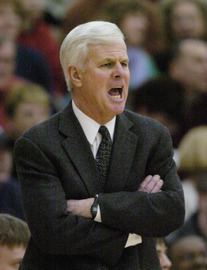
Ed Molitor, Sr. has 42 years of experience as an educator, coach and motivator. A firm believer that life and athletics is a “Frame of Mind Game”, Ed has presented to hundreds of coaches and student-athletes at clinics and sports camps throughout the Midwest. He also taught graduate classes to teachers and coaches on such topics as peak performance, leadership, team building, sports motivation and mental strength training. Inducted into the I.B.C.A. Hall Of Fame in 1997, Ed also serves on the All-State selection committee. A consummate motivator, he has developed a unique plan for athletes of all ages to reach their potential. When applied, his insights into motivation and thought management will certainly make a difference in a person’s life. He has helped a countless number of athletes learn to balance the stress of competition and the other areas of their lives. They are able to transfer what they have learned into a life of self-discipline, self-control, self-confidence and peak performance.
Welcome to the Athletics of Business, a podcast about how the traits and behaviors of elite athletes and remarkable business leaders frequently intersect. The real stories and hard lessons to help you level up your leadership and performance. Now your host, Ed Molitor.
Welcome back to another episode of the Athletics in Business podcast. I am your host and CEO of the Molotor Group, Ed Molotor. And today's guest is back for his second episode. Notice I did not say his encore interview because this gentleman has an open invitation to join us on the Athletics of Business podcast. My father, Ed Molotor senior, who previously joined us on episode number 83. And if you have not had the opportunity to listen to that episode in its entirety, because there is some incredible stuff at the end, just like there is at the beginning and all in between, go back and listen to it. Okay? Have a pen, have a notebook. Take your time, really dig in because we get into a lot of great stuff and he offers a ton of value.
Had amazing feedback on that interview, as a matter of fact, one of our top performing podcasts. Just unbelievable stuff. And today what we're going to do is we're going to jump into some of his favorite quotes. My father was known as a consummate motivator who developed a unique plan for thought management that impacted not only his players lies, but the lives of those around him. Peers, friends, family members. And one of the things he would use as a teaching tool was quotes. If you can say anything about my father, you can say a lot of things, but you could say that he was a reader. He is a reader. Excuse me, a reader, a note taker, a constant, continuous learner. And what really makes him so special is he's a sharer.
He's always looking to have those conversations wrapped around the things he learned and the things he implemented throughout his career. So we're going to jump into what makes quotes so powerful and how he would use those quotes as teaching tools for his teams. And he does offer some things that you could apply immediately, whether it's in the business world, the athletic world, or even with your family. He's going to jump into something that he talked about and he did constantly. He's going to talk about what it means by breaking down his players resistance with his persistence. And he'll share three things that shape a person and focus on the two that are controllable and what steps he gave his players to help change their attitudes.
What's really cool, and I don't want to give too much away, but we always talk in terms of positive and negative attitudes. He jumps into productive versus non productive attitudes. And he'll talk about the power and what it means on feeding your mind on a daily basis. And I don't want to give too much else away. I want you to jump in. I want you to listen, take great notes and enjoy this conversation. Coach, welcome back to the Athletics of Business podcast. This is episode number two for you, and I'm really fired up to have you here.
It's my pleasure. Like I said, I always learn something listening to your podcast, reading your blogs, and also talking with you.
Well, I appreciate that, but you learn from talking to me because you're always teaching me something and you learn from teaching. Is that not correct? That's correct, yes. All right, well, hey, I want to jump into this podcast because we talked about what format we're going to follow today because we don't know how many total podcast episodes we're going to do together because we had so much fun and such a great response from the first one. These are really just an extension of the conversations you and I have had over time in life. Today is great. We're going to jump into talking about some of your favorite quotes, what they mean to you, how you share them with your athletes, with people in your life that. Not necessarily just your athletes, but peers, friends, family.
You know, one of my favorite moments, when you were retiring and it was your last home game. I almost said your last home game your senior year, but it was your last home game of coaching. And just in case the listener did not hear the first podcast, how many years did you coach total, and how many years were you at Palatine High School?
I had a total of 42 years of high school basketball and 32 at Palatine.
Okay, so this was the last home game in your 32 years at Palatine. Last regular season, home game, great game. After the game, went out to a fine establishment. I believe at the time it was named Emmons Taphouse in downtown Palatine. And ton of people came, ton of former players, family, friends. Just a great night. And some of your former players presented you with this huge frame with six pages, matted pages of quotes that you had given them over the years typed up, and if I remember correctly, they were the original pages that you had actually handed out six pages of them to your team. I believe it was 1981 or 1982.
It was a 1981, 82 season.
Okay, talk about that a little bit.
Well, as you know, in my lifetime, I've been a big believer in reading about Successful failures. And I started writing down quotes to use at some point in time. And as I look back on it, that team in 8182 was on the heels of a super sectional accomplishment the year before. Those. Those players on the 8182 team kind of sat and watched and observed and worked hard to get us to that point. And during their senior year, their season, were struggling with energy. I would say they just. There was something missing. So I decided to gather all the quotes that I've accumulated through the years that I thought were beneficial to them. And it amounted to six typewritten pages that I gave to each player during the season.
And you don't win games or accomplish things, as you know, Ed, just by reading the quote. You have to understand what the quote stands for. You have to internalize it, you have to believe it, and then you have to take the necessary steps to bring that quote possibly to fruition or make some sense out of it. So what I did throughout at least the second half of that season, after I gave them the six pages of quotes, we would sit down at some point in time during the week and go through maybe six or 10 of them that I thought were important at that particular phase.
Whatever were going through as a team, we would ask the players to stand up and tell us what they thought about it and trying to get to internalize it and look for ways to develop some positive energy that would keep them going and working together and succeeding together. And when Tommy Carlucci and Rick Brandt and Todd Peterson presented the frame with the quotes on it, I was taken aback. I thought to myself that, you know, maybe I made an impact on their lives other than just on the basketball court that I gave them a platelet or a format where they could possibly use in their adult life. And I never dawned on it at the time when I. When I gave it to them and went through them, I was just trying to get them to play a certain way together.
And I thought this would help.
And that's one of the ways I believe, you truly measure success in terms of the level of impact you have, and not in the short term, but in the long term. I'm curious, do you think a lot of that stemmed from the fact that you took the time to. To be intentional about getting them together and having them stand up and take ownership of what their thoughts were on the quotes and what the quotes meant to them at that point in time during the season?
There's another quote in here. The dogs bark with the caravan moves on and I think some of the players took to it right away. Some players maybe brushed it off, and some players probably didn't at the time, think too much of it. But we continue Every week, one or two days a week, we take 20 minutes after practice, a half hour, whatever the season situations were in. And we would go through the quotes, and I was trying to, I guess, break down their resistance with my persistence. I felt that these quotes had a message for them, not only as an athlete, but also as a student, as a family member, as a friend, and just a good student. And I think it helped.
And I think you just added an eighth quote to the list of seven were going to talk about. Break down the resistance with your persistence. And before we go forward, I want to talk about that a little bit because I think sometimes people view something like that in terms of it's a battle, right? Like you're trying to break down the resistance instead. In other words, like they're fighting you. But sometimes they don't know that they're pushing back on it. Like, they don't know that they're not open to learning what it is you're teaching. And your persistence is the fact that you believed in something so much that you are continually going to be feeding them this information and equipping them with these tools. You were so convinced that it would help them that you persisted. Can you talk into that a little bit?
Like, was it hard to turn that corner?
I thought when I was coaching that a person is a product of three things. Number one, they're a product of genetics. And you can't change a person's genetics. You can't make them any taller or any quicker. You can make them a little bit quicker, but they are what they are. But the other two factors is, number two would be their environment. When they go home, their environment is different than the environment they have in school. Okay? When they go out with their friends, the environment is different than what we try to create in our basketball program. And the third thing I think that impacts a person's life is their attitude of mind.
And I made a very persistent effort every year to create a practice environment that was conducive to learning, that was built on trust and respect, and very definitely try to convince them the impact that our attitudes has on our performance, not only our athletic performance, our academic performance, socially. So I did a lot of reading, which would be a part of another quote on attitude and the impact it has on us. That was my mission. I don't care how good a team were, how many games were going to win, they were going to understand that you can change your environment, you can change your attitude of mind, and that is what's going to help you become successful.
And I think that leads right into the first quote that you wanted to share with us. Is that the greatest discovery in my generation is that man can alter his life if he alters his attitude of mind. By Dr. William James. Can you talk about what that quote means to you? And you just did a little bit. Can you kind of expand that?
Well, Dr. William James was a Harvard psychiatrist, and the year he made this statement, I think, was around 1917. And that was pretty much around the time of the invention of the automobile and also the telephone. So you think about the greatest discovery in my generation in the early 1900s is that a person could alter their life if they just altered their attitude of mine. That convinced me that I needed to learn everything I could about what an attitude is. And everything I could read and talk and listen and observe, I did. And we gave the kids steps on how they can change their attitude. We just told them that attitude is a habit of thinking. It takes 21 days to change a habit. So it's not going to happen overnight.
But you have to work at changing your mental habits, your thinking, the same way you would change a physical habit of dribbling a basketball, of shooting a basketball. It takes time and it takes patience and it takes persistence. But I'm not going to let you not buy into it. I'm going to continue to finally become convinced that you control your attitudes. And peak performers are disciplined thinkers.
So you say you gave them steps to change their attitude. What were some of those steps you'd give them?
The first step would be to educate them on what an attitude is. It would be to educate them on how a positive attitude creates positive energy, whereas a negative attitude creates negative energy. And it's been proven through sports psychologists that we perform our best when we're performing with positive energy. We perform not our best when we're performing with negative energy. After a few years, kids were thinking, well, you say a negative attitude. Does that mean I'm not a good person? No. Negative attitude is a non productive attitude. A positive attitude is a productive attitude. So we started using the terms, the words productive and non productive. The second step to changing an attitude, Ed, is to become aware of your thinking, become aware of it on a daily basis.
The third thing would be that when you find yourself having negative thoughts about something or non productive thoughts about what it is you're doing, then you've got to stop that and replace it with a positive thought.
I think that's one of the biggest challenges, right? Like people start going down this rabbit hole of negative thought and negative thinking. Especially right now, everything we're going through, we're just surrounded by all this negative bs. Social media, the news, printed media, digital media, peers, friends, family members, I mean, people just, you know, it's like they're just. They become overwhelmed and they can't stop that train wreck of negative thinking. What are some of the ways that you can do that?
Well, I think in terms of athletics and academics and that I found it if they would use affirmations. Okay. And as you know, an affirmation is an act of expressing a positive thought. I just think that they have to write down the attitude that they want to achieve. What do you want to be like? Okay, I want to play with confidence. Okay, well then your affirmation should be, I am playing with confidence. And we encourage them to write these affirmations down and say them out loud 20 to 30 times a day. And pretty soon you start believing that you're playing with confidence. I play relaxed under pressure. I am playing relaxed under pressure. And the affirmation should be in the present tense, right?
Right.
It can't be I can or I will, but I am. And then we had them write it down. We encourage them. Now, did they all do it? Probably not. But this is something that's going to take time. It's not going to happen the first day. The habit takes 21 days to change until you feel comfortable, and then you start observing their behavior. Is their behavior at practice congruent or incongruent with what we're working on? And I think coaches have to observe, teachers have to observe the person. Say, I'm changing. But is your behavior in line with what they're saying?
And how significant though is it if you can talk a little bit about this? Because this is something you pounded into us over the years and I believe it wholeheartedly that how you do things off the courts, the same way you're gonna do things on the court. So their attitude and behavior off the court needs to be congruent with what you're trying to teach as well. Corre.
Exactly. And you know yourself that all students don't necessarily like all classes, but you have to find a way. Just like you don't like all the drills you're going to do, you have to find a way to make that class, that drill fun. And fun is one of our basic psychological needs, you know, but learning is fun. Improving in a skill set is fun. Getting stronger is fun. Working hard is fun. Studying is fun. And we try to make a game out of it, right?
And so many things came to my mind. And as we talk about this, how important in terms of changing the attitude? Because you made it very clear early on that association becomes assimilation. Right?
Right.
Association becomes assimilation. You simulate what you associate with, not just who. So how important is it that you change the people you hang out with? You change the things that you're reading, you change the things that you're watching, you change the things that you're listening to. How significant is that in changing your attitude? And if you do that and you're true to it and you're disciplined in it, how much will that accelerate the change in your positive attitude?
Well, I think it would change it tremendously. But I think when you say association becomes assimilation, if you want to be a positive thinking person, you've got to hang with positive thinking people. You've got to feed your mind on a daily basis. And a lot of times I'll ask a kid, how much do you spend per day eating food, feeding your body? How much do you spend for breakfast? Do you think? How much do you pay at lunch? How much do you pay at dinner? Does your meals cost collectively for your parents? And then I'll say to them, but okay, how much do you feed your mind on a daily basis? What are you doing to improve your attitude of mind? What are you doing to improve your outlook on life, your outlook on where you are right now?
You know, and I think it's an ongoing process. You got to do a day after day after day, and all you can control is what you do and how you do it and where you do it and when you do it and why you do it at practice and at your team meetings and in the locker room before games and halftime of games, after games, and hope that when they leave that some of this is starting to sink in. And I found that the more players on your team, in your program that understand the core values you're trying to teach and try to impart, the more cohesive the team is, the larger number of players that buy in, the more cohesive your team is.
So that's a great. That leads into a question that was sitting in my head on tip my tongue, if you will. But one of the challenges I've always had, and I had it as a player I had it as a coach. I had it in my professional career. And I think this is more common than women think. There's a few things. I understand that if I'm surrounded by negative people, I need to change. Like, I need to get out of that circle. But then there's that, well, I'm supposed to be a leader, right? I'm supposed to raise them up, I'm supposed to lift them up. But I've always thought that there's a real fine line. Like, once they're drawing energy away from you, once your impact as a leader is being reduced because of their negativity, that's when it's time to move on.
How do you figure that out? Like, how do you figure out in an organization when you have a certain individual or a certain set of individuals that you're spending in an ordinance, in ordinance, excuse me, amount of time I'm trying to change their attitudes, but they refuse to do so. How do you move on from that?
I think you don't want to waste your energy and have your energy sapped by negativity because that's impacting your production, that's impacting your fund, that's impacting your performance, so to speak. And I think you just got to find a way. I mean, if it's a teammate, hopefully the leaders on the team will approach that athlete and tell them, you know, hey, listen, the way you're thinking, the way you're talking is dragging us down. And we have to be as one. We have to have a mastermind alliance in what we do if we're going to be successful based on our skill set and our physical and mental strength. You know, and as a coach, I've always used the analogy that your mind is a garden. Your thoughts are the seeds. And in your garden, you could either plant flowers or you can plant weeds.
And what do you do with weeds? You pull. You try to get rid of them. And that's the way you got to approach with some people that are not going to change. And I think that's where your persistence comes in. And for most of them, the light turns on at some point in time.
Yeah, man. I mean, and you hope the light turns on, Right? But what happens when a light doesn't turn on? How do you move on from that?
As a coach?
Yeah.
Well, as a coach, then. And this has happened a few times, I think you have to explain to the athlete the importance of positive, productive attitudes, how the negative attitude is not only impacting your performance, but it's impacting the performance of your teammates and it's impacting the morale of our team. Is that fair? And then you may ask him, well, what are you doing to get it? And the athlete will tell you a few things. Is it working? If he says yes, great, let's stay with it. If he says it's not working, then what are you going to do to change? Okay. And the change has to come from within. The coach can encourage, inspire, educate, but the change has to come from the person himself. And at some point in time, you may have to let that person go.
How important is it for the coach or for the leader in the business world? How important is it for them to truly model the behavior where they're trying to push the positive attitude, the positive energy? And the coach is going through the grind. The coach is going through all the struggles. And how significant is for them to be aware of the attitude that they're conveying, not just that they think they have in their head, but the attitude that they're conveying?
I think it's very important. It's the most important thing. A good leader is going to model the behavior that they want. A good leader is going to have a productive attitude. Take it a step further. A great leader is going to inspire his people, his charges, his athletes, to believe in themselves. Not just to believe in the leader, but to believe in themselves. And. And as I look back on it, that's basically what I tried to get these athletes to do, is to believe in themselves, believe in their ability, believe in their talent, believe in their strength, and minimize thinking about things you can't do.
And you know, I'm going to jump into another quote because I think this leads up. We both love the book Leading with the Heart by Coach, as there's a whole chapter on this in the book, and it's a quote of his. A team is like a fist. Can you jump into that for us?
Yeah. A team is like a fist. And what he was saying, he explained there's five qualities that make a team great. One would be caring. Two would be communication. Three would be collective responsibility. Four would be pride. And the fifth one would be trust. And he said any one of these qualities alone is powerful. But when you put these five qualities together in a cohesive team, it's omnipotent, it's most powerful. And I got a couple of funny stories to share. This quote. And obviously we incorporated right away into our program, but years ago, our football coach asked me if I would speak at breakfast for the team on homecoming day. And breakfast was in the cafeteria. So I said I would.
And as I was driving in, I'm thinking, now, what am I going to say to 80, 90 football players that's going to make any sense coming from a basketball coach? So after breakfast, he introduced me, said a few words, and I explained to myself, I really didn't know when I was in the car what I was going to say because I had so many things on my mind. But I'm going to share a quote with you. A team is like a fist. I'm standing up in the cafeteria and they've got their jerseys on, their game jersey on. And I said, this is a quote I got from Coach Kaszewski, the basketball coach at Duke. And I explained the five qualities to him.
I said, now, you guys have struggled a little bit early in the season, but tonight's game is very important because it's your homecoming game and you want to do the best that you can to win the game. And obviously they all agreed and smiled and. And kind of energies jumped up. I said, okay. I said, now here's what we're going to do. I said, I want you to hold your hand up, okay? And we're going to say that the first finger, your index finger, are all the players that are on offense. If you're predominantly an offensive player, whether you're a starter or backup or whatever, please stand. So many players stood up. I said, the middle finger is going to represent the defensive players. Defensive team, all those players stand up. And the ring finger is going to represent the special teams players, okay?
So if you haven't stood up because offense or defense, and you're on a special team, whether it's the punt team, return team, kickoff team, whatever it is, stand up. So now we got three fingers closed. Took my little finger. I said, now the little finger represents the managers and the statisticians. I want you guys to stand up. So now we got four fingers closed. And I asked him, I said, fellas, do we have a fist yet? Now all these guys are standing up by their tables with four fingers closed. I said, do we have a fist yet? No. I said, well, what do we need to make the fist work? The coaches, the coaches and they went crazy.
So that night at the game, and, you know, I like to stand on the sideline and walk up and down and see how players are interacting and stuff like that, and I get a better view of the game and it's at the other end of the field. All through the game, every player that was on the sideline Raised a fist.
Wow.
Somebody had two fists up. And that was it. They won the game. And funny story, they talked about it for a couple weeks afterwards.
That's awesome.
The coaches were shocked. There they are, all these players standing up, and you've got, I don't know how many coaches, seven or eight, plus our trainer sitting down there, looking around like, what is this guy doing now? And so we got a big laugh out of it. The other thing we did with the Fisk is one year, we decided that our team was going to split up into five teams. Maybe three players on a team, maybe four players on a team, depending on the number that we had that particular year. And you're going to take one of the qualities and you're going to do a little skit, okay? So one group of players took caring, one group took communication. One group took collective responsibility. And then the other one took pride and then trust.
And you could also make it a six finger by throwing respect in there. And they put a skit together. And we filmed it. And some of it was done in the weight room. Some of it was done just players interacting and talking. And then we showed the video at Parents Night that the meeting we have with our parents in the program to kick off the season. And I tell you, it was hysterical. We showed it in the cafeteria. People were going crazy. It was fantastic. But I agree with that. You take those qualities and alone, they're powerful, but you put them all together. If you have a team that embraces these qualities and lives these qualities and practices and plays with these things, that's a cohesive team, that's a selfless team.
Yeah, there's so much to be said about that. I like Coach K's analogy, too. We've talked about this is, you know, if you take one or two of them alone, it's like slapping someone. Right. And if you take all five together and you make a fist, your punch is that much more powerful.
Right.
I like that a lot. So that segues into. What are some of the better moments that you've taken from this quote here? The coming together is a beginning. Staying together is progress. Working together is success. By Henry Ford.
Well, when you think about it's hard, challenging, rewarding and fun to put a team together. Because you're taking 15 to 18 kids on a varsity basketball team. You're taking that many different personalities, that many different environments that they come from that many different mindsets. So I think the first thing you do is you're coming together. Okay, we're together. And you may win a couple of games like that 81, 82 team that was a prime example of that. They came together at Thanksgiving time and we won the Thanksgiving tournament. But then, you know, they thought, oh, hey, we're great. Then we lost our next three games. Okay, so we came together, but were we staying together? Guys are starting to go their different ways. Okay. And then we won three more games after that before Christmas. So now we think we're on a roll again.
Okay. And then what happens? We get upset. The first game in the Christmas tournament, and went on. We still. We came together, but we haven't stayed together yet. So we made some personnel changes and then we started clicking and getting better and better. And the guys that let their guard down, that maybe stopped working as hard or stopped paying attention to detail or stopped being consistent and sustaining their effort, they took notice and stood up and said, hey, I better change or my playing time is going to become less and less.
Right.
So then we. Then we started staying together. And then all the way up to the end, we finally started working together. And the result was went back to another super section that same year, you know, and I think that's where the quotes came in. And that's where these guys worked and worked and finally believed in each other and worked together. And I think that's significant. And we've used that a lot.
Yeah. And that's so rewarding when you see that happen. Where was the biggest challenge? I mean, was it the coming together part? Was it the staying together or was it the working together? Where was the biggest challenge?
The biggest challenge was staying and working together. Coming together is easy because it's the beginning of the season and they all enjoyed playing basketball. Not necessarily working up to our expectations, but they enjoyed the camaraderie of the team. They were together. And again, that's another psychological need, is belonging, love and belonging. And they belong to each other. But it didn't get beyond that for quite a while. Then we stayed together. Stayed together. Not that we didn't come to practice or their thinking started coming back together was staying together. Okay. And then once they're thinking mixed with their work ethic, then it became very positive energy in the gym. And once our efforts started to pay off and they could see, I mean, we upset some pretty good teams along the way to get to that point.
They were full of positive energy and positive expectations of themselves and each other.
I think one of the things that nobody has ever questioned about your teams, even though you may have questioned it at times during practice was their work ethic in the will to work, to succeed. You know, one of the quotes is, the will to succeed is insignificant unless the will to work to succeed accompanies it. And that was a big thing for you. You know, I mean, that was, yeah, we can create a vision, we can put some goals down on paper and we can talk about it. But unless you're willing to put in the work, I mean, you have some pretty infamous practices. I mean, there might have been a few five hours, four hour practices, but your thing was this. You wanted to get things right and you wanted people to leave the gym knowing that they put in the work.
Can you talk about that quote and what that meant to you in your program? And before you do, I have to mention the fact that when someone played for four years in your program, okay, whether it was at Marist, whether it was at Palatine, to this day, they're in a special fraternity. Right?
Right.
And it's because they're in a special fraternity because they went through something and contributed. Because you couldn't just go through the program. Right. You had to give something to the program. And you knew whatever you gave to the program, what you got out of it was exponential in growth. Okay, so can you talk into that quote a little bit about the will to work, to succeed?
So many athletes rely on their talent just to get by. But life is more than just talent. It's the willingness to contribute your best efforts mentally and physically and emotionally to a group cause, to a mastermind alliance. Okay? And together, everyone, team, together, everyone accomplishes more. And the way I came upon this quote, were on the road playing our crosstown rival. We just walked into the locker room. This was a 1980-81 season. The players were going to lockers, put their street clothes in there. And I looked at the floor and I saw this pay stub. It was from the Marriott Hotel. We were in the girls locker room. So I'm assuming that one of the students, female students at the high school work for Marriott. Okay. And this quote was on that pay stub.
And I picked it up and I looked at it and I thought, this could not have come at a better time as were kind of going through the motions. It was before Christmas tournament, and again, we had won our Thanksgiving tournament. Then we played some better competition and lost three in a row. And then we. We won three in a row growing into the Christmas tournament. So anyway, I looked at it and I thought, my God, what a blessing this is. And I read it to our kids.
Okay?
This is before went out on the floor, and I said, fellas, this is going to be our quote, our mantra, our mindset for the rest of the season, and we need you all on board, okay? So it was. Not many people are willing to work to succeed. And you know yourself that if you have the proper attitude and the proper growth mindset and you are willing to put in the time and the effort and the energy, you're going to be successful relative to your goals and your potential. And that team, you know, at the Christmas tournament, we beat a team that had won the state championship the year before and had three starters back, three very good starters. And we ended up getting upset in the second game, and then we came in third for the tournament. But that was it.
The will to succeed is insignificant. It's not important unless you're willing to work to accomplish it. And this is something that I learned through the years from the successful coaches and the successful athletes. The players, they have an unparalleled work ethic.
You know, you talk about unparalleled work ethics, and one of the things I've always admired about you, and I say this as a son, I say this as a peer, I say this as a mentee, however you want it, as a friend. But was your work ethic and your attention to detail and your commitment to getting things right. And there's a quote on here by Vince Lombardi. How can you not love Vince Lombardi quotes? Right. The quality of a person's life is in direct proportion to their commitment to excellence, regardless of their chosen field of endeavor. Can you talk into that a little bit?
I learned that there's three universal questions somebody ask of each other. Can I trust you? Are you committed, and do you care? Okay. And I think that those three questions kind of encapsulate the quality of person's life. Yeah. So there's a commitment to excellence. Okay. And athletes, students will say, well, I don't want to be excellent. Well, what does excellent mean to you? It means being the best at what it is you're doing with what you have to do it with. In other words, excellence is not something that starts automatically. I mean, you've got to build up to excellence. Excellence is like climbing a mountain. You don't start at the top. Okay. And I think excellence is a reflection of a person's attitude. It's a reflection of a person's care. Okay? It goes back to the work ethic. It goes back to trust.
If you're committed to excellence, then People can trust you as long as it's not selfish excellence that you're striving for. If you're committed to team excellence because you want to be good at what it is you're doing, okay. And I think it is a perfect measure of a person's life, the quality of a person's life. And that's something I've always tried to instill in our athletes, that you're part of something that's bigger than you are. Okay? And if you want to be part of that something, you have to be all in. It can't be. You can't just stick your foot in the water and say, oh, it's too cold today, or it's too this today. You have to jump in and be ready to do anything and everything you possibly can.
Well, and that leads perfectly to one of our all time favorite coaches, Eubie Brown. His quote, and you said it earlier, referenced it earlier right at the beginning of the podcast. And this is something, when you talk about legacy, you talk about leaving your jersey in a better place. That doesn't mean it's always going to be smooth sailing. That doesn't mean that everybody is going to jump on the bandwagon, you know, at all times. It doesn't mean that there aren't going to be people that give up on you at the first sign of adversity. And it's the dogs may bark, but the caravan moves on. And this is something that you and I have seen showing up in our lives individually, collectively. We've seen it time and time again. Talk about the significance. Like it sounds funny, right?
Like it sounds like that was one of our rallying points as a team when we would struggle. That was one of our rallying points. Okay, the dogs may bark with the caravan moves on, basically screw them, right? We're going to keep going. But there's a lot of significance behind that.
I heard this quote from UB at a clinic. He was talking about motivation. And first of all, let me backtrack. I taught many continuing ed courses to teachers and coaches and what have you through the years. Probably about 15, 16 years before I retired and I threw this quote out at him. And woman says, who in the world is UB Brown? Excuse me, do you follow professional basketball? She says, oh, yes, I do. And I said, well, you don't know who UBI Brown is. She said, haven't followed it closely enough. But I mean, he's a Hall of Fame coach, he's a tremendous analyst. But what I got out of it was the caravan is like a carnival or a circus parade going down the street.
And if you ever watched any old cartoons or movies, you would see dogs on leashes barking at the animals. Well, the dogs bark, but the caravan moves on. The caravan doesn't stop because the dogs are yapping at them, okay? And I took this to mean that the dogs could be some of your players. It could be some of the parents of the players. It could be some teachers, some faculty members. It could be administrators. It could be people on the street, other schools, administrators, other school administrators as well. But the caravan moves on. And the caravan is your team, the caravan is your program, so long as you're not doing something destructive or illegal or anything like that.
Right?
And then, you know, I found out that some players are going to get it right away, and those players will go home and share what they're learning with their parents. I had one mom tell me that her son came home from the game, and I won't mention his name, but you have his award. And he came home after a game that we had lost, and she started badgering him about why he didn't play more and this and that. She said, coach, he picked me up and sat me on the kitchen counter. And he says, mom, he's the coach. He does what he think is best for our team. End of conversation about this. And I think the good players, the kids that buy in, will go home and at least share what they're learning about things other than just basketball.
Okay?
They're learning things about life. They're learning things about behavior. They're learning things about attitude. Some will get it later. Some may get it in college. Some will get it in their adulthood. And the dogs that bark, some are never going to get it.
Yeah. You know, it's funny because you see it. You talk about the dogs will bark, the caravan moves on, and you see it show up in the business world, you see it show up in the athletic world. And I think. And I'm not going to. I don't want to timestamp this just yet, this podcast, but you see everything that's going on in our world right now, right? And it's going to lead into the last quote where I'm going with this. Like, you see where. Where we are right now, and there's so much garbage, there's so much junk, there's so much nonsense going on right now. And I think we have forgotten collectively as a country, and I think there's businesses that collectively have lost their true North. But I think we have forgotten what greatness is comprised of.
And that's not just how we're acting and how we're behaving when things are going really well. And one of the things that I think help makes you stand out and all the great coaches and great business leaders, in my mind, that stand out from the rest of. Are the fact that their people know that they can go through to him during the toughest times. Right. Because it goes to the last quote, where the ultimate measure of a man is not where he stands in moments of comfort and convenience, but where he stands at times of challenge and controversy. And that's Dr. Martin Luther King Jr. Which is very fitting for what we're going through right now.
I would love for you to talk into the fact that how by doing things the right way for the right reason, that you're prepared for those times of controversy, that you're prepare for those times of discomfort and how you don't have to do anything special, like you still continue to operate as you. As the authentic leader that you are. And can you talk about some of the great leaders that you've seen that you've gotten to know that you've been around and how they've built their legacy, and the ultimate measure of them is where they stood in moments of adversity?
I think, you know, a lot of things in reading books, I think first one that comes to my mind is Franklin Roosevelt. The only thing we have to fear is fear itself. Winston Churchill told his people during World War II, never, never, never give up. And like I said on the first podcast, I was very fortunate. Obviously, the first real leader in my life was my dad. And I was very fortunate that he showed me the way you should go about doing things. My Uncle Bill, my Uncle Tom, they were positive influences in my life. My high school basketball coach, John Namara, different leadership styles, but they all had the same message. Be the best that you can be. Be a good person, be someone that you can count on. You know, then you get into my career of coaching.
Each coach kind of impacted and influenced me on leadership styles. You know, you look at college coaches, obviously the one that comes to mind right away is Mike Krzyzewski. He's built, maintained, and sustained a solid athletic program during all kinds of different crises. And he's changed with the times. He's an army graduated from military school. I think Lou Shager is a great leader. Graduated from Naval Academy, was a fighter pilot in the Navy, Commander of the Oceania Air Base. And, you know, I think good leaders inspire people to. Great leaders, not good leaders. Great leaders inspire people to believe in themselves. And I think that's what a coach, that should be.
His main job, her main job is to inspire your athletes and teach your athletes the importance of believing in yourself, believing in your self worth, believing in your skills, your talent, believing in your contributions. And not that you're trying to sugarcoat anything, you're trying to explain to them what they have and what they do have, what that could lead to if they do certain things. But I think Martin Luther King's great leader, look at the followers that he had in that march in Washington in 1963, you know, and he had a powerful message and it resonates today. There's going to be challenges, there's going to be controversy. And is that how you measure a person's courage? How you measure a person's integrity? I think so, yeah.
And, you know, speaking of challenges and adversity, you know, we're. We're going through right now between the pandemic, between the, I don't want to call them race rise, between the protests both violent and nonviolent. Our country is so divided. There's so much going on. But you've seen this before. This isn't the first time we've been. I mean, it's so much more magnified now with social media and things like that. You've seen the race riots, right? You've seen pandemics before. They were entitled pandemics. You've seen these things. What have been.
And we'll wrap up with this because the next episode, I already have in my head what we're going to talk about, but what have been the keys to success, to leaders and to people that have grown through these certain times, not just gone through them, like, not just come out the other side like, oh my God, we survived this, but actually grown and gotten stronger and been more productive and not just sustained, but have thrived in chaos, so to speak.
Well, I think person that comes to mind would be Barack Obama. To go through these things, I think, and survive and thrive. I think you have to have mental toughness. I think you have to believe in yourself. I think you have to believe in what you're doing is in the best interest for whoever it is you're leading or whoever it is you're trying to impact. I think you have to have a certain confidence in yourself. You have to have confidence in your decision making. I think part of that is surrounding yourself with people that can advise you, counsel you people that you believe in and are helpful to you. We saw the race riots in the 60s. We saw the Democratic convention in 1968. That was another form of civil unrest. It was brutal in Chicago and all major cities.
We saw the Vietnam protest in the 70s. We saw students getting shot at Kent University in Ohio. You know, I mean, we saw all that, but life goes on. And I think strong leaders, whether they're in government or whether they're somewhere else down the chain of leadership, are necessary and important and are prepared for this. I think they think it's well thought out. When you go into a game as a player or a coach, don't you visualize success? Don't you visualize before you get on the floor what you're going to do in certain situations? And I think too, that's what good leaders do, is they, if this happens, how am I going to react? If this happens, what am I going to do? And I think we've seen that through the years.
Well, I want touch one thing because you just said it, and we'll get into this in the future, but mental toughness and a lot of these quotes, and sharing these quotes and having your players get up and discuss what these quotes means, a lot of that contributed to the mental toughness that you were building with your players within your program. Can you talk just a little bit as we wrap this up? Can you talk about what mental toughness means. Means to you, what it meant to your program?
One thing I learned is that performance inconsistency is a direct result of physical inconsistency or mental inconsistency. And I learned this very early in my coaching career when I heard a coach speak at a clinic that basketball was a frame of mind game. And I heard another coach speak at the clinic the next year about the psychology of coaching. And it got me thinking about what else can we do, can I do in our program to develop the complete player? You know, obviously we work on the physical skills, we work on strategy. We have certain strategy we want to employ. We work on strength training, physical strength training. We talk about rest, we talk about diet. But does anybody really talk back then about the importance of how we think?
That's what I thought would give us an edge on other programs if were more complete in that regard. So I started reading about mental toughness, how to develop mental toughness, what mental toughness is, what does it feel like we're in our zone, so to speak. And I tried to share that with our Players daily, if it's through quotes or just talking to them or putting them in drills that challenge them, putting them in drills that will get them not only physically excited, but emotionally excited so that they can learn how to defuse their emotions, so to speak, they learn how to play with emotional balance. John Wooden said the most important thing in athletics is balance, and not just physical balance, but emotional balance. And emotional balance comes from mental strength.
It's been very important to me, and I really think that the work ethic and the core values we try to impart to our players and the fact that we stressed and emphasized mental toughness and put them in disadvantage drills, that would give them an opportunity to not only develop physical toughness, but mental toughness. I mean, Ed, you were training for a half ironman, and not only you were training your body, but you're training your mind. When you think about it, that's been a big part, and I'm a firm believer in it. If two teams are equal or even less than equal, and, you know, I think we've shown that through the years, the mentally tough team is going to prevail or it's going to make. It's going to make it pretty difficult for the team that's less stronger mentally win the game.
Well, that's going to separate the strong from the weak and the great from the good. Yeah, absolutely.
One thing, getting back to attitude, I got to tell you a story. Back in our 97, 98 season, guys were great group of guys. We're in the team room and we're talking about the importance of attitude. So I write the word on the blackboard, okay? I'm talking about the importance of having a productive attitude about things that may seem boring sometimes, that may seem tedious, that may seem difficult. And when I finished, I said, does anybody have any thoughts? Player raised his hand, and I noticed this player was looking at the board and he was listening to me. But there was something else going on internally. I said, yeah, Dave, what's on your mind?
He says, coach, you know, if you take the word attitude and you take each letter and you apply the corresponding number to that letter in our Alphabet, it equals 100. Excuse me? He said, it does. It equals 100. So I went home and I wrote it down, and we'll give a one. T is 20, I is 9, T is 20. Again, U is 21, D is 4 and E is 5. So you go 21, 41, 50, 70, 91, and 4 is 95, and 5 is 100.
Hey, did he Know what the heck out of bounds play you were talking about, though?
No, he went on to an Ivy League school and played football, but. So you never know what there's like, right? You don't. You don't. You don't know. And I think part of being a good leader is you're vulnerable. I mean, athletes are vulnerable, right? I mean, they're out there performing in front of a group of people, being criticized, being wrote up about in the newspaper or magazine or whatever. But coaches are vulnerable, too. Leaders are vulnerable. And I think that gives you a point of being connected. We're all vulnerable. We're all in this together.
Absolutely. Yeah, absolutely. And we'll talk a lot about that when we dive into coaching, you know, and what evolves into that, what goes into that, and how to be not just an effective coach, but an impactful coach. We talked about that, obviously, in the first podcast. But vulnerability is such something that you and I talk about quite a bit and how it makes you powerful and not powerless. But, coach, I cannot thank you enough. I feel like we're sitting in the same living room talking or sitting on the pier or whatever.
It's always fun.
It is always fun, and I appreciate it greatly.
Well, thank you, and thanks for having me on. And I look forward to seeing the baseball game tonight.
We do have a baseball game tonight. We need to make sure, you know, we might as well close with that story. So the other day at practice, it was a Sunday afternoon practice, and ej, my little man, might not have been doing the best job listening. So the coach's son and me came out and I called him over And I said, EJ, start running. And you got it. And he's 6 years old, so I made him run around the bases. Okay. Before you think, I mean, I just. Just run around the bases. Because you weren't listening just one time. And he kind of slogged through it, so I made him go the other way. So that's two times.
Got back in line, and coach here, my father says, hey, if he doesn't like what you're doing or if he thinks it's rough, tell him some of the things that I did to you. And I said, dad, if I told anybody some of the things that you did to me, nobody would believe it. But, no, it's been fun having you at the games.
Well, now, listen, it's not something. It's. Discipline is not something you do to somebody. It's something.
Exactly. And I agree.
I wasn't doing those things to you. I was doing them for you.
That's what I meant. Did I use the right? I used. I'm sorry about that. I meant to use the word for.
Thank you for listening to the Athletics of Business. Be sure to give us a rating and review so we know how we're doing. For more information about the show, visit the athletics of business.com next.
Now get out there.
Think, act and execute at the highest level to unleash your greatness.