
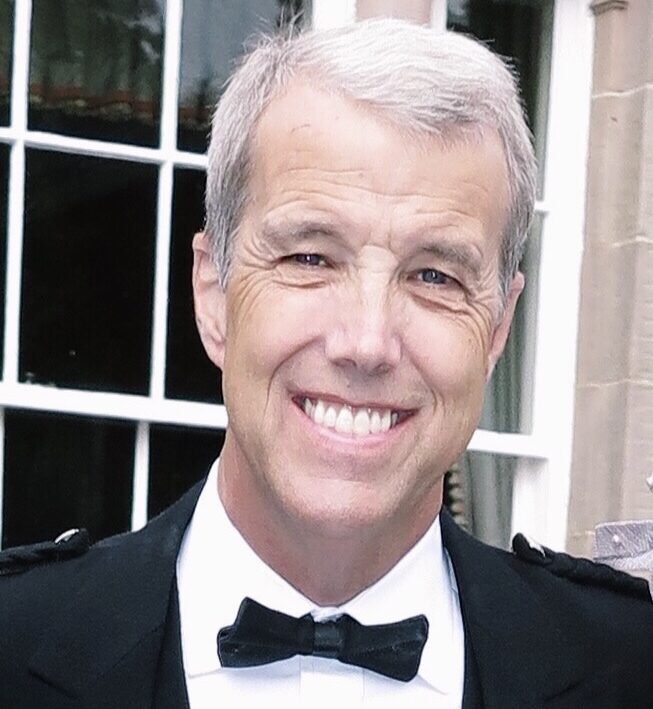
Kentucky Speedway Executive Vice President and General Manager
Mark has served as General Manager of Kentucky Speedway since it was acquired by Speedway Motorsports, Inc., in 2009. As President under the original track ownership, he played a primary role in the planning, development and operation of the facility dating back to the track’s inception and first race in 2000. He is the former president of Turfway Park Race Course, a Thoroughbred track in Florence, KY. Mark also served as President of Carroll Properties, a commercial real estate development company and was a long-time associate of speedway founder Jerry Carroll. Mark has owned and bred several Thoroughbreds in partnership with Hall of Fame jockey Steve Cauthen. Mark graduated with a degree in accountancy from the University of Notre Dame. He and his wife, Lori, reside in Edgewood, KY and are the parents of five children and six grandchildren.
Welcome to the Athletics of Business, a podcast about how the traits and behaviors of elite athletes and remarkable business leaders frequently intersect. The real stories and hard lessons to help you level up your leadership and performance. Now your host, Ed Molitor.
Welcome back to another episode of the Athletics of Business podcast. I am your host and CEO of the Molotor Group, Ed Molotour. And another phenomenal conversation for you today as we are joined by my special guest, Mark Simendinger, who is a Kentucky Speedway Executive Vice President and General manager and he has served in that capacity of Kentucky Speedway since it was acquired back in 2009 by Speedway Motorsports. As president under the original track ownership, he played a primary role in the planning, development and operation of the facility dating back to the track's inception and first race in 2000. And he'll share some great stories about how he came about finding the perfect location for Kentucky's motor speedway. And he is a former president of Turfway Park Race Course, a thoroughbred track in Florence, Kentucky.
He also served as the president of Carroll Properties, a commercial real estate development company, and was a longtime associate of Speedway founder Jerry Carroll. Mark his own Inbred There are so many cool stories here. Mark has owned and bred several thoroughbreds in partnership with hall of Fame jockey Stephen Cawthe. He's a graduate of the University of Notre Dame with a degree in accountancy. He was also an outstanding baseball player. And just so much here you talk about a career that has evolved into something that one can never imagine. When he graduated from the University of Notre Dame and took his first job in the city of Chicago. We'll jump into that and we're going to talk about why it is so critical right now to figure out how we do things better than we've ever done before.
He's going to talk about the ability to constantly being able to evolve in change and how that has been such a significant factor in his amazing career and how your professional career, I love this analogy, how your professional career can sometimes be like a punt return. I don't want to give away the punchline to that. And what are the three non negotiables that the team at Kentucky Speedway have which enables them to be such a successful team? And you know, true to form in terms of everything that is going on in 2020, we're going to talk about some of the force changes at Kentucky Speedway and how Mark and his team have done and continue to do the best they can with what they have.
So I'm going to get out of the way here and let you enjoy this amazing conversation with Mark Simendinger. Mark, thank you so much for joining us today on the Athletics of Business podcast. I am really fired up to have you here.
Yeah, well, thanks for having me, Ed. This is going to be fun.
I mean, an amazing journey that you've been on. But I want to. Before we work backwards and talk about your journey, I want to jump in to what your world is like right now as GM at Kentucky Speedway and how different it is from what the norm would be this time of year.
Well, this time of year we would know the NASCAR schedule for 2021 and we would be pre selling everything without reservation. So camping ticket sponsorship, all of those things. Right now we're in a little bit of a holding pattern for a couple reasons. One, the schedule hasn't been released yet, so it's very difficult to sell something that you don't know when it's gonna be. And second of all, there's still a huge amount of uncertainty with everyone mentally. Just what are we looking at? Every event that's done in this country has a varying level of fan participation or non participation. You know, down here in Kentucky, where we are, they just announced that the Breeders cup is going to be held at Keeneland. That's going to be no spectators. We just had the Kentucky Derby for the first time in 146 years, no spectators.
And the Bengals just played no spectators. But we actually have a minor league baseball team here that does have limited spectators. We have Bristol Motor Speedway, one of our sister speedways under Speedway Motorsports umbrella. We're owned by a parent company that owns eight speedways. That's one of them. They're getting ready to run this Saturday night, their big race, the night race. And they will probably have 25 to 30, maybe 30,000. Many 30,000 people in the stand.
How many? Is that normal, though? Is that normal?
It's huge. I mean, it seats 120, 530,000 seat people now, but it's a huge place. But still. So these things are kind of all over the map. And then we're trying to predict what it's going to be like next summer. And nobody knows what it's going to be like next summer. We have issues from a planning perspective. We have to try to forecast and plan with so much uncertainty not only related to what the virus situation is going to be, but also the uncertainty of what are people's attitudes going to be nine months from now. And that's just really difficult to project. So in the meantime, all of our speedways have been just moving ahead with other things. And we call it just picking up some Covid cash. That was a term that Marcus Smith coined and we've all have picked up on it.
You know, whether we're renting the facility to Amazon for storage or whether we're having a, an event with BMW that we just had last weekend with product testing out there or driving schools or things like that, we're still utilizing the facility. We're still trying to make money where we can while we sort this other stuff out.
So talk about that a little bit. So Amazon, did they reach out to you? Did you reach out to them? How did you identify other opportunities to sort of lean into and step into, pick up the COVID cash, which, by.
The way, I love that phrase, we actually contacted them. It was more just in terms of. Because Amazon is building, they are building a very large, I think it's $2 or $3 billion facility at the Cincinnati airport to house Amazon Prime Air in this region. And they're under construction right now. They have a big presence. They're hiring a lot of people. Well, someone from our staff reached out to them and just because they're a big employer and we didn't know whether. Yeah, I mean, look, we're always trying to sell tickets, right? We're trying to sell sponsorships and what maybe they have, even if they're not going to buy tickets, maybe they have an employee event at our speedway because we do a lot of team building things and all that stuff really just reached out that way.
And it was from that started the conversation. They said, you know, we do have a need. We have a need to store some of these trailers. And, and that's what we've been doing is we've been storing trailers that are filled with merchandise on our facility because we can, we have a lot of land and we can easily secure it. And that's important to them. We're in a good location for them in between Louisville and Lexington, Cincinnati and so it works for them and it's worked for us too.
You know, how has this affected your stakeholders so your employees, the numbers, the engagement, the psyche, so to speak? Because Kentucky Speedway and racing means a lot to not just your fans, but it means a lot to the people that work for your organization.
Yeah, it does. And honestly, this whole Covid thing's been really difficult in the very beginning. You know, our parent company restructured the company to really. We reduced our overall numbers across all eight speedways. And we also have a model now where we do a lot more sharing from speedway to speedway. So a lot of the people that are responsible for duties now at Kentucky Speedway, they may not even be based in Kentucky. They may be based at one of the other racetracks, and then we are one of the tracks that they will cover. And that's a little bit different than it's been in the past. In the past, we did all of those disciplines ourselves.
And so now the model is changing to more of a centralized model where more services are being done either by a home office or regionally than all of it being done locally. In the past, everything you did, you were responsible for. So that's brought change because we have fewer employees. We also are bringing employees onto our team that we either didn't know before, didn't know very well before, or who have a lot of other stuff on their plate. We need to as. Especially me as the boss, I have to figure out a way to build this team back. You know, it's. It's almost like now I know how John Calipari feels. You know, I mean, you show up and you're like, give me one and give me your name again. First name is what, you know, that's part of it.
You know, I mean, that's what we do as managers every. Every year. You know, one of the. One of the best things I ever heard somebody say is, you know, there's a reason we're calling you a manager. You got to manage stuff. This is just one of the things that we've got to figure out. It's different than it was. It doesn't make it worse, just makes it different. That's one of the things that we've got. It's a challenge for me to figure out, how do we keep going? How do we actually do things better than we did before? There are positives to all of this.
I mean, the people that are being put into our team are enormously talented folks, and they have a lot to offer because they have a lot of experience at these other speedways, and they can bring stuff that, you know, we didn't have before. And we have to start looking at the positives of all of that and figure out how to. How to bring everybody together. And so that's why I'm kind of excited about. I want to get as much definition as we can to these outside variables of schedule and all this stuff so that I can bring the team together on what the goals are and really let us go.
So that. And that's a great talking point right there. So you have your parent company, right. And there's a culture inside of that parent company, but you have Kentucky Speedway and the people that you are directly in charge of and you have your own culture. But now you have to sort of see where the pieces fit together with these folks that you don't know so well. Is it a lot of work to go not go back and build this trust up with the new people or to re. To introduce them to your culture or to bring them up to speed? I'm looking for the right word, but how much time are you spending on that as you wait as there's still many, you know, still so many unknowns?
Because one of the things we've talked a lot about on the podcast, and I talk a lot about my clients with, is having the ability to grow through this, not just go through it, right? And there's people that are just waiting to get to the other side of the say, okay, let's go. Well, we know. I mean, we're living the new normal, whatever the new normal is. This is our world now. So can you talk a little bit about how you're doing that?
Yeah. Well, I don't know how we're going to finally navigate it, but I will tell you this. First of all, start with a frustration. You know, one of the frustrations for me is the challenge of having the new folks and putting them into the organization and all that stuff is just made doubly difficult by the fact that we have this Covid thing and we are directed not to get together. I mean, it's really not encouraged for us to. I was a big believer in taking my team on team building stuff, whether it was a fun thing to do or whether it was a couple day retreat or that really we would do some good planning, but. But more than that, we would get to know each other, right?
And we, when we got to know each other, we got to trust each other and we also got to understand each other. And we got that. When we understood each other, we also understood that, okay, everybody is not going to be like me. That doesn't mean that it's bad. There's parts about that person, you know what, I never knew that about that person or I didn't know that about their husband, wife, kids, family, whatever they've overcome or whatever. And you only know that from, you know, really spending some time with somebody, talking to them, getting to know them, caring about them. And that's one of the frustrations is it's not the novelty of the team, the fact that we have some new people on the team.
The fact is, it's hard to just kind of like, you know, I can't get my hands on them, you know, I mean, that's the challenge.
So how do you fill that gap? That's the challenge.
Well, we have to try to bring them in. What ends up happening is we're bringing them in one at a time. It makes it more difficult, but we do bring them in one at a time. I encourage them to spend time getting to know all the team members. I think it's just going to be. Going to be harder to do. It's going to take us more months to get everybody ingrained if we can't bring them together.
Yeah.
You know, and spend time, literally spend. If I had this group normally, I would definitely be scheduling something here. Like, soon we would go off and we would all be together.
Right.
And we would spend that time. And so I have to figure out a way to try to do that without being able to take them somewhere and really spend that one one time. I won't say I'm an expert on that quite yet. You know, when I figure out that magic formula, I'll let you know, but that's what I'm going to try to be accomplishing as much as I can. Zoom is great. It's better than not having zoom, but. But there's got to be more to it than that, and that's what we're going to be working on.
Let's go back a little bit, but when you were able to get together and you were able to do the team building stuff in a sense of getting to know each other and I'm not talking obstacle courses or go karting and things like that, but when you actually sit down and they would engage and they connect and then we get to know the other person. Right. How did you go about doing that? I mean, was. It doesn't just happen by happenstance. What was the intentionality behind it or what kind of settings would you put them in?
Well, one of the neat things about my job, my career in, especially in the state of Kentucky, is I've gotten to know a lot of people and I get to do a lot of fun stuff, it became clear to me that everybody that I work with doesn't get to do the stuff that I get to do. If I can share that with them, that's exciting. Right? It's fun. They get to do something they've never been able to do before. They get to meet somebody they haven't been able to meet. They've heard of them, or they get to go places that they haven't been. They get to learn a lot of stuff that they didn't learn. I would try to do stuff also that was very Kentucky centric. So we would go to Keeneland Racecourse for the. For the horse races.
We would go to an equine hospital and behind the scenes, because, you know, I have a background in horse racing, so I know a lot of horse racing people. I would bring in prominent people from Kentucky to talk to the team while were down in Lexington. We would go to distilleries that were partnered with us and hear their story. So fun things like that they. Otherwise. And they're meeting people and behind the scenes stuff that they would never hear. Like when we go to the haggard equine hospital, I've got the head of the whole place explaining it to them, taking them behind the scenes and showing them what they're doing. This is where we go and touring them through the whole thing. I mean, it's fun, right? It's fine. And, and when you do that, people relax when they're having fun.
And when they relax, they talk to people and show a different side of themselves. And you know, that's kind of the name of the game. So we've had a lot of success with that. I'm looking forward to when we can do it again. Unfortunately, for this year, we've. As bad as I need it, I can't do it. So I am waiting for that green light. Cause we need it.
Yeah. Yeah. That's hard. Now you mentioned horses, so I want to jump into your journey. I think that's a good segue into your journey because prior to now, you've been at Kentucky Speedway for 21 years, which is. Is mind blowing. And is there truth to the story that I heard that you actually. To find the property that you are. You are on right now, you just drove up and down the interstate looking atlanta. Is there. Is there truth to that?
There is truth to that. There is truth.
Talk a little bit about that, how you segued and where you came from.
So I was working with a gentleman named Jerry Carroll, who was the primary developer, ultimately the primary developer of Kentucky Speedway. And were running a horse track up in Northern Kentucky called Turfway Park. And so Jerry had become very enamored with nascar, with Cup Series. It was really in a growth phase. He was looking for the next development to do and thought that doing a speedway would be challenging and Rewarding. And so were in discussions with a guy named Bob Levy, was the owner of Atlantic City Racecourse. Bob Levy ended up owning. He owned part of the Phillies back in the day, and he owned Atlantic City Race Course. And he was the one who said, you know, in Delaware, they have Dover, and in Dover, they've got a horse track, a trotting track inside of the speedway, actually.
And he said, you guys ought to do that. Well, we couldn't do it at Turfway park, but that's how we got involved in even looking at speedways. And so Jerry said, I'm interested in this. He said, you need to go find 1,000 acres between two interchanges that we can develop this on. Well, I mean, you know, it's close to, you know, in between Cincinnati, Louisville, Lexington. I mean, I just started. What do you do? What do you do when you have an assignment like that? You just start driving around. I was calling people because my background was in real estate development. So I'm calling, you know, zoning board people and things like that and getting their recommendations. And I was out there kicking the tires. And it was really as I was kicking the tires. Word gets out when you're looking for 1,000 acres.
And so the judge executive, who is like the mayor of a county here in Kentucky, they're called judge executive, he called Jerry Carroll and said, I hear your man is out looking for property. I've got the best property for you right here. And I had been looking for big tracts of land, and he put together four or five different smaller parcels and said, you know, this is where you need to be. I had actually been right on the land adjacent to that, looking right adjacent to that.
Okay.
And he called Jerry, and Jerry looked at it and said, yeah, it's a great piece of property, and that's the one we ended up buying. So that's kind of how Kentucky Speedway happened.
And 21 years later, here. Here you are.
So, you know, ironically, I was only supposed to be there for development. I. I was supposed to be there through development. So when you say 21 years later, I can't believe it. You think? You can't believe it. In June of 2000, I was supposed to be doing something else. Yeah, well, talk about not believing it.
Well, you obviously had a pretty good thing going.
Yeah. So far.
Yeah. When did you realize that you guys hit gold in terms of location, in terms of what you were doing and the whole business plan?
Well, I mean, it's always been difficult. And it's, you know, the first when in 2000. When we opened the play, everything about the motorsports business is the big events. And in motorsports in America you can't get any bigger than the NASCAR Cup Series. And when we opened up that speedway, we did not have a Cup Series race. And it wasn't until, you know, the original owners ended up selling the speedway to the Smith family back in 2009. And it wasn't so from 2000 to 2009 it was a struggle. It was a big struggle because we did not have the race you need to have in order to really make this thing go. And the Smith family controls, still to this day, they control a lot of races, 13 cup races.
So Bruton Smith bought the speedway and he moved one of the races up from Atlanta to Kentucky. And that was in 2011. And that's when really when our whole fortunes changed it. When the track was sold to Bruton Smith and he started to invest a lot more money into it. I thought we had a good speedway until Bruton got a hold of it and then he took it to a whole nother level, brought in the cup race from Atlanta and you know, really took us to the big league. And that's all due to Bruton Smith, Marcus Smith and his family.
Speaking of the big leagues, you go to Notre Dame, you play baseball, you graduate from Notre Dame. You mentioned that real estate was a little bit of your background. Can you take the listeners? I think it's an awesome journey. I think there's so much there and there's so many lessons to be learned. Can you take us through your journey from your graduation to your first position, how you got into real estate and how you ended up where you are now and some of the amazing folks that you surrounded yourself with, some of the lessons that you learned and things that can truly impact the listeners.
Wow. Yeah, sure, I can do that. You know. I graduated from Notre Dame with an accounting degree. I went to work for Alexander Grant & Co. And I was working downtown Chicago. And I remember I started in August, it was really hot and I only owned two suits. And so I decided I was really going to make an impression on everybody. Even though it was 98 degrees outside on my first day of work, I decided to wear my three piece suit to work, which happened to be 100%, you know, heavy wool of course, but I didn't know the difference honestly between a wool suit and a lighter weight suit at that time. I had my dad's dress shoes. I had to borrow them from him. So I was really something else. I'm sure they were thrilled to add me to their employee roster.
And I was doing great. I went to work. I'll never forget my first day of work. I went to work, and they. They gave us all these books to study for the CPA exam and reference books. And so I've got an entire audit bag of books, plus books under my arm on the train. I go back, and I got off at one stop too early, about two miles from where I needed to be. And that was the last train of the day. So now I've got all these books. It's 98 degrees, 100% humidity. And I walked back two miles, literally. It was so hot, the tar was sticking to the bottom of my dad's shoes. And I got in there, I thought, oh, my goodness, what have I gotten myself into? And working can't be this difficult.
And, you know, it turned out not to be, but, you know, I was not a great accountant, and I worked there for a little bit and then decided I wanted to go back to my hometown in Baltimore area, be with my dad. And so I did that, and I caught a break. You know, and a lot of things in life aren't things that you plan out, but I do think if you. If you're looking. A lot of times I use analogy of, you know, being in a profession or whatever you're doing, it's kind of like running back a punt, you know, like when you run back a punt, if you see a guy running back a punt, you. You look, you know, and you wait for the blocking, and you just try to find.
You can have all the plans you want on running back a punt. But so much of it is just based on what happened, you know, and if there's an opening, and if you see an opening and you can get to it, then you can make some real progress. And. And so I just kind of got lucky. I ended up at a bank in Baltimore, and they ended up putting me in the commercial loan division. And I met the best real estate developers in the Baltimore area at the time. And I really hustled. I didn't know a whole heck of a lot, but I was sure was willing to learn. And one of the smartest things that I did was everybody that I dealt with.
I spent time with them, and I asked them why they were doing what they were doing, how they did it, and I didn't just give them a loan. I didn't just get the money out the door. I learned from everybody that I was dealing with, because I was very fortunate that I was dealing with these top people. And that's one of the great things about being a commercial loan officer is generally speaking, the people are borrowing the money, are the principals. So you get access to people that you know. As a 26, 7 year old guy, 25, 26 year old guy, I shouldn't have had access to, but I did and I learned a ton. And then after three or four years, my wife and I started to have a family.
My dad remarried and relocating back here to Kentucky, went to work for a bank here, but only for a short period of time. And then. And then I met Jerry Carroll, actually lent him money to buy Turfway park racetrack with his partner, Jim Thornton. Jim Thornton is a very successful business person, but also he's Fuzzy Zeller's father in law. As a little.
I agree that I did not realize that. So you learn something new every day.
And so anyway, lent Thornton and Carol the money to buy Turfway Park. Jerry ended up asking me to come to work with him. I was 29 years old and I left banking, went in the development business. So I hold the distinction of actually making a loan and then working to pay it back. So I did both. It's not a bad deal myself, paid myself back. I made. I made sure. Yeah, I made sure that was a good loan.
You double dipped on it a little.
Bit, didn't you, huh? Yeah.
That's awesome. Oh, man. So Turfway park talk. Talk about that. I mean, what was that like getting out of, you know, commercial real estate and jumping into that world with Turfway Park?
Well, you know, I got to do a little bit of both. And so I ran. I ended up running Turfway full time. But as I was running it, I also was able to develop the surplus land, real estate around Turfway and do the rezoning work there and all the financing work and all that stuff. So I got to do both. But it was. It was great. You know, probably what I learned more during that tenure than anything else was politics, because I had never been in the regulated industry before.
Right.
And so in that business, whether you like it or not, you're involved in politics because, you know, it's a regulated business there. You have to deal with not only the horse racing Commission, but a lot of the rules are by statute. And so there are changes to it every session. And so I learned a lot about Kentucky politics during that time period. And it was also interesting and I learned a lot about what you were talking about earlier is the importance of changing, you know, where we created a lot of value in Kentucky in Turfway park was when we started simulcasting horse races, which now sounds like, you know, as my kids say, so last year, you know, I mean, it's. But you know, that when I started, there was no simulcasting.
So we figured out a way to distribute our product to people that. So they didn't have to make the long drive up to our. To our racetrack. And that made a huge difference. And over the years, you know, that has continued to evolve now into account wagering and things like that since, well, since passed. We sold it. But, you know, that was really an important thing, was to continue to look at this franchise and how can we maximize value in the franchise. I could tell you a quick story that kind of absolutely, in that light is a casino. Gambling was coming along at the same time that we had Turfway park, and that was not popular with the establishment at the time.
Down in Lexington, when I was running Turfway park, the head of the Thoroughbred Owners and Breeders association was Penny Chenery, who was Penny Tweedy back, you know, in the Secretariat days. And so she was the owner of Secretariat. And so I went down to Lexington to talk about the need for horse tracks to marry up with casinos, which now they've done. But back then was not a popular position. It was brand new. The establishment in the old line establishment in Lexington didn't really want to hear it. And my presentation didn't go over all that great to them. And so fast forward several months afterwards, I was. I was down at Keeneland at the races, and I'm at a table with Penny Chenery, and we spent the day together and we had a really nice time.
And by the time we get done, I get up to go and I, you know, I told her how much I enjoyed being with her, and she said, you know, you're not nearly as big a jerk as the first time I met you. Bottles, you know, so that's my.
How do you come back from that one?
I couldn't tell whether that was a compliment or not. So, anyway, that was. But. But the reason for the story is not only is it a little bit funny, but. But also it does talk about, you know, you constantly have to evolve and change. That industry did, and it has, and Kentucky racing now is flourishing. I'll point out that it's flourishing because it's embraced, you know, that type of game gambling. But, you know, I mean, everybody, look, everybody loves the thoroughbred here in Kentucky, and everybody wants the same stuff. It's how you get there. You know, people may have different opinions, but.
Right.
So anyway, that's how I was involved in horse racing. And it's been great. And I'm still involved, you know, today as a member of the Horse Racing Commission. And, you know, it's really quite a good business now, a lot of fun.
Do you still own horses?
I do not own any more horses. I've, I've owned and bred a lot of horses over the years, but I don't own any currently.
Okay, okay. Because I know you're partners with Steve Kaufman. How did that come about?
Well, when Steve. So Steve's career is. He won the triple crown in 1978, and then he rode here in the States for a little while after that. And then Steve is naturally really kind of a bigger guy for a jockey. He's. He just, he kind of developed late. He was, he was obviously very young when he won the Triple Crown. He was only 17 years old, 18 years old, and he was standing. Then as he began to mature, he started gaining weight. And so it was tough for him to make weight in the US and so he went over to Europe. He got an offer to ride over in Europe, went to Europe, rode over there, was champion jockey over in Europe for many years and was the highest paid jockey in the world for several years.
Was writing contract writer for Sheikh Mohammed at the end of his career and then he retired. When he retired, he came back to Northern Kentucky and we hired him to do public relations work for us. And so he did that. That's how we met. And his kids are growing up with my kids and our families have grown up and we've just become best friends over the last, wow, 25 years or something.
Yeah. Do you miss, do you miss owning horses? Like when you turn on the Kentucky Derby and you watch the race, do you get, I don't want to use the word nostalgic, but you get reflective and you miss it a little bit.
Well, you know what I mean, owning horses. See, the. My theory on horses is that most of them can't run, which is a tough. It's a tough business. I mean, there's a lot more money chasing good horses than there is, you know, coming back from winning purses and stuff. So you have got to be willing to lose money and you got to be okay with that because now you might hit. When you hit, you're making money. And there's nothing more exhilarating and more fun than having a good horse. But there's a lot of bad ones. And it's kind of, you know, it's. It's a drag when you have bad ones, too. So I have enough friends in the business that, you know, I get a lot of excitement out of theirs.
Steve's got a really good Philly that's going to run a stakes race at Keeneland on October 3rd.
Okay.
And I'm into all that. And so, yeah, I'm with those guys, and I have friends. Okay. Talk about the Kentucky Derby. Steve's brother Doug, he is a consultant, a bloodstock consultant. He suggested that mating for Authentic. So he was involved in Authentic. And then I have another friend, Frank Brothers, who picked that horse out at auction for. He's a bloodstock agent for the guys that ultimately bought the horse. So I've got plenty of rooting interest all the way along.
What a great race that was.
Oh, my God.
Yeah.
What a great training job by Bob Baffert. I mean, to get that horse to get a mile and a quarter, that was. I think that may have been Baffert's high water mark from a training perspective, because, you know, American Pharaoh and Justify were just a cut above the other horses. This horse was not necessarily a cut above the other horses. He had to be trained into it. Yeah, that was pretty cool.
Yeah. Well, speaking of guys like Bob Baffert, Steve Cawthon and Penny Tweedy, and you've had some amazing people in your life as well as you've been that amazing person in other people's lives, but what are some of the best mentors or best folks that you've surrounded yourself with? People that have been in your orbit, that you've learned some things from in your time?
Well, you know, I've been very lucky. One of the cool things that, you know in your career, if you can look back and really say that you worked with some interesting people and that you took a lot from people. And that's one thing that I've always tried to do and I always encourage people that I work with to do. I say, you know what? Take from me the good stuff that you see. And, you know, you don't have to take it all, you don't have to like it all, you don't have to love it all, but take the good stuff. If you look at me and you think I'm really good at certain things, take that and use that going forward.
And that's what I always tried to do with the people that I surrounded myself with or that I was working with, you know, so I was working With Jerry Carroll for a long period of time. Jerry Carroll is just a hustling guy. I mean, he. He used to have. Outside of his office, he hung that Abraham Lincoln, I think it was Abraham Lincoln quote, you know, good things come to those who wait. But only left over by from those who hustle or something like that. Right, Exactly. And that was kind of Jerry's deal. And, you know, I really learned how you cannot take anything for granted. And. And then I got a chance to work after I worked with Jerry for a long time with Bruton Smith. And Bruton Smith has a saying that lives on every day in our organization.
Inspect what you expect. And, you know, don't leave the details to other people. You know, there is nobody so big that they don't inspect what they expect. And if you don't, you know, shame on you. So the hustle part of it from Jerry. Jerry's one of the greatest convincers that I've ever been around. Some people would say he's one of the greatest salesmen. He says, I'm a convincer. I'm not a salesman. But he, you know, there with him, no substitute for vision, enthusiasm. Whether it's him, Bruton Smith, some of the owners of Kentucky Speedway, you know, I got an opportunity to work with Dick Farmer, who founded Cintas. Be able to talk to him. Was something that I'll always treasure in my career. Got a chance to know Dick Duchesswa very well. The owner of Liftmaster garage door openers, Chamberlain Group, among many other.
Largest shareholder of Churchill Downs for many years. The builder and owner of Arlington park racetrack. But I got a chance to know Dick and got a chance to talk to Dick a lot about business and his approach to business and things like that. You know, all of them share tremendous vision. Chris Sullivan, who founded Outback Steakhouse, was one of our partners. And the vision that they have. And the other thing is, all of them, without exception, all of them went through tough times to get to where they are. You know, nobody had a linear path. There is no such thing. If you're going to bite off a large challenge, there's no such thing as a linear path. And you can't expect that, Right? And they all would tell me about, you know, challenges that they had to overcome in order to get that.
You know, a lot of people don't understand. They see Bruton Smith right now. He owns eight speedways. Bruton Smith built Charlotte Motor Speedway as a young man. He was under construction. Charlotte Motor Speedway. His big equity Partner had a very untimely death and Bruton ended up losing. Charlotte Motor Speedway.
Wow.
And he went out, made a bunch of money and came back and bought it back.
I didn't know that. That's amazing.
Yeah, it's an amazing story of perseverance. First of all, a vision like what 20 something year old says he's going to build a mile and a half speedway in Charlotte, North Carolina. Well, Brutus Smith does, Bruton Smith does. But the perseverance to come back and just talking to Dick Ducheswa about thrall railroad cars. He had, he had thrall railroad cars. Never been a business than the railroad business. You know, in bad economic times with all that money that they had in capital assets and stuff, you know, there would be very difficult times and Dick would have to fight his way through those things. And just you know, really inspiring stories.
And that's one of the cool things about my career, is that I have had a chance to work with some people that I really respect and learned a lot from and people to me that are just kind of legends in the business world.
That's awesome. That's awesome. Jerry Carroll. Back to Jerry for a second. You talked about he's a convincer and he's possibly the greatest salesman that you've ever known. But it's all about vision and enthusiasm. What was it about him? What was it, what was the X factor that made him such a great convincer?
I think, number one, I think you have to have enthusiasm and belief in what you're doing. If you don't, nobody else is going to. So Jerry had a lot of enthusiasm. He really believed in business. He believed in the opportunities that he was working on. That came through first and foremost to everybody that he talked to. He believed in quality and everything that he did. It used to drive him crazy if things weren't up to the standards that he wanted. And I think people gravitate towards that. They want to be part of a winning organization, they want to be in the lead. And he would convey that, you know, if he built an office park, you know, that office park had the best landscaping of any office park in the area. It was the best front door of anywhere in the area.
It looked like a place you wanted to be. You know, when we took over Turfway Park, a good story, Ed, was Jerry Carroll and Jim Thornton had purchased Turfway Park. And they had two completely different approaches to it. Right after they owned it and they started to operate it became obvious to Jerry That Jim, he went to Jim and said, we have got to spend money on the front end on this racetrack because we have to fix it up, or we got to get this thing to a certain level of quality here. Thornton's approach was more of, I don't want to take that risk, Jerry. It's going to take a lot of money. Let's take the profits that we get and reinvest them as they go along. It's going to take more time.
And Jerry said, jim, we can't do that, because there ain't gonna be any profit if we don't show some quality here. But we have an opportunity to fix this place up, clean it up, make it nice. People are going to come. That was Jerry Carroll. You know, you ask what was it that convinced people to be in business with Jerry Carroll? They knew that if Jerry was involved, it was going to be a quality product. He was not averse to taking a risk. He would put his own money behind it. He would believe in it, but he would also work really hard to make sure that it was executed the right way. And as it ended up, the two of those, Jerry ended up buying Jim out over that disagreement on philosophy going forward, and Jerry bought him out.
And then when he bought Jim out was when I actually ended up going to work with him and kind of executing on that vision that he had.
I mean, that's a great story. And, you know, it's funny you mentioned Dick Duchessua earlier, which obviously, as we talked about, hits so close to home to me, because I grew up in Arlington Heights and Arlington park was such a gem. And that's exactly what he did when. After the awful fire in 1985, when he rebuilt Arlington after the miracle million. That was it. The grounds were impeccable. They were beautiful. They were colorful, and it was just. It was unbelievable.
We knew him well at Arlington, and I remember going up to Arlington, and Dick took his business philosophies that he had learned from all of his other businesses. A hugely successful business person, and he incorporated those in thoroughbred racing, and he showed thoroughbred racing things they had never seen before. The design and the finishes in Arlington were second to none of. When you walked into Arlington, he had escorts there, red coat escorts that you would walk in and they would guide you. They service people. What could, you know, are you new? Have you been here before? Where would you like to go? What do you want to do? And they would guide you through that. Had never ever happened before. These things, now they're happening right?
You.
You know, you Go to Churchill Downs for the Kentucky Derby. And who do you see? You know, they have for vip, they've got the VIP escorts now.
That's awesome.
And the commercial entertainment spaces at Churchill all tailored after the beautiful work that was done at Arlington Park. So Dutchessois was a guy ahead of his time. A thrill for me to know him, and he's a person I consider a friend and just, you know, somebody I really have a lot of admiration for.
Well, he did it right. You know, it's funny because the greatest job I ever had in college was selling racing forms. Arlington park. And when Mr. Dutchessois was coming to Arlington park that day, you knew it, you were told. And I was just a racing form guy. Right. I mean, people were scrambling to make sure that everything was impactable. And everybody took a lot of pride. Like you're talking about Jerry. That's what people were attracted to. It was the quality in the experience. It was way more than just the horse race.
Yeah, yeah. No, Arlington just an unbelievably beautiful place and just a great standard of when you walked in there, you knew you were somewhere. You know, it was different. You know, it just, it was just a quality experience. It's a great place.
So as we wrap this up, let me ask you, it's a great lead into. What's it like when you walk into Kentucky Speedway? Pre pandemic. When you walk into Kentucky Speedway for a race, what's that experience like?
Well, the experience is the best description that I have for it is that when you come to us race weekend, it is the happiest group of people that you've ever been with. And that's one of the things that I've tried to get through to all of our employees. No matter how new, old, whatever I said, nobody is coming here to see how closely you can, you know, follow the rules. That's not why they're here. Everybody's coming here to have a good time. Our job is to make sure they have a good time. Now we've got rules and we got all that stuff. Okay, that's all fine. But the most important thing is from an attitude standpoint, you know, it's kind of like, you know, how you wait all year for Christmas morning and then it comes.
Yep, that's the way for auto racing fans in our region. We only have one cup race a year. This is it. They've waited 364 days to come here for this. Right. And so hopefully what the attitude is, people get. We have a lot of positive comments back is, you know, this is. The people that are here are. They're nice, they're accommodating, they're happy. This is a fun place to come. We really appreciate what you guys are doing. We appreciate that you're bringing this to Kentucky. Thanks for doing that. But the number one thing is people having a good time. I mean, that's what it's really all about. That's what we're selling. That's what we want them to do. I don't want anybody to come here and say, man, you know what? I went to Kentucky Speedway, and man, can they follow the rules?
Yeah, that's great, man. They really. Boy, they really follow the rules on you.
Boy, they speak the same language. Yeah. Yeah. So it's got to be pretty significant. The type of people. This is the last question I'll ask you, Mark. There's. We could talk forever. There's. There's got to be a specific, a certain type of person that you look for in terms of your leaders to bring these people type of people into the organization where you're going to make it the happiest group of people, where there's going to be the enthusiasm, there's going to be that engagement and create moments for your fans. What is it that you look for?
We bring in a group of interns every year, and I make it a point to spend time with all of them because I want to make sure that all the interns and a few of them end up staying on our staff. But most of them don't, but they go on. But I want to make sure that they learn a lot. And one of the things that I tell everybody is there's three things that we really need to have. And none of this has to do with. I hope that you come from a great academic program and all that kind of stuff. But the fact is, none of you, no matter how good your academics are, none of you know as much as the managers know that have been doing this here for. But here's what we need from you. We need.
You got to respect your fellow teammates. You have to have a good attitude. Because I can't. I can do a lot, but I can't make you want to do stuff. I can't make you have a good attitude. And the third thing is you got to be a good teammate. I'll leave you with one story, Ed, is where I really learned this myself. I was a young guy and I always learned. I always learn more the hard way than I do the easy Way some reason, I imagine maybe that's the same for a lot of people. But I'll never forget I had a job interview with American Hospital Supply, because back when I was an accountant, I thought, you know what? I got to do something else.
I got a job for salesperson for American Hospital Supply, went to the interview, and they turned me down. I said, how can you guys turn me down? You know, there's no way. How did you turn me down? The guy said, when you were here, all you talked about was yourself and what you were going to do. And we just didn't think you'd be a good teammate.
Wow.
Yeah. Wow. And when they say that stuck with me for the next 30 years plus. And, you know, that's when you're going to bring somebody in. We want you to be a good teammate. Right. So that takes a lot of different forms. One of them is making sure that you always think about the impact of whatever you're doing. What impact does it have on everybody else instead of just plowing ahead and doing your thing. But. But those are the three things that we emphasize with everybody. And, you know, and. And I always tell our group, look, it's just us here. If this isn't a great place to work, we have nobody to blame but ourselves. And we need to figure out how. We need to make it a great place to work. So if we're getting.
If we're in a little slump or something and things aren't going real well, we'll. We'll reset and we'll address whatever the issues are to make sure it's a lot of fun. I mean, if I'm going to drive down there, got to be worth it, you know, we got to have a good time.
Yeah. Well, thank God you didn't get that job and what an amazing lesson you pulled out of it. But, you know, and best of luck to you in the group. Cause I know this is such a crazy time, especially for you and your industry and continuing to work to make it, you know, the best experience. It's so hard. But I cannot thank you enough, Mark, for joining us today. I mean, this was. This was an incredible conversation.
Well, thanks, Ed. It's been a lot of fun. And, you know, I hope that we'll see you. Maybe we'll see you on the baseball diamond.
Well, that's the rumor. That's the rumor. We've got to give those shout outs, you know, and we may have left a little stories. We might have to have you back on because we left a few stories out there, but that is a very good possibility.
Well, I'd love to come back on. I've got a couple more in my. In my quiver here, so you let me know then.
You know what? Hold on to those because we're going to do just that.
All right, that sounds great.
Hey, Mark, thank you so much.
Thank you for listening to the athletics of business. Be sure to give us a rating and review so we know how we're doing. For more information about the show, visit theathleticsofbusiness.com now get out there, Think, act and execute at the highest level to unleash your greatness.