
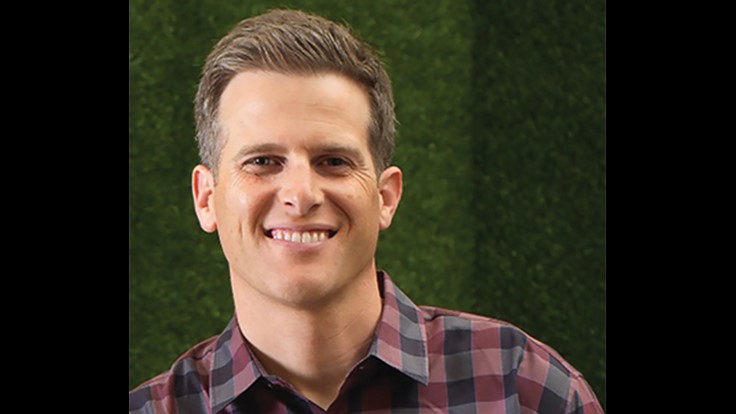
You may not expect a pest control company to have a full-sized NCAA basketball court and a golf simulator inside their headquarters—but then, you may not expect a lot of things about Aptive Environmental’s unique culture and amazing vibe. Modeled after the slick beauty of leading tech companies, Aptive has been a disruptor in the pest control industry by offering the best technology and solutions to a stable and professional sales team and introducing an element of fun. At the helm of this juggernaut company’s beginning is David Royce, Founder and Chairman, and Vess Pearson, CEO. David describes himself as a “serial entrepreneur,” and is always looking to make the world a better place with each business he starts or influences. He has been featured in several articles by Forbes magazine and other national publications and continues to dazzle the world with his intense curiosity and tenacious creativity. Vess brings his passion, drive, and energy for building successful sales teams and creating a fun culture. Vess continues to propel Aptive forward as the CEO, as David has transitioned to a less hands-on role. With a clear aptitude for connecting with people, Vess’ energy in moving a group towards a goal compels those around him to join in and become invested.
David and Vess are committed to the healthy culture and sustained growth of their company, and the sincerity of their intentions towards employees and clients is absolutely apparent in all that they do. New sales reps hired at Aptive see a 60% average increase in their sales. When we asked about this, David attributed that success to “a lot of simple stuff done extraordinarily well.” This notion permeates every idea they talked about with us, every plan and structure they have put in play: the small things add up.
Aptive’s successes continue to add up and achieve new heights with every passing year, with Vess and David continually contemplating new approaches.
Welcome to the Athletics of Business, a podcast about how the traits and behaviors.
Of elite athletes and remarkable business leaders frequently intersect. The real stories and hard lessons to.
Help you level up your leadership and performance.
Now your host, Ed Molitor.
Welcome back to another episode of the Athletics of Business podcast. I am your host and CEO of the Molitor Group, Ed Molotor and we are on to episode 101 with David Royce and Vess Pearson of Apted Environmental and I could not be more excited to bring them on here and talk about Aptiv Strong initiative. But let me tell you a little bit about Aptiv, who they are, how they do things. Now you may not expect a pest control company to have a full size NCAA basketball court as well as a golf simulator inside their headquarters, but then again, you're not going to expect a lot of things about Aptive Environmental's unique culture and amazing vibe, which I can't wait to share with you in this conversation.
They're modeled after the slick beauty of leading tech companies and Aptiv has been a disruptor in the pest control industry by offering the best technology and solutions to a stable and professional sales teams and introducing an element of fun. At the helm of this juggernaut company's beginning, as I mentioned earlier, is David Royce, Founder and Chairman of as well as Vest Pearson CEO. David describes himself as a serial entrepreneur and is always looking to make a world a better place with each business he starts or influences him. Wait till you hear his journey. It's absolutely amazing. He has been featured in several articles by Forbes Magazine and other national publications and he continues to dazzle the world with his intense curiosity and I love that. Just intense curiosity and tenacious creativity.
Thus brings his passion, drive and energy for building successful sales teams and creating a fun culture. Vest continues to propel Aptif forward as a CEO as David has transitioned to a less hands on role with the clear aptitude for connecting with people. Vest's energy and moving a group towards a goal compels those around him to join in and become invested. One of the things we're going to talk about today is the initiative they took with the start of this crisis, the pandemic. Active, Strong and we'll talk about what personal challenges the sales team took on as a result of Active Strong and how David Invest prepared their salesforce to take on their biggest challenge to date as an organization.
This one I love is where David Invest will talk about how they built such an amazing culture and attracted and retained the best talent in the not so sexy business of pest control. And when the pandemic started, they did a really good job of identifying the areas of the business that might be changing. And that led David and Best to realize that an increased level of mental toughness was a good thing to focus on and how they got their people to embrace the mindset that where you feel friction or adversity, there is really an opportunity. So I hope you enjoy this conversation half as much as I enjoyed recording it. There is so much here, so much value and so many things to take away right now for you and your team.
Dave Vest, thank you so much for joining us today on the Athletics of Business podcast. I am extremely fired up to have you guys here with us.
Thanks for having us, Ed.
Yeah, thanks for the opportunity.
This is unique. I am not sure that I have had two guests on at the same time in a while, so this is going to be a lot of fun, a lot of great conversation. You guys have some phenomenal stories, so I look forward to jumping in. And why don't Dave, why don't you start with telling us about the journey and the story behind active environmental and how you folks got to be to where you are today.
Do you want the long version or the short version?
Ed, you got 45 minutes. All right.
So it all started. I was a student in college trying to pay my way through college and I went out to I had a friend say, hey, do you want to go make 25 grand this summer? I sold pest control services the previous year and so I followed him out to Sacramento, California. And I was so excited because I thought this was going to be my way to making enough money so that I could just focus on my grades throughout the school year I got there and the first five days I sold zero accounts. So I was pretty frustrated. There's definitely thoughts in my mind of going home and I just kind of asked myself, what more do I do at this point?
So I went to Barnes and Noble back when there were Barnes and Nobles and bought half a dozen sales books and just started reading up trying to understand what else could I do. And I figured it out. It took a little bit, but by the end of the year I ended up becoming the top sales rookie out of a couple hundred salespeople. And that next year I started looking for manager opportunities to train others. I really enjoyed the aspect of sales and you have trained. So I found a small company to work for out in Dallas, Texas, and I got to be a sales manager. And I asked when I got there. They didn't even Have a sales training manual.
So I asked the boss, I said, hey, would you mind if I write training manuals and create some training videos and do things that hadn't been done in my previous company? And he was so excited about it that he actually put me in charge of his whole program, kind of maybe the VP of sales to help him recruit throughout each year. And so we took that company from about a million and a half in revenue when I got there, up to about 10 million in revenue over just three summers. And I thought I was going to get out of pest control. I always looked at it as just a summer job. And I thought I was going to go do investment banking. I was studying finance at byu.
So I asked my boss, I said, hey, can I get a letter of recommendation for you? I know I've helped manage over 100 salespeople for you and hoping that's all good, a good track record for my resume. And he asked me a question I never thought of before. It was, why are you going to go work 80 to 100 hour weeks for somebody else? And he said, you're really good at this, you should just go start your own company. And when he told me that, I thought, pest control, that's just not sexy to me. Why would I want to go into that industry? It was a great job to get me through my schooling, but he took some time and he kind of convinced me with it.
And then he told me he was actually selling his business for $10 million and I'd been there, he'd only have one year in business. And then I was there for the next three years and I kind of seen that growth and that trajectory and I thought this might be a good business model to initially at least make some good money. And then maybe I'd go back to MBA school or something like that. So the quick story is I ended up basically licensing his company name. He sold off the accounts, Determinex, but he didn't sell off the moxie name. And then I started my own company in California. So did that for four years, ended up selling that company, grew it up to about $12 million in revenue and sold that to Terminix as well.
And what I did is I used that capital to throw into the next company, Ecofirst, built that for three years. I had another offer on that company and sold that one and started up another company called Alterra, built that for four years and then finally decided, you know what, I need even more capital to continue to grow. It's also a great way for Me to take some chips off the table and then sold that business to Terminix as well and then started Aptiv. Aptiv is really our long term vision now. And each time we started a new company, I didn't necessarily think that were going to change the name or ever sell it again.
It just happened to be a great way to get capital in order to start the next venture and not have to go to private equity or have outside investors come in and take away the equity in the company.
That's unbelievable. So at what point did you say, I want this to be the long term play, I want this to have the long term vision and then how you develop this, I mean, I love the way you guys, your culture is amazing. I can't wait to talk about it. How you go about doing things. When did that start to resonate with you?
So I think definitely the second year I had a decision when I was going to sell the first company. I said, am I going to go back to MBA school? Do I maybe go do an executive mba? And that's what I initially thought I was going to do. But I definitely understood that I wanted to grow faster and I didn't have the money to grow as fast as I needed to. So we started Eco first and that's when we started going national. We went into four different states and expanded over the next three years into I think nine different states. And then it was kind of the realization, okay, I need more money to grow even faster. And we sold it again. But the long term vision, I would say it definitely came probably in between Eco first and Altera.
Altera is definitely when we started making big investments into our company culture, amenities, you know, getting a company headquarters that was super unique and really started to differentiate, especially from our competition. Outside of just like being great at sales was always the initial focus because I, you know, that's what I knew. And that was the great opportunity for college students. I wanted to give that back to other college students because it was such a awesome experience for me. But I took that in the sales training program and then I transferred it into the operations side, wanting to be the best in class in operations, looking for more environmentally responsible ways to do it, and then looking at company culture and how do you keep that same family feel that we had at our first location and sprinkle that across the rest of the country.
I came into the picture the second year of the Moxie Company. So I was, yeah, I was pretty early on.
Okay, let's talk numbers, let's talk about what you guys have accomplished and how you've gone about doing that.
Yes. So with Aptiv, we put on over a million customers at this point. I remember years ago when Dave came to me and said, hey, the record for most accounts put on by a company that focuses on door to door is 42,000. It would be really cool if we did that. And three years into that second company, EcoFirst, we achieved it. And then, and then it was, hey, it'd be really cool to do a hundred thousand customers. And then we said, hey, it'd be really cool to do a hundred million. And I remember we did this huge thing when we put on our 500,000th customer.
And the funny thing is this year when we put on our millionth customer, it kind of just, it felt kind of anti climatic because we have such bigger aspirations and you know, now we're trying to, you know, chase many millions of customers. So it's just kind of been over time, slowly but surely we've raised our sights and here we are.
How have you done that? Obviously recruiting, obviously pouring into your sales folks and your workers there. But what's been the big difference maker that you've seen this exponential growth over the last few years?
We keep our best people. We rarely lose like a manager type person in any part of the business. And that has made us. So we're very much like a snowball. We kind of can push the snowball down the hill and we keep on attracting more and more great people to do that. And we'll talk more about this, but we've built, I feel, an amazing culture. Our training program across the company is really strong. And so our people feel prepared. They feel like they're the best and that helps them to want to stick with us. And then I think that we've given a pretty strong vision. People like to work for something that's growing. People like to be on the Yankees or the Lakers, for example, and the Cubs. Yeah, or the Cubs, except.
Except relief pitchers, for God's sakes.
Yeah. And we don't like to take such long breaks before, you know, big championship. Yeah.
Yeah. Well, I ain't gonna be around for the next one, that's for sure.
But yeah, people just like to be a part of a winning team and I feel like they see that with us.
Yeah. And I want to get back to that winning team. But I have to ask Dave a question. Dave, let's go back because there's a story I want to get to. When you were, you know, oh, for however many days, your first 90 days, when you were in college and you did the summer job and you went to Barnes and Noble, you bought the sales books, you were riding with a mentor, you were talking to a mentor. What was the light bulb? What went on, what changed and how have you brought that into, like, the sales program you developed and how does that show up and how you train these folks in your sales today?
Yeah. So what was really hard for me is I just hadn't seen it. I'm a big believer, you know, if you can see it, you can do it. I'm definitely a visual learner. And I convinced my manager, my sales manager to go out with me just to let me follow him around for an hour and a half, and I watched him close two sales during that time. Maybe it was only one sale. I think it was actually just one sale. And it clicked for me. I finally understood what it was that I wasn't doing. A lot of it had to do with just. I didn't understand how to close. I didn't really understand how to ask the right way, be a little bit more assumptive and know as excited about the service from that experience.
What's great is our sales program is really developed around that bad experience that I had where we said, hey, there's things that need to happen when a salesperson starts with us. So let's have the very best people add all their ideas into our training manual. You know, let's really make it sales specific as opposed to just technically specific. And then little things like you've got the sales manager has to take somebody out, you know, for two hours within the first week that they're out, they got to take them out a second week and observe how they're doing. There's a lot of little things that we put in there just to make sure that nobody was left behind. And so it all came from that.
It's kind of unique that it came from a bad experience, because I just thought, what a waste for a company to hire all these people. The company would benefit if they just trained their people better. But back in the days, in the early days with the sales model, it was very much, let's just get like a wet rag, let's throw them against the wall, see what sticks, and whoever goes home.
Yeah. You know, I'm curious and I don't want to get too far off a tangent, but this is very interesting to me. So when they take the salespeople out during training, how valuable is it that they get to Know the people that they're riding with, in other words, the people that are training, they get to know them in a little bit of the deeper level so they can connect with them and set them up for success down the road.
I think it's really important. I'm all about relationships and our company culture. I almost went back to MBA school specifically to figure out how to how do you keep that family culture a medium sized to large scale business. I read Tony Hsieh's book Delivering Happiness and so he saved me a couple hundred thousand dollars on MBA Scroll. So I give a lot of credit actually tony Hsieh for a lot of our ideas. That's really where I picked up a lot of the focus on building company culture, building out core values. How do you make your business unique? And so much of what he did, it wasn't so much about the focus around just pay, but it was how do you train better so that your people feel empowered and they know that they can maybe make more sales with you.
So it's not just necessarily about a pay plan. So for example, something we're really proud of is if somebody comes from another sales program to work for us, they'll sell 60% more with us than the previous year that they did with the former pest control company they sold with. So to me, that's really a testament of how good our training program is. And then also the culture and that we're really willing to give our time as sales managers and trainers to those new individuals coming in.
Right. That's unbelievable. I mean, 60% more now is that in volume, in dollars, or is that actual accounts or how is that add up sales numbers? Yeah, so invest. You talk about everybody wants to work for a winning team and you guys do such a phenomenal job of keeping your best people. But isn't that the trick? Because, you know, people want to, you know, they want to be valued, know that the work they're doing is important, they want to be coached. But sometimes there's that whole comparison gap that salespeople fall into. In other words, they're struggling. Right. And they're watching someone here, their team member go here while they're still here. But then there has to be that unity, there has to be that cohesiveness and that we are all in this together.
How do you navigate those waters with the different types of contests that you have, which I can't wait to get into, the different types of contests that you have and incentive programs that you have?
Yeah, I think we definitely have a culture where when you feel some friction or adversity, it's an opportunity. And our people really embrace that. Going back to the sales training, it is so structured and is so systematic that if people will just go through it methodically and be diligent, they can find success. And we have so many examples of that all throughout the business that people believe us when we say, hey, we know you're struggling, but if you will just do these things and really dedicate it, you will do really well. On top of that, we really teach the power of belief. We bring in speakers, business titans, and people that have done really amazing things so that our people benefit from positivity and from believing in themselves. And they believe in grit.
And it's just a combination of, yeah, we've got really technical, sophisticated training. And then we layer it with the mental game in teaching mental strength and fortitude and grit, and the combination of those two help people to find a lot of success, even when they might struggle at the beginning.
Can we talk about that for a second? How do you work on the mental game, the mental fortitude? I work with clients a lot on the mental strength. Right. And mental toughness. How do you do that with your organization?
You know, this year we had an awesome example of this. We were headed into this virus. And it's interesting because here, January, February of this year, were thrilled. We were really excited. We had recruited more people than we ever had. We were releasing new technology to enhance sales numbers, and were all on cloud nine. And then, boom, the country shut down in March or so. And our sales reps, who are all paid on commission, got really nervous. And I read a quote by Mark Cuban that said something along the lines of, during tough times, your employees are really watching you.
Right.
And this is an opportunity for you to lead. And so I thought, geez, what are we going to do? And we had this idea of active strong. And the premise behind it was, hey, the next few months of sales might be really challenging. Number one, you're not going to be able to sell as long as you normally would be able to sell. Number two, maybe there's going to be restrictions. Maybe people aren't going to be as kind to you because they're nervous about the spread of the virus. I didn't know what was in front of us, but I knew it was going to be tough. And so I thought, man, what if we can really work on our mental toughness while we can't actually go out and work?
And so we launched Active Strong which was this idea that, hey, go and do hard things, train your mind and your body that you are capable of doing hard things. And so it was awesome to watch. We had reps, doing river sits. We had. We had a rep that was not a runner that said, in 24 hours, I'm going to run a hundred miles. And he had not been training. He didn't do it in 24 hours, but he did it in 26 hours. We had reps doing grueling bike races. We had reps reading tons and tons of books, and they hashtag it after strong. And it kind of spread throughout the entire company. And I really believe that once were able to get out and work, the guys and gals thought, oh, my gosh, compared to what I already did, this is easy.
I can do anything because I already achieved that. And so that was one of the ways that we taught that principle this year.
Can you explain to the listener what a river sit is?
Yes. So this was, like I said, march in Utah. In March, it's still really cold. And the river is just a little bit above freezing. And so there's actually tons of science. You can go and research it. But when you go sit in a river, it's very healing for your body. It actually creates this. This natural high. Endorphins are released. And so you go sit in it for 15 minutes, which that takes a ton of mental strength to go sit in a freezing river when it's freezing outside.
God, it's unbelievable. Now, did you guys participate? Did you step up and do something physical?
Yeah, absolutely. In fact, our business is in this amazing business park, and about 200 yards behind our building is a river. And I freaked out the executive team one afternoon because I was a few minutes late and I was drenched and I was cold. And they're like, what is going on? And I said, I just got back from sitting in the river. And I still remember Nathan, our attorney, like, vess, what is wrong with you? Like, what are you doing? That it's active, strong, we gotta do hard things.
I love it. Dave, I got a question for you. You know, I always believe. And you've already talked, both of you talked into this, especially during times like this, you have. A coach needs to be a face his team needs to see, right? The voice, you know, the team needs to hear, the face the team needs to see. And we talk a lot about, as leaders, what we did for our teams and what we did for our people. But we all know that you can't sell what you don't own. Right. Dave, how did you work on yourself before you presented yourself to your leadership team? In other words, how did you. Did you pause? Did you take a breath and collect yourself? Okay, what does this mean to us? What does this mean to our organization? What does this mean to me personally?
How did you do this? When all of this pandemic first went.
Down, I really got to give credit to Vess on that one, because Vess thrives in leadership or in a crisis. In fact, I think he's at his best when there's some sort of a challenge or some sort of unique crisis going on. He really rises to the occasion as far as myself. And when those opportunities present themselves, I think over the years, I've just learned that I make better decisions when I stay calm, cool, and collected, as opposed to maybe getting physically frustrated or angry. I'm definitely not a screamer, never have been. And I think you first have to realize that you have a choice to either act or to react to a situation. And when you react, that's a situation controlling you. When you act, that's taking control of the situation and really gaining that upper hand.
You know, in the past 16 years, there hasn't been a problem our team hasn't been able to find a solution to. So I think that gives me confidence. Right. Like, no matter how difficult the challenge we have, if it's something we haven't seen before, I know we're going to get through it fine.
That's awesome. So, Vess, what makes you at your best during a crisis, during difficult times, during adversity? Where did that come from?
Yeah, you know, in the book Shoe Dog, Phil Knights, you know, talks about the fact that when he stopped running, business, became his new competition, you know, he needed a place to let out the competitiveness. And I feel the exact same way. When something tough comes my way, naturally, I just start to feel really competitive. And it's like, I want to conquer it. I want to show whoever that it's not going to stop us. So you take the virus, for example. When our sales reps were a little bit nervous, I kind of flipped it on them, and. And I said, can you imagine how amazing it's going to be when we get to September or October and we are able to say that despite the virus, love it. We were able to do this. And believe it or not, our sales grew about 20%.
Our average contract value grew 6%. We blew by our goal, and we did it in less time. And I just Feel like our people really got behind this idea of being competitive against the challenge. And then the second thing, and I absolutely learned this from Dave, and so I want to underscore what he was saying is Dave never panics. Dave never gets too high. He never gets too low. In fact, I've got a poster in my office that says, stay in the middle, keep your wits about you. You don't make good decisions when you're paranoid or when you're feeling desperate. And so I think we're able to take a step back, realize that there's almost always a solution to the problem. And then we go and problem solve in a very methodical and calm way and we get competitive against whatever the problem is.
So I love that because it's a great segue into a question. I was going to ask it here in a little bit, but I'll ask it now. One of the things with you guys building this phenomenal organization is people want your people. Other companies want to come get your people. They want to pull them away. They want to recruit, they want to learn what you're doing. How much does that get your competitive juices going? Like, no, you're not. No, you're not doing that. No.
I don't know if this shows me as a good guy or a crazy guy, a competitive guy.
I want you on my team. Okay, let's put it that way. So I don't care what it shows you. I want you on my team. So what does this do?
Yeah, I think I very much have a mother hen mentality. I want to keep my babies right together. But there's been a couple times where that came out. In 2014, I had a little boy that was very ill in the ICU for many weeks. And obviously, you know, that was kind of wrapping up. Altera, so super busy with work, had this family kind of crisis on my hands. And while that was happening, we had a competitor who was openly trying to put us out of business and had put bounties on the heads of our reps. Because I was at the hospital most of the day and also doing my job with Altera. Oftentimes I found myself meeting with reps in the middle of the night, two in the morning, three in the morning. And once again, that competitive fire just kind of fueled me.
And it's not just competitive fire to win. It's that I know that we are the best option and we have the evidence that supports that. I don't want there to be any martyrs working for us. And that drives us to make sure that we really are the best option. When you know that it's pretty easy to express that there was another time shortly after that, 2015 or 2016. And this kind of really shows that maybe I've got some screws loose or something. But we had about 100 reps that a competitor was trying to take from us in North Carolina. And this competitor had done a pretty good job. They were no longer talking to us. They wouldn't answer the phone, they wouldn't answer email, text messages. And so I thought, you know what?
The only thing that I can do is try to go find them. So I got on an airplane without an appointment. I flew to the city that they were in, and I literally started walking the streets just hoping that I would run into them, because I knew that if they would just talk to me, that we could figure this out, that I could make sure that were actually in their best interest. And long story short, I found them, I saved them, they're all thriving here. And I went and did a little back of the napkin math last night thinking about this story, and that has actually turned into tens of millions in revenue for the business. And in fact, when you consider that customers stay with us many years, it actually might have been a nine digit trip. Unbelievable flying.
Little did you know it was going to be that big.
I was just crazy enough to do it.
And then the end of the story. Aren't you friends with the competitor now that was trying to steal your people?
We're actually great friends. And that's something that I've learned in business. Oftentimes you can go to your competitors, get on the same page, figure out a playbook that works for both sides. And I admire this person tremendously. And really that experience is kind of what forged the friendship. He realized what he was doing probably wasn't the best thing, and were able to move on. And now we have an awesome working relationship. And the funny thing is the first story where I'm also friends with those people as well.
That's unbelievable. Yeah. What was that conversation like, though? Just out of curiosity, what was that when you first had that conversation with them? Was it civil? Was it, hey, what are you doing? Or what's your thought process? Were you trying to learn something from the conversation or were you more trying to deliver a message?
What was that like with these sales reps in North Carolina? It's always just very much, hey, I know that we are in your best interest. We just got to figure out what that means for you. So let's just talk and let's just figure it out. I know that there's a solution that will work for you and that will work for us, and let's get there. And I think that when a person understands you're trying to act in their best interest and that you're not out to get them, you're not out just to win.
You're.
You want it to be a win. They dropped their guards. Obviously there was some loyalty to me and were able to figure it out.
That's unbelievable. So let's jump into. So the sales contest and all the incentives that you have and all these cool things and how sports play such a pivotal role and such a significant role in the way you go about doing things.
Yeah, I'll take a quick stab and Dave can add on, but this is the toughest job in the world outside of, you know, what the military does. In my opinion, at least the door to door part of the job. Dave and I decided early on that we need to figure out a way to distract them from the fact that it's a tough job. We gamified the job. We made it competition, we made it sport. Yeah, you were working to earn money, but you were also working in our tournament called the Masters, which is a head tournament where you might be in New York and the other rep might be in California, but you know in real time how many they're selling. And then we created the cup, which is a team tournament and you might be.
Your team is Minneapolis and you're up against the team in Dallas and you're competing and it creates this camaraderie and it distracts them from. Man, they're doing a very challenging job. They're now competing and they're more willing to work really hard. And Dave and I were willing to make the investment in it. We've poured millions of dollars into these tournaments from a software standpoint so that there was real time feedback. And then at this point, we've put tens of millions into the prizes that support them. So once again, it's all about giving them a bigger purpose than I'm just working to make some money. They're trying to win and that distracts them from the fact the job is really challenging.
And then just to give you an idea of how hard this job is, these sales reps are typically doing it in between their college break. So it's usually May through August. So it's the hottest months of the year. Some of these locations, they're over 100 degrees for three months. And so it's super hot. And then on top of that, you add all the rejection. So on average, we knock 100 doors. We're trying to close maybe two people. And so it is just constant 98 no's all day long.
Now let me ask you, so there's a constant feedback, right, with the software and everything you do, how. Yes, you gamified it. Yes, it's a competition. Yes, you're distracting them. But as leaders, the management team, how do they take that data, take that information and use that as teaching points?
So a lot of ways we have an app called Street Smarts. It records every single knock, it records every single outcome. And so as a leader, you're able to go rep by rep and actually see, okay, this rep is running into this concern, so we better practice this thing. Oh, we've also done a really good job at applying natural pressure to people in that it's all very transparent. So your teammates know how many doors you're knocking, they know how many decision makers that you're talking to. And no one wants to be considered the lazy person. So it's not us banging our chest browbeating people into working. The leaderboard is right there. And so that natural pressure helps people want to improve their work ethic.
And then the feedback from the app helps our leaders to know precisely what they should be training on to help their salespeople.
That's huge. That's such a huge tool to have. And Dave, I have to ask you, all right, in the way you develop these sales programs and the training programs, 98 no's out of a hundred knocks, what do you do with that? How do you teach them to keep grinding through that and to keep moving forward?
I think that's one of the great things about our proprietary technology. With Street Smarts, the sales app and everything, it helps salespeople understand that this is just a numbers game. So it helps them keep track of every door they knock, how many they've knocked. And it's really nice because it tells you, okay, I've got to get to a hundred doors before I close a couple sales. And some of these guys, they can close even more than that. But if you just think about it as a numbers game, you know, you're going to put in the hours, you know, you've trained, you've done all the steps necessary to get there. That long term, maybe you have a bad day here or there, but over the course of the week, a month, you're going to be okay. So I think that's really reassuring to our people.
You know, And I know it's unique to each individual what the learning curve is. But on average, what is that learning curve to when it really starts to click?
I think the first three weeks is the biggest portion of the learning curve. But it's really the first six weeks where we start to peak in terms of somebody's potential. And then it really depends on the individual. Some just get really involved, and they want to have really big goals and they're going to train more or they're going to knock more. A big secret to this, I'll tell you, actually, one of my what I consider a failure. My third year, I sold 529 sales. In a summer, the average sales rep might sell 150, 175 accounts. To give you some perspective, I sold 327 that first year, 413 the second year, 529 the third year. And the third year, I was the top sales rep in the company. But secretly, I was not that into sales.
I was really ready to move on to go to my next job out of school, and I was cutting corners. I was working the bare minimum schedule. And I went to my boss and I asked him, I said, I'm really curious. I'm just not that excited about what I'm doing anymore. If I come back next year, I've got to do something crazy. In my mind, I thought this would motivate me. If I set a goal of 1000 sales, could I do it? Because it would keep me on the doors all day long. And I said, what do you think? I asked my boss, Jason. I said, what do you think I need to do? And he says, I think you need to sell more. And I said, well, no, I said, that's what I'm asking you.
What do I need to do to sell more? And he says, dave, the problem is you don't sell more hours than everybody else. He's like, if you have trained and done everything you've done in that particular aspect, and you're being as effective as you can be on each door, the one thing you do have control over is your time. And you're working a schedule that the company dictates, but you can go way beyond that. And so he basically said, the highest achievers out there, they eat, breathe and sleep, whatever they do. And you've got to get that into it and that excited about it. So for me, that last year, I actually ended up selling 903 accounts. I shot for the stars hit the.
Moon, which is not a bad deal. That's okay.
But actually I really enjoyed myself. And the secret was what I learned about people is that they're truly happy when they're striving for their true potential. Like that is happiness. And that's what I got most excited about. And I think I've really been able to transfer that into the company as well and pass that along to everybody.
So. And speaking of truly happy when they're striving for their potential, which I absolutely love by the way, the self limiting belief part, where you get these young people coming in and training and the rejection, how do you work with them on controlling the conversation in their head and dictating their own inner experience? Like, where does that show up in the whole process of training?
I don't mean to beat a dead horse, but really, we always go back to training that if a person knows that they are prepared, they've put in the time, then they can get over those barriers. Oftentimes, I remember when I was selling, I would go and train and just maybe I didn't even learn something new. But the fact that I trained would emotionally help me to realize, okay, you trained, therefore you will sell more, you will better. When reps are struggling, we always go back to, hey, what does your approach sound like? What are your nonverbals looking like? How do your para verbals sound? Hey, maybe you should tweak how you're saying it just a little bit.
There's also the element of, you know, believe in yourself and be positive and realize that rejection is just part of the process and you have to have no's to get to yeses. But I feel like the real meat and potatoes is you just need to get better at sales. And to Dave's credit, he put together a sales program that is masterful. He kind of put the content together and then I've added the technology and the gamification and the two together have created a pretty awesome sales machine.
That's a phenomenal partnership. And the numbers don't lie. Okay? It's like we say in basketball, the ball don't lie. But these numbers, I've got to go through this right here because I want to talk about vision and how it evolves over time. So the company is on track to reach 1 billion in revenue and 18,000 employees by 2025. Those are mind blowing numbers. When you really think about where you started from, Dave's looking at me like, no, they're not that mind blowing from your Initial vision. Right when you had that compelling vision that had emotion attached to it. And all of a sudden here you are looking at these numbers. How has your vision evolved over time?
You know, it's tough. I really think you've just got to take it day by day, month by month, year by year. You know, for a long time I felt like we had to put our blinders on, you know, and really avoid using our competition as a benchmark because were growing so much faster than all the other local and regional players. And, you know, to give you an idea, the first pest control company that I ever worked for was called Clark Pest Control. It's a great company and they've been in business for 70 years and they're doing roughly 130 million a year and active in less than five years. We're going to do 260 million plus this year. So twice what Clark does in a year. And so it's just a whole different animal.
And it's really important to set a clear vision of where you want to go. Don't worry so much about what the competition is doing. Maybe look towards the very top field or top people in your field. So for us, we're really looking at the top three big pest control companies right now. They're all billion, two billion dollar range. And we're saying, okay, what is it? We're studying them and we're saying, what is it that they do and how do they compete so that we also can compete at that same level of scale.
Yeah, speaking of, you recruit the best people, you retain your best people. Who are the best people? What are you looking for in the.
Folks that you bring in leaders, People that have leadership experience tend to really do well. We're looking for people that have just thrived in other areas of their life, whether that's in athletics, in business, maybe they're the leader of the club. They get really good grades. So that's on the sales side, on the operations and kind of more corporate side of the business. We're just looking for best in class. We're looking for industry experts. Dave and I understand very much that we're not the smartest guys in the room. Our job is to find those really brilliant people.
And that's what we've been doing the last couple of years really well, is surrounding ourselves with people that we know have actually seen what does a billion dollar company look like, how do they act, how do they think, what's the cadence of their meetings, what are their strategy sessions look like? And it's searching for those people that have done it that we're trying to attract.
Now, one of the things to go back to the beginning of the conversation, pest control is not sexy, but you've created something or you created this monster. And the balance that you have behind driving the numbers, driving the metrics, here's when we know you're being successful, but selling the culture, selling the experience, the best fit for you with the right people. What is that checks and balance system, like, where you don't get to know metrics driven, you're still people driven. Like, how do you bring all that together and not get lost in the. In the clutter, if you will.
I remember years ago, Dave and I, were driving together. I actually even remember where were. We were in Holiday, Utah in the car and we had a conversation about how can we make pest control more appealing? What can we do? And it was a lot of things. It was, hey, we want amazing facilities. We want to look like a tech company. We want beautiful branding, we want to kind of take away the stigma that pest control is kind of grimy. So we want a beautiful branding. We want to put technology into pest control. And so it has been very sales. The technology has been very focused on sales lately. But everything we've been talking about for the future from a technology standpoint is very customer driven. So we want to add technology into it.
The combination of those things is kind of how we've been able to make a not so sexy industry into something that is super appealing. And we understand that. Yeah, you've got to look at the metrics. The numbers really matter, but the people behind those numbers matter more. And I feel like we've effectively helped, especially giving away about 20% of the company to employees to help people kind of grab the vision and understand that they're a part of something much greater than just their individual job. They're building a company that they're going to actually be able to have a piece of the pie from when it's all said and done.
That's so cool.
Yeah, I think this is something invest and I have worked on for a really long time. And the first, with the first business with Moxie, I was very much inside the box. And ever since then, I've tried to get out of the box of pest control per se. That was always my biggest challenge or the thing that was frustrating to me is it was so blue collar, didn't have a lot of. It was necessarily the most respected industry, just kind of boring and it wasn't attracting a bunch of MBAs to it. And I thought, well, what can we do? And I looked around at other companies and just said, I'm not really seeing it as much in this industry. So I started looking at Silicon Valley in tech startups, thinking that's what's really appealing to young people at this point.
What can we learn from them? So we started sending companies like Google and Facebook and Zappos. I read that book Delivering Happiness, and we just said, okay, we've got to build a unique company culture. It doesn't matter that nobody else in the industry is really focused on this. I went and toured. I remember I was in Portland with our second company, Eco. First we'd opened up a location and I got tour the Nike headquarters. And I remember walking across and seeing the basket. They have all these different. They've got soccer courts, basketball courts, like all these different sports fields. And I thought, how cool would that to be to have our own NCAA basketball court at our headquarters. And then that's what Bess and I did.
Within a year, we said, look, if we can achieve these goals, we're going to get a basketball court and we're going to get a movie room and a golf simulator and ping pong, foosball, air hockey, pool tables, whatever. Just to make it really unique, different. And not to say, okay, we've got to fit into that pest control box.
You completely stole my next question, too. Who outside the industry? Whose brain did you go pick? And who did you learn from outside the industry? But I love how intentional you are about that. And I have to imagine that now there's people coming from outside your industry to see how you guys do things. Sure, yeah.
I mean, with different podcasts that we've done or we did an article in the Wall Street Journal a bunch of years ago now maybe six years ago, but it was just talking about how normal businesses nowadays are becoming millennialized or starting to look much more like tech companies and kind of stealing those ideas to be more unique and create a differentiated service or product.
You're right, Ed. People are trying to copy us more and more, which I love, because that keeps us on our game. Because we know that there's always another level. We can't get flat, we can't be idle. You've never arrived. You've got to keep pushing the limits and the envelopes. Although you need to be wise along the way and be calculated about it. The fact that people are starting to copy us pushes us to be even better.
I would love to be a fly on the wall with you guys when you're having some of your collaborative conversations about what can we do next? Because it seems. I just love the fact. It seems that the more you achieve, the more ideas you see in your head. Is that pretty safe to say that the more potential there is, the more opportunities and more creative that you actually get of the things that you could possibly do.
Yeah. And especially as we bring more and more experience onto our team and, you know, industry experts, they open up my eyes and Dave's eyes all the time. And it's really fun to have those sessions, you know, with our executive team, with other operations and sales leadership. And it's fun because there's clarity. When we're all done and we know what the path is to get to a billion, we'll execute it. And I think part of why people have confidence in Dave and myself is because when we've set goals, we've hit them, and we've made that a pattern, and it's been such a pattern that we really believe it will happen. And belief is so much. I mean, that's the biggest part of the formula.
To your point, Ed, to. You know, we just spent three days last week up in a cabin in the mountains with just the executive team and the amount of ideas I remember going through and just said, this is so amazing. We've got such a great team, so many awesome ideas. The hardest part is, how do you get. How are you going to implement all of them?
So how.
I think that's our biggest challenge now. There's so many great ways to improve.
It's just.
That's awesome.
How do we. It's really in the selection process, you know, which ideas are going to move the needle the furthest, and at what point do you tackle those? This year, next year, and future years?
There's so much in this podcast. I've loved this, and I'd love to have you guys on, and I really appreciate it. And I think a great way to wind down would be how many folks on your executive team, and then how do you have them bring new ideas to the table? When you spend a few days apart, you're like, okay, here's what we have in mind. Here's what we're looking to do. What are your thoughts? Is there a process that you have, or is it just, you know, put them down and share them with everybody?
That's. Why don't you talk about just in the executive team meetings, how you guys come up with your ideas and how those Ultimately rise to the top when we go to a specific strategic meeting.
Yeah. So you asked how many people are on the executive team? There's about seven. And then we have some sales leadership as well that joins. And really we have an executive meeting every single week. Someone has an idea, they present it in a memo format. We think about it, and then we vote on it. And if it moves the needle, we move forward with it. If it doesn't, we don't. And so that's kind of the weekly cadence. Our chief strategy officer, though, when it comes to, like, the bigger strategy, he works on that for months. We have an outside consultant that helps us with it. And with these strategy retreats, they kind of bring some, hey, here's some, maybe some ways to think about things. And then we freestyle. I mean, went for.
We went for 24 hours straight, you know, a month ago, and then we just did another 24 hours. And when we're all done, we have one more session. In a month, we'll have three to five, you know, strategic initiatives. Every executive will know their role within those three to five, and then they'll take their specific initiatives they're in charge of and they'll push them down throughout the organization. And the goal is that every single employee in the company knows what their job is to help the company reach those three to five. And so that's the process we undertake now.
I think we have to have you guys back on and talk about how you communicate those things down the chain of command and how you get them to lock in and to embrace their roles and stuff like that. I think that'd be so cool. So much respect for how you guys do things and how much fun you have and how hard you work. Where can our listener find out more about Active Environmental? Whether it's for, obviously for your services, but just to learn more about how you do things, to learn more about job opportunities, what have you.
The best place would be goaptive.com that has all of the career openings. We're also on Instagram. Active Environmental is our company Instagram handle. So those would probably be the two best places.
And if you're interested on the sales side, check out Summersales.org okay.
Summersales.org and all of these. I'll put these in the show notes. All the links will be in the show notes as well. Gentlemen, it has been a blast. I really appreciate your time. I appreciate everything you shared. Thank you so much for joining us here today.
Hey, thanks.
Thank you for listening to the athletics of business. Be sure to give us a rating.
And review so we know how we're doing.
For more information about the show, visit The Athletics of Business.com now get out there. Think, act and execute at the highest.
Level to unleash your greatness.