

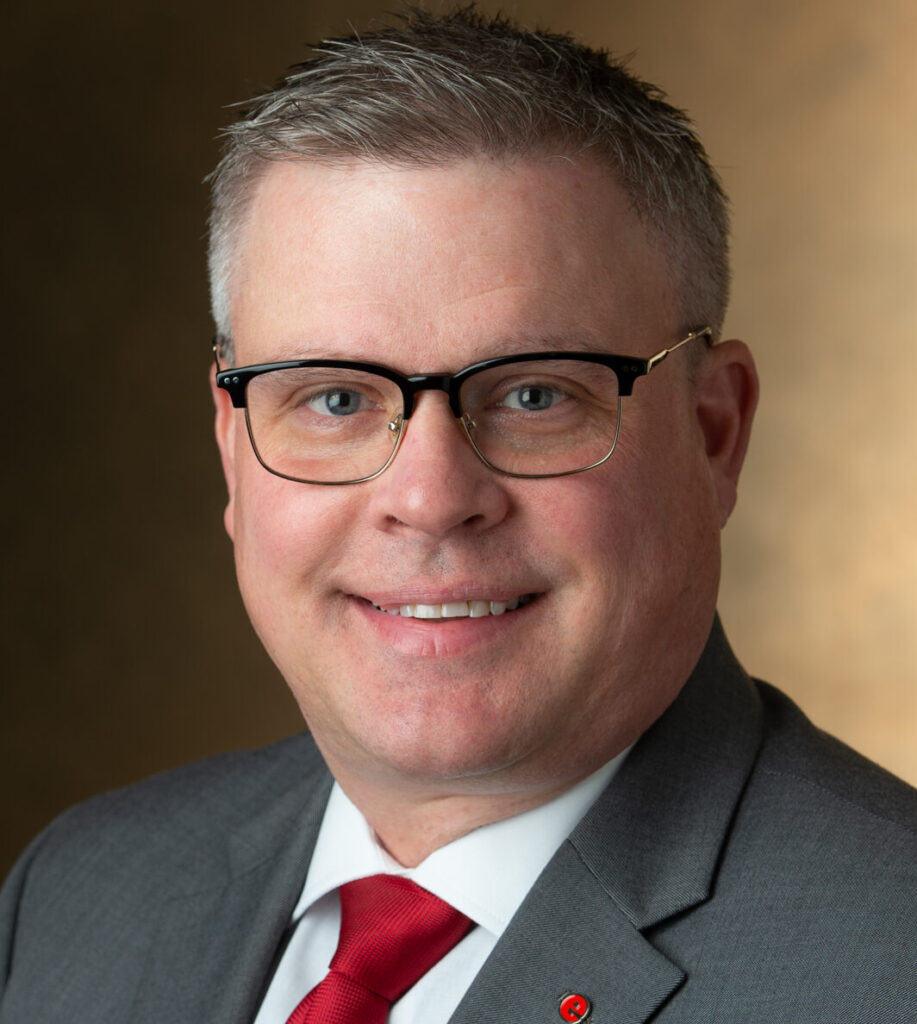
Chancellor Randy Pembrook named Tim Hall as the 8th director of athletics in University history in July 2019. He previously served as director of athletics at the University of Maryland Baltimore County (UMBC). During his 6 year tenure there, the Retrievers posted 9 conference championships, including an upset win for Men’s Basketball over No.1 seed Virginia. Also, on his watch, UMBC opened a $90-million events center which serves as a home for the basketball and volleyball programs and Department of Athletics.
Hall has an extensive history in intercollegiate athletics administration nationally. In summer 2017, he was appointed president of the Division I-AAA Athletics Directors Association (ADA), an organization composed of Division I athletics directors and administered by the National Association of Collegiate Directors of Athletics (NACDA). He previously served the ADA as first vice president in 2016.
Before UMBC, Hall served as director of athletics at the University of Missouri KC. His career began with a foundation in development, first as assistant director of development at Youngtown State, then as assistant director of development at Saint Xavier University, and lastly as the university director of development at Eastern Kentucky State. Hall moved to UMKC after serving as associate athletics director for development at Kent State University.
Hall earned a bachelor’s in sports administration from the University of Toledo in 1994 and achieved a master’s in sports administration from Kent State University in 1998. He and his wife, Beth, have four children.
Welcome to the Athletics of Business, a podcast about how the traits and behaviors of elite athletes and remarkable business leaders frequently intersect. The real stories and hard lessons to help you level up your leadership and performance. Now your host, Ed Molitor.
Welcome back to another episode of the Athletics at Business podcast. I am your host and CEO of the Molitor Group, Ed Molitor, and I am so fired up to have today's special guest with us, Tim Hall. Tim is the Athletic Director at Southern Illinois University, Edwards Fairworth. He's been there Since July of 2019 and previous to being at SIU, Tim served as Director of Athletics at University of Maryland, Baltimore county, otherwise known as umbc. And during his six year tenure there. For you basketball fans, you will remember this. The Retrievers posted nine conference championships and also an upset win. And not just any upset win, but I think the greatest upset win in the history of the NCAA tournament for men's basketball over number one seed Virginia.
And also on his watch, UMBC opened a $90 million event center which serves as home for the basketball and volleyball programs and the department of athletics. And Tim is doing some great work at Southern Illinois University, Edwardsville. We're going to jump into that. Some of the things we're going to talk about is why Tim believes that so much of where we go is predicated on where we have been and why it is so important to find a way to be comfortable with ambiguity. And we have so much ambiguity in our world right now. And I love that part of the conversation and how Tim works on balancing expectations with reality, which is something that's pretty significant. Where we're at in our time right now, what goes into Tim creating the type of environment whereas people feel they have the freedom to contribute.
Now we talk all the time about how folks want to be valued. They want to know that the work they do has meaning as an importance and they want to be coached. It's exactly what we talk about inside this segment. And as a leader, we jump into why having a good team is way more important than being right. A very interesting part of this conversation, something that's so important right now and is so significant in our world, is how Tim has raised the standards of diversity and inclusion inside the SIUE athletics department. And finally, one of the things Tim's going to share with us, it's really cool. It's an exercise that you can use with your team and your organization. And what is the Book of Me exercise and how does it help your team get to know each other better?
One of the real keys of this is that you, as a leader, participate in this exercise. So without further ado, I'm going to step aside. Tim hall, athletic Director at siue, and I hope you enjoy this conversation half as much as I did recording it. Tim, welcome to the Athletics of Business podcast. Thank you so much for joining us today. I am fired up to have you here, Ed.
Thanks for having me. I'm looking forward to a great conversation.
You know, we've talked quite a bit leading up to the podcast conversation we're going to have here today. And what a journey you've had. And you came to Southern Illinois University Edwardsville from University of Maryland Baltimore county, back in July of 2019. Yeah, you were really a part of a very special run within the athletic department in building some great things at Maryland Baltimore County. Can you share a little bit about your journey, about that time there and how that is transitioning you into the great work that you're doing at Edwardsville right now?
Sure, absolutely. You know, first I'll talk about my journey just in terms of wanting to work in athletics. And, you know, I was raised in a house of educators. My father was a public school superintendent and had a consulting business that did collective bargaining, and my mom was a nurse educator and so was always around higher education. Bill Narduzzi, the old football coach at Youngstown State, was a neighbor. And so it was always around sports and education. And I tell people the joke when I really knew I was going to have to do it from the other side of the desk was when I was a junior in high school and were doing a basketball drill and the coach started saying a bunch of explicit and blowing his whistle, he said, haul hall, you stop. And everybody stopped.
And he goes, do you know what a credit card jumper is? And I said, no, I don't have any idea. He said, it's when you jump, the only thing you can push under your feet is a credit card. And so from that point forward, I knew my days of participating in the sport on the court was going to be probably all for not. But yeah, I've had a really interesting journey and it's owed in a lot of respect to a number of people and mentors who've helped me along the way.
But you know, it's interesting, when I got the job at umbc, the gentleman from the search firm actually had called to ask me about another position, and it was a school that had football and ice hockey and, you know, being a basketball centric guy, I said, yeah, I know too much about that other institution. But tell me about umbc. And he said, really, is that something you'd be interested in? I mean, they've struggled. I said, yeah, I know that they want to build a new arena. And I said, they're in really fertile basketball recruiting area. And I said, one advantage I think they would have in the American East Conference is the fact that there's a significant number of schools in that league that sponsor both football and ice hockey.
And it's a tough go to have really good football, really good ice hockey, really good basketball on the average budgets of those schools. And so, long story short, I was able to get involved in the opportunity at umbc and it just really felt like a good next fit, both personally and professionally. And you know, the unique value proposition I sold to the search committee and the president at that time was to say, if we can build basketball to a level of success nationally, it will create a lens through which the more broad society can see into this university. To all the really good work that is done academically. I mean, it is a strong academic institution. They are focused mostly on STEM engineering, computer science, cybersecurity. I think they graduate more MD PhDs that are minorities than maybe Stanford and Duke.
And so that's the value and the role that athletics can play is it can provide a window with success because of society's insatiable appetite for college sports. It's that window that society can see into the really good work academically that's being done on your campus. And so we set the plan in place to put the resources into the program in the first couple years there to put us in a position to be able to retract a really good coach like Ryan Odom. And I thought Ryan was going to win. There was no question. I didn't know it was going to be in two years. I had said to people, we'll probably be your 4, 4, 5, you know, in the hunt for a conference championship.
But, you know, certainly as a lot of people know, in his second year, we won the conference tournament on a last second shot at Vermont, which was really special. And it is in that part of the world, it's still considered the shot, which is pretty special, you know. And then went on and beat Virginia in the first round of the NCAA tournament. And historically the first 16 seed to ever beat a number one seed and to really speak to the genius of Ryan Odom. You know, when were having our watch party, some of our fan base and our donors were saying, oh, you know, we should be a 15 seed or, you know, maybe even a 14. And, you know, we appreciated their enthusiasm.
But talking to Ryan on the side, he's like, I hope we're 16 and I hope they put us in Charlotte with Virginia because he said, I think we can make it a game with Virginia because of the styles of play. They played slow and methodical and we played very fast. And he said, if we're a 15, we're going to get matched up with either Caroline or Duke and they're probably going to out athlete us. And so I can tell you, he went into that game and those young men believed that they belonged there and they prepared for that game against Virginia like they did every other game. And boy, it was special to be part of something like that. But it was due mostly to so many of the good people that were part of that program.
Not just from the central administration, from other departments on campus, obviously a really good coaching staff, but it was a collaborative effort. And one of the stories that I share is we beat Virginia on a. On a Friday, on a Saturday, there was New York Times reporter interviewing the president, university and other dignitaries. And then on that Sunday, there was an article in the New York Times above the fold. And then I think when you opened up, the newspaper was maybe like page 15 or 16 or 17. And the article was almost all about the strengths of UMBC as an academic institution. And so to me, a really good example of the value of intercollegiate athletics that when you win, there was that window. It's tough to get anything in the New York Times above the fold.
And I think basketball and the success that they had certainly propelled that to happen.
And that's such a great point. I know with Loyola, when they went to the Final Four, the enrollment obviously set records. And I've got to think for you folks, when you beat Virginia and then you have the New York Times, did you guys see a spike in your enrollment?
Yes, they saw.
I should say application. Excuse me.
Yeah, they saw increases in enrollment, they saw increases in fundraising. Almost every metric that is important that an institution will assess and monitor increased. I'll tell you another little quick vignette. The institution did a program called Just for Juniors, which is, as the name implies, it's a day immersion for juniors in high school to come and experience umbc. And they did it in April, right after we had won in March. And they more than doubled the number of young people who came to Just for Juniors. And when he started asking the question, oh, you didn't Register initially. Why are you interesting? And you shocked the world Dan Rather's talking about was it was the UMBC was the top trending entity on Twitter for like 20 hours.
Oh, yeah, absolutely.
I mean, I think that's a really good example of how in the academy, intercollegiate athletics and academics can coexist for mutual benefit.
Now. And that's one of those great stories that validates the power of athletics and how athletics can complement the acade a university folks just don't understand that because they see it as, instead of them seeing as two congruent entities within the university, they see it as something totally separate that's constantly in battle, which really isn't the case at all.
No, you're exactly right. And why I like this level of intercollegiate athletics is because the educator in me and I said earlier, coming from a family of educators at the mid major level of Division 1 athletics, success academically and success athletically don't have to be mutually exclusive. You can have both. And I tell people all the time, I'm an educator. I see myself in many respects like a dean of a large academic unit. And what we do in athletics is we complement the formal education that young people get in the classrooms. We're teaching skills like time management, conflict resolution, accepting the differences of others, so on and so forth.
And so our ultimate goal, yeah, we want to win championships and we're competitive, but our ultimate goal is to help our young people not just get across the stage and accept a degree, but become gainfully employed and go on to be future leaders of our society.
Right. You know, and you've been fortunate with some of the coaches that you've hired, some of the coaches you've been around because they've been educators in their own sense in their role as head coach, whatever sport it may be. But I mean, you look at them and they truly believe that they're teaching so many life lessons and it's very personal for them. And I think that's really powerful, no question. Now, what brought you to siue? So you had this amazing time at umbc. I mean, just a great run. And as you know, the world of sports, you keep moving, you keep building. So what attracted you to Southern Illinois University, Edwardsville?
That's a great question. And I'll share another little story that, you know, I think helps people get into seeing the method to the madness, if you will. I was watching TV one time and flipping channels and I stopped when James Gandolfini was being interviewed it was before he passed away, and he was being interviewed about a movie that he had done. And I can't remember the name of the movie, but he was playing the father of a son who was in high school who was really bright, but instead of going to college, he wanted to be like the next Robert Plant or Jimmy Page. And the movie was set in the 70s, but he was talking about how you get branded or characterized in your profession.
And he said it was refreshing to me to not have to be the mobster, but I wanted to be in the industry, and so I was known as the guy who played that specific role. And it resonated. And I think in any of the work that we do, so much of where we go is predicated on where we've been. And if somebody were to ask me, because other people said to me, tim, you're a fundraiser, you're a builder, you're a basketball guy. You're somebody who is a visionary, who changes culture. And we had done all that work at umbc, and, you know, being Midwestern and knowing that this opportunity was here and having a relationship and a history with our chancellor, Randy Pembroke. When I was the athletic director at umkc, Randy was a dean there.
And so we worked collaboratively on a number of issues as part of the leadership team of the university. You know, timing's everything. The job came open. There's a relationship there. Randy wanted to say, hey, can we maybe catch some magic in a bottle again? And use the same blueprint, if you will, that made UMBC successful? Maybe we can implement that here and hopefully have some level of success at siue? And so there was that. Also, the timing just seemed like it was right. I guess, as a builder, like I mentioned, it's exciting for me to do this work. And, you know, we say, while other institutions are trying to preserve their success and preserve their legacy, we're building and creating ours.
Right.
That's exciting and powerful.
Well, and you're building and creating your legacy, and you're doing it in a time that I don't really think any of us really expected, or I don't want to say weren't prepared for it. I just don't think we knew exactly that we're prepared for this. But how has this impacted your athletic department, the things that you have to focus your attention on? Can you walk us through a little bit about that? Because you've done such a wonderful job with everything, and I'm curious as to how you made that shift immediately when this all happened. With the pandemic.
I appreciate you saying that in your kind words, and the success that we've had managing the pandemic, again, is really about the work of the good people that we have here at siue. And as I know, I talked to my colleagues. Who would have ever thought you'd be doing this in a pandemic? Right. When it first happened, it was surreal in that I remember my dad telling stories like, you remember when Kennedy was assassinated and vividly where you were and what you were doing. And the first one like that for me was 9 11. And then when it was clear, the seriousness of COVID and what it was going to entail was sobering, to say the least. But we also had to go on. And so our young people are looking to us to set the tone and to provide them with the answers.
And my dad used to always say, you know, Tim, underreact or react appropriately to every situation. Never overreact, because you know what people think or perceive about the person who overreacts.
Right?
And so I just said to people, if we're going to underreact here. And another saying he raised us with was, it was my dad's belief that there was never immediate closure to anything. And he used to say, kids, think about relationships that you have, whether it's with a coach, a friend, interpersonal relationship, an illness, any type of thing that's going on, Rarely is there immediate closure. And he said, so I'm imploring you, because there's never immediate closure. You have to find ways to be comfortable with the ambiguity. And so what we've been spending a lot of our time with our staff here and our student athletes is it's like working against what you see on social media. And I've determined that most of what you see on social media isn't the way they really portray it to be.
I think that's why it's such a diversion for people. But we've really been working through and talking with our people that there's not going to be immediate closure with this. And so we have to find a way to be okay in this ambiguous spot. And by and large, we've been successful. But most of my time is spent on policies, procedures related to the health of our young men and women. And as an AD group, we used to talk once a month. We talk two to three times a week now as a group of OVC athletic directors. And the other thing my dad used to say, and these may all sound really sophomore, but I think they're so true. Is he used to say, pliable, like Silly Putty.
And, you know, and I, you know, there's these little signs, and you know that your staff is listening. One of our coaches, a great guy, our soccer coach, wrote me a nice little note. He was at the store and he saw some Silly Putty, and he bought me a little thing of Silly Putty. I have it sitting on my desk here.
That's fantastic. Yeah.
And so we say. I said, I'm gonna get shirts next year that say on the back, plia, Silly Putty. But I think that's really. It's incumbent on us to be pliable in times like this. And if you're rigid, you're going to be at a disadvantage, because most things aren't going to ultimately probably end up the way you would want them to or hope that they would, you know, certainly until we get some more normalcy within the pandemic. And why I think that's important is because if you look at the way social media is, and with the use of technology, everybody is used to the immediate answer. And with this pandemic, there's no immediate answer. And so the example I use is one of our student athletes gets injured. They go to an expert. The expert's an orthopedic doctor. They say, this is wrong.
Here's the course of treatment. Most of the time, you get better without a hitch. You're in a pandemic. And they're going to some of the world's most renowned experts, and they're saying, well, heck, I don't know. Here's what we think. But we've never seen anything like this. And that not knowing that sense of ambiguity that I talked about before is really unnerving for people and especially to younger generations who, you know, I joke with my own kids. I said, you look something up on wikipedia, and in 3 and a half minutes, you think you're an expert. And so there's just enough to be dangerous, don't we? Yeah, right. We had encyclopedias. You had to go pick one off the shelf in the den. But it's a different world from that perspective.
And so I think it's balancing people's expectations of this sense of immediacy when there's nothing immediate about the pandemic at all. You know, I think we've done probably more teaching in many respects during this pandemic than we normally would, but I'm proud of our coaches and our staff and our young people. You know, with our student athletes, we put a tremendous amount on them to begin with. You're held to a higher standard. There are sacrifices you have to make in terms of being just a general student. You're not going to every social function. You're not going to every party. And now there's even been more placed on you because of the concern of you interacting with others or getting outside of your. Your team, family unit. So it's been a struggle, and not just for them.
I think it is for everybody in the nation, in the world, really.
Well, you know, if I could. If I could get you. You said something to me a few weeks ago that spoke to the mindset that you have and the type of leader you are, because I asked you how you were able to keep these kids going, and you said it was very important for you to realize that everyone. I believe you have over 300 athletes there. Everyone is someone's son or daughter. And you'd say you'd ask yourself, what would I want for my child? Can you talk into that a little bit? Because I really think that's powerful.
I appreciate you saying that. Yeah. You know, and again, it comes from the way I was raised and the family that I came from, and Irish Catholic dad and a Polish Catholic mom whose ancestors came Ellis island immigrants, wanted a better life and, you know, the importance of who everybody was, race, religion, creed, ethnicity, orientation, the value of the person. And it's really a lot I got from my dad and, you know, the notion of every person you interact with. And we're. And we're speaking specifically of our constituency as student athletes, that is somebody, son or daughter, who loves and cares for them unconditionally. And so when I make decisions, and they're always about people, the first thing I do is remind myself of that statement, Ed, and that is, oh, gosh, I have to make this decision here.
That person is somebody's son or daughter. So if that's the statement, then the question is, what would I want if that were my child? Well, I would want them treated with respect and honor and dignity and civility. And you do that when you're having really good conversations, when you're making a decision, or if it's. Or if it's a decision based on maybe a not so great outcome. Respect, honor, dignity, and civility. How would I want my child treated? And I share with my people. And if you don't have children, think of what would you want for somebody who you care deeply for. And I tell people that I have 304 kids. I have my own four children, and then our Student athletes.
But if you're doing this work, right, you are thinking of them in terms of what you would want for your own child, and that is them to be the best possible version of themselves from a health perspective, physical and mental, from an athletic perspective, academic. And so that really keeps you grounded when you're thinking, what would I want from one of my four kids? That's what I would want for one of these 300.
And how often do you have conversations like this with your athletic staff? And what I mean by this is. You said it a few minutes ago, this is hard for everybody. And, you know, our focus is the kids, is the athletes, the student athletes, as it should be. But this is really hard for everybody. And there's going to be days. I mean, I even know as a parent, you know, I'm at fault of this sometimes. We sort of have a tendency to lose focus of the fact, especially as time goes on.
Right.
The fatigue factor gets in. Is this a conversation that's constantly going on with your coaching staffs?
Oh, yeah, we talk about it all the time. And you know, being a former coach, and I always say there's positive attributes to tunnel vision, but there's also negative attributes to tunnel vision. I'll share another story that's part of my leadership philosophy and journey. And when I was early in my real leadership. So I was an athletic director at umkc and I had just gotten a job and my parents and come to visit, and my kids were really little and we had gone out to dinner and we pulled into the garage and we had a mud room right off the man door to the garage. The kids got out of the van and I said, okay, put your book bag on the hook, hang up your coat, put your shoes in the cubby.
And I started and my dad looked at me and he said, do you always do that? And I said, yeah, why? And he said, let me ask you a question. He said, to what level of success do you have with them doing anything that you asked? And I said, well, maybe sometimes the coat gets near the hook or the shoe gets near the cubby. I feel you said, let me give you a piece of advice. He goes, if you want. He goes, and this goes for your employees, too. If you want somebody to do nothing, give them seven or eight things to do. If you want them to do one or two, then only give them three. And it seems so basic, but it was the truth.
If you want somebody to do nothing, give them all kind of things and direction to do without real guidance. But if you want one thing, give them three. And so that really spurned in me what I ended up doing with, and I still do it here is every year I say to everybody, write down three things, personally and professionally that you want to do different, that you want to get better at. And the personal ones you don't have to share. But I think it's important for you to walk down that road. So write down three. And then I say circle one. And with your superiors, as you go through your performance review and your expectation setting for that year, I want you to work diligently on that one thing.
So you wrote down three, but circle one, what's the one thing that you're going to put a lot of attention on? And if you get better with that, not only will you better and more productive in your team, but we will as a department. So, you know, the old saying is, if you want nothing, give seven. If you want one, give two or three.
Love that. Yeah, that's fantastic. And, you know, that's a great takeaway. Speaking of takeaways, so you come to Southern Illinois University, Edwardsville, you take over this athletic department and you want to bring the coaches together, right? You want them to get to know each other, you want to break down walls, break down barriers. And you have a phenomenal exercise that I love. Can you walk us through that and tell us some of the stories you can share there?
Sure. You know, it's something that I think is really neat and it stems from having a sister who is a brilliant artist and she actually works as a high ranking official for a national makeup company now. And I have a brother who was in Second City for a while years ago and is an actor. And that gene, the artistic gene, completely passed over me. And so what it really is that you're talking about is I call it the Book of Me. And what in essence you do is you take an eight and a half by 14, so a legal piece of paper, and you fold it in half once and then you fold it in half again so it looks like a book. So there's a front cover.
Then you open it up and there's space on the left side and on the right side. And then when you close it up, it's the back cover. You assemble all your student athletes, whatever group you're working with, and you say, here are the rules. On the front cover, there has to be three to four things that are important to you in your life. And then on the inside left are three to Four attributes that you bring to the organization or to your team. And then on the right side is three to four areas for improvement where you feel you still need to grow and learn. And then finally closing it on the back is one or two neat or interesting facts about you that you don't think anybody would know.
And then the caveat to it is because there's the pieces of paper and the boxes of crayons sitting on the table is doing all of this. You have to draw. So no words. You can't use any words. So you think you, for example, if you think one of the things that you bring to the organization or the team is energy, maybe you draw like a lightning bolt. Okay, Somebody drew, tried to draw, you know, the judges scales going up and down because they try to find balance. You're the person who finds balance within the organization. And for me, coming into new organizations, it's really powerful because it's the start of how you build relationships. Because I think above all else, your people want to know that you really know who they are, what's important to them, and they want to be heard.
And so I'll give you an example. We had a student athlete at a previous institution who on the back page, her fun fact that nobody would know about, said that she was a champion wiener dog racer. And I had never heard of such a thing. And so we asked. So you take about 90 minutes to do this exercise, and they did about 45 to do the.
That's a legit. Like there's a real thing.
There's a real thing, yeah. And her family did it. And it's not like greyhound racing. A lot of it is just like in fun and in jest. But her teammates laughed and cut up. They learned things about themselves and each other that they hadn't known. And so I think any opportunity that you have with your team or your organization to do activities like that, mini retreats, if you will, I think are so powerful. And that's one that I've used to really try to build relationships. And, you know, I've done it here. And you know, when I see certain employees that maybe I don't see every day, we're always reminded of, you know, the book of me and that conversation that we had and the funny thing that they had shared. So again, I said it earlier, everything is about relationships.
And if you have really strong relationships, most of the time, you'll get through the difficult stuff because of those relationships that have been created in the level.
Of trust that you've Created.
Yep.
In. You know, one of the things that's been so challenging about this time is we are living in a constant state of uncertainty. And we talked a lot about vulnerability and transparency. I'd love to jump into that and how important that is right now as we navigate our way through still unchartered waters.
Without question, I think being vulnerable and letting your department, your staff, know that you are a real human being that is fallible and has errors is crucial if you want to build those relationships. And, you know, I always say to people, whether personally or professionally, having a good team is better than me being right. And I don't have to be right. I want to have a good team. And a good team means having people who are close to you that can tell the emperor he has no clothes. And so that level of vulnerability to say, I'm not sure how to do this, you may have a better way. And, Ed, I can tell you, I walk into meetings with my senior staff or others, and I may have a sense of how I think the outcome is going to be.
And then through the brilliance of the people I'm surrounded with, we come to a better decision. And therein lies, I think, the value and the beauty of vulnerability. If you can be comfortable enough in your leadership position to say, I don't have all the answers, I don't know, that is why I have you all here. I want you to give your advice and counsel and input. And I think if you are vulnerable and people see that vulnerability play out in every day, and you are authentic. I tell people I take what I do really serious, but I don't take myself serious. That to me, you know, there's. There's a lot of definitions of leadership, but I think you can get, you know, leadership in many respects is getting the work done through other people.
And I believe if you create a culture and an environment that really has two things to it. The first is people feel emotionally secure at work, and the second is they feel psychologically secure at work. If you've created that kind of environment, you're well on your way. And why that's so important is because success is failure turned inside out. Right? So we're all going to make mistakes. And so if you create an environment where you are vulnerable and you're authentic, and you say things like we do here, Rule number one, no surprises. Rule number two. See, Rule number one, you know what? We know there's going to be mistakes. When there's a mistake, just say, hey, you know, we messed up with this. And it's not a surprise. We'll figure out a way to fix this and make it right.
That when people feel that they have that emotional security and that psychological security, that they can bring their whole selves to work, that if they're dealing with an illness of a parent or an issue with a child, that you are going to support them personally while they're in the workplace and create an environment where they feel secure to bring up suggestions, feel secure to suggest another way of doing things. That's when all the really good work and the decisions are made. And so, you know, the way I visualize it is it's not the triangle, the normal triangle with, you know, the leader at the top, which is hierarchical. My leadership philosophy is, in essence, it's an upside down triangle and I'm at the bottom of it. And it's everything I can do to lift my people up and help them be successful.
And I always say if something doesn't go right, I look first to myself to say, hey, why did we not get the desired result that we wanted? But if we're successful with something, it's always the credit goes to the other people. Because more times than not, if you create that environment, you're going to be successful far off, and then you will not be successful. I think.
And can you, for listening here, can you differentiate between. Because sometimes I think the line gets blurred. Even though there's a very distinct difference between emotionally secure and psychologically secure. Sure.
From my perspective, I think emotionally secure is that you can bring your whole self, everything that you're dealing with to work. Early on in my career, I had a boss. You leave your personal stuff at the door and it's just all about work. There's no crying or feeling sorry for yourself. And that to me is just an archaic way of thinking. If you have a parent who's ill or of course you're going to bring that to you to work. That's part of who you are. And so I think knowing that emotionally you can come into the work environment and people are going to understand what you're dealing with and help you through that to the degree that you'll allow them, I think is so super important. That's the emotional, the psychological is okay.
Where I'm here in the workplace, how do I fit in terms of the freeness or the ability that I have to make recommendations to my superior without having it come back on me or being told to stay in my own lane? Or if we want your advice and counsel, we'll ask You. So it's, you know, psychologically feeling okay. Now I'm in the workplace, I know emotionally, wherever I am on the continuum with what's going on, people are going to support me again because they all are somebody's son or daughter. And then psychologically, as I'm doing my work, is there an environment created where I'm going to feel safe and secure being able to make suggestions, make recommendations, to take a project down a road by myself with less oversight or managing, if that makes sense, right?
No, it makes total sense. And you used a word a few minutes ago that I really believe drives it. And that's authenticity. That's authentic. And the way we break authenticity down here is honesty, integrity and vulnerability. And that integrity piece is the alignment of your values, beliefs and your behaviors, your execution. And one of the things that I consider you a champion of is diversity and inclusion. Can you talk about that and talk about some of the great things? Because in addition to the pandemic, an incredible time and incredible opportunity to bring awareness to so much because of the Black Lives Matter movement. Can you speak into that?
Yeah. You know, and it's obviously, it's something that's important to me. I remember as a kid when my dad was early in his career, was teaching classes for adults to get their ged, and there was a black woman, I'll never forget her name, Effie Wingo. And my dad befriended her, and she was from the inner city in Youngstown and just had hard times, but really wanted to get her high school degree and wanted to go on to college. And my parents would say, when you think you have nothing, I'm going to show you nothing, you know, it was part of his commitment to social justice that was ingratiated in me in such an early age. And we would go during the holidays to their small apartment with bags of food, and there would literally be one or two things in the refrigerator.
And so my siblings and I, we had our own idea of what nothing was. And then you see that. And my dad would say, think of what would be worse than nothing. And that's what. What these people have. And so Youngstown, Ohio, was a, you know, a melting pot of races, religions, friends who are black, who are Hispanic. With being a white male, we have privilege. There's no question. We have white privilege. And if you look at history and even just since this has happened, self admittedly, I didn't know anywhere near as much as I needed to, but I have learned so much. Just sense. I've committed myself to wanting to Learn more. But also our institution doing the same thing. And if you look at and read. I've read more about this in the last nine months than I ever have.
And my own personal opinion is that the history books are wrong. And it is a certain history that's based on white person and white privilege. And if you read the literature, the notion of being white, that wasn't a thing until settlers came here and they brought slaves and they had to have a way to differentiate. And so there is systemic racism, without question, that still is prevalent today. I'm reading a book right now called Caste C A S T E the Origin of Our Discontents. It's by a woman named Isabel Wilkerson. And she goes in and compares how blacks are the caste system in America the way india there were certain lower class individuals, there were certain castes within the country of India.
And so if you really believe that everybody has a place, that every human being has value, then I think you're going to look at the work that you do in a different way. And so, again, respect, honor, dignity and civility. And I think that the more you can have varying degrees of diversity around you, the better you're going to be. And so I think the Black Lives Matter issue that we're dealing with right now is so crucial because it's been clear, if you look at the data and the literature, that they haven't, in almost every facet of life, haven't been treated the way they should be. And I do really think it's time to turn that around and start doing the right thing.
And I've always believed that, and this comes from my father, is that athletics are a microcosm of life. And one of the great things on this very subject, one of the great things I learned, I mean, I learned this lesson when I went to Creighton as a freshman. I came from the northwest suburbs of Illinois or of Chicago, excuse me, where there was white privilege. And we didn't have a whole lot of minorities in my high school at that time. And the relationships that I was able to build and the bonds that were able to be forged because of our different and diverse backgrounds and the things that went through together were pretty amazing. And I think one of the things, athletics, especially at your level, okay, because of the age of the athletes, is the power of giving them a voice.
And when you give them a voice, to actually listen and take action on that. I'm just curious how you folks have done that there at siue.
One of the things that we did Our university, which I want to give our university a lot of credit because I think they were on the forefront of this, from an institution of higher learning, created anti racism task force, which I had the distinct and real pleasure, to the initial task force steering committee. And we talked a lot about how were going to look at the systemic racism within our own institution, whether it through hiring and retention for faculty, whether it through disparities, enrollment of students of color, looking at all of the important metrics and saying, we're going to do better with this.
And we started reading literature books and articles, starting with books on white privilege, so that we could understand as white people having a better sense of the plight that black people have felt and how we could be advocates, important advocates for them moving forward. And then in athletics, we created an offshoot of that called Cougars as one, where we have a steering committee, and we opened it up to anybody in the department who wanted to be part of it. And so there's a steering committee, and then there's four, I'm sorry, three subcommittees. One is looking at metrics and doing assessment of various facets of the athletic department. One is on education and communication, so educating us on this issue. And then the other is an outreach subcommittee. So we're going to do outreach and put our money where our mouth is, so to speak.
And a big part of this is also having conversations and sustained dialogue and so working with another facet of our campus where there are experts to gather people together. And we're really going to take it to another level next semester where we can have sustained dialogue about this so we can be in the room with each other, have the conversations that might be uncomfortable, and listen and learn and try to find value in everything that other person has experienced and what they're saying. And you're right. Athletics gives a tremendous opportunity and platform. And I would argue that it's done more for social change than probably any type of governmental initiative.
And I think that's safe to say. But it is so powerful, especially when leaders like yourself recognize that. And I'm curious, because I know you're a reader, I know you like to listen to podcasts. You're committed to continually growing. What are some of the things that you would recommend if you were standing up in front of a business class or a class of folks that want to get into the athletic world? What are some of the books that you've read this past year that you would recommend, or just some of the activities you've dove into with mentors? Mentees, et cetera.
Sure. You know, I've been doing a lot of reading, and my dad used to always say, leaders are readers and read everything and find a diverse background of books to read. You know, one I'll start with is an unbelievable book called the Innovation Code, and it's by a gentleman named Jeff DeGraff. And what the Innovation Code is and why I think it's important for everybody, or especially young people, is the book is about constructive conflict and how as leaders, you can have disagreement and constructive conflict. And saying, I disagree with the principle, I disagree with the philosophy, but I still like the person and still being able to separate those. And in essence, in this book, DeGraff breaks individuals up into four categories. He says you're either an artist, an engineer, an athlete, or a sage.
And it parallels some of the work that's done in the space of, like, a Myers Briggs type of personality. What's your personality? And so he says an artist is somebody who is wild and with experimentation. The engineer is cautious and very pragmatic. The athlete is quick and uber competitive, and the sage is patient and very interested in community building. And so why sometimes relationships don't work is because you don't have. You need to have. So he contends, you need all four of these personalities at the table to make a really good decision. And so I'll give you an example of myself. So there's a test that you take within the book, and I come out highest as a sage and then also as an athlete.
So the sage part of me wants to be real patient and build community and ensure that I am, quote, unquote, right with everybody. And the athlete wants to go real quick. And so those can be a conflict with each other. And I think for anybody, wherever you are in your business or leadership journey, I found it to be a fascinating book in terms of how to have those four personalities at the table when you're making decisions, and then how to work through the constructive conflict. So that's been one, I think, that's been really powerful.
You know, another one that I read, which isn't really business, so to speak, but it's called the Color of Law, and it's by a gentleman named Richard Rothstein, and in essence talks about how the government basically created, for lack of a better way to say it, the ghettos or the slums, and that there was a. There was systemic racism and a methodical approach to keeping persons of color out of nicer areas. And I would say to somebody who said maybe systemic racism isn't real read the Color of Law above anything else. It saddened me a great deal and it also made me a little angry. Powerful, powerful book on if you want to know why we are where we are today, you can find it rooted in some of the decisions that were made decades and decades ago.
So that the Color of Law is another really good book. And then I went back and reread a couple books that were oldies but goodies, Good to Great by Jim Collins. You know, that seems to be one of the historic great books. I went through and reread just the high points of that because I think it's such an important book. And then just finished a book called Ruthless Consistency by a gentleman named Michael Kanik. And that in essence just talks about how important focus and consistency is to every facet of the work that you do. And then I listen to a ton of podcasts. Yours, a gentleman named Sylvian Sylvan Hooser, who I know and like a great deal, Ryan Holiday, so on and so forth. So there's a bunch of them.
You have some good taste.
Thanks, I appreciate it.
Now those are phenomenal. And you know what? We'll put the link to all those books for listeners. We'll put the links to all those books in the show notes. We'll get you right to where you can go. And it got me to thinking, I still owe you a copy of Legacy that we talked about, one of my all time favorite books. And I have one sitting right here with your name written on it. So I've got to get that out to you. But Tim, I can't thank you enough. This was absolutely phenomenal. And you know, I wish you all the best of luck. Congratulations on all the success. But for you to take the time, especially this time of year with everything that you have going on, I can't express my gratitude at a high enough level. Thank you so much.
No, thank you for having me. It's been a pleasure. And again, I, I listen to the podcast frequently and you know, I think you're one of the better ones out there. So thanks for having me. Have a great holiday and a great new year.
And to you as well, Tim. Thank you so much.
Thank you.
Thank you for listening to the Athletics of Business. Be sure to give us a rating and review so we know how we're doing. For more information about the show, visit the athletics of business.com now get out there, think, act and execute at the highest level to unleash your greatness.