

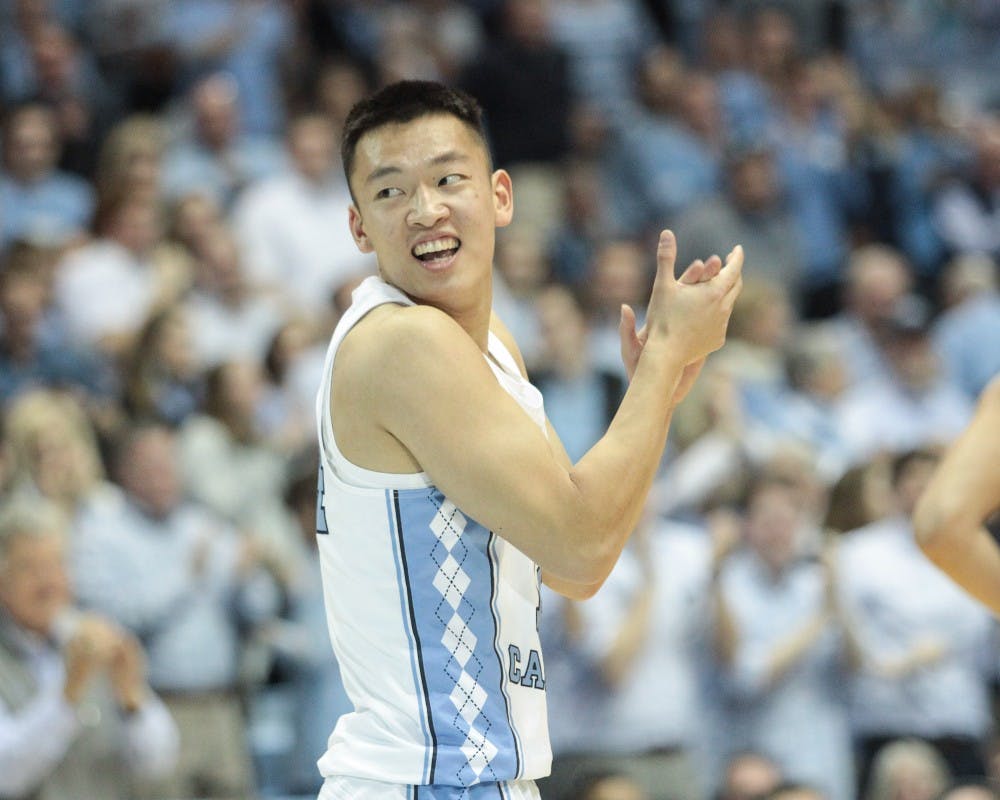
Kane Ma is Co-Founder/Chief Technology Officer of Kamo Digital Solutions.
An entrepreneur and business development professional with strong industry knowledge in software development, web and app dev/design, campaign automation, data analysis + SEO, and digital advertising. Experienced in the development and implementation of emerging digital technologies. Blockchain enthusiast. Received Bachelor’s in Computer Science and Economics from the University of North Carolina at Chapel Hill while as a Varsity letterman in the Men’s Basketball Program after starring on the JV team for three years.
Upon graduating, he went to work for Fidelity Investments as a software engineer but knew he wanted to continue playing so he began reaching out to anyone he could for direction and ended up spending a week in the summer with Guangzhou Long Lions (CBA).
In attendance that week was the GM of the Macau Black Bears (ABL) and two months later signed Kamo to a contract where he spent the year in SE Asia and traveled to 9 different countries to play games.
That offseason he was the target of a hate crime committed by three white male dental students at UNC who proceeded to assault him leaving him with multiple injuries including a fractured skull. The results of that attack put an end to his playing career.
Welcome to the Athletics of Business, a podcast about how the traits and behaviors of elite athletes and remarkable business leaders frequently intersect. The real stories and hard lessons to help you level up your leadership and performance. Now, your host, Ed Molitor.
Welcome back to another episode of the Athletics of Business podcast. I am your host and CEO of the Molitor Group, Ed Molitor. And today, what a special guest. We have Kane Ma, who is co founder and chief technology officer of Camo Digital Solutions, as well as a former University of North Carolina men's basketball player. And he shares so much with us today. Before I get into what we're going to talk about, I want to tell you a little bit more about him in the business world. He's an entrepreneur and business development professional with strong industry knowledge in software development, web and app development, design, campaign automation, data analysis, plus SEO, and digital advertising. Kane is experienced in the development and implementation of emerging digital technologies, and he's a blockchain enthusiast.
He received his bachelor's in computer science and economics from the University of North Carolina at Chapel Hill. So needless to say, he has a brilliant mind. While as a varsity letterman in the men's basketball program, after starring for three years on the JV team. An incredible story there that he shares with us now. And upon graduating, Kane went to work for Fidelity Investments as a software engineer. But he knew deep down inside he wanted to see if he could keep playing. So he began reaching out on his own to everyone and anyone that would listen to him to get a little bit of direction. And he ended up spending a week in the summer league. I'm going to mispronounce this, so forgive me. Okay? The Guangzhou Long Lions.
And in attendance that week was a GM of the MACU Black Bears of the ABL League. And two months later, he was signed to a contract. And he spent the year in Southeast Asia, where he had the opportunity to travel to nine different countries to play the game that he loved basketball. Unfortunately, that offseason, he came home and we're really going to get into this. And Kane shares this, and it's so pertinent what's going on in the world, in America right now. That offseason, he was the target of a hate crime committed by three white male dental students at UNC who he was targeted, obviously, because he was an Asian American, okay? And they proceeded to assault him, leaving him with multiple injuries, including a fractured skull, and that resulted in the end of his playing career.
Now, that was only the first encounter that he had with those three. And I'll let Kane tell that story because there's so much to it. And we talk about a whole lot more. We talk about how Kane focuses on mastery, autonomy, and purpose for his people as he builds the team at Campbell. Just a great group there. And Kane shares with us what it meant to fulfill his lifelong dream of playing on the varsity University of North Carolina. Now, I don't want to steal the thunder from the interview, but kind of a hint, Kane was cut from his varsity team his junior year. How he gets his team. And when I say varsity team, I mean his varsity high school team his junior year.
How he gets his team at Campbell to put relentless energy into the things that matter most, which are energy, focus, and effort. And that comes directly from the new men's basketball coach, Hubert Davis at University of North Carolina, who Cain was very close to and had a big impact on Cain's life. He'll share how being a victim of a hate crime by men who were targeting Asians impacted his life physically, mentally and emotionally. And then Cain will talk about why he's so conscious of ego, motivation and knowing what his people want to achieve when he manages his team, as well as why winning is so important to Kane and the team at Campbell.
And yes, we do dive into a couple of Roy Williams stories, and he shares a couple of things that made Roy so successful in his incredible hall of Fame coaching career. So I'm going to get out of the way here and let you listen to this great conversation that I was fortunate to have with Cain Ma Kane. Thank you so much for joining me today on the Athletics of Business podcast. It is awesome to have you here. How are you doing?
Thanks for having me. Great to connect. I'm doing well and really excited to get talking on some things.
So much to talk about. It's interesting how our world's collided and we'll get into that. And I briefed our listener on that through the intro a little bit, but so many different things going on. UNC basketball, right? Tire Heel Nation. Big change. A huge part of your life and a huge part of your story is what you did and how you evolved and how you grew together, becoming a North Carolina Tar Heel in that senior year of basketball. And before we really jump into everything, I'd love for you to share your story and how it came to be that you were suiting up for the North Carolina Tar Heels in college.
My basketball career has, like many others, have been through a lot of. I've been through a lot of ups and downs. Really an Overarching belief in myself was what drove me through the most part. Been cut from a ton of teams, but I went to UNCLE just as a regular student off academics. I had some D2 offers that I was considering, but I knew I wanted to go to a big school for college. Heard about the JV team at UNC and about, you know, the tradition of players getting moved up from the JV to the varsity, you know, if the situation fit, if they were good enough. And that seemed like a perfect fit for me because I'm all about coming in with a chip on my shoulder, prove people wrong through hard work and producing.
And, you know, the dream of playing in the ACC is as good as it gets. So I came in to UNC as a student and it was pretty much an open trial for the JV team. Pretty much like high school coach Davis. Hubert Davis was the head coach, obviously an assistant on the varsity at the time and put me on the team after the tryouts. So, you know, step one complete. It's funny, I actually pulled a cramp the first day before this during the scrimmages and I thought my chances kind of got ruined because I couldn't really play and I was pretty upset. But.
Well, let's push pause for a second because you're way too humble. We've got to go back to high school, man. Your junior year in high school, going into your junior season. Let's talk about that and let's talk about what happened and the big decision that you had to make because for whether you were 15, 16 or 17, it's a huge significant moment and kind of a defining moment in your overarching belief in yourself. You're this overwhelming sense of self confidence which you earn through your hard work. Right. So let's talk about that story because this to me is really significant.
Yeah. So I grew up in Greensboro, North Carolina. Went to a public school for the first three years of my high school called Northwest Guilford High School. I think the biggest name out of There is Rusty LaRue. Way back, he played with Jordan. I made the freshman team as a freshman. I played in the JV team as a sophomore and just had obvious plans to play on the varsity team and try to play in college. That's the dream. And so how it shaped out was, you know, I didn't make the team. And it could have been a number of reasons. Could have been politics, could have been this, could have been that. But if I'm being real with myself, if I was a better player, I wouldn't ever be on the fence anyways, Right.
So as much as I may have thought things were unfair, I knew deep down that is a wake up call. If I want to play in college, making a high school team shouldn't be an issue. There's a disconnect there. So I thought about it and I knew I wanted to play in college. I just had to go that much harder. I had to take a step back and think about what I had to improve on as a player. So that a coach would never say, you know, I don't need him on my team.
Where did that come from? I mean, that's just not something you find in your everyday teenager. Right? Where was that mindset instilled in you?
I think it starts with just passion for the game. You know, if you don't really love something, then when, you know, hits the fan, usually people crumble. Quote, I often use pressure makes diamonds or bus pipes. Right. And for me, it started with the love of the game. And I grew up watching basketball all day, grew up idolizing a lot of players. And when it came to wanting to get to that next level, I just wanted to be real with myself. I've always been someone who's high on, and it's really the way my parents brought me up. You know, they've always honored hard work and honored acting with respect and integrity to others. And so who other than yourself then to act like that too? And when you want to really do something, you got to really want it.
That's unbelievable. So you make the decision and you go ahead and you transfer high schools. What happened then?
My current partner, business partner, actually Kanayo Obi Rapu, he was at the private school and, you know, we grew up together, same elementary school. He heard that I had got cut and he was like, he was shocked. And he's like, you know, should play with me. Like, he's a combo guard, but he's like, I actually really need a point guard. And their team was loaded. You know, they had two big guys who, you know, one went to wake, one went to College of Charleston, and so they were pretty loaded. And he saw potential in me. And then our coach, Phil Tauchman, he also saw a lot of potential in me. I mean, they knew how much I loved the game and knew I was a hard worker. And so they said, if you're willing, we'd love to have you.
That was a tough decision for really me and my family because, you know, transferring somewhere your senior year.
Right.
Is just, it's kind of random, especially if, you know, you're not getting looked at by schools or, you know, really have a resume to play college basketball with. And that. And that was just my dad. I remember it was the night before school started and both schools had the same start date. I was talking with my dad over the last couple of weeks, and basically the night before, he said, sleep on it. Let me know which school you want me to.
Night before school's gonna start. He said, sleep on it.
Yes.
Yeah.
My dad says, let me know which school you want to go. Go. Take you to. Want me to take you to? I'll take you there.
Did you get any sleep?
Yeah, I slept great, actually. I remember the next day.
Did you know where you're going before you put your head in the pillow?
Though Mostly I was 80% sure.
Okay.
But that morning I woke up, it was a nice day. I remember clear blue skies. And I said, take me to New Garden. That's awesome. And so that's really when I got my first taste of playing varsity basketball. I remember my first game in high school. I was so surprised. Like, the game was so long to me. I was so surprised at how long the game was because I had never played minutes that long. You know, obviously I played AU and jv, but still, like, knowing that it's a varsity game, I'm thinking, oh, wow, this is third quarter, five minutes left. Like, I've been here out here for a lifetime.
That's great. So you have a great senior year. You guys have a great senior year. You decide to go to uncle and let's jump ahead and just briefly talk about the life of what it really means to be a JV player in North Carolina. Because that's not something that people understand and nor really should they, because it's not talked about that much. But to me, it speaks so much to what you and I discussed last week, to your character and to your love for the game and to what it really means to you. And it speaks to Coach Davis, and which is why I know he's going to be a huge success as a new head coach there at North Carolina. But talk briefly about what it meant to be a JV player.
Like what your practices were like, who you played against, and then how you found out that you were actually getting moved up to the varsity.
Really, the only reason that JB program still exists is just based on pure tradition. The only reason they had JV program back before the 70s, because I think freshmen couldn't play varsity their first year pre 70s until they changed the rule and so that's the only reason JV teams existed at the college level. When that rule ended, you know, there's no need for that. But UNC kept it. Dean Smith saw it as an opportunity for players and coaches to develop. He knew his assistant guys could develop by being in a different position to make decisions as a head. The head man and other players could develop. And it can be kind of like a grassroots type of thing where players are getting developed.
So that tradition was something Dean Smith wanted to be a part keep, and Coach Williams wanted to keep that tradition going. Coach Williams came through the ranks of being, I think, a JV player at one time and then also JV assistant to JV head coach. So, like, you know, he went through that whole entire system and we know the story, like the career he's had.
I remember years ago, first time I was ever in Chapel Hill for a basketball game, and it was halftime and I just went. And they were playing Miami. I'll never forget it. And they're playing Miami, and Buddy mine was head coach Miami. And I was walking around the foyer and I was looking at all the teams, you know, how you have them on the. On the hallway. Not the foyer, in the hallway. I was struck by the coaches that Dean Smith mentored that he brought up, that came up through the JB program, that came up through the North Carolina program. I mean, just hall of Famers. It's. It's unbelievable.
Yeah. And I. I think that's when there's the right people that are a part of the organization and they have values that are bigger than basketball, really. And it's more. More life principles then. Yeah, like, you'll see that type of success.
Now we'll get back to. Because you said something really interesting me last week about Roy Williams and one of the reasons he's so successful, and I definitely want to share that with the listener. Let's talk about everybody knew you were good enough. Like, everybody knew you had game. Everybody knew you had the respect of your teammates. Everybody knew you could lead on the floor and you had the skill set. But what was getting in the way of you getting on varsity. And then let's talk about the timing of when you were brought up.
The JV program is really, you know, you get two years. They cycle players, and now you get two years. And really it's a matter of availability and need and skill. Obviously plays apart. But typically speaking, you know, if they have six point guards on the roster, they only get seven. Right. They have no right if they Got Hansbrough, John Henson, and four of those six are McDonald's.
All Americans too, by the way. So. Right.
And so it's just a numbers game. Like, you know, Coach Williams sees his roster, see if he needs anything else to help his day to day practices and for his team to get better. And if there's a JV player who has proven that he can play with the varsity and they're, you know, their character and integrity can attest to it, then that he's a candidate to get moved up. And so how the JVT program worked is practice every day. So the varsity would practice from 2:30 to 6, something like that, and then we would get on the court right after from like seven to nine or something. Our games went three hours before the varsity games at home. Varsity plays Duke at 7, we're playing Hargrave Military at 4.
Yeah, which ain't a bad game though, by the way.
Not a bad game.
You know, place is packed with like 10 minutes to go into your game, right?
Yeah, I mean, if so, there's a few overtime games where, you know, the students would start piling in and I'll be like, all right, here we go. But yeah, Coach Davis, you know, I had a really good freshman year. I came off the bench, but led our team in assists. You know, end of season meeting, he said, kane, I think you're good enough to play for the varsity. And really it's next guy up. So if we need a point guard or guard spot and that becomes open, I want to bring you up. And basically he told me to stay ready. Sophomore year led us in scoring the JV team and actually I think I was really close to getting moved up.
He brought me in for a meeting before the season and then they ended up filling it with, you know, another walk on who had some, you know, some connections. And so I wasn't able to get that spot. But junior year I started doing some stuff in the summer with the varsity. But you know, that year they had Joe berry, Nate Britt, 7th Woods.
Yes. Yeah.
Loaded with at the point, Stillman, still a lot of point guards. And you know, he said, we don't have spots, but I want to give you a third year in JV because I think senior year you have a very good chance and I want you to be around and ready. So he, you know, just kind of into the rules and I don't think the rules are too strict. So he let me play a third year and then after the season I started practicing and working out with the varsity full time in the summer. So senior year comes around, we have our pre. Beginning the year meeting. He has to break the same news to me again. That summer, they had brought in three or four guys last minute, pretty much. And so did they win it your junior year?
They won in my junior year.
So 2017, they won a national championship. So of course, I mean, everyone's just dying to get in the program. So they brought some new guys in. Then what happened?
Yeah, so similar situation, you know, they. I think they had 16 guys on the roster this. They had Joel seventh, Jalik Felton, KJ Smith, all point guards. And so it was very studs, just. Just not much of a need at the position. And, you know, he was really sorry, obviously, and I knew he wanted to make it work for me, but, you know, it's not his call. At the end of the day, he said, I really want to keep you around, and I'm sorry. This way it is. If you want to play JV again with me and just ride it out this year with me, then I'd love for that to happen. And so initially I was just like, I don't know, you know, it's. I was working for this goal and I was close, you know, I can almost taste it.
But it just didn't happen. And. But, you know, I still love the game. You know, I have a lot of respect for Koshi Davis, means a lot to me. So I told him I would play again. Just kind of the farewell tour, I guess, whatever you may call it. But right when the season started, seventh went down with the stress fracture in his foot. And Coach Davis called me right away. He said, what are you doing on Friday?
Weren't you walking across campus or something?
Yeah, I just got. Got out of class and I was actually on the way home. I remember I'm walking through the quad, which is the main center of campus, on the way home, and he just calls me in the morning, which usually doesn't happen. And so I knew something was up. And when he said that, I was walking home with the biggest smile on my face.
That's awesome. So you get moved up to varsity the first practice. I mean, you get into the locker room, you put the practice. You're on that first practice, what was it like? Was it just a whole different vibe, a whole different energy, a whole different feel?
Yeah, just walking through. I remember walking through the locker room. I got the equipment manager, and he hands me my, you know, all my practice gear. I'm just looking at it and just like, all right, I guess I'm back. And I had been with the team in the summer, so they knew who I was and we had practice pretty much every day together and they were all super, just super happy for me. It was very much brotherhood and so they knew I really wanted to be in this position. And actually that first practice, it wasn't a full practice. It was kind of like a run and shoot where you're just getting a lot of shots up, running through sets and doing some individual skill work. So it wasn't like, you know, I had to run the sets live action that first day.
So it was good to kind of ease myself in there. But then the next day, you know, I had to brush a little bit of dust off the playbook because I've been studying it over the summer. But, you know, once I, I didn't make the team aside and so I, I opened that back up and that. I remember the. That night before, I was just drawing out the sets and making sure I knew. Knew where I was supposed to be, where everybody else was. So.
So what was it like when you got on the floor for the first time?
Honestly, I felt right at home immediately. You know, it's not. I played with those guys a lot, so I knew what everybody was capable of. And really I felt confident that, I mean, I knew the sets and really it was just not thinking about it too much, trying to play free. I remember the first play I came in through a nice backdoor pass for an assist and that really, any nerves I had, you know, I just were gone. They were gone.
Such an amazing journey and such a special place for you. Before we get into the next phase of the story, but I want touch on what was it you told me about Roy Williams, where you said, you know, I said, what makes Roy. And I had the. The fortune of coaching against Roy when he was at Kansas. But what was it that made him such a special coach for you guys? What was it that gave him the ability to have such an impact on the people who he was in charge of?
It's two things. It's his attention to detail. Well, I guess they're kind of one in the same attention to detail. And his. He has the best memory I've out of anybody I've ever met. You'll tell him one thing on a random Tuesday afternoon and three months later he'll mention to you in the summer. And I have no idea how do.
You try to emulate that in your.
Business life a little bit. But you know, I think it's just. It's at another level. You know, I think it really comes down, like. I think it helps that a lot that he cares about the people that are, you know, that are involved with him so much. He's super dedicated to the program, as we all see. And anybody who buys into the program, he. He gives a lot of, you know, immediate respect and care for. So I think that's part of it.
You know, it always came off to me, too. And I shared the story with you, and I don't think I've ever shared it with. With the podcast listeners, but when I was coaching at Texas A and M, it was the first year in the Big 12. It would have been our second year. We were playing at Kansas. That was our first year. I'm sorry. It was our first year. And they're loaded, right? Paul Pierce, Eric Chenoweth, Ray Flynn, Jack Bond. Loaded. And I really had a lot of respect for Roy, the way he did things. I loved his system. I love what he ran, obviously. I love the way he recruited. And were practicing the night before the game. It was one of those nights, TV game the night before.
So all the students were sleeping outside in the hallway behind the big velvet curtains there in Kansas. And he comes in at the end of practice and, you know, invites us to his spot, his Italian restaurant he goes to for dinner. And he couldn't make it, but he sat there and he talked to us. And I was a third guy. I was a third assistant. I was 26 years old. I mean, he had no reason to talk to me other than he was what you say. He was just a genuine interested, you know, person. I was interested in others. And we talked, and Porter talked to him and Frank. So we go out to dinner the next night. Now, we had just gotten done playing Missouri with Norm Stewart.
Norm Stewart, who's a legend, had zero time for the assistant coaches of the other team, especially the young assistants, right? Doesn't shake hands, blows us off. The next night, we're sitting there, places packed. God knows, I had probably already soiled my pants. I was so nervous by the time the game started, it was my scout. And Roy comes out, the place goes crazy, comes over, he shakes everyone's hands, and he said, I'd have a great time tonight. I was just like. I didn't know what to say because, I mean, Roy, he remembered just something little like that. And I know it doesn't seem like something significant, but when you're in that world of college basketball and you Understand the egos involved and how busy the people's lives are, the head coaches lives are. It was significant to me.
So when you said that, I mean, you remember our conversation? I was just. Okay, so now I have to ask. One of the things that resonated with me, with my conversation with him was he genuinely never forgot where he came from. Was that something that you kind of came across to you as a player for him?
Absolutely. He would talk about his upbringing and his past a lot, actually. You know, he grew up coming from not much at all. You know, his family was very poor, and he had to really make his way. I think the story is that his parents gave him like a hundred dollars to go to UNC for four years, you know, and so I don't even know I would spend that in like two hours. But, like, so that speaks volume. Like, he's someone who. I think everything that he's accomplished, he earned. You know, he's earned to be in that position that he's in. And he's had so much love for the. For the program and the school to where he has my utmost respect.
It says a lot about them. And you talked about never forgetting where you came from, understanding your roots, your story. And I think this would be a great time to talk about the way were connected. And I mentioned it in the introduction, but in case someone jumped into the middle of the podcast, North Carolina is a very special place to you. University of North Carolina is a very special place to you. And you went back, and I want you to tell the story, because I don't want to screw this story up, but you went back for a basketball game. You can describe it all. And you had one of the most awful incidents in the world, which is so relevant today. It's finally being brought to light nationwide, right? Globally.
I mean, this is something that has needed to be addressed for quite a while. And I want you to share that, because I can only imagine, you know, obviously the physical pain, but physical wounds heal, right? It's the emotional scars that take a long time to heal. Can you share with our listeners and take your time doing it, what happened, how it impacted you and whatever it is you want to put in there.
Yeah, I had my one year of playing pro ball overseas in China. 2018, 2019. And so after the season, I came back to the States, and that next week, actually, there was a UNC Duke game. It was senior night for Luke May and Kenny. Kenny Williams. And so best night to come back to.
Right. I mean, it couldn't get it. Couldn't get any better than Duke at UNC on senior night.
Right, right. And you know, now you're a pro.
Baller coming in there too, right?
Exactly, exactly. I got. I got a little bit more respect. So, you know, we got the win too. After, you know, we're celebrating, I'm catching up with everybody, old teammates. You know, I'm contacting some other people during the night too. Someone on the other end, I was talking to another friend, someone on the other end said to come to Macaulay street, which was probably three, four minute walk from where I currently was. So I began walking over there, and right when I turn onto the street, I see three guys walking from the distance from the opposite end of the street. And you know, when we get closer together, they shout over at me saying, hey, what are you doing here right now? And they really just start coming towards me. And we're face to face now.
And so I'm backing up a little bit and you know, they start just using a lot of profanity and start throwing some racial slurs in there. And they keep walking towards me. So I'm backing up and they come at me with more speed. And, you know, one of the guys says, well, you're not going to do some kung fu on us. And that was moments before they had put me in a headlock and I became unconscious. And the next thing I remember is I'm waking up off the ground and I realized, you know, I'm losing a lot of blood. My friend takes me to the ER the next day. I was diagnosed with broken nose, concussion, skull fracture that went across like half my head and a lot of deep cuts. And I was told no physical activity for, you know, three, four months.
And, you know, I definitely wanted to try to go back overseas for my second year, but I couldn't do much all summer.
What happened? Let's back up a little bit, though. And so it wasn't just that you were choked out and you fell. I mean, there was cuts on the face. You know, I'm saying you were assaulted and then you tried to file a police report. What happened with that?
So filed a police report. And I actually found out who those three guys were after asking around. And, you know, the investigator brings us all in for questioning, I guess all four of us. And he told me, basically, this is your word versus their word situation. And, you know, since there was three of them and only one of me, I was basically shortened to stick. And so I'm sending him medical records, anything that could help my case. And he concludes his investigation over a few weeks. And he actually tells me, you know, those guys did admit to putting their hands on you, but they said it was, you know, out of self defense and that the only thing they did was put you in a headlock and that you fell unconscious.
So what didn't put you in a headlock in self defense? Okay.
Yeah. And then so what didn't sit well with me is I have medical, you know, follow up performance with medical professionals, make sure my head's healing properly. And they all said this was no doubt an assault. You don't just fall and this happens. Like they. What most likely happened was they bashed your head into the ground, hit you multiple times, and there's just no way you just simply fell.
Yeah. And that wasn't the last. And this is where the story really, to me gets really perverse. And I mean, that's awful in and of itself. But let's talk about the second time you ran into these three.
Yeah. So I am back in town and a couple months later, because my sister actually graduated from UNC as well, 2019. So I'm back in town to help her to be for her graduation, helping her celebrate and everything. And so one night I'm catching up with some old friends and we're leaving a spot, going home, heading home. As we're heading home, I happen to see those three guys again walking down the street. You know, we make eye contact with each other and both parties know who the other were. So there's a little bit of a back and forth for 45 seconds. Obviously I didn't want to try to escalate things because of how things had already gone. And so they ended up shouting the words at me. White people have power. And hearing that was.
I was pretty much less speechless and powerless because, you knowing these guys had done that to me, knowing that I tried to get some justice through the situation and that it wasn't given, it kind of seemed like they couldn't be touched.
What about the people that were with you when that happened? I mean, what was their thoughts? What did they say to you?
Only one of them had knew about the full situation beforehand, but I briefed them after and I just told them to just kind of ignore it. Like they were confused and they were also pretty angry. But I told them to just chill out because I didn't want to be the perpetrator. And what could be a second incident?
I asked you this question. I mean, it's just to me, and I Don't know if I asked it the proper way when were talking last week, but I said, were these just some folks out looking for trouble? Were they Carolina? Were they UNC students? Were they Duke guys? What were they? And then you answered to me, they were UNC dental students. Correct?
Yeah, that's correct.
I mean, that's. To me, that just. I mean, that mindset, that thought process isn't something that you just learn in dental school. I mean, it's just not the way it works. Right. That wasn't just something that they acquired. That's something that they learned over the course of their life. Right. So how early on did you notice the racism and the prejudice versus Asians? Was that something you grew up. Grew up experiencing?
Yeah, honestly, especially growing up in being in certain parts of North Carolina, I did feel the term is microaggressions, where, you know, sometimes it's. It's supposed to be a joke. Sometimes it's just flat out racist or has malicious intent behind it. But I think something like that was said to me almost every day of my life. And over time, you know, when you hear every day, you normalize it and you don't want to make an issue because, you know, you have other goals and other things you want that are more important than to, I guess, worry about that. Yeah, I felt it all my life. And I think that, honestly, it's. I mean, it's definitely made me stronger as a person to know that I look a lot deeper than at people's character and who they really are, than what they look like.
Well, and I was going to ask you this because I think this, what you just said speaks to you and who you are instead of dwelling on it. Right. And getting that poor mentality. And the why me? You use that experience that you went through and still continue to go through. You use that to better at connecting with others, to get to know people at a deeper level. I got to think that's shown up in your business world big time. Like the relationships that you've been able to build at a pretty significant level.
Yeah, absolutely. I think a big part of building teams in general, and I often make parallels with basketball because that's what I know best. But when you build teams, you think about giving people mastery of something or ownership, autonomy, and purpose. I think those are three things, and it starts with finding the right people who are in line with your core values. I think a big thing is remembering your why. Remembering why you're doing something there's no problem doing. Something for money. But remembering your bigger picture, that's outside of the business. Remembering where you came from, people who have helped you over your time, people who continue to believe in you. I think those things drive you way more than anything else.
Yeah. And you tap into that and you can tell. And I want to talk about Camel Digital Solutions, your company. And you're doing it with your guy. I mean, I think that's just so cool. And that's got to pour into your purpose and your why so much. Can you talk about that and how that shows up in your guys world all the time?
Yeah. Both being huge basketball guys. It's easy to relate and we connect at a very deep level because we know what it's like to go through the grind. We know what it's like to work with others we don't like working with. And we know what it's like to be working towards something that might not be tangible at the moment. The funny thing with opportunity is that it can come at any moment. And I think with my life, I've seen that a lot just from my basketball career actually. One thing I want to share is so you know, Coach Williams and most programs are doing this, you know, before practice. You have thought of the day, offensive emphasis, defensive emphasis. And he would pretty much, you know, pop quiz everybody.
Because he would send the practice plan before the day, minute by minute, what we're doing. And he would have those at the top and he would usually pick on the freshman. But each person had to say one of those. And one of the thoughts of the day that really rang with me and stuck with me till today is the quote. One of the biggest tragedies of men are those who did not realize how close they were to success when they gave up. I think that speaks volumes about what opportunity means, especially when you're working for something or a huge goal that some would say, you know, you're crazy for trying to do it. Or it's just something where you're trying to get to the next level. What that opportunity may look like can sometimes not be clear.
Or when that, more importantly when that happens, you know, and it's a matter of, you know, are you ready for the opportunity?
And isn't it funny how you remember that quote, right? And that's so significant. And here you are three years, JV thought you're getting your fourth year, walking across campus, which is a beautiful spot in campus by the way, and you get the phone call that your opportunity is here. And now here you are, you Play year pro basketball, you have the adversity that you dealt with, and then you decide to launch camo. Do you keep that thought front and center with you and your team about opportunity?
Yeah, absolutely. I know it's. My life is a living testament to opportunities presenting themselves, you know, because when it comes, you're not ready, it's. It's too late, it's gone just like that. It comes and goes in a whip and a jiffy. So. And another thing that I learned at Carolina, and this is from Coach Davis, is he was so big on effort. He talked about having relentless effort maybe 20 times a day. And something that he said that stuck out with me is what matters more than given this exact moment, all of your focus, energy and effort. Because he always talked about, you know, when it's all said and done, whether you know, how successful you were at whatever you're trying to accomplish, you know, you can look back and say, I have zero regrets with the way things happen.
You know, I can live with these results because every day I was able to say yes to giving all my energy, focus and effort on what I was trying to achieve. And when you think about it that way, basically it's the whole leave it out, all out on the floor message. You really can't be upset with how things shake out and you can live freely.
Well, and you know, one of the things that really resonated with me about you when we talked was what is it that you want? What is it that you're hoping to achieve and how's that working? How is that going for you? And if it's working well, great, keep doing it. If it's not working well, then what are you going to change? And you talk about energy, focus and effort because how many times do we walk away and say, in hindsight I could have done this, in hindsight I should have done that. When the reality of the situation is we just take care of the controllables energy, focus and effort, things usually work out best for us.
Yeah, absolutely. And I think another aspect that basically encapsulates all of this is being hyper aware, extremely aware of yourself and where you are really knowing your strengths and weaknesses. Because not every day, you know, is going to be 74 degree weather with this slight breeze, sunny skies, right? There's going to be a lot of days where you might be tired, where people might quit on you, deals might not go through, and just anything else where, you know, anybody who owns a business knows that anything could happen at any moment. And yeah. And so it's back to being aware of who you are, why you're doing it, and your strengths and weaknesses.
What have been some of the bigger challenges that you've faced Building the business?
I think it's really, you know, it's always a learning process, but for me, I think it's being able to really manage a team because it's a mix of managing egos, motivation, and the alignment with what they want to achieve. Because I think I'm also a pretty big Phil Jackson fan. And, you know, he does a lot with talking about, you know, he's called the Zen master. Right. And obviously, Phil's a great basketball mind, but he's great at managing egos. And that couldn't be more true. When you. You got mj, Dennis Rodman, Pippen, and then you got Kobe and Shaq, like, that's not easy.
No. And when you watch the Last Dance, I think everybody always gave him, like, respect for what he was able to do with them. But I think when you watch the Last Dance, it's like it took that respect to a whole new level of what he had to deal with. Yeah. So how do you do it? How do you blend it? How do you pay attention to the egos and to, you know, keeping them motivated, aligning what you guys want to achieve and what they want to achieve on an individual basis.
Yeah, it kind of goes back to what I was saying, you know, giving people autonomy, mastery, and purpose. And also I do meditation daily. I think that helps because I think if I. If I'm not in tune with myself, then I won't be able to lead others effectively. You know, I need to be aware of where I am, how I'm feeling and what I'm trying to achieve and get in touch back with what my why is, what my bigger picture is. And then it's very clear for me to think about what I think should happen. And sometimes it means, you know, just laying back and letting people, trusting that people will deliver. Right. I think a big part of it is, like, as a team, you need to trust. You have. You need to have a lot of trust in others.
And so as long as you. You're in tune with what their strengths and weaknesses are, if you're in tune with their overarching goals, what they want to achieve, then it's a lot easier.
To trust somebody, trust they will deliver. I mean, A, you hired them, B, you trained them, and C, we like to believe that a team is a direct reflection of their coach. So you'd like to think that you've put them in position to be successful.
Yeah. And I think a lot of times I've come to realize micromanaging isn't the way to go. Maybe that'll keep things afloat in the short term, but in the long term, it just, it leads to a lot of pushback. It's really about connecting at a deeper level, I think, so that they believe in you as a person. If you believe in somebody as a person, it's a lot easier to deal with their shortcomings. If you don't know somebody, if you have some misconception about somebody, then those are going to keep knocking on the door until they come to rest and.
Connecting in a deeper level. And obviously, you're more than willing to be vulnerable with the piece you put on LinkedIn and the amazing response you've gotten from that. But what about with your team? How important is that for you to be vulnerable with your team? And what I mean by that is a sense that it's not important for you to have all the answers, but to work collectively to get all the answers. And if you don't know something, you're able to say, guys, listen, I need you on this one.
Yeah, I think that transparency is so important because anybody who works with me knows I'm 24 years old, and they know that I make it clear that, you know, I'm learning every day. It's always a learning process for me. And that the bigger picture is about whether or not you. You really love what you're doing. Because when you really love what you. You're doing, that means you need it. Someone will always make time to eat and to sleep. These are necessities. When you feel that, like, almost at that level with what you're doing, then there's no question about whether you're on the right track.
So how do you. What do you look for when you hire people? How do you pull that out? Like, okay, is this really what you. A, what's your why, what's your purpose? B, is this really what you want to do? And if you say it is, how do I know that? What is it about this that you have a passion for? How do you go about the hiring process?
Yeah, for me, it's really open conversation, and I kind of tell them a little bit of background on myself so they get a sense of. And they feel comfortable telling me some personal things as well. I definitely ask straight up, what is your ideal job or what is your ideal next goal you want to accomplish? And based on what they say is where I may start to define a role for them. Because, you know, resumes or whatever, they'll have the overarching, you know, capabilities of somebody, but really I want to look for somebody who wants to grow and build. If they're doing it just for a job, then they can go find a job, right?
And so with what I'm doing, and it's really just about passion, because I'm willing to down our growth process if it means that we have the right team and that in the long run, these people are going to go that much harder.
That's very interesting. I'm willing to slow down. Excuse me, the growth process. How much of that comes from, obviously your business acumen and your education and your knowledge, but how much of that comes from the UNC basketball culture? Like a culture worth fighting for, right? Like you're going to protect it. You're not going to bring someone in from the outside, regardless of how talented they are, regardless of how skilled they are, that's going to be a cancer on the team. How much of that comes from there?
I think a good bit. So I'll say one more thought of the day, and this one's a pretty famous one. It's the first day of every UNC basketball game practice. It's amazing what can be accomplished when no one cares who gets the credit. That's probably the most well known one. And that quote speaks for itself. When you. When you find the right people who believe in the bigger vision and believe in doing things a certain way, then there's. There's not really too many roadblocks that can happen. When you're aligned with your over, like, you know, your big picture, your big goal, you know, that doesn't mean, you know, people don't want to accomplish things outside of your company. That's not what it means at all. But for what we have going on, if this puts them in the best chance to reach their.
Whatever their ultimate goal is, then they're in a good place.
So in your experience, because it was very recent when your experience. How did the coaching staff manage that? Because you've got a team full of superstars. You know, I had Kevin Eastman on about a year ago on the podcast, and he said something. Everyone thinks the NBA is this league of superstars one way. It really is. It's a league of. Of role players that are just superstars at their role. And when you bring in all these high school, all Americans, okay, parade all Americans, McDonald's, all Americans. Bring all these unbelievably skilled players, how did your staff and how did the program get them to check their egos? Where it was that it was about we not mean it was about us. Right. And it was. We didn't care who got the Credit for the 2017 national championship. How did they do that?
Was that a constant conversation? Was it just by modeling the behavior? What was it?
I think it starts with the coaching staff having so much dedication to the program and to the players, and when someone cares that much about what you have going on, you automatically want to be a part of it and tap into that. And the second thing is that aside from them having a lot of knowledge about the game, where you can, you know, you can really be a sponge and learn every day, is that they love to win, you know? Yes, they love to win. And everything revolves around what can we do to win from the smallest type of preparation. You know, another funny thing about Coach Williams is that he's also very superstitious. Before every away game, we would go to, you know, a pretty nice restaurant before we got on the plane.
So if we lost that road game, you know, that restaurant's checked off the list.
It's done. Yeah. We're never going back to that restaurant again.
When you have that kind of detail and that kind of mindset on figuring out what's the best way to win, that bleeds through everybody. Every action you take, every decision you make on or off the court is, you know, is this going to help us win?
Let's talk about that a little bit more, because that's so powerful, and that's something we talk about a lot here. For whatever reason we're in this society now where they don't want to talk about winning. Everybody gets a trophy. It's a cancel culture. It's whatever you want to call it. But, I mean, if I'm laying on an operating table and there's a surgeon that's going to perform a surgery that's it's a life or death. I want him to compete. I want him to want to win more than anything in the world. How much does that show up in your business? The desire to win, not just to win the contract, not just to win the client, but to win what you provide them. Right. To maximize your level of success with that client. How much do you focus on that?
Yeah, I focus on that a lot. I'll keep saying this, but it comes down to having passion for it, because if you want to be the best in something, you got to have passion for it. And you know, if you want to be the best and you have to, you want to do everything you possibly can in order to achieve that, and whether that's putting in extreme hours on every day to keep building your repertoire, keep building your skillset, or to just make sure you have the best product out, then that's what it means. You know, I know that, yeah, winning can sometimes be seen as selfish, but to me that's just an expression of trying to achieve at a high level, doing what you love. You know, it's a problem when you know you're just doing it for one specific purpose.
Like if you're just doing it for a check, you probably won't have the absolute best product out because you're seeing it from a different lens. But if it's doing something you truly really want to do, then winning is, that's what it means to me.
And that to me is why, you know, you talk about standards. If you really want to exceed the standards that you set for yourself, if you really want, you win championships, right? And you strive to win championships. And in business we talk about revenue generating activities, but if you want championship generating activities, then you need to do what it takes to win. And that's why I think there needs to be a constant conversation about, okay, what like you said, what's the best way we can win? What are the things that we can do to win? And as we begin to wrap this up though, I want you to share a little bit more about your business. Okay. Camel Digital Solutions. What is it that, what is it that you do? Who are the ideal clients?
How can our folks find out more about you and get in touch with you?
Yeah, so camera digital, we're a full service digital agency. So what that means is we bridge the gap between development and marketing for any startup or business. So, you know, our target market is, has been typically a lot of startups lately, but we definitely work with bigger, like more incumbent businesses as well. What we do is we kind of take a holistic approach in growing someone's business specifically online. Whether that's the actual product development, which is building a website, building a web app, building a mobile app for the product or service, and then coupling that with getting it out in front of the right people who want to use that. That's where the marketing comes in. Digital marketing, paid advertisements, SEO, content creation, they huge role in the branding of a company.
Can you do break it up? It doesn't have to be all that, right? I mean, can you break it up a little bit into Almost like a a la carte menu and what you can do for organizations.
Yeah, so a lot of times, you know, some businesses already have teams in place to carry out these things. So it's not like we offer the full spectrum, but we're really able to fit in where needed for business. And whether that's just to renovate a website or just to boost their rank in Google. So it can be very a la carte.
Where can our listeners find out more about Camo Digital and how can they get ahold of you?
Yeah, so kamodigital.com, k a m o digital.com, that's our website. So we have inquiry forms there as well. But yeah, that's our website.
We'll put all that into our show notes as well as I'll put the link to your LinkedIn piece that you put in there a couple weeks ago. I can't thank you enough, Cain. I mean, you shared so much today that is so relevant. I have to ask you before we go, did you watch the Masters yesterday?
I did not. I saw a few highlights though.
Okay, you saw a few highlights. I just think it's an amazing story. And when you sit there and they talk about what it means to his country and the timing of it and everything that's going on, it's so significant. But I have to ask you, who was your biggest influence in terms of your passion for basketball? Was it a North Carolina basketball? I know I'm from Chicago. I'm not digging for Michael Jordan, but I'm very curious because that happens right when you're young. There's, there's one person that you go out on the court when no one's watching, you're by yourself that you emulate that you try to do things like who was that for you?
Definitely a couple players. You know, I grew up a big Kobe guy just because of his extreme work ethic and dedication to the game. But as far as who I wanted to emulate a little bit or a lot of it was Brandon Jennings. You know, when I was an eighth grader, I saw him play for the first time. Well, not for the first time, but you know, I remember him playing in the McDonald's All American game. Had 14 assists. Very shifty left. You know, I'm a left handed point guard too. He's very shifty and quick and I think his just his swagger and confidence on the court was something that I wanted to tap into.
I think growing up, I wasn't, I guess, the most confident player and So I really admired the way that he how free he played and how he conducted himself on the court.
That's awesome. Well, hey again, Kane, thank you so much. I appreciate you. I appreciate your time. I look forward to following your journey. In any way we can help you with Camel Digital, please let us know.
Yeah. Thank you so much, Ed, for the time. Really enjoyed it. And yeah, I hope to be in touch in the long haul.
Definitely. And I've got some introductions to make for you, but in the meantime, have a great day.
Thank you for listening to the athletics of business. Be sure to give us a rating and review so we know how we're doing. For more information about the show, visit theathleticsofbusiness.com now get out there, think, act and execute at the highest level to unleash your greatness.