

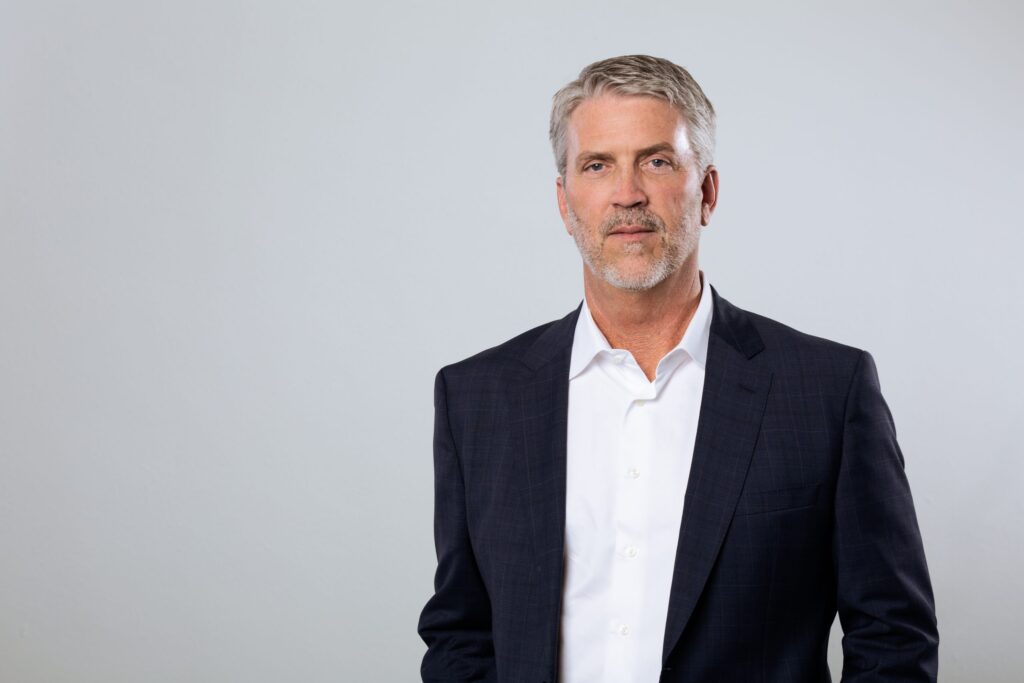
Bill Eckstrom is the CEO and founder of the EcSell Institute. Bill has spent his entire career in the sales arena; the first 14 years in personal production and then 13 in various sales leadership roles. His management career began in 2000 as a District Manager for a medical equipment company and was promoted to the U.S. Director of Sales in 2003. In 2004, Bill was lured away to become Senior Vice President of Business Development for a publicly-traded healthcare organization. In 2008, he founded the EcSell Institute to fill a void he witnessed and personally experienced in the sales leadership profession.
Bill presented a TEDx Talk to an audience of over 1,700 at the University of Nevada, Reno where he shared life-altering, personal and professional development ideas through the introduction of the “Growth Rings.” Since the release of the Talk, it received 100,00 views in just one week and now has over 3,000,000 views.
Most recently Bill helped co-author The Coaching Effect: What great leaders do to increase sales, enhance performance, and sustain growth which became an Amazon-Best Selling book in its first week of launching.
As a result of his experiences, his company’s findings, and his public speaking skills, Bill’s work as a keynote speaker is highly regarded throughout North America. While his audiences call him “profoundly authentic”, “highly entertaining” and much more, Bill is most proud of the fact his material is based on EcSell’s science and research—he does not present motivational fluff. He has presented to hundreds of groups ranging in size from 25-2,500 on topics found on his personal website, billeckstrom.com.
Lincoln, Nebraska is home for Bill and his wife. Together they have three children, Will Jr, Claire and Maddie. Philanthropically, Bill prefers a very hands-on approach as evidenced by his current involvement and passion–working and training their Yellow Labrador, Aspen, for therapy dog work. Soon he and his four-legged companions will be visiting children in hospitals and senior citizens in nursing home settings. Bill also has a strong need to be in the outdoors and finds time each year to spend in the field and stream with his children and close friends.
Hire Bill as a speaker for your next event here.
Book: The Coaching Effect
The real stories and hard lessons to help you level up your leadership and performance. Now your host, Ed Molitor.
Welcome back to another episode of the Athletics of Business podcast. I am your host and CEO of the Molitor group, Ed Molitor. And joining me today on episode number 119 is CEO and founder of the Excel Institute, Bill Ekstrom. Now, let me provide you a little bit of context about how this conversation came to be. I am asked all the time by.
Folks, how do you get such incredible guests, how do you get folks that.
Are so willing and able to share so much value, so much content, so much thought leadership with your audience. And there's a few ways. And mostly introductions are made through friends.
Through associates, through peers, a previous podcast.
Guests to enjoy their time on the show and the feedback they received and saw some other leaders that would be.
Aligned with the way we do things here at the monitor group and what.
We talk about on the Athletics of Business podcast. And of course I asked to be.
Introduced to some folks, and then there.
Are guests like Bill. And the way I came about connecting with Bill was very simply, I was doing a Google search, looking for some data about some content that I was writing and I was missing. I just felt like I was missing something. So one morning I was just doing.
A Google search and I came across.
His recent book, the Coaching Effect. What great leaders do to increase sales, enhance performance and sustain growth.
And what intrigued me about it was.
It absolutely has thousands and thousands and thousands of points of data to support what we talk about all the time. That's the significance of the impact that a coach, a leader has on their people. Now with that being said, let me.
Give you a little bit of background on Bill.
Prior to founding the Excel Institute, he spent his entire career in the sales arena. 1st 14 in personal production and then 13 in various sales leadership roles. His management career began in 2000 as.
A district manager for medical equipment company.
And was promoted to us director of sales in 2003.
In 2004, Bill was lured away to become senior vice president of business development for a publicly traded healthcare organization. We know how tricky that can be.
And then in 2018 is when he founded the Excel Institute to fill a void he witnessed and personally experienced in the sales leadership profession. Of course, we'll talk about that more, but here's what's really cool, and the link to this is going to be.
In the show notes, and I cannot.
Encourage you enough to go watch his TEDx talk, because in 2017, he presented.
A TEDx talk to an audience of.
Over 1700 at the University of Nevada, Reno, where he shared life altering personal.
And professional development ideas through the introduction.
Of the growth rings. And since the release of the talk, it received 100,000 views in just one week and now has over 4 million views. And interestingly enough, the title of the TED talk is why comfort will ruin your life. It's about a 1213 minutes listen and it's absolutely phenomenal. I cannot recommend his book enough. We're going to jump into why being.
In a state of discomfort is the.
Only way a person can grow and we'll find out why.
Bill and how Bill became fascinated with.
Figuring out the impact coaches had on.
The growth of their people and how.
The performance of the team reflects how they're coached. And we talk all the time about a team being a direct reflection of their coach.
And he will share with you how.
Great leaders can create a sense of discomfort as well as earn the right to create healthy tension, why discretionary effort is so significant and how it is created. And he will help you to understand how you can explain, measure, and most importantly affect discomfort.
Bill, thank you so much for joining us today on the Athletics of Business podcast. I am fired up to have you here. This is going to be a great conversation.
Ed, thank you. Its an honor to be with you and I mean that sincerely.
Well, I appreciate that. Its funny because its almost, we dont know where to begin. Theres so much to talk about. I mean, we connected here a few weeks ago and there's so many things we have in common. We speak the same language and everything. You know, my reaching out to you, Bill, stemmed from your book, the coaching effect. And the more I dove into it, the more I read that, the more I read your story. I just could not wait to have you on the podcast. So, can you share your journey with our listeners a little bit about your journey? And what kind of was the catalyst? Not kind of was the catalyst to starting excel institute.
I think it's funny that so many people like you, they want to begin there. And the ironic part of this is it's the part I didn't want to talk about. I don't mean now, I mean in terms of this journey. And I think the best way to set it up is to share a quick story to give you an idea. So I was sitting at the con, at our conference table in our office with, this is several years ago with my work family, and I asked them to join me, because I was working on the TED talk, and specifically I was working on the opening of that talk, and I needed their feedback.
And I was trying to come up with anecdote or a story or segue that would lead into this whole growth only occurs in a state of discomfort concept in the science that we're studying. And so I was running by these different ideas, and this was a life changing statement. Our vp of sales, whom I think you're connected to on LinkedIn, Will Clefcorn, he looks at me and he says, absolutely. Just straight up candid. He said, why don't, hey, Bill, why don't you just tell the truth? And I remember looking at him and I thought, and he caught me. Soft guard. I didn't say a word. And then he looks at me and he says again, he goes, Bill, why don't you just tell the truth? And I was visibly shaken.
And I kind of looked at him, I said, as if he was accusing me of lying. I said, what do you mean tell the truth? Where is this coming from? I don't understand. I almost feel like I'm being intact. And he said, well, why don't you tell them why we're sitting at this table today? Why don't you start off your TED talk and tell everybody why we have jobs? Why don't you tell everybody that the only reason we're all here is because you got fired from your job back in 2008?
Wow.
Yeah.
And I'll never forget it because I leaned back in my chair and I said, okay, so let me get this straight. You want me to tell 1600 this is not a short story I wanted to share because this is humiliating. I said, you want me to tell an audience of 1600 people? And this is the fun part. And what I had hoped would be another thousand or 2000 on YouTube. I said, you're the most humiliating event of my life to date. And everybody sat around the table and went, yeah, that's a great idea. And here's what happened. I said, well, excuse me for not buying in. I said, that would be humiliating. It would be totally awkward, and I'd feel uncomfortable. And there was that word. So that was it.
It's like I was going to give a talk on the need to be uncomfortable in order to grow, and I was afraid to go there myself. So back to the question about the journey. Oh, by the way, 1600 people did hear the opening about getting fired. And since then, it wasn't a thousand or 2000. It's been now 4 million.
4 million? Yep.
So the journey, the professional journey, I think that everybody really wants to understand or know more about is the fact that, yeah, I was EVP of business development in a publicly traded company, and one day, after a record year of sales, I got called into the president's office or actually in a conference room, and he just kind of laid out that we're making some changes and you're not in them. Time to pack your bags and go. That was more life changing than I thought it would be. In the moment, we're in chaos. That's why our egos can never get so big, because I could still literally think back to coming home, looking at walking in the kitchen and sharing. It's like 02:00 in the afternoon, sharing with my wife what had just happened and seeing the look on her face.
And I went upstairs and I kind of laid down. Not kind of, I laid down in bed. And then she said, well, what do you want me to tell the kids when they come home? And I said, nothing. I said, I'll tell them. And so you sit there at the dinner table and the kids are like, what are you doing home, dad? Weird. That's a humbling moment. And from that point on, everybody says, well, would you already, would you have started a business anyway? And my response is, I don't know. Probably not because I was too comfortable. I was making too much money, everything. Life was good, probably. So the answer, as much as I would have said yes at the time, the answer, realistically probably would have been no.
So that moment, the chaos eventually involved into something else, and it allowed me to. To go do some things and try some things. That the point of it, I suppose all is that. Ed, you and I are on the phone today because I got fired in 2008.
Thank you, Will, for suggesting that.
For the TED talk, too.
Hey, that took some courage on his part to suggest that too being uncomfortable.
I think our team has good psychological safety at work, so they feel like they can say anything they want to say. And he certainly proved that. But I do. The funny part was nobody. It just didn't. I'm the only one who caught it, who was caught off guard by it. So anyway, yeah, it turned out well, but the other funny part was. So the talk's on discomfort. But probably in the first year following the TED talk, I was asked to do more podcasts and speaking engagements around the topic of getting fired and kind of reinventing yourself than anything else, which is the thing I wanted to do the least.
Did you just let Will sit on those podcasts? For you, he should.
That's a good idea. Hey, take this one for me.
All right.
There you go, buddy.
You had that idea.
You got it. Now, that's incredible. But, and I love in the book the coaching effect, and we're going to talk more about that and we'll put the link in the show notes to get the book. But being in a state of discomfort is the only way a person can grow, and that goes against the school of thought and the grain of so many folks in our society today, which I think that's one of the reasons I just. I couldn't put the book down because I just love the fact that someone had the courage, the insight and the intestinal fortitude to actually write that and to live it. Can you talk about that? I mean, just talk about how you went from there to the growth rings?
Well, the idea, and that's a insightful question. When we started the Excel institute, let's say we, I and Will, who was my first hire? There's a lot of things I'm not good at, but the one thing I am good at is identifying and acquiring talent, and they just make people like me look really good. So this journey began way back in 2009. I was. I'm always fascinated with a coach's impact on growth. Now I use the term coach versus leader, whether it's a business setting, athletic setting or educational setting. We work in all three of those fields. That's always fascinated me. I remember when I was younger, I couldn't ever figure out my younger mind, couldn't get my head around why Nebraska football would win so consistently when the only common denominator were coaches Bob Devaney and Tom Osborne.
So then I started to watch coaches on the sideline and read interviews and watch interviews with coaches more than I would clips of the game. And then when you talk to people, and I'm sure if you talk to anybody, and I'll ask you the question, this is not a pre stage question, but I know how you'll answer it. Do you believe the performance of a team reflects how that team is coached?
I believe a team is a direct reflection of their head coach and their coaching staff. I absolutely. I mean, there's so much to be said about the impact a coach can have on the.
So everybody with any wherewithal, with any experience, with any so, believes what you just said and knows that to be true. But here's the deal then. Why is it all of the attention, focused energy and resources go against the people that report to that leader and not to the leader himself or herself. And that's a shame. In sales, 95% of the resources go to sales producers. We know when they stop at a Starbucks for coffee, we know how many meetings they've had. We know everything about their day. But yet if you say, what were their leaders doing with them? They cant tell you where they were yesterday, let alone last week or last month. So we studied coaches and started in business and thats what were fascinated with.
While there were a lot of things that were endemic to the great ones, ill use the term coaching lead synonymously sometimes in business. But what was synonymous to the great leaders was their people described a sense of discomfort. But okay, so that's really cool. Well, how do you explain that? So you can't just go tell other leaders, hey, go make your people uncomfortable because that'll help them. So we had to figure out how do you explain it, how do you measure it, but most importantly, how do you affect it? So that's where the whole discomfort journey began. And since that time we speak about it, we've done book on it. I mean there's a whole how it applies to leadership, how it applies to a coaching role. But yeah, the bottom line is it's pretty simple.
As human beings, we are wired for comfort, but growth only occurs in a state of discomfort. And while I understand that intellectually, I am being by no means a perfect walking example of that, I catch myself all the time coming back to the same thought patterns, the same behaviors. I'm just better at consciously recognizing it now more than I used to be, which is huge.
I mean, that's the level of self awareness and that's the ability to talk to yourself instead of listen to yourself.
I like how you said that.
Yeah, that's because sometimes when you listen to yourself, there's not a whole lot of positive things coming on. And to back up a little bit, when you talk about, explain it, measure it and affect it. This is another thing I loved about the book, the amount of research, the time energy that you put into research. Can you talk about that a little bit?
Yeah, I'm a research geek. I love data, which is interesting because I'm not like a high tech guy. A lot of people think, well, then you're a researcher by trade. I'm not. I'm a sales guy by trade. I'm a coach at heart. I'm passionate and fascinated with growth, but I like to look at it from a data standpoint because by and large, it's funny, I was just visiting with a school talking to their principal yesterday on their superintendent. Fascinating people, very progressive thinking. And for example, you can't look at a team of coaches and say their coaching effectiveness score one year, and then the next year look at a team of coaches and look at their coaching effectiveness score and say, well, there's no growth or whatever it is data is it. You got to cut it and slice it in different ways.
So it tells you a story because it's in there. And when you cut and slice, now you can cut and slice it to make it look in your favor a lot, too, if you wanted to. But the reality is, if you present data with integrity, there's a story in there that as human, as leaders, as coaches, I think we need that story to help us understand how we can grow, how we can improve. I love the fact that this is the athletics of business podcast because now I'm comfortable bringing in athletic stories. You know, I was talking to a basketball coach last week, a high school basketball coach, who, our work with him and our, in our research, the data showed him, and this is a guy who really wants to grow. He wants to improve.
He's absolutely, completely vulnerable when it comes to tell me what I need to know to grow, to be a better coach. And his results came back and it showed his, the psychological safety on his team was really low, but it gave him a starting point, so he wasn't guessing. He knew where to go, and he understood psychological safety and he got all the proper resources. But his psychological safety score went from a 52 to a 79 in twelve months.
Twelve months.
I was going to ask. Okay.
His team went from 38% winning percentage to 68% winning percentage.
There you go.
Now, if you looked at his total score, you'd say, oh, he's already a good coach. He scores really well. He's solid. But the data helped him analyze where to begin. And it's the same in business. If you lead a business team, Ed, if you knew what to do to get that next great growth jump, you would do it, wouldn't you?
Yes.
Yeah. But what is it? What is it I do? How am I impacting my team?
Have you ever showed someone, here you are. These are your results. This is where you're at. What do you think moving forward? Has that ever happened to you? Or they push back on it?
Oh, a lot. Oh, yes. I would say there's only 30% to 40% of the people, whether you're in the world of business, athletics, or even education, that say, hey, thank you I appreciate that. And I'm going to change. I'm going to do some things to change, to improve, because the results, if I improve this, everything else works, right? In business, if I improve the way I work with the people on my team, for example, sales results will go up, the productivity of my iteam will increase, my response rates to customers will improve my players on my basketball team give more discretionary effort. But, yeah, 30% to 40% probably take it and actively say, I'm going to get better. 30% to 40% sit around and look, and they're going to say, let's see what everybody else does. And there's probably about 30% of those.
So it's about a third, a third that say, you know what? They'll either actively deny it or they will just do nothing with it.
Are they afraid it's too much work?
That's a good question. I'm thinking about that. How to respond to that?
Well, and it goes back to what we talked about earlier. Like, we put all these resources in the salespeople, right? We put all these resources into performers and producers. We've, you also identified that a team is a direct reflection of their coach, yet we don't put the proper amount of resources into developing the coach. And you and I talked about this before. I just scratched my head, like, why wouldn't you want to be a sponge? Why wouldn't you want to be curious as, how do you get better and just soak it all up and just.
Knock it out of the park?
And if we had that one figured out, it has to do with the mind, obviously, our thoughts, the. And quite frankly, it has to do with order, with comfort. The idea of changing. I mean, my goodness, we're so sucked into our routines and our patterns are what we refer to as order. Because in a state of order, we have predictable known outcomes, outputs, and it's predictability that makes us comfortable. And until people really intellectualize that, they can't explain why they do what they do or why they feel like they feel. But it is such a hindrance to our growth. Not that everybody should always be in a state of discomfort by any means, because it's a times of comfort that allow us for the periods of discomfort when we grow.
But I remember when my wife came to me, you know, and I'm sure, probably Ed, that you're the same way when you fly in an airport. Remember back pre pandemic when we used to use airplanes?
Yeah, yeah. Without. Without masks.
Yeah, you're right. Without masks, were you pretty strong routine when you went through security, when you got everything had its place, its order, you know, you did. You did the same inputs every time.
Very much so, yes.
And we do that. And I. Everybody. I asked us, it's the same thing. I do that. I put everything in security. You know, this stuff goes in the dog bowl. This stuff goes in the bin. The phone goes here, the keys go here. Everything has its place. And then when you get through security, belt comes back on, you know, everything gets put back. And I follow that exact same pattern, because then I get on the airplane and my phone's not back at security, or my tablet's not back to security, or even worse, my dog's not back at security, right? And we get on the airplane, we do the same thing. We put my phone goes here, charging cable goes here, my laptop goes here.
I always get on early so I can put my carry on straight above my head so I don't forget my carry on, right? And if I do those same inputs, I arrive at my destination with my laptop, with my phone, with my charging cables, right. And it's a very predictable outcome. It's comfortable. I don't care if I grow when I'm on an airplane, Ed. I just want to get to my destination safely and with all my stuff.
With all your stuff, yes.
So here's how dangerous it is.
Now.
You could come up with a million stories on this. Several, I don't know, years ago, I remember my wife came to me one evening, and she said, hey, I've been reading up on this new thing in airports called TSA pre check. And I said, okay, well, tell me more. And she said, well, we'd have to go to Omaha and go to the TSA office. You got to do. They got to do a background check. You got to pay fee, you got to fill in some forms. But they say you can navigate airports more quickly. And not only was my answer no, it was viscerally no. And it was like, don't mess. It was so predictable. I have predictable outcome. Right? Don't mess with that. And, of course, you know the rest of the story, right? Months later, I'm in an airport, I'm late.
I hit security, and I feel like I'm in Disney World line. So long. And I look over to my left, and there's literally five people whipping through security. And I turn to the TSA agent. I said, hey, what are those people doing? And she said, oh, sir, that's our new TSA pre check line. So my order had just prevented. Now it's stagnation. Now I'm. Now it's backwards. So anyway, that's the danger comfort brings.
It's interesting, going back to the uncomfortable you mentioned, you said something before, that I want to jump into discretionary effort along with the. The impact of a coach. Can we talk about that? Because that's huge.
Yeah.
The concept of discretionary effort. It's a coach's role because if. Because of you, Ed. So if you're in a coaching role, because of your team doesn't sell more, produce more, play better, then why are you in that role? If a sales team will sell $10 million without a coach, they better sell twelve or 13, 14 million with a coach. Otherwise, what value do you bring? The concept of discretionary effort, how many more hours in a week will they work? How many more calls will they make? How many more drills will they run? How much more engaged are they with the team? Will they not take the call? Want to recruiter calls because they're so committed to you? The concept of discretionary effort is everything to a coach.
And can you define that a little bit? I failed to do that. Like what discretionary effort is, how that's a result of the coaching.
How it becomes a result of coaching.
What is it like? I know, but for the listener, what is the actual definition of discretionary effort?
I wish you hadn't have asked me that because I'm not sure I've ever defined it.
But no matter what you say, though, it will be correct just so.
Exactly. It's kind of like in the movie martian, you know?
Exactly.
I'm a pirate. I can give it any definition I want, but it is the amount of either given or obtained because of the result of a coach is how I would view it. In other words, I can give you discretionary effort, but you can also obtain it from me. And what we study and what our research is, what is it people like you do that creates discretionary effort? And that's what we're most fascinated with are what are the behaviors and what are the activities of the greatest coaches in business and athletics and now in the classroom.
I'm going to ask you real quick here, because I think as we talk about comfort, we talk about discretionary effort. You know, I think about coaches, and you'd always play against coaches that you knew one thing. Even if they didn't execute, that team was going to play hard, right? They're going to be prepared. They're going to have each other's back. They're going to be great teammates. They're going to be selfless. And that was a result of the coach. Regardless, it was the business world, the athletic world, basketball world is my point of reference. And we talk about this discomfort, but we know three things about the workforce today. They want to be valued. They want to know the work they do has meaning, that it's meaningful, and they want to be coached. And we get so caught up into making sure.
You just mentioned, like when the recruiter calls, you don't pick up the phone because you're so happy where you're at, right? But that doesn't mean that everything's roses and really peachy. It means that, you know you're growing, you know that you're being coached, you know that your work has meaning, you know that you add value to the organization, to the team. So as an outsider, someone might be looking at you and be saying, so why do I want to put my people in a state of discomfort? Besides the fact you tell me they can grow? And how do I do that without rocking the boat? How do you get them to that state of discomfort in a productive way? Jeff.
All right, so let's unpack that a little bit because that was a lot and. Okay, so, first of all, you brought up a really good point, which is coaches shouldnt be interested in making their people happy. Happiness is a personal state of mind. Their interest should be what creates growth, because ultimately, thats what discretionary effort does. Thats what I get paid to do. Ive never met a business leader ever that said, hey, next year, by the way, dont expect any growth goals. Nah, were good. We had a good year this year. If we just do what we did this year, were all good. Never ever once. We're not measuring happiness. We're not performance and growth is not this big group Kumbaya group hug Fest. And that's where the discomfort piece comes in.
I remember early on in our research, were talking to some leaders of high performing business teams and they used the word healthy tension, that they felt like there was a consistent healthy tension within their teams. The discomfort piece was part of that discovery. Now, knowing people's affinity is to comfort, to order, to predictable nature, to predictable outcomes, knowing that, then it's a coach's responsibility to, when needed, when necessary, when appropriate, to challenge people outside of those proverbial comfort zones. But you have to earn the right to do that. And you said something also in that statement. They have to be valued. They have to feel valued. And what we refer to it as is, there's one of these primary themes. The most, the most foundational primary theme is that of relationship, which involves trust, connections and psychological safety.
If that's not in place, although you have the formal authority to create discomfort and to challenge me and to try and get me to grow and to do more and to provide that discretionary effort, you're probably not going to get it.
And I want to go back to something I use in most of my keynotes, the psychological safety piece that is not to be confused with soft. People do that, though, do they not?
Yeah.
And not only they do that, we see it in our research. They focus so much on relationships, they think they can't push their players anymore. Especially in the world of sports. We see that. So we see relations scores go up, but challenge scores go down and we're tough.
No, no.
When you raise relationship, that gives you the right to push them more. It should be the opposite of that. But anyway, yes. To your point.
Well, you think.
You think about the coaches in your life and the leaders in your life that you had worked with that made the biggest impact in your life, and those are the ones that made you better. Those are ones that knew when to push you, they knew when to pull you, they knew how to talk to you. Those were the ones that you have, those deep relationships. I mean, you're not going to go back for a hall of fame induction. First of all, there wouldn't be a hall of fame induction for a coach who says, who just wants to be your buddy, right? Or just wants things to be and just, let's win on talent alone, or you're good, I got this. You're going to come play for me for four years. You may not get a lot of better, but we'll win some games, right?
Or are you going to come work for me here for a few years? And you know what? You'll make good money. You won't make the great money. You'll never be sought after because you're probably not going to get a lot better and eventually the market's going to outpace you and we're going to have to. Those aren't the people you want to be around. And I don't get why we don't understand that more as leaders.
That's a good question. I think part of its education, I think. I think there's also a gap between intellectual understanding and emotional readiness. Because if I am, naturally, we use the term a catalytic coach, someone who's a catalyst for growth, which means you said another way, you're a catalyst for creating discomfort. You're a catalyst for challenge, catalyst for change. If that is not your nature, even though you intellectually understand it makes sense. I'm not emotionally ready to change what I do to make it happen, and I think there's a chasm sometimes between that intellectual understanding and emotional readiness.
Yeah, and I want to clarify something. I'm not saying we don't get it. As a whole, we do. I should have said why some folks don't get it, but you just brought up a great point. What if it's not your nature? What if you really want to do it? You know, you need to make your folks a little bit uncomfortable to help them grow, and you want to push them, but you just don't know. How do you work with folks to get them to that point that they're able to do it?
There's not a single way ever. It's kind of like running any effective team. There's not one thing great leaders or coaches do. That's a bunch of things. And in terms of answering that question directly, I think first and foremost, we hope to get them to think differently. And so that's done through education. Now, that doesn't always work, but that's a method. Right? So if I can think about it differently, it changes my reality, then my reality changes my behavior. So that's one way. The other way is through watching others do it and seeing how it's done. So either through case study or through witness or through role play, watching how it's done through others in another way, which we don't do much of because it's hard doing mental exercises. It is quite literally things like meditation, mindfulness practices, gratitudes, things you're going, what?
How does that change? Well, it's like everything else. You just can't be a great free throw shooter without practicing shooting free throws for many years. And the same thing you want to make your mind more resilient, you want to make your mind more open. You want to be able to shift and change and evolve. You have to practice that. And the way to practice that are through some of those techniques that I just described.
You're talking about this and going back to the psychological safety, but we're talking about discomfort.
Right.
One of the things I like to talk to my clients about a lot, especially my executive coaching clients, is you need to be the face and voice that your team needs.
Right.
You need to be the face your team needs to see and the voice your team needs to hear. But then I'm sitting there thinking myself, wait a minute. I'm telling them to make your people comfortable, but in reality is, it's during adversity and during times of challenges and stuff. But can you talk about this, the difference between compassion and comfort? In other words, the ability as a leader, as a coach, to show compassion to your people but not be putting them in a state of comfort.
Right.
Helping them still get to that state of discomfort to grow.
Well, let me preface that with this. You can't live a life of discomfort all the time. We all have our order. We all have those things that allow us to be comfortable, to prep us for times of discomfort. Compassion has nothing to do with going easy or being soft or being uncomfortable. If you have true compassion. I use this story in my TED talk about my daughter's tennis that you and I were referencing. Or if you have compassion, you will know that allowing them to be uncomfortable, to spend a little time in misery, is a good thing. And when you think about it, when you go rescue somebody, when you allow your compassion to make somebody's life easier. Now, I'm not talking about, say, somebody with a. Who's in depression or somebody who's destitute.
I'm talking about the working world, the athletic world, the classroom, things like that. Right. Your compassion should not allow you to disallow growth. And here's what I mean by that. Seeing somebody struggle with a problem in school is not give you permission to go solve that problem for them. It's to let them be in misery with that for a while. Allow them to learn that for a while. To see, in the business world, somebody struggle with a proposal or somebody struggling with a question during a sales call or whatever the situation might be. It's not your job to bail them out. And I think that's where people get in the way. It's, my heart hurts for you, but I know enough about this to know my job is not to remove the obstacle for you, is to teach you how to remove that obstacle.
I will not do it for you. And I don't know if that's where you're heading or not.
Absolutely. Because, and we talked about this a couple of weeks ago, sports specific. The parents that remove all these obstacles from their children are completely eliminating opportunities for growth. They're cheating their kids, and they don't get it. Just like in a business world, if you bail people out, you're cheating them. And I just. I. You nailed it. Because I have compassion for you that you're going through this. But I also know that's what's right. I know it's best for you, so just figure it out.
Yeah.
Our, our director of marketing one time said something, and I can't remember if it was to me or I just heard her, overheard her say it. She said, yeah, bill cares enough to make me uncomfortable when it's appropriate. And I remember thinking, wow, that's arguably one of the best compliments I ever had. People cares enough to make me uncomfortable when it's appropriate.
Think about that. Think about that. And you don't, you're not trying to make folks uncomfortable through fear. You're not trying to lead by fear. That's not the type of uncomfortable we're talking about.
Right. Fear does create discretionary effort, by the way. So there is healthy discretionary effort, healthy challenge, healthy discomfort and unhealthy. You're right, because fear can be a motivator, and that sucks.
Yeah, big time. You know, you said something. No, it was in the book. It says, great leaders, great coaches are here to be exceptional. And you talk about high growth coaches, not just high impact, but high growth coaches, and they're here to be exceptional. Can you talk about. I love words. The word exceptional to me has a lot of power. What does that mean to you?
You know, statistically it means nine percentage points. And when I say that when we study great to elite or good to great, the separators in there, when we study their overall coaching scores, its only separated by nine percentage points. So that means great is like an 89 and good is an maybe its eight percentage points. Regardless, I think great is an 89 and good is an 81. And youre thinking, because I remember when I first saw that data, I remember thinking, oh, I thought thered be a bit. And then it a of realized. Then it hit me, it's like, no, it makes perfect sense. Cause the difference between a great athlete and just a good athlete is probably really small things. The difference between what, you know, a great football program does and a good football program does are just really small little things.
In business, the difference between great leaders and good leaders is just small little things. They just do things. They do all the same things. They just do them a little bit differently. Like a great coach in business doesn't just give feedback, they give it the right way. And they also usually provide, at least few times a year, written feedback. Well, just the act of writing it out and providing it, we see in our research makes a huge difference. So that good to exceptional, good to great to elite. However, you want to define it is pretty small. It's just that so few coaches are willing to make up that gap to do those things differently. And if you align that to the world sport, I mean, it's the same thing.
The difference between a PGA Tour golfer and a mini tour golfer, about one handicap difference.
And we know this, that as a whole, we're guilty of comparing our greatest intention with others. Biggest flaws or biggest weaknesses, however you want to word it. And I feel like sometimes folks may look at a coach and say, it's not that special, what he does. I could do that. Yeah, but you don't. And he or she does on a consistent basis, day after day. And that little thing is what makes them one of the elite. It's one of those things that will make them a hall of fame coach or a sought after coach. And I love the fact you point that out. It's just. It's the little things, and you don't. You're not overwhelming people saying, you need to make these massive changes the way you go about coaching.
You just have no. So, in business, for example. Here we go. Athletics of business. They will shoot somebody text at the end of the day, hey, how is your day to day? They will follow, how'd that call go? How is your meeting with Jane? They'll send them a card on their birthday. It's little things that get that discretionary effort when I'm following great coaches in the gym versus good coaches when the players are stretching, warming up. You know, let's use volleyball as an example. The good coaches are, like, talking to each other and they're laughing and chuckling and just letting the kids go about their warm ups. Great coaches. They're working that room. They walk up to an athlete and they say, hey, how's your grandfather doing? I know he was sick last week.
Yeah.
And they kind of move on. Oh, did you get your nails done? I like that color on you. They go to the next person, hey, how's that puppy they making? They're continuing these bonding connections, for example, versus just yucking amongst themselves. Little things, Ed. Just little things.
I love that.
I absolutely love that. Well, before I ask you the last question, can you share with our listeners where they can find out more about excel institute, where, again, we will put the link to the book, the coaching effect. We'll put that in the show notes, but where they can find out more about your keynote speaking.
Okay.
In anything else you'd like to share?
Well, that's very kind of you, and thank you. For that opportunity. As you said, the company, our company is called Excel Institute. It's ecsell institute.com. My personal website is billextrom.com. Dot. The TED talk that we've been talking about is why comfort will ruin your life. And you can just find that on YouTube. And the book is called the coaching effect. I am on LinkedIn. I'm on Twitter. I connect with everybody if they reach out, if you have any questions. One of the things I think I'm most proud of, Ed, is with the exception of one time where it got creepy, since the TED talk, I've probably have had, well, hundreds and hundreds of people reach out to me. I have answered every single one personally.
That's awesome.
Never, never, but never have I not. So if somebody wants to ask me a question or reach out or connect, absolutely, I will.
I'll ask you about the creepy punt one when we're done recording. You can't leave that hanging out there, and I don't follow up with that, but I don't know the story, so I'm not going to ask while we're recording. I'm going to save my editor to the work.
All right. No, that's fine.
Now, I have to ask you, as we start to wrap things up, you've recently launched Excel sports.
Okay.
And we really, you know, really connected on so many different levels here and the things that we've talked about. But one question I failed to ask you, if you could give us three. If it's one, if it's two, if it's three, you don't have to any more than three. The three keys that you've seen to the elite coaches, to the high growth coaches, what are the three consistent characteristics or traits that show up? And granted, there can be more than three, but if you could just keep it narrow for our listener and share.
That with us, not in order of importance, but I will give you three.
Okay.
Number one is relationships. You can never, ever be a great coach without having strong, trust based relationships, okay? Now, there are different pieces and components of that, but that's number one. Number two is order. You have to have some predictable natures about you and your team. And here's what I mean when I say that sometimes we don't think of order as something as simple as this, which is, how do you show up to work every day, ed? When you walk into the office or in front of your team, does your team kind of look at each other, mumble, oh, crap. I wonder what kind of mood eds in today be predictable that way. And also the best order to be predictable. And don't ever make your team guess whether or not you care about them. That should be no predictability in that.
I mean, that should be highly predictable. I mean, no guessing. No guessing in that. So that's number two. So number one, relationship number two, order number three challenge. It's easy. You have to find ways to make the world uncomfortable. And when you do number one, and when you do number two, you have the right to do number three. You've earned the right because not only have you earned it, you know me.
That was completely unscripted, and there could not have been a better way to end this unbelievable conversation. Honestly, that was. You nailed it.
That was awesome.
Bill, I appreciate you. I appreciate your time, and I'm really looking forward to all the amazing feedback I am sure we are going to get on this conversation.
Ed, thank you. This has been fun. Arguably one of the most fun I've ever had on a podcast. Because you're right. I love the way you question. I love your enthusiasm, and I will do anything to help you.
Well, I appreciate it.
And likewise, we talked about that before. Likewise. And keep doing your great work. It's. We need more Excel institutes. No, we just need one. We need you guys to do all the work I love you guys are doing.
Thank you, sir.
All right. Thank you.
Thank you so much for having us tonight. You know, I think maybe a few months down the road we'll get you back on again to see how Excel sports division is going and see the parallels. And we do love our data, don't we?
That's right.
Hey, Bill, thank you again.
You better take care.
Thank you for listening to the athletics of business. Be sure to give us a rating and review so we know how we're doing. Doing. For more information about the show, visit theathleticsofbusiness.com. Now get out there. Think, act and execute at the highest level to.