

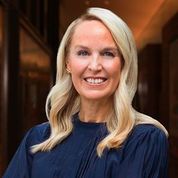
In her role as Elevate Sports Ventures’ Chief Client Officer, Wagner is responsible for developing and leading the agency’s global brand consulting vertical. With over 25 years of experience in global brand marketing and platform development, sponsorship consultation, and partnership management on behalf of Fortune 500 companies; the award-winning industry leader will maximize Elevate’s expertise in data and insights, design and experiential solutions and international network to connect and integrate brands in dynamic, authentic ways with fans and consumers.
Driven by the belief that sports and live events have the power to forge and create unparalleled, meaningful connections between consumers and brands, Wagner’s vision and work have created some of sports history’s most iconic and poignant images, impressions and brand associations.
Prior to her role with Elevate, Wagner was the Chief Client Officer at GMR Marketing, a global leader in sponsorship and experiential marketing; where, over the course of her tenure, she led teams across five international offices and four continents, managing global sports and entertainment programs for world-class brands including Procter & Gamble, Intel, ExxonMobil, HPE, Humana, Visa, Lowe’s Home Improvement, US Bank, Bridgestone, Capital One, Danone, and many others.
In her leadership position with GMR, Wagner oversaw US-based offices in New York, San Francisco and Charlotte, as well as teams in international offices including UK, Brazil and Tokyo, amounting to a team of over 150 executives; in addition to serving on the agency’s executive leadership and global growth team. During her more than 14-year tenure with GMR, Wagner played a key role in the agency’s international expansion in support of its global portfolio of work, notably leading significant client campaigns and efforts in the UK, Brazil and Tokyo.
Among her industry accolades, Wagner counts her service and efforts for client brand Procter & Gamble during the 2012 London Olympic Games as one of the most significant and meaningful of her career. The award-winning program reflected Wagner’s affinity for and prowess in managing and directing brands with global ambitions and a desire to develop relationships with fans and consumers driven by powerful, shared human connections and emotions.
Welcome to the Athletics of Business, a podcast about how the traits and behaviors of elite athletes and remarkable business leaders frequently intersect. The real stories and hard lessons to help you level up your leadership and performance. Now your host, Ed Molitor
Welcome back to another episode of the Athletics of Business podcast.
I am your host and CEO of the Molitor Group, Ed Molitor and I cannot be more fired up to bring in today's special guest now. Recently, Elevate Sports Ventures, which is the best in class sports and entertainment consulting firm, announced the formation of a new global brand consulting practice and has appointed award winning industry leader and our special guest today on the Athletics of business podcast. So humbled to have her with us.
Cameron Wagner as chief client officer to lead the vertical with over 25 years of experience in global brand marketing and platform development, sponsorship, consultation and partnership management on behalf of Fortune 500 companies, Cameron will maximize elevates expertise in data and insights, design and experiential solutions and international network to connect and integrate brands in dynamic, authentic ways with fans and consumers. And we talk so much about this in our conversation and the relationships between fans and consumers and the brand being the hero now driven by the belief that sports and live events have the power to forge and create unparalleled, meaningful connections between consumers and brands, and think how powerful that is. Moving forward after the pandemic, Cameron's vision and work has created some of the sports industry's most iconic employment images, impressions and brand associations.
Prior to her role at Elevate, Cameron was the CCO at GMR marketing as well, where she led teams across five international offices in four continents, managing global sports and entertainment programs for world class brands including Procter and Gamble, Google, Humana, Visa, Lowe's, home improvement, US Bank, Bridgestone, Capital one, HPE, intel and so many others. And we're going to talk a lot about her work with Procter and Gamblin in 2012 London Olympics and how that impacted her career so much. Conversation wrapped around purpose and how that drove her moving forward.
Something else we're going to get into that I really love and I couldn't wait to talk to Cameron about, was how she recognized a significant role leading female executives play in champion diversity in the sports entertainment industry and how committed Cameron is to fostering a culture of respect, inclusion and mentorship throughout elevate I'm going to get out of the way now and let you listen to this incredible conversation with Cameron Wagner. Cameron, thank you so much for joining us today on the Athletics of Business podcast. I am so humbled and fired up to have you here with us.
Oh, thank you, Adam. So excited to be here today. Thanks for having me, man.
Are you folks doing some great work? How excited are you to be the CCO of elevated sports ventures and just, I just love to hear the story.
I feel so lucky. It's an organization that I've watched for three years. In fact, it is our three year anniversary this week, as a matter of fact, which we're very excited about. But I've watched them from afar and then as more individuals who I've known throughout the industry have joined watch them from up close. And so when I had the opportunity to come on board and build something new for them, a new vertical, it was an opportunity I just couldn't pass up. It's a once in a lifetime.
So you've known a bunch of the folks for years. How awesome is that to be working together?
It's pretty incredible. It's an aggregation of some of the people who I've respected the most in sports for the last several decades. And so it really is amazing to now be able to not only work side by side with them, but to create something with them. Elevate has done so much, but is still so new and has so much that we want to do and so much that we want to accomplish that. Thats really exciting to be part of it at such a young stage in the companys history.
Jeff? Well, its pretty mind blowing when you really think about it and put in perspective, three year anniversary, happy anniversary, by the way. You really think about it, 18 months of those three years were spent in a pandemic. Were spent, were spent with COVID and coming out the other side of this. And I was talking to the chip about it last night. Like at the beginning, as I always said, you're going to either grow through this crisis or you're going to go through, and when you come out the other side of it, your true culture and what you stand for and represent how you do things is either going to be exposed or it's going to be revealed. And absolutely the greatness of elevate has been revealed. So as chief client officer, can you fill a listener on what you do exactly?
Sure. So my group works with brands. I run our brand consulting division. And so our work is to work with brands on their partnerships within sports, music and entertainment. And that includes starting from the beginning, you know, using our amazing insights team and insights, data and research and technology platforms to find that place. Where I say this often, I say, you know, not every consumer is a fan. But every single fan is a consumer. And why that's so important is I'm working with brands, and brands want to reach consumers. So us tapping into, you know, the fan and starting to look at that linkage between a fan and a consumer. How does that fan act when they are a consumer of brands, consumer of services?
And then how can we create a deeper relationship with the brand and that consumer through their fandom and through relationships with properties that give the brand a really meaningful role, that help enhance that fans experience and has transference outside of that sports and partnership area, but back on the consumer side as well. So that is what we do in the most complex of terms on a day to day basis. It's really finding those opportunities to bring people together with the things they love the most and have the brand be the hero in the middle of that.
I love it. The brand be the hero. So let's go back to the data, though. Where does this data come from? What's your process on that?
Yeah, we have a couple of different ways we look at data, and so, you know, from an elevate standpoint, we are so steeped in fan behavior. I mean, when you look at our work across teams and properties and leagues, we really understand how fans think, how fans behave, how fans consume sports. And so our data is informed by a lot of that. We also look at consumer data, and so we look at how a consumer, what are the things that consumers are passionate about, and then how do they consume those things that they're passionate about, either through digital, through television viewing, through other kind of psychographic and affinities, data that we can pull from a variety of different sources. So we look at that and then we have a partner who we work with on understanding how that translates into shopping behaviors.
Where do they shop? What do they buy? What is the mix of products in their basket? I call it convergence. I, you know, I really think when we're looking at our data and we're looking at the data around the fan and consumer, we're looking to find those points of convergence, because fans aren't consuming sports in a linear fashion anymore. They're consuming sports while they're also listening to music with their friends in a parking lot or, you know, at a park or, you know, there's always a convergence of the things that fans love happening at the same time. Our data has to help us understand what those points of convergence are and what the behaviors are around the points of convergence, because that's how we find a meaningful role for the brand in the middle of that.
When did you see that convergence start showing up? How long ago was that?
Yeah, you know, it was showing up before COVID for sure, and were seeing a lot more convergence, you know, over the past really three to four years. COVID sped all of that up, though. So while there was some media platforms and emerging media in digital, quite honestly, that was the secondary part of the viewing experience or the participatory experience. What COVID did is make that the primary method of the participatory experience for the fan and consumer. So now that those two things are starting to come back together, we're seeing them exist kind of on the same plane. That becomes kind of a different landscape for us, for sure. We also saw that if fans were consuming sports from their home or through content versus live games, the way they consumed it and what they consumed it with might look pretty different as well.
So we saw a lot of integration between music, a lot of integration between how they were coming together with friends and families in different forms, whether it was in their homes or outside somewhere, that just looked a little bit different. So COVID has sped all of that up, and we don't expect that it will go back to the way it was. It will be kind of a new landscape.
Yeah. And that was your next question. So you think there's going to be no going back to the way it was, but at what point? How do we figure out, or how do you identify where the line's going to be drawn? Right. Like how much some of it will go back. Is that pretty challenging?
Not really. I mean, I think fans will go back to live experiences. I think they miss it. I think they're craving it. I think there's the entertainment experience of live events, whether it's sports or music, but there's also the being with other people and the community feeling that comes with sports and entertainment. So I absolutely think, and we're already seeing it, fans are going to go back to live experiences. I just think that their consumption outside of the live experience is what's going to change, you know, so dramatically. And I don't think they'll feel like they have to be there live or they're missing out. That doesn't minimize the live experience, but I think that the virtual experience will continue to be very powerful in its own right. I don't know that there will be a line.
I think there will be and where fans say, okay, I can consume it this way or I can consume it that way, and it's different, but it's both really meaningful.
That's. I mean, that's a great point right there. It doesn't have to be a line. It's gonna be an. And so how much then focus goes on to the virtual experience, right? Like, shift.
A lot. Yeah, a lot. I feel like a lot of times, you know, as marketers, we used to, you know, build for the live experience or build for the primary mode of engagement with a fan, and then we would add on the digital experience afterwards, and it would be a really important, vital part of it. But were putting that on the back end of it after we had already built kind of the live experience or the live engagement, at least in the experiential marketing world. Now we're building those things side by side. So we're not building the live first and then thinking about, okay, how does this come to play in digital? We're building and then saying, how does this come forward in live and digital? Which is really different when you build that way, it's a much better way to build it.
It's a way we wanted to build engagements for a long time. Just old muscle memory had us building live first.
Well, now you sort of got that nudge, right? Oh, for sure, yeah, got a huge nudge. So normally, when I prep for a guest and a podcast, I have it laid out, like, sequentially how I want to absolutely go through their journey. But there are so much amazing stuff in my prep work for you. Just, your journey's been absolutely phenomenal. But I want to talk to you about the 2012 London Olympic Games and why that meant so much to you. What was so significant about that to you and your career?
Yeah, there was a couple of different things. The first thing was PNG and their vision for the Olympics, and what they wanted to bring to the Olympics was really inspiring. You know, we hope to be inspired by all of our work, but the truth is, you get those nuggets in your career that just hit you in a way that is different than anything else. And so, from a personal level, in 2012, I was a somewhat new mom. You know, I had a two year old, and I had a four year old, and PNG had the thank you, mom campaign. And so for me, there was a personal passion around what PNG was trying to do for the olympian moms and the olympian families.
And they were a great partner with us as an agency at the time that trusted us to say, help guide us on this journey, help us understand how to bring this to life, help us figure out where the purpose is, and people weren't talking as much about purpose and marketing back then, and PNG was always kind of ahead of everybody else on that front. So we did a lot with them around that Olympics. But one of the most meaningful things, at least for me, was the PNG family home.
And it was a place, you know, the insight was, when the athletes and their families come to the Olympics, you know, they've worked probably their whole lives for this moment, and they get to the Olympics, they're in a city, you know, a foreign country, usually, and they're staying in the athlete village, and they're separated from their families. They're not able to have that time with their families where they can take time out, take a breath, get the support they need emotionally from their families. As many times they're in the athlete village and their families are in hotels. And so the family home became a place to serve a couple of different things.
The first thing it did was it was an oasis for all of the Olympians and their families, and it was open to any of them to come experience the services that the PNG brands were offering. And all the services from the brands were oriented towards making the experience better and easier at the Olympic Games. So they could come get their laundry done for free by tide, they could come to the Pampers play area and take a break and let their kids play around in a really safe place. But what it also became is a place of celebration and a place of consolation.
So after the athletes win or lose, and both are super significant moments for athletes at the Olympic games, they could reunite with their families in a very private place, and they could celebrate those wins, or they could be around their family to console their losses. And we got to see that, and we got to be in service to those athletes and those families at the game. So for me, it was such a powerful experience, not just from a marketing standpoint and how it came to life across the world with fans and consumers, but to actually see that experience and how the emotion, the authenticity of what PNG was able to do for the athletes and their families during the games.
Talk about an emotional attachment to a project.
Yeah, yeah, very much so.
Yeah. I literally, I had goosebumps when we started talking about the family hub and then celebrate the wins and console and the losses. So back to purpose. Right? So when you walked away from that project, and you saw how dialed in the PNG was with, you know, what is the purpose? Like, why are we doing this? How did it translate into your future work when you were with GMR?
Then it made a big impact because I think at the time, you know, as I mentioned, brands weren't talking about purpose the same way brands are talking about purpose now. So we really took a step back when were working with brands and tried to start thinking about the why behind all of the programs. And we had a pretty healthy client roster and we had some programs that had been in place for a really long time. But to take a step back and say, okay, let's start asking why, you know, we're doing this program, like, who are we trying to serve, and are we serving them in the way they need to be served? And is the brand playing the role that the brand needs to play?
So it really changed my outlook on how I approached programs with brands, whether that was in the Olympics or within NASCAR or with MLB or another forum. It was pretty impactful the way I started to think about our brand work.
So how are the clients? When you started to do that, right, when you took a step back and started looking at the why, what was their feedback? Did they embrace it?
Yes and no. I think clients get really excited. I mean, clients are people, right? And we're all kind of driven by purpose. I think whether we realize we are or not, I think we all want to feel that our work has deep purposes from an individual client perspective. They loved talking about that and they loved taking a step back. Change is hard in big corporations, though. And so what we found is where we could align quickly around the why, the purpose, and the role. Sometimes if we had a program in place that was producing pretty good results, it took some time to shift the client's organization to doing things differently. So I'd say good result, but a longer path than perhaps what I thought it would be.
And on that note, I have to ask this. I've been reading a bit about this lately. I think why and purpose are here to stay. I don't think this is a flash in the pan. I don't think it's a trend. I think this is finally else coming to our senses over the course of the last several years. I mean, what are your thoughts on that?
I agree. We, we just completed a thought leadership piece on purpose driven partnerships, and we took a look at, you know, what is a purpose driven brand and what is a purpose driven partnership, and why is it important that purpose come to life in partnerships? And then we created a scale that would help us assess with our clients on how purpose driven their partnerships are. And so it gives them a benchmark to say, okay, here's the areas where I'm pulling forward our purpose in a strong way or not. And as I move forward and develop the programs or develop the partnerships, where do I have gaps that I need to address? We really did it as a way to conceptualize purpose for clients in a way that it could start to show up differently in the partnership. Some brands do it really well.
They've been doing it for a long time. And for other brands, they know it's important, but they're still trying to figure out how to pull it through in their programs.
So they know it's there, but it's more or less the articulation of it.
It is. And us being able to say, okay, if social sustainability is really important, what does that mean to you as a brand? Then when we look at the structure of our partnerships, if that's something that's core to who you say you are as a brand and it's not showing up in a partnership, we can fix that. The events and the properties and the leagues, they're pretty purpose driven, too, and they want partners that are going to help them better members of the community, better members of our society. And so brands are great partners for them in that journey. But as a brand, we've got to be more deliberate when we're doing those deals and agreements to say, these are the things that are important to us.
And here are some ways we see that they could show up or programs we could do and what fits with you from a property standpoint to make sure that we're aligned on what we're going to pull through.
Could you give us an example of a property, a venue in the purpose driven mentality, like what that might be, what that might entail or whatever example you'd like to use, you know, so.
Our team, you know, the drive pink arena down in Florida, you know, it's a recent deal and that's, you know, that's a brand that decided to put purpose front and center on there. And drive Peak has run a breast cancer initiative. So if I look at bringing another brand into that property, they don't have to be a breast cancer supporter to go into that property. But if I do have brands that are passionate about breast cancer and have put a lot of initiatives behind it, that certainly is a great property for them to align with who we know that the programs we build together are going to have to, are going to amplify what is already being done in that property with other sponsors and the team. So that's a good example of how we might look at that.
I think climate change arena is another one. You know, when you look at brands who are saying environmental sustainability is really important to them, looking for properties and arenas that are already have a purpose in that place where the brand wants to go, that they can together amplify what they're doing, how cool is it.
To be working with a bunch of people in a circle, playing matchmaker with people who are purpose driven? How awesome is that?
It's really neat. I mean. I mean, I need. Sounds like an undersell of it.
No, no, that's great.
It's really exciting. It is. And I think I agree that purpose is here to stay. It's not going anywhere. Being able to now have purpose be such a big part of our ideation. It's really fulfilling.
Brian, we talked a little bit before, and we talked about purpose, and we talked a little bit before about some of the things that you stand for that I just love. And one of them is your representation of female executives and their significance in corporate America and how you stand up for them. Right. Can you talk a little bit about that? My mom is one of my heroes with what she did with her career. My daughter, you know, like I told you, I want her to know she compete with the best of the best in the boardroom. But I just love the work you've done. Can you talk a little bit about that?
Thank you. I, Growing up in the sports industry, it was really different, or at least I perceived it to be really different. And so, you know, when you hear about the way it used to be and that, you know, females didn't necessarily feel like they had a seat at the table and didn't feel like they had a big voice. And I was all of those things, and a lot of them, you know, were probably self imposed versus, imposed on me by the people I was working with, because I've been very fortunate that every organization I've been with, I've had wonderful colleagues, male and female, wonderful, supportive colleagues. But I think I, as a female, felt all of those things that you hear female say.
And it wasn't until I got further along in my career and really when GMR put me in the position of overseeing our Charlotte, San Francisco, and New York office, that I felt this deep obligation to help the females in those offices and in our organization be okay to speak up and use their voice and feel like they could bring everything that they are into the work they were doing. And so it happened kind of subtly as I got more ingrained. And I started to pull more female leaders into my organization. We started to see a shift in the balance of leadership where we became more equally balanced, male, female, we became more equally balanced. And who was speaking up. We became more equally balanced how our account teams look like and the work started to transform, too, and we started to see tremendous growth.
That's always been a passion of mine, and it's certainly one that continues today. How do we really make sure that we are giving the younger females in the industry the support and tools they need to grow into leadership positions? Because were losing a ton of females at that mid level, they were never kind of making that leap. And so what I hope to do was to not only give them that support, but also, you know, help them understand that they may look at my journey and say, gosh, she's done really well, and I love this position she's in. I didn't do everything right, you know, I didn't do close to everything right on my career journey.
And so I wanted them to kind of understand that as well, like, how to make mistakes and kind of move on from it, how to recognize that there's kind of seasons in your life, personally and professionally, where you're able to do things that some other times you're not. Like when I had young kids, I came off having my second child and got on a plane to London the week after I got back from maternity leave. That was a mistake. Yeah, that was a mistake. It was a program that it was very passionate about, and I wanted to be there, but it was a mistake for me to get on that plane, and nobody made me get on that plane.
But I felt if I didn't get on that plane, that I wasn't doing my job and I wasn't going to be able to be successful. I felt like I kind of had to pretend like I just hadn't had a child. And so being able to have those kind of candid conversations with women coming up, you know, through the industry, that's the difference. We're able to have those conversations now. And I found myself in a place where I could really help facilitate those types of conversations amongst the females who I was working with and the females in my community and help kind of empower them a little bit to say, be careful that the things that you feel are obligations are not things that you're putting on yourself versus the things that your leadership is putting on you, because many times it's our own obligations.
What story are we telling ourselves? Right?
Totally. Totally. So that's really kind of been the foundation of my focus now and how I try to help. I also realized that females were getting very different types of mentoring and coaching than some of the males were in our organizations. And so a deliberateness along the lines of capabilities in the business. I found that our females were getting a lot of the soft skills and our men were getting a lot of the more financial, business focused skills, which is limiting for females once they get to a leadership level. And so focusing on curriculums and initiatives for training that help build those kind of capabilities that sometimes, not by anybody's fault, it just kind of naturally happens that's the way the training pans.
Out well, and it's also limiting for men in certain positions to be leaders when you're trying to drive this inclusion right. And you're trying to drive this the equal voice. With that being said, I was going to ask you about mentorship. How significant, because they have an opportunity, the younger women have an opportunity to learn vicariously through you and other female executives. How important is mentorship in that?
I think it's really important. I think that there's two kinds of mentorship, though. I think there's some mentorship that we can assign and be very deliberate about, and I think that's helpful. I think it's helpful as you're coming up in your career, for some mentorships to be orchestrated that are going to help you with things that maybe things that you wouldn't otherwise be exposed to. And so I think that's really important. You can't always do that on your own. And then there's those natural mentorships, the ones that just fall in place. They tend not to be official in nature, but they become, what I like to say, your brain trust. And so I think as you're growing up in your career, and what I try to help the younger females do is I can help you set up those formal mentorships.
I can help, you know, reach out to somebody who I know who is really strong in a certain area, that I know will help you in your career and set up this almost finite mentorships, you know, for help for you to learn something. But it's that brain trust and the unofficial mentorships that you need to seek and find on your own. Who are those people who will challenge your thought, who will shoot you straight, who you can call when you're making the really big decisions and say, I need to talk this through with somebody. And those people shouldn't look just like you necessarily, but it should be people who you trust implicitly. And it probably should be a mix of male and female. It shouldn't just be females when you're looking for those unofficial mentorships, because those can also be your champions.
So with all the massive success in your career, I've got to think you had a mentor, too. Did you have some pretty significant folks that played that role in your life?
I had a couple for sure, in a couple of different periods of time in my career. I was really fortunate when I was younger in my career. I worked on Coca Cola's NASCAR program, and at the time, Bea Perez, who's the chief sustainability officer for Coke now, she was running their sports marketing program for Coke North America. And I was going back and forth to Atlanta from Charlotte every week working on the Koch program, and had the great fortune of working under her closely as she was kind of building her team and building her organization. And I learned from her how to think about partnerships and relationships with properties and events. And she used to tell me, she said, like, if you have to pull off the contract, you failed.
And she would always start every meeting by saying, what can we do for you? And she was on the buyer side, she was on the coke side, but she started every single meeting by asking the property what she could do for them. And so I learned a tremendous amount from her. And then, you know, I had a boss five or six years later who helped me learn to trust myself. I was working under him, and I had been working in a situation where I was just seeking a lot of counsel. And he came in and he said, why are you seeking so much counsel from me? And I said, well, I'm scared I'm going to make a mistake. And he goes, go make a mistake. He goes, I got your back. Go make a mistake.
He goes, don't make it twice, but go make a mistake. And, you know, and so, you know, that was so valuable for me, too. And so I've had the great fortune of having several different mentors over the years. But even when I took the elevate job, I called the gentleman who started the first company I worked for and I asked him his opinion on what do you think? And so I just find that there's different, that brain trust, so to speak, depending on the decision I'm trying to make. There's different people within my brain trust and mentorship pool that I will call and rely on to run things by.
That's so cool, though, you know, go make a mistake, but don't make that twice. But how important was failure in your career? Because I'm going to get to something here. I'm leaning into something here that's just unbelievable. How important was failure in your career and the ability to learn from it?
Well, it was really important, but I was petrified of it. I know. I mean, I know that sounds crazy. Everybody's scared of it, but I really thought that failure was not an option on any front. And I think as a result, when I was younger in my career, I was extremely defensive. That was a flaw I had and kind of how I probably managed people and how I probably managed business and I had to learn. I didn't have a hard time being accountable, but I thought that failure was going to have dire effects than perhaps what it did. I didn't look at failure as learning. So it was incredibly important, but it wasn't something I got comfortable with being part of, just the way things happen until much later in my career.
Jeff, so have you developed ability, the ability, excuse me, over the years to give yourself a little bit of grace?
I have. I mean, I dissect things to the nth degree, and I think that's okay. Like, I don't think anybody ever said that part of being okay with failure is to not look at, take a microscope out and figure out where you failed. I actually think it's a really important part of failure. And so I had to get comfortable with, okay, when a failure happens, I am going to take that microscope out. I am going to figure out where it went wrong, what went wrong, what I could have done differently to help it not go wrong, but I'm not going to hold on to it in a way that it, that creates issues moving forward that are more scared to take risk because of that failure.
Because in our business, if you want to create something that's new and innovative, you've got to take risk. And I think that elevate is an environment that is so entrepreneurial, and part of being entrepreneurial is taking risk. And so I don't think we take foolish risk, you know, and that's what I had to learn, too. What is a foolish risk and what is a calculated risk? And I think I've gotten a lot better at knowing what a calculated risk is. And then if it fails, understanding why and as long as it wasn't a foolish risk, being okay with that learning and pull it forward into what happens next.
You said something right now so huge in terms of creating that environment like an entrepreneur, you know, ship, but the psychological safety that comes along with that, like were supposed to do this. We are supposed to take calculated risks. We're supposed to put ourselves out there. How do you create that environment? Is it just the people? I mean, I had the good fortune of meeting a bunch of folks yesterday. I was just amazing. I mean, is it what it is? Is it just the people that help create that environment?
It is the people, and it's the people in the culture. And I think those two things go hand in hand. And so I think if you hire the right people, then the most important thing about the culture is when something goes wrong, that we don't automatically look around for somebody to blame. And I think blame can show up in really sneaky ways. In organizations, there can be that passive aggressive blame where it's not overt, but everybody's kind of saying, yeah, they really blew that. I haven't seen elevate have any failure since I've been here.
But I guarantee you that if elevate did have a failure, and I'm sure we will at some point, in some way, shape or form, there would not be a look around the room to see who can take the fall for this, because as soon as you do that, you've created an environment that has no tolerance for risk. And so I think that's critical if you want to create that environment. And I also think for the folks on my team, me taking accountability when I have little failures is really important, too. You know, for me to say, hey, I missed that email, I'm sorry. I like. And I think taking accountability for the little things, you know, also creates that culture where people aren't so scared to do anything wrong, that they hold things too tight.
And you don't get that freedom of thought and freedom of creativity and freedom of intuitive thinking.
You know, you just said a word, accountability. But then it leaves me, how significant is vulnerability in what you do?
It's so important. I think that's been super hard for. For me as well. And I think I finally kind of arrived to that place over the past couple of years. I think COVID helps, too. You know, COVID really kind of helped create the vulnerability because suddenly we're in the middle of each other's homes in a way that we've never been before. And so when your kids show up behind you, when you're on a really important conference call, they just do, right?
Like, they know it's important. They know that level of importance. Like, if it's not important, they're not getting out of their chair, they're not putting down the tablet.
Right, right.
They know it's important. They're coming. They're bringing it.
Right. So how do we not be vulnerable when things like that are happening? And, you know, I had a really funny moment in COVID. This was before I came over to elevate. But, you know, we. It was in the beginning where were zoom, zoom, zoom all the time. You know, we took our daily schedules in person and just turned them into zoom with no time to think. And I had. I had both kids home at that time because they were, you know, in remote learning, and my husband was working from home, and a delivery guy showed up at the front door with a couch that we had ordered probably eight months before, and they didn't know where to put it. And so I'm on this call, and my husband's like, they're here. You've got to tell them where. You know?
And I'm trying to act like. And I finally, I put the call on mute, and I thought I'd put it on video. I said, I'm doing the best I can here. And I meant to say it to my poor, sweet husband, but I hadn't muted anything. I had turned the camera off, but I had not muted. And all of a sudden, thank heavens, it was an internal call at my former agency. My boss said, cameron, we know you're doing the best you can. We're like, what? You're doing great. And I was like, oh, my gosh. I'm sorry, y'all. That was not related to the work stuff. Although. Thank you. But, you know, it was just. It's like, okay, here we are. We're all vulnerable, Jeff.
Yeah, yeah, that's. You know, if my wife. When my wife is listening to this podcast episode, she will absolutely say that was me interrupting her and her calls, wanting to know where to put stuff. So, yeah, that's. That's fantastic.
That is.
But, yeah, I mean, that's it, right? And if you can't make yourself vulnerable during the pandemic, but. And when you do it with your. Your clients, it's huge, because the level of trust has developed, and they know they can open up to you and get to know. Know them at that deeper level. How. How significant was that?
It was really significant and really helpful. It humanized. I mean, I I've been really fortunate that I have a really close relationships with most of my clients, but it really. It humanized it even more, which I think is so important and really helps. It helped me understand how to work with them even better. And what they needed and what was keeping them up at night. And sometimes when we're really busy, we forget to stop and ask that. And that's such an important question to ask each other as co workers, but also to ask our clients and say, you know, what's keeping you up at night? You know, what's waking you up and worrying you and trying to think, how can I help solve that for you?
So that was really, it was an amazing experience to be able to build those relationships with those clients. I find that some of my international clients, the culture was different, that showing emotion just wasn't something that, you know, that was accepted. And I even saw some of my clients in Tokyo because were doing so much olympic work when the pandemic hit, I really saw a more personal side of them as well, which was powerful. It was really powerful because here's a country that has spent the last ten years building towards the Olympic Games. It's. It's their moment, you know, and gosh, it was going to be a beautiful, wonderful, perfect Olympic Games. I know they had some issues on the property side and all that, but it was going to be a beautiful game.
The people of Tokyo were going to deliver a beautiful game, and they were, had so much pride in what they were building. And now you look at the games that they're going to deliver and it will be. The Olympics are always wonderful. It's hard to look at the Olympics and not, you know, have the beauty of sport bringing people together. But for the city of Tokyo, it's a really different Olympics. It's not going to have nearly as many fans. It's just not going to flow. It's not going to, you know, the city's not going to come to life the same way that it was going to before.
And they felt all that, you know, you saw all of that start to fade away and then really have to change and alter their plans that they had worked so hard to build for years and years. And we've been a partner with that. So that was really incredible because that is something I don't think I would have ever gotten to see otherwise with them. Yeah.
And I don't think people understood why there's such a pushback from Tokyo and the fact, no, we need these games. We want these games to go on because of the pride they take into so great segue, by the way, and we didn't even plan this because that was going to be my next question, your success internationally. Okay. And I'm going to read this here. Okay. In her leadership position with GMR, Wagner oversaw us based offices in New York, San Franchile, as well as teams international offices, including UK, Brazil, Tokyo, amounting to a team over 150 executives. Mind blowing. In addition to serving on the agencys executive leadership and global growth team, played a key role in the agencys international expansion and supportive global portfolio of work. So I believe, and Im missing what I had. It was internationals offices in four continents.
So my question is the different behaviors, the different things that resonated, the different things that drove the behaviors internationally. How did you figure that all out?
Oh, so fun. I mean, like, when? So, you know, looking back, when people are like, what's been the most fun and probably the most difficult, that is it. So you have to go in a different way than you typically go on a business trip. I learned from a really amazing colleague. We were getting ready for the Olympics in Sochi, and so this was after London and London, you know, we had spent a ton of time there, but we hadn't spent much time in Russia. And so were going. This was several years out because it was a kind of a prep trip to start kind of thinking how we wanted to structure our office in that area. And so were going to fly in, go to Sochi, you know, do a couple of meetings.
And we hired a guide who was a us citizen now, but he was ukrainian and had lived there forever, so he was going to go with us and he was going to be our guide, which I thought was a great idea to help us get around Russia. Well, he was insistent that we go in five days before our meeting started. Well, as a mom of young children at the time, I was like, I can't do that. Like, I got to get in and get out. Like, it's going to be two days on the plane and then four days on the ground. I cannot add on time, you know? And he was like, if I'm going to do it, we're going to do it my way, and this is my request, and I don't think you'll look back and say it was a mistake.
So we got to Russia, and he hired one of his friends, who's a business leader in Russia, to show us around for a few days. And we literally sightseed for four days. And went to historical sites. We went to all the places you would think you would go. We went to restaurants that you would have never, as a tourist, ever gone to. We were served by their friends, their family. I mean, it was four days of the most amazing trip you can imagine. And then on the fifth day, we left and we flew to Sochi. And it was such a meaningful experience for me because when I got back for that trip and I heard people talk about the way the Russians did business, all of that was true. But I had a really different perspective of the Russians when I got back.
And I knew that for Russians, you know, if a friend asks you to do something in Russia, you don't say no unless you just can't do it. And suddenly we had friends in Russia.
How about that?
You know, we had friends in Russia who liked us and trusted us and wanted to help us, and weren't the outsiders from America. And all they wanted in return, and this has happened since, is when they came over for a visit to the US. They wanted to go to our favorite restaurants in Charlotte, and they wanted to meet our friends, and they wanted to meet our families. And so we ended up having a really amazing experience in Russia and didn't experience nearly the same. We experienced some of them, but not outside of this group. This group really helped us navigate things in a way that was better for us and better for our clients. And so for each country, you have to figure out, like, what is that culture about what drives them?
Who are they as a community and as a country and as people, and really get down into the people. And as soon as you get down into the people, you realize that there's a lot of commonalities in people, but there's a lot of cultural differences. And if you can learn to understand the cultural differences and appreciate the cultural differences, then you start being able to work in the country much differently. And that's been true in Brazil, that's been true in Korea, that's been true in Tokyo, and certainly was true in Russia.
So how does that play in the elevate in the work that you do and will do internationally? I mean, you look at Manchester, you look at different things and do things in the same sport, but in different countries now.
Yeah.
So how does that, with that fan experience? Right. How does that change how you folks will do things now? I shouldn't say I change. How unique of a challenge is that to differentiate between the two?
It's not if you're deliberate and you got. You have to give yourself time. Right. So when we go into a market where myself or others have tremendous familiarity with the culture and the way business works, we're going to be able to go a little bit quicker. When we go into newer markets, we have to be deliberate about stopping and taking time, you know, to learn the market, to learn the culture, to make the relationships needed, to not just come in and say, here we are, we're open for business, but to come in and say, we want to be a part of this community and help build business in this community, because if we come in any other way, we're not going to be successful.
So there's a deliberateness that has to happen in countries that we may not have as much familiarity with, which, for.
You, I'm imagining that makes the work all that much more fun and interesting.
Oh, for sure. It's, And now, I mean, my work over the years is, you know, I know a lot of people in a lot of different countries. That's been a great fortune, too, because now, you know, I can call folks and say, we're going into India. You know, call, we hired somebody in Singapore, you know, for some of our PNG work that handled all of AIPAC for us. And so she had people who worked for her india and China and all that. And so, like, you know, I can call her and say, hey, we're going into India. Do you have some folks you can connect us with who might, you know, be good partners for us or who may be interested in coming on board?
And so it's a different way of coming into a market than just kind of going into the market blind and having to set up from scratch to have some trusted friends and business partners who you've worked with in the past that can help.
That's awesome. Well, I. Cameron, I can't thank you enough. This has been absolutely phenomenal. Time flew. I didn't realize how long we've been talking, but thank you so much. Now, where can the listeners, where can they find out more about you, more about elevate more about your vertical and what you do?
So our website, elevatesportsventures.com, is a great place to find out more about us. I am on Twitter. I'm trying to do a lot better job at posting on Twitter. So that's a good place to find us as well. And then LinkedIn is always a good place to find me.
Okay, perfect. In the show notes, we'll have all those links, we'll have all the website, everything. So we'll have that there. But thank you. Thank you so much, Cameron.
Thank you. This is great. Thank you so much.
Thank you for listening to the athletics of business. Be sure to give us a rating and review so we know how we're doing for more information about the show, visit theathleticsofbusiness.com. Now get out there.
Think act.