
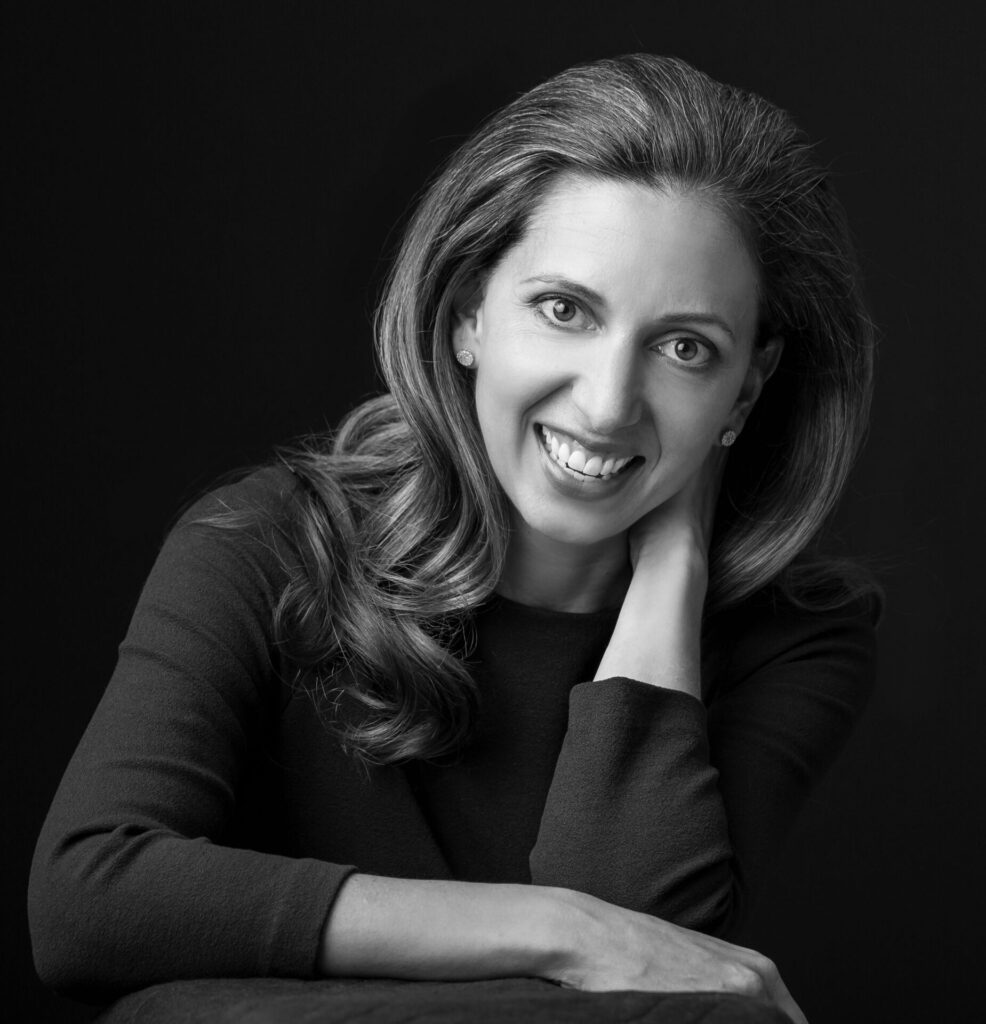
Molly Mazzolini is Partner and Brand Integration Director at Infinite Scale, responsible for promoting not only the Infinite Scale brand, but also the multifaceted brands of its clients. She lends her branding knowledge to all projects that add to the layering or collaborative philosophy that drives all team members at Infinite Scale.
Molly Mazzolini is a hands-on branding expert, working directly with the clients and the creative council to integrate the team, venue, and sponsor brands seamlessly throughout the venue. As a founding partner, Molly brings this insight and expertise to every project from conception throughout the life cycle of a project to ensure consistent and on-message brand integration.
The Creative Council™, a collaborative approach to providing creative consultation to Clients, was first implemented during the 2002 Olympic Winter Games where Molly Mazzolini set up a brand-management department that worked closely with 70+ sponsors and suppliers of the US Olympic Movement. Prior to that she was at the University of Kentucky Athletics Department specializing in media relations as a liaison between coaches and the media.
Molly Mazzolini’s love of sport runs deep and began at an early age, and her passion for branding is a driving force at Infinite Scale. Molly understands the fans’ fervor for their teams and works tirelessly to ensure that every brand touch-point both enhances the fan experience and furthers brand loyalty and recognition. Molly ensures every voice is heard, every concern abated, and every aspiration met.
Welcome to the Athletics of Business, a podcast about how the traits and behaviors of elite athletes and remarkable business leaders frequently intersect. The real stories and hard lessons to help you level up your leadership and performance. Now your host, Ed Molitor.
Welcome back to another episode of the Athletics of Business podcast. I am your host and CEO of the Molitor Group, Ed Molitor in Man, I might be on thrilled to bring in today's special guest, Molly Mazzollini, who is co founder, partner and brand integration director at Infinite Scale. Responsible for promoting not only the infinite scale brand, but also the multifaceted brands of its clients, Molly lends her branding knowledge to all projects that adds to the layering or collaborative philosophy that drives all team members and infinite Scale now recently in the news, it was announced that elevate Sports ventures, the best in class sports and entertainment consulting firm, acquired sports live event and experiential design firm infinite scale. Such a core relationship, we talk all about it.
We talk about how this journey actually began back in 2013, well before Elevate Sports Ventures ever was off the ground. Now let me tell you a little bit about elevate sports ventures. We did talk about them in a previous podcast. An Elevate sports ventures provides proven, innovative solutions to organizations across the global sports and entertainment landscape. They tap into their extensive resources, relationships and expertise of its partners to innovate and execute comprehensive strategies and solutions and venue renovations, sales and marketing, stadium licenses, premium ticketing, corporate hospitality, customer research, strategy and analytics, sales training and more. Basically, they are in charge of the entire customer experience, okay? And fan experience with these events.
Now, Elevate Sports Ventures was formed in partnership between the San Francisco 49 ers and Harris Blitzer Sports and Entertainment in 2018, and they welcomed Oakview and Ticketmaster and Live Nation as partners in June of 2008. Now, infinite scale, let me tell you a little bit about more of them. We're just going to jump right into the conversation because there's so much there, but I want to provide context for you. Now listen closely, because this is mind blowing.
Infinite Scale has provided total brand integration services to more than 130 global venues, counting many of the sports and entertainment industries marquee events, including the 2002 Salt Lake Olympic Winter Games, which we talk a ton about because truth be told, it was the relationships that were formed and forged there between Molly and her co founders, Amy and Cameron that really set infinite scale on its path. Okay, now back to the other marquee events, five Super Bowls, all seven College Football Playoff national championships, and one of my favorites, the NHL Winter Classic in leagues including the NFL, NBA, NHL, Major League Baseball, MLS, NASCAR and more.
Infinite scales, proficiencies and venue brand strategy including naming rights and team branding, event branded experiences, dynamic sponsor integrations and more have earned them a front row seat as a sports design consultancy of choice for industry leading venue projects including Alliance Stadium, Levi Stadium, Target Field, Chase Center, Little Caesars arena and Daytona International Raceway and many of the world's most innovative and elite professional sports teams including the Golden State Warriors, Detroit Red Wings, which is hard for me to say as a Blackhawks fan. Minnesota Vikings, Minnesota Tim Rose and Minnesota Lynx, Cleveland Cavaliers and more. Heaven. Trust infinite scale with their global brand design and vision and you can see why this relationship meshes so well on how amazing the work that elevates sports ventures and infinite scale is going to be to watch here in the upcoming years.
Now, with that, I defer to this amazing conversation that I have with Molly. Molly, thank you so much for joining us today on the athletics of business podcast. I am so excited. I mean, think about it. I finally get to meet you and then now here we are doing a.
Podcast together and I am honored. I know everybody says it, but seriously, thank you, thank you, infinite. Thanks for having me today.
Yeah, I'm telling you, we're going to have a lot of fun here, so let's jump right into it. I briefed the listener on your incredible background, but could you just tell us about your journey, where infinite scale came from, because it's such an amazing story. And then we'll work right into how elevate sport ventures found you.
Infinite Scale started in 2002 with myself and my two business partners, Amy Lucas and Cameron Smith. The three of us actually met when we worked at the 2002 Olympic winter games. They were preparing for the games in Salt Lake City, working for the organizing committee, and they were in charge of a department called the look department. I love it. Oh, that's just called the look department. And what they were charged with doing was creating the look, or look and decor or pageantry for the competition and non competition venues. So competition would be everything that's happening on the snow and ice, and the non competition would be the official venues, like the Salt Lake Olympic Square, where they give out the medals in the evening and have concerts or something for the cultural Olympiad.
That look, had to have a consistent look and feel very unified, right? A comprehensive set of graphics that they were the brand ambassadors for the games. And then I worked for the US Olympic Committee, technically based out of Colorado Springs, but I lived in Salt Lake City for years leading up to the games, basically to help all of the over. It was like 70 plus corporate sponsors and suppliers olympicize their marketing campaigns. So they have these contractual obligations of what they can and cannot use in terms of Olympic marks and terminology. And then they also wanted to do things like promotions or include athletes in some of their marketing campaigns. And you can kind of see how this is starting to connect and come together with what Amy and Cameron were doing, with what the corporate partners were doing.
But what we noticed is that they weren't given an instruction manual. There wasn't a process in place, only that everything had to be approved before it went public. I started thinking about it, and in essence, we put together a methodology of pulling people together, the creative agencies, the corporate partners, the internal project managers, and people who are representing the athletes and figuring out what they could and couldn't do and helping them with this process. So I would pull Amy and Cameron in with me. They would listen to the presentations, get creative assets in the hands of the right people. And guess what? People started manufacturing. These sponsors started manufacturing these beautiful campaigns that were connected to the look versus is disconnected.
And they started spending more money in a good way because a lot of that money supports our athletes as they're preparing for the games. The results were absolutely incredible, and it was recognized as one of the top ten hits, as in good things that happened in the 2002 Olympic Winter games.
That is so cool. Where did that idea come from? Was it just, you just saw everybody moving in different directions and things not working the way you thought they shouldn't? It just popped in your head?
Yeah. And it was literally, what was happening is that, you know, something would be submitted for approval and the US OPC would stamp things yes or no, and, you know, or approved with the following changes. And then I would just start hearing this feedback, like, well, how can we make this better? What can we do? Help us? And so we really just started listening to our clients and understanding that they have a lot of people and a lot of time and a lot of money invested, not only in terms of the actual sponsorship deal, but additional money that was going into their marketing. And so we wanted to make sure that they had all the best assets there and literally just started pulling it together because it was such a team environment inside of the US OPC and the Sloc Salt Lake Olympic Committee.
And so we wanted to provide a great resource and kind of be this concierge, if you will, to help them out through this process.
You realize you just gave a masterclass right in leadership. I mean, you talked about the over communication. How can we make this better? And we just started listening to our clients. Now, I have to ask, was there any pushback? Was there any, hey, this is the way weve always done it. We dont really feel like doing the work or people, for the most part, genuinely excited about it.
Oh, no, they were totally excited. What was great is that the project managers who were working on the Olympic side of things, they, were the leads and took care of all the. The corporate sponsors and, you know, they were a part of it. I mean, everyone was literally at the table together, and then it turned into, hey, can you help us with this next step? I mean, I literally had to go, you know, do some of these crazy experiences, like, okay, we'd like to put. This is Delta. We'd like to put Bonnie Blair, the infamous speed skater, on the tail of our livery, I mean, the tail of a plane. And they were like, will you come out and approve that? And I'm like, sure. And so I had to pull together.
You know, they have to go through a formal process to ensure, you know, Bonnie Blair's eligibility. If there are any Olympians who are current, but even any Olympians who have previously competed, there's still the, you know, the usage of their likeness. Right. And there's a whole department that's dedicated to that. But I literally had to go to Washington state, get on the scissor lift and go up and approve this beautiful image, but also the use of the Olympic marks and terminology on the planes as well. But these corporate partners would also share with us, like, hey, we're getting ready to rebrand. We'd love to be able to connect it to the Olympic marks and terminology. How can we do it? And just being really creative and strategic with them and help them out with options and ideas that's connected back to their objectives.
That's so cool. So from there, infinite scale is born, right? So how did things begin to evolve and shape just from that experience?
So when the games ended, when you work for the organizing committee, you know, on your first day, when your last day is going to be. Because the games just, you know, after. After they extinguish the flame for the Paralympic Games, the Olympic Games go first. It's done. I technically still had a position, but I would have had to have moved to Colorado Springs, and I wanted to stay in Salt Lake City. So kind of a weekly cocktail session with Amy Cameron and I just checking in with each other turned into, hey, why don't we start a business together. That really became how we started, you know, that fall, a sport design consultancy called infinite scale. And we literally started it, Ed, with leftovers from, like, leftover office supplies from the organizing committee that people were just, like, throwing away.
We bought our computers for $0.25 on the dollar because, you know, they kind of just had this huge garage sale of the larger pieces of equipment that the public could go to. But if you were an employee, you could go through first. So we kind of had this idea and a spark at that time. And so went through and got a couple things, like a, quote, fax machine, because that was very important in 2002.
Yes, it was.
Yes. And that was it. And we rented an old storage unit. It was across the street from a homeless shelter in Salt Lake City, but looked back on the city, had the most beautiful view and, you know, was our very first studio. And we've been going ever since 19 years. We're in our 19 season.
Did you have any idea when you first started that it would evolve and turn into what it has? Because it's absolutely incredible.
No, thank you, Ed. Thank you.
No.
And none of us really had the intention of being entrepreneurs. We also didn't realize the risk that were taking and opening our own business. It really did happen in the truest sense, very organically, and it just made sense when it really occurred to us was probably about a year, and we received an invite only RFP to bid on the Super bowl. Here were, this young company, a proud, nationally certified, women owned company. We had this opportunity to. It's something that we wrote down when we first started, infinite scale, like, what's your wish list? And Super bowl is at the top of our wish list. And we got this RFP. Ten people were invited. Only eight chose to, or ten. Sorry, companies. Only eight actually turned in proposals. Four were shortlisted.
And we found out after 20 minutes after our interview that were awarded the gig.
Amazing.
Yeah.
What was that feeling like? What was going through your head?
Oh, my gosh. Well, it was pretty wild, I must say. There are a lot of people who really, what, I'll say, sponsored us when weren't in the room. And one of those people were Jerry Anderson. He. Rest in peace Jerry. He's with populous and he is basically someone who has worked on Super Bowls for over 25 years. And in fact, he even had in his contract with the 2002 Olympic Winter games, where we met Jerry. He would depart for, like, two weeks to go work on Super bowl and then come back, and that was part of his. His contract, because he always wanted to work on Super Bowls. He told the NFL that they needed to take a look at us, and he worked with Jim Stieg, who is a living legend in the world of the Super Bowls.
Please take a look at infinite scale. And Jim, of course, trusted Jerry. And then in our proposal and in our interview, we proved that we could do it, and we worked on five Super Bowls.
Well, I was going to say that we're going to talk about, I mean, five Super Bowls. All seven. College Football Playoff, national championships, NHL winner, classic, and leagues, including the NFL, NBA, NHL, MLB, MLS, Nascar, and more. Okay. I mean, so much more.
Yes.
But it all started from just absolutely getting it done at the Olympics. But how did that relationship with Jerry form? Like, where did that bond come from? Where did you earn that trust with him?
From working at the games together? So he actually was in charge over every single venue, and he had to make sure that there was an overlay of security, an overlay of, you know, where the fans could go, where the athletes would be safe. Where's the back of house? Where's the competition? So it's an overlay over the venue, right, of all these different pieces and parts. And then one of the layers of the overlay is the creative and the look. And so that's where we had the offer, the opportunity to collaborate with him, and hence started a beautiful relationship of someone who he could spot talent, but he knew that we would work together with him in a very collaborative way, and that's what's needed on site for these events and venue projects?
That's amazing. So the look. Okay, talking about that, how has that. And I want to get back to the events you've done because, you know, like a little kid with this stuff, it's so awesome. But how does that look? Evolving? So if I saw something from infinite sale three years ago, would I be able to look at something, say, six, seven, eight years ago, and know that it was you that did it? Would it be consistent, or is that really evolved over time? I think it's.
It has evolved in a way that every client has a different style and a different set of objectives for their brand, whether it's an event property, like the College Football Playoff, national championship game, and how the look connects. I think what you're seeing more is that the digital and the static connect more. You're seeing more community involvement, more connectivity to the local host city if it's an event, but you're also seeing more seamless integration of the naming rights partners and the corporate partners, they're trying to connect more and associate with that property or with that team that they're a part of. And that's what we do a really great job to pull a lot of people, get them at the table, and to be very collaborative in that space.
Jeff, the video you sent me was absolutely amazing. There's something in there. And I'm not kidding when I text you, I said, that gave me goosebumps. It did. And it was driven by the belief that sports and live events have the power to forge and create unparalleled, meaningful connections between consumers and brands. I mean, it's just. And then obviously what's happening. Yeah, it's just unbelievable. And the fact. And how do you find it to bring that energy to every single project? Right. How do you find it to recreate it? Every single project? Like, the work that goes into us. Can you walk us through that a little bit?
Sure. Well, first, you're referring to our anthem video, which is the voiceover of all three partners, because we wanted that video to answer the question that we get most often, which is, what do you do and how do you do it? That really does share the kind of intangible side which is sparking an emotion in us when we see it. I mean, even to this day, I get goosebumps as well. But a brand and or, you know, a client is entrusting us with something that's very. That they're very proud of and something that definitely has a lot of beauty to it in terms of their brand. And it takes a while to be able to develop a proper strategy to help translate the brand through creative services such as graphic design.
What we like to do is start with a formal process of that brainstorming at the beginning. And what's this discovery? How do we learn about a brand? And sometimes that means going on site to seeing what that event is or what that venue is, and then also getting to know the community, even though it's not technically part of our process. But if I'm going on site, let's say, to New Orleans to work on a Super bowl project, I'm going to make sure that I eat at a local restaurant for dinner that night. I mean, who wouldn't want to, right?
And that I get my coffee from a local coffee shop or if I need to run some, you know, to a grocery store, it's to a local market, because I want as much of the local culture and flavor as possible, because that's so influential in some way, shape or form. I mean, maybe it's something as simple as, like, reading a menu or listening to a local dialect or taking in the sights and sounds and culture of the city. And that does influence our work. It just makes us more curious. And maybe we'll go back to the team and say, hey, are these things important to you? And they'll be like, oh, yes, we have to fold that in somehow. And don't forget there's all these other things as well.
We'll also ask them for a list of their favorite restaurants and places where we need to go and why we need to go there and why it's important and really dig into the meaning before we even start to design. So if that's the discovery phase, then we go into conceptual design where we'll develop a couple ideas and present them to the client. But within that, we're also presenting them the reasons why we're doing these designs. Maybe setting up some themes, some creative objectives, talking about the team, the key decision makers who are involved, the stakeholders who are involved and or other stakeholders that we need to reach out to, but also marrying that with, like, the operations of the building and how it comes together and any other things that's important to not only the community, but the client.
From there, they'll select their favorite, and then we'll continue to refine it based on all of those other factors and then will put together an implementation plan of how that design in presentation form, you know, on paper, if you will, translates into the real world. And what's amazing, Ed, is, you know, we have a lot of students who come through our studio, or even those that are new to the creative process that I just described, and they'll look at us and you can see these light bulb moments where they'll be like, oh, my gosh, I just thought that stuff just showed up. I just thought it showed up in stadiums. I didn't realize there's all that thought and thinking that goes into it.
And so going, kind of circling back to, you know, a point you made earlier, a question earlier, like, how do you know that's an infinite scale design? I would say when you know it when it's intuitive to walk around a venue, because the wayfinding system, that signage is guiding you to the place that you need to go intuitively, or the look is very holistic and comprehensive, and it's a total brand integration project. Those are some of the signs. It's not necessarily like, oh, we always use yellow or signature color. It's more about your experience on site because we think about things so deeply.
So what's the feeling you have when it's going to be unveiled for the first time?
Oh, man.
I can't even imagine. Like, as a coach, as a college basketball coach, we could at least make adjustments at halftime, right? Like, we could change if what we plan didn't work out. We can fix it. Once you plan and it's there, it's unveiled. I mean, it's in living color for the whole world to see how nerve.
Wracking, you know, it's. It's not. It's fun. And, in fact, one of my personal core values is observation, and that's really important to us at infinite scale, where, you know, we'll go and we'll watch people, like, interact with the wayfinding or just kind of stand at certain spaces because there's only certain ways you can observe. You have to have people in the venue. Right. But I also watch a lot of our, you know, the work that we do, whether it's an event that happens one time or actual games that happen at a venue, many times I watch those, like you, as a coach, would watch film. It's kind of like going back and observing your work, you know, like, if you were an athlete on the field and you're watching your performance on the field. I'm not looking at the athletes on the field.
I'm looking at other things. So I'm looking at, like, the field wall. I'm looking at the digital. I'm looking at how people are walking around the concourses. I'm looking at the camera angles. It's just a different form of observation. So studying, you know, like, I'll watch that. Like, you know, maybe an NFL player will go in on Monday after their Sunday game and watch their performance. Right. It's a different form of observation. So in person film, and then, of course, feedback, what are people hearing? And that's from the fans. But even, like, media members, all the different target audiences who are a part of that game experience as well, getting that feedback is important.
So what are you able to do with the feedback when you receive it? What are you able to do now? Is that something like, okay, we've really got to collaborate on this. We got to put our heads together, what this means to us. Yeah, that's great, but we're not interested in that, making that change or how does that process look to you?
Usually it's at that point in time that when most of the design, if not all of the design, is installed, usually there's an operational component that will work very closely with venue operations to be able to make some tweaks. And sometimes it does take like a sign or an added layer of signage or look or branding that we can implement as well if needed. And sometimes it's connected to like a player being traded or a corporate partner changing out or adding a new championship banner. But we usually have contingency plans for all of those things. Like think about a ring of honor, you know, there's going to be more down the road. You may not necessarily know how many, but you pick a larger number and you start designing for that.
That's a great analogy. A great example, I should say. You just mentioned corporate partners.
Yes.
Talk about how this experience, how what you do, how that just exponentially increases the value. Add that these stadiums and these venues have for their corporate partners.
Oh, yeah. Well, first things first. When a team hires infinite scale to be able to help them with a comprehensive corporate partner integration master plan, it just shows that they care so much about their corporate partners and their objectives. And it shows the brand association that both sides want to have together and their spirit of collaboration. When you have one sport design consultancy working on it, what it does is it allows for the corporate partners to have a peace of mind, knowing that their contractual obligations are going to be properly represented through design. But also we can help them think through things like, okay, this is what I want to be permanent, but I'm also going to have seasonal updates and how do I do that? Or let's just say it's a vehicle, where do I put that?
And how is it going to work within that space? How are people going to move around it? How is it going to look? How does it interconnect, and how do they capture data? There's so many different pieces and parts that we think through on their behalf and we sit at the table with them and with the team. To be able to bring it to.
Life, that's so powerful. And it leads me to ask you, which you can answer though, what brought elevate sports ventures to you? How did that all happen? Because that's so, that's pretty exciting.
Oh man, it's so exciting. We're absolutely thrilled. And obviously with the recent news of Infinite Scale being acquired by Elevate Sport Ventures. And it all started when 2013, Infinite Scale was hired by the 49 ers in collaboration with HNTV to do the corporate partner integration at Levi's stadium. And then that role expanded to doing the wayfinding and the team brand integration and the creative council process. And we've been working on that venue ever since. Every off season, we'll make upgrades and we're constantly working with that amazing team in Santa Clara. At that point, we obviously got to know Al Guido, who is the CEO of Elevate, and many team members who work at 49 ers and or now full time at elevate.
Then when Elevate started in 2018, we collaborated and had a strategic alliance with them on many of the projects because we had a lot of similar clients or, and or the same clients. The analogy I like to use is that instead of passing the baton to infinite scale, now we're a part of the holistic process. It's really cool to be able to do that to. They had a gap in creative services. They understand the power of creative and that it needs to be a part of the project lifecycle. And it extends their connectivity to the client to be able to offer them additional services in addition to the venue design, such as event design, which these venues, they're trying to push them to be in use, even coming out of COVID even pre COVID as many days as possible. Right.
So that includes a lot of sport and entertainment, and we can come in. Usually what happens is we're hired by the property itself, like you mentioned some of them earlier, the NHL College Football Playoff national championship game. Well, now we have an understanding about how all that works. We have an understanding about the broadcast views and how to temporarily create an experience that's the home of CFP or the home of whatever. NHL, you know, the NHL all Star game, the Pac twelve football championship game. So all of those are really amazing opportunities to be able to collaborate with elevate.
So how does it break down for you? And this might be a challenging question to answer because I didn't really tell you I was going to ask you this, but in terms of one off events or not, you know, I'm like, big events, so college football championship, right. Any big sporting event or live music event, as opposed to going in and not just bringing an experience, but bringing the stadium itself. How do you break down in terms of where your work lies?
I would say the majority of our work is in the permanent venue space. Our event season is very strong in the winter because that's typically when a lot happens. So it's probably broken up about 60%, 40%, 60% venues, 40% events. And we have designers and project managers that are dedicated in each one of those project types. They all have a beautiful understanding of brand, which actually we're carving out and doing even more of the brand and creative services because it's become a request of clients that we do more work and we help support their internal creative departments as well. With that in mind, it's a very specialized work. Yes, there's mechanics for vehicles, but then there's a mechanic for, like, a higher end vehicle, like a Ferrari. Right.
And so we're definitely more of that higher end where you just have to have that specialized knowledge of working within the environment, working within that kind of 2d space. Right. Because it's physical, you know, it was.
So I'm going to back up a little bit. It was so cool to see all of you folks last night because we've gone through this pandemic. It's been a while since everyone's connected, and for some folks, quite a while. But I got back to my room last night, and I called in to check home, say good night to the kids. And my wife, she says, how was? I go, you know, I talk all the time about loving what you do. I go, but what I experienced tonight when everyone just started walking and seeing each other for a first time took it to a complete different level. It was insane. And you all were so gracious and kind to me. I'm like, I got to get out of here. You wouldn't let me leave and just listen to all of you talk.
And I wanted to reach in and pull my notebook out and start taking notes, the conversations that you folks were having, the things you're sharing. But, man, talk about just the relationship you have. I mean, amongst the team at elevate sports, it's just pretty incredible.
Oh, my gosh. You nailed it, Ed. Elevate is the only other company that we can think of that uses the word family like we do at infinite scale. So it only made sense that we became one family, a work family. Right. But there's also a respect that we all have of our own families, our own nuclear families, and we also treat each other like family, which is so amazing. And that's a really beautiful thing, especially in a lot of people in the sports industry or who are outside of the sports industry think that what we do is very glamorous. And yes, it has its moments, but it's also, you have to be a hard worker and not afraid of that.
And, you know, I say that as someone who has worked in the sports industry for about probably 24 years now, and I feel very fortunate to have that opportunity. But to be able to have like minded people such as the elevate team that was, you know, something that was so important to Amy and Cameron and I as were joining forces with them.
So cool. And I sitting there last night, you know, listening to the journey and asking folks about the journey. But ive got to ask you, because we all have our crucibles, right? Like, weve all had our struggles. How important has failure and persistence and not just sacrifice, but how about, like, how much youve had to endure growing infinite scale to get to this point? Because you and I were having this wonderful conversation, like, oh, man, this is all unicorns and rainbows. This is great. Right?
Right.
Yeah. But how important was it for you to go through the grind like you have?
Oh, yeah, man. The grind is normalcy to me and I think it is to a lot of people in this industry. I think it's also, it's something that's very, you know, I feel very fortunate and that it means that you have an opportunity, right, an opportunity to be able to create these beautiful spaces that bring people together, that share something incredible through sport. And sport is a beautiful platform to be able to do that. It's a universal language, much like music.
Yeah.
There's a lot of difficult moments. And even in terms of figuring out the long term legacy plan for infinite skill, what was really important to Amy and Cameron and I is we wanted to ensure that it wouldn't fizzle out and that it would grow into something bigger than the three of us, even though we're the founders and the creators of it. Right. But there's an amazing team in collaboration with us at infinite scale. We also wanted to make sure that there's a place for them and that their career paths had a place to blossom as well. All of those things were very important with this acquisition.
But to know that elevate wants all of us to be a part of it and to continue to be a part of it, because, as Al Guido states, you know, people is the very first consideration of this acquisition, and it goes back to the family component and.
With that family component, the psychological safety that offers right for you folks to just be creative, go do what you do and to take the risk. Can you talk about how important that is?
Oh, it's so important for creatives, but at the same time, you know, we're doing it within, you know, the shape and form of not only the sports industry, but the corporate partners and the teams who are a part of it. So what we can do is represent on their behalf and really sit next to them more as a consultant than what I'll say a vendor is right. So we love that we're made a part of their families as well, and that they invite us in to support them and again, be an ambassador to their brand, which is so, you know, hugely important. We can also help them with their methodologies and because this is what we do every day.
But for someone in the sports industry, they may only have one renovation for their venue or one new build, like, within their entire career or one major event, like an all star game that they're hosting. We can help them and guide them. Like, no, you don't need to stress about that. Or, yes, we need to stress about this.
Yeah. That's what's so interesting is you look at it, you just said something that was so huge. This might be their only. You do this all the time. This might be their only time doing this. So how intentional are you about communicating that to your team? Say, listen, no matter how much of in the weeds we are in this, we have to remember why we are doing this and who we are doing.
This for every day. Yeah. And they know it, too. And we, you know, even in our most stressed out times, like, if you just take a step back and you're like, oh, my gosh, we're not just working with one team. We're working with all these teams, all these properties. It is such a cool opportunity. It really is.
Yeah, that's gotta be pretty.
Bigger than. It's bigger than. We like to say that, too. It's bigger than all of us.
Yeah. That's part of being something bigger than yourself. I mean, that's. That's unbelievable. And here you are now.
Right, like, now, here you are on your show.
Well, no, it's. What's that? Like, like, Cameron and you are back together. Working together. How is that?
Oh, my. Oh, Cameron Wagner.
Yes.
You know, like, we've worked very distantly, so to be able to collaborate with her brand representation department. Oh, my gosh. That is. It's going to be amazing to see what she's building and creating and how we can support her and her team. The one thing that we all talk about as an executive team is this new way of thinking for our clients and going back to even way back to the Olympic movement, you know, listening to them and what their needs are because it's ever evolving and not just because of the global pandemic, but I think people are just thinking about things differently in a new and refreshing way.
And we are recalibrating to cover that, but providing them with a lot more services and providing the team members on our team the opportunity to be able to grow in shape and mold with that. So very exciting opportunity and times ahead.
So what was a pandemic like for you?
Man? It was rough. Not gonna lie. Not gonna lie. It was rough because it's not only taking care of our clients, it's taking care of our team, and it's, you know, your business. Right? So we actually had a manifesto during that time and that we're still using to protect, adapt, and to serve for us. It's protecting our team, protecting our clients, and making sure that they have what they need just to take care of themselves. Right. And also to protect our business to make sure that it stays intact as much as we possible could control, possibly could control, including our team members and our clients. There were some clients who just said, hey, Molly, we can't make this work because we're not going to have an event.
And I know we signed on for a contract with you, but, you know, where can we draw the line? So we just adapted with them, and that's where adapt came in, where we would be like, okay, you know, why don't we do this? I want to make sure we bundle this up nicely for you. You have what you need for now, and then let's readdress it when you want to activate your event or your project again. And then, of course, surf. We've made sure that every one of our team members had their entire office set up, like, you know, computer and Internet access and, you know, software, whatever they needed to operate from home. And at the same time, we wanted to make sure that they were taken care of and that they could also take care of whoever they needed to as well.
So we would say things like, okay, if you know somebody that needs a logo and they're in a place, just feel free to use your equipment and take care of them, too. Maybe you can help with, like, a nonprofit or somebody who really needs it and can't afford it during COVID and they did that. So it was great for us to be able to serve in that way. It's a small way, but it was big because it meant something to them and it was helping their cause. Right. And then, of course, serve our clients however we could. But at the end of the day, it was really about keeping our team intact and make sure that we had a business, because a lot of small businesses were lost during that time, some that aren't going to come back.
And the other thing that we did in our community is that we supported small businesses as much as we could as individuals, which was very important. That's things like your restaurants and even small donations to, like, the local arts and culture, which fuels creatives. All of those things were very important to us and things that we reiterated with our team. And then we did once a week, we had quarantini lounge, which is a virtual cocktail hour with our team, where we didn't talk business. It was, you know, 30 minutes check in. People would give personal updates, but that goes back to family, where we all would check in with each other, and then we also would check in with, you know, the schools. We have a lot of school tours and a lot of speaking engagements that we're asked to do.
And so we would do as many of those as we possibly could again to continue our give back. Cause we couldn't host tours or, like, go and see these classrooms in person or be a part of that. So we would do those as much as possible.
So here's a million dollar question for you. The quarantining happy hour. How. What are you gonna keep? Like, what did you folks do during the pandemic? Like, why weren't we doing that before? Is there anything that you're gonna hold on to?
You know, I think we could keep the flexibility of work from home as long as we have dedicated time. And we're trying to figure this out right now. But I think that was really lovely that, you know, we all could kind of take a breath, and were like, yeah, we can do this and still deliver what we needed to deliver for our clients. And travel was minimal. It is nice to get back into it again. Right? But at the same time, I think it's causing you to think through, do we really have purpose? Do we really need to go there? And if so, why? And if we are going, how do we maximize this and how do we stay super safe for everybody that we're going to be around, but make sure that we have purpose on this trip.
That's huge. And then is it a challenge? Is it a challenge? But how challenging is it is a better way to put it, knowing when to bring people back, knowing when you need to be. Because there is that, especially with what you do. There is a human connection. Right. There is that emotional attachment to it. So how do you figure that one out?
We actually surveyed our team members, and we've had individual conversations with all of them. We have put together a plan, actually, we have set up a committee within imminent scale that put together a return to work plan that they are actually just in the process of sharing with the executive team. And so next week, we're going to analyze it and start to activate it. Although people are already returning to work and we just have new studio policies in place and that are already activated. And so people are casually and gingerly coming in to the studio.
Casually and Gingerly coming in.
Right. What do they call that? The toe dip. Right. But there was a day last week where I think we had, like ten people in the studio and we all were just, like, celebratory. It was just so happy and fun.
Yeah. For me, walking through the Charlotte airport, it was like an out of body of experience. I mean, it was so many people. Yeah. I was like, where did it come from? You know?
I know. It's a wild airport.
Yeah, it is. Well, it was. It's. I mean, so good to have you. I appreciate you joining us today. You know, you shed a light on. Like you said, most of us go to a professional sporting event. We go to a concert, we go to the Olympics. We think, oh, this is just the way it is. This just sort of happens. Right. But the work that goes into it. So thank you for all the amazing work you do. I appreciate, I cannot wait to see all the exciting stuff that's coming up between infinite scale and elevate sports ventures. It's going to be pretty cool.
It is. And maybe we can go to a game or an event in person together. That would be lovely. And thank you for what you do and sharing. I mean, it's so cool to see the perspective that you have on this industry. And I know I've used this word a lot today, fortunate, but we really are fortunate to have you and you create a beautiful resource for all of us. Thanks for what you do.
Thank you. That means a lot. It really does mean a lot. It's very humbling coming from you. It's very humbling. But thanks for joining us. Well, and by the way, on the show notes, I am going to put the link to the anthem video and.
Perfect.
You're listening. Go check out the anthem video. It is so cool.
Follow us on insta, too.
Yes. Where else can we find you?
Yeah, so the infinite scale is on Instagram and LinkedIn and Twitter. And as am I, Molly mazzellini. And, yeah, looking forward to staying, obviously. Ed, I'm a big fan of your podcast, so thank you so much. Looking forward to see who you have on next. Thank you again for having me.
Thank you so much, Molly. I appreciate it.
Thank you for listening to the athletics of business. Be sure to give us a rating and review so we know how we're doing. For more information about the show, visit theathleticsofbusiness.com. Now get out there.
Think, ask.