

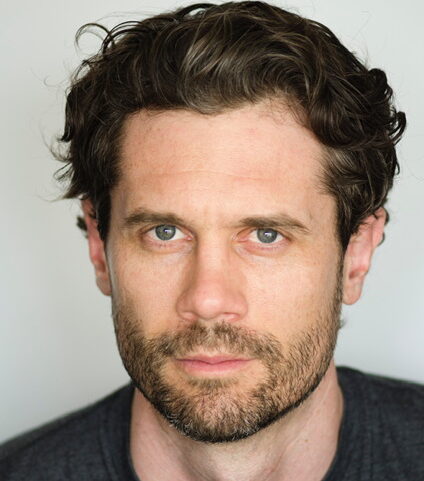
A National Merit Scholar and engineering major at Iowa State University, Paul Shirley played for 17 professional basketball teams in a nine-year career, including stops in Spain, Greece, Russia, and three teams in the NBA.
He’s the author of three nonfiction works: Can I Keep My Jersey?, Stories I Tell On Dates, and The Process is the Product. His first novel, Ball Boy, came out in February of 2021. In addition, Paul is the founder of The Process, which helps workers find structure, accountability, and community online and in person.
Paul got his start in Engineering because it seemed like a practical way to show he was taking something seriously. He was raised in Kansas in a small town, and his family set up a basketball hoop outside the house, and Paul found this meditative state when out there playing. Basketball allowed him to be or act however he wanted as a free expression.
When he got to Iowa State, he realized he was behind many of his teammates. It was a great team, and his best chance of getting on the court was to be the hustler. He didn’t do much shooting in his college days, which contrasts significantly with the end of his professional career. Adaptation is critical, and he attributes his success in sports to his ability to be what the team needed at the time.
Before he got into sports as a kid, he was a big reader, and it never occurred to him he could write his own stories. He started writing emails and blog posts for the Suns and found a way to communicate with people that allowed him introspection. He struggled in his post-basketball career with being himself, and it took him years to get in touch with what he values. As he ages, there’s a lack of caring that comes with it that makes being himself easier.
When working on the TV adaptations of his writing, he found that there were a lot of changes made to the story, and it became increasingly hard to stick to the one he’d hoped to tell. In many ways, his instincts were correct, but he started to cave in areas because of a lack of confidence.
We all fall victim to a tendency to lose steam around our self-belief. To grow and self-modify, we need to be open to new information and criticism. But if we’re too receptive, it can turn into self-doubt. That war is just part of it, and it won’t ever go away. But, as you continue on your path, you’ll get better at it and develop more effective coping mechanisms. So, when you fail, give yourself time to wallow and then rebuild your strategy.
There are so many opportunities for failure in sports, which was a great training ground for Paul’s post-career. Getting cut from teams, going to countries that didn’t work out, and last-minute fall-throughs were a constant battle, but it gave Paul the chance to wallow, regroup, and prepare for the next step. The baseline systems we have in our daily lives carry us back to stasis after a big failure, so it’s vital we have those systems in place. There’s no one way to do it: it’s finding the routine that works best for you as an individual.
What we have to have is an everyday sense of satisfaction. We’re all searching for a deeper meaning, but the truth is that day-to-day is all there is, and we’ll never get away from it. There’s no number of wins or milestones that will make us happy; if we can’t figure out what we love about our day-to-day, we’re in trouble. But hard work and joy don’t have to be mutually exclusive.
The truth about life is that where you’re going is constantly changing, what you initially set out to accomplish might not always be realistic for who you are or what you’re good at, and that’s okay. In his books, Paul hopes his readers achieve demystification and build the systems and routines necessary to set themselves up for success. It’s not as hard as it can seem.
Listen to Paul Shirley now and start falling in love with your process today!
Welcome to the Athletics of Business, a podcast about how the traits and behaviors of elite athletes and remarkable business leaders frequently intersect. The real stories and hard lessons to help you level up your leadership and performance. Now your host, Ed Molitor
Welcome back to another episode of the Athletics of Business podcast. I am your host and CEO of the Molotor Group, Ed Molotour. Never in a million years, a million did I think when I was sitting in my film room at Texas A and M University back in the late 90s with a bag of sunflower seeds and two pots of coffee, watching Iowa State basketball, trying to figure out how in God's name we are going to be. Tim Floyd's junk defenses and the incredible action and simple but incredibly effective action that his team ran.
And there was one gentleman on that team, Paul Shirley, that really stuck out because he just did all the little things, had the ability to score and did okay, got guys the ball where they needed to and just was seeming to get his hand on every loose ball, every rebound, defensively, always in position. And here we are, years later, episode 142, and I'm being joined by Paul Shirley, who has had an amazing journey since he left Iowa State. Speaking of which, now I want you to think about this. He was a National Merit Scholar at Iowa State. He's from a small town in Kansas. We'll talk about that here in this conversation. And he was a mechanical engineering major at Iowa State and he will profess that he had no clue what it was and what he was doing until he got into it.
Well, let me tell you something. He did something right because he was three time academic, all big 12 three years in a row. And then his senior year he was second team academic all American, all the while playing Big 12 basketball, which is not easy to do. And we're going to talk about, I don't even know if this is a word, the glamorous life of college and pro athletics. Okay, but how Paul figuring out how to be successful inside of those worlds and coming up with the systems and processes to stand out and to excel has helped him in his career since then. Paul played for 17 professional basketball teams in a 9 year career. 17 professional basketball teams in a 9 Year Career. He shares some wonderful stories from that, including stops in Spain, Greece and Russia and three teams in the NBA.
And there's one story in here that's just, it's unbelievable. He talks about how he almost met his maker on the plane ride home from Indianapolis to Chicago when he was playing for the Bulls and he had ruptured his spleen and kidney while trying to take a charge against the Pacers. He's also the author of three works of non fish and all phenomenal books. Can I keep my Jersey Stories I tell on dates. And the Process is the product, which is his most recent. And we talk about that. We talk about some of the things inside of that book here in this conversation. And his first novel, which is Wonderful Ball Boy, came out in February of 2021, is doing wonderful now. Paul is also the founder of the Process, which helps workers find structure, accountability and community online and in person.
And full disclosure, I am going to join the online community because I just, I think it's really cool what they do and I think it's really effective what they do and it's going to help me expand and grow as a person. And inside this conversation we're going to talk about how Paul figured out how to get into that state of flow, what the state of flow is as a writer in just doing creative work inside of whatever field of endeavor is. We'll talk about the significance, as I mentioned, of systems and processes, habits and routines, all things that the Process which Paul founded work on with their clients. And here's what I love. We're going to talk about how to fall in love with the day to day. Think about that. How to fall in love with the day to day.
We always talk about falling in love with the process. We think of this big picture, but how do we fall in love with the day to day? And then we're going to talk about constraints and how those are actually fuel a catalyst for our creativity so much here. So please get a pen and paper. Enjoy this conversation with Paul Shirley, be prepared to laugh, to take some very insightful notes down and just enjoy our time together. Paul, thank you so much for joining us today on the Athletics of Business podcast. Who knew?
What is it now, 24 years ago, maybe longer than that, when you were absolutely drilling us, when I was an assistant coach at Texas A and M and you're playing at Iowa State, that I one day would be hosting a podcast called the Athletics of Business and have you on as a guest. I appreciate you.
Thank you for having me. It's Texas A and M and a lot of those former, what would it be? Southwest Conference?
No, we're the Big 12. We're the Big 12. No, no, the former Southwest.
Yeah, I know the former Southwest teams really fought it in those first few years of the Big 12.
Thanks for pointing that out.
Well, I just mean in your defense, it was Kind of. They were sort of running into a buzz saw nowadays.
Baylor.
Baylor's really good. And, you know, Texas A and M, Texas Tech, nobody would be thinking, think twice if they did well in the Big 12. But at the beginning, it was a little rough.
It was especially playing you guys, in a way. Tim had you guys playing defense.
Yeah.
And no, but, I mean, I'll tell you what, it's really turned into just an unbelievable basketball conference.
Yeah, it's. It's heartening for me.
And I think your clones are back, too, by the way.
That's what I gather.
Yeah. Do you watch a lot of basketball still?
No. I have watched zero basketball, which is frustrating to people because they almost want me to watch it more than I want to watch it. I mean, I'm sure you have gone through this in various stages of your life, but, like, for me, I really squeezed the towel dry by the end of my career, and it's just not interesting to me. Like, I can kind of tell how it's going to go from the beginning, you know, and it. So it gets boring really quickly.
Well, and I have to be honest, I find that intriguing because there's so much about you and your story and your journey and. We'll talk about that. And I filled the listeners in, obviously, on the introduction before we started recording, but you are a mechanical engineering major at Iowa State. Not just any mechanical engineering major. Three times all Big 12, all academic team, senior year, your second team, all American. And then all of a sudden, you find yourself with this creative mind in this creative space. How did that happen? Where did that come from?
Well, first, I think it's important to note that I didn't know what I was doing when I decided to major in engineering, in that I still don't really know what engineers do. I will say that I decided to pursue that degree largely as a way to cover my ass. Like, I thought that I was going to play professional basketball, but I come from a town of 700 people. No one in my family or extended family had even played college sports. So it was crazy to think that I would do that, even though on the inside I felt like that was possible. So an engineering degree felt like an extremely practical way to say, like, look, I'm taking something seriously here. And the truth about engineering is that you. You either do it well or you don't do it at all.
There are very few people who get like a 2.8 GPA in engineering because you're either in the flow of the river just keeping up, or you're flunked out. So I think it's. I mean, it was hard. It was really hard. I'm not going to try to make any bones about that. But once I was in it was just a matter of, like, coming up with these systems in order to figure out how to be able to study enough and practice enough and stay sane. Although mostly I just didn't stay sane and practiced enough and studied enough.
It is pretty amazing when we look back on the things we did at that stage of our life, right, as college athletes and like, okay, how did that work? If we could just for a second, there's so much we want to jump into. Back up. I want you to tell our listener about your childhood, about being raised in Kansas, about what the town was like, about how basketball became such a big thing in your world and where it took you.
So I grew up in a house at the intersection of two gravel roads with. We had cows and chickens, and I was in 4H and Cub Scouts and all of the bucolic things that you think of when you think of rural America. My dad was really into baseball. And so as a kid, I thought, well, maybe someday I'll be a professional baseball player like kids do. At some point, we hung up a basketball goal up on the deck. And I found that there was this meditative, peaceful feeling from just being out there shooting baskets. Right. I'm sure you remember that, too, that sense of, I now have control over this environment.
And I noticed, again, similar to what you probably went through, that I had this facility with my body and the way that I could move on the basketball court that just gave me a sense of peace and joy. I think it was an early look at what it's like to be in a flow state or in a state of being in the zone. And then I noticed that when I was playing basketball, when we introduced nine other people on the court, that I was allowed to be different than I was. Outside of that, I was always a pretty unsure kid, mostly because I was a really late bloomer. I was always like, why are we interested in girls?
I'm still interested in Legos and basketball allowed me to kind of level that I could be as kind of base and animal like, as I wanted. I remember so vividly that the fact that, like, I led my high school team in technical fouls by a wide margin because I would just lose my mind on the basketball court. And so it felt like this kind of free expression. And I think that's what. When I was at my best throughout My career, I was able to tap into that sense of joy and freedom in almost the same way that a musician might.
Was it almost like an alter ego who you were on the court?
Yeah, definitely. I mean, did you ever go through that? Did you notice that when you. When you played?
Well, I did not lead my high school team in technicals because my father was my high school coach. So that was taken care of really quick.
Okay.
He was old school, south side, Catholic League. That wasn't happening. All right. But yeah, I mean, you do. And honestly, you find yourself, like, for me now, when I get on the stage and I'm speaking, you find that you go to. You go to this place where you can just be this other person that you have. Right. And you find that in athletics as well. So from high school basketball, how did you get to Iowa State? How did that happen? Where did you go from there?
So I was recruited mainly by Division Twos, Ivy League schools, Patriot League schools, those types of places. Mostly, I think, because I was from a small town and they just didn't really believe that I was any good. I was on some AU teams. And, you know, for the listener who's familiar, that's really where a lot of the recruiting happens. But there was just this stigma attached, I think, to being a white kid from Kansas along the way. The minutiae are not particularly interesting, so I will gloss over it, but I was being recruited by the University of North Dakota. Told them no.
Great basketball, though.
Yeah, yeah. And one of their assistants had been a coach at Iowa State previously. He called Tim Floyd, who was the coach at Iowa State, said, there's this kid in Kansas nobody knows about. I think he could come to Iowa State and be pretty good. So my mom did a little research, and it turns out that if you are a National Merit Finalist, which is what I was, you could go to Iowa State for free. So we called template back and said, would you like to have a basketball player for nothing? And he said, yeah, of course. So I went there as technically, mind.
You, a 6, 9 basketball player too.
Yeah, like a 6, 9 guy who's going to play in the NBA someday. Would you like that guy? So I was able to go as a. Technically a walk on to Iowa State. Most people didn't know I was a walk on, which I had a certain amount of. I don't know. I was unsure that it was a good idea to let people know that I was a walk on, Which I think in retrospect, you've been around college sports was probably the Right. Move. I was like, that was my one demand was that nobody could know I was a walk on.
Well, here's the thing. Okay, first of all, we have to give a shout out because I think that assistant coach at North Dakota was the legendary Steve Craftsson, was it not?
It was indeed the one and only.
All right. The one and only K is the absolute best. But here's the thing, all right. You try to downplay in your career, but in my research for our time together, I came across your stats at Iowa State. 109 games played. And this was a great time from a great period of Iowa State basketball. You started in 47 games, which is nothing to snooze on. 822 points, 552 rebounds. But I got to tell your most impressive stat is you shot 50% from the three point line. You were one of two.
Yeah, it was too. What a weird type.
Because there's a lot of guys that would love to put up 50% from the three point line. Tim should have let you shoot more.
Well, yeah, it's, you know, in thinking about and. And people might be able to relate to this when it comes to how the world works. I knew that I was kind of behind when I got to Iowa State. So there was. Kelvin Cato was a senior when I was a freshman. Dedrick Willoughby was a senior when I was a freshman. It was a good team and I needed to figure out a way to get on the court. And so I settled on, well, play really hard in high school. And then after actually in the pros, I was actually something of a scorer and shooter in fact, but kind of ascertained that like my best way to get on the court was to be a hustle guy.
And then we ended up having really good teams my junior and senior year that were led by Marcus Fiser, Jamal Tinsley, guys who went on to play in the NBA and some other guys who were also really good who played overseas. And I was not. It wasn't really necessary for me to score. I needed to do other things. It is funny to me to look back at college when I didn't shoot at all. Towards the end of my professional career, that's all I did was shoot. Like I just stood outside in Spain and chucked up three pointers. But I think that is that realization that you have to adapt based on the situation. Right. Like here I was at Iowa State on teams that were routinely in the top 10, 15 or 20.
So it doesn't really matter what I want to do it matters what I need to do to fit into the context of the team and what the.
Team needs you to do.
Yeah.
Yeah. That's interesting. So you had a blog when you were with the Phoenix Suns, right, that was very popular. But before we get to that and get to your books, where did the passion for writing come from?
I don't know. I think it was.
That's amazing. I love that, though. That's amazing.
I mean, I. So I. You know, as you know, Ed, I ran a writing space in LA for quite a while, and I would always be a little put off, to be honest, by the people who came in, and they were like, I've wanted to be a writer since I was 5 years old, and so why aren't you one yet? To each his own. Yeah. And. But I would. I would always. Yeah, I would always kind of go through that mode of like, well, then just start writing, like, what's the hang up? I think I. I came to it in such an organic way, which I love about it. I read all the time when I was a kid.
Before, I loved basketball or baseball, I loved reading, but it had never really occurred to me that I could write my own stories until when I was a senior in high or college. Sorry. My brother had a teammate who had gone off to play in Spain in the second division, and he would write these emails about what it was like. And I resolved my senior year in college. If I ever get to go play, I will do something similar because I love the way that he was able to describe this strange situation in a funny way. So, sure enough, I got to Greece my first year out of college, and it was just as wacky as you can imagine. We're playing in Israel and I'm not getting paid, and there are people shooting, you know, fireworks inside the gym.
So I started writing every week, kind of a journal that would go out to this listserv of. Of 20 or 25 friends and family back home. And then I quickly realized if I made it funny, they would respond and I would be less lonely. And then it just grew and grew, and people were like, hey, I'm, you know, I'm forwarding this to 10 people. Can we just put them on the email list? So over the course of four years previous to me playing for the Suns, I was just writing every week about what was going on. And then when they asked me to write a blog for them, which was new and different at the time, I already kind of had this shtick and also knew this Might be my chance. I'd always thought I would write a book when my career was done.
Thought to myself, if I do this well, this could be the thing that draws some attention. And sure enough, I think it's the one time in my life that I've been right. So I'm fat and about 1% on that.
Well, it's better than 0%. When you were writing your blog for the Suns, what did your teammates think? What did management think? Or did you not care? How did that all work out?
Well, basketball players can't read, so it's fine. They didn't, they didn't know where it was. They also didn't know how to get on the Internet at the time, so it was fine. No, I honestly didn't care because I had come to a space where the year before all this, I was playing for the Chicago Bulls, had my kidney and spleen ruptured, almost died on an airplane from Indianapolis back to Chicago.
How did that happen?
So I was, I played what is still my career high in minutes in the NBA, like 27 or 29 minutes because Scott Skile, the coach, was so mad at everybody else. He was. Tyson Chandler and Eddie Curry were on that team. It was a really bad team. They had signed me basically to run around and run into things. And so I was playing a bunch and playing pretty well in that game against the Pacers, and were losing badly. But I knew, like, okay, if I can keep doing things right, I'm. I'm proving that I belong here. You know, I'm not going to be a star in NBA, but I could be somebody's eighth or ninth guy and you know how that goes, right? It can, it can happen really quickly.
Like it doesn't take totally unexpected to.
For you get in the right spot and then a coach is like, wait, this guy's actually pretty good. So I could sense that was happening. Anyway, there's five minutes to go in the game. We're losing by a ton. Austin Crozier is rolling to the basket over here. I drag myself across the lane, tired as hell, but knowing, like, I got to do something. Put my arms up to try to take a charge. My ribcage lifts, his knee goes into my side. My kidney and spleen hit my backbone like two water balloons hitting a telephone pole. And it was just instant, like bleeding inside. I didn't know what was happening, of course.
Also didn't want to make a big deal out of it because I was on a 10 day contract, so kind of like suffered My way through the shower, the bus ride to the plane, and then the plane ride was just pure misery. An hour of the trainer, like, looking at me like, this guy might die right in front of me. I might have screwed up by putting him on the airplane. I didn't, of course, I'm here with you today, Ed. And ended up not even losing a kidney. Just bled internally for a long time, was in the hospital for quite a while. But the point of that was that I came out of the hospital and out of that experience with a very different attitude.
I had, you know, we mentioned that kind of wild man attitude that I had taken to basketball when I was younger. I had gotten really conservative and really afraid as I played. It was all about, like, maintaining, painting, proving that I belong. And by the time I got back to the Suns, that a year after all of this, I just truly didn't give a shit. Like, I would say whatever was on my mind and. And also, like, became beloved because of it.
I was going to say there had to be some guys that loved you for it.
I got a reputation for being clever and funny. And whether I was clever or funny is not really interesting. I think what's interesting is that I just told the truth. Like, I would just say, like, yeah, I remember writing at some point, like were on some six game road trip and in something very minute and potentially not interesting about, like, well, I went up to the wrong hotel room today because you're traveling so much that you forget like, what hotel you're in. And so trying to get people behind the curtain of like, what it's really like to be on an NBA basketball team talking about, like, what it's like to not play very much, how distracted and bored you get and how long the games are.
And I think, yeah, some people had that really resonate because they were going through something in their own lives that maybe wasn't as glamorous as it first seemed. And they could relate to being the guy who's not the star, who's kind of translating what things are like. I will say that a lot of people also did not like it. A lot of people don't want to be shown that. They would invariably say, wow, how could you be so ungrateful? Which I think is interesting, as you know about sports, right?
Then don't read it. If it's not for you, don't read it. That's it.
Yeah, totally. And I think it's also interesting because I've gone through that a lot where people would be put off that I'm questioning the way things work or I'm telling the truth about what's going on behind the scenes. And they struggle with it because I think for them, they look at professional sports or college sports like they looked at their high school sports, like, oh, you know, you just show up and you practice a little bit. They don't understand, like, how much goes into it and how razor thin that edge is between you being a coach at Texas A and M or me being a player at Iowa State and us being somewhere that's like, not nearly that.
It's also true that the competition gets so intense at those upper levels that it becomes less about it's fun and more about, like, there's a lot of people who want this spot right now. So I got to do everything right at all times, which becomes pretty pressure packed.
It's mind blowing to me when people say that professional athletes, college athletes are spoiled.
Now.
There are some, but there's some in any walk of life. Doctors, lawyers, I mean, anything, you name the field, business, whatever. Right. Any field of endeavor. But when folks don't know what goes into it and they don't know the hours you put into it, they don't know the edge that you live on every single day, fighting for your position, fighting for your job, and they say, well, they make too much money. It's called market value.
Mm.
It's called what I'm worth. Because it's called what I, you know, and that's a whole other road to go down. But that's what just intrigues me, and it fascinates me about your story, is you found a way to communicate that. And that's why I loved it so much. You communicated to people in such a way that it actually resonates. I mean, there's going to be, you know, the outliers that don't like it, and that's fine. Like I said, then don't read it. So you have the blog with the Sons and you continue writing things that you believe in and you. I guess what I'm getting is did you feel the liberty to not have to conform? Like you said, you started playing safe. Like when you're with the Bulls and you're trying to keep your job, and after that incident, you play free again.
Right. And you said what you wanted to say. Is that how you started to write then? In terms of like, I'm not going to live inside the walls and the constraints that you provide me?
Yeah. And I think that's one thing that I. If you'll allow me a bit of introspection. I have been thinking a lot about that in this last couple of years, especially from a perspective of leadership and how to set the right example for things. I would often see things in sports or just traveling, whatever, that didn't make sense to me. I felt like I had a pretty good grasp on what was good, bad, otherwise, when it came to the way I was raised and the values I had. And so I would stop and think like, something's going on here that I don't think you're seeing entirely.
And I think that's one of the great values of writing and of being a thinker in general is looking at things that are accepted one way, raising a point that like maybe it's not quite like you think, and then presenting that to people in a way that is hopefully entertaining enough that you can get them from the beginning to the end and they can take something away from it. And you know, I like, I've struggled with that in my post basketball career, like how truthful to be how much myself is okay. And I think what I come back to often is that the times when I've been the most myself, I've been the most successful. Now the problem with that is there would usually be some kind of obstacle in between, some sort of short term cost, right?
So when I wrote that when I was writing for the Suns, I actually thought this will be a thing that adds value to my NBA potential. Because you know, if I'm going to be the 9th to 12th guy on your team, I'm not going to play a ton. I'm probably not going to have that much influence on the course of your team's season. But if I can bring in the nerdy group from Scottsdale, Arizona that is like, you know what? I like that Paul Shirley guy because if we're going to have a 10th guy, I might as well have the one that like is interesting and different. Maybe, maybe I add value of an extra thousand fans or something. Not at the game, but just kind of in general. I was totally wrong about that.
My agent told me that after that blog I was more or less untouchable. I did go to one more training camp with the Timberwolves, but it was really hard for him to find me spots in the NBA again because I was very marginal. It wasn't like I was going to change the fortune. So my calculation there was wrong. However, over the long term that attitude, I think served me well because then I got these post basketball jobs writing for espn, writing For El Pais, which was a Spanish newspaper. And then similarly, I think that attitude has served me well in business. But I often forget to take it. I get Gollum like and closed. And I start to think like, well, it's about protecting what I have.
It's not about being open to the weirdness that is me because I'm pretty weird guy in the sense that I've had such a strange life. Usually if I let that kind of freak flag fly, people respond really well to it. But I'm just like everybody else. I will get scared, I get fearful. And then I start to become a little tight about things.
So you can feel that, right? I mean when you start tightening up a little bit and you crawl into that space, you can feel that you are not like you're banging your head against the wall. You're not yourself. With your level of self awareness obviously increasing with age and by no stretch of imagination am I seeing you're old, Paul. But with your self awareness increasing with age, do you find it quicker now? Do you, do you feel that happening quicker? Are you able to snap out of it quicker?
It's a, it's a constant battle race right now because of what's going on with the way we share information. It seems like there's the potential to damage yourself unknowingly because information can spread so quickly now. With that said, I think I am more in touch with what I really value as someone who is aging. And so that's where the lack of caring sometimes comes in. I had to give a talk recently. It was actually like a three hour seminar at the University of Kansas about habits, routines, connecting to your why those kinds of things for some students there. And the night before I was really struggling because it occurred to me, oh my God, I bet these kids are going to have masks on.
What I love about speaking and you can probably connect to this is that I love that connection that happens where you see the light go on for someone. Maybe they're laughing, maybe they're thinking whatever it is. I was like, oh Jesus, I am not going to do well if I can't tell what's happening.
It's all eyeballs at that point.
Yeah, it was. And so sure enough I got there and it was, you know, like giving a talk for 120 mannequins. And afterwards I got great feedback that had gone really well. But I had to pull every trick out of the book to keep these kids attention. And the night before I was like, you know what am I going to do if I can't manage this, if I just can't get through? And I thought, and this is a little self referential and self aggrandizing, but as part of the book deal, as part of my first book, we actually sold a TV show, a TV pilot based on me and my life. And the night before when I was laying there, I was like, you know What? Fox spent $3.5 million making a TV show about you, Paul.
So you know, there's something that you do that is right. So tomorrow, whatever happens, your instinct is probably correct. Now it may not go over well, right? Like in the short term it may not be perfect, but there is some evidence here that you do know some things about like what is successful or what will help people. So I think as I age and I get more evidence because I'm just as brittle and insecure as anybody as far as like, you know, is this the right thing to do?
Right?
But I do get more evidence all the time that like there's something here, you know, that people, that it works for people. So that then gives me that confidence to let go and to quit tightening up.
What was that like when they bought the rights to your show, the TV show based on your life? What was that feeling like?
Well, I think that was actually was another example of me knowing I had some good instincts that I didn't follow. And by that I mean the process of selling a TV show is that in our case. So, you know, I got a agency to do the book deal and as a part of that, I got a TV agent just without even meaning to. And he said, why don't you come up with an idea for a TV show? And I said, why is cracking 12th man on an NBA team? And he said, let's go sell it. So we rolled into a pitch meeting and you know, having been around at writers and having lived in la, I know how seriously people take pitch meetings.
And it's not to say that I didn't prepare for it, but I went into it like, I don't really care if we make this TV show. I went into it and shook people's hands and said, here's what I think, here's what we should do. You know, I've been packaged with a executive producer and a director. They were lucky. They not lucky. They were happy to be led, I think, by someone who just said, here's the plan. And we sold it. We sold this pilot, right? They commissioned us to write it. The writing was Good. So they commissioned us making it, which meant that as I mentioned, we spent three and a half million dollars. And I think in that process I slowly lost confidence in my initial instinct.
I wanted to tell a story that was similar to what I'd read, which was it's not glamorous. It's kind of more mundane than you realize. Kind of a behind the scenes like thing that almost like what you we now sort of accept as the norm. If it's the Office or any of these other shows where it's like you think it's this way and it's actually this way. But as went and executives got attached and more money got attached, they were like, well, we want it to be glamorous. As I recall, were building a set for the team plane, right? Yeah. And they were like, well, so what if we had a bar in the middle of the plane? I was like, that wouldn't happen. And that's actually not funny because like what's funny is how tired you are.
And it's relatable to arrive at three in the morning in Orlando and not know which city you're in. And they're like, well, what if we had like hot bartenders? I'm like, that's not. Again, that's not the story that I'm hoping to tell here. And I think in a lot of ways my instinct was correct. But I started to cave in because of a lack of confidence. I was, I was 26, 27 years old and I was like, maybe these people know better than I do. And I think that's something we all fall victim to, is that we are prone to lose steam around our own self belief.
And why is that? Because that's a significant statement. We all have our thoughts on that. But I'm very curious because I believe that wholeheartedly. And sometimes it happens. The more we throw ourselves into something and what people don't realize is the more we throw ourselves into something, the more opportunities there are for other people to project their lack of belief in us on us. And you know, so why is that you.
Well, I think it is. There's a double edged sword to being open to both sides of the story. In order to grow, you need to be open to new information. In order to self modify, you need to be open to criticism. But if you are too open to that, then it can slip into self doubt and to questioning yourself. Now I don't know that war ever will go away, at least not for me. And I think that war is just Part of it, right. Like, you know, yesterday I had a. I had a tough day because I had come back from that trip to Kansas and so I was kind of re. Immersed in what's going on with the business. I was looking at our bank account and I was like, oh, what's. What's about to happen here?
And in that led to the middle of the day after lunch, you know, me putting on some music, laying down on my bed, and being this pure, full on, near panic of like, what am I going to do? What have I done wrong? What's going on? And then slowly I was able to work myself through that and back. And I think the answer usually is never to think that will go away. It's just to get better at the coping mechanisms for how you ramp back up. I talk a lot about how important it is when you fail at something, to wallow in it, to let it sit for a while, as opposed to trying to rush off to the next thing. So, like, wallow and then rebuild whatever process or system that you need to buy.
Wallow. Can you tell the listener what you mean by wallowing?
So I think basketball is such a great trainer for this because there's just a litany of failures. Whether it's every day, yeah, you missed a shot, you rebound went off your arm or you lost a game or you lost or a season's over. It just trains you in that cycle of failure, which I think is really valuable. I think people need to re. Kind of rejigger the way they think about failure. Like, you know, how it is if you miss a shot that you probably couldn't control, that, you know, you've practiced a zillion times and it just, you know, you were off balance or whatever it is. And I think that's true in life, that you're gonna fail. So learn how to deal with that.
When I talk about wallowing, I, in fact, kind of loved a devastating loss because it was so visceral and it got you to such a low level that it was immediate and real. So for me, wallowing after a loss meant putting on some music, something really hard and aggressive, me listening to the Deftones or Nine Inch Nails or something, connecting to the fact that somebody else had gone through something tragic in. In their music or whatever it was. Sit that maybe, you know, there's lots of famous pictures of me crying on benches in the NCAA tournament and at the. At the end of various games. And I think the depth that you can go to a level of despondency, the Further, you can get into that almost the better, as long as you. As you know, you can find your way out.
So for me, it's taking that time to sit and in pain with that feeling of failure, knowing that I have strategies for working my way through this, right, which are the usuals, right? Exercise. And for me, it's writing. For me, it's eating right, it's talking to friends, it's having a therapist, it's going to physical therapy. All of these things that help me to move through it. That is, I think, really true in all of our lives. And I think one of the detrimental aspects of this thing right here is that we can always seek new little bursts of dopamine or serotonin that allow us to kind of think we're shortcutting. That the problem is that then you're just pushing it down and you're going to get to deal with that feeling later.
And I want to be clear that, like, I don't have all the answers. Like, I. I'm still fighting with. How do I translate that ability to wallow, to kind of regroup from my sports days into being a business owner, being just a person in the world?
Part of that speaks to when I was coaching, I tried to put my players in position to fail at practice. And what does that mean? People listening, probably, like, what are you talking about? No, you put them in challenging situations where they have to overcome some sort of adversity and they either win and they either lose and they lose. They figure it out and they learn from it. So when it happens in the real world or it happens in a game, they're better at responding to it. They're better at processing at a quicker rate and moving on to the next situation, the next play, the next shot, whatever it is. And I think in life and in business, that's the thing that I have found over the course of the last six years, owning my own business.
It's like you take some pretty big hits that nobody know about, that nobody knows about. My wife might know about it, and then again, she might not. But you take some big hits financially, and you got to figure it out. And sometimes you make these decisions and you trust your judgment. You realize you made the wrong call, and instead of beating yourself up, it's like, okay, let's figure out why it was a wrong call. And then sometimes you actually come to a conclusion. I'd probably do it again the same way. I probably wouldn't. Maybe would come out. But I think this is a great segue. Because I consider you, as I mentioned earlier, an expert in change. Why? Because you look at the wall effect, you look at all the things and you look at failures. Your first book, can I keep my jersey?
11 teams, 5 countries in 4 years. When you were changing teams. Okay, and you're moving on to that, did you consider those failures or this just. It is what it is.
I can remember some vivid failures where I internalized it as a failure, even though it maybe wasn't. So I mentioned that my first job was playing in Greece. My actual first job was I went to training camp with the Los Angeles Lakers of Shaquille o' Neal and Kobe Bryant, and Phil Jackson was the coach. And I'm not totally sure how I wrangled that training camp invite. I was originally supposed to go with then terrible Cleveland Cavaliers. They actually canceled my invite and my agent was able to pull off this trip for me to go to camp with the.
Great, great exchange.
Yeah. Best team in the NBA. And I was out of my depth that first year. I, you know, there were certain things that I was starting to figure out. I think they were surprised that I was better than advertised. Text winner, who is a K State guy, will always live fondly in my heart. Because when I went to each coach after they cut me, he said, I don't know why we're cutting you. I think you're great. And I was like, that's amazing. Thank you. Text winner. But even after I got cut by the Lakers, I went back to my hotel room and collapsed in tears because I felt like I was close, but I knew on some level that I wasn't close enough. There was a mixture of I have failed and also I have a lot of work ahead. Right.
And that can be intimidating. And so that happened many times where it was an abject failure, like I've been cut. There were also situations where it's kind of a gray area. It was hard to say, like, did I fail? Was it just not quite the right circumstance, that kind of thing? When I left, when I played in Russia for two months, I knew I had made a mistake. As soon as I got to the Aeroflot terminal in New York City, I was like, I've always, I always thought it would be just interesting to go to Russia, to play there, to live there, but I could not.
So much.
Like, this is scarier than I realized. I think growing up in the Cold War, I was just kind of predisposed to be a little scared of USSR based things. And so like, maybe the failure There was unavoidable, right? I was interested in Russia. I went to Russia. I didn't love it. I played okay. I made quite a bit of money for, you know, the two months I was there and gave me a life experience. It's hard to chart that as a failure or a success. But back to your point about change, I think sports teaches us this. This ability to deal with new situations.
One of the things I found fascinating about having to go from team to team, and you can relate to this, I'm sure, Ed, is that from the outside, it looks like if you show up on a new team, your job is to score some points, get some rebounds, help the team win, right? What people don't understand is that there's 12 other personalities on the court. There are five coaches, there's support staff, there's a GM. And you got to quickly plug in to this, like, matrix of personalities and figure out, where do you land, how. What do people need? How can you be empathetic to what they need out of you quickly while also holding true to what you need to do for yourself?
And that's the thing I found the most exhausting about moving from team to team was, as you know, it's not just a take this spare part and plug it in. It really is kind of a living being thing. And I think that ability has served me well. The ability to figure out, like, what is the situation, how do I deal with it? And that, you know, I think that comes back to the importance of sports. When we're young, in new experiences, when we're young, like training, that ability to be able to fit in and figure out where you stand in a situation.
It's interesting. I mean, there's so much there. And again, you feel like you get better with it over time, but it's still a constant battle, isn't it? And how do you stay resilient with it? I mean, I think that's a big word for what you've done. And then we haven't really talked about it much, but how do you continue to stay resilient with it when the battle's there every single day?
I think that's where I come back to my battle cry about systems or processes, call them. So there's a meditation guru named Jon Kabat Zinn. He talks a lot about mindfulness meditation. One of the things I like about him, he's very practical. He's not a woo guy. And he mentions that with meditation, if it deserts us when we're at our most stressed, then it's not worth a damn. So therefore, the practice in the true definition of the word of meditation is you are preparing for when times are tough. And I think that's true for all of the systems that we build in, whether that's healthful eating, exercise, relationships with a significant other, or families, the way that we get up in the morning. Right. So I'm such a believer in my morning routine of we don't need to go into my morning routine.
But it's very rigid, in part because the rest of my life is so chaotic. I need to know that I can count on that each morning. And I think these baseline systems are what allow us to feel resilient even when we are in that wallow period. Coaches would always say, right, guys, you can think about this game until midnight, whether it's a win or a loss, and then tomorrow's a new day. And I think that's true in our lives in the context of we know we have these systems in place that we can count on. And so therefore, I will be carried by the systems back to stasis as opposed to having to generate like, oh, my world's falling apart. I got to come up with a whole new routine for tomorrow morning that is unreliable. But what is reliable is knowing.
Here's who I talk to when things go badly. Here's the music I listen to.
Well, it goes back to the story you share with us about yesterday, right. When you looked at the bank account. I mean, that was part of your process. Now you cannot. Well, you can, because it's your routine, if you don't want to discuss it. But if you're willing to discuss it, our listener right now is probably dying to know what your morning routine. Routine is.
I don't think it's. It's particularly revolutionary. I think what has been interesting about developing this routine is how many, like, cues and rewards there are. So I have had to train myself to be a morning person after being, for 33 years, kind of a night person. Right, right.
Sports.
Yeah. People are always like, well, why is it. Why. Why would it be a change? Like, okay, think about when basketball games are. They're. When people can watch them. And that means you're up till 12:30 or one every night, you know, and practices are oriented. So I've had to really switch gears on that. So it's figuring out what do I love in the morning. For me, that's okay. I'm going to listen to an album while I'm making my breakfast. Right. And then I eat my Breakfast and I read while I eat. This is all preceded by some hot lemon water, which I've gathered is good for the GI tract. Right after that it's a little bit of exercise because my body will feel a lot better if I've done something like a little bit of yoga movement.
Then it's meditating for five minutes, then it's getting to a coffee shop and writing for between 30 minutes and 50 minutes. And that's like it has to be clockwork. That all happens before I turn my phone on. The important key there is that I haven't let the outside world intrude. That time is all mine for sort of prepping myself for the day. And that even within that, when I'm laying there in bed and I'm like, God, I don't really want to get up because it's 6:30 and I used to sleep till 9:30 in my basketball days, it's knowing I can look forward to that album I'm going to listen to. I can look forward to the bacon and eggs that I'm going to make myself.
So it's also tricking myself in a lot of ways through these little cues and rewards and then feeling like some days by 9 o' clock I've done more than most people will do in a day. Which is not to be mean about that. It's just that because I've committed to this system, I know I can control how much I write, I can control my meditation, I can control all these things and then the day is going to spin out from under me probably. Yeah, the emails that you get, the emergencies that come up, but I can control that the way that I start the day.
What time did you say you start at? What time did you get up?
It depends. Today I was up at 6:15, which is still a little too early for me. But It's. It's between 6:30 and 7 for me. And you know, that's not. I don't. There's a great meme going around, how to be a success. And the guy's like, well I get up at 4:30 and then I take a cold shower and then I do my self affirmation. And also my dad owns a tech company. Right.
And that last part's really key by the way.
Yeah. So I think like, you know, there's a lot of fetishizing of early you get up and people taking cold plunges. I think it's just a matter of figuring out what's a bucket of time that you can control and then how within that time, can you do a series of things that you know are good for you without gutting your way through them? Right. Like figuring out these little cues and rewards. So for me, you know, it's now enough. I love the taste of hot lemon water. It makes me feel great in the morning. That's a thing that is its own cue. But when I first started doing it, I had to, like, reward myself with, like, the music I was listening to. Do you know what I mean?
Yep, I absolutely know what you mean. Yeah, I love the cues and rewards, and we can go into that big time. But what I want to go into now, and this is part of it, though. Let's talk about your latest book. The Process is the product.
Yeah. I mean, it's right there in the title, right? Like, it's all about how to fall in love with your process. I am such a believer, based on my own experiences and from what I've seen in the world, that there is no gutting our way through it. We have to figure out what we love about the day to day. So if we use writing as an example, I love the feeling of losing myself completely in it, of that sense of being in a flow state, a turn of phrase that makes me laugh, or the sense that I can make out of things for myself by writing. And so I'm addicted to writing. That doesn't mean that it comes easy. You know, there's that quote of, like, I hate writing, but I love having written. And I still fight with that a little bit.
There are days when I don't want to do it. A lot of days when I don't want to do it. But then when I get into it, just like in my basketball days, you know, you would. I was always fascinated with how were able to go from sitting in a car or a bus to moving at a speed that most humans will never move. Right. And that. That was. You go through a warmup and you kind of ease into it. So for me, that. That is the key is figuring out what do I love about this day to day. And I think that's something that people are fighting with right now. I mentioned to someone the other day that I live in an apartment complex here in Denver with a lot of people who are younger than I am.
And it seems like there's a lot of people who are in tech sales, and when I ask them, hey, so what do you like about this? Why are you doing it? You can see them kind of go dead behind the eyes, and you want to grab them and shake them and say, it doesn't have to be this way.
Right.
I like the phrase toxic positivity because I'm not talking about you should wake up every day like clicking your heels thinking like, I love my days so much, like that's nonsense. But there has to be something and that thing in there could be attached to. I like getting better at a thing. You know, if you're in tech sales and you're like, you know what I love about it is I'm better at this than I was a year ago. And I love that sense of improvement. Great, that counts. That is totally valuable. But I think what I see is people who've been sort of bewitched by this idea that they can earn enough or achieve enough power or fame to make themselves happy. And they know that it's not going to happen. There's enough stories about this.
It's not like, you know, I'm the first or even the hundredth to talk about this. What we have to have is that sense of day to day satisfaction. A story that I love. It's a little potentially erudite and annoying because of it, but. So Tolstoy, after he wrote Anna Karenina and War and Peace, was the most famous author in Russia. And he writes in his autobiography called Confessions, he's like, I have everything I ever wanted. All I ever wanted to be was a famous writer. Why do I want to kill myself? So he examined it, he went out and talked to people about self satisfaction in life. And he tells a story about, I think it's a wood chopper. I can't remember exactly. But he went out and he realized, oh man, that guy has it all figured out.
He goes off to his job, he chops wood all day. He comes home, his wife has his porridge ready for him and a fire and he's there with his kids and he goes to sleep with the satisfaction of knowing he did a thing in that day and that's all there is. We're all searching for some like, deeper meaning or like if I achieve this, then I will be like somehow hit some level of nirvana or whatever. But that day to day is all there is to it. You'll never get away from it even if you're the most famous author in Russia. That's what I learned in basketball. I'm sure you saw that in basketball. There's no number of wins that can make you happy. There's no amount of.
There's always more.
Yeah, you'll always be chasing now. You'll always Be tempted, and we have to be aware of that. And there can be some fun with the things that come from material wins, but if we can't figure out what do we love about the day to day, we're kind of in trouble.
Well, and here's the thing. People think you have to get to a certain point in your life where you can focus on your why and you can focus on your passion. You can focus on what you love about the process, but that's not it. I mean, it's not. You know, hard work and joy doesn't have to be mutually exclusive. Hard work, joy, and monetary rewards at a very high level do not have to be mutually exclusive. And I think that's the thing you need to talk about. I love living in the apartment complex with folks younger than you, and it's like they probably look at you like, man, I want to have that fulfillment, that happiness when I'm his age. Well, why wait? Crap, I wish I wouldn't have waited.
Right? Yeah. I mean, that's. I think sometimes we know more about who we are when we're 15 than we do in our 20s and 30s and maybe 40s before so many other.
Different influences get a hold of us. Yeah.
I think back to what did I value when I was 17. Well, I valued basketball. I valued my relationships with friends and family. I valued reading books, I valued ineptly chasing girls. Like, those were things that I was into. And I think I got away from some of those things, but in a lot of ways I was already kind of actualized. And then I got distracted by what society told me I needed to do. I feel like now, you know, I. I love, like I would like to be able to, when maybe the world gets a little more normal, travel more again, but other than that, there's not. I don't have a lot of desires. The reason I like to travel is. Is connection. I identify that my values are personal connection and self improvement. Those are the two main ones.
So I love connecting to people and I love feeling a sense of improvement. There are obviously others that I'm into, but anything that attaches me to that. So I might need money to go on a great trip or have a great meal, but I don't necessarily care about having 17 different houses all over the place. I might want to have a house that's big enough where I can entertain because that comes back to that connection piece. But like you're saying, we can identify those values pretty early on. I talk a lot about, like, if you can find that North Star, right. Like, what is the big why? And then back down to like, well, what is my system to get to that?
Reverse engineer it.
Yeah, you'll probably be okay. We, you know, I remember trying to articulate this when I was very young and not knowing how to. But I have a little bit of an issue with the stereotypical goals. And now people will have these like vision boards. The truth about life is that where you're trying to head, that destination is always changing. Right. So you can't actually control what's going to be on the other side of the vent. I wanted to be Larry Bird right Now by the time I got from age 12 to, let's say 25, there were a series of things that had changed where that probably just wasn't possible. You know, like, I just wasn't, we have to be honest, I just wasn't quite good enough. You know, I was pretty close if we're measuring me against everybody in the world.
But I then had to modify what's a realistic goal. Oh, a realistic goal might just be have a 10 year professional career right.
Now with the book. Right. The process is a product. What can the reader expect and who is this book perfect for?
I hope that the reader will get demystification. Which means what I mean by that is you're right and we're both on the same page that all of this requires work. But it's not nearly as hard as people would tell you. And that's growing up. As I, you know, when we started this conversation, we talked a bit about where I grew up. I felt like as someone in a small town, I felt like an outsider. We, we touched on this before went on that my parents had moved from California when I was one and I think they were still trying to figure out what is it like to be in this town. And it felt like there were people who had the information, whether that was Little League or Cub Scouts or 4H or whatever it was.
And they kind of wanted to make the people believe on the outside that it was harder to be in the in group than it actually was. And I found that to be really true with sports. Right. Like, there was this sense of like, well, I'm the reason that I've made it is because of X, Y and Z factors. And then we start to get into, we start to dig into, like, how do you actually make it? It's very incremental. It's a lot of doing a little bit each day. It's never about talent or Some sort of giftedness that people want to make you believe. I think there's insecurity around accomplishments sometimes. People who have accomplished want to make themselves believe that it's that they're sort of ordained by some magical power. They don't want to admit that they were confused most of the time.
So what I would hope is that the reader would get through some of the stories that I've experienced. A sense that they can also do this, that they can build systems and habits and routines to accomplish things and that it won't be nearly as hard as maybe the world has convinced them.
I love the word demystification because that's what a lot of it is. Just break it down into its most simplest form and realize that you can just take the first step. Where can a listener find out more about. Because there's just one thing I want touch on a couple things before we wrap it up and I want to make sure we get this out there. Where can they find the book? All your books, your website, everything. Social media. I love your quotes you put out there on LinkedIn and everything else.
Share that with our listener. So the best way to find the book is on Mr. Bezos site Amazon.com and the best way to get a hold of me is to go to the website createyourprocess.com so I run a company around this idea of helping people create processes and that's both in person. Here in Denver we have a workspace for people and then I'm actually in the workspace right now and we have an online version which involves some amount of performance training and virtual co working. A lot of what we talk about is setting up behaviors in order to change behavior. So helping people come up with these experiments. How do you experiment with waking up every day and having lemon water and seeing what effect that has?
More specific to us, A lot of it comes around this idea of getting work done, working deeply, finding a way into the zone. A lot of our customers are creatives, but also freelancers. People who are kind of that digital nomad. Maybe they're part time at a place and they're trying to pursue something on their own. It's interesting how many people right now are industries that are kind of creative adjacent. So that might be they work at an ad agency and they're doing something creative, a long term project. But they've kind of been left to their own devices on figuring out like how do I actually accomplish that?
And is your work limited to writers and people in the creative space. I mean, can you take someone who's, you know, for instance, I love when you go look at your LinkedIn profile, you look at your bio, you taught at, was it the Los Angeles Police Academy? But that's pretty fascinating when you think about it. I mean, you're teaching them the creative mindset and how to do certain things, correct?
Yeah, I was. And so to answer your question, we take all comers here. I am really interested in helping people who are on their own. I think there's this silent majority of people now who because of it might be work from home because of COVID but it's probably not that, it's just that the world was moving that way to a lot of independent contractors who don't have an office. When we talk about co working, a lot of times people think of like, we work or something like that. Most of those are actually aimed at small businesses who might bring in an entire group of people. What we're aimed at is more specifically the person who's out there on their own, who might otherwise be working in a coffee shop, who's just kind of flailing away because of a lack of structure, accountability, community.
That's what I love most is seeing those people have the light go on where they're like, oh, wait, I can do more in 45 minutes in this space than I could in three hours. And understanding that we all need that sense of connection.
So is everybody in your coworking space? Are they in the program in terms of the process and what you. The work you folks do?
Yeah. So we run defined work sessions all through the day, which was a big debate for me. When were in LA with a writing space only, there was some push to have us just be kind of a free for all. People come and go as they please. And thankfully, I'm happy for this. We really committed to this idea of sessions. So in the same way that you might go to yoga classes or CrossFit orange Theory, people come in for either hour long or two hour long sessions. If they're an hour, we have them write a goal for the 45 minutes of work on a giant chalkboard. At 45 minutes, we'll put on loud music and make them stop working. They come back to the board.
We would say, ed, your goal was you wanted to spend 30 minutes on a pitch deck and send two emails, right? And you would say, yep, I spent 30 minutes on the pitch deck and I was able to send 10 emails. And we'd be like, great, but tomorrow does your Goal need to then be changed a little bit. So it's helping people see what they can do within that timeframe. And what I love is the fact that then people connect to like minded humans, right? They're like, oh wait, other people are going through this. Other people are having a hard time sitting down and concentrating. We've created a space here in Denver, right. That's really meditative, I think, and helps people to get rid of those distractions. So, you know, turn your phone off, there's no calls, there's no talking in this work area.
So it's pretty formulaic around an idea that the more constraints you build, the better chance you have of actually achieving a state of flow or of deep work.
Okay, I can't just leave that sit there. Can you explain it? Because I absolutely love what you just said. Repeat it and just go into that a little bit if you could.
So when I talk about flow or deep work, what I'm talking about.
Let's go to the constraints. Yeah, let's go to the constraints first. Like what you said, the more constraints, right?
Well, first we have to establish what we want to accomplish. We want to accomplish flow, deep work, being in the zone. That sense of losing time, unfortunately, or fortunately, I don't know, rarely do we achieve that in a sort of open world where we're just like wandering through the day. It's more realistic that we will cue ourselves into a state of deep work or flow and that we then reward ourselves for achieving that state of deep work. So if we think about basketball as an example, practices are not indefinite. I mean, sometimes they felt that way when Tim Floyd was coaching and I was like, is this ever going to end?
I mean, practices and shoot arounds for you guys were insane.
Yeah, that was. Those times were, sorry, I'm going to throw that in. Or let's take the example of a game, a college basketball game is 40 minutes long. It doesn't just go as long as we want, right? Or as. Until people stop playing. And within those constraints, those very defined constraints of the time, the space, right? The court is 94ft long and I can't remember how far across, but within those constraints you achieve amazing feats of creativity because people are in a flow state so weirdly. And this is hard sometimes for people to see because what they want to believe and what they've been taught is that the more time they have, the more they'll get done. And that's just not true in reality. The more constraints you have, the More chances you have at achieving this state of flow, right?
So what we see, and I will see this over and over again, that somebody comes in and they're like, I don't know if I believe in this. I don't know if I can work around a schedule. And I'm like, well, maybe you give it a shot. And invariably they will have this experience that is nearly profound or mystical. We're like, oh, my God. Because I went through the phases right of before the session, there was kind of poppy music on. I turned my phone off during the session. There was very meditative, quiet music on. Nobody was talking around me. At 45 minutes exactly, it stopped. I knew there was a stopping point. That stopping point is so key because that's what allows you to know that you have to get this work done.
If there's no stopping point, and people see this all the time when they just kind of like, give themselves a boundless day, you'll never get started. That stopping point is so vital as a constraint for getting us to get to it, right? So if we go back to the basketball analogy, we know that there's an end to the game, so we better start concentrating from the opening tip. Because there's not the option of like, hey, we'd like to buy more time. That's not a possibility. And so we use that very aggressively here. Give people the sense that there is a stopping point that is going to be hard and fast and you have no choice. You have to turn your laptop or close your laptop at this point. And now we have to talk about how it went. Does that make sense of it?
It makes total sense of it, and I love that. And I'm sitting here, I'm writing down an exercise I'm going to do with the client of mine I have in March. You and I are. Point of reference is basketball. You could take a sport like golf. What are the constraints inside around a golf? Identify those constraints and where your creativity comes and where it shows up. You could parlay that, you could segue that into your business world. I love that I'm telling you this right now. It's going to happen sooner rather than later. I'm getting on a plane, I'm coming out to Denver. I'm going to spend a couple hours inside your coworking space and I'm going to jump into one of these focus groups because I think it's amazing.
What if I'm sitting here in Chicago or I'm in LA or I'm in Miami, or I'm In Texas. And I want to work with you. Do you have anything online? Is that something you're working towards or you already have?
We do. We actually have a thing called the process online, which is both virtual co working and performance training. The virtual co working is actually kind of interesting. My mom actually uses it almost every day. It's very similar in that we have channels on a private Discord server. Discord is a lot like Slack. So people will log in and before each session they have to set a goal. We have staff who are online who are kind of waiting to see who registers for each session. And they will say, okay, so right now you're working with Ed and Betty and Frank, and you guys are scattered all over the world.
You're going to work on whatever you're working on for 45 minutes, and then they will call you back to that channel, have you log what you actually accomplished, and then they'll put some sort of question forward, like, you know, how focused were you? That kind of thing. So it's a version of this physical space for people who can't be in the physical space. And what I find to be really interesting about it is how these connections will develop. We have, you know, I know a member pretty well who's in Perth, Australia, and then we have another member who's in Rotterdam. And these people are on very polar opposite ends of the world, but they're going through the same thing, like, how do I focus? How do I concentrate? And they're getting to talk about that.
Pretty effective and pretty productive.
Last year was the first year that it existed. We launched in January of 2021. We had three people who did one of our deep work sessions every single day of the year.
365.
365 days.
Like, we're talking Christmas Day, New Year's Day, which Easter.
We've actually. We've actually like added in a thing because we don't really want people. We don't want to change workaholism. So we. We've gotten rid of. We don't keep track of Sundays. If people miss on Sunday, that's fine. But I found that to be. I mean, we only had. Even now, it's a pretty tight community. It's only 80 people or so.
Okay, that's awesome.
If three out of 80 did a session every day, then I think it's. It must be working for them.
Absolutely. We'll put all the information in the show notes, all the links we'll get to the website, everything for you on social media. Paul, I can't thank you enough. I kept you longer than I said I would. I apologize about that. But thank you so much for your time. I mean, this was a wonderful conversation. We're going to have you on again because there's about five bullets right here that we didn't even get to.
I'm happy to do it. And, Ed, I appreciate getting to know you a little bit. Is, as you said, weird how world the world works. Right. And I think there's this fraternity of us who seen what the sports world is like that I'm always happy to reconnect to.
Absolutely. Paul, thanks for everything. I wish you all the best. And I'll tell you what, we're going to do the second year encore episode. We're going to do it in person in your space in Denver.
All for it.
All right. Thanks, Paul.
Thank you for listening to the athletics of business. Be sure to give us a rating and review so we know how we're doing. For more information about the show, visit theathleticsofbusiness.
Com.
Now get out there, think, act and execute at the highest level to unleash your greatness.