

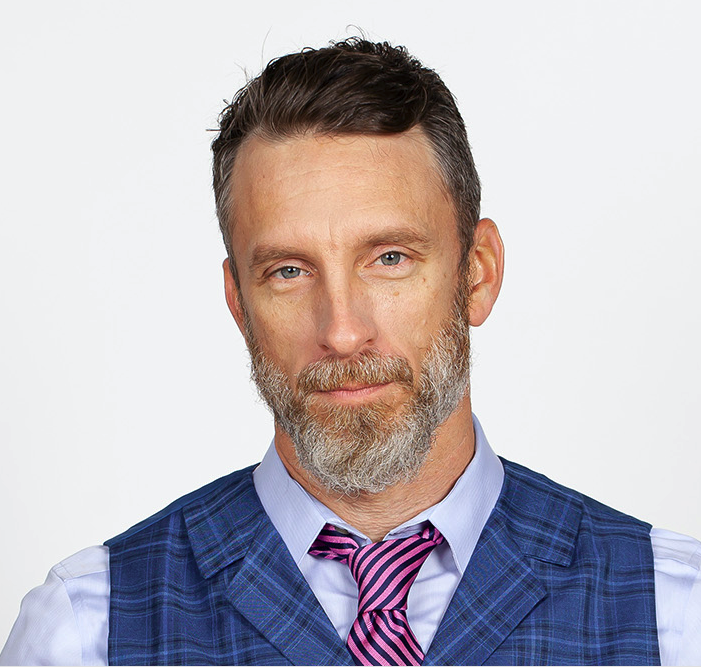
Mike Michalowicz is the creator of Profit First, which is used by hundreds of thousands of companies across the globe to drive profit, and Clockwork, a powerful method to make any business run on automatic. In his 2020 book, Fix This Next, Mike details the strategy businesses can use to determine what to do, in what order to ensure healthy, fast, permanent growth. His latest book, Get Different, gives readers the tools they need to stand out in any market.
Today, Mike leads two new multi-million-dollar ventures he uses to test his latest business research for his books. He is a former small business columnist for The Wall Street Journal and business makeover specialist on MSNBC. Mike is a popular main stage keynote speaker and is the author of Get Different, Fix This Next, Clockwork, Profit First, Surge, The Pumpkin Plan and The Toilet Paper Entrepreneur.
The Entrepreneurial Path (1:20)
In today’s episode of the Athletics of Business Podcast, Mike Michalowicz discusses his career as an author and entrepreneurship advocate. He started his adult life as an entrepreneur right out of college. He knew about computers and started a computer service business for something to do.
In the beginning, he was making revenue but not earning money. He didn’t know what he was doing, and despite building and selling several businesses, he ended up losing everything to pay his debts and taxes. Figuring out his next move didn’t come overnight. He eventually started journaling to cope, which led to his career as an author.
Mike now writes down everything he learns about entrepreneurship and publishes them to help other entrepreneurs. He attributes his success to his ability first to test his theories on his own companies. Without experimental implementation, your idea ends up circulating as a good idea but doesn’t take off from there.
Persistence Brings Performance (10:02)
Routine isn’t a set of shackles, but when coupled with discipline, it can equal freedom. We thrive in environments with procedures that allow us to predict outcomes. When we have the freedom to do whenever we want, when we want to, we’re less likely to get anything done. And even when we keep to a routine, we’re able to keep enough variety in what we do to keep from feeling stuck.
The important thing is to give yourself the freedom to let whatever you’re doing be bad. 50% of the time, your work will be sub-par; that’s just the law of averages. It’s not even going to meet your average standard. But that doesn’t invalidate the other half above average or the top 1% that’s top tier. The only way to get to that top percent is to keep going.
Leading with Vision (19:45)
A leader’s vision is not the vision of the organization or team. Something might mean a lot to your ego but very little to everyone underneath you. We all have a dream; therefore, the job of a leader is to speak less and ask more. Once you understand everyone’s dream, you can structure the organization to check off those boxes, which, in turn, check off your boxes.
The inspiration behind My Money Bunnies was to empower the next generation to earn their way through life and be more disciplined with money. The way to manage money is straightforward, and as we get older, how we interact with money makes it more complex. It can get so complicated at times that we end up avoiding it. He tried to tackle the subject head-on and pass on the decades of entrepreneurial knowledge to the next generation earlier in writing his book.
Welcome to the Athletics of Business, a podcast about how the traits and behaviors of elite athletes and remarkable business leaders frequently intersect. The real stories and hard lessons to help you level up your leadership and performance. Now your host, Ed Molitor.
Welcome back to another episode of the Athletics of Business podcast. I am your host and CEO of the Molitor Group, Ed Molitor. If there were a bucket list for guests that I would love to have on the Athletics of Business because of the amount of value that they would bring, the laughs that we would share, the energy that they would pour into the conversation, today's special guest is absolutely on my bucket list. Mike Michalowicz, who has been deemed by Simon Sinek as the top contender for the patron saint of entrepreneurs. Pretty solid endorsement by Simon. Mike is the entrepreneur behind three multimillion dollar companies and is the author of Profit First, Clockwork, the Pumpkin Plan, Fix this Next, and his newest book, Get Different Marketing that Can't be Ignored.
He's a former small business columnist for the Wall Street Journal and he regularly travels the globe as an entrepreneurial advocate. Mike, thank you so much for joining us today on the Athletics of Business podcast. It is an honor to have you on and I'll tell you what many reasons, but let me tell you, Simon Sinek deemed you the patron saint. Top contender, Patron saint entrepreneurs. I love it. Yeah.
Isn't that amazing? He's a great guy. He's a great guy. And it came out of nowhere. It wasn't like he doesn't hand out endorsements necessarily, but he and I know each other, we go way back and we share the same publisher. So I ran into him in the hall one day. I said, hey, dude, I know it's a big ass, but would you be willing to share your thoughts? And he's like, yeah, I'll do it.
Wow, thank you. Yeah, that's awesome. And you're right, he does not dole out those endorsements very often. When I saw that, it just kind of put a big smile on my face. And it's well deserved because really, the thing I've learned about you and following you, what you do, that's so powerful, you come from a place of experience. You don't stand on a mountaintop and preach right. You're in the trenches with your people and you have a lot of people. You have a lot of followers and it works. And the thing is, you keep evolving as things happen. I would love for you. And obviously on introduction, I gave a snapshot of your amazing journey. But in your Words. Can you take a couple minutes here and walk our listener through where you've been, what you've done and what you've learned?
Sure, sure. So I'm an entrepreneur today. I'm actually a full time author. I happen to have some businesses, so I do have an entrepreneurial aspect. But I started my adult life, I guess, as an entrepreneur. Out of college. I graduated. I couldn't get a job that I wanted, not that dream job I envisioned working for like a big six accounting firm or something.
Doesn't look so dreamy now, does it?
It does not look so dreamy. My gosh. And you know, it's funny, after college I had some friends that did that and within, they were working like animals. Animals. And it's just. It was just nasty. So I started my own business. Not because I wanted to, just because I really didn't have an option. And I knew computers. So I started a computer service business and fell in love with entrepreneurship pretty quickly. It was terrifying. I didn't make money. There was revenue growing, but I was never really making money. Ultimately that was acquired. It was purchased by a private equity firm. And that's when I made some money. And I was like, oh, just build it and sell it. That's how you make money. And my second company, I repeated that, but it sold for millions. It was a computer crime investigation service.
It was like, oh, I got this figured out, thinking that pump and dump is the right approach. But I think someone upstairs had a different strategy for me because I tried that on my third iteration and it was a calamity. I was a calamity. I had no clue what I was doing. I was trying to be angel investor and start many businesses. I lost everything. And that became the restart. I came home to my family to tell them that we're going to lose our house. We lost it 30 days later. Lose our stuff, cars, possessions, because I had to liquidate to pay off my debts and my tax bill. But that also required that there was a full restart. And the restart for me wasn't like the next morning, woke up and said, I got this figured out. I'm going to write about it.
I started boozing hard, way too hard to medicate myself. I became an insomniac. I couldn't sleep. Constant stress. There was actually blotches all over my body. And I went to the dermatologist, like, oh, that's. Yeah, I de stressed. And I found the key for, at least for me, for de stressing in that situation. It wasn't like, work out more. It wasn't positivity. What it was maintaining a journal. A friend of mine said, journal's like code word for diary. He said, dude, just write down your thoughts. And he goes, whatever you feel, it's not about rah yourself on. He goes, if you're angry, write your angry. And what was miraculous about that, Ed, is as I wrote stuff down, sometimes visceral. I was so pissed at the world, at God, at myself, at my family. Everyone had failed me.
After I let that out, that vitriol, I would have, like, five minutes or five hours of clarity, and I was like, oh, my gosh, I can focus on working. And I didn't need to medicate with a beer or anything. So then I repeat that process. I did that for years. And that clarity started opening doors for me, and I started saying, document what I don't know, and I can seek ways to solve it. That's why I became an author. And that was only 15 years ago. But from that day forward, from starting that journal, I've been documenting everything I discover about business and research and talk with experts and compile it, really, to solve things I don't understand about entrepreneurship. I'm clueless, but I'm trying to codify it, and then I like to share it in a book.
Which you've done. Is it 13 times now?
No, I got eight books out there.
Or not eight books. Am I miscounting? Okay, I apologize.
I wish it was. I Wish I was 13.
Maybe that's got me jacked up down the road here. Yes, yes. But it's. And that's what's really cool, is, like, you figure stuff out for you, and then you share it with us. Talk about that discipline that goes into that. That learning curve that goes into that as you dig in. Now, do you try to make the changes right away? Do you try to implement them right away? Or is it something like, let me get my arms around this and see where we can go?
Yeah, yeah, it's more of that. So a couple of things. I really struggle with complex ideas. So Profit first is my most popular book. And I remember my accountant saying, you got to read accounting statements like the balance sheet and the cash flow statement. All these things that I tried, but it was too heady, and I found I was following an easier path. I was just logging to my bank account, and if I had money, I could spend it. That was the simple system. So then I was like, okay, well, but I'm not profitable. So that's not working for me, but that's my behavior. And so what I like to do is I observe what my behavior is. And in most entrepreneurs behaviors, I ask people, how do you try to manage your number, your money?
And they say, I log in my bank account and then say, okay, if that's our current behavior, how do we build a system around that will channel the output we want? And how do It for myself? And it's got to be simple because if it's too heady, I lose interest and my brain is full and I'm done. What I do is once I come across the concept or the problem, I'll start investigating concepts and usually the answer's out there. Admittedly, nothing I've written is a brand new discovery. It's a new maybe compilation of stuff that's been around for eons. The envelope system has been around forever. And I just used it in a new flavor for business. Then what I do is test it. I own six companies now, so I test it in my businesses.
I have a president for each company and a partner. And I'm like, hey, is it cool if you try this out for a bit? And we start guinea pigging? But we try on a small level because some of the things we try are just stupid and wrong. It doesn't work. Then we find something that works and gets traction. Once we get a few, kind of a recipe internally, then I'm so lucky because of my readership, I'm like, who wants to try out a new thing? And I'll get hundreds, perhaps or even sometimes a few thousand people willing to test out. Right now I'm working on a book about employee engagement, how to really raise the bar, how to motivate others through a common goal. And we found some things that are new again. It's eons old, but isn't being applied to business, not often.
And we're testing those things out as we speak. And we just started an organization that is teaching quite a few hundred businesses on this process. And it's a learning experience for us. It takes me about five to seven years, sometimes 10 to compile the entire book. I'm about two years out now from this book and this concept, we have enough stuff, enough proof, these ideas are working now. It's, how do I put it in a way that's consumable.
As you've evolved over the years writing the books, what have you learned about the process? What have you learned about doing the research? What have you learned? How have you learned to like, okay, something's not working, instead of banging your head against the wall trying to get it to work because that's what you really believed it was going to be to just letting go and moving on to the next concept.
Yeah, I find when working on something, rarely is complexity the solution. And so when I'm working on something, if I'm inserting complexity to it's rarely going to fix the problem and it's not going to be consumable. Like, you read a book that's really heady and at least for me, is impossible to deploy. I also realize that theory in books, while interesting and intriguing, if it doesn't have applicability, if you can't deploy it in your business and start testing out yourself, it's just going to circulate around as a cool, interesting idea. But who does that? When I'm going through my books and right now I have about 25 different book concepts that I'm collecting content on at different levels. I mean, some of them sit there like with cobweb, but they're there.
I then hone in like on four core subjects that are really intriguing to me and of great service to the people I know. And then I start focusing on that and then the one that I can say, oh, there's the simple snap of the fingers shift. You're gonna make your business. It's such a simple concept that if you just instead of taking profit last, you just take it first. You pay yourself first in your business. That's the change. Once I hit that tone and enough people are like, oh my gosh, that was it. Then I'm like, I go all in on that concept.
Well, and speaking from experience, model group, we are a profit first business. Simple doesn't always love easy, right? Like you've got to constantly make adjustments, you got to keep looking at things. But here's simple. What I love. Simple is sustainable. That's correct. It is so sustainable. And sometimes we live in this world now with all these smoke and mirrors and all these sexy, glamorous things and this is one of the things I love about you. It's like, let's get right down to it. Let's cut the bs. This is how it is going to work and you need to do it over and over and make adjustments when they're needed. Don't try to recreate the wheel, just trust it.
Yeah, I'm into that. Persistence brings about performance. This is a marathon. Our lives, our business. This kind of has an athletic theme. I, I exercise regularly and I Use this exact same kind of concept. I committed to myself to work out regularly. So then I started observing myself. I always said I worked out regularly and I didn't. But eight years ago or nine years ago, I made this transformation where I never missed a single workout. And what it was observing my pattern. I'd wake up in the morning, go to the bathroom, drink some coffee, scroll through the news and like, oh, the day's getting away. And wouldn't get my exercise in. The shift I made was. I realized that pattern. I'd always wake up and go to the bathroom first every time.
So I put my gym shoes on the toilet seat and I'd wake up and the only way I can use the toilet is by grab my shoes. And then you put them on and momentum kicks in. You head down to the gym and I get my. My half hour, 45 minutes in. It was that little simple thing that became transformational.
It's amazing how that works. Like, as I train for.
It is. It really is.
As I train for a half Ironman thing. Like, the only time last year I could get into the pool was. Was at 4:30 in the morning when the pandemic was at its peak. That's the only time we can get in. And it was great. Once you were done, right. Like you were done, the day started, Bam. We knocked it out. But that's what I would do the night before. I would take my mesh bag with my fins, my pull, you know, and everything in there. And I had my suit out. I'd have the workout printed out.
That's awesome.
I have everything right there. And all I had to do is be a zombie, grab it. Every now and then I forget my towel, which really was not fun. But at least I didn't forget my suit. That would have been bad. Yeah, yeah. That's.
You still have to do it.
Yeah. But it's just amazing. I saw a tweet that you had out. It was recent. Okay. And it talks about routine, that it's not our shackles.
Right.
And routine and discipline actually equal freedom. You just alluded to a little bit of the routine, how significant routine is into your process and your process into success.
Yeah. It's massively important. And I heard that phraseology from someone else saying that we thrive within systems. We thrive within expectations and procedures established and that are routinized. Meaning that we know and we can anticipate what's coming next. We thrive in it. And it kind of seemed weird because for many people, myself, I want freedom. I Want to do what I want when I want but what I found is when I afforded myself to do what I want when I want it went into this nowhere vill and I wasn't getting anything done.
So my routine, my daily routine I have a document in my calendar I'm pretty rigid about this is I wake up naturally at 5 or 5:15 in the morning and the reason I wake up that time is cause I go to I'm in my bed at 8:30 at night, lights out by 9 I can't go any later than that cause I need my eight hours. I then from 5:30 till 6:30 is my writing time. I write every day except for Saturday, Sunday but every day because that's the most fundamental thing to the way I can be of service to our community, our world. So right as writing this morning and then from 6:30 till 7:30 is working out which is exercise today with a cardio day I was hitting the rowing machine tomorrow it's weights, it's a heavy lift tomorrow.
What I found is even though within that routine expectation I do assign variability so I'm not going to always do that row or I'll go for a run or a bike ride I won't always do the weights I'll may just do a body weight workout or something else when I'm writing I'm not always writing on a new book this morning actually was called Flap Copy it's working on and stuff like that. So that variety within the routine is important for me because that brings about stimulation But I'm so root nice 7:30 is make a cup of coffee. For my wife that's her favorite experience is when she's waking up she likes to wake up around 7:38 there's a fresh cup of coffee. It gives me joy to give her that cup of coffee.
So it's part of my schedule is make the coffee, bring it in and so my wife can watch the sunrise out the window as she drinks her coffee and I get joy out of that. Then I do a meditation from 7:30, 5, whatever till 8 o' clock. Then 8 o' clock till 8:30 is get ready for work, hit the road and then I'm at the office around 9 o' clock each morning. It sounds so rigid but every day I'm making a chip forward in something Every day I'm going to chip forward in health or chip forward in writing and there's this almost compounding effect if you're making an investment the more you do I'm surprised how much Writing I get done. Not in a day. 800 words. 500 words on a bad day, a thousand on a miraculous day.
But after five weeks, that's 25,000 words. That's half a book I've written in five weeks if I just keep one chipping away every day.
Do you write seven days a week or five days a week?
Five days a week.
Five days a week. Okay, so now here's my question for you. And I think this is where a lot of people get stuck. And I'm not trying to speak for others, but just from experiencing conversations, they feel like they need to perfect it. You just said it. 500 words on a bad day. A thousand words on a miraculous day. Talk about just moving. If it's 500 words, right? That's 500 words more than if you wouldn't have done it. Just move on and tell the best part of your routine. How important is that?
It's so important. And honestly, I think when I look at some of the stuff I wrote, I'm like, I am probably the offer on this planet. I give some really bad.
There's a few million people that would disagree.
Well, thank you. Thank you. What the world is seeing is the 0.1%. Like, the 99.9% is really up. I wrote this morning, and I actually started laughing out loud how bad this writing was. I was trying to be really, like, engaging in energy, high energy in this flap copy, which is promotional copy.
So you do your own flap copy? Yeah.
Oh, yeah, yeah. And, you know, that's actually a trick for authors. It often has a different voice than the author. But if it's not written by the author, they don't understand the essence of the manuscript. And it actually gets pretty bastardized. So my publisher said, hey, here's our version of the flat copy. I'm like, oh, this is horrible. I'll improve it. And I made it so effortless bad. So I'm like, okay, all right. Give me. I'm like, give me another day. I got to rework this same thing with any element of life. Like, 50% of the time, it's going to be subpar. That's the natural law of averages. Half the time, it's not going to meet even your average standard. And that's just workouts, date, nights out. Half the time, it can't be the average, but the other half, it can be above.
And a small percentage, 1% of time, say, will be the top elite 1%. So the only way to get there is just keep doing it and then.
Enjoy that moment while you're there, because it doesn't happen very often. But why do we get so locked into trying to make things perfect? Like, we're going to take a family vacation Clark Griswold style, right? We're going to nail this thing, and all you do is go in the opposite direction. I mean, and it's like, oh, God, we can never get it right. No, just keep going. Just keep doing. Nothing's ever going. It's funny.
You get the wild world. You punch the moose.
Oh, yeah.
So I think, first of all, that goal for perfection is humanity. We all want to be perfect. I think for me, it's also ego and envy based. I see on Facebook or whatever, I see other authors, other people doing things like, God, they're so amazing. How come I suck? So there's that. And so therefore, that kind of helps elevate. I think it can be very debilitating if I allow myself to whine in envy. But I think it's also an opportunity to expand. And instead of saying, well, why is that? Not me saying, what do they know that I need to learn? So that's a good way to elevate. I think also the 1%, it is very hard for me at least to appreciate what I'm. What's happening, because I don't know, it's there. This is the new normal, like this new standard.
I have a day where there's all this conversations about one of the books I've written, and the book is sounding crazy. I'm like, oh, I've just hit the new level. So this is the new standard. I set that very quickly. And then the next day when it's not there, it's major disappointment, right? So it's just trying to get past that subconscious, this is the new standard. And realizing, oh, maybe this is a 1% moment. I really should savor this. The last thing is interpretation of stuff that's happened in the past. When I look back at things like that day when I ran out of all my money and my accountant called me, said I should declare personal bankruptcy or liquidate. I decided to liquidate. This was the shittiest day of my life. It was the shittiest.
And now I look back on that and say, that was the best day of my life, dude. I was a dick. Before that, I thought I knew everything about business was full of arrogance. My wife likes to. When I say this, I say, I got D. That day I realized, we've all been there. I'M not better than anyone else, and I'm not worse than anyone else. We're all just on this different journey, on this big rock floating around in space. It's kind of weird. And my job is just to contribute the best I can. So it's looking back, whole framing can flip from ever to most amazing ever just by looking at it from a different perspective.
I love that. That's a great segue into. The next thing I want to ask you about is how you've evolved with all these different companies and how you've evolved as a leader over the years. And you talked about there's two things that you need to do less of. Speak less, work less. Can you talk into that? Because there's some out there that haven't been yet that are listening to this thinking like, you know, thinking like, what do they talk about? Just explain that. Because I find that so powerful.
I remember my forensics business. That was the computer crime investigation. One day came out of the office, and were just on this fast trajectory, and I ran the calculations. I was like, oh, my gosh, this is the year we're going to hit $10 million. And were only two and a half years in. I'm like, this is the year. And I write everything up and I call with 30 employees at time, I call everyone together and I say, I got great news. I had this cheesy music playing in the background. It was probably Survivor.
I had a tiger eye.
The tiger. And I'm like, we're going to do $10 million in revenue. I'm getting all jacked up. And it was a silence. It was a silence. My colleague, my trust assistant, her name is Patty, she's freaking awesome. Patty comes up to me afterwards and says, mike, no one cares about $10 million. You get the new house, you get the new car, but why should we care? And I was like, oh, my God. The vision that a leader has, someone that runs a business or whatever. Your capacity is not the vision of the organization or your team. It's your vision. I want $10 million. That means something to my big fat ego, but it doesn't mean anything to anyone else. That's when I started to learn. And it took me a decade to really understand and now deploy is every human.
We all have our own dreams. Shocker. And therefore, the job as a leader is not to say, this is my dream, but to ask. To speak less and ask more. What is your dream? And once we understand everyone on our team's individual dreams and what they're looking to achieve and we identify what the vision of our own dream is, Then we just figure out the path. What can I do in my organization to make sure that Erin, Kelsey, Jeremy, Amy, and all of our team members here are checking off the boxes in their life so I can check off another box in my life. That was the big lesson. And if we all march together, if we're all making achievements in what we want and we're marching together, it becomes an unstoppable force.
And what's pretty amazing is when all of a sudden they take that approach with their teammates, too. Like, what can I do to help my teammates? Totally.
We just did this alignment exercise, I'll call it literally just last week. We're a little bit late. We usually do it right in the beginning of the year. This year we started in the end of January when we recorded it, when we did it. But what we notice is there's also common dreams of our team members here at this office. There's only eight of us. Six people are like, I want to learn Spanish or I'm trying to learn Spanish on my own. The president of our company, Kelsey, said, oh, we just got an intern that's going to come in from Spain to work with us because she wants to experience what it is to work with an author and she likes your stuff. She's willing to fly out on her own, get an apartment out here and live with us and teach us Spanish.
It's like, oh, my God, we're checking off a list for her and this person is getting exposure to what she's looking to gain experientially. And who knows, maybe she's a dream employee. And then we offer her a permanent position here. So it's cool. Once you understand what everyone wants, the puzzle pieces are pretty easy to stick together.
Yeah. And it's not always crystal clear when you first start doing it, but it's going. You have to trust that it is going to come together.
Yeah. It will reveal itself, but in service.
To you, in respect to your time. I know you only have a few minutes left. Yeah. If I could, though, I listen to your routine and what time you go to bed. You apparently don't have a nine year old and a seven year old like I do.
Nine more. No.
That's quite easy happening in my house. All right. No way. Even though I love it, but I wouldn't trade it for the world, obviously. Yeah, of course. But my money bunnies. Okay, can you talk about that a little bit? I mean, because here's the deal. I got that daughter at the basketball game. She was like, hey, dad, can I have 10 bucks? What do you want? A bottle of water? Why do you need 10 bucks? I'll give you the change. No, you won't. Okay.
You'll never get this.
Yeah, yeah. Talk about that, because I think it's awesome for you to.
For that.
To provide to kids and to grind through that. I think it's really cool.
I think one of the proud parenting moments that I have, I think my wife agrees, is our oldest son, who's now just got engaged. He's turning 29 years old.
Congratulations.
Thank you. We're all so exciting. We're so excited for him. And he found the love of his life, and we feel the same for her. They're a great match. And he was graduating high school and the community we're in, enough of the parents have enough disposable income to gift their child a new car for graduation. While not everyone does it, I would say a percentage, and it seems to be a growing percentage of parents do this. So our son comes to us and says, hey, I'm graduating. All my friends are getting a car. I want to get a car. And we're like, no. But everyone gets a car. We're like, no. Are you kidding me? Here's how you're going to get a car. Going to get your ass to work, and you're going to buy your car. And this conversation started already.
As his freshman year, he started working, and his senior year, he bought a car. It was this crappy blue lumina. It cost $3,000. I've never seen such a hunk of junk. That thing was creepy, but the best.
Crappy blue Lumina ever, ever.
Fast forward one year, and I asked Tyler, I said, how do you feel about buying your own car? He's like, I've never felt so strong and powerful because I just feel so confident in myself. What do you think of your friend entitlement? That's not the word he used, but there's an entitlement mentality. I just need to get things given to me. Fast forward now. That's a lesson he learned over 10 years ago. Now. Now he's like, I can do anything. I can earn my way. I can live on my own. There's this internal confidence. He's like, I'm so proud of that car. He goes, it's my favorite car ever, because I made that happen. And then that was a proud parenting moment. And so that's why I wrote my Money bunnies.
I want to empower our next generation to earn their way, but also be disciplined with money. I think the way to manage money is very simple. And I think as we grow up from toddlers and we get older, the ways we're introduced to money actually brings complexity to it. I think money's taught a lot. People say, I wish they taught something in school. I think it's taught all over the place. And maybe a school doesn't have a class for personal management, but it's taught and exposed to us in many ways and so complex. It's so overwhelming. I think we just avoid it. And so my goal was to get to the essence of when you earn money, how to manage it, and also get the elements of life that we want. That immediate satisfaction. That's a human desire for all of us.
What can we get right now? Long term goal planning. What's the thing I really want and save to us? We have that proud blue Lumina moment and contribution to society. What can we do to give to others? That's what I wanted to have in that book and I hope what is.
A good age to start?
Good age to start with money learning. We started with our youngest. He was three when we started Little Jakey. And what was so fascinating is first. So at our house, we had a chore list that you can get paid for and sign up for the work projects. Our daughter was wickedly smart. She was three years older, so she was six when he was three. She's like, oh, I'll sign up for all the tasks. Little Jake is like, I don't know what's going on. And she's like, hey, I'll pay you to do this, Jake. He's like, that's amazing. And she would take a percent. The entrepreneurialism was unbelievable. Yeah, manipulating him.
My daughter's a master. She's a master negotiator. She really is. But hey, right before we go, I want to talk about your most recent book, Get Different Marketing that can't be ignored. Just really quick, because there's so much in that. I love it.
So I'll give you the essence of it. If you are better than the competition, if what you do is better service your clients in some capacity or maybe many capacities, then the alternatives you have a responsibility to market. Marketing is the ultimate act of kindness because customers need to discover what's better for them. But if we acquiesce that responsibility, if we don't show up and stand out, we're never gonna get noticed. So get different is. First of all, it's a rallying cry that you've gotta get noticed. Secondly is how to do it, but do it in a way that's consistent with you. It's not about being outrageous or crazy. It's about amplifying your differences, your own idiosyncrasies, exposing it through marketing, and then winning business over.
Love it, Mike. Thank you. I can't. I cannot say thank you enough times. Appreciate you, appreciate everything you do and, you know, look forward to talking again soon.
I'd be honored. Take care, Ed.
To learn more about Mike and get access to a treasure trove of entrepreneurial tips, visit www.mikemcalowicz.com.
Thank you for listening to the athletics of business. Be sure to give us a rating and review so we know how we're doing. For more information about the show, visit The Athletics of Business.com now get out there. Think, act and execute at the highest level to unleash your greatness.