

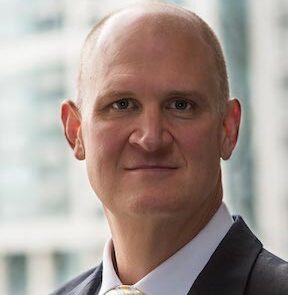
Joe Allen comes from a background of athletics, he played a very unique position that demanded a lot of character and selflessness as an offensive alignment. At a young age, he developed a solid work ethic and a passion to build people as a leader.
Joe graduated from the University of Notre Dame and one year after, in a not-so-great job market for graduates, he started his first job at CCC Intelligent Solutions as a part of the first estimating product team, and ever since has held numerous leadership positions across CCC markets in management, product, and national account roles.
Today, he is General Manager and Senior Vice President of the Automotive Services Group (ASG) where the company is powering automotive repair facilities, suppliers, and independent appraisers through connected solutions that deliver real ROI.
He is responsible for leading strategic growth of the ASG segment while aligning business goals to meet customer needs through CCC’s advanced cloud-based SaaS platform of digital and data service solutions leveraging the latest in AI, IoT, telematics, customer experience, and digital workflows.
Welcome to the Athletics of Business, a podcast about how the traits and behaviors of elite athletes and remarkable business leaders frequently intersect. The real stories and hard lessons to help you level up your leadership and performance. Now your host, Ed Molitor.
Welcome back to another episode of the Athletics of Business podcast. I am your host and CEO of the Molotor Group, Ed Molotor. And we what a phenomenal conversation I have for you today. I'm joined by my special guest, Joe Allen, senior VP of CCC Intelligence Solutions. And Joe's from the south side of Chicago. There's so much value inside of this conversation. Now, he joined CCC back in February of 1992. Not an easy job market. He had just graduated from the University of Notre Dame where he was a member of the football team. And yes, he was part of the 1988 national championship team. And we'll talk about that. And we'll talk about the lessons he learned from Lou Holtz and his offensive line coach, Joe Moore. There's so much there.
Now, he did get one start at the University of Notre Dame, and that was in the infamous 1988 Catholics first convicts games. And he's got some great stories to share about that. And one of the things we talk about I'll go back to he started at CCC in 1992. He's been there over 30 years. And he talks about how it demystified the whole career path thing being linear. It's really truly a zigzag. And his career speaks to that. And I won't go into the actual path he followed here because we're going to talk about that in the conversation. Another cool piece of this conversation is when he talks about what happened during COVID what was CCC's approach? And they got very specific with their initiatives, right? And they preached the message over communicated the message that were in it to win it.
And they wanted to keep everyone engaged. And by doing that, they were going to focus on three different things and doing three new things, developing new skill sets, new mindsets and a new approach to the way they looked at things. Okay. And a new perspective. And there's so much, not just during COVID but any time of adversity, really any time of organizational growth and just a ton of value. And I don't want to say too much here in the intro because Joe speaks for himself, his career speaks for himself, and he shares so many stories. Have a pen and paper ready because there's a lot to take away and not just take away for you, but to share with your team, both your leadership team and the team that you lead.
And with that being said, he does jump into the need and how he approaches teaching his leaders to become coaches and not just managers. And obviously I absolutely love that piece of the conversation. Joe, thank you so much for joining us today on the Athletics of Business podcast. I am beyond fired up to have you on as a guest and about the amazing conversation that we are about to have.
That's awesome, Ed. I am. I'm looking forward to the next hour.
Obviously, I briefed the listener on your history, your journey a little bit and I talked to them about what you do, where you've been. But to hear your journey through your own words, to kind of give us a peek behind the curtain, if you will, and your experiences, the things that have gone on that have shaped you and brought you to where you are in your career, because you're really one heck of a ride.
It's been a fantastic journey for myself and for me it's about that journey, it's about the experiences that I had and it's also about complete luck. I feel like I'm a very lucky person in the position I'm in today and there's obviously work involved there to get to this position, but I feel like a very lucky individual.
Well, a lot of that has to do, as we know, is what you do with that, right? Like what you do with your breaks. And you come from a background of athletics, you come from a background of toughness, of earning everything that you get. So with all due respect, I appreciate the humility, I appreciate the luck part. But just tell us where all that came from, where the work ethic came from, where your values came from in this passion for building people as a leader.
So, Ed, I'll kind of start from where I'm at right now. Last week I celebrated my 30th anniversary at CCC. And that is my only job or only company I ever worked with. And what I found over my career at CCC is I've had numerous opportunities throughout that journey, that 30 year journey. And I typically have been put in a position to continue my career and get into a more challenging kind of position. I am very lucky for the people around me who gave me those opportunities. And I've had a great journey at ccc, but it really kind of started off back to your question on athletics is I grew up with three other brothers and when you have four boys in a family, all of them somewhat athletic, all of them somewhat competitive, and all of them want to take on each other.
You learn pretty quickly how tough you are. And I would say I give a lot of credit to my brothers, who kind of toughened me up early on in growing up and kind of made me kind of a little more resilient than I am today. The second thing is I talk about luck, and I say this routinely. The luckiest thing that ever happened to me was I was 6 4, not 6 1. If I was 6 1, I may not have got a scholarship to Nordain. I may not have been able to move my career or my athletic career and take advantage of those scholarship or that opportunity that was provided to me. So. So I feel like I've been very lucky that once I became six, you're six four now. You have opportunities that come to you.
And I thought I made a right choice with Notre Dame. I had other choices, the Big Ten schools, other west coast schools, east coast schools. But ultimately I chose Notre Dame because I felt it was the best opportunity for the next 40 years of my life. And not just that you'd have networking and those types of things that are routinely said about Notre Dame. It was about putting me through a process, graduating and really surrounding myself with really good people that ultimately led to the initial stages of my career. So I feel like that's been a great grounding for me, growing up with three other brothers, put in position athletically to go to Notre Dame, and then actually graduating and moving my career around from there.
Let's talk about Notre Dame for a second, and we'll get back to when you talked about the best decision for the next 40 years, because that's a piece of advice you give to the folks that you mentor. And that lead is make 40 year decisions, right?
Correct.
And we'll get back to that. But Notre Dame, tell me about the impact that had on your life, not only playing for Lou Holtz, not only winning a national championship in 1988, but the academic setting, the social setting, the challenges. And really, truth be told, you played a very unique position in a position that really demands a lot of character and selflessness as an offensive lineman.
Absolutely. So I think, first off, Notre Dame, I believe and still believe today, that they recruit a higher caliber, character type of people. When you're looking at a team of 110, 120, 18 to 22 year olds, it's good to have other people with high character around you that ultimately provides either a direction or some kind of examples that you want to continue on with either at school or after school as well. As I felt like the administration was very strong in terms of kind of guiding their athletics or athletes through the process. The one thing I was very proud of Notre Dame is their expectation is you're going to graduate. The worst thing that could happen to you at Notre Dame is you graduate.
And I think having those expectations of all the athletes was very important as well as the expectations of the athletes of being good people within the campus. So one of the things that was my experience in Notre Dame was each dorm had athletes, but they did not load up any dorm with X amount of athletes. They tried to separate the athletes.
Interesting.
Put them into the student body. So you integrate with the student body, you get to meet other people. You weren't just sitting around a bunch of football players or basketball players. I thought that was fantastic in terms of building a great experience, introducing yourself to some different people that went on and had great careers. I thought that was awesome about the school in terms of the football. Like obviously we had a great run under Lou Holtz with the national championship in 88. And one of the things that Lou would say is you don't plan on being a national championship. Just one morning you wake up and you're a national champion.
So I remember waking up and I was just in Phoenix in the Scottsdale area where we played the Fiesta bowl at the time, as drove by that hotel, I remember woke up and like, hey, we're national champions. Great. After a pretty good night, I would.
Say, yeah, I'm sure you're shaking.
I wasn't waking up in the morning, early morning. But it's really about that journey, how to get to be a national champion. And I think from my experience and you talk about selfless offensive line, I see that a lot in business. I have other peers or other people I work with that played offensive line. I find that we are all in the same kind of mindset. For me personally when I manage and the way I manage, I have a servient type of approach. My feeling is that every employee within my 170 person team, I work for them, they don't work for me. And it's kind of the mentality you get as an offensive lineman is you're working for everybody else and trying to make everybody else successful. So I thought was awesome. And then I had my peaks and valleys like any career.
And when I was a sophomore, excuse me, I had the opportunity to start my one and only game and that was the infamous Catholics versus Convicts game.
What I mean, there couldn't be. If you're Going to start one game in your college career at Notre Dame, is that not the game to start?
People remember that game more than a national championship game. So I did have the opportunity to start that game, as luck would have it, or unluck to others. A couple injuries happened, and I was the right person at the right time. And during that game, I played against Russell, Maryland, and I believe that next year he was the number, the first draft choice for the NFL. So I'm not sure if my film helped him get that, but he was an awesome player, and they're an awesome team. They get a lot of certain belief that people have about that University of Miami team. But I'll tell you what, they were awesome players. They were not allowed trash talking, and they were just fundamentally sound at the time. You think about Jimmy Johnson was a coach. Dave Wanstadt was their defensive coordinator.
Like, they never made a mistake on a field. They were always so fundamentally sound, and were lucky enough to pull that one out.
That was a great game. They played hard for Jimmy Johnson. I mean, you talk to anyone who's played for Jimmy, pro level, college level, they like the way he coached him.
Yeah. High expectations for his team.
You know, I've got a question for you. As an offensive lineman, what made you protect one quarterback a little bit more than the other? And that's. That's a tricky question because I'm not saying that you did that intentionally, but there had to be a quarterback that connected more with the offensive line. One. One had to better at connecting with you than the other. I'm curious about that and how that's translated to you as a leader.
Yeah. So my experience in our day, I think we passed the ball 10 times a game, so it seemed like a lot of pass blocking going on and protecting the quarterback. We were running primarily option or variations of the option. Right. I would say that Tony Rice was primarily our quarterback during my time there. And Tony is just a fantastic guy, very personable, very inclusive, and really wants to be friendly with everyone. So, for instance, I was at a volleyball tournament with my daughter about probably eight years ago now, and went out to lunch and I ran. Tony was there, and he came right over to me, introduced himself to my wife and my daughter, which was awesome, and told some good stories. And he was just very genuine and he was just awesome.
And this is after 20 years or so of seeing each other, and he's just a great individual. So I wouldn't say we protected one or the other, but I would say that Tony was a fantastic. Yeah.
And you understood what I meant. I mean, it's like anything, right? Like you just. There's certain leaders in organizations that connect with others more and you see them.
And Tony was the type of leader that you always knew that it was going to come out okay. Lou Holtz told this story and Tony tells his story as well. I think it was during a USC game. It was a really tight game, back and forth, one versus two type of thing. Holtz was very energetic and a lot of stress at the time on the sideline. And Tony's like, man, this is a great game, isn't it, Coach? Let's have fun. Let's go play football. Right? So it was a very calming, just very confident and somebody that was easy to get behind when you're on the field.
That's awesome. We talk a lot with our clients about being the face and voice that your team needs to see and hear and that just makes such a difference in leadership. What was Lou Holtz like as a leader?
Lou is very demanding. He has very high expectations of his team, of his players, and very hands on. I was at a presentation one time and the person doing a presentation talked about leaders that had their mind on or hands on or combination of their. Lou had his mind on and hands on all the time. He was going from station to station with individual coaches, working on skills that, you know from offensive line, defensive line, defensive back. He was very engaged with every facet of the team and what he was trying to accomplish as a team. Obviously, he's a strong motivator. By the time you're a senior, you've heard all the stories though, you've heard all the speeches, so you kind of.
Understand, you know, what's coming next.
What's coming next. But nevertheless, it was very strong. Recently we had a reunion and he did a little speech. It was our 20 year reunion or something. And he wanted to confide in us because he loved us so much. And he talked about a drug problem he had and you know, all the players are edge of their seats, like a drug problem. What's going on? You know. And Lou said, yeah, my parents drugged me to church, they drugged me to school, they drove me, stuff done. So he caught us one more time.
So you had never heard that one before.
That was a new one.
So he'd been working on that for a while.
Yeah, he got us all. Yeah, he had everybody at the edge of their seat.
That's awesome. So office alignment is a thankless job to start with. Right. But then you Start one game, your entire career, right? What made you go to work every day? What made you buy into what the coaches told you that you need to do? What? What was your role? Going to practice every single day as an offensive lineman? Because at that level, especially in that program, it's not like you just go through the motion, right? If people could understand the commitment, the time, mental, emotional, physical, the weight room, the classes, the study hall, everything. What made you do that? Because that speaks volumes about your character, about your commitment. But there had to be something that got you emotionally attached.
Yeah. One is, if the next man is up, if somebody gets hurt, you have to be ready to perform. And like I had with that Miami game, Tim Gronhard, who ended up having a great career with the Kansas City Chiefs, was the individual being hurt at the time. But you had to be prepared, ready to go, being the next man up. And I think over the course of my career, Soph, that was my sophomore year, which was fantastic. And you could say, well, my career eclipsed at that moment in September, October, when we had that game, as being the only time I started. And as time goes on, you bring in more talent. And Notre Dame brought in a tremendous amount of talent. I think, for my count, we had three NFL hall of Famers.
Brian Young was just brought into the hall of Fame recently, so he brought a great talent and great people, very good offensive line. And I found myself my senior year, you know, being a backup and just being in that role. And what motivated me at the time was I have this kind of theory that you have to kind of accept the situation you're in. If I could have been bitching and moaning and complaining that I didn't get the fair shake, or I'm better than this person or that person. But in essence, if you accept that position, then you can take a step forward. And what I found during my senior year, I became somewhat of a mentor to the freshman and sophomore that were on that second offensive line. And a couple of those individuals went on for pro careers, Outland Trophy winner.
But I felt it was my responsibility to the team, to the coaches, to help them along this path, you know, and kind of teach them a little bit, maybe, about how the offense works, what we're trying to accomplish on a play, maybe be a level setting to them. For instance, we had one game, I think we're out in Baltimore playing Navy, and the first offensive line, I think we're kind of one of those between games, between two big games, and it wasn't a lot of motivation, I would say. So they pulled out the entire first offensive line, and we brought in the second offensive line, me included. And you know something, these guys were a little nervous. I'm like, hey, this is your opportunity. Let's go shine like they screwed up. It's our time.
Let's go get this ball going and down the field and just try to be somewhat of a mentor to them. And again, they all had great careers and ended up starting at Notre Dame or beyond in the pros. So, again, I think it's about accepting your role for the team. And what is the best thing for the team at that point in time?
Is that something you picked up on your own? Just some of the great people you were around or you saw in your dad or your mom? Or is that something that someone had a. A sit down conversation with you while you're at Notre Dame, said, hey, you know, Joe, might not work out quite the way you're planned, but for you to get from point A to point B, this is what you need to do. How did that work?
I'm not sure if it was any specific conversation. I think some of it was the example that we've seen with others. I'll tell you that it's not always a good example that you witness. You do witness some people that may be, say, bitching and complaining and they feel like they got screwed type of thing, and ultimately they were a detriment to the team and they might have quit the team or whatever the case may be. So you see kind of a negative example of what you don't want to be. And then you say, okay, I'm in this situation. What can I do to be the best teammate, do the best I can for the overall objectives that we're trying to accomplish. And then my coach was Joe Moore at the time. Joe for offensive line. He's the guru offensive line.
There's a Joe Moore Offensive Line of the Year award, and he was a tough son of a bitch. And the best compliment I ever got from Joe is he punched me and said, you're tough. Like, that's. That was like, you know, senior year, like I got into a fight with a player when I was a senior. Not worse, but like Thursday practice, kind of walk through gotcha. And this freshman was going live and doing his thing, and I came across and just wiped him out because I was getting pissed off at him. And yeah, I, you know, Holtz is yelling at me. People are yelling at me for going live when I was supposed to do a Walk through. And I came over the sidelines and Joe Morris gave me a thumbs up, like that's what you do.
Isn't it funny the things like that we appreciate. Oh, yeah, that resonate with us.
Yeah. Holtz was really mad at me. But Joe, you weren't the first person.
He got mad at, nor will you be the last person he got mad at. Right?
Yeah, yeah, absolutely.
It is. Well, you know, you said something interesting. Accept the position you're in and then you can move forward and you look at your career at CCC. I mean, 30 years is mind blowing. We'll get into that about, you know, the great resignation here in a second, but 30 years, amazing. So you graduate 91 and you get the job there in February of 92. And if I'm correct, the job market wasn't that great. And you just took a job and you kept climbing the ladder because you got really good at what you did. Can you talk about that mentality, about how you were able to move from point A to point B to point C to point D to where you are now?
I'd love to tell that story. It's a good story. Yeah. When I came out 1991, the market wasn't all that great for college graduates. Just not a lot of opportunities out there. And I found myself, I needed to spend time doing something. So I ended up helping coach at St. Rita, which was my alma mater, just so I could wake up every morning with something to do so I could maybe interview in the morning and coach in the afternoon, which I really enjoyed. And I got an opportunity. There's a Notre Dame Club of Chicago, just like in many places. And I sent my resume to them. They have a resume bank at the time. And somebody from CCC found that resume, a Notre Dame grad, and threw it over to our HR department.
And at the time we had this mentality because were only like a 10 or $15 million company, just really a startup, just really scrappy type of folks. And we had a mentality or we had a process, I would say, or a procedure that we would hire first generation college graduates. So what they were looking for is kids that came from blue collar families, they understood work ethic and were also probably feeling pretty lucky that they weren't working in kind of manual labor or whatever that blue collar job may be. So they got the best of both worlds. They had a highly motivated individual and at the same time they had somebody who had a strong work ethic. And when I came on board, there was A number of people who were very similar to that. And my.
I was very lucky to have a job. And I give this also this advice to everybody who's brand new to a job. Just start working your ass off. Don't worry about anything else. Feel like you're in a race. Every college graduate, all those new hires that are occurring now, it doesn't matter. Your grade point doesn't matter anything. What school you went to, you're in a new race. And the next five years are really going to be telling to your career. And it really comes down to how hard you work and how hard, what opportunities you get and what you do with those opportunities. And I felt it was a great opportunity for me at ccc. I did not expect to stay here. I was looking for experience more than anything else.
But what I found was a highly motivated company, energetic, a lot of change every six months. At the time you felt like you had a new job, new challenge, I was traveling probably 50, probably 45 weeks a year on my own, going all over places to train customers on our new software. So you got responsibility and trust that the executives put into these young group of recruits say, and then you performed. And what the interesting thing is, a lot of those individuals did very well for themselves. They left ccc, went on to other ventures, and all have done very well in a lot of senior leadership type of roles. For me, it was awesome that first few years.
I mean, it's pretty fascinating when you really look at it. You start as a trainer, local rep supervisor, accounts, product management, and obviously now you lead the executive leadership team. And you described it when we talked a while back. You described a career path as a zigzag because we all think everything's so linear, right? We think you do this, you do that. But talk about that in this time that we're in right now. How significant is that? And you know, the whole work your ass off thing is such a simple solution to so many challenges that we're having. Yet people don't understand how valuable of an intangible that is. So I appreciate you sharing that, especially.
As an older generation. Now, the younger generation doesn't work as hard as we used to, right.
My son asked me the other day if I was still in high school when schools were still segregated. I said, come on. I said, You're 7 years old. You're old enough to know the answer to that one. But I love the fact that he's learning about it in school. But zigzag career path. Let's talk about that.
So I think the other advice I give to young people. I recently had a meeting with four or five brand new people we hired onto the company. And one of the young ladies asked me what career advice would I give her. And what I said is say yes. I said if a leader, a manager executive, comes to you with an opportunity, they're coming to you first off because they think highly of you, they trust you and they think you're the best option for the company to be successful. Many times we have people say no. That's not really what I do. I do this. And they say no to those opportunities. And those doors maybe not open up as easily as they would if you just keep saying yes.
And when I found myself in my career, as I kept on saying yes, take on more responsibility, different responsibilities, different departments. And back to that idea of a race with all those young people that were coming out at the same time working at ccc, many of them looked at a linear. I go up this path like I'm in sales, I'm in product, whatever it is. And what happens is you get blocked sooner or later because somebody's not retiring or moving on or. And what I found is zigzagging. You kind of get around those blocks, say, or those places where your career may stall a little bit. The other benefit it did for me is I learned the entire business. I learned everything from our insurance market, our products very well. I understood how the other markets worked.
When you have a global vision of what the company is trying to accomplish, you have a great context as a leader now to think about what we're trying to accomplish as a company. The current job I've had now is for the last 14 or 15 years. But again, it's challenging every single day. And I think when you get to a certain level, that movement doesn't happen as easy. The company needs to make numbers. If you're performing well, you stay there, you keep making numbers. The top of the pyramid gets a little tight. But look at it from a perspective of continuing to improve or continue to get better or hit your numbers. I think you're going to be successful in your career.
But we had a recent meeting with employees and there are some employees who were expressing concern with career pathing and were very explicit with them. My responsibility as a leader is not to tell you what your career path is. My responsibility is to develop you and give you opportunities so you can define what your own career path is. You own it. So figure it out for yourself. I will help you along the way. You have to earn your right to be helped along the way. But my job is develop you, make you the best employee possible, and then you can move on to other endeavors within CCC or even outside of ccc. Because I don't mind that because they speak highly of us. They may come back, they may find other candidates and those types of things.
Well, and they may come back with new ideas, you know, new ways of doing things. Something of value. But it's really interesting because it's a lot like what you went through in college, right, Being a role player your freshman, sophomore, junior, senior year.
But you've got to figure out how.
To continue to work on your game, how to look forward, how to understand you're doing something with the purpose while still being actively engaged in mastering what it is they're asking you to do. Right. Like still being present in the moment. Let's talk about that. You said own it. I mean, I think that's huge because you and I had this discussion wrapped around accountability and I'd love to get into that a little bit. And I like to talk about self selecting in. And you talk about ownership. Can you just speak to that?
Yeah. So if I look at the most successful people, at least in our organization, and I think the common trait that I see is that they voluntarily take ownership of something. If you create an environment or a company or an organization where people step up and say, I got this, and voluntarily take ownership, those individuals are typically more motivated because they own it now. It's their thing. They have to achieve whatever the results are that you're looking for and you ultimately get better performance out of everyone. The other thing it does for that employee is they feel empowered to do something and to make decisions and to move things forward. We've had discussions internally about accountability versus empowerment versus ownership. It's my opinion that when you talk about accountability, you're usually placing that responsibility on somebody else. Even your relationship with your spouse.
She makes me accountable to be true to her. That's not really a healthy environment. But I'm voluntarily going to be a good husband, do what's right by her. So I think it's about voluntary ownership. And once you have many people voluntarily owning things, you'll achieve more results from my perspective. So again, these terms keep floating around in business. Accountability, empowerment. I say get somebody owns something and you got it halfway there already.
Well, at the end of the day, the only person that can hold us accountable is who it's ourselves. Right? You know, I mean, I can sit there and check do all the check ins I want with you, but at the end of the day, I got to be the one to put in the work.
Right.
Can you speak to this? Because this is something I have found with clients and I found it coaching basketball as well. But taking ownership just doesn't mean admitting when you were wrong. Taking ownership means stepping up, saying, I've got this process, I've got what's going to go into it and I'm going to do it. And I think there's a big difference there. And I. You know, when we tell people to own things, sometimes they just, for whatever reason, the sense of negativity goes to like, they think it's just about owning their mistakes. But how significant is it? And we talk about empowerment. How significant is it to owning your success as well?
Yeah, I think it's. In my group, I try to again, not put that onus on them or that yoke around their neck.
Right.
I want people to make mistakes. I want them to own up, not own up to them, but understand what happened. I find it very interesting to hear like a pro coach and the quarterback throws an interception. The question they typically ask now is, what were you seeing? Not why the hell did you throw that? Right. Because you want to understand the decision process that they were making to throw the ball into the flat, whatever that case may be. And I think I try to take the same approach, like, okay, what were you saying? Why did you make the decision? And kind of walk through the why of the decision versus the decision itself? And again, once you understand or accept the decision, maybe it wasn't the right one, then you could adjust and move forward.
And instead of just talking about this bad decision that somebody made, we're all going to make bad decisions, Right? But how are you going to recover from it and understand what you did and hopefully go forward in a more positive place?
You know, it's funny and I don't know if, you know, I played for my dad in high school and he's a South Sider originally at Marist. And I can remember cringing, kind of. Yeah. But I can remember cringing in practice when he would ask that question. You know, I didn't realize how ahead of his time he was. He would say, what was going through your mind? What did you see? Why did you throw him the ball? And he wouldn't say why. Say, okay, you threw him the ball there. Now if this happened again, what would you do differently? After a while you realize it had a purpose. When you started seeing things differently, you started Thinking through things differently because we're in this constant race to chase metrics. Right. And hit numbers and to be successful.
But when you take a step back and you try to work through it a. To understand what they're thinking, because then as a leader, you can put them in a better position to be successful, but then to get them to work through what they will do the next time, how important is that?
Yeah, I think a lot of companies, we all talk about scale. Sometimes when we think about scale, we look at oversight, like how much oversight we have on the operation. So we could scale better. And I take a different approach. I think you built scale by really moving those decisions down to the level that the decision should be made. It could be in people in the field, with customers, and as long as they understand why they're making a decision or what their objectives are, I think then you get overall better scale. Me personally, I never want to manage anything. Anytime we're kind of working on an initiative or an opportunity, and I hear comments like, well, we'll just have the managers manage it. I'm like, no, that's not the role of the managers.
The managers are there to coach, knock down barriers, enable their employees to be successful, not managing the spreadsheet each and every day. And I look at my team, my direct reports that way, like, how do we enable our employees to be successful? Yes, they have to make decisions. But if you're going to like the idea of playing fast, right. In sports, right, Is that you understand this very quickly, and you can make those adjustments on the fly and you can make the right decision. We had a process we had internally. Just like every organization where certain levels of credits or customer appeasements, you have to get approval.
And I told this individual, I go, you know, every single time you come to me, I say yes, because I know you've already gone through the process and understand that's the right thing to do in this situation for this customer.
Right.
So you have the responsibility to do it. I'm going to say yes every single time, so stop asking me so. And that empowered that person, and they actually got better results because they weren't waiting for me to give, kind of COVID them with approval.
And how much time do they spend with that breaking down? Should I ask them? Should I not ask them?
Yeah, I tried an hour doing a presentation to justify their decision. Just walk me through it. Tell me what you're seeing.
Great.
All right, well, good. You made the right decision. Let's move on.
How do you work with Your managers to become coaching leaders to become coaches. What are sort of things you do with them in terms of ramping them up to actually coaching their people, not just managing their people.
The one thing I think we do pretty well at is educating our team, training our team. So I take the approach that no one wants to be taught, but everybody wants to learn. So we try to create environments where people learn. As an example, years ago, we're bringing a new product to market that was much more complex than we had currently. It was a much more expanded set of functionality. And really you had to understand how the entire business worked within a customer. And we could have sat there and just trained people, train people and educate them on the business practices of our customers. But instead we did is we gave everybody an interview of like 60 questions, department by department. And they had to go out to three clients and walk through that interview with each and every one of them.
So what happened was then they started understanding how the business works, but they also understand the pain points and they understand the stories about where our products are going to fit what the customer needs. So instead of, again, us training and pushing information down, we pulled them to get information on their own. We got to put a structure in place and those types of things. And we do the same thing with. We had a, what we call value articulation training, which was a kind of a sales training. And again, we had a training, a kickoff. Two days we spent on it. And everybody thought was great. This is your typical everybody walks away from kickoff meetings. This is great. This is the best thing I've ever done, right?
Yeah.
But there was like a fundamental thing that all of our people had to understand, which was this value articulation, who we are as a company and what value we provide. And if they didn't understand that, they couldn't really move forward. So what I did, as I called people randomly, I said, give me your value articulation right off, like off the fly. And no one could do it. The managers couldn't do it. The leaders couldn't do it. The national comm team couldn't do it. No one could do it. But as soon as I made five phone calls, the word got out that I was making these calls. Everybody started studying.
Right?
When I asked them to do the value articulation and they couldn't do it, I said, okay, here's mine. And I did it.
Okay.
I memorized it. I made sure I knew it very well. Can you share me know if I know it, they should know it can.
You share your value. Articulation.
Yeah. I could just kind of add three themes of what value we provide to customers. One is we provide a network. Two is we provide technology. And three, we provide great people to execute on for our customers. There's some details behind that, but if our people didn't understand that, they wouldn't be able to understand everything else were trying to accomplish. And we did things such as they had a video themselves doing this presentation. The worst part about that, you'll send us one video, but you'll do it 20 times. So you're learning on the fly, like to do it better and better. Right. So, so I, I just want to always create an environment where people are learning versus cramming down information to them or being taught.
Right.
Those are more fun people really get a better understanding.
What is or are your biggest challenges for your managers to coach as opposed to just because there's so much asked of them. Right. Like you got to hit numbers, you've got to do this, you've got to do that. But we want you to take the time, step away and really coach your people and spend time with your people. What are some of the big challenges that they've had that you've seen?
Yeah, I think one of the challenges, most of my people work in the field, they live in their territory. So you have maybe one manager who has 12 direct reports and they're in two different time zones and across 30 states type of thing. And trying to understand kind of the process that they go through with customers, how they approach customers, how they train customers, whatever that interaction is typically pretty difficult if you're not there all the time. And we do ride alongs and those types of things. And with COVID it's actually become harder because now people may not be traveling as much and those types of things. So really having that one one engagement is tough. But what they've done instead is they work in small teams like these three salesperson people for instance, and they'll say, okay, here's what I did this week.
Reflect on the conversations, the sales, the missed sales, whatever it is, and walk through what happened. What could they do better? So we kind of create pods of people that could actually work with each other and kind of coach each other versus always a manager kind of coming in and coaching all the time. So it's again, it's about enabling this environment where people own it and they want others to succeed around them.
And you just mentioned Covid, it became more challenging and one of the, as we take our word victory, which I've shared with you, the values, intangibles, creativity, team objectives, rules of the game. And you looking at that creativity piece, what did you. And we've talked about this a little bit, but what did you do creatively as a leader, as an organization to grow through the adversity?
During the pandemic, we had a couple things that really punched us in the nose. One is we had a manager early on in March that had Covid, one of the first private cases, and he was in really bad shape. And it made it very clear that this is serious, right? And we wanted to make sure our people are healthy and safe. And that was our first priority, make sure our people are healthy and safe. When it started hitting and started really impacting the business, I will be transparent with you. You know, my comment is all f, like, what the hell? Like, you know, the screaming, like, what the hell are we going to do?
Right?
And it's typically my nature, like, I'll respond and react very quickly, but I get through it very quickly and I get to this acceptance phase. Okay, let's think through what we're going to do. And one of my managers said, I picked up my golf club, started walking around my office as I was thinking through things. So what we did, we just proclaimed that we are going to be a better organization coming out of COVID whenever that timing was. And at the same time, we're doing this value articulation, which gave us a really good opportunity to really focus on our people, to make sure they understood it. So if they weren't going to travel, they weren't going to be in the cars, they weren't going to be doing those types of things.
We spent more and more time with them and we had a mantra, get better. How are we going to get better? So what our people felt like, hey, we had a plan. We had a very specific plan. We had an outline daily or kind of every week, what we're going to do and what value we're going to provide to our employees. And they completely engaged. Everybody, bought in and were very motivated to get better. And we came out of the COVID and when it started opening up a little bit, our people just felt more confident, they were better prepared, and they were ready to go and hit the street again. So I think it's like, get back to, we could. If we don't accept that and to say, woe is me, this is bad.
As a leader, that's not the right message for your team either. You have to Say we have a plan. Here's what we're going to do, and be very specific and consistent with that plan and get it done.
What did it do in terms of the fact that you grew through the adversity? Right. The fact that you got better, what did it do for your skill sets? New skill sets, improved skill sets in the mindset and kind of the way you look at situations.
Couple of things we learned because we had to be creative and we had to figure out different ways to communicate or to interact with our people. One is we had this idea of, like, well, how do we communicate with our people more effectively? And we did a survey of our folks and they said, send me more emails, but at the same time, they say they hate emails. So it's like any sense to us, right? It was like emails, meetings, you know, right down the line. And we had podcasts as one of those examples, and podcasts rated dead last. No one wanted to do it. Every thought was a bad idea. But what we did, we said, well, I disagree. It was kind of our. Our decision, right? And we put together a podcast kind of program.
I have one person waking up every single day putting together our podcast entertainment. So we have, like seven different channels, and that's how we communicate to our team. So, like weekly updates, instead of an email, we have people presenting. Here's the weekly update. Two minutes on this. Here's what's going on. Marketing.
That's awesome.
We have training and everything. Like, the contents could be really heavy, but we make it kind of entertaining, kind of goofy entertaining sometimes. But our people are very engaged. I think we have 100% adoption of people actually logging in and listening to whatever's new in those podcasts. And it gave us a great opportunity. That bad situation created new opportunities for us as a way to really interact and communicate and engage with our employees.
So where are you at right now in terms of folks coming in the office, folks back out in the field? Are we getting towards the endemic stage? Are we getting back to some sense of. I mean, we'll never be back to what we consider normal, right? It's the new normal. But where are you at as a company?
We have a couple new offices, one in Southern California. We have about nine offices, but two brand new offices. One in Southern California, one in Chicago, here in a Fulton Market area. And the ironic thing about the Chicago office was we put ourselves here because we wanted to recruit young talent, right? Felt like this was the tech campus of the. So we did that. But now people in tech don't want to come to the office. Right. You build a place to come. But no one wants. But we're working through it. I think today I'm in the office, I have my number of people working my team coming into the office because I think a lot of people just want to engage with each other. And, you know, so every Thursday morning we have a session in my office is, okay, here's the problem.
Let's try to solve it. And we typically solve it in an hour, but we would never get it done over web video calls or you get distracted. Sometimes you just have to get people together to get motivated. So we're bringing people in back slowly, trying to provide some choice. But, you know, I think we're fighting that people in the office, people collaborating, people interacting in the halls, getting things done with just quick little conversations is very valuable. And I think there's going to be a hybrid type of model, just like everybody else says. But it's encouraging. I think Chicago just announced that they're lifting many of the restrictions. Hopefully gives people more confidence to come in an office. It's the million dollar question.
Here's a $2 million question. The great resignation. Now, you folks, I have so much admiration for how you do things and your why and why you do things. How have you worked on strengthening retention? How have the conversations been over the course of the last year and a half, when really this whole great resignation, I see it more as an opportunity but won't get into that right now. How have you folks really doubled down on certain areas of your business, certain areas of your leadership, to make sure that you're not only recruiting the top talent, but you're retaining it.
Yeah, I think the first thing we did during COVID because we have customers that were still working, I'm responsible for body shops and suppliers, and they're still running their trucks and fixing cars. At the same time, we have insurance companies who are still providing claim services. And we still had an opportunity to continue to build and build products and those types of things. So we took it. First off, we didn't lay off anybody. So you think about employees might have had a mindset or a fear that they were going to get laid off. And when we didn't do that, it kind of built a little higher loyalty for the company. And if you think about how we came into Covid, we already had a very high engagement scores as our people are very engaged.
They like the company, they like what we do, they like how our leadership acts. So we have a strong Engagement. And we had a little more loyalty because we didn't start doing the layoffs and those types of things. So we have not, you know, we've seen some resignations. There's a lot of opportunities out there, maybe at the same degree as other companies. And in August of this last year, went public, which then provides additional opportunity to provide restricted shares or those types of things with employees so they feel like they're more part of the organization and overall success of the organization. It's very important for us to have everybody in the boat rowing.
How is that journey going public then? How has that been?
It's not easy, so I think it's a learning process. We are a very disciplined company. Always been a very disciplined company. We've been public twice in our history, so we understand kind of what that environment looked like. We went to private equity a few years back. Gives you a little more flexibility. You take a couple bets here and there, a little bit different. But we're in a really good position to go public this last year, and we did, and it's been successful. And we have new leadership, new departments, a little more controls. But again, were pretty disciplined in the first place, so it wasn't much of a change for us in how we think about our business.
More pressure, less pressure, Indifferent for you.
As a leader, it doesn't matter. I don't feel any pressure from anybody else but me. I have, I believe, an obligation and a responsibility to the company that my team's successful and hit my numbers and, you know, for our 2500 employees, for our shareholders, for my team, that's our responsibility. So no one could put any more pressure on me personally to do that. It's just, I would say the windows are shorter. You're looking at a quarterly maybe versus a yearly type of horizon all the time.
Interesting. As we wrap up, what do you do to work on your growth as a leader, and what do you do to kind of just keep taking strides forward? Either there may not be a next step. This is just kind of where you're at. You're in this wonderful position, making a huge impact, but you just don't want to stay stagnant.
Stagnant is a choice. Right. I feel like even though I'm in the same position, same responsibilities, I'm in a position to make an impact and as I said, responsibility to the company for financial objectives. But really what motivates me right now is not what position I'm in or maybe what position I want to be in. I've Never thought about that ever in my career. It's like where I want to be. I always focused on the position I'm in today. Just do the best possible job I'm in and that will give me a path somewhere. I think a lot of times employees look for what they want to do next and they focus on that versus focusing on the job at hand. So stay present, stay focused, get the job done.
So one of the things that really motivates me is not necessarily my position or my next move. It's really the position my people are in and where I could help them move their career along or move more opportunity onto them. So constantly looking at this position's open, this person would be good there. Constantly pulling the puppet strings a little bit to try to give people opportunity in a very healthy, growing organization to take on more responsibility. We had a recent manager who she started the company, probably never thought she would end up being anything more than just a kind of a frontline employee. And she became a manager, has done great. She gets great coaching from her leader and now she's taken another step up and it's like also it's all opened up for. She sees what the opportunities is.
And that just gives me such great pleasure to see people like just so gung ho and urge and motivated because they're doing things that may not have ever thought was possible. And that's what we try to do, is help everybody out.
What is the trick to that? I mean, that's so rewarding as a leader. When you see folks grow in their career path, just take off and you see the impact that they're having and it circles back to the impacts you had on them. What is the key in your mind? You've had people pull things out of you in terms of potential, right? You've pulled potential out of other people. What's the key to the best leaders, the best coaching leaders that had the ability to see more in their people than they might see in themselves and to be able to get that out of their people, what is it that they do?
That'd be a hard thing to put your finger on because I think some people just have kind of innate ability to kind of identify that or see people for what the potential is. Obviously the first thing is really experience. If you're been with a company 30 years, you kind of understand what characteristics, what type of people will be successful in certain roles. So it's some of that and I think it's really about those individuals just focusing on what they're doing today. Putting them doing the greatest, best job they possibly can again. And then people will find you to move forward. I think about sports today and this idea of travel sports and people trying to get their kids found. And I'm old school.
They'll find you.
Yeah, they'll find you.
If you're that good, stop spending your money. Yeah.
I think the same thing for employees like, you do your thing and you do it well, we will find you and put you in a position to even do more and more over the course of time and again. I think for me, it's rewarding. For my leadership team, it's rewarding and we take great pride in it.
I'm curious about this as a trick because you start when you talk to people like who's had the biggest impact on your career? A lot of folks will go back to early in their career, you know, a mentor they had or a leader that they had earlier in their career. Over the years, I've sort of seen this reluctance on leaders part when they have a seasoned veteran on their team to feel like they have the ability to still impact that person. How is it when you have someone who's been with you for a while, right, who's been there for seven, who's. Who's very good at what they do, who's very skilled, and I don't want to call them set in their ways, but you still see that there's more there.
How big of a challenge is that and how do you overcome that challenge and actually still find a way to get to them, connect with them on that certain point?
It's tough. Every individual is a little bit different. It's hard to prescribe what you do for certain individuals. They have certain objectives. Some people may not want to move forward and move their career forward. I get that as well. I'm comfortable with that. I understand people's objectives. The question is, if they don't know the question or what they could do, how do you express to them that there is an opportunity for you to move forward or to move up? I have a lot of sales reps that are very seasoned, that make pretty good money. They don't want to be a manager because they don't want the headaches. And one of the things I try to talk to all new managers about is the shit doesn't roll downhill, it rolls uphill.
You got everybody's problems now, so you have to figure out a way to enable. Enable all of them. But I think it's on an individual basis. It's really Hard to prescribe. Like I would do this here in order to motivate them. Some people may not be motivatable, right, if that's a word. But some people, I think it is now. All right, we can go put it.
In Wikipedia, it's fine.
But some people, I think you feel this about them, that they want more and they're looking for more and just try to put them in a position to do so. We donate money to industry function that trains industry people. It's a non for profit. It's called icar and we are one of the bigger sponsorships of that. In exchange for our sponsorship, they provide us training for free for our people. And you can get certified, say. And we watch that very closely to see who's getting certified. We give them an incentive to certify. I'm not going to tell them to go get certified. But they take it upon themselves on their off days, on their free time to take these classes, get certified. I'm going to reward you for it. But I'm also watching for the people who want to move forward.
Did they take that step when no one else was watching to get better? We have a recent example of somebody who's going to, by the time this out, he's going to have the job, but he will be promoted. And the last go around, he was not promoted. But we have a process. Anybody five people go for a job or promotion. The four people who didn't, we talked to each one of them about what they could do differently, how do they differentiate themselves, what things they have to work on. Usually three out of the four won't do anything. They won't own it. But this one individual said thank you. He started a plan to put how to make himself better. He started one of our leaders started mentoring him.
And eight months later, a year later, when the job came available, he's the right person because he put the work in to make himself better. So again, sometimes you can present opportunities and give them a path. Some take the path, some don't take the path.
Right.
But those who take the path, I'll bet on them every single day.
That's awesome. And I appreciate that insight. And I want touch one thing here as we wrap it up. I wanted to get to this. I was trying to find a way to weave it in. And I will absolutely run this podcast again and show this clip at Christmas time next year. But you do something really significant at Christmas time and that's the Christmas without cancer. Can you talk about that? What that Means to you, what that does, who it provides and what for. Just kind of explain it, because I want to be sure to serve you and to get this out there, because that's something that's very significant in your life and the life of so many.
Yeah. So when I look at different charities that I support or different functions I support, I usually try to stay local. Like, what are those things that are really meaningful to the people in my neighborhood? For me, I support St. Rita High School because I think they done well by me. I want to do well for them, and I also want to give other kids opportunities. But this Christmas without cancer is a group that started with this Jerry Nealon, she was a nurse, I believe, at Christ hospital, who saw a need to help cancer families with groceries, with financial support, gift cards, whatever it could be, and really just give a support mechanism for those families.
And the way I got involved with them is my little brother Matt passed away a few years ago, and I saw what that group did for him and his family and trying to support him while he couldn't work. So I thought that was just really unselfish of this group of people to do it. And I felt, looking at the way they present themselves, 100% of the dollars raised goes to these families in need. It's not like you have this oversight, and people are chipping away at whatever money is provided to them. So I just think it's a great local organization that does great things for local people. I was just reading last night on Facebook, on their Facebook page, of a young mother who passed away, 40 years old, has felt horrible about it.
But you see the good work that they're doing to try to help those families out. So I think they're awesome, and they did right by my brother and his family. And therefore, I try to support them as well as my sons when they're at St. Rita. Had a project that they had to do. And whenever a high school says you had to spend 100 hours on a project for community, Isn't that your entire high school career?
100 hours?
Right. But when you have twin boys, you have to do it, like, 200.
200 hours. There you go.
So they were trying to figure out what to do, and we came up with the idea of they started building underhand deck chairs and selling them. So they would go get the wood, get the cedar, build the chairs off. Had a whole production facility set up in our garage, and they ended up selling about 65 chairs.
Wow.
About probably $60 per chair. They were able to donate to this. I think it was like. Like $4,000 they donated. So it was really good to see my kids participating. Lecture, work. They're in the paper. It was all great. I was really going to a. Great.
I mean, that. That has to. I think proud would be an understatement. Pretty fulfilled as a parent that you know that your kids are on the right path.
Yeah. Yes. Yeah.
That's awesome. Joe. This has been phenomenal. I appreciate. You know, we'll put the link for Christmas without cancer. We'll put the link for folks who are interested in that in our show notes. And like I said, we'll re air this, we'll rerun it. We'll do a promo whenever they see fit, you see fit. You know, November, December of next year. And I appreciate you taking the time. There's so much here, just an incredible journey. And I would love to bring you back here, you know, sometime in the not too distant future to have you on for an encore presentation because I feel like there's so much more that we can talk about.
Oh, yeah. I'm ready.
All right, Joe, thank you so much.
Thank you for listening to the athletics of business. Be sure to give us a rating and review so we know how we're doing. For more information about the show, Visit The Athletics of Business.com now get out there, think, act and execute at the highest level to unleash your greatness.