
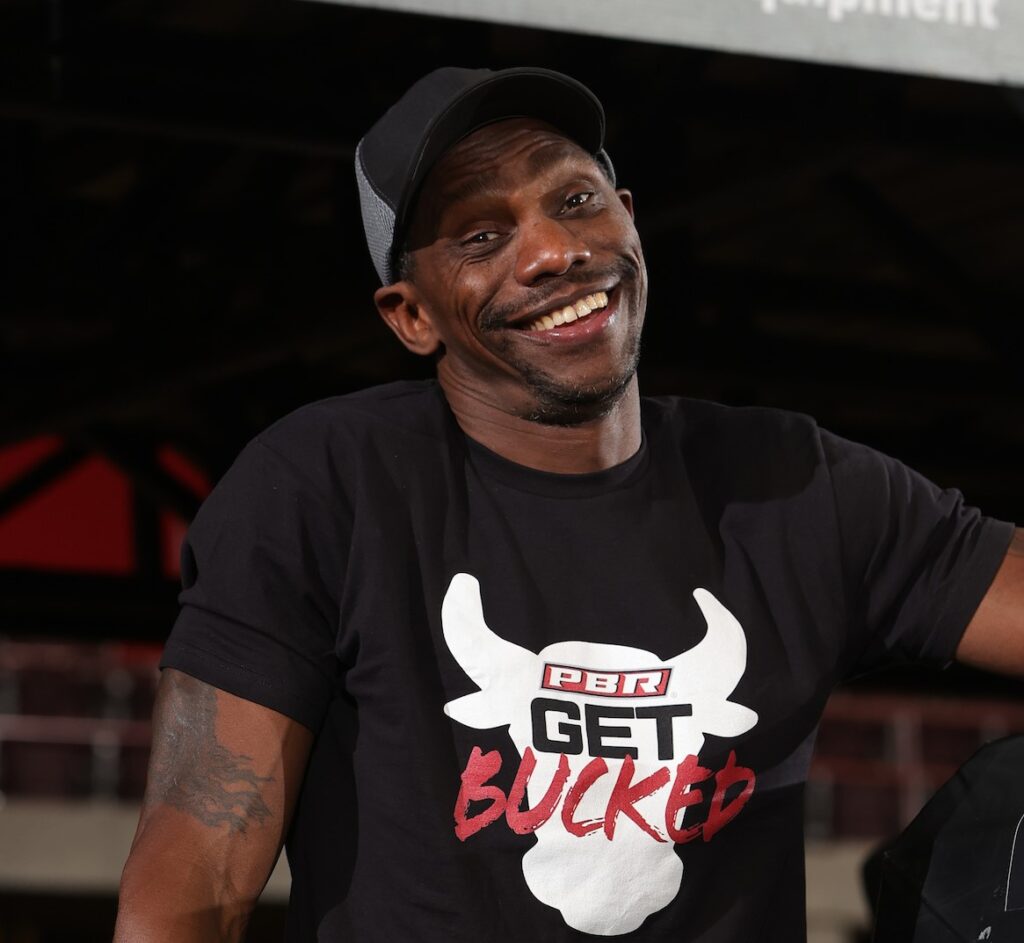
Kosha Irby (CO-Shay ER-BEE) currently serves as Chief Marketing Officer for Professional Bull Riders (PBR). He is responsible for all aspects of PBR’s consumer marketing and live event efforts.
Before joining PBR, Irby was Team President of the Memphis Express. In this role, he oversaw all business functions for the professional football club. Before that, Irby led live event marketing and sales for various domestic and international markets on behalf of WWE, a publicly-traded (NYSE: WWE) global media company.
Before joining WWE in 2011, Irby served in various senior marketing positions at Georgia State University, Saint Louis University, and the University of South Florida.
Irby attended the University of Memphis (1996-2001) and earned a bachelor’s degree in exercise and sports science in 2000 and his MBA in Marketing in 2001.
The real stories and hard lessons to help you level up your leadership and performance. Now your host, Ed Molotor.
Welcome back to another episode of the Athletics of Business podcast. I am your host and CEO of the Molitor Group, Ed Molitor, and I hope you are ready for just an unbelievable conversation with today's special guest, Kosha Irby, who is currently serving as chief marketing officer for Professional Bull Riders PBR. Now, he is responsible for all aspects of PBR's consumer marketing and live event efforts, but Coche sees his job like this, creating opportunities for meaningful connections. And we talk a lot about that inside of this conversation, as long as we talk about his time as team president of the Memphis Express, as well as his various role in domestic and international markets on behalf of WWE. And he again shares some great stories inside of that.
I don't want to spend too much time and give too much away, but I will tell you this. We talk about the one model that has allowed Koche to take the risk that helped him achieve each new level throughout his career. Coche also shares a two question framework which you can use right now to decide if the next career or business opportunity is right for you. Also, Koche will share three traits that makes someone a cowboy in leadership, in life. And it's not what you think. It has nothing to do with the wranglers, the boots or the bull riding. You don't want to miss that part. And Coche talks about how to be at your best during times when your energy is low. And finally, I'll tell you this.
We talk about how to use real time feedback to improve connectability and make your team stronger. Now I'm going to get out of the way and I hope you enjoy your time listening to this conversation as much as I did recording it with Koshe. Koshay, thank you so much for joining us today on the athletics and business podcast. I cannot wait to get started.
Yeah, man, I'm happy to be here. I appreciate the invite, man, and look forward to the conversation.
Know, it's funny when you look at our paths, they were meant to cross. You look at some of the people have been in your life in the past, some of the folks have been my life in the past. At some point, there are journeys we're going to intersect and here we are. We'll jump into all your work as chief marketing officer with PBR, but take us through your journey. I'm going to read something to you that I found. Actually, I'm going to repeat a quote I heard, that you never had a fear of saying yes to something, right? Never had a fear of saying yes to something. How did that play out in your journey?
I think it's helped me because it's kept me engaged in my career process. Right. When you look at my career, you look at the leaps I've made. Some people, they seem illogical or they just don't make sense, but for me, it was like it was just part of the plan, and there is no plan, which is the. I went to high school in Nashville, Tennessee, got recruited to play college football, ended up signing and going to University of Memphis. Graduated early at the University of Memphis and then decided I'm either going to go to law school or get my MBA. Decided to go get my MBA while I still had two years left of my scholarship. So I was like, what the know? Might as well let them pay for it.
So I did that, graduated with my MBA, and I had about four job offers. All of them are going to be management trainee programs, the FedEx of the world, autozones and that type of thing. But had this job, that job offer from Conference USA, that allowed for me to go make $17,000 living in Chicago, Illinois. But I got to work for a great conference, and Mike Slob, who's probably going to go down as one of the best commissioners ever. And so we made that leave, went work there, and then I left that deal, thinking I was going to go, okay. Everybody was like, all right, cool. Let's get you set up. You're leaving a conference. You're going to go to one of the schools and do your thing. And I was like, nah, I kind of want to go to the corporate world.
And so I ended up becoming analyst with Dell Computer Corp. But got with Dell Computer Corp. Realized I didn't want to be 25661. That was my employee number. And I just didn't feel like multiple thousands of employees there. And I just didn't feel like I could be co shea or my individual stuff. And so ended up leaving Dale to go work at St. Louis University, where one of my close friends, I got a chance to spend some quality time with anger stork there and Doug Woolard and a lot of those guys at St. Louis University. And so life was on the deal. And then at that point, I was like, all right, this is it. College athletics. I'm in it. I like it. I like everything about it.
I love creating opportunities for young people and better their lives, and so kind of rose up through the ranks. Went from St. Louis, went to University of South Florida, back to St. Louis, ended up going down to Georgia State University. And then you're at that point in your life where I was a senior associate ad, the next step was logical to be an ad somewhere. So I started putting fillers out there, but then this bug man got hit with this thing called WWE smack dead in the face. And it was, you know, we got this opportunity here, we're going to open up a West coast office, and we think you'll be great to go run it.
And so I ended up moving out to Los Angeles, California, from, at that time, Atlanta, opening up the WWE live event office out there, traveling the world, doing touring shows for WWE. And that took up almost a decade of the life, but I loved it, man. Touched every part of the world. If you name an arena or a building, I've probably been in it or promoted in that city. But while I was at WWE and things were going well, the company was doing well, I was loving the gig. I got approached about a situation to go start a football league that wasn't the XFL, it was alliance of, you know, a lot of people thought, oh, you're crazy for making this league. You're situated there, you're set up for life with WWE, because once you get in the matrix, you don't have to leave.
And I was, you know, it was an opportunity to go kind of start something from the ground, know? So it was like, well, why don't you just stay with the XFL? Because the AAF had first divs on, you know, the connection there was hometown kid can come back and start a football team is something that just intrigued me. I can go to Memphis and make this thing work, and the place that taught me football, I could bring professional football back and make that work was just very intriguing to me. So we made that leap. Obviously, the league didn't pan out, and so I started consulting a little bit and then got hooked up with professional bull riding and met up with the CEO, Sean Gleason.
And we just hit it off and didn't know a thing about bull riding or the cowboy culture at that time. And he eloquently explained to me that what being cowboy was all about. We tried it out for a while and I'm still here, so that's kind of the journey, man. But if you look at it, I went from grown men lathering themselves up in baby oil to 120 pound dudes strapping themselves to a bull. And that all descended from me putting my life savings on the backs of 18 to 22 year olds, where the entire season can get wrecked with one bad text message. So it's always just kind of going into that unknown, and that's kind of what I like.
So let me ask you this. I want to back up just a little bit, right? Because for people that understand the world of college athletics, you were on almost a linear path. You could have played that game, so to speak, and been on that journey forever, and you'd been fine. You'd have been awesome. You'd have been an incredible ad. You probably would have ran a conference. Know, who knows where that would take you? Figure out this whole messy NCAA is for us, if you could, and then you get with the WWE again. Here you are. There's a risk involved. Yes, it's an established brand. Yes, it's cool. Yes, you're going to travel the world. It's so sexy. It's so glamorous in people's eyes. But there is a risk, and there is a risk you had to take.
Being away from the family, being away from home, the travel, and then being attracted to Memphis and things out of your control. Right. The league folded, had nothing to do with you. It was funny. Had nothing to do with you. And then you find yourself being a cowboy. Okay? And there is another risk. But you're always learning new things. The thing I'm really curious about, I think I know the answer, because we talked about this, but what were the consistencies? What were the things? Or what are the things that have allowed you to be successful at every step of the way on this journey?
Right.
Totally different industries.
Right. Two things. One, never be afraid to bet on yourself. And two, just. I heard this quote one time. My mom tells me this all the time, what would you do if you weren't afraid? And it sticks with me. And I think the thing that I've started to realize is I just like the unknown. I don't want to be the smartest person in the room. I don't want to be. I seek discomfort. All those buzwords that everybody wants to go by. I try to live by that code. That's what I try to train my daughter on. I try to train my family on, is just go out and seek discomfort. And that, to me, and the inability to say no a good chunk of the time to a great opportunity is just it, man.
It's kind of defined everything that has made me what I am right now and hopefully is going to keep projecting me to cool opportunities down the line as I continue to grow.
As we kind of glanced over your journey and I talked more about it in the introduction, obviously, it seems really simple, right? It seems like really cool. Okay, bet on yourself. But there has to be a criteria that you judge the WWE by. There had to be a criteria you judge the opportunity in Memphis by, as well as the PBR. Can you talk a little bit about that? Like when an opportunity resonates with you and you want to seize that moment.
For me, it's going to be, I ask myself a few questions, right? Is it something that's going to challenge me and is it something that's going to create an opportunity? At the end of the day, when you really think about majority of the personal decisions you have to make, I like to call it in life, those before and after decisions, right. It's that pivot moment where you come up to a critical path in your life and you got to make that decision. Nine times out of ten, you're going to weigh it against two or three things. One, is it going to create a challenge, a manageable challenge, right? Nobody wants to go and try to build the great pyramids again with their bare hands.
On the flip side of that, is it going to create an opportunity once again, that opportunity is going to be whether it's financial, it's going to be a good move for my family, it's going to be a good move for my kid, whatever that may be. You weigh those against one another. Right. And if the challenge is something that you think you can manage and the opportunity is there where you can see growth, then I don't see why people start to try to put so many other of filters on top of it. That just boils down to that, is it a good challenge? And does it offer opportunity? And that's how I weighed the WWE. It was going to be a challenge. I was going to be on the road upwards of 250 to 300 nights a year.
I was going to have to learn a new way of marketing and presenting the product and trying to learn the characters and learn the business and learn what promotion was all about. But at the opposite of that is I came out of that with an MBA and live event marketing, event ops. I learned more about the business working for WWE than I ever could have in any school in America. Because you're living it. You're breathing. Like I talk about this all the know. When I was at WWE, the company allowed me to go and hang with the riggers. I rigged shows, right? I hung in a production truck.
I hung with the, you know, I.
Was a cameraman one time. I was a ring builder. I did not get in the wrestling ring. However, I did appear on the show.
Hey, here's a million dollar question. You know what I'm going to ask you, too. Did you slather the baby oil all.
Over, say, I slathered it on me? But there's numerous times we'll have to hit a back every now and again to make sure they hit the ring. I look at that and it was an opportunity to just grow. And then I look at the league with football, and what were trying to do is revolutionize the game of football. And if you look at a lot of the enhancements to the NFL, the USFL, the XFL 2.0 and 3.0, a lot of those things kind of started from what we attempted to do, and they're still trying to do that. And so the challenge was there. We're going to start from the ground up and build from scratch. It was a startup. We all knew that. We all took the red pill.
However, the opportunity there to build something from the ground up was just something that I couldn't turn down. And I look at the PBR, the challenge is here. We're trying to become more of a mainstream sport. We're trying to matriculate ourselves in the cowboy culture into mainstream. That's a challenge, right? Because everybody wants to be viral, everybody wants to be cool. But laying the ground road and trying to do that is a tough deal. But the opportunity is there. I can see it. I see it every day. I see the finish line. I know where we can end up. And so it just comes down to that. But the fact that I'm putting on working with cowboys, I'm working with wrestlers or pro football players and software engineers, or I'm working with college athletics, doesn't matter what the face is.
It's all about the challenge and opportunity, and that's what excites me.
We mentioned a couple of times being cowboy culture. Can you share that with us?
I define it this way. People say, what does it mean to be cowboy? And I say, my interpretation is if you wake up every day willing to put in a hard day's work, if you're willing to help your fellow brother sister out and you're not afraid to walk into, like, a dangerous situation first, you're a cowboy and majority of everyday Americans, Ed, I'm pretty sure based off what we talked about earlier you're cowboy. You're definitely not afraid to put in a hard day's work, right? If I called you right now as friend and say, I need help, you're going to help me. And nine times out of ten, if there's a precarious or audacious situation, you're not afraid to walk in first. You don't have to wear boots or ride a big truck or have a cowboy hat on to be cowboy.
I definitely don't. I'm a lululemon wearing, air jordan, sneaker wearing, baseball cap wearing dude. But I subscribe to the cowboy culture, and that makes us cowboy. And so when it was broken down to me and presented to me that way, and I was like, well, why can't we just take that same mantra and make that mainstream? The cowboy is an iconic symbol. When you put on a cowboy hat and a person's on a horse, back of a horse and whatnot, you automatically notice a cowboy. I would argue that it's probably one of the most iconic symbols in America when you think about it, right? It is the one thing that you can always associate. You put on a cowboy hat, person just kind of gets into the glam, I like to call it. You automatically associate that with being a cowboy.
So you already have the natural association. Why can't we just pull that through and make cowboy cool? A. Yep.
And that had to be for you, the way you're wired, right? And what you were made up of, that had to be like a breath of fresh air working inside that culture.
My God, man. Because I went in and was like, oh, my gosh, who knows what I'm. Because I knew nothing about the culture. I knew I loved the business, and I knew that these are some athletic human beings doing what they do, but until you kind of get to get in. And when I got in, I'm realizing, man, these are just down to earth, hardworking humans. They just want to make a better lives for them and their families, right? There's no politics at play. There's nothing when it comes down to the business and the sport. It's just raw emotion, raw grit, raw athleticism. And it's probably one of the last businesses where if you walk up and tell someone you're going to do it, you're expected to do it, or they're going to do it for you. Handshakes still means something in this culture.
So I am in it, man. I like it. Don't get me wrong. I'm still trying to figure out how to keep my sneakers clean. And all the dirt, however, buy more.
Just buy more.
But it's proven to be a fun world, man. And I'm learning something new every day, which is just something that I take pride in.
I listened to a podcast you were on a year ago, lead with your brand. Great conversation. But you talk about something I firmly believe. Our circumstances don't define us, but our stories absolutely shape us.
Right.
We were raised by a single mother. You said on the podcast, you said, I know what rock bottom looks like. How much has that helped you develop? The work ethic, the core values, all of that? How much has that poured into knowing what rock bottom looks like? And yet you still don't have a scarcity mindset. You have this beautiful mindset of, like, I know what it looks like. I know what we're capable of. How much that impact you?
A lot. I mean, once again, I tell it all the time. One of my greatest role model in my life is my mom. My mom had me when she was 16 years old, african american woman in Meridian, Mississippi, in the 70s. Not necessarily the best place for a little brown girl to be trying to raise a little brown boy. So growing up in that element and seeing her trying to make a way for herself and her boys taught me what hard work looks like. And seeing her just get sometimes just railroaded because somebody didn't like her. She didn't have the right tone of skin or the right pitch or didn't say words the right way, and look at that defeat. But then look at her just turn around like a phoenix and rise up and go try again.
That just had to roll off, right? And so I know what it is to have to depend on someone. I know what it is to be like we're one paycheck away from sleeping in our car. Matter of fact, we've hit that point. And I know what it feels like to hit that rock bottom deal. And it makes me not afraid, because I also know that I can get out of it. And it's not a bootstrap type scenario. It's just a matter of, I am not afraid, because I know what the bottom looks like. I've been to hell, and I didn't die. So that allows for me to say, I'm going to go try something, and if I fail, so what?
But the cool thing about it is, if you've worked hard and you built a little bit of a foundation, I'm not going to fall back to zero. I may fall from 50 down to 13, but I'm not going back to zero. And if I did go to zero, I'll be okay, because I know what that feels like. I've been there. I think it just gave me the foundation to believe in myself. It gave me the foundation to say that the worst is not the worst thing. Right. I think for me, it just allowed for me to not be afraid to better myself and not be afraid to say yes, because I think a lot of people are so afraid of all of the potential consequences where they miss all the opportunity.
One of these things I've heard someone tell me before is that it's kind of one of those makes sense moments. But he says, guess what? Some of the consequences you have for your actions are positive. And I was like, dang. It's so. Because when you think of the word consequences, you always think that is negative. Like, oh, you know the consequences of your decision. Yeah. He's like, some consequences are positive. And when that finally seeped into my brain, I was like, dang, you're right. We put ourselves in these arbitrary situations where we got to say no just because we're afraid of these unknown consequences. And sometimes those are your biggest blessings. And I think that by, once again, not being afraid to say no, being a big risk taker, it's paid well for me.
It may not be everybody's journey, but it worked for me.
And I'm curious. I'm going to take a couple of steps back in time now, which some folks may cringe when I do this, but I have to believe that mindset and that ability to reframe things that way really helped your ability to lead and perform during COVID with all the unknowns, with all the. Oh, my God, what are we going to do? How are we going to do this? Can you talk to me a little bit about that? How you were able to kind of rally the troops a little bit with that mindset and share that with them.
Yeah, man. Every time I go back and I think of COVID I always go back to that evil Friday the 13th, 2020, when the world just came to a screeching halt. And once again, this is where being at the right place at the right time. I was with the right company during COVID PBR was the right place to be. Because I never forget on that Monday after when the world shut down, that first Monday, we sat in, our CEO, Sean Gleason sat down and said, we got two ways we can go about this.
We can sit back and wait for someone to tell us what to do, or we can forge our own path to this day, I still get goosebumps about that meeting because you had dudes that went out there and started just learning everything that we can, calling everybody that we can, and really, truly trying to get Google degrees. I like to call it on everything about COVID and how to proceed. And I'm proud to say, know, we beat the NFL, we beat the NBA, we beat all the leagues back to becoming the first safe bubble to operate during that time. And then we beat everybody back. Being the first professional sport to get back to operating with fans in the stands, and we haven't looked back yet. We didn't stop touring. I think it was tough because it was a new way of management.
You had all these protocols. We had to hop into rvs and go and live in the Woodstock of boar riding and trying to keep people motivated while on the task, while still they're coping with losing loved ones and sick relatives and not knowing and that scariness of I can't control. This was a real fear, trying to make sure that everybody felt safe. It wasn't even about being motivated because we had enough adrenaline going in our brains and stir craziness going in our brain that you were motivated to move because you just wanted to kind of do something. But trying to motivate or not even motivate, trying to instill a sense of safety, a sense of, we got your back. A sense of, it's going to be all right.
I found myself being more of a listener during that time, and I still am to this day, because people didn't have the same distractions that they had every day. At least my employees that I'm responsible for, they didn't have those same distractions that they had on a day in, day out basis. What I mean by distractions, I can go drop my kids off and I can focus on work or the kids go to school. I mean, a lot of our employees were becoming english and math teachers during this time. And so not only are they trying to figure out how to solve PBR's issues, but they have to figure out the new math.
When you're our age, it's not that easy to figure out.
Not that easy to figure out, right. So you're coping with that, and then you're like, all right, I don't want to go and do something that's going to jeopardize my family, and I don't want to disrupt this harmony that I currently have in my household. So managing through that, but still trying to forge ahead was probably one of the toughest management tasks I've ever been a part of. But one of the most rewarding, I think, I hope, I pray that I came out of that a better person. I came out of COVID a better person than I went in or started it with. And the reason being is so many people sacrificed for COVID. So many people. I mean, my industry. Think about it.
When you think about industries that were most impacted, were enemy number one, because our entire industry is about public gathering. We were enemy number one. And so you start to look at that. My friends lost jobs, they lost loved ones, and we kept forging ahead. We had to go through some layoffs, and that hurt my soul, because you're having to go and deliver horrible news during a horrible time. But we forged ahead. We got to the other side, and now we're here. It forced us to take leadership, to define leadership in a totally different way, to look at the person as a whole person, not just like an employee, because you have to start managing those lives. And I feel I'm a better leader today going through COVID, and I think I've learned a lot.
And I hope anybody that came out on the other side of COVID can hopefully feel the same way, because if you didn't, a lot of people sacrifice for nothing.
Yeah. When that COVID first hit, we got really crystal clear on the podcast, the guests that we have on, and what were going to talk about, because I had this belief that your true culture, your true character, was either going to be revealed or exposed one or two. And the key was to grow through the crisis and not go through it. But I read something that I think was a quote from kind of the tail end of the crisis. And this speaks to you. I mean, volumes about you. And you talk about being surrounded by awesome humans without those humans making sacrifice after sacrifice, similar to what you just said to keep the industry moving. I don't know if we would be here today. Now, here's where it's really cool, though. Times of cris are when you see people's true grit, it's very inspiring.
At the same time, a Cris also tests essential things, like patience, forgiveness, and taking care of your brothers and sisters. And that's it right there. The whole person. And things become transformational as opposed to transactional. Now, the thing that when were first introduced by JJ. Gotcha. Our great friend and one of the most incredible human beings I've ever too.
Good of a man.
Oh. Been associated with, it's just phenomenal. But similar to him. I mean, you two guys are cut from the same cloth in so many different ways, but your ability to connect people and to create powerful moments, can you talk about that a little bit?
That's what we do for a living. At the end of the day, my job is to create a unique experience for anybody I get to serve, whether that's employees, whether it's sponsors, whether it's ticket buyers, whether it's contestants. At the end of the day, my job is to create unique experiences, unique memories, and I strive for that. And the platform that I have typically is going to be a live event. That's what connects everybody. It's the foundation of everything that we do. It's the foundation of everything that I've spent the last 20 years building and relationships around. And I try to use that to connect whoever, wherever I can. And when you look at it, the power of that human connection and trying to use our platforms to do that is what's going to create, I think, a better society. Right?
Let's take our paths. Right. We've always kind of been two ships in the night, but we've always been in the same lane, the same ocean. We sat down, we first met, and we started saying, oh, yeah, I worked here. And I was like, oh, yeah, I knew such and such that worked. And he's like, cool. That's one of my best friends. You just kind of got to start going down that deal. But if it wasn't for the live event business and if it wasn't for just reaching out and just making those connections, do you really, truly ever kind of solidify that?
And I'm a firm believer, man, that I just try to make it a point in my life, at this point in my life, to every person that I meet, I try to leave them in a better place, because I think if you do that or you strive for that or you strive to just have a positive connection with anybody, no matter if you like them or not, it just works. That power of connection and that power of human connectivity, for me, is a powerful thing that I don't take for granted, because at the end of the day, you need other humans. Nobody's going to go at this alone.
And so as long as I can use my platforms, as long as I can use my voice, as long as I can connect other people that share, like, interests of just wanting to better the world, then the world just has to become a better place. It's just as simple for me. I don't know if I answered the question, but that's my.
No, you did. Absolutely. And don't you find when you focus a being where your feet are being present and leaving that person better than you found them? Don't you find the same thing happens to you, though?
Absolutely. It's all reciprocity. If you pour positivity into someone, it's going to come back out. I look at some of what I like to call the grumpiest humans that I know. And if you know me, if you've ever worked with me, I'm a pretty happy go lucky guy. Hey, what's going on? High five. Let's talk it up. Let's wrestle. Let's talk crap. And do what? I'm still a big kid. I'm a 40 year old kid, and I'm not afraid to admit it, but I've come to find out that approach to life has served me better than trying to be all guarded and mean and grumpy, because you give what you get, right? And you get what you give.
So if I go in and I'm shaking a hand and high five and it's just trying to rev up the party and try to be somewhat of a nice human to others, 90% of the time, they reciprocate it, and it's like, you know what? I was having a bad day, but I'm still having a bad day. But at least this moment in time, I had a bright spot in my day. If you can do that and give somebody two, three, 4 seconds, two, three, four minutes or two, three, 4 hours of just positivity, at some point, they're going to pass that on. It may be a little, but a little is all we need to get a snowball effect of just positivity going around, and that's the goal, man. As a coach, you knew this.
All you had to do was just put a little bit of a spark of positivity in there and let the synergistic locker room take over. That is one thing coach Curry would tell me all the time. I don't need to go and try to put this whole big mountain of positivity or camaraderie. All I got to do is plant the right seeds, and if it just keeps nurturing, it keeps nurturing. By the time we hit a crisis moment, that seed would have pretty much permeated throughout the locker room. And at that point, we're ready to deal with it together.
And when I started to kind of listen to those teachings of some of the best coaches, like, once again, I tell everybody in this world, everybody needs to go and meet a coach, a good coach in their life at some point, whether it's an executive coach, whether it's a basketball coach, youth soccer coach, I don't care. But somebody that their whole goal is to try to make better. Humans create positivity to teach how to deal with adversity. And I think that by working in college athletics and dealing with coaches on a day in and day out basis allowed for me to really, truly see that at play.
Because when you see a team down by eight going into the second half, or whatever it is that they're going into, and yet they're still positive about it, they're willing to go try to rally and do it, but whether they overcome it or not, win the game or whatnot, that type of mindset and that type of ability to be able to still, when looking at insurmountable ods, drum up positivity to go out there and perform is what we need more of in this world, man. And I think if we get that, it takes away from the self defeat, it takes away from the low self esteem, it takes away from people not being able to respond to leadership or lead, because they're not built for a lot of those situations, because those seeds of positivity weren't planted.
Long winded way to say, if I can go and somebody's having a bad day because their Starbucks order was wrong and they were late dropping off their kid, and the dog ate the kid's homework, literally. And I come in like, hey, what's going on, man? It's going to be a great day. High five. Let's get at it. For that brief moment, it changes, and then they're going to probably see somebody else down and be like, you know what? It's going to be okay. Because I had a bad day, my day is okay. Once again, man. Snowball effect. And that's all we can do in this world.
Along those lines, let me ask this, because with what you do, it is such a high level of energy every event, every day, because you have to translate the energy from that event into the marketing pieces, right. And into the office and around the team and into the community. How do you be your best? Even when you're not at your best? In other words, you just don't feel it that day. But you know that you have a responsibility. You know that you have to find it inside. What's your strategy? Or what's your way of going about doing that?
Two ways. One, I'm transparent about it because I can't be on every day. Nobody can. And you let people know, and hopefully the people you surround yourself around have enough in their savings account to be able to give some of that positivity back to you. That's what you rely on, man. I'm a firm believer in surrounding yourself with positive people. I just don't have the energy for that negativity at this specific point. I got enough stress trying to figure out how to convince 10,000 people to come to my event. It's one of those that if I'm not feeling it that day, I want to make sure that I got two or three friends that I know are kind of wired the same that I'm always calling. So that's strategy.
One for me is I'll call up a couple of friends and be like, man, today is going to be one. And be like, bro, it's okay, right? And the second thing is, and this is something I kind of learned from my boss, Sean, and my previous leader of WWE, Vince McMahon, is there's always going to be another rep. And as.
A former DB, you realize that I.
Think, once again, one of the best positions in all the sports is defensive back, because you spend all of your time and 98% of the game, you're doing your job, and all it takes is that one catch, somebody to break away, you get burnt one time, and you kind of can also be remembered for that. But there's always another play, and you're going to show up for that next play, that next rep, and just get it done. And so I think two things that I rely on when I'm not at my best is, one, a support system that I've kind of built for myself, just positive people. And then two, remembering that there's always another rep and today is not going to be today is not going to define me because there's always going to be tomorrow.
But if it is going to be today, I'm still going to make it the best that I can at that time.
You and I both believe that you can tell a lot about a person by their inner circle. What type of people are in your inner circle? Them.
Well, all of them are smarter than me because I decided to go in the lobby, check that box, because that's.
How it's supposed to be.
So that's mean. But for me, I define those in my inner circle as those that just want the best out of, you know, I think, Scott O'Neill, you've said it, too, know, plant a tree where you are or the best place to be is where you are right now. And there's just people that are like that, man. I surround myself with risk takers and people that are not afraid of saying yes to those. So, you know, that's been from people that are still in college athletics doing phenomenal things to out selling things to medical sales, to a couple of doctor friends. I like people that try to define their own ods and go out and chase insurmountable things, and they end up doing it. And so that's how I define it, man.
It's just people that are trying to do the best with what they got. That's all you need. I don't think that there's a criteria that you got to have in order to define what your inner circle is, meaning they got to be at a certain level or. I hate people who always talk about, I'm only dealing with presidents. I only talk president to president or sea level to sea level or head coach to head coach or whatever. It's like, no one of my best friends in this entire world is literally, he owns his own restaurant. You won't know it because he doesn't cook, he doesn't do the books. When he shows up and works at his own place, he buses tables. And so in theory, he's a very wealthy bus boy, but you wouldn't know it.
And those are the type of humans that I just gravitate toward because they're just defining their own ods and trying to make a better way for them. And I don't know. It's just weird like that.
It's funny because you know where I'm going with that question. For me, I love people with the positive energy, but they also have the ability to slow me down. They have the ability to help me think and to think and help me reframe things. They also, at the same time, have the ability to challenge me and call me out. And they don't have to be at a certain level monetarily. They don't have to be at a certain level by title, but they've got to be those folks that keep making incremental growth and keep getting after and keep showing up, right. And keep pouring into people. And that's it. Because I have a little bit of an idea of your inner circle.
And I just think it's such a significant thing because you think about your world, you're around your inner circle a lot because you got your cell phone and you got all your responsibilities, and you're always moving, you're always traveling. Now, speaking of inner circle. One of the things that your inner circle does is give you feedback, right? And they give you feedback in real time. But let's shift to your team of work, and let's shift to all of the positions you have held over the course of your career. How much have you realized the significance of feedback in real time, and what do you do with that information?
I demand it for the most part. Right. I love real time feedback. So we're going through the whole corporate HR kind of review thing. You do it at the end of the year, middle of the year. And I was like, if you're spending all year building a case to have this year end review with your team, to then tell them everything that they messed up for the last ten months, you're a horrible manager, in my opinion, for me, want constant feedback? Hey, this is a great thing. It's kind of like coaching. I will go back to coaching if I got a person out there that's shooting free throws just all wrong or the jump shot has a little bit of a crenk in it, and I wait to the end of the season to correct it.
I'm doing that person and the team a disservice. I need to try to work on it and have them work on it throughout the season. Same thing with me is I had some great managers that were not afraid to tell me when I messed up and were the first to congratulate me when I got it right. I got lucky. I got lucky. Cheryl Levick, prime example of a human, that she'd be the first one to congratulate you on your success and be the first one to tell you, yeah, we did this wrong. And it was never you. It was always, we did this wrong. Doug Woolard was the same way. Tom Veet was the same way. Sean Gleason right now is the same way. Vince was the same way.
A lot of these humans that I've had the privilege of working for and with were quick with feedback and whether positive or negative, and that taught me the positive impact of what feedback can do. So I've never been afraid to walk up and tell anybody that I have the privilege of serving and working with to say, this was the intended purpose. This is where we landed. We need to figure out how to just get this right, or, holy smokes, you knocked it out of the park. Let's go celebrate. And I think if you can do that and you do that enough, you build up that rapport with a person, that they realize that you're there for them. You're not just there to critique them. Right? To your point, it's more transformational than transactional. It goes back to the whole thing.
I want to try to leave any situation better than I found it, and that goes for anybody. I get the ability to lead. I want them to go on and do bigger and better things, and I hope that I could be a part of the foundation or that wrong on the ladder that gets them to that next level. And the only way to do that is to make sure that we are providing that type of feedback. It's worked for me and I think it'll work for others if I do it correctly.
When you provide feedback to others, okay, you and your team provide feedback to others, is there a criteria, like, you want to make sure that it resonated with them, that they absorbed it, that they understood it? I mean, are there a couple of questions that you ask yourself after you provided the feedback so you know that they absolutely got the message?
Yeah, but it's different in our business because no two situations are ever the same. So there's no, to me, generic question that goes across outside of makes sense in the live event business, specifically in the live event touring business for us, we have to go do x in city Y. With this amount of resources and there's no science to it. The art of this situation is going to change because the city is going to change, the initiative is going to change, and the resources are going to change. And no two cities, no two things are alike. The intended result is, did we sell enough tickets? Did we cover our bases? Are we going to save money here? Or do we hit the desired target?
And if we deviate from that, it's going to be more of an exercise into how, where, what can we do to get better? And then once we understand or we pinpoint it on some things that we can change or try to adjust, then we're going to proceed with that and make sure that we can just carry that across. It's just as simple, right? I think when people are trying to give all this feedback and go through all these checklists, sometimes it just comes down to just, hey, man, here was the result. Here's what we intended to do. Where do you think we deviated? And if you go down that pathway with the human versus trying to sit there and tell them everything they did wrong and preach to them, that's where it gets lost on me.
I think some of the best feedback I've gotten is, hey, I saw you do this and were there together when we did it. But where do you think we could have made some changes? And nine times out of ten, if that person cares enough about the product or cares enough about what it is that we're doing, they're going to be harder on themselves than you ever could on them. So it's just a matter of helping them fully pull through where the corrective mechanisms are that they can manipulate and then help them bring along that. So that's kind of been my mantra. It's loose, it's different every time, and it manifests itself in different ways every time. But that's kind of how I try to operate sometimes. It doesn't come off that seamlessly, but that's the goal.
Well, and let me ask you this, what I was getting, I was going back to our conversation a few weeks when I didn't do a good job of setting the question up. So I apologize about that. But you made it clear it was really cool part of the conversation where you talked about, I want to make sure that I explained it to my team member the right way. I want to make sure that I got the message across and I want to make sure that they understood it. And if they didn't, what can I do better next time? And what I was trying to move towards was like, how important it is to get to know your team members that you need on an individual basis.
So you know that you're connecting with them in such a way that the message is getting across and they're accepting.
That that comes back to trying to manage the whole person and not just an employee. Right? You learn what their likes and dislikes are, ways to talk to them, ways to not talk to them. Some are visual. If you put it in a graph, I hate to say that, but like, hey, here's the pyramid that we're trying to do, and here's kind of what we need to try to do differently next time. Some are going to be auditory and then some. Man, if you got the right report, you're like, yo, bro, we messed up. And it's just that simple. And it cuts to the chase. Like, yo, we're just going about this all wrong. But I think that comes with just trying to get to know employees these days.
At the end of the day, we are now in the business of managing whole employees because remote work, hybrid work schedule, we now have to take into account a lot more of this employee's life. Similar situation that we've had here where, hey, I'm at home, my kids here, they got breakfast going on, and one of them might walk in and just say, yo, dad, lunch. What do you want? Right? And that could happen. And now we got to take that into consideration when we're trying to manage employees and realize that they got real life things going on outside of this job that goes into it. So if you do critique them or praise them, you got to do it in such a way that it can be received, understood.
And you both are not walking away with it with either a false sense or some type of a false sense of malice. Right. Or they only do it if they try to set me up for something or some type of resentment and anger because they feel that, once again, you're coming at them from the wrong way, you're critiquing them and you're picking on them and whatnot. So I think that if we can build that rapport throughout the process, throughout the journey, that, to me, is why one of the things that I don't have boundaries when it comes, and this is bad leadership, bad management. I know what I'm about to say, but I try not to have boundaries. If somebody has a question of my team, I'm an open door. Twenty four seven.
And just as a leader, that's one of the prices that I have to pay to be that person. Because if they call and say, hey, look, I'm struggling with x. I want to be able to make sure that we can get in the trenches and figure it out. Otherwise, I'm going to trust them to do what they do and hopefully come out with an outcome that we both.
Agree with as we start to wind down here in time. And before I get to the last thing I want to talk about, you have the absolute entrepreneur spirit, and you are beyond brilliant because you're doing it with somebody else's money. Okay? I wasn't smart enough to figure that out. All right? I was not smart enough to figure that part out, and I love it. But I heard a story about when your entrepreneur spirit started, when you really realized that you had it and you were so far ahead of your time. It's unbelievable. I think it was called cool camps for kids, crochet, Herbay's cool camp for kids, cool sports camps for kids or something. I'll tell you what, man, that was genius.
It caused some fellow.
First of all, hey, I can say this now, okay? That was at least a Memphis's concerns back then. All right? So anyways, I digress. I did not say that, but. No, I said it, but I digress.
So I was getting my mba, and we had to kind of go do this whole entrepreneurial deal for our spring semester project.
And you still had eligibility left, though, right?
Yeah, I'm still on the clock.
You graduated early.
This would be my fourth year going into my race, or fifth year, so theoretically my final year. So the spring of that year, man, I decided to start this summer camp called Kosher every fit kids camp, right? And what I did was go around all these middle schools and rally up all these kids to come and learn about their respective sports. You want to learn about basketball, track, whatever sport Memphis offered, I offered a clinic on that sport. Football, weightlifting, it didn't matter.
Genius.
So then I would turn around and go recruit college kids that will come and teach these kids the. Because, you know, they basically know what they're doing. So they were teaching these kids sports. So I had all these little subsections, tennis, golf, agility. I mean, it was actually a pretty fundamental deal. Now, cool thing about it was it made a lot of money. It was great for me. I thought it was a great product for those. So it was beneficial for all the student athletes made money. Bad thing was, this is before, like, NLI became a thing. So during that time, they got a couple of bylaws specifically written in the NCAA manual that specifically says, this is what you can't do.
And so I had to get called into the principal's office and figure out some things, but I chose football over fit kids camp. But I realized at that point, man, that this was going to be what I wanted to do. I wanted to try to get humans together, create cool ass experiences, and allow for them to kind of connect through that moment. And I've been doing it ever since. Whether it was on the college athletic side, whether it's wrestling, pro football, professional bull riding, concert festivals, whatever it is that I'm doing. I just like creating unique experiences.
The same way from your coaching days or when you have that athlete, where you just see at that moment where it just clicks right, the jump shot starts to fall the right way, they learn a euro step the proper way, or whatever it is, you just realize that the teachings that you have is connect with them. Same thing with a teacher, same thing with anybody that's trying to create an experience that allows them to get better. For me, it's when I walk out on whatever the surface is, and I'm on whether it's dirt, hardwood, football pitch, or whatever, and you see, like, a granddad and a grandson high five each other, or a dad holding his daughter watching the game, and you know, that they're both into it.
And you realize you were the foundation for making that experience come to life for those two humans. That is my drug, man. That is it for me. And so it doesn't matter if I'm doing it with boar, riding a kickball league, flag football, swimming meet, I don't care. I love creating those know I've never forgiven. I was at Conference USA, and they let me run the women's, I'm sorry, men's and women's swimming and diving championship indianapolis at the time. And so were at the natatorium, and I'll never forget when it really hit me, when all the kids, after they had the whole shave party, which, if you're not in swimming, the shave party thing is still something I don't understand, but it is a thing. So after the shave party, it is definitely a thing. It's a thing.
So they get out, man, and then they go, and I see this kid. He comes out, jumps out of the water, wins the race, and kind of sprits. He didn't run at the pool. Let's just say he had a fast walk because we don't break rules. But he goes over there and he just jumps up into the stands, and his dad grabs him and pulls him up. And they embrace for like, 30, 40 seconds. And at that point, I realized that what we just did was created a moment that's going to live on beyond anything that I've ever done in those two humans lives or whatnot. And at that point, man, that's what you realize, that this is what we're in this business of doing, is creating these unique experiences.
And so as long as I can do that, man, I am going to be happy wherever I am.
Wow. I'd love to wrap it up there because it's so unbelievable. But before I ask the last question, where can folks find out more about PBR, the PBR team series? Koshe Urbe. All the amazing things you've done. Where can they get you?
I mean, go to pbr.com for all the latest information. Everything will be there by PBR. The team series is going to be something that's going to be pretty exciting. Yes, I am launching another league, but this one does have the proper funding, so we'll be okay. And then for me, go to want to reach out, it's coach Arabie at any of the social media handles LinkedIn, Instagram, or whatever.
By the way, your Instagram pictures are amazing. I love the one with the kids on the sled and you're walking down the street or running down the street backwards in your neighborhood, pulling them on the sled.
My neighbors think I'm idiotic sometimes because they're like, what is he doing? But once again, it just goes back to trying to create those moments for my daughter. And it was for her that day I was Superman. And now, hopefully now she wants to be. We have this quote every day before she goes to school is, are you a big tiger or a little tiger? And she says, I'm a big tiger that day. And I'm like, let me hear your roar. She goes, roar. And that's our thing, right? Once again, it just goes back to a fast rewind back to the beginning of this. We start talking about little drops of positivity, man. And same thing with your kids.
For me, if I can just keep putting a little bit of confidence in my daughter every day, I know by the time that she's ready to kind of go out in this world and leave us behind, she's going to be a big tiger for the world.
That's so awesome. Koshe, I cannot thank you enough, man. I appreciate you. I appreciate all your amazing work. You know what? Last question is this? Okay, how have you found the ability? And I want to end with this for the listener because I think this is so much to take away from it. You talked earlier about when you were with WWE that you did everything. You worked a camera, you did things behind the scenes, you learned the different roles. How has that translated into your marketing? And the way I look at that is you're able to tell the story, the better you actually get to know the story and what's behind it. How were you able to come from? You came from different backgrounds each step of the way, and you're able to do that each way. How did that happen?
Once again, the ability to say yes and not do what you're afraid, do things that you think you're afraid of, and you're really not. But I think the ability for me to be able to transform or bring a story to life, you got to understand all the ingredients that go into that story. And I hope that the sum of all of those individual parts is making a better CMO as I go forward, because now I have the ability to tell a story and understand all the parts that go into it. And it's not just about marketing design, I'm sorry, marketing pamphlets and websites and social media. But now camera angles and how do you place crowds into the stands and lighting and production elements that go into it. And everything that goes into bringing that story to life is a byproduct of everything.
And I tell this all the time, right? Like, for me, I learned community building from college athletics. There's no better community building organization in the world than college athletics. When you take a women's soccer program that may not sell tickets, but they still can bring 5000 people to the soccer pitch every day for a match, that is community building at its finest. Women's basketball, men's basketball, baseball, those sports, Olympic sports that you build a community around that community building is something ever lose sight of. And those traits that go into that couple that with WWE and touring and the storytelling and bringing characters to life and creating this dichotomy of good versus evil, big versus small, us taking on the world and being able to manipulate that story to work for different regions of the world to make it translate.
So now you got community building. You have the ability to tell stories, and then you take that to what were trying to do with the AAF and revolutionize the gamification of a human sport and allow for you to track along that. So now you take community building, you take storytelling, you take digital overlay, and we combine that with a sport. Now, the western culture, where all of those things, building a community, telling a great story, trying to introduce more technology to the sport, is now building to what we're trying to do here at PBR. All those things, man, help. It's just, you got to find out what it is that you're gleaning from each one of your previous opportunities that's going to help you for the next opportunity.
And I'm pretty sure here at PBR, I'm going to learn more about the cowboy way and how to do things more grassroots and how to reach out to more rural America to get them into the mainstream american type sport that I don't think I'm going anywhere, but let's just say I do go somewhere else. Those things now are going to all help because I go and work for FIFA. I can tell you how to go and market in Lexington, Kentucky for some fans. So it all builds one another, man. You just got to find those blocks and try to make them part of your resume or what it is that you're trying to put together.
So, well said, man. That is beautiful. And I want to say this while I have you, and I'm putting you on the spot. Vegas PBR team series championships I want to be standing next to you wearing the t shirt. Can we make that happen?
We can make that happen, brother. Make it out there. I'm pretty know I got some friends and know some people that want to get you out there for the seats. And then two, we will figure out a way for you to get out there and get bucked with everybody.
All right, man. You are the man. Hey, I appreciate you so much. This was unbelievable. Coche and I look forward to our next conversation.
Hey, brother, same here. Cheers. Give my best. Good luck with the dog, family, daughter and everything else. And many blessings to come, my friends.
Thank you.
Thank you for listening to the athletics of business. Be sure to give us a rating and review so we know how we're doing. For more information about the show, visit theathleticsofbusiness.com. Now get out there. Think, act and execute at the highest level to unleash your greatness.