

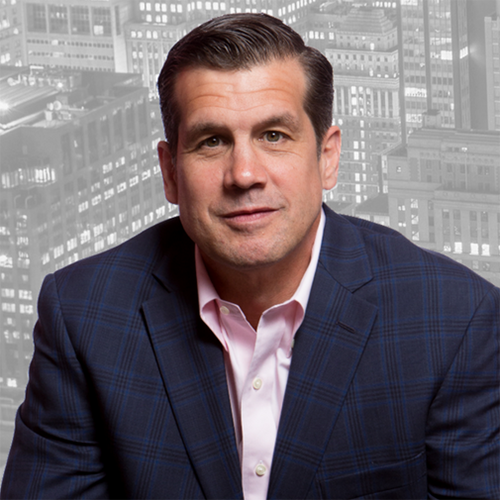
In the last 26 years, Ed Molitor has developed his leadership skills in athletics and business. From working as an NCAA Basketball coach at Texas A&M to becoming the Vice President of a national recruiting firm, Ed has taught countless athletes, coaches, and business leaders how to THINK, ACT, and EXECUTE at an elite level.
As a result, Ed has a unique set of skills to deliver leaders across the country a purposeful, positive, energetic, and refreshing experience to unlock their true potential.
In 2016, Ed launched his company, The Molitor Group, to reach and add value to a larger sphere of ambitious individuals and help them achieve their goals every day.
Through The Molitor Group, Ed has guided all leaders to achieve success. From entrepreneurs and executives to teams and companies, The Molitor Group empowers individuals and groups to achieve at the next level.
Through Leadership Performance training, coaching, and speaking, Ed’s goal is to supply people and organizations with the necessary tools to move forward from where they are now to where they want to be.
Welcome to the Athletics of Business, a podcast about how the traits and behaviors of elite athletes and remarkable business leaders frequently intersect. The real stories and hard lessons to help you level up your leadership and performance. Now your host, Ed Molitor
Welcome back to another episode of the Athletics of Business podcast. I am your host and CEO of the Molitor Group, Ed Molitor. You know, sometimes as I lay out these solo cast, I have so much that I want to talk to you about, so much that I want to share with you, that it begins to be a challenge to simplify it, to narrow it down, to really cut away some of the things that we can get to at another time. And today's one of those days. Today, solarcast was one of those days. I want to share with you a conversation that I had last week after I delivered a keynote for a phenomenal client.
It's so much fun, not just with the delivery of the keynote and that experience in of itself, but the conversations and the connections that I had and made afterwards, which is one of the things that I absolutely love to do. And a gentleman came up to me, introduced himself, and we spent the next couple of minutes connecting the dots of some mutual friends and connections that we had inside of the industry. And he said, ed, listen, I kind of have a. Not kind of, but I have a question to ask you about potential leaders inside of our organization. As a matter of fact, in on my team and how do we develop them and what is it that you do?
And I took a step back and I said, you know what, Before I tell you what we do inside of our business, I want to ask you what you mean by potential. He continued to it actually reminded me of my days as a college coach. When you go sit in the gym and you'd hear all the guys gossiping, all the coaches gossiping and pointing fingers and saying, oh man, he's got so much upside. You know, there's so much potential in that kid. Who knows what his ceiling is. That's what not what I want to know. And then he sort of said similar things, right? And I said, okay, I said, here's my take with potential. Now, we all know that we have this unlimited amount of potential.
Probably, you know, we'll scratch the surface, but I don't know that we'll ever realize our full potential or even though if we did, and we may, but I think the word potential can serve as a security blanket. Think about that. I think the word potential can serve as a security blanket. It almost sometimes serves as a band Aid that people put on the open sore of the reality, which is the reality. Now that's a significant statement because we want to recruit the top talents. We want to attract the top talent and develop the top talent. I'm not disagreeing with that. That is absolutely what you want to do. And it's proven talent that I seek out. Yes, we want upside, but you think about that. How many things do we excuse because you know, they're just not there yet? They have so much potential.
Things will better. There's so much potential there. It's still untapped. It's a crutch. Okay? Potential is a real thing, but it also can be a trap. And specifically it can be a trap in the long game. That word can be a curse. Think about some people that you've come across in the business world. We can even go back to the athletic world and people who never realize their full potential. It can seem overwhelming. It can serve as a burden. Absolutely. Can be a distraction, not only to the individual whose potential you're trying to pull out of them, but to the others on their team. Potential can also give you this false sense of confidence. Right?
And it can also give you a false sense of confidence that we have a lot of time, that I have a lot of time to get to where I'm going. And you know what? We all find out, we have a lot of time until we don't. And that's one of the things we have to be really careful about when we use the word potential. And we had an amazing conversation wrapped around that. A lot of head nods, a lot of follow up questions. And he says, what is it that you do? And I said, well, it's funny because one of our big programs here is what we call the 90 day emerging leader coaching program. And inside of that now, what is it? I guess I should explain to you what it is.
It's a three month coaching program built for people who choose to behave in ways that make it possible for them to positively impact and influence others. Now notice I said nothing about the word potential. I said nothing about potential there. I didn't speak the word potential. It's built for people who choose who make a choice to behave in ways that make it possible for them to positively impact and influence other words. So what are some of those behaviors? I mean they informally influence others. They could be supervising others, taking their first run at becoming a hiring manager. They're open to failing, they're open to learning, they're open to stretching, they're open to growing. Emerging leaders have strong people building skills, the ones that I've seen that really accelerate through our 90 day program.
They're centered by their core values and they have the vision to see the possibilities of a future state being a change agent. They unite others and help them to see new possibilities, people inside of their community, people on their team. And they're actively seeking ways to become a more impactful leader, even if they do not have a leadership role by title. So those are the types of people that we bring into the 90 day emerging leader coaching program. Again, nothing about potential. And one of the best ways I could describe it to him, let's say his name is Matthew. And I said, Matthew, picture this. Picture you're standing at the base of a mountain and you look up at that mountaintop. The potential you have is to climb and scale that mountain and to get to the top.
You believe that you have it inside you physically, mentally and emotionally. Now when you start climbing that mountain, it becomes a little bit daunting and you start having those conversations inside of your head. You start questioning yourself. You start running some negative feedback loops. You look up and you realize how much further you have to go. And that's where potential becomes a burden. Right? It can become overwhelming, it can become stifling. And you know what you do? You stop for the day. Stop a little bit shorter than you could have. Stop a little bit shorter than you should have. Why? Because you know, you have time to get there. So I think you have to be real careful about how we use the word potential. Now, if you'll go way back in the archives over two years, Matt Ishbia, CEO of United Wholesale Mortgage.
An amazing story, incredible team there. Episode number 84. And he talks about incremental vision. Well, what if we took the word potential and we focused on our incremental potential? In other words, what is the potential we have today? What can we accomplish today? How can we get better? How can you get better today? When you look at your calendar and you look at your time and you look at your commitments and how you're feeling and how you're thinking and where you're at with everything, what is it you can accomplish? And it's funny because we talk about being present and being in the moment, yet we also invest so much conversation and thought around the word potential, which can be so extraordinary and so astronomical. But why don't we dial it back and let's focus on what we can do today?
Isn't that what it's all about now, you might be saying to yourself, yeah, but Ed, you have that saying. You have that thing, that one thing that you always repeat and I'm guessing you think it's this. Are you doing the best you can with what you have to become the best you are capable of becoming? And that sounds an awful lot like long term potential. Now it's funny because the night before I delivered this keynote, I was in my hotel and I was doing some work and the title of the keynote was Disposition that Dominates. And we won't go into that. We actually have a podcast on what that means inside of our world. But it feeds into this whole idea of incremental potential. What is our potential for today? What can we do right now?
What are the behaviors that will drive the processes that will help us pursue our goals, complete our projects, our tasks? What is it I can achieve today? So I sat there and I thought to myself, you know what? Tomorrow I'm going to change it a little bit. I'm going to change it because there's a slide at the end of the keynote with just that on there. Are you doing the best you can with what you have to become the best you're capable of becoming and refresh your memory. Are you doing the best you can physically, mentally and emotionally with what you have? And by that I mean your circumstances, time, resources, strengths, adversity, okay? Everything to become the best you're capable of becoming? Okay, Bit overwhelming.
I asked them at the end of the day, I said, are you doing the best you can with what you have to get better today? Now think about what that does for you. A you can chew on it, right? It makes it way more feasible. It allows you to wrap your mind around exactly what you need to do to work towards and reach your potential today for today. That's what the great ones do. Even the ones that are striving relentlessly, pursuing greatness and their effort to be the best, they work and focus on getting better today. So let's take this one step further. As a coaching leader sitting there, how can I help my team members, the people that I lead? How can I help them adopt this mindset? How can I help them understand the significance of reaching their potential for today?
One of the things I just absolutely cannot stress enough is to find a way to get your people to focus on the controllable. What is it that they can control today to help them reach your potential for the day? Intangibles we talk about the word victory. In our victory defined foundational program, we've Talked about that a lot. We've had guests talk about it. Values, intangibles, creativity, team objectives, rules of the game. And you, what are the little things that you can do today to make sure that you work towards reaching your potential today? Do you have the ability as a coaching leader to take the time and sit down with a team member in a one one situation and say, listen, do you know what intangibles distinguish you from others? Do you know what they are? Can you identify them? That's the preparation stage.
Can you identify what intangibles separate you? Which ones are the difference makers for you in as their coaching leader, as someone who is trying to positively and productively impact and influence them, can you communicate the value of those intangibles to them and can you show to them not only here's what you're really good at, here's what you do better than anybody else and you can show up and you can do these little things every single day that'll set you apart. And today you do these things with conviction, not just when it's convenient. And you commit to doing these things today. You got a great shot at reaching your potential for today. And that's all you can do, right? That's all you have control over. You have the ability as a coaching leader to communicate that to them.
Now during the execution stage, that fundamental is huge, that they keep the intangibles in front of them. Why? Because if things start to go south or if they're going really well, blind spots pop up. It's real easy to lose sight of it. As the day progresses, we get comfortable. Do you stress the relentless commitment to the key intangibles of performance, how that's going to continue to separate them from their competition? And then do you not only encourage them, but do you sit down with them and reflect consistently on how their intangibles are showing up every single day and you show them how to do that and once they do that, do you equip them and are they able to adjust those intangibles that drive their performance?
So I think there's so much power, there's so much strength and there's so much control into really dialing into the incremental potential of today? What is it you can do to work towards and reach your potential for today? Now, as the leader, as the coach, start every single day with this. What is the one little thing that you will focus on that'll be a game changer for your team, for your people? And at the end of the day? Did I execute that little thing that I committed to? You know, this is something that I do every single day with our Victory Journal guide. And it's something that we give our clients. It's a reflection at the end of each day, an adjustment the next day.
And what it does is it gets you to consistently show up, stay focused, no matter how crazy the circumstances are, no matter how much adversity shows up. When you do this, you have the ability to be at your best despite. Despite what is going on every day. As a leader. When I say be at your best, let me restate that. To be your best, even when you're not at your best. So just to squeeze everything out of yourself that day so you can help influence and impact the members of your team. You might be sitting there saying, okay, I get it, but potential, still something that we really look for and it's something that we really talk about and that's fine, but how do you talk about it? So let's go back to the mountaintop. Overwhelmed, looking at the top, right?
But what if you focus on today at the end of the day, you run that feedback loop, you look backwards. What is the progress that you made from the beginning of today to the end of today? And if you didn't make as much progress as you wanted to, what got in the way? And what can I do tomorrow to better? And if you didn't blow it out of the park, today just went so well and you absolutely got the most out of yourself you possibly could have, what was it that helped you, help propel you to the success that you had that day? This is something in going back to the emerging leader, what can they control and what are they working towards?
And is what they're doing today aligned with and congruent with what they're working towards in the folks that I find that are most successful? So as a college coach, as a business leader, your potential is great, but I don't really care about it because here's this, here's what I want to know. The same thing I want to know in our 90 day ELCP emerging linear coaching program. Are you committed and not just interested? Are you willing to put in the work? And then are you prepared each and every day? This is something we talk about a lot on the podcast. Are you prepared and do you have the ability to identify and articulate why you want to become a leader? Are you curious? And here's something I demand of my clients, because this is absolutely a deal breaker.
Because the relationship we have won't work if they're not willing to do this. I asked them, do you give me permission to push you outside your comfort zone? And they know, they absolutely know that I'm going to support them every step of the way. I need them to opt in to the work we are doing together. And that's something that with potential people don't always opt in. Like if you label someone as a high potential leadership candidate, are they opting into that? Is that something that they want to be a part of and is that fit into where they are in their world? As you look at this and you digest what we talked about today, I think the biggest takeaway is this. Be careful with the word potential.
You know we talk about creativity right inside of victory we talk about creativity, the ability to reframe novel solutions. And I think you take that word potential that can be overwhelming, can be a burden, can be a distraction. It can be a false sense of confidence. Everything that we talked about, you take that word and you make it a catalyst. You make it a catalyst. Here's what you have the ability to achieve today. Here's what you can accomplish today. And is your plan laid out? Is your day set up? Do you have the right mindset? Are you ready? Did you over schedule? Do you have built in distractions? What's going on in your world that you need to quiet? Those are all things you have control of. Those are all things your people have control over.
And this is where we have so much fun because then we start to see the progress, we start building that self confidence and really one of the things this takes is a tremendous amount of what self discipline. And self discipline is not an ugly word by any stretch of imagination. Self discipline requires what it requires self control. And that self control when you exercise it will lead to self confidence. And self confidence helps drive what it's what we're all after, self realization. Remember your people, they want three things. They want to know that they're valued. They want to know that the work they do has meaning and is important. And they want to be coached. So coach them to reach your potential for today.
Now if you want to know more about the 90 day emerging leader coaching program, I will be more than happy to get you the information. You can reach out to us@edemolitor group.com that's Ed Molitors mol I T O R group.com connect with us on LinkedIn. However you want to get a message to me, I would love to get you the information we are having a ton of fun with it. It is micro focused, consistent two week feedback loops. We have daily scorecards, we have weekly stat sheets. Every single day you're going to know whether you won or you learned every single day and in upcoming episodes we'll share some success stories as we have clients on that have put folks through the 90 day emerging leader coaching program.
Anything, anything we can do here at the Molitor Group to help your team, to help your organization. Please do not hesitate to reach out to us and with that being said just focus on this. Do the best you can with what you have just to get better today.
Thank you for listening to the athletics of business. Be sure to give us a rating and review so we know how we're doing. For more information about the show Visit The Athletics of Business.com now get out there. Think, act and execute at the highest level to unleash your greatness.