

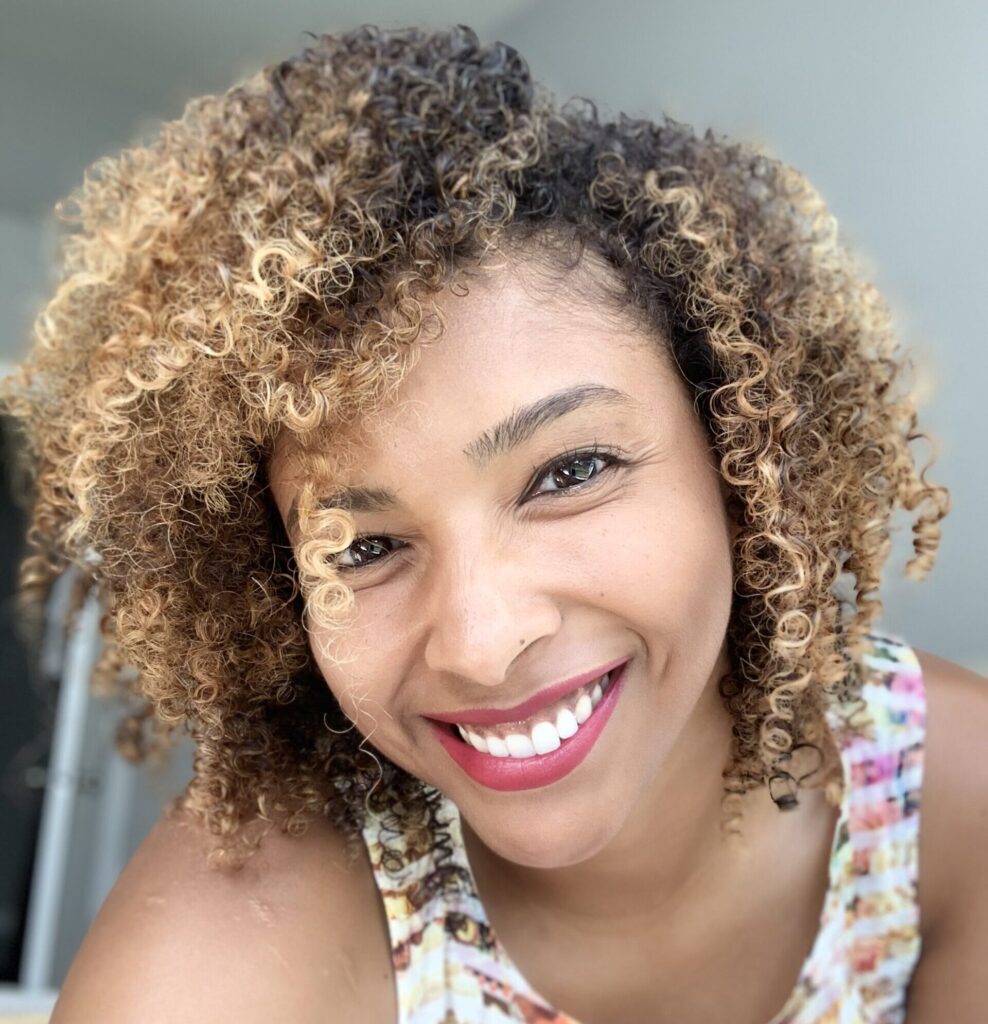
Women in sports – as participants, fans, and consumers – face inequities that demand new solutions from all angles of the industry. Laura Waters-Brown works daily to connect challenges to solutions, and build a career around creating tangible, positive change.
Laura is responsible for the day-to-day relationship development, strategic planning, and project coordination of The Collective Think Tank: a global consortium of academics, brands, and properties committed to using research to make sustainable progress for women in sports.
Prior to joining Wasserman, Laura worked for the PGA TOUR from 2016 to 2020. During those five years, her responsibilities included: identifying and monitoring digital trends and social media platforms to increase tournament ticket sales and revenue; and overseeing website communications, social media presence, and digital advertising for the TOUR’s flagship tournament, THE PLAYERS Championship.
She also spent three years with the Cleveland Browns as a Digital Business Coordinator, where she oversaw website and social communications, as well as sponsorship development and digital revenue generation. Recognized as a digitally savvy professional – fluent in multiple media and social platforms – Laura has earned the trust of her peers, colleagues, and teams based on her ability to reimagine and energize engagement levels within global environments and communities.
Fueled by her mother’s involvement in public service and civic engagement, Laura has a strong faith and passion for equity and inclusion. She’s involved in several professional and community groups and associations, including her Chair duties on the National Sports Forum’s Business of Diversity in Sports and Entertainment (BDSE), of which she has been a member for more than 5 years.
An Ohio native, Laura received a Bachelor’s degree in Business Marketing from South Carolina State University and an MBA and Master’s degree in Sports Administration from Ohio University. She enjoys music, and sharing love and laughter with family, friends, and her dog EZ. Laura, inspired by the scripture Mark 9:23, believes that anything is possible to those who believe.
Connect with Laura:
The real stories and hard lessons to help you level up your leadership and performance. Now your host, Ed Molotor.
Welcome back to another episode of the Athletics of Business podcast. I am your host and CEO of the Molitor Group, Ed Molitor, and I'm excited to have you here because we have a really cool conversation for you today. Now, women in sports, as participants, fans and consumers, face inequities that demand new solutions from all angles of the industry. Today's special guest, Laura Waters Brown, works daily to connect challenges to solutions, building your career around tangible, positive change. Matter of fact, one of the things we spend a lot of time talking about is her commitment to creating change and figuring out who they need to partner with in order to do that.
Now, Laura is responsible for the day to day relationship development, strategic planning and project coordination of the collective think tank, a global consortium of academics, brands and properties committed to using research to make sustainable progress for women in sports. Prior to joining Wasserman, Laura was with PGA Tour from 2016 to 2020 and then spent time with the Cleveland Browns. Amazing stories from throughout her journey. We also talk about how to facilitate action, why that is a next step in the true measure of where we are not just within our business, but as a society. We talk about the power of not caring who gets the credit when you are creating change. And among other things, Laura shares a really funny story with a ton of meaning and value, though at the same time from her recent trip to Israel in the leadership summit.
And the story literally is about how you cannot leave the goat behind. So I'm going to get out of the way, let you enjoy this conversation here that I had with Laura Waters brown. Laura, thank you so much for joining us today on the Athletics of business podcast. This has been a long time coming. I am so fired up to have you here.
Yes, glad to be here. Thank you so much for having me.
You know how much I appreciate you carving out the time. You're so busy, you're going in a hundred different directions, yet you're so dialed in. I absolutely love the work that you do, that you are doing. Obviously, I filled the listener in on the introduction, but walk us through what you're doing now and the whole journey to getting to that point.
Thank you so much for having me. Right now, we're really focusing on action. I think that is the biggest indicator, and what we need as a society right now is we've come through this pandemic or the last few years of a lot of information and people talking and planning and outlining and proposing, and now we need action. And so we are really looking at, we have these insights, we have these connections we have as a magazine, community and network at the collective. How do we facilitate action in the industry now? And how do we encourage others in the industry to do the same? How do we remove ourselves from the. I think in sports, we traditionally like to plan for three, five and ten years. In that three year, can we make a six month plan? Can we do action now?
So really focusing on making sustainable, significant.
Impact, don't you find when you break it down and you break it into bite size pieces, and I know it sounds funny that six months is bite sized pieces, but it absolutely is. And you get more dialed in and you can see the incremental progress.
Yeah. And I think when you're doing this work of equity and inclusion, I think it scares people because they see that there's so many wrongs in the world and there's so many situations of inequity and there's so many situations of just despair that it's almost daunting and terrifying to tackle or to make change, because it's like, well, where do I start? When you take a big chunk of despair and you just break it down in what am I doing today and what am I doing tomorrow? And then what am I doing the next day? Then six months from now, you have six months of days where you have made progress. And so it makes it a little less daunting.
And so I think for me, that's kind of how I've had to learn how to approach this, because just like in sports, if I focus on the full five game or seven game series, I'm not going to be focused on the first game. You got to win the first one.
Right. And what you're talking about, you picture mountain climbing, right? And if you're so focused on the daunting task of summiting as opposed to what your climb is going to be that day when you have setbacks, it becomes a bit overwhelming, which is an understatement, by the way. But talk about how this breaking things down into six month areas of focus or whatever the time frame is, how that also helps resilience. Right. Your ability to endure setbacks and to kind of have to pivot, for lack of a better word.
Yeah. I mean, I think when you look at things in six month increments or even three month increments, whatever works for you to get things done. When you do have that setback, because they are going to happen, you don't feel like you've wasted your entire life. Right? We can do six months, and we understand that we have three years and five years and ten years of this industry and career ahead of us. And so when you do it in six months, it's fractions, it's math. Right. Me and math hate love relationship. But I have a calculator, so it's okay. But when you look at six months over a career of ten years and you had a bad six months, you had nine years and six months of great years.
So it allows you to stay focused and to your point, resilient, because it's, look, okay, I had a bad six months. I'm going to have a great next six months.
And when you identify, here's a time frame that we're dialed into. How do you celebrate those wins? Or how do you identify when growth is happening or success is happening, or you are seeing progress and then being able to stack another success story on top of that? How do you guys go about doing that?
I mean, for me personally, that's something I'm still working on. I think as a former athlete, as a lifelong competitor, as a black woman, I think we don't often celebrate those small wins, which we call the small wins or even wins at all. It's just the work has to get done. I am personally actively trying to do better at celebrating the wins and saying, no, we made a plan and we did it. Take a moment, let it sink in, feel the emotions, feel the satisfaction, and then go on to the next one. But I think to disregard in an accomplishment or to not celebrate is doing that accomplishment a disservice. Because you're saying that work wasn't hard, that work wasn't valued, that work wasn't meaningful, therefore, it shouldn't be celebrated. So I am working to get out of that. Just go. Go.
Well, and we're cut from very similar clause. Right? It's about the execution. It's the way things are supposed to be. Like, you and I both believe this is how it's supposed to be true. It is. But yet we still need to take time to pause and recognize what we did, because, like you said, you don't want to devalue what just happened and what was just accomplished. Talk about the work you do, though. Let's get into the detail of what exactly you folks do.
Yeah. So at the collective, we exist to create equity, fairness, and change for women in sports, music, entertainment, in the industry, in the world, honestly, because sport, music, culture is a fabric of life in general. We do that through insights and actions. We have an amazing community of professors through our think tank that we work with regularly. We also have some great white papers out there based in research. We have an amazing group of folks here also at Wasserman who on a day to day basis are always thinking of ways of how can I engage women and how can we do that in an authentic way. And so at the collective, the great part about the work that we're doing is that it is simply how do we create change and who do we need to partner with to do that?
And so it's a very much welcomed opportunity for me because I feel that it removes the ego or who's going to get it first or who's going to do it. The best it is. Who do we need to pull into this conversation to make this thing happen? If gender equity gets solved tomorrow, great. I don't need my name tied to it. I don't need our brand tied to solving gender equity. Success for us is solving gender equity. And if we can play a part in that, then great.
It's so powerful when you think about it, too, because if no one cares who gets the credit, the relationships that you develop, the creativity that you tap into, the intangibles that folks will bring into play, talk a little bit about the singleness of purpose that you all share and the power behind that and the collaboration and the work that you do together.
Yeah, it's crazy. We were just having this conversation earlier with one of our think tank professors about impact and how we define it and what's rewarded industry as well as in academia, and how the reward isn't necessarily given to those making true, actual impact. What we like to do for a purpose standpoint, and to your point about removing who gets the credit, it allows for creativity, it allows for collaboration. Open, honest and authentic collaboration. Not the collaboration where it's like, I'm going to tell you the first three quarters of it, but I'm not going to tell you the actual 25% after it because I don't want you to steal my idea. Yeah, we've all been there, right? Exactly. You had an idea, next thing you know, it's a commercial and the my pillow guy is selling it. Right? We've all been there.
And so when you don't care who gets the credit, everybody brings their authentic self and their authentic ideas and allows us to get to the purpose more efficiently and effectively. And I think just as a human being, it restores a little bit of that humanity in work and humanity in what we do.
Amen. I mean, humanity, we could use a lot of humanity right now. Talk about the folks, the type of individuals that you love to collaborate the most, that you like to pull into the think tank, that you like to share ideas with. How would you describe those folks?
I love working with people who have a passion and have a drive, who want to solve it, who want to contribute, who say, you know what, I don't really have anything to contribute right now, but when I do have something or I come across something, I want to make an introduction, I want to bring this to the table. We love people with ideas because that means we don't have to think of everything. If you come to us with a great idea or even a rough estimate or rough outline of a concept of an idea, we can talk through it. Let's talk through it together. Let's work through it. Who else do we need to bring in to brainstorm to figure this thing out? But it all starts with an idea.
And then how do we just elevate and show, use our platform to take what is already being talked about and just put it on a bigger platform? But I love working with people with just ideas. Unapologetically. Just idea unapologetically.
Now, data. How do you use data? You folks have some great research, the trends, everything. How do you take that data and build on that?
They'll tell you all the time at WAspaM, we don't move without research and insights, especially in this equity space, because it's no longer about feelings and fluffiness and the good. You should do this because it's the right thing to do. That conversation doesn't make things happen all the time. When it gets down to dollars and cents, you have to have the data to back up. Yes, solving for gender equity is the right thing to do. Yes, being fair and being humane is the right thing to do. But Mr. Or Mrs. CEO person who controls the board, here's the data, and here is why it makes good business. And here is why investing in women is good business.
And I love, and I took the time and I went through the slide deck on the website, and I love when you talk about the two generations, right? The Gen Y, the millennials, and what's coming and their power and their decision makers and how things have. I absolutely love and being a girl, dad, okay? And granted, she's only ten. I absolutely love that work and how empowering it is. And you talk about like, on demand, on purpose, for her, for all and for the better. Talk about that Olympics. I just think there's so much there.
Yeah. Gen Z is such an interesting group of people because by definition and just by the way the world is going, they are the most diverse group and they have the most diverse friend group. Naturally, they're growing up in diversity. And so when they get to college or even to the workforce and it doesn't look like their friend group, it's like, but why? And so the Gen Z woman specifically, she wants you to market to her how she wants to be marketed to, where she wants to be marketed to, when she wants to be marketed to. And by the way, you need to make sure you're inclusive of my diverse friend group.
And so that means if we have somebody who loves taekwondo, and we have somebody who loves gardening, and we have someone that loves yoga, and then we have a gamer, you need to talk to each of us individual ways that make sense for all of us to attend your event. Go forth and be great marketer.
How complicated can that be? I mean, how much put back for the more senior marketers? Right? How do we do, like, I get that we need to, but how do we do that?
Yeah, I think you have to focus on the common thread, right, between all of them, which is authenticity and being kind. Gen Z cares about the brands, what organizations, what they're doing to make this world a better place. You can no longer just be sports, you cannot be just a clothing brand. You have to have some type of statement, mission, commitment, work to bettering this world. Because unless you are the only brand organization team to do specifically what you do, Gen Z is going to go and look for the organizations, teams, leagues, brands that align with their moral beliefs. They want who they support to support what they believe in.
If a generation cares about sustainability and being green and you get invited by this amazing ad to this amazing event, I might go one time, but then I find out that there's no recycling bins. I don't want to go. I don't want to go because you're not doing anything to curb your footprint. You're not doing anything that aligns with my moral belief. So your competitor, who may be smaller, same sport, same organization or different organization, but has recycling, okay, that's amazing.
That's the change that is taking place.
They care. They care. And I'm sure you see it with your daughter. They speak up.
I see her speaking quite a bit.
Right. What do you mean this person doesn't get what I get? Or what do you mean that this person is getting treated? Why? But why? That's not fair. And so I think they are a very savvy, smart and powerful generation that is curving a lot of things in this world and specifically in sports.
So let me ask you this. As we transition, before we go back into your journey, reverse engineering, because it's so fascinating. There's a sign here on the wall that you can't see. It's self awareness is the competitive advantage, which awareness, self awareness. And what you do is so significant. And you started off our conversation by talking about inaction, like your focus on action. What is it? When people say, yeah, I get it, we need to do this, we should be doing this, we could be doing this. But then they don't. What are some of the big pushbacks that you have seen or the big distractions or the big obstacles?
That's a great question. I think some of the pushback that I've seen is, well, we don't know where to find them. We don't know how to communicate to them. We don't have a plan in place. We don't have an investment. We don't have the bandwidth. And to all of those, I say if you're selling the naming rights on your venue, you just got evaluation, you're going to do the research and invest in whatever it is to make sure you sell that adequately. And it's the same thing with change, is this needs to happen. And so we need people to do the things that they need and give it the same amount of attention to take action. There are so many organizations and groups out there to say that we don't know where they are. We don't know how to speak to them.
It's the age of the Internet. We are in the year 2022. You can find somebody who is an expert in that space. All it takes for you is to say, hey, I want to invest in you because I don't know what I'm doing. And to your point, the self awareness is I have the self awareness to know I have no clue what I'm doing. I need help.
Amen.
Right? That's all it takes.
If I were to ask you 20 years ago, is this what you're going to be doing as you progress to this point of your career, could you have ever fathomed that this is where you would be? No.
I wanted to be a doctor. I wanted to be an orthopedic surgeon.
When did that change?
After organic chemistry in undergrad. And I was like, I studied so hard. And I got like, a b, and I was like, okay, so this is the beginning. Chemistry to all the other science classes I'm going to take. There's no way I can do this. There's no way. So I switched majors, and I was like, I just want to coach. Do I really want to be an orthopedic surgeon? Not really. It'd be nice, but not really. And so my brain went to, okay, well, I'll just coach. And I said, I'm going to get my degree in education and then I'm going to coach. You had to volunteer in, like, there was a school on campus, an elementary school, and I quickly found that was not for me. We do not pay our teachers enough because I do not have that gift of patience.
And so for me, it was switching that again, I was like, okay, now I'm not going to teach, so what am I going to do? And so then I ended up in the business school because I needed to graduate at some point, because in college, if you're an athlete, you have to pass so many classes towards your major, blah, blah. So I switched to business because that's where my previous classes could transfer over pretty easily. Got to business school and I was like, these are not my people. Econ. No, not it. Accounting. I have no clue what you're talking about, sir.
I can remember to this day the anger I had because I was forced to wear, like, a black suit every Wednesday to the seminar, to listen to the person who I had absolutely nothing in common with and did absolutely nothing that I was interested in or wanted to do. I was like, I'm doomed. I'm never going to have a job. I'm going to live with my parents forever. The world is ending. And I found my way to marketing. I took a class. I started my general marketing class where we started talking about colors and the psychology behind colors and how they make you feel and what that feeling caused you to do. And I got really interested in.
So if I can put this in a specific color that makes you feel happy around the same time you're hungry and that's the same color as my brand, maybe you're more inclined to go eat at my restaurant. And the rest is history.
As you're a college athlete, as you're stumbling through what you're trying to figure out, how did you manage that? How did you manage that anxiety? How did you manage those challenges? Because that for a young woman or a young man, that's not easy to do.
I'm still trying to figure out how I did it. I think for me, it was the benefit of ignorance and didn't know any other way of life other than being an athlete. I've been an athlete since I was three, probably before then. I've had a ball in my hand since I came out of the womb. I didn't know any other way. So for me, waking up at three in the morning to make a 05:00 a.m. Practice was normal and being busy was normal. Even to this day, I have difficulties not doing anything. Sitting down and just sitting there. I'm working on it. But for me, I didn't know any other way. I didn't know what it meant to relax or to recharge or reset. To me, relaxing and recharging was naps in between class right before practice.
Those were the five minutes. Just give me 510 minutes. That's it. That's all I need.
I'm in the corner in the training room, like on the table. Let me get one of those heating pads.
Five minutes, all the heating pad. And do not interrupt me because, you.
Know, give me five minutes. That's it. Don't ask me a question. You know, I have five minutes.
So you discover marketing in your undergrad. I know there had to be some people that impacted you along the way, some mentors that helped kind of point you in the direction of what you were going to do, or maybe you should think about this path. Can you talk a little bit about that, how they showed up for you?
Yeah. So a big part of it is, and I'm never going to tell my mom this, but a part of it was her, she actually was able to finagle or strongly suggest that I take this internship at Ohio State in the athletic department. And all I heard was, I'm going to get paid some money, and then I don't have to live at home. So I was like, why not? And so when I graduated, I was able to work at Ohio State for a few years, had my first amazing boss, Diana Sabo, who on my first day showed up. She had purple hair, and I just thought that was the coolest thing. I'm like, you're an athletic director and you have purple hair, a little bit.
Different than the black suit you had to wear back in college, right.
For the lecture, my mind was blown because I had just come out of a school that said if I didn't wear a pastel shirt and a need length black skirt suit. I wasn't going to be successful in business. And she gave me the grace leeway and opportunity to learn to share my ideas, to try my ideas, to fail, and really got me going on. Oh, there's more to sports than just being on the field, because that transition between college athlete and real life, they should write a book on that. There should be a transition period because that was very difficult. And so at Ohio State, Diana and I had some amazing supervisors who I still talk to this day, Terry, Aaron, and Beth. They all helped me to just kind of hone in on my wild ideas. Can I get, like, challenge me?
Can you get 1000 people to a women's soccer match on Saturday at 01:00 p.m. With $100 budget? I bet you I can free ice cream for the first 150 people. Let's go. They really helped to kind of kick things off. And then Gene Smith, who's an athletic director, I'm sure no one knows who that is, but Gene actually in my second year, asked me. We were in the elevator, and he said, what are you doing next year? And I was like, I was going to be here interning. I figured, I didn't really think that far. And he was like, wrong answer. You're going to go back to school. And I was very much of the opinion, no, I was not. I had no desire to go back to school.
But he said, you're going back to school and you have a meeting with this man named Bruce Wimbish. And I'm like, who is Bruce? I don't know who Bruce is. Set me up with Bruce. Bruce Wimbish knew Jim Kaylor, who he just left Ohio University, but at the time was executive director of Ohio University sports administration program. I was like, I don't want to go. I was telling all these people, I don't want to go. And I put up these personal barriers or hurdles of like, I don't want to take the GMAT. That barrier was removed. I don't have money to study for the GMAT. That barrier was removed. Then I get to ou, and I learned that they had only two spots open for that fall. And I'm like, well, if I'm not being deferred, I am not going another year.
And then coming back to school a whole year later, I'm not doing that. Got in, and I was like, so now I have to go. For me, it was a bunch of people who heard me complaining and didn't care and said, this is what you're going to do. And I said, okay, I guess I'm going to high university. And it was an amazing decision. I think I met some amazing people, some of my best friends in the program. And to me, I was able to get the MBA and the MSA, which was efficient in my mind. But I had no clue. I had no clue. I'm from Ohio. I had no clue what Athens was. My mom went to Ohio University for undergrad. No clue. I had no clue.
So then you go out into the beautiful real world. How did you find. I don't want to use the word niche, but how'd you find your groove? Like, how did you find the digital space and what you all of a sudden started to fall in love with.
One class, changed my trajectory second year, had no clue what I wanted to do. I knew what I didn't want to do. I didn't want to do what everybody else wanted to do. And we had this opportunity to take this class called content is king. It was an elective and they only had like seven spots. And I was like, I'm going to take it. I'm interested. I took that class and was introduced to blogging and the idea of like a WordPress site and the Internet and search engine optimization and how things work and how the Internet is listening and how you can use it to market, to sell, to do all these things. And I was hooked. I was like, oh, this is interesting.
So you're telling me all of the other stuff that I learned in these classes that didn't make sense to me all of a sudden made sense in this context of digital. From there, I had a lot of people who were willing to bet on me, who allowed me to finagle my ideas into something that seemed to work and seemed to happen, was able to learn and kind of self teach and see what other people were doing and YouTube university, huge fan of the YouTube university. And put in pressure situations. Again, being an athlete, you just have to do it. Coach doesn't care how long it takes for you to make your mile time, you just have to do it. And so I had a lot of those opportunities early to just figure it out.
Speaking of pressure situations, let's talk about your time with the Cleveland Browns.
Yeah, it was great. Three years. Three years. Three seasons, three years. I think amazing human beings, some of the hardest working people that I know. Three coaches, four coaches. I think four head coaches in my. There was one that you were there? Yeah, I think it was four because one was on the way out. And then we hired and then we hired and then coach Hugh was my last coach when I was leaving. But so many opportunities at that point in time, social media marketing, management wasn't really a thing. We were still in this Web 1.01.5 space, and so I was on the cusp of Web 2.0, which is the growth of the social media networks and what that is.
And so through testing and learning in YouTube university and talking to my colleagues at other organizations, other NFL teams, were able to create brand on the Internet and through social media made a couple of not so great tweets at the time that had to get taken down. But I think there's, again, pressure situations. There is no more pressure than on draft night. And you have to announce your pick and you have one chance. You have one chance, because as soon as you put it out there, it's out there and somebody's got a screenshot of it. And if you mess it up, the world knows. Spell checking, because Browns fans are the most passionate and they are either passionately loving you or passionately hating you. And either way they are amazing.
And if you missed a period, you're a twelve year old boy who hasn't graduated first grade, and I'm like, there's only 140 characters. The period had to go. I didn't have space. But I mean, the browns are amazing. I learned a lot.
What was your big takeaway from that? I was just going to ask you that. I know you learned a lot. What was your big takeaway from your time in Cleveland and how did you leverage that or apply that when you got to the PGA Tour?
Grit. Anything is possible if you just try. At the Browns, I had to very quickly learn how to build a website. I had to learn how to build an email. And at that time, there weren't a lot of the canva didn't exist, so there was no dragging and dropping. You had to code these bad boys and you had to build these things out and wireframe and color coordinate and work with the creative team.
And then I started to get into the because I was learning the business and how things operate and working with the sales team and the partnership team to make my life easier was also an amazing opportunity because I feel like there's this loving communication between the digital team and the partnership team, especially at that time, because the partnership team is selling and they're just selling and they go and sell and then they tell you, oh, by the way, we need an extra 100,000 impressions in this 48 hours span. That's great. I love that for you. But our website does not have that capacity, so we can't deliver. So how about we work together to figure out what we do have and what we can sell?
And so that was my practical introduction into generating revenue through digital, because it's okay, we've created this amazing content, and we know that this is going to do great and we know this is not going to do great, but this really aligns with the brand you're trying to pitch. So rather than you just creating something that is horrendous and is going to kill our social media following and it's going to get me yelled at by the amazing, passionate Browns fans, let's work together, because I can tell you what works over here, and you can tell me what the brand is looking for in the conversations. And if you have no clue what SEO is, just bring me along. I'm happy to sit in the room and have conversations.
And so now I'm learning how partnership conversations work and how they're pitching and what a pitch deck looks like and what to say, what not to say, how to communicate, quote unquote, translate the digital world into business and how to break that down into dollars and cents. And so that really positioned me to go to the tour to try new things, asking for a little bit of money, and I'm like, look, I read the Facebook rules. I took the classes. I'm low key certified. I understand how this works. Trust me, I can sell tickets on Facebook. Trust me. And then being able to deliver on that and saying, okay, look, understanding how the algorithms work great, but also understanding that these social networks are business, and anytime you give money to a business, they tend to show favor on you.
So if you've sold a piece of content that is going to tank our following or our engagement rates on social, we need to put some money behind it. We need to tell insert social network here. Like, hey, we understand this isn't the best type of content, but we're going to give you some money. So if you could please just not ding us for that would be great.
Let me ask you this. When you went from two different worlds with Cleveland Browns to the PGA Tour, when you get to the PGA Tour and you're communicating these things that are new to them, how big of a sell, how tough was that challenge, and how did you go about overcoming that in terms of showing them that it will work? Like, trust me, where did that trust come from and how did you get that accomplished?
Yeah, fortunately, I just had two people, maybe one person to really convince, because I was working specifically for one tournament. And so that allowed me a little more leeway to just say, let's just test it out. But I also had an amazing ally who was a former ou grad who actually called me and was like, you should take this job because I think you would kill at it. And I'm like, who is Panavidra? What is that? I don't even know what that is. And so he was doing the same thing, but at the tour level. And so were able to bounce ideas off of each other. And then I think because I wasn't in those meetings, but I think as meetings happened and conversations were had, that these keywords and buzwords that I was mentioning were starting to pop up.
And so it's like, why not? Let's give it a try. And so again, just people willing to take a chance on me. I think one of the things that I've learned over the years is how to communicate and listen and how to really get to the what are you scared of? What's the worst that can happen, but what's the best that could happen? And let's work through that together. And walking through and explaining each and every step. I have one of my bosses at the tour would always say, look, if I can't explain it to my non phone, cell phone, having grandparent, then I don't understand it. It was taking that and saying, okay, what don't you understand? How can I communicate this to you in a way that you understand? Because if you understand it, then you're going to let me do it.
It sounds really simple, doesn't it? And when you really think about it, we overcomplicate things on a daily basis?
I think we do. It really is just asking people like, what scares you about this? What don't you understand? And what are your thoughts when you.
Say, hey, listen, here's what makes me nervous. Here's what scares me. Here's what I don't know. I mean, that's where the communication, collaboration and relationship building really comes from.
It does. And to be able to do that in a safe space is very unique and something that over the years I've learned to be. As you look for the next job or the next career, the next whatever, it's more than just the salary, it's more than the benefits. But is this going to be an authentic space or safe space where my ideas are not only welcomed, they're encouraged, but they're also supported? That's a big part.
I love that you talk about a safe space, and we talk a lot about here. Safe does not mean soft, right? It's quite the opposite. What do you do to create a psychologically safe environment where people aren't afraid to share, where they're not afraid to take risk, we're not afraid to throw their ideas out there.
I would have to say, for me, I think that I try really hard to look inward and see where my faults are and see where are the areas along my career path where I just wish that was handled different. I tried to do the opposite. It's very much just asking and probing and reassuring and truly getting to know the people that I work with and what fuels them. It's the. We talked about this, and we're figuring out where Israel was going to pop in. So I just got back from Israel on this amazing leadership trip. Shout out to reality, Israel. Amazing. And the first thing we did, we got off the bus, off of the airplane, we get on this bus, and we're driving in the desert, and we go to this park, and we get on this park, and it's great.
And next thing I know, we see sheeps and goats, and we are being challenged to move the sheep to herd them from one place to the next. And back, three groups. Group one goes, they get the sheep and goats partial way, and then you see what they did and you see what they did wrong or what you think could be done better. And you see their approach and you're like, oh, okay, well, they did this. It didn't work. So let's cross that off our list. And then you get to see group two go, and it's the same thing. And they've moved the sheep and the goat a little bit, but they left a goat behind, so we need to not do what they did. You don't want to leave a goat behind. You can't leave a goat behind.
You can't leave a goat behind, because if you leave a goat behind, you didn't do the exercise. And so, fortunately, were the third group, and were able to go and say, okay, we need some people to contain these sheep and goat where they are, and we need some people to go and tend to this goat's needs. And so were able to get the goats and the sheep over, and we finished the exercise, and we come back to reflect. And the lesson in that, as were discussing this servant leadership style, was that in this community of sheep and goats, everyone needed something different, and everyone was motivated by something different. We had some goats that were motivated by hay. We had some that could care less and just literally needed you touch them and move them the way that they needed to go.
But then you had the sheep who, once you got the goats going, the sheep followed the goat, but then within the goats, there was, like, the leader goat. And so if you leave the leader goat up on top of the hay bale and disregard him, the other goats are going to look at you like, oh, I can't trust you. But once we got the leader goat.
Did they tell you any of this, or did you have to figure this out?
These are conversations happening in my head. And then we all, as a group, were able to discuss it afterwards, and all of these things started to come up, and it's like, so cool. Mind blowing. I'm like, this is day one. This is day one. It was our one.
What are you talking about? Day one? It was like, our one.
My mind was blown. We were all like, wow. Okay. So we did a lesson in servant leadership and how to lead, because literally, were talking about leading from behind, and it's like, pushing them towards the one way but allowing them to go. All of them went. Some of them went kind of as a herd, but then there would be, like, one or two over here doing their own thing, but they eventually got there. You just had to motivate them differently. And then full circle. On our last day, we're driving to the airport on a freeway, and cars are zipping past. We literally go past a man who is herding sheep on the freeway, and my guy is in the front just walking. Cool as a cucumber, just walking. And these sheep are following him on a freeway.
And I'm like, the amount of trust that those sheep have in this person, the amount of support, the amount of belief and encouragement. We're going to walk on the side of this freeway. Don't know where we're going, but we're going to follow you.
So come on, tell our listener a little bit about the trip to Israel and what you were there and what you were doing and really the big takeaways.
Yeah.
Besides, don't leave the goat on top of the hay bale, which I would have loved.
Can't leave the goat.
Yeah.
We tried everything. Our group was like, oh, we just need to feed them. So we showed up with, like, a think bar. They didn't care. And before anyone said, we asked, we're like, can they eat chocolate? And the people were like, yeah, they eat whatever. They didn't care about the think bar, what we thought they wanted they didn't want. They didn't even touch it. But the trip was amazing. It was eight days, ten total days, including travel. We went all around Israel. We learned a lot about what israel, what is not Israel, how the borders are all ambiguous. And so when you have ambiguity, it creates conflict. But then we also heard from Palestinians and we heard their version of the same exact thing. And in.
Through all of that, were able to experience this historical place with people who you didn't know you were with them from 08:00 a.m. 730 if you got breakfast 07:30 a.m. Through about midnight. 01:00 a.m. Every single day straight. And it's nothing but conversations and nothing but learning about other people and what makes them tick. We had a guy on there who is indigenous, and he was talking about his experience, and he's experiencing this historical place as an indigenous person. We had people from all types of walks of life, from all across the industry, experiencing and connecting and opening up to complete strangers. It was the most amazing thing. And a few weeks later, I'm still trying to put into words what happened on that trip.
But what I can say is that it made me better, I think, as a leader, because it opened up a space in me for vulnerability that I didn't know that I had access to. I think it opened up a space for me to realize that my words do, in fact, actually matter and that I can encourage other people. They tell your words matter, and what you say encourages others, and so on and so forth. But until you actually experience that in a foreign land, in a foreign culture, in a historical place, on a historical day, it was the cluster of emotions. You got to see people who were willing to stand on the edge of a crater. The wind comes a little too hard, and you're gone. Gone.
But then you got to see people who were terrified and literally crawled up to the edge. You got to see people comforting people, like, protecting people who felt like, I'm in a space where I'm uncomfortable. I need your help. Can you make sure I'm okay? So it was an amazing experience. I can't wait till I have my list of people that I'm recommending to go on for next year. I think, especially in sport, we actually saw a young boy, palestinian boy, who is like their version of the next Michael Phelps. He's like 1012, and he is beating the bricks off of everybody. But because of how things are set up, he's not able to access an Olympic sized swimming pool. To train on a regular basis. And it's like, there's one on the other side of the wall.
Because that night, went and had an amazing dinner at, get this, the most beautiful YMCA I've ever seen in my entire life. Let that sink in. Marble floors, marble buildings.
Are you kidding me?
Like, lit? No. Well lit. We walked in and we all said, we're going to dinner at YMCA. We've been dining. Amazing. And we're going to a YMCA. I'm expecting picnic tables. No, there was wine. There was, like, five starks. It was the most beautiful YMC I've ever seen. Different culture. But this young boy who has the talent can't get access to that facility because of a physical wall. We all are like, okay, well, how much does it cost for you to train? Because he has to go to a private club for the year? $1,800 for the year. And back in the States, in sports, $1,800 is a round of clerical error in a budget. And so just put everything into perspective about this person.
This young person has an opportunity, a way out, a gift to give to this place and isn't being fostered that talent isn't being poured into like, it could because of adults and adults. Just adults being adults. And so I came back, I think, with more questions than I left with, which I'm still like, that's powerful, though, isn't it? So powerful. I'm like, but why? And so hearing it from everybody's side is so interesting.
I'm sorry, I didn't mean to interrupt you. Here's the thing, too, right? You just talked about physical walls that this boy can't train here. These physical walls that we adults have put. Physical wall, which is literally, though, now we're not putting physical walls up, but we put these virtual walls up in our world in terms of collaborating, in terms of creativity, in terms of making spaces psychologically safe. Why do you think that is? What is it? Why don't we take more action? Why don't we be the agents of change when we know we're perfectly capable of fear?
I think it comes down to fear. I think you fear the unknown. You fear your place in society, your place in life. If I do this for this person, I get less of that versus thinking, if I give this person this, then we all can have more. And so when we as adults, look at things from a space of giving to you means taking away from me. It's scary when you throw in, you have a family to support. You have people depending on you. It makes it a little bit tougher to do the equitable thing or the right thing because the equitable thing doesn't always make you money. And we live in a society where you are awarded with bonuses based on how much money you make for a company doing equitable work, doing equity work isn't always going to make you money now.
So it doesn't benefit me today, but it does benefit the greater world. It does benefit the little boy, the little palestinian boy who would certainly WHOOP my tail because. But could compete at the Olympics before he is an adult if he had the facilities and there's a state of the art facility on the other side that he could go to. But $1,800 is separating him from consistent. It's so many questions, so many things. So I think people have to remove the fear factor and remove the meat. How this affects me and look at it as, how does this make everybody else better? Like, how can we all grow together rather than me finishing first?
Well, and that's why you are who you are. That's why I've had the amazing journey you've had. And you have such an impact on so many people, which I appreciate you carving out the time, as I said before, to join us today. It's pretty amazing, the work that you folks are doing. And I have a feeling you're really just getting started. I mean, I think there's some great stuff that lies ahead.
Yeah. I would love to come back and have. We have some things cooking right now. I would love to come back in a year to talk about the things that were looking right now.
I will send Mark, can I send a zoom invite for a year out? If I can send a zoom invite for a year out. I am sending you a zoom. All right.
Send me a zoom invite for one year from today.
Okay.
And put in there, like, to talk about the thing.
Okay.
I'm excited.
I remember writing that down, the thing. Hey, Laura, I appreciate it so much. I appreciate you. Where can folks find out more about you, about what you're doing, where you're at in social media, things of that nature?
Yeah. So on Instagram, because I recently made that public. I'm trying to better now on Instagram. You can find me at 67 living legend. If you want to know why that's my name, I'll tell you. Just shoot me a DM at Lwb 21 on Twitter. And then obviously, wearthecollective.com and wassermancollective on Instagram and twitter.
Thank you for all the amazing work you do. And do I need to shoot you a DM to find out you need.
To shoot me a DM. DM. I can't share it with the world. It's secret.
Okay. Hey, Laura, thank you so much. I appreciate you.
Thank you so much for having me.
Thank you for listening to the athletics of business. Be sure to give us a rating and review so we know how we're doing. For more information about the show, visit theathleticsofbusiness.com. Now get out there. Think, act and execute at the highest level to unleash your greatness.