

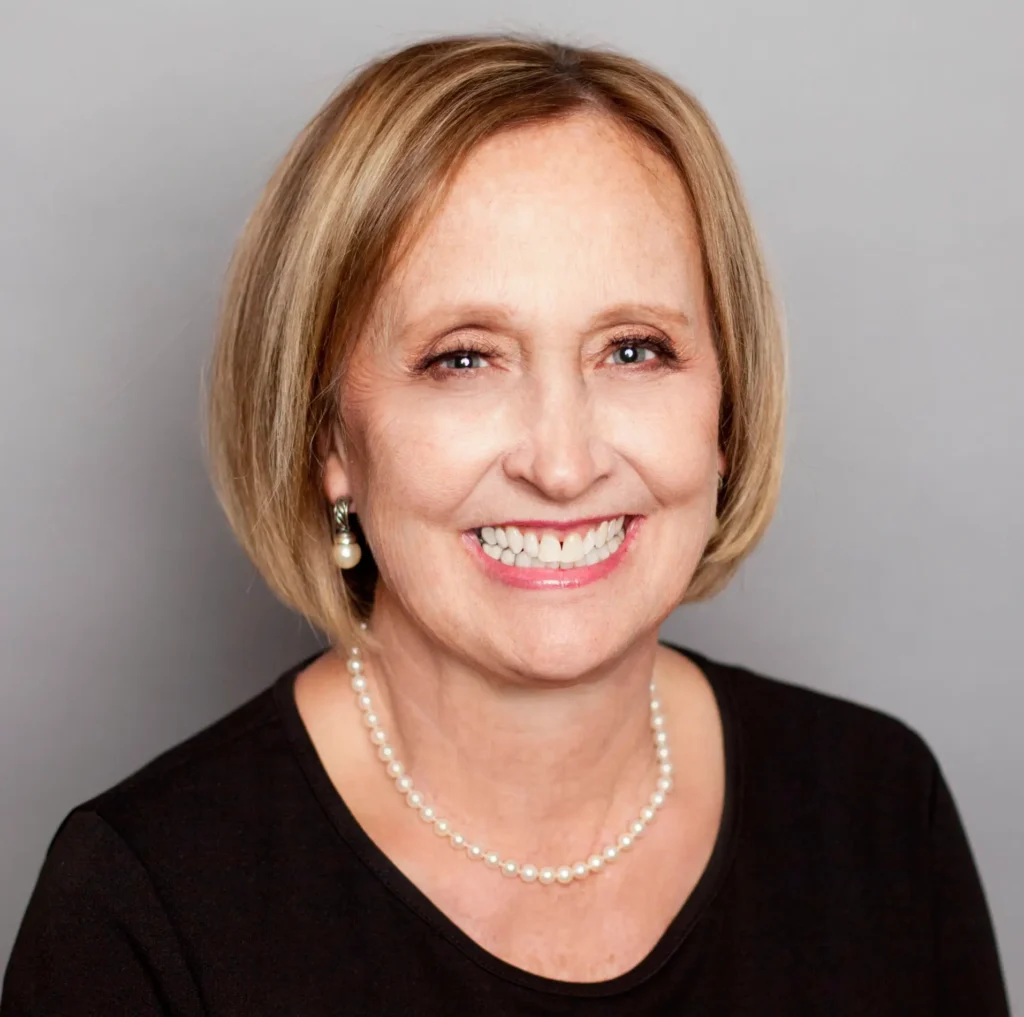
Cynthia Covey Haller is an author, teacher, speaker, and active participant in her community.
She is the oldest of nine children of the late Stephen and Sandra Covey.
Cynthia is the co-author of the last book that the late Stephen R. Covey wrote“Live Life in Crescendo: Your Most Important Work is Always Ahead of You“. The book was just released and it is a masterpiece where Covey urges all to “live life in crescendo,” continually growing in contribution, learning, and influence.
She also contributed to the writing of several other books and articles, notably The 3rd Alternative by Stephen R. Covey, The 7 Habits of Highly Effective Teens, and The Six Most Important Decisions You’ll Ever Make, both by Sean Covey.
Cynthia graduated from Brigham Young University and lives with her family in Salt Lake City, Utah. She has held multiple leadership positions in women’s organizations and is currently working with her husband, Kameron, as a service volunteer helping with employment needs.
Welcome to the Athletics of Business, a podcast about how the traits and behaviors of elite athletes and remarkable business leaders frequently intersect. The real stories and hard lessons to help you level up your leadership and performance. Now your host, Ed Molitor.
Welcome back to another episode of the Athletics of Business podcast. I am your host and CEO of the Molitor Group, Ed Molitor. Now, I am guessing on your journey to becoming a high impact coaching leader. Somewhere along the way you read or listened to the seven habits of highly effective people by the great Stephen R. Covey. Why do I ask you this? Because today's special guest is none other than Cynthia Covey Haller, who happens to be the oldest of nine children, the late Stephen and Sandra Covey, and co author the last book that Steven left us, live, life in Crescendo. There are some phenomenal stories inside of this conversation. She gives us a peek behind the curtain of some of the things that really, truly shaped the Covey family, the covey legacy, and one of the stories she shares with us.
I dont want to steal too much thunder from our conversation. One of the stories she shares is about a time when she asked her dad, she said, hey dad, are you ever going to write anything bigger, anything better than the seven habits of highly affected people? And I think he was a little bit taken aback because the truth of the matter is, Steven has written some amazing books. But the irony is this, is that near the end of his life, Stephen felt that there was in fact a final component to his work. A last lecture, if you will, how to live your best life no matter your age. Now, I want you to think about yourself here, how this fits in with you, okay?
How to best respond to life challenging experiences, how to approach the challenges and opportunities of middle to later life like raising kids, caring for your parents, leading and inspiring others, contributing to your community and what follows next. And live life in Crescendo. Your most meaningful work is always ahead of you. I mean, what an amazing subtitle, right? Your most meaningful work is always ahead of you. Answers those questions. I truly hope you enjoy this conversation. There is so much here as Cynthia the book is out. It's newly released. Grab a copy of it. But I just find it very rewarding that we are able to hear from Cynthia, who sat down with her father near the end of his life, to co author this book. And again, she shares so much, is so vulnerable and so real.
I am sure you're going to enjoy this. Cynthia, thank you so much for joining us today on the Athletics of Business podcast. I am not only excited, but I am honored that you are here today.
You're so nice to host me, Ed. I've looked forward to being on your show. So thank you so much.
And I must say congratulations to the soon to be released book, Live Life in Crescendo. Your most important work is always ahead of you and there is just an amazing story behind this book. You want to just walk us through your journey, where this came from and what this project has meant to you.
I'd love to. Many years ago I foolishly asked my father, not meaning to offend, but I know I did. I said to him, hey dad, you ever going to write anything as big and successful as seven habits?
Is anybody?
And he said, what? You don't mean to insult me, but that does. Am I one and done? I wrote that in 1989. And what do I do every day I get up to create and to write and to teach. I still have lots of ideas yet to come. I still have things to contribute. If that was my one big contribution, I'd be sitting around by the beach and drinking pina coladas the rest of my life. So I do have a lot more. And he, and he did. He ended up writing third alternative, the 8th habit. I don't know what it is with my dad in numbers, but, you know.
But it works very well.
Yeah, it has. And then of course, this last book, he talked to me about his mission statement, which is live life in Crescendo. And he had it the last ten years of his life. And I think that he kind of started going that way because he could see his mortality a little bit when he was in his late sixties, early seventies. And people would say to him, Stephen, you still got to keep doing this, doing the grind and speaking and teaching and writing and he thought, you know, why wouldn't I? I still feel a passion for it. I feel like I have something to contribute. I want to inspire people. And he decided then, no, I still, I'm not going to, in our family, retire. The r word was a bad word in our family and we didn't talk about that.
And it really impressed me that he felt like he still had important things to contribute and to get out there. He said, I have so many different projects. Why don't you interview me on this topic, live life a crescendo. Because I shared his passion about it. I thought it was an incredible idea and I could see examples of it everywhere. And he said, if you interview me and do a lot of the legwork write stories. This is kind of different than other Covey books because it is full of stories of famous and non famous people in an attempt to illustrate living in Crescendo, hoping that everyone can see themselves in these examples and think, you know, I could do that or I can do something similar. And so that's what we did.
I, for the first couple years, I interviewed him and we talked about it a lot. And then I have six kids. I have a lot of grandkids and a lot of responsibility in the community and in different areas. And so I didn't finish my part of the program project before he unexpectedly passed away. But we had committed to each other that this would become a book. And he said, you're going to have to fight for the subtitle. Your most important work is always ahead of you. They'll want to change it because it's so long, but that's crucial. So fight to keep it in.
And before we get into what it means to live life in Crescendo because it's so powerful, I have to know, what did those conversations with your father mean? And even before he unexpectedly passed, I had to think, that was so fulfilling and so rewarding just to sit there and talk.
Ed he was really as passionate about this as he was the seven habits, his, I could say his most successful book, but he really didn't look at it that way. We tell a funny story in our family that in their mid sixties, my parents built their dream home after raising nine kids. I'm the oldest of nine, the mother hen of the group, and after raising nine kids and a couple of them were still at home, but they were in their mid sixties and they built, my father built this home that he wanted for his intergenerational family. And my brother, who, David, who, you know, he's always the kind of the jokester of the family and gets us laughing. And he can say things nobody else can. He can tell the truth.
So he's standing on the work site and he is just incredulous that he would undertake this at what he perceived as the end of his life. You know, mid sixties to a kid, you're pretty old. And so he stands at the work site and raises his arms, yells to my dad at the sunset of his life, and yet he builds.
And, you know, how fitting is that?
My dad got a good laugh, and we all did, too. But he wasn't just building a home. He had a vision for this. He was building a place of gathering for his large family. So that cousins could become best friends by hanging out there together, so we could support each other and share memories and enjoy some downtime and connection with our family that was so important to him and to all of us. He always had things in mind that were coming, and that's a great challenge that I've tried to learn and think about, is what is coming ahead of you that you can accomplish and contribute to.
In those conversations, did you learn some things about your dad maybe, that you didn't already know, or did you start to see some of his work in a different perspective? Did anything just show up in those conversations that you didn't expect to have happen?
Yeah, they were great. I treasure those times, talking to him about this because he was so passionate. I knew him to be like this. He would always, you know, sometimes I'd get asked to speak about seven habits, you know, 30 years later, 20 years later, and he'd say, I got other books. Can I talk about something else? I've talked about that a lot. So there was pretty well a philosophy in our family that he always talked about. As you're driving, if you're driving in a car, if you look in the rearview mirror while you're driving, you're going to end up in a ditch. Or if you're glancing over your shoulder constantly at your past successes and failures, you're not going to get anywhere. So he always said, don't look in the rear view mirror.
Look ahead at what's coming and what you can contribute in the next few years of your life, which leads right.
Into live life, you know, in Crescendo. Can you talk about that and what that means and what that means in different stages of your life?
Yes, I'd love to. And maybe I can share a personal story about my father and I to kind of set the framework. This was one of my looking back on my childhood. This is something that has stood out to me. When he invited me to go to San Francisco with him on a business trip, and I'm the oldest of nine kids and I'm twelve at that time, and this was just the greatest thing ever. And most of the fun was talking about it ahead of time, the anticipation, planning it, what were going to do. And we had it all charted out. I was going to hang out at the hotel, this nice, fancy hotel, and swim in the pool and just be on my own during the day while he spoke.
And then the last 20 minutes, I would join him in the back of the room and wait for him to finish. So we had planned our most exciting adventure was to ride the trolley cars for a twelve year old thinking of those magical trolley cars in San Francisco. We live in Salt Lake City. I couldn't even imagine what they were like and were so thrilled. He was, described them to me what they were like going all over those hills. And then we would shop in some of the fancy stores, at some awesome stores for a few school clothes, which I thought would be so fun. And then we would take, we would go to Chinatown and that was our favorite food. We both loved chinese food.
And we'd get some authentic chinese food and then we would take a taxi back to the hotel just in time so we could swim before they closed it. And we'd take a quick swim and then we'd go up to the hotel room and order a hot foot Sunday something fun for room service and watch the Late show together. So we had every minute planned and were looking forward to it, I'm sure both of us equally, probably me a little bit more. But anyway, were. So I was in the back of the room waiting and he finished his speech. He was coming back, making his way toward me when all of a sudden disaster happens. He runs into his great friend from college that he always spoke about and they had so much fun together and they hadn't seen each other for ten years.
And they were embracing and talking and the guy said, oh, I knew you were speaking today, purposely came, I'm gonna steal your way and we can go catch up and eat down on the wharf and have a great night. And he said, oh, I've got my daughter here also. And he glanced over at me and said, oh, she's welcome to come too, and we'll just have a great time. And I just about died thinking, you know, there's my trolley car going down the hill without me. I'm going to be stuck talking to old people, being his wife all night and. But I'm sure my dad would rather, you know, talk with his friend that he loves so much than a twelve year old anyway. And so I expected the worst.
I heard my dad with his hand on his shoulder say, oh, Bob, I'm so happy to see you. That would be awesome. I'd love to do that, but not tonight. Cynthia and I have a special date planned, don't we, honey? And he winked at me. I saw that trolley car come back into view and he grabbed my hand and we didn't wait around. We were out the door and it really took me back and I said, dad, but this is your good friend. I know you. You wanted to see him. Are you sure this is okay? And he said, are you kidding? I wouldn't miss this date for anything. And you'd much rather have chinese food. I know you don't like seafood, so let's go catch that trolley car.
And this seemingly small incident and inter exchange between us and what he chose just said volumes to me about his character, about the trust in our relationship, about putting first things first. I felt like, you know, he tried. I always knew he tried hard to live what he taught, but this was. Spoke volumes that he would put me first and about how important my relationship was with him.
And if your dad was not your hero already, at that moment, he became your ultimate hero for life, did he not?
That's for sure.
Yeah, that. It's such a great lesson, and that's who. And you think about it, really in the big picture, with nine kids, you don't get a whole lot of time to hang with your friends or to do things like that and to say, no, you know what? Here's my daughter. This our part. We've been planning this for months. There's not a chance in the heck I'm gonna. I'm gonna let her down. How was the chinese food? I bet it was pretty good.
It was fantastic. We both love it. And I do like seafood now, but I didn't then.
What a wonderful story. So. And that. That shows up in the book, that side of your dad, like, who he is and how he always believed his best work was ahead of him. Can you talk a little bit about that in the book?
Well, live life from crescendo. This book has kind of two parts to it. The first is building the crescendo mentality. And the crescendo mentality is like a paradigm. My dad always spoke about paradigms, which is like putting on a pair of glasses, a new perspective to which you can see everything. And the crescendo mentality reflects a musical symbol of a crescendo sign. And you know how the sign is in music. It starts at a point, and then the lines go outward and they don't touch again. And a crescendo, when you're at a concert, it builds in energy and power and strength, and it's fantastic when it comes to a crescendo. And then the opposite of a crescendo is a domino sign, which is the exact opposite. It starts out broadly, and then it comes to a point. And so in a.
In music, Dominie Endo means the music slows, and it lessens in power and energy and influence, and pretty soon it comes to an end. It totally stops. And so the Crescendo mentality in this book, we're trying to say it through all ages and stages of your life, whatever you go through setbacks and different ages that you're at and things that you're faced with, you always have a choice to choose between living in Crescendo or living in Dominiendo. And if I can just tell a quick story ad about this to illustrate is one of my favorite stories in the book, and that is about a man named Anthony Ray Hinton. And he was, this is in Alabama. It was in the late eighties, about 80, 88, or 89. And he was charged with the murder of two people that he did not commit.
He did not commit this crime. He was in a lockdown facility 15 miles away from the scene of the crime and at work. And he was basically framed for two murders in this racially charged community in Alabama. And he was a good person, and he believed in the legal system and trusted, because he knew he was innocent, that he wouldn't be convicted. But unfortunately, he was, and he was sent to death row. He was convicted of these murders, and he found himself on death row. He was devastated. He was so full of despair. He threw his bible under his bed when he got in the room, and he decided, I'm done. If they think I'm guilty, I'm going to shut down. I'm not going to give anyone anything.
For three long, miserable years, he didn't speak one time to a guard or to any fellow prisoners that were near him. In different cells, he met with his family and friends that would come and visit, and he'd speak to them. But in the prison, he did not utter a word. He shut down. He was living in Dominiendo. He offered nothing. He gave nothing. He took nothing. He had no circle of influence. He was miserable. But at three in the morning, one night, heard in the cell next to him a fellow prisoner who was crying so hard, desperately asking for someone to help him. And this awoke in ray the goodness that has always been there, the compassion. And he. It struck him. It rocked him that he thought to himself, you know what?
I cannot choose if I'm on death row, but I can choose how I can respond. He said, I can choose hate and despair and bitterness, but I also can choose compassion and love and sympathy. And he broke his three years of silence and comforted this stranger he didn't know that was right next to him, learned that his mother had just passed away. And this man was so devastated and was without hope and could hardly hold on. And he spoke with him all through the night. The prisoner next to him shared memories of his mother, and they even started laughing and talking about some of the things that she did and gave this man reason to go on and to hope that things could get better and showed him the love that he needed.
From then on, he became a light and a beacon to those around him on death row, to feather prisoners that were being convicted, and many of them right before they were taken to the gas chambers, to the guards who saw him as a good person now and came to him for advice. He got special permission to have a book club in prison and lifted these men through his humor and through these stories and books that transported them out of the prison. And it's a lengthy story, but after 28 years, he finally attracted the attention of Bryan Stevenson, who, I don't know if you've seen or heard of the movie Jess Mercy. It's a great book and movie, but he's an advocate for those wrongly imprisoned, and he got his attention, and he fought for him through appeals.
And after nearly 30 years, he is released from prison, found by the Supreme Court of the United States, not guilty of all crimes, and released. So he walks out of prison, and he says to his family and friends, the sun does shine. And this became a New York Times bestselling book that he wrote four years later. And his life that had been in Dominiendo until he broke that silence has expanded into living in Crescendo. He is now an author, an advocate for equal justice initiative. He fights for those that were in similar situations. And even though he said, they took my thirties, my forties, and my fifties, they couldn't take my joy. So that's just an example of Crescendo living in. Living in Dominiendo and then changing it to live in Crescendo, well, and that's so powerful.
I think that speaks to exactly what living in Crescendo expresses. Right. And the passion, the beliefs, the values, the relationships, the interest, and you're continually growing in contribution, learning and influence. And that's absolutely just what he did.
Inspiring example.
Yeah, it's unbelievable. And what happens? Why do people, in your experience, stop living in Crescendo? Why do they think that their best days are behind them? Why do they throw in the proverbial towel? Why do they go through the motions.
So to speak, because life happens to you, and it's not always easy. We talk about different stages in this book. One is the midlife stage, where you wake up at 50 years old and you think, what have I done? You might have a midlife crisis and think, am I successful? I thought I was going to be further down the road. I thought that I would be doing this, and I'm not. I don't know if I've achieved my goals. What, they might have a midlife crisis. They might bail out. Some people do stupid things during this time and leave their families and drive flashy cars and do dangerous things because they're trying to recapture their youth. You know, there's different.
Other stages would be a pinnacle of success, that you could be very successful in something and make a lot of money and be somebody like a Jimmy Carter, who was the president of the United States, reached a great pinnacle of success, and yet he didn't get reelected. And so what does he do? He could just go back to Plains, Georgia, and do nothing, build a library, write a book, do some speaking like most presidents did. But as you know, Jimmy Carter, his most important work was still ahead of him. He became an advocate, a humanitarian for habitat for humanity. Even into his nineties, he's still alive, he and Roslyn, building homes and doing things all ages and stages. We have to make the choice if we're going to live in Crescendo or Dominiendo. And we have many opportunities to choose that.
I think a big one. We see now a lot of, especially this crazy world we're living in. Right? And it's a wonderful world, and there are wonderful people. And in the book, I love how I put most people, because it is, most people are wonderful and kind hearted and have good intention. I believe that, yes, absolutely. But dealing with adversity like these tough times, these challenges which we have all faced, which you and your family have faced, why is it that folks, instead of stepping up to the plate and believing their best days are ahead of them, how can people live in Crescendo when they're hit with adversity, when they're hit with an health issue, when they're laid off from a job unexpectedly for reasons that are out of their control and have nothing to do with them?
How can they live in Crescendo then?
Those are challenges that we face right now. You've heard of people quietly quitting. You know, that they are in their job, but yet they're not really there. They're not. Their heart is somewhere else, maybe someone has been shot down for a promotion, overlooked again and again. In business, they don't like their boss. The boss doesn't appreciate them and always blames them for things and doesn't utilize them. We have a lot of moments right then where you can choose either way. And my father would say a couple things. You have to see true success for what it is. True success isn't necessarily how society defines it as notoriety and prominence and money and power. But, Ed, we discussed before that true success is being successful in your most important roles in life.
So he would say, identify when you hit a setback or something that's happened to you. Decide right then, first I can choose how to respond to this. I don't have to give into it. And then what are the most important roles that I have in my life? What are some goals I have around those? And then have the, what he calls the resourcefulness in the initiative. He called it r and I to make it happen, to change, to redefine yourself, to start over. I'm thinking of a man that started a company with a group of friends, and ten years, 15 years later, they boot him out. He's without a job when he is in his mid forties, he has four kids. He's 47. He doesn't have a career anymore. What's he to do?
So he has the choice of living in Dominiendo, blaming his partners, becoming bitter, shutting down, going for something that doesn't show his talents. Instead, he decides, I've always wanted to go to law school. I want to be a lawyer. So at 47, he applies to law school. He is accepted. He's the oldest one in his class. And he tells about one morning pulling into the parking lot of the law school. Five in the morning. It's the middle of winter, it's pitch dark and freezing cold, and despair and gloom sweep over him. And he thinks, what am I doing? I'm 47 years old. I'm trying to go to law school. I've got years ahead of me. You know, he felt like giving up, and he decided, you know, I'm going to look ahead.
I'm not going to look in the rear view mirror at my past and my business is over. I'm looking ahead. And he did. He used his r and I. He made it happen. He graduated in two and a half years. He dug deep. And at almost 50, he sets up a law practice in a new career, a new job, and within a year or two, had more business than he could handle. So sometimes you have to take control of your life and just act, despite.
What happens to you, and focus on the controllables. And I shared with you our foundational program, victory defined. I think it's so relevant and true success is being successful in the most important roles in your life. And the other thing that you talk about in the book is the ability to redefine success from how society usually measures that. And as you live life in Crescendo, and as you evolve and you continue to grow, can we. And how do we redefine success? And I think you answered that just now a little bit, but can you talk a little bit more? Cause I think that's so, you know, it's like climbing a mountain, right? Okay, we got here, now we need to get there. How does that look to us now?
Right? The perfect example is George Bailey in a wonderful life. Everyone knows that story. He wanted to go places he didn't like Bedford Falls. He thought it was little. And he was. He wanted to go buildings, he wanted to travel. He wanted a great life doing that. And he thought when all these things happened to him, that he wasn't very successful at all. And, you know, the angel shows him that, you know, if you. If he says, I wish I weren't even born. And he goes back and says, let's see what Bedford Falls would be like if you weren't born. And it become a vicious place that people didn't help each other, that they were in poverty, that one man, mister Potter, controlled everything. Finally, he says, it leaves a big hole without one person. Really does make a difference.
You've had a wonderful life. And he realizes true success isn't what I've been thinking. It is. It's not money. And doing all these great things. He had been serving other people. He had been helping his community so much that when he got in trouble, everybody rallied and helped him. And his brother toast him to the biggest man in town, you know, that's true success, because he had meant so much and helped all these people be able to afford homes and been a friend to them, and he didn't recognize it. Sometimes we don't see in ourself. I may not be rich and famous and doing all these things, but I have a family that's turning out great. My most important role right now is that of a father and husband, or maybe a.
A son to a mother that has Alzheimer's that needs me to be with her a lot. Maybe I can help a struggling grandchild who's been on drugs or who has no, it's lost his way. Identify what your most important roles are in business, in work, I mean, in your family life, and set goals around them and be true to those. And it is different than what society labels them. But ultimately, when you're on your deathbed, you don't care if you made a lot of money. You care that you had relationships and the people you love are standing around you.
And you talked when your father passed and your sister Jenny, and you were talking about how different your lives would be without him. And then you realized that even though he wasn't here physically, he's never gone. Right? Like, that is his legacy, his children, his grandchildren, the lessons. How important is that to carry forward?
That's huge. When he graduated from Harvard business school, he told his brother John, he says, what are you going to do? I want to unleash greatness. I want to unleash human potential in people. And that's a. He believed that life is a mission, not a career. You can get released from your job, you can lose your job. You could change your career, but you will never be the idea of that. Each of us has a unique mission to fulfill, something that you're good at and something where you see a need each of us have a chance to do. Make a difference in someone's life. I said, the mission statement of this book is kind of service oriented, and it talks about the meaning of life is to find your gift. The purpose of life is to give it away.
And in every age and stage, people will find themselves the most and feel the greatest joy and meaning and purpose in their life if they are serving others in every age and stage of their life.
I absolutely love it. Could you say the first line in that statement again? Because I know somewhere somebody is taking notes right now listening to this man. I missed the second half of that because it's so powerful. Can you say that?
It's a quote by Pablo Picasso. The meaning of life is to find your gift. The purpose of life is to give it away.
I love it.
And my father truly believed he was taught by Viktor Frankl in his book that you don't invent your missions, you detect them. You detect them in yourself. Like you have this mission ed that you feel like you're doing right now to better people and relationships and organizations, and you're using athletics and business to do that. You have a great purpose, and you fill a mission that you get up for every day. Everybody has something that they can contribute. You have to kind of be introspective and think to yourself, what am I good at? Where do I see a need? How can I help? And listen to your conscience, because more than anything, we all kind of know what we should be doing and where we could help.
We just have to have the courage and take the initiative to act on it and to do it.
And everything starts with an idea. And I know Victor Hugo is very important to your father, and he has a quote that I love, and I think it speaks volumes about this book and other ideas. And it's, nothing is more powerful than an idea whose time has come. Can you talk about that a little bit?
Yeah. I think living in Crescendo and realizing your most important work or contributions are ahead of you is a message for our time right now, because there's a lot of voices out there that are telling you that you are a victim, you're a product of your circumstances, and that you can't do some things. And my father's best definition of leadership is communicating another's worth and potential so clearly that they are inspired to see it in themselves. And, Ed, if you think to yourself, who believed in you when no one else did, but maybe even you didn't, and ask our listeners what person impacted you and saw your worth and potential even when you didn't, can you look around you and be that kind of a person to someone else right now in your life?
And are you do it consistently on a daily basis? Right. And we talked. A huge part of what we do here at the monitor group about is teaching people how to coach, teaching frontline leaders, teaching directors, teaching regional managers c suite how to coach their people. And that's what it is, right? What you just said in your father's definition, that is absolutely what it is.
And going back to the San Francisco story, it's all about relationships and trust. I know that my brother Stephen has just written a book called Trust and inspire. That is really, I mean, I know I'm prejudiced, but it's really fantastic. And it talks about a new way to lead by trusting and inspiring people instead of the old command and control leadership model. And that seems like what you're doing. Also, Ed, to help inspire these coaches and people that are leaders to others, what kind of power they have and what kind of influence they have. If they will only look at people individually and try to bring out their worth and potential and each one, because everyone has such value and something to offer.
And I firmly believe that today's workforce, your people, they want to know that they're valued. They want to know that the work they do is important and has meaning, that it's meaningful and they want to be coached. In other words, the more trust you develop, the greater the trust you earn from them, the more they're going to open up your heart to you. Right. The more coachable they're going to be, the more committed they're going to be. And that's why everyone's having these conversations about this quiet quitting. We're having the wrong conversations.
Yeah.
We need to be talking about how we can do leadership and coaching better is what we need to. And I have to do. Go back. I had a thought as we talked about what is your lifes mission? And we talked about the four different stages of life and when its a challenge to live life in Crescendo. But another one that we have thats so relevant today, especially with the younger generation, is that comparison gap, that imposter syndrome. Right. When you have the doubters and you had the haters and you have a nephew named Brett, right. That had no haters because hes too nice of a guy to have haters but he had doubters. Can we talk about Britt for a second?
I'd love to. Wonderful, wonderful nephew of mine that is inspiring has chosen to live in Crescendo when he could have very easily chosen to live in Domino. So here he is in high school. His two older brothers played quarterback and he wants to play quarterback. He's athletic, but he's small. He's literally five six and 150 pounds. And he says this is in high school? Yeah. And he's going out. He wants to go out for quarterback. And the naysayers are like, you can't even see over the line. You're too small. Can you even play football? You get killed if you got tackled. So he works hard, develops his skills, and as a junior he wins the starting quarterback position.
So the next two years he plays for this high school and take, leads his team to state championships, an undefeated record, and was named Utah's mister football his senior year. His, he played quarterback, but his specialty was he's quick and fast, he's agile and, you know, if people catch him they may be able to kill him because of their size, but he's very tricky and hard to catch.
But you can't hit what you can't catch.
That's true. That's what he was counting on. He also made, always made good friend with his linemen. His, his offensive linemen were his best friends by necessity. And so then he had a great career in high school. But then he's like, I want to plan college. Well, again, the naysayers, you know this. You can't play division one. You know, we need people there that are faster, bigger, stronger. You know, I don't think what you do in high school, you're zigzagging as you're scoring touchdowns. I don't, we don't know if it's going to work in college. So he's undeterred. He wants to play, and the University of Utah gives him that opportunity, which he quickly takes. He said, all I need a chance is to prove myself. And that's what he got.
So he's the punt returner on the University of Utah's team, and not only did he earn a scholarship as a freshman, he became the starting slot back and then returned punts and kicks and became a freshman all american his very first year, where, you know, people didn't even think he could play at this.
Level, and nobody saw that coming. Just the fact that he was competing was a win. Right. But here's the thing. Somebody forgot to tell him that he couldn't do it. He wasn't listening.
Well, he believed in himself and when others didn't, and he had every opportunity to, you know, to people saying, you're just too small, you know, you did great in one level but not the next. And so besides that, he's, as my dad calls, a four square person. He develops other areas besides athletics, and he is, he's an all academic, two time pac twelve first team, all academic honors. And when the name, image, and likeness becomes important and comes out last year, instead of doing it for something to profit by, he lends that to bridle up hope, a nonprofit that deals with girls from twelve to 18 who are struggling with depression and with anxiety and have experienced trauma and abuse. And he lends his image and likeness to that. And so he has a great career. He's celebrated at the University of Utah.
He's a fan favorite because of his skills and his ability to return punts, but also because he's a wonderful, well rounded person and he wants to play the NFL now. And so this is like, how do you go to the next level at your size? You know, he wants to do it. That's his goal. He didn't get drafted, so he's waiting. He didn't get drafted. He goes as a free agent, and Philadelphia Eagles took a chance on him, picked him up. He worked all last summer as hard as he could to just be given a chance and makes the practice squad. What a great opportunity for him to showcase his skills. Well, just a couple games ago, he was called up, and he's played two games with the Eagles and watch my nephew return punts, do fair catches. He's 175 now.
He's still five seven, and he's returning punts for the Philadelphia Eagles. Living the dream.
Well, living the dream, and I said this, too, before we started recruiting. You can see how much his teammates love him, and I mean this sincerely. Cause he took a couple pops. Now, he took some hits the other night before he was even hitting the ground. His teammates were there to get him up. You know what I mean? You can tell they like him. You can tell they respect him. You can tell they're there to protect him. And that just speaks volumes about what kind of teammate and what kind of person he is.
Well, he. The other thing is he. Because he's such an underdog and believed in himself, he causes others to believe in himself. It's a domino effect. When he speaks, there's a line of the shortest athletes you've ever seen. Small athletes, girls and boys, all lined up, ready to shake his hand, and they say to themselves, if this guy could do it, if he's 5758, doesn't weigh much. I'm small, too. I'm going to try. I'm going to be like him. And I can't tell you how many kids and high schoolers and people have come up to say, he was my inspiration because I'm undersized, and nobody thought that I could play football or do whatever. So anyway, it's a conscious choice. He had injuries. He had to sit out a year red shirt because of an injury. He had setbacks. He could have given up.
He could have sunk into mini endo and thought, you know, I had a good run, but I don't know if I can do anymore. But he kept expanding his. His skills and his abilities and took that chance to live in Crescendo. And, you know, he's playing for the NFL right now, and it's inspiring to watch the smallest one on the team.
And a very passionate city, a team that loves their football. So I think there's some great days ahead of him. I think his best football really is ahead of him.
I think so, too.
Now, you said something. He made a conscious choice, okay? And living in crescendo is a conscious choice. And there's a wonderful story about your family builder that was working on your mom and dad's home. They're building in Montana, I believe, the cabin. Right.
Yeah.
And there's a story about Chip Smith that I would love if it's okay for you to share, because you talk about making a conscious choice to live in Crescendo and to pay it forward. Right. And to be, servant minded and principal guided about your mom and dad that I would just love for you to share.
I'd love to. They were building a cabin in Montana maybe 2025 years ago. Our builder, Chip Smith, great builder and wonderful person, needed to talk to them in the middle of winter. Some things that they were doing on the cabin, making some crucial decisions. Well, they live 6 hours, 7 hours away from this place in Montana. And so my parents got in a car and drove kind of over icy roads and got there to meet with him over dinner. And my father just had a little bit of time because he had to fly out the next morning. So they were. The idea was just to talk for a couple hours and go back to the hotel. And he, they had to drive back at five in the morning to make his flight. And so time was of an essence and they were there.
And my parents had heard that he was. That he was going through a divorce. And so as they sat down, they asked him about that, how are you doing? And he brushed it off and said, I'm okay. It's a hard time, but I'm fine. We got 2 hours. We got to hit this. A lot of things to go through. And my mom reached over and took his hand and said, no, chip, please tell us how you're doing. And again, he brushed it off and said, I can't go into it. It would take all the time and let's get moving. And then they both stopped him and said, you're more important to us and what you're going through right now, this divorce. And we can tell how distraught you are.
This is much more important to us, our relationship, than building our family cabin that will get taken care of, but we want to be here for you. Well, he said, needless to say. And he wrote this letter to us after our father passed away. We didn't know about this. He wrote and said, I broke down crying and spent the entire night, the next couple hours telling them all my problems and telling him what I was going through. And they comforted me and helped me and gave me advice and were there for me in what he said was the darkest time of his life. Well, we didn't know about this, like I said, and I spoke about this at the funeral, this experience. But the story goes on. After my father passed away, went back to our cabin.
So just to back up, he went through this divorce and was able to finish the cabin, and we enjoyed it for many years. And then my father died. We went back up to the cabin and found that there were bats that had taken over the cabin, and we. And it was devastating. Father had literally been buried four days earlier, and there were in tears at our family cabin, and there were bats and things that my father would take care of, and he wasn't there to do that. My mom was in a wheelchair, and so it was up to us kids. And so I panicked and called chip, and he came over as quick as he could. He brought a team. He worked cheerfully through the day, solved the problem.
I found him in the garage, sweeping out the garage, doing everything he could, refused any compensation for that day, for him and his. And his people. He said he would take care of it. He said it's a way that I can pay them back for being there for me at the darkest time of my life.
Wow. Wow. That's just the relationships, right? People are more important than things.
Relationships are more important than things, and those are what matter. And you find that in your mission, in your business, that is the foundation of everything that we do in build.
I shared with you a story about my senior year in college when I first read seven habits of highly affected people. Right. I had given up on the dream of being a doctor when I was a freshman in college and changed my major to business and wasn't really buying into a lot of the business books. Now, those are more of the accounting, the economics, all the. But when I read seven habits, I couldn't put it down. And one of the things that really stuck out to me was I truly believed that the author was an authentic person, was genuine, was real, was sincere, and was speaking from the heart. And this is the way they really led and this is the way they really live.
People like your family members, right, are the people who others feel connected to and trust in what they teach because theyre real people, because theyre really human. With that being said, sometimes we forget that youre human. Sometimes we forget that theres struggles and theres trials and there are tribulations. Can you give us a little peek behind the curtain of anything thatd be like, hey, you know what? We had to learn to live our life in Crescendo, too, because we had our moments that were a bit challenging.
Of course we did. Every family has problems and issues and struggles. Like we say, we shouldn't compare ourselves to others, but we all do. We all look at someone else and think, oh, they've got everything, they're fine. Some. Some problems and setbacks are evident, some are hidden. But our family had to practice this idea of living in Crescendo ourself just ten years ago, about 15 years ago, when our mother, who was the energizer Bunny, who did everything for the family, the great matriarch of nine children and a huge posterity, she had back surgery and it didn't go well. And she ended up in the hospital for four months. And this person that was always so giving and caring for each of us was consumed with health issues of her own.
A few times, fighting for her life, she got out of the hospital, thankfully, after four months, and came home in a wheelchair. As she always said, I've never been sick in my. A day in my life. And Steven's the one that had back problems. And here. Here I end up in a wheelchair. And it was a difficult, hard time for us to see our mom like this. She was there to stay and they always had to have people there to help her in and out. So their life completely changed. And my mom had to decide herself, how am I going to handle this? This is hard and depressing, and I don't have the options I had before. But she did have some options, like Ray, she did have some choices to make.
She couldn't choose if she was in the wheelchair and it was going to have these health issues going forward, but she could choose how she was going to respond to it. And she chose to become our matriarch again and to still care and to give and to carry on her business and taking care of her family while she was in this situation, even though her life was quite hard. And we admired that with her. But at the same time, besides this great challenge with our mom, we noticed our father wasn't the same. He's a person of great initiative and very passionate and great relationships, as I've talked about. And he seemed pretty apathetic when this was happening to my mom. He took care of her the best he could by revamping the house and making it wheelchair friendly and.
And getting her a van for that. But he didn't seem as connected or the same as he was. And we noticed he was different. He didn't have much passion and didn't seem to care as much. And we, you know, we persisted and had him diagnosed. And he had dementia. He had front temporal dementia. And known to all of us. And he, this is a rare 4% of those who have dementia have this form of it, and it really affected his personality. So here's our. We don't have a mother or father. Our father, who is always the inspirational, visionary one and basically lived in Crescendo until he couldn't do it anymore. We realized that he was, because he kept his mind sharp and his body, that he had probably staved this off for quite a while.
But we're faced with the reality that his career is over. He doesn't. Can't speak and write and teach anymore and be the kind of father that we always had. And we had to rally with our nine kids, and we have great relationships. We had to rely on our. On our relationships and our faith to get through this hard, dark time for us. But we knew that's what our parents would want us to do, and that's how they raised us, and that's what they did for us. They chose to live in Crescendo. And so we, instead of crying all the time, we started laughing more and talking and supporting each other and visiting our parents and trying to make their life wonderful through these hard challenges. Eventually, our father had a bike accident and hit his head and had internal bleeding.
And four months later, that's what took his life. But we decided to reveal this about his dementia that most people don't know about and about our mother. And one more story, because to show people that we have to practice it, too, everybody, that people have faced harder things than these challenges we had. And we had. We became more sympathetic to older people and to people that we knew that also were struggling with cancer and friends that we had that were going through a divorce or something hard. We all of a sudden had more empathy because of what we had gone through. And so after our father passed away, that was such a difficult time for us.
And our mom, as I said, took on the role of matriarch and still tried to do everything she could to live in Crescendo, which was inspiring to us. But then two months later, my brother Sean, his daughter Rachel passed away at 21, his oldest daughter, from effects of depression. And this rocked us again. This was hard for so hard for their family and for all of us. And Sean was told by someone that you'll always have a hole in your heart because of losing Rachel. You just can't do anything. It'll always be a hole there. And that really bothered him. And he thought, no, you know where that hole is. I'm going to grow a muscle there. I'm going to. I'm going to grow a muscle. He realized that I have three choices.
Basically, it can destroy us, it can define us, or it can strengthen us. And they chose the harder choice to have it strengthen them to make something good of what had happened. And so Rebecca and Sean started bridal up hope. And this is what I was talking about earlier, that my nephew Britain lended his image and likeness to. And they started this equestrian training nonprofit. There's a lot of healing in working with animals, and especially horses. And for girls from twelve to 18, they offer these equestrian training lessons, and they coupled it with my brother Sean's seven habits of highly effective teens. He took my dad's book and made it friendly for teens, which is an inspiring, great adaptation. And so they teach about horse riding and then the life skills of the seven habits. And then the third component is service.
They feel like if girls can serve while they're at the barn, while they're going through this transformation, that it can bless their lives by reaching outward. And so those are the three things that happened to us really close together within a couple of years, and that we had to practice what we're trying to tell others of living in Crescendo. And we recognize that other people are struggling with far harder things than that. But every family has their own journey, and all of us will. If you haven't had a setback yet, you haven't lived long enough.
Just wait. It's coming. Yeah. Thank you for sharing. I mean, truly, thank you for. For sharing and opening up about that, because I do think it's so important. You know, it's one thing to write the words right, but it's another thing to live them. And I think there's so much power behind that. So thank you, Cynthia.
Yeah, I appreciate that we're trying. It's a. It's something that every day that you do have to choose, identify on a continuum, because Shendo being one end and Domini Endo on the other, you could ask yourself, where am I on that continuum in relationship to things I'm going through in my life right now?
And where is it that I could be and I want to be and I should be? Right?
Right.
Let's go get that. And you know what? Congratulations on the book. Okay. Where can. Where can folks find the book and get their hands on it? We'll have a link for it in our show notes. We'll have a link. But can they go to Amazon? I mean, where.
Yeah, Amazon. It comes out on the 27th at Amazon, Barnes and noble, all the major retailers. My father's hope was that this book would inspire people to learn about the crescendo mentality and what it can do for your life, and that it can be practical in any stage of your life, believing that no matter what you're going through, hard times, a divorce and a business crumbling or a poor relationships, life can get better. And your most important contributions, as well as your work, could still be ahead of you if you believe it and act on it.
Cynthia, thank you so much. It has been an absolute treat having you here with us today.
You're so nice to host me, Ed. I really appreciate it. Thanks so much.
Thank you for listening to the athletics of business. Be sure to give us a rating and review so we know how we're doing. For more information about the show, visit theathleticsofbusiness.com. Now get out there. Think, act and execute at the highest level to unleash your greatness.