

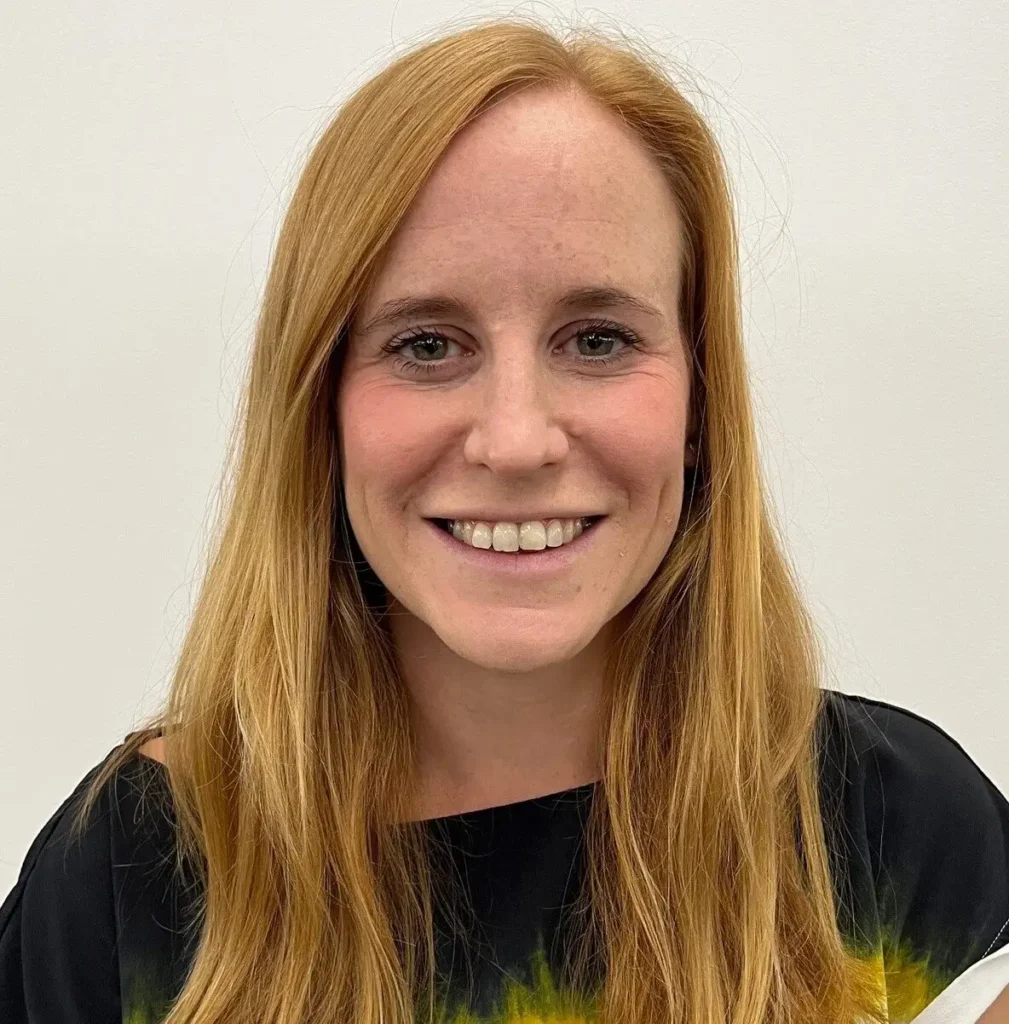
Jayne is the Account Director on the BMW Group at Wassermanleading on creating unique brand experiences and activating partnerships that deliver the brand’s objectives and values.
Wasserman is a premier agency that handles some of the world’s most iconic athletes, artists, brands, properties, broadcasters, coaches, sports executives and influencers. Jayne recently finished up with a highly successful promotion for the NFL game at Allianz Arena in Munich.
When she’s not designing branding events on a world scale, Jayne is busy training for competition. Jayne completed her first triathlon in 2016, but she eventually shifted from completing triathlons to competing in triathlons.
This year, she’s qualified for the European and Ironman Age Group World Championships (3.8km swim, 180km bike, 42km run). Her triathlon kit has had a few upgrades, and her career is getting more dynamic and impactful. It’s gonna be a great year for Jayne!
We’re lucky to get to hear Jayne weigh in on branding and brand activation. She works where the rubber hits the road, and has deep insight about branding, events, and handling clients. Our conversation not only reveals current trends in the industry, but it also gives listeners a peek into what it’s like working behind the scenes at one of the premier agencies in the world (while also putting up savage times in triathlons).
The real stories and hard lessons to help you level up your leadership and performance. Now your host, Ed Molitor.
Welcome back to another episode of the Athletics of Business podcast. I am your host, Ed Molitor, and we promise you another amazing conversation with the incredible Jane Edwards. Jane is the account director on the BMW group at Wasserman, leading on creating unique brand experiences and activate partnerships that deliver the core brand essence of joy. Now, if we talk to Jane about her professional career and the amazing work that her and her team do alone, if that was just a conversation, would be a phenomenal conversation. But as you know, my affinity for triathlons and what goes into them and the stories behind them and the lessons that we can pull for them, that part of this conversation is incredible. And I don't want to give it all the way. So let's just say this.
Jane competed her in her first triathlon in 2016 as a runner trying to overcome her fear of swimming, specifically sharks. And wait till you hear her story about how that all of a sudden hit her at the turning point of the swim in Kona. Now, six years after she competed in her first triathlon, she was juggling training with working in events. And that event world is an incredible workload, very demanding and not easy to juggle all the other things you have going on in your life. But she creatively found a way to do it. Runs home after work cycling 200 site so Jane eventually shifted from completing to competing in triathlons. And doesn't that kind of fit in? Well, not kind of. It fits in with our whole are you interested or are you committed? Right.
So she took things up a notch, which is absolutely mind blowing when, you know, all that was going on in her life at that time. And now she's qualifying this year for the european and Ironman age group world championships. While her triathlon kit has had a few upgrades and her responsibilities at work have increased, Jane's dedication towards always improving has stayed strong and consistent, and that is helped by a supportive and encouraging workplace. Now, let me just give you a peek into what we're going to talk about with Jane, because there is such a connection between her world of training for the Iron man competitions and her professional career. One of the things we talk about, which I find so fascinating, is how to creatively think on your feet in the execution phase when adversity hits after so much preparation.
And this absolutely ties back to her competing in the Iron man, we'll talk about the importance of having good people around you who will both challenge and support your new ideas. The power of working with clients where your values and purpose are aligned. Now listen to this. This is so powerful. Everyone understands they are working together for a common cause. They have different roles, different responsibilities, yet they all do the best they can with the existing constraints. And we're going to talk about Jane's journey from marathoner to sprint triathlete to Olympic triathlete to the iron, as I call it, the iron woman. How it bolstered her creative thinking and her mental toughness. And Jane has absolutely. And this is something that we can take away right now.
Today, Jane has mastered the art of breaking down large projects and long journeys into bite sized tasks and staying focused on what is right in front of her. I'm going to get out of the way, and I'm going to let you enjoy this conversation with Jane Edwards. Jane, thank you so much for joining me today on the Athletics of business podcast. I am absolutely thrilled to have you here.
Oh, thanks, Ed. I'm absolutely thrilled to be here. I'm so excited for our conversation that's going to come.
Now, I know we're both nervous that we can't duplicate the conversation that we had a month and a half ago because it was so wonderful, but we will, I promise you all, we will do our best. But in the intro, I filled the listener in on a little bit of your journey, your background. Why don't you bring us up to speed to what you're doing now? Matter of fact, let's just jump right into Munich. What you were doing there recently and all the wonderful work that you're doing at Wasserman.
So, yeah, so I've just come back from a week in Munich where were doing a fan activation zone for the NFL in their first game in Munich for nearly ten years. And we was doing a fan activation zone which had sort of broke out all the elements of the NFL game and sort of had them for the fans to experience. So we had a quarterback challenge, sort of wide receiver. So really getting people involved in the game and to experience it before they went into the stadium. So that's literally just come off the flight right now.
What was it like there, knowing everything that you were pouring into it, all the work that went into it, and the fan activation for your client and just the vibe of the NFL in Germany versus other local. How excited were they for that?
They were so excited. I don't think I've ever seen such excited fans because they haven't had the NFL there for a really long time. And definitely the popularity has been growing throughout, through Germany in the last sort of ten years. We kept saying to the stadium throughout the build up to this, fans will get there from 09:00 kickoff is at 330 in the afternoon, fans will start arriving from nine. And the stadium were like, no football fans. They arrive 45 minutes before the game, walked straight into the seats. It's not going to be a problem. But from 09:00 in the morning, people were coming off the Uban. Just the happiness and the joy on their faces. It was just amazing. And you had these people from all different teams. It wasn't just the bucks and the Seahawks that were there.
And it was truly an amazing experience to watch them come through, experience all the fan activations, experience the whole site, and then go and watch what was a great game.
Does it make your job easier to get them excited about BMW and get them excited about the fan activation when there's already that level of energy, or can that whole whatever, everything else that's going on, can that serve as a distraction to what you're trying to accomplish in that setting?
I think when you have, well, a great activation, a great product and great people that come enjoy it does make our jobs a bit easier. But I think it all stems from having the good idea to begin with. And then once that is put in place, you create ideas for fans to enjoy and they do.
So let's talk about that a little bit. Your responsibility at Wasserman, what you do in your role, explain your role a little bit and how many different folks that you interact with and the significance it is for you to be able to connect with those people.
So my role Wasman, I'm actually one of the client services part for BMW and I just worked on NFL for this, well, for the short time for the project. But I guess my job at Wozman is all about forming connections. We are a connections agency and everything we do is the value in delivering sort of these meaningful connections between brands and people. So my job is to kind of take all the different parts from the creative, from the activations, from the production, from different agencies, and put them all together to create an event. Whether it's a fan experience, whether it's a track day, whether it's a retailer engagement, they're sort of really varied. A podcast, I have worked on a podcast. It's quite fun being on the other side of it.
So, yeah, just a real range of products that I sort of help pull together and then deliver.
How did you know this role was something that you wanted to do? Like with the different roles you've had over your career, how did you figure that this is something that fit?
I think for Wozman, it was twofold. One, the types of work we do as a global sports agency. Well, sports, music, and entertainment, really, there is so much opportunity for what we do. And I think being passionate about sports, it's quite nice to work for an agency that is also passionate about sports. And probably this is where it fits in with me loving racing and training. And what I do is I love the output. It's that moment where you've spent months building up to this. You've had some really awful times during the day, during the build or whatever, and you stand there when it all goes live, the doors open, the recording goes on, and you can just sit back and see, this is what we did. And it's that moment that I think I absolutely love about my job.
And you sort of have to remember it in the dark times when clients are difficult or things have gone wrong or things are going right, and you sort of have to remember that moment of, like, it all comes together at this one key point.
What happens when it all comes together? It's going well, and then there's a little bit of adversity. How do you shift that mind for, like, oh, my God, isn't this awesome? Like, all right, we better figure this out right now.
I guess it's about finding answer creatively, and there is always a solution. I guess you always have to look at the positives. I think what you sort of have to do is think on your feet. Think about how there isn't a right or wrong answer. It's just about what is the best thing for that solution.
Let's dig into this a little bit, because this is really cool. There is no right or wrong answer. You're going to come up with a solution, and the first thing you think of might not be the best thing. Right? So do you have kind of a process or a system where it's like, okay, try this? No, let's reframe it this way. Let's try. I mean, is there something. How do you stay even and not sort of lose it mentally and emotionally at that point?
It's about having good people around you, someone that if you're going to say, let's do this, and they're like, oh, I'm not sure about that, Jane. And then you can work with that person to create a better solution. I also think it's about just taking a split second and you don't have to say the first thing that comes out of your mouth. And sometimes that is really difficult when you're standing in front of a client and they're demanding a solution, just saying, just give me two minutes and I'll come back to you with the right answer. Rather than giving you answer now, give me two minutes and I'll come back to you with the right answer. And I guess it's having some sort of authority relationship with your client and also belief in yourself that will happen.
And you can go spend that extra or extra sort of looking around a room to be like, right, we've got it. Let's go.
And is it safe to say that the trust that you built up over time with the client because of the way you did things is what gives them the ability to give you the space you need to make that adjustment?
Yeah, definitely. I mean, so much of what I do is about relationship building and giving them the trust and the belief that we as a team know what we're doing. And that does come through all the way right from the beginning of the planning process, setting things up, making sure you're always on the front foot, that you're working, always one step ahead of the client. So when they come to you, and actually, this is probably the best thing to solve a problem on site. Try and be one step ahead and have seen the problem before someone else comes up and notices it. So when they come up and say, oh, I don't know, something very small, the screen's not working, you're like, we're on it. The AV supplier is already fixing it. It'll be back up and running.
And so, yeah, trying to establish that relationship, establish that trust, building good processes, building good practices that allow your clients the belief that, you know, yeah, so.
Preparation is a huge deal in communicating over communicate that preparation, because we talk a lot here about the five fundamentals of coaching, but really it could be applied to the five fundamentals of relationship building with your clients as well. The preparation, the communication, the execution, the reflection and the adaption, the ability to make adjustments. How much do you over communicate how prepared you are to your clients when you go into big events like you just had in Munich? A lot.
I think the clients prefer to know more. I think it's a fine line between telling them absolutely every single tiny detail and giving them the picture that they need to know. And you also have to remember that our clients, as well they need to respond to people internally. They need to feel empowered and will have the knowledge that they can then go to their senior internally and say, this is where we're at. This is the process. This is how it's been happening. And so it's working with them to make sure that they have that information that they need. And I guess it's about bringing them on the journey. Letting them understand why you've made those decisions and how those decisions have led to that outcome is also really important.
So then when that outcome happens and someone asks them, oh, why did you do this? They also understand the reasoning and the strategy and the rationale behind it.
Let me ask you something. I'm going to pivot a little bit. Still related to clients. What are the traits and characteristics of the clients that you have the most fun working with?
I think fairness. We all work very hard and we all want a very high level. I think fairness and understanding, I think, are two really important traits.
Well, and here's why I asked a question, because one of the things that I've learned over years, and God knows I've had enough years to learn things with my age, is that I really find the most joy in working with clients where we are connected and we're aligned in our values, in our purpose. And the fact that we realize that having fun and working hard are not mutually exclusive. Right?
Yeah.
And being positive and dealing with reality is also not mutually exclusive. So I was just curious, because you have told me a few times how much you enjoy your clients and how much fun you have and how much you love. So I'm just curious what that looks like on the other side.
Yeah. I think it's about working together for a common purpose, makes the best clients. I think they need to understand that we are in this together. We have different sides, we have different roles, we have different responsibilities, but we are all making sure that the event or the activation or the campaign that we're doing is the best that it can be, in whatever restraint that may be. And I think that really makes the best clients, that you have different roles, but you are in it together.
Yeah. So you're busy. It's safe to say you're very busy. Correct. And you also know you are my idol. The way you do things and the way you train. I briefly introduced your athletic prowesses and your accomplishments and the work that you put inside of the introduction. Okay. I briefly touched on that. I should say, excuse me, but how in the world do you find time? Take us through this whole journey of your. And I don't want to use the word obsession, commitment to competing at a very high level in Iron Man's and half Iron Man's. Okay. And where that came from, because the story, obviously, I'm cheating because I know the story, but the story, how you got into triathlons in the first place, I find absolutely fascinating and very humbling.
So, yeah, I guess I'll start from the beginning. I've always been a runner. Not a particularly good one, but I enjoyed going out for a run, and I enjoyed running. And I did a few marathons. They're not slow, but they were not record break or anything like that. And then I got to ask you.
A pause for a second. You just said, I've done a few marathons. Like some people say, I went out for a run around the block. Okay. So, anyway, I apologize for interrupting.
Yeah, that's true. And I guess I built up to the marathons, ended up doing some marathons, and then my mum. This is a bit ridiculous story, but I'll take it through. My mum was lady captain at her golf club and needed to raise money for her charity. And so had said to me, oh, Jane, could you do another marathon and we'll sponsor you? And I thought, I can't ask people to sponsor me for something that I enjoy doing. And that I have now, at this point, done five of. It just didn't seem fair. It didn't seem right. But at the time, I didn't cycle. I was scared of the water. I was absolutely terrified of swimming. I'd never swim in open water. And I thought, okay, while running is, I can do. I've never done the other two disciplines, so let's do a triathlon.
So I started swimming in a pool. I couldn't swim like, 100 meters in front crawl at the time. So this was maybe six months, eight months before the race. And to do a triathlon, you have to swim it all in front crawl.
And were you doing the Olympic distance to start with?
Yes. The Olympic distance was. Yes.
Okay for us. And I'm going to need you to translate this for me. I apologize. I should have been more prepared than this. Shame on me. It's 0.9 miles here for the olympic distance for the swim. So how many meters would that be for you?
That's 1500 meters.
Okay.
All right, 1500 meters.
I actually knew that.
Then a 40K bike, which is a 25 miles run, and then a ten k run, which is a 6.2 miles.
But again, six to eight weeks before the race, and you're only swimming 100 meters front crawl.
Yeah.
Okay.
So I started off doing, I guess, 25 meters front crawl, 25 meters breaststroke, and then slowly, over the months, I built up to be able to do 1500 meters in front crawl, and I signed up to do a sprint raffle on. So that's half all the distances two months beforehand, just to give me a bit of preparation of, I don't know, swimming in open water. And in my first race, I totally panicked in the water, and the fear that I had of swimming in open water totally overcame me. I totally forgot how to swim. And I just remember thinking at the time, I just have to get out of the water. That was the only thing that I could think about. And it was the longest 750 meters I think I have ever swung.
It's real. And if you've never done a triathlon, regardless if it's a sprint or an iron man, when you get in your own head and get into your emotions in the swim, it's scary.
Yeah. And I was totally under prepared. The water was very cold. It was a mass start, which means you all start at exactly the same time. So it means you get kicked, someone hits you on the head. It was just horrible. And I think about this sometimes now when I'm having a really bad session of how far I've come, because at this point, I finished second to last out of the swim. It was me and one other person behind me. And I remember getting out, being like, oh, my God, that was the worst thing ever. And then thinking, okay, it's not so bad. I can just get on the bike. And this was a very average bike. I commuted on. I didn't have pedals. I didn't have pedals. I didn't have cycling shorts. And I was like, fine, I can get on this.
And slowly, throughout the next sort of calmed my breath down. I calmed back up and I just started to enjoy it. And, yes, I finished the bike, finished the run, and actually ended up in a reasonable time. I was very happy. But that was my first ever sort of sprint triathlon.
So how in the world, as many as I've done, I still, every now and then it creeps in, right? That fear of swimming. Like, I can't believe I still have this far to go. I can't believe I gotten kicked this many times already. But how did you, after experiencing that in the sprint, still get yourself together, continue training, and then go do the Olympic?
I thought about why I went wrong firstly, and that was because the water was cold. I was like, fine. I can overcome that. I can find a lake and swim in the water. And then it was a little bit like getting back on a bike, or maybe I guess I learnt to ride when I was younger and it was sort of when you get kicked or when you fall off your horse, you just have to get back on it. And that's really how I kept going. But the next one I did was then the Olympic, which I'd collected loads of sponsorship for. And suddenly there was this big pressure on me to not happen again because I thought, I can't have all these people that sponsored me and I don't get out the swim. And it was better. It was still horrible.
I still had that fear, but I think I was ready for it. I was more prepared for it so I could overcome it quicker than I did beforehand.
So we talk a lot about here, about be there before you get there. So did you visualize that? Did you think about that? Like, okay, I know at some point panic will set in and here's how I'm going to talk myself through it, or here's how I'm going to change my mindset. How were you able to overcome that during the Olympic swim, especially when it's longer?
I'm not sure I did it consciously, but I definitely did it subconsciously. And it was kind of while I was swimming in the training to think sometimes I would relive the moment of the panic that I had in that sprint. And I guess sort of having that practice of overcoming it, and I guess I'd overcome it once. So when it happened again, you know, you can push through, and I think that's what's so important about, I guess, doing sport and sort of pushing yourself. You always have these hard moments and you always come out the other side, and it means that you can just translate that into real life where it could be slightly more important.
It's like it gives you those sort offers to have that extra, I guess, to ask those difficult questions, to sort of have those tough conversations because you've kind of gone through tough things before and come out the other side, but in a different aspect. Does that make sense?
Yeah. And you came out the other side better, stronger, more confident, a greater sense of calm than you probably had when you're in the water.
A belief that I could overcome it, and I think that is really important.
So when did it start to show up in your business career? When did it start to show up in your professional career? I should say, like, okay, I've done this, and I literally learned how to swim so I could do a sprint to prepare, then do the Olympic. If I can do that here, like you just said, then I certainly can do that here in my professional world. Did you see the translation immediately?
I think it grew. I think it was definitely like a slow burn. But I remember last year. So last summer, actually, I had a very difficult client and it was a real struggle to get where we needed to get to in the project. And my boss turned around to me and said, you're very tenacious, Jane. And I remember thinking, yeah, that's because. And it was sort of that moment of, yeah, because when you're in a race, you can't give up. Or when you're training for something and you've put all this thing into it, you can't give up. You have to keep going. You have to keep finding a different way. And so that then translated into my work of, there's always an alternative. You have to keep moving forward, you have to keep hitting these targets, hitting these benchmarks.
Actually, I think it was about how I so moving then into iron man and kind of training for them when I first started on that, to think I couldn't swim 750 meters. And then a year later I recite, well, less than that, six months later, I signed up for an iron man.
So you're telling me six months after you did the Olympic, you signed up for an iron man?
I think it was three months after I did the Olympic.
So six months after the sprint, when you said it was most terrifying, 750 meters you ever swam in your life and you have no idea how you did it, you decided to swim how many meters? So 2.4 miles swim is 30.
It's 3800 meters.
3800 meters. So what in the world made you do that?
I think it was a bit of, well, firstly, competitiveness. And a friend that I had who turned around and said, because one of her colleagues who was signing up, she was like, oh, I'm signing up for an iron man. And were going to do this 24 hours relay. That's right. We were doing this 24 hours relay race. And she made just an off the hand comment of, this is going to be great training for my iron man. Like two months after this 24 hours relay race. And I just remember sitting there thinking, well, if she can do it, maybe I can do it, too. And when I was running marathons, my friends used to say to me, oh, Jane, you ever going to do an iron man? Oh, how'd you think about doing an iron man?
And I remember point blank saying, nope, I'm never doing that. Why would you do that? That's stupid. And then suddenly there was just this little nugget and, oh, I guess, you know, I've never cycled that far. I've never swum that far. I run that far, but never after doing the other two.
Right.
But if she can do it, so can I. So I think two days later I signed up and that was it. And suddenly I thought, oh, God, I have to learn to swim three times as far as I've ever swung before.
Well, not only that, you paid to do it, right? Like you paid a decent amount of money to punish yourself.
Yes, you pay a lot of money to punish yourself, but I think they do that deliberately. I think they make it a bigger deal. So people don't drop out.
So you don't bail out. Absolutely.
Yeah. And I remember for the whole of that, people sort of asked me what motivated me through that and it was genuinely a sense of fear, of failure. And I got out of bed in the morning to go for a swim, to go for a cycle, because if I didn't, I might not finish. And, yeah, I sort of turned up on the start line. Now I have different goals when I go into a race and I'm a bit more strategic and I have sort of better expectations of myself. But for this iron man, I turned up on the start line and all I thought about was, I just have to finish. That's it. Don't mind when, I don't care how, I just have to finish.
And really it was only towards the end of the run where I realized, well, one of my friends that came out to support told me sort of that I was doing quite well and I was suddenly like, oh. And then she said something to me on the side. She sort of shouted something to me as I was running along. I didn't really hear what it was and it was something like third. And I was like, is there three people ahead? Like, what does she mean?
Right?
I can't be third. That's ridiculous. And it was then only when I finished and I looked at the scoreboard and I had finished third in my age group out of 35 women. And I was like, hang on a.
Minute, I have something here. This is good.
Yeah.
So you're saying you said no expectations on yourself, like you said just to finish. That was it, yeah.
You know what?
This is what I trained. This is the time I trained at. I think I can nail it here. It was just, let's go do this.
I had told people again, you tell people one thing and you know yourself are different. I had told people I wanted to do it in around 13 hours. And I had said to myself I'd quite like somewhere between eleven and twelve, because that's a good time. And I thought I'd be very happy.
It's a great time.
Yeah, it's a great time. And I ended up doing it in 11 hours and five minutes.
Your first one ever?
My first one ever that you started.
Training for three months after the Olympic one. Well, you signed up for, I should say.
Yeah, I had a year. A year of training. Yeah.
So let me ask you this if I can, because I'm going to take you all the way back to that fear of swimming. A, what was it? B, how did you work through it? And c, does it ever show up in a longer distance when you do the iron man?
So, a, my fear of swimming stemmed from having, like a six month year period, having these dreams about how I was going to get eaten by a shark. And they were so random and totally irrational. One of them was it was swimming around the top of a well and I was stuck at the bottom and it dived down. And as it dived down, I jumped up and it ate my foot and all these things where I'd be swimming back into shore and it would eat my legs. But basically every once a week, twice a week, I had these dreams about how I was going to get eaten by a shark. And that was this.
When you were a kid? When you're a teenager? When was it started?
When I was about 16.
Okay.
So somewhere between 16 and 18, I just kept having these dreams and I created this irrational fear of swimming. I mean, I grew up in Greece. I was used to swim all the time. Well, I used to paddle about in the sea. I guess. I never swam properly.
We're not talking paddling a boat either. You're talking about paddling about.
Yeah, just go up a beach. But suddenly I was terrified of going in the water. I couldn't go in the water above my knees and without getting this fear that a shark was going to attack me. And there aren't sharks. I mean, there aren't sharks in the Mediterranean. And I knew it was irrational and I just couldn't get over it because I always knew it was irrational. And I would get it sometimes when I was in a pool and it was about building up, I guess I would suppose I was building up my ability to swim, but also slowly overcoming that fear. So every length I did that, I didn't get eaten by a shark was a length that I was proving to myself that wasn't going to happen. And it does still come.
I mean, when I did the world championships, someone mentioned to me on the way over who didn't know about this fear. They were like, oh, aren't there sharks in Hawaii? And my face just went white. And I remember saying, you can't say that. I can't think about that. And they didn't really understand what they said and I just had to change the topic and just move on and just put that to the back of my mind and just pretend that no one had ever said that. And it does still happen.
I do still get that fear, but I have learned to subdue it and when it happens, so it happened in the world championships, as I was like, the furthest point out, as you then turn round to swim back, and this is really horrible, but in my mind I thought, it's okay, I'm in the middle of the pack. If something happens, there are faster swimmers than me and slower swimmers than me, so I'm probably going to be okay. And that is what I started talking about. And then I just had to be like, I've just got to focus on this person's feet. That's all I have to think about. Don't worry about anything else. And you kind of just have to really focus your mind to sort of stamp out this irrational fear that I have.
So you obviously made it get out of the water. Do you feel like the weight of the world lift off your shoulders when you got out of the water?
A little bit, yeah. I'm not the best swimmer, so I always feel like the bike is what I enjoy and the run is what I'm good at. And so the race always progresses better for me, I think.
It's so interesting, though, that you had that fear. Even when you're in a pool, there's irrational and then there's, like, completely irrational and that's completely irrational. But the fact that you were able to manage your mind and are you accepting the fact that's kind of always going to be there? That'll just be something that shows up every time you race?
I think so, yeah. It sometimes comes randomly that you'll be in. So I swim in, like, a lake near me, and again, it's a closed lake, water from the Thames, and sometimes there's a bit of a black spot and I just sort of have to swim past it, and then I carry on and then it comes back again and I swim past it.
So tell us about Kona, though. Tell us about that. I mean, that race, knowing folks that have done it is absolutely amazing. And it always means something very significant regardless of where you finish. But you finished in a great spot. Okay. It seems to have pushed you further into the sport to achieve more. Tell us what was going through your mind as you biked. It is a bear. It is a lot of other words we can use, but it is a bear.
They talk about Kona being a race in itself. And all iron mans are hard. I think we can safely say that. And when you look at Pona on paper, it doesn't seem any harder than any other iron man. It's a nice sea swim in a bay, so you get the added buoyancy of being in saltwater. It's 1900 meters on a rolling bike course, quite nice. And then it is a rolling run, which isn't as nice, but on paper it's not that hard course, but when you get out there, it is totally different. Beast. You have the humidity, you have the pressure of it being the world championships. And to get there, you have to have qualified. So you are racing against the best of the best.
And there is so much hype, the crowds, the atmosphere, even in the build up, the volunteers, everyone is so excited to be there. Everyone is so happy. Everyone has worked so hard to be there. That is also an added extra to it. And then, yeah, it is just an absolute beast of a run and, well, a beast of a race, the whole thing.
Is it really a rolling bike, though? I've seen some of those climbs, there's nothing rolling about some of those climbs that you guys have to do.
I mean, I guess my other races that I've done have been sort of Switzerland and France, where the France, you sort of climbed 35 km. So, yeah, 50 miles. No, not 50 miles, the Runway. So, yeah, 35 km. You climb up a hill and you go sort of 1500 meters up and then you come back down again. So in comparison to some of those, it is rolling, but there's sort of.
One Switzerland and France doesn't quite have.
The humidity, that, no, they do not have the humidity. And I remember, like, I think it was 27, 28 degrees in Hawaii. And I remember thinking, oh, well, Switzerland was 32, it was much hotter. So I'm used to, like, race. I've raced in the heat before, but when you combine the humidity, when you combine just all of the elements. So Hawaii has, I think there's like 13 weather systems and it has eight of them on the island. And that in itself, you just don't know what you're going to expect on the day.
And when you're talking 27 and 32, you're talking celsius.
I just want to make celsius. Sorry.
So how is the sport change now? What it means to you? What's next now?
For me, it's about the world championships was a very tough course and mentally challenging. It showed that I have so much more potential, I have more to give. And I think it has really spurred me on to get better, to improve, and to see what else I'm capable of, actually.
And you're racing to win now. I mean, you're racing to win your age group. You want to push yourself, you want to set the.
I am. Yeah. I started, so, again, sort of to move when I sat on the start line of Barcelona, which was my first iron man, that was all about finishing and I was just completing it. And now they are a race that I want to win. And that's where I go. I stand on the start line, I look at my competition, I assess the course. Some people laugh at me. I sort of, like, stalk people on Strava, because you need to know the factors. You need to be prepared. Like, don't go into anything unprepared and see how I can win, which is hopefully what I'm going to do next year.
That is pretty dang amazing when you really think about where you came from.
Yeah. And it is nice. Sometimes when I've had a bad session, I think back about where I started and where I've come to, and it's been an amazing. Been a hard journey, but, yeah, it's been amazing.
But you just hit on something. I think really, in our professional careers, we do this too. Right? We're always staring at the mountaintop, like, what's ahead? I think sometimes we forget to. And I'm not saying rest on your laurels by any stretch of imagination, right, and let the ego drive you. But I'm saying sometimes we forget to reflect back on how far look backwards, like how far you've come here, and then just go take that next step. Don't keep staring at the mountaintop. It's like when you said in the water, Kona, you're swimming back and you're in the middle of a pack. So you're not the fastest, you're not the slowest. Shark will get distracted. You're okay. Just focus on the feet in front of you. Get your butt out of the water. Right, but that's it. I mean, that's it right there.
And how much has that showed up in your professional career?
A lot, I think. And it's also about breaking things down. When I started training, obviously, this end goal, this unfathomable distance in an iron man, and I guess you sort of have to think, how do you break it down? How do you make it manageable? And it's a lot like I do every day at work. You have this massive event that you're preparing for, this massive campaign. How do you break that down? You sort of think, right, what are the key things that I need to do this week? How then do I build on it for next week?
And you slowly start building up and hitting these key deadlines and these key timings, and then you get to the build day, or you get to the day of filming or the day of recording and all of those building blocks being put in place for that successful day race or whatever. And I think that's something that has really sort of come through from racing and pulling it down and making it these sort of manageable chunks that you can then deal with every week or every day, rather than this big, all encompassing fear of whatever you're leading up to.
I want you on my team when things start going sideways, okay? Because you have this really even mindset, which I love. But when you're backed up against a deadline, right, when some things have been thrown your way that either you didn't expect or just make no sense at all why it's happening, and you're getting backed up against a deadline and everybody around you is sort of getting a little bit lost in the emotion of it. What did you say?
Flustered.
Yes, flustered. Simple word. But how do you handle that? How do you continue to break it up into manageable chunks even if you don't have a lot of time left to do so now, all of a sudden your time is compressed.
I think it's times like that when it's even more important to sort of take that moment and kind of actually, when everyone is flustered and running around, we say, like headless chickens, it's sort of, okay, fine, yes, we have to get to this point and it's all gone wrong, but what is the next step? And once you've got that next step, then the other steps just keep following into place. It's like a writer that says the hardest thing is writing the first line of a book. That is the hardest thing you do. And so if you just think, okay, what is this one small piece? Is it. I have to send an email to the client or a supplier or something really simple, really easy that you can just sort of feel like you're moving forward.
And then once you've done that, you're like, okay, now we have the next thing. And suddenly things become a bit clearer. And I guess it's about ensuring in the team and everyone that they have that clear direction, that they then know what that next small step is going to be, and then the road will clear.
And I love that. And the thing that I keep coming back to, some challenges I know that I have with my client, I don't have with my clients. Some challenges my clients have that we work through, especially at the higher levels, they'll conceptually, intellectually, they'll get that. I know that makes sense, but there's always that. But instead of the yes and like improv. Right.
There's.
But we try to cut that out of their vocabulary. But there we go again, they say, but I have higher expectations of myself. And I try to convince them that in that moment, we're not dealing. The higher expectations are wonderful. They're awesome. But right now, this is where the focus needs to be, is just that next step.
Yeah. And it's not saying that we will get to that higher expectation. And you can't leap. You have to make a small step. And if you always focus on the higher expectation and ensure that you're worth on the right path to do it, that you'll get there. And I guess like a training plan. Actually, I think that's not a bad analogy. I can't step out the door tomorrow and do an iron man. It's the same way that you can't suddenly master up or overcome this massive challenge, but by having, okay, this week, today, or right now, I'm going to do a five mile run and so on, you're building up to it, and that perfect, that end goal will be there and you will achieve.
I remember training for the half Iron Man. I started to have better workouts when I gave myself a little bit. I don't want to use the word compassion, but a little bit of space to maybe I don't get off to a great start on my long ride. Maybe you're not just killing it the first 15, 20 miles. All of a sudden at mile 25, you feel better, right?
Yeah.
Or maybe you have an it band issue. When you're running a long run, you're like, you know what? I'm shutting it down today because like you said, you're not truly lowering your expectations. You're just figuring out what the next step has to be.
And I guess that's why in a workout, you always have a warm up for that exact reason. Your 1st 510 minutes might not be the best. You might not be feeling it. It might be a bit of a struggle, but just keep going for that little bit longer. And yes, 12, 13, 14 minutes, you feel like you're flying because you've allowed yourself to sort of get there and move forward.
So how do you, with how busy you are, find the time to train for an Iron man?
I think I'm very lucky in that I work for a great company that sort of, I guess, supports what I do. I have a very supportive partner who doesn't mind not seeing me a lot forever. He made a joke once that we have a long distance relationship while we live in the same house, and he.
Has a great sense of humor too.
He has a good sense of humor. I bring it into my life. I have a commute that's 6 miles, and I make sure that is part of my training. So either I run here or I cycle, and if I'm seeing some friends, sometimes I will be there half an hour later. And therefore, that gives me an hour to do my training session. And I think you set expectations for people that I'm going to turn up my gym stuff, and if you'd like, who cares?
They sit there and talk about you for the first 30 minutes when you're not there. It's okay.
Exactly. It's fine. They don't need me anyway.
Now, there's a rumor going around, and can you confirm this for me? There's a rumor going around that you actually turned down a job offer because they did not have a shower. I did premises so you could not ride or run to work or whatever it is you were going to do that day and couldn't shower at work. Is there some truth to this rumor.
That is 100% true? I did turn down a job offer for two reasons. One, because it's such a big part of my life, and it needs to be encompassed into my life. It can't be separate, because when it's separate, when it's totally independent from your everyday life, that's when it doesn't fit, and that's when you don't find the time to do it. And the other one is that I felt that if they didn't have a shower and they weren't giving very basic facilities that would help all their employees, they probably weren't the right company to work for.
So when you turned down the job. Did you literally say to them, hey, you don't have a shower, we're not aligned. This doesn't work. And what was their reaction?
They were like, this is the strangest conversation we've ever had. But it's always a question in an interview. It's always a question I ask, do you have a shower?
I love it.
What are your changing facilities? And they're always like, oh, I don't really get asked that because it's really important. And yeah, without it's sort of such a part of my life that I would be sacrificing so much to go somewhere that didn't allow me to cycle and run in that it wouldn't be worth it.
I love it. I love it. I absolutely love it. Thank you so much for joining us today. Now if folks want to learn more about you, LinkedIn, is that the best place? We'll put that link in the show notes. We'll also put a link to Wasserman in the show notes. I absolutely love what you. And obviously I was going to skip my run today, but that's not happening. I love the stories and I love how there's a translation into, like, you have something significant in your life, the training, the races that are a part of your work life. Right? I mean, that's where we are today. There is no such thing as work life balance or separation, especially for those folks who have families. I integrate my family into what I do.
I mean, I feel like if I don't make my work a part of their life and their life a part of my work, then my kids, my children who are eight and ten now, will grow to resent what I do for a living. And I don't ever want that to happen. So I just absolutely love how conscious you are about that. But I do have to ask, was it hard to find time when you were in Germany and you had to do all the fan activations to kind of get away and get your workouts in and find a place to swim?
It was. I actually failed to find a place to swim. I think the longest time I've been without going for a swim. But I think that's also the other thing of you have to adapt. So rather than going for a swim, I just tweaked my workouts and we had a gym. So I did some shorter runs, some shorter bike rides and yeah, sort of managed to tweak it a bit like that.
So, yeah, I know you got to run. I know you're getting the hook. Jane, I can't thank you enough. Thank you so much. And you were awesome.
Thank you. I really enjoyed it. Yeah, thanks. It's been lovely talking to you.
Thank you for listening to the athletics of business. Be sure to give us a rating and review so we know how we're doing. For more information about the show, visit theathleticsofbusiness.com. Now get out there. Think, act and execute at the highest level to unleash your greatness.