
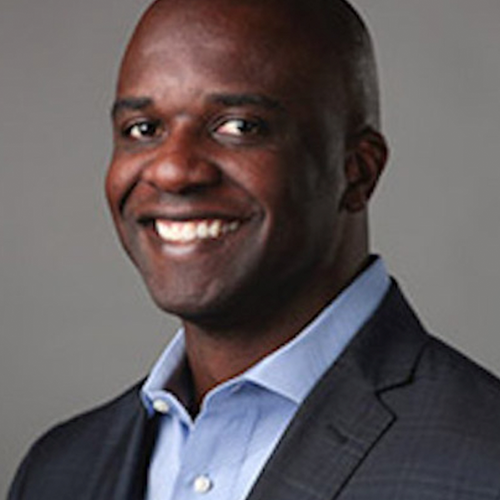
Rodd Newhouse is a Wealth Manager with 44 management and focuses on managing wealth for private clients with a concentration on sports and entertainment professionals. He holds an Accredited Wealth Management Advisor (AWMA®) designation which allows him to help his clients capitalize on opportunities to preserve, grow, and transfer their wealth.
In 2017, 44 management aligned with Wealthcare Advisory Partners to provide clients with a goals-driven experience that seamlessly integrates planning and investing.
Background and Credentials
With more than 20 years of experience in the sports industry and extensive experience with investment services, Rodd has built a Sports and Entertainment Advisory practice. He comes from a family of multiple NFL players, which gives him insight into the unique wealth management needs of professional athletes and entertainers.
Rodd learned early on the value of money management, and brings that knowledge to each client relationship. He works with clients to identify their financial and life goals, develop a personalized budget and create a long-term financial plan that synchronizes client goals with investments.
In 2011, Rodd joined Wells Fargo to expand his Sports and Entertainment Advisory business. Before this, he was the Pro Personnel Director for the Arizona Cardinals. Prior to the Cardinals, Rodd worked for the NFL Management Council. After graduating from Rice University with a bachelor’s degree, Rodd signed with the Baltimore Ravens. He also earned a Juris Doctor (JD) degree from Concord Law School.
This is the Athletics of business podcast. Episode 25.
Welcome to the Athletics of Business, a podcast about how the traits and behaviors of elite athletes and remarkable business leaders frequently intersect. The real stories and hard lessons to help you level up your leadership and performance.
Now your host, Ed Molitor. Welcome to the Athletics of Business podcast and I am your host, Ed Molitor. Today's special guest is Rod Newhouse. Rod is a wealth manager with 44 management and focuses on managing wealth for private clients with a concentration on sports and entertainment professionals. He holds an accredited Wealth Management Advisor designation which allows him to help his clients capitalize on opportunities to preserve, grow and transfer their wealth. In 2017, 44 management aligned with wealth Care Advisory Partners to provide clients with a goals driven experience that seamlessly integrates greats planning and investing. With more than 20 years of experience in the sports industry and extensive experience with investment services, Rod has built a sports and entertainment advisory practice. He comes from a family of multiple NFL players, which gives him insight into the unique wealth management needs of professional athletes and entertainers.
Rod learned early on the value of money management and brings that knowledge to each client relationship. He works with clients to identify their financial and life goals, develop a personalized budget, and create a long term financial plan that synchronizes client goals with Investments. In 2011, Rod joined Wells Fargo to expand his sports and entertainment advisory business. Before this, he was a pro Personnel Director for the Arizona Cardinals. Prior to the Cardinals, Rod worked for the NFL Management Council. After graduating from Rice University with a Bachelor's degree, Rod signed with the Baltimore Ravens. He also graduated with a Juris Doctor degree from Concord Law School. He is a member of the association of Rice University Black Alumni and is a speaking advocate for the American Heart Association.
He is also the co founder of the 44 Strong Foundation, a nonprofit which raises awareness for amyloidosis research which was started to aid the legacy of his father, Robert F. Newhouse Jr. A former Dallas Cowboys fullback and super bowl champion. Rod, thank you so much for joining us today on the Athletics of Business podcast. I am honored, humbled and fired up to have you. How are we doing today, Rod?
I'm doing fantastic. Thank you very much. How about you?
I'm doing. I'm doing well. Well, better now that you're here too. So hey, we have so much to talk about today, but what I want to do is I want to start by stepping aside and letting you fill us in on your journey. It's a remarkable journey with everything that you have done. If you could take us back to your playing day. For your Rice Owls. For the Rice Owls. And I'm sure we'll go back a little bit for that at some point in the conversation, but kind of take us along the path that your career has taken.
Oh, appreciate that. Not a problem. Well, as we know, my Rice aisles are struggling this year. We're in a rebuilding year, so we'll just chalk that up to rebuilding right now. No problem. But Rice was a good opportunity to really figure out who I am, start to get the foundation of what, I guess blossom the foundation of who I was as a person. My father obviously played in the NFL, and he said something to me when I was in college, and it struck me as rude at the time, yet it was very insightful. Later he looked at me and he said, son, you're too smart to play football. And I didn't understand what that meant at the time. I thought I was like, well, what do you mean? Am I not good? I'm not good enough to play. Thanks, dad.
Appreciate it.
Thanks for the support, Dad.
I don't think you're dumb, and you do a pretty good job playing football, too.
But what he was saying was that he played the game, and there was more to the game than just the physical beat. There was more outside of it. You could take the education, you could really build yourself into being someone special and important after that. So obviously, still being a young man, I wanted to play football and pursue my dreams, and he fully supported that. Don't get me wrong yet, my dreams of playing in the NFL quickly subsided as I went to the Ravens, was released shortly thereafter, and had the opportunity to go to NFL headquarters in New York and do an internship. And doing that internship, I sat probably 5ft from my contract that I had signed in the NFL. And that's when life, the light bulb, started to go off.
I was going to use the NFL experience in New York to kind of leverage NFL Europe, but I saw the afterlife of NFL and the operations, and I was really intrigued by that. So I kind of quickly changed my mindset and started to focus on my front office career at that time. And I was 23, about 23 years old.
So when you went to Rice and you played football and you got your bachelor's degree, it wasn't in your mind, hey, here's what I want to do. I want to go work for the NFL, do an internship, pay my dues, and then jump into the front office. That wasn't on your radar?
No, my radar was, I'm going to go follow my Dad's footsteps. Please play in the NFL and eventually become our list of sports agents.
Let's talk about that a little bit. Grow dating myself there. Hey, there's nothing wrong with that. Ambition. Let me tell you something. There's nothing wrong with that. Hey, let's talk a little bit about your dad. I mean, an amazing player, an amazing man. But what impact did that have on you growing up around. You know, for me, I grew up in a gym. You know, my dad's a here in Chicago, legendary high school basketball coach, and I grew up in a gym, and that had a big impact on me. Now here you are in the NFL. I mean, you are around the best of the best, but you also see the real world amplified, right? Things are, you know, the highs are higher, the lows are lower. And you probably learn things at a pretty early age that most young men don't learn.
What type of impact did that have on you?
So if I'm candid about it, I wouldn't say that I knew it at the time, growing up in it. You would look at it and say, these are just people I know. One of my greatest challenges, though, was becoming a young, I guess an early teenager growing into a man is my full name was Roderick Newhouse, comma, son of former Dallas Cowboy Robert Newhouse. That was my entire name. And that was tough to break from when I was trying to find my own identity later in life, I have to admit, the things that I was taught from Billy Joe Dupree, Tony Dorset, Drew Pearson, Roger Staubach, you know, Randy White, Ed Tutall Jones, all those names are guys that are like dads to me now.
And there was such a communal bond that I could pick up the phone today and any one of those guys would shepherd me as a father. And so it's the lessons, I think, that I wasn't necessarily. That necessarily knew that I was getting, but I was listening and slowly got a chance to piece it together over time. Now, as I grew into my professional career, I became Rod Newhouse. And it was. It's interesting because a lot of people, after talking for 10, 15 minutes or two or three different exchanges, they all of a sudden look at me and go, any relation to. And I say, yes. And they're like, why didn't you say anything? I didn't know that I needed to. I wasn't trying to put that out there. Right.
But yet there is a sense of missing that, being connected to, you know, my dad, Robert Newhouse. But knowing the joy and the honor and the Dignity that he carried with himself and gave to other people throughout his career.
How has his legacy impacted you? How do you carry that legacy forward?
Wow, that's a great question. Tremendously, humbly respectful. And you want to know what? Scared. Scared. Because I don't want to mess it up. And so that scared, that fear is motivational fear.
And talk about that. You just touched on something that is fascinating. Motivational fear. How much of that did you operate with as a player?
I didn't. And I wouldn't say that I operated as a player with motivational fear. Yet. I'm gonna put an asterisk by that, by saying something that my dad said that I didn't figure out until later in life. He said to me, roderick, when I played football in the NFL, I played scared every day for 12 years. And I looked at him like, what are you talking about? You're a grown man. You're, you know, this tough, macho guy they're talking about. What he meant by that was the fear of failure, the fear of doing something wrong, the fear of not doing his best every day. So because of that, he did his best every day. And for me, I want to make sure that I'm do right by people, that I make sure that I hold myself with integrity, that I put them first.
And when you do right by others, I think your name precedes itself. And people tend to look at you like, wow, you know what? That person really has good honor, integrity. So my dad's name means everything to me, and I just will not mess it up for anyone for any reason.
So. And you're doing a phenomenal job, by the way, because obviously we have some mutual friends and I've heard some great stories and, you know, so fear drove your dad in the NFL, which is very understandable. But what drives you to this incredible level of success you have with your clients?
What draws me is being what I call the architect behind the scenes. I don't need the glory, I don't need the credit. I don't need to be told. It's the satisfaction of helping a person achieve their goal, whether it's a 12 year old kid, whether it's a 20 year old kid, whether it's A 70 year old, you know, person. It's knowing and having that satisfaction. And when I was in the front office in the NFL, being that architect behind the scene, who called the agents, did the contracts, did some of the scouting yet my name was never out front yet, but I knew what was going on. That was really fun. And Exhilarating for me.
So that you were okay with that. You're okay with. You did the work, but you didn't get the glory. Because the glory, too, obviously, was the fact that the work was done and the success was a byproduct of you doing things the right way.
Yes. And you know what? Let me back up and just put it this way. Bluntly speaking. If I, right here, as a man, had to put on the same exact clothes every day, and people looked. You said. Didn't you wear that yesterday? Yes. If it meant that my wife and my children had everything that they wanted, I could care less. That's what I mean by putting people ahead of myself.
So how did. To where you're at today? Let's go back to then. How did you begin to develop the relationships? And there's. There's some things, See, in terms of being humble, you're being a little bit too humble. Tell us about the degrees you have. Okay, let's talk about that. And how you got to where you are today.
Just hard work. I mean, taking each day. You're gonna breathe, you're gonna live, you're gonna wake up. Way I look at it, if I'm gonna do something today, I might as well try to take a step forward to something else. So going back to college, when you went to Rice, you had to do what was called a double major. They didn't have minors at the time, so mine was sports. And with sports, you had to do business. So I'm like, okay. Well, then I started looking at my electives and realized if I just take a few more electives, I can get an economics major. So why not getting three majors at Rice?
Yeah. Going through in four years or five years, I could have.
Done it in three and a half, but I slowed down.
See, I knew you say something like that. That's why I asked.
Five years. Well, actually, I say four and a half because I unenrolled at the semester. My last year, fall, I had one class, I think, so I could have done it in three and a half. Okay. But the point is, it's not easy. Now, I don't want this to sound like I've done everything and it's been all miraculous. I've had my own challenges. I've had challenges in my own personal life and trying to get to the next step. I've had challenges in my own marriage and getting to the next step, and we all go through those things.
And one of the greatest family challenges that I've had here recently and personally is that a lot of people don't know this, but I literally, when I left the NFL and my transition to what I'm doing Now, I had $16.17 in my bank account on a Wednesday with a wife and two kids, praying for Friday to get here because I knew I was going to get paid. And that was in my transition from the wealth management space. I have a law degree, I have a real estate broker's license. I have securities licenses. I have life and health, I'm accredited wealth management designation. I've done a few things and I had all that done by the time I was 35. But that's irrelevant if you don't leave a mark and an impact on someone's life to leave a legacy.
And that's what I'm about is my father left the legacy for me and I want to leave a legacy for someone else.
Well, let's talk about that a little bit. So $16.17 on a Wednesday and you had the ability to. And I talked about this a lot is not just getting through things, but growing through things.
Right.
We want to get to the other side of a situation, better off for having gone through it. How were you able to keep, you know, hold the course of who you are and what you stand for, what you represent, how you operate and not, I don't want to say not panic, but not just focus on the negatives that affect. You only had $16.17 in your bank account. What did you draw on internally? What. What behavior skills or thought processes did you draw on and you were intentional about to grow through that situation?
Life, I mean, someone's always in a worse situation than me. I've done a lot of half marathon and some of my motivation for running those half marathons is I'll go to them 3 or 5k or half marathon and I'll see a person that's 70 years old and they're doing it. And I say, why can't I do it? I'll see someone who's got one leg and they're doing it. Like, what excuse do I have? And my father said, you know, I will always go back to my father on a lot of different things here. But my father said something. He said, you know what? No one's smarter than me. No one's better than me. It's just they have an opportunity to do something that I don't do. I could be a doctor if I wanted to. I just don't short skill set.
When I was a young lad, young Teenager. My dad would say to me, do you think you're the best? I used to play soccer. He said, do you think you're the best player on the field? And I'll say, well, you know, being humble, I mean, there's other guys that are better than me. He said, no, no, you don't understand. Are you the best player on the field? And it was hard for me to answer that because I thought I was being braggadocious. What he was trying to teach me was, if you don't think you're the best, no one else will think you're the best. And until you go out there and show that you're the best defender or you're the best offensive person or you're the best person on that day, at that time, doesn't mean there's other people that aren't better.
It just means that you have to feel that you're the best that day.
This is a great segue into my next question. How do you take that humility? Sit down with a potential client who's hearing everything that he wants to hear. He's not being told what he needs to hear, but he's being told by others what he wants to hear. And you come in, and I'm taking you for a man who's going to say what needs to be said in a positive way. But how do you get that swagger to let them know I am the best person for you?
Because in this situation, I think upfront, direct, and bluntness. As an athlete, as people, we want to be told the truth. We want honesty, not necessarily the truth, because truth is different than honesty. You can trust someone who's 100% wrong all the time. As soon as they become right, you won't trust them anymore. So trust is not the issue. It's about being upfront so you can make a decision. So my thing is, like, look, I get it. When you're 21, it's hard to see 22. When you're 22, you can't see 32. And when you're 32, no way you're talking about 62. So my thing is, like, I got it. Let me help you with showing you what the options are so that you can help make your own decision. And it's about empowering an individual on how to do something.
You, as a grown man, you may have glasses, you may have a blue shirt, you may drive, you may want to go to Subway every day. You don't want me to tell you can't do that. You want me to let you know what the options are for doing that and what the consequences may be, good or bad.
I think this is a good point in the interview, Rod, to tell folks exactly what your services are and who your client is. Because it's very interesting to be able to carry yourself like you do in your industry. And I think you know what I'm saying by that, to operate with the integrity you operate well.
Tell people I jokingly seriously say I'm a unicorn in my business. True. I mean, there's a lot of sense that no one has my background, no one has my skill set, no one has a degree, no one's worked in the front office. You cannot put all of those things in one basket and say, I know that person except me. And so my clientele is really a lot of high net worth individuals, which a niche of that is sports and entertainment, building the relationships over time. I have, I'm 43 years old today, I would say I have 43 years worth of relationships that I've built into. And that didn't happen overnight.
So that's kind of manifest itself into the sports realm, which is carved out a niche while at the same time being a guy who has a real estate, who's a real estate broker, who understands the legal realm, who understands sports, who understands financial, helps me with and who's a family man and God fearing man, helps me understand people on a daily basis to just relate to and have a conversation, you know. Ed, you want to talk about real estate? Let's talk about it. You got a financial question? Okay, this is how that fits into your real estate question. You got a legal issue, I'm not here to practice it for you, but I did go to law school and I can help point you in the right direction.
So it helps me kind of really throw a broad tent to my clientele and pretty much guide them in the direction that they want to go.
How do you develop trust? You know, we talk about relationships and you have a servant mindset, you're very humble, you have a high level of integrity, authenticity. But how do you, at first with the type of clients you have, really with anyone, there has to be a way you develop the trust.
So trust. I use an acronym for developing trust. And it starts with the very first thing of T, which is having a track record. You have to have a track record. Track stands for trust, respect, accountability, credibility and knowledge. And if you think about that, trust, respect, accountability, credibility and knowledge, I work it backwards. You have to be knowledgeable. People won't listen to you. If you're not knowledgeable, you have to be credible. You know, we're credible about who the people we associate ourselves with. And people ask around and I'm sure, like you asked around about me, I asked around about you. You start going, yeah, don't have anything bad. You may not like me, but you can't say there's anything bad about the person. Okay? Hold yourself accountable. Don't throw everything off on other people. You know, oh, that was they fault.
They did this to me. You know what? Take responsibility yourself and hold yourself accountable. The r respect it could be. Respect the responsibility. Either one goes in hand with accountability. Lastly, it's trust. But trust is always in the front. And like I said, trust is about being consistent. It's not about being right or wrong. Ed doesn't need me to be right about everything. He just needs me to be consistent so he can make a decision.
That's awesome. So track. I love that we're going to put that in the show notes. That is unbelievable. But in, you know, leadership in and of itself is about influence, right? And there's. There's negative leadership, there's positive leadership. You know, we can tell stories that of guys we played with that were influences, but might not have been the most positive influences on people. How important is it you for you to communicate to your clients at third level, you know, at their level of financial means about the inner circle and the people they surround themselves with?
It's a growth maturation process. I mean, let's be honest, were all 18 at one point and 18 to 22. I don't hold any man overly responsible for what you do from 18 to 22, man or woman, there's a lot of growth in between. So, you know, for me, it's just about being a person who is trying to guide and pass down the next thing to the next person. I tell guys all the time, if you're working for the people that my dad was around to pass things down to him, he couldn't pass it to me. And the only thing I can do to help us all as a people is pass something down to the next generation.
To talk a little bit about that, you know, And I was trying to tie it back to track the accountability piece, because when you're surrounded by people that don't hold themselves accountable, the tendency is to not hold yourself accountable for your level of success. And when you start working with your clients and you say at 22, you can't see 32 or 24, you can't see 32. How do you sit down and paint the picture with them? To have a compelling vision of where they're going and what they want their life to look like in six, eight,
10 years, except that they are who they are. Don't try to change them into being something that they're not ready for just yet, but just drop the seed. I literally had a client five years ago who fired me after six months. We had a plan and everything. Three weeks ago, he called me up and said to me, without saying, you were right, he's like, you know what? I need help. And everything you said actually came to fruition. You know what? That's fine. So now he wants to work together again and we can move forward. You know, you set accountability. I want to give credit tom Landry on Coach Tom Landry on this one, because it's something my dad would say. And I would talk to other players and guys around my dad's age, and they say, yup, that's true. There was a story.
True story that there was a player who was late to practice at the old Dallas Cowboys stadium back in the day, and he got into a wreck. Well, the police officer escorted him to the facility, walked him in, and said, hey, you know what? This player got into a wreck. And they were like, okay, fine, no problem. And they told Coach Landry said, well, you're fine. You're still fine. It's like, well, coach, I got into a wreck. I mean, what do you want me to do? And Coach Landry's response was, if you knew you were going to get in a wreck, you should have left earlier. You're fine.
Yeah.
What do you say other than. I mean, he's right. What do you. You can't argue with that. In today's society, we can kind of go, well, that's not fair. No one said anything about being fair. It was about being consistent. One other quick story to that. A guy told me, he said he was. Said he walked. He was walking to the door, and he was maybe five feet from the door, and the door closed, and he opened it right up. Less than half a second later, he walked in, and Coach Landry looked up and he said, you're late, you're fine. So I'll even put this person's name into it, and people can figure out who it was. Roger Staubach looked at coach Landry and said, coach Landry, it's Christmas. Come on. And Coach Landry says, okay, Merry Christmas. You're late. And that was it.
So he treated everybody the same in that sense. He held everybody accountable. Right.
Everybody accountable. He treated everybody the same, which earned people's respect, which gave him. He was knowledgeable, so you didn't have to question him. And at the end of the day, they trusted him.
Right.
I think those are old, simple principles that Bill Belichick holds today. Bill Parcells held in his heyday, the late Dennis Green was holding the same thing, trying to say, look, I'm gonna treat you the same. I'm gonna be. I'm gonna be consistent. I'm gonna consistently find the guy who sleeps in my meeting, who's the third quarterback, and I'm going to wake up the first team quarterback. But it's consistent. It's not fair.
Right, Right. Well, it depends on who you ask.
Yeah.
Well, and that's the thing about authenticity. Like, I believe authenticity is honesty and integrity. And integrity being you do what you say you're going to do when you say you're going to do it and how you say you're going it to do it.
Right.
And consistency on an individual level and a collective level. So important, because in terms of leadership, and I can imagine with your clients, consistency is they need to know what to expect from you. And when you're consistent, they're going to know exactly what they're going to get from you. And I think it's safe to say that Tom Landry was very consistent.
That's what I'm getting at. Correct. He's very consistent.
What kind of stories about Coach Landry, did your dad tell you?
I mean, those are actually two stories right there that he told me, but he did tell me that he was a guy. Again, you didn't. You didn't have to question him because what he said came about. You could look at the play, you could be like, well, I don't understand. I don't believe you, yada. And what he said would come to fruition. And that's what I'm trying to say to a lot of my people. I'm not here to argue with you. I'm not here to say that you're gonna be wrong. I'm sure tell you that one plus one equals two. I know you may not believe it today, but I'm telling you, one plus one equals two. And if you don't believe that, guess what? Eight minus six also equals two. So I don't care how you want to get there.
I'm just letting you know we're going to get to two. Eventually, two times one equals two. And guys look at me and go, I see where you're coming. Because I slowly dropped knowledge on consistency. Doing what you're saying you're going to do. I haven't had. I'm going to pose this quick question to you. When is the last time I had a carbonated beverage? What would you say? Quick answer. How long ago would I start a carbonated beverage myself? When was the last time Rod Newhouse. When's the last time Rod had a carbonated beverage?
I'm going to say three years removed from Rice.
You would be incorrect because it would be 1994, while I was still at Rice.
So.
But you're close.
That's unbelievable.
24 years and I haven't done a carbonated drink. At my wedding, I didn't drink wine. I haven't had wine or beer really ever. I don't smoke. I don't do drugs. Not saying that there's anything wrong with those things. My point is I've stayed consistent, and you can bank on that consistency that you're going to get what you signed up for.
So consistency, not just in your professional life, but how about your personal life? So that's. That one's got to lead into the other because you know, how you. How you. Again, like we talked about before we started recording, how you do anything is how you do everything. And is it safe to say with. With your clients and when you were playing and in business, if you. If you can take care of your world away from the office, it's going to carry over into how you do things in the business world.
I agree with that. You know, a lot of people say you need to. It just depends on which way you're looking at it. People talk about, if you're gonna put something in a jar, you need to put the big things in first and you put the boulders in and you put the stones in and you put the gravel and you put the sand well. But if you don't ever take care of the sand, you won't ever be able to. You won't ever get there, you know, to be able to finish the product. And to me, it's about doing what you say you're gonna do or not doing what you say you're gonna do. Just be consistent and sometimes things happen. Apologize and move forward.
I gotta think, in your world, there's challenges sometimes where you're tempted to not be consistent or make exceptions or to bend but not break. How do you. Mentally. How do you not do that?
You know, and that's very true. Again, like I said, I don't want to sound all sanctified. There are struggles. Heck, I wake up some morning when I want to go do my runs, and I just don't feel like doing it. I'm not going to go run today. But really, when it boils down to the professional side of myself, it's, you just need to do right, do the right thing by people. And it's not from a measurable standpoint. It's just what feels right for you. If you could tell that's not gonna make someone else excited or happy or there's gonna be ill intent, don't do it. But if you can definitely try to lift someone up, make it a positive experience, it's okay. And bluntness can be perceived the wrong way. I always love this saying, I'm responsible for what I say.
I'm not responsible for what you understand. And sometimes people get twisted because they think you're trying to say something that you're not saying. No, I know what I said. I may have come out wrong before, but I'm going to correct it. And this is what I mean to say. So just hold yourself by some simple principles.
How hard did you have to work on being an active listener, being patient with your potential clients when you sit and listen to them talk and maybe not make much sense about what they're thinking financially or what they're thinking they wanted to do? How hard did you work on that? I mean, communication as we know, it's all part of being intentional and really listening in, hearing what you need to hear. I've got to think that it's a big piece of the puzzle to what you do.
I'm sorry, I wasn't listening to you. What'd you say?
Hey, man, I'll tell you what. It's a good thing this ain't on. Well, it is on video for us, but because I fell for that hook,
Line, and sinker, I'll be fully transparent.
I'm like, I'm looking at my mute.
I'm looking at my microphone.
Is my mic on?
Well, no. Listening is very important, as they say. You know, body language is key. Your. Your spirit is key. And I think they say people don't want to know how much you know until they know how much you care. And if you come across and ask the right questions and really become engaged in who they are, I think people feel more confident about that. Listening is about letting the other person talk. And there's an art to asking the right questions. People haven't picked up on this. They may now that we say something, but that's what you do. You're asking the right types of questions that allow me to talk. And if everyone wants to hear themselves talk, everyone wants to tell their story.
And if you ask enough questions and you meet a stranger and you ask them and they talk and talk and you walk away from each other and someone says, who was that? I don't know. What was the name? I don't know. What do you know about them? I don't know. But they were really a good person. Why? Because they got to talk, they got to speak. So I always want my clientele, my friends, my family, whatever, tell me what you have to say. And that way you feel good about just being able to put something out there that's huge.
And, you know, it goes back to not making people feel like they're important, but knowing that in fact they are important.
Yes, yes, I would give that the better, more succinct way of saying it. You know, before I forget this story, one other my probably life, my earliest life lesson story. I was 17 years old and I stayed out past my curfew. Let's say My curfew was 12, and my mother was sick that night. I used to always check in with my mom when I came home. And my dad might be laying in the bed next to her, but he never really said anything. This is when I learned my dad, if my dad wasn't snoring, he wasn't asleep. So he would hear me come in and hear me checking with my mom. Well, anyway, she was sick. She checked some medicine and I called to check in and said, hey, can I stay out later?
She said, yes, I was gonna stay out maybe an hour later, I think I stayed out two, three hours later, I come home, I have the car driving up in the garage, and I see the light sliver between the garage door and the laundry room door. Oh, great. Are they going to be up or they're not? I walk into the kitchen, my mother and father are sitting at the bar. Just, you know, I'm like, oh, great. You know, classic tv picture.
Yeah.
My mom goes off on me and she's yelling. She's going, where were you? What's going on? I can't believe this. Yada, yada. My dad stops her mid sentence, yelling. And he says, nancy, don't ask him because he's just gonna lie. And they walked out of the kitchen and left me standing there. I was shocked because what Was I about to do?
You're about to lie. Hey, the whole drive home you had that story, orchestrating your head.
I had it all and he just stopped me and I was like, man. So for literally three weeks I put myself on punishment. I didn't go anywhere, I didn't ask anything because my dad didn't have to say anything for me to know how severe what that was. And I don't know if that's when I picked up on it sooner rather than later. Sometimes saying nothing is more powerful than saying anything because now you messing with the other person's mind. Like are they mad? Are they happy? How do they feel? How do they not feel? And if they say, are you mad? No. Oh, I don't know if I. Yeah. Are you sure about that?
I like to just make sure I ask enough good open ended questions to people and helping them understand how to answer a question and not just give a yes or no answer.
Is that something you work on with your clients? Because like you said, you're a unicorn and you have a very, a breadth of knowledge. A big breadth of knowledge. And do you talk to your clients, let's take professional athletes for instance. Do you talk to them about relationships, about communication, about trust? You know, who do you trust about your inner circle, decision making, you know, investments, Things like obviously investments. But can you talk a little bit about how the big, the overall big picture, how it all comes together?
Yes. I mean professional athletes are professional athletes. They know their craft. They're not professional real estate brokers, they're not professional doctors, they're not professional investors. So I like, you know, position myself as being somewhat a translator. I don't speak Chinese. Do you speak Chinese? My breath of Chinese is PF Changs and Panda Express. So it doesn't mean that I'm a stupid person or not smarter. Doesn't mean you. It just means we don't understand that language just yet. So we shouldn't interject ourselves into something we don't fully understand. And that's how I approach the athletes, is make sure you understand your craft before you start jumping into things. Every athlete I know wants to be some business mogul. Every business mogul I know wants to be some athlete. I try to marry the two in terms of listening to what the player wants.
I never bring them a deal. I never tell them they need to get into the next greatest, you know, investment. I'm more of a strategic person. We have a plan and we'll carve out a piece of money that you want to I don't. We'll say, quote, unquote, play with, but some things that you want to do. So that way they feel as though they're empowered to making their own decisions. Because the worst thing I can do is take a. An idea that I like and think is good necessarily to someone who's not ready for it. Because if they're not ready for it, they don't understand it and it goes sour. Who are they going to point the finger at? They're going to point the finger at me. So I want to make sure that they go to school.
I want to get into real estate. You know what? Go to real estate school. That's fine. I want to invest in widgets and gidgets, go to school and go, at least learn that terminology. Because if I start talking about, you know, cover six on this show versus cover five and, you know, three, and we start talking, you know, basketball terminology, who's a 5 and 4 and, you know, cutting back doors and things, people are like, what are they talking about? It's no different than the player on the other side of the fence. He just doesn't know what he doesn't know. So I'm just keen on making sure that they ask the right questions. And I asked them the right question and you regurgitate back to me what you think you understand, and they're like, not sure what that, what you just said there.
Well, then why are we investing in that? Why are you doing that? Okay, I see where you're going with this. And we slowly develop a rapport there. And they can tell then I have their best interest apart, because I'm not here to tell you no. I'm just maybe here to say, not right now.
Right, right. And one of the things I hear you saying, which is great, is you tell them basically to be a student of their game. Right. Their financial game. Just like we, you know, you were as an athlete, you were a student of football. How do you do that now? Because of all, you know, all the successful people, one of the big things they talk about is they are a continual learner. They are constantly learning, they're constantly studying, they're constantly listening to things. What do you do to keep growing your game, so to speak?
So I was outside mowing the yard the other day, and my neighbor across the street says, what are you doing? You're always doing something. And I looked at her and I said, I just can't stay still. I just think that as long as we're breathing again, as I said earlier, there's something that can be learned. There's something that you can take in. There's something more to try to take in and absorb. And once you catch that fire, I think it's hard to stop. I am intrigued by people. If money, if money wasn't an object, something I'd want to do in life, I'd love to be like an FBI investigator just because I enjoyed learning the different nuances, the different things, the different behind the scenes, how does that work?
And I might go all the way down a rabbit hole and realize, oh, I don't know how that works. I don't know how to do that. But at least I try. And I'd rather see someone try and fail than to not try and wonder, what if? It's the what ifs that really, I think, bother us from day to day. So going back to that fear concept, I fear not knowing enough. I fear not getting to the end. You know, I'm the guy that wants to reach the end of the Internet and knowing that I'll never get there.
Let me know how that goes for you.
Because one thing leads to the next thing. Now, you have to be careful because it takes disciplined not to get off track. So staying disciplined is a huge part of success, in my opinion. You may not like discipline, you may not care for it, but you'll respect discipline at the end of the day. And I don't need you to like me. I'd rather you respect me than like me. I'm gonna. I'm gonna use a very extreme example in saying this, but it greets the point. If there's someone from a, you know, a hate group that doesn't like me as a Christian or doesn't like me as an African American, guess what? I'm okay with that. I can respect that because I know where they stand. That's not a problem. So there's no wishy washiness to it.
It's the person who's not standing up for himself or not having the integrity to do such that I may have a bit of an issue with. So at the end of the day, you can respect the man more than you have to like a man. And that's kind of the grounded principles that I work with.
Well, and that's what's awesome about you, Rod. I mean, you do things the right way. You have confidence in the way you're doing them. You know why you're doing them. You know what your purpose is. At the end of the day, you can put your head on your pillow and you can rest comfortably?
I would like to think so. I mean I really would. I'm not perfect. I'm not going to get it right every day yet. That's the blessing and the beauty of being able to look at it tomorrow and say, what can I improve on today?
Yeah. Yeah. And in your industry, that's awesome. I mean to be able to do that in any industry. But in your industry, that's phenomenal. And your clients are definitely in good hands.
I appreciate that.
Is there. Yeah. And I, I really appreciate you taking so much time out of your day. Where, where can. If someone, if our listener wants to find more about Rod, where can they go on social media website, everything about your business, wherever you want to direct them, go ahead and do that. Now.
Simply go into any browser, type in Rodd Newhouse. You'll find me on LinkedIn. You'll find me on Twitter, you'll find me on Instagram. The company name is 44 Management. The company website is 44mgmt.com so type that in your browser again. 44mgmt.com we are a full service boutique operation that really caters to individuals, needs, wants on a higher end. We are customizable. We deal from. We don't have a minimum. People talk about minimums. The reason I don't like to say minimums now that I'm not with a former group that I was with is minimums really, which put much tight people in the box. You may be a young person who's looking to get started. You're going to be a doctor. You don't know what question to ask. Let's build a relationship now and let's start out together. Now.
It's not about always the money every time. It's about making sure we do the right thing by people. So 44 management is the company, like I said. One other thing I want to also point out is I want to give some knowledge or some color to 44 strong foundation. Yes, 44 strong foundation is a foundation that we set put together in honor of my father to fight and make aware of a disease called amyloidosis. It is in the heart disease category. My father passed away of amyloidosis, congestive heart failure back in 2014. And what that disease is it is something that starts with a protein that starts in the liver and it goes throughout your body and attaches to an organ. In his case it attached to his heart.
So think of kind of like Paper mache where you start off and it's really spongy and then it starts to harden over time. And that's what it was doing to his heart. It was making it become rather hard or sponge that's really smushy and it dries out the sediments going in. So we found that out and we didn't realize that it was a genetic condition until it was too late. So then my family went to get tested and my brothers and sisters and I all went to get tested and they're negative. Yet. I want to share this story with everyone right now. I actually carry the trait for amyloidosis. So amyloidosis doesn't kick in until your late 60s or 70s and it's kind of like sickle cell. Just because you have the trait doesn't mean that you are going to contract the condition.
But it is something that affects a small percentage of which put it in the categories of Caucasians and African Americans throughout this land. And it's the smallest percentage at this time. Yet there is no cure. The only cure at the moment is a heart and or liver transplant. So we really want to raise awareness to it, make sure people understand it. And it's something that Matt Millen is going through right now is the amyloidosis that really just kicks in your late 60s, early 70s and they really don't know why. So a lot more people could have it. But you need to go get tested for to make sure that there's some wear. And so I really want to make sure we're aware of that.
Absolutely. And Rod, thank you. I was going to close with that and it was awesome you did that. Where can they find out more about that and for your foundation, 44 strong, if they'd like to give a donation or whatever they can do to help that cause. Where can they find out more about that?
We are 44 strong. We a r e at 44 the numerically four strong s t r M G. You can find it on the44strongfoundation.org it's out there on that website. You can go to Instagram again, search for your hashtags. We are 44 strong. And Facebook. So we are just trying to raise a great awareness campaign. We've done a lot of a campaign a couple years ago where we did a 5k run here in Texas and we really wanted to partner with some people and make this a bigger cost for those to understand where we're going.
Okay, Rod, thank you for that and thank you for everything. And again, if you want to find out more about Rod, Go to the show Notes on the Athletics of business dot com. Let us know what you think. Please. Leave a rating, leave a remark. This was a phenomenal interview. I mean, you gave us. You were transparent. You told us a lot about not just what you do, but why you do it. And that's what this, you know, this podcast is all about. And I want to thank you again. And I thank you. I think you might have one more thing you want to add.
I do. I want to say thank you, Ed, for all that you are doing and your contributions to society. You take a lot of time for putting people out there like myself, giving us an opportunity, a platform to speak and spread the word. But without people such as yourself, we wouldn't be able to foster. So you deserve a lot of credit for the things that you do and the vision that you bring to the table for those like me and everyone else. So I want to say thank you as well.
Thanks. I appreciate that, Rod. That's very kind of you. Hey, thanks again. Have a great rest of your day.
Thank you for listening to the Athletics of Business. Be sure to give us a rating and review so we know how we're doing. For more information about the show, Visit The Athletics of Business.com now get out there. Think, act and execute at the highest level to unleash your greatness.