

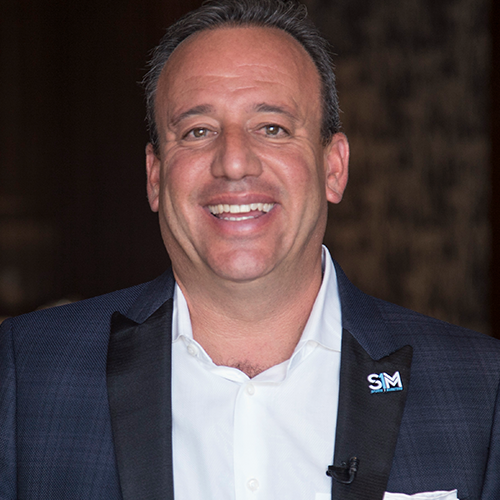
Dave Meltzer is the CEO of Sports 1 Marketing, a Forbes “Top 10 Keynote Speaker“, award-winning humanitarian, and two-time national best-selling author, with 25 years of experience as an entrepreneur and executive in the legal, technology, sports, and entertainment fields. With expertise across many industry verticals, he is uniquely positioned as a world-renowned thought leader, business strategist and leading humanitarian.
Dave has created a platform that allows him to communicate with everyone from college students to c-suite executives by using his principles for business and life: gratitude, empathy, accountability, and effective communication. Utilizing these four principles every day allows Dave to live by his mission, “make a lot of money, help a lot of people, and have a lot of fun.”
Welcome to the Athletics of Business podcast. This is episode 30.
Welcome to the Athletics of Business, a podcast about how the traits and behaviors of elite athletes and remarkable business leaders frequently intersect. The real stories and hard lessons to help you level up your leadership and performance. Now your host, Ed Molitor.
David, welcome to the Athletics of Business and thank you so much for joining us today. I'm humbled and fired up to have you here.
Yeah, thank you so much for having me on.
Ed, Love everything you do, appreciate everything you do. And could you take our listener back to your journey, kind of unpack the things that have shaped you and made you the incredible servant that you are now?
Yeah, sure. As a lot of my listeners know, you know, my real goal in life since I was five was just to be rich. The reason I wanted to be rich was to buy my mom a house and a car. And I went through a journey from wanting to be a professional football player to getting run over in college by Christian Okoye and realizing I should have listened to my mom. Doctor, lawyer, failure, pre med, changed my mind because I didn't like hospitals. Went to law school and kept my point of entry, my options open. When I graduated law school and had two job offers, one to be a litigator, an oil and gas litigator and make a ton of money to buy my mom a house or car or take a big risk and sell legal research online to a pre chasm Internet.
And so the critical point in my life of who I became was asking my mother for what I should do and her without blinking telling me that I should be a real lawyer because the Internet was going to be a fad.
Yeah, I love that.
And that great lesson of knowing that just because someone loves you doesn't mean they give you good advice. Set me on my trajectory to be an entrepreneur, to work within the Internet and within nine months become a millionaire, buy my mom a house, a car, pay off my law loans, really transcend my trajectory through Silicon Valley and raising money for middleware company over $169 million. There even further the trajectory to be the CEO of the world's first smartphone, the world's first Windows CE device in 1999. And that's when my real life changed, is when I thought that I was on the right path, that everything in my life like Midas turned to gold and everything was happening for me. And I thought that optimistic attitude was the key to life. But the problem was there's only so much of me.
And as I learned as a VC and angel investor, and later become CEO of the most notable sports agency in the world, called Lee Steinberg Sports and Entertainment. What I learned was that there was a lot more to the world than me and that I couldn't buy enough things. Different things, more things. There was a world of more than enough that I didn't recognize. And I had to learn the lesson of poverty. Lost over $100 million on paper, of everything I owned in order, while I'm the CEO of Lee Steinberg, while I have to go to my mom's house and explain to her that I've not only gone bankrupt, but lost her house because I was dumb enough to keep the house in my own name. But moreover, I learned the best thing that ever happened to me as I learned radical humility.
And through that journey, I learned a very simple lesson, that everything in life doesn't happen to me like a victim. It doesn't happen for me, as an optimist would think. It actually happens through me, where I need to be grateful for everything that I have in my life. I need to be an appreciator, add value to that and give it away. I realized I didn't know what I had until I gave it away. So, shifting the paradigm, I decided to live my life of service. That doesn't mean I'm walking the streets of Calcutta giving away everything I have. Like Mother Terese, I actually believe in making a ton of money to help more people and have more fun than anyone. And so, as I have learned, I pray for 10 people every morning that I can help.
I do everything I can to provide value, to do good deeds, to be kind, to be truthful. And I pursue that potential and enjoy the consistent, persistent pursuit of that.
I love it. I love it. And if I could just back up a couple steps, because I've listened to several conversations that you've had, and it really resonated with me. I myself, I had a similar situation that you had with your wife where she said, hey, you know what, Dave? You're not paying attention. You're listening to wrong people. You're listening to the wrong ideas. My ego is getting in the way. I had my previous life, as my listeners know, I was a college basketball coach. And when I got out of it the first time, I was very angry, very confused. And I absolutely identified who I was with, what I did right. And I. I didn't understand the road I was going. I had a major battle with alcohol, and I was powerless over it.
And it was at that conversation I had with my wife where she said, hey, you got to get back to you, and I'm not going to be with this person. And you tell a story about how you sat down and you outline four values that you live by. And I was wondering if you could share those values with us, because I love those and I think those really resonate with folks, whether or not you've had that come to Jesus moment or not. I think if you live by these, you are going to be a massive success.
Absolutely. I think the consistency is a key point, and I hope that people don't have to fall like you or I in order to find these four things. The first thing is the power of perspective, which comes through gratitude. And if we look at everything with the lens of gratitude, our past becomes nothing but miracles and lessons. Our present only becomes wonderful, and even more importantly, our future becomes even brighter than that. Gratitude is the secret recipe to everything. If we have the power of perspective, the power of gratitude, there's nothing that we can't manifest or achieve or believe for ourselves. So the second one I call empathy, which is not sympathy. You can't feel bad enough to make someone feel good, but it's actually forgiveness. And a lot of people have worthiness issues.
And because we don't feel worthy, we do things that are less than potential, less than perfect, and we need to forgive ourselves. Only one person to forgive. And when we can gather comfort outside of our ego and forgive ourselves, we can live at peace. Forgiveness is a truth. Gratitude is a truth. The third one is accountability, which gives you complete control of your life. Accountability says that every single thing that comes into my life I have attracted. And two, the only thing that I have to determine is what I did to attract that and what I'm supposed to learn from it. A lot of people have struggle because they confuse liability with accountability. I still think people are liable for things. They're just not accountable. So make sure you understand that difference.
And then finally, inspiration, or effective communication, I call it, is the fourth and final value. Not only do we have to be able to empower other people and inspire them and effectively communicate, which means to connect emotionally to them, but most importantly, it's what are we connecting with we need to connect to? And you'll know this as a recovering addict yourself, we need to connect to consistently what inspires us most. And so if we can connect every day to that which inspires us, then we can give inspiration to others. We can be a motivator, not a manipulator.
And that's huge. And if I could go back to accountability for a quick second as well. You talked about people confuse accountability for liability. And if you could hit one thing, we have accountability partners with, I wholeheartedly embrace, and I understand. But at the end of the day, when you got to where you were after you lost anything, is it safe to say that the reality of the situation was the only person that could hold you accountable was you?
Yeah. The only time I had shortages, voids, obstacles, and resistance into my life is when I went to blame shame and justification. And the minute I took accountability, there was no resistance. There was an illumination, there's an elevation of a higher self that was human, one in which made a lot of mistakes, but actually was accountable and free of the mistakes that I made by taking accountability for those mistakes.
And that's huge. So where these four values, as you turn things around now, you were already, when this happened, you were already working for Lee Steinberg. Okay, so how did embracing these four values and living these out consistently every day and being very intentional and having them, you know, in your. In your conscious, how did they just elevate your performance in where your career went well?
Especially because I've surrounded myself with the spirit of excellence. The greatest people on earth, you know, hall of Famers, celebrities, athletes, entertainers. What I started realizing was by shifting my own paradigm, it was allowing me to liberate others, to shift theirs. And I started to attract a whole nother elite status of crowd, the top of the top echelons and those people that were not living their lives and pursuing their potential fell away. And I really started to attract world thought leaders like Bob Proctor and Jack Canfield and Blaine Bartlett and just extraordinary individuals of all different types. We started working with more hall of Famers in all different sports and Olympians and extraordinary business people like Mac Higgins and Gary Vaynerchuk and billionaires like Steve Wynn and there's Larry Ruvo. There's just amazing.
People started falling into my life because I had been able to not only think, say, and do all the right things. I was able to create new neural pathways through habits that were formed to change my entire belief system, which then in exchange, shifted my energy and my genetics, which is so important for addicts. Right. Deactivate the DNA that causes us, the personality traits, characteristics, obsessions, and addictions that we had. All of that holistically as one. I was able to change or shift because of these four extraordinary values.
Yeah. And, you know, talk about surrounded by excellence. Can you speak to how significant your inner circle is?
So I am blessed. I always say I'm actually because of the relationship capital that I have that was based off of always being kind to my future self, always being kind to others, giving, doing good deeds, doing my best to be honest. And as that even gained more momentum in my life, I have a relationship capital base that is probably one degree of separation from anyone on earth. And you know, and you say you know, what do you mean? I mean, I'm one degree of separation from the president to, you know, North Korea's president, to any celebrity, athlete, or entertainer or senator. I'm one degree of separation from them.
All right, so Kevin Bacon's got nothing on you.
Yeah, exactly. Although Kevin Bacon was in my favorite movie where he was that producer. I think it's the key to life, of allowing things to happen. But where he went out to the desert to kill himself, but everyone thought he. Cause he wasn't returning calls. He became the most popular guy in Hollywood. That's the true epitome of allowance.
I love it. I love it. So, you know, for our listeners, I mean, for my listener that may not understand, you know, they could be sitting here saying, okay, that's great, I get it. Maybe I am headed down the wrong path. I'm really driven by metrics. I'm driven by numbers. I'm driven by dollars. Life seems to be going okay. It's not going poor. I haven't hit rock bottom. I haven't had your guys struggles. But you know what? Why not save themselves the trouble and make that mind shift now and understand and embrace the four values of gratitude, the empathy, the accountability, and the effective communication. How can folks in their shoes do that?
It's so difficult because we're such reactive beings and it's why we have such difficult times being consistent. You know, I could give you a list of three things that easily could change your life that don't cost anything and tell you, say thank you every day, eat right every day, exercise every day. But none of us, it's just easier not to. And the same thing holds true, that sometimes it's a force, it's an energy, and we have to experience things ourselves. And so what I try to do is to accelerate experience. And by that I mean finding people that can connect to me emotionally so that I can learn from them so I don't have to pay the dummy tax myself or peep people into situations on purpose that can accelerate their learning curve so they can experience things themselves.
The same holds true to your children. Right? Children don't listen to you. But they watch you. And if you act appropriately. Right. You can accelerate their passion and their careers and their purpose and even profitability by showing them without telling them what to do.
Yeah. And I love that. And the fact that they do watch you and they do emulate you, but how key was that to your success? Having the ability to watch others and to pull from them what worked for you?
Two times in my life, you know, that I had that humility. Before I made my first million, I lived in a world of radical humility where I was asking for help. I was always in the sports type of atmosphere where I looked for people that were in the situation that I wanted to be in, whether it was a teacher, a professor, a coach, the dean of my law school. Whatever it was, I used them. Executive vice president at my first job. But as soon as I lost that radical humility, that's when bad things started to happen. And once again, working for Lee Steinberg and having him as a mentor and Warren Moon as a friend and mentor, going back to the wisdom of my mother and my wife, who are both mentors as well.
And then, of course, the mentors of the past, like the Wayne Dyers of the world, reading different books like Napoleon Hill, Think and Grow Rich. When I started following and accelerating my situational knowledge through the experience of others, I once again accelerated my career to a path that I never believed could happen.
It's pretty amazing. You talk about Napoleon Hill's Think and Grow Rich, and one of the greatest things I have done, most rewarding things I have done in my career, was do a deep dive study on that book. And you talk a lot about the universe and how fast the truth vibrates. Can you talk a little bit about that and the significance it's played in your success?
Oh, in fact, my book Connected to Goodness is based off of what I've learned from Napoleon Hill. And there's a combination of three things. There's the one understanding I can dream about what I want, but I need to be inspired to make that possibility a probability. And then what makes Napoleon Hill great is he deals with both realms. Not only the imagination principles, how to take a possibility to a probability, but he actually shows you the why you're doing it and the how to do it, taking different disciplines, different strategies, different awareness that takes your probability and makes it your perspective or your reality. So he's one of the few authors that deal with both imagination principles and action principles. So you're not just sitting at home dreaming about what you want after you dream about it's there now. Let's make it happen. Right?
Right. It's unbelievable. And along with that, Ian, I'm trying to make sure that I cover everything that I just. I possibly can in our time together. You talk about being a student of your calendar, what does that mean to you? Like, I know what that would mean to me, but being a student of your calendar, what does that mean to you?
The most important thing I've learned in the last two years is to study not only what I'm doing with a lens of productivity, how productive I am, but also accessibility, how accessible am I to others, as well as how productive am I accessing what I want, information, people, et cetera. How effectively am I attracting what I want? And when I study my calendar of what I'm doing in person, on the phone, on text, as well as email and also media, when I study that, I raise the awareness of intention and attention to the matter which attracts things, even at a more accelerated pace. But beyond studying what I am doing, I also study what my blank space in my calendar with productivity, accessibility. And if you want to change your life, learn and study what I teach.
Learn to be a student of your calendar. Learn to do things now. And if you learn those two things, you will accelerate all parts of your life. And understand that in the Newtonian physical world, there's 24 hours of activity. There's no such thing as being busy, there's no such thing as work. There's just how productive and accessible I am with my 24 hours and some of the activities I get paid for, and some I don't. Just maximize the amount of activity that you get paid for and that you enjoy consistently, persistently in the pursuit of your potential.
I love it. I love it. And tied in with being a student of your calendar, you also talk about understanding your ego. You know, as that is the only. That's the only thing that really gets in the way of moving you from where you are to where you want to be. How does that tie in?
Just understanding and identifying and being aware of the ego, the need to be right, offended, separate, superior, inferior, guilty, fearful, things, just scarce. All the different needs of the ego. And when we understand that if we have a direct trajectory towards our potential, our truth, and that only one thing takes us off that trajectory, which is the ego, all of these different needs. And when we move our trajectory off of our potential, the delta between the two that's created from pointing in the wrong direction is called resistance. And the more resistance that we have, the more Resistance we put faith into, the more resistance we focus in on, that means we're going to get more resistance to what we want. So we're actually detrimental or anti. Theoretically looking at things. It's exactly what we don't want.
So we want to make sure that we keep our eye on our potential and immediately when we get out of our way for our ego, go back to center and let the ego go.
You talk about ego and identify it as guilt, fear and anxiety. And I heard you say once that you still get scared. It amazes me that someone lives such a life of something. Service is so accessible that there are still things where you have competing thoughts. Can you talk a little bit about your competing thoughts and what might scare you?
Yeah, so I have the same thoughts as everyone else. I just go back to center and correct my trajectory faster. So if anyone has children, you can wake up and have thoughts. If anyone owns a business with employees in overhead, you can have fearful thoughts. If anyone has a vile tool president, you could have fearful thoughts. There's a variety of things you could be afraid of. The key is that I limit the amount of physiological effect or physical effect that it has on me. Instead of putting faith in what I don't want, instead of laying and living and grieving and worry, fear, anxiety, shortage, voids, obstacles. I simply know before I do anything, I'm going back to the trajectory of the truth, back to the trajectory of my potential. And therefore I also have the duality of knowing now that I'm back at center.
I also need to quickly bring my physiological, my psychological and physical realm back to center or else it'll take longer. And I run a risk of being worried, scared, fearful, longer, which will attract more of those feelings as well as more of those manifested actual physical beings.
To me in when you talk about center, meditation gets you back to center. And I've heard you compare your center being at the top of a street in San Francisco. And you need to. And I love that, by the way. And you need to get back there. Has getting yourself back to center with your years of execution of the meditation, has that just become a way of life for you? And if so, how long has that taken you to get there?
10 years. Taken 10 years. It started with meditation, then it was understanding breathing, because breathing. I started reading about Buddha and Buddhist philosophy and I call it the six breaths of Buddha, that all my decisions can be made when I'm in emotional states after six breaths. So that goes either way. It's not just the negative, it's if I get too excited on a positive realm, I don't want to make a decision in a celebratory state. I want to make a decision at center. And so I've learned to take six deep breaths, one through my nose and then deep out through my mouth with a straight spine. And that practice has taken 10 years to figure out both mentally and physically how to go back to center.
I love it. Well, before I ask you my last question, can you tell our listeners where they could find out more about you and wherever you'd like to direct them?
Yeah. So you can follow me avidmeltzer or go to my website, which is dmeltzer.com d as in davidmeltzer.com. Those are the two best ways to find me. I'm in LinkedIn, Twitter, Facebook, but @DavidMeltzer and dmeltzer.com.
Well, I appreciate that. And David, I thank you for all you do because you make a huge impact on so many people's lives. And I love everything I listen to everything I read. The people that we have in common. The Don Yeagers of the world. Yeah, nothing but incredible stories. So my last question is, this is when all is said and done, what impact is it that you want to be remembered for having on the world?
I literally, I like to the impact to be helping people. So I don't know in what realm, but I every year seem to be able to empower more and more people to be happy. And if that's my legacy, the more people on earth that you bring up, the name David Meltzer, like, God, that guy really helped me. He made my day better. He taught me this. Whatever it is, just whatever incremental difference I could have of being of service would be a tremendous legacy to leave.
Well, you know, if anyone lives out the law of multiplication, it's you. I mean, to empower people. To empower people. And. And again, I appreciate you being here. I appreciate your time and keep doing what you do. And to find out more about the Molotor Group, go to the molotour group.com you can find us on Twitter at the Molotor group. Instagram, it's edmolitor. LinkedIn. Absolutely. Love LinkedIn and building relationships. It is my personal LinkedIn page, which is Ed Molotour. And we do have a business Facebook page, the Molotour Group. And David, thank you so much.
Thank you. I look forward to doing it again. Ed, call me if you need anything, okay?
Okay. Thank you very much.
Thank you.
Take care.
Thank you for listening to the athletics of business. Be sure to give us a rating and review so we know how we're doing. For more information about the show, visit theathleticsofbusiness.com now get out there. Think, act and execute at the highest level to unleash your greatness.