

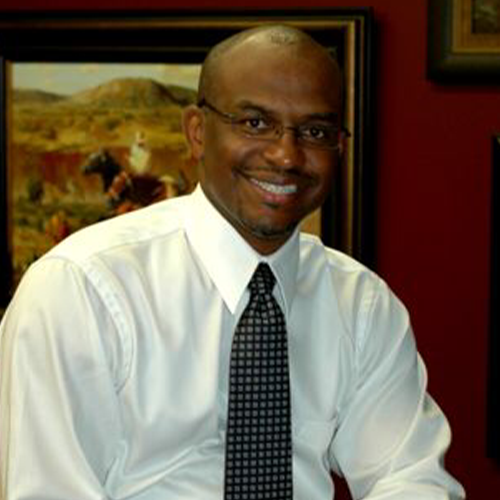
Mr. Ronell Peters has been Senior Vice President of Houston Special Projects and Senior Manager at TDIndustries, Inc. since 2013. Mr. Peters joined TDIndustries in 1988 as a Project Coordinator and over the course of 26 years has progressed through a number of roles within the organization. He is heavily invested in his community and serves in the following positions for organizations in the Houston area: Volunteer Chaplain at the Harris County Jail, Board Member of Spaulding for Children, Board Member of ASA (America Subcontractors Association), and AGC Specialty Contractor Council committee member. Mr. Peters received his B.S. in Mechanical Engineering from the University of Texas at Arlington.
Welcome to the Athletics of Business podcast. This is episode 33.
Welcome to the Athletics of Business, a podcast about how the traits and behaviors of elite athletes and remarkable business leaders frequently intersect. The real stories and hard lessons to help you level up your leadership and performance. Now, your host, Ed Molitor.
This is Ed Molotor, CEO of the Molotor Group and your host of the Athletics of Business podcast. I'm excited to introduce today's special guest, Ronell Peters. Ronnell has been Senior Vice President of Houston Special Projects and senior manager at TD Industries since 2013. Now, he joined TD Industries in 1988 as a project coordinator and over the course of the last 31 years has progressed through a number of roles within the organization. He is heavily invested in his community and serves in the following positions for organizations in the Houston area. Volunteer chaplain at the Harris County Jail, Board member of Spaulding for Children, board member of ASA, which is the America Subcontractors association and AGC Specialty Contractor Council committee member. Renell received his B.S. In mechanical engineering from the University at Texas, Arlington, where he also played basketball.
Renell, thank you so much for joining us on the Athletics of Business podcast today. I am humbled and fired up to have you us.
Ed, thanks for the invitation. I'm looking forward to visiting with you.
It's, it's funny how the journey life takes us on and how were introduced and you work for this phenomenal organization, TD Industries, and you've been here for a few years. You've been here for 30 plus years and we're going to dive into that because I really want to talk about. That's not, you know, that's not an easy thing to do for whole all sorts of different reasons and specifically really in the industry that you're in as well. But we'll get to that. But right now I want to take a look behind the curtain, if you will, about Renell Peters. What shaped you and what sort of molded you? Not sort of, what molded you into this incredible leader that you are now.
Can we go back to your athletic days when you were in, you know, growing up in high school and then at the University of Texas, Arlington?
Well, I actually think, Ed, it started a little bit probably before high school. I mean, you know, I think about back in the days when I going to elementary school, you couldn't start playing for the team till you was in the fourth grade. But I had a coach that saw me on the playground when I was a Third grader and invited me to come play for the team. And really, that coach who still is in my life today. Yeah, he took me in and taught me the game of basketball. He was the same size that I am now.
We should. We. Renell and I bond over a lot of things, and one of the things we bond over is our heights. Okay. We're very similar in height. And let's just say when we walk in a room, people don't take us for basketball players. Okay. We're a little bit. You know, I'm five ten.
Rennell and I'm five six and three quarters. Used to be listed as five, eight.
And he could still jump over me. Much better athlete than I ever imagined being. So let's go. So go back to the third grade in this coach, and I love the fact that he is still in your life.
Right. So the coach basically invited me to come play, saw me on the playground, took me in, took me up under his wing and really taught me the game of basketball. Challenged me at an early age to make sure everything I could do with my left, I need to be able to do with my right, and really taught me about how to think the game and think strategically about how to play the game and how the game needed to be played. So I'm very thankful for that. I mean, I do have a. A history in my family where my mother played basketball, my dad played basketball, so I kind of come from that background. But I think that coach taking me off the playground at that early age and really pouring into my life made a huge difference. Moving forward, I have to think.
I mean, there's so many different things there. You talk about relationships and connecting with you and leveraging your strengths, and I love the word strategically. I mean, at that age, all of a sudden, you start thinking about the game strategically. Did that carry over into aspects of your life at that young age?
Oh, it definitely does. I mean, you know, you take, you know, going off the court into the classroom, it's pretty much the same thing. I mean, you're thinking about in terms of doing well on tests and really putting forth your best effort, you know, so, you know, if you want to play strategically, trying to think, how do I make an A? Or how do I at least know that I gave it my all, you know, no matter what the task is. And so I think that started it all. Just trying to be your best and trying to think about how do you do well.
So at what age? You know, we jokingly were talking about it, and weren't Joking. But the responsibilities of a point guard, and, you know, we embrace those responsibilities. You set the. You set the pace and the tone and the energy level for. For your team. I mean, it all starts with the point guard. And. And as a leader, at what. At what age did you realize, you know, there's more on me than there is on some other guys? I have. I have a responsibility to my guys here, and I have to make sure that I, you know, I operate at that level every single day.
I would say it probably came when I entered high school, I mean, because I know when I was in elementary and in middle school, it was more about scoring. It was more about. And I felt like I needed to score in order for the team to win. I was one of the better players on the team, but of course, when I hit high school and was able to be surrounded with better talent, you know, then you start as a point guard. I mean, you gotta distribute the ball, and you gotta know who to distribute it to and when to distribute the ball to them. And so you really start building off of the talent that's around you and really start understanding how do you make others better and how do you make them shine?
And you do that by knowing when to get the ball to them or when. It's the same thing, even in terms of business now, in terms of leading a team, knowing who to delegate the task to and making sure that they're able to get it done right.
And you talked about putting. Putting your teammates in position to succeed, not just who to get the ball to, but where and when to get the ball to them. And. And how do you relate that to business right now with the. The incredible team that you have here at TD Industries?
I think it's. It's the same. You got to know your teammates. You got to know what their talent and their skills are, and that doesn't mean that they don't have potential to do more. And you got to know when you can stretch them. But. But it certainly knows, you knowing your customer base and knowing who on your team is able to best satisfy that customer and get the job done in a way that it welcomes TD back for the next job.
I love that. And so let's go back to. As you were a player and you learned all these incredible lessons from your coaches, from your family, from the people that you were surrounded by. At some point, you had to struggle. At some point, there had to be challenges. At some point, there had to be fear. Can you talk about how you grew through that time of your life and how that has helped you lead others here.
Yeah, I think along the way, I mean there's always gonna be those challenges, those difficulties. There's always gonna be that somewhat of a fear that enters, but I think it's the work ethic. I think when you acknowledge that there's a challenge that's in front of you, then you also gotta make a decision on what you do different, what do you do to overcome that challenge, to cross that hurdle. And I think if you set your mind and go to work on improving that ability, I think that goes a long ways in building confidence. You know, I heard a saying that, that practice doesn't make perfect, practice makes permanent. You know, and I think that's so true is that I don't think anybody that does everything perfectly well all the time.
But if you practice it and practice it, man, you have a good chance of being in the 90 percentile of getting it right.
Right. And it's all about repetition and repetition, you know, just, it helps you accumulate positive habits and it becomes just a way of life. At what age did you realize you were, you had what it took to play at the next level. And with that came more work.
I think from the time I entered high school because as a fre, I actually played on the JV team and actually got to play in a varsity tournament because our varsity team had suffered a loss. And so the varsity coach called me up, I mean it was doing over the holidays and said, hey, I want to experiment a little bit. And so he invited me to come play in the rest of the tournament games and actually played me. But our JV team on that at that time was on a roll. We were undefeated. We wind up going 270 that year. But he elected not to disrespect. And then from there I played varsity the rest of my time from my sophomore year on and started as the point guard. And so I knew that there was something special that was there.
And even from a coaching standpoint, my high school coach, who's the late Ellis Davis, was an excellent coach to me. He reminded me of Georgetown John Thompson in terms of the defense and the fast paced play and really allowing his talent to do what they do on the court. And one of the things I liked about him is he saw my understanding of the game and he let me play. And I was probably a pretty fancy player, but the guy that taught me how to play in elementary said, hey, don't go between your legs or behind your back, unless you're going somewhere with it. It's not just like the players you see today, they're more showboaty as opposed to doing something with the ball and making purpose. Something happened. Yeah, having purpose. That's exactly right.
And, and so that coach solved my ability in high school and allowed me to play the game the way, you know, God had given me the talent to play.
Yeah. Now the lessons that you just, again, I'll use the word accumulate, but you've played for some amazing coaches. And as you. At what age did it dawn on you that, hey, these things, they're helping me off the court just as much as they're helping me on the court. And you already mentioned the classroom, but how about in terms of your inner circle, your social settings, surrounding yourself with people that p. Best in you and putting yourselves in those situations. When, at what age did you realize that was.
You know, I think that probably was more of my junior senior year and maybe even starting my freshman year in college is to make sure I surrounded myself with like minded individuals who had goals and who was looking forward to doing something in life and with their life. And so I think it was starting in my junior senior year of high school, but definitely in my freshman year of college, you know, entering into uta, that was definitely important to make sure I surrounded myself with people of like mindedness.
So how about when you joined TD Industries and your career started escalating and you know, going in an unbelievable trajectory, how intentional were you about the people that you picked as a mentor or the people you surround yourself with, the office and who you'd have conversations with because, well, you and I a lot. And it's just like athletics, people sometimes want to be around people that tell them what they want to hear as opposed to what they need to hear. And they surround themselves with people are just going to contribute to their negative energy. But for you to have the career that you had, what types of people did you put around you and how intentional and how early in your career did that happen?
Yeah, I think that happened right off the bat for me, Ed. And the person who has been my supervisor, he's not my supervisor at this time, but Graham Moore was really kind of like a mentor to me, you know, but not only Graham, his supervisor, Ben Houston, and then even the CEO at that time, Jack O Jr. You know, so having access to all of that upper management and been able to spend that time with them and really, I'll say it from the standpoint of more listening to, to their conversations, listening to their mindset and their thinking and understanding how they were looking at things strategically role with my ability to advance, you know, so it was really just soaking it in and learning and not feeling like I think I've got something to say as much as I got something to learn.
That's awesome. And we talk a lot about the process. Right. So at what point in your did you have any idea that you'd be here 30 years?
No, no.
And I mean that like holy cow. It's an amazing journey, right?
Yeah, it is. And I can tell you early on seeing others celebrate their 5 year anniversary, 10 year anniversary and of course, you know, the other anniversaries. You know, I'm saying, well man, maybe I'll be here 10 years and then you know, be doing something else.
Right?
And then you look back and you see the years tick off and you look up and you say, wow, man.
Right?
It's 30 plus years.
Right?
And you know how much more.
Right, right. So as those years flew by though, you were just locked into what you're doing right now. Like what is it right now that I need to do to keep things going in the direction that they're going, you know, to keep growing, to keep improving, to keep the team moving forward. And is that how the year sort of flew by? Is that how your career just went in the direction it went?
I think that it's a different challenges that you have in life. And I think Indian, any individual that desires to move forward has to have a challenge. And so I think one of the things that has happened at TD is I I KE opportunities to be challenged. And you know, as any competitor or anybody that's sports related, I mean, you want to win, right? You want to overcome the challenge and you welcome the challenge because you know in the end that's going to make you better, that's going to improve your ability. And I think that's what happened in my career here at td.
Yeah. And it's, it's funny you say that because you do want to win and you want to win every single day. And that doesn't mean things always go right. It doesn't mean it's always fun. Okay. It doesn't mean it's always easy. But the thing is when you get outside that comfort zone that like right now talking about, I get that feeling like you, when you Accomplish something that you didn't really. You, you thought it was possible, but you thought maybe I'm stretching myself a little bit, you know, too much there. Can you talk about developing that in your professional career? Developing that ability to get outside your comfort zone, not just as a performer, but as a leader?
You know, I think about back and I have to always kind of relate back to the court, you know, because you get scouting reports and you hear about certain players. You know, I was thinking about even watching the NBA All Star game this past weekend and seeing them on the three point competition when Mark Price came out. I mean, I actually got a chance to play against Mark price in the Fate 7 All Star Game back in the day. And you know, I'd heard a lot about Mark Price at that time, you know, and he had a teammate, Wayman Tisdale and some of the other big names that played in the NBA, you know.
But I was up for the challenge and it was kind of like, okay, I mean, I've heard a lot about this guy, but man, I don't know if he's heard anything about me, but man, let's see. Game on. And I think that's the same thing that kind of carries over, you know, in life, you know, whether it's family challenges, whether it's work challenges, whatever it may be, it's kind of game on. And you kind of get up for the challenge and you get excited about the opportunity. You know, it's not necessary that, you know, you go in, but you know, you get, you better bring your game, you better come to play.
And it reveals who you are and it reveals what's here, right? And I'm pointing to my heart right now, but it reveals to what you're made of, you know, what kind of substance you have. Now, I don't want to get off track, but Mark Price, did you start guarding him as soon as the gym because he could shoot. That boy could shoot from anywhere. I love Mark Price.
That's right. I mean, I knew he could shoot. And that's the thing about, I guess being my size, there's always had to be a strategic mindset been my size, you know. And one of the things I used to make sure I was in the best of the best shape because one of the things I'm guarding players that are taller than I am in most cases. So I had to figure out how to wear them down. And so that means if they had to bring the ball up to court, man, they had to Work to bring the ball up to court, you know, so just little things like that. So the same thing with a shooter. I mean, I had a good high school basketball coach to say, man, you don't let a shooter breathe. If he breathes, you're right there to catch him.
Right, right.
You know, and so, you know, so again, it's using that mindset to say, what do I need to do in order to win? And I think that's the same thing in business. You're trying to figure out what do I need to do?
That is a perfect segue, because I wanted to ask you this question, and this is another thing I think about undersized point guards. You know, one of the great things we have in common, you just figure out a way to get things done, right? You just figure out whatever it is, whether it's what bothers the guy that I'm guarding, you know, what annoys him. I mean, what just what do I need to do to get that edge? And I don't mean in a negative light. I mean in a positive light. So how do you work with your team now, showing them how to get an edge, you know, showing them how to think strategically?
I mean, how do you take what you learned from your mentors where you did such a great job listening and as you've, you know, climbed a ladder in the years, how do you pay that forward and give that to your team? Because, because quite honestly, I think younger generations, and I'm not knocking anybody, but I'm saying I just think there's something to be said about the fact they don't know how to have their own pickup games in basketball. They don't know how to go shirts and skins and who sides and how to solve their own problems and call their own fouls and mom and dad aren't there to clean up their mess. I'm going to get way off tangent here in a second, but I don't want to do that. But no, how do you.
So with the younger folks coming up, how do you say, hey, listen, there's. You have what you need. It's up here, right? It's in here. You have it. Can you talk a little bit about that? Because that gets my juices going. Because I don't think, I think we miss that competitive spirit sometimes in the business world.
You know, one of the things that I think about it, even in terms of, with my children, there's an age appropriate responsibility, you know, and I'll even use my Son, I'll tell him he's 17. And I said, you know, you've never been 18, you've never been 19. 20. I have. So I can tell you about those ages. I said, so I'm just going to hold you accountable for being 17. You can't go be 16. You can't act like a 16 or 15 year old. You're 17, you know, and I think that's the same thing that carries over in the business, you know, with your teammates.
I mean, you treat them in terms of, at the level that they're at and you don't let them go down a level, but you encourage them in terms of, and you lead and guide them as they go up a level. And so I think coaching comes a whole lot in the play there is that I don't want to be one that give you all the answers. I want to help you figure out the answers. So my coaching style and leading style is more of asking questions that's going to help you discover what you already know or what you don't know and we can learn together. And I think that makes it stick with them a whole lot more.
And it also puts together a process where they generally, before they come ask you, they ask themselves those questions that they know they gonna be asked and possibly discover the answer and not need to ask you at all.
I love that because, you know, with my executive coaching clients that I have, it's when they sit down sometimes they're going to think that you're just going to tell them everything they need to know. And hey, it's one of these deals. You just, you know, my job is to ask the right questions at the right time in the right way, because they have the answers. And I love when you get folks in there and all of a sudden they start realizing they have the answers and the empowerment that comes from that and the self confidence that comes from that with them.
And like said though, if they all of a sudden realize that they don't know, okay, but you know what you do know, you can figure out how to get there and you can figure out how to, you know, to get that answer. So that's pretty cool. And as you lead and you see your people move on, how much joy do you take in seeing them grow their career just like your coaches would, you know, all the joy they took in you.
I think, Ed, there's nothing better than that. I mean, my high school coach would say, you know, if you're an all American, then the person you've been practicing against should be at least all state or all city, you know, because they're the one that's making you better, and you ought to be making them better, so you ought to be bringing them up as well. And so I think there's nothing better from the standpoint of a leader. When they see those who have been following them now leading, you know, it just gives you great joy to know that you played a part.
And I know, you know, from your coaching background, I mean, you've got to understand that, because, you know, when you see players that you had a part in their life, now been successful in life, you know, you had a part in that.
Right? And that's. That's. That's so rewarding when you think about that. And I'm. I'd be remiss if I didn't say this. The way were connected was through Graham, and Graham and I sat. We talked about you for probably 10, 15 minutes nonstop. And he shared stories about, you know, getting to know you, how he knew you're gonna be great, why you're great, why he's so proud of what you've developed into. And he, you know, it's just. It's conversations like that you. Because it takes us back. Like you said, it takes us back to our athletic days, right? Those were just special people in our lives. So how do you bring, you know, not how do you bring. Because you've already answered that. But how significant to you is for people here to embrace the servant mindset?
Well, I think serving leadership is, man, what it's really all about. I mean, and there's been plenty of past historical speakers who have used that term and used the idea that, man, anybody can be great because anybody can serve. And I think when you get outside of yourselves and outside of trying to promote yourself and understand that, man, if I can serve you and make you better, that simply really makes me better and really says, I'm really the leader, you know, without having to pump my chest or stick my chest out or, you know, beat my chest and say, oh, look at me, you know, because those who go out, they're going to be the one that really kind of have a testimony about who helped them and who got them there and why they are who they are. So I think that's.
That's, you know, that's really the essence of servant leadership.
And your servant leadership and your servant mindset that does not stop at TD Industries. It does not stop with your family. Can we talk about that amazing journey that you've taken and where you're at now with what you know, what you do.
Yeah, sure can. And I think it carries over into the community. It carries over into my volunteer chaplaincy down at the Harris County Jail. I've been doing that for 11 years now. And to really be able to pour into the life of a others and really, you know, as I've gotten older, you know, I'm age 55 now and I actually read a, a statement one time and it may have been more so along the Jewish religion in terms of they didn't believe you had anything to offer until you turn 50 and.
Good, I still got a couple years. Well, I got about a year. But anyways, I digress.
Well, just saying that man and you think about that and you're like, yeah, you believe some. And so you've got a lot of experiences to be able to share. And especially when you do have family and you have been in a working environment and out in the community serving, you know, then you do have something to share with others. And so I think being able to go into and minister and share and talk about what it means to be a man, what it means to be a father, a husband, things of that sort is really just again pouring into somebody else's life. That bib not had that in their life. And I think all of us desire to be successful, but some of us just need some help learning how.
Yeah, that has to make for some amazing conversations inside those walls. And they say that the best way to learn is to teach. What are some of the great lessons you've learned from doing that?
You know, I would definitely say that, you know, some of the things that I try to teach is the ideal of this accountability. And especially I say, especially for men from the standpoint of we often think it makes us less than a man if I got to be accountable to another man. But what we don't understand is that man, that helps us to stay on course, that if we get off course, it helps us get back on course. When I surround myself with other men who are on this same journey, who are trying to move forward in life and be successful in life, to be able to have those conversations and know that man, if they happen to see me veering off course, they've got a right to come talk to me and say, hey, let's get back on track.
Right? And when you talk about accountability, all that does is raise your level of self awareness. Right. And I Believe self awareness and we go back to athletics, but I believe self awareness is a competitive advantage in business, in life, in athletics, whatever. Can you talk into? Because I, I struggle with this for a long time was I intellectually knew where I was, but you just said being accountable to another man sometimes was a challenge or to anybody else. Because you spent so much trying, so much time trying to prove your worth, trying to prove your capacity to do things, to accomplish great things, to be a leader.
And then the thought of having to take a step back and saying, okay, I screwed up or okay, I didn't do this the right way or I made a poor decision or I could have done this better is a challenge. When you see that light bulb go on inside the walls of the jail and someone realized, you know what, I've been a train wreck of a person, but it's okay now because I've got this or I know what I need to do. Can you talk a little bit into that like some of the success stories you've seen?
Yeah, I can. I think one of the biggest deals is I always emphasize taking ownership for the decisions that you make. I talk about the ability to choose is really a gift from God. And in every choice there's power. Because every choice puts you on a path and every path is going to take you to a destination. The same way you get on the street, you need to know where you're going and where that street is going to take you. Otherwise you go wind up someplace you really don't want to be, you know. So being able to express that to the guys is kind of eye opening for them because they never think about the power in a choice. The other thing I think about is that I tell them is that you've heard the saying, no man is an island.
I said, man, if I didn't need you and you didn't need me, man, God would just put us on an island by ourselves. But the fact that he didn't says we need each other and so we got to help each other get better and help each other understand our self worth with one another. I'm not competing against you. You know, we're really just trying to get better together, you know, and so how do we help each other Now?
I'm going to switch gears just a little bit. I'm going to talk about something and bring it back to the business world. And we talk about choices, right? We talk about circumstances, and our circumstances don't define us. So I'm pulling that out of that story. But when you have circumstances here, whether it's the marketplace, whether it' weather conditions, whatever they may be, when you have circumstances here, how do you work with your people in terms of the power of choice and the power of responding versus reacting to adversity?
You know, I think it's something I learned through Stephen Covey. We do Covey training here at tde, and there's these two circles. There's a circle of influence, and there's a circle of concern. And it talks about over in your circle of influence, of the things that you're able to control, you know, and a lot of times that's your attitude, that's your action, and you've got some influence. With my team, I've got some level of influence. So that's where I want to operate at in my circle of influence. What can we do? What can I do to make the situation or the circumstance better or to improve on it? I don't want to stay out of my circle of concern. Those are the things I don't control.
That's when discouragement, where disappointment and frustration comes in, when I'm trying to control something that I have no control over. So that's one of the things I try to emphasize. And where am I operating? If I find myself going over to a circle of concern, I try to pull myself back. And the same thing with the team, and I try to get all of us to think about what are the things that we control and stay in control and keep influencing those things.
Do you have a specific exercise that you do with your team that you can share with us, or is that just something that you're very conscious of?
I think there's something I'm more conscious of. You know, it's kind of like. It's interesting because as. As different situations and circumstances come up, there are different things that I think about in terms of lessons I learned or books that I've read or just phrases that I've heard, you know, that just come back to mind. I mean, I always think about even in terms of, you know, investing, making an investment in somebody. And I think it was George Born, in one of his books, says, man, the greatest thing you can do is make an investment in somebody else. He said, but if you want to maximize that investment, invest in them while they're young. And I thought, that's pretty powerful.
That's really profound. Yeah, that is very profound. So what are some of the ways that you invest in the young people here?
Well, one of the ways is really just again, kind of seeing where they are understanding where they desire to go, and then make sure they're getting the training that they need and then also making sure they're getting a challenge that they need. You know, because some of it is go come through kind of classroom teaching. Others go come through just having to experience, having to go through it, you know, and not wanting to prevent them from. From failing because, you know, failing is not final or not fatal unless you lose hope, you know, And I was trying to think of the name of the movie. Man, I can't think. But, but there was a statement that was made. It was, it was the. It was the Hunger Games, okay? And it was the statement that I heard that I called.
He says the only thing that's greater than fear is hope. And so I think when you're investing in the lives of others and young people, you always want to make them always have some hope. And that's really true for anybody, but definitely somebody that's getting their career started is how can you keep that hope alive?
Right, right. And so what we're talking fear and hope, we're talking about emotions. So I'm going to go back to our point guard days. You want to play with emotion, but you don't want to be emotional. How key is that to your success and business? I mean, go ahead and answer that question, because I got one I have to ask you after that.
Well, and I think you're right. I think it's an emotional game and being the point God where you're setting a tempo, setting a pace, you're trying to make sure you're keeping everybody encouraged and you're trying to make correction where correction needs to be made, but you've got to do it in such a way where you don't discourage your teammate, but you actually uplift them, you know, so if there's a pass that's missed, if there's a shot that's missed, you got to encourage them. Hey, we'll get the next one. You know, let's. Let's get back on defense. Let's get the ball back. Let's get another opportunity, you know, so it definitely is important.
Yeah, it's. That's such a fine line. Because you want to. You know, when I talk to. When I go out and do leadership consulting and I do coaching, I talk about getting your team to an attach emotion to your. Your purpose, you know, getting them not just to have buy in, but believe in. But I always, as a player and as a coach, and sometimes it was A fault, there was an edge, there was a chip on my shoulder. Maybe it had to do with the fact I was always undersized or people always doubted me or whatever the case may be. How did you take, did you have that as a player, being five, six and a half? Did you have that, did you have that chip on your shoulder?
And, and especially when you got brought up as a freshman, even though you went back to JV when you got brought up, I mean, man, the big boys are looking at you like, what's going on here? You know, you're bringing this, bring this freshman up, you know, yet you have to prove yourself. So how does that kind of showing itself in your professional career?
Well, and I think the key, and I think you said it in terms of having to prove yourself. I think when you've got to prove yourself, you really have to do it at the initial start. And then once you've proven yourself other than others, kind of recognize in terms of your ability and your potential, and then it's when you get ready to go to the next level, you may have to prove yourself again. And so there's always that chip on your shoulder, especially when you know that I'm at a proven state where now I've got to prove myself again, you know, and I think that's where it comes.
Anytime you desire to go to the next level, then you've got to have a little bit of a chip on your shoulder to say, okay, it's time to prove myself again, that I can do this, that I have the ability to do this.
So before we wrap this up and it. Our time flew by, I, like I told you before, we talk for hours, and we will, but just not in the podcast recording. But sustaining success is such a challenge, for lack of a better word, but it's such a challenge and you know, a lot of folks will say it's harder to stay here once you're successful in what was to get here. You've been here 30 plus years and you've had an unbelievable run organizationally, individually. What are the keys? If you can talk on both levels. Both an organization level, organizational level, excuse me, and an individual level. The keys that you believe to sustaining success.
Sure. I mean, I think on an individual level, I think never getting content, always working to get better, always working to improve. There's always something that you can learn. There's always more to partake of, even just continuing to seek to grow, you know, seeing Other individuals who are much farther along than you are and saying, oh man, how did they get there? Let me learn from them. What can I learn? You know, And I think you're never going to exhaust the learning, you know, and I think that's so true for an organization. And I'll say another key, individually and organizationally, you got to be willing to change as time goes on and things change. I mean, think about technology today.
If you don't change with technology, you'll get left behind, you know, and so you got to be able to embrace that technology, embrace the change. But there are some core values that you got to maintain. You know, there's some principles in life that go carry you through life, but the methodology can change in terms of how you carry those out.
Yep. And I, I firmly believe, and I teach this in my consulting work, if you aligned, I mean, the core values are. That's it. That's your rock, that's your foundation, that's your non negotiables. Okay. If you can align your core values with your role, your vision and your goals, you're in good shape. It's going to help your decision making. And one of the things I have to ask you, point guards, I believe on the court are either really good teammates or they're really poor teammates. It's just there's not a lot of gray area at that position. What in your eyes, in your business career and your professional career, what makes a great teammate?
I think what makes a great teammate is somebody that understands their role and chooses to stay within their role as the game has been played or as the business has been carried out. I mean, you don't try to do things outside your ability to do those things in the game or in the course of business. Doesn't mean you don't work on those things. You don't try to improve. But when you understand, hey, I'm on this team, here's the expectation of me, let's do that and do that well, and then we'll figure out of the business how to get you better, how to get you next, get you ready for the next role.
Yeah, right. And how big of a challenge is it for the teammates to celebrate because it gets competitive, to be able to celebrate the small victories?
Well, I think it's important to always have that mindset. We win as a team, you know, and everybody, when everybody does their part, we win as a team. And yeah, and you know, there's some games where, there's some times where one shines versus the other, you know, but at the end of the day, we all won as a team, and so I think keeping that concept and keeping that mindset is important.
Okay, what's the best book you've ever read?
Oh, man, that's.
I didn't really give you the heads up on that one, but. Yeah. Or. Okay, let's not get so extreme. What's a great book that you've read on leadership? We can go top three if you want to go top three.
Yeah. You know, I. I would honestly have to say that my real book of leadership is the Bible. Okay. That's where it starts at, you know, because it. Especially when you understand the history of it and you understand the thought process of Jesus Christ and then just leading to the whole, you know, what's happening today still, you know, so how do you have that lasting, you know, leadership ability that carries on, you know, but of course, there's. There's many other great books that I've read that, you know, there's so many. Yeah, there really is.
Let me ask you this. You have a room full of college graduates, okay, and they're going out into. Into the world, whether it's your industry, whatever. Whatever industry it might be, and they want you, all right, to give them one piece of advice that'll help them be a massive success. What would that piece of advice be?
Advice that I always give a young college grad is you don't have to know everything. You just have to know who knows what you don't know. And go find it out.
That's the key. Go find it out and ask the questions. Yeah. Renell, this was awesome. This was a great time. I really appreciate you taking time and. And sit down and. And you have a beautiful facility here. It's just there's so much value in. In this episode, this podcast. And if folks want to find out more about TD Industries. Okay. TD industries dot com. Correct.
That's correct.
Okay. That's awesome. And. And to. To listen to more episodes of the Athletics of Business podcast, you can go to itunes, you can go to Stitcher, you can go to Google Play, or you can. Or I should say, and you can go to our website, theathleticsofbusiness.com and to find out more about the Molotor Group and our executive coaching, our leadership consulting and the keynote speaking, go to themolitorgroup.com and Renell, thank you for you. I appreciate you. I appreciate what you do. And I'll tell you what, Graham was not lying when he told me what a rock star you are.
Well, thanks, Ed. I appreciate the opportunity.
Okay. Thank you. You.
Thank you for listening to the Athletics of Business. Be sure to give us a rating and review so we know how we're doing. For more information about the show, visit the athletics of business.com now get out there. Think, act and execute at the highest level to unleash your greatness.