

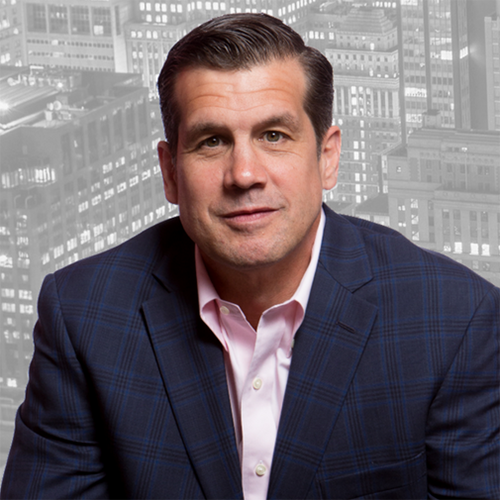
In the last 26 years, Ed has developed his leadership skills in both athletics and business. From working as a NCAA Basketball coach at Texas A&M to becoming the Vice President of a national recruiting firm, Ed has taught countless athletes, coaches, and business leaders how to THINK, ACT, and EXECUTE at an elite level. Ed has a unique set of skills to deliver leaders across the country a purposeful, positive, energetic, and refreshing experience to unlock their true potential.
In 2016, Ed launched his company, The Molitor Group, in order to reach and add value to a larger sphere of ambitious individuals and help them achieve their goals every day. Through The Molitor Group, Ed has guided all types of leaders to achieve success. From entrepreneurs and executives to teams and companies, The Molitor Group specializes in empowering individuals and groups to achieve at the next level. Through Leadership Performance training, coaching, and speaking, Ed’s goal is to supply people and organizations with the necessary tools to move forward from where they are now to where they want to be.
Welcome to the Athletics of Business podcast. This is episode 38. Welcome to the Athletics of Business, a podcast about how the traits and behaviors of elite athletes and remarkable business leaders frequently intersect. The real stories and hard lessons to help you level up your leadership and performance. Now, your host, Ed Molitor. Welcome to another episode of the Athletics of Business podcast. And I am your host and CEO of the Molitor Group, Ed Molitor. Today we are going to, we being just you and I, are going to dive into something that I love talking about, and that's game changers. Game changers that you won't find in the playbook. We live in a world where it's about more resources. Right? Resources versus just being resourceful. But hey, we're going to give you more sales tools, we're going to give you more marketing tools.
We're going to provide you with the best of the best. But here's the bott. It doesn't matter what tools you have or resources you have access to. Unless you work on mastering certain things and certain qualities, and unless you bring certain behaviors and traits to the table as much as you possibly can every single day, you'll never make the most out of all those tools. I see it a lot in the clients and potential clients I talk to where it's like, well, we're giving our agents, we're giving our advisors, we're giving our reps, we're giving them the best tools possible. Okay, well, how's your, you know, how is their work ethic? What is their mindset? What is their attitude and approach?
Do they really believe into the process that you lay out and, you know, lay out form and what are they willing to endure and how much do they persevere and what's their purse? I mean, I could go on and on. As a matter of fact, we're going to go on and on here because that's what we're going to talk about in this podcast. I'm really, I'm really fired up about this. And I tell you, let's start with the story. And I'm going to tell you a little bit about a client. And I shared a story about this client when I speak. And I'm going to call the client Nick. Okay? And Nick is a successful vice president. Excuse me, He's a vice president of a successful mortgage company and it's in the Midwest.
And I don't want to obviously give too much away for client confidentiality. But, but when Nick and I first Connected. He was doing okay. I guess you could say he was doing good, both as a leader in his leadership role and as a producer. But he knew it wasn't anywhere near what he was capable of doing. So I guess it would be safe to say that Nick had the classic performance gap. And I don't guess it is safe to say that Nick had the classic performance gap. And that performance gap is a space between where you are and where you know you're capable of being. Alright, let's say that again. Your performance gap, it's the space between where you are and where you know you're capable of being.
One of the challenges I had when I first got into the executive coaching industry, and I don't want to pose it as a challenge, but one of the things that I really had to figure out was how could I let my personality, my disposition, my way of doing things, how could I let that shine through in the executive coaching process? Because you really have to get into self awareness. You really have to dig deep. Some people can view that as touchy feely. I don't, I think it's awesome. I mean, as a matter of fact, self awareness is a proven competitive advantage. But anyways, one of the ways that I work with my clients and Nick is no exception, we work on attacking the gap. Attacking the performance gap. Okay, we're gonna go into that. Not, we're not gonna say, gosh, I hope it works.
Let's try this, let's see, let's ask the right questions. Wouldn't that be cool? No. We're going to attack the gap. And we start, we do that by identifying the limiting thoughts and behaviors that get in the way of your success. So that's what we did with Nick. And the first thing I did with Nick is I gave him the usual questionnaire. And here's the thing about the client questionnaire that I begin with. It's not just for me to get to know Nick. It wasn't just for me to get to know Nick and more about his business. It was as much, if not more for Nick to get to know more about himself and his business at a deeper level.
This is where he and I were going to start to unpack some things that were hanging around what I like to call your blind spots. And we all have them. Now. I'm gonna tell you a little bit about Nick, okay? He's a people person. He literally strikes up a conversation with anyone, anywhere. And he's a very empathetic person. He's Fun. He takes his clients, he takes his, the folks that work with him and for him in his organization, takes him to major sporting events, to concerts, to just different things happening in the community. And here's the thing about Nick. He has this unbelievable ability to make people laugh and genuinely feel good about themselves. And you're probably sitting there thinking, okay, so what's the problem? Why wouldn't he be a good leader?
Well, you and I both know there's a lot more that goes to it than just that. So the questionnaire is really simple, but it's also a powerful exercise. And with Nick, it's sort of the process of raising his level of self awareness. Now, let me say one thing about self awareness. There's been studies done about the impact that self awareness really has on people's production or performance. And for the seed level, okay, for C level executives, the level of self awareness that they have has been proven to be the number one determinant of their level of sustained success. See, the great ones, and I'm not just talking about C level, but I'm talking about everyone, the great ones all have a high level of not only internal but external success.
They have the ability to step outside of themselves and see their own strengths and weaknesses so they can identify what they can and should be working on to attack that gap and to level up their level of production, so to speak. And, and they also, the great ones also are able to hear feedback from an outside source. And here's the key. Not just hear it, but be able to use it for improvement. And not just any outside source, obviously, because we can really get lost with the noise and the clutter if we do that. But trusted sources such as accountability partners, mentors, peers, and even clients are a great source of feedback. So when we did this with Nick, we learned some stuff and we learned that at the core of his challenges was his lack of self discipline. Everything starts with self discipline.
We know this. Okay, let me. If you're not driving or you're not working out, or if you're not in a treadmill, if you're doing something where you can grab a pen and paper, write this down. Self discipline drives self control, which drives self confidence, which drives your self realization. And we're going to get back to them. Sure. Later on in this podcast. But here's the thing I want to point out about Nick, okay, He lacks self discipline, but he was not lazy. And I hope that makes sense to You. Because sometimes people that bang their head against the wall and think they're working hard, working hard, but they're not working smart. That in and of itself is a lack of self discipline. But this wasn't the case with Nick.
He wasn't banging his head against the wall and working too hard, I assure you, but he was not a lazy person. When I say Nick lacks self discipline, he lacked self discipline in three areas, three critical areas, which I don't know if there are any more than these three, but thought behavior and execution. Thought behavior and execution. So we had to take Nick back to the fundamentals is back to the basics. And we did it not only as a leader, but as a producer as well. And we wanted to teach him how to be conscious about what he did. There's a saying that I love. Until we make the unconscious conscience, it will rule our life and we will call it fate. So how did I know that this is what we need to do? There's.
For sake of the podcast, I'm going to keep it very basic in the one way. The first way I knew this was because of his evening routine. All right, what does someone's after work routine have to do with the success of his or her business? And I'm going to tell you what, it has everything to do with it. See, instead of running feedback loops and reviewing his day and planning out his next day, he would stay up late at night, he'd watch mindless tv, he'd eat crappy food. Then this spills over into your morning routine and he'd start work late and then he'd slog through the morning. And when he came into the office, this was absolutely consistent with him. When he came into the office, the first thing that got his attention every single day was what?
Whatever fire popped up in his world. So right from the start, his day was running him instead of him running his day. He had no daily plan. 0 and definitely didn't have a daily plan that included prioritized activities. So again, he would put out fires all day long. He was, he was like, here's a great way of saying it. He was reacting and not responding. He was reacting and not responding. He had no plan. Not for him or his team. Now I could go way back and go to Ben Franklin who said it and what he said, you and I both know to be true. If you fail to plan, you are planning to fail. So. So Nick's lack of self discipline in turn was killing his self confidence as a leader.
He was stuck One of the things that Nick had a huge challenge with which I see this often with people, and I'm no longer surprised by it, but it is a little bit surprising or was at first surprised to me how many people don't like having uncomfortable conversations. And for Nick, this is a significant issue because there's toxic people under his command that weren't positively serving their culture. And he needed to stop. What I said to him, you need to stop this bleeding immediately. So what do you do with it? You sit there and you work on communication skills. Hey, Nick, you know what? I've got this great communication trainer, which there are amazing communication trainers, okay, that you should have come in and work with you and how to have the uncomfortable conversation.
Well, I want to peel away at the onion some more. I want to unpack some things. I want to ask the five whys, know, why this, why that, why this, why that? So I want. I want to get to that. So why was Nick afraid to have uncomfortable conversations? And here's what we figured out. He didn't have enough discipline and control of his own to make positive changes in his world. So how and could he ever expect others to believe in what he was asking them to do when he couldn't do the things necessary to make him and his team more successful? Let me give you an example. Let me give an example. He had a processor, okay?
And this processor, who is very significant in the whole mortgage process, you know, no pun intended, but this processor sucked the energy out of the office. They were not easy to work with. They were not fun to work with. They were part of the problem, not part of the solution. And, you know, Nick's smart. He works hard. He's smart, and he knows what it takes to run a successful team. But as we all find out, knowing and doing are two different things. All right? And he knew he had to work through some things we talked about. Hey, Nick, are you putting her in position to succeed, to be successful? Are the issues you're having with this person, are they being communicated in a positive way? Was this person adding value to the team?
And the thing, I work with clients a lot, and I love this is what was he doing to get her emotionally attached to the outcomes of the loans in the pipeline and become invested in not only the team success, but their client's success and secure. Securing the best loan possible. All right, so Nick really, he believed in, didn't just buy in, he believed in. And he started dialing into, you know, in his process. And in the first thing he did dialing into his process. He started with his routines and what he would do and how he would gain more confidence in himself.
And when he started to do that consistently, when he got real intentional about what he did at the end of the day, about what he did at night, about how he started his day, how early, what his routine was before he got to the office, what his routine was when he was at the office. Well, when he did that, those uncomfortable conversations all of a sudden pivoted and became productive conversations. And everybody benefited. So we identified his gap. We attacked him. But how do we do that? And that's what I want to share with you today, is how we did that. And we did it by focusing on the four game changers that I believe can help anyone embrace the power of greatness. Not just embrace the power of greatness, but realize greatness itself.
So the first thing that Nick and I worked on, the first thing I want to talk about, is the champions mindset. So the champions mindset is about the way you think, and it starts with your attitude and approach. Psychologist Carol Dweck, which we have all heard of, if not read. If you haven't read her book mindset, read it. It's unbelievable. It was a result of her study of how the mindset affects success. And Dr. Carol Dweck keeps it really simple. She breaks it down into two types of mindsets. You have your fixed mindset and your growth mindset. Okay. People with the fixed mindset believe that qualities like intelligence, talent are fixed. In other words, you're born with them and you can't change them much.
While people with a growth mindset, though, they believe that you can change their abilities through learning, dedication, and hard work. I like to think, and I like to say that a growth mindset is the foundation of a champion's mindset because it's the result of your self discipline, self belief, and relentless determination. This is your champion's mindset, the result of your self discipline, self belief, and relentless determination. I love the word relentless. A champion. Okay, now stay with me here because this is so important. A champion uses positive self talk to replace negative thoughts, controlling their emotional state. Specifically under pressure. Think about some of the conversations you have with yourself. Okay? Would you say. Would you say those things to your spouse? I know I wouldn't. Okay, but would you say those things to your mother or father?
Would you say those things to a neighbor? Think about the things you. It starts with positive self talk. Dr. James P. Gills, Excuse me, is one of my favorite stories. He's an inocular surgeon, a successful author in a businessman. And he was the first person to ever complete six double ironman triathlons. Now what does that mean? Okay, that means he swam 2.4 miles. He rode his bike 112 miles, then you know what, let's run a marathon after that, then turned around and did it all again within 24 hours. Biked 112, 2.4 mile swim, biked 112, then ran 26.2, turned around again within 24 hours. He did his last one when he was 59 years old. If you're thinking to yourself it's impossible, it's pretty mind blowing. Okay, so how did he do this?
And Dr. Gill said that the key to his success was that he learned to stop listening to himself and start talking to himself. Let's back that up and say that again. How did Dr. Gills complete six double Ironman triathlons? And he simply said, I learned my key to success was I learned to stop listening to myself and start talking to myself. In other words, he was going to be really intentional with his self talk. See, when you listen to yourself, you hear the negative self talk and feed your mind with limiting beliefs. Okay? And when you talk to yourself, you're feeding the subconscious mind the things that you need to hear, the things that you will positively control your thoughts. All the great ones use positive self talk. What is self talks? The story you tell yourself.
Okay, it can either be positive or it could be negative. Let's say. How about this one? It's like that Cherokee parable about the tale of two wolves where a grandfather tells his grandson that there are two wolves living inside of each of us that are always at battle. One is a good wolf. That river represents kindness, bravery, and love. And the other is that bad wolf, that's about greed, fear, and hatred. So the grandson, as any young kids do, they want to know more. And the grandson asks, which one wins? And the grandfather simply replies, the one you feed. So. So be. Be one of the great ones. Feed. Feed the good wolf. And feed the good wolf day in and day out on a consistent basis. Something else about champions. They're. They're never satisfied with good.
They're always, always striving to identify the habits and behaviors that will move them from good to great. And then separating them not only from their competition. This is so important. I work on this with my clients every single day. Not only their competition, but from who they were yesterday. A champions mindset is what you apply to become the best version of yourself. And you know, we use a lot of words and that best version of yourself is said so many times. But. But damn, it is so true, right? I mean, it is so true. Here's the thing. A champions mindset. Let's be real clear. It's not just for what we call the game day or the big sales call, or the big presentation or the big meetings. It's part of your day to day, the grind, the process.
You don't have to be a professional athlete, or even an athlete for that matter, to develop a champions mindset. Think about it. You have an opportunity every single day within you inside of your career to compete. You know, athletes will play how many games a season. Athletes will compete in how many meets or events a season. You're going, you're going to the office and you're competing every single day in business. A champions mindset will give you the strength to achieve your goals. Remain calm under pressure. Here's one I really love. The ability to grow through adversity no matter what you face. Go grow. Grow through adversity, not just get through it, no matter what you face. Everyone has the power to unleash their greatness through a champion's mindset. Everybody. First thing we need to do though, is we need to control the controllables.
Focus on what we can control on. And what does that start with? Every single morning when you wake up with, what does that start with? It starts with your attitude. Where are you directing your focus? How are you managing your attention? Where are you directing your mind? See, where you direct your mind is what's going to foster and develop and create your beliefs. And it's those beliefs that will drive your behavior. And your behavior is what drives your process which is going to determine your level of success. Now, to be great, you have to have a burning desire to achieve greatness. It isn't something where you just wake up one day say, you know what the hell, let's be great today. No, this is something that you relentlessly pursue, okay? You're just ruthless. I mean, you relentlessly pursue greatness every single day.
When you do this, it's going to serve as a muscle behind your mental toughness. If a champion's mindset is the way you think, mental toughness is the way you respond. I don't want to, I don't want to confuse mental toughness for mental strength. And we'll get into that a little bit. But, but think about it, okay? Physical strength. What do you do? You lift weights, right? Push ups. Just get the body going, you become physically strong, okay? And you build. You build those muscles. You build the strength. But to be physically tough, to fight through things, you have to get uncomfortable. You have to be pushed outside your comfort zone. You have to have pain inflicted on you. You have to be exhausted, you have to be tired to get physically tough. And that's the same with mental toughness.
You have to get way outside your comfort zone, and you have to do it on a consistent basis. Now, when you're mentally tough, you can tap into your potential and which allows you to perform at the highest level of your ability, regardless of the conditions. Okay? So it doesn't matter. It doesn't matter what the conditions are. Are you playing at home? Are you playing on the road? You know, how are things going at the office that day? All right, did someone that's critical to your sales meeting call in sick that day or no show or something happened in their family, they can't be there? Does something unexpected come up in the process? It doesn't matter, because when you're mentally tough, you can still access that ability. All right? Mental toughness is also your ability to endure.
We talk all the time about how much are you willing to sacrifice? What are you willing to give up? That's great, because you have to be, but what are you willing to endure? Mental toughness allows you to quiet the outside noise and to be present, to be exactly where your feet are now. Okay, so let's say you're not mentally tough in business. Is it really that big of a deal? It's a huge deal. It's a huge deal. If you're not mentally tough, you become emotional and rigid in the moment. You get distracted by what's going on around you and think about everything that's going around on. Around you every single day in the office. Oh, but you know what, Ed? I don't work at the office. I work at home. I'll tell you what. I've had my moments working at home, too.
Well, there's a million distractions. Things you never think about. I go to Starbucks. Oh, okay. Well, there's. There's plenty of distractions there too. All right, now, also, you get distracted by what? What's going on behind the scenes? What are the politics behind what's happening and when. Anything. When you get distracted, regardless of. Of when, where, how, what. But when you get distracted, you cannot be focused and present. And this is a huge liability in business. Let's take an example. Let's say you're in a sales meeting, okay? Or let's say you're meeting with a potential client who you're going to consult on their financial manners, okay, whatever it be, money market accounts, investments for them, insurance for whatever their mortgage. And you just can't, okay, this is a liability.
Because if you're stiff, if you're rigid and emotional and distracted, you're not going to have the ability to access answer to a question if you cannot focus, which means basically you're going to push, you're going to struggle through your days, you're going to struggle through your process, and then difficult times are going to become more difficult when you lack that mental toughness. And here's the one I see show up a lot. And I see it show up in my clients, my potential clients. All around me, people start playing not to lose. And I could talk about this in athletics all day long and give examples, but I want to stay focused here. People start playing not to lose. Sometimes My clients are struggling each day to just stay on the board to drive those numbers to meet their metrics. Okay?
They're not actually going in and trying to get the win. They're trying just to save the meeting, save the conversation, save the clients. What's missing in these moments is mental toughness. One of my all time favorite books. My dad gave it to me in 1987, I believe the book was published in 86. It's called Mental Toughness Training for Sports. And it was written by James Lear. I literally, still to my left on the shelf in my office as I sit here and record this podcast, have that book, okay? It's all highlighted. It's dog eared, it's ripped, it's bent, but it's there and it's awesome. And in that book, Lear says that consistently performing at your peak in the heat of the moment.
Now, right now, as you're listening to this picture, how this can relate to you and your career, okay, in the heat of the moment, it requires mental strength. That comes from mental skills which include concentration, controlling your attitude, energy. We talk a lot about that, right, don't we? Positive energy and managing pressure. Visualizing. And visualizing. We're going to do a podcast on that. We're not going to go into that too deep right now, but visualizing and staying motivated. I like to talk about staying inspired, all right? But this is what James Lear, Dr. Lear calls the ideal performance state, or IPS. But when you play not to lose, you cannot operate from these skills. Instead, you're going to work from panic, fear, and Frustration. Because what you're doing is you're trying to avoid letting people down. You're trying to avoid choking, so to speak.
So what do mentally tough people, you know, look like? What are mentally tough people? I think that's important to give you the visual and to lay that out there. First thing is they're self motivated and self directed. They don't need to be pushed from the outside. Now let me back up a second. Okay. Even the most self motivated people that I've coached, whether it's in the athletic world or in the corporate world, every now and then they need a push. Every now and then they need a kick in the ass. Every now and then they need a hug, Right? But truth be told, the self motiv people don't need that on a consistent basis. Here, here's one. Ooh, listen this one.
I love when this pops in my head because I could talk all day about this because it leads into a lot of different things. They're positive, but the realistic. Now what does that mean? Mentally tough people are realistic about the situation. They accept reality, but they don't. The great ones don't settle for it. They accept it, but they don't settle for it. All right, big difference. Mentally tough people have control over their emotions. And that way, fear, anger, frustration, it's not going to control them, it's not going to control their conversations and it's not going to control the way they treat people. Think about, think about your clients, think about your office, think about people you deal with. And when the negatives win out, how does that work for everybody? Everybody? It's pretty crappy, isn't it?
When you know, you have someone who's a great person but man, they just can't get over the hump with their attitude or they can't get over the hump with the way respond. The way they respond, the smallest thing goes wrong. Alright? But mentally tough people have control of that. They're calm under fire. I love this. They're calm under fire and they don't perceive pressure as a threat. We always talk about what pressure creates diamonds. They don't see as a threat. They see it as an opportunity. Just like they see adversity as opportunity. Mentally tough people are highly energetic. It doesn't matter how tired they are, it doesn't matter what's going on in their personal world. They're locked into a process. They have a job to do and they're highly energetic and damn, they're determined. They're determined. Mentally tough people are mentally alert.
And they're not just mentally alert for 10 minutes, 15 minutes. They are mentally alert for extended periods of time. They're the ones that keep the meetings going. In other words, keep them on track, keep them focused, and keep the energy level up and not make everybody want to poke themselves in the eyeballs with their pens. They're self confident. And hey, here's the thing. Mentally tough people, they're going to have self defeating thoughts, but they know how to shut them down and they know how to replace those self defeating thoughts with positive thoughts. All right? It doesn't mean mentally tough people, their lives aren't easy. As a matter of fact, they could be more challenging at times because they're so aware of what's going on. And here's the one that's great for any generation.
And this is not a conversation about millennials or about any generations at all. Generations at all. But think about this, mentally tough people, how many problems with what I'm about to say would itself. Mentally tough people are fully responsible and accountable for their own actions. They do not make excuses. And here is one of the things I preach to my clients, whether it be when I'm consulting with organizations, with groups, or I'm doing my speaking, we all have access to mental toughness. It is learned. It is not something that is inherited. Yeah, you have to get outside your comfort zone. And yeah, it is hard, but it's like the old saying goes. And I don't know how accurate the math is, but I know it's minority majority life is 10% what happens to us and 90% how we respond to it.
Not how we react, but how we respond to it. And it's that mental toughness that's going to help us make the most of that 90%. And it's not just about hunkering down and running into the fire. And yes, I say it all the time, run to the fights, okay? And I believe in it. But mentally tough competitors also carefully plan. They set and they hit hundreds of small goals along the way. But while doing so, they know when to pivot and when to work on different strengths. And again, I just said it before about pressure. They embrace pressure situations and they handle anxiety well as possible. And they are consistently consistent. You know, we joke about, you know, with people sometimes. Well, at least you're consistently inconsistent. No, mentally tough people are consistently consistent.
You stop and reflect on all the great ones in athletics. Michael Jordan, Larry Bird, Jack Nicklaus, Wayne Gretzky, right, Serena Williams, they're all, they were all consistent in their level of performance and that was because of their mental toughness and with a high degree of control over the process, performing and producing at the upper range of their capabilities. I don't want to hear anything about the end of Michael's career, okay? You know what I'm talking about. But it's again, let's go back to the ips, the ideal performance state. They all use mental toughness. And again, let's go back to where it starts. I've said it a few times. It starts with self discipline because that leads to self control and then that drives your self confidence.
And that self confidence, all right, that unshakable belief in knowing that you are in control is what leads to self realization. But how do we go about building self discipline? Excuse me? Well, in essence, self confidence. But how do we start building self discipline? Well, you've got to commit to a process. And you've heard me say this often, you've heard my guests say this often, you have to commit to a process. And inside of that process, okay, you seize the opportunity to make those small choices, the choices where to sacrifice, to push yourself outside of your comfort zone, to endure, pay attention to the little things and to constantly stay focused on your purpose.
Think about your career, what you do, and think about when it's easy for you to mentally drop off and to lose sight of your why, to lose sight of your purpose. And when is it? Is it when you're turning in paperwork? Is it when you're filling out paperwork in front of clients? Is it when you really should be doing a follow up call and saying hello, but you just don't feel like it? So far we've talked about champions mindset, right? And mental toughness. If you've got a champions mindset and mental toughness. Now you combine those two things and you create a process that is based on what I love to call a singleness of purpose, right? Values based, purpose driven, A singleness of purpose. This is when things really start to get powerful.
The great ones don't just go into the gym and put up shots or go up to the pool, go into the pool, swim laps or, you know, run laps on a track or just kind of get to the range and bomb drives. It's not what, that's not what the great ones do, all right? It's not what they do. They're really intentional. And what they are trying to accomplish each and Every day, they have a process, they have a plan. And the way you go about achieving your goals or the fact that you do achieve your goals, I should say, is going to be a byproduct of your commitment to the process. And like we've said before, the process is a result of or is driven by what? It's driven by your behavior, it's driven by your beliefs, your thoughts, your focus.
It's driven by your intention or intentionality. Okay, let's say, you know, obviously my point of reference is basketball. And when a basketball, when a great basketball player trains, they have a program, they have a process to follow. In the gym, in the weight room, in the kitchen, in the classroom, right away from the court, they have a process. And you need a process every single day that you go to the office or wherever your office may be or you do your work. Me personally, every single day, at the end of the day, I plan tomorrow. I know that my day is organized and ready to attack the minute I wake up the next day. I have what I call my daily practice plan. It's my prioritized activities. I have timestamps on everything. I keys to a win.
I have all sorts of really cool things on there. And this is important for me. Okay? It's important for me because I think one of the big mistakes that we make is we mistake being busy with being productive. All right? We mistake like our activity for our productivity. Just because we have a lot of things on our calendar and. And we're constantly appearing that we're shaking and moving and bouncing all over the place. You all, you know those people I'm talking about, that doesn't necessarily mean that you're being productive. And then let's go back to Nick, who we started out with. He was. He was what folks would consider busy, but he wasn't accomplishing any of the things he was capable of. I mean, so it's not just about being busy.
For me, what we focus on with my clients, what my clients and I focus on, it's about efficiency, alright? And every single thing we do in terms of efficiency goes back to the process that we create together. And goals are important, but you can't just focus on the goals. I've said this a million times. It's like if you want to get to the top of a mountain and you start at the bottom and you start climbing and you have an extremely successful day climbing, you weather some pretty bad storms, okay? It's rough terrain. You see animal or two you didn't expect. You get overheated or you're chilly or you're dehydrated, whatever it is. But that day you're successful.
And instead of looking back and running a feedback loop and seeing how you did it and learning from it, you look up at the top of that mountain, which would be your goals, okay? And you look up at the top of the mountain and you have a tendency to be able to become overwhelmed because you see how far you still have to go. What you really need to do is make your progress a day by day process. I run my feedback loops. Yes. I review each day. At the end of the day, what worked, what didn't work. Okay, what could I have done differently, what do I need to do tomorrow? But at the end of two weeks, at the end of every two weeks, I run what I call a feedback loop.
And I'm very intentional about taking the time to see what worked, what didn't work, what should I start doing? And here what should I stop doing, what should I do more of and what should I do less of? And the one that I think is missed a lot, what should I keep doing just the way that I'm doing it. And I do that every two weeks. It's, it's critical to plan your days, and I think it's critical to plan your days the night before, but it's critical to plan those days because the big thing with success is getting reps, right? You want to get repetition with your skills, and that includes your behavior skills. You want to get repetition, repetition. In sports, it's mechanics, and in the business world, it's the foundation of your skills.
Your ability to connect with people, your conversations, your calls, your follow up, your ability to run whatever numbers you need to run whatever are the mechanics of your business. You want to get repetition. You need to set your day up for that so you have that type of opportunity. See, champions don't rise to the occasion, okay? During a game. Like they'll say, oh my gosh, you know, look what, look at the way they play. They completely stepped up and rose to a big occasion, to a big moment. It's not what happens. What happens is they actually lower themselves to their level of training. Think about that though. You're never really going to outperform something you did in practice. You're never going to all of a sudden in a game develop a skill that you never had before. When the game starts, when you're meeting.
So you've already Been through the hard stuff. You're fueling your performance with repetition of your skills that allow you to play and to perform and to work in high pressure situations. How does that look? I mean, how does that look for you? What does it look like in your career? What's, what's your process? What skills should be working on? Where should you be putting in reps? When's the last time? Honestly, the other day I was speaking and I asked this question. I was blown away. A couple hundred people. I said, when's the last time? This is after I got done talking about intentionality, talking about the process, talking about the value of a feedback loop and having a daily plan. And I said, when's the last time someone here, any of you, when's the last time you guys ran a feedback loop?
Was it a week ago? One hand went up? Was it two weeks ago? Three hands go up? Was it a month ago? Several. Several more hands go up. And then I said, was it at the end of the day, 2018? And half the hands went up. Okay. I mean, if you're not learning from your mistakes and your successes, then why make them at all? And remember this, we talked about this earlier. In business, you're competing every single day. You find a way to work and get better every single day. You invest in yourself. And I'm not just talking monetarily, okay? I really believe that everybody should have an executive coach, all right? Tiger woods has a swing coach. He has a mind coach. Michael Jordan had a strength coach, a conditioning coach. All the great ones have their personal coaches.
But I'm not just talking about monetarily, all right? But you invest the time, the energy, the attention, the intellectual challenge every single day. So we've talked about the champions mindset. We talked about your mental toughness. We've talked about creating and executing and believing in your process and being consistent with it. Right? Stay with it. Don't, don't set up a timeframe, say, well, if it doesn't work by the end of this month and I'm done, I'm starting no believe into it. Become emotionally attached to the process. If I can tell you one thing about the process, and this is all you need to know about it would be this. When you learn to love the process, you are going to love what the process provides to you. When you learn to love the process, you are going to love what the process provides to you.
Now the fourth game changer, and I'm going to leave you with this, all right? And this is Huge. And you can think of in terms of yourself, think of it in terms of people within your organization, on your teams. But the fourth one is coachability. Your ability to take and be coached. And that is one of the most important game changers for achieving greatness. All the great ones wanted to know what they can do to improve. But what gets in the way of our coachability? Think about it. It's ego. That's because the ego doesn't want to hear things that it needs to hear. What are some of the things that people tell you or you tell yourself? You know, is it the things that you need to hear or the things that you want to hear?
The most coachable are committed to up leveling their self awareness. Again, it goes back to the foundation of it all is self awareness. And the studies that show that the number one determinant factor in the level of success that C level people experience, will experience is their level of self awareness. The great ones aren't afraid to figure out how they can improve. Now you have to be open to it. You have to have the growth mindset that we talked about earlier. You have to drop your ego and check it at the door if you want to achieve it. And you have to learn how to handle the candid feedback and the honest feedback regardless if it's negative or positive. Again, it's got to be from trusted sources to really have the impact. You know, coachable people understand the difference between intent and behavior.
Think about a boss that you've had or a situation you've had where the leader might not have communicated externally, visually the message in the most positive way. And yes, that's important. We're not talking about that right now, but it is important. But their intent was because they cared about the person. The best example I can think of is 2019 NCAA tournament when Tom Izzo goes off on, and I believe the gentleman's name was Henry the freshman. Okay. I mean he met him at half court and jumped for not getting back on defense. And here's the thing that I loved about it. Michigan State was up eight or 10 points at the time. Now did it look pretty? No. But the kid, even though he's a freshman, was smart enough to know that Tom Izzo cared about him as a man.
He knows that was the same man that sat in his living room at his home and promised his mother, I will make a boy out of your man. I understand what makes him tick and what makes him go and how he needs to be talked to in order for him to respond, the kid understood his intent was to help him develop and to grow and to help the team. And help the team and the great ones understand that coachable players make the team better. They contribute to a better culture. They fill the locker room with positive energy. Your office, that's your locker room, okay? Your boardroom, that's your, that's your locker room. Think in terms of your team. If your best player at the office is coachable, that's good stuff. That's powerful stuff, right?
Because if it's good enough for her or him, then it's good enough for everybody else too. And here's what I love about people that are coachable. People that are coachable tap into a talent that's bigger than themselves. Think about that. They tap into a talent that's bigger than themselves. They're able to make themselves vulnerable. And being coachable, it does take confidence, it does take courage, but it also takes that insatiable curiosity. The ones that, the ones like kids have, little kids have. My four year old son, ej, the best little man is the best. He wants to know everything about anything and everything. And he's got that five why question down to a science. What's that, daddy? Why? Why? Why? He just wants to learn. He just wants to know. My daughter Maddie, she just wants to constantly be learning.
So that is in essence for the game changers. I work a lot with my clients on and I love them. Okay, again, let's go back to champions mindset. Mental toughness, a process that values the fundamentals. Go back to the basics. When things go wrong for the great ones, they always go back to the basics. They go back to their mechanics, they go back to their footwork, they go back to the positive self talk, right? And then coachability. Are you coachable if you do these things every single day? Think about it, think about it in this way. There's nothing dramatic about this. This doesn't take something that's mind blowing and takes a superhero or superhuman powers to do. Every single one of us can do this. When we do this, we get access to our highest level of potential.
At the end of the day, isn't that what we're all after? And here's the thing, if you're not after that, just stop listening to the podcast. Because, and I'm being serious, I am, because, you know, I want people that listen to this podcast, I want them to be the ones that will turn every stone over in order for them to maximize their potential. What can I do to better? What can I do to be great? What can I do to help my team achieve more and be more to each other, be more to our clients? I mean, wouldn't it suck to go through life every single day just playing, not to lose, just hoping that you get a win? But think.
I mean, I've heard horror stories of things in the business world that people do to fudge their metrics to make it look like they're busier than they are to just get through another quarter. I want people, I want people to listen to this podcast to be the ones that they might not crush the numbers all the time, but they're going to crush the process and they're going to serve others. I want, I want mentally tough people in my life. I want people with the champions mindset. I want people who are intentional about being great. And that's what you should want too. And that's, I mean, it's not hard to get better. It is not hard to get great. That doesn't mean you're always going to be the best.
You know, one of the things my dad told me at an early age, and I owe all my success to my mother and father and one of the things my dad told me at an early age was Eddie. He goes, listen, these are things you have got to do to be successful. He goes, but know this. And he said, and look at me in the eye when I tell you this. These do not guarantee that you're going to be successful. He goes, but I'll guarantee one thing. If you don't do these things, you don't have any chance of being successful at all. So you know that. I hope that was some good time, some time well spent today together. I think it was. I, you know, I think we ran a little long there. My juices are still going. I can keep talking.
We'll pick up the rest of what I want to say and then on the next solo cast. But, but please let me know what you think of the podcast, how we're doing. Give us some reviews on itunes, thumbs up, thumbs down. Rate us comments. Feel free to send me an email directly to me. Send it to Ed the molotor group the group.com youm can find other outstanding episodes of this podcast on itunes on Stitcher, Google Play. Go to TheAthleticSofBusiness.com that is the website for our podcast. Some unbelievable guests that have no problem just pouring out a ton of value for you to you and there's so many different ways and different approaches and different processes. Just pick the one. Pick the one that works for you. But here's the bottom line. Choose your attitude every single day.
From the minute you wake up, from the minute your eyes open. Be intentional. It doesn't mean it's going to be easy. It doesn't mean it's always going to be a fun. But I mean that's one thing. You get control that day. Because I guarantee you pretty much everything you're going to do the rest of the day, with the exception of you responding to adversity and responding to unexpected circumstances. You're in an attitude to start the day. Be one of the only things you can control. So why not make the most of it? Work on your mental toughness, alright? Choose to get outside your comfort zone because that's where growth takes place. Be committed to a process that values the fundamentals. Because at the end of the day, fundamentals is what wins. Who does the little things best.
That's what it's all going to come down to. And be coachable. Get over yourself if you're not coachable. And invest in yourself again. Find a coach. Hey, reach out to me. Would love to bring you on or even talk to you or refer you to someone. But. But invest in yourself. Find things to read, Find other podcasts to listen to TED talks, go to YouTube. There's so much stuff about success and greatness and achievement and process and culture and attitude and work ethic in process. I said it already, but you can't say process enough, truth be told. But just do whatever it is. Relentlessly pursue greatness and be open to achieving it. And don't forget, keep serving others while you do it. All right, so until next time. I had a blast. I had fun. I hope you did too.
This is the Athletics of Business podcast. Keep doing great things. Thank you for listening to the Athletics of Business. Be sure to give us a rating and review so we know how we're doing. For more information about the show, visit theathleticsofbusiness.com now get out there. Think, act and execute at the highest level to unleash your greatness.