

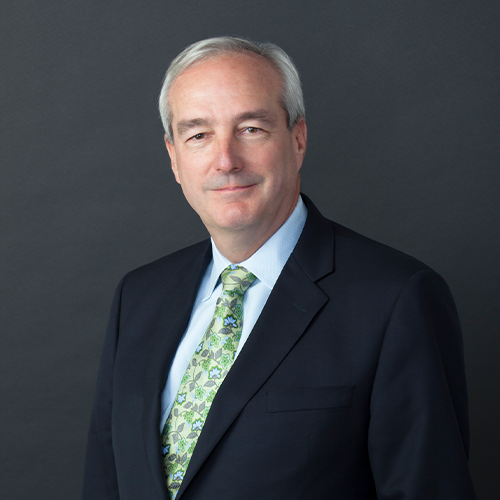
In addition to CEO at RedSeal, seed investor mostly in cyber companies. Those include Area 1 Security, Synack, Tala, dTex, NS8, Mark43, Qwilt, RigUp, Planet, LumaHealth, Unbound Tech, Virgil, Cybrary, Halo Tech, and others.
Also, Rothrock is the author of “Digital Resilience” published by Harper Collins. It is a non-technical book for management, leaders and really just about anyone interested in getting control of their cyber threat and response in this age of the bad guys are in, now what?
Welcome to the Athletics of Business, a podcast about how the traits and behaviors of elite athletes and remarkable business leaders frequently intersect the real stories and hard lessons to help you level up your leadership and performance.
Now your host, Ed Molitor. Welcome back to another episode of the Athletics of Business podcast. I am your host and CEO of the Molitor Group, Ed Molitor. And man am I thrilled to introduce you today's special guest Today's unique guest to the Athletics of Business podcast, Ray Rothrock. And Ray is the CEO of Red Seal, whom he joined in February of 2014. I want to tell you a little bit about Ray's journey and what makes it so unique and why I'm so thrilled to have him on this podcast. And I'll give you a little bit of a snapshot of what we're going to talk about on this episode and why you want to listen to it in its entire Prior to Red Seal, Ray was a General partner at Benrock.
As a matter of fact, his office was at 30 Rock, one of red seals founding investors at Benrock. He invested in 53 companies including over a dozen in cyber security including Bantu, pgp, pq, Imperva, Cloudflare, Cetera and Shape Security. He is on the board of Checkpoint Software Technology Ltd. An original Benrock investment in teammate, both of which are Tel Aviv based companies. Ray is also a member of the Massachusetts Institute of Technology Corporation board, a thought leader in cybersecurity and a longtime investor in the sector. He was a participant in the White House Cybersecurity Summit held at Stanford University in February of 2015. And Reyes provided testimony to U.S. house of Representatives Subcommittee on Energy and Committee on Science Space in Technology. Now this is what's really unique. Ray holds a B.S. We're doing all this talk about cybersecurity.
Ray holds a BS in Nuclear Engineering from Texas A and M University and it doesn't get much better than that. He also holds an Ms. In Nuclear Engineering from the Massachusetts Institute of Technology and an MBA with distinction from the Harvard Business School. And one of the things we're going to talk about is what Ray's experience and his mentor Wayne Stark at Texas A and M back in the late 70s who sort of set the tone for Ray to be able to take that right turn as he mentions and move to California and change industries after Three Mile island hit. And we're also going to talk about the importance of the mission of tenacity, of having fun and finding joy in celebrating successes with your people and having that camaraderie in the workplace.
We're going to talk about the significance of education in Ray's life and how he's trying to pay that forward with his legacy and what education means today's youth and to our future. And Ray's going to share a little bit about his keynote speech, his motivational speech, Compound Interest, which is phenomenal. And obviously we'll talk about Ray's book, which is Digital Resilience. And we'll talk about resilience and what that means to Ray and what that means to us and what we do every single day. And we're going to delve into a quote Ray leaves us with at the end of the episode, which is take only photographs and leave only footprints, which I love. I hope you enjoy listening to this episode half as much as I enjoyed recording Ray. Thank you so much for joining us on the Athletics of Business podcast.
I cannot tell you how humbled and fired up I am to have you with us today.
Well, thank you, Ed. I'm thrilled to be here. Looking forward to it.
Well, let's just jump right into it and share with us your journey going all the way back to your days at Texas A and M and the career path that you have taken.
Oh, my goodness. I don't think we have enough time, but we'll make time. Yeah, no Texas A and M. So I grew up in Texas, Fort Worth, Texas, and was the youngest son of two and classic middle class American family. My parents were World War II generation Depression babies. So going to college is a really big deal. In fact, my father worked very hard. He was paid by the hour, but worked Sundays in order to make him save enough money to send his boys to school. So we did, and Texas A and M was pretty transformative for me. I really didn't know much about it back then. I don't think many 18 year olds know really what college is all about. And when I got there, I learned about, you know, well, let me back.
I wanted to be an engineer and Texas A and M had a great engineering program. And so there I went. But while I was there, I got picked up by a guy named Wayne Stark. Wayne Stark's a pretty famous Aggie. He's no longer with us, but there are tens of thousands of us Aggies that we call ourselves Starkeys. These were the kids that he personally tapped on the shoulder and said, you're probably a leader. Why don't you come join my group over here at the Memorial Student Center? And off we go. So I was one of those Starkeys. And what was magical about Mr. Stark, and there were many mentor elements that he provided was he challenged us. He challenged me to add on to my curriculum. And it takes liberal arts courses, not just the engineering courses.
I was a pretty good student, and so I did, and that broadened my horizons. And then he. Once he. Once he knew he had you sort of hooked, he'd say, now you need. You need to go to graduate school. And not only that, you need to go to graduate school outside of Texas. And so he made a really big deal. He pushed a lot of us to go to Harvard and Chicago and Stanford and MIT and everything else. So I did that. And it's interesting having, you know, growing up in that neighborhood in Fort Worth and going to a Texas school. We think that's the whole world and revolves around it until you land elsewhere. And I think, you know that you are where you are and you've done what you've done, but it's a. It. It's hard to believe until you experience it.
And. But it was a guy like Stark who gave us the tools, gave us the confidence, and encouraged us to lead. And so that's sort of how I got started. So I went to mit, became a nuclear engineer, worked for five years in the power industry. And then the industry began to fall over as a result of the Three Mile Island. And along about that, Apple Computer launched this thing called an Apple ii. I bought one, fell in love with it, and literally moved to California in 1981, leaving whatever. I couldn't get in the car on the curb and drove out here and without a job. And I've been here ever since, for the most part. But I was with a couple of failed companies. That's a new experience for a kid from Texas. Companies don't fail in those days. Think about it.
I mean, it just wasn't part of the world. And I got on with son, and then son. I learned about venture capital. Then I went to Harvard Business School. And from there I became a vc, a very successful vc. I've won a couple of awards. I was the chairman of the National Venture Capital association, all leadership positions. As I moved through life, I. My wife jokes. She says, well, there you go again. You're going to join this board and they're going to make you chairman. And that usually does happen. And I, you know, I've always asked myself why? And I think it could be a lot of reasons, but, you know, you got to listen before you talk. And you got to. You got to think before that, before you open your mouth. And if you.
If you surround yourself with smart, interested people who care and have mutual interests, you'll get to the right decision and you shouldn't rush things and. Right. And. I don't know. I didn't mean to answer everything, but that's my career. And so now I'm the leader of a small cybersecurity company here on the West Coast. 50 million. That's small by most standard. Right. And I'm on a mission here to save lives, save us from cyber threats, one company at a time.
Well, talk a little bit about what we'll get back to the leadership in your journey. I want to go back to it. Talk a little bit about what you're doing right now because, you know, like you said, what out there, they consider a small company, it's wildly and massively successful, and the work you do is so critical. So can you share that with us?
Yeah, sure. So my company is called Red seal. It's about 15 years old. I actually started this company while I was at Venrock, and as typical with a lot of VC deals, we're always early before the market really needs whatever it is that you've invested in. So I retired from Benrock after 25 wonderful years. And Red Seal needed some help, so I was called in to give it some help. But what was special about that moment, Ed, was that the Target attack, Remember Target? In 2013, Christmas time, they had a cyber attack. It was very. It was a defining event for our industry.
Right.
And that attack really revealed to me that all these investments we had made were not working as well as they should. And then I got to thinking about, well, what, what will make it work? And I stumbled across an article by some guys at McKinsey. And anyway, long story short, what Red Seal does is to understand every element of your network. Every piece of equipment, every router, every switch, everything. And it's kind of like a building. When you walk into a building, there's doors and elevators and windows and compartments and all that sort of stuff. And we put labels on doors. In the cyber world, we don't have any of that. We don't have any map. We don't have any way to know where things are going.
And we depend on these engineers to do it and do it right and do it perfectly well. We're humans, we make mistakes. And so we're very vulnerable because of these mistakes. I don't know if you've ever been out here to San Jose and seen the Westchester Mystery House? Well, most networks look like the Westchester Mystery House. There are just doors and things that go to nowhere. And my software sorts that out. And that gives you a fighting chance. If I know what, if I know what my world looks like, then I can defend it. And that's what Red Seal does. So I got in here, made some improvements to the product, introduced this concept of measurement, of resilience, and have been. We have 250 customers today. We did about 50 million last year and we're growing, you know, 25, 30% a year.
So it's, it was technology that was sort of intended for nerdy PhD types in the mid 2000s, but today it's really meant for everybody because everybody needs a Google Map of their network. And that's what we create for you.
Right. So which, that segues nicely into your book, Digital Resilience. Can you tell us about that book and how that really is for.
Yeah, yeah. That book is Resilience. I wrote it in 2018 and published it in 2018. And one of the problems with cybersecurity, it's a very technical, deeply technical subject. I call it gobbledygook. Everyone laughs at me when they use that term, but it is, it's technical gobbledygook. And when you talk to an executive cfo, a coo, a VP of something, this or that, they look at you, they get this. We call it AT am, we call it mego. My eyes glaze over because they don't understand. So I said, somebody needs to write a book that explains cyber with real world everyday examples. And so I did. So I start with the target attack, I boil it down, make it simple, and I go through what is special about our world today, what this digital revolution is all about, but more how to relate it.
Here's a relationship. This will be real short and simple. So you're in a building, you've got sprinkler systems overhead, you got a fire alarm on the wall, you got a fire extinguisher, all that sort of stuff. And those are there because the government said you got to build a building that way. Does anyone expect that room you're in, Ed to catch on fire or the room, I mean, to catch up? No, we don't expect it to catch on fire. We wouldn't sit here if we did. But we put sprinkle arms in it, didn't we? So that's called being ready for the unexpected. That's called thinking about what might happen. That's what has not happened in the world of cyber. And that's what my book's about.
Thinking about what could happen will help us improve our cyber systems and our digitalization of our industries and our companies and our lives. And we just have to do that. If we don't do that, we're just doomed. And that's what the book's about. But it's a non technical book. It's meant for a high schooler, a CEO, you know, a sports coach.
Well and I, you know I remember when I first got the book I was like I don't know if I'm gonna understand anything in here just because of what you just said. I mean I have no very little technical background but it is so self explanatory and the way you just. That analogy you just provided was awesome. Now I have to ask, can you bring us back to Venrock and after you get your master's at Harvard where Venrock, you know, tell us about that and the role that played in your career.
Oh yeah, okay. Well Benrocket's the Rockefeller family venture capital group. It started in 1939 and I joined in 1988. Venroc likes it was Rockefeller Capital, the Rockefeller brothers, John D. Rockefeller and his sons. And when I joined it was still Rockefeller and so it was a pretty prestigious firm. It had done Apple and Intel and many other great companies from the 70s. And our mission was to find interesting people with great ideas and enable them to create great solutions to problems or whatever it is. So we had a very healthy computer practice, we had a very healthy healthcare practice, we had a very healthy sort of capital equipment practice. And the Rockefellers weren't so interested. Of course they're interested in making money. Aren't we all? But it wasn't about how fast we could do it but it was how big it could be.
And that's a slightly different thing and I really enjoy that because I could invest in a long term project that might change the world, might save the world from something if I wasn't artificially held. Well, you can only be in it for five years and you got to get out. No. So while. So I did a bunch of deals, very traditional deals that last anywhere from five to 10 years. I had seven IPOs out of the 53 investments that I made. And one of the investments is still alive today. It's called Tri Alpha Energy in Southern California and It is a 20 year investment. And that is an unusual thing in venture capital today. Most people are in and out as quickly as they can to make whatever money they can. The Rockefellers wanted us to invest in things that could change the world.
And there's Lawrence Rockefeller, who's really the founder, the actual principal that founded it has a whole book about saving the world. It was a little bit about saving the world, environmentalism and sustainability. He was writing about this stuff at the 50s when it wasn't so cool. So anyway, that really takes courage to make a bet like that. It takes a lot of risk balancing between what's possible and what will hurt you or cause you to fail. It makes you really evaluate the people that are leading the project. So over that time, those 53 deals and I participated in about 400 total, the firm did in the 25 years I was there. I met a lot of folks and have a lot of pattern recognition, which is what I think is key to being a good investor.
And I think pattern recognition is a key element of leadership as well. Because I was good and I was careful and my investments worked out very well. And I'm just whoever I am. The industry elected me to be the chairman of it. And so in 2012 and 2013, I led the industry. Okay. And there's always something changing, whether it's tax laws in Washington or regulations or just whatever. There's always something that you got to help the industry lead its way through.
Well, and here's. So you talk about pattern recognition, but yet you're in this industry where the pace and range of changes unlike anything we've ever seen. How do, how do you, and with the pattern recognition in people as you lead them, and how do you go about doing that and identifying that?
Gosh, boy, I, you know, I don't know how I do it. I have a pretty good memory. But you know, you, when you see something not work, you need to ask yourself what happened. And when you see something that works, you should ask yourself, why did it work? And you have to be reflective. If you're not a, you know, if you're just a sort of go forward transactional person without reflection, you can transaction transact your way through life and make a lot of mistakes and who cares? But if you always stop and assess what changed or what was the purpose or what was the reason why success or failure occurred, then I think you get very, you get multiplication. And in fact, I have a little motivational speech I sometimes give. It's called compound interest.
Compound interest is the most powerful mathematical formula ever invented by a man. And it's because, you know, if what I learned this year, I apply it to next year's activities, I get a compounding effect. And if I apply it the year after, I get another compounding effect. Whereas if I'm just in a transaction mode, I haven't learned anything. And so it's flat. I don't really grow, I don't really change, I don't learn the patterns. So it's, it's a. You got to be reflective, you got to have some humility. You also got to be a little bit of a stubborn sometimes. Because when you know you're right or you can prove you're right and you can't really convince the others, you gotta somehow, you know, battle your way through it.
Right, right. And a couple weeks ago we had a wonderful conversation on the phone and I asked you what drives you? And you said, you mentioned two things, one mission, which we just talked about. The second thing was tenacity. Can you talk into that a little bit?
Sure, yeah. Well, tenacity is really important, really huge. It's so easy to become despondent if things don't work out like you want. And so tenacity is, as you know, it's the ability to stick with it. And you can only stick with it if you believe whatever you're working on is a good cause. It may cost you a little more money, it may take you a little longer. In time, every startup company suffers that takes longer, cost more. So you have to have a belief and a gut, a grit in your personality that what you're doing is important. Maybe it's just to you, but that's fine. But that you'll get it done and that tenacity matters.
When I was in business school, it didn't take my classmates very long to realize they didn't want to be in my study group because we get together at 3 o' clock on Saturday afternoon and at 7 o' clock is like time to go drink beer. I said, no, no, we're not quite done yet. We're not quite done. And I drive people till 10 or 11 o'. Clock. And I found myself alone more than once on a Saturday night. Maybe, maybe that's a little too revealing, but sticking to it, finishing the job. One of the bit. Here's a pattern recognition example for you. One of the telltales, a potential problem in a person who's claiming to be a leader so they don't finish something.
You recognize that by looking at their resume or if there are gaps on the resume they don't want to talk about, these are things that signal to you that, well, maybe this person didn't quite, you know, isn't really able to drive to the conclusion. And you can probe that and find out why. And I'm more right than wrong about that. When people put, well, I took coursework towards this or this, that's just fluff. Well, why did you take the coursework? What was your goal? What did you intend to do with that coursework? You know, and then people sort of fall flat on that question.
What have been the keys? I mean, success at your level is pretty amazing and especially over how long you've sustained it. Right. And what have been the keys to your success? And the evolving, if you will. I mean, you started off as a nuclear engineering major at Texas A and M, and, you know, here we are today talking about venture capitalists and leadership.
Yeah. Oh, man. First of all, having. No. First of all, having fun.
Yeah.
You can't be tenacious and stay with something very long if you're not having fun. And I think fun comes in many forms. It's not just playing a game, although that's a good way, or playing cards or whatever, golf. Those are cool things to do. But there's also the funness of watching an organization succeed, watching a team accomplish something. I always celebrate when my engineers put out a product on time and it works and all that. We always celebrate that and we have some fun and we talk about what we learned and what we didn't learn, and we sort of share. You know, it's not quite a kumbaya moment, but it is a little bit about sharing and what. But it gets done.
And they know that's coming three weeks before the deadline, and they're not quite finished, and they're working 20 hours a day on something, and I'll walk the hall and I'll see them and say, I know it's really hard, but just hang in there. We're going to get to this. We're going to conclude, we're going to have a party. But it's that fun. It's that gauntlet fun. We're not getting shot at in a foxhole somewhere, but we are accomplishing a goal together. And there is a great sense of camaraderie. And good camaraderie is fun. It's fun to succeed with people. And that's. That's a big driver for me.
And I've just, you know, my wife will tell you it was Stunning to her that I gave up my four of my five years of education in nuclear engineering, my five years of a professional nuclear engineer. I give up 10 years of my life. I just made a right turn and moved to California. And she just, she's marvelous by that. And I go, well, you know, it wasn't getting more fun, it was getting less fun.
Right.
And I know myself well enough that I got to be motivated by something. And so I made that right turn, which.
And you, when you got out to California, it wasn't quite Silicon Valley yet either?
No, it was a good question there. It wasn't until I could valley, till there was a. I give National Geographic credit for naming it 1982, I think it was. They had a cover story about Apple and Intel and Steve Jobs and Gordon Moore, all these guys, and they called it Silicon Valley because in those days it was mostly about computers and chips, right? And that's all that software was kind of a add on. And so they gave it that name. And of course it was just kind of Cupertino and Santa Clara. Now it's the entire friggin peninsula and you name it, but it wasn't, it was venture capital. Sand Hill Road didn't exist. Well, I think the street existed, but the concept of it didn't exist. Venture capital was tiny.
In fact, when I joined the industry in 1988, it was only a billion dollars in size. Today it's 100 billion. So it's really changed a lot in the last 30, 35 years since I moved out here.
Okay. You know, speaking of venture capitalists, you said something to me in our phone conversation about always taking the meeting. Can you talk to me a little bit about that?
Yeah, you bet. That's a. I'm glad you brought that up. When I was a young associate at Venrock in New York City, I worked at 30 Rock on the 55th floor. A nice address, became more prestigious with the TV show. But it was a great place to work even then. And when an entrepreneur we had engaged, you know, Mr. Rockefeller believed that if an entrepreneur spent the time to work up the business plan, in those days it was paper, it came in the mail that they deserved answer. So we would respond to every single one of them. And sometimes, and usually we said no, but sometimes we say, please come see us, we'd like to meet you and. Or sometimes we go see them.
But if they came to see us, it's like 30 Rock, New York City, and they're coming from Dallas or Chicago or California, something. It was hard. And so I was at the beginning worried about that. And my senior partner said, no, no, right? He says, if they want to come see you, take the meeting. Take every meeting you're offered. And I said, why? And they said, because you never know when someone like Steve Jobs is going to walk in the door. You just don't know until you know. And he's so right. And I guarantee you, in every one of those meetings, you learn something. You get now another view on another human being. You've spent some time with them. Maybe you have a little food with them, you break a little bread, but you learn something about their industry. You learn how they think.
You learn how to analyze what they're saying. One of my other partners said, every meeting, when you finish it, take two minutes and make yourself a T chart. What were the three pros, the three cons, and what's the next step? Do that every meeting, and you will never waste time. And he was so right. And I still do that. I write the three pros, three cons, and usually it's no further action, or, you know, thank them for their time and move on. So it's a big deal that way, and it's paid handsomely. In fact, so handsomely I take these meetings, and then we'll say, no, thank you very much. Appreciate your time. Years later, they'll say, gosh, do you remember when I was in your office in 1989? And I go, well, not really, but, you know, thank you for. And. But.
But they keep bringing it back because. Yeah, yeah, because you. You were. You weren't a jerk. You know, you were just like, your mother would be proud of you.
Right.
If you were polite to people. Right.
Which is. Which is big, which is huge. We want our mothers to be proud of us. Correct?
We do. I think so.
Yes, we do. So talk a little bit about if you could, you know, the impact you've had on people and, you know, paying it forward with leadership and being a star at Texas A and M and. And what that's meant to you and what you're real intentional about as you help develop people.
Yeah, boy, that's. That's a big question, Ed. So I'm a huge believer in education. Education set me free, set me on a path. Jefferson had it right. Right. An educated populace makes for a very healthy democracy. And because it was. It was. I don't know, because it was so liberating to me and gave me opportunities that I had no idea existed. I'm a Huge supporter. So I am very philanthropic with regard to scholarships, professorships, things like that. In fact, quick story. At Texas A and M in 1973, there was no civilian music program. You had to be in the band, in the core.
In the core, yeah.
And the night. And so I'm. I'm now a venture capitalist, a successful one. In 1999, I called up Texas A and M and I said, do you have a music program? And they said, no. I said, well, you need one. So I doubt required the legislature to pass the curriculum for the school. And now there's a huge music program at Texas A and M that civilians take. Choral, instrumental theory, everything. So that was essentially opening a door, giving the kids who came to that school music. I was one of those, because there was no outlet otherwise.
Right.
So I am very big on enabling kids. They are our future, as you and I once were, the ability to see. So I live in California. I work pretty aggressively with the Aggie Network out here, the Aggie entrepreneurial network out here. I invite leaders from Texas A and M. My next stage, if you will, in leadership is A and M has tremendous values and it's a great education. It's a land grant school. Its mission is to serve the state of Texas. But the world has changed. Texas is no longer this isolated thing down there like Illinois at the University of Illinois or whatever. But we have something special at Texas A and M. And my mission is to help students who want to get out of Texas.
So me and some other Starkeys endowed a Northeast trip program where we put 20 kids on a plane, they go for a week and they visit University of Chicago, Harvard, Stanford. Not Stanford. Harvard, Northwestern, mit, Yale. They go to the professional schools, business, medical, law, in grad schools and other grad schools in some cases. So we put together a program for that. So the kids, you have to apply, you have to be, you know, you have to say, why do I want to do this? And again, it's just opening a window. It's giving them a view of a bigger world. So I've done that. And these are things that I press on all the time. Whenever I give a little talk. I was written. So at am, in the business school, there's this thing called the titans. These are the top students.
These are the star players in the finance and account. So I just gave a little commencement speech down there recently about my compound interest theory and. And how that affects people, not just your bank account.
Right.
And so, you know, just trying to get in front of people and show them that, you know, look, go back to your neighborhood. Fantastic. Help your, you know, but if you really want to, you have an opportunity to impact the world in a way you had never imagined. You need to kind of, you know, go north of the Red river or east of the Sabine and go check it out. You might, you might like what you find. It's not for everybody, but it's for somebody. That was Stark's message and I've kind of tried to amplify it with my time and my treasure.
Well, and that was going to be my next question. We just, I just had a leadership event down at Texas A and M and it was endorsed by May School of Business, center for Executive Development, and just an amazing place. And, you know, the next question I was going to ask you was with Wayne, not just encouraging you, but telling you to, you know, kind of spread your wings, do some different things, take some liberal arts classes. How much of an impact did that have in an influence that allowed you to take that right turn and go out to California to do all these things with Texas A and M that you're doing now?
Well, you know, great question. It's about self confidence is what the end result of all that is. And engineers are. Engineers are very good at what they know, and they're not very good at what they don't know. In fact, they're afraid of what they don't know. Typically, I think that's a DNA of an engineer. And by Stark encouraging a broader education and understanding about sociology, philosophy, economics, history. You know, he made me take this English history course, which was. But I did. But no, it's true. And so, for example, in my job now as a CEO, what do I do? I marshal resources for my company. I give presentations of what we do to people that might buy the product or just need to be made aware. I wrote a book, for goodness sakes. Engineers typically don't write books.
I hire people, so I have to make people judgments. Sadly, I have to fire people occasionally. I have to motivate. So where in, you know, Nuclear Physics 101, do they teach any of that? They don't, but you pick that up from life. But you can get some grounding in those basic liberal arts courses of sociology, philosophy, economics and so forth. And in business school, they kind of put a bow on all that for me because I took a course in the second year about. It's called, Here's a Joke. At Harvard, they call it Power and Influence. Sounds interesting, right? And at Stanford, they call it Touchy feeling, but it's the same course. And what you do is you study leadership and you read biographies. David Rockefeller, Lyndon Johnson, on and on. And you, Robert Gates is a new one. They do.
These are, you know, great leaders read biographies if you look at it. And Harvard and Stanford both have. You do that. And I'm kind of lost now, but it's what you have to anyway that liberal arts, the ability to read and understand those things and to extend it gave me the self confidence to make that right turn to move to California and not worry about things. I mean I did run out of money and I had to call my parents for a loan and all that. But you know, I was healthy and I was trying things, I was experimenting and that's right, I was, I felt good.
And you weren't at delinquent and you're doing the right things and. Yeah, and what were talking about was, you know, what allowed you to develop these leadership skills outside of the regular engineering programs that you took.
Yeah, and I did, I ran the amateur radio club at Texas A and M. And I was a stark put me on the MSC directorate, which is the student board of directors there. You know, I was a boy scout, you know, patrol leader and all those things that happen along the way. In high school I was the drum major of a hundred piece band. And it my a true test of leadership when I was near 16 years old was one of the members of the band was killed in a car accident. Like the day that were supposed to have a football game in March. And it, you know, I remember Mr. Hoffman, you know, coming to me and looking me in the eye sort of, you know, as you can imagine that staring deep into your brain. He says, we have a challenge here.
Your job is to get these kids on the field so we can do the show. The show must go on. And he turned and walked away and I did. I don't remember how I did it, but I did. Probably because I stood at the door and led them out and said folks, we're gonna go do this because we have to do this. Martin needs us to do this, we gotta go do it. Something like, I don't know what I.
Did, but yeah, that's pretty amazing.
It's about, you gotta have courage. You have self confidence. You know. Here's another just. My dad was a machinist, so he worked his whole life. After the war came one company. He took things apart and put Them back together. In a factory, there are no instruction books. You sort of figure it out as you go. And I would help my dad when I was a kid. I was be his toolboy around the house and stuff. But what I had learned is that I can now take a machine apart and put it back together. There's no instruction manual electronics. I can kind of tease it apart and figure out what's going on. It's because of self confidence. Now I'm going to tell you, there's plenty of times I didn't quite get it put back together correctly, but mostly I do.
And as soon as you get the first one done, you say, I can do that. You know, as soon as you get those band members on the field and you do the, you know, the first step in the opening song, hey, I can do this. And then it sort of get a flywheel effect and ultimately, you know, getting elected chairman of the board, you got a set direction and you gotta. I call it, you gotta lean on people. You don't push people. You lean on people, you lean in the direction you want them to go. And every time they take a breath or every time they blink, they step that way and it just works. But you have to set direction, you have to be clear, you have to be transparent, and then people will follow you.
Can you talk in it a little bit of that with digital resilience? Resilience is a word that, as I sit here and listen to you talk about all these amazing things, it just shows up in your DNA. It's just something that sort of defines your career. How do you, with your company, work in such a critical space with. With so much fear and negativity and the unknown, right? There's so much unknown, like when will the next attack happen? It's all there. How do you create this culture that holds true to being resilient, yet still having fun, yet still celebrating success with your teammates like we talked about.
Wow. I hadn't quite applied that word, resilience, but you're right. In my mind, resilience means being prepared for the unexpected and having the confidence to motor your way through it so that when you're finished with whatever the problem is, you're as good as you were, if not better. Always, you know, doing that self analysis of like when it worked or it didn't work, you know, what happened. That's very fascinating. You know, resilience is being prepared. Resilience is taking those courses, just thinking about what they mean. It's like Staying educated. It's like knowing what the issues are today. All the social stuff that's going on in this country with the me too. You can't just sort of graduate from college and never read another newspaper. That's stupid. But it's not just reading it's absorbing it.
And how does it affect your life and that builds up a certain amount of resilience. So that if somebody walked in my door with a brand new problem that I never heard about before, I say, okay, let's tease that apart, let's break it down, let's work on it here, there and yonder, and eventually we'll pull it together. And it's very. Yeah. Resilience is about confidence and confidence is about being prepared. And you hope you never have to call on some of those deep things, but you got to be prepared. And being prepared means being educated and thoughtful.
Absolutely. And you piqued my interest about your keynote. Compound interest. Can you tell us a little bit about that, where it comes from? And I don't want to give it all away, but maybe kind of a 30,000 foot view of what that is about.
Yeah. So in the world of mathematics, math is a pure thing. It's a great language, finds precisely our world. And we humans have spent forever understanding the world based on mass. And if you were to have a crowd of giving a talk somewhere, 100 people, you'd say, okay, what's the most famous, what's the biggest, most powerful equation ever created by math? People say, oh, it's equals MC squared. Equals MC squared. Einstein, he was the smartest guy. It was the most famous equation. The answer is no. The answer is compound interest. Compound interest says that If I have $100 and I put in my savings account and I'm getting, I'm going to make the math easy. 5% next year I have $105. And if I leave it there, I'll have 5% more of 105, which is almost 110, and on and on.
And what happens is if you just wait long enough, you'll have $200. And if you wait. But the point is, If I had $100 now and I made the five, if I took the five out now, I'm back to 100. The second year I'm only going to have 105. The point is leaving the money in place. That would be the knowledge and experience that you've learned in that year. That's the interest that you've earned in your life. Applied to whoever you are and you use that interest again, it will multiply year after year, just like money does in a Savings account. And one year, 5% is not much. Wait around 10 years and see what 5% gets you or 20 years and see what. So but you have to be reflective. You have to think about what that 5% gave you.
If you take it out and use it in a transaction, it's gone. So interesting. I probably did a little bit of that when I made that right turn and moved to California. I checked. I took a lot of money off the table, right? Not really sure. I took off. You know, can I, can I integrate fixed law? Can I solve these problems? No. But the leadership examples, the self confidence examples, the solving problem examples, all that I learned as an engineer, I've applied to different kinds of problems. So I just kind of took all that learnings, if you will, and apply them to different things.
And the liberal arts part, how people behave and economics, rational beings and all those things, Maslow's hierarchy, all that stuff works across no matter which path you pursue, that is always in your compound interest forever if you know it and use it.
Wow, I love that. Now before I ask you the last question, Ray, would it be okay if you kind of tell us where our listeners can find out more about the book, find out more about Red Seal on social media website, all of that.
Sure. Okay. My Twitter is rayrockrock. You can just send me a note. The company is red seal.net not.com but.net and we're located in San Jose, California. The book is available on Amazon, Barnes and Noble, usual places. I got a few extra here. If you email me, I'm just rayedseal.net, if you email me, I'll sign it and send it to you and I'd love to hear your feedback on it when you, when you read it. So that's how you get it. I've, I have published a lot of interesting papers on digital resilience and cyber and I would encourage you just do a little Google search on me and digital resilience. And I published one for West Point, for example, lessons from the Maginot line, which pops up pretty frequently and stuff like that. So I've tried to, you know, broaden the conversation.
And so there's a lot out there that you can look up about me,
You know, along those lines, how many times have you appeared and testified before Congress on this subject?
Well, I've been there four times, but for different Subjects. I was there as a venture capitalist. I was won my leadership role there. We got some laws passed. I was there as an energy advocate, a nuclear energy advocate, and I was there once as a cyber security advocate. So I've had different roles. Different roles. One way. Okay, well.
And that leads right into my last question. And I apologize ahead of time because I did not prepare you for this. But it's a two part question and I'm really looking forward to your answer. But what is it that you would like your legacy to be? And here's why I asked that. I really believe in eulogy virtues as opposed to resume virtues. And you know, obviously Stephen Covey beginning with the end of mind. And I think legacy is so significant. Significant. Then after you tell us what you would like your legacy to be, at what point in your career did you start thinking about that?
Wow. Well, I haven't really thought much about legacy. I've had a few conversations of late. The book really brought a lot of people to me that I had met and they asked kind of these questions. So I thought a little bit about it. You know, my legacy would be, and I work hard on this one, if you want to go to college and get an education, go. Unfortunately, money holds people back. And I would love it if I could figure out how to pay for everybody's college beyond high school, whatever you want to call it, sort of getting you out. Because my legacy would be that if you can imagine it, if you can have a vision about it, you can probably do it, but you need some tools, you need some skills.
And I would love, my legacy would be that I helped enable one kid, 100 kids, 1,000 kids, 10,000 kids, whatever, to do that. And I've been working on that. And maybe, you know, maybe it'll work and one of those kids will remember that scholarship he got from me or something, and he'll pay it forward like I did with Mr. Stark and Mr. Hoffman and a few other names I've suggested. But that is really, we just have to be an educated populace to do the right things.
That's fantastic. And that's something that you just started thinking about recently. That's not something. Because the reason I ask is we work now, today's workforce, we start talking about millennials and Gen Z's, and they want their jobs to have meaning. They want their jobs to have meaning, know that they're valued, their work is important. And I think one of the ways we do that as we lead them is get emotional attachment. One of the ways to get emotional attachment with them is to talk about their legacy. Are you going to leave, you know, going back to our brand, the athletics of business? Are you going to leave your jersey in a better place? And how would you encourage the younger folks to really start thinking in those terms?
Wow. Boy, that's a good one. Well, I'll tell you, legacy is not about your job. Legacy is about your soul. And your job is a means to an end. And the end is what do you want your soul to be? No, what do you know, what do you want on your. On your tombstone, I guess is another cheesy way to say it. But it's about, you know, there's another. When I was a Boy Scout, we had this little motto. It says, you know, when you go camping, you know, take only photographs and leave only footsteps. And so legacy is kind of, you know, take nothing but leave. Leave a picture, leave a vision. And that's your soul. And that's what you. That's what people remove. Oh, I may be remembered for working in Benrock or Yankee or something.
At the end of the day, I hope people remember that I enabled other people to make the world better. And I think you need to think about that in your work and your job and the world around you. You know, Mr. Stark used to say, now, you know, wherever you go, you want to make sure that you keep your skirt clean. That was sort of a cliche from those days. Maybe it's a jersey in your world, but you can't, you know, you can't have a positive legacy if you don't keep your skirt clean. And so you got to think about these things. The world's not a transaction. A job is not a transaction. Your soul is not a transaction. It's a continuous arc full of many transactions.
And I'm not answering your question as precisely as you may want it, but that's how I think about it.
That's how I think about it, Ray. I think you nailed the answer, and I think that's a perfect way to wrap it up. That was fantastic. And I cannot thank you enough for joining us and spending as much time with us as you did, Ray. Thank you so much.
Thank you, Ed. I'm thrilled and really rayed seal.net, i hope somebody sends me a note from this podcast. Thank you again.
Absolutely. Thank you so much, Ray.
Thank you for listening to the athletics of business. Be sure to give us a rating and review so we know how we're doing. For more information about the show, Visit TheAthletics of Business dot com. Now get out there. Think, act and execute at the highest level to unleash your greatness.