

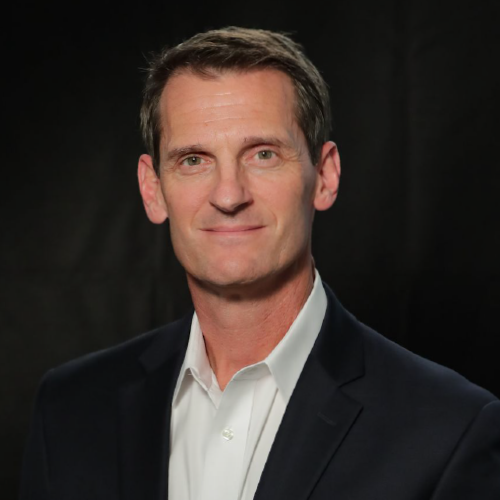
Lou joined the national franchising company, Mosquito Joe (a Neighborly Company), as Chief Operating Officer in the spring of 2017, and was named Brand President in October of 2017. He leads all aspects of marketing, operations and franchise sales for the Brand, which has quickly grown to 145 franchises in 36 states since 2013. Prior to joining Mosquito Joe, Lou served as Vice President of Strategy for Reinvent Hampton Roads, a non-profit designed to drive business development through economic cluster analysis as part of Growth and Opportunity Virginia (GO Virginia).
Lou retired from the Navy after 27 years of Naval service in 2017. A graduate of the Navy Fighter Weapons School (TOPGUN), he served as the Commanding Officer of “VFA-34”, an FA-18 squadron that earned the “Estocin” Award in 2012, representing the best FA-18C squadron throughout the US Navy in all areas of operations and safety performance. His military career culminated as Commanding Officer of Naval Air Station Oceana in Virginia Beach, Virginia, leading a staff of 1,500 military and civilian members in support of 16,000 personnel working daily on the base.
During his Navy career, he accumulated over 4,200 flight hours and 815 arrested landings on aircraft carriers and completed 110 combat flying missions. His awards include the Legion of Merit, Defense Meritorious Service Medal, Meritorious Service Medal (two awards), Individual Air Medal, Strike-Flight Air Medal (five awards), Navy and Marines Corps Commendation Medal (two awards), Navy and Marines Corps Achievement Medal, and numerous campaign medals and deployment ribbons. He was the first to be recognized 3-times for the peer-selected Navy and Marine Corps Association Leadership Award for the East Coast FA-18 Naval Aviation community.
Lou graduated with merit from the U.S. Naval Academy with a Bachelor of Arts degree in Mechanical Engineering and earned a Master of Arts degree in National Security and Strategic Studies at the Naval War College. He completed the Hampton Roads CIVIC Leadership Institute course in 2015 and serves on the Boards of the Chesapeake Bay Academy, the Navy League of Hampton Roads and the Virginia Beach Military Economic Development Advisory Committee.
Now your host, Ed Molitor.
Lou is brand president of Mosquito Joe, which is a neighborly company. And if you remember, on episode number four, we had the incredible dean of Dwyer Owens, brand ambassador of Neighborly. In what an episode we have for you today. Lou is brand president of Mosquito Joe, which is a neighborly company. And if you remember, on episode number four, we had the incredible dean of Dwyer Owens, brand ambassador of Neighborly. So before I get into telling you what Lou's doing and how long he's been at Mosquito Joe, first thing I'm going to do is ask you for your forgiveness ahead of time because this is going to be a bit longer of an introduction than normal, yet at the same time, a much shorter introduction than is deserved by my guest, Lou Shaeger.
I want to tell you about what.
Lou was doing prior to Mosquito Joe. And Lou retired from the Navy after 27 years of naval service in 2017. Now you might say, what's you know, why chuckle when you say 27 years? Well, Lou and I go way back. We go back to the early 1980s, and Lou is only two years older than myself. And to see 27 years after his name of naval service is pretty amazing. His military career culminated as commanding officer of Naval Air Station Oceania in Virginia Beach, which is awesome. But think about that. The best FA 18 C squadron throughout the United States Navy. His military career culminated as commanding officer of Naval Air Station Oceania in Virginia.
Beach, Virginia, which is awesome.
CEO of Naval Air Station Oceana in Virginia Beach, Virginia, one of the largest in the country, where he led a staff of 1500 military and civilian members in support of 16,000 personnel working daily on the base. During Lou's Navy career, he accumulated over 4200 flight hours in 815, arrested landings on aircraft carriers, and completed. Now get this number. This blows me away. Louis. So humble. He is so low key and doesn't talk much about what he did unless you ask. But he completed 110 combat flying missions. 110 combat flying missions. His awards include the Legion of Merit, Defense Meritorious Service Medal, two awards, individual Air Medal, strike flight air medal, five awards, Navy and Marine Corps Commendation Medal, two awards, Navy and Marine Corps achievement Medal, and numerous campaign medals in deployment ribbons.
He was the first to be recognized, not once, not twice, but three times for the peer selected Navy and Marine Corps association leadership award for the East Coast FA 18 naval aviation community. It doesn't get much better than being recognized by your peers. Now, Lou joined the national franchising company Mosquito Joe, again, a neighborly company, as chief operating officer in the spring of 2017, and was named brand president in October of 2017. He leads all aspects of marketing operations and franchise sales for the brand, which has quickly grown to 145 franchises in 36 states since 2013. Unbelievable story. And Lou is going to share that with us on the podcast. Some of the things we will cover on this podcast episode are going to include Lou's journey to Mosquito Joe. What got him there? Why Mosquito Joe?
All the other things he could be doing after his illustrious military career. Why Mosquito Joan? He'll talk about the alignment of his values with their purpose and their mission, and how it all comes down to improving the quality of life for families. Okay, we'll talk about Lou servant mindset. He talks about it as a customer service mindset. When he was CEO of Oceana, he spent the first 23 years of his military career, excuse me, the first 24 years of his military career on the receiving end of customer service, and then his last three years as co. His job was to make sure everyone on base had everything that they needed. We're going to talk about those 110 combat missions and what that meant to him and his leadership role and what he took away from it. And he said something very interesting.
He says, we couldn't lose. Losing wasn't an option, right? You just couldn't lose on those missions you expected to win. And everything we did, all of our success, came down to preparation, just as it does with Mosquito Joe. Another thing we'll talk about, which I absolutely loved, is the building of trust. Like we talk all the time on this podcast about authentic and resilient leadership and how trust is the cornerstone of that coaching relationship you need to have with your people, not just being their boss or being their manager. But Lou talks about building trust by relating to and connecting with your people to create that mutual respect which is needed to problem solve together. And Lou even quotes Aristotle for us. And he talks about how. How Aristotle said, we are what we repeatedly do.
Excellence is therefore not an act, but a habit. And with that quote, he talks into how people love predictability. And he goes back to being consistent as leader. I'm gonna let this podcast episode take over from here. I hope you enjoyed as much as I enjoyed recording it. Lou, thank you so much for joining us on the Athletics of Business podcast. I am humbled and fired up to finally have you on the show.
Ed, thanks for having me.
Long time coming, and I'm glad it's. It's finally happened, so it really means a lot.
Thank you.
Well, hey, you're busy. I know that. So appreciative. Let's jump right into it. Tell us about. Tell us about what you are doing, your role with Mosquito Joe, your journey to get there. Unbelievable journey. And I love the story behind you landed where you are.
Well, I am brand president for Mosquito Joe, so I oversee 142 franchise owners spread across 36 states, operating 323 territories, and we are making outside fun again.
We actually provide a service and a.
Treatment that treats a backyard and prevents mosquitoes and ticks and fleas from bothering a family.
And it's an emerging market.
It's exciting. People don't even know that this offering is there.
So instead of lathering your child with.
Auth and deeds and this other stuff and then having to wash it off after every barbecue, we removed that problem.
And we like to call it we're a solution to our customers problems.
It's funny you say that, because last night, Nancy's coaching Maddie's soccer team, and she did the old mosquito repellent on all the soccer players. And literally every kid was running to their water bottle, like, to rinse their mouth out, like she had. She had no shame in just spraying their faces instead of wiping it out.
That's right. Yeah.
So, well, now your background and, you know, on. On podcast, episode 21, we had JJ Constant. Just an amazing person, an amazing man. And he talked about the transition from the military to civilian life being the single hardest thing that he has ever done.
Okay.
And now he's. He is. You know, he's in the business world. He's in a high pace industry with a lot of pressure, a lot attention. I got to think that it was an interesting transition for you from what you did. If you can walk us through what you were doing at the end of your service, and not just. Not just the title and row, but exactly how deep of a responsibility you had.
Sure.
Well, here's how I like to describe.
It, because it is a really common question when they realize, I spent 27 years in the military, in the navy, and now I'm in the mosquito control industry.
But how it came about is this.
For the first 24 years of my.
Navy career, I flew fighter aircraft, and.
So I flew f, was fortunate enough to get through and graduate from top.
Gun, and continued on my career. Commanded an f 18 squadron on a.
Couple deployments, flying combat missions over Afghanistan and Iraq. So for those 1st 24 years, I was the recipient of customer service.
So if I needed a widget, we're.
Going over in combat, I'm going to.
Get the widget, and we'll make sure I have all the supplies and people and personnel we need.
The last three years of my Navy.
Career, I was the commanding officer of.
Naval Air Station Oceania, which was one of the largest naval air stations in the country. I had a staff of approximately 1600.
Mixed military and civilian, and we over.
I oversaw 16,000 people coming on and.
Off the base, and we had about 100 product lines. So I actually, we had 36 holes of championship golf.
You'd appreciate that. At Oceania, we had fitness centers, medical.
Facilities, dental clinics, daycare centers, grocery stores.
Hotels, in addition to the 300 f.
18 aircraft and all the supporting commands. And so for those last three years.
I was the provider of customer service. My job was to make sure that everyone on that base had everything they needed, either in a war fighting capacity.
Or in support of the family, whether.
That'S with the counseling services they need.
At Wheaton Family Support center, to the.
Medical facilities, et cetera.
So it was a really interesting transition for me, and I really enjoyed it.
This last job at Oceana, I became very connected with the city of Virginia.
Beach, which is about a half million people. So I had an opportunity to go.
Out and meet the chambers of commerce.
And local community leaders, both politically as.
Well as folks in business development. So it was a really neat opportunity.
And so when I was transitioning out.
Of this, I decided I didn't want to move anymore. My wife, Leslie, and my two boys.
Love Virginia beach, and it was time to try something different. I didn't want to fly for the airlines. I'd be gone half the year anyway. And it just didn't appeal to me. Transitioning into government contracting, whether it's with.
A Boeing or a Lockheed or a.
Big defense industry, is really common. I didn't want to do that.
I just wanted to kind of reinvent.
Myself and find an opportunity where I.
Can connect with what I love, which.
Is things surrounding families.
As you know, Ed, being one of.
14 kids, family means a lot, and I have two wonderful boys and my wife, Leslie. So leads me to my discussion of.
How I got into Mosquito Joe, specifically.
Some neighborhood friends had started mosquito Joe.
As a franchising system in 2013.
One of these gentlemen was actually my close friend from the naval Academy. And when they knew I was getting.
Out, we had discussions, and they said, hey, Lou, we'd like you to join Mosquito Joe.
Here's what it's about. And at first, I was actually a customer of Mosquito Joe. I knew it worked great. We love everything about the company.
They were doing things that no other company was doing.
But at the end of the day.
Their mission was really simple to follow.
And I think, quite frankly, noble it.
Is to create a greater quality of.
Life for a family, create an extension.
Of their living room in their backyard. And when you put it like that.
It'S like this makes sense. All about family.
It's all about bringing happiness.
And the backdrop to that, quite frankly.
Is also protecting families from vector borne diseases. We don't market to that.
We don't kind of go to those.
Scare tactics, as they say.
But at the end of the day.
We'Re bringing a greater quality of life to a family.
And I love that vision and.
Then making dreams come true for business.
Owners across the country. I feel like I have a little bit of an entrepreneurial spirit, and I really connected with the thought of these folks, you know, entrusting many of.
Them, entrusting a lot to start a new business.
They want to do a business on their own.
They've never done it before.
We provide that framework and allow them.
To be really successful.
And I think over the last. Well, since 2013, we've had tremendous success, as you see.
How many franchisees do you have?
Currently, we have 142 business owners, and.
They operate 323 territories in 36 states.
Okay, so when you first joined Mosquito Joe's, what was the very first thing you did? Did you go meet the franchisees? Was it a conference call? Was it. I mean, how did that go?
When I joined as the COO, and so I was the understudy.
For the CEO at the time and.
Essentially the acting president.
So my first goal was to just learn about the business and learn about our offering. And then over time, I became more and more the interest to meet everybody.
To meet as many of the franchisees as I could. First starting off by just giving him calls, phone calls.
And I think my first opportunity to really address the entire group was at our first convention, which would have been eight months after I came on board. I was identified as the COO, and.
Then six months later, identified as the name, the president of the brand. And so a couple months later is.
When I had a opportunity to address.
All of them at our convention, and.
That just really enjoyed that time. And that's where I really felt the energy of hardworking, down to earth entrepreneurs.
Across America with wide and varied backgrounds.
All with a common cause of bringing greater quality of life to families and.
Having a lot of fun in the.
Meantime, doing it well.
And I would be remiss if I didn't mention our connection to Dina Dwyer Owens, who we had on episode number four. Unbelievable woman. I mean, just an incredible person. And I just want, if you could talk a little bit about the neighborly brand that you're a part of and how that fit and why it's such a perfect meshing point and such a perfect fit for Mosquito Joe's.
Well, first off, Dean Edwyer is an incredible person, leader, every positive word I can think of describes. And she was so generous with her.
Time when I first came on board. She was.
I think she was the first email I received from a neighborly leader outside.
Of the acquisition team that I received welcoming me to the neighborly family, which.
Meant a whole lot. And then she spent time.
She actually flew out to Virginia beach and spent some time with our team.
And went out to dinner with Leslie and I. And this is so genuinely down to earth and is such an inspiring leader.
And she personifies what neighborly is all about, quite frankly.
She does.
She really does. Yeah.
And what a perfect fit for you. And it's funny, as I sit here and I'm already looking at my two pages of notes, but you said something, if we could go back to Oceana, and you talked about you were in customer service, that whole mindset of protecting your people and making sure that everybody on the base had everything that they needed, right? Where did that come from? Is that something that the military talks about, or is that just you and your personality and your character and your traits coming through?
Through? Well, it was never lost on me.
When I was the recipient of that.
Customer service for the previous 24 years in the navy.
Sometimes you get this feeling that you.
Deserve to have all these.
I guess sometimes there's cases where you feel like you deserve to have all these parts and equipment because you're going to war, but at the same time, you know, there's someone providing that and they're working really hard, and you have to be cognitive at that. And it was never lost. I mean, whether it was on a.
Ship and you went to the. Your maintenance team needed a particular part.
It's important to thank and appreciate those.
Folks that are providing that logistical support. And I think when you think about.
Business, the same thing. People usually see the end result, whether it's you walk into chick fil a.
And you see the end result of a beautiful customer service with a great sandwich.
But there's a lot of people that.
Went in that got through to get to that point. So when I became the CEO of Oceana, the committee officer of Oceana, a lot of moving parts, a lot of different aspects of running that base, and.
I did my best to reach out.
And thank all those folks, even as.
Some would say that the lower tiered folks that are working in the trenches, I really enjoy talking to them, probably.
More than the leaders.
Now, when you talk about going to war, right? You flew. I believe it's over 110. Is it 110 combat missions?
Yes.
Can you talk a little bit about what that did to you on your. Your view of the world and your view of how fortunate we are and how you relay that to the people that you lead?
Now, I know that it was. I was honored to serve in our navy, and what really made my 27 years in the Navy special was serving.
Alongside people from every walk of life, every background, every state, every religious denomination.
Everything, all to a common cause.
And so when you're talking about preparing.
For a combat deployment, a lot of work goes into it.
And then when you are out on the pointy end of the spear in.
The Persian Gulf or the Arabian Gulf and ready to execute a combat mission, it's one of those things where you can't lose. You know, I expect to win. Our.
My squadron expects to win every time, and the american people expect our military to win every time.
And so, not that adds undue.
Pressure on all of us, but I.
Think it just goes to the preparation.
That'S required to make sure that we succeed.
And I think that carries over to.
Anything in life, whether it's sports, athletics.
Or the business I'm running now.
You're only going to be as good.
As the preparation you put into it.
And you talk about sports and you talk about military. And one of the things I work on with clients on a lot is, you know, we talk about culture. And in athletics, one of the things I learned was the great teams, the great organization. Organizations, excuse me, aren't the ones that feel like family. They're the ones that are family. Okay? And you had that at a much higher level than I could ever imagine having it being military and going to.
Battle with each other.
Can you talk about that and how you bring that feeling to, you know, and obviously, the neighborly brand lives that. But how do you bring that to mosquito Joe's with the group that you're leading now?
I like to think that any organization.
I've been a part of and unfortunately been a part to lead, I always enjoyed being around people that are down to earth. And you can connect with on a.
Level that doesn't matter if it's the CEO or the newest member of the team. Being able to talk now, that can be challenging. When I'm trying to act like I.
Know the music that the 20 year.
Olds are listening to, I try to fake it off a little bit with.
My 16 year old because hence, I think being able to relate and approachable and starting with imbuing respect amongst everybody. And that served me well in the.
Military as well as in Mosquito Joe and neighborly. Right now, if everything begins with respect, which is the first part of our.
Code of values, in neighborly, I think good things happen, because I may not.
I mean, I may not agree with you, I may even have an argument.
With you, but I appreciate where you're coming from, and I respect you personally and professionally. And we can get better because of.
The argument we just had, because we're.
Going to come to a resolution that's.
Going to better for both of us.
And was that a challenge for you? At first, and I don't mean a challenge in a negative sense, but was there a wall when folks got to realize what your background was there? An expectation or anticipation on their part of the way you were going to lead? And maybe they were a little bit cautious going all in with you.
I.
You know what? It's a really.
That's a great question because of what.
We said earlier when I described to.
People, well, you left in charge of.
Oceana, and now you're working for a mosquito control company.
How did that work?
And then when I provide that background, I think it makes sense.
But as far as the day to day business and here in Virginia beach.
It'S fortunate because everyone knows the military, very supportive community.
They knew they knew Oceania and actually.
Have a lot of common connections and friends with my coworkers, which makes it nice. I think it'd be different if I.
Was in a different city, but I.
Do think that at the end of.
The day, I've always lived in a.
Community where they're really appreciative of the military.
And that certainly provides a starting point for a conversation.
I think what I usually do is.
Use my background for levity and to.
Provide humor and to disarm people. Because I do think sometimes you think they read my background and what I've.
Been doing and they expect some guy that's going to be coming in mach.
Two as fast as they can because that's what I flew to make changes.
And to disrupt and to lead in the battle. But at the end of the day.
Like I said before, the preparation that comes with those missions is what really matters. And having conversations and establishing relationships.
And so when conversation does come up to my background in military career, I'm proud of it.
I love talking about it.
I can talk about it for days, but I'm sensitive to. Not everyone wants to talk about what I did. I think they, what's more relevant of.
What I'm, what am I doing for.
Their professional careers today to advance their, their goals as well as the companies?
So I'm going to ask you a question now, and I want to make sure that I word this the right way because it's aligned with that. You saw some real, I mean, when 110 combat missions, you saw some things, you went through some things, you prepared for some things, and you had many challenges. And a lot of folks might look at that and say, well, gosh, what he's doing now must be a walk in the park for him, which it's not at all right. There's still, there's different types of challenges. There's different types of preparation, there's different types of communication. How did, how did athletics prepare you for military in that sense? But how did the military prepare you for civilian life in terms of leading mosquito Joes?
Well, I do think leadership is leadership.
Whether you're in the military or not. There's certain things that benefit you while.
You'Re in the military.
And that's just, it's very structured.
The expectations are usually clearly delineated, whether.
It'S how your career path will go, the discipline that's required, and actually the.
Military code of justice. When you become a commanding officer, you essentially adjudicate cases.
I mean, all branches of leadership really.
Are unique in the military in that.
Regard, as far as the nuance of it. But at the end of the day.
You'Re just, it's about relationships and connecting with people.
And I think the structure certainly helped me in my transition out and understanding that if there's not a structure, then.
I need to create a structure. If there's not a process, I need.
To create a process because I always.
Espouse that Aristotle's quote, we are what we repeatedly do.
Excellence is therefore not an act, but habit. Right. And I think people like predictability. They like to know that we're all going after the same goals.
And I think my military experience as far as leadership helped me create constructs.
In my civilian business life that has.
Served me well, especially in franchising, quite frankly, it's all about processes.
In franchising, we provide the framework and.
Allow and empower a new business owner.
To grow a business through this structure. And again, if they follow the process for Mosquito Joe, they will be successful.
And those that kind of waiver from that, those are usually when we see the challenges.
But why do you see people not follow the process? Because it happens and then it blows us all away time and time again. But you set up, like you said, you have this framework set up and you have this process. Just do this. Just repeatedly do it. Be consistent with it. Why do you think people push back on it?
Well, it starts with expectations.
I think people, you know, I think.
There'S a misconception that, okay, I got this business that's been proven to be really successful. And when I started, whether it's mosquito Joe or any franchise opportunity, okay, I want to make a million bucks the first year. And although it's articulated, no, it's going to take time.
I think the lack of strategic patience I think goes to those missed expectations.
Or unrealized or unrealistic expectations. And that's where people start to waver from the process.
They're impatient.
And I think I can do it.
Better my way or why am I.
Paying you royalty when I know I can do it better this way?
And I like to be open to those suggestions, if our franchise owners or customers even have a better way, to.
Have a better way to approach a particular problem.
But I do think the strategic patience.
Is one of the most common things I see needed.
Because if you follow the system, it's.
Going to take time.
But over the course of a couple.
Years, you're going to see great success.
You just said something that spoke a little bit to vulnerability, like not having the answers, so to speak, and taking input. We work a lot with our clients on authenticity and authentic leadership, authentic and resilient leadership. And I like to break authenticity down into three pillars, honesty, integrity and vulnerability. And, you know, I firmly believe that's what builds the foundation of trust, which is so key. Can you talk a little bit about, you come in and you have all this experience and now you need to go. You talked a little bit about knowing what 20 year olds listen to a music, but now you got to figure out how to communicate, connect with them. Right. So can you figure out how you're able to make yourself vulnerable to them and start to develop that level of empowerment and trust with your people?
Yeah, I think having a, I think.
Having a sense of humility goes a.
Long way and endearing to your associates.
I do think people are proud of what they do. And if you offer them the opportunity to share their knowledge, I think I learned.
And they could demonstrate their professional knowledge of any particular, whether it's digital marketing or whether it's about franchise development and sales.
To your point, though, that vulnerability, I think another way, I guess the way I'm looking at it, is more being humble, being a servant leader.
And I think humility and being humble is probably one of those lost traits.
That some may see as a weakness, but I think balanced with strong leadership.
Can be really helpful. And it disarms your subordinates, it disarms.
The company to realize that I am open to all suggestions and all ideas.
And I'm willing to, number one, learn the business itself, and number two, always be ready to be agile in a.
Change or tactics or strategy because I'm open to input from the most junior person in the company.
I think when you start locking out.
Those young minds, then that can be dangerous.
So you live and breathe and absolute ooze humility, Lou. Okay, so let's say you have someone that is part of your team, part of your organization, great person, a hard worker, but they really struggle with the humility piece. How do you, how do you help them with that? You know, I was almost saying, how do you break them down? But that'd be going back to our athletic days. But how do you bring them back to center and help them with their humility?
The one thing, and the one thing I wouldn't do is to be a more arrogant leader and tell them how incorrect they are. I do think conversations and demonstrating to.
This arrogant person who could use a.
Little dose of humility, that his ideas.
Will be much more well received by everybody.
If he could be a little bit more tactful in the delivery, if he could be a little bit more approachable and seeking out knowledge to improve himself, as opposed to someone that has all.
The, all the answers, because it's how.
We'Ve always done it and he's not going to change. That's a really dangerous associate to be around.
I'm going to, I'm going to say a quote I just kind of would love to know what you think about it and what it means to you because you said something earlier about people love predictability. Right. And of course, your people, they want to know when you show up to work every single day what they're going to get. Regardless of what's going on in your world, regardless of what's going on in their world, they want to know what lose going to bring to the table. But one of my favorite things that I pulled from listening to Coach K at a Nike clinic, he said you need to have the ability to show the face your team needs to see. What does, what does that mean to you?
I think it's. I don't think it's wrong for my.
Business or my associates here at Mosquito.
Joe to see that I'm upset to see that I'm having a challenging day, because I think showing that human side is very endearing. I do think maybe how I view.
What you just described, Coach K's quote is that irregardless of the situation, I.
Think your business associates want to see a leader.
He was human who is ready to react and has a vision to overcome.
Any day he may have. So I know that I've had my bad days, but I know that through those challenging days, my company knows that we are still on track to try.
To achieve our goals.
And because I think if you kind.
Of hide and always have a happy day, happy face on every day, it's great.
And I'm the most positive guy there is.
I think it, sometimes it comes off as not as authentic as it should be.
And you described that word before, authentic leadership.
I think people like to see those that are human and can relate to it.
Yeah, but know that regardless of the situation, we've got a group here that is going to stay on track and stay on goal.
Well, and one of the stories I'd like to share, if you're okay with it, is you had a situation when you were in the military, and you were very active in the military. And I don't know exactly where you're deployed to, but your son Griffin was going through a major health struggle. And where I was going with this is you still had the ability to be the face that your family needed.
Right.
You were still there for the family, and you're so loyal and true to your guys and your squadron, you were able to be the person that they needed as well. Can you talk a little bit about that and how you were able to do that?
Sure.
So Griffin is now 16 I'll start with.
And he is an awesome kid, and.
He is the best big brother you could ever want. He's got a younger brother who's nine.
When Griffin was four and a half.
Years diagnosed with rhabdomyosarcoma, stage four high risk.
And so it was a Sunday night.
And I was supposed to fly off on a nine month deployment the next.
Day and take command of the squadron the following week. And so clearly, I couldn't leave.
And the Navy was wonderful and very.
Supportive and backed me up.
And through those challenging, essentially, two and a half years of treatment that Griffin.
Went through, my wife Leslie was a rock, but you really come to appreciate, people came from everywhere to provide support, and it was pretty empowering. And for Griffin, my goal was to continue to live as normal of a life as he could as parents, which.
Meant things like this. We could be in the hospital, and.
We could be in, really a difficult day where he's beaten down.
He's got a lot of side effects.
From chemotherapy or surgery or radiation, and.
It didn't happen very often, but if he was being a brat and being upset, and I would continue to treat him like my son.
Yeah, hall pass on that.
I think we learned that lesson, actually. A wonderful nurse named Teresa on the first month shared that with us.
You know, we're like, we're looking for advice, and she's just keep parenting, man.
Just keep doing what you're doing, because.
As soon as you start moving away.
From that, your kid recognizes that and they'll behave differently.
And so. But back to your initial point, had.
A wonderful support system.
Half modern medicine, half faith and prayer are what got us through. And, you know, I like to think I'm pretty confident when people come back.
To me and say, I don't know.
How you did that or how did.
You and Leslie deal with that. How did you. And then we eventually deployed.
And did, you know, later when he was healthier? But I like to think that anyone.
Would be doing that.
You're a parent. You do anything to take care of your child. And one thing that was hard, a big lesson learned from that time, is.
The gift is in the giving.
And that was a saying that my.
Father in law would say.
And I remember early on, people were.
Reaching out and providing thoughts and gifts. And at first, I was like, we don't need gifts.
But then again, I realized that accepting those is just as powerful giving them. And because it does allow people an.
Avenue to provide help and support that I really didn't. I didn't think of it now.
Right. Right.
Well, it's hard because they're trying to do. They're trying to do something, right. I don't know what that something is that they can do. So that's their. There's something. So. So how did you. How were you able to manage? Because you had to go back out there. You had to get back up in the. In the air, didn't you?
Well, I,
The Navy was very generous, and so.
I was assigned to a command that I would drive back and forth. I wasn't flying for another year, where I'd go back and forth because at.
One point, we moved up to New York City and lived in the Ronald.
McDonald house for about a year, where.
Your dad and mom came, which, again, I'll give your dad a shout out. We did a nice run around Central park, which he still gives me a hard time about.
He said, he said you tried to kill him. He kind of regretted all those alley drills and loose ball drills, and he may have said one or two things he regretted, but he said, lou tried to kill me.
Well, I didn't realize that at the time. Hindsight, maybe. Maybe there was some. Some hidden angst from years past of ally drills.
Well, I told him, if I told him, I said, I wish I knew you were going to go running, I would have called Lou and told him to run faster.
But.
But your dad is an example of that, coming out and visiting us and.
Taking the time to visit us in New York. But the Navy was very accommodating.
But I knew I wanted to continue my Navy career and get back to flying and get command of a squadron and go back into combat. Number one, because that's what I trained for.
Number two, because I have a variety of people counting on me.
And number three, I wanted my son to see that I'm still living my life as he expected. Right? If I cowered and hid and waited and didn't do anything and just stared.
At him next to his bed for three years, I don't think the outcome.
Would have been the same.
So I think to try to, as I said before, treat my son the.
Same, whether he was having a bad, difficult, very bad, difficult day or.
Healthy, and also demonstrate to him that.
I am living my life the same way as well, trying to reach my professional, personal goals. And I think my wife, Leslie, certainly supported that. And here's another funny story, as I.
Think of this, when it was time.
For me to hang it up and.
Call it a Navy career, you know.
There was a time where my younger.
Son, Ryan, when he was born, I was gone for 22 out of 26.
Months, you know, for the majority of.
His first two years of life, from back to back deployments. And then, you know, and so I was gone when Griffin was. He was at that time, you know, eight and nine years old. But when I told him, hey, guys.
I'm going to hang it up, and.
I'm going to no longer have to do deployments. And initially, I thought Griffin and Ryan.
My two boys, be like, all right, dad, you get to be home. But they're kind of staring at me.
Like, wait a minute. You're not gonna. You're not gonna be cool anymore and.
Fly deaths and do this?
You're just gonna be. You're just gonna be that bad, man?
Really?
Yeah, it was. It was a really interesting conversation. And I'm like, are you guys okay with this?
And they're kinda like, okay, I guess so. I'm like, man, how long did it.
Take him to get used to having you around? All the time.
That day is great.
They're great kids. We're blessed. Yeah. Yeah.
So Phyllis and I know Griffin's 16 now, but I feel like every time I see a picture of him, he's running, he's playing soccer, he's. I mean, it's. It's got to be. Are there some days where you take a step back and pause and be like, you know, you think about it? You and Leslie, you didn't just get through the adversity. You grew through it, right? The two of you, and you grew through it as a family. Can you talk a little bit about that?
Yeah, we're stronger for it.
And it was some very, very difficult times.
Griffin, right now, he's in the International Baccalaureate program here in Virginia beach. He's super smart, and he's a thoughtful.
Young man who, as I said before.
His best quality is, he is the.
Greatest big brother we could ever ask for. And interestingly enough, if I think back.
It sounds strange, and I don't know, actually how people will receive this, but.
I wouldn't change anything.
It's something that has shaped my worldview.
And the way I approach my business.
The way I approach my family. But those experiences, I wouldn't change for the world. I mean, we're at the Ron McDonald.
House with 83 other families. Talk about an amazing experience, and walking.
Down at three or 04:00 a.m. Into the cafe or kitchen and seeing.
Three other dads there kind of staring and just your little.
Little counseling session would occur and then you go back and move on.
But we're stronger for it. And proud to say my two boys are doing great and we'll forever ever.
Be grateful for the support network that helped us through that.
The team G force folks, including you, Ed. Thank you.
Well, you know, it was unbelievable. I mean, I'll never forget when all that started and just following the journey and, you know, my dad and I sat when he got back, we sat and talked for, he did literally say you tried to kill him in Central park, by the way.
He's got again for that.
Yeah, yeah. He's got to get out of his feelings a little bit. Okay. And so, no, but it was just, it's just, it was just unbelievable, you know, and you sit here and you talk about this, you know, making the best of a situation, appreciating what you have and how you work on getting the most out of whatever your situation is. How do you, how do you as a leader with your group of your franchisees, with your team there, with the people that you lead directly, how do you work on helping them maximize their potential?
Well, every time I meet with them, I say my goal is to have them reach their personal and professional goals.
And we just provide the tools and.
I ask for feedback every day. And so I say the same thing.
For our, for my staff here. You know, the idea is each of them have a role to play. Whether it's digital marketing, other forms of.
Marketing or business coaches on the operations.
Side, all of them have a role to play and all of them need to continually to find ways to improve that support. But for our business owners, clear expectations need to be set. We want to make sure that they set clear and definable goals, you know.
The old buzzword smart goals, and allow.
Them, provide them the tools to reach those.
And as I said before, at the.
End of the day, it's really for me exciting to talk about what we.
Provide to the community.
You know, I mean, making outside fun again is our, is kind of our motto and logo, but creating a better.
Quality life for families, again, I think that's pretty simple, noble cause and it's hard not to argue that it's a great business endeavor. And I also like to say, you.
Know, we are in the relationship business that happens to provide mosquito control, vice the other way.
And our franchisees love it. They love our bright, bold colors. They love the fun taglines on the back of my business card. It says, stop smacking yourself in the face.
Right.
So, you know, we take a fun.
Approach that's different than the rest of.
The industry served us well.
I love that.
That's great. Now we all have friends that smack themselves in the face but has nothing to do with mosquitoes. But that's another story.
Maybe you have friends like that, Ed. I don't know.
Well, yeah, no. Hey, before I ask you the last question, where can the listeners find out more about you? Find out more about Mosquito Joe's.
Well, if they're interested in our services.
Just mosquitojoe.com is a great way to provide that extension of your living room in your backyard.
If you're interested in the business opportunity, we have plenty of territories in areas that are open throughout the country, all.
With very few exceptions.
I think Rhode island is the only.
State that's sold out.
But the other ones, there's opportunities. If you're interested in learning more, just mosquitojofranchise.com, dot. And then we have social websites as.
Well, Facebook, mosquito Joe sites, as well.
As well as on LinkedIn. So by all means, reach out to.
Me and we'll have all that in the show notes. So every way you can possibly get a hold of it, you know, LinkedIn, obviously, professionally, Lou will have. We'll put that on there as well. All that will be in the show notes. Now, Lou, as we wrap up here, and I want to thank you, because this has been awesome, and I hope you have enjoyed it as much as I have. One of the big things that I work on with clients is managers. C level folks, directors. GM's becoming a high impact coach. In OTHER words, shifting the paradigm. So moving away from the manager's mindset to that of a coach, because we know that today's workforce, they want to feel valued.
They want to know that their work is important, and they want to know they have a leader who's going to take the journey alongside them and help them grow. Okay. Can you talk about how important that is and how you go about doing that yourself?
And I think it starts with just leading by example.
Right.
Just kind of what my brothers or sisters would do.
And, you know, I think to be in. To be in a business where people.
Believe, and you got to set the right vision, and if you're not walking.
The walk, then all is lost. Right.
I do like the idea of the younger generation. They think differently than we do, but I know that our parents thought we thought a lot differently, and we're trying.
To figure out how to. How to crack that code. But I do like the idea of.
Autonomy and purpose, you know, Daniel Pink.
Talked about that in his books, but, and you kind of alluded to it there, it's important for them to feel purpose. And when it gets really busy and we've had either a great day or a poor day, as I said before.
It'S really easy to just go back to our motto and we're really bringing a greater quality of life to families. It's easy to rally around and spend.
The extra hour working.
And on a daily basis I do.
My best to thank everyone for doing their particular part because it requires the entire team to reach our professional.
And business goals for our business owners.
And so it doesn't hurt to remind everyone and learn what they're doing and let them know that it's valued.
Even though you feel like you did it yesterday, you got to do it.
Again and again. Because when someone's having a bad day.
Then maybe that's the time they need.
To pick me up. And at the end of the day, too, we didn't really talk about the stern side of leadership here, but I.
Do think accountability goes a long way.
And people expect to be held accountable.
If we're setting goals and people are.
Not reaching them, then they have all.
The tools they need to reach them.
And if not, then we got to have a conversation.
And sometimes it's not an easy conversation.
But it's an important one.
So let's talk a little bit about that if we can, to wrap it up. So as you develop this deep level of trust with your people and allows you, it allows you to set the expectations, but it also allows you to set a very elevated level of accountability. Can you talk a little bit about that?
Absolutely.
I think if people aren't held accountable.
When, you know, everyone in the room.
Knows they're not working, they're not doing a 40 hours workweek, or they're not doing that tasks at hand, I think.
Normal working folks feel disappointed in their leadership because they feel like they're not.
Even paying attention or they don't care about them enough to guide them into the right direction to improve their professional development. And as I approach it that way, I think it allows not only myself.
And my immediate subordinates, but also the.
Entire company to really rally around each.
Other and hold each other accountable. When you got a whole unit that's looking out and taking care of each.
Other, and with positive peer pressure providing that accountability, it really empowers a business. And I think it avoids the trap of falling into a blame game or hiding results or pushing the blame on.
Someone else because of their own inadequacy.
So.
And it really goes back to the singleness of purpose, doesn't it, that you're all operating with the same purpose and you're not going to let each other fail and you're going to, you know, it goes a little bit to what I love listening to Steve Kerr talk about as the player led team. And, you know, when you get to a certain level of accountability, you know, they'll hold each other accountable, then you've done a pretty good job as a leader.
Yeah. And at the end of the day.
Because you like we started this conversation, you want to create a culture.
That, that rests on respect and approaches a familiar family atmosphere, because I guess.
People love, you know, most people love their families. Right?
And most days.
Yeah, most days.
Most days. Hey, what a perfect way to wrap it up. Lou, I cannot thank you enough for joining us. This has been an absolute blast. To listen to other episodes of the Athletics of Business podcast, you can go to iTunes, Stitcher and Google Play. You can go to the website theathleticsofbusiness.com dot, please. I know you enjoyed this podcast episode. This is as good as it gets. Go to iTunes. Rate us. Give us a review. The more ratings and reviews we get, the more people we can reach.
Okay?
We're, we're pushing through 25 countries right now. We'd love to keep growing and get this message out. Lou, thank you again so much.
Thank you for having me. Thanks for what you're doing. For a lot of folks, I know.
You'Re helping their businesses grow and thanks.
For being a good leader and mentor for them all.
Thanks. All right.
Appreciate you, sir.
Thank you for listening to the athletics of business. Be sure to give us a rating and review so we know how we're doing. For more information about the show, visit theathleticsofbusiness.com. Now get out there. Think, act and execute at the highest level.