

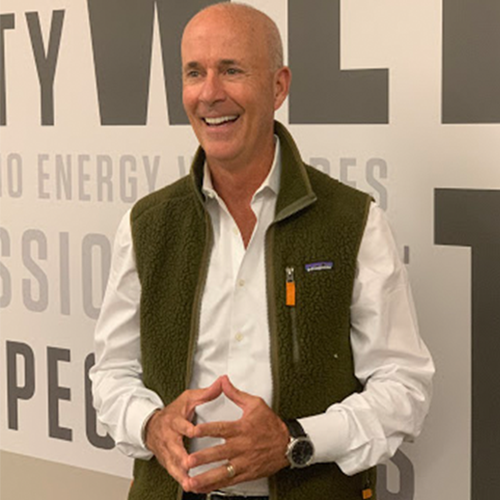
John Sabatalo is the President of Planes Companies – a global moving, warehousing, logistics, and project management firm located in Cincinnati, Ohio. As one of 15 members of the board of UniGroup – a $1.7 billion transportation company – John plays a key role in transforming the industry. John has been with Planes Companies since 1991 and has served as President since 2003.
Prior to becoming a leader at Planes, John enjoyed a very successful career in athletics. In high school, he was a four-year baseball varsity starter and captain and a three-year football varsity starter and captain. He then attended the University of Massachusetts on a football scholarship. Even after he hung up the pads, John’s love for the game never left him: his coaching career began at the University of Cincinnati, where he was recruited to be part of their graduate assistant program. He then spent six years as the offensive coordinator of local powerhouse St. Xavier High School before becoming the school’s youngest-ever athletic director. Following this success, he spent five years coaching football at Lakota High School, where he earned the accolade of the Division I Coach of the Year.
John’s passion for athletics is a fundamental part of his character, as he is affectionately still called “coach” by many to this day. His leadership style mirrors that of a true motivator, as his presence visibly energizes those around him. John’s competitive spirit and his uncanny ability to align business acumen and strategy to the x’s and o’s of the sports world resulted in the birth of Planes’ TEAM culture in 2016. Originally introduced to 50 business unit leaders as part of a six-month leadership series, TEAM rolled out to the entire company in 2017. The success of the rollout – evidenced by Planes being voted a Top Workplace in Cincinnati by its own employees for six years running – has led leaders of businesses and teams all over the country to seek John’s coaching on the creation of high-performance teams. John is a passionate believer in the importance of culture in transforming teams of people to work with a shared mindset and win together.
John and his high school sweetheart, Lynn, have been married for 40 years. They have two sons, Brian and Stephen, and three beautiful grandchildren. Beyond athletics and business, John’s passions lie in spending time by the ocean and making memories with family and friends.
Welcome to the Athletics of Business, a podcast about how the traits and behaviors of elite athletes and remarkable business leaders frequently intersect. The real stories and hard lessons to help you level up your leadership and performance.
Now your host, Ed Molitor. Welcome back to another episode of the Athletics of Business podcast. I am your host and CEO of the Molotor Group, Ed Molitor. And what an amazing conversation I have for you today with our special guest, John Sabatello. I cannot put into exact words how value packed this episode is, but I'm going to tell you this. Get a pen and get a paper ready. Because there is so much information, so many lessons to be extracted from this conversation with John. And you might be saying to yourself, well, I can't really get a pen and paper handy because I'm flying or I'm driving or whatever the case may be, or. Which leads me to my next point. Often we use podcast episodes to fill a gap in our schedule.
In other words, when we're commuting to work or when we're traveling, whatever, which there's nothing wrong with. It's awesome that's what we're filling our minds with, right? But instead of just filling your time or filling that gap in your schedule with this podcast episode, I'm going to encourage you to be very intentional in your listening and fill your heart and fill your mind, because John is an unbelievable human being. He's an incredible leader. The track record speaks for itself, not just in the business world, but also in the athletic world, specifically the football world. And before I go into touching on a couple of things that John and I talk about in this podcast episode, I want to share with you where he's been, what he's done and what he's doing now.
So with that, John Sabatello is the president of Plains Companies and Plains Companies is a global moving, warehousing, logistics and project management firm located in Cincinnati, Ohio. As one of 15 members of the board of Uni Group, which is a $1.7 billion transportation company, John plays a key role in transforming the industry. John has been with Plains Company since 1991 and has served as president since 2003. And his journey to Plains Company is amazing. We really dive into that early in the podcast episode. Prior to becoming a leader at Plains, John enjoyed a very successful career in athletics. In high school, he was a four year baseball varsity starter and cap and a three year football varsity starter and no surprise, a captain as well. He then attended the University of Massachusetts on a football scholarship. After he hung up The Pads.
John's love for the game never left him. His coaching career began at the University of Cincinnati, where he was recruited to be a part of their graduate assistant program. Now, if I've learned anything about coaching, the ones that have a passion for the game, where the game has meaning for him, there's a purpose. And the ones that start out as grad assistants are the most successful ones, and John is no exception. He then spent. After completing the grad assistant program, he then spent six years as the offensive coordinator of local powerhouse at St. Xavier High School before becoming the school's youngest ever athletic director. Now, if you're outside the Cincinnati area, you might not realize Cincinnati is one of the top people, argues one of the top five hotbeds of high school football in the United States.
While he was at St. Xavier, as a matter of fact, excuse me, one of the gentlemen, he worked with a 21 year old assistant coach who he's still good friends with to this day, as a matter of fact, had a conversation with him about leadership and about certain things that day we recorded this episode. It was Urban Meyer, okay? Now, after his time in St. Xavier, he spent five years coaching football at Lakota High School where he earned the accolade, and this is a huge Accolade of Division 1 Coach of the year. And then he walked away. John's passion for athletics is a fundamental part of his character, as he is affectionately still called coach by many to this day. And when you listen to the podcast episode, you're absolutely going to understand why.
His leadership style mirrors that of a true motivator as his presence visibly energizes those around him. John's competitive spirit and his uncanny ability to align business acumen with and strategy to the X's and O's of the sports world resulted in the birth of Plains team culture in 2016. Now, what is the team culture? That's the Ackerman acronym. Excuse me, T E AM and that stands for. And I don't want to steal any thunder from the episode, so keep listening. But that's the acronym. It stands for trust, empowerment, accountability, and the last one, the M. I love Mesh. Okay, now the team culture was originally introduced to 50 business unit leaders as part of a six month leadership series team rolled out to the entire company then in 2017. Now get this.
The success of the rollout evidenced by Plains being voted a top workplace in Cincinnati by its own employees for not four, not five, but six years running, has led leaders of businesses and teams all over the country to seek John's coaching on the creation of high performance teams. John is a passionate believer in the importance of culture in transforming teams of people to work with a shared mindset and win together now. And I love this last part of his bio. John and his high school sweetheart, Lynn have been married for 40 years. And now they say behind every great coach as an even greater wife. And John shares a story about his time watching film with Urban Meyer that will obviously put his wife Lynn and into the hall of Fame. They have two sons, Brian and Steven, and three beautiful grandchildren.
Beyond athletics and business, John's passion lie in spending time by the ocean and making memories with families and friends. Some of the things we're going to talk about on this podcast is how significant, as you can imagine, trust is in the culture. Okay, we're going to talk about. He's going to share some really cool stuff that he does where he brings that athletic vibe, that athletic mindset to the business world. For instance, he uses music at the start of meetings to get the energy going. Believes in the power of a visual. You know, one of the things as a coach, regardless of what level, whether it be high school, college, or pro, that you often do for your team, is to show them highlight films or certain clips of movies to drive your point home.
And inside of this podcast, John shares a story how he used a clip from Moneyball. Okay, great movie about the Oakland A's and their method to building a champion. But he uses, he used a Moneyball clip to drive home his point of changing culture in the way of doing things. Because as he says it, what got us here is not going to get us there. Now we'll discuss the significance of using fierce dialogue to not only get out of your silos, but I love this point to discuss reality in real time. And obviously he drew that from the Navy Seals and he shares that story, where that came from. And I want to share with you a little bit of a quote from John so you'll get a sense for how amazing this podcast is.
But one of the things he's talking about is leaders not having to impress him, right? And he says, I tell our people, our leaders, you're not here to win me over. You're here to win the people over that you lead. And they've got to know, number one, that you care. They got to know that there's no ceiling that they can be whatever they want to be in our organization as long as they are willing to invest the time and that's the critical part right now. And when I see that our leaders doing things that we talk about, that's how they win me over. All right.
And I just think that's such a huge point because you think about, especially with some of the younger leaders in organizations, they want to impress their bosses, they want to impress upper management, they want to move up the chain. But the bottom line is those impressions are a byproduct of doing things the right way, and that's serving your team. So without further ado, I'll step to the side and I will let this podcast episode do the work. And again, I hope you enjoy this half as much as I enjoyed recording it. John, thank you so much for joining us today on the Athletics of Business podcast. I am absolutely humbled and fired up to have you with us.
Well, Ed, I can't thank you enough for allowing me to be part of this great program. I'm really looking forward to it. Thank you.
Well, let's jump right into it. I want you obviously inside of your introduction. I told our listeners a lot about you, but I'd love to hear your story from your vantage point and in your words.
Well, you know, I grew up in a town outside of Boston, Auburn, Worcester, Mass. And growing up as a young boy, I just was addicted to athletics back then. And like every little 12 year old boy kicking the leaves, walking through the streets of Massachusetts, I would back then hum the Notre Dame fight song. Wanting to go to Notre Dame as a kid, that was my dream. Unfortunately, that dream never came true. But I was at the time, I was, I played high school football, I was a captain for our team, three year starter, a quarterback. And I was recruited by the University of Massachusetts where I played. And I was scholarship from the University of Massachusetts. I had the pleasure to have been recruited again by the University of Cincinnati, which brought us to Cincinnati 40 years ago this past August.
And the university brought me here as a graduate assistant where I worked for them for two years. I got my master's and at that time I decided college football wasn't going to be the lifestyle that I wanted. But athletics certainly was still a big part of my life. I wanted to stay with it again. I was recruited by Cincinnati St. Xavier High School, a big Catholic Jesuit school here in Cincinnati, where I was hired as a young guy. And within two years I was their offensive coordinator. And then at 27, I was named their youngest athletic director. So I became the offensive coordinator. I was the athletic director. It was a great experience for Me having spent six years there, quite honestly, it was one of the toughest decisions I had at that time.
I left after six years, but prior to me leaving back then, I'll never forget when my last year there, I became aligned with a 21 year old, 22 year old kid by the name of Urban Meyer. And he and I had become very good friends and none of us had any money back in those days. And I never forget my wife always making an extra sandwich or two because Urban would always want to stay after practice and we would watch film into the wee hours of the night just studying offensive football. And to this day he's never forgotten that. And you know the success that he's had. Hard working guy who's got a creative, innovative, bright mind. And believe it or not, back in 1985 when were together, 85, 86, were doing things back then that nobody heard of.
We were running the 5, 5 wide outs, shotgun shuttle pass, things that you'd never seen before. And I think he took that energy from 1985 and you know what he has done to this point today. So from that I was recruited by a big local high school here in town in Cincinnati by the name of Lakota High School. We inherited a program that we, that needed some work and it took us a few years to do that. And I was very fortunate that I had some great players at the end of my tenure there, some great coaches, and at that time I was named Division 1 coach of the year in the state of Ohio for football.
And if you know anything about Cincinnati football, once again, it's a way of life, it's a big part of people's lives and there's a lot of attention given to it. I was, at that time, I think I was 33 years old and I had just spent five years at Lakota and I had met my now business partner, John Plains, two years prior. And he just followed my career the last couple years while I was coaching. And he called me one day and said, john, I love to talk to you. So I had no idea what he wanted to talk about because as I mentioned earlier, when I was 12 years old, I knew exactly what I wanted to be. I wanted to be a professional athlete or I wanted to be a coach.
Unfortunately, I wasn't good enough to be a professional athlete, but coaching was going to be the path that I took. So I was kind enough to meet with John, had some great conversation, only to find out that John wanted me to join his business. I looked at John and said, I can't spell business. What would you want me for? He says, john, what you have is what we don't have. We can teach you the business, but we value your leadership style and your ability to influence people. That's what we need in our company in order to grow our company. I chuckled it off, laughed it off, thanked him, and of course met with him 3, 4, 5 other times afterwards, only because, out of respect, fortunately or unfortunately, at the time, not sure, but it is fortunately.
Today I. I decided that, you know what, if I'm ever going to take a chance in life, it would be now. And I, I announced that I would be leaving a game that I loved very much. Leaving something that I really enjoyed molding and teaching and influencing young men, that I would do something different. So I joined Planes, the Plains Company, which is a transportation company, one of the largest transportation companies out there. And I joined his. Joined his team. And they've been here 29 years. And it's been the best thing that's ever happened to me. John and I are partners in a business now. I think when I joined the company, we're 20 million in revenue. And to this day, to date, we're about $135 million in revenue. And we just do things different.
So when you reached out to me and you called me and talked about the athletics and business, of course I always think of the Ohio State and I started laughing. I'm thinking, you know what? Little did I know, I really like what Ed had to say because I believe our company is different. It's not because of me, but I think I have brought a different perspective. I brought an athletic mentality into a business, almost like we've created our own in house locker room, because people are people. And we put so much emphasis on leadership. We put so much emphasis on influencing and molding people on how to lead their teams. And it's all about our culture, the parallels between coaching an athletic team and business. Unless you've done and been on both sides of the fence, it's probably difficult to understand.
But the parallels are uncanny. I laugh at my friends, I joke with them, because they're still all in the game of football, whether they're in the NFL, the Division 1 college level, or at a very high level in high school. I say the only difference between you and I, you get seven days to prepare for a game, you get to wear them, and you get to wear a helmet. Every day. Every day in my world is a game. Every day, every new day is a different game. And, but other than that, it's all the same because it's about people, it's about putting together a culture that differentiates you from your competitors. And those are the things that we've.
Done here, you know, and you just touched on something that's fantastic. And you just touched on something. The parallels are uncanny in coaching athletic teams and coaching people in business. And everyone thinks it's this new. The new thing is to coach your people, not just to tell them what to do, right? To move from the management mindset to the coaching mindset. But I think it's multi generational because I think people have always wanted to know that their work is important and that they're valued as people. Can you talk into how significant and what the parallels are between coaching a football team like you did for so many years at such a high level and coaching your leaders now at plains companies?
Well, you know, everybody is different. So not everyone can be coached the same way. And you need to have the ability to recognize that, you know, in the business world people want to know, just like in athletics, people want to know, number one, that you care. You really care about, you really care about them as a person. You know who they are, you know their family, you know the trials and tribulations that they may be going through. Everyone has a story behind that closed door. There's a story behind every person. And it's so important that as a coach, we don't use the term manager here. We don't use, we don't use that term. I don't like it. We don't use the term committee. I don't like it. Everything we do is team oriented.
And as far as a coach goes, our job is to influence people, okay? To help that person be the best they can be. It's not what's in it for me, it's what's in it for them. And we work really hard at that. Showing that we care that we're here, we influence. You're present. And it's just not about the profit and the loss or the growth. Top line revenue. We create an environment here where people are glad to be here. They're glad to be here. What drives the results in our company. We're all about growth. We're all about driving a bottom line profit. We're all about creating a customer experience. And what we do here is a very stressful time for people. We relocate people all over the world and that's a stressful time. So we have to create a great customer experience.
And the way you do that, you create a great culture and environment for people to want to win and play to win every day. It may sound a little corny or a little Pollyanna, but that's our x factor. That's our differentiator in our company. And we talk to that all the time. We talk with our business unit leaders. The first 30 minutes of a meeting is spent on leadership and culture, period. Because we've got to make sure that the messaging from the top is being driven out throughout the organization. So I just think it's creating an environment where there's a lot of positive energy that comes through the front door. And I think if I set.
I love leaving people in the front lobby for an extra five minutes because they can get a feel for the vibe of our culture right out of the chute by how many people will walk by them and say, excuse me, have you been helped or can I help you?
I love that. I love that. How important as you influence people to be the best they can be, how important is it for your coaches to be able to see more in their people that they may see in themselves? In other words, to pull that out.
I think that's critical. You know, and I tell our people, our leaders, you're not here to win me over. You're here to win the people over that you lead. And they've got to know, number one, that you care. They've got to know that there's no ceiling. They can be whatever they want to be in our organization if they're willing to invest the time. And I think that's the critical part right now. And when I see that our leaders doing the things that we talk about, that's how they get. That's how they win myself over. Other than that, it's about the people we are. What myself and John Plains, my partner, we are where we are today.
Foremost number one, is because the people that we've surrounded ourselves with, period, the better the people, the smarter the people, the more creative and innovative the people, the better our company is going to be in.
To go back to what you just talked about with the first 30 minutes of your meetings, and you talk about leadership and culture and focus on the people. Can we talk a little bit about your meetings? We talked about that about, you know, a few weeks ago when were talking on the phone. I love what you do to get that positive energy and that vibe into your meetings.
Sure, sure. Well, you know, it's funny. Every meeting we start with music. So when I walk in that room. There's some juice going in that room. There's some juice flowing in that room. What do I mean by there's energy? You can feel the positive energy. You can see people tapping their foot, tapping their pencil on their DEs. Try going into a meeting, walking into a meeting intentionally, 30 seconds late. You'll see everybody on their cell phones. There's no communication going. Everybody's on their cell phone doing their own thing now. Bring some music, bring some energy to the environment. You'll see communication. You'll see people, like I said, tapping their hand, tapping their foot. I want to start our meeting off people sitting up straight in their chair. You've got 15 to 18 people in that meeting.
Hey, there's a lot of money in that meeting sitting there. There are meetings and I want to, we bring that positive energy. See, I believe that music stimulates the sensors. I remember growing up as a kid, just probably like you. How did the seven dwarfs go to work every day? They would whistle when they would go to work, when the railroad, when people would go work on the railroad, what did they do? They sang as they went to the railroad to do their job. There's no difference. So we created an environment where there's some energy before we start our meeting. And it just sets the tone, gets us off in a right, in the right direction. So a 90 minute meeting, I would say the first 20 to 30 minutes of that 90 minute meeting is spent on two things, leadership and our culture.
And what are we doing? Making sure that we're doing the right things and sustaining it as we move forward.
And one of the things you and I talked about was the positive mindset, right. And the ability to convey that. And you do something interesting in your leadership meetings where you talked about, you show a ten minute clip.
Yeah, See, I believe that's great. That's a, that's a great point. I love the power of a visual. And we will show certain clips. I give you an exit, an existence. There's a great clip in the movie Moneyball. And you're sitting around the table and you're watching this clip. And it's all the old scouts back in the day when I was a kid, I can remember the scouts there with the stopwatch timing you out of the batter's box down to first base or the gun, how fast you can run or how fast you could throw the ball. And I'm watching the old scouts. And back in Moneyball, as you know, it was all about algorithms. And data and looking at how to put together a team differently because the Oakland Athletics back in that day had to compete with the New York Yankees.
And back then, in that day, the Yankees are the highest paid payroll. So in this little clip here, it talks about the change and the old guys that were the old scouts, they didn't want to change. And Billy Beane at the time said, we have to change. Matter of fact, he said, adapt. Adapt or die. Change or be gone. So when you're talking about change in our company and change in our culture and the things that we're doing, we have to change. We have to be innovative and creative. What got us here won't get us where we're going to go to the future. So you would take a clip like that, show a maybe a three and a half minute segment of that clip, and you would speak to that clip.
And it's amazing when you see the visual and you use the parallels of what you're trying to convey to what they just saw, how that really meshes and bridges the gap of your communication. And we do that a lot where it makes sense. And I'll be honest, it sends our team the right message and they get a lot out of it.
And we keep referring back to team. Can we jump right into talking about your culture of team and what it stands for, what it represents and how you've built that and how amazingly popular it has become?
Well, you know, we spent about, I put together an ad hoc committee and we spent almost three and a half months trying to come up with what's our mission, what's our vision. And in so many companies today, you'll have a mission statement, you'll have a vision statement. And if you walked around to the employees and said, could you tell me about your mission or your vision? A lot of them can't repeat it because they're. A lot of times they're too wordy, they're too long, they're not practiced, it's not ustain. So after three, and were kind of going down that path, but after three and a half months, I heard the word team used so many times.
I finally said to our ad hoc group timeout, I said, guys, I don't want this to sound Pollyanna, but do you know how many times we've used the work team? I said, that's who we are. Our core, the foundation of what built this company, this enterprise is centered around team. And that is team stands for us. It's trust, it's empowerment, it's accountability and it's mesh. And we practice that. We practice that every single meeting. We talk about it. Our team leaders talk about it. Every Monday with their group, we have huddle meetings. We have huddle meetings with our team, they have huddle meetings and they talk about lessons learned, they talk about our culture, they talk about our core, they talk about our team and they talk about successes and shout outs. So that's what we do on Monday.
Every Monday morning we have a stand up meeting. Our business unit leaders will have a 9 o' clock stand up meeting and we call them huddle meetings and they'll talk about lessons learned, we'll do shout outs. We always talk about our core. We talk about our team. We may call, they'll call on people, talk about the T, talk about the E, talk about the App. They're all important letters. I love the M. I love the word. I love the M because I love mesh. I love different age groups, different diversity, different skill sets, different people, different levels in their career coming together as one, as a common voice for a common goal.
Love that.
Make this company a better company.
Right? And let's go back to the T real quick. Trust. I firmly believe that trust is a cornerstone of any great relationship. Right. And can you talk and you've touched on it a little bit, but I have this gut feeling that's the core of everything. How important have relationships been in your entire career? When you go back to your coaching career, to the amazing work that you've.
Done at plains companies, you know, it is amazing when you look at the word trust and I'm going to put another word next to it was okay. Respect. I think trust and respect are so important. And when you look back, I look back on my career and my tenure, what we do today, that the people really stand out are the ones that you have trusted throughout your career, that you have respected throughout your career to help you be who you are today. See, I believe as an effective leader, you have to be vulnerable. What do I mean by vulnerable?
How can my team trust me to be transparent, to be honest, if I'm not going to put myself out there and be vulnerable, I have to have the ability to look my team in the eye and say, I made a mistake, I screwed up, I need your help. Let's get this thing fixed. When we have our meetings and I'm sure, Ed, you've been in other, you've been in meetings that you know when you're going through a conversation, you know, people may be harboring information. They're not putting it on the table like they need to put it on the table. They would rather leave the meeting back channel and disregard what was just said because they didn't have the ability to put it out there out in front for the others to be able to comment on.
If we're going to build a high performance team, you gotta be honest, you gotta be trustworthy, you gotta be vulnerable. You gotta put yourself out there as a leader. You gotta be able to say, I made a mistake and I screwed up. Trust in our company without trust, without respect, truthfully, you can't build without it. That's the first brick. That's the first brick. Building a foundation is the trust. And I call it respect. Because I really believe they kind of go hand in hand.
I love that. And as we talked about before, everything we do here at the Molotov Group is we focus on the authentic and resilient leadership. And, and I break authenticity down into honesty, integrity. And then that last piece, vulnerability, because that's the one people struggle with. And to build on what you talked about. You know, as a coach, I was always taught, don't ever ask your team to do something that you wouldn't do or haven't done yourself. And the thing I've learned about vulnerability, not just the fact that I screwed up, but, hey, I don't have the answer, okay? And I always find when I'm able to say that to my team, you know what? Here's something I need your help with. You show them three things. You show them that a, that you know, respect them as a person. Right?
You show that you respect their experiences and their skills. And the last thing is, goes back to what we just talked about. It shows that you trust them because you're making yourself vulnerable to them. And then on a flip side, what that does is that allows you access to the real version of them as well. Because now they know they can trust you and be vulnerable with you.
Now. You're exactly right. We use a term in our company, and I heard this term from a. Probably one of the best leadership seminars I ever went to. It was from a Navy seal. It's called fierce dialogue. We use that term in our company all the time. And what it means is this fierce dialogue, when the seals would come off of a mission, the first thing they did was huddle up. And even though the mission was a success, if somebody during that mission did what they weren't supposed to do, it was called out right then, right there at that time. We try to do that in our organization today, that when I have my meetings, I try to make it where, you know, when we're always going to be respectful. We're not there to throw someone under the bus.
But at the same time, you got to be able to call it out. If you're going to build towards a high performance team or a high performance company, you've got to have your business leaders be able to put it on the table. If we knowingly know we're going or doing something wrong and we do that. And you'll hear a lot of guys and a lot of people in our team say, well, let's talk about fierce dialogue. And boom, they'll put it right on a table. We're not 100% there yet, but I'll tell you what, we work awfully hard at trying to be there. So many times you would leave a meeting, I would leave a meeting and I would chuckle inside because I knew what was going to happen by some of the participants.
As soon as we get out of that meeting, the back channeling was going to start and the tearing down was going to start again. If you want to differentiate yourself from being good versus high performance teams, call it out. The New England Patriots are the New England Patriots. Yes. For a couple reasons. But I'll tell you what. I learned something yesterday about the Patriots. Because of the culture they've created, their culture is policed by their players. It doesn't even get the Belichick or Kraft when players cross the line. And you've got veterans who have been, who have helped build that team to what it is today. That is the Brady's of the world. Guess what? It's policed right there, right then. And that's what we want. That's what we strive to be here in our company.
And what that allows you to do. We talked about this. It allows you. And the power comes from confronting reality in real time.
Absolutely.
Can you talk into that a little bit? Like how that makes. How that is such a competitive advantage.
It's. It is such a competitive advantage because think about it. You're sitting in a meeting and again, let's go back to the world or the word putting yourself out there. You're putting yourself out there, you're being vulnerable. You're either admitting that you're making a mistake or you're calling one out. And you're only calling it out because your only intention as somebody that's in that Room is to make this company better. And if you want to, and you got to look at what is your X factor, what is your differentiator from your competitors. And to me, I'm telling you, just being able to confront reality real time gives you a big jump on your competition. And that's something that we work at. It's not a given. It's got to be worked at, but it's really rewarding to see.
After two or three years of doing this, you develop a common vocabulary. You hear your people talk about vulnerability, trust, empowerment, accountability, mesh, fierce dialogue. You're hearing a vocabulary now. You're developing a different speak within your own team. And you're seeing the results and the fruits of that labor. No question.
And I believe when you do that, and this is going to lead to a question, you're building this culture that's worth fighting for, right? You're going to protect it. Now, how do you, from. From where you're at, how do you protect that culture when you bring new people into it?
That's a great comment, a great question. You know, we hire to fit our culture. We don't fit you. You could be, you could hire great, talented people. But you'll know in that hiring process, you know, kind of their makeup of what they're made of. You have to be a team player. You have to be part of a team. You have someone who wants to serve others. We're in a service business. We're here to help other people. I'll tell you a quick story. This is, this is. This is a great story. This was a live. If we could do this on every hire and stage, this would be unbelievable. And this happened by mistake. I happen to come through the front door one day. I've got my phone up to my ear, I got a coffee in another hand.
I've got my backpack one shoulder, and I've got a bunch of paperwork under my arm. Now I've got to open two sets of doors to get in. And I got the first one open. I go to the second one, it's stuck a little bit. I finally get it open, and there's somebody sitting, I'm going to say, five feet away from me when I finally enter the lobby of my. My business here, and everything falls out of my hand except the coffee cup all over the floor. And the person sitting in the chair just looked at me and never got up and said, geez, how can I help you? And would help just sat there and stared at me. And I'm thinking through My mind, I wonder, is this person coming for an interview, I hope, or has this person been hired? I hope not.
So I go back to my desk and I asked my assistant to call so and only to find out the person comes down and the business unit leaders. And I said, geez, let me tell you what happened. And I told him the story. And I said, by the way, is that young lady here for an interview? And he said, geez, John, no, this is her first day. She's starting today. I said, oh, boy. I said, well, I'm not going to tell you to do anything, but I'm going to tell you right now. My gut's telling me this is not going to work. We're in a service business here. Here I am. It doesn't matter who I am. It could be anybody. Here I am.
And I said, here was an acid test, a great opportunity for that young lady to get out of her chair and help. And she did not. 31 days later, gentleman came down and said, john, we just let the person go. This wasn't going to be for her. She didn't fit the team. She wasn't part of a team, and she wasn't going to fit. She wasn't here to help others. It was not her job. So it was a lesson learned. It was a great lesson. I wish we could do that on every new hire. Walk through the door, drive it, drop everything on the floor and see who gets up and who doesn't. Be real easy. People get up, they're hired. The people that don't. Well, you're not going to fit here.
Yeah. That's unbelievable. Yeah, that is. That. That is. It would be nice if you could do that for every new hire.
Wouldn't really. Would be. It really would be.
You know, and to circle back to one of the very first things we talked about, your conversation that you had with Urban Meyer yesterday where you talked about culture. Right. Because this is. It's all coming together here. And he said something to you in terms of when you ask people what their culture is and how do they sustain it, can you go through that conversation in and talk about how your culture really is exposed?
So, you know, he and I were talking yesterday and the other day, and, you know, I was telling him, I read an article where it talked about CEOs and what were the top three initiatives. And almost every one to a point, to a T was culture was number one or number two on their list, but most of them didn't know how to get there or sustain it. So he and I were talking. He said it's amazing that he would ask somebody what your. How's your culture? And they would answer him, it's good. No, that's not what I asked you. Can you tell me about your culture? And a lot of people can't do. Can't do that. And Urban was telling me that something that really resonated with me. Your culture is exposed during tough times or when things go wrong.
And that resonated with me because I look at what we have here in our company, and you used the term before at protected, it's protected. And that was the same term that he used yesterday. Your culture, people protect it because of what you have. And our culture here is all about driving positive energy into the. Into this organization. We call it energy vampires. We don't want energy vampires in our company. People that are naysayers, people that are always looking to tear down or find fault. We want people to bring that positive juice with them, that positive energy that are glad to be here, that have an opportunity to really create a great customer experience for our customers. Again, it's all about. About mindset. It's a place where people are glad to be. They're happy to be.
Herb Kelleher Keller from Southwest, the chairman of the board, he created a joyous culture for his organization. I like to think at Plains, we have a joyous culture. However, he created a very competitive culture. And in Southwest, they have never had a year where they weren't profitable. We have been very fortunate in our company here, knock on wood. We've always had a profitable company. And, you know, we're all about the top line. We're all about the bottom line. We're all about creating the customer experience. But I really believe business leaders don't understand you're not going to get those results. You're just not. If you have a culture where it's a revolving door and people do not want to be there, you can't drive those kind of results. Can't do it. So that's why you've heard the term culture each strategy all day long.
I believe it 100%. That's why we give it the attention that we give it today.
And we all talk about safe cultures and resilient cultures. But one of the things I have found, and I took this from athletics and. And to me, it's powerful when you have a culture of family. Right? Like, I think the most successful athletic programs, regardless of the sport, I think most successful organizations are the ones that aren't like a family, but they are a family. Can you talk into how that resonates with you at the Plains Companies?
So our company has been in business for almost 100 years, privately held, family owned business. And John's father started the business way back in the day. There is something to be said about a family business versus a public company. People really feel part of something when they're part of a family business. We have so much latitude to be able to do so many different unique things to make people feel part of when they come to work. Yes, it's work, but they're really coming to their second family. John and I start our day every day by walking through our facility. We have over 500 plus employees in our company, half of which reside under one roof here in Cincinnati, Ohio.
We walk through the company each and every day saying good morning, calling people out by name, asking them how their day was, asking them how things were going on. Just you being visible. I think leaders today don't understand or don't have a real good appreciation for what it means to a person when you're visible in your company to your people. What it means for you to say good morning or ask them about their day or ask them about one of their children, that is their dinnertime talk when they go home with their families. What the influence that you can have as a leader of your company to your people, to make them part of your family. And the values that we bring to create that once again, that differentiation differentiator out there. It's again for our company.
We've been named best place to work six years running in Cincinnati. One of the top best places in Cincinnati to work. That's not voted on by management or leadership, that's voted on by the employees that they value. That the place that we've set for them to come every day, they're glad to be here. And it's noticeable and it shows every day.
And I have to think for you, that makes it hard for people to leave when other opportunities present themselves. And not only that, though, it's also going to attract the top talent that's out there.
Absolutely. Word of mouth is our biggest recruiter. You know, we're living in a world of change, of speed. Everything is about speed. It's about change. We're living in it with a generation, with the millennials today. You know, how many jobs will a millennial have by the time he's 40? We're trying to create that opportunity for that next generation where, you know, when we get them here, wow. Why, why would I want to leave someplace else? There's opportunity to grow here. I feel appreciated here. I feel like a valued asset. I get to contribute here. I've got a career path here. So, yes, we want to try to make it where we don't have a revolving door. We have a place where people want to come, and our biggest recruiters are our people internally here.
And during a time where there's not a lot of people out there to find, the labor market is extremely harder. If we had more people in what we do, we'd be growing even that much more. And that's the same for all companies out there. So, again, Ed, you have to have a healthy, thriving culture. And culture is you don't flip a switch and decide you have a culture. It takes decades to build, but the hardest thing is to sustain it and making sure you're pumping new life and new energy in it all along the way.
So how do you. How do you do that? Because you mentioned earlier that the energy vampires, right? And regardless of how great of a job you do, one or two is going to sneak in every now and then. What do you do? How do you handle that? And how do you sustain that amazing culture?
You know, I think communication is critical. Again, I think being invisible as a leader, whoever leads and influences in this company, you've got to be visible. You've got to communicate with your people. And during your huddle meetings, you've got the shout out and call out the successes that have taken place and give people a recognition in front of their peers. A lot of times it isn't even about more money. It's just being recognized. It's being able to say, thank you, I apprec you. Thank you, and I appreciate you for the job that you have done for this company. It's keeping it simple, but it's showing that you really care. And people know if you care or not. They really do. They know if you're being disingenuous. And I think we've worked very hard at those. It's. Look what I just mentioned.
That's not rocket science. You know, it's the ability to smile at people in the morning saying good morning to people. I tell our people when I call them up for company meetings, the importance of smiling, the importance of saying good morning to your coworker, the importance of saying, how was your day? Or how was your weekend? And it's amazing when you rep that and through repetition, you can just see a Different feel and a different vibe go to in big companies today. You get people that walk by you'll say good morning. They'll just keep on walking. You know, that's not a culture we want. Again, we're in a service business. We are here to service and give people, our customers, an experience above and beyond what they're looking for.
And I think people do that when they know that you're in the trenches with them. Right. And as a leader, you have their back. How, how do you convey that? How do you communicate that to your people?
Well, again, I think they have to see it. I think they have to see it. You know, whether it's helping them with conflict resolution because we've got an irate customer, that's not happening. You jumping in there with them, demonstrating that you want to be part of the solution. Myself, I'm very much hands on. I'm very visible to our team. My door is completely open. They can walk to my office anytime. I'm there after hours. Again, it's being visible to your team. It's communicating with your team. It's showing them that you care. And when you do those types of things, they're helping you protect what has been built here. And it's, and that's evident in the results that we're driving here as an organization. You don't get the results that we're getting today by being average or being good.
You get the results that we're driving today because you are really working towards that high performance team. You know, you've heard of good to great. Well, we're not great yet. Okay. We're just not great yet because you're always going to have a couple areas that you want to work on. But I can tell you what, we're working towards being great. We're working towards being high performance. And you do it with people that you care about and they really truly know ed that you care about them. And this is a simple formula. This isn't rocket science. The same thing goes on along in athletics when taught. When I was talking, when I was Urban with Urban Meyer yesterday, were talking, you know, when his two starting quarterbacks went out, when they were vying for the national championship.
That third string quarterback, you know, he wasn't going to see the field. But, but that guy, that third string quarterback knew he wasn't going to let down that first string and the second string. He wasn't going to let his peers down. He wasn't going to let his team down. He was going to let that, he wasn't going to let the brotherhood down of that team because the culture that was set and established for them, same goes true in our business.
And he was ready to go because he just, he bought into the process and he did things the right way every single day. And we talk about consist. And I want to ask you, as we wrap up here, I want to ask you a question. When we talked on the phone, I loved your answer to this question. You know, one of my favorite things that I've learned from Coach K was coach has to be the face that his team needs. Can you talk about how significant that is?
It's critical. You know, being the face of your team, you set the tone, you set the behavior, you set the strategy, you set the goals and the vision of the organization. And by being authentic, by being visible, by being communicative with your people and really, truly showing that, you demonstrate care and love. We didn't talk about the importance of love. You know, don't tell me in a team meeting I don't have to love you or I don't have to like you. Okay. To build a high performance team, I gotta love my team, I gotta love my people. And they've got to know that and feel that and they got a sense that because it's been demonstrated, all teams like one another, the great ones love one another. And in our organization here, I really believe our people believe that.
Myself and my business partner John love what our people do for this company each and every day. And we appreciate it. And the gratitude that we show towards our people is uncanny, Quite honestly.
Well, and just to follow up on that, the thing that he says, I kind of. He also talks about showing the face your team needs both in times of adversity and sustaining success and sustaining the culture. And one of the things we talked about was how when you come to work every single day, you know exactly how you need to carry yourself.
Yeah, I come to work every day. And it's funny, no matter when I leave my house to here, it doesn't matter what's happened. Me took by the time I left my house, so I parked my car. When I walk through that front door every single day, I utter two words to myself every day. And I got a little bounce to my SAP game on every day. And I believe when I come through that door, the light is on, you set the tone. And when I come through with a smile and I greet Tina at the receptionist desk with a big good morning. I feel good. I know she feels good. And the day's tone has been set for everybody.
John, I can't thank you enough. This was. This was absolutely awesome. I appreciate your time. I appreciate all the value to that you added to the Athletics of Business podcast. Podcast. I'm probably going to call you up in a few months and ask you to do it again because I know there's so much more that we can talk about.
And I had a ball doing this with you as a pleasure being able to do this. I'm not sure why you chose me, but I'm honored and I'm privileged. Is this was great. This is right up my alley. I really get passionate and excited about talking about how to build something that's special. And I can't thank you enough for having me on.
John, thank you so much.
Thanks, Ed. Thank you for listening to the Athletics of Business.
Be sure to give us a rating.
And review so we know how we're doing.
For more information about the show, Visit.
The Athletics of Business.com now. Get out there. Think, act and execute at the highest level to unleash your greatness.