

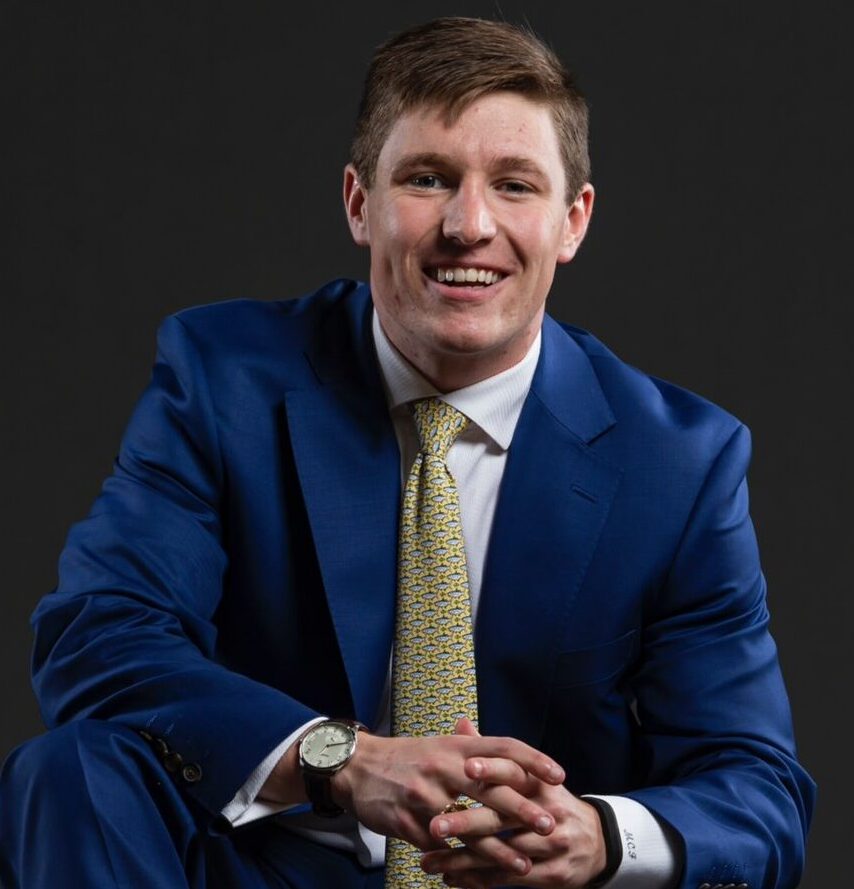
Mark French, Jr, is a senior point guard on the Men’s Basketball team at Texas A&M University where he will receive a degree in Marketing and a concentration in Professional Selling. He has been instrumental in helping the program transition from former coach Billy Kennedy to first-year head coach Buzz Williams. After appearing in only eight games total his freshman and sophomore season, Mark earned a scholarship under Billy Kennedy during his Junior season and experienced his first career start while playing in 16 games. Then, at the end of the 2018-19 season, Coach Kennedy was let go and Mark had to start from scratch as a walk-on with the new staff as a senior. As a result of Mark’s work ethic, leadership, selflessness, and commitment to being invaluable without being most valuable…Mark earned a second scholarship from Buzz Williams as he proved himself to be indispensable.
Prior to walking on at Texas A&M Mark enjoyed a highly successful high school basketball career in which he finished his prep career at Prestonwood Christian Academy in Plano, TX, and helped the school capture the 2016 State Championship and earned 2016 TAPPS all-state honors and all-district selection. Mark spent his first three years of high school at Briarcrest High School in Eads, TN, earning back-to-back TSSAA all-region team honors. Mark surpassed 1,200 points, 440 assists, and 120 steals.
Welcome to the Athletics of Business, a podcast about how the traits and behaviors of elite athletes and remarkable business leaders frequently intersect. The real stories and hard lessons to help you level up your leadership and performance. Now, your host, Ed Molitor. Welcome back to another episode of the Athletics of Business podcast. I am your host and CEO of the Molitor Group, Ed Molitor. And folks, sit tight because we have a first for you here on the Athletics of Business podcast. As a matter of fact, we have two firsts. Okay, this is part one of my interview with Mark French Jr. A senior point guard at Texas A and M University, which leads me to the second first. Okay, so it's the first time we've had two episodes from one interview.
And the second first is we have a current major college athlete on the Athletics of Business podcast episode. It is an absolute home run. Obviously, we've had current college coaches, former professional coaches, former college coaches. We've had former professional athletes who are out there doing amazing things in the world and obviously just a ton of phenomenal business leaders. But this is the first time that we had a current major college athlete on the podcast. And I could not be more excited. A little bit of backstory about how I know Mark. Mark and I were first introduced by his father, Mark French Senior, and who reached out to me in April of 2018 after he had read an article I wrote for LinkedIn. And it was one of those articles, I think it was viewed somewhere, I don't know, like 33,000 times.
And eventually Mark Sr. And I eventually developed a business relationship which quickly turned into a friendship. And I was really drawn to his relationship with his son and his investment and interest in his son's basketball career. Not just the game, but how he developed as a person. And obviously I was drawn to Mark Jr. Being a former walk on and Creighton with Mark being a walk on at Texas A and M. You know, it's funny, one of the challenges that all walk ons face, you're really, you're part of a fraternity once you're a walk on. Okay. Because everybody thinks that you're as stiff. Let me read you Mark's high school numbers. Over 1200 points, 440 assists and 120 steals during his high school career. Here's the thing. He spent his first three years in high school at Briarcrest High School in.
In each Tennessee, he played for the state championship his freshman year in what many argue was the best high school state championship game in the history of Tennessee. While he was there for the first three years, he earned back to back all region team honors. Then he transferred. His senior year, they transferred to Prestonwood Christian Academy in Plano, Texas. They moved to Dallas, Texas, while at Preston when helped them win a state championship. He also was all state in all district selection his senior year. So those aren't bad numbers, right? Mark's anything but a stiff. And he tells some great stories about growing up and how his dad brought him into the streets of Memphis to play pickup games and some of the toughest pickup games in the city and what that taught him not just about basketball, but about life.
And I'm going to tell you this. Mark speaks the athletics of business language as well as anyone that we've had on this podcast, including all of the business leaders with many years of experience, regardless of their title, their seniority, what have you. Mark gets it and more than he gets it, he lives it. And he's going to share some great things. On this episode. We're going to talk about what it took for Mark physically, mentally and emotionally as a walk on to earn a scholarship, not from one head coach, but from two different head coaches while at A and M. His first two years, he had the fortune of playing for Billy Kennedy. Okay? An amazing man. And then his last year there. Excuse me. His first three years he played for Billy Kennedy. I'm sorry.
Then his last year, he's playing for Buzz Williams right now. Mark's going to share with us and you'll love this part of it. I'm telling you, this podcast is for everybody, okay? It's for not only business leaders, aspiring business leaders, for coaches at all levels, for parents of athletes, it's for athletes. You name it's inside this podcast. Mark's going to share his four keys to being invaluable without being most valuable. And he's done that again. He did it for Billy and he's doing it right now for Buzz. And then we'll talk about how Mark was able to find a way as a walk on for a second time with a new coach, a new culture, and a team full of newcomers to make himself indispensable. And it's not easy to do when you think about it in terms of the business world.
You have a new leader come in, right? And they want things to be done their way. They want to create their culture. They want to bring in their people. You're going to have that person that stays and really helps fill that gap and helps that transition, not just to survive, not just to get through the transition, but to grow through it and to make it stronger. That's absolutely what he's done with the Texas A and M men's basketball program. And Mark will talk about what it means. And Buzz, I believe he attributed Buzz to putting the words to this is what it means to see the unseen. I mean, how powerful is that when it comes to vision, what it means to see the unseen. And I asked Mark an interesting question. What qualities do resonate with him in a leader?
What is he looking for as he moves out into the so called real world after playing, after finishing up his career at Texas A and M? And it's funny because Mark's answer was unbelievable. And he talks about how it's not just about not only do they resonate, do the things he talks about resonate? Those are the values and the behaviors that he tries to emulate. Then Mark's going to talk about why it is just important, if not more important, for him to be a coach, not only on the floor, but off the floor. So it's just as important, if not more important for him to be a coach off the floor, just to his teammates, just as it is to be a coach on the floor.
And Mark's finally going to share, he'll share the value of playing for two different coaches at Texas A and M who he calls both givers. And we'll talk about that significance. Now, again, like any other episode, get your pen, get your notebook out, as long as you're not driving or working out. But sit back. I know you'll enjoy this episode just as much as I enjoyed recording it. Part one with Mark French Jr. From Texas a and M University. Mark, it is so good to have you on the Athletics of Business podcast. I appreciate your time. I know as a unbelievable student athlete you got a big game tonight against Kentucky. We're usually not supposed to timestamp these podcasts, but I'm go ahead and do it anyways. Okay. You got Kentucky at home tonight.
I appreciate you taking time out of your day after your shooter on to join us here and share some things with us.
Yeah, Ed, thank you so much for having me. I'm looking forward to it.
So let's jump right into it. Can you tell me a little bit about, tell me a lot of bit about what the game of basketball has meant to you, Mark.
Yeah, you know, it's, I guess when I think about it's kind of the activity, the event, the sport that's been such a big part of my life really the past six, seven Years really got dedicated to it later in high school, and then obviously I'm four years in now, college basketball. So it's just, you know, a lifetime of memories in this short span. But I think at the core of it all, it's just so many relationships and character building aspects that have come from it and man, it's just been a blessing. And so at the 30,000 foot view, it is about people and how they impact you and vice versa. And so sports are one of life's greatest teachers and basketball has been that teacher for me in so many things and areas.
Well, and you've had really an interesting journey. I mean, can you take us back to. Because this wasn't always something that took place in the state of Texas. Right. Originally you really fell in love with the game and had a passion for the game and kind of went all in on the game of basketball when you were living in Memphis. Can you take our listener through that?
Yeah, I grew up in Memphis, Tennessee. We didn't move to Texas until right before my senior year of high school. But a lot of this backstory is occurring in Memphis. So when we talk about that's kind of where we're at. And yeah, honestly, I was a three sport guy growing up. Football, basketball, baseball, fastball was probably the last of the three that I thought I would have ended up at. I played competitive baseball. I was pretty good. And then football was probably my best sport. I still think I was best at football, which is funny, but that's what I've heard. I, I could play a little ball, a little receiver, a little corner. And you know, I still, I always tell people I'm a basketball player, but,
Hey, you got a fifth year at Texas A and M if you want to walk on, they love their walk ons there.
I have to tell Jimbo, but no, basketball, you know, I fell in love with it probably in high school, but it really, the origins of it probably go back to, you know, middle school. I started playing aau and you know, my dad would take me. You know, Memphis is kind of. There's some very rough parts. And what we do is he would drop me off, there were these clinics and pickup games and he'd say, I'd be back in two, three hours. And so I started figuring it out and I look back on it and I'm so thankful because that was like me having to figure it out. I'm the only white kid there's. You know, we're in the hood, like, stuff's popping off, I'm like, man, you gotta adapt.
And I think that was so important for me to experience in those middle school years. And as you get into AAU and high school ball and now college, it's like, wow, that's really where it started. And so that's kind of the backstory. But yeah, in high school, started to fall in love with it, I guess. I guess we're talking about the journey. Freshman year of high school ended up starting on a team that went all the way to the state championship game, lost in overtime. We never cracked through. My sophomore and junior year, went to two Final Fours in the state of Tennessee. Then obviously I moved.
You played with some pretty good players there when you were in Memphis, didn't you?
Yeah, Memphis is a hotbed for basketball talent, you know, and it was really fun. There were some great players. Obviously Austin Nichols my freshman year, everyone, I say everyone knows him. Not anymore, but everyone in our room at the time. Yeah, in the basketball world does. And so, I mean, I could go on and on, but end up in Texas, win state, senior year, that was great. But if you go back to the summer before senior year is when a big part of my journey unfolded. I was hurt. I was playing with a Dallas area eybl, Nike, YBL team and I got hurt. I had like a grade two ankle sprain out like six weeks. And this is the weekend before the life period starts.
And so I wasn't getting recruited by schools like, you know, A and M or anything like that, but there were some lower mid major schools interested. And so missing that time period, it honestly, it was awful. But the Lord had their plans. And so after my senior year, I ended up, you know, having a conversation with Coach Kennedy, who was at A and M at the time. And man, things just worked out and I wouldn't have had it any other way. It's been awesome.
So, you know, we talk a lot about, you and I, we've talked often. We talk a lot about relationships and the deep, meaningful relationships that we both have grown through the game of basketball. And you go back to your days in Memphis and how much did going and finding places to play in the inner city with your dad, being intentional about finding the best. Right. But being in a truly uncomfortable, unique situation. I mean, that's the way the great ones become great. But how much did that help you when you moved? Cause that had to be a significant transition your senior year in high school, moving to Dallas.
Yeah, I think, you know, you fall back on past experiences sometimes. And because I was, I got so accustomed to just operating in uncertainty or situations where I'm not comfortable that senior year rolls around, I'm like, all right, I got to make a whole new set of friends at school, figure out this basketball piece. I don't know where I'm going to college. And it was like, you know what? It's out of my hands. I just going to take it day by day. And honestly, just. I just like to work. And so I would just go to the gym, you know, so that's kind of how I adapted.
So you get to Texas A and M and you walk on. Let's walk through a little bit of what you've gone through, because you are the answer to a trivia question, and we'll get to that here eventually. Okay.
Okay.
Tell us. Tell us a little bit about your time at Texas A and M. Wow.
It's been, you know, a crazy four years. So much has happened. So it's really been an up and a down. It's been valleys and mountaintops. And so I think it's cool. I can relate to both. My first two years, I really didn't play much at all. Sophomore year, though, went to the sweet 16. That was absolutely incredible. We beat North Carolina and Charlotte in the round of 32 to advance to the Sweet 16, which was in LA. We ended up losing to Michigan, who actually went through your guy Porter in the Final Four to go to the championship. But we lost the Sweet 16. But beating North Carolina and just the memory of that, and we had a great group of guys.
We really were a Final Four team.
We could have been. And if you look at it, Florida State and Loyola, Chicago would have been next if we could have got through Michigan. So it's always the great what if? But. So those first two years I was on scout team, I was honestly just scrapping and clawing for whatever I could get. And so that was at times disheartening. You know, I wanted to transfer, to be quite honest, a couple times, like, you know, call my dad, like, yo, I'm not. I can't do this. I just want to play. But I don't know, something said it, but I didn't. And something in me said that you can't. I think people, especially in my generation, maybe not yours, but we get so accustomed to running from things. And I think at some point you just gotta plant your roots and say no.
Like, I'll weather this storm and I'm gonna get through it, and there's going to be fruit on the other side of it. And I think once I realized that, got to that point where it's like, all right, no matter what a coach says to me, no matter what the situation is, no matter what, I'm just keep doing the right thing. And that eventually gets rewarded. And so that's kind of what happened my junior year. I guess it was in January. I had really started to come on and practice. Honestly, it was just playing really good basketball. And so I get. Coach Kennedy puts me on scholarship. I think I play in almost every SEC game the rest of the way. You know, not scoring a ton. Always. There were.
I think there was one game I scored a little bit, being a blue guy, understanding role, seeing what it needed to look like. And so that was last spring. And then, you know, you talk about once coach got let go and Buzz got hired, it was another uncertainty. I'm like, I'm back to round zero. All those three years of work that it took to build up to culminate in last spring, where I was finally playing, got put on scholarship. It's always taken away. So I'm questioning God, like, I know I shouldn't do, and I'm like, man, like, what are we doing here? And so all scholarship or didn't renew it, however you want to say. I was honestly a little down about it, but it's been one of the biggest blessings of honestly of my life this past year.
One of the most challenging times in my life, but so much better for it. There's been just countless lessons and memories, and I honestly, I couldn't have imagined my time at A and M without putting the cap on everything this year.
So you earned the scholarship from Billy. I want to go back to that. And then we'll get to Buzz. But you're earning a scholarship from Billy. But what you did is really significant because you had those thoughts, and not selfish thoughts, but the. You know what? I miss playing. I mean, I went through it. I miss playing. When you are. You're thinking internally, right? You're looking at the problems externally, and you're like, why am I going through this? Why am I doing this? I want to leave. But somehow you found a way to shut that off and to direct your focus on, okay, what do I have to do to make myself invaluable without being most valuable, you know, and you've always been the point guard to defer to your teammates from your freshman year in high school.
And you're surrounded by great players, even though you had the ability to score, always getting guys to the ball where they can you know, be successful with it in all sorts of different areas. And I remember our conversations early, and you would talk about the chemistry of the team, you talk about the character of the team, you would talk about the culture. And you kept grinding. No matter how down you were, you kept grinding. What was the secret to that? How did you do that?
Oh, man. So I guess the question really is how to be invaluable without being the most valuable, right? And I think this is obviously the athletics of business. This isn't. This isn't necessarily a sports thing. This is corporate world. This is business. This is blue collar worker question. And you sent me that outline, to be honest. And I was thinking through it was honestly really good for me. It was kind of therapeutic to just think about these things. And so I think first you gotta establish yourself as a tireless worker. And everything else can bridge off that. So you establish that. And then two, I think I helped others and consistently and over a long period of time. And I hope I never lose that. Like, I want to help others as much as I can if I need.
You know, I think about it DJ Hogue, who a lot of listeners won't know, but he's in the G League right now. It's the night before a game, and I'm like, all right, I know I'm not playing. Maybe I should just rebound for dj, because I know how to get him in a group. And then DJ goes to bat for you in practice and telling him to put you in the games. And so it's one of those facts of life. It's like when you help others achieve their dreams and it turns around and it helps you achieve yours, and it makes yours clearer. And I just think those are two aspects. And then the third is just staying humble. Honestly, no one likes a hot shot. Twitter may, but, you know, in real situations, they don't. So I make it an emphasis.
I want to hang out with the managers when we're on the road or whatever, know the janitors names, seek advice from the gray heads in the room. You know, I think when you put all three of those together, it makes you very likable. And there's a lot of respect that comes from that. And then obviously, if you have the skill and talent to be on the court, it's gonna be hard to keep you off. Cause there's so many people pulling for you.
Right? All of that is just unbelievable. And what you really did with how you handle, you know, the situation with Billy and earning the scholarship and all of A sudden Buzz coming in. And I remember you and I talking, and I was talking to your dad. It's like, okay, here you go again. But you found a way not just to be invaluable, most valuable. Let's cut to the chase. You found a way to make yourself indispensable. This team needed you. Okay, what I mean by that. I'm not talking points per game, assist per game. No, they need things on the floor, right? They did, and they still do. But talk about how you went about making yourself indispensable, because Buzz comes in and talk about that shift in culture. When Buzz comes in and what his.
And we'll talk about leadership styles, and we'll talk about the type that resonates you, but for now, just talk about how you're able to do that.
I think understanding the situation, understanding what you're coach or leader or boss is looking for, and then figuring out how to fill in those gaps. Where can I help there? Where can I help there? And the advantage I had is I was one of the older guys. We only have three seniors, and obviously after Bus came in, they signed, like, six or seven guys. Well, everyone's new. And so one thing I've always had to do because of my size or some physical limitations, I had to learn to think the game. I had to learn to literally, like we talk about as a program, seeing the unseen. And so my whole life, I've been having to see the unseen. But then when Buzz came, he put a term to what I'd been doing my whole life.
And so finally, I was like, okay, I just got to see the unseen. And so I would always look for these opportunities, or frankly, the young guys would look up to the older guys a little bit. And so I really just took that and ran with it. And it was really cool for the coaching staff to let that occur, because sometimes it's like, what the heck is this? Five, eight, walk on. Trying to tell everyone to do that was really cool to see. It says a lot about who they are and what they care about. You know, Buzz talks about. You know, I don't care about ball. I really don't. I just care about life. And so I care about getting this right for your life and what comes after. Honestly, I just respect that so much. So that's more of a culture thing.
That's not the. That was more on the character side. But as far as, like, the culture shift, Ed, it was pretty drastic. And there's different ways and different styles to get things done. Obviously, went to the Sweet 16 with Coach Kennedy, like, it works, but when Buzz comes in, it's a more hard nose, direct, confrontational approach. And honestly, that was better for me. I'm not very laid back, I guess. And so when Buzz came in, I was like, holy cow, where's this been? I love it. And so I think I really took to it. It was hard for some guys. Obviously, some guys had to leave, but I think for me personally, I mean,
You know, not knocking them, it's just. If it's not a fit. Just like anyone.
No. And we'll find them. You know, they found fits, and that's what's best for them individually. But as a team, as a business, as a whatever you're doing, sometimes that has to occur. And so I think that's where we're at. And you got to make those tough decisions.
So you know, you made a name for yourself. You established amazing relationships with your teammates when Billy was there. Now Buzz gets there, they bring in five new guys. What was that like? You talk about Buzz saying, what's up with this five? A point guard. How about those new recruits, though? I mean, how did you go ahead and bridge that gap between you? Because I know you're real intentional about it, right? Like, you really reached out to them and connected with them. How did you do that?
Well, it kind of goes back to what qualities you said earlier. What qualities in a leader resonate with you. And so why would I not try to emulate that, too? And so I just tried to be someone that I wish I would have had earlier in my career. I would just teach them or maybe. And it's not calling them out necessarily in front of the team, which I've had to do in of front. And maybe sometimes I was wrong in doing so, but sometimes it's go whisper in their ear, hey, man, like, this is probably the look, this is what they're looking for, so make sure you do that. I don't want them to, you know, Buzz to get on you for that.
And so it's seeing things from a coach's perspective and then being able to translate that into how another guy should go about something and then telling him that. It's a lot of behind the scenes things that occur. And I think that's really the way I went about it. It's specific to each individual.
And you just, I mean, that's the.
Hard part when you guys tick.
And that was gonna be my next question. I mean, what you just said is specific to each Individual. And you look at. First of all, I mean, when you make a decision whether or not you're going to coach college basketball, going to corporate America, let me know, because I would hire you right now. I mean, because how. Think about this. Being a coach on the floor, being an extension of the coaching staff on the floor. Everyone thinks that's sort of like Pollyanna. That's just kind of a saying. I mean. No, that's. That's so. And not just an extension on the floor, but off the floor, in practice, in study hall, in the weight room. Right.
More important, off the floor and in study hall and then the weight room.
So how much energy did you put into getting to know your teammates individually? You know what I mean? Not just as your teammate, but getting to really know what makes them go, what makes them tick, what their personal life's like.
Yeah, hey, man, you just want to run up to Chick Fil A? Or, hey, you want to go grab dinner after practice? Or the freshman. They don't have a car. Who needs a ride? Okay, I may have something to go do, and I could go home and take a nap, but it's. I need the 20 minutes. Yes. So that I can have those 20 minutes to learn about him and get him to trust me. So that when stuff hits the fan and we're in boot camp and stuff like that, who are they going to look to? Well, the person they trust. And so I saw that on the front end, and I don't think the guys even noticed it. It's not that I had ill intentions for it or selfish intentions is that just I wanted to be that leader.
And so I recognized that early on and tried to translate that into trustful relationships, which would help me down the line, which is where we're at right now. Right.
So. And you said it earlier that you wanted to be the leader. You wanted to emulate what you look for in the leader. What are those things that you look for in a leader?
I think first, truth telling. Without the truth in every aspect, unyieldingly, growth is going to be stunted. And so I think that's one of the biggest things I've learned from this year is the importance of the truth. And not half truths, not three quarters truths, just the full truth. Let's lay it all out there, and then we can get into everything else. And so I think just establishing that truth telling, like our staff right now, is one of the biggest. They're all just truth tellers. They just say it how it is, and the genuineness and the realness that comes with that is awesome. And then givers. I want to be around givers. I want to be around giving leaders. I think for me personally, the best people I've been around, frankly, are incredible givers.
And so givers of time, givers of experience or stories in their own life. And then maybe it's a material gift, I don't know, but I think that. And then you combine it all, have an eternal lens on things, have the see the unseen approach like we talked about. And I think when you wrap all those up, obviously, you know, you gotta be a worker and all that, but I think those are qualities that people wouldn't typically say what qualities of a leader would resonate. But I think those are very subtle and important qualities.
And you know, you talk about number two being a giver, right? You've played for two men or you're playing for one now. You played for one previously. And Billy, that are complete givers, can you yet their leadership styles are so different. Can you talk about what you took away from Billy and what you're in the process of taking away from Buzz? Because I know there's so much.
Yeah. First of all, I want everyone to know that Billy Kennedy is my guy and I would do anything in the world for him. He is, you know, everyone says, oh, he's a 10 times better person than he is a coach. Okay, that's true. But he's also a really good coach, and so I don't want that to get overlooked. He knows his stuff, and it was such a blessing just having him in my life those three years and still to this day, like, still text me great game, stuff like that. And he was definitely a giver. This is a guy that has Parkinson's and he's showing up every day, and that just says everything you need to know about him. He didn't want the acclaim, he didn't want the recognition. He just wanted to be a servant leader at the highest position.
And so it really trickled down. And it was just amazing the way that he one lived out his faith it honest. That was probably the biggest aspect for me, seeing someone on that scale truly live it out, not in a fake way, but like, honestly, like was trying in every aspect of his life. And so I just have so much respect for Coach Kennedy. Everything he stands for, the coach he is, the person he is, you know, the dad and the husband he is, I think that, you know, those are things I'll always take from him. And like I said, we'll be friends for the rest of my life.
Certainly a great man, and I know he certainly impacted your life, which is really cool.
And with Buzz, you know, same thing. He's such a giver, like a giver of energy and maybe a couple expletives just to get you going, but he's a giver. And I think the biggest thing about Buzz is that he cares about each individual. We talked about the individual. He has learned what makes every guy tick, and he pulls the strings and buttons to make it all work together in one cohesive unit. How does he do that?
How does he do. Because here's what's really cool. And this is, you know, I've always believed a couple things. Athletics is a microcosm of life. Right. Basketball's a frame of mind. But here's what the athletics is a microcosm of life. It is such a microcosm of the corporate world because there's such a diverse background, such a diversity. Diverse collection of humans, of people with. With different experiences, different stories, different circumstances, different ambitions, vision, whatever you want to say. How did he. In such a short period of time? Because he did it in a short period of time. He doesn't always do it in the most graceful way, which, you know me, I love. Right, right. You know, keeping the team on the halftime during a game was. I thought it was brilliant. But how did he go about doing that?
I think he's himself. I think too many leaders just stray when they're not themselves. And so he is unapologetically himself, which is awesome. And he pairs that with unyielding truth telling. We will always tell the truth. I go back to that. And once you establish the truth, we can get down to business. And so I think it's cool. You take a guy from Los Angeles and Ohio and Texas guys and two Canada guys, and you got guys coming from all over. And this is what makes basketball so special. And you come together and you're trying to go after one goal. And so we did all that.
But then I think he really put us through the ringer in the off season, you know, went to Costa Rica, so we had some practices, but when we came back, Ed and we had what we call individuals, which is like groups of three or four guys. And I can't get into the details because there's tradecraft secrets. But anyways, it was miserable. Honestly, it was really hard. And then after that, and now for.
You to say that, people need to understand, okay, I mean, Mark is a relentless, tireless worker. I mean, he's a Grinder. So for you to say that it was miserable. It's miserable.
Yeah. No. And that's not bragging on myself, but, like, I can go a long time and I can stay on the court and get after it for a while. And he wore me down. I had a small stress fracture in my shin. Just giving people an idea. And so I was in a boot for about 10 days. So I come back, and after individuals that's like two or three weeks, it rolls into boot camp, which is. Yeah. There's not words for it. People talk about it. You know, it's been written about on the Internet a lot. And it's something that we, as a program, don't discuss with outsiders. So I'm going to try to keep it tight. But it's a set of drills and it's conditioning. It's. But really, at the end of the day, it's.
They want to find out who the leaders are. We always say that it reveals itself. And so that's what boot camp was. It was revealing time period for our team. We need to figure out who the leaders were, who could carry water. We talk about who, you know, who's going to carry water, who can carry someone else's water when that guy's down. And that's a big deal for us. And then after boot camp, you go to training camp. So we're. And we're sitting there in Rosebud, Texas, like the middle of nowhere. I don't even know where Rosebud.
I mean, I was gonna say describe Rosebud, Texas.
I think it's. It was probably two hours due. I think it's west of College Station.
Okay.
But anyways, we're out in the country, and we're literally going to this. And we're staying at some, like, Christian camp in the barracks, and then we would go and have practice. This is all one weekend. And so when you combine individuals and then boot camp and then training camp, it's like, man, we are having to go through it together, and no other team is doing this. And I don't think the rewards of that were seen at the beginning when were struggling, but I think they are helping us win right now. And so it's just really cool to see the structure, the thought and the importance of honestly going through hard times as a team. As much as it stinks in the time being, it's going to help you win long term.
So I'm going to be presumptuous here, but I'm going to think that knowing the way Buzz does things. He paid really close attention to everything, you know, how you reacted, how you responded, things that you talk about. Who's willing to carry water, who's picking up their teammate. Right. And not just picking up themselves.
Right.
Pay really close attention to that to get to know you guys on an individual basis. And that's something that we talk about in the corporate world all the time, is how close attention you. First of all, a. You know, everyone talks about when they hire people, they want to know if they can win with them. But how about this? Can you. Can you lose with them? You know, can you feel that person? So as Buzz pays attention. Okay. And this is going back again to the corporate world, you know, I was. I always ask the question, how closely do you pay attention to your people when they're really struggling and how they respond and what they're doing and how you can inject their strengths. So is it safe to say that Buzz was a stickler for paying attention to detail during those. That time?
No. I mean, not even just during that time like it.
But I mean, with each guy individually,
Like, oh, yeah, absolutely. And he figured out how hard certain guys, and he would push just a little bit harder than that. But he also knew, like. Like, I would tell him, I was like, coach, like, you can just go off on me. But like, certain guys, you can't. And so he understands that, but he still. He doesn't just cut them off. At some point, you have to be able to carry water, and if you can't, you got to go. But if you can carry a certain amount of water, he'll work with you. And it kind of goes back to, all right, can you lose with this person? Can you win with this person? And I think if you can adapt and show that you're trying, that's really all the guy cares about. Just try really hard, and he'll work with you.
So I think that's been really cool to see, but obviously it transcends into the corporate world and to whatever you're doing. So that's what I'd say.
So Buzz, okay, And you leave, and let's say you decide to go in the corporate world, and you're going to take a little bit of Billy, a bit of Buzz, a little bit of your dad, all the mentors. Okay. And I want to get to that. How intentional have you been picking mentors, finding mentors? And how did you go about deciding who you would reach out to be your mentor, who still to this day, you reach out to be your mentor?
Yeah, well, first of all, I think it's inhabit heroes. And so when you're picking mentors, I mean, that's like a really big deal. And I think people sometimes take it lightly or don't think through it. And the reality is, to some degree you don't get to pick, but to some degree you do. And so you should really be careful about who you're surrounding yourself with, especially from that position, because that's the person that's going to speak truth into your life. That's the person that is going to be who you call when things hit the fan. So obviously my dad, you know him, listeners don't. He's one of my heroes. He's one of the greatest human beings I know. He's who I've just learned so much from. I get my work ethic from just. I think my earliest memory is just seeing him.
He would drive from Memphis to Little Rock. Cause he was doing. He had his office in Dallas and he would drive and get up at 3am, catch a flight to Little Rock so he could have the cheaper flight to Dallas. And then he, at the same night or same afternoon, fly back to Little Rock and be back in time for my practice. It's just like, what is this guy doing? Like how. When does he sleep? And so my dad's one of my mentors. I think a variety of people in fca. I'm really involved. I'm on leadership team here at A and M with fca. And honestly, that's just been a blessing in my life, having these older figures who have been around sports, but also are really strong in the faith and their direction. There's a guy named Terrence Price.
He's actually heading up FCA at West Virginia. And him and I talk every other day. Every day. I just got off the phone with him earlier and it's just. It's really cool to just have a transparent relationship, be able to tell him things and him kind of walk through life a little bit. So I'd say my dad, some FCA people. And then this will lead into another topic we're going to do. But I think to some degree, books can be mentors and people who write books can be mentors. And I heard this quote one time, ed, this will be good. You'll like this. I never understood why people neglect to spend time with the wisest people to ever live.
Thank you for listening to the athletics of business. Be sure to give us a rating and review so we know how we're doing. For more information about the show, visit theathleticsofbusiness.
Com.
Now get out there. Think, act and execute at the highest level to unleash your greatness.