

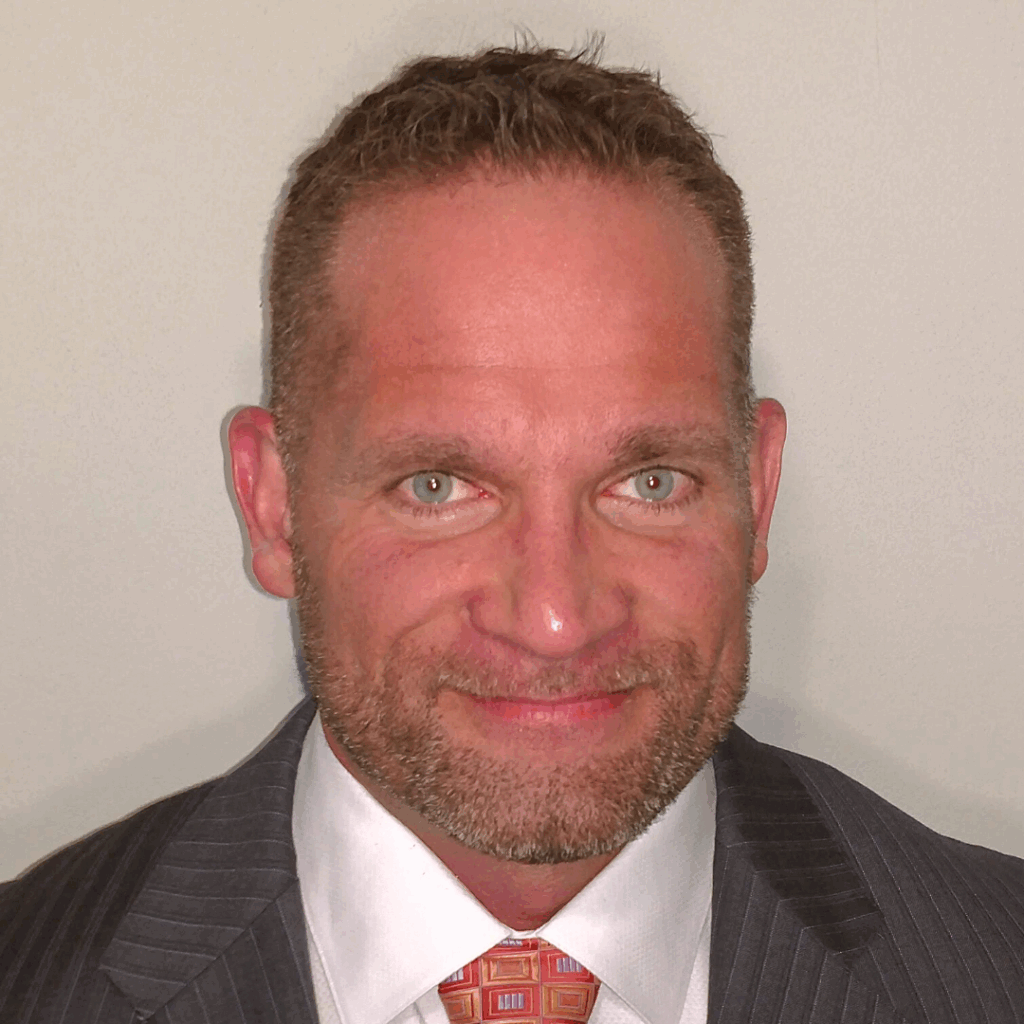
Matt Rysavy has been a pharma leader for nearly 20 years. His roles have ranged from Training Manager, to National Account Executive, to Executive Director, Market Access and Trade (and nearly every leadership position in between). Emerging leaders can use Matt’s career trajectory and leadership style as a guide for navigating their own path.
Matt is now the Vice President, Market Access and Trade for Verona Pharma. Verona Pharma is a clinical‑stage biopharmaceutical company focused on developing and commercializing innovative prescription medicines. They’re focused on treating respiratory diseases with significant unmet medical needs, such as COPD, cystic fibrosis and asthma.
Matt is also an accomplished athlete. As a 3-year Football Letterman at Iowa State as a Tight End, he earned a scholarship as a walk-on in the 1996 season. His work ethic, coachability, and willingness to invest 100% in a cause were a big part of his success as an athlete, and also his success in pharma leadership. Matt’s is primarily focused on developing driven people within his teams.
His people-first approach gets results, too. Because of his deep respect for ethics, relationships, and hard work, his career has shot upward and forward. Many of his proteges are now in C-Suites and boardrooms spread across the industry, standing as a testament to his success as a leader.
Advancing your career in pharma can be challenging. Success isn’t always up to you. But Matt provides insight on how to build your career and your team in the face of unique challenges and opportunities that present themselves.
Welcome to the Athletics of Business, a podcast about how the traits and behaviors of elite athletes and remarkable business leaders frequently intersect. The real stories and hard lessons to help you level up your leadership and performance. Now your host, Ed Molitor. Welcome back to another episode of the Athletics of Business podcast. I am your host and CEO of the Molitor Group, Ed Molitor, and today's special guest, Matt Rizzave lives and breezy Athletics of business mindset. He has been a pharma leader for nearly 20 years and his roles have range from training manager to national account executive to executive director, market access and trade in nearly every leadership position in between emerging leaders.
You can use Matt's career trajectory and leadership style, which we talk a lot about inside this conversation, but you can use it as a guide for navigating your own path and Matt is now the vice president of market access and trade for Verona Pharma. And Verona Pharma is a clinical stage biopharmaceutical company focused on developing and commercializing innovative prescription medicines. They're focused on treating respiratory diseases with significant unmet medical needs such as COPD, cystic fibrosis and asthma. Matt is also an accomplished athlete. Now that is probably a major understatement. Great football career at Omaha, Westside in high school and a three year football letterman at Iowa State as a tight end where he earned a scholarship as a walk in and you know the soft spot in my heart that I have for walk ons.
He earned a scholarship in the 1996 season, which was his junior year. Now his work ethic. Now listen to this. His work ethic, coachability and willingness to invest 100% in a cause where a big part of his success as an athlete and also are a huge part of his success in farmer leadership. Matt is primarily focused on developing driven people within his teams and his people first approach gets results. Because of his deep respect for ethics, relationships and hard work, his career has shot upward and forward. As a matter of fact, many of his proteges are now in C suites and boardrooms spread across the industry, standing as a testament to his success as a leader. Advancing your career in pharma is challenging and success isn't always up to you and timing is so critical.
Matt provides insight on how to build your career and your team in the face of unique challenges and opportunities that present themselves. Here's some of the things we're going to talk about in this episode. Methods for replacing a valuable team member who has been promoted setting expectations for your pharma teams how to develop proxies for finding talent that works for your team. Not just any team, but your team. And we're gonna talk about some other hiring strategies for farmer team. So I'm gonna get out of the way, and I hope you enjoy this conversation that I had with Matt half as much as I had recording it. Matt, thank you so much for joining us today on the Athletics of Business podcast. It is wonderful to have you here.
Good morning, Ed. Thanks for having me on. Looking forward to it.
So I filled the listener in from a 30,000 foot view on the amazing journey that you've had, the work that you have done. But we have so much cool stuff done to jump into today. But can we start with the work that you and your team are doing right now at Verona Pharma?
Yeah, so I've been at Verona for about six months. We're a late stage clinical biopharma company. We've got a very unique product that's nebulized for COPD patients. We just had our second phase three data come out this week, which was very favorable. We're all very excited about that. And it's been really a great team effort. Before I was here, essentially. Really good group of people putting this together, and it's been really fun to see what they've accomplished up until here, I've known a few people here, so I've been watching the company for a few years, really, since I've come on board. It's been an amazing story just from top to finish. And I think with the data coming out, it gives us a pretty clear pathway moving forward to get approval, hopefully, and launch the product.
So when you're standing back and you're evaluating, so to speak, a company, and whether or not you want to join or you see something that piques your interest, like, I really like the work that they're doing. I like to the culture that they're building, where they're going, how they're training. What are the things that you look for? So what was it in addition to what you already said, what else was it that you noticed about Verona that really caught your attention?
Well, it's interesting because, you know, my boss, the senior vp of commercial, Chris Martin, I've known him for years. It's funny, if you look at our history, too, and I'm not deviating from the question, it's kind of important to get some context here, too. But we managed together at a previous company, and if you don't know anything about form and management, it really is the toughest job in any organization, because you're leaving at 04:00 in the morning on Monday, getting home at midnight, 01:00 in the morning on Thursday, and then you're working all day Friday, and then you're anticipating leaving early in the morning on Monday. So Chris and I would always talk on the phone when were driving places on Monday and early morning and late night just to keep each other awake.
So Chris and I have kept in touch over the years, and he went to this company, Verona, a few years back, my last company got acquired. Chris had asked me before the acquisition if I was interested in coming on board, and timing just worked out great. Again, following the company. One of the things that I look at specifically is the product, the potential, and what I can really offer. And I think one of the things that I've excelled in with the last couple organizations I've been at is just setting things up and making sure that were ready and have a clear path to launch a product.
How important is it for you to align with what you have to offer, in what potential that product is and what the upside of that product is? And then we can even talk into market access and the significance of that role being aligned with what you see in the product.
Yeah, so it is interesting, a lot of small pharma companies, you don't have. It's tough to get products, it's tough to develop products. And so a lot of times you've got 505 b two s is the name of it, which is a quick pathway to development. It's an existing product that basically has a different delivery system. So dollar value on those aren't always as much, but it's a great way to get in and launch a product. I think this is a very unique opportunity here. It's the first new molecule in COPD in quite some time, and it's very unique and some of the traits. And again, our phase three data is excellent.
It's going to be really fun to see this take off and move along the pathway and hopefully get development here and a little bit of time to launch this, because ultimately, I think this is something that patients need and can benefit from.
So as you're at this stage of the process, how do you go about building the team? Obviously, you can't just wait for everything to be full go. You have to build a team in stages. How do you do that?
One of the things we're doing is we've got milestones, and my department, Chris, and the leadership above do as well, too, and we hit certain things and it triggers kind of bringing some people on board. One of the interesting things what I'm looking, and I know this is kind of our company mantra, is let's bring in people that are known entities that we know can do good work and do that. So I built teams over the years and have some people that hopefully I plan to bring it on board. I just brought somebody on board this week who was with me at a previous organization and know they do great work.
And I think that's kind of a building block where you can really get things done and you know it's going to be done at a high level and you can move from there. So I'm, I think to going just the known entity and having worked with people in the past and knowing what they're capable of for something like this is really important because, you know, when you're setting up a small organization and moving forward and there's so many key pieces that need to fall in place as you go, and if you miss something little, it can have a huge impact down the road, you really kind of need to know the steps and have the people on board that are familiar with it and comfortable doing that.
Type of thing without meaning to. I think you just touched on something thats interesting known entities and bringing people that youve been with before previous relationships. Talking to the emerging leaders, right. That are listening to this conversation right now, the significance of the relationships they build and their ability to learn vicariously from the people that theyre around right now at whatever stage of their career is. How significant is that? And tell us a little bit about how you went about that and how you recognize the significance of relationships and what value you brought to those relationships.
Yeah, no, I mean, I look at leadership a lot of times as, especially because, look, you can't be completely well rounded in every aspect of what you're doing, and you can learn those aspects for sure, but bringing in people who are the foremost experts in that area, and you can learn from them as much as they can learn from you, giving them leeway and working with them and being involved with things. And really that's kind of my thing is I like to be involved with everything, not take over, not do it, but just so I know what's going on. So if a difficult decision needs to be made, the team can, you know, decide how we move forward and progress. And I think when you do that, there's always, you know, two minds are always better than one.
You can kind of move forward on a clear path to do that. But I think just hiring good people that have skill sets outside of where yours are is always beneficial. And when you know those entities, it even makes it better because you've got that workflow, you've got that partnership. You kind of know, you know, kind of a football analogy. You know when quarterbacks and receivers are playing, they know, you know when they're going to move and when they're going to do things, it's kind of the same thing. You're just on the same page, which is always great.
Back to that. You know, you know how they're going to respond in certain things and you know how, you know what they're going to do. But as an emerging leader is building relationships inside of the organization and the industry that they're currently in, how significant is for you to get to know the fact that they're willing to make themselves vulnerable and they're willing to work at figuring out whatever it is they need to figure out. So in other words, you bring someone on board and you have the ability to say, you know what, I remember when they didn't know exactly how. I don't know that they know exactly what needs to be done quite yet here, but I know how they work. I know their willingness to be held accountable. I know that they'll study it. I know that they'll get after it.
I know that they'll commit to the process. I'm going to take a chance.
Honestly, I think one of the hardest things in hiring, when you're looking at people, too, and I hear people talk about, ooh, this is how you hire people and this is how you get people. I think a lot of it is just how you develop people and how you bring people in. And I can give countless examples where, you know, I've taken over teams that I just don't gel with some of the people and they don't do well, but yet another manager might have gotten a lot more out of them than I could and vice versa. And I think that's one of the hardest things in challenging things, interviewing and getting people in on the board. I hope I'm answering your question here, but I think it's just cultivating those individuals to do that.
And I think having that working relationship where if I'm vulnerable, they can be vulnerable. If they know that I'm not the perfect person, there's things I need to learn and progress on, too. I think they're willing to do that as well, too. And I think having that open and honest relationship is always important. One thing I've seen as well. That helps out is every level you move up within an organization and the people that work under you are a little bit more highly skilled. And I can give you an example. When you're a frontline manager and you're dealing with people a lot of times who are fresh out of college or whatever, you've got to deal with paperwork issues or accountability, they wouldn't get promoted. People who get promoted don't have those issues.
So every level you move up, you get a higher level of professionalism. A lot of times where it's easier to work with those people. And I think you can let your guard down a little bit more and have more of a professional working fun relationship where you can get to be friends with a lot of these individuals and work for a common goal, the.
Honest and open relationship. Right. The ability to do that as a team. What is it like to be a Matt's team? What is it like to be on your team? What is a whole experience like? What could I expect joining your team from you? Yeah.
So my answer might be different than what my team's is, but look, and I think I've learned a lot over the years, too, just on how I manage people and everything else. One thing I've learned is there's more than one right way to do things for sure. And my way isn't always the right way. So I think when I bring people on board, they know they're going to work hard. I typically require and expect a lot more out of them than what a lot of people in the industry do in these particular roles. And I think that gets them more engaged, too. But it's a lot of fun. I mean, we have a lot of fun. We joke around. We have common goals and interests and these small companies, too. It's really important because everything everybody does has an impact on the organization.
When you're working for a company with 50,000 people, I dont know that you necessarily see what you do on a daily basis translate into, say, the stock price or whatever else here. I think we have that where we can do that. I think what I try and build it off of is hard work and just having a lot of fun and knowing that Im going to put in the work that they do and vice versa and that I wouldnt expect them to do anything that I wouldnt do myself.
Trey, the impact that you can have in a smaller company is greater. In other words, your performance level, your level of performance is going to be magnified based on the impact that it can have on whats going on with the organization. How do you help your team members reframe it from that being a pressure situation to a situation of opportunity? Right?
Yeah.
In other words, they realize, like, if I fail, it's going to be exponentially worse here than it would be at a large organization, as opposed to I have an opportunity. Sorry about that.
No, sorry to interrupt there. No, it's a great point. And I think, look, failure is part of anything you do and it's important to know that you can, I'm a big goal setter, but you can set goals and not achieve them and that's okay. I think a lot of times if you go through the process and you do things right and properly, that's all you can do and that's all you can expect. And I don't want to say it's okay not to achieve what you're supposed to do, but look, there's times when that happens and it's okay.
So we've been involved with situations and one of the things we do is we contract with healthcare plans, and I've been in situations where I've had my team do all the right things, do all the right stuff and go through the process for months and months, be on phone calls two, three times a week, getting on with different departments and everything else, and it doesn't work out in your favor. Is there anything else we could have done differently, kind of reflecting and everything else? Not always, but I think it takes some of the pressure off knowing that, hey, this is what we have to get done. And if we don't get this particular aspect done, how do we reshift and focus to where we can make that up in other ways? And I think that's important.
And I think if people are putting forth their full effort, doing everything they can, collaborating, that's all I can ask of my team, to be honest with you.
And you talked about when we spoke last week and I said, what are your superpowers? What are some of the things that make you just who you are? And it made you so successful in your journey, both in athletics and in business. And you said accountability and work ethic, and you talk about the same. I've always believed the team is a direct reflection of their head coach. How is it that youve gotten your teams over the years to understand that working hard and having fun and enjoying what you do is not mutually exclusive? And you talk about the collaboration, you talk about the reflection and making the adjustment are those things that you do together. So if something doesnt work, is that something you sit down and think about as a team? Like, okay, this did not work out.
Even though we did everything the right way at the right time, it didnt work out. How is it that we move forward? How do we get on to the next place, so to speak?
Yeah, no, it's always collaboration. I think the most important thing is they know I have their back, especially if they're doing all the right things and making sure they put forth their full effort, and that's really all you can do. So you said a couple of things that I look at is work ethic. And I think one of the things too that I failed to mention is just vision. I don't look at myself as being the most talented person in really anything I've done, but I will say I work my way to get to a level playing field with people who do what I do. And that's kind of my mindset, whether it's been athletics or business, I think there's people that are natural at things that just excel very well and they can hop onto a football field and play right away.
I've seen leaders that can go in and manage and move up in an organization or get positions at a high level right away that do a great job. Truth be told, I'm not one of those people. I've had to kind of work and figure things out and learn and get into a lot of different situations where I have the ability to do that. And I think you just got to be patient and take the time to get to that point in your career and understand where you're at, but just have that vision to what you want to do, where you want to be at, and no matter what, just find a way to get there.
I love that. Let me take it back to collaboration. So what I'd love to do is go a little bit deeper because so many folks will talk about, yes, we're all about collaboration. What's the process like? How do you collaborate? What is it? Is it something that you put out on the table? Does someone bring an idea to you? What exactly do you folks do to collaborate?
It's having that with your team. Look, I'm technically the leader of the group, but not everything I have is exactly set in stone. So one of the things I typically do, and when I build my team, I'll do this as well, too. I'll give them parameters they can work within and I'll give them goals and set goals either at the end of the year or early, depending on when our meeting is in late December, early January, set those goals we agree upon. I mean, if there's something that they don't agree with, let's talk through it and shift it, you know? But I think it's important to go through those continuously, see where we're at and at the end of the year, see where we're at and what we achieved and what we didn't. And if we didn't, why didn't we?
And again, how do we shift and refocus to make up for that in different ways? And I think, you know, when you get that kind of collaboration and everybody's got a say in what you're doing, it can go a long way. I think it makes people buy into the team concept and move forward, which is really one of the things I like to instill is we're a group. I mean, we go down or, you know, we succeed together. And that's the most important thing with my teams. And we've seen a lot of success with what we've done and the strategies we've come up with.
And one of the things I like to do is think outside of the box a little bit and do things a little bit differently if we can, ways that are different than, say, competitors have done it or anything else and come up with new strategies and modalities to make that work.
Let's talk about that. Think outside the box, right. Creativity is one of the seven pillars of our foundational program, victory defined and the ability to think outside the box, thinking about the constraints that you're working inside of. Right. Yeah. How do you go about doing that? First of all, it's fun. It's fun to do, especially, and it's very rewarding to do when it, when there's a payoff involved. How do you go about being creative?
Well, in what I do, you can back into, so, you know, I handle trade and market access primarily where, you know, we set the channel, meaning the distribution channel for patients to ultimately get the product, whether it's pharmacy, specialty pharmacy, however that may look, and also like establish contracts and access to healthcare plans to make sure patients have affordable access through healthcare plans or whatever, and also involved in pricing the product. So I think when we're in this stage of development, where we're at right now, you can look at competitors to see what they've done.
And a lot of times it's a pretty good roadmap, but you can also look to see where you think things could have been different and changed and make some adjustments based on that to see a different path forward where you can hopefully capitalize on some different aspects that weren't achieved with another product per se. So those are some of the things I look at, and it's always good to bounce those off other people, make sure they're in alignment with that. And also the team, when I bring them on board to make sure that they're cohesive with that thought process and we're all moving forward together because you got to be on the same page and if you're not, then there's typically problems.
So when you bring someone, youre building the team, and I dont mean to jump back to that, but when youre building a team and youre going through the hiring process and you sit down with someone in front of you, how are you able to tap into whether or not you think one of the things they bring to the table is a creative mindset, is the willingness to do that?
Yeah, I think its funny because there really are interview courses you can take to help you interview and dig into people rather than asking superficial questions, which I think is important first and foremost. I think the other thing that I've learned, too is you can look at a resume and see very highly successful people. Again, I said earlier, may not necessarily gel with you. So I kind of have a profile of a person that I typically like to go after and kind of keep that profile handy to where, you know, that's kind of my go to if they fit all the qualifications and then we got that profile. Honestly, I think I've been able to hire if I can stay within those parameters at like 100%. I mean, I really haven't had anybody fail if they do that.
One of the things I always look at, too, is to see people who are former athletes because they know adversity, they know how hard work is typically. They know how to be coached, and they know how to deal with being on a team and achieving team goals. So those are things that I typically like. And if they've got the skill sets required to do the job and the past history to do it, I think it's usually a good win. So I think if you can find typically people, my hiring thing is, if I can find people that are like interests and, you know, have the same goals and desires that I do, I think it's usually a win.
Great segue, by the way. Okay, hire former athletes. You love looking at former athletes. Our paths were meant to cross. We talked about this. Omaha Westside football, great football career. You go on Iowa State as a walk on you after your sophomore year, you played in all eleven games your sophomore year. Yeah. After the summer. I believe going into your junior year you received a scholarship. Lets talk about the lessons that you pull from athletics in terms of the things you just talked about, but not only in your performance, but what the coaches who impacted you along the way, what they taught you about leadership that you still instilled today. Right. Like the coaches that really had the biggest impact and what you took away from that because, I mean, obviously you crossed paths with some, you know, many great people.
Yeah, absolutely. And you know a few of them as well, too. So I think one of the things that was instilled with me in college is just the work ethic. I think I told you when were talking, it's kind of funny. I still have this feeling in my gut if I'm not ten minutes early for something or I do something completely wrong, I'm going to have to get up at 04:00 in the morning and go out and do log rolls until I throw up.
I don't know if that's a good or bad thing, but honestly, one of the things I learned from the leaderships and, you know, there's coaches you gravitate to and there's coaches you don't gravitate to, but I think one of the things that I really learned and took away was a leadership style where they like working with you, they like coaching, and I don't know how they do this, but great leaders to me just make you feel like, man, I don't want to let this person down. You know, no matter what I do, I've got to make sure I'm doing everything not to let this person down in some way, shape or form. And that's really what I found with the people that I connected with most that I think got the most out of me, to be honest with you.
And, you know, there's some great leaders we had. I remember our strength coach, Matt McGettigan, who's at Air Force now, but he was really probably the coach, believe it or not, even outside of my position, coach that we work closest with because were with him every day, 365 days a year. But he set goals for us. He on a weekly basis. We had on paper what we needed to do and accomplish and he was just one of the guys that I didn't want to let down. He was a great guy and really worked with me to get me to a point where I could play at.
That level when you talk about, I don't want to let them down. You're not talking out of fear, either. You're talking from a place of psychological safety. They poured something into your world and made you probably think that you'd accomplish more than you thought you really could accomplish.
Absolutely. I mean, it wasn't, and I don't know how to describe it's not fear, but it's just like, I respect these people so much. I don't want to do anything to make them disappointed in me. And that could be play or anything else that you have outside of that. And I think, you know, I've even been in those situations with some of the leaderships I've had with different organizations and some of my mentors that have been great assets, not only as friends, but mentors that have pulled me along with them throughout their promotional process and given me different opportunities and coach me to this day. I just don't want to let them down. Chris brought me over here. I want to make sure that we do this, we do it right. And I've got this particular division of the company that I'm running.
I don't want to let anybody down that's put in all the hard work to get to us where we are now. And that's one of the things that keeps me up at night and keeps me driven.
The fact that you're able to convey to your team in a positive way to get them, instilling them. I would bet that they feel the same way about you, that they don't want to let Matt down. I would hope so.
But, you know, you and I both.
Know when I talk about out of fear, you and I both know we. I know I play for folks like this, where you work your lips off because you don't want to let them down out of fear what is going to happen to you if you fail. Whereas opposed to the way you, I mean, you're talking about things that drive trust, right? You're talking about respect. You're talking about the honesty, the integrity, vulnerability. And how have you been able to take that mindset that, gosh, I do not want to let Chris down and just say, okay, but you know what? I would also bet that you don't want to let your team members down either, as their leader.
Oh, absolutely. I mean, it does. It goes both ways. And so I feel like when I bring people in, I've got a responsibility to them to coach and mentor and make sure they're getting everything out of their career that they want. And I've always said this, and I believe it hasn't happened yet, but it's come close. I'd like to hire somebody that I'm working for someday, and I think if I could do that's like kind of the ultimate accreditation to what you're doing for people and everything else. And it's really fun. I think when you see people advance and you progress and you're kind of helping them through that pathway. And again, most of it, the way I see it, is on them and them just having the desire to do it. You're just kind of shaping and molding which direction they go.
And I've had some great people that have worked under me. I've worked with some great people that I think kind of have that same mentality, and it's really gone a long way and it's made it not only rewarding, but a lot of fun. I mean, I really, truly enjoy what I do on a daily basis. I enjoy the people I work with. It's fun when we get together and, you know, I look forward to it. It's not, to me, it's not work.
When you develop someone and you talk about, you take great joy in watching people develop and you develop someone and you see them start to struggle, what is it that you do as their leader to try to figure out what's going on in the world and how you can help them, how you can help get them in better position to be successful.
First off, you need to have a good relationship that's open and honest. And I think if you've got situations where I've had situations where people have personal stuff that are interfering with things, and you've got to work through that and work around it and be sympathetic to that. But I think you just have to have an open, honest relationship, because if you don't really know what's going on or what the situation is, it's tough to coach to. And I'll say, too, you see people struggling in certain areas, maybe you just take additional time to work with them on that and make sure they're proficient. Like I said, one of the things that I'm. And it's not because I'm micromanaging, and I think my team would say the same thing.
But, you know, when you're on with customers, when you're doing things, and it doesn't have to be me, I always like to have two people on the calls because there's so much you can miss, and you've got one opportunity to make this right. Hypothetically when you're, you know, doing a contract with a big PBM and, you know, there's 60 million lives involved, you don't really have a lot of wiggle room for error. So, you know, the more people you can have on and get insight and perspective, that's always a great way to do that. And I think it can kind of minimize some of the potential shortcomings that people have, knowing that the collaborative effort and people are there to help.
When you played football, there was an emotional attachment to what you did every single day. Right. Like, you knew there was a singleness of purpose. You knew that you're a part of something bigger than yourself, and you just mentioned something. Have two people on the call so we don't miss anything. You know, when there's 60 million lives at stake, I want to, we want to make sure we get it right. How significant is you, is it for you now to find a way to get your, the people on your team emotionally attached to the why of what you folks do, to understand the significance of really the end result of all this, what you're doing? It's so hard, especially with that stage you're at right now.
Yeah, no, I think a lot of it ties back to the company and the metrics you can put in place. I mean, it's a great indicator how the stock price is doing every day. Right. I mean, so at small companies, when you get stock and you can watch that and be a part of something growing and have that goal to get there, its a huge benefit. And I think in my industry, theres two types of people. I think theres people that are suited more for big pharma and theres people more suited for small pharma. And if youre in the small pharma sector, theres buyouts. Theres other things that happen. You got to be prepared for that.
But if you can get your company in the best situation, when you launch a product and do everything you can to have it be successful, I think theres a lot of reward and merit in that. Its always good for the team to know thats at the end, too. Again, I think I always tie it in and let them know where theyre at, what theyre doing. And youd be surprised, too. A lot of people dont understand how stock works and everything else, but coaching them on that aspect to see what kind of value that can have for them and doing scenarios where two, three, four years down the road, if we do this is what this could be worth. I think its eye opening to people a lot of times, jeff, and I.
Love it because it starts to teach them to think like a business owner. Jeff.
Absolutely.
When you can get your people with the entrepreneur mindset and thinking like a business owner, the ownership that comes from that, the personal ownership that comes from that, it has to be huge.
Yeah, no, it is. And I think one of the things that I like about this, and I've done different roles within pharma. I've been in training, which is very rewarding. There's not a lot of pressure in it, but you're just coaching people, which is a lot of fun. Been in management on the sales side of things. But market access is to me the most enjoyable because you have such a footprint on what an organization is doing. When you open up access, there's what, 330 million people in the United States. Essentially, you need to find access for all those people in some way, shape or form. And it can look different ways, but finding out ways to make sure patients, which are ultimately the most important customer we have and getting them better, that's what we need to do.
And one of the focuses we have. So as a team, when you're calculating numbers and doing all this stuff and coming up with ideas on how to do this, it can be really rewarding. And I think that's the fun part for me.
One of the things I'd love to do as a coach was figure out, like we always talked about when were recruiting, everyone want to talk about, you know, can you win with that person? You know, if you go get him, can that guy help you win? I'm not going to go look at a kid if I don't think he can make me win. What I want to know is, can I lose with that person? Does he have the ability to endure and sustain adversity in challenging times? And one of the ways I would always watch that in practice when I go see a kid practice is does he touch the lines, you know, or does he come up short or does he step over? Does he step on the line? What is it he does? What im getting at is avoiding shortcuts.
And when you deal with a public company and stock and youre trying to get things done, theres always the opportunity, the distractions of the well, if we just do it this way and we can push it through and get it done, how is it that you have gone about in your career, your athletic career, your professional career, how is it you convey it to your team to avoid the mindset like its okay this one time or, you know, what? We dont have to be such a stickler to detail and not fall into that trap of taking a shortcut for the immediate gratification or the quick result. Yeah.
And you can, I think, you know, from a business perspective, if you start taking shortcuts like that, it may not hurt you up front, but it does have a chain reaction and it comes back at some point. So doing things the right way, handling it the right way is really important. You said something interesting, too, about athletics that I always think about as well, too. But I look at, you know, when I came into college and then when I left, I think we had, I can count on my poster from our senior year, four or five people that started as freshmen that actually ended up now, we had some JC transferred and stuff like that. But from our initial class we did.
And you look at people that came in, whether they are in my class or not, and some of the kids, I mean, just how gifted of athletes they were, that really never accomplished much. And then you also look at kids that really weren't that athletic, that could actually do a lot and achieve a lot just because they knew how to get there and knew what they wanted. Theres that mindset and its kind of that Tom Brady mindset you hear about all the time, right? Having a chip on your shoulder and just having a win attitude where you make sure you get there no matter what.
And I think thats where the vision comes into play, too, where you may not be prepared right away, but finding a way to get there, enhancing your skills and building on those over the years and making sure you do things the right way, it pays off in dividends, for sure.
What was the chip on your shoulder when you played? What was the chip on your shoulder when you jumped into the business career?
When I played, it was to me, I just wanted to show that I belong and again, not let my teammates down. And I built some really good relationships over the years, both people older than me, younger than me. And one of the things I learned, too, it doesn't matter what your background is, what color you are, people are people. And you can really build good relationships with all different kinds of people that can last. And it's amazing to see the success from the people I played with in college, where they're at today, at least the ones I've kept up with. I mean, they're all successful people, which is great to see from a business perspective. Like I said, I go into things that I'm not the most talented person, I don't have the best education, I don't know everything.
I've had to work to get to where I am and kind of scrap and claw throughout different processes. And look, I'm not always the first one to get promoted or get asked. I've been bypassed and had people that have gotten promoted or got asked to do a job around me, but it just motivates me to make sure you get to that point and keep going and growing and learning as you go, because I don't think many people out of the gates know everything they need to know about something. So you've got to learn as you go. And when you're there, you need to be ready. And I think that's the most important thing for me. That kind of keeps me going. And even now, I don't know everything. I'm not going to claim to know everything.
So it's constantly learning for me, looking at things, reading stuff, staying on top of things, especially in the government sector, too, where things change very readily all the time, especially now. And for what I do, that's so important. So making sure that my company is aware of the ground that I cover is very important to me. And staying on top of that and.
Communicating that over the years as you've gotten passed over with a promotion as they walked on in college, and sometimes when maybe you were slighted, maybe you weren't, maybe it was just like a legit thing, though. How did you keep the confidence? What did you do to keep trusting the process and keep moving forward?
Well, I'll be honest with you, I don't always have confidence. I don't, My confidence comes in the fact that if I don't get something, I'm going to make damn sure I get there. You know what I mean? You know, I think when you start something or you're doing something, you don't always have the confidence you need. That comes with education and learning and getting to be more rounded in whatever you're doing. That doesn't come out of the gates to me. I know there's probably some people that are, but I can look back when, you know, right out of college, I was a cocky kid that thought I could do anything. And, man, I got in sales. I did very well. I was always one of the top reps in the company.
I finished number one a couple times at a couple of different organizations, but then you go to the next level and you really realize that, wow, there's a lot more to be learned. And I can give you a great story, too, about a coach. I had for my first promotion when I got into the training department. And this was really eye opening to me because I was a good leader, worked well with people, you know, always popular kid growing up and everything else. But when I got into training, trying to think of a good way to say this, I think how you view yourself isn't always how you present yourself outwardly. And it took somebody in a good way to kind of set me aside and teach me about those aspects, too, some of the things that I wasn't doing.
When you're managing people and you're working with people, your natural instinct isn't always the best way to coach people. Right. I mean, somebody does something wrong, you can't say, what the hell are you doing? You know, dumbass. You know, you got to take a step back and work with them through it. And even myself, I was always kind of a bigger guy, and I didn't realize how, and I'm very direct, how intimidating I could be, especially for new people coming in. So kind of thinking about that and having somebody show me the right way. And he did a great job of communicating how to do this, what my shortcomings are, without saying, okay, you suck at this. You suck at this.
But working with me over it, and he did that for about a year, and I think that really propelled me within my career, too. So he was a great mentor and still keep in touch with him to this day.
So how did he do it? How did he get you? Because you and I both know when we have this sort of type a person, but this mindset, like, we work our lips off where we go after what we want. We connect with people. We've got a ton of positive energy, and also someone slows you down. So wait a minute. The way you're doing this is not going to be the best way to lead. How did he communicate that to you in a way that you were receptive?
You know, I don't even know who's so subliminal. A lot of times it's like he would bring up things, point things out, and then you say, look, you know, you can come across as very intimidating. What are different ways you could. You could do that or, you know, giving me different scenarios where I'd have to think about it and come up with a different way to do things. Talk about confidence. I had confidence through the roof back then where I thought I could do anything. And this is probably the best learning experience for me, and I think it's kind of guiding me through where I am today. But I wasn't very confident all of a sudden and that was okay. And I had to learn how to get there in that aspect.
And when I got a new job or a new promotion or whatever, I kind of realized, hey, I'm not the foremost expert here. I'm not ready to do. I'm ready, but I still have a lot to learn and not take that for granted and continue to build those relationships. How you work with people. And honestly, Ed, it's something I think about every day, like how I am outwardly towards people, you know, versus what I think I'm coming across as, which can be two completely different things.
Right. The fact that you were able to accept that coaching and the fact that you sat there and realized, but your size and your presence can become a strength as opposed to being an intimidating factor. Right. And people can lean into, you know, that you not only have their back, but you're in it for them, you know, not just with them.
Yeah.
Which is really super cool. It's also very powerful over the years as youve looked a switch and youve become the mentor. Right. And you look back on the way you move from an emerging leader. So lets talk about your time in Salix, like how you climbed the ladder there, so to speak, right. Not to use an overword term, but you did. You started and I dont want to use say, check boxes, but you grew and you grew intentionally. And it was because of the things you did in the way you went about doing things. Can you take us through that kind of lifecycle of your time in Salix and how that bolted you into the rest of your career and to where you are now? Yeah.
And I think honestly, Salix is a very unique organization. I know you talked to Suzanne Monahan, too. She was with me there for a number of years as well and kind of went through the same processes. But it was a really good organization. I think I was the 42nd or 43rd person hired on there. It was a small company. I don't remember what the market cap was when I got there, but after about 15 years, we sold for almost $15 billion. So really got to morph through that whole experience and get a lot of different opportunities that I think enabled me to kind of have the mindset of how to work in that small pharma sector today.
So, you know, every promotion I got was kind of just based on where I was at and what I was doing and getting into a different segment of things. So truth be told, I always had in the back of my mind that I wanted to be in market access someday. And the path I took through training, through management, I always think you need to have management in anything you do just to learn how to deal with people. And then when I got into market access, learned that I wanted to be in market access leadership. So had to really figure out, and there's a lot of intricacies in this sector of the business, how to figure out a lot of that stuff. And I had some good leaders over there and some good leaders when I went to small companies.
That got me more involved with different aspects of things, including government and all that other stuff, too. So every promotion was a different learning experience where you get involved with different things and you learn how to handle different situations. And really prepared me for the role I'm in today, to be one of the leaders in the organization and like I said, have a department, that it's my responsibility to make sure that we get everything done properly and ready for our launch and have a successful launch with this, which in my eyes, I know everybody should think differently, that it's kind of all their department, but market access makes or breaks you. If we don't have a good trade channel where people have access to the drug and we don't have access through healthcare plans, and then we got a problem.
So those are things that I'm going to make sure that we're ready to go and my team will too, and we'll be successful from that perspective.
And as you develop, people like you developed at Salix, and this is something that just popped in my head. And all of a sudden you have a high performer, emerging leader, high performer. They move on. They get a role wherever they're a leader. And now you have to fill that spot. How do you do that? They started here, and the listener can't see my hand if they're not watching video, but they started down here, they exit up here. You can't hire up here. You need to hire back. Is that hard? Is that a trick to do? You look for the upside of potential. You try to fill it with someone similar? Or is it more of like what we need right now in this team?
It's a little bit of both. And like I said earlier, when you go up the ladder and the people that work directly for me are pretty high level. I mean, they're all director level or above. It's a pretty good talent pool to choose from. And like I said, when people get promoted, to me, that's the ultimate reward for what I do. If that's ultimately what they want. But development a lot of times is on the individual. It makes it very easy if you can hire people that want to get developed, want to get coached. And again, that's why I like hiring former athletes, because they understand that they understand how to get coached, how to get feedback, how to give feedback in a proper way.
But if they leave, yeah, sometimes that can be a little nerve wracking, trying to find somebody to replace that, especially somebody who got promoted, who's doing things at such a high level. There's different ways to do it. One of the things that I've liked to do, again, talking about one of our conversations from earlier, is hire a known entity. I don't mind hiring somebody within the organization that I know their work ethic and what they're capable of doing even if they're not prepared. I can show them how to do that if they've got the intangibles that I can't coach. Rather than go out and try and interview somebody that I don't know that's going to put on a good show during an interview process, that maybe my personal experience, I don't care what people say.
When you go out and interview on the open market, it can be a crapshoot. You don't know what you're going to get. People can put on a good show and everything else. If you hire somebody that you know, you trust and you can coach to, that's always a winning recipe, and you can get people up to that level, too.
So, intangibles. You just said the word intangibles. What are the intangibles that you look for? What are the intangibles that win for you?
You know, just the attitude when you talk about them. I think just having that winning attitude, seeing their successes, what their outlook is, if they're positive, if they're negative. Like I said, too, I really do. I've got a propensity for hiring people that are former athletes. I've seen a lot of success from that, especially people that played sports in college. I think there's an accountability factor. I myself, I don't know about you, Ed, but I can definitively say I learned more from playing sports in college than I did opening any book in any classroom. I think you learn how to deal with people, you learn how to deal with adversity, you learn how to be accountable. And I think those are all things that, you know, really go into play a lot more in business than just being able to open a book.
You know, I've known people that have gone to Harvard and other Ivy League schools that really, I wouldn't hire. It's interesting what you can do, and I think if you can find somebody that's got that back and it doesn't have to be that, but if you can find somebody with that kind of background or that kind of attitude that has shown success and has a history of documented success, I think it's a winning formula where you can get as much of those intangibles as you can without necessarily knowing somebody.
When you see someone on your team that's not leaning into the things that sort of the little things that have separated them from others in the past or the little things that have made them successful, how do you go about circling back and pointing out the fact, like, you know, one of the things I loved about you was a and b, and I just don't see you doing that right now. How do you get to them to bring that awareness in, to get them to take that next step, to get back to doing the right things the right way?
Yeah, luckily, I haven't had to do that much the last few years. I've had. I really have. I've had just great people working for me. But, you know, I have had those situations, obviously, and I like to head it off at the past, too. So if somebody's not doing what they need to before it gets out of hand and spirals out of hand, sit them down. I mean, set the expectation. This is what the expectation is. This is, you know, what we agreed upon. This is what we're trying to do. And, you know, what's going on. What can I do? What is it that you need to do and really kind of talk through it and see what's going on.
But I think if you can have that conversation, most importantly, if they know that, you know, that something's not going right and it needs to be shifted pretty quickly, then there it is. And look, I hate to say this, but, you know, if I need to terminate quickly, if it's definitely not a good marriage, it's better doing that than holding on to somebody for two or three years.
Right. Speaking of intangibles, and you go back to your playing career and a couple of pieces I read about you when I was preparing for our conversation. One of the things that gave you the opportunity to earn that scholarship, you rewarded the scholarship, was the fact that you had character, was the fact that you had a work ethic, not just on the field, but off the field. That coach talked about in the classroom, the way you carried yourself and the level of respect that you brought to the football program. Now you rewarded that scholarship. How big of a challenge was it for you? And im going to guess not very challenging because of who you are, but how big of a challenge was it to not change, to stay the same?
And how did that translate into the business world as you started to get promotions and moving from an emerging leader to a leader in role?
You know, honestly, I didn't really see it as a difference. You know, I, I played my first couple of years regardless of being on scholarship or not. I beat out guys that were on scholarship for certain aspects of, you know, depending on what were doing, whether it was playing time, special teams, whatever. So to me, it was just kind of an honor to be, you know, given what I felt I deserved. And it was great at that point, but I didn't really look at it as being any different, to be honest with you. My friends stayed the same, our conversation stayed the same, practice stayed the same, for sure. From my perspective, nothing really changed. So it was a great opportunity and it's one of those things, too.
You look back on it more now and have respect for what you did and what you accomplished with your team. Even though we didn't win a lot of games, to be honest with you, over the time I was there, I think you can potentially learn a lot more from that and how to cover and get through adversity than if you were playing at Nebraska in the nineties and winning national championships every year. I think there's something to be said about that. Look, if I could go back and win a bunch of games and win a bunch of bowl games, yeah, that'd be great. But we didn't, and that's okay. And I learned a lot from that, too, because it was tough. It's not fun working your ass off and then losing on the weekend.
And there was a year where we lose by one, two, three points almost every game, and it was challenging.
How did you deal with that? Like learning by losing by one, two, three points week after week and going to practice, getting in the trenches, listening to what they were saying, getting back into a situation where it was a close game, you almost get to be like groundhog day sometimes.
Yeah, it was tough. I can tell you, too, especially going into our junior, my junior year, we had a lot of, we had the runner up for the Heisman Trophy. We had a NFL quarterback. We had a number of guys that got drafted on the offense, not to bash anybody on their side of the ball. But our offense did really well. We could put up some points. Our defense could. We went to Colorado. I think we lost, you know, 45 to 42, and they were ranked in the top five. We go score and they just score and get like a two pointer or something, you know, so we just couldn't hold them off. So it was one of those things. You had really high expectations, and then it just kind of like, you know, we're there, but we're not there.
And so it's tough and, you know, having good friends and really good coaches that were there. And I will say, too, you know, and coach Mac and the whole group, and I know, you know, Mike Woodley, who's a great guy, you have to tell him hi if you see him. But absolutely, you know, those guys set the foundation, too, where watching film, putting in the work, doing. I mean, it was full days. I mean, you know, you get up at, people always say, you know, football season is the toughest part of the year. It's really not. It's the off season where you're getting up at 04:00 in the morning, going and running, going to class, going to stretch, going to work out, doing study table, all that stuff.
I mean, it's basically from 05:00 in the morning till 10:00 at night, four days a week. That kind of gave you the work ethic. And I will say something I'm proud of is even though not directly correlated, after my senior year, Iowa State took a right turn pretty quickly and started. We beat Iowa the year after I was there. We started to win. And even though I wasn't on those teams, I still knew a lot of those guys. We still went through a lot of the stuff, still a sense of pride, even watching them now, how they've grown and progressed over the years and they're actually a competitive team has been great. Maybe I'm being naive, but I think, you know, my team from the years I was there, had a small part in that. And getting it to where it is.
Now, well, you absolutely laid the foundation that is rewarding to watch, and it is rewarding because the coaches know that the right people know that you actually, you absolutely helped lay that foundation.
Well, and if it's not true, at least there's some solace in that, too. So.
Hey, I can't thank you enough. I have one more question for you, but before I ask you that, where can folks find more out about you? Where can they find you on social media? Even if it's just LinkedIn. Where can they find out more about Verona? Go ahead and fill us in on that and we'll put all that information inside the show notes as well.
Yeah, no, that's great. I appreciate you asking that. So I actually, a few years ago, got off, Facebook and Twitter and all that stuff. I just, you know, I got to the point where I just found out I really didn't care what people from high school were eating for lunch that day. So, you know, I'm on LinkedIn. You can get me on there. And, you know, I try and respond to everybody who reaches out on LinkedIn and urge everyone to follow Verona pharma, too. It's a fun company, and I think we've got a lot of things ahead and a bright future. So it's a great, like I said, great to be part of the team. And thanks again for today. It was very cool to speak with you.
And I feel like we left a lot of stories on the table, but.
We did, we did.
But there's only so much time, right? So that might be something over, you know, a visit down to Florida. When we run into each other, it's inevitable that we're going to run into each other somewhere. It just.
Yeah, the history and background of people we know is pretty amazing, too. So I guess it's that five degrees of separation. Like Kevin Bacon.
So, yeah, we'll go two degrees of separation. And inside the circle of people that we know that we didn't truly realize that we knew there are a lot of stories, some that should be told, some that maybe shouldn't be told there. And I mean that in a great way. Like, it's, you can tell a lot about a person by who's in their unit or who's in their orbit, right?
Yeah.
And who's in. You mentioned coach Woodley, and we can mention several more. And, and Suzanne Monahan, I, one of, I mean, just an unbelievable leader and just an unbelievable person. And you and I are talking about this a little bit before we hit record. Adversity plays such a part in all of our roles. Yeah, but we might not all have it. It doesnt always have to be significant adversity. It doesnt have to be overwhelming, but there could be a catalyst that helped us to see things a different way, to help us to reframe things and to really kind of launch our career or even just our personal world in a different direction. What was it for you when you realized that, you know, what I got a shot at being a pretty good leader. I have a shot at being impactful.
And if you could tie into what coaching your people means in that sense, that would be really cool.
Honestly, I think when I kind of felt that I was, I kind of, at least I don't want to say figured it out because I don't think you ever do. And everybody's so much different. You can get different teams and it's a different dynamic. And again, back to the football aspect too. I think that's why you see some teams, you can have the same team basically two years in a row and do really great one year and then not so great the next year. I think a lot of it's just that cohesiveness and how you build it.
But I think where I really learned that it wasn't just about me, but it was about everybody else is when I started seeing people enjoy what they're doing, start seeing people get promoted and that's the fun part, seeing people hit their goals and even if they decide to stay in the same position, making it fun and making sure they're hitting their goals and doing the things they're supposed to do, that's what's fun for me. And honestly, my success is not directly attributed to me. Like I said, you hire good people around you that are strong in aspects that you're not, that can do things that you're not necessarily capable of and you can learn from them as much as they can learn from you. And that's the fun part of coaching for me and what we do.
It's fun to have people follow you where you go too. I think that's another aspect too that want to work with you and reach out and say, hey, when you got something open, let me know. Those are the things that are rewarding from my perspective.
Matt, thats an awesome imnet. You just put a bow on this conversation, no pun intended, because were recording this three days before Christmas, but that was a perfect way to wrap it up. And I appreciate that. And I appreciate youre willing to be open and to talk about the things. I mean you poured so much into this and I wish you and Verona all the best of luck. But I cant thank you enough because we just talked last week. Its not easy to find the time to spend an hour and some change with me. I know, especially this time of year. So I appreciate your big time, Matt.
No, I appreciate it as well too. And let's keep in touch. I really enjoyed this today and thanks for the opportunity.
Thank you for listening to the athletics of business. Be sure to give us a rating and review so we know how we're doing. For more information about the show, visit theathleticsofbusiness.com. Now get out there. Think, act and execute.