
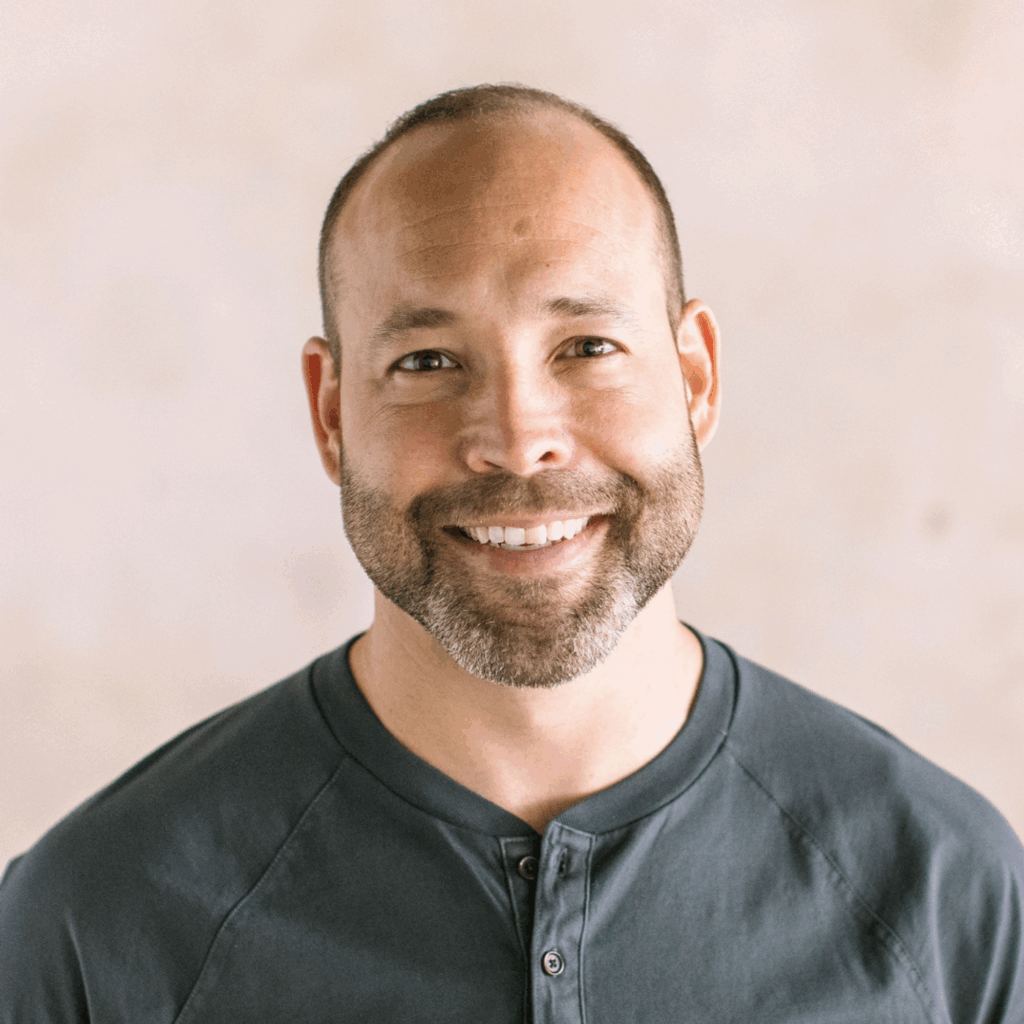
Whether fueling the feats of NCAA athletes or the U.S. Dept. of Defense, implementing one of the NFL’s first sports science programs, or coaching Olympic gold medalists, Dr. Erik Korem has always been driven by a relentless pursuit of high performance. As time progressed, that drive became a new purpose — to translate the science-enabling elite performers into actionable recommendations for anyone with a desire to improve.
Fueled by a deep-rooted desire to help others live a more fulfilled and healthy life, Dr. Erik Korem is an applied performance scientist that leaves every person or place he interacts with better than he found it. During the nearly 20 years he spent working with establishments like the NFL, NCAA, Nike, and U.S. Dept of Defense, it’s easy to see he didn’t let a single day go to waste.
Similarly, as a Presidential Leadership Scholar that holds a doctorate in exercise science with a research emphasis on sleep and stress resilience, he’s leveraged his education and platform to provide others with tangible health insights by writing for media outlets like Inc. and conducting impactful interviews with notable experts and athletes on his podcast The BluePrint.
While Erik’s relentless pursuit of high performance has come with its fair share of obstacles, it was also preparing him for his biggest challenge to date; entrepreneurship.
He became the Founder and CEO of AIM7 in 2020, pouring his expertise into an app that analyzes users’ data and provides custom recommendations for enhancing the mind, body, and recovery process. Leveraging the science of adaptive capacity, Erik and his team are unlocking a new level of human performance for anyone with a wearable device — so they can be their best without burning out.
Welcome to the Athletics of Business, a podcast about how the traits and behaviors of elite athletes and remarkable business leaders frequently intersect. The real stories and hard lessons to help you level up your leadership and performance. Now your host, Ed Molitor
Welcome back to another episode of the Athletics of Business podcast. I am your host and CEO of the Molotor Group, Ed Molotor. I'm going to share two quotes with you from today's special guest, Dr. Eric Corum. One I'm going to share with you right now and the second I'm going to share is we're wrapping up the intro and getting ready to jump into the conversation. And this first quote absolutely hit me as I was going through Eric's website and preparing for the interview. And the quote, it says I help people. I being Eric, obviously I help people change their world with my relentless pursuit of high performance. And it's whether fueling the feats of NCAA athletes or the U.S. department of Defense implementing one of the NFL's first sports science programs. And we talk a lot about that inside of this conversation.
Or coaching Olympic gold medalist Dr. Eric Corum has always been driven by relentless pursuit of high performance. As time progressed, that drive became a new purpose to translate the science enabling elite performers into actionable recommendations for anyone with the desire to improve fueled by a deep rooted desire to help others live a more fulfilled and healthy life, Eric is an applied performance scientist that leaves every person or place he interacts with better than he found it. And I can absolutely attest to that which you'll be able to pick up on during the conversation. I mean, I was ready to roll after we got done talking and during the nearly 20 years he spent working with establishments like the NFL, NCAA Nike and U.S. department of Defense, it's easy to see he didn't let a single day go to waste.
Similarly, as a Presidential Leadership Scholar that holds a doctorate in exercise science with a research emphasis on sleep and stress resilience, he's leveraged his education and platform to provide others with tangible health insights by writing for media outlets like Inc. And conducting impactful interviews with notable experts and athletes on his podcast, the Blueprinting. Go check it out. Phenomenal. While Eric's relentless pursuit of high performance has come with his fair share of obstacles, it was also preparing him for his biggest challenge to date. Entrepreneurship. It's just interesting because all these amazing things that Eric has done and all the accomplishments and all the challenges and adversity throughout the journey he's been on, it prepared him for now entrepreneurship.
Eric became the founder and CEO of AIM7 in 2020, pouring his expertise into an app that analyzes users data and provide custom recommendations for enhancing the mind, body and recovery process. This is for everybody. I mean, this isn't just for the elite athletes. Leveraging the science of adaptive capacity, Eric and his team are unlocking a new level of human performance for anyone with a wearable device so they can be their best without burning out. And now I'm going to leave you with this quote and then we're going to jump into this conversation again. What Eric and his team at AIM7 have done and are doing is for you. It is going to improve your performance in business.
It's going to increase your capacity to be the best version of yourself for your family, for your friends, for your circle, whomever you come into contact with. And this is a quote I want to leave you with before we jump into the conversation. I am on a mission to equip people to pursue audacious goals, thrive in uncertainty, and live a healthy and fulfillment life. Enjoy this conversation. Eric, thank you so much for taking the time to join us today on the Athletics of Business podcast. I mean, we'll get into it when we talk about your journey, but our paths were absolutely meant to cross and I appreciate you being here.
Thank you. I'm excited to be here. I really enjoyed getting to know you outside of this podcast. It's really cool with our roots with A and M. It's just wild. So I'm so thankful to be here. I think it's like this is like supposed to happen.
It was. So let's roll and have a blast. And you know, as were talking about before we push record, I love to be prepared and I do a deep dive on my guest and some of their material, their content, their websites, books, if they have them, other things. And there's a quote on your website that I absolutely love. And it seems so simple and to people who don't take time to understand what it means. It could seem trivial, but I find it quite powerful. Sports got me into the game, but curiosity launched my career. Can you just take it from there? Yeah.
Thanks, Ed. You know, I grew up in Dallas, Texas. Football's king, right? Friday Night Lights. I was a walk on football player at Texas A and M. I actually wanted to be a surgeon, but as a walk on, especially at the time that I was at A and M, you can see the difference between you and everybody else, right? And unless you're just blind. But if I was ever going to get on the field, I had to do something different. And my strength, conditioning coach, time, Mike Clark, who was a mentor of mine, still in the league, strength coach for the Detroit Lions right now.
Great man.
You know, I would always pepper him with questions, but our weight room is attached to a physiology lab. And so I was seeing all this crazy stuff going on, and I went to him, I was like, what is this? He goes, eric, there's a science to training athletes. And I was like, I got to do this. And this is 1999, 2000. The kind of the very beginning.
Well, and people don't understand. Like, it was the Needham, if I remember correctly, the Needham Steed Laboratory. Like I say, friends that came in from Chicago over to the weight room, like, all right, why would science laughing up the ball field? I want to see. This is the weight room, Trust me. But I'm sorry. Go ahead.
No, you're right. And Gatorade was actually doing some of their early research on RTDs, ready to drink shakes. And so I was a walk on. So they'd have me, like, push a sled and drink this, and if I puked, it wasn't good. Anyways, that was the stuff that was happening. So I just went down the rabbit hole. I ended up getting to play. I decided to go. You know, I wanted to pursue this field of strength and conditioning, as it was known at the time. I went to the University of Arkansas. Coach Clark opened a door for me and just had a blessed opportunity. One day a coach walks in and he's got these track athletes, and I'm working with football and women's athletics, and he's like, you want to work with these athletes?
And one of them was Veronica Campbell Brown, eight time Olympic medalist. She'd just come off the Athens game at the beginning of her ascent. So I got to travel the world with her. I ended up working with Tyson Gay. It was an amazing experience, and I got to start seeing how the rest of the world was developing athletes. And I think you'll find this interesting. In the US we haven't done, up until recently, a really great job at trying to squeeze everything out of our athletes. Why? Because we have a problem. We got too many good athletes. If you go to a country like, if you go to Saudi Arabia, you got all this oil under your feet, right? Are you looking for ways to find new renewable energy? No.
You're just going to keep drilling here in the US you just go to Miami, Dade county, you go to Dallas, go to California, Ohio, Right? There's just fertile Ground well in countries like Australia. Huge landmass, small population. And in 1978 they were like 56 in the world in metal count. They were awful. And they're like, enough is enough. So they started something called the Institute of Sport where they brought in biomechanist, exercise physiologist, data scientists, strengthened everything under one building. In I think in the early 80s, it finally got built. Between then and the 2000 games, they went from 56 or 58 in the world to number three in metal count. They really took a scientific approach to training. So I started seeing all this. I was like, that's what I want to do. Fast forward a little ways.
2010, I'm hired by Jimbo Fisher, Florida State, as the speed development coach because of my experience in track and I'm also strength conditioning. After the 2010 season, he makes me the director of football operations. And I'm like, okay, whatever you want me to do, coach, I'll do it. But name me the director of sports science as well as I can call yourself whatever you want. You know, he didn't know.
He had no clue what sports science was.
It didn't exist in the US So now that I'm the dfo, which is basically kind of like at that level, kind of like a general manager type, right? In May of that year, I go to. I got invited to go to Australia for a month to work with an expansion Aussie rules football team called the Greater Western Sydney Giants. And I'm like, they asked us, me and my friend Joe to come down there because they were getting the equivalent of like 20 to 30 first round draft picks, but they weren't going to be any good. They're 17 until they're 25, 26. But they had instituted free agency. So, like, can you help us create a collegiate environment so these guys will want to stick around? I was like, yes, but I want to learn about sports science and athlete wearables.
So for a month it was an information exchange. Fast forward. GWS ends up winning the premiership. Amazing story. So Joe and I come back. I convinced Coach Fisher to let us start using these wearable devices on our athletes. Now this has never been done before. These things connect to GPS satellites. I'm duct taping them to the pads of our.
I was masked like, where did you put them? What did they look like? How clunky.
It looked like an orange box about the size of a deck of cards. There's so much data. I end up hiring a former NASA propulsion engineer to help me organize it. And here's where it all comes to a point. Coach Fisher comes to me after about the first, I don't know, 10 days, 14 days, like, all right, Eric, how are we going to use this? And I'm like, I. I don't know. And as you can probably imagine, that conversation didn't end too well. Fortunately, he let me track the entire 2011 season in games and in practice. Nobody had ever quantified football before.
How'd you sell them for the end games? How'd you get him to do that?
You know, to Coach Fisher's credit, he's an innovator and were looking for an edge. You know, the first year we'd won 10 games. But he came to Florida State taking over for legendary coach Bobby Bowden, and nothing but a national championship was going to do right in the eyes of those people. He was like, it's not going to do any harm. It's passive. It's just sitting on the players. There's nothing, you know, it's not. We're interfering anything. Well, after that season, broke down all the data and we found a couple things out. Number one, were just. We went from 10 wins the first season to barely winning nine games the second season. We were injured. We were wearing our guys out. Not intentionally. We were playing the equivalent of three to four games before we got to Saturday. Guys were just dead.
And then number two, although all the positions on the field are unique, everybody was training the same in the off season. Makes no sense. So were able to quantify this. This isn't me versus some. This is like, this is what the data says. So to Coach Fisher's credit, he let us flip the script on training. He actually let us help manage practice better. We had an 88% reduction injury the next year. We had amazing coaches. It was crazy.
Yeah, that's insane.
And we won a championship. The end of that season, the NFL flies in. They're like, eric, what's going on here? This led to the opening. The proliferation of this technology opened a billion dollar domestic market in the US for sports wearables. So if you ever watch an NFL game or NBA game now, you can see the move. That's all started there at Florida State in 2010. So the curiosity part continues. Mark Stoops takes me to Kentucky as the high performance director. I ended up deciding to get a PhD and I wanted to understand. I noticed that the best athletes on the planet, no matter if they're a sprinter or football player, were incredibly adaptable to stress, mental and physical Stress, you could load them up and they would recover quickly. And were actually able to measure this biologically.
So I'm like, what are the drivers for this capability? So I wanted to study sleep. So I studied how sleep impacts our ability to adapt to stress. And were using a lot of cool wearables. And to do this, we did some foundational research there that was really cool down the line. But we found that we could talk about this later. But, you know, sleep is one of the primary drivers for adaptability. As a matter of fact, if you want to grow the growth equation for business, for learning a skill, physically improving is stress plus rest equals growth. Like, stress is actually the gateway to growth. Right now we're in our society that's like, we need to bring stress down. No, like, if you want to get good at something, you have to take on stress. But we'd miss the other part of the equation.
So really went down the rabbit hole in that 2019, I got curious. I'm like, huh? In sports, we had all this wearable data. Nobody knew how to use it. When we figured out how to use it helped players and coaches. And now we got all these people with these wearable devices. Apple watches, Fitbits, you know, it's just a bunch of data. I wonder if people know how to use it. So being an academic, I sent all these surveys to universities and asked people, you know, what's your number one issue with the data? They're like, well, it's useless. I, you know, so what if I seven hours or walk 6,000 steps? Like, what do I do with it? So we asked people, what do you want from your wearable?
Number one response we got was if this thing could give me more energy, if it could make me feel better. So I ran a pilot to see if we could predict somebody's energy level with Apple watch data and some other data sets. Not only could we do that, we could predict their energy and mood state two days in advance, and then we could identify actions they would take. So, long story short, showed this to a friend of mine who's an entrepreneur, done really well. He actually just sold his first company, DialectSA, to IBM. His name is Mark Hadar. Mark's like, this is phenomenal. You need to go build. So scary. But I was like, it's time for me to be the head coach. I packed up in late 2020, moved my family back to Houston. And we're about to put the.
We just finished raising a seed round. We're about to put the app out in private beta. But we have built a product now leveraging wearable data. So we're hardware agnostic that tells. It tells people exactly what they need to do each day for their mind, body and recovery so they can look, feel and perform better. It's like built for busy people and it's just kind of the what we did in sports. We're now making it accessible to anyone with a wearable device.
It's so huge. And we talked about this last week when we first connected. I live by the garment I love. I love my garment and product. I pay attention to the sleep, I pay attention to the stress. I pay attention. But I try to be aware of the fact when I'm making an important decision, when I'm talking to my child about something that they absolutely should not have done right, or I'm trying to like, I try to be aware of like where I'm at, like where I've been, where I'm at. Is this really the right time to do it? Is it not the right time to do it? And if I had more energy, how would I respond? Talk about like me. It's all back to the self awareness piece, right? Like this is so powerful. I mean it's mind blowing the pot.
Let's talk about the potential that it has for people especially. Let's talk about in the corporate world.
First of all, I would say this is like the self awareness piece is really important what makes people upset. And there's actually literature. You gotta be careful, like with some of these devices, it'll give you this red. It'll say like, oh, you had bad sleep last night. The research shows that if, if you have this negative thing in your head, like the rest of your day could end up being really poor. There's a disconnect between how you feel and what the data is saying. So what we did was, is we found, this is crazy. We found in athletes, I used to take like test like salivary cortisol levels to measure stress. Or we would measure testosterone to see how like, you know, their hormones are regulating. So for instance, if somebody's highly stressed, cortisol is a stress hormone, it goes up.
Cortisol is actually really good. It actually makes you feel alert and energized. But elevated, chronically elevated cortisol means you're kind of burning out. We found that if you just asked the athletes how they feel in certain things and did the right math on it was directly related to these biomarkers. For stress. So what we do is when you come into AIM7, you fill out a quick morning questionnaire. Seven questions takes 20 seconds. Our algorithms combine that with the wearable data and then we can say, hey, from an exercise perspective, you like to do these six things. Yoga, you like to lift weights. You like to do the elliptical. This is the one you should do today. You should do the elliptical today for 25 minutes in the heart rate of this zone. Oh, today your body's doing great.
Go hit the weight room really hard, add a couple extra sets. But the idea is this. And I think if you're an entrepreneur out there, you and I were talking offline before. We are like in a burnout world right now. And if you go back to this idea of adaptability with those athletes. I just saw Deloitte, I'm pulling this up, did a study and they found it was almost. Nearly 70% of C suite executives are considering quitting their job because of their well being, is suffering. And right now it's like everybody's like, oh, we got to, you know, we got to worry about our mental well being. We got to do this. We got. We need to flip that whole thing back on top of its head. When you were in basketball, it is what it is and it takes what it takes.
If you like, I've listened to your podcast. If you're doing something really hard, guess what? You should expect for it to be really hard and take a lot. Last night we watched the national championship game. You don't think those guys got there by just piddling around? I'm not saying that we need to grind 24, 7. What I'm saying is we need to build the capacity to take on more stress with less mental and physical cost, knowing that there are going to be seasons where we have to lean into this hard work and then there will be seasons of rest.
And that's the whole combination, the physical, mental and emotional piece, right? That's what it is. And all of this allows us, empowers us, whatever word you want to use, to respond better to adversity, to respond better to distress, to welcome the discomfort, because we know that's how we're going to get better.
You want to respond and not react, right? But the only way you can do that is you have to build the capacity for it. And that's what we're doing with AIM7 is we're actually bringing this to the average person. But there's like five pillars for building adaptive capacity. The scientific literature is very clear. And these are very broad. But I could you. We can go down a rabbit hole in any one of them. But sleep, exercise, mental fitness, nutrition, and fostering healthy relationships and living in community. Those five things, not only do they help build more capacity for stress, but they also prevent the most common lifestyle diseases in America. Cardiovascular disease, diabetes and obesity, which account for $4.1 trillion in annual spending. The CDC says over 50% of those cases are preventable.
And if you invest in these things, it doesn't have to be. We're not Talking about spending two hours of the CrossFit box with your bros eating quinoa. I'm talking like real stuff that you and I can do, right? We can over time build this capacity so that when that difficult work project comes, we have to put in the 80 hour week. It doesn't break us.
So you know how to navigate it? You know how to. Yes, obviously like the entrepreneur mindset sets in. I think about the potential for this, right? If you, if you inside of a corporate world and you're building like we niche down into the biotech biopharma space, specifically startups, if you make this a way of life and that major initial push and you're able to navigate these waters, you know, in the mental, physical and emotional stability and growth, it's unbelievable what you can do with this.
Yes. And we need to be investing in our employees and investing in ourselves in these areas. It's not that, you know, we need to create the space for people to for instance, exercise, for instance, getting enough sleep, teaching people not like you go to sleep more. How do you create the conditions for restful and fulfilling sleep? How do we foster an environment where people can engage in healthy relationships? It's not rocket science. But the crazy thing is now we got these. The reason I'm so excited is we got these devices that capture almost all of this data. And if you capture subjective, qualitative data with it, you can give people the recommendations. And then what we do is we have a library that goes with it.
And we're like, ed, after seven days we assess all your data and we're like, here's the one area you need to focus on, man, you're exercising, your sleep's pretty good, but you're not investing anything in your mental fitness. And then we are like, okay, here's the tools. And then we have like the best in the like masterclass, we have the senior sports psychologist for the US Olympics teaching on it. So it's like. But you've got to, you got to identify that One area that you can make improvement in and then take small, tiny baby steps. And if you do that, you can build the capacity.
So forgive me, but I need to go back to what are. Because I know someone's wondering this. One of our listeners is wondering this. What are some of the tools for mental fitness that you'll provide?
Oh, phenomenal. So being mentally fit means this. It means being able to be fully aware of the moment, being able to take information without bias and without reacting, being reactive or emotional, and being able to act in a way that's in line with your values. Okay. When you are mentally fit, when the info, when the inputs come in, you can have the ability to look at it, be aware of the moment, be able to respond in a way. You have control over your attention. That's what you want in any stressful situation. How do you train that? You have to train attention. And my friend Dr. Peter Haberel says attention is the currency of performance. So how do you train that? Mindfulness is an excellent way to do this for anybody. That's like, okay, mindfulness is not about floating. It's not a religious thing.
Mindfulness is about harnessing your attention, being aware of where your mind and your thoughts are. And it's really easy to train. And the research is phenomenal when it comes to, like, we could look at how it impacts biomarkers for stress. It, it helps with executive functioning. It helps prevent task switching, mind wandering. Because what you want to be able to do is control your attention. So if you like, you know, there's plenty of apps out there that can teach mindfulness, but essentially you don't need an app. I don't know if you've ever. Have you ever practiced mindfulness yourself?
Yep. Meditate every day.
So you're just basically bringing your attention to some physical event. A lot of people focus on the breath and you just observe the breath. Some people do mindful eating, some people do mindful walking. But here's the key. Your brain is going to wander. The changes are the plastic changes in your brain that occurs when your brain wanders off and you realize that my head's over here and then you can pull it back in. There's a great story I love to tell. There's this myth out there that the best in the world don't feel pressure. There's a guy named Sir Chris Hoy. He was the greatest Olympic cyclist of all time, six time Olympic medalist. When he explained what it was like to race in an Olympic finals, he said it felt like he was going to the gallows.
Like literally he was going to be executed. And this isn't just any guy. This is like the Michael Jordan, right, Of Olympic cycling. He was knighted. I got Sir Chris Hoy. But here's what he said. In those moments, he would shift his attention to gripping the steering wheel. He would feel his feet in the clips, his butt in the seat, and he was able to go. If the outcome and event is unexpected, like you don't know what the outcome is going to be and it's important to you should expect to feel uncomfortable. But if you're open to uncomfortable thoughts and feelings, it will not dictate how you perform. But the key starts with this. Are you aware? And then can you grab a hold of your awareness and shift your attention in the moment to what matters? So mindfulness is something.
Gratitude is another thing you can practice short gratitude interventions, the research demonstrates, improves positive mental affect, improves your mood. Just taking a couple minutes to just actually think about something that you're grateful for, a person that you're in, actually writing down and articulating it. Breath work. So your stress system kind of sits on a continuum of alertness to calmness, and you can scale up and down that continuum. So like when something stressful happens, it's like putting down the accelerator. This thing called the sympathetic branch of your autonomic nervous system gets activated. It's go time, right? Your pupils dilate, your palms get sweaty, you're ready to go. And what you want to do is you want to be able to put on the brake. So the breath is really interesting because it's, it's not a hack.
But when you breathe out, when you ex, you have long duration exhales, it actually activates the parasympathetic branch of the autonomic nervous system. It's like putting down the brakes. So for instance, if you're feeling, you and I are talking here, we're jazzed up, and you're like, oh my gosh, I gotta bring it down. If you were to double your exhale duration as your inhale duration, you're gonna put on the parasympathetic break. So like a 3 second inhale, a 6 second exhale. Conversely, you ever heard somebody say, hey, just take a deep breath. That is like the worst thing you could ever do. Because vigorous inhales or long duration inhales ramp you up the alertness continuum. It pushes the sympathetic branch of the nervous system. These are tools, though.
The cool thing about stress is a generic response and you can use tools in the real time to manipulate it.
That's amazing. My kids are acting off the wall at 9 o' clock at night instead of telling them to take a deep breath and calm down. It's the short inhale, the long exhale.
Yeah. So three second in, six second out.
Yeah, I'll try that tonight. I'll let you know how that goes. But I love it though. But you're get, you give people these real tools that they can use in real time. And again, the way we talk about things is making this just a way of life for you. Yeah.
Look, we're all novices of something, right? And when you enter a new arena, like when I started, you know, when I transitioned from sports to business, what am I doing? I'm listening to every podcast I can, I'm getting every book, I'm talking to every mentor. I'm still doing this. Right, Right. There's a growth curve and I think a lot of people that like, I don't even know where to start. It can become overwhelming. And it's just like coaching. You just start with. In basketball, you got to start with the basics, you got to start with your footwork, you got to start with hand positioning when you shoot a ball. Right. Health and wellness, it's the same thing. If you look at it from a broader picture of what it can give you, this capacity.
It's not like I'm just going to the gym and we don't have to have six pack abs and all this crazy nonsense, but if you see it through the lens of I'm building the capacity so I can take on more stress at less cost. And then here's the key thing to me. If you can link the action that you need to take to what you value, you will be able to consistently take action when emotion enters the equation.
Let's talk about that. Let's, let's go with that.
That's huge, that psychological flexibility. That's something you and I were talking about earlier is how do you get somebody to, you know, take action over the long term for their own best self interest. And really what it comes down to is goals are a destination. Values are about a direction. Goals are about like where you want to go. Values about who you are right here, right now. Most people haven't taken the time to actually identify what their values are or they just never been exposed to what core values are. But when you can identify the core things, the unchanging things about you, maybe it's faith, maybe it's excellence. Maybe it's my family. Maybe it's. It can be a whole patriotism. There's all the different core values. Right.
But if you can say, like, I'm going to go do 30 minutes of exercise because I value excellence or because I value my kids, now guess what happens now? You're linking your action to an enduring quality, and you can take action in the face of adversity or emotion.
And doesn't that lead to resilience? Because now you have an emotional attachment to it.
I wouldn't say you have an emotional attachment to it, but, yes, you have anchored attachment. Like, it's not emotional. You've taken emotion out of the equation.
That's my fault. Exactly. But you do have anchor.
Yeah, 100%. And then here's where I would kind of close the loop on this. When you take action, acknowledge the good job you did. Because have you ever heard of the. The neuromodulator molecule dopamine? People think it's the molecule of reward. It's really the molecule of motivation and drive. Okay? And so think about two people that are running a marathon. One person is solely focused on the finish line. How many miles is it? 24 point, whatever. 2 miles, 6.2, 26.2. That's a long way. I've never run that far. Then you have somebody that's like, I'm going to hit the next mile marker. I'm going to go to the next corner. I'm going to, you know, there's. There's a mile marker up here. When I get there, I'm like, good job. All right, next mile marker. Or you do it in five miles increments.
What's happening is dopamine is actually what keep. Is what allows you to pursue difficult goals. The person that's just focused on the end result that could be 26.2 miles away, they're more likely to quit. When you can internally reward yourself and be able to say, hey, great job. I made it to the next mile marker, you actually increase dopamine levels, and what that does is allows you to consistently pursue something difficult. So bring this back to your health and wellness or your entrepreneurial journey. Man, we, our team, we just acquired our first a hundred customers. I'm not talking about going off the walls and, you know, going crazy, but like, hey, team, literally sitting down and go, we did that. Excellent job.
Hey, I went out and, you know, I didn't feel like it today, but I got on the elliptical, I did 30 minutes. Hey, E, good work. You Know what I'm saying? Neuro, from a neuroscience perspective, you are tapping into your internal motivation and drive that's going to keep you moving forward and your brain is going to want more of that thing.
Well, and this is what I love about this. Like, you hear people all the time talking about, celebrate the small success, celebrate your small wins in 85%. I'm just throwing that number out there. But a lot of those people, if you stopped and ask them why, they'll probably tell you because that's what I heard were supposed to do. Yeah, you're giving us. What you're giving us, though, is the absolute, the data, the science behind it and why it works. And you think about not. I'm curious about this. If there is someone as they build a business, okay. Or they're increasing, improving their health and they're not good at accepting compliments, or they're not good at celebrating the small successes for whatever reason, I'll be fully transparent. I was awful when I was playing high school basketball.
If I Allstate, I just assumed I was supposed. That was supposed to happen because of how hard I worked, right. And it made getting in the gym the next day a little bit more of a challenge. I didn't like. I just wasn't good at taking compliments. And I did not celebrate small successes. Everything had to be significant to me. How challenging is that?
I'm with you. As my good friend says, soul naked. You know, like, just to be. Just to be honest. Like, because in football it's the same way. It's like, turn the page. Like, you win. It's like turn the page because the next one coming. There is a level of. I'm not talking about over the top. I'm just talking about, like, if you're celebrating everything in a huge way, you're not going to get the same biochemical response. Here's a true story. A buddy of mine wanted to lose some weight. And when it comes to habit building, like, you know, people takes 21 days or 20 days, that's total bull crap. How do people go cold turkey? They tap into what's called a reward prediction error.
When your brain experiences something that is unexpected and it's unexpectedly good, it's like, whoa, I was thinking this, but man, that was awesome. Guess what? It wants more. So this guy, I was like, so what's one of your hangups? He's like, man, I love sugary drinks. Like, when do you drink the sugary drink? I drink it around 2 or 3 in the afternoon. I Was like, all right, what if we substituted that with sparkling water? Okay, now we're cutting out 150 calories, 200 calories. So I was like, here's what I want you to do. You're going to have to reward yourself and, like, acknowledge what you did. I was like, what would you do if you could have people running? Because I'd love to give somebody a high five. He's like, I'm a programmer. I live by myself. I'm like, okay.
He literally drew a hand and put it on the wall. He would drink his thing and he would high five the wall. Within few days, he had created a completely new habit. Why? Because he had, like, tapped into this. I did a good job. Everybody needs a coach, but we always don't have that coach around. So you got. You have to learn how to do it internally to keep those. And there's a neurochemical reason that dopamine levels up also. It just makes you a good human being.
You know, how big of a challenge is it for people to get because we're so distracted to hack this, hack that. Quickest way to this. There's so many distractions. Social media can be such a detriment and is such a detriment. How can people just go to a place mentally and say, okay, I'm going to trust this process. And you have all the data, you have all the science supported. How do they keep doing? How do they stay persistent?
It's a great question. You know, attention is the currency of performance. Every great performer. And if you're a. Look, I'm not talking about being an athlete, although this is the athletics of business. I mean, if you're. If you're a mom or dad that wants to better with your kids, your attention matters. If you want to be. Today's my anniversary. Fourteen years in, I wrote hilarious congratulations.
And you're spending it on the athletics of business podcast. Could not be more honored. And your wife already has a complete disdain for admolitor, but we'll work on that.
Yeah, she's a physical therapist. The hilarious thing was, is long story short, I was supposed to get this card. The card didn't work out. I had this whole idea thing. We're going to go celebrate it in a weekend next weekend. I wrote her this letter on 8 by 11 printer paper. 5:30 in the morning. I put money in there for to go get her nails and stuff done.
There you go.
Long story short, I come up to my office. Guess what she had done independently.
Money for your nails.
Eight and a half? Yes. Money for my nails. Eight and a half by 11, white sheet of paper.
That's awesome.
Anyways, but I don't know why I just told you this.
That is so cool.
You know, when. When you're trying to pursue these things that are really difficult, like, your attention matters, like my attention for my wife matters in sports, you're either trained or untrained. And at some point, I just got to be honest, you got to put your big boy and big girl pants on, and you got to go, I'm going to take the first step. But then you need to have a system you can plug into that perpetuates and moves you forward. You can see your progress, that you can. You have the educational resources that you need. So, like, people come to you. Why? Because they know that they need to make a change. You put them in a system and a process that can create a flywheel when it comes to your health and wellness. And that's why I started AIM7.
Data alone is completely worthless. If you want to change, create a habit, you're like, okay, we all know you got to track it, you got to measure it. But then you got to have a process in place. And I just think you got to take the first step, and then you got to commit to the action of going, I took that step. I'm going to identify my values. I'm going to tell myself, good job, and then I'm going to do it again. And then I'm going to do it again. And it's seven days later, you're not going to see it. 21 days later, you're probably not going to see it. But 30, 60, 90 days later, you're going to start going, oh, my gosh. Like, I'm sleeping through the night. I'm at the end of the day, and I don't feel totally fried.
My mind isn't wandering when I'm around my kids. I was faced with some crazy crisis at work, and guess what? My hand was steady and I was able to navigate. But you got to invest.
What happens? And I'm thinking about questions that could possibly be there. What happens if certain things out of our control have an impact on us? Right? And so we have this plan. We're organized. We're going along at a pretty good clip. And something rocks our world. And not in the sense that we lose it emotionally, not that we go to a weak place, but we've got to work harder. We are probably going to sleep less. We're going to do the best we can to not grab something really quick on the go, but we're at like, it's all hands on deck in our world right now, and we need to hammer it. How do you navigate that water?
That's what we're preparing for. When you build the capacity, think about like this. If I have a bowl and the bowls in my hands, I got two hands right next to each other. This is what we're doing right now. And I got this bowl and it's in the. That bowl represents all the stress that I can handle. And I fill that bowl up to the rim with water and you're like, eric, run across the room. What's going to happen? Or even walk fast. Water is going to go everywhere. It's going to be a mess. Now let's say I build a bowl that's like, it takes both of my arms to wrap around it, and I pour the same amount of water in there. And you say, walk across the room fast. What's going to happen? Not a dream drop's gonna hit the ground.
If you train and build the capacity, when that happens, guess what you can do. You can pursue audacious goals, you can thrive on uncertainty, and you're gonna be more resilient. But if you're untrained, if you haven't invested, I'm not trying to be doomsday, but it could break you. And that it all started moving me looking at like, what separated the elite from the sub elite. And this is a capacity that anybody can develop. And so, yeah, like, look, man, like, we've had some real highs and some real lows in this journey so far. And I would not lie to you if I, I, I'd be lying to you if I didn't say there were some days where I just was like, double load of, you know, my hands on my knees, like. But I trained. I knew where to take my head.
And then also for me, I'm a person of faith and I believe that there's a bigger purpose, right? And I could lean into that. But. But by building the capacity over time, you know, when I had to push really hard, like I'm doing, I'll be honest, right now, it's rough. I mean, we are pushing and grinding and getting that boulder up the hill. But I woke up this morning, I popped out of bed and, you know, I'm ready to roll. And some days it's. I'm like, okay, Eric, I'm not going to work out today. I'm going to get a lot of steps in. I'M going to take some phone calls, walking. I'm going to take a 20 minute nap in the afternoon and I'm going to spend 20 minutes on my mental fitness. And that's a win.
It's a huge win.
Yeah. So it's not perfection we're looking for. It's like your golf game. Can you just keep the ball in the fairway?
It's a good question. That's a, that's a very fair question. Especially this last summer. No, but I absolutely love that. And I love the whole idea. You're building a bigger bowl. It's what you're preparing for. And go back to entrepreneurship. Right? There's just days where it's like, hey, I gotta do what I have to do. I can't work out today, but I can eat right. I can take a 10 to 15 minute nap. And you know what, if I'm too wired to fall asleep, I can meditate or I, I can read or I can listen to something. And I just love the whole idea because mental health is so real, 100%.
And if there's something that Covid showed us was a significant impact that challenges to not paying attention mental health will have on our children, young adults, I mean, everybody, regardless of your age. So my question is this, like, how do we convince people? And I don't want to say this goes back to social media, the hacker. Just do this. And then let me back up a little bit. Let me connect it to the younger generations that people spend so much time knocking. Okay. And they spend so much time talking about they don't want to work or they don't work hard enough. How incredible of a tool is this? And a mindset is this. And a process is this. Or the people who absolutely want to win, whether it's in their personal life, whether it's in their career, whether it's.
They come from a different set of values. And I'm not saying they're lesser values, I'm just saying they're greater. They come from different experiences, they come from different circumstances. How powerful is this to let people step into that relentless pursuit of being great? Right? Of achieving at a high level in their own way and be true to who they are.
I think it's critical. I mean, we're like snowflakes, man. We're all unique. I mean, I believe that we're all created in a very unique way. You know, we all have different personalities. And that's the beauty of it. There's a Tapestry of people. But there are commonalities of things that we need. We need emotional safety. We need food, we need water, we need rest. You know, one of the things I was researching and I'm actually pulling something up right now, I was looking at there's something called. I don't want to get too scientific here, but there's. There's something called allostasis. Our body is trying to achieve this state of level homeostasis. It's what the body wants. But stress comes at a cost. It's called allostatic load. Anytime you encounter physical or mental stress, it costs you something. And you know what I'm talking about, right?
You work out really hard. Your body's now going to mobilize resources and protein to fix the damaged tissue. You experience a lot of stress at work. You're going to feel exhausted. Right. I started doing some research. There's a famous endocrinologist, neuroendocrinologist named Bruce McEwen who came, who about 25 years ago, really changed the way that we understand stress. And I was doing research on like, what are the things that dramatically impact our ability to take on load? Allostatic load. And that's how I found these five pillars. But the one that was just super surprising to me and it shouldn't have been because Covid put this right front and center.
I know where you're going.
We. We are better together than we are alone. There was research done by the British Psychological Society that found greater social connectedness during lockdown periods is associated with less worry and fatigue, lower perceived levels of stress. Being connected human to human creates a buffer against poor physical and mental health. We need human interaction. We need love, we need kindness, we need tenderness. And I don't know, you know, I don't care what the. The re. This research paper was over 5,400 people over 18 years. They found that regular attendance in a faith community, agnostic of the faith, lowered allostatic load, a 55% reduction in all cause mortality. That means you are 55% less likely to die from all sorts of different causes by connecting with people. And so I'm bringing this back to the social media thing. It's isolating us.
Yeah, you can digitally connect, but that's not real. Look, I use social media to communicate a message, but it's not real connection as parents, as people leaving businesses. Now we're in remote work cultures. We've got to figure out a way to stay connected because entrepreneurism can be unbelievably isolating. I tell my wife, it's like the most lonely thing I've ever done.
And you could have the best day possible. You could have had an amazing day. And at the end of the day when everybody else is sleeping, you're like, man, just, it's the weirdest thing.
I tell my wife, I was like, I need you to hug me. Like, last night, like, a buddy of mine had people over for the national championship game. I brought my, one of my sons with me, talking to guys I don't even know in the neighborhood. We're sitting around, the game's out of hand, and we're sitting around this little makeshift fire just talking about life. And I'm like, this is what it's about. And my tank was so full after just communing with people. We need to lean into that. And technology is wonderful, but, you know, and I'm building a tech company. But part of what we're doing is how do we then get people to connect in real life? Because that's going to help you be more resilient.
So, yeah, the social media stuff, there's some wonderful things that can come out of that, but there's also some very damaging things if we don't put up some barriers around it.
Well, I think it's amazing how this kind of just segued into. Speaking of social media. And before I ask our last question. Okay, yeah. Where can we find out more about AIM7? More about you? Where can we go find. We'll have all this in the show notes, obviously.
Aim7.com aim7.com we're about to release the app into private beta, which means it won't be in the App Store. We got about 2,000 people on a waiting list, but if you sign up, fill out the little type form, you say, hey, I heard you on the Athletic of Business podcast. We'll move you right to the front of the line when we release it here. And that's a promise to you and your audience. I'm on Eric, Corey quorum, on Twitter, LinkedIn, Instagram, and then I also have a podcast called the Blueprint where we distill cutting edge science, leadership and life skills into simple tactics. 15 minutes. So, like, if you like this kind of stuff like this, but you're like, I don't have two hours for Andrew Huberman. We try to bring it into 15 minutes. And Ed, you're going to come on the show.
I am. I cannot wait.
And we're going to make. So we do. We'll do like three episodes with you and we'll break down a piece into 15 minutes somebody can listen on the way to work or the grocery store. But those are the best ways to connect.
Yeah, that's great. And we'll put all that in the show notes and everything that we do on social media, obviously we'll share that. And I think this is a great way we're going to, I mean, you open the door to have you back on. We are absolutely going to have you back on.
Well, thank you.
Soon. But I really want to ask you. I think there's a great way to wrap it up. We talked about community and we talked about relationships. Right. And being one of the pillars. What were some of the significant relationships in your life? Whether it was someone pouring into you. Are you pouring into someone that have really helped you along this pursuit that you've been on?
And you're going to get me choked up.
Well, that's all right. That's what I'm here for.
Great question. I would say it started with my parents. Both of them are entrepreneurs, believe it or not. My mom started a catering company out of a 400 square foot kitchen and she's grown it into a massive catering and food manufacturing company.
So let's give her some popularity. It's unbelievable.
It's so successive kitchen.
Talk about it.
Yeah, it's called the festive kitchen. She was a registered nurse and I mean we were in a work culture. I mean I worked every weekend helping the family. And she is one of the most amazing. She's cooked for presidents. Her company is in a lot of the central markets in Texas and she has a bunch of stores in the Dallas Fort Worth area. And then my dad is an author, an investigative journalist. And so being a hard worker was instilled in us as young kids. But also my parents balanced that with a lot of love and attention. I would also say Mike Clark, my college strength coach, you know, I was a walk on. And even though A and M is the home of the 12th man, it was very hard.
And he actually, he's been a, almost a second father to me at times. You know, a spiritual mentor, a personal mentor and work. And then I would say, you know, meeting my wife 14 years ago and getting married 14 years ago today, she's like the greatest co pilot ever. There are days that I'm just like, just be honest, like when, like why in the world am I doing this? And if you don't have those days, then it's been too easy yeah.
You'Re not pushing hard enough.
I feel like I had a calling on my life to go do this. It was so overwhelming, like, all the doors, and it's crazy. I had this amazing sports career, and then doors started closing. My friend gets the head job at the New York Giants. He wants to bring me in. Didn't work. There's all these crazy things. But then business opened up and, like, the door was open, and I'm like, I'm supposed to walk through it. Along the way, you know, we moved back to Houston. Why? Community. We were like, if we're going to do something really hard. We had a really amazing, diverse community, and our church was just phenomenal. Like, we need people around us that we can serve, and they can just, like, when times are tough, I can call buddy up, like, dude, can we hang out for a minute?
I think, you know, my message to people would be like, maybe you didn't have a father or mother that was able to invest in you. Like, that part of it's on you to go foster relationships and to be like, hey, maybe go find somebody that's a little bit older, more wiser, more experienced. Like, I got some questions. That's a wonderful question, Ed, because, you know, that's why we're here, you know, is to have an enduring impact. And I'm hope. I hope that I'm able to do that for somebody else. My kids and then other. Other folks.
Well, it's. It's amazing, the work you do, the journey you're on in how you go about it, in. The fact that a question about relationships means so much to you that you can concern yourself for getting choked up is a direct reflection of the type of person you are, which is why you're wildly successful. And I appreciate you so much. I can't. I look forward to our next conversation, and I am humbled to be on your podcast here soon. And. And we'll have another great conversation.
Thank you so much for having me. I'm excited to. To continue this relationship. Absolutely.
Eric, thank you so much.
Thank you for listening to the athletics of business. Be sure to give us a rating and review so we know how we're doing. For more information about the show, visit The Athletics of Business.com now get out there. Think, act and execute at the highest level to unleash your greatness.