

Lessons from Ironman 70.3: Embracing Challenges and the Power of Preparation with Ed Molitor

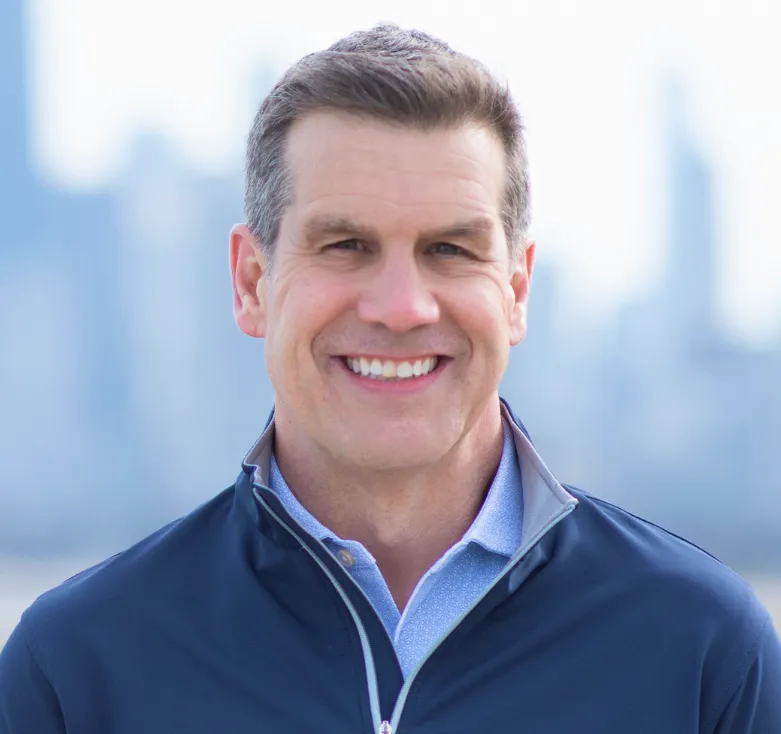
Ed Molitor

Episode 177:

Ed is a coach down to the very smallest molecule of his DNA.

Whether he’s a husband and father at home or working with a client in the business world, he is an energized, passionate, and near-obsessive coach who is fully invested in showing up with all he’s got to help you show up with all you’ve got. His approach is one that insists on presence. He knows no other way to catalyze change except by getting on the court with you, playing side-by-side, and encouraging you to keep pushing, especially when the going gets tough. 

In the last 29 years, Ed has developed his leadership skills in both athletics and business. From working as an NCAA Basketball coach at Texas A&M, DePaul NIU, and Lewis University to becoming the Vice President of a national recruiting firm, Ed Molitor has experienced the potential and pitfalls of leadership at every level. 

As the founder and CEO of The Molitor Group, today Ed guides emerging and established leaders across biopharma and biotech to apply the proven lessons of coaching in their pursuit of inspiring and driving their team’s performance. 

Through personalized training, workshops, keynote speeches, his writing, and as a podcast host, Ed seeks to empower individuals and their organizations to achieve victory through a focus on transformation, fundamentals, compassion, mental toughness, and vision.  

Ed graduated from St. Ambrose University with a B.S. in Business Administration and a minor in Economics where he was a member of the Men’s Basketball team serving as the co-captain his Senior year. Before St. Ambrose, he studied business at Creighton University where he played on the Men’s Basketball teams which included a 1989 MVC Regular Season and Tournament Champions, NCAA Tournament, and a 1990 NIT Tournament. 

What you’ll learn in this episode:

  • Ed’s journey in his pursuit of completing an Ironman 70.3 race
  • The importance of perseverance and self-discipline in achieving goals
  • The immense power of preparation, hard work, and selflessness in achieving success
  • How Ed overcame the challenges leading up to the race while balancing training with other commitments, such as work, family, and travel
  • The impact of reframing and prioritizing inspiration over motivation for sustainable success
  • The multiple lessons learned from his race and how they apply to leadership and business
  • The importance of self-awareness, positive thinking, and staying focused and committed to the plan

Additional resources:

Podcast transcript

[00:03] Welcome to the Athletics of Business, a podcast about how the traits and behaviors of elite athletes and remarkable business leaders frequently intersect, the real stories and hard lessons to help you level up your leadership and performance. Now your host, Ed Molitor.

[00:19] Welcome back to another episode of the Athletics of Business podcast.

[00:22] I am your host and CEO of the Molitor group, Ed Molitor. Now, if you've been a part of our community for a while now, you.

[00:31] Probably have become somewhat annoyed or intrigued by the conversations I've had wrapped around.

[00:37] My pursuit of completing an Iron Man 70.3.

[00:42] Now, for those of you not familiar with the Iron Man 70.3, here is what it is.

[00:46] It is a 1.2 miles swim, a.

[00:48] 56 miles bike, followed up by a half marathon.

[00:51] So a 13.1 mile run. Now, let me try to keep this.

[00:55] As brief as possible.

[00:56] Make a long story short, three and.

[00:58] A half years ago, when I was 49 years old, not to date myself.

[01:01] But I just did, I decided that I want a different challenge than just.

[01:05] Doing the olympic distance triathlons and the sprint distance triathlons. What an olympic distance is, it's a 0.9 miles swim. It is a 26 miles bike and.

[01:14] Then a 6.2 miles run. I needed something more.

[01:17] I needed to push myself. I needed to challenge myself.

[01:20] I needed to see if I was.

[01:22] Capable, not just physically.

[01:23] I mean, we have no idea what.

[01:24] We'Re capable of physically. So the physical, I want to see if I was capable of it mentally.

[01:29] And if I could put in the.

[01:30] Training with everything that I had going.

[01:31] On in my world, most importantly the family and the business, I ventured out.

[01:36] And this would be, if you're doing the math, this would be 2019.

[01:39] So needless to say, in March of.

[01:41] 2020, our world's changed significantly. And I just had started really training.

[01:47] Probably mid February when I was approaching my 50th birthday. But that didn't stop me.

[01:52] Even though we couldn't get in the pool, I would do dry land swims with resistant cords. I would do the runs. I would do a bike on my.

[02:00] Wahoo trainer, I would go outside.

[02:03] Whatever I could do. I was getting the workouts in.

[02:06] And as things began to loosen up, I started doing my open water swims. In probably June, July of 2020, literally.

[02:14] A month before the race, I get.

[02:15] On an open water swim.

[02:17] And for some reason, I checked my email and the first thing waiting for.

[02:19] Me was the fact that the Michigan.

[02:22] Iron Man 70.3 had been canceled because.

[02:24] Of COVID Kind of expected, still a little bit of a bummer.

[02:28] So just kind of went back to life as normal.

[02:30] Well, as normal as it was back then. And the following year I decided I was going to make another run at it. And it had been moved from Traverse City to another location in Michigan, which was absolutely beautiful.

[02:45] And I was excited about it.

[02:47] I was really excited about it and had a great three, four and a.

[02:51] Half months of training.

[02:52] And my daughter Maddie had decided to switch from baseball to softball, which for her was significant.

[02:59] She never played softball.

[03:00] She was in love with baseball.

[03:02] She loved the sport.

[03:03] She loved competing. Obviously had a little bit of an edge and chip on her shoulder.

[03:07] Loved being the only girl playing on her team. I think in her travel league there's.

[03:11] Only one or two other girls. Anyways, three and a half, four weeks.

[03:15] Before that race, and I was in great shape. I was feeling really good, had a couple of injuries.

[03:20] We get an email from her softball coach and it says, great news. We've added a game to our schedule.

[03:27] As a matter of fact, it might have even been a tournament. Now that I think about it, we've.

[03:29] Added a game to our Silverhawk schedule.

[03:33] And it'll be on this date.

[03:36] And I read the date, and I.

[03:37] Read the date again.

[03:38] I god, that's a familiar date.

[03:40] We must have something.

[03:41] So I went to my calendar.

[03:43] Sometimes I'm not the brightest light bulb in the chandelier. I went to my calendar and sure.

[03:46] As heck, that was the date of.

[03:49] The Michigan Iron Man 70.3.

[03:51] So my race that I've been preparing.

[03:53] For close to two years for.

[03:55] So of course I did what any.

[03:57] Father worth his weight and salt would.

[03:59] Do, much to the Yanks.

[04:00] To some of my friends, they thought I was nuts. But I canceled the race. I didn't go. It was about three and a half weeks out.

[04:04] Three weeks out.

[04:05] There was absolutely no way I was going to miss the first softball game.

[04:09] And it's just one of those things, right?

[04:11] What happens if she struggles? What happens if something great happens? You don't want to miss those moments.

[04:15] You don't get those moments back. So then there was last summer, and last summer there was zero chance that.

[04:21] I was going to be able to train for the 70.3.

[04:24] I just did not have it in me.

[04:26] Bandwidth wise, schedule wise. Kids had a thousand things going on.

[04:30] And then fast forward to this past, I want to say, january, February, and I was having a conversation with a.

[04:36] Great friend of mine who we've kind of got into this racket of doing.

[04:39] Half Ironman's together, and he said, hey.

[04:42] Why don't you just do steelhead 70.3 in Benton harbor. It's June 26, it's on a Sunday.

[04:48] And then you have the rest of your summer. And I was like, God, that's kind.

[04:52] Of a great idea.

[04:53] And to myself now, Trey, God bless him, his heart was in the right place, but I'm not sure that he realized that the swim was in Lake Michigan. Okay.

[05:02] And it was in June, which means the water temp was going to be.

[05:05] A little bit chillier than it is.

[05:07] Down in Dallas, Texas, where he calls home. So the water temp day of the race was 59.

[05:12] But anyways, I'll get to that in a second.

[05:13] So, long story short, I signed up for it.

[05:15] I train.

[05:16] I made the decision to hire a different triathlon coach. I hired Tim Holly. And I'm telling you right now, if you're into triathlons, regardless of the distance and you want to coach running half marathons, you want to coach, go to Tim Holly.

[05:30] Go underscore Tim Holly for Instagram or.

[05:33] Go to app run related.

[05:34] That's their group.

[05:36] He is one of the few coaches.

[05:37] In my life, regardless of sports, regardless.

[05:40] Of age, regardless of where I was.

[05:41] At, who really actually connected with me and found a way to get me.

[05:47] To where I needed to be mentally so I could do what I needed to do physically.

[05:51] And you'll understand when I get into.

[05:53] It here in a second what I mean by that.

[05:55] But honest to God, I can't say enough amazing things about him. So I hired Tim and he lays.

[06:01] Out the game plan. And I don't ask any questions. I just sometimes with my travel, with.

[06:05] Work, we need to move a few things around and we just start getting after it.

[06:09] And the first real challenge came over.

[06:11] Spring break when we traveled to Cincinnati.

[06:13] For Maddie soccer tournament.

[06:15] And weren't in a bad neighborhood where the hotel was. I just didn't know where were.

[06:21] It was right off the highway, busy roads, wasn't a great place to run. Had my bike, wasn't a great place to ride, didn't know much about it.

[06:27] And then woke up in the morning and it was pouring rain, right? So it was pouring rain.

[06:31] Her first day, she had a game at 08:00 a.m.

[06:33] So I got up and I did a run.

[06:35] I did a seven mile run. I think it was on a treadmill in seven minutes.

[06:39] On a treadmills, seven minutes too long for me. And I did a seven mile run on the treadmill and then just kind.

[06:44] Of got after and then went.

[06:45] On spring break down to Florida, and.

[06:47] It was a bit of a challenge, but I did the best that I could. And that's where Tim really stepped in and said, man, just go enjoy your time with your family. Do what you can.

[06:54] You've got plenty of time to ramp this training up. And literally, that treadmill gave me the.

[06:59] Only injury I had for the next four or five months, which was kind.

[07:02] Of a strained calf, but that's neither here nor there. And I just followed the plan. And it's amazing what can do when.

[07:11] You just show up and you're probably sitting there thinking, well, okay, here we go. We're just going to hear the same thing, right? Like, follow the process, trust the process, self select into the process.

[07:19] Here's the thing, it absolutely works. So that is March, and we train.

[07:25] In April, we train in May, we.

[07:27] Train in the first two, three weeks of June. Had a bit of travel between doing.

[07:31] Workshops and speaking and some other things.

[07:33] And working the book.

[07:34] Had a bit of travel going in. But, man, I just did what I can do. And there was days I was exhausted and Tim would just tell me to back off.

[07:41] Listen to your body.

[07:42] I'm not by nature a lazy person. I'm going to get after it.

[07:45] I'm going to work to the point.

[07:47] Where when I trained for the first two half iron mans I was planning.

[07:50] On doing, I thought every workout had to be a punishment.

[07:52] I thought every workout, I had to put myself through absolute hell. So I felt like I accomplished something.

[07:58] But I discovered paying attention to what my heart rate was when I run.

[08:02] I paid attention to the different bike workouts, what I was really, truly trying to accomplish.

[08:07] And the swim was, it was just.

[08:10] Unbelievable, the yards that we put in, and it would always come back to this.

[08:13] Get Miles in the bank, right? Just bank miles. Just keep doing what you need to do. I remember thinking to myself like, this.

[08:20] Is incredible, because two months ago I.

[08:23] Couldn't do this, but yet it didn't.

[08:25] Feel like anything overly significant. It didn't feel like I was doing anything over the top.

[08:30] I was just literally showing up every.

[08:32] Day doing the work.

[08:32] Now, there were runs at 330 in the morning.

[08:35] There was getting on the bike, trainer.

[08:36] Down at 430 in the morning.

[08:38] Every Tuesday, Thursday when we shift spots.

[08:40] It was Monday Thursdays. Every swim started at 05:00 a.m. But here's the thing. Success is not convenient.

[08:47] Success is so inconvenient. And the thing I thought about when.

[08:50] I was riding the bike, you spend.

[08:51] 56 miles on a bike in the.

[08:53] Hills, you have a lot of time to think. And I'm like, man, this is messy.

[08:56] Like, successes really can be messy and it's inconvenient. And I thought to myself about how good I was feeling and the preparation.

[09:02] That went into it, and it dawned.

[09:04] On me that, yes, success is inconvenient.

[09:06] But it was nowhere near as inconvenient as being unprepared. I mean, that's a complete recipe for disaster. And it's okay for success to be messy. It's okay to be annoyed by it.

[09:19] Sometimes, to be annoyed by what it takes. It's okay to not feel like doing it just as long as you go do it. But then there's that fine line when.

[09:25] You need to listen to your body inside of this training, really locked into.

[09:30] The physical, mental and emotional part. Here's what I mean by this. You're probably saying, well, Ed, you just said to it to us that you didn't feel like you needed to crush yourself every workout. So how are you getting yourself outside of your comfort zone? Well, a, I just told you the.

[09:41] Times that I was working out. I was not going to miss one.

[09:44] Of my kids events. I was not going to inconvenience my kids because of dad's goals. That's not the way it was going.

[09:49] To work in this house. Sure, I was tired.

[09:51] Sure, when they woke up, I was dripping with sweat. I didn't get a whole lot of.

[09:55] Morning hugs for a few months, but we had a lot of laughs around it.

[09:58] But I was not going to put them out. At least I was going to minimize the amount. I put them out by my training.

[10:04] And my pursuit of my goal.

[10:05] So physical part is obvious, right?

[10:07] Put in the miles.

[10:08] We paid attention to nutrition. What's the nutrition on the bike? How are you hydrating?

[10:12] Okay.

[10:13] What sits with you? What actually makes you feel a bit better?

[10:15] What gives you the energy that you need?

[10:17] How often are you taking water on the run?

[10:19] I used to be that guy that.

[10:20] Would go run 45 minutes out, 45.

[10:22] Minutes back, and then take water. Didn't do it for me. Right. I learned to come back every, I.

[10:27] Believe it was every 4 miles. I would come back to the house, grab water and keep going. And it was amazing what that did for my level of performance and efficiency.

[10:35] Inside of my workouts. Mentally.

[10:37] I got into what I was thinking.

[10:38] About on the road, I got into.

[10:40] What I was thinking about on the trainer, I got into what I was.

[10:42] Thinking about in the pool. I would journal it, I would think.

[10:45] About it, I would talk to others.

[10:46] About it because I knew that on race day I was going to have.

[10:50] A boatload of time with my discretionary thinking.

[10:54] In other words, there was going to be so many external influences on me and distractions on me that it would be really easy for my thinking to.

[11:03] Get sideways and to go down some rabbit holes. And it's absolutely mind blowing what you.

[11:08] Think about when you're alone for that long. And I did train alone.

[11:11] I don't ride with groups. I don't run with groups. It's not because antisocial, it's not because I don't like people. It's just because it's where I do my best. And every now and then I sprinkle in a run or a rider.

[11:22] I do swim with a group, but obviously when you're in the water swimming, you're by yourself.

[11:26] And I did have a community of people that I talked to, but when I worked out on the bike and.

[11:30] When I worked out on the run.

[11:31] I spent just quite a bit of time by myself. And what I found was my preparation.

[11:36] Allowed for flexibility and adaptability on race.

[11:41] Day because it went back to how intentional I was about paying attention to my discretionary thinking.

[11:45] So the week leading up to the.

[11:47] Race, I'm feeling really good, had gone.

[11:49] Golfing the week prior. So two weeks prior to the race.

[11:52] About ten days prior to the race, I'd gone golfing with my best friend.

[11:55] And we don't get to see each other nearly as much as we would like to.

[12:00] So this was one golf day we.

[12:02] Had in the calendar for a few weeks. And lo and behold, I wake up.

[12:05] In the morning and it is torrential downpour, thunderstorms.

[12:09] It's not going to ease up. And actually, I think I did an open water swim right before. Yeah, I did an open water swim.

[12:18] Before the golf that day and it started kind of raining towards the end.

[12:21] But anyways, we golfing.

[12:22] First hole, it starts raining.

[12:23] Second hole it's pouring.

[12:25] It rained the entire time.

[12:27] And probably about a hole.

[12:28] Twelve. I felt something in my back. Whatever. It was a little bit. It was cooler, it was raining, it was windy.

[12:32] I overswang. No big deal. Well, next thing you know, I've got.

[12:37] Rock tape on my back. I'm getting treatment every day leading up.

[12:39] To the race, and it is what it is.

[12:42] I'm not going to worry about it.

[12:43] We've come this far.

[12:44] Let's just see what happens.

[12:46] So now the race.

[12:48] The steelhead 70.3 is in Benton Harbor, Michigan. My wife did an amazing job getting an Airbnb right in the water.

[12:55] It was super cool. Great location, very quiet. And the first day we arrived there, it was absolutely beautiful.

[13:03] Blue skies, sunny, amazing sunset off the back deck.

[13:06] I mean, everything was amazing.

[13:08] And the next day you go register. And it was one of the cooler registration experiences I've had because you could feel the energy.

[13:16] You could feel the vibe.

[13:18] I sent them downtown St. Joe's to do what they do great. They went shopping and got ICE cream.

[13:22] And walked around and did their thing. And I soaked it all up and.

[13:26] Met some different people and looked around. And then what I did, I went. Something I never did with the olympic races.

[13:33] I went to the pre race meeting.

[13:35] They say they require it, but you can skip out on it if you want, but you'll pay dearly for it. So I went to the pre race meeting, and here's where this gets really interesting.

[13:44] So him, my coach, had given me.

[13:47] A game plan, had put a game.

[13:48] Plan in my calendar that I had read.

[13:50] I believe it was a two weeks leading up to.

[13:51] I would read it every day so.

[13:52] I can memorize it.

[13:53] I would read it every day. And I want to read the swim part to you because this is where.

[13:59] Things really started to kick in for me about 20 hours before the race.

[14:02] Okay.

[14:03] So the first thing he puts on.

[14:05] The swim plan was this. You can do this.

[14:07] Trust the training you've put in. You've swam just fine in open waters. Don't panic.

[14:13] Now.

[14:13] Anybody who has done an open water race knows it's really easy to panic about the smallest things. Your wetsuit feels too tight. You feel like you're not breathing well enough.

[14:21] You get kicked in the head. Oh, my God.

[14:23] It's really way rougher than I thought it was. Why do I feel like this?

[14:27] All sorts of reasons, right? So he said, don't panic.

[14:29] Take a deep breath and take it one buoy at a time. Here's where it gets interesting. So I go to the pre race meet.

[14:33] I'm sitting with hundreds of people, world and take one buoy at a time.

[14:37] All it means to me is it's.

[14:38] One buoy at a time.

[14:39] But in the pre race meeting, they.

[14:41] Say the buoys are 100 meters apart.

[14:45] For some reason, that resonated with me.

[14:47] The buoys are 100 meters at apart. Okay.

[14:49] Take a deep breath and take it one buoy at a time. You will not make your day, but you can break your day here. So be patient. If you panic, take a few backstrokes.

[14:57] Pause if needed, and press forward. Once you finish this, you've already accomplished a lot. Go celebrate by having a great bike ride. All right. So to me, that was really cool.

[15:07] Now I know, okay to swim if.

[15:09] Something happens to me 100 meters at a time.

[15:12] I can do 100 meters at a time. I can do 100 meters at a.

[15:14] Time all day long if I need to.

[15:16] So after prayer, ICE me and we go.

[15:18] And the rest of the family comes up.

[15:20] My mom and dad come up with.

[15:21] Our son EJ, who had a little.

[15:22] League baseball game on that Friday night. And we have a wonderful dinner on this really cool screen in porch with a huge table overlooking the lake.

[15:29] I mean, just everything is great.

[15:31] Again, a beautiful evening. And of course, you're doing what we always do.

[15:35] And we're tracking the weather. And the weather does not look promising.

[15:38] For the next morning.

[15:38] There was talk about it the day.

[15:40] Before, and they did say, listen, you really got to pay attention in the morning, we're probably going to give you.

[15:44] Some instructions via your phones. So I stay up, Maddie goes to bed. I stay up to, like, 11:00 watching.

[15:51] Boss baby with EJ.

[15:53] Why were watching boss baby, I have no idea.

[15:55] I stayed up to 11:00 because I knew I was just going to go to bed, lay on my back and stare at the ceiling. But it was something weird about this.

[16:01] I was so prepared and I was so ready.

[16:04] Yeah, I was nervous.

[16:05] I mean, when you care about something.

[16:06] You'Re going to be nervous.

[16:07] That's why nerves are a good thing. But I was just at peace with.

[16:10] The fact that tomorrow we finally get to do this. And Tim had talked to all my friends. I've done these before. Talked about your race day is just a celebration.

[16:17] Like, all the hard work is done.

[16:19] Yeah, you're going to go through some crap on race day, but, man, you.

[16:22] Got to enjoy it.

[16:23] I'm sitting there and then I finally go to bed and I fall asleep.

[16:25] And I wake up at about three.

[16:27] In the morning because we need to be there at 430 to transition opens.

[16:29] I wake up at about three.

[16:31] Half hour before I plan on waking up or 15 minutes before I plan on waking up. And something feels off. We had these beautiful french doors that.

[16:37] Opened up to the lake.

[16:38] And I realized what felt off was.

[16:40] There is a storm over Lake Michigan.

[16:42] And when I say a storm, we're talking 30, 40 miles an hour gust. The winds coming through the doors and the windows. Lightning lighting up the sky. It's kind of cool. Except the fact that I'm supposed to.

[16:52] Be doing a half iron man in a few hours.

[16:54] So at that point, I didn't find.

[16:56] It cool or beautiful or anything. I found it a little bit annoying. So I get up, make cup of.

[17:01] Coffee and go sit downstairs and looking out the windows and curious as of what's going to happen, and the text start coming in and report at five, report at 530. And I'm watching the radar. And if you follow me on social media, you saw some pictures of me sitting there watching my phone on the couch.

[17:18] Trust me, I wasn't looking at Facebook.

[17:20] Or Instagram or LinkedIn or Twitter or X, whatever they call it now.

[17:24] I was looking at the radar and.

[17:26] I made a decision that I was at peace with that.

[17:28] If they cancel the swim and they'll.

[17:31] Do that sometimes if they can't do the swim, they'll cancel it and they'll do a bike run.

[17:36] No, excuse me?

[17:36] Yeah, a run.

[17:37] Bike run. Okay. I was not doing that.

[17:40] I didn't come this far. Three years of training to just do that. My butt was getting in the water. If I needed to sign up for a different one, then that's what I.

[17:47] Was going to do. So finally, sun's coming up, still raining, and we get a text.

[17:52] Transition opens at 630. So we get to the transition and people are buzzing, people are fired up, they're excited. Nobody thought, we're going to do it. There have been people there sitting in their car since four in the morning. And at about 645, they say, hey, the swim is going to start at 730.

[18:06] It was perfect because that gave me.

[18:08] Very little time to think about what I was about to do. Get the wetsuit on, get your transition area all situated, get everything laid out.

[18:17] Your nutrition, get ready to go. We get to the swim and it's.

[18:21] A rolling start, which means you have.

[18:23] To sort of estimate what your time is going to be.

[18:26] This is my first mistake. I did not give myself enough credit.

[18:29] For the pace that I was going.

[18:31] To go at for the swim.

[18:32] So I started back further than I should have.

[18:35] So I spent a great deal of.

[18:36] The swimming around people, dodging people.

[18:39] I got kicked in the stomach once.

[18:41] I got kicked in ahead, people will swim into you. And I still love the swim.

[18:46] Had a great swim, was very happy. Now I say great, my great, your.

[18:50] Great could be significantly different.

[18:52] I'm not talking time great, I'm talking.

[18:54] I felt awesome.

[18:55] I felt really good. I definitely didn't break my race.

[18:57] I got out of the water and then we get to the bike and.

[19:00] I go back to the game plan that we had on the ride.

[19:02] And this is where it really got fun.

[19:04] The highlight of the day was the fact that my family was so involved in the race. My wife and my dad came them down to the transitionary with me early in the morning. They were there when I got in the water.

[19:13] They were there when I got out of the water.

[19:15] So here was the game plan that tim gave me for the bike. Steady.

[19:19] That's the name of the game.

[19:20] No big surges.

[19:21] If people pass you, they are simply more fit or they're burning their matches. Now, funny side note, that's the story.

[19:30] I was telling myself every time someone passed me. Yeah, they're just burning their matches.

[19:33] I'm going to catch them. Which, ironically, often, that really was the case, which was kind of cool.

[19:38] So he goes on, the toughest part of a triathlon is to run. So be as fresh as possible for.

[19:44] It to do so. Ride steady, keep calories coming in, keep hydrated. If you get hot, use water at.

[19:51] An aids station to pour on your chest.

[19:54] Back 5 miles at a time. So here's the two things besides the obvious of keep calories coming in and stay hydrated, right? It was no big surges. Ride steady 5 miles at a time. And that right there, I said those.

[20:09] Things over and over my head as people either pass me or rode up alongside me.

[20:13] You get in games at cat and mouse. I had no desire to honestly get.

[20:18] In a pissing contest, for lack of.

[20:20] A better term, with anybody on the bike. And you see it happening all the time.

[20:24] A ton of flats, the ride. There was a lot of potholes, a.

[20:26] Lot of rocks, a ton of flats. I was just 5 miles at a time. Head down. Now, a funny story was this.

[20:33] So our home was about 7 miles.

[20:35] Into the ride, and Nancy was convinced that my dad and her could get to the truck, get back to the house, get the kids up and be there by the time I passed. So as I jumped on a bike.

[20:46] I started doing the math. I'm like, I don't know that's going.

[20:48] To happen, but whatever, no big deal.

[20:50] And I'm at about mile. Needless to say, they weren't there.

[20:53] I'm at about mile 30, I think 29, 30, maybe 31.

[20:56] And there was cars passing us and people cheering. It was really such a cool experience. I'm being very intentional about thanking all.

[21:03] The volunteers and all of a sudden.

[21:05] I hear a car honking and I hear a cowbell and I hear this woman screaming. I'm like, that's cool.

[21:12] Someone's family or someone's wife is fired.

[21:15] Up that they see him?

[21:16] That's pretty cool.

[21:17] And the beeping is getting closer and closer.

[21:21] And all of a sudden, my truck.

[21:23] Pulls up next to me. And the crazy woman with the cowbell is my wife. And my father looks out the shotgun window with this look of horror on his face.

[21:32] Because I can only imagine what she had been doing.

[21:34] How she had been driving, trying to find me on the bike course.

[21:37] And then the back window rolls down, and there's Maddie and EJ.

[21:42] EJ has this look of kind of like, this is kind of cool.

[21:45] Dad's nuts. Maddie's filming me and just throws me a thumbs up and smiles.

[21:50] And what was really cool about that moment, besides the fact my wife did not run over any bikers, which I was a little bit concerned with at the time. What was really cool about at that.

[21:58] Moment, at mile 30? I didn't need it yet. But I stored that feeling away of the fact that they were excited for me.

[22:08] Despite the fact they had to share me with my training for so long. The fact that my kids got to.

[22:12] See not just me, but all the people out there competing. The fact that we did this together.

[22:18] And that's really what I focused on that day. A lot of people are like, God.

[22:21] Wasn't amazing what you did.

[22:23] How great was it?

[22:24] Tell me about this and that.

[22:25] Honestly, God, that whole day, I was focused on others.

[22:27] Like, that whole day, what I did.

[22:29] We talk about gratitude all the time. And what that can do to anxiety and stress and performance.

[22:33] It's the damn truth.

[22:34] From the minute I stepped into that transition area, everything was about thanking the volunteers. Everything was about meeting people. Sure, I was in a quiet place in my head. And that's something that the preparation did, right?

[22:44] And that's something that the game plan did.

[22:46] In my pre race routine, I went to a place, physically and mentally, where.

[22:50] I needed to be.

[22:51] I got real quiet in my head.

[22:53] Steady heartbeat.

[22:54] And the other thing. And I'm going to go to the side here, and I'll pick back up the race. In the pre race, I realized that.

[23:00] That hard work was done. But I was really sure to have.

[23:04] Myself prepared to understand that the struggle.

[23:06] Was nowhere near over. So here I am on the bike.

[23:09] Now, don't forget the back issue, right? So the back is feeling really good. At mile 40, the back starts to stiffen up. And here's what else happens.

[23:15] The wind shifts.

[23:16] So what we thought was going to.

[23:18] Be a downhill ride, I thought. Excuse me, not we.

[23:21] There's no we. I thought it was going to be a downhill ride, like the last 10.

[23:24] Miles with wind in my back, which I was really excited about.

[23:27] About mile 46, I realized I miscalculated the route. And not only were we not going.

[23:33] Downhill, we had a big bit of uphill, and were going straight into the wind. All right.

[23:39] We were going straight into the wind, running perpendicular with the lake. And then we got alongside it, the wind shifted again. It was kind of coming out of.

[23:46] The southwest at the time, and it was warming up.

[23:49] And you just do what you have to do. And the back was starting to stiffen up.

[23:52] It was no big deal.

[23:54] Felt really good.

[23:54] Got off the bike and get in.

[23:57] The transition area, and my transitions were super slow, but I was going to.

[24:00] Soak up every minute of it.

[24:01] I start running, and then here's a game plan for the run.

[24:04] And the run probably is my strongest.

[24:07] Part of the race. And if you saw how slow I.

[24:09] Was, you would laugh. You've made it to the run.

[24:11] This is simply done 1 mile at a time. Don't focus on the next mile or your previous mile.

[24:16] Keep moving forward.

[24:17] It was unbelievable, the difference this made, because what I basically did when I.

[24:21] Bought into this game plan, what I did is I gave myself permission to.

[24:26] Just believe in what he put in.

[24:28] Front of me and don't worry about the previous mile.

[24:30] So here's what happened.

[24:31] My first mile, slow now.

[24:33] Understood, right? Just my bike, 56 miles.

[24:36] I'm taking fluids. I'm trying to get my bearing straight.

[24:38] It was about 20 seconds slower than.

[24:40] I wanted it to be. Mile two, I didn't worry about it. Okay. I just ran. I just ran. And the other thing I did.

[24:47] Okay, so don't get too excited coming off the bike and fly your first mile.

[24:51] So there's no flying about it. Just settle in and be patient.

[24:54] Use fluids at every station. Drink and pour water on body to cool off. If they have ICE, pour some down your kit and your kit. Your one piece. It's your. Try one piece that you wear under.

[25:03] Your wetsuit and pour iced on your kit.

[25:05] And that was the game changer right there for me, because what I would do is I would pour it down my back. So I basically iced my back for.

[25:11] 2 hours while running 13.1 mile. And it was awesome.

[25:15] So I literally stopped every mile I.

[25:16] Would stop at the aid station, or every mile and a half I'd stop. I would get water, I would get ICE.

[25:21] And if I was in a mood.

[25:22] To eat something, I'd have maybe a couple of bites of banana.

[25:25] I didn't mess around with the power bars because there are different power bars than I had trained with.

[25:28] I didn't want to upset the stomach and I felt great.

[25:31] I probably could have knocked seven to eight minutes off the run had I.

[25:34] Not just taken my time at the.

[25:36] A stations like I did. And I still almost ran a sub two half marathon after everything else.

[25:42] So here's where it gets really fun. Enjoy that last mile.

[25:45] You'll be hurting. But that's what all the training was for. Race day again. Race day is a celebration. Make it as such.

[25:52] You've already passed that test. And it's funny how stuff like this can pour over into all the other areas of your life. And I sat back and it took me a minute to really put all.

[26:03] This down on paper. I reflected on it quite a bit. But because of business, because of travel, because of family, because of getting immersed in everything that was going on around me that I need to throw myself into, I haven't had a chance to record this episode. And I look back on it and just to get back in it, I.

[26:18] Watched a finish line today and I'm telling you at the finish, it was so surreal because I still had some left in me. You just start to think about what's.

[26:27] Waiting for you on the other side. And I'm not talking about the piece of cheese, pizza hut pizza that I.

[26:31] Had, which was freaking awesome, by the way. But my kids, my mom and her battle.

[26:37] My dad, who truly, I mean, years ago, planted a seed when he did.

[26:40] An iron man in 19, gosh, 84, 85.

[26:44] And my wife and everything that she's done and how amazing she is.

[26:48] Now, this is going to be hard.

[26:49] To top, but I know there are ways that I know I can top it leading up to it and the.

[26:52] Month after it where I can get better at things. Okay. But here are some of the things.

[26:56] I really took away from all my.

[26:58] Time alone on that race. I locked in.

[27:01] I got to the right place mentally. Like I mentioned, I had a quiet.

[27:05] Mind and a heart.

[27:06] And the thing I realized, and you think about your world, think about business and think about when you're leading. It's not time to be cute. It's not time to be cool. It's not time to overthink.

[27:17] Just keep it simple. And you're consistently, you're constantly reframing situations that come up.

[27:23] When I realized the windshift, right, and I realized that it was warming up and I only had so much water left till the next water station. Okay, now how am I going to do this? How am I going to manage this? Should I take some nutrition?

[27:32] Should I take some gel? I mean, there's different things, and it's not neat. It's an absolute chaotic mess.

[27:39] But trust the work and stay true.

[27:40] To your game plan. And as we're running, there was one guy, had to be a football coach.

[27:45] And I say a football coach because of the gear he's wearing.

[27:47] He's put together just like a brick house, and he's screaming at people and he's pulling, like, his best motivation stuff.

[27:55] He's playing rocky music, and that gets annoying after a while.

[27:58] God bless him, right?

[27:59] But he's just trying to fire people up. And I was at that point, like.

[28:04] Hey, man, that's great.

[28:06] It's awesome.

[28:06] It's funny, it's cool. But it wasn't what I needed.

[28:10] It's what others need.

[28:11] That's great. But here's what I did, and this.

[28:12] Is what I find is sustainable. And I talk about this all the time with my clients. I talk about it in my keynotes and my workshops. Prioritize inspiration over motivation while realizing both are important.

[28:22] But inspiration, to me, is sustainable. But here's the other thing.

[28:28] It just drives the resilience, because inspiration is always available.

[28:33] It's always there if you look for it.

[28:35] It's always there if you know how to tap into it, if you know what your purpose is, if you know what your why is, if you know what the vision you have for yourself is, if you know what your mission.

[28:43] Is, you can always find an inspiration.

[28:45] And like me on that run, I'm.

[28:47] Like, go fly a kite, dude. I don't need that right now. I'm good. Like, yell at her. Yell at him. I'm good. Okay? But inspiration is sustainable. And you've heard me say this a thousand times, run to the fight. Run to the fight. So we get to the run, there's this hill that everybody keeps talking, and.

[29:05] I'm like, God, this is not really what I want at mile six and mile.

[29:10] Mile eleven, because you had to do it twice.

[29:12] And the way they had it looped.

[29:14] It was like what they call a.

[29:15] Popsicle course, I believe it was the.

[29:16] Way it was shaped.

[29:17] So even though it was a mile six, you weren't going all the way back and doing a full loop. You're kind of cutting it short and coming back.

[29:21] So I believe it was mile six and mile eleven.

[29:23] And I come out of this campus we run on, and I look up and I see the hill.

[29:28] I'm like, that's it. That's what you got.

[29:29] Everyone's yelling about the hill. Everyone's talking about the hill. And I've done Fontana triathlon here in.

[29:34] Wisconsin on Geneva Lake, and they have.

[29:36] This thing we call the heartbreak hill. And it is brutal. It is two point something miles straight.

[29:39] Uphill, and it blows. So again, been there, done it.

[29:44] Preparation was harder than what the race.

[29:45] Is actually going to be. So I literally just dig in. I just run to the fight.

[29:51] I almost said, I fly up the.

[29:52] Hill, but trust me, there was no flying.

[29:53] But I attacked the hill and I run, and it felt great. You're passing people, you hear what they're saying to you. You feel the conversation. People are looking at you like you're nuts.

[30:01] But honestly, I just kicked it in stride. It was nothing out of the ordinary.

[30:05] And here's what I did the entire race, and I know that you've heard me talk about this.

[30:08] I think it's one of the most.

[30:09] Powerful things you can possibly do. I was talking to myself instead of.

[30:13] Listening to myself, because when you listen.

[30:15] To yourself, what happens? You start hearing all the negative things, like why you can't do this, why it's not possible, how tired you are.

[30:22] How hot it is. Oh, man, I hope I don't get a flat tire. You hear all this crap, right?

[30:26] But when you talk to yourself and you dictate the conversation inside your head.

[30:31] That means you are controlling your attitude.

[30:33] And it makes a huge difference.

[30:35] And again, gratitude.

[30:36] Thanking all the volunteers, thanking the police.

[30:38] Thanking the first responders.

[30:40] It helps tremendously because you're getting outside of yourself. When I was riding next to someone, or I was running next to someone.

[30:46] And they were struggling, I absolutely would pick them up. I would absolutely try to pick them up. And to do that would give me energy.

[30:55] And it's funny how when the race.

[30:57] Is over, you'll bump into them, right?

[30:59] And they'll say thank you. You don't remember it, but they remember it.

[31:03] Okay, so pick someone else up. And here's the other thing, just to give this to you.

[31:08] All this work I do on self.

[31:09] Awareness in my personal life, with the.

[31:12] Family, with the business, just with how I am socially, just with everything, all.

[31:16] This commitment I have to. Self awareness shows up on race day.

[31:19] It shows up in the heat of.

[31:20] The moment when you're competing, because you.

[31:22] Can feel yourself when you start to slip. You can feel yourself when you might be listening to yourself instead of talking yourself.

[31:28] You can feel yourself literally throughout my training, when I would come back from.

[31:32] Runs and I would look at my times and I would look at my.

[31:34] Splits, I could tell you when I.

[31:36] Was thinking negative thoughts or when I was kind of anxious about something I.

[31:39] Had going on because I would slow down.

[31:41] And when I was pouring into my mind with positive thoughts, I would actually have a better clip, a more even.

[31:46] Heart rate, and I would journal it. It was unbelievable.

[31:49] So on race day, I was very.

[31:50] Intentional about that and having fun with.

[31:52] The fans, picking someone else up, all.

[31:54] Of that helped it.

[31:55] And here's the thing I was able to do because of the work with Tim, because of the game plan he put together, and because I knew it was waiting for me at the finish.

[32:01] Line, was I avoided any temptation and.

[32:04] Eliminated all distractions so I could stay.

[32:07] Focused and committed to the plan.

[32:09] Never once did I say, maybe here I could deviate and just do this.

[32:12] No, that's it. That's it. Tim's been there.

[32:15] He's done it.

[32:16] He's coached people that have been there and done it.

[32:18] An incredible track record of success. Who am I to stray from it.

[32:22] And think that I can do better? So I just locked into that, and.

[32:26] That helped me eliminate all those temptations and distractions. And the other thing that kept popping in my head, why I was so.

[32:32] Confident going into this race, was performance.

[32:35] Doesn't rise to the occasion, but rather it lowers itself to the level of our preparation and training. And I knew I was good. I knew that I had put in the work. I knew that I put in just.

[32:44] Not the quantity, but the quality and that consistent level of self discipline every single day.

[32:49] And thought, behavior, and activity translated into the race. Think about that, about how you show.

[32:54] Up every day as a leader. It doesn't mean every day is great.

[32:57] It doesn't mean that every day things work out. But when you have the self discipline.

[33:01] In your thought, behavior, activity, it's going to pay off in the long run.

[33:05] It's going to translate into massive success for not only the people you lead, but for you. And the impact that you can have.

[33:12] On everybody is exponential. And it was one of those surreal moments, crossing the finish line.

[33:18] And I'll put a link to do the finish in the show notes because it's pretty funny. When you look at me, you're going to think, God, he must not work very hard because I did have a bit of energy. But I was so excited to see.

[33:27] My mom and dad.

[33:28] I was so excited to see the.

[33:29] Kids and see Nancy because everything paid off.

[33:32] And again, it wasn't about me.

[33:34] It was about us.

[33:35] It was about what we did, because I absolutely couldn't have done it without them.

[33:38] There's no way I could have done it without them.

[33:41] But I do know this.

[33:43] That journey of getting there and not just finishing it, but finishing it by successfully following the game plan and seeing that things pay off was a huge win for all of us. And we're better for it. And we're not better for it because of me, because I did it. We're better for it because we did it. And yeah, there were days that I had zero desire to get up at four and go do it. There were days when you're tempted at mile ten to say, you know what?

[34:12] I don't really need to put 13 in today.

[34:14] I can just put ten in, let's go do those last three. And to be able to sit there and take it all in was amazing. And then the coolest part about being a father of now an eleven and.

[34:26] Nine year old, then a ten and.

[34:27] Eight year old, you realize that though they think it's really neat, dad, that you did that, now you're ours and.

[34:33] It'S time to play again.

[34:34] They don't care how tired you are.

[34:36] And the mood swings are the same. The bickering and fighting is the same. The desire to go play catch or go swimming or do that is the same.

[34:44] Immediately following the race, which was cool, which was great, and it is as it should be. And a few weeks before the race.

[34:54] We found out that a good friend.

[34:56] Of ours, and I'll do an episode on this separately, so I won't go into it too much, was diagnosed with gibblastoma, brain cancer.

[35:05] It's awful.

[35:06] It's horrific.

[35:07] He's a high school basketball coaches girls basketball.

[35:10] He has had a tremendous impact on.

[35:13] His community, on the surrounding communities and communities everywhere that he's coached. And he had a tremendous impact on.

[35:18] Me when we worked together years ago.

[35:21] When were coaching at Lewis University together.

[35:23] And he's one of the few people.

[35:26] In my life that could push me.

[35:27] Without saying a word to me just by the way he did things and.

[35:31] Just by the way he carried himself in, the confidence and his knowledge and his skills. But yet his desire, his burning desire to immerse himself in learning more about the game and learning more about recruiting.

[35:41] And learning more about the players that he coached, he never had to preach to me.

[35:46] He never had to preach to me. He never had to say a word to me. I just learned by observation and I.

[35:51] Was better for being around him. So this one hit me really hard. And it's still hard to talk about.

[35:58] And he's fighting like crazy.

[36:01] And he still chose and demanded to.

[36:05] Coach his girls team this summer in their shootouts and in their tournaments and at their camp.

[36:10] And I had a rubber band, one of those wristbands, on my wrist during the race. And it was Yates strong.

[36:17] And I didn't have to refer to.

[36:19] It, though he was on my mind the whole time.

[36:21] I didn't have to refer to it as much as I thought it would. I didn't accuse myself of being soft.

[36:26] Too many times during the race. But here's what I want to leave you with.

[36:29] We all have a wristband that we.

[36:31] Can put on our hand. We all have someone that's going through something that can inspire us, or we.

[36:36] Have a situation or circumstance that we've.

[36:39] Been through that maybe we just need to remind ourselves of. But honestly, there's nothing.

[36:43] If you prepare and put in the.

[36:44] Work, there is nothing that you, as.

[36:47] A leader, as a performer, whatever role.

[36:49] You want to inject in there's nothing you can't accomplish.

[36:54] And when you have that perspective that.

[36:56] It'S about way more than us and.

[36:58] It'S so much bigger than anything that we can fathom, and we just have.

[37:02] To do our part and it's going to be okay. Just be a good person. Be a hard worker. Be selfless.

[37:09] Get engaged with the people that you lead, with the people that you work alongside, with your clients, with your customers.

[37:16] With your leaders, with the people that you lead.

[37:18] Get engaged in your personal growth, physically, mentally and emotionally.

[37:23] Like, go challengers.

[37:24] It might not be an iron man 70.3, it might be a ten k.

[37:27] It might just be weights. It might be pilates, it might be yoga. Whatever it is, go do it.

[37:33] Because the value that you get out.

[37:35] Of it is way more than we comprehend.

[37:38] Like, we spend so much money on.

[37:40] How we look, but what about how we think?

[37:42] What about how we feel? What about how we impact others?

[37:46] And that's really what this did for me.

[37:49] What it made me realize is that I'm capable of operating in another level.

[37:53] And the month preceding the race also made me realize that it doesn't pay.

[37:59] To put too much on your plate and to be able to stay dialed in and focused and true to what it is you want to accomplish and what you need to do to accomplish.

[38:06] That is a key to success and.

[38:08] To accepting the fact that success is absolutely messy.

[38:12] It's hard, it's inconvenient, but it's also pretty damn awesome.

[38:17] And it's not awesome to say look at me or I told you so.

[38:20] Or any of that.

[38:21] It's awesome because you realize that it really does work and it does pay off, and you have the opportunity to impact and inspire other people and help.

[38:29] Them accomplish their goals, help them become better at what they do. And that's what I would encourage you to do. And I would immerse myself in the things that it takes to help me better.

[38:41] We ask this question all the time, right? Are you doing the best you can.

[38:44] To become the best you're capable of becoming today? Just today? Not tomorrow, not yesterday, just today.

[38:52] Thank you for listening to the athletics of business. Be sure to give us a rating and review so we know how we're doing. For more information about the show, visit theathleticsofbusiness.com. Now get out there. Think, act and execute at the highest level to unleash your greatness.