

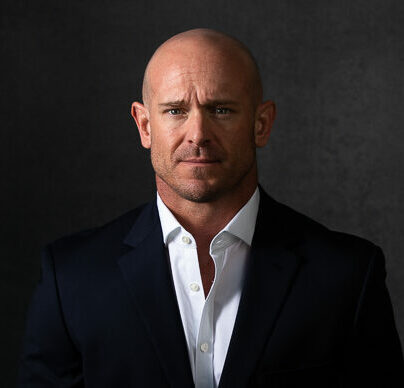
Mike Sarraille is the founder and CEO of Talent War Group, Legacy Expeditions, ATTA, and head of the Men’s Journal Everyday Warrior Nation.
Mike is a two-time best-selling author, globally ranked leadership speaker, documentary filmmaker, entrepreneur, and extreme adventurer.
He is a former Recon Marine and Scout-Sniper, and retired US Navy SEAL officer with 20 years of experience in Special Operations, including the elite Joint Special Operations Command.
To the Athletics of Business, a podcast about how the traits and behaviors of elite athletes and remarkable business leaders frequently intersect. The real stories and hard lessons to help you level up your leadership and performance. Now your host, Ed Molitor.
Welcome back to another episode of the.
Athletics and Business podcast. I am your host and CEO of the Molotor Group, Ed Molotor in I feel compelled to just cut through the chase of the pomp and circumstance for today's special guest because that is absolutely the way he operates. As humble, as amazing, as genuine, authentic, real and raw as a guest as we have ever had. Mike Sorelli, just an incredible human being and you will feel this interview, okay. You will feel this conversation. Mike is the founder and CEO of Talent War Group Legacy Expeditions and head of the Men's journal Everyday Warrior Nation. He is also a two time bestselling author, globally ranked leadership speaker and you will absolutely understand why after you listen to this conversation. He's a documentary filmmaker, which we are going to jump into here shortly.
An entrepreneur and an extreme adventurer, he also had 20 years of service as a Recon Marine scout sniper and US Navy Seal officer which included 10 combat deployments. One of the things that we're going to spend some time highlighting today is the much anticipated documentary Triple seven They said It Couldn't be Done, which was spearheaded by Mike and it was a film that's aimed at raising $7 million for the folds of Honor. Now this much anticipated documentary is directed and produced by Dan Merrick, the Blair Witch Project, you might know this name and produced by Kristen Kremple and it is set to premiere in five cities in May. Those cities, those times, those dates will be in the show notes. But quickly, here is what they are. May 11 New York City at the Look Dine in Cinemas W57.
There'll be showing at 5:30 and 7:30 May 13 in Tampa at the Tampa Theater at 7:30pm Eastern. May 14 in Austin, Texas at the Alamo Drafthouse South Lamar 7:30 Central and May 15 which I will be at this premiere in Dallas at the Texas Theater. Could not be more excited. That's at 7:30pm Central. And finally they'll wrap up the premier tour May 16th in LA at the Landmark Theaters Sunset 7:30pm Pacific. Just sit back, enjoy this conversation. There's so much here and I truly hope that you take away from this as much as I did when we recorded it. Mike, thank you so much for joining us today on the Athletics of Business podcast. I couldn't be more thrilled to have you here. And before we get started, I have to from the bottom of my heart.
And I speak for all of us here at the Athletics of Business and the MOL group. Thank you and your fellow brothers and sisters for all your service.
Well, Ed, first off, thank you for having me humbled and I appreciate that. You know, we often say we're appreciative of people's gratitude, but I tell people, if you knew the men and women I served with, you'll understand why I did it for 20 years. It was because of them and probably less Love a country towards the end of the career. But I also have to say thank you to jj, the CEO of the Austin Gamblers, for making this connection. I've fallen in love with not only the Austin Gamblers, but the PBR professional bull riding organization. Just well run to me.
It's amazing. So well run. JJ's really one of the greatest humans that I know and I feel very fortunate to be so connected to them. But the pbr, it's funny how to elevate their sport, which is an amazing sport with amazing humans on top of those bulls. But to elevate their sport, they turned to making it a part of something bigger than just the rider into the team series. It's pretty phenomenal what it's done.
It was genius. And I'm blanking on the name of the CEO of the pbr, but just a stellar business leader. But I've been involved with the Austin Gamblers in sort of helping them with the team component. And one of the first things we did was we got them on Lake Austin on the water, which some of them were clearly not comfortable with the water and actually on a eight man rowboat trying to get them to work together in unison. So it's been fun. But when the PBR starts, you talk about a good American company, just, I mean, red blooded, thankful to troops and first responders, Christian values. I've been blown away by these kids and quite frankly, they are warriors. Anyone who gets on a trying to remember the weight, I think it's like a 3,000 pound bull or maybe 2,000.
Bull snot coming out of their nose.
Yeah, it's insane. And I actually got the opportunity to get one in the, in the shoot and that was enough for me. But you know, that does apply. I talk about being a warrior often and I'm not talking about the profession of arms, warriors of mindset. And I know we're going to get into that further into this podcast.
So you got on the bull in the shoot. But you didn't let them open it for you.
I've got one hip replacement. I really enjoy skydiving.
It's crazy what they do. I mean, when you really think about it, I remember last year, the day before I was competing in my first half Ironman, I was sitting in the house by myself and I texted jj, I'm like, hey, just checking and see how you're doing. Looking for something to watch to get myself dialed in for tomorrow. And he sent me their series right about the PBR team series. It took me about a half episode to realize that what I was doing was paled, extremely pale in comparison to what these. I mean, every day they just go to work, like just practice and they get on that. They're putting their life and limbs at risk.
The thing that's interesting, you can you compare and contrast to other sports? We often hear, you know, oh, this basketball player is playing injured because they have a sore hamstring. No, these guys play injured every single time. Whether they're needing a hip replacement. Some of them still get on the bowl, maybe they tore a ligament, they still get on the bowl. There's no quit in these young men. And having the opportunity to get to know these world class bull riders again, just values based individuals who have a.
Love of and they talk about what the team series did for them and they realized they were riding for something more than themselves and they didn't want to let their brothers down. And I think that's a great segue into your incredible journey, which I'm going to step back here and just let you fill the listener in on where you've been, what you've done, what made you join the Navy seals, what made you self select into the toughest of the tough and really get into that.
You know my story, most people join the military to go direct into the seals. Mine was a bit of an indirect route. I'll go back. Born and raised in the Bay Area, which was a great place to grow up in the 80s 90s, loved it. Left high school, had an unsuccessful stint in college, like a lot of kids. Met a Force Recon marine who absolutely impressed me as an 18 year old. And I basically said, hey man, whatever organization you're a part of, I want in. And as they saw college wasn't working out, they helped me go to the recruiter, get signed up, actually became a recon marine and a scout sniper. And while in the Marine Corps, I met Navy seals.
And when they walk in the room, everyone's like, oh, Those are the Navy SEALs, and they go through the world's toughest military training. And it was a bit of my ego that got a hold of me because I'd done very well in the Marine Corps. Finished Honor man, which is like the number one graduate out of multiple schools to include Marine ocs. And after a while, the Marine Corps said, hey, we want to make you an officer. We're going to send you back to Texas A and M of all places. So I go from San Diego to Texas A and M, which was a bit of a culture shock. And while I was there at Texas A and M, after my first year at Texas A and M, I went to Marino CS.
Literally three weeks later, 911 happens, and I'm assessing my options, talking to a lot of my Recon Enforcer recon buddies, and they're like, hey, we're not being employed like the units at the Special Operations Command, socom. And I made the decision, hey, it's time to leap over to socom, become a Navy SEAL, so that I'm part of the vanguard. And that just worked out. And then from there, multiple deployments at Seal Team 3, the Battle of Ramadi, Battle of Solder City. Went and became a BUDS instructor, teaching the young officers how to be Ground Force commanders in a course called the Junior Officer Training Course, which I was the director of that. And then I screened positive to go assess and select for a specialized and very selective unit, and spent the majority of my SEAL career there, deploying at a time of war.
And so just very fortunate with my career, surrounded by just amazing men and women.
You just compressed so much in such a short period of time. There's a couple of things we've got hit on, though, right? So believe wholeheartedly in preparation and make the preparation more difficult than the actual execution of it. Can you talk about the way as a Navy SEAL and then buds and all the different things that they did and taking you to the brink of questioning who you are as a human being and why you're doing what you're doing and how that shaped you and how that. Just take that from there.
So there's a phrase, and you've heard this before, get comfortable with being uncomfortable. So it's well understood, based off, you know, psychology and observational modeling and behavioral learning, that if you push yourself to your mental and physical comfort zones, which is SEAL training, to try to get into the seals, we intentionally push those young men outside their mental and physical comfort zones because that's where true character emerges. Coincidentally, that's Also where true learning and growth take place, there's also another concept sort of masked within that is shared hardship and shared adversity. And you don't see this enough in the business world, you don't see it enough in the, even the sports world is put your team, regardless of whatever profession you're in, through hell together. And then naturally these bonds of homecoming, belonging and vulnerability, which are the precursors to trust, start to build.
But coaches will always say this in using basketball as the analogy. The game is won before you even step onto the court. It's by what you do, how you plan, how you prepare, more so than the competition. In the military, we say the more you bleed in training, the less you bleed in war. And so we always orchestrated training with, you know, Hollywood type effects, the Hollywood, you know, sort of go of wounds. We always put guys through these very volatile, uncertain, chaotic, ambiguous training scenarios so that when they got to war, they weren't shocked, they were prepared. They could respond in a timely manner. They could assess information based off a little information they have and make an informed decision against the enemy. And the model has proven true for business leaders.
A lot of the great business leaders I've met read a lot about military Sun Tzu, contemporary military leaders like Mattis. There are parallels between every profession. And I think that's, quite frankly, I've taken the special operations model and applied that to the business world with some success, but not of my own doing, of the doing of a lot of pro, you know, mentors and coaches in my life. But yeah, we train hard and we do it for one reason, to be prepared when we face a real world scenario.
So what's the accountability factor like when, you know, you're going into something with someone who may not be all there when they're not dialed in or something's missing? What's that like for the rest of you in a collective sense, how do you handle that situation?
So that's contextual a bit. So if they're not dialed in, is it due to lack of focus? Do we need to assist them or are they facing some hardship maybe with their marriage or life or finances or something else? That's easy to contend with. But there's the actual standard piece. If they don't have the competency and capability to meet the standard for our organization, then they probably shouldn't be on the battlefield in the first place. And the last place I was stationed for a good period of time, it had a high bar. And trust me, I think the Further, I get away from my career. I realize I was exceptionally mediocre, but at least I just got over that bar to meet the standard, to operate. But you bring up accountability as you know, but the listeners. Viewers don't.
You know, most of my work is in leadership development consulting, but predominantly keynote speaking. I talk about culture. The first sort of fundamental degree of culture is organizational mindset. And that starts with the mindset of the very senior leaders. And can you instill that down as much as possible so that behaviors across the organization align to that mindset and those standards? But I often say one of the key ingredients of a culture is accountability and standards. And if you're not a culture of accountability, I'm not saying you don't have a culture. You do have a culture, just not a culture that's worth a damn. In my opinion. There's gotta be accountability. And we reframe. Accountability through this is. It's the highest form of compassion or love. And you think about it from a standpoint of a parent.
If I see my child do something wrong, I go over there, hopefully in a very professional, tactful manner, and say, hey, why did you do what you just did? And what did you expect the outcomes to be? And sort of help them through the Socratic method, little critical thinking of, hey, was there a better way to do that and help them learn? Accountability needs to be reframed. So it's not this external punishment coming down on somebody. No, it's the mechanism through which we learn and get better. And when you've got a young SEAL in training, they're going to make mistakes. And quite frankly, they're the same mistakes I made.
So being there to coach and mentor them, to help them learn, and just continually put arrows in their quiver to arm them to make them sharper is how we operated in the military as a whole and in special operations to a higher degree.
Buds, we're talking about preparation, accountability. Just so there's some frame of reference here for the listener, what is it that you actually do at BUDS that puts these guys through living hell?
So I'll start with this. When I went back as a BUDS instructor, watching those young men go through buds, I thought were going to kill somebody. And this is the very training I had been through four years or five years before that. And at, let's just say, a civilian's glance, it looks horrific. And I assure you it's not because we're sadistic. And you talk about planning. They've got medical personnel out there. They often have psychological personnel out there, they're monitoring the students. It is very well run. But again, it goes back to what I discussed before. Do hard things. When you do hard things, you push yourself outside your mental and physical comfort zones. We're going to see what somebody's truly made up. It doesn't mean we can't coach them and mentor them through SEAL training.
There's a lot of that to arm kids with. Maybe that just didn't have strong coaches or mentors in their life. And that model works. But it is very hard for that reason. And the other thing we know is that your mind will break long before your body. Your body, especially in your 20s, if you remember, can go and go without sleep, without food, constantly running miles, constantly being in the water. It can go. But the mind is the weakest part of your total foundation. And you know, a good friend once told me, he was just spot on. He said, that voice in your mind can either be the greatest asset or your worst enemy. And getting people to tune in to your mindset, that little inner voice of you can do this. Just keep going, never quit.
If I look at myself before I joined the military and learned now they're two completely different people. And it's because of the very sequential planned training that we do in the military to not only create some of the best warfighters in the world, but also to create world class leaders that can contend with any ambiguity, volatility whatsoever, even in the marketplace for.
Business, how important is it mental toughness? Is it for not just the physical nature of it, but for the SEAL trainee, for anyone to be able to think for themselves and come out the other side of that significant adversity stronger and better, and for them to manage their mind right, for them to talk to themselves instead of listening to themselves, if you will, how significant is that in getting that person to that end? And honestly, how do you know when they're ready?
You know, that's a great question to say, how do you know when they're ready? That, that's just very personal. It, it's different for different people. I'm sure if you ask sealed instructors at buds, they can probably identify when somebody's ready before other individuals in the class. You know, in the early onset of that one year process, they're like, yeah, this guy's, this guy's got what it takes. He's going to make it. But I'll say this. I was just speaking at a conference in Orlando and somebody came up to me and they're like, well, the whole point is to get as many, you know, young men to drop out of training as possible. And I looked at him and I'm like, no, absolutely not. It's actually the contrary.
If we start with 250 Seal candidates, we want all 250 to graduate because that's more war fighters on the battlefield, if they meet the standard. And even the seals, God bless them, there's just. I'll tell you this, to make it into special Operations, you got to be two things. You've got to be a problem solver and you've got to be high intellectual horsepower. That's. I mean, we screen for that specifically. But, you know, the seals were not content. You know, we have an 80 to 90% attrition rate of all the kids at Start Buds, 80 to 90 a trip out. And weren't happy with that. We said, how can we prepare these young men to actually get a higher success rate?
And they created a preparatory camp at boot camp in Illinois where the Navy boot camp is, to start preparing them to go through SEAL training. And I don't have the data, but I think the attrition rate slightly came down once were arming these young men with what they were going to face and giving them the tools to overcome the challenges. So, I mean, you apply that to sports or business, which in the business world, training is usually good to teach somebody the technical part of their job. But how are you shaping them as a leader? How are you shaping their character? How are you shaping their mindset? And that's something we've, we figured out in the military long ago.
So again, I go back to the greatest relationship in the military and the private sector don't do this well, is a, almost like a leadership exchange of, hey, these are the best practices we utilize and we have so much to learn from the private sector. I actually took 20 seals out to Silicon Valley. I mean, we sat down with the elite. Sergey Brin, Bill Campbell, who is known as the trillion dollar coach. One of the most phenomenal, by the way. Yes. And I knew him personally. I mean, he was a mentor to Steve Jobs and all the greats. Mark Benioff, Carol Barts, who was the first female CEO, really, in the tech sector at Yahoo. I mean, we just had, oh, Larry Ellison. We had a lineup, and when they were talking, there was not much exchange going on.
We had our pencil and paper out and were writing down because these are leaders who run cutting edge organizations. And were just trying to suck up all the best practices they utilize from a culture, management, and leadership perspective.
Now, so many questions when you mentioned Bill Campbell, but I want to get back to the seals, though, if you could take us through the significance now. So the shared adversity happens every single day in training, every single day in preparation for battle. And now you go into battle and I'm going somewhere with this. So I just want, I want to jump into this a little bit. Talk about an extreme situation in battle. Ten straight deployments, you saw a ton of stuff. Unfortunately, you didn't come home with everybody. When did it show up? When did the bond, the collective, the singleness of purpose, when in battle, did it show up that all the crap we've been through, we're brothers, I've got you. I'm going to jump on a grenade for. I'm going to do whatever I'm going to do for you.
And this was a result of all the shared adversity we've done months.
And years before, to a great degree, because went through hard training before we deployed to war. It was there, but then it's reinforced, as you said, during battle. I'll give you two stories. One, I remember were surrounded in the Battle of Arm in Ramadi. You know, we only operate in groups of about 20 in the regular SEAL teams, and were in a building and were getting attacked from 360 degrees. We had to call the army to come get us out. We're waiting to get out, and we're in a bad firefight, and one of our guys has, I'll just say, an automatic weapon for most people, the machine gun. And he went up, he reloaded, stood up behind a wall to fire and around doesn't go off. The, the bolt goes home. But the round wasn't properly seated.
And somebody sort of does the wah, wah. Mind you, there's a firefight going on. And we all laughed. We stopped for a second, laughed, and it was like a reset. We looked at each other and we said, hey, are we good? We're good. And then we returned twofold. What the enemy was thrown at us. And it's there. The selflessness that these guys displayed on a, a nightly basis or daily basis was just, you got to understand, like, watching them, like, I question myself. I'm like, my God, do I deserve to be in this group? I, I, I say I, I served with lions. Just because I served with lions doesn't make me one. And that doesn't hurt my ego. But you know, the story, I think where you're going is just to show how selfless it is. And these men totally redefined selfless from.
From what we in the. The civilian world, and I'm a civilian now believe it is. We were on a rooftop that same battle of Ramadi. It was towards the very end, in fact, it was supposed to be our last mission. A grenade came over the roof. One of my SEAL teammates and brothers was three feet from me. It hit him in the chest and fell onto the ground. He realized what it was before we did and without hesitation yelled grenade. And jumped down on it and absorbed the majority of the blast. The guy to his left and I was 2, 3ft to his right. We took about 30 holes to the legs each because it funnelized. But he saved our lives. He was posthumously awarded the Medal of Honor. His name was Michael Mansour. Passed on, perished on 29 September 2006, St Michael's Day.
And he was a devout Roman Catholic. But that's the men I know. And there are thousands upon thousands of those stories of soldiers, airmen, sailors, Marines, just demonstrating that the ultimate form of brotherhood or being a teammate by giving one's life for his brothers.
And I think this is a great place for us to really talk about triple seven and how triple seven came to be about what it's about the why behind it, who you're honoring and what you're doing to honor those folks.
So I had to get a hip replacement. Not from being out of shape, but just wear and tear on the body. When I was I 41 or 42. And by this time I'd been in the private sector for two years. Started a company, was doing well, but it just wasn't filling my cup like my old job. And that's just one of those things you gotta understand that it was almost like a professional athlete. Yeah, that was great. And I. We were fortunate to get to experience that. That sense of team and brotherhood, that esprit de corps. And I'm just not going touch that again. But again, I should frame my mindset to be. You are fortunate. You got to feel that when so many human beings don't. But I was sitting on the couch for more or less two months.
It was a specific type of hip replacement to maintain as much bone as possible. It's called a Birmingham hip resurfacing. So the surgery is a little more intensive, let's say. And I just missed thrill and yes in business, there's risk, but I miss the risk of, I guess, bodily harm, in a sense. And I miss the boys. And I take our fallen very seriously. And their legacies depend on us telling their stories. Their legacies die when those stories stop. And within those stories are all the secrets, all the things that Americans need to know to modify their behaviors, to act with a little decorum and class and grace and civility, to identify solutions to problems we're facing that we disagree upon. Because we disagreed a lot in the military.
But the second a decision was made, everyone was committed to making sure that course of action succeeded. In fact, you look at Amazon, it's one of their core principles. Disagree, but commit. Understand. There's a thousand ways to skin a cat. But once whoever's in charge says, hey, guys, I know you all want to go left, we're actually going right. When they do that, even if you disagree, you commit to that. So I heard a buddy was going to jump into skydive, into Mount Everest. So I formed a company called Legacy Expeditions in honor of our fallen, and went and jumped into Mount Everest. Raised about $250,000 for the special Operations Warrior foundation while also doing it in memory of extortion 17, which was a group of guys I knew very closely, teammates that all perished on a helicopter in Afghanistan.
It was the largest loss of life incident in Afghanistan. And they just all happen to be SEAL team members or most of them. And then eventually it's grown and within the skydiving community. And I don't want to get long winded here. There's this. This lore of jumping into all seven continents in seven days. And people have been trying it for decades. People with a lot of money, certain Middle Eastern princes that have their own private jet and a lot of money, and everyone had failed. And I called two buddies and said, hey, let's give this a shot. And one was like, yeah, let's do it. Other one, who's actually in the skydiving industry, was a little trepidatious. And it took us 18 months to plan, it crushed me. My businesses definitely felt the impact because I'm focusing on this.
But after 18 months of raising the money, of looking at flight plans in the most logical route, which took me forever, and putting all the logistics behind it, and even doing 900 jumps between the nine people that were going to go on the expedition, because we call that buying down your risk, similar to what we talked about securing victory before you even step on the battlefield. Well, went through different scenarios during those 900 jumps. We wanted to make sure that everyone was up for the challenge. And we set off in January of 2023. We started in Antarctica, so we had to sit there for about 10 days to time when the plane coming to get us out was coming in. And we timed our jump for an hour and a half before it landed. And then Chile, Miami, Spain, Egypt, Abu Dhabi and Perth.
And we set four world records flying commercially. When everyone's like, if you don't have a private jet, you're going to fail.
All commercial.
All commercial except for one leg. There was a contingency. I traveled with a battle book of everyone's passports, information, all that. I call that the administrative side of contingencies of flight deviations. And one contingency we couldn't plan for was the NOTAMS system, which regulates air traffic control in the United States. Went down when we landed in Miami on a red eye from Chile. And we wake up, we turn on our phones and all these alert messages are coming. All flights in the US Are canceled. So we still had to knock the jump out in near Miami, the skydive. And then I grabbed the nine operators, all retired or former, and said, hey, guys, here's the problem, here's what I know, and I haven't the faintest clue how to solve it. And that's where the brain trust, my brain trust just went to work.
Which, you know, the aggregate intelligence and performance of them is always going to outweigh my single performance. And it was our one Canadian, a Canadian JTF2. We called him the lone Canadian. JTF2 is like America's version of JSOC. And he said, hey, why don't we get a private jet? He was like, in the hopes that the NOTAM system turns back on because trying to get a seat on a commercial flight was going to be difficult because everyone was getting pushed to the earliest flights. And he made it happen. He made it happen. We got a private jet, which was the worst flight of my life from Miami to Spain. We stayed on track. And we again set four world records by doing it in six days, six hours, in six minutes when people said we'd be lucky to do it in 14.
And guess what? Had we done it in 14? We were going to see it to the end, and that's fine. But 777 also we had the director, producer, and he's a famed filmmaker because he broke every indie record there is with the Blair Witch Project. He followed us, documented the whole thing, and we finally Have a documentary coming out during National Military Appreciation month next month, May 11th through the 16th. Five screenings, red carpet screenings, New York, Tampa, Austin, Dallas, Louisiana. And we're excited because it goes into the story of the guys on the trip also talking because we jumped in honor of one person on every continent. It goes into the story of our fallen and it's problem solving, it's adventure. I guarantee we've had great reviews.
In fact, the founder of IMDb, which is that international movie database which was bought by Amazon in 1998, he's watched over 14,000 films. We sent him a screener because I had him on the podcast and he's like, this was a lovely film. He's like, I laughed, I cried. He's like, you guys knocked it out of the park. So it is a strong, red blooded American movie. I think families can go attend it and they'll learn, they'll see the brotherhood, they'll understand the sacrifice these men have made and continue to make the ones that are still here building businesses and trying to give back to the strongest power in our country, our economic power. So we're proud of it. We just don't have a big following.
Let me ask you this. I have a huge question about the shooting of the documentary, but I want to. The dates, the times, the locations. Can we talk about those so we can get those out there? I'm going to see you in Dallas. I wish I could see you in use or in Austin, excuse me, in Austin, but unfortunately my travels with work will not allow that to happen. But talk to me, it's starting in New York City, right?
Starting New York City, Saturday, May 11th at 7:30. All the red carpet screenings are at 7:30 local time, wherever they're going on. And then so May 13th, Monday in Tampa at the Tampa Theater. Austin is in Alamo DRAFTHOU on the 14th Tuesday Dallas is Wednesday the. The 15th at 7:30 at the Dallas Theater. And then LA is on the 16th at 7:30 at the. I'm forgetting the name of theater but if you go to legacyexpeditions.com you can purchase tickets there. It has all the information.
We'll put all the links in the show notes, everything to get your tickets, all the information holler. I mean if you're going to be in Dallas, I told you, put me down for 10 VIP tickets at least. I cannot wait. And the cause is unbelievable. And you talk about legacy.
You know I, I'm huge. And when I speak to companies, I talk about the legacy of leadership. Sort of an unbroken chain of excellence. A football coach, college football coach can build a inclusive culture, but if they're not putting W's on the board, they're fired. So where I'm going with that is when you're in a role, a leadership role, your performance matters. You have to derive outcomes. But one of the biggest missed parts of leadership is that you're creating future leaders that are better than you. And I hope I did this in the SEAL team with junior officers below me, and I tried to pour into them. And sometimes you don't know what your legacy is until you leave that organization and whether it continues to accelerate or not. So that's the unbroken chain of excellence as it comes to these fallen.
Let me put it to you this way. And it's, I'm not throwing darts at American people. If I went to Dallas and just pulled a few people aside on the street and said, name one soldier that was killed in Afghanistan or Iraq 99 times or 99% of the time, people are like, I just don't know a name. Freedom isn't free. It comes at a cost. Now, these men who served had a lot of options in life. Like I said, they're high intellectual horsepower. They could have went into the private sector and crushed it. No, they chose to serve their country because that's what was needed at the time. The country was calling upon them to do that. Additionally, Folds of Honor is a great organization. We raised money during the execution of the expedition for Folds of Honor.
We're raising money for Folds of Honor during these premieres. They provide educational scholarships to the spouses and children of fallen and disabled military service members, as well as first responders. And what we loved about that organization is 91 cents of every dollar actually goes to scholarships, which is why they have a platinum rating on every charity rating platform there is. And so giving back and making sure that we educate the legacy that these men and women left behind, that's the greatest gift we can give to them in honor of their memories.
It is. I mean, it gives me goosebumps to think about what you're doing because then they will carry that legacy forward. And you said something. I can't remember if it was on our phone conversation or when I was preparing for the podcast. But you said that no legacy has ever been secured by playing it safe.
Yes. You know, we've become more risk averse as society really because of two things. One, we're comfortable. Life compared to the 1800s is very comfortable. And then two, this fear of external condemnation when we fail is driving people to accept risk less and less or to step into the arena. And we have a phrase in the military, do hard things, because that's where. Again, I've said it. That's where you learn the most. And failure is inevitable. I can tell you stories about failure in the motto at our command was no fail. And we failed all the time. We don't like failure, but we also know it's your greatest mentor. Failure is life's greatest mentor, bar none. And failure, what we've come to learn is not an indictment of your character or worth as a human being.
It's just life's way of saying, hey, you didn't get that right. Try it again. And try it again until you get it right. And when you get something wrong that's seared in your memory, and usually when there's a little bit of internal embarrassment or shame, you make sure you never repeat that mistake again. You know, psychology is a funny thing. You know, my fear of failure has diminished. What really matters is that you learn from it. And so what we say is, you don't fail. You learn. Now, if you failed because you didn't put effort in, you didn't try, you didn't mitigate risk to the lowest level, you didn't prepare and plan, then, yes, you got to look internal and be realistic or candid with yourself and say, no, you didn't fail because lack competency. You failed because of laziness.
And again, sharpening your sword with each failure actually sort of builds this internal confidence of like, somebody's like, oh, well, nobody can do that. It's almost like, really, hold my beer. I'll give it a shot. And that's basically what we did with. With Triple seven. Triple Seven was amateurs talk tactics, professionals talk logistics. Triple seven was one big logistical puzzle. And that's why it took me 18 months, on top of raising the money to even pay for the expedition and to do the training. But it was a challenge, man. I felt alive again. I was driven by the fact that people said it couldn't be done. That's the name of the film. Triple Seven. They said it couldn't be done. Don't ever tell the American fighting man or woman that something can't be done. We've got a way of proving you wrong.
And if you look at the history of the US military, from the Revolutionary War where were the underdogs, to specific battles where Americans were surrounded and prevailed, it's just. It's ingrained in the mindset and so I'm just trying to carry that from post retirement and the five years out into the business world. And I'm failing every day because there's new skills and nuances that I need to pick up. But when I fail, I guarantee I'll never repeat those mistakes again.
So inside of this, filming the documentary and all the time that you put into logistics, the 18 months, the sacrifice of the businesses, right, the monetary, the physical, the emotional, the 900 jumps combined from the nine people, what was it like in the execution phase?
Let me correct you. The whole project now has been three years. From the start of the planning to now releasing or screening the. The document.
My apology. But prep was 18 months though, right?
Yes, it was.
Yes. Sorry about that.
No, no, no. It's been exhausting. I'm proud that the stories of these seven fallen members as well as the. The great guys that were on the expedition are going to be told. It needs to be told. And I had a buddy say, could you imagine if Band of Brothers wasn't made in the 2000s, it was made in 1960? And society would have looked at those individuals and thought about the fallen from the. The famous Band of Brooklyn. Storytelling is. Is powerful, but the execution was. It went smoother than I thought. Even running into multiple contingencies. I was surrounded by nine amazing individuals. And no matter what you threw at us, were going to find a way around that obstacle. And we did. And so I really did feel the brotherhood again. I felt the teamwork again.
And when we finished in Australia, somebody came up after the jump and they're like, four world records. That's amazing. And, well, funny enough, all the guys were next to the airplane getting ready to take a picture, and I was going to go join them. I'm like, you know what? The world records are meaningless. It's about that right there. And I pointed to them and I didn't feel this huge sense of accomplishment. It was sort of like a shoulder shrug, like, yeah, we did it. That's cool. What's next again? I learned that from the guys I served with in the military. We took about one night to celebrate a success, one night to dwell on a failure. But the next morning we woke up. The next question is, what is the next Ridgeline? Where are we going next? So I was actually shocked.
Okay.
Yeah, that's okay.
And that's okay.
Shocked by the. By the fact that I didn't want to take 30 days off and just celebrate off those accolades. But it's just no different than how we conducted ourselves in special operations.
We talk a lot here at the Malta Group about doing things for each other, not just with each other. And often the most successful producers in business and most successful in every, any field of endeavor, they don't want to let their leader down. Right? Like, I don't want to let her down. I don't want to let him down. We're a little bit different as a society now, but can we talk about the fact, the difference between not wanting to let your leader down out of fear versus not wanting to let your leader down out of respect and trust and appreciation for them?
Yeah, they're intertwined. Fear, respect, trust are intertwined. I've said this before. People say, oh, you must be just so afraid for your life when you go into combat. And that's true. You know, there's always a degree of self preservation as there is narcissism in everyone has narcissism to some degree, whether it's high or low. But the biggest fear that drove me, and especially as a ground force commander, the, you know, the overall in charge is the biggest fear was letting my guys down. And I used to say a little prayer on the helicopter as were flying into, to insert into a mission is, please, God, don't let me let these guys down.
There's also, I used to say, God, help me if there's something in the mission planning and preparation before we even stepped off that I missed that results in the death of one of my guys. That would hit me hard. And quite frankly, it happened and it sits with me. But I didn't want to violate their trust or disrespect them by failing to execute my roles and responsibilities within that team. And people look at my resume and they're like, damn, this, like your resume. Oh, you're, you've done amazing things. And they say you're missing that. Every single line item on my resume was achieved by a team. There's nothing I've done individually and if I was by myself, there'd be no line items. Team is the greatest thing that people can experience, which is to say community to experience in their lives.
And I'm talking about a community where people just sacrifice for one another. There's, there's this communal sacrifice of putting the needs of the organization or the community ahead of your own, which, you know, America doesn't do all that well. And it's part of our DNA. I mean, I could have went and done this triple seven by myself, that was an option. I never even considered it because I wanted to bring my brothers along and enjoy that success or that failure, that hardship together. Had I done it by myself, we would have finished now. I would have felt just self deprecating.
And the one thing that we haven't talked about is the fact that you are a two time bestselling author. The talent war, which I have a couple of questions for you on here and the Everyday Warrior. Unbelievable books, unbelievable value. The talent war. And you said this to me the other day and I've heard you say it in several places. Recruit for character, train for skill. Everything you're talking about right now, everything that's coming out of your mouth from your heart is it just screams to your character and how significant is it, how challenging is it when you communicate this to the business world, you have to recruit for character. When from the top down they're so focused on the bottom line, it's at the top. Sometimes it's very transactional. When you recruit for character becomes very transformational.
Yeah, everyone again, much like I said, everyone has a degree of narcissism, everyone has a degree of greed. And you've got to go from being short term greedy for instantaneous results to long term greedy so that you have a sustainable, efficient culture and organization. You know, you can go higher. Some top notch salesperson who's absolutely narcissistic will drive sales, but the rest of the team just won't want to work with him or her. I'd rather take the long steady approach which has always proven to be more foundationally solid based off character and actually train those people that may not be the top salespeople to push them into that upper right quadrant of the nine box. And you know, special operations by nature can't hire for industry experience. We pull candidates out of high school and college, they don't have special operations experience.
So we had to become very skilled at hiring for attributes in the process to become a seal. That arduous training is designed to pull out certain attributes. Again, that's why we push them outside their mental and physical comfort zones because that's when we can truly identify whether they have those attributes to some degree. And if it's something we can work with to increase the degree of that attribute. Know humble, hungry, smart. We've all heard that in the business world you hire humble, hungry and smart, somebody who's trainable, someone who's got their high end drive, that is a great hire. And I would rather pull somebody back and have some coaching and mentoring than have having to push somebody forward who just relies on, well, I've got 20 years of experience, but they don't want to work hard anymore.
We all know as a boss that just becomes exhausting. And so often people hire for experience. And we. The book is data driven. We found through data that experience is not necessarily an indicator of future performance. I mean, we even had seals in, you know, it takes 20 years to get your retirement and pension. Seals at the 15 year mark and beyond that were just. They were no longer providing value to the organization and deviating from standards. Yeah. Should we have exited them from. From the organization? We didn't want to do wrong by them. Maybe they performed well for 15 years. We would just find a role where they could do the least damage to the organization and still provide some value. You've got to understand what you're looking for. You've got to define what success looks like in every single role.
And that's what the book goes into based off this special operations model. But we also looked into cutting edge civilian or private sector organizations that are already doing this and are quite frankly cutting edge organizations.
You said something in the Joe Rogan podcast that absolutely blew me away.
I loved it.
I connected with it. We talk a lot here about intangibles, values based. We talk about intangibles and. And you talked about the most lethal warriors that you know. Can you go through that?
Yeah. And I'll tell you what, this isn't a dig at Hollywood. The greatest recruiting tool for the military is Hollywood. It's probably what grabbed me as a young man watching films about war in. In the Brotherhood and the Struggle. It's a very intrinsic human question to be like, do I have what it takes to do that? And I think that's what drew me in. But Hollywood doesn't always paint the best picture of veteran Zo. They had no other recourse. They dropped out of high school. They have to join the military. And that's just not the military I knew. In fact, what people get wrong is the organization that provides the most scholarships of any organization in the U.S. is actually the U.S. army. We put a precedence on education and Learning with Triple 7.
In this documentary, I want to reframe how the American public looks at our veterans. I want them to see these individuals and you often see in the movies, you know, somebody who's chasing kill count, which is the stupidest thing in the world. It kills me when people are talking about the number of medals they won or how many kills they got. It's irrelevant. The best warriors, the most lethal warriors I knew are jsoc. That's objective, that's not subjective, that's just fact. They're there for a reason, but they were the kindest, most respectful, empathetic, just high intellectual horsepower, emotional regulation or emotional control. Those are the men and women I knew.
And they're the guy that would be on a training mission in the United States for 72 hours, hasn't slept, and sees you and your family pulled aside at 2am in the night with flat tire, and as tired as they are to pull to the side because of accountability and discipline, get out and say, sir, ma', am, how can I assist you? You'd sit next to them at an airport bar and they would never say what they do, but you'd have a great conversation. And just as they got up to go get their flight, you'd be like, wow, that was just an exceptional human being. And yes, we do a dirty job. We know how to dial down the empathy, as a good friend says, when we step out on a combat mission to go against the enemy.
But these men have the ability to dial that empathy back up the second they return. And there are some impacts of war that both physiologically and psychologically just destroy you in a sense. But this narrative that veterans are broken is laughable, especially from when it's coming from a society that I could arguably say is broken and in disrepair. Just turn on the news. The vets I know aren't broken. They went through hardship. Well, no, they're broken. But you can't break what's already broken. And when you're broken, you just, you know what, you'll just keep going and going because you could just take so much damage. And all the vets I know are building businesses, they're running nonprofit organizations that are running for political office. They're trying to drive impact.
And that's what I want the world to see and hopefully we convey in this, this documentary, how do.
You deal with, as you build businesses, as folks build businesses, and you have a work ethic, you have an accountability. You focus on the physical, the mental, the spiritual. You do things the right way and all of a sudden you realize you have someone inside the organization who just doesn't get it. Like they don't show up every day to work. They're not selfless. They don't put the team before themselves. And it's a lack of self awareness. Right? It's not truly like Coming from being a bad person, how challenging A is that for you as a leader and B, how do you handle it? How do you navigate those waters?
So I think the first thought that goes through my head is what did I miss in the interview process? And how do we change our interview process to eke out that the person has those attributes so that we don't find it at the 180 day mark. And I do believe everyone is under observation for the first 90 days to truly see if it's a cultural alignment, values alignment fit. But if they are demonstrating behaviors that don't align with our standard, it's simply a conversation. And then putting a PIPA performance improvement plan in place with hard objective goals, things they need to do in the next 90 days to improve their performance or exit the organization. But I'll tell you this, starting businesses, I hire young. We hired a lot of people out of St. Edwards, which is here in Austin.
And we would do 30 minutes of professional development every morning. And you saw the maturation of these young men and women, probably more so than men and women college graduates in other companies because were putting the time into them and they were understanding, oh God, if I don't do this then now that he's explained it, you know, Mike and the other leaders within the organization are going to notice. But you have to have difficult conversations. People avoid them. It's called conflict for a reason. Because from conflict comes resolution. Conflict resolution. But there's an exceptional woman. And I'll finish with this. Patty McCord. Patty McCord was the chief talent officer at Netflix the early days. She actually developed something called the Netflix Culture Deck, which anyone can Google the PDF is online. Exceptional organizational goals in strategy when it comes to people.
And one of the things she said and she reframed firing people, which is a nobody likes to fire people. And if you do, you're probably sadistic or psychotic. Is. She said the goal is to have a rock star in every single seat within your organization. Just like a basketball coach wants a rock star in all five positions that he puts on the court. But the reality is that's never going to happen. And when you identify that somebody can't meet the standard within your organization, it's not an indictment of their character or their worth. It's not a cultural alignment. And she said when you let somebody go, you're actually doing them a service so they can go find a culture and organization that is in alignment with how they operate.
And there's a lot of businesses that run loose out there that may be a better fit for them. And just because somebody goes into SEAL training and doesn't make it through, we actually, we applaud them. We pat them on the back and say, hey, it didn't work out, but God bless you for having the guts to try. And then the second question we ask the young men that fill SEAL training is, what have you learned about yourself? And we actually help them learn as we're showing them or exiting them out of the pipeline because we want them to go on and do successful things and showing people out with professionalism and grace, because you never know, they may find those attributes, those values, and they may come knock in two years later and say, can you give me another shot?
It's so competitive. Sometimes people are afraid to actually articulate, verbalize, embrace and lean into the fact that winning does count. Winning does matter. Doing things the right way does matter. And inside of that extreme competition with the Seals, with the businesses, on your sales teams, whatever it might be, where do you draw the line? Like, okay, you got me now. What do you do with that? I'm not posing this question to you quite like I want to, but I think you know where I'm going with this. In other words, we get after it. We compete. We are trying to one up each other to the best of our ability, but at the end of the day, there is a finish line. You won, I lost. I won, you lost.
What happens then in terms of the team environment that actually pours into, not just sustains, but exponentially improves the culture of your organization?
Let me attack that in a few different ways. First off, there's a lot of nonsense out there about outcome based leadership is ineffective. And they usually come from institutes of higher education for people that have never served in the trenches of the private sector, coached or been in the military. Note, we're all in the business of performance at the end of the day. Make no mistake about that. Again, you can create this great little team in this little inclusive environment, but if you're not winning, you're going to get fired. So you've got to drive results and you got to drive the team. And if you're not prepared to do that as a leader, then maybe the leadership role is not fit for you. We saw that even in the seals, a person was a great SEAL operator.
Put them in a leadership position and then they just feel the weight on their shoulders and they weren't cut out for it. Doesn't mean they can't still provide value. We put them back in the role in which that was their strength and we played to their strengths. But you did say something. How you win matters. This sort of no matter what mentality, you've got to win no matter what. I always pause there and I'm like, does that even mean if we're unethical? Like are we going to do if we know we're going to lose, are we going to do something unethical to steal that win? I mean look at Enron is the perfect example. No matter what, no matter what it took. Unethical violate our own core values. Excellence, integrity, communication, respect. They violated those to every single degree in order to win.
And we all know that will be short lived. No skeletons stay in the closet. But were ultra competitive with one another in training. We had a lot of individual events. You know the best way to explain it is who's the best shot. And we got competitive. Competition makes the world go around. You look at you watch the last dance. They were competitive as hell and they'd call each other out in a heartbeat. But our competition goes to a point when somebody beats us at something in there within our organization, there's a lot of banter, things I won't, I can't repeat in front of my children. And we'll pat them on the back and say good job. Okay, what are you doing differently than we are so that you can sharpen our blade as well.
And that individual will be like, okay, let me show you my process and procedure of how I'm doing this with my shots are more accurate and quicker than you guys. Because ultimately if I can raise the aggregate bar of performance for the entire organization to such a high degree will outmaneuver our competition. Regardless of what your profession is. And that's the whole point. You often see it within the sales world where it is, they're almost like individual contributors. The salesperson is worried about their commissions. And the top salesperson is not pouring into this. The more junior or less capable sales people around them, we see this all the time. Not to call out salespeople. I have a high degree of respect for salespeople and most CEOs come from sales. I have an allergic reaction to that.
Our top seal was always pouring into the guys around them and showing them the way they did things or their approach to things in order to strengthen them. Because the team which is going to secure the victory ultimately matters on that. So competition is utterly important in driving that in a healthy, constructive way that not only pushes people to give it their all because all it takes is all you got. But then to help learn so that each person involved in that organization is learning from that competition as well.
And if you lose or if you want to get better, are you actively seeking out that transfer of knowledge? Are you going and pursuing the people that are at a level that you aspire to be at, and you're not there to figure out what you need to do to fill that gap?
You just used a word that we love, knowledge transfer. It's mandatory. It's not optional. And after every successful mission or failed mission, were mandated to do a process called the after action Review. I call it the art of a debrief because it is an art. And I can tell you we would debrief our successes as brutally as we debriefed our failures. And you ask a few core fundamental questions. What was planned? What really happened? What did we do? Well, okay, let's continue that. But more importantly, what did we do poorly or where did we fail and how do we fix it moving forward? And then lastly, who else in the organization needs this information? There is such a high degree of vulnerability without judgment within our community, which enables the trust for people to step forward and say, I failed.
And I want you guys to hear about it, What I was thinking, how I approached the problem set, and why I think things went wrong. And then of course, people can weigh in, like, hey, did you think about this? Hey, if you had tried this differently? We've got that learning environment, that evolutionary sort of process that continually elevates the organization. And no success is too paramount, is too large, and no failure is too devastating. And we approach it with that process that ultimately, I mean, we are a learning organization. You learn from every single combat mission you go on. And you may go on combat missions in Afghanistan. The next deployment, you're in Somalia, which is a completely different environment.
And you've got to adapt to it because you don't fight how you fought in Afghanistan in Somalia, which is what we call don't fight the last war. The. The context, the environment, things are going to be the. The circumstances are going to be different, but the more experience, good experience you accrue under your belt, you're armed to deal with whatever environment you're dropped into. Much like the business world in Covid, the organizations that were pouring in that actually were doing leadership development and training and coaching and mentoring of their people, they didn't survive Covid. They thrived through Covid. And so I'm tired of surviving. There are moments when you just have to survive. But you've got to create an organization that can thrive in any environment.
And what blows my mind is that the first thing to be cut from the P and L the budget is training during times of hardship. And another thing too is not everything has to be bringing in McKinsey or corn and Ferry and paying these multimillion dollar contracts. The greatest way to do that is to build an internal sustainable program with processes and procedures that aid learning, coaching, mentoring and professional development. Bottom line. And when your mid level managers know how to be coaches and mentors and run those procedures, your organization becomes stronger and stronger.
How important inside of the art of the debrief, the reflection, the adaption, right? And then the preparation, you know, making that those changes. How important is having the ability to challenge the status quo, to, you know, utilize creative thinking? How significant is that?
So I've nicknamed this a healthy disrespect for authority caveat. In a professional and tactful way, we expect to be challenged. If I come forward with the guys and say, hey guys, here's this mission, here's the plan, I expect them to, we use a term called red cell to just pick the plan apart. And I've got to put my emotion aside If I spent 96 hours planning that mission to listen to what they're saying because again, the aggregate intelligence of all of them is far greater than my own. But we have a concept in special operations called dynamic subordination. This actually was sort of coined by Steven Kotler who came in to our command and studied us and then coined it based off of our intellectual property and probably made millions off the books and we never saw a dime. But that's capitalism for you.
Dynamic subordination is this fluid form of leadership. Yes, I may be the ground force commander, Lieutenant Commander Mike Sorelli. Yes, I'm overall in charge and I understand that. But at different points in a problem set, somebody else will be leading because they have more experience or subject matter expertise. And guess what? I become a follower and support that individual until that portion's done. And then we move to the next obstacle, which I may have the expertise or somebody may else may have the expertise. And within dynamic subordination, conflict is built into the system. We don't want group fake, we want guys challenging again in a professional and tactful way. We want them challenging the status quo. Or this is how we've traditionally done it. The most dangerous words in any organization is this is the way we've always done it.
And I always Use a Southern accent. When somebody said that, we'd almost have an allergic reaction. Okay, we understand this may have been the tradition for 20 years, but if this tradition is no longer relevant to the current environment, then guess what? That tradition is no longer worth a damn. So we need to evolve. And that conflict, that healthy disrespect for authority and challenging each other's ideas, I think is one of the strengths of where I come from and the culture that we have.
So before I ask you the last question, let's talk about where everybody can find all of your work. Mike Shreli.com I mean, go ahead, tell us everything your LinkedIn, whatever social media handles you have. We're going to put all the links in the show, notes on the posts that we do, but fill us in here.
Yeah, you know, I've got a team. They run the other social handles. I think the last bastion of professionalism is LinkedIn. You can find me at Mike Sorelli. That's usually where I do post social media. But if you're interested in these Triple Seven premieres, again, problem solving, adventure, laughter, tears, you're going to hit all ranges of the emotions. Go to legacyexpeditions.com and you can find tickets to the screenings. But if you need to find anything else, Mike Sorelli.com is where people can find me and reach out. Love your website, love your work.
I mean, everything about what you're doing and how you have a legacy in the Seals, you're building a legacy now here. The things that you're doing for so many people is amazing. Now, the last question is a significant question. It's twofold, actually. So I lied to you. I apologize. You said everybody has a little bit of narcissism. But first question is this. When you saw Triple Seven on the big screen for the first time and you're sitting there, what did you feel and what did you think?
I'll be honest, a little cringy. I don't like seeing myself on the screen. I don't like hearing my own voice. But I was smirking when the different guys were on screen and laughing just because I know them very intimately as brothers and some of the antics. But I felt pride for my brothers cringy when I saw myself. My wife hasn't even seen it. She wanted to wait until it screens in Austin. So I'll tell you this. We're going to introduce the film and the crew guys is probably going to step out into the hallway because we've seen it enough. I mean, we could watch it again. It's just when you're on screen, it just evokes this cringy mentality. But I love watching films about other people. So I'll sit next to my wife during that one screener because I know she'll be proud.
And in that matters, to me, coming from my. My wife, I will say I'm heartfelt. I think we did a good job telling the stories of the fallen. However, we did this on a very limited budget. I started critiquing the film right away. I'm like, man, I wish we had money to go to the homes of each of the fallen and actually interview their families. For Americans to see the cost that the families pay, that their loved ones don't come home, that destroys lives. So we hope at the end of the day, and here's the goal, is that there's a good American production company that wants to stand in alongside us because we only told seven stories and there was thousands of veterans that died during the global war and terror. I've got more stories to tell.
And this, you know, in future work, I can behind the camera, not in front of the camera, which is where I want to be. But these stories need to be told. Americans, and especially our youth need to hear them. And I want the families to see it so that they know their loved ones are not forgotten.
And I think that would help us collectively as a country to get our crap together if we understood the sacrifice that you all made so we could put our heads down on our pillow at night so that we can raise our kids in a safe, somewhat safe environment. Based on where you live now. Last question. As we sit here and we watch this amazing documentary, what is the lens that we should view it from so that we can pull the most meaning out of it and really, truly grasp the significance of what we are watching.
Yeah. First off, don't let people tell you can't do something. You should find a way to find that as the biggest motivator is to prove the world wrong. Prove people. In this instance, were proving the. The world wrong. And then it is a film about problem solving which we. We ended up proved right that our methodology was correct. But for the average American who maybe never touched anyone who served in the military or didn't serve themselves, go see who these men really are. Not platooned by Oliver Stone playing to the lowest common denominator. See these men for what they truly are and how they conduct themselves. And like you said, with society which seems like we're just playing nothing but reindeer games, focused on all the wrong things.
Realize what it means to prioritize the right problems and to sacrifice and to be communally selfless. And if you are that, if you drive more impact into the world than you expect to receive, that's a life well lived.
Mike, thank you so much. And we're going to have you back on, if it's okay with you. I want to jump into the work that you do, the books, all of that, you know. Again, thank you for your service and not just on the battlefield, but thank you for your service. Now, I appreciate you big time and truly appreciate you taking the time to join us here today.
Ed, thank you for having me on and God bless everyone.
Thank you for listening to the Athletics of Business. Be sure to give us a rating and review so we know how we're doing. For more information about the show, visit the athletics of business.com now get out there, Think, act and execute at the highest level to unleash your greatness.