

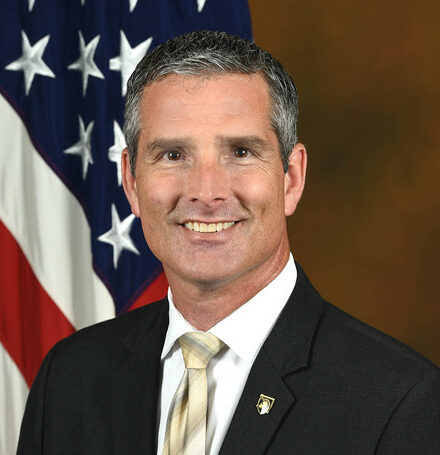
Mike Buddie is in his fifth year as the Director of Athletics at the United States Military Academy at West Point.
Buddie leads the athletic department’s mission to develop leaders of character committed to the values of Duty, Honor, Country, supporting Cadet-Athletes’ 47-month experience at West Point. Under his leadership, Cadet-Athletes have achieved four Rhodes Scholars, 10 conference championships, NCAA postseason appearances, and 12 Patriot League Coach of the Year honors.
In December 2023, private funding was secured to begin the Michie Stadium Preservation Project in Spring 2024, expected to complete in Summer 2026, preserving Michie Stadium’s 100-year history. Buddie played a key role in Army’s move to the American Athletic Conference for football only in 2024, enhancing the program’s opportunities.
In September 2023, Buddie introduced the “Fruits of Victory” strategic plan, focusing on competitive successes, a premier Division I athletic experience, public engagement, revenue generation, and sustainability. He also announced contract extensions for six Army head coaches, including Jeff Monken for football.
AWPAA extended its partnership with CBS Sports Network for Black Knights football home games and continues facility enhancements, including the $95 million Michie Stadium Preservation Project. Buddie, also NCAA Baseball Committee Chair, has built national relationships leading to an extension with Nike and Bowl partnerships.
Before West Point, Buddie led Furman University’s athletics, achieving significant successes, including a balanced budget, major financial gifts, and 26 Southern Conference Championships. Previously, he spent a decade at Wake Forest University. Buddie, a former MLB pitcher, played for the New York Yankees and Milwaukee Brewers.
A native of Berea, Ohio, Buddie and his wife, Traci, have two children, Zachary and Zoe.
What You’ll Learn in this Episode:
Additional Resources:
Welcome to the Athletics of Business, a podcast about how the traits and behaviors of elite athletes and remarkable business leaders frequently intersect. The real stories and hard lessons to help you level up your leadership and performance. Now your host, Ed Molitor.
Welcome back to another episode of the Athletics of Business podcast. I am your host and CEO of the Molotor Group, Ed Molotor. And before I jump into giving you a little bit of background about today's special guest, I have to send a huge shout out to our guest on episode 187, Anthony Bonifazio, who made this amazing introduction for me to Mike Buddy, who is in his fifth year as a Director of Athletics at the United States Military Academy at West Point. And what a conversation we have about his journey, the lessons he's learned, the relationships he's developed, the difference that he has made at each stop of the way, and all the great things that they're doing. At West Point.
He leads the athletic department's mission to develop leaders of character committed to the values of duty, honor, country, supporting cadet athletes 47 month experience at West Point now get this. Under his leadership, cadet athletes have achieved four Rhodes Scholars, 10 conference championships, NCAA postseason appearances, and 12 Patriot League coach of the Year honors. It's amazing. And we talk about this in a conversation. This convoluted, messed up, twisted, constantly evolving world of college athletics that is driven by money. What a breath of fresh air it is to have this conversation with Mike and talk about these things.
Now some of the things we'll talk about, I'll give you a little bit of context, and it's hard to narrow it down for just the introduction, but Mike emphasizes the importance of work ethic, attention and detail and resilience, drawing from his experience as an MLB player and athletic administrator. Get this. He highlights how his wrestling background now he's a Major League baseball player. He highlights how his wrestling background instilled a strong work ethic that helped him stand out in his baseball career despite not having the typical physical attributes of a major league pitcher. And he also discusses the significance of staying prepared and not succumbing to self pity.
And he tells a story and relays advice that he received about maintaining a positive attitude and strong work ethic even when faced with setbacks such as being sent back to minor leagues no matter how great of numbers he was putting up. And this mindset, he explains, has been crucial in his transition to his current role where he continues to uphold high standards and lead by example and jumping into the leadership side of him. Mike really underscores the value of authenticity and consistency in leadership. And he recounts how his genuine actions and attention to small details over time built a strong reputation amongst his peers and superiors, which has been instrumental in his career progression.
And one of the intangibles that just sets Mike apart, and you'll get this in the conversation, is his commitment to creating meaningful experiences and memories for the athletes, ensuring that their development extends far beyond the field into their roles as future leaders. Mike, thank you so much for joining us today on the Athletics of Business podcast. I cannot express how grateful I am to have you here, making you have to carve time out of your busy schedule.
Yeah, no, happy to be here, Ed. Appreciate you having me on. Look forward to sharing some nuggets with you. Hopefully some of them are useful. You never know a whole bunch.
I'm not going to say, you know, I talked about your playing career and your journey in the intro, but I'd love for you to just kind of take us through your, from your vantage point, your career in the majors with the Yankees and the brewers, what it took to get to that point and then when you walked away from the game and what that was like to your identity and then how you decided on what the next step in your journey was going to be.
Yeah, to be honest, that's kind of the crux of how I've gotten to where I am. And it shapes me. You know, I was a high school wrestler too, and I always point to that as something that I think helped me become a major league baseball player. And, and I say that because if this were in person, Ed, you would look at me and you'd say there's no way that guy was a major league baseball player, certainly not a pitcher. So I credit the details and the work ethic of the wrestler mentality probably to have given me those opportunities. And I simply mean the day I got drafted. 1992, the Yankees picked Derek Jeter with their first pick. They picked Mike Buddy with their second pick.
You go to Tampa and you walk into this locker room full of, you know, minor league baseball players and all the right handed pitchers. They're all 6 foot 5, they're all 240, they're all big monster guys that are throwing hard. And I quickly realized I better know all the pickoff plays, I better have the best defense, I better be able to field bunts, I better not miss curfew. And all those little details that you hear the Nick Sabins and the Bill Belichick of the world, like If I can't trust you with the little details, how do I trust you with the big details?
So it dawned on me quickly, like, hey, the way I'm going to separate myself from all these guys who all throw 94, including me, is to be able to make a pitch out, to be able to field my position, to bring value, to do the best chart for my colleagues, to be most prepared for their starts, and all those little things that when the brass gets into a room, when you've made your way up to aaa, as I was able to do over five seasons, they're now huddled up in that room and say, hey, we got three guys. You got Molitor and you got Bonifazio and you got Buddy. And they're all ready to pitch in the big leagues. Like, how do we differentiate one from the other?
And a lot of times it would be like, well, you know, Mike, Buddy's not going to get arrested, you know, he's not going to be out at the bars till two in the morning, you know, if Otis Nixon or Ricky Henderson is going to put a bunt down that he's giving and give us the best chance to fill this position. So that got me my foot in the door. I was never like a go to guy. I got a year and a half of major league time with the Yankees because every time a right handed relief pitcher got hurt, I was the guy that got called up. And some of the qualities that you learn when you're that guy, you come up, you fill in for two weeks, then you're back down in aaa.
Then somebody else gets hurt, a colleague or a mentor of mine named Gary Dunbo, who was the manager in AAA at the time. When I got sent down the first time, he said, hey, you can sit around and mope and feel sorry for yourself and get lapped, or you can keep working your butt off so that when the next guy gets hurt, you're still the guy that's got the best numbers and the best work ethic in aaa, that you get another shot. And that was great advice because it is human nature to feel a little bit sorry for yourself when you get exposed to living in the Bronx and pitching for what turned out to be the 1998 Yankees, one of the best teams in the history of the game.
And so I learned, hey, if you get the chance, you do the best you can. And then when your chance is over, you better not pout, you better not, you know, feel bad for yourself. You need to continue because there's plenty of other good arms and good options in aaa. And so I, I was able to continue to be that guy. And so fast forward, Yankees let me go. I, I had a three years with the Milwaukee brewers, had Tommy John surgery and you have that what next? And so you kind of, you asked how has that paid off in this new career? Well, I can't afford to pout when we have a bad day when the superintendent or the president doesn't agree with a certain course of action.
Like, you go back to work and you make sure the next idea you have is going to be the one that gets to be executed. And, and then I try to deal and treat my head coaches now who are kind of my roster, right. I've got 24 head coaches. I think back to how did Joe Tory message bad news to me. How did the general manager at the time tell me I wasn't going to make the team and just pull those experiences and how they made me feel and try to have empathy with our coaches as I have tough conversations with them.
Can I take you back to that? Because the 98 season, when you're with the Yankees, you put up great numbers and it wasn't like you weren't performing yet. You still had to bounce back and forth and you still had to keep the whole mindset. How did you do that though? And how did you do them? What were the conversations like? What was it like when they say, hey, listen, you know, first the call up, you're up here, right? But then we got to send you back down. What were those conversations like? And how did you respond to those? Where did that come from inside of you?
Again? To me, it was a wrestler mentality. I remember in high school, like so many of us were, right? I wrestled, I played football, I played baseball. And you pull back. When I first got to minor league baseball, everybody's like, man, these workouts are really tough. And I kind of was thinking, kidding me? Like, this is a joke. The workout is spring training. As a pitcher is nothing like the workout of a. Especially in Cleveland, Ohio, where I'm from, like, where wrestling's kind of a religion. Like, so I was able to pull kind of from that. And so automatically through just my definition of hard work and a tough workout, I was able to kind of have a, a higher threshold against a lot of people that I was being compared against.
I think being married at the time and you know, starting to start a family and having a wife who to her Credit and thank God, like she didn't know what a ERA was, she didn't know what earned run average was. She just knew, hey, baseball doesn't define who you are as a human being. I love that you have this lifestyle, I love that you're passionate about it. But you know, there's something about having a spouse or in a lot of cases, a pet, right? Like every day you get home from work, if you have a dog, like the dog's just so excited to see you, doesn't care if you won a football game, gave up a home run. They just like to see.
And so for me it was Gary Denbo giving me that comment like, hey, don't moan and hurt your chances of being that guy to get the chance again. Because in any walk of life when you get to breach the pinnacle, and for me it was pitching in Yankee Stadium and wearing the pinstripes like I was starving and hungry as hell to get back there. And so I didn't need a whole lot of extra motivation. But I do think just having that manager at the time remind me of, hey, whatever your inner voice needs to be, make sure that you continue to work your butt off because you can get spoiled. I, I'll say this.
When I got called up in 1998, like two of our starting pitchers, David Con and David Wells, you know, at the time, 15 year veterans, they didn't do a whole lot of conditioning like David Wells prided himself in saying, hey, I'm not going to run the ball to home plate. Like there's no reason for me to run, I don't need to do sit ups. And honestly, he didn't. I mean the dude threw 230 innings every year and won 15 games every year. I was smart enough to know, hey, I'm not David Wells. I, I can't take that same approach and say, hey, I'm not going to work out and I'm not going to run and the strength coach can tell me what he wants me to do and I'm going to tell him, stick it.
I'm Mike buddy and I can do what I want. I'm smart enough to know I better keep my mouth shut and understand my role and my value to the organization. And my role was if were up by 10 runs or down by 10 runs with the Yankees, I was going to try to finish the game because Mariano Rivera and our best arms, like, you don't need to burn them on a day where you've already got a guaranteed win. And so, you know, I understood that and I understood my role was to keep my mouth shut, work hard, sign the autographs when the other guys had other things that they needed to do. And I think that probably helps get me called up, you know, seven other times that year in 1998.
That whole mentality of little things, knowing who you aren't, right? So you go to Wake Forest, your alma mater, that had to be very rewarding. How did those things, those little intangibles, how did those separate you from others? Competing. Competing might be a bad word, but in your similar positions inside at Wake Forest and in the industry, and then knowing who you are and what you needed to do, how did that help propel your journey?
Well, I will say I'm one of those guys that you kind of have to experience over time. And I think that approach and that mentality, one of the greatest assets you can have in the industry that I'm in now is your references and your references. You know, Ron Wellman, who was the athletic director at Wake Forest when I started working there, you have these minor interactions and you run into them or you sit next to them at a baseball game and the opinion is, well, he can quote movies and you know, he's kind of funny and you know, he understands the game of baseball. But when you have 30 of those interactions over a six month window, things start to appear, right?
And it's, hey, every time that there was a piece of trash on the ground, I noticed that Mike Buddy picked it up. He didn't keep walking. He had ownership of the college baseball facility that I was kind of pseudo in charge of. And so that work ethic, the attention to detail, being prepared for every meeting, if you just have one interaction with somebody, it probably doesn't even get noticed. But when you have multiple interactions with somebody or a group over a 6 month, 12 month, 3 year period, those things start to really register with them, sometimes not even consciously. And then when you get into the industry of college athletics, being able to get into an interview and say, hey, call Ron Wellman or call Larry Gallo or you know, call Elizabeth Davis. These are the people that are respected in the industry.
And now they're able to say, how much time do you have? Because I'm going to tell you all these things about Mike Buddy that I've, that I come to know that will be consistent and repeatable and lead me to the conclusion that they're going to be the right person for this job. And so you kind of have to be patient and you have to be authentic because you can't fake. I need to remember to pick up trash every time that Ron Wellman's in. Right. It needs to be authentic and genuine. And so I think that's probably paid some dividends for me over time, you.
Know, and the word authentic, it's so I don't say overused because it's such a significant word. It's a pillar for us in our organization. We break it down into honesty, integrity and vulnerability. How did you navigate that? Coming from Major League Baseball right now you're an up and coming athletic administrator who's trying to figure out what's next, where I'm going while staying locked in your right to the position that you currently have and what you're doing. How did you find it to not try to be somebody else? I see it happen so much like they know I want this leadership position. Do I have to operate like that person to get there? How did you stay true to who you are?
Well, again, it, for me it starts with my wife and at that. And now that I'm in this career, you know, I had a four year old and a one year old when I retired from professional baseball. And so they certainly keep you grounded. Another thing is I refer to this as a minor league mentality, Ed. And, and you certainly can appreciate it, right? It's when I was in single A, I wasn't thinking, hey, if I pitch really well, I'm going to be in the big leagues. Right? You have this understanding that if I pitch really well, I might get it called up to high A. And then from high A you go to double A. Double A, you go to triple A.
So part of it is understanding there is a process and there are very few Derek Jeters in the world who go from single A to double A to the big leagues. And I certainly knew that I wasn't Derek Jeter in terms of being a college administrator. And then there were so many unique aspects of my journey in which I was 34 years old and I had an entry level job. And so I'm surrounded by 22 year olds whose resumes are pretty much the same as mine when it comes to real world experience. Like I had been a bartender in the off season and I'd been a major league or minor league pitcher, which you're like, well, how does that translate into being a good fundraiser or development officer at the time? So I was grounded. I also have two older Brothers.
And my older brothers loved, like most older brothers to remind you, hey, it was so cool we saw you on SportsCenter yesterday. And I'm like, hell yeah, Sports Center. And they're like, yeah, you gave up back to back home runs, right? So like there's this constant undertone of a humility that you earn. And baseball's a humbling game, right? I mean it's, you get instant feedback from the opponent's baseball bat. I could say it was a great pitch, I threw it where I wanted to, but if it was a double off the wall, then it wasn't a great pitch. And of course the media in New York continues to keep you grounded by telling you all of your shortcomings. And so I did have a level of humility even when I'm in this room with a bunch of 22 year olds.
They knew as much about the kind of the metrics of fundraising and all of the mechanics of it that I had to learn. I was learning it along with them. And I didn't know at the time, to be honest with you, I didn't even know what an athletic director did. For me it was, I need a job, I need a purpose. You know, I need something that's going to fulfill me as a human being. And doing it at my alma mater was great. And so I ventured into this career as a fundraiser and it probably took me four or five years before the light bulb went off. And I thought, if I have to just ask people for money every day for the rest of my professional career, I'm going to want to stab myself in the face.
And so I was so focused on doing the job that I was paid to do, I wasn't really looking at, hey, where could I be in five years or 10 years? It was, I need to fulfill the role that my boss needs me to do. And again, I, I attribute that kind of blinders mentality to pitching coaches that said, hey, you're doing fine in single A, but if you ever want to get to the big leagues, like you need to learn how to throw a forcing fastball inside to left handed hitters without hitting them. And so little things like that, you know, I would make games like, hey, if I ever want to become a major gift fundraiser, I'm going to have to find at least two new potential donors every month.
And you know, you just kind of, I think as a lot of athletes do, you play these little games with yourself to keep yourself motivated and competitive.
So you spend 10 years at Wake Forest. And then you go to Furman, have an amazing run at Furman. I believe it was 26 conference championships there. He signed an amazing deal with Nike. What was it about? Firmware attracted you?
Well, fit, right? Which is an overused word that is ill defined, but truly it's an alignment that needs to exist. And you can only really get the sense for that with, in person. I had an interview with the dean of student life, and she was remarkable and had worked at Wake Forest for a decade. So she understood where I was coming from and I understood where she was coming from. And then the president, who was just as likely to quote a Fleetwood Mac lyric as she was to kind of throw out, who was a brilliant accounting professor by trade, but very relatable and fun.
And so there was an alignment there that I learned through the interview process that, you know, I always, anytime I interview for a job, I approach it as if this is where I'm going to be for the next 20 years of my life. Would I be happy? Because I don't ever want to take a job thinking, hey, I'll do this for four or five years and then I'll get a better job. I think that's setting yourself up for failure. And Greenville, South Carolina is one of the most cool, awesome vibe, inclusive, welcoming, diverse community. And so I knew my kids would be happy there. I knew my wife would be happy there.
So I took that job thinking, hey, if I do this for the next 25 years, I'll be able to impact some cool young student athletes who aren't getting, you know, SEC offers. They use it as a vehicle to get an education and compete as a Division 1 athlete for the last four years that I'm ever going to compete in soccer or tennis or whatever it might have been. And, and it was a great run, a great four years. You know, you quoted some stats that the student athletes made me look really good. You know, all credit to them, but. But it was awesome living in Greenville for four years. And I, I would have been content there. But then I got an opportunity to represent something larger than myself and. And jumped at this opportunity, much larger.
And that brings me to my great. My next question, which is a great segue because you talk about, can I be there for the next 20 years? And when we talk a lot about the business world, we're experiencing a pace and range of change unlike anything we've ever seen. But I believe it pales in comparison to what you have been through and what you have experienced in Your industry the last 21 years. So here you are in army, completely different monster than the rest of the high majors. Okay, what's it like right now? The nil, the transfer portal? Are you layered from it? Are you still exposed to it? What has it done to the integrity of the industry? It's a whole different monster. And yet here you are at this wonderful institution representing, like you said, something far bigger than yourself.
How do you put it all together and stay true to who you are?
Well, it's fairly easy to stay true to who I am because of the types of young men and women that I work for on a daily basis and advocate for, to give them every opportunity to be competitive. To your point, Ed, it's harder and harder to be competitive. The integrity of college athletics has changed. There's a lot of people my age, a little bit older than me, that just couldn't stomach it and had the ability to retire and chose to retire. And I certainly understand that I have to kick myself in the butt every day and remind myself like, I can't be the grumpy muppet on the balcony, right?
I've got to understand that what I felt was the essence of collegiate athletics, the reason I chose Wake Forest as a high school senior was the opportunity to earn a degree that was going to change my life. Young people now are, don't get me wrong, there's plenty who are still choosing an institution to get a degree that's going to change their lives. But there's also a lot that are just saying, hey, who's going to pay me the most money? And by the way, it's really hard to cast judgment upon those kids because you don't know their situations. And, and it is significant compensation now that these young people are getting. And so I feel blessed, I feel fortunate. I felt this way in 2019 when I got the job.
And you walk around our campus and cadets at West Point can't have their cell phones during the day. And so when you walk through the hallway of our classroom buildings, you are greeted with a look in the eye and a good afternoon, sir. Good morning, sir. And it's refreshing and it feels good and it, you know, I mentioned alignment. I work for a three star general who has done more for our country and sacrificed years of his life away from his family, away from his children. I learn more about leadership and character development every day just through osmosis.
And I learn a lot of it from the 19 and 20 year old kids that I'm in Charge of, as they're traveling in a bus somewhere, just eavesdropping on their conversations and the types of things that they talk about, choosing the harder right over the easier wrong. Adhering to an honor code, which we had an honor code at Furman and we had an honor code at West Point. But. But it's tangible and it's, it breathes at West Point. And so I feel really fortunate, personally. I feel really fortunate as a parent that my kids kind of get to see that there are still a segment of our population who put something before their own interests and in some case put it before their own lives.
I'm excited because as frustrating as our political climate is right now, as a country, I get to see these 22 year olds who are graduating every year who will probably play a significant role in this next 20 years of our government and our country's leadership. And it gives me hope when I think a lot of us need hope right now, regardless of your political leanings. Like, it's just been a frustrating process these last, this last decade. And so all of these things that kind of give me a reason to get out of bed every morning and skip to work so that I can learn from them. And by the way, we want to win conference championships, we want to win national championships. We don't recruit against most of the institutions who are winning conference and national championships yet.
You know, I got here in 2019 and went up to Michigan. They were number five in the country. We were winning at halftime. We were winning at the end of the third quarter. They caught us at the end, went to overtime, we're still tied. Went to double overtime and lost 24, 21, I think with the final score. And that's the type of thing that I experience at West Point every day. On paper, they had more two, three, four stars than we had one star. Like, we don't even recruit in the same stratosphere, yet somehow we held the lead and they needed two overtimes to beat us. That shouldn't happen. Which is exactly why when these young men and women find themselves in conflicts as members of the United States army, they'll continue to.
Doesn't matter what the numbers are, doesn't matter what the winning percentage is. They'll find a way to win. And as you know, the chief of staff of the army had a great quote, which is, there's no honorable mention in combat. You've got to find a way to win. And so it's thrilling to be aligned with coaches and colonels and Generals who teach our young people to how to prepare to win. And they don't tell them what to think, but they try to teach them how to think. It's a unique, awesome organization to be a part of.
Well, I'm going to ask you a question. It really wasn't on my list of things I wanted touch on, but our first conversation a few weeks ago, and this conversation, everything I hear from you speaks to doing the little things, doing things the right way for the right reason to reach on it. And you don't get to the major leagues, you don't become the athletic director at West Point by not being one competitive sob. Right. But yet being competitive, winning is a significant, it's extremely important. Yet finding joy in what you do. How have you been able. Because it's a high pressure situation and there's so many different things going on that we don't understand on the outside, especially with your role now.
How do you still find that balance when you're in the middle of the battle, so to speak, and just keep making it fun and getting up, as you mentioned, every day. And you've never said anything about yourself. It's for the cadets, for the people you work with. How do you do that?
Well, I think a lot of it is genuine. You know, it's funny, I would say, you know, we want to put them in a position to win a championship. General Marty Dempsey, who's the former chairman of the Joint Chiefs of Staff, says a great thing, I'll butcher the quote, but his belief is leadership is finding a way to create memories. And, you know, I think about that quite often because that's what we're doing. You know, when you talk to kids who graduated from West Point three years ago, you know, some of them are doing some things right now, you know, in and around the Gaza Strip. They're doing some things in Afghanistan.
And what I take pride in is, and I know this because they come back when they can and they tell us, which is know, I think back to the Army Navy game my sophomore year, when, you know, we wanted the buzzer or, you know, beating Air Force and hockey, you know, just scoring a goal, whatever it is, these memories that they have that I have, that you have, I'm sure of being in competition and doing something that you didn't think that maybe you could do. And so for us, my senior team, we met this morning and we talk about it all the time. The only reason any of us have jobs is because of these Young people that are willing to compete and represent the institution, in our case, you know, the United States Military Academy.
And what I love is there's no excuses here in any facet of their lives. And so our kids practice two and a half hours a day. For the most part. You're allowed to practice three or four hours a day. So, you know, anybody that we compete against, whether it's softball, volleyball or football, for the most part, they're practicing their craft six, seven, eight hours a week more than our kids get the opportunity to do. Why? Because our kids have to spend an extra four hours a day learning how to throw a grenade and put on a gas mask or the fundamentals to start aviation field and learning the controls of a helicopter. And so that is more important than learning how to work on your second serve as a tennis player. And we never make that excuse, but it is a little bit sweeter.
We cherish those victories. It's really hard to win a Division 1 contest in any sport. And so when we're able to do it or even elevated to the level of winning a conference championship, we never take it for granted. We never delay gratitude. We want to make sure that we celebrate it. Our baseball team has won six consecutive Patriot League championships, and we celebrate the sixth one as much as we celebrated the first one. Because the minute you start taking those things for granted, you know, and I did it, you know, my rookie year as a baseball player on the 98 Yankees, went 125 and 50. We nearly swept our way through the playoffs. We won the World series in a 4 nothing sweep. You can have that mentality of, oh, this is cool, this is what Major League Baseball is like.
And I had a little bit of that at the time. And, you know, here I am 30 years later and no team has come close to having that win loss record. I just didn't realize it in the time and I didn't really celebrate it that off season because I was so focused on how do I get over the hump and make the team and become a regular on the roster that I wish I would have enjoyed it a little bit more. And so I try to learn from that and make sure that we set an example for our young people that, hey, this is a big deal. You do need to celebrate this, especially overcoming some of the inherent challenges that we have from just the daily schedule.
Leadership is finding a way to create memories, right? And it's not just for the athletes itself. It's everybody around the program and you guys have undertaken an amazing stadium preservation project, the Mikey Stadium preservation project. And you and I both understand it as there's so many people that often athletics are the front porch to a university, right? Specifically college football. And college football drives a lot. Can you talk about purpose behind this preservation project as well as the fun that you're having done it?
Yeah, thanks for asking. It's a labor of love. And it started with my predecessor, Boo Corrigan, who's now the AD at NC State. It was almost a 10 year planning project and a big part of the planning was would we be able to find the dollars to do this? Because the United States government is not going to give us money to rebuild a portion of our stadium and create like this premium experience that we wanted to create. That's not how we're going to use Ed Molitor's tax dollars. And so it was incumbent on me ultimately to say, hey, there is a pathway for us to raise $170 million on our own, fully donor funded. And by the way, the largest fundraising project ever in the history of West Point before now was a $46 million project.
This was exponentially more bold than anyone had ever tried to do. And the reason we had to do it is West Point is the gold standard trophy point. You know, we have very few opportunities to greet our public and it's trophy point and it's Mikey Stadium. Like those are the two lenses through which most of the general public first experiences West Point. And we think our cadets are the gold standard and our faculty are the gold standard. And so we need to be the gold standard. And, and it's not going to have, you know, a cascading pool with, you know, gold leaf. It's going to be practical. But as our football coach says, it's important that our young people feel like they're Division 1 athletes. We really keep tabs on Navy and Air Force because they're our true day to day rivals.
There are brothers and sisters outside of competition, but in competition they want to beat our butts and we want to beat their butts. So we do have to keep up with them. We're not trying to keep up with Clemson and Notre Dame when it comes to facilities, but when we're recruiting young people and they're looking at Tufts and Harvard and Air Force Academy, it is important that we can point to them, that we are committed to that. We do have a plan, that we do have donors and graduates who care enough about their experience to put millions of dollars into this effort. And so we're really excited.
We've broken ground, it's going to be two years of construction to basically rebuild a quarter of our stadium that will now have suites and club seats and a club and loges, which is kind of the new standard for being a relevant Division 1 football program. And by the way, we have two nationally ranked lacrosse programs who also play in Mikey Stadium that will benefit from this greatly as well. And that's important when they're talking to young people and trying to convince them, hey, this is the place for you to become a better human being, a better leader, a better student. And by the way, you have to serve your country for five years after it. That's a tough sell. It becomes a tougher sell when Russia invades the Ukraine. Those are things that impact our recruiting.
And so we're thrilled to have this renovation project. We've got other facilities that need to be addressed, but again, that's. That falls upon us as an athletics department to find those dollars because we can't ask the American taxpayer to fund bells and whistles.
You know, If I'm an AD at a Power 5 school and I look at what you folks are doing in terms of quality and efficiency of your utilizing your resources, right, all the constraints that you guys have to operate inside, yet here we are in this world where they're throwing money around like it's nothing. Okay, why is there this challenge for the industry as a whole to really dial back and say, okay, we need to regroup and see what we need to do to move forward to preserve what college athletics was intended to be? What's next?
Yeah. Well, it's interesting and I will say this. It works here and to me, it comes back to accountability. If you think about 18 year old Ed, certainly 18 year old Mike, what I needed when I got to Wake Forest and I didn't have my parents checking my homework every evening, I needed a coach who was going to hold me accountable. I needed a coach who could tell on a Saturday morning that I had been out pretty late on a Friday night. And George Greer was my coach and he wasn't afraid to say, hey, do you want to be the best you can be or do you want to party all night?
It's hard for Power 5 coaches to hold their kids accountable right now because if I'm a starting quarterback or a backup quarterback who's been recruited, when I went to Wake Forest, my buddies went to Kentucky and Boston College. Like I didn't know how many pairs of Shoes they were getting because there wasn't cell phones and there wasn't social media. Well, now these kids know exactly what everybody else is getting. And if my coach yells at me because I was out late and embarrasses me in front of my team, I might just say, you know what, I'm going to leave Kentucky and transfer to Louisville because I can get a few more dollars. And. And so the unintended consequence is it's really difficult for coaches to hold their kids accountable. And I'm. I know coaches still do that, but it's trickier. It's a trickier proposition.
Right now what we have is coaches who have a bold enough, a courageous enough leadership style. And my football coach has a great statement and he may be the only football coach in the country who's courageous enough to say it. And it is don't transfer. And I will say most of our recruited athletes don't have a whole lot of other Division 1 offers, which gives us that courage a little bit more. But again, if you really care about a young person as a human being and they're, they've signed up to defend the Constitution and defend our country, we better hold them accountable. And you know what, we do have some kids that transfer out and that's okay. And we're not allowed to just go grab somebody and have them transfer in.
Like we can only take kids basically out of high school who are going to do the four year experience here at West Point. It's not perfect, but I will say we've got that courage to hold kids a little bit accountable because they're also being held accountable by their faculty members and their military training instructors, and most importantly, each other. Our student athlete population, our firsties, they're called firsties here, senior athletes, they're coaches, they're the ones that grab the freshmen and say, you better be here early on Saturday morning functioning and ready to go. You better follow our team rules. You better adhere to the cleanliness standards that we have in our locker rooms. They police each other extremely well, which I think great organizations have that quality.
I mean, that's what they do, right? Great organizations. The people police the culture and they protect the culture and they help create that culture we're fighting for. And another thing that I absolutely love about what you folks do is the emphasis on the importance of aligning athletic goals with the institutions mission to develop leaders of character. Right, Leaders of character. Can you talk about the fruits of labor a little bit and what exactly that is and what the purpose behind.
It is, yeah, so the fruits of victory is, which comes from the MacArthur quote. Upon the fields of friendly strife are sown the seeds that on other days, on other fields will bear the fruits of victory. And MacArthur's vision was, hey, we're going to use athletics here at the academy as a way to sow those seeds. Competition, passion, energy, teamwork, resilience, grit. All those things that you learn as a army rugby player on other days, on other fields, meaning in the Ukraine, in Afghanistan, those characteristics, those traits are going to bear the fruits of victory. And so that's our strategic plan, which essentially is any strategic plan. It's a roadmap. What are the things that are important? What are our strategic goals? What is our mission?
When I got here, some of the people in the department and we have 280 of them, you know, they raised their hands and they said, hey, what is the mission like? We're not even sure what our mission is. And so, you know, went out, we started this strategic planning effort. We had to delay it during COVID because there were just other things that were much more urgent to get to. But it's a way for us to measure ourselves against our own expectations. We're stating that these are things that are important to us. These are our goals. Well, what are we doing to get us there? And so we've developed this roadmap and a scorecard, right? Because they've got to be measurable goals, there have got to be measurable outcomes. So we can know tangibly did we accomplish what we said were going to accomplish.
And so of course it has to go much more beyond just wins and losses, much beyond just graduation rates and grade point averages, because the mission is so unique, because we are here to educate, train and inspire and create leaders of character. And it's hard to measure character. When I talked to my first superintendent, the one who hired me, were talking about we as his board of directors, so the commandant and the dean and the superintendent and myself, and he said, what is every cadet who enters West Point? What do all of them get in terms of training and measurable outcomes in terms of developing character? And I compared it to foreign language requirement. When I went to Wake Forest, I had taken three years of Spanish in high school.
I took an entrance test and I tested into the third level of Spanish, so I only had to take the third and fourth levels of Spanish. It's very similar here as I see character, because our dean, for example, who's a one star general, his son just graduated from West Point. When he enrolled as a freshman, he was already up here when it comes to character development because his father is a trained lawyer, a Harvard graduate. So he understood character at a level where we might have had some walk on football player who didn't even know what West Point was until he had already finished his senior year. Nobody else offered him a scholarship. And so we found him and our football program brought him in. His understanding of character and his formalized discussions and learning what character even means.
He needs Level 1, 2, 3 and 4 over his four years at West Point, whereas the Dean's son probably only needed levels three and four as a reminder. And so those are the types of things that we're trying to quantify, which aren't easy. But we designed the strategic plan to talk about what is important to us. One of the things that I put in it that I think is very relevant here is, and my staff hears this from me all the time, the team that you are on is more important than the team that you lead. And so Tom Theodorakis, who is my chief revenue officer, he leads a team of development officers. And that's really important to him, right? The organizational structure, the goals of each person in his team is really important. But the team that he's on is my senior staff.
And so my senior staff, if I say, hey, instead of trying to raise money for Mikey Stadium, we're going to raise endowments for each of our sports. Whether Tom agrees with that or not, if that's what we've talked through and that's the, that's going to be our effort, then that supersedes the team that he leads. So now everybody on his team now understands, hey, forget Mikey Stadium, we're going to raise money for sports specific endowments so that we can future proof our sports. I use that all the time because they need to understand that they, as the team that I lead is really important to me.
But if the superintendent, which is the team that I'm on and he's on the secretary of defense's team, if they say, hey, we got to cut athletics budgets by 50% because we're about to be in a conflict, that we need to direct funds to guess what training and getting on flights so that our golf team can go play pebble beach, that's no longer important. So we all need to understand that the team we're on supersedes anything that we're our personal or professional goals. So they understand that I have a boss and the boss sets that tone and allows us to have the success that we're able to have. I set the tone for my team. They set the tone for their teams. And that's all kind of encompassed in the fruits of victory plan, you know.
And that brings the light a point. Your standards, and I think this is safe to say, I don't think I'm out of line saying this. Your standards at West Point are significantly higher than the standards for the rest of college athletics. Okay, if you, Is that a conversation that you continue to have with your team about staying aligned to your values, focusing on the competitive advantage that you have? Right. Not what you don't have. What are those conversations like?
Well, we, you know, non negotiables. Right? We are here, part of our role. And this was true at Furman and it was true at Wake Forest. We are here to be role models and we are here to be mentors. And if, you know, if somebody gets a dui, that's not something that you recover from. Like, you're no longer employed here. Not because we're pulling the string on you, not because we're not human and we all make mistakes, but because we need to uphold a standard that we're asking our young people to uphold as well. And so there are certain non negotiables. In a lot of ways, it's almost easier here to deal with discipline because it's taken out of our hands. Because nobody here is a football player first and a cadet second. Every young person here is a cadet first.
Not just, you know, student athlete, cadet athlete. A lot of people say student athlete, but they're really athlete students. A lot of institutions say, hey, we're an institution of higher learning that sponsors an athletics department. But some of the actions, and you know, actions speak louder than words. They would lead you to believe that they are an athletics program that sponsors some academic programs over here on the side. That's never going to happen. At West Point, we understand what our mission is. We are federally obligated to provide 992nd lieutenants to our army every year. And that is non negotiable. If an athlete is struggling academically that they might fall below a peg point that prevents them from graduating on time. They're no longer an athlete.
They become a full time student to make sure that they've given themselves every opportunity to fulfill their obligation to earn a degree at West Point and to commission into the army. And so it's unique. Those conversations are oftentimes when an athlete fails a drug test at other institutions, you can advocate for that person and say, hey, really bad decision, great kid. We're just going to suspend him or her for one game. That doesn't exist here. Forget if you're an athlete or not. What is the outcome for a cadet that tests positive for a banned substance? That's what happens. Doesn't matter if they're the best student in their class, the best cadet in their company. It's cut and dried. It belongs to the commandant. He or she has never called me and said, hey, what do you think we should do to this?
How do we adjudicate this? That is their lane. And in a lot of ways that's kind of nice, right? Our coaches understand, hey, they're going to deal with this. It's going to be consistent. The other thing that's just anecdote about being at West Point is I'm starting my six year here. Still have yet to get a call from a parent. Ask any other AD that you ever have an interaction with how often they talk to parents.
It could be six days and they're getting calls from parents that they've been there, right?
That's right. There's a credit to them who have raised young people who have taken the oath. They drop them off here on our day, as we call it, and they understand that they're now members of the United States military and they're going to allow them to solve their problems on their own. It's not that they don't care and they're not involved, but they don't call me. They tell their kids, if you have an issue, go talk to Mr. Buddy. Which is pretty refreshing.
So when you and I first connected, you're sitting in the Omaha airport doing this FaceTime call. There's all this construction going on around you. And I asked you a question. It someone expected your answer, but not sure. Like, you live in this world of order, okay? Easy to get complacent inside the world and look for the next thing. And I'm not trying to put you on a spot at all, and then look for the next thing. We live in this world where, like, we put so much emphasis in the Power 5, the SEC, the Big 10, the Big 12, the ACC, etc. Right? And you love where you are. How do you continue to keep that edge that you have that you operate and not get complacent at West Point?
How do you not get drawn to the lure of the big time, so to speak, quote unquote? The. You know, you and I both know that there's a. There's a label on it, but it's not necessarily the grass isn't greener there. How do you avoid that? And I shouldn't say avoid. How do you address that? Because it's the reality of the situation.
Yeah, I am still drawn to the allure of it, but there are only so many hours in the day. And the reason I don't get complacent is because every July we get a new set of 1200 young people and each one of them is more impressive than the previous. I've made a commitment to my coaches to give them every opportunity to be as competitive as they can be. That will never stop. Complacency just doesn't exist. And by the way, I'm surrounded. My house is in the middle of West Point's post and so my neighbors are colonels who I get up early at 7 o' clock to have a cup of coffee and they're finishing their workouts. Like complacency doesn't exist at West Point, which is great. And then professionally, you know that allure was very attractive.
It's less attractive now than it was three years ago just because of all the uncertainties that are facing college athletics as a whole. We're fortunate that there are already currently existing academy exceptions where we're allowed to have a few more kids on our roster, allowed to have a couple more coaches in certain sports because of the uniqueness of our missions. And we assume that those will continue. But we also have to not assume things because there's so much change and so much turmoil. We need to continue in the we as my counterparts at Air Force and Navy, we have to continue to have a voice at the national level.
We have to continue to advocate through Congress because they have a hand in some of these updates just to make sure that we don't find ourselves somehow on the outside looking in, which would be a remarkable failure on my part to the commitment that I make to our young people. And so I do try to stay educated on name, image and likeness and revenue sharing and the House settlement and all those things because it does have a tangential effect on our coaches and our cadets ability to be successful. We're in a league for the most of our sports of the Patriot League that we have like minded institutions. They're not going to be paying $22 million revenue shares at Lafayette and Lehigh and Holy Cross and it's a great fit for us as a conference, but we do as practitioners.
I do need to understand and educate myself as Best as I can. What might be coming down the turnpike, how is that going to impact us? How can we get ahead of it? That's part of why we made the decision a year ago to join the American Athletic Conference in football and give up our FBS independence, which we've enjoyed for the great majority of our existence. That's because we kind of saw what was coming with the college football expansion of the playoffs, how the revenue is distributed and how difficult it would be to continue to schedule a competitive schedule with all these changes coming. And so, yeah, we try to have a crystal ball.
Mine isn't any better than anyone else's, but my passion and the pressure for me to make sure that our cadet athletes continue to have a chance to compete across all 30 of our sports. I love that I was a college baseball player. I wasn't a college football player. To me, our gymnasts, their three or four hours of work every day in the weight room and in the gym, they're working just as hard as our starting quarterback is. They just don't get a chance to compete in front of 55,000 people. But it's just as important to them as being starting quarterback is to our quarterback. And I don't ever want to lose sight of that. Make sure that I've provided from women's lacrosse to volleyball to tennis to rifle to rugby. They need to have the equivalent experience that our high profile sports do.
And it's so refreshing to hear that because unfortunately they're going to struggle to survive right now at the high major level. Right. With everything that's coming down the pipe. But speaking of bright lights, a few weeks ago, my son loves baseball. I mean, he loves baseball. And you wrestle with that. He's 9, will be 10 here in a few weeks. You wrestle with that. When can I show him this movie? You know, like Bad News Bears. When can I show him Boulder? I thought kind of a soft leaping off point would be one of my all time favorite movies from Love of the Game, Kevin Costner. Completely underrated. I know it didn't kill it in the box office. The whole story behind it. Unbeknownst to me, I stumbled across this because nobody filled me in on this.
You coached Kevin Costner on how to pitch like a major league pitcher, how to act like a major league pitcher. First question was clear. The mechanism was that yours? Okay, that's my first question. Secondly though, how did that come about? What was that like? Like what did that do for you in terms of connection to relationships?
Well, it was just it was a great experience. And no, clear. The mechanism was not me. I think that was in the book that. That the. The movie was based on. And I'll be completely honest. Kevin Costner did not need much coaching. I mean, mechanically, his athleticism, he fit in. You know, in the world of Hollywood, you can make a lot of things look better or worse than they actually are. He was perfectly fine. He did overdo it a little bit. I think he threw a lot on the. The first couple days and then realized what Motrin was for. But to his credit, he. He didn't need a whole lot. You know, George Steinbrenner wouldn't let Universal Studios film at Yankee Stadium using a bunch of actors running around in pinstripes. So this fell into my lap. It was after the 98 season.
I was an alternate on the postseason roster because everybody else was healthy. So I was down in Tampa, Florida, staying in shape in case somebody got hurt and they needed to activate me in the playoffs. And during that experience, another player whose agent was the Beverly Hill Sports Council, he was a California kid. He had the role of Jack Spellman, which is the Yankees pitcher pitching against Costner. And he and I were friends. And long story short, he was getting married that off season, and they couldn't guarantee that shooting would be over in time for him to make his wedding. And so he had to bail. And I just happened to be there. I said, hey, tell him I'll do it.
And so the next thing you know, my wife and I are put up at the Waldorf Astoria for five weeks of shooting, going to the Yankee Stadium every morning to. To do continuity. And. And Kevin was good in that. He said, hey, would. Would a major league pitcher, you know, wear his uniform back to his apartment at spring training? And I was like, no. But that still made it into the damn movie. So there were little things like that, you know, boot kind of dropped the ball on. But, yeah, just in terms of, like, the interaction with your teammates, you know, how would that go? But from a mechanic standpoint, Costner was pretty good. But, yeah, it was great. My wife got a chance to meet Kevin Costner at Yankee Stadium, and he's kind of back on those things. You're like, did I.
That really happened? Like, that was a pretty cool experience. That's now just, like, a footnote. And I still get checks, like, every couple months for. For $32 from the screen. I learned.
$30, right?
That's right.
Yeah. So, like, what kind of questions did he ask you, though? I mean, he Loves the game of baseball, obviously, like, very passionate about it. Very, very true about it. You know, I think I shared this with you. One of my great friends from Texas A and M, from my time there, Sports information director in baseball is one of the sports. And when A and M made the College World Series in 99 or 2000, whatever year it was, when the movie was coming out and they did private viewings at the College World Series for each team. And he said it was one of the most incredible experiences because Kevin went to each theater and talked to each team individually and talked about what the game of baseball meant to him and how fortunate they were to be in the position there. And that's.
I think that's why the movie resonates so much with me, is because you realize what it meant to him.
Yeah, I mean, he's the real deal, right Between Field of Dreams and Bull Durham and this movie. Clearly, baseball is important to him. To your question of what did he ask about? You know, it was subtlety, right. I think part of the reason he's such a great actor is theme of this call is turning into, like, attention to detail. There's a scene where the manager comes out of the dugout and to come check on him. Right. There's a scene where his catcher comes out to talk to him. And he wanted to know, like, by the way, love Gus. Yeah, Gus. John C. Reilly. Right. He'd say, what are these conversations? Like. Like, what kind of language do.
Do you use?
The language I think you would use. And. And really, behind the camera, as were kind of walking through pantomiming scenes, he wanted to know how I grip my slider. He's still competitive enough. Like, he's. He's thinking, if I'm gonna. I'm gonna be on this, like, maybe I can throw a slider. The way Mike grips it, not the way I think I should grip it or that I threw it in high school. So, like, really little things where he wanted it to be as authentic as possible. And so everything he had thought through layers beyond what was in the script. Where would my body language be? Do I. Do I walk away from the manager as he's coming out? Or is that disrespectful? Like, where should the. Should I be standing on the rubber when the manager comes out? Really detailed things like that.
That I was like, that's actually a really good question that I had to think because it's subliminal to me. But it was pretty cool. And, yeah, the movie came out. It was I would say it's a love story disguised as a baseball movie. But I will give you a quick aside the way you let into this question those of us who were still playing baseball at the time. We heard through the grapevine, through some of the actors that if you have a line in a movie, you go to a higher level of pay scale. And there's a scene when my manager comes out to pull me out of the game and they mic'd me up. My manager is Augie Garrido, who Kevin knew from his time at Cal State Fullerton.
So Augie comes out and he's taking me out of the game and I'm trying to convince him that I should stay in the game. So I'm dropping F bombs and all these things and they say, cut. Perfect. I love it. And I immediately had this remorse because I'm 28 years old. I'm thinking someday I'm going to have kids and they're going to hear this coming up. My grandmother's going to watch it, but I might make more money. It all got left on the cutting room floor, probably.
That had to be a ton of fun, you know, and as you mentioned, like, attention to detail, continually learning. Right. Like just being a sponge. What are you reading right now? What are some of your, like, top three books that you would recommend to our listener?
Well, I just finished no Time for Spectators, which is. Was written by Marty Dempsey, former chairman of the Joint Chiefs of Staff. Really good book and really timely. We need that now more than ever. And then ironically, right here, the Obstacle is the Way is the book that my senior team is going to read before our off site meeting next month. It's by Ryan Holiday. It says, the Timeless art of Turning Trials into Triumph. Right now, whether you're in politics or banking or college athletics, there's so many obstacles that can become overwhelming. And so we're excited to read that to figure out a way to flip the. How you flip a trial and make it a triumph. You know, take it. Take a perceived weakness and turn it into a strength. So those would be the two that I'd mentioned.
That's awesome. We'll put the links to those books in the show notes along with the video and the link for the Mikey Stadium reservation project. Really cool website, really cool landing page. So much amazing work you're doing. I can't thank you enough, not just for joining us today, but for who you are, for what you do in a time when we need more Mike buddies.
Well, it's been cool. I've enjoyed our conversations. I've enjoyed today immensely. And thanks for what you do. Right. I mean, it's important to get content out there that hopefully matters a little more than a TikTok video.
Well, amen to that. Right. I might have to go grab my daughter and bring her into the studio here and have you explain that to her, though. Mike, thank you so much. I appreciate you, my friend.
Yeah, likewise. Thanks for your time.
Thank you for listening to the athletics of business. Be sure to give us a rating and review so we know how we're doing. For more information about the show, visit theathleticsofbusiness.
Com.
Now, get out there. Think, act and execute at the highest level to unleash your greatness.