

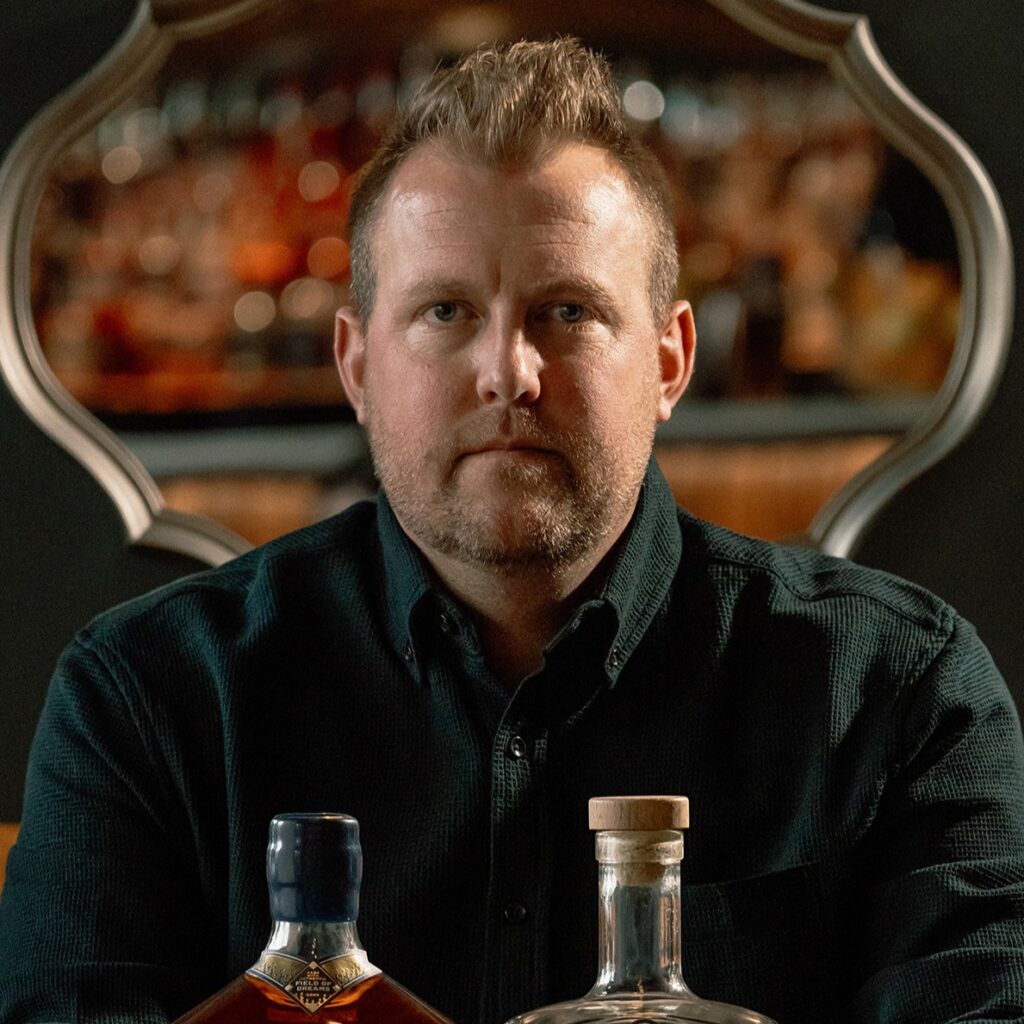
Drew Storen is a former Major League Baseball veteran of 8 seasons. Storen was drafted out of Stanford University by the Washington Nationals in the 1st round of the 2009 MLB Draft. He made his MLB debut with the Nationals in 2010 and quickly became a key figure in their bullpen, serving as their closer for several seasons.
Storen played for several teams during his career, including the Washington Nationals, Toronto Blue Jays, Seattle Mariners, and Cincinnati Reds. Storen retired from professional baseball after the 2020 season.
After his baseball career, Drew Storen founded the Field of Dreams Whiskey Company, a brand that distills the actual corn from the Field of Dreams movie site in Dyersville, Iowa. The company focuses on connecting whiskey and baseball lovers alike through nostalgia and premium bourbon.
Check out this PLAYER SERIES BOTTLE LOOKUP and look for your player!
Click here to learn More about the 2025 Coaching Effect Summit
I moved so fast through the minor leagues. Like, I wasn't. It wasn't because I had it all figured out. You know, when I got to the big leagues, I was lucky to have, like, really good veteran guys around me that I watched. And two, I bothered with a lot of questions.
There's so much disruptive shock in the entrepreneur world. In your world and what you do now, how has that shown up in your ability to navigate that and stay center, right? Stay real.
The great thing about baseball, you know, there's always honest feedback, right? You stunk, somebody's going to tell you stunk. And this is how you get better. And, you know, luckily with the group I have around me, I have people that tell me, not stupid idea. Pitching wise, it was about getting three outs. Now, bourbon wise, it's just about doing cool stuff, man. If you make cool stuff and you tell cool stories, people are going to buy it.
Welcome back to another episode of the Athletics of Business podcast. I am your host and CEO of the Molotor Group, Ed Molotor. And what an absolutely phenomenal conversation we have for you today with our special guest, Drew Storn, a former major league baseball veteran of eight seasons. And Drew was drafted, I believe it was number 10 in the first round, drafted out of Stanford University by the Washington Nationals after his baseball career. We talk a lot about this today. Right. Drew Storn founded Field of Dreams Whiskey Co. A brand that distills the actual corn from the Field of Dreams movie site in Dyersville, Iowa. Now, you might be sitting here thinking, go. That's kind of like, could be fun, it could be cool, it could be cheesy.
It's absolutely a phenomenal story how he fell in love with Bourbon, the whole idea and how it consumed him towards the end of his playing career. We really go deep with some of the things that happened to Drew in his career, injury wise and performance wise and just some of the great moments, some of the highs and lows, and he connects it to everything in the business world and it's really cool and we have a lot of laughs. So sit back, enjoy this. I hope you enjoyed half as much as I did recording it. Special guest, Drew Storen. Thank you so much for joining us today on the Athletics of Business podcast. Man, I can't tell you how fired up I am for the wonderful introduction and to have you here. I appreciate you taking time out of your world for us today.
Absolutely. Thanks for having me.
Hey, congratulations on all your success with the Field of Dreams Bourbon. We're going to jump into that here in a second. But first, and I know buy the book. And I don't do a lot of things. Buy the book. You're not supposed to timestamp podcast episodes. But it's spring training, Right. And it's that time of year that meant so much to you and still means so much to you in your life. Talk about what you just got done doing with the family here if you can. A little bit.
Yeah. Luckily had the opportunity to go down and be a guest instructor with the team. I spent the most time with the nationals, so got to take the whole fam. So I have three kids and two boys that are five and eight. So just peak time baseball wise and fanfare and so got to, you know, get them in the cages and on the field taking grounders and just kind of seeing. My oldest was one the last time I was in the big league. So it was nice to have them actually see what I can do and actually see me in a dugout. And, you know, I joke to prove that. Prove to them my YouTube videos aren't like deep fakes or anything.
That is legit. Yeah. To understand the gravity of what you accomplished. Not, I mean, not just in the bigs, but in high school and then Stanford and your whole career. I mean, a pretty amazing journey.
Oh, thank you. I don't think so. You know, it's kind of one of those things, I think as a kid, I even look at back on my own childhood and the things that I truly didn't understand the, you know, like, oh, I took for granted or whatnot. But, you know, it's just something that hopefully as they get older, they understand that, like, whether they choose to do sports or whatever it is to put that same a killer mentality and attack whatever you choose to do. And that's why I do love sports. Obviously, it teaches such great life lessons whether you make it up, you know, your career or not. I'm gonna come back to that here a little bit later in the conversations.
I have a couple questions about, you know, I want to learn vicariously through you, Right. Like how you're going to go about certain things with. With your sons in certain moments in your daughter as well, based on the experiences you had in the bigs. Right. Like the roller coaster ride of. Of your career, the roller coaster ride of life in general. But, man, talk to us about the bourbon. Like, how did this come about? Like, it's just unbelievable that you and your buddies have done.
Oh, thank you. Yeah. So our bourbon. Field of Dreams whiskey. You know, not just a name. We take the corn from the most famous cornfield in the world there in Dyersville, Iowa, the actual Field of Dreams movie site. And we make it into bourbon. My love for bourbon started more than a decade ago. I got into collecting really cool stories. So you name a really cool story, I probably overpaid for it. I love showing it off when people come to my house. My oldest bottle, I think, was distilled in 1916. So I got pretty heavy, fell in love with it. You know, again, it's all about bourbon. Especially when I started collecting, wasn't so much about the money as much as who you knew. And to me, that's the cool part. You can't just buy your way into it. So Fast forward to 2018.
I'm on a road trip with my best friend Andy, who's from here indianapolis. Grew up with him. Known him since I was 9. And he was the one that kind of helped me track down bourbons. And so were talking, if were to come up with our own story, what would we do? And that's kind of when it came out. We're like, well, what if we use the corn from the Field of Dreams? And we're like, oh, that's cool. But, like, here's all the different reasons why this would be kind of crazy. Obviously, the foremost one being, how do you actually get that corn? But it was something that kind of stuck around.
I continued my career, and then I wrapped it up at the end of 2020 and pretty much decided to wrap it up, to go full bore into this, because I had been starting to kind of mull around some ideas on it and really look heavier into it, and found myself kind of fall in love with the idea of a being home with kids, but two to see if we can pull this off.
I want to go back to your career. Right. And how you got to that point. And a couple questions wrapped around that. But you go to Stanford, College World Series, Omaha. You played in Rosenblatt, right? You were still in Rosenblatt when you're there.
Yep.
Such an amazing place, though. You're drafted number 10, right. You go to the bigs. Let's talk about that. Talk about that journey with the Nats and then what happened and transpired from there.
Yeah. So I was very fortunate to be on a great team, as you mentioned, at Stanford my freshman year, so had, I think, four other big leaguers on it. So immediately kind of thrown into the fire. And that's when I. I moved to the bullpen and just fell in love with the adrenaline of it. You know, just kind of an ironic full circle thing. I. I would. Would bat boy for the Expos growing up whenever they were around Indianapolis. So I had a chance to meet Chad Cordero, who I got to see pitch in Omaha when I was a kid. And then I actually got to be a bad boy for when he got called up in the big leagues that same year.
So once they put me in the bullpen, I immediately in my head was like, man, if I could get on that guy's program, that would be amazing. So, fortunately, strung together two good years there. I was a draft eligible sophomore, also pitch well in the Cape League, and the Nationals wanted me as a reliever, so they picked me because they picked Strasbourg one. So it was amazing. I signed the next day because my, you know, my goal wasn't necessarily to get drafted in the first round. My goal was to get to the Gleeks as fast as possible. So luckily for me, I was in a good situation and I moved quick and I was up by May the next year. And I had to grow up like.
Yeah, I learned in the big leagues, guys tend to run into those ups and downs and the struggles and the humbling nature of the game in the minor leagues, but that happened at the big league level. So that was something where, you know, you learn to kind of tunnel vision a little bit better than others. But for me, there was no better feeling in the world coming in to a game. You know, we're essentially, as a fan, you're watching, going, I don't want to be that guy. I always loved to be that guy. That was. There's no adrenaline rush like it.
Well, and I loved your mindset. I heard an episode of the From Phenom to the Farm podcast where you said you want to make the hitter be the hero. You know, the pressure's on, not you, which is really cool. So bad boy with the Expos, right? And you're a bad boy. Go to the time you got your first big uniform and who handed that uniform to you. Yeah, how that is connected. See, when you get to be a little bit older like me, you appreciate the stories and how life comes full circle when you least expect. Share that story with.
Yeah, so first time I did it was in Cincinnati. That was at. Gosh, I can't remember what year it was exactly, but either way, I go into the Expos locker room and get my uniform from Wally, who's the equipment manager. So, you know, I do that the handful of times it's all great. But then I get drafted by the Washington Nationals, and when I do get called up in May, the same guy that gave me my expos uniform is giving me my major league uniform. So kind of one of those things, like we're talking about just being down there in spring training. I was like, you've known me since longer than anybody here, too.
That's the irony of it all. That's amazing. Yeah.
It's just one of those things, man. I've been very blessed to have a lot of those kind of Forrest Gump full circle type stories in my life. And all that stuff happens for a reason, you know?
So you go through the Miners warp speed, right?
I think it was 41 appearances in the minors.
You get to the bigs, talk about the things that you learned. First of all, being drafted number 10, right. And the bullpen, the mentality. I mean, you guys are a different breed, and I love it. I compare you guys to hockey players, okay? You guys, you think different, you operate different. I go to battle with you any day of the week, all day long. Right. But you were even a little bit more unique than that. Did you or did you not design? I believe it was with the Nationals, the bullpen phone and. And bleacher seating in the bullpen.
Yeah.
Talk about that.
So the first couple years I was there, you know, were. I mean, we're already down there locked in the cage, but when you have to, like, look through the cage, it's just not, like, the best viewing experience. So I kind of campaigned for a couple years and obviously got to the point where I just drew up the elevated seating and kind of had the measurements. And I said. I went up to Mr. Lerner, the principal owner. I said, I would love to have these. And one spring training, he was like, all right, we'll do it. And ended up getting them done. And. Yeah. And then after we got that, I ended up getting on ebay and just getting a cool old payphone cover to put over the bullpen phone. Just. Just because it was funny.
That was kind of your deal, your major at Stanford, was it design engineering or what was it?
Yeah, product design. So essentially, yeah, mechanical engineering base with, you know, if I would have stayed in school on that. The art is kind of towards the tail end.
How much of that creativity play into what you've done with the Field of Dreams Whiskey? I mean, it's.
All of it.
Yeah.
Yeah, all of it.
I mean, go back to baseball. Talk about that. Yeah.
My mom is a graphic designer, so she growing up, she worked from home. So I used to go play catch and you know, hit, do all that stuff, play basketball and then go up to her office and just kind of draw and design cool things. So I've always had that kind of bug. But yeah, I mean, essentially once I retired, I took one online course class at Stanford that it was product realization. And so the kind of the way I looked at it was I was getting compared in baseball to 19 and 20 year olds. And so I was like, well, if I do well in this class then I can probably do the whiskey thing. You know, it's all just problem solving anyways.
And I'll never forget I had my freshman year, I took a class and one of the instructor was a designer at Apple. It was just a night class about just drawing. And so he gave me one compliment. So that always just stuck with me as my, you know, oh, here you go, I can do this stuff. So it was nice to get some validation when I did take the product realization class and like, you know, I did really well and I really loved the process. And so I was like, okay, I think I can figure it out. It's all about problem solving and luckily knowing people. And I think kind of to your point about carrying baseball over to business, I moved so fast through the minor leagues. Like I wasn't, it wasn't because I had it all figured out.
You know, when I got to the big leagues I was lucky to have like really good veteran guys around me that I, I watched and two, I bothered with a lot of questions. Like my theory was these guys have been here for a minute. Why do I need to figure it out on my own if I can just steal what they're doing? And so I would just take parts of their routine and all that and just kind of learn from them. So with the whiskey company, that's kind of what I did. You know, luckily in my network I had some people that have some knowledge in the industry and I just started from scratch. I said, okay, if you're going to build a brand like this, what's the ideal way?
What is the Moneyball way to do it so that hey, I'm not some guy that becomes a 30 for 30 by over investing into something and then going broke and they show it at some rookie symposium, you know. So yeah, I wanted to do it the right way and you wanted to.
Show that for the right reasons at the rookie symposium. Right? This is what you are capable of doing. You don't have to be this, you can Be this instead.
Right? Yeah, exactly. So, yeah, man, I've been. Been very lucky, but it's just one of those deals where I, I never been afraid to ask questions and learn and kind of soak it in.
Talk about like, the intestinal fortitude it takes, though, to be a setup man or even, you know, a closer. I mean, just to be an athlete in general at that level. Right, but the intestinal fortitude. And you talked about, for like where we'll talk about mentors, right? Some of the older veterans that helped you through situations and navigated the highs and the lows. Okay, how does that show up in your ability to just kind of. There's so much disruptive shock in the entrepreneur world. In your world and what you do now, how has that shown up in your ability to navigate that and stay center, Right. Stay real?
Yeah. I mean, look, there's anxiety in the entrepreneur side of me, right, Because I don't know the rules of the game. Like, I know baseball. You put me in a baseball situation, like, hey, whatever. You could be extremely stressful. For me, that's like, I embrace that chaos. So, like, for me, I try to take that mentality of knowing that, like, hey, I've been in some pretty crazy high pressure situations, facing the best in the world. I bet I could figure this call out or I could, you know, like, there's just like, it's probably. I'm probably overthinking something, you know, and again, it's the same mentality because I got myself into trouble by overthinking when I pitched. And so it's about finding the balance, you know, and for me, like, the great thing about baseball, there's always honest feedback, right?
If you stunk, somebody's gonna tell you stunk, and this is how you get better. And, you know, luckily, with the group I have around me, I have people that tell me not stupid idea. You need to have people that tell you no. And it's just kind of. It's like every. What everybody talks about now, right? It's. It's hunting discomfort. And you know, the only times that, you know, we always said to rookies when they came up to big leagues, don't get comfy. And you know, like, I, I learned to just kind of embrace that, Embrace the chaos and like, the discomfort. And that's usually when the cool stuff happens.
So the overthinking piece, how did you navigate through that in baseball? Right? And then in hate using this term. But everybody, the real World, like when you got out into the business world, like, how did you learn to get yourself to be able to make decisions without all the information? Did not fall victim to paralysis by analysis. When did that come?
Yeah, yeah. I mean, for me, you know, when I was playing, scouting reports were not nearly what they are now, but Max Scherzer was the first guy that I was around that had just a crazy, like, I mean his data chart is awesome. Like, it was fascinating. And so I remember going out in a game and I tried. There was a, it was Matt Holiday. So in a two count, I remember in a two count against right handers, change ups, he was hitting like.038 against it. I was like, okay, so I had him in a two count. And I'm like, here we go. Here's a, here's a good change up. It was the perfect pitch at the time and he just crushed it. And I'm like, oh man. Like, dude, that's like how. And so then, you know, fast forward two weeks from that.
I'm facing Brandon Belt, who owns left handed or right handed changeups. He was hitting like 355 or something against him. And what was the right pitch? And I threw it and I struck him out. So I went against the numbers on that one. And so that like, stuff like that is when I kind of go, what's in my gut is sometimes probably better than what's on that paper. You know, like the wrong pitch thrown with conviction is better than the right pitch without it. Right? So I think for me it's about dying on your own hill. I think the only times that I really lost sleep was when I settled for a pitch and I got beat on it instead of throwing that pitch in my gut.
So, you know, that's kind of where the, you know, I think I, I weed through some overthinking side of things by just going, okay, well, all right, gun to my head, don't make the cute decision. Act like the bases are loaded and just do it.
Did self doubt ever creep in your career? Even though you've done something? There's a reason I'm asking this. Even though you've done something for so long and you're so damn good at it, but something triggered an emotion or a feeling or some sort of thought cycle, some loop in your head where for the first time it's like self doubt. Because I think that speaks to entrepreneurship too, right? As you start to build something, as you start to scale something, all of a Sudden it's like you might have this bad day and out of nowhere you get this twinge of like, am I really doing this the right way? You're like, where did that come from?
Yeah. Oh yeah. I mean, there's. I feel like I'm very much an imposter syndrome kind of guy. Like, I, I was, I use that as fuel. Like any of the, like, you know, again, I'm, I was not a prodigy. I wasn't. I'm not six, eight. That throws a million. Like, I kind of. I earned it, right? And so for me, I, I just, I'm living the dream going, man. I can't take it for granted. Like, this is not. I, I always thought I wasn't good enough. So I'm very much a perfectionist.
But it drove you though, right? Like, it might, that might make some people retreat, but for you, that drove you the feeling that I'm not good enough.
Oh, yeah. 100. And that's where I, I needed the. I still do. I need the results to just be egregiously good, to feel good about it. I'm extremely hard on myself and like, probably to a fall a little bit where I, I don't soak things in as much as I probably should, but that's just me. I'm like, I sprint, man. I just keep going. I keep my head down and then every time I come up for air, I feel like it's not good. I just kind of like keep going and just. I just like doing cool things, man. Like, I, I try to keep it simple. Like, you know, like I said, pitching wise, it was about getting three outs. Now, bourbon wise, it's just about doing cool stuff, man.
If you make cool stuff and you tell cool stories, people are gonna buy it.
Roaching Effect Summit is not just any leadership conference. It is annual event where high performing leaders come to grow through research, relationships and real coaching work. It's all happening June 11th and 12th at the beautiful Union Station in Kansas City. And it's packed with dynamic keynotes, interactive sessions and one of a kind networking opportunities, including a night at the Royals Yankees game. This year's theme, a new track forward, is powered by data. Now get this from over a half a million coaching interactions showing what high impact leaders are doing to drive performance. Here's what you can expect. The latest coaching and leadership research, formal and informal learning opportunities, a supportive community and networking, and absolutely just a ton of fun. Now, our keynote speakers are not to be missed. Aaron Deal, renowned author and podcast host and founder of Improve it.
Mike Buddy, who is a former director of athletics at West Point and he is now the athletic director at Texas Christian University conducting the workshops. Ted Simoninger, president and CEO of Ocean Palmer and author of the world famous book the Worry Circle. Sarah Worth, president of Excel Institute and yes, I will be joining facilitating a workshop. It's going to be a ton of fun. You don't want to miss this. If you want to learn more and grab a special discount, send us an email at info that is info@the molotorgroup.com or send a text with the word summit to 7194-5969-4071-9459, 6940 and text the word summit and the story's so amazing. So you I I want to get to and I believe it was the last inning you pitched before you blew your arm out.
Okay.
Now could you really you went through you kind of for, you know, you had tough race physically. Right. Like some injuries and some things like that, some tough breaks. You fell into what happens so often in business and athletics where it's a numbers game being at the right place at the right time. Timing is everything sometimes. But here you come to the what you might not know at the time is towards the end of your career because you had Tommy John surgery coming up, unbeknownst to you. Talk about the last couple guys that you got out the bases loaded.
See that's the thing. I don't, I'm so tunnel vision. I don't even know who I faced. I think it was in Pittsburgh, I think.
Right. I'm talking about tonight with Puos and Trout.
Oh, that one. Yeah, yeah, yeah. Oh and with the ain't against the Angels in Seattle.
Talk about that inning. When you told me that story before, I was like, you know. Yeah. Forgive me. For some reason I thought that was your last outing.
Oh yeah. Okay. Yeah. So. But no, that was a good one because I remember I came into that game bases loaded and yeah, I'm facing Trout and even when I threw hard I was always, I always pitch backwards and so you know, on top of Mike Trout being the best, one of the best baseball players ever, he's just anomaly as a right handed hitter. He has kind of a left handed hitter swing and so I'm not throwing as hard at the time. I'm like 93, 94 maybe. And so you know, catcher Cruise I know is like all right, what do you want to do? And I'm like Well, obviously, first pitch, sliders, you know, whatever. And he's like, nope, you're going to throw fastballs. I'm like, what? He's like, yeah, just above the belt, right over the plate. I'm like, okay.
And I do this.
Is he out there for him? Because we can do that.
Yeah. I'm like, all right, I know that. Like, I got to keep it flat, though. Because that's the thing. If with him, you got to keep it flat. And so I got him to two strikes, and then. Then I finally got my slider and got him. And then, you know, that's tough. Cause you're like, man, okay, that's good. And then you got Albert Pools walking up. So who I had faced, you know, numerous times, and it wasn't anything new for him. So luckily got him to fly out. That was just, you know, again, that's. That's the stuff. Because I always love that, too, because those weren't my runners. And there's no better feeling when somebody comes in and bails you out like that. That's always the fun job.
So 2017, you have surgery. You're coming up on. On, you know, the trip to San Francisco in 2018, when he decided to do the bourbon thing. Did the bourbon thing maybe pull you out of baseball Sooners? I know Tyler wanted you to make one more run at it, right?
So, yeah, he was always.
I was so locked into the thought process of what was. What the next step was in your life and getting excited about it.
Yeah, it was just more of making sure I had answer, because, as I told you before, I can't really sit still. So I knew I needed to take whatever effort I was putting into baseball and find something. So I searched for that answer, and obviously, it just kind of came organically through the idea. In 2018 and towards 2020, I was in big league camp at the Phillies, and I pitched well, and then Covid shut the world down. And so then I was kind of just by myself, throwing in a garage in my garage, and I had two kids playing on a third, and I was kind of going through the motions, honestly, like. And then when they call, the rosters unfroze, and the Phillies called and released me, and it was kind of a relief, really, because I was like, I don't.
I don't know, like. Because people would ask me, like, hey, how's. How. You know, how's the arm? How's baseball? It's fine. But, hey, I just figured this out about the whiskey. If we did this, you Know, and then, like, I just found myself, like, kind of pushing towards that. And I also knew, you know, it wasn't so much that I needed to keep playing as much as, like, I needed to do the whiskey thing before the first MLB game happened on the movie site. Because I knew once that happened, it was probably going to change some things. So I figured that was kind of a fork in the road. And. And look, I mean, I. I'm a big believer that the reason I was able to move through the minor leagues is because I. I obsessed about it. Right? That's all I.
If I put my mind to it and I care more than somebody else, I. I kind of trust that I'll be able to pull it off. Especially it's in one of my strengths. So that's kind of where to me, I go. I think I could do that. Take that same maverick mentality to this whiskey idea. And, you know, that got me more fired up, so that it kind of made it pretty easy for me to switch over.
They're really cool when you're so locked into something because you believe in it so much and you feel it so much, and all of a sudden you, for whatever reason is. You said, you come up where you're like, how in the hell do we pull that off? Like, how do we grow through that time of just, like, not really having any clues of what were doing or where were going, and we still came out the other side of it okay?
Yeah. I. I still don't know. I mean, this whole thing has been extremely surreal. I mean, I remember when went up for the first bottling. You know, me, Andy and Tyler were just like, wow, we actually did it. I mean, it was like two years of work. Right. And you're like, huh, they actually pulled this off. You know, it's just such. Obviously, the real world is more. It's just all delayed gratification. Whereas, you know, baseball was like, that's playing roulette every day, baby. Like, especially with your position, too.
Right?
Right. Oh, yeah. And so. So, like, kind of baking in that patience and, like, delayed gratification. It makes it really sweet when it works, but you have to really respect the process a whole heck of a lot more. You know, I'll still have people. I mean, especially now, people are like, oh, cool. And they're like, oh, wait, I'll even have bourbon. People that just recognize me because of bourbon versus baseball, which is really. That's, to me, is really cool. I'd rather have somebody. Right, right. Because of the Bourbon. Yeah. Yeah. We did our first bottle signing was in my hometown, and we had 150 people online an hour before. And, like, that's when I had the. Wow. And so then I just assumed it was all the people I knew.
And then when it wasn't people I knew, I'm like, this is kind of crazy. And I was like, this is definitely more people line up for a bourbon autograph and a baseball autograph. Like, they were doing my cards. There'd be like three people there. So I was like, this is a good thing. Like, I wasn't. I wasn't bad.
What? What?
Yeah, you know, hey, that's fine. A process.
You mentioned a process. What was that process for two years? Like, how did you come up with the recipe, so to speak? Like, how did you.
Yeah.
Bourbon itself. And then the whole labeling process and. And talking to the creativity piece and how you connected that to the story of all three of you. Right. Like, not just yourself, but all three, because it's really a phenomenal story.
Thanks. We. I mean, I just kind of broke down by AI to learn corn. So luckily, I grew up in a town that had corn fields, so I called one of the big farmers in town. I was like, I need. Can you teach me about corn? And, like, I assumed that were going to have to pay the farmer out the movie site to plant different corn because, you know, hey, whatever. But then once I learned about corn, I realized they were already growing it.
So you thought there was a bourbon corn?
Yeah, I just. I'm like, I figured it's not like I didn't know if it was like, whatever, you know? And then I'm like, man, this is great. This is super easy. And so then I just got on LinkedIn and just try. Figured out who owned the movie site at the time and sent a couple emails out. And they connected me with Andy Ray, who's one of the brothers, and that takes care of the field. And I asked him what he did with the corn, and he said, I take it in town and sell his feet corn. So, well, I got an idea for him. So he. I mean, he's great. He's a couple years older than me, become one of my really good friends. And yeah, it's been. It's been cool.
And, you know, as I mentioned before, my best friend from the big leagues, Tyler Clippard, he was immediate, like, hey, look, if you can figure this whiskey thing out, like, I'll invest in it so you don't have to take all the risk. And, like, for me. That was a great pat. Pat on the butt, right? So I could go, all right, let's. Let's see if we can do it. And he was still playing, so it was about every couple weeks, I'm calling him, like, hey, how in are you? Hey, how in are you? Because, like, at first, I, like, was.