

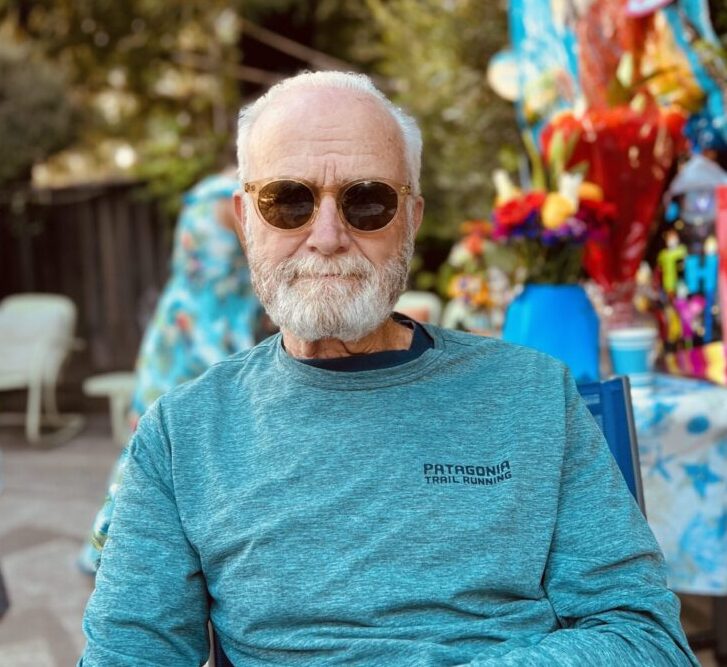
Dr. Jerry Lynch first learned about extraordinary performance and excellence as a nationally ranked competitive athlete sponsored by Nike, running world-class times from 5,000 meters to the marathon, setting an American record in the half-marathon, winning a National Championship, and many other races against athletes half his age.
He took what he learned about himself and life from his competitive days and parlayed it into a dynamic, successful career helping athletes and coaches in all sports use his performance and leadership strategies to up their game and discover the best version of themselves.
Dr. Lynch has been recognized as one of the top five in his profession nationwide. He has worked with teams, coaches, and athletes in the NBA, Pro Lacrosse, Major League Soccer, and with men’s and women’s basketball, lacrosse, soccer, tennis, golf, and other sports at the universities of North Carolina, Duke, Maryland, California, Syracuse, Stanford, Harvard, and Middlebury.
He is the author of 18 books in over 10 languages and the founder and director of WAY OF CHAMPIONS, a human potential and performance consulting group helping others master the deeper inner game for sports, business, and life. Jerry is a dynamic, entertaining, inspirational, provocative, and humorous teacher and speaker with topics on leadership, coaching, team culture building, winning the relationship game, and core value development.
His profound insights into the inner workings of the human mind and the dynamics of excellence have propelled countless individuals to overcome obstacles, harness their strengths, and achieve unparalleled success.
With a unique blend of wisdom, experience, and compassion, Dr. Jerry Lynch has become a trusted mentor and guide, empowering individuals to cultivate resilience, embrace authenticity, and tap into their innate capabilities. His work continues to inspire and elevate the lives of those who seek to reach new heights of achievement and fulfillment.
When you feel relevant, important, valued, empowered, respected, what happens to you? You perform at your best in your.
World, specifically the sports world. There's so much volatility and uncertainty. Can you talk about the role that love plays inside of that?
And guess what the opposite of fear is? Real simple. The opposite of fear is love. And love is the key ingredient. You're part of this book and people need to know this. I knew when I read that story that you wrote. It was so sensitive. I had tears filling up my eyes. And that was emotion, that was feeling. And that brought up to me the feeling of love that in the story. So we're not telling the story now, but people will read it. Raise your hand right now if you don't want to feel important, relevant, valued, empowered and respected. Raise your hand for me. Come on, put it up there. You're not raising hand. Why, Coach? Because you want to feel relevant, important. When you love yourself, your tanks are filled. Your love tanks are filled. You don't need anything from anybody.
You just give and it's selfless.
Welcome back to another episode of the Athletics of Business podcast. I am your host and CEO of the Molotor Group, Ed Molotor, and today's guest is no stranger to the Athletics and Business podcast. Several times now we have had the amazing Dr. Jerry lynch on, who I consider a very dear friend. So much gratitude for our friendship that has evolved over the years, as well as a mentor. And he has been recognized as one of the top five in his profession nationwide, working with teams, coaches and athletes from the NBA, pro lacrosse, Major League Soccer at the college level, men's and women's basketball, lacrosse, again, soccer, tennis, golf, and other multiple sports at universities such as North Carolina, Duke, Maryland, California, Syracuse, Stanford, Harvard, Middlebury. I mean, you get the picture, right? Dr. Lynch is the best of the best. So much insight.
And although he has written almost 20 books, today we're going to talk about his latest release, which I have been quite fortunate to play a very small role in. And we will. We'll talk about that today. And his latest book, Lead with Love, which was just released. It's not just a coaching manual, okay? It's a deeply human call to redefine leadership through the lens of love. In a world where transactional results driven coaching dominates, Dr. Jerry lynch challenges readers to adopt a transformational leadership model built. Now listen to this. Because it's stuff we talk about all the time. Connection, vulnerability and care. Okay? This book draws from decades of work with over 350 championship teams in the wisdom of legendary coaches such as John Wooden, Steve Kerr, Phil Jackson, just to name a few. There are so many great names in here.
And this is to illustrate how the most successful leaders prioritize love. Now, not touchy feely or feel good sentiment, but as a deliberate strategy to build trust, psychological safety, performance, and lifelong impact. Gary, thank you so much for joining us again. Fourth time on the Athletics of Business podcast. I love our conversations. What is it about today's conversation that you're looking forward to being with you.
And having that kind of stimulation and the fact that I know in the past our conversations have really made a difference in the lives of your listeners and that feedback comes in and you and I both know that. So it's always exciting, it's familiar. It's not like this. I'm going to be doing a number of podcasts for this book release and, you know, I don't know the people and. And that's fine. I'll get to know them. But to know you and do this brings up the whole point. And I think the listeners should be aware of this, Ed, if they're not, and that is, I'm just writing books so I can get on this show, man. That's it. I mean, it's not about the book.
Nowhere. Yeah, yeah, you don't need to blow sunshine.
It says, if you write another book, I'll have you on. I say, okay, I'll do it.
I tell you, I wish I had that kind of stroke and influence, huh? Speaking of influence, this conversation we're having today is about the new book and congratulations on all its immediate success. Lead with love. And love is something that's so powerful. And obviously as you're on this journey a little bit longer than others, you realize the role that love actually takes place. Right? It's not the touchy feely kumba kind of love, but it's so relevant in leadership and it's so relevant in high performance. You know, when did you first start connecting the dots with the role that love played, plays in successful high impact coaching looms.
Oh, boy, back up a bit here. Love is not what you say it is an important component. It's an essential absolute. I have, in my 45 years of experience, Ed, I have never met a successful leader coach that didn't have a lot of love in. In their coaching. In fact, John Wooden, you know, would, when he retired many years ago, was asked the question, so, coach, tell us, why has your program been so successful? He looked at the guys and he said, you know, that's easy. There was a lot of love in my coaching. So there you go, you know, and if you talk like a friend of mine, Phil Jackson, not to drop names, but he is a friend. And I remember him saying one time he said, jerry, it takes a lot to win an NBA championship.
And he rattled off five, six, seven, eight things that, you know, talent, grit, selflessness, fearlessness, all these things. He said, but you know what? If there's one thing that's missing, none of those matter. And, and so what is that one thing? He said that one thing is love. We had a lot of love with those 11 rings. Those 11 rings equal love. And as you said so well a few minutes ago, it's not the Kumbaya, it's not the touchy feely, it's genuine love, which has a lot to do with the person we coach and lead. People, not games. Yeah.
And love doesn't mean this is something that we've all learned the hard way. Love doesn't mean that everything is sunshine and rainbows and everything's going well, smoothly everything. And that there's no complexity to the dynamics of the relationships of the people that you lead. But I'll argue all day long that it's love that helps you sustain that effort that's required for that elite success.
That's a great point. And I love the word sustain. I think that's the operative word right here you're talking about because, you know, you can go in and woo people in an environment and light up the room and so forth, but if that's not sustained and nothing happens, it all falls apart. And so let's look at some of the successful situation programs in the world right now. One of them is the Golden State Warriors. Now look at the Bulls, the Chicago Bulls back in the day. Look at the LAkers back in the day. They were all sustained victories. And they were sustained because the coaches, the leaders, had develop a safe, open, caring, connective environment where people felt relevant. I mean, think about this, Ed. When you feel relevant, important, valued, empowered, respected, what happens to you?
You, you perform at your best, you go overboard to do the work. I'm your leader, I'm your coach, and I'm asking you to do things. Oh my God, I would do anything for a coach that would make me feel that way. You asked another point and I'd like to go back to that because I sort of took you off target there with your question. When did I start connecting the dots? People are not going to believe this, but of all the leadership experience that I have, what I wrote this book about is. Can fit into 90 minutes of learning. 90 minutes total. Now look, you know me, I've been to leadership conferences, like lots over my lifetime. John and I, John o', Sullivan, my partner, we've put on leadership conferences. I've read dozens of leadership books. I've written many leadership books.
You know, going back to the days of Vietnam. I was a naval officer in charge of 150 men. All of that is leadership learning. But I'm telling you that all comes back to that 90 minutes of learning. It all comes back. It all reinforces that 90 minutes. And by the way, did I say that 90 minutes took place at the age of 12. 12 years old.
Yeah. Tell us about that.
12 years old. A little kid. Yeah. So growing up in Brooklyn, New York, Right. My father, people love my father. Why? Because he was a New York City fire chief. I mean, you're a kid, right? When you were a kid in Chicago, I mean, you heard fire trucks going by. Ed, come on. You'd run after them, adults would go after them. Whenever you see a fire truck, you stop and you listen and you're in awe. So I had the greatest data in the world According to the 63 kids in my neighborhood. And by the way, the neighborhood was just one street. And those 63 kids were so jealous of me.
And the street never slept either, did it?
Never. At 9 o' clock at night, were all playing under the street lamp, you know, on the telephone pole while the parents were on the porch in the summer chatting away. And the kids were out there playing and were safe and it was a safe environment and it was wonderful. Anyway, that's another whole story. So I would go to work with my dad maybe every third week, and my mother was busy doing something else. And I was the youngest one home, so my dad would take me along and this one time I went, I was 12 years old, I was sliding down the fire pole. Right. I learned how to do that at the age of 12. And then my father takes me in the chief's car and we go off to a fire with the siren blasting like crazy.
And I'm in the back of the car and I'm looking at all this stuff and we get to the fire and there are these officers, captains and lieutenants standing outside the fire giving directions. Do this, do this, put the hose over here, blah, blah. My father gets out of the car, grabs the hose, looks at the firefighters and say, you Follow me. And he runs into the fire. The other officers are outside. They're not in the fire. The only way to fight that fire is you get right in the belly of the fire so you know the structure of the building so that you can put that fire out. As a 12 year old, I'm watching my father do this, and I'm thinking, he's crazy. Why he doesn't have to go in there. Why is he going in the fire?
He comes out, he's filled with dirt, soot, all this stuff going on. And he's running outside and he comes out 20, 25 minutes later, and all the firemen come after him. And he's there patting him on the butt, you know, like, good job, way to go. No, they didn't have a high five then, you know, but he pat him on, you know, or the fist bump. So he pat him on the head. He give a shot on a helmet, you know, I love the way no.
Chest bumps on the New York Fire Department either. There's no I.
So then we go back to the firehouse. This is all in 90 minutes. And we have lunch. And my father's sitting at the table holding court, and he's debriefing like. Like a head basketball coach in the NC2A, right? He's debriefing not the game, but the fire. And we're sitting around the table, and he's looking at all the firefighters, and he looks at you and he says, hey, Ed, listen, what I saw today from you, awesome, amazing. I can't believe. Does everybody know what Ed did? This is what we need from each other. And then he'd go to Bill over here, hey, Bill, you know what? You're really doing a great job. If you want to kick it up a few notches, do this, and this. And then overall, he'd talk to the group and he'd say, you know what? I'm proud of you guys.
I believe in you. The next time, we're taking it up a few notches, trust me. He was laying the foundation of love. There's no doubt about it. These guys loved him. And he was a tough. You know what? He was a tough sob. He would lay into them and he would demand from them, you know, get into that fire, take that hose, follow me. And the thing was, they did it because they felt his love. They felt he cared so much, Ed. The connection was so deep. They would have done anything for him. At 12 years old, I got that message. Many, many years later, I walk into the office of Dean Smith at the University of North Carolina. And he comes up to me and he tells me how important I am and he values me and the work I'm doing at Carolina.
And he tells me that he respects what I do. And he says, you know what? I believe in you and I'm so glad you're here. I felt loved. I would have done anything. I felt what I saw my dad, but I felt it from Coach Smith. And when I felt that this is the key to the story and I'm going to stop talking. When I felt from Dean Smith, Coach Smith, that love and that connection, it turned my whole professional life around. I then started working with leadership. I wrote a book. Within a year I had a book published on leadership. My first one or second one. And then I took off from there. He changed my life. Why? Because a lot of love in his coaching.
Sincere too and genuine. What stage of your career was that? Obviously a lot of books ago, but about where were you age wise and how many years experience had you had in your field?
That had to be. It was a year or two before he passed away. That was, I think 2000, I want to say 2008, 2009. So I was. How many years ago is that? That's, I don't know. Do the math.
17 years ago.
Yeah. Right. So maybe halfway in.
Here's. And I'm going to connect a couple of dots here because I think this is so significant. And it goes back to something you said to me when we first started talking about this book. A month and a half ago. Actually, two and a half months ago. But he was just being his authentic self. Right. And you and I both believe wholeheartedly that your influence is never neutral. It's either positive or it's either negative. And I asked you, I said, you know, and I said, jerry, why this book? Why now? What is it that you are trying to accomplish with this book? And you told me, I'm not trying to change the way you coach. But you said you're trying to.
I'm trying to influence the way you think about coaching.
I absolutely love that. Because how many times do people write books and stand on a pedestal and talk down. You say, this is how you do it, damn it. Right. But you're like, hey, here I've got something really valuable. Just think about it, just take it. See what, how it fits in your world.
Yeah, I, I, I, I have something that I want you to think about.
Yeah.
I'm not here to criticize Your coaching. I'm not here to put it down, raise it up, flatten it. It's not about that. It's a. You're a coach, you're a leader. And I'll assume this about you. I'll assume that you want to be the best version of yourself. You want to be the best possible coach. You want to win on the scoreboard. I get that. But you know what? Don't miss what I'm going to say. Because I have discovered in my lifetime through experience with the best of the best, telling me this is so. Experiencing it with my dad at the age of 12, feeling the power of love in people's lives and what they're willing to do. It's the missing ingredient. We spend like 170 billion. Yeah, I think it's billion dollars a year researching how to be more effective leaders.
And I'm saying let's not overlook. That's all. I don't want to change anything about you, and I just want to influence the way you think about this. And then you'll make up your mind. And when you see the data and you feel what I'm talking about, there's no turning around. There's no turning around.
There is no turning around. And we live in this world where the pace and rate of change is greater than it ever was and it's not slowing down as it can continue to accelerate. In your world, specifically the sports world, there's so much volatility and uncertainty. Can you talk about the role that love plays inside of that?
Well, boy, you're bringing up a very important point here. Because when I look at the world at large, sports world is no different. So I'm coming back into sports and all your listeners in business are going to feel the same way. I mean, this is not, you know, we're using athletics, the athletics of business. Right. And so in the business world, the CEOs, the all the leaders in the sports world, or the church world, or wherever the world you find yourself in, raise your hand if you don't think that there's a lot of volatility. If the world isn't volatile, if the world isn't complex. The world is very complex. It's very ambiguous and it's uncertain. So raise your hand if you don't believe. With that. Believe me with that. Just look at the headlines every day.
In fact, probably shouldn't look at the headlines every day. It's that volatile. And. Okay, so to your point, having that as a backdrop, I know that some. And of course, working in the trenches. You know, I was telling you before we got on today, I was working with the San Jose Sharks, and I'm sitting in a meeting. I haven't talked to him about this yet. But the thing is, there's no change. It's the same old. And so what we have to do is the way to address this volatility, the way to address the uncertainty, the way to dress the ambiguity and the complexity is you got to take away the fear. Because there's a lot of fear when the world is that way. What is a coach afraid of? Or any CEO? You're afraid of being fired.
You're afraid of the people not listening to you. You're afraid of losing control of the group. You're afraid you're not going to look good. You're afraid you're not going to make enough money. You're afraid, afraid. And guess what the opposite of fear is. Real simple. The opposite of fear is love. And love is the key ingredient. And love, you know, if we want to define love, you know, it's how do you make people feel relevant and important and valued and empowered? How do you create a safe environment? Now, what does safe mean? It's an environment where I feel I could write my books, speak my talk, be who I am, feel like I belong.
And in a safe environment where if I fail, I'm going to be allowed to learn from that failure, the one in charge is going to say, okay, what can we learn from this? How can we better because of it and make me feel like I belong to something bigger than myself? And. And that's the environment of love. You know, hey, Vince Lombardi had it. Smith Lombardi has got a bad rap, but he saw. He saw the love and the importance of love in his environment, and he laid that foundation like my dad did. The foundation is set. And from that foundation, I can ask anything of you. Ed, you know I love you. You know I really care about you, and, you know, we've connected. I've got a favor to ask you. I need for you to do this.
Will you do it for me? No hesitation. You're nodding your head yes already. And I do it for you. Why? Because we have that connection, that caring, that connection.
The caring, the relationship. Right. That's a word that you and I talk about so often. I absolutely believe it is a force multiplier and the impact you can have as a. As a coaching leader. Now, speaking of relationship, I would love for you to share a story about Steve Kerr, but Before I do. Before we do that, I want to read what Steve said in your book. Okay. Because I find this incredibly uplifting, powerful, so sincere. Right. And so there. There's no reason for him to put these words on paper unless he actually means them. And it says in Lead with Love, Jerry has put together another amazing piece of leadership work, one that contributes to and captures perfectly the coaching revolution that is blossoming in the sports world today, and, I would argue, in the business world as well. Okay.
It is an extraordinary guide to help coaches at all levels to build relationships and winning teams. Tell us about this endorsement, what it means to you, why it matters, and tell us what I would think would be one of your favorite Steve Kerr relationship stories.
Well, first of all, listening to you read that. I mean, I've read it, obviously, but here I am listening as if someone's speaking to me about this is. I'm feeling very honored, but extremely humbled by it. And honestly, I'm being sincere about that. I. To have someone that I admire so much as a leader, I mean, I'd vote for him for president. I mean, who the heck wouldn't, right? I mean, bring it on. But the thing is, for him to say those words about the work I'm doing, it not only makes me feel that way, but it also gives me confidence. If he believes that and he believes that about my work, I feel so confident that I can go out and deliver the message and know that I'm going to be spot on about that message.
Whether or not people want to listen or hear it. That's another totally different story. But, so when I do my work now, I don't hesitate to tell the story about Steve. It's a great one, and it's all about love. So I went up to Steve and I said, this is about the season 2015. He was hired in 14. The season ended in 15. And I said, what. So what was the most important game that you won in 2015? Well, you know, I'm sitting there trying to guess before he answers. And I'm thinking, it's gotta. It's gotta be the. The OKC game where the warriors were down three to one. And OKC is, like, at the top of their game, like they're just gonna crush it. And.
And.
And they beat them to go three, two. They went up. They went on to win the series. Or may. How about the finals against Cleveland Cavaliers in LeBron, right. So. So they're down 2:1 to Cleveland. @ Cleveland. And I was blessed to have a conversation with him. He called me. He was walking the streets of Cleveland. Little back history there. He played for Cleveland. Right. So he knows Cleveland.
Importantly, played for the Bulls, though.
Yeah, I know.
Right now I get it. He's in Cleveland. Yes, Right.
He's in Cleveland. He knows the street in Cleveland. So. So he's sitting on outside. It's a beautiful, warm day. It's. It's June. Right? It's the finals. And the papers are all saying, you know, they gotta win. This is a must win game. They don't win. That's all true. But he said, you know, Jerry is putting a lot of pressure on my guys. And so I thought that was going to be the game. I thought that was the one that he would say winning that game was key. And it was, but he said none of that. He said, the most important game I won that year was the relationship game. Omg. Right? And what happened? Well, let me tell your listeners, the guy flies from San Francisco to Australia for the simple purpose of meeting with Andrew Bogan.
Just to meet his family and to tell him how much he mattered to him. To tell him how important he was in the building of this championship team. He flies all. Does he have to do that? Are you kidding me? What coach does that? He flies to Atlanta, he visits with Andre Iguodala, and he says, you know what? I love the fact you're coming with us. I've got. We've got a. We'll talk about your role. It's going to be really important to us. I'm honored that you're willing to play for me. These are the relationships that he was building during the championship season. And it wasn't like there weren't other good teams around. Like I said, those two games with Cleveland and OKC and, you know, basketball, I mean, it's hard to come back from a 3:1 your first year in coaching.
Well, and to do something like that in two different series in the same season is pretty remarkable, right? You know, and to keep carrying forward the relationship piece. Three time national lacrosse champion in North Carolina. Coach Levy, okay, in the book says, at Carolina, lacrosse, relationships are the cornerstone of our success. Love is expressed through the bonds we build with one another, our teammates, coaches, alumni and supporters. When you arrive as a freshman, relationships are the priority. It's what we must have to win a championship. Okay? So being around that and being around those cultures and cultures that are built on love, that have the ability to navigate the roller coaster of not just the season, but the entire part of that journey. What's that like, when you see that, what is that like? And what does that make you feel like?
It's astounding. And it's like the birth of a baby. You know, having been there with all of my four kids being born, it's so amazing. Words can't even describe it. When I showed up at Carolina to work with the lacrosse program, Jenny asked me, where do we start? And I said, it all starts with relationships. And I said, you got to trust me. I've had a lot of success at Maryland. You know, in Maryland we won seven consecutive national championships in lacrosse. That's why Jenny was interested in the work I was doing. And you know, truth be known, Gary Gate was one of the assistant coaches. You know, Gary is a probably be all time greatest lacrosse athlete ever. He's now the head men's coach at Syracuse, by the way. So we had quite a staff. And so.
So at Carolina they wanted to replicate that. And I said, it's going to start with relationship. That's, that's the most important thing. And I'm going to guide you with it. I'm going to help you with it, but I can't tell you the direction we're going to go because every team is different. It's like a new family, it's a new situation. But I'll help you with that and I'll guide you with it. So that's how that came about. And if Jenny was sitting here right now, I know that she would say the reason why she was so successful with those championship teams is because they had a lot of love built from the relationships that they had. And this is an interesting story to prove the point about love and relationships in that program. So Jenny had three athletes who weren't buying in.
And I noticed this and I mentioned it to her. I said, you know, this is crucial. And she says, well, what do I do? I said, well, I'll help you with that, but if you don't take care of it, I'll tell you what's going to happen. I said, it's like bad apples in a barrel. I said to me, having an athlete who doesn't want to any part of the relationship love game, I said, is like having a cancer. And the only cure for that is to create more love in the environment and more connection and strengthen the relationships. But they have to be responsible for it. So I said, here's what you do. You get those three athletes and you say, you know what? You start off with love.
You tell them we love Having you here, even though some days maybe it's not the case. But we say I recruit. Yeah, I recruited you, Ed, and I recruited you because you're really good and we really want you here and we want you to stay here. In order to do that, I need for you to answer this question. What do you need to start doing that you're not doing in order to be a better teammate? And what do you need to stop doing that you are doing in order to be a better teammate? Come back here tomorrow if you have the answers to those questions. Don't come back till you do the next day. So. So she treated it with love.
She wasn't like screaming at them saying, you know what's wrong with you and you know you don't fit into this thing and you know I'm going to get rid of you and blah, blah. No, she just said, you decide these answers. Two athletes came back. One didn't. The other one wound up quitting the team. She couldn't deal with it. The other two had these behaviors. And what Jenny did was she took their answers and she coached to those and got them to blend in with the environment. The kids went on to become all Americans. They were good talent wise, but they weren't good teammate wise. And what happened was because Jenny's culture built with way of champion strategies, created a safe environment where people could connect, care for each other, empower each other and love each other.
Roaching Effects Summit is not just any leadership conference. It is annual event where high performing leaders come to grow through research, relationships and real coaching work. It's all happening June 11th and 12th at the beautiful Union Station in Kansas City. And it's packed with dynamic keynotes, interactive sessions and one of a kind networking opportunities, including a night at the Royals Yankees game. This year's theme, a new track forward, is powered by data. Now get this from over a half a million coaching interactions showing what high impact leaders are doing to drive performance. Here's what you can expect. The latest coaching and leadership research, formal and informal learning opportunities, a supportive community and networking and absolutely just a ton of fun. Now, our keynote speakers are not to be missed. Aaron Deal, renowned author and podcast host and founder of Improve It.
Mike Buddy, who is a former director of athletics at West Point and he is now the athletic director at Texas Christian University, conducting the workshops. Ted Simoninger, president and CEO of Ocean Palmer and author of the world famous book the Worry Circle. Sarah Worth, president of Excel Institute and yes, I will be joining, facilitating a workshop. It's going to be a ton of fun. You don't want to miss this. If you want to learn more and grab a special discount, send us an email at info themolator group.com that is infoemolotorgroup.com or send a text with the word summit to 7194-5969-4071-9459-6940 and text the word summit. You know, as I listen to you say this, Gary, and I think back to the thought I had as I was reading the book.
Just the table of contents to start with, then perusing through it and then diving into it and you see the names and you read the stories. I still don't understand. I shouldn't say I don't understand, but it's still baffles me. And I know we get what we look for, but why people would ever push back on the significance of having a culture where love is one of the foundational pieces? Why is it when you're working with coaches, regardless of where they're at in their coaching journey, right in the arc of their journey, why do they push back? Yeah, Is it lack of confidence? Is it they don't trust it? Is it previous? Like, what is it?
I'm going to say that after my meeting yesterday with the entire staff of this professional hockey team, I'm going to say that there is a lot of resistance. And I didn't introduce anything, but I could just sense that there's resistance to that kind of work. And so what comes up for me is they're not aware what they're really good at and what they're really aware. Their awareness is so sensitive to the X's and O's, they've got it down and they're trying to figure out all these strategies, strategic planning, implementation of the strategies, that they're not aware now of the importance of the love piece, as the top coaches in the world know. And we've gone through it with Phil and Dean Smith and Steve and the list goes on. Anson Dorrance in Carolina. I mean, it's endless. But they're not aware.
Well, let's say they were aware. If they're aware, the resistance is because they don't know how. What's the how? The how is, well, how do I show this love? How do I demonstrate love so that my athletes can respond to it? Well, let's say they knew how. Let's say they were aware of and yes, I know how. And there's still resistance. Know what they're afraid of. They're afraid of losing control. They're afraid that they're being too soft. They're afraid that. That people are going to take advantage of and they're going to walk all over them. And the other thing, and this is probably true in a lot of cases, is what we're talking about is not scientific. And it has a lot to do with the science to them, because everything they're doing is data. Data points, right?
You got to have a data point. So prove to me. Here's the question. The coach will say, prove to me. Give me the science behind why love? Why what you're teaching in this book. Lead to love. I need to get. Teach me that. And I'll say I can't. I said there is no science, per se, that's going to prove what I'm saying. But let me ask you a question, coach. Raise your hand right now if you don't want to feel important, relevant, valued, empowered and respected. Raise your hand for me. Come on, put it up there. You're not raising hand. Why, Coach? Because you want to feel relevant, important. That to me is enough data. That to me is enough science. To me, everybody, whether you're in Afghanistan, whether you're in Ireland, whether you're in Australia, whether you're in any place, it doesn't matter.
You all, we all crave this in our life, and we need it in order to function at our highest level. We need it. Absolutely. So here's the coach sitting down with me who at first was resisting because of the science and because of everything else. And I'm saying, so you're telling me you need it. You don't. You think your athletes need it.
Right? Yep.
Yeah.
You know, speaking. You named Ireland, speaking about Missy Foot, right? Heather Cross, coach at Middlebury College. Yeah. She. She tells a story in the book. It's really all about love, isn't it? For many years, I carried with me in my coaching clipboard and now in my wallet, a printed laminated copy of the Irish proverb.
Proverb.
It is in the shelter of each other that the people live to remind me that our love shelters our family and friends. As a coach and a servant leader, my obligation is and was to help a group of individuals come together to be the best they could be. It wasn't until I realized, however, that the only way to help people reach that potential was through love and compassion that I became a better coach. Now, my question to you to build on top of this, is what happens if there's someone that you're leading a team member, whether it's an athlete, whether it's in the business world and they push back on the love that you're trying to give. Right. Or they just aren't open and vulnerable to the relationship piece of what you are trying to do.
How do you.
How do you find that? Or what happens if their actions and behaviors aren't aligned with your, you know, core values and culture of your team? Like, how do you still pour that love piece into it?
Well, I have to. I have to be what I'm teaching. I have to be the change I want to see, as Gandhi would say. And so whether I'm being a dad or my partner with my wife or my friendship with you or my work with the teams, it's no different. We're all human beings. We're not human doings. We're human beings. And so we want to be kind, caring, giving, only elevated emotions. We want to be optimistic. We want to. We want to value each other. We want to make each other feel important. That's. That's first. So. So if. If. And if is the operative word. If I am in an environment where I feel pushback from anything that I'm. I'm talking about, and I'll tell you a story which is interesting along these lines in a minute. It's okay.
It's okay for me because I'm not going to change. They're going to feel my love. They're going to feel cared for. They're going to feel relevant. Like yesterday at that meeting, I wasn't getting any love from these people, but I was sitting there and I was giving love to them. And the way I was giving love to them was I was being kind. I was being thoughtful. I was. I was making them feel important to me. I told them, you know, I said, I really appreciate. I feel honored that I'm invited into this room, that very few, if any, people are invited in. So I give the love. I demonstrate it for the people. Now, beauty of my work is I'm not going hunting for people who need this. People who need it and know it come to me. So there you go.
I don't have to sell it. I don't have to push it. I don't get pushed back. I get open arms, open heart. When the hearts are open, I'm able to jump in. And when I jump in, they can feel it. Now, did I ever tell you the story about my love experience in Breckenridge? I think I did.
Share it now, though, it's a great it's a great story.
Yeah. All right, thanks. So I was invited to the Colorado to give a presentation on my work and building a strong culture and the relationship game. I walk in the morning and is 300 athletic directors. A lot of folks. Athletic directors in charge of a lot of coaches. All right. All through the state of Colorado. I walk in there and I look around and there are guys with 10 gallon cowboy hats on. They had, they were all so much taller than me with their cowboy boots. And there were ranchers, cowboys, I mean, cowgirls or whatever you want. I mean, from all over the state. And of course, they were inner city CEOs, Bob. You know, I say CEOs, I mean, in terms of athletic directors in major schools in the city and what have you.
And Jan was with me, my wife Jan. And she looks at me, she said, so you're gonna have fun today? I said, I hope so. That's why I'm doing this work. She said, it's not going to be an easy day because she knows the work I do, right? Yeah. And I look at her, I say, just watch me. So I get into the group and I just start doing my thing. You know, to your point before, like, I don't know whether they're going to embrace. This is a meeting they would come to. And I just happen to be a guest speaker. Who knows if they want to even be there. After three hours, we're all saying goodbye. I saw people literally with tears in their eyes that were ending the session. All these big people, big men, women, standing up, hugging each other.
All.
They were all like groups of 10 tables, 30 tables of 10 people. And they were like demonstrating love to each other, caring for each other, wanting something from each other. I had a stack of books I didn't order enough. I brought like a hundred books. They all sold out within like 15 minutes. I mean, they bought into it. Why? It wasn't me, although I had something to do with it, I'll give you that much. It was the message they crave, the message they're missing, that it's important.
And there's something about your message, right? And there's something about this whole conversation where it allows leaders to reconnect with themselves and who they truly are. And you often talk about, you share this in a book, some profound questions that you can actually ask yourself to get to that, you know, how. What are those things that we can ask ourselves to help us reconnect and not only, you know, feel the self love, but Be able to pay that forward, too, and operate that way.
Well, I think, Ed, you know, what we have to say is this, that. And I'm so glad, by the way, that you didn't miss this point. This is an important point. Why is it important? Because you can't love other people. You can't give love to other people unless you love yourself. You can't give unconditionally. You can't. Where this breaks down for coaches is if they don't love themselves. They come across a couple of athletes like Jenny did, who were not getting along with the program, were not buying into the culture, and they're immature, they're insecure, they're fearful. These are the athletes, right? I hate athletes like that. A coach will say and stand them. You know, give me some of these good ones over here. No, no. You've got to love them, too.
And the reason you have to love them is because they need it more than anyone. They don't have any in their life. And they're human beings. First and second is they want what you want. Don't forget that. You just have to reach their hearts. Now, to your point. If you don't love yourself, you're going to fight those kids. They're not going to come into your circle. They're not going to buy in to your message as a coach, as a leader, as a CEO. Your workers won't do it. When you love yourself, your tanks are filled. Your love tanks are filled. You don't need anything from anybody. You just give, and it's selfless. And so how do you give? You give in many ways, and you can't do that if you don't love yourself. So back to your original point. Your question.
What questions could I ask myself so that I can go deeper and learn more about A, who am I? And B, in what ways do I love myself? One of my favorite questions is, so what? Answer this, what do I like most about myself? And you list it, and hopefully it's a nice long list. This is what I love most about myself. Now here's where it breaks down. What do I like least about myself? And be brutally honest. And I can tell you right off the top of my head about the top four or five things that I don't love about myself. And it changes. Now, don't stop there, Ed. Take the things that you like least about yourself and give me one or two ways that you can change what you like least.
So what do you start doing that you're not doing in order to love Yourself more. And that's the question. What do I need to start doing that I'm not doing? And what do I need to stop doing? Like stop beating yourself up, Stop getting down to yourself when you fail and you make a mistake. There's so many things that we can do, but if you don't ask the questions, you can't go deep enough. One of my favorite all time questions and I hope your listeners take me up on this. And Ed, maybe you want to do this. I like to ask people, so if you were to write your own eulogy, what would that look like? And I give, I'll give a room of 300 people a chance to do that.
And you know, you put it on a piece of paper about this big, you know, what is this? This is about five by eight. Okay. And you just write your eulogy and my God, I want people to remember that I was a kind, generous, caring, loving person. That I was demanding but loving. I want to tell, I want people to say to me at my funeral about me that I gave my heart and soul and I never quit. I always got back up when I got knocked down and I had a lot of grit and I was selfless and I gave to people. And you know, so I'm writing this eulogy and now after the eulogy is written, I'm saying, so underlying the things that you're not right now, and now you underline them.
And then the question is, what can you do right now to change that? What can you start doing that you're not doing to change that? Now what's happening is you're getting to know yourself because you're asking the right questions and you're getting to make the important changes so that you be the human being that you're capable of being, which is the best version of yourself, which translates into being the best leader, the best coach, the best CEO, the best parent, the best friend, the best teammate. And that's it.
It's funny. Talk about the eulogy. And I remember when I first, I think you and I have discussed this. When I decided to become a, a college basketball coach and not pursue pre med anymore as I was having trouble connecting with the business books that were getting in class. And then finally in my senior year, my professor Floyd Begin, I'll never forget it, he handed me the book 7 Habits of Highly Effective People.
Right?
And it talks about beginning with the end of mind, but it talks about what do you want people to say at your funeral? There's so much power and I've always found it as a place where I can get back to center. But as I sit here and listen to you talk about what you want people to say about you, I never heard you say, well, I want them to talk about how great my book was. Lead with Love, that I have 25 hall of Fame and national champion coaches that contributed to that. Right. Like, that's not what it's about for you.
And I would argue when you look at the great ones, like the best of the best in terms of coaches, at some point in their career, some it takes longer than others, they get to that point where they realize it's not about them anymore. It's about the relationships that they developed along the way and the people they experienced the highs and lows with.
They do get to that place if they're aware and they're conscious and they have the desire to really be a lifelong learner and to be the best version of themselves. So anyone listening to this podcast, if you feel you're a lifelong learner and you want to be the best version of yourself, I'm going to let you in on a secret. It takes a lot of work. I ask the question, who am I? Once a year, and I do it on the first of the year, every year. That's my New Year's thing. Who am I? And it's not, I'm a coach. I'm an author of all these books. That's not me. I do those things. But who am I? And so once I get in touch with who I am, I can love myself.
How can you love yourself if you don't know who you are? There's a person here. You don't know them. Do you love them? No. Why? Because you don't know who they are. Well, how can you love yourself if you don't know who you are? So how do you know who you are? You ask the question, who am I? And these questions, how can I better version of myself? And what don't I like about myself? And what can I do to make it better? And I ask these questions all the time. In fact, this book, Lead with love, has 60 questions. The first question is, who am I? And the 60th question is, who am I? And someone might say, well, why did you repeat it? I repeated it.
Because when you ask that 60th question, you're now different, having answered all the others, now know who you are. And now you've got a closer glimpse into who Ed Molotar is and who Jerry lynch is. Now I Feel I know myself better. So I'm going to ask the question again. That's why every. Every New Year's, I ask the question, who am I? I go through this ritual.
I love that. And I love the fact that you repeat the question. But I want to make sure we touch on some before we have to wrap up here, okay? This conversation is amazing, right? And the power of love inside of leadership and coaching is so significant. At the very core of who we are, though. Jerry, not though. At the very core of who we are, there is a competitive fire that will always blaze, right? And we hate to lose more than we enjoy winning. But somewhere along the line, one of the greatest. Aha. Moments I had was that doing things from a place of love and caring and authenticity, right? And just being a ruthless competitor, okay. And working my tail off and pursuing things and being mentally and physically tough, Those are not mutually exclusive.
As a matter of fact, they complement each other. Can you talk about how you see that show up in your work?
Oh, absolutely. Look, look, I think. I think competition has gotten a bad rap. The word. If we trace the derivation of that word, competition, going back to the Latin, the translation is to seek together. The word is compatier in Latin, and it means to seek together. So I'm gonna. If you and I are in a race together, or let's say we're playing basketball and I'm guarding you, I'm gonna be in your face. I'm your teammate, but I'm gonna be your. Like, I'm gonna be such a pest at the end of practice, it's gonna be like, you're gonna freaking hate me. You know, like, why did you do that? I'm your teammate. I did it because I love you. I care more about you and our team than I do myself.
And I'm going to come at you, I'm going to make you work harder, and that's compatier. To seek together. It's the Buddhist way of competing. And so you compete together for a higher purpose and a higher good, which is to find out who you are and answer the question, who am I? They're not either or there simpatico. And we need both. Just like, look, just like coaching, okay? So coaches are out there saying, oh, come on. You mean I have to tell my athletes that I care about them? Yeah, you do. Why not? Don't you like to be told people care about you? Well, tell your athletes. Do I have to make them feel valued and important? Yes, you do. Why don't you like to feel that way? Yes. We'll make them feel that way. Well, guess what?
Love is something we all need and we all want. This is not the philosophy of Jerry Lynch. This is not dogma from any religion. This is human nature. This is the laws of nature. When we love, we light up the room. When we fear, we cast it into darkness. Fear is a cancer of the soul. And love is the light that shines, which shows us the way and opens up and illuminates the path to greater things other than just Jerry lynch and Ed Molotov.
It's so profound. But here's the other thing, is it's so empowering, right? It's okay to go through the highs and lows, and it's okay to sometimes get disconnected from yourself and who you're trying to be and just make sure you get back to it. That's why you asked the question at the beginning, and that's why you ask the question at the end.
For those of you wondering, am I just one big love ball? No. No. I. I stress out. I. I get thoroughly whacked out. Yesterday I had a very stressful, crazy day, and I almost. It. It's getting back. It's having anchor where you just go off into space someplace. You come back and you have this. This way of centering yourself, of taking a deep breath and realizing the situation and what's really needed and required at that time. And you look at Steve Kerr, you'll see him yelling on the bench. You look at Phil Jackson, you'll see him yelling at practice. It went back in the day. But the thing is, overall, they know that on a regular basis. That doesn't work. Fear does not work in the long run.
In the short run, it might motivate me to cross the finish line in a marathon before you. You know, with 100 meters to go and you're coming up on my tail, I'm afraid that I'm going to lose this race. I might get a shot of adrenaline, which will push me way ahead of you, but I can't run a marathon on adrenaline. I can't. I have to be relaxed, calm. I have to feel love. I have to feel connected to myself. I have to feel connected to the ground, all of these things. So before we leave, and maybe this is different, Ed, but you know, you're part of this book and people need to know this. And in fact, I don't know how you want to talk about it, but I'm going to leave it up to you rather than to orchestrate it.
You you start the book, man, You.
Well, and. And I was actually going to wrap it up with thanking you because I didn't want the conversation to be about the fact I'm in the book. I want to thank you because it was one of the most humbling, rewarding, complete surprises of my entire career, whether it be coaching or in the world that I'm in now in the leadership world. But when I received your voicemail and your email, there was 18, 000 things going on here as my son and daughter's basketball teams are wrapping up their season, and we had other things going on. And I said, jerry has that sense of urgency in his voice on the voicemail and in his tone of the email. I need to reach out and call him. Right?
And I normally, when I'm getting ready and running all over the place, I normally just decompress and do whatever the kids need at that moment. But I called you. And to say that it was an honor would be a massive understatement to be a part of it. But here's what's really cool about it, is what you read from our newsletter, our weekly newsletter. What you read was just another story of something I observed an amazing coach doing and how it impacted me. Right. And how it made me think about the things that I do and what's important in our world. And it absolutely.
Watching Coach McDermott that night, and I don't know if we want to give away the story, we're going to make folks get the book so they know the story, but I. Yeah, but I remember observing him after his game at the poll. I remember sitting there, looking at him, looking up. I remember thinking those things myself, realizing there was