

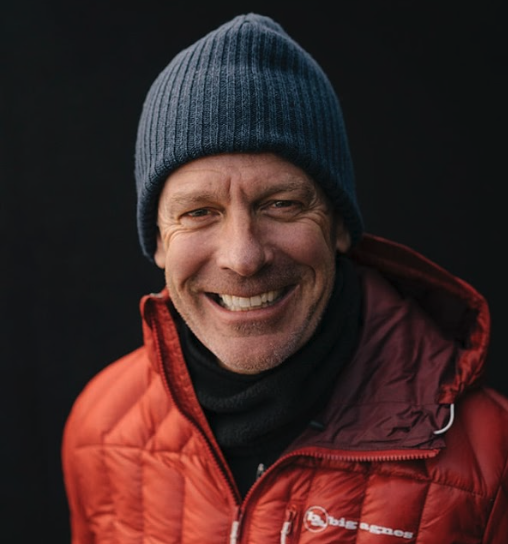
Mark Pattison built his life by pushing beyond limits.
A standout athlete from an early age, he rose from high school Hall of Fame honors to the University of Washington Hall of Fame before achieving his dream of playing in the NFL. Mark spent five seasons in the league after being drafted by the Los Angeles Raiders and later playing for the New Orleans Saints.
Like many professional athletes, Mark faced a profound transition when his football career ended. Searching for a new sense of purpose, he turned to the mountains — ultimately becoming the first former NFL player to climb the Seven Summits, the highest peak on each continent.
That journey tested him through brutal storms, snow blindness, near-zero oxygen, collapsing ladders, and the emotional weight of climbing in honor of his daughter Emilia. His Everest expedition and personal story were captured in the Emmy Award–winning documentary Searching for the Summit, which won Best Short Documentary at the Sports Emmy Awards.
Mark’s journey through extreme environments and personal reinvention became the foundation for his upcoming book, Finding Your Summit, where he shares the mindset lessons behind his SUMMITS model for resilience, purpose, and leadership.
Beyond the mountains, Mark built a successful career in business, helping scale major digital brands at Sports Illustrated before transitioning to keynote speaking, podcasting, and executive coaching. Through more than 275 podcast episodes and keynote presentations around the world, he now equips leaders, teams, and organizations to navigate uncertainty, build resilience, and reach their highest potential.
Mark is also deeply committed to philanthropy. Inspired by his daughter Emilia’s battle with epilepsy, he has raised more than $150,000 for charitable causes, including partnerships with the nonprofit Higher Ground in Sun Valley.
Today, Mark Pattison speaks globally about endurance beyond the spotlight — and how the lessons learned on the world’s highest peaks can help leaders and organizations find their own summit.
It's not about the shiny things I've been able to accomplish. It's really about the tagline how to build resilience and faith to rise above life challenges. Once you believe in the system, you're process driven, you're not results oriented. And there's two main things that you have to have is that you have to have that faith and you have to have the patience. The word connection, which is really communication is so key in the way that you really have teams perform and really excel in what you want to do. But you all got to be speaking the same way language. I really judge everything on effort. Like if you're giving me 100% effort and you're trying to do all the things you can, then I'm not going to be nearly as critical about how successful you are.
Welcome back to another episode of the Athletics of Business podcast. I am your host, Ed Molitor and couldn't be more excited about today's special guest, Mark Patterson, who is joining us for the third time here in our Athletics business podcast Journey. Mark is one of my all time favorites. The things that he has accomplished in his athletic career, in his business career and in his personal endeavor for physical, mental, emotional growth and strength is nothing short of remarkable. Mark just released his new book, Finding youg How to Build Resilience and Faith to Rise Above Life and Challenges. If you haven't listened to the first two episodes, let me share a little bit more about Mark, but I don't just encourage you, I implore you to go back and listen to episode 30 and episode 120.
But Mark is a former NFL player turned high altitude mountaineer and storyteller who knows what it feels like to lose the identity that once defined you and to build a new one from scratch. We talked about that a lot with some of the folks that we bring on this podcast, right? Not allowing our identity to get wrapped up into what we do for a living or what we did for a living or our previous accomplishments or previous expectations. Now, after a season of personal and professional setbacks, Mark stopped chasing the old highs and started chasing something deeper.
Purpose.
And part of that purpose was scaling the seven summits. And that journey, that search of the seven summits, eventually led him to Mount Everest. But the summit wasn't the moment that changed him most. It it was the descent that did. And we're going to talk a lot about that. Mark tells a story later in the podcast about his time at the summit without oxygen, not to give away everything without oxygen, not eating for a number of days and what the descent down really was. And it's a story unlike any other. When you really put yourself in his shoes and you try to feel things physically, mentally and emotionally and what possibly was going through Mark's mind and he shares that with us. You know, running out of oxygen on the way down.
Mark fought to survive and the experience rewired his relationship with fear, faith, and what it actually means to keep moving forward. And he talks about the 10 steps off the mountain. Mark carried those lessons into leadership and media, joining Sports Illustrated in 2016 at a time of major industry disruption and transformation. And the way Mark talks inside this podcast about thinking differently, reframing solutions, understanding your ability to be even more creative when you understand what your constraints really are. Great. Part of this episode, his journey also has fueled an award winning documentary storytelling. Mark won a sports Emmy for outstanding Documentary for searching for the summit in 2022. Telling you to put the family in front of the TV and watch that phenomenal piece of work.
And today, Mark shares hard won insights and resilience, identity and the quiet courage it takes to take the next step, especially when you don't feel ready. So long intro. But I need to make sure that I do Mark justice here and set the ball properly on the tee. And I hope you enjoy listening to my conversation with Mark half as much as I enjoyed recording it. Thank you so much for joining us again on the Athletics of Business podcast. First episode 20, then episode 1 30, and then here we are today. And so much has happened in your world since episode 130. I really appreciate you carving some time out here to be with us.
Thank you so much, Ed. You know, it's been a moment since we caught up and were doing a little bit of catch up before went live here, but such a great day to talk to you and I'm so excited about our conversation.
Yeah, it's. We did do a pretty good job of catching up, I think, in the 40 minutes that we had there. But hey, listen, I'm going to show this right now. It's on my iPad. It's not the hardcover, which I have coming. Congratulations on the book, number one bestseller on Amazon. First of all, what it took for you to get the story and the lessons and the framework for the book are mind blowing. But then to put it down the way you did it and to be able to translate emotionally and contextually to translate that into this, Congratulations. I can only imagine how ecstatic you are.
Yeah, I'm really ecstatic. But, you know, I gotta tell you one thing. You know, I've been able to accomplish a number of things in my life, and this is probably the hardest thing, just because I'm not a natural born writer. Now, I did journal write on all these different summits I was on and these places that I've been. It's a lot more than just about that, but there's a lot of life lessons. And, you know, it's not about the shiny things that I've been able to accomplish. It's really about the tagline, how to build resilience and faith to rise above life challenges. And, you know, Ed, I know you as a former coach and you're out coaching other people around. It's just not about the shiny things. That's easy to be good at when you're winning.
It's hard to be good when you're losing or when you're in a life, we're all in a valley and trying to dig your way out. And so that's really what I try to focus on in terms of, you know, there's a lot of wins, but there's a lot of losses. And where did this motivation come from? And, you know, when and when anybody's out there trying to like, let's tell your life story, you know, what is anybody else going to think that's interesting. So it took me two years to put together and I'm really proud of what we have today.
As you should be. But what's really cool, and obviously we've had conversations about your journey before. Right. And you're always so gracious in your vulnerability and you just tell it like it is and you're very raw and you speak it, which I appreciate so much. But then to translate that into a book and knowing that someone's going to be sitting there reading it and what's really powerful about the way you did it, everybody can connect to something in that book. Like, everybody has a circumstance, everybody has a struggle. Everybody, you know, has something that they're trying to go through to go over. Thank you for doing it that way. But what was it like to put it all down there and put it all out there and know that once that happens, you're not going to be getting the feedback right away. Right.
Like, you're not going to know what people are really thinking.
Well, I think if we reset this thing, and I know you've seen the film Searching for the Summit, the name of this book is called Finding your Summit. But. And for those who you know, are listening right now who don't know me. I was able to climb Mount Everest in seven summits, became the first NFL player to do that. And in 2021, I got this magical call in January from the NFL Films, and they go, hey, we'd love to do a small documentary on you and your climb up Mount Everest. And so that turned into kind of this thing originally was only supposed to be three to five minutes. And the more they got into it, they flew a crew over here and they sat down, they filmed myself, Ned Vs and Jim Moore and a bunch of other people.
And they're just going, wow, there's a heck of a lot more that. This actually really isn't about climbing Mount Everest and it's not about Mark playing in the NFL. It's not about. It really evolved to my daughter who had epilepsy, who still does, but she's. She maintains she doesn't have any more seizures. So she's been seizure free now for years. But, you know, at the time that was a big deal. And ultimately it was a big deal in how I got up the mountain, but to really sit and their pros, in terms of getting you to sit and talk. And they had me for two and a half hours on camera and just, they just kept going down further and further down the rabbit hole. And as a result, I won an Emmy for Best Picture, which was unbelievable.
You know, I'm not an actor. I don't know anything about winning Emmys or anything else. And there I am in Lincoln Center, Mike Trico up there. Yeah, I mean, just like I've got this tagline about making impossible things possible. And that's really sums up my life. But answering your question, there's a lot of kind of heart wrenching, very vulnerable moments in that film that really, like metaphorically speaking, dropping your drawers and exposing yourself and who you really are. And there are moments to talk about. Right. And a lot of that had to do with life after football and me being really stagnant and just like, I'm really good at catching the football, but I've got no skill set to go help any other company that's out there that may want to hire me.
And I thought the phone would be ringing and it did it. And so it was a great life lesson, as it would all turn out, about going through that period. It was a tough period. Going through a divorce, that was hard, but coming out a lot better because of some of the things I had to learn from. So translating that to the Book, really, on this, chapter by chapter, really going down the rabbit hole. And maybe there's just a little bit more I can kick in that would expose me now. Again, it's hard to do that, but I think that's where you get the biggest results, because secretly, so many people are going, I can relate to that. Yeah.
Yeah. And that's what's really fascinating about it. And you talk about you were really good at catching a football. You were really freaking good at catching a football. Okay, let's call it like it is. And that was your identity, what was really neat. And as we got to know each other over the years, you talk a lot about the process, like, the journey, the process. And as I look at you now, your identity has really evolved. And you think about the things that you've done professionally in terms of your career, Sports Illustrated, et cetera. Think about those things. Your success is a byproduct of how locked in you are into the same mindset and framework that you were during football, after football, right. During personal time, you know, times of personal adversity. How has that continued?
How do you continue to strengthen those muscles, so to speak, over the years? Like, just when you think you got there, like, you're like, oh, there's more. Like, there's more I can do.
Yeah. Like you said, I love the process. I love to be challenged. And, you know, I always set personal goals, physical goals, challenges that I do every year. Right now, I'm trying to climb our mountain right outside my door. I live in Sun Valley, Idaho. I'm at 6,000ft. We have this beautiful big mountain called Baldy right in front of me. I was up this morning before we did this podcast, and, you know, I'm trying to shoot for 50 times to go up and down. It's 3,000ft, so it's 150,000ft. I was influenced originally by my coach, Don James, who was a Hall of Fame. Not many people would know who Don James is today, but he essentially borrowed or stole John Wooden's Pyramid of Success.
And I think where it really becomes relevant is this, is that there's a guy that a lot of people know named Nick Saban, right? And Nick, of course, was the head football coach at Alabama and lsu, and he won seven national championships. Not many people know this, that Nick Saban coached under my coach, Don James, way back in the day at Kent State. He used the exact same system. And the whole thing, going back to your core ideas, is there's two things. Once you believe in the system, you're process driven, you're not results oriented and there's two main things that you have to have is that you have to have that faith and you have to have the patience to let see this thing through. So I had the faith that I had to get bigger, faster, stronger in order to compete.
It took me three years which when you're an 18 year old kid was a hard thing to do. When I got to Sports Illustrated 12 years ago and journalism had been doing the same way, I thought different. I used the power of curiosity and so I implemented a system that I came up with and I talked to Google about what gets sticky within that, within their framework of how do articles get seen. So I launched these team site networks and we changed journalism. So right. Rather than write these long beautiful award winning pieces that nobody was look listening to because everybody was, you know, so used to, our brains have been trained to go into the notifications of a cell phone.
I said why don't we talk more in bite sized pieces a paragraph to 2 which turns out to be 250 to 500 words with the 1 to 3 minute video and do it a bunch of times during the day which we did and went from number 17 to number one. Again not. We are process oriented, not results driven. We were looking at the results because you have to, were talking about this before went live here. But you really want to quantify to make sure, to measure, to make sure things are going in the right direction that you want them to go.
You're not results oriented but you do have goals. Right. And you self select into that process. So talk to me about and we didn't even reference this but this is our term that we use here and that I've always embraced the lag measures versus the lead measures and how that allows you to make adjustments and let's even tie it back to the seven summits in making adjustments as you transverse the mountain and you're trying to get to the summit.
Yeah, yeah. Well I think you know to me the biggest thing is again obviously you have a goal in the very top is called competitive greatness. Right. And that might be a packed in championship, that 12 championship, that might be the SEC, that may be the national championship, that might be for a company to become number one within that space. But there's no guarantees to success. But by starting with to me is a crawl before you walk and a walk before you run. And that's why there's a. When you're talking about the pyramid there the Very top is one parent, one block, and at the bottom there's like seven blocks. So that's the crawl phase, right? And so you have to inch your way up.
And just like in mountaineering where, you know, I didn't start with Mount Everest because I wouldn't have had this, have the skill set or the knowledge of how to deal with all the things that came up. You know how to go up a 2,000 foot ice wall, right, which is called the low T face, which is death defying and as steep and scary and wicked as you can possibly imagine. What to wear, how to like, they call it self care. But on the mountain, when to sit down, when to put jackets on, when to take them off, it all seems very simple. But this is also how people died. So I started with Kilimanjaro, which is, it's a tall mountain. Actually, it's the tallest mountain in the world.
When you're talking from floor to ceiling, you start in the jungle, you go to the top. I've actually climbed it twice, but it's at 19,333ft. But there's no snow in there. You're not going to like die in a crevasse or something like that, right? And so you're just really testing what it's like to be in altitude. And then you keep, you know, the next year I'm in Russia, of all places, down in the Caucus Mountains, where many, many, many years ago they had the Olympics in Sochi, which is down in that region. And you know, I'm climbing this mountain and there's guards or there's military people up there with machine guns and like, whoa, what is this? Right?
But at the same time, when I was up and we ran into a story on a bluebird day and then learning in the mountains, like, things can change in a minute and you need to be prepared for that. We got in this electrical storm and one of the climbers was hit by lightning strike and died. And so like, whoa, like, this is real stuff, right? And you got to be prepared at all times for any kind of thing that comes up. And so it can continue to make my way through. Yeah, I think it's very metaphorical in life is that you just keep learning and building and hopefully ultimately getting.
Now, that doesn't mean that you're going to become the CEO of the company just because you have a pyramid and you're doing all the right things or the CEO or you're going to win the championship. But it's going to put you in the best position to succeed in whatever you do. And even like going to Everest, you know, my goal was to climb Mount Everest, come down to High Camp at 26,500ft and then go back up and climb Lotsey and then coming down, which is the fourth highest mountain in the world at 27,900ft. And I failed at that goal. Right. Because I was so out of my mind coming off and we talked last, you know, four years ago when I was 35 pounds down, I was skinny. I had a hard time, you know, overcoming a lot of those challenges that was at.
But I felt at that time I felt like a failure. But I did do this. I put myself in the best position to succeed. I was only able to succeed on Everest, which is still crown prize, and not do both at one time.
Then if I remember this correctly, that climb wasn't like 400 climbers, only 120 finished.
Yeah.
Or do I have the numbers wrong? I mean, the numbers are what you accomplished just by surviving. I mean, not just surviving. Surviving was a big part of like the story. Share that if you'd like. Obviously it was pretty mind blowing, but an accomplishment in and of itself. But this leads me to a question. I'm going back to the electrical storm. One of the climbers died. What's your relationship with fear?
Like?
We talk a lot about running to the fight, right? But the fear, like, how do you not just manage it, but how do you leverage it? How do you capitalize on it? How do you use it to your advantage?
I've really learned to lean into it. I think that's one. Number two is, you know, you don't go from Little League to the NFL in one. And so to imagine there was a vicious. He's a friend of mine now, but there was a amazing player but vicious hitter named Ronnie Lott back in the day. And I can't tell you how many times, like, you know, I was running over the center and I catch the ball and just get blasted by him and that, you know, you had to overcome your fear that you're going to get blasted once you cut the ball and lit up by running a lot when you're going. But again, I didn't start at the NFL. I started in the Little League.
And so over the years of doing and doing and really honing those different skills that helped me overcome that. I'll give you a really good example to your point. So in 2023, I climbed the Matterhorn and in 2022, I'd gone to the base of the Matterhorn, which is in Zermatt, Switzerland. And if you know anything about it, first of all, it's the one little mountain at Disneyland that they actually have tried to replicate. And that's where you go on the Matterhorn ride. You're zipping in out of the mountain. Yeah, straight up and all that. And you know when you go and you're standing there and look at this rock, it is just intimidating. Straight up, there's a graveyard right underneath it with all these guys, Hans, Schmidt, whoever, they fallen off the mountain back in 1835. And you're going like, wow.
And so the first year I got there, it was in September, and I was really intimidated, I was really scared. I had a lot of fear around that mountain. And so I went to the guy that was kind of running organized. There's a little hut right at the base of it at this rock. And I go, I really want to do this. And he goes, I wouldn't do this. And we're going to probably shut this down. I go, well, I want to go any out. And I go, what are my chances? He looked at me dead in the eye and he said, It's 100% chance that you will die. And so I go, cool. So I turn around and I head down to three hours train ride.
I go down to Chamonix, which is in France, and I climb Mount Blanc, which is a big ass mountain. And so the following year I said I'm going to go back. But during that year, and this kind of leads up to your question, is that I spent every single moment really studying YouTube videos and doing a lot of research to help me overcome that fear. And what I learned, and this became more metaphorical on Mount Everest, which I'd done a couple years ago, about just 10 more feet. And then this particular case was just only focused on what's in front of me. And that's really metaphorical to life because you know, if you look too far ahead or you start freaking out about what happened 10 years ago, it really can paralyze you.
And what really helped me on that mountain and to go up that big gigantic rock again, super scary and terrifying, was just only focus what was exactly in front of me. And inch by inch, crawl before you walk before you run. I made it to the top and then it was just like, wow, I did it. And so that was a big moment for my life of really overcoming a major fear that I had with.
That in 10 more feet, albeit metaphorical. It actually really saved your life, did it not?
It did. You know I was snow blind. This is now back to Everest. Once I got out of I'm at Camp 4, 26, 500ft, I'm in the death zone. I hadn't really eaten in three days because three days before that I was in a cyclone, stuck in a tent and we couldn't move. And so you're not eating 45 degree angle too, right? Yeah. And you know, 70 mile power storms which avalanches going down on either side that sound like a freight train and it's scary. Right. And you finally come out on a bluebird day like oh my God, let's go. So we move up and then were supposed to be woken up at 11 o'. Clock. They didn't wake us up till midnight.
And now we have 20 minutes to get ready which normally it takes an hour and a half to melt the water and do all these other things. Had nothing to eat. So I'm going on an empty stomach and you know I'm supposed to be at my best when my best was required. I'm at my worst when my best was supposed to be required and you know, off you go. And the only thing I could think about is just 10 more feet, get to that rock, 10 more feet, get to that ice, 10 more feet. Keep going. I played that movie over and over again as I made my way all the way up this house slope and into the Hillary. Stepping up and then another part to this. You didn't ask this question but about going back to fear.
And it's real, especially on Everest. But it was a guy named Don Cash who I climbed with in 2019 down in Antarctica and he was my 10 mate for three weeks and now he's laying up there and so I'm stepping over Donald Cash as I'm making my way up to the summit. And again trying to keep your mind on the task at hand versus drift off and think about what happened to him and feeling sorry for him and what happens if that's me and all these things. And so self preservation. Keeping going. 10 More feet. It all mattered, you know, as I made my way up to the summit and back.
The Coaching Effects Summit is not just any leadership conference. It is annual event where high performing leaders come to growth, research, relationships and real coaching work. Join our co effects team and hundreds of business leaders on May 5th and 6th at the brand new Tanesca center in Omaha, Nebraska. Two days packed with powerful keynotes interactive sessions, meaningful networking, and a night at let it fly that you won't soon forget. This year's theme, driven by data empowered by people, is grounded insights from over a half a million coaching interactions, revealing exactly what high impact coaching leaders do to drive performance. Here's what you can expect. The latest coaching and leadership research, FRAMO and informal learning opportunities, a supportive community full of networking opportunities, and absolutely just a ton of fun. And you're talking about 10 more feet and obviously keeping the laser focus on.
I'm trying to find a page here in the book that I love.
Yeah.
What's going through your head Besides just the 10 more feet? Like, are you trying to block things out? Like, how do you control the thoughts so you stay even? Emotion.
It's a great question because so much of it was just keeping my eye on the prize, and the prize was getting to the summit. And by doing that, just going, staying present as best I could. And the frustrating thing, and the hard thing is I just, like, I had a million thoughts going through my mind at the same time. So as simple as it sounds, like 10 more feet, you know, like all things that we should do in life and don't get caught up in, you know, the summit in five hours from now and all these things. But at the same time, you know, I was snowballing in my left eye. I didn't know what was wrong. And so all the energy that you're using gets down to just micro touches of.
Of just trying to, like, rub my eye with my mitt glove, seeing if maybe there's something in there, like what's going on. And I'm so hungry, you know, and you're. And if anybody's been out, you've been trying to do some kind of athletic, you know, endeavor that you're doing a marathon at 10k, something like that, and you've got no juice, man. It is hard to be at your best. And so just trying to play all these little mind games to keep me motivated to not quit. Right. Which is what I was finding the entire time. The easy thing was just quit, quit. Because that's what my mind, that little devil on the shoulder was telling me.
Well, and everybody pretty much what I understood, too.
Yeah. But I couldn't understand. Right. Yeah, that was the whole thing. That's. Yeah, that's what matters. Because, you know, it took me 10 hours to go one direction. And a lot of people talk about being the top as being the finish line, and I was only halfway there. And so I'M at now standing at. I was sitting at the top. Okay, there's only six other people. Then the six people take off and now my Sherpa takes off. And now I'm sitting there snowballing in one eye. I haven't eaten in three days. I'm running low on oxygen. My Sherpa is going back down the mountain. I'm the last guy sitting on top of the world.
I'm looking around like, how in the hell am I going to get off this thing knowing that I still have another eight to nine hours to go to get back down to Camp 4?
And so how did you, besides the 10 more feet, like when he caught up to your Sherpa, like talk about that whole thing? Because I don't think people really understand the concept of the descent, how challenging and difficult it is, you know, not just physically, but mentally.
Well, that's the whole thing is the mental exercise of staying locked in the whole time. And there's something called a fixed line. And that fixed line, there's a, that you have, it's actually right here called a jumar and that hooks into this fixed line. Fixed lines are typically 100 foot ropes that are anchored on either side with ice screws. And then you have a cord wrapped around your waist, tied on to your harness that you are extending down. You're hooking in. If you happen to trip and fall which. This path going down from the top around the Hillary Step to the south slope is about 2ft wide. It is 8,000ft straight down to Tibet and you ain't going to stop. And if you fall the other direction to your left, you're going to fall 8,000ft down to Nepal and there's no stopping.
It's that I've never been, I've never experienced, I've experienced a lot of steepness, but not relentless steepless, just you know, from really camp to going up the low two face, it just doesn't stop. It's straight flipping up and it's grind on your legs and everything else. So coming back down, my biggest thing is I'm glancing over to Don Cash, who's my fallen tenement from 2019, who that same year he went to Everest and had been laying there since. It's now two times for the last two years he'd been laying there. So as I'm glancing over him, I'm locked in on the road. And the thing that a lot of people don't understand is that there's still ropes from like 1992, you know, 2001, there's ropes is laying there. And so as you're looking down, you want. And they're all afraid, right?
You want to make sure that you lock in. So it's not only the concentration about taking the right steps, you know, trip and fall, but when you're locking in and locking out of these ropes because they're each hundred foot segments and you have to lock out and get to the next one and lock back in. And you want to make sure that you're not locking into the wrong group from 1992, that's frayed and that you think you're locked in when you're really not. And so that was the thing that I just kept focusing in. Focusing in to make sure that I was not. And knowing I was very conscious, even though I was out of my mind, I was very conscious that this is where everybody goes down.
This is where everybody fails and seems to pass because you get this thing called cerebral edema, which is the swelling of your brain. And, you know, there's a third less oxygen up there. And with me almost out of oxygen, you know, I was just battling all these things. So now on, you know, on top of the Soblins not eating, you know, you've got no O's. And I'm surviving up on. On top. And so anyway, it was just a inch by inch mass.
I'm incredibly curious and I'm going to shift just a little bit here because this keeps popping up as I listen to you talk. And I think about the challenges that some leaders have that have some physical accomplishments in life, right? Some who are pro athletes, some who are college athletes, some who climb in the business world, you're a leader. You're leading your team members. And when you have those that struggle to understand how significant preparations, how significant communication is, how significant connection is, right? And they pay lip service to doing the things that are necessary to be successful. How do you. I mean, let's. How do you stay in a place mentally where you can communicate with them the significance of that without losing your mind?
There's two different things. So let's separate it as we're talking about Mount Everest, because we just were. And by the way, I'm speaking on all those exact same topics next weekend in Austin, which is awesome. And one thing that made it really. You're right, the word connection, which is really communication is so key in the way that you really have teams perform and really excel in what you want to do. But you all got to be speaking the same language. My Sherpa didn't speak the same language. So he had no clue. I had this internal battle with snow blindness and hadn't eaten and all these other things I was dealing with because he was just happy on his way. He just cared about getting to the top and getting paid. And that's what his main goal was.
Yeah, he was wondering what your problem is.
He was wondering what my problem was. Like, why isn't this guy who's supposed to be the strongest guy, not the strongest guy right now? And I got to deal with this guy and drag him up the mountain and. Because there wasn't a connection and because there wasn't any kind of communication that was flowing and really on, like with Sports Illustrated. You know how I really measure that course? At the end of the day, it is about performance. But, you know, I really judge everything on effort. Like, if you're giving me 100% effort and you're trying to do all the things you can, then I'm not going to be nearly as critical about how successful you are.
Because, as you know, you may have the same guy giving you the same kind of effort as Michael Jordan, as you as a basketball guy, but he'll just never be Michael Jordan. Michael Jordan is Michael Jordan and just unique talent of all time. And there's a lot of guys like that. Not maybe Michael Jordan's level, but they're just better. No matter what you do, they're just better. But if you can get that same guy, you know, he might be the forward or he might be the guard, or he might be the one guy, you know, that needs to anchor. And there's other roles for him to take as long as he's given that effort to go forward and you can communicate the expectations and also giving the support.
I was just talking to Jim Moore, my best friend, it's now head coach at Colorado State. And he's talking about, you know, leaders who lead, but also create the infrastructure and the support to help them succeed at what they want to do.
I was going to bring Coach up because I have so much respect for him and I absolutely love the relationship that you two have, you know, and I know we're getting a little bit away from the climbing here, but we'll get. We're going to get back to the Seven Summits. But I'm very curious. I've always wondered this, like, how your relationship and how your conversations. Because I find this in my own world with some of my guys that I played with in college. Or I coached with at the Cows. Yeah, like, how have those evolved over the years to the point where now you're talking about things like this, right? Things like connection and communication and cohesiveness and that. How does that evolve?
I mean, it's been great to see Jim's career. You know, he was the head coach, the Seahawks and Atlanta Falcons and ucla, and there's been. He stumbled and he's had a lot of valleys, and he's had a lot of triumphs, too. And he's the first coach ever to take UConn, which was dead in the water by every standard you could possibly think of. And at least, you know, you being a basketball guy. The basketball team is in the Big east, and they just finished, I think, 33. Zero. And, you know, they're number one in the country and they're fantastic. But the football team is in no conference. And to do what he did, you know, beat four ACC teams, and one of the teams was Duke, who went to the championship. But now, you know, we just feed off each other.
This morning, I was just telling him, for me, I ran up the mountain this morning an hour and 10 minutes, which is my personal record, and I sent that to him because when he's in some valley, he's now the head coach of Colorado State in Fort Collins. This is like, as of two hours ago, you're getting after it. I had my team out at 6am in the rain, practicing for an hour, 45 minutes. It was awesome. Teaching them what hard work looks like and how to handle hard, better. That's what he wrote back to me. So we're constantly, like, challenging each other in certain ways and how he's using his life lessons towards lessons that he can implement on his team and really motivate them to.
You know, when you just think hard, you just don't know what the human body can actually do in the human mind. And by the way, you need to have. You need to have a strong body to have a strong mind. It doesn't work the other way around.
You know, I love that and what you just said that you sent each other. Because then I think back to, like, his journey, peaks and valleys and coaching.
Right.
I mean, that's the reality of the business. But then I think about, like, how he must have leaned into the summit mindset, how he must have leaned into the things that you experienced and how you dealt with them and what those conversations are like in the substance of those and how wrong real. And you think to an earlier time in your life when Things seem pretty good.
Yeah.
Like, how do we communicate to people where they are open to it and accepted that things are going to go south? Like, at some point things are going to be really shitty. Like, things are going to be tough, and that's okay. And I love the fact that your book, it attacks that.
One of the things that you. I kept saying with the Sports Illustrated, when it would. Every year we double. You know, last year we hit a billion page views. That's impossible to do. We hit a billion page views, right? And this started at zero. So I created this thing from the ground and we built it up to over a billion in a lot of money. And what I kept saying, all these people who are making a lot of money off this and, you know, they're going off and buying houses and getting married, and it was all good, good. But I kept telling this, like, once a year I go, let me tell you about what success does. And they go, what? And I would say it breeds complacency. Success breeds complacency. You know, you just don't quite have that same edge.
You're not quite working as hard, all these types of things. And that's why, like, for the. For me this year, Even though I'm 64 years old, I'm like, you know what? Like, if I didn't go out and climb one day up the mountain, nobody would care, but I would care. And if I didn't personally set a goal, like, how can I get out there? And I wrote it down. I said, my goal this year is to climb 50 times, which is 150,000 vertical feet to get up and down, you know, and I smoke by all these guys. We talked about that earlier this. And again, nobody cares except for me. I have to be accountable to myself to get out there because I don't want this whole thing about success breeds complacency.
Just because I've done a bunch of things a whole long time ago, you know, when I'm driving down the street, my windshield is big and I can see everything. And to me, that's the future of all these things I haven't done is what motivates me to want to keep going and see how I can problem solve and figure it out. Just like some of the things that you and I were talking about before. I'm not caught up, which a lot of my old Raider teammates are, and they're great and they're awesome, and there's nothing wrong with this when they're more looking at the rear view mirror, which is this small little thing that sits in the middle of your big ass windshield. It's just like, who cares what I did four years ago?
So I just want to make sure that we're grinding, we're going forward, and how can we beat the other person in a way that's fair, within the rules, personally going to challenge people and be comfortable with being uncomfortable.
Back to, you know, being comfortable, being uncomfortable in the complacency leads to what? It leads to stagnation. You're stagnated. You're not sitting still. You're actually going backwards. You're actually shrinking. And this is natural and this is normal. It's human nature. Like, when I get to here, man, I'm done. Like, this is good. I'm good. Like, I've accomplished everything I've got to accomplish. I'm just going to enjoy life. Yeah, but to your point, you're not enjoying life unless you're getting after another goal.
I don't know where that's going to stop. I've got a bunch of my friends who are uber successful and that's what they're doing right now. And there's nothing wrong with it. And it's just I gotta have that drive that gets me out of bed and I'm actually scared. It's a fear going back to that word that you used a while ago. Like, I think for me, my personality, I would go backwards if I stopped and I just said, you know what, I'm good. I'm just going to go play golf and that's how it's going to be again. There's nothing wrong with it and I've got bundles of friends who do that. But, you know, I just love the challenge of new things and how I can help make change and make a difference.
And it seems like some of the things I've been able to do, I can have this give back towards a nonprofit, which is higher ground and which leads kind of to this, you know, event that I'm doing in September, which is, again, I've never done an event and it's scary and I'm just lifting this thing off the ground. And, you know, I partner with some guys who put on events all over the world, out of the UK and just keeping my fingers crossed that this can be kind of one of my next things that I'm excited about. I've never done. And let's see how it goes.
Let's tell a listener about the event because you were sharing with me. We're looking at the website and we'll put all of that in the show notes and our social links. It's not just a concept like the what you can walk away what you a what you can experience and be what you can walk away with from this event and what it will do for you, not you for the listener. Yeah, I mean it's something is nothing short of phenomenal. Tell us all about it.
Yeah, so you know, I've been very fortunate to go literally to every continent, you know, that's out there. I've been in villages, I've been amongst the people in Nepal and what makes them happy and even amongst the climbers. A lot of these people have a lot of money who come there always seems to be this void. And the void kind of seems to kick in around 45 or 50. And either they're going through something like for me it was a divorce or they were asking themselves, I've been very successful in what I do, but there's gotta be more. There's something else around the corner. And when I was, this is back in 2017, I was climbing Denali and I got stuck at 14,200ft in the tent for five days in a blizzard.
It literally was like a foot of snow coming down every 12 hours. And it was awful. And we would just stop. Couldn't go up, couldn't go down and ultimately had to go back down. And that's after dragging 137 pounds up the mountain. But I had to drag it back and then had to come back the next year and I got it done then. But I wrote this book called what yout Everest. It's essentially really exploring this whole summits model which I came up with, which is metaphorical, which is really a step before the pyramid of success.
It's really how you accomplish things and how you like get energized and how you see things, how you come up with your idea, how you unleash it, how you measure it, move it, you know, improve it, traverse and ultimately hit the summit, you know, around these things. And so I brought in these world class speakers. Merrill Hemingway, grandfather of course Ernest was, you know, one of the famous writers of probably of all time, you know, in our history. We got Tom Flick, he's an NFL quarterback eight years, you know, he's been on the speaking circuit. There's another guy that's a blue angel pilot. He talks about precision and excellence. I've got a guy who's been a singer songwriters, had probably taught a top 10 hits out there. So we're going to talk about longevity. He's playing our little amphitheater that we have here.
Then we've got a guy named Chap Rose. He's been on the Bravo Channel, Southern charm for 12 years. So I'm glad these people are going to come in. So a lot of people think about it's just about the inspiration and that's a key piece of this whole thing. But we're also going to get them out in the mountains. Some valley is just this magical vortex of energy here in the middle of Idaho. And so it's going to be in September when all the leaves are changing, greens and yellows and oranges and everything like that. And so we're going to challenge people in the outdoors and we're going to create that community. We're going to have a great networking experience and then we're going to have a give back with higher ground.
So the money that comes in, a lot of it is going to go to help other people, right, and have them overcome, you know, whatever trials and tribulations that they have. Higher Ground really represents military and also first responders that are out there. So we're super excited to launch this thing. And, you know, really the goal is to have summit 2, 3, 4, 5, but 7summit summit.com and it's all the information is right there.
We'll put that in the show notes, we'll include it in social media. I'm excited about it. When did this idea, when did the seed first start to take shape? Like, when did it start to like, okay, we got something here.
It's a great question. And I just come off of Mount Everest in 2021. So this was like in June. And so I come back and I've just been two and a half months on Mount Everest, met all these people, right? This kind of same kind of avatar that was just telling me about, you know, there's a kind of some void in their life. Not everybody, but there are a lot of people that the reason why they're on Mount Everest is they're, you know, to overcome or see something or have a breakthrough in some kind of way by being there, being still being without communication, tv, radio, all that kind of stuff, your cell phone, in a way that really makes you think about things.
And so now I'm back here in Sun Valley and they were having this event called 29029, which used to be the height of the at the very top of Mount Everest. And there was an earthquake back in 2016. It actually grew three feet. So now it's 29,032ft. That's what I climb as I went down there and understanding what this eversting thing was essentially was to run up and down the mountain 16 times like you're climbing Mount Everest, but you're not. You're climbing the mountain here in some valley. And they've done these things successfully like in 16 different resorts, Park City and Aspen and other places like that. And so the big missed opportunity is one, they've got all these people here, 225 people, and they're going to run up and down the mountain, which is great. It's very aspirational.
Many of them are looking for something more in their life. That's why they're doing this event. But why they're there, why not capture them and also have some people that can speak to what they're going through and maybe offer some different advice on how they've seen the world, some strategies that they have that can maybe unlock some of the different things where they maybe they feel stuck. And then the third piece again is there was no give back. And so I was just like they had these insane people. 225 People. This thing sold out in 14 minutes. What happens if I put on this seven summit? It just come off Mount Everest. Became the first NFL guy that climbed the seven summits.
Wonder if I have this seven summit here in some valley and we really address these other two buckets that I just talked about. And so that's where the idea came to the birth. And I was going to do it three or four years ago and some things came up and it didn't happen. But you know, now's the time.
Well, and I do love it for the very reason you said, because let's say the 29029 or the 2903. Yeah, you do that, but you leave and that's it. You leave it behind. It's still there, right? It's like anything, there's that void, like, okay, I did that. Now what? But the way you have this set up with the inspirational and the aspirational piece and the speakers and the strategies and the content and the fulfillment of serving higher ground and who they serve, you walk away. I mean, it's a continuation of the weekend for the three days, two, three days that you spent in Sun Valley with this amazing group. And it's now becomes interwoven in the very fabric of how you go about continuing your escalation of success.
Well, you get to, you know, join the Climbing, we call it joining the rope team. Right. So now you're going to get involved in the rope team, and there's going to be emails that goes out, there's a Facebook group, there's a community, and really trying to stay connected in ways that you don't. And, you know, Ed is you, as a former coach, you know, you really understand that. That there's usually no better connection. Used that word before. When you get people out there athletically competing, I wouldn't say against each other, but competing, and in this case, climbing mountains and getting up and taking the time out and saying, hey, Bob, do you know Susie? Susie, this is George. You know, what's your challenge? And that's where people start to open up, because not everybody is an extrovert.
There's many introverts that come here, and we want to really make sure that we spread the wing so that everybody is feeling involved and that you walk out of here having 10 new best friends.
It's awesome. Now, let me ask you this, though, because I like to put myself in a listener's shoe. If I'm sitting here listening, I listen to everything that you've been through. And you're climbing, right?
Yeah.
How do I find out where I fit in this event? In terms of what climb I'm going to do? Are there different options? Are there a few options?
Yeah. There's a. We've got kind of a beginner, intermediate and advanced, you know, and advanced goes straight up like I did this morning. And I would say a beginner would be like a four and a half mile loop that doesn't have it, hardly any elevation. I'm talking about a couple hundred feet. You know, that's it. There's nothing. It's just a, you know, really a stroll. But you're getting out and you're seeing the beauty of the mountains around you. And again, I said this earlier in the podcast. You don't go from the. From Little League to the NFL. And so that's where the hardest part is, the first part, and just taking that step forward and getting involved. And maybe someday you can go and do the hardcore or climb up the mountain with Mark. But I've spent more time than anybody doing this.
And again, I started in the great state of Washington, and we didn't have, you know, big gigantic mountains. We've got Mount Rainier at 14,000. But remember, I slept at 17,500ft, three, 3,000ft above the height of Mount Rainier, right?
Yeah.
Yeah.
This is awesome. Mark, I can't thank you enough for joining us. So let's tell a listener now, finding your summit, how to build resilience and faith to rise above life's challenges. Where can they find it? Obviously on Amazon. Where else can they go?
Yeah, so I'm doing a lot of things after keynote speaking. I've got a fairly low large social presence that's out there on the Internet. But you know, you can really gather all this stuff@markpaddisonnfl.com markpattersonnfl.com all my socials are Mark Patterson NFL at Mark Patterson NFL. So it's pretty easy to find. But you can go on the Amazon and look up finding your summit or you can go to my website, you can do the same thing. And I've got a book section in there and you can just push the button and it will take you right to Amazon. So make it pretty turnkey and easy. Awesome.
Mark, thank you very much for being with us today.
Thank you. It was great. Thank you so much. Thank you for listening to the athletics of business.
Be sure to give us a rating and review so we know how we're doing. For more information about the show, visit The Athletics of Business.com now get out there, Think, act and execute at the highest.
Level to unleash your greatness.