

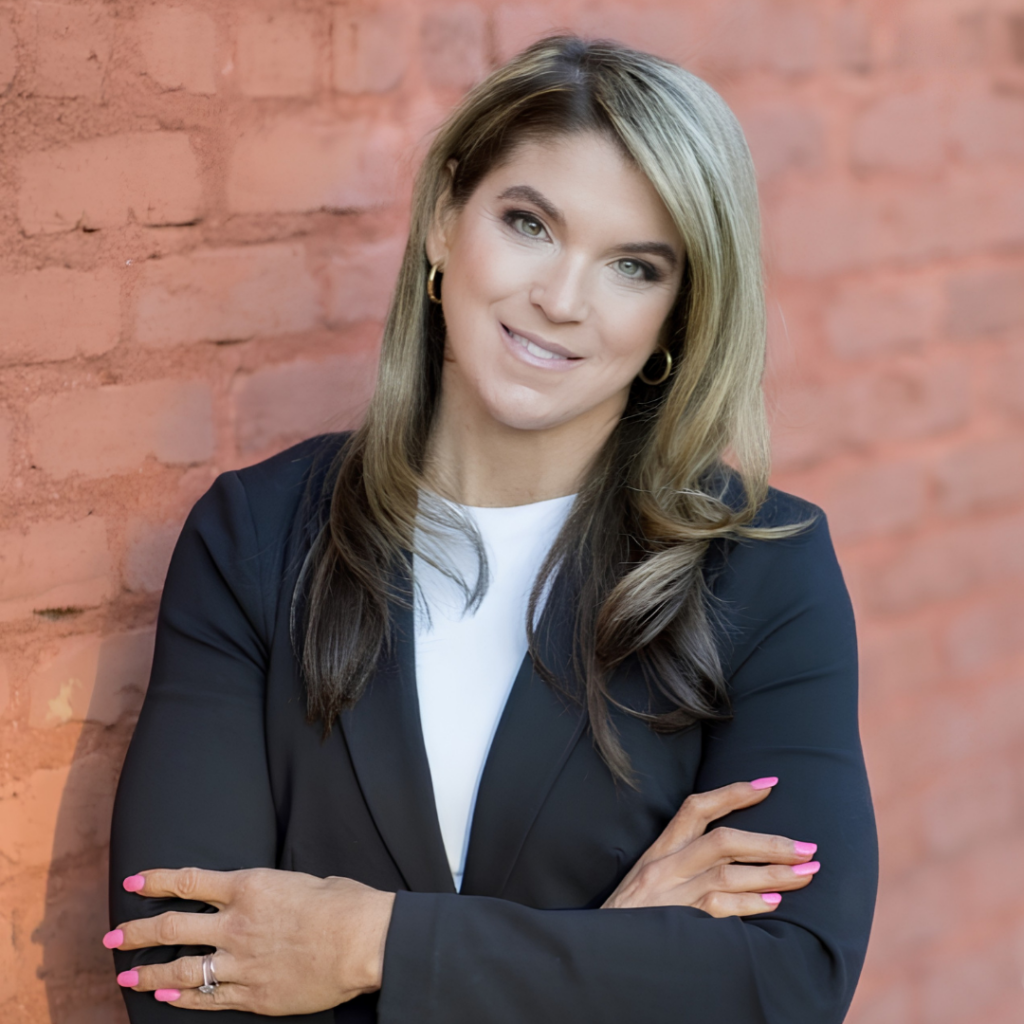
Former Athlete, Forever Leader.
Meghan Long is a veteran sales leader with 14 years of experience driving high-velocity growth across Medical Device, Biotech, and Pharma.
Currently serving as Area Vice President of US Surgical Sales at BioTissue, Meghan has delivered some of the most remarkable turnarounds in her industry — including hitting quota for the first time in 13 years, growing a region 248% year-over-year, and leading a division to $50M in revenue.
She’s worked with private equity-backed organizations, launched new products, and built winning cultures from the ground up. A UNC Chapel Hill graduate and former Division I lacrosse captain, Meghan brings the same competitive drive and leadership to the boardroom that she brought to the field.
Join us at the Coaching Effect Summit – Driven by Data, Powered by People
May 5‑6 in Omaha, NE (Tenaska Center)
When you're coming of age and you're challenged to be disciplined and make the right decisions, to connect yourself with your goals, that sticks with you. You have to celebrate the small wins. You have to celebrate the effort that goes in so that it builds momentum and people feel heard and seen and recognized for the actions.
Oftentimes our best creativity comes inside of the constraints that we have.
Working with people as humans, not only, you know, unlocks better communication and better level setting, but most of the time, if they know you're behind them as a human being, not as just an employee, they will run through an effing wall for you.
Welcome back to another episode of the Athletics of Business podcast. I am your host, Ed Molitor, and I could not be more fired up to be joined today by our special guest, Megan Long, Vice President of US Surgical Sales at Biotissue. Now, Megan is someone who absolutely knows what it looks like to compete, to lead and to impact others. A former Division 1 lacrosse captain at UNC North Carolina, she has spent the last 14 years building medical device, biotech and pharma, leading major growth and turnaround stories along the way. Now, what stands out about Megan is not just what she has accomplished, it is how she goes about it. She leads with toughness, honesty, and the kind of consistency that earns trust. In this conversation, we're going to talk about building teams, earning trust, and staying steady through change.
Megan shares what it takes to create belief and keep standards high and lead people in a way that brings out their best. And we'll also get into how small wins, honest conversations and consistency can change the direction of a group. I hope you enjoyed listening to this conversation half as much as I enjoyed recording it. Megan, thank you so much for joining us on the Athletics of Business podcast today. I know how crazy your world is. As a matter of fact, you got to spend your morning in Newark Airport today, so really carving out the time means a lot to us.
Yeah, Newark Airport, truly a blessing every time you're there, but I'm really appreciative to be here. You've had some really impressive guests and even some within the athletic field that I've, you know, had the privilege of being in. So really excited to have the privilege of being here too.
Talking about the great Dr. Jerry lynch, one of my all time favorite humans too. You know, speaking of impressive guests and speaking of the Athletics of Business podcast, and I said this to you and it was not tongue in cheek. You absolutely, Megan, epitomize what the Athletics of Business mindset and podcast is all about, right? The traits, behaviors of high performing teams, elite athletes, and high impact coaching leaders are key to your success in business. And I'm not doing this to embarrass you, okay? But to keep the intro brief, I did not go through this. I mean, if people take the time when they look at LinkedIn profiles, there's always a story in there, right? It really tells you a lot about the person.
And when I go to your time at unc, by the way, do you have him going to the final Four in this tournament?
I plead the fifth.
Exactly. So you're smart. You don't. I'm just kidding.
All right, so I'm still hating on Duke. I did not pick Duke. So just. Just know that.
Yeah, I won't say that. I have them winning the whole thing. Okay, you got BA in communication, Exercise, sports Science. Now here's where it gets. First of all, incredible academic school. And then when you go there and you are not just an athlete on an elite team, but you are an elite athlete and an elite leader on an elite team, it's something incredibly special. Okay, so you were the captain of the UNC women's lacrosse soccer team. You were the athletic director Scholar Athlete award winner in 2003-4. You were the ACCL tournament team 2002 unsung hero award in 2004. By the way, that's one of the best compliments you can get along with. It is. It really is. ACC honor roll and dean's list, 2003 and 2004. So that is the term student athlete, though 90% of America believes that it doesn't exist.
Okay, Student athlete Advisory Council, 2003 and 2004. Mentor athletes coming together 2000 through 2004. Member of ACC Outreach, 2000, 2004, Mia Ham Foundation, Octagon Sports Marketing 0204 and USA World cup lacrosse under 19 team in 1999. Did you have a social life?
I did. I. Don't worry. I made a lot of dumb mistakes. Just like you're supposed to between 18 and. And 22. I had five years there. I red shirted my freshman year after a little injury, so I found the time to have some fun, you know?
I mean, it's amazing, though. I mean, when you look at it, though, you didn't just participate, you didn't just compete, you gave back. Right. And you know, we talk about. One of my favorite leadership books is Legacy, about the All Blacks with the All Blacks can teach about business in life. And they talk in there about leaving Your jersey in a better place, right? Like what's, what is your legacy? Leave your jersey in a better place. And you certainly were very intentional about that at unc. Where did that come from? It's not typical of an 18 or 19 year old to go spend five years in college and do the things not just on the pitch, but off the pitch that you were able to do.
I gotta give the credit to my parents, obviously. I think we've talked about this a little bit. Truly stereotypical Irish Catholic background. You know, you wanted to make yourself proud and you wanted to make your family proud in the way that you showed up in the world. So that's first and foremost. And then we also talked about, you know, I also surrounded myself with some really. I didn't know at the time there would be amazing women in the world now. They were my teammates at the time. We were brought together as early as I think nine or ten. And even now I talk to some people and I let them know what some of my closest girlfriends are doing. And someone was like, man, how did you surround yourself with such amazing, well accomplished women? And I'm like, that started when were 10.
So to give you an example, were run in a very high discipline program. And at the age of 10, game film, meal plans, we had the stars in our notebook, the way that you put them on the Ohio State helmet. So to the outsider it looked a little intense. But you know, when you're coming of age and you're challenged to be disciplined and make the right decisions, to connect yourself with your goals, that sticks with you. And so that started around 10. As you probably know, AAU is an all encompassing lifestyle, but you also have to keep up with your academics and do well academically.
So you learn that juggling to the point where you get to college, the opportunity to do well in school, make yourself proud, make your teammates proud of you on the field, off the field, volunteering, serving the community, it just came naturally. And we had a great, you know, leader in our coach, Jenny Levy as well. She challenged us to better. It wasn't always easy, but I think it starts really young. And then from that point you just keep inching yourself day to be a little bit better. And as long as you don't take your foot off the pedal and break yourself with the mentality, it's just going to continue to carry you through life.
You know, it's interesting you mentioned AAU because basketball was your first love, right? Yeah, great basketball player. And then you decide to go to UNC and play lacrosse. Did coach Jenny, did she have everything to do with that or a lot to do that was her staff or what was it that made you follow that path?
So Jenny was really excited to come play for her. They had just started the program, I believe, five years prior. So it felt very ground floor. I could just tell she was gonna, you know, maybe sometimes make my life miserable, but make me a better player and a better human. And I also just. This sounds so contrived, but I stepped on the UNC campus. It felt like I was meant to be there. And, you know, it checked all the boxes on paper that there was something that was more a connection that I just felt. And I, you know, you trust your intuition and I have absolutely no regrets. I'm so glad I had the privilege of going there.
So talk about Jenny for a second. What was her superpower that resonated with you specifically?
She is a very direct communicator. And it harkened back to, you know, Coach Breck, my coach in the AAU days, and even my dad, where I somewhere knew deep down, even when you're getting uncomfortable, that it's leading to you, to where you want to go. And she was very clear about the expectation and very clear in how we get there. And she challenged us all to get better. And I could sense that deep down, I always like to tell the story. She also knew how toughen us up. She. We talked earlier about adapting your coaching and your strategy to the team that you have. When I first got there, because were a new program, were not the most skilled lacrosse players. A few of the players were walk ons from the soccer team that she just, you know, she's an innovator.
She is constantly thinking outside the box as to how to, you know, solve problems, which is something I learned from her. She needed people that would push us to be competitive and physical and also in great shape. Because when you don't have the best skills, you gotta be able to run. So what she did, she recruited a few of the soccer players to come and just pick up a stick and drive us in the way that we needed to be driven. They may not have gotten a lot of playing time, but they made us all better because you and I both know the secret sauce is in practice, not the games.
So she not only was a direct communicator, let us know, like Mike Tauman said, the standard is a standard and upheld it every day in her open communication, but she also, she could adapt. She could solve problems creatively. And she had a very open growth mindset and a flexible mindset as to how we adapt and evolve to be our best that day, that week, that month, that year.
Yeah. The level of trust that you had in her on a scale of 1.
To 10, I would say at times it wavered, but my exit velocity was 10. And I'm now that we're more and more colleagues and friends, probably to 15 out of 10. I mean, I still learned so much from her. There are a lot of parallels that we will, you know, grab a cup of coffee or wine and for example, she'll take her players in for, you know, their fall meeting and she'll have them assess their own swat. So she's doing things, I don't know if that's normalized in the college game now, but my trust of her, and not only where she is, but where she continues to go because she's always evolving. My trust is 15 at a time.
Talk about that. I didn't know, like she would have her own players evaluate that. So what was that like? I mean, obviously an enormous level for women that age of self awareness at that point. Right. But what was that like? Was there pushback at first? Was there like why are we doing this or what?
It wasn't for everybody. And I do remember again sitting in that chair and thinking, oh, thank God. I went through life with Victor Brick when I was 10. He's prepared me for not to run out of this room crying. Right. Because I gotta be frank with you, My freshman year, yes, I did red shirt because of a knee injury. And I wasn't getting on that field my freshman year more than, I don't know, 30 minutes total. Anyway, because I needed to be pushed. I needed to step up my game. I needed to learn how to acclimate to all of the autonomy and choices that you have when you leave your parents house at 17 years old. And so my first meeting with her was bumpy.
And thank God it was to the point when I did have my injury, I was able to make a sound, an informed decision as to where I stood that year and what wasn't at stake. So I was able to make the decision to redshirt when I got injured and allowed me to really maximize my four years of eligibility. If she hadn't been that blunt and direct with me, you know, I may have been delusional and think that I was going to, you know, get all that start by the end of my spring season. And so again, really bumpy not fun to hear as a young, you know, insecure. 17 Now, 18 year old, I guess. Turned 18 my freshman year. But I'm so thankful that she did. I'm so thankful that she did.
Isn't it interesting as you grow older,.
Not get old because you're anything but.
Old, but as you grow older, having people in your life when you were younger that told you what you needed to hear and not necessarily what you wanted to hear, how much more valuable.
They become in your development and your.
Ability to develop others.
It's so true. I wish I could go back in time and thank them. I thank them in the present time, but it means.
You were absolutely paid. You know, you and I are really aligned on so many different quotes that were sharing the first time we connected. And one of them, really curious to how this went. So you get to North Carolina, you may have lacked a little bit of confidence. Insecure like every normal freshman athlete. Now, there's some outliers out there. But then you go to this place of leadership. One of the quotes we both love, champions behave like champions before they're champions. They have a winning standard of performance before they are winners. Obviously came from the coaches you talked about when you were younger, the experiences when you were younger. But you and I both know when you get on campus, ain't nobody cares about that, right? So how did you go about executing that after your freshman year in North Carolina?
I started doing two days in the summer. I am not a naturally. You know, in lacrosse, you gotta run, and I was always a strong defender. But as you know, if you can play many, if you can run, you really put yourself in a flex position where you can be utilized and help your team from multiple different positions. I'm a sprinter, I can sprint. But in terms of those, I remember my freshman year, we did three hundreds. I did not know how to pace myself. I'm cruising the first aund. I'm like, man.
And you're looking back at it.
I'm like, these people don't know what's. They don't know me. And then sure enough, after, like the second 300, I'm sucking wind, I'm hanging. You know, it was humbling. And I think I learned that if I. So funny. I tell my kids this all the time, they roll their eyes. But, you know, understanding that obviously life is a meritocracy, right? Like, we can all earn what we work for, but you have to be real in that we all have different strengths and weaknesses. So you might have to work out twice a day to keep up with your, you know, your best friend who, you know is spending the summer living her best, and she might just show up on the end line and just smoke everybody because she's just, you know, people have different natural strengths.
That person, she's coaching at Vanderbilt now, she's crushing it as a coach as well. But, you know, I think understanding and getting over yourself a little bit and in that, you just have to do what needs to be done and that sometimes it's not fair that you have to work harder. But I think once I really released the preconceived notion that, you know, everything is a meritocracy in terms of input. And I just went to work. I did two days every summer. I remember doing sprints multiple times a day, or I do a long run in sprints over every summer to just make sure that I was showing up as the best, you know, asset to my team and my teammates and my coach.
And that's where things really took off my first year of eligibility, obviously, also I know Jenny, you know, we both are big on valuing the effort and the input. So I think she also saw that I had a major setback. And I always say that, and I ask people this when I'm interviewing them, you know, in my corporate life now, what was your lowest point? I want you to tell me about it. I want you to tell me what happened. It was a bad day. Tell me what the next day looked like. It was a bad week. Tell me, you know, and I want to see, did we learn anything. And so that was a really tough year for me.
I thought I was kind of come in and, you know, smoke the everybody, but, you know, she was able to see that I got kicked in the teeth. And I learned a lot. And I came back, learned I had to work harder. And I was not only going to bring, you know, skill set to the team, but I think at that point she knew that I could really set a high standard for the input and the effort for what, you know, good looks like. And I think that's where I started to really earn trust from Jenni as well. And again, back to this is stuff I go through every day when I'm leading my teams, which is, you know, yes, it's about the scoreboard, but if you act like champions before you are champions, which we joked.
I've never taken over team that was hitting numbers in my entire career. I've only had, you know, a lot of turnarounds, rebuilds, and if you sit there and coach them and wait for perfection. You're never going to get that team off the ground. So you have to celebrate the small wins. You have to celebrate the effort that goes in so that it builds momentum and people feel heard and seen and recognized for the actions. And once they feel like champions, they're going to continue to perform like champions. The numbers always follow. They always follow.
They're a byproduct. There's no question.
Yeah. So I think I learned that at UNC for sure. But having a lot of rebuilds, it's critical to build a winning culture before the scoreboard shows up.
Well, it's interesting because you took over one team that hadn't hit quota in 12 years, am I right?
It was 13, but yes. Yes.
Okay.
Yes. Okay.
But then you guys crushed it.
Yes. I have to give credit to my partner in. I always say partner in compliance because people don't like to hear crime in sales. My pic, Vicky Oxley, she was our VP of marketing. Brilliant, brilliant woman. Had been with the company for many years. And I wasn't going to come in over to this division and know everything. Right. So we had weekly calls. We basically just got under the hood and got creative again. Getting creative and evolving our strategy to. This is more specific, but we evolved to certain specific subspecialties where they get what they want, have access to getting what they want. At the hospitals, they use higher ASP products. And we didn't have perfection. We didn't have everything we wanted, but we worked creatively to get everything we needed.
And we just rebuilt the strategy, pulled in the training department again, shout out to Lo Andquist, who I worked with 12 years prior at an ortho company. But same, you know, teamwork coming together, you know, dropping your ego and focusing on what needs to be done to turn things around. And, yeah, after 13 years, we hit the number. We didn't hit it until Q3, so it took us six months. That's okay. It's all right. But, yeah, it was incredible. We had great talent. We do. We just needed to align the right strategy to. To infuse the talent with the right offense to run. I'm really proud of it. For everything that they did at Biotissue Surgical.
It's pretty amazing. And you said something in there that I want to go back to and emphasize. You talked about we didn't have everything. Like, and there's probably some stuff you needed that you didn't have, but oftentimes. And you go back to coach Jenny and her innovation. Right. Oftentimes our best creativity comes inside of the constraints that we have. And was there a moment when you were dealing with the, I don't want to call it a lack of resources, but we can call it limited or not all the resources that you would love to have had access to. Was there a moment where like, all right, it is what it is. Now let's get super creative and let's put the piece in place.
Yep, absolutely. I remember, you know, we would get specific questions where and for context. This division spanned every single surgery that is done in the country with the exception of ophthalmology. So you're not going to have, you know, a study for every procedure that exists. So we would take a study that has, you know, an LFLAP incision that isn't necessarily in the exact, you know, specialty or procedure, but it would have the same challenges, same surgical challenges. And we got creative. We worked with what we got and we worked with. You know, I gotta thank my boss to Brandon Caraway. I've worked for him for almost five years now. I mean, he trusted me to get in there and figure it out. He wasn't like, don't do this, don't that. He said, you know, find a way to get it done.
I trust you, go do it. And so that also helped to give us the flexibility to be creative.
The Coaching Effects Summit is not just any leadership conference. It is annual event where high performing leaders come to grow through research, relationships and real coaching work. Join our co effects team and hundreds of business leaders on May 5th and 6th at the brand new Tanesca center in Omaha, Nebraska. Two days packed with powerful keynotes, interactive sessions, meaningful networking, and a night at let it fly that you won't soon forget. This year's theme, driven by data empowered by people, is grounded insights from over a half a million coaching interactions revealing exactly what high impact coaching leaders do to drive performance.
Here's what you can expect.
The latest coaching and leadership research, formal and informal learning opportunities, a supportive community full of networking opportunities, and absolutely just a ton of fun.
How much of all these people that impacted you, that trusted you, that may have seen more in you than you saw in yourself at an early stage of your career. How many often do you see their leadership style or their approach or maybe one of their superpowers show up in the way that you do things?
Oh, man.
Even if it's subconsciously, I mean, there's times I find myself like, God, where did that come from?
You know, I'm a verbal processor and Believe me, I text and email. Like, I'm on these flights. You can't always. But I love connecting in real time with people because I think you can pull yarn in a way that you can't via text sometimes and really just, you know, brainstorm. And I think the people that I've had the privilege of working for, me and, you know, promoting, it's when you ask them, like, hey, how would you tackle that? Sometimes it's something that I would do, and I say, oh, like, yeah, this. And the more fun one is when you ask, you know, somebody, hey, what would you do here? And I'm thinking, okay, this is the answer. And they come through and they say, here's an. And it's better. It's 20 times better than mine. And I'm like, oh, my gosh, this person.
This person is, you know, that's where you have this, like, aha, One so proud moment. And then say, okay, like, where can we take this? Where can we take this potential you have and this instinct you have to where, you know, you're maximizing your potential for yourself and the company.
Yeah. And this leads right into your leadership philosophy. Right. And what you and I talked about in our original call and what you had sent me and what I've been reading. And you've pretty much been a part of a culture your entire life, a winning culture. Right. At least a culture that. That isn't afraid to talk about winning, isn't afraid to relentlessly pursue greatness. You know, you can. You can be a great teammate, you can be a great leader. You can be a hard worker and still have a ton of fun. How do you go about it with your team and cultivating a winning culture?
So I do try to, you know, you've been in a locker room. I've been in a locker room. Right. You work hard. You're very intense out there, but what happens when you come in the door? It's like you're goofing off with your teammates. I think, you know, in a corporate setting, unfortunately, it's not as flowery. But those text threads that were, you know, the GIFs and the memes and all just having a playful element. Because when you are as focused on winning and being great and achieving success, which is very, you know, binary. It's black or white. You hit your number, you don't.
Right.
You need to thread in some fun. So I think being playful, having jokes, you know, not at anyone's expense, but just, you know, except mine. We can have jokes at my expense, but Just joking around and making sure it's not also serious all the time keeps the culture less, I will say, suffocating than just saying, you know, hit your number or bust. You have to learn about each other. I think one of the things that I will not mention the person, one of the things I heard early in my leadership career from a more veteran guy was I don't talk to my people about any personal stuff because it gets messy. And then, like, what if they tell me so? I just don't do it. I just keep it to work stuff.
And I remember I said, you know, as I've gotten more years under my belt and trusted my instincts, I gotta tell you, it's the opposite for me. And obviously there are times where, you know, let's say somebody's falling short of their deliverable or their number and, you know, there's something going on. I always tell my people, there's a time to carry and there's a time to be carried. That's an original, but that's awesome.
Is that yours?
That? That is mine. I'm sure someone said it. Or maybe I'm already shutting my own wall. Show off the timestamp that.
Yeah.
But the foundation of the team should be set before these things happen. So what that means is I always say, much rather have a team of everybody hitting, you know, 101% than having three people hitting 120 and three people, you know, slumming it up at the bottom, because you never know when things are going to change. And so ideally, when someone opens up and they tell you something personal like I'm going through a divorce or my loved one just was diagnosed with cancer, I can't. You know, it's going to be hard for me to keep up with these commitments this quarter. If I've done a good job of building a winning team, not winning individuals, but a winning team, I should be able to say, you know what? I really appreciate you sharing that with me. It's safe with me.
And listen, you telling me this is going to allow me to make the, you know, move things around and make sure the team can still be successful. But, you know, you do what you have to do, and I appreciate you sharing that with me. And on the flip side, now that's a personal, kind of unfortunate scenario you have to tackle. On the flip side, I will say I also realized the more I got to know people as human beings, as you know, on a personal level, it allows me to get back to that direct communication that I learned from Jenny and My coaches, I feel so much more comfortable because when I talk to my friends, I'm not tiptoeing around, you know, I shoot them straight.
I tell them exactly, you know, if they're asking for a advice, I tell them exactly how I feel and what I think would help them. Right. So for me saying there's a line between personal and I know that there's, you know, there's some mess in there that you have to keep track of from an HR perspective. But I learned that working with people as humans not only, you know, unlocks better communication and better level setting, but most of the time, if they know you're behind them as a human being, not as just an employee, they will run through an effing wall for you. And they know that I will run through an effing wall for them. And it goes both ways. And you know, from there, as you know, on any team, like that's where the magic happens.
That's where real sustainable winning comes in. Because you're locked in with each other, you care about each other and there's just an understanding in that foundation.
Well, it's huge too because there's layers of connection in there's layers of psych safety in there. You know, those things that drive your relationship and from a leadership vantage point, it allows you to really understand them, what makes them tick and how you can best serve them, lead them, push them, pull them, support them. So the fact, and hey, look, the world we live in nowadays, there's no work life balance, right? It's just alignment. It's a mesh point. It's. And when people know that you care about them and they care about each other, I mean, that's tremendous.
And then that really, you know, it leads to your trust is a two way street now when they know that you care about them, I've got to think the things that they're doing, the work that they're putting in, when no one's watching, when no one's looking is going to be very similar to what you did after your freshman year when you started doing two days. Yeah, I'm not doing this for any glamour. This is just, this is my commitment, this is my obligation and that's huge. Now I have to ask you the second piece of your leadership philosophy. Empower field and leverage unique strengths. Okay. I love that. You know, you think about now you're younger, much younger than me. But like when I was playing, it was not about.
And when I first got in the business world, it wasn't about double down on your strengths. It was about you've gotta, you know, you've gotta work on your weaknesses like you're not good at that. That's where you gotta spend all your time. Which now that we've evolved, it makes zero sense. I get it. But now it makes zero. So talk to me about that piece and power field and leverage unique strengths.
Oh, well, this is the, I think the fun part of leading and it's just people always have the language nowadays of, you know, what a servant leader looks like. And. But I think most people who have come up in sports, they understand that everybody has a unique strengths and weaknesses and a unique role to play on a greater path to success on a team. So even before we had the language for things like servant leadership, where you're humble and you're serving your people, I think that just comes naturally from the background in sports. So when you bring a team together, I've always joked, I go, I'm wondering when one of these teams that I take over, when I come in and I say, hey, I don't know anything. I'm here to learn from you guys. I'm still waiting for someone to go.
This lady doesn't know anything. Like, who is she? She's asking us how to do the job. For some reason, it hasn't backfired yet. I'll keep you posted on that. But usually when I.
People love vulnerability. They love it.
Yeah. And I truly, it's genuine. When I took over a team, I truly don't know what's going on. And I got to figure out who's doing, you know, what people's strengths are and weaknesses. And if I can, you know, establish trust and make them feel that, like safe psychology, then they're going to feel open, sharing with me what they're good at. They might think outside, oh, I had an idea on how to solve this problem. Or, oh, let me call, you know, they might feel safe to just call me when something goes well or call me when something doesn't go well. It's all going to help me understand one the real world lens. Because in sales, nothing is worse than having a leader that doesn't know what's really going on out in the real world. So listen and learn first.
And then, you know, the fun part is saying, oh, Susie did it this way and that worked. But, you know, Steve did this way and that also worked. I cannot wait to get on our weekly call. I'm going to Steve, Susie, I'm going to te you guys up Same scenario, you guys, I want you guys to share with your peers how you got through this. Again, it hasn't bitten me in the butt yet, but, you know, people knowing that they don't have to do it one specific way and feeling empowered and safe to try different things and share them not only helps to prevent burnout, because I'm telling everybody to be, you know, XYZ all day long. This is the only way.
This is the only way they're not going to reach their full potential because they're going to be a robot instead of, you know, their best selves and they're going to get burnt out. And also, you know, they're never going to be a team that's going to maximize their performance if they don't hear about all the different ways to be successful. So I think that's one of the reasons why I've, you know, thankfully, no one has laughed me out of a room when I say I need to listen and learn from you. But I also think I've been really, really lucky to have really loyal people that work for me.
I work with and continue to come back to work with me at different companies and different, you know, I'm spinning off a new division, a new team at my company now, and there are people that came over that used to work with me previously, and they were just itching to get the gang back together because she in particular.
That says a lot about your leadership. You realize that, right? It says a lot about the leadership and the teams that you create, though, which, you know, you talk about. I talk about singleness of purpose, you know, and do we have a common language? But I love how you describe the one team, one heartbeat.
Yeah, yeah.
Like, it's just, you know, strengthen connections. One team, one heartbeat. And that's absolutely a byproduct of all the things that you've been talking about. It doesn't happen overnight. Right. What are some of the times that you've had to kind of stay the course and be like, I know we can get there.
Oh, man, I'm a very impatient, like, disc or red. I'm very red. I'm very red and yellow. So I'm constantly. It can be a tortured state at certain points, Ed, to if I'm being honest, because coming through to rebuild things, it takes more time than I ever want it to. Fortunately, I've been doing it long enough now that I know to trust myself and trust the process. And every time that I've taken over, something new that needs to be Completely rebuilt or evolved. I can trust myself and I know I need to lean on other people. So the one team heartbeat that I love, that I think sometimes people forget about is, and you probably heard a couple names that I already said is.
My cross functional teammates at any company have been really critical to being in lockstep, maximizing the resources we do have and have, you know, provide all the support from all angles to our teams out in the field. And so that's, you know, in my industry, that's marketing training, that's professional education. I love, love working with all those guys, care about them as human beings the same way that I do with my team, want to see them succeed so they can, you know, hit their MBOs and get promoted at the end of the year. So love kind of shining, helping them shine too, even if they're not in my vertical. But, you know, I think they're a big part of my team's success as well. Because you can't do it in a vacuum.
You know, you can't roll that boulder up the mountain, just you and your vertical. You need support.
You know, how important is it? This is fascinating. How important is it when you take over a team or you're building out a new commercial team? Regardless, let's talk about rebuilding when a team that you've taken over a struggle hasn't been quoted for 13 years. Okay, but how significant is it to create and focus on creating that path forward and not look back and not criticize the way it was done prior to you, like, what approach do you take?
Yeah, I am all about repetition because salespeople are working their butts off out in the world in their cars and hospitals and, you know, sometimes airports. And this sounds so simple, but when we need to create a new future and a completely new paradigm of what we expect from ourselves and what we're trying to do, whether it be strategic or more mindset based on I will not stop yapping and repeating it. You know, hey, this is what we used to do that may have worked. One that does not work anymore. And that's why we're here and that's why we're doing what we're doing. And I just drill it home the way that, you know, lacrosse coach would of. You have to let go of what you think should work. Right?
That should is a terrible word in our world of what you think should work or how it should be. You have to live in the real world and adapt, evolve, get creative and figure out what needs to be done in the here and now to get us to our goal. And in healthcare, I will say, I mean, not to open up a can of worms. Healthcare is changing by the day. Which is one of the reasons why, you know, that biotissue surgical was such an opportunity to come in and shake things up, because we jumped into where it was going, not where it was. And all of the companies in our industry, if we don't adapt to it, we're cooked. We're cooked.
Well, you're in a real. Like, it's amazing because some would argue it probably changes by the hour right now with all its AI and now technology. And it's amazing, but it's almost enough to be cheesy. But this is really relevant. You guys really skate to where the puck is going to be like rain Gretzky's toe. All right? Not skating to where the puck is skates where puck is going to be in that. To me, that makes it more. And I want, more importantly, what does it do for you? But for me, it makes it more fun because you really have to be strategic and you really have to think and you really have to ask a lot of questions. And now you get to put your people in different positions. That's going to stretch them and grow them.
And I have to think one of the things you take great joy in is watching the people that you've worked with and helped develop and contributed to their growth, watch them get promoted. Can you talk about that a little bit?
Oh, yes. This is probably definitely the thing that I'm most proud of. I know I just said I was humble a few minutes ago, but I do love to identify Talon. I feel like I really honed this skill and because when you do a lot of rebuilds, right, you get a lot of shots on goal for assessing people and their talent, their potential and all those things. So it's great, especially when you can be the one to like, bring them in the. Into the organization and just let them go. I have one here at Biotissue shout out to Kat Gamber. She was interviewing for an ASR position. She was a biomedical engineer by training. And I was doing final interviews. A former NFL athlete. I have a blind spot for hiring athletes and I said, sure, we'll bring her in just.
Just for fair balance. Right. I had an instinct about her and hired her as an ASR. She then was able to get promoted to a. This is all within the last four years. Then she was promoted to rep. Did well there. And now she's a trainer at the company. And that's all within the last four years. That's the one that comes to mind. Shout out to Kat. Really proud of her. We're collaborating on a lot now because.
So cool. That has to be fun. Yeah. You know, and here's why I asked that, you know, we. Amongst other things that we do here at Kofax, Emerging Leader program is huge because as you and I both know, oftentimes people are put in leadership roles just because they're great performers. Right. When it really doesn't prepare you for what comes next. But if you were to look at your resume, your bio, your LinkedIn profile, whatever, here's how it reads to me. Started in sales, became a top performer. All right, first step, second stepped into leadership, rebuilt teams and regions. Third, now leading national transformational and growth at scale. What prepared you, besides your time in North Carolina, what prepared you for being a leader? Like, was it a mentor? Was it a program?
Was it your commitment to taking it on yourself and not waiting for other people to do it for you? How did you go about that?
I think it started from, not to scare the parents out there, but I think it started in the home and, you know, in those AAU games growing up that such a foundational piece of, you know, understanding that you have to take ownership and not everything is going to be a perfect opportunity with perfect resources. When you take something over where you have the privilege of. Of changing something. And even though that was a long, long time ago, I think that is a cornerstone.
And again, shout out to Lynn, Brick and Victor Brick, my second parents, who built, you know, the strong work ethic and, you know, if you have the right mindset again, we have the language for this now, but as a kid, you know, we didn't like the growth mindset where you're focused on the process and what you need to do and you are not so fixated on the outcome. Your process is pristine, it's disciplined, it's consistent, and you can trust yourself and trust your team. You know, not only has it always come through in success on the board, but it's been sustainable success. And it's been frickin fun too. I mean, come on, it's more fun to be, you know, the Bad News Bears and then, you know, a year later holding a trophy over your head than it is to.
I had a trophy last year, now I'm holding it again. It's so much more fun to get your hands dirty and be part of the transformation. Which is why I always Joke. I don't know if I had a successful team. I don't know. I don't know if I know what to do with it. But it's so much more fulfilling to kind of go through the message and go through the transformation with teammates. Right. And knowing that I can't do it alone. I need to lean on my teammates, whether they be in my vertical or outside of vertical, understand their, you know, what they bring to the table, come together as puzzle pieces. And to be successful on the back end of that, I mean, that's just as fun as it gets.
That is so awesome. Now I hate the fact we're running out of time. I told you this would happen. I put it out there. Right now we have so much more to talk about. So we need to bring you back for an encore interview.
Got it? Of course.
But I do want to spend some time. I want to make sure I give it a proper time to this you continue to give back to call it a movement, to organizations, to groups of leaders that, you know, that are bigger than just yourself. Right. And you have this really amazing commitment to right now clearing a path for women looking to elevate their skill sets in a male dominated field. Not a field now. This isn't a slam on men. This isn't a married one. This is, this is flat out like, hey, I need to help these women stand themselves up and you know, elevate not just their game but to know how to approach things. Let's talk about that because I love it.
You know, I shared your, you know, with you story of my mom and how passionate I am and how much that means to me about, you know, seeing women get their due and opportunities and be massively successful. Some of the greatest leaders I know in business, you know, our females. So talk to me about your commitment to that, where that came from and how that is going.
Well, I've been really lucky, especially at Biotissue. They've been incredible. And not only have they really trusted me and empowered me here, but they've also allowed me to, you know, I have a female leadership group at the company that actually is cross functional and I kind of developed a real passion for it, mentoring and developing the women at the company that I'm working with and organically. As you know, I spent a lot of time in the ortho world which especially when I was cutting my teeth in ortho and getting into leadership in ortho, very, very few women. So I've been able to work with some Women that were just referred to me as, you know, wanting to learn the ways to be strategic and how to operate in this world.
And like I said, it's more to learn from maybe mistakes that I have made. I feel like it's my due to, you know, drop the ladder and take people with you. And ultimately I wanted to be with a real world lens because we can't again operate with the word of should. Right? We have to be in the real world and navigate in the real world. And there are certain unique opportunities and advantages to being a woman in male dominating field. And there are other things that if you had someone kind of coaching you through it and how to get through it would really help to, you know, foster their learning and get them where they want to be.
I joked that, you know, from how to, you know, speak up and limit your up speak in a presentation which is something that we women generally speaking can struggle with. Right. And from I joked, you know, how do you take your nursing pack through a TSA when you're a new mom but you still gotta be on the road? How do you balance that? So there's so much that I've learned and so much I'm still learning. But I'm really hoping to continue to mentor other women, not just in medical device, but, you know, finance, even in the world of science tech, still very male dominated fields and hoping that I can help these women to crush their goals as well. That's the big picture stuff.
How rewarding is it when you hear the stories, right, that hey, this really helped me do this or this really opened up my eyes to this. How rewarding is that for you?
Oh, it's great. I had a call with a client on Friday and she was giving me a success story of something that we discussed and it was as fun as, you know, hitting your number in sales. It was great. I think that's something that I'm going to continue to kind of try to fill my cup and help others with that.
So cool. Megan, thank you so much. Hey, we're doing the encore. We'll give it some time here, let this get out there, but we're going to do the encore. I appreciate you, I appreciate all you do and I appreciate your time so much and I can't wait to pick up this conversation where we left off.
Yeah, absolutely true Honor. Thank you so much for having me and I can't wait for more.
Thank you for listening to the athletics of business. Be sure to give us a rating and review so we know how we're doing. For more information about the show, visit theathleticsofbusiness.com now get out there. Think, act and execute at the highest level to unleash your greatness.