
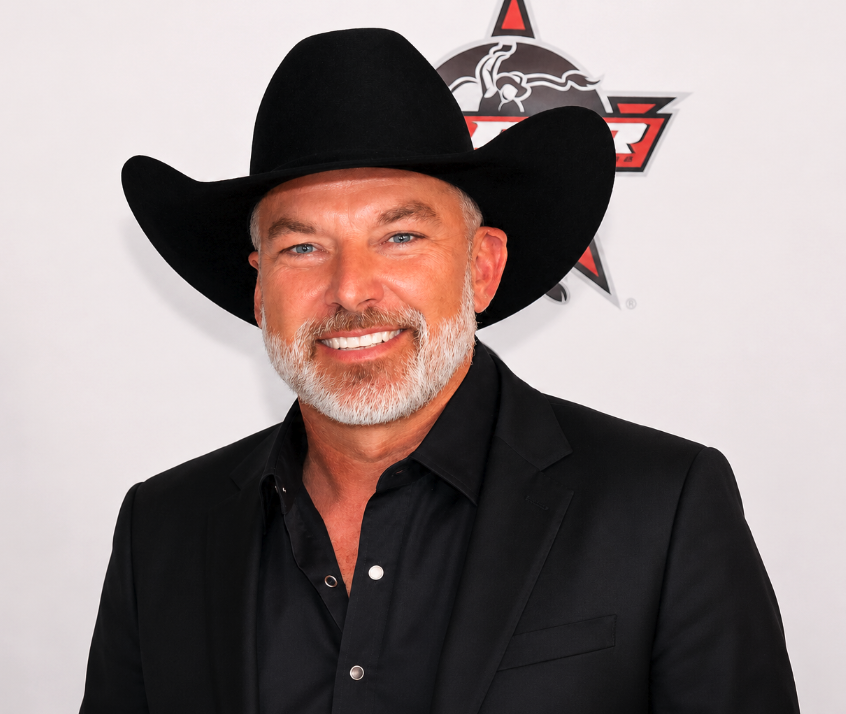
After spending 25 years helping run Nolan Ryan’s various sports holdings under the Ryan Sanders Sports & Entertainment Umbrella, JJ made a jump to professional bull riding in February of this year. He’s heading up the Austin Gamblers, one of the eight founding franchises of the new PBR (Professional Bull Riders) Team Series.
JJ Gottsch is the longest-tenured employee with Ryan Sanders Sports & Entertainment and has played a key role in the development of both the Round Rock Express (Houston Astros Triple-A) and Corpus Christi Hooks (Astros Double-A). He was promoted to his current position, COO, in January 2015. In this role, he oversees all business operations for the Express, RS3 Turf, RS3 Strategic Hospitality, as well as the company’s growing entertainment division. Gottsch was president of the Hooks for the club’s first five years, where his leadership and experience helped them draw more than two million fans in their first four seasons.
Prior to his position in Corpus Christi, Gottsch served as assistant general manager for the Express during the first six years of the organization’s existence. Gottsch helped lead the franchise to record-setting attendance numbers, establishing a new Double-A home attendance record with 660,110 fans in the club’s first year, eclipsing the old attendance mark that had stood for 20 years. The franchise would proceed to break its own attendance standard in each successive season with Gottsch on board as a steadying influence.
A former player, Gottsch’s professional career included time with the Butte Copper Kings in the Pioneer League and the Perth Baseball Club in the Western Australia Baseball League. At the collegiate level, Gottsch played for Creighton University as well as TCU, where he was a member of the Horned Frogs1994 Southwest Conference Championship and NCAA Regional team. He transferred to TCU after spending three years at Creighton, where he was a shortstop on the 1991 Bluejay team that advanced to the College World Series.
JJ Gottsch
Ed Molitor
It's the athletes that are on the court and on the field that, that are ultimately playing the game, but it starts and ends with ownership. We're all really hearkening back into the, the love story that created this whole country, but the grit and determination it took, that's what kind of bull riding to a certain extent I think exemplifies.
Greatness is a thing for you. Like it's real. It isn't just, you know, pay lip service and we, we talk about checking boxes. It's not checking boxes. It's something that you strive for and you model every single day.
If you show up early, stay late, be intentional, work hard, be trustworthy, be loyal, have a goal and, and just stay focused on that goal and what's important, right?
Every team says they want to win, but winning takes more than just stockpiling talent. It takes trust, discipline, hard conversations, and leaders who know how to coach people through pressure. I'm Ed Molitor, and this [00:01:00] is The Athletics of Business, where the lessons of high-performing teams, elite athletes, and high-impact coaches become the playbook for more impactful leadership, stronger cultures, and
sustained success
JJ, welcome back to the Athletics and Business Podcast.
Man, it is so good to see you again. It's funny 'cause before we jumped on, I'm like, "Gosh, when's the last time we recorded an episode?" And I went back to my calendar, it's been since May 31st. Things have changed a little bit since then.
A little bit. A little bit. I don't know if I had gray hair then, right?
I was about 20 pounds lighter.
All's it means is you're that much wiser, right? That's-
Right. Somebody told me when I was younger that gray hair makes you look smarter, so I mean, I went all in. I leaned into the whole prospect and went gray everywhere. No.
It's a good look for you.
Yeah, well, it's my only look, Ed.
I don't have a whole lot of options. Not gonna- Has
anyone pointed you to Silver Fox yet?
Uh, I don't know. But I, you know, I just, I know I'm probably not gonna go the Just For Men route, so [00:02:00] I'm just kinda- ... embracing this and going with it. So it's been fun and, yeah, it's been amazing the last four years. You know, when we talked, you know, I think I had an idea of how this thing was gonna go and how we were gonna launch it and what was gonna happen.
But, uh, to sit here four years later, getting ready to go into our fifth PBR team season, all the things that have changed, you know, when we talked originally, we had eight teams. Back in '24, we expanded to 10. Going through expansion right now, we're gonna have 12 teams in 2027, expanding in new markets, into Fort Lauderdale, into Brooklyn, and all over.
So yeah, it's been amazing. You know, I didn't really know what to expect. I knew that it would be an exciting ride, but it's been so much fun and getting to work with the people, uh, you know, in our front office, our riders within the PBR, the whole kind of Western sports ecosphere. It's been amazing and just really have enjoyed the process and enjoyed everything in and around this
sport.
Like you said, when we talked in 2022, you had a vision, right? There was this idea, there was amazing people being brought on board. [00:03:00] Your ownership group, you went and got the best of the best, right? And you did the best you could with the resources you have. Did you have any idea that it would get to this point this quick, and how it's evolved and all of...
'Cause this isn't just about bull riding now, right? It's about an impact that you are having across generations, across socioeconomic divides, whatever, however you wanna word it. Like, it's become bigger than anything I think a lot of people envisioned.
Yeah, I mean, as you know, Ed, you've been around sports and professional sports your entire life, and yes, it's the athletes that are on the court and on the field that are ultimately playing the game, but it starts and ends with ownership, and we really do.
We have incredible owners with the Durbin family. Michael Dell is a minority investor in Russ the Cap Table. Have been incred-incredibly supportive. They were very clear with their goals. They wanted to create a best-in-class brand, a team that was a champion on and off the field, on and off the arena floor, and they backed that up.
And so [00:04:00] they've allowed us to go out and, from a on-the-dirt standpoint, go and get the best riders and the best coaching staff in the world. We've been able to do that year in and year out. We've added talent each year as we've gone, which has allowed us to be the winningest team in the first four years of the league.
We've got more championships than anybody, so in that aspect. But then also from the front office side, building the brand, because as you mentioned, you know, we ride bulls for five months during the season as a team. We've got 35 regular season games. We've only got one home weekend, and so when you've got three days that you're at home on a 365-day-a-year schedule, that doesn't really map out, so we've really tried to create a 365-day-a-year brand.
Our owners are also part of Man City, and that was one of the things they told us, is that it's-- Man City isn't just a soccer club, it's a brand, and it's a brand that's pumping out content and things every single day. And so we've really tried to do that and, you know, some people say this jokingly, but it, but it is a mission.
We want, you know, as you look at what the [00:05:00] Gamblers are to PBR teams, we are really striving to be kind of what the Yankees and the Dodgers are to baseball. You know? What, you know, what the Chiefs and the Cowboys are to football, what the Lakers and the Knicks are to basketball, and so we've really tried to create that brand, um, in addition to an, you know, a great bull riding team on the dirt and a great staff in the front office.
And, uh, again, but it starts and ends with ownership, because everybody can say that's what they want to do, that's how they want their team or brand to look, but if you don't support it and you can't execute it, it doesn't happen. And again, it starts and ends with owner ability and desire and willingness to support that actual dream and that goal.
You know, and oftentimes behind a very powerful brand most times behind a very powerful brand is an incredible culture. I'm curious, if I were just to walk in right now to the Austin Gamblers locker room, before I even saw a bull or a rider get up on a bull, like, what would I feel? What would I see?
What's the whole connection between the guys, between everybody in the [00:06:00] front office, between all the support staff? What's that feel like?
You know, it's evolved. You know, it's evolved over the first four years of the organization because we were extremely fortunate back in 2022 to have the overall first-round draft pick in the very first draft, able to select José Vitor Leme at that p- at that point.
But then, you know, we kind of fell down in the draft after that. And so, you know, we had a, a good team as we started 2022, but even by the end of that year, we started making moves and making trades. At the end of '22, and 2023, and 2024, every year we've made a significant move to get better. And by doing that, now we've got several world champions in our locker room.
And so now when you walk into that locker room, it's like, you know, walking into... Think about Golden State Warriors back in the day when they had, you know, that super team built, or think about some of these other teams. And it's just a different feeling because you've got some true professionals Not only guys that have been in the game for a long time, but guys that, that are at an [00:07:00] elite level.
So when you go into the locker room, there's not as much pumping up that you need to do with these guys, right? There's not as much, "Hey, rah, rah." Like, these guys are professionals. They need to know what to do. And so while it's a little bit more professional and maybe a little bit more quiet, it's still a good group because at the end of the day, these guys are all putting on the same uniform, putting themselves at the same risk, which is a different risk than anybody in any other profession.
And so there's a brotherhood and a unity that I think that's created when you do that. And again, I'm never gonna get on a bull, so my job is to go out and get the best riders and support them the best way that we can. And so I think by doing that, hopefully we've created a culture of bonding and unity that goes beyond just the locker room.
I know, you know, one of the things that we do each year, Ed, as we've talked about in the past, is we go to Brazil every year. More than half of the best bull riders in the world come from Brazil. And so just by nature of that, if you've got over half the best athletes in the world coming from one country, you probably need to be paying attention to that country and have some type of a [00:08:00] footprint there.
And so with our assistant coach, Adriano Moraes, who's the very first PBR world champion, first three-time world champion, he's our host there. And so we go to his ranch, spend a couple days there. We go to Americana, compete in a rodeo there in the PBR Brazil Iron Cowboy. But you know, it was interesting.
Each year, it's part recruiting, it's part team building and team culture, it's branding. You know, it's some international branding. But this year was really interesting. A majority of our team goes down every year. We had everybody but one rider go down this year. Two of our guys, Sage Kimzey, one of our American riders, first time ever.
Callum Miller from Australia, first time ever. Dalton Castle, another American, just his second time. But one of the things that we do is that- When the Brazilian riders come here, I don't think the American riders truly understand how difficult it is because not only are they just trying to do the toughest job in the world, which is stay on a 2,000-pound bull.
Oh, by the way, they don't know the language. They don't know how to probably order food. How are you going to open up a bank account and [00:09:00] finances? Oh, where are you going to live? How are you going to communicate with your landlord? Oh, how about school? How about church? And so all those things. And so by going to Brazil, taking our American riders there, I can say all I want beforehand, but until they get there, and all of a sudden now they can't speak the language from the moment we get off the airplane.
They can't-- we go to a little place to get coffee. They don't know how to order coffee or to get a breakfast sandwich or anything like that, to all the things, right? And they're like, "Okay, got it." And there's an appreciation that you just... It doesn't matter. You, you don't get until you're there, and you can't speak the language.
You can't order them. You don't know what the currency is, right? How do you handle this currency? And so they're like, "Okay, get it." And then also for the Brazilian guys to be like, "Okay, now it's our turn to shepherd these guys and help them along the way, make it easier for them to communicate, make it easier for them to order food."
And then our American guys are like, "All right, I need to be doing this back in the States [00:10:00] And of all four years, I think we've made a little impact, but this year alone probably we saw it the most, where the guys were really getting to understand it both ways, right? On one, how hard it is to go into another country, but two, how important it is to help and shepherd these guys.
So this trip, beyond just the bull riding and everything else, understanding different cultures. So going back to your original question, you know, I think the trip to Brazil this year was one of the most impactful we've ever had, and it helped with building that team culture and that locker room to where you can go in there and really feel the brotherhood and the unity of our team.
But, you know, we're not the only one. Every team is a little bit different. Every team has their own culture. But I think all 10 teams, all 10 coaches and GMs have done a really good job of creating their own little unique system and their own team dynamic.
And let's build on that trip to Brazil. I believe that bull riding tells a story and narrative about the American spirit and the spirit of our country.
This was a [00:11:00] significantly unique trip to Brazil this year with the 250th anniversary of the United States, and how did that tie into the trip, and what was that experience like for you?
Yeah, so this year was special. While we still went to Adriano Moraes' ranch and did some team building there, and while we still went to the PBR Brazil Iron Cowboy event, this year being America's 250th birthday, we were able to leverage a relationship and lean into this relationship with the US government, and specifically the US Consul General in São Paulo, to really tie in what's the natural fabric of both the history of the United States, the American West, and Western sports and Western heritage in Brazil.
While some people see Rio and everything else, it's a large country with a large ag community, right? And so a great appreciation and history in Western sports, in rodeo, in bull riding. And so to be able to lean into that was really special. And so it was kind of a two-part thing that we did. One, the event that we have is in a city called [00:12:00] Americana, and it was founded by folks that came down after the Civil War.
Uh, the Emperor of Brazil went up and, and said, "Listen, understand you're probably not happy here anymore in the South. If you'd like to come down to Brazil, we'll do some land grants for you." 30 to 50s came down on these... 30 to 50 families came down on these boats, came down and set up shop and really created this community.
And five, six generations later, there's folks still there. We were able to start our trip off there. We went to the Immigration Museum, which is really the history of the city, and not only got to see these families and some of the artifacts that they brought over, but got to meet some of their fifth and six generation family members that are still there.
Just an amazing story to kinda hear about how this was all started there. And then that transition into the big rodeo event, the Americana event with PBR Brazil. And we got to re- the Austin Gamblers got to represent not just the Gamblers, not just PBR, but all of America [00:13:00] as an, as America's team in this event.
And then it culminated on, on, on the Saturday night event to where they showed a, a bunch of American patriotic videos, and then we were able to introduce the consul general. He gave, you know, America 250 Challenger coin to the rodeo committee president. We had special jerseys made for the trip that were pretty cool.
So we've got both the Brazilian and the American marks. That is really cool. The actual Americana rodeo, and then the Freedom 250. This jersey's super special 'cause this is the actual game-worn jersey that Sage Kimzey rode in. He's our seven-time PRCA world champion, and he was not planning on riding. He was getting rest for the season, and then he found out w- they'd need somebody to do that, and if I did it, you know, could we raise some money?
And I'm like, "Yeah, absolutely. If you do it, we get a couple days to promote it." So he's like, "I'll do it." So he goes down there with no intention of riding, then says he's gonna do it. Over the next couple days we promote the fact that he's gonna ride last year's PBR Brazil world champion bull. They end up raising a [00:14:00] little over 300,000 Brazilian in just a couple days, and he ends up riding this bull on the night that we're celebrating America.
And it was just kind of this culmination of so many great things and so many great fields, and just got to not only be able to celebrate American culture in Brazil, but be able to represent America with the consul general and his team. And then as we were leaving town, we actually stopped in São Paulo before we went to the airport, and he hosted us at the US consul general residence and had a barbecue for us with a bunch of other dignitaries.
So again- Wow ... to be able to represent not just our team and our ownership and our sponsors and PBR, but to represent America and to partner with the consul general in another country, it was, yeah, I didn't have that on my bingo card.
I was gonna say, it had to be pretty surreal. Like, there had to be moments where you're sitting there like, "Is this really happening right now?
Like, is this really what this has come to? And I mean, how do we even go up another level next year?"
So- I didn't [00:15:00] really, I wasn't really paying attention to whatever the grandness or how cool it was, just 'cause I was really concerned about checking the box to run a show, staying on schedule, making sure, just felt the responsibility as leading the team to make sure that we were supposed to be when we were supposed to be there, and we were doing the things we were supposed to be doing.
But it was at that consul general's house after the barbecue, we're sitting there hanging out with him. We're having a cigar with him. We're literally having a cigar with the US consul general at his residence in São Paulo, and Adriano Moraes comes up to me. And Adriano's our assistant coach, one of the legends in the sport.
Again, as we talked about, first PBR world champion, first three-time world champion, is widely revered in Brazil. And he came up to me. He put both of his hands on my shoulders and he said, "JJ, I don't believe we're here." He goes, "55 years ago, I was born on a dirt floor out in the middle of the country. We had no money.
We had nothing. And to be able to grow up and to be able to have what I've had and the suc- success that I've had [00:16:00] But to now say that a kid that was born on a dirt floor 55 years ago, that I'm here today at the US Consul General's house celebrating America and Brazil's partnership, and being one of the ambassadors for Brazil and this team, he, he literally started crying.
And at that point I was like, "Oh, wow. Okay. This is real. This is a big deal." And so I think that was when it first kinda hit me, yeah, this was really special. And it was great because we got to do it three or four weeks in advance of July 4th, which gets me even more excited about, you know, the big celebration for this year.
Yeah, big celebration in Austin. I wanna go back to that, though, for a second. One of the things I love about you is your ability no matter where you are, you know, you go back to your time at Ryn Sanders Sports and Entertainment, and we recorded our first podcast prior to COVID, right? And then the second one kind of in the middle of it.
We were in the thick of it, and we had a great conversation. One of the things that you are amazing at, and you get the people around you to do it, is creating these moments, what [00:17:00] seem to be ordinary moments, but become very significant, right? You talk about what you just experienced and your recognition of what that meant, where you just were.
How have you been able to do that? I mean, you did it with Ryn Sanders Sports and Entertainment, you're doing it with the Austin Gamblers, you've done it with the City of Austin, right? Like, everywhere you go and everything you touch, it just doesn't turn to gold, but it turns to something meaningful.
I actually have been thinking about this lately, and I think there's a couple different answers to that.
Like, one is ideas are ideas, are just ideas unless you've got somebody to pay for it. And so we go back again to incredibly owners that have belief and trust the decisions you're making, and what you're doing with their business are gonna be successfully long-term. And then once you get the money and/or support from ownership, do you have a team around you to execute?
I've been so fortunate over, you know, the last 28 years of my career, is that I'm constantly surrounded and working with a great staff that knows how to execute. But I think the big [00:18:00] thing is, like, you know, what's the definition of luck, Eddie? It's what? Mm. The intersection of hard work and opportunity.
Yeah. And so I think one of the things that I've maybe never been afraid of is opportunity comes around all of us every day, and I think sometimes it's there and you just don't see it. I'm always looking for what is our opportunity and/or how can I leverage this, or what could be something really cool we, we could do with this.
And you just start talking about it out loud, you start talking with other people. How cra- you know, what about, how c- am I crazy for thinking this? What if we did this and this? And a lot of times people will look at me and say, "Yeah, you're absolutely crazy. We can't do that." But then it's like, okay, what's- You know, you're looking at somebody and they're like, "Okay, we could do it, but it's gonna take X, Y, and Z."
And so then you're like, "All right, well, let's see if we can fix X, Y, and Z." And so I, I think for me, it's just been, again, one, none of this stuff could happen without support from ownership and without a great staff that [00:19:00] you're working with, right? Not people that are working for you, but people that are working with you.
But I think the other thing is just, yeah, it's probably gonna be extra work and we weren't planning on it But it could be pretty cool, right? And so, you know, these, this, you know, we talked about Brazil, and there was that kind of somewhat relationship that we had with the US consul general and the government by way of working with them to try to get rider visas and everything else.
But then just this opportunity came up, right? They needed it, they needed and wanted to celebrate the 250th anniversary of our country in an authentic way. We were coming down and had this special program kind of already in place, and so we were able to marry those two together. We just had a great thing we did last weekend where we have our next Gambler event, which is kind of the bull riding version of America's Got Talent or The Voice or The Ultimate Fighter, where we pair young up-and-coming talent, and we have those, that talent divided in a team and coached by our current riders.
So we're going into our third year for this event. It's a little bit of a scouting, talent recognition event, but also from a branding standpoint, it's been a [00:20:00] great event for us. But this year we're like, "We need something new. We need something different." We met Johnny Jonkowski in Billings, Montana in April.
Got invited to the premiere of her doc on Montana PBS called Johnny. And for those that don't know, she is American badass. She is the Billie Jean King of bull riding. People our age, Ed, I think maybe could kind of remember, but maybe not, but, like, she was on every major talk show from Letterman to Leno, Carson, all of those.
She was on George Michael's Sports Machine. She was on American Gladiators. Like-
Yeah ...
things that, like, you and I can remember, but the real-
That date right there, by the way, the George Michael's Sports Machine.
Yeah. That date. She was on the-
Yes.
And here's the thing, like, in this documentary, like, Ty Murray, who's the one of the greatest cowboys of all time says, "You know what?
I wasn't on George Michael's Spike Sports Machine." So that just kind of tells you she was training for the Olympics in '76 in the pentathlon, was essentially if she just kind of cruised on through it, she was gonna qualify. She gets tripped [00:21:00] up on the hurdles, smashes her head. She's out, goes into a funk, tries to figure out what she's gonna do, and so she goes all in on bull riding of all things.
But anyway, got to meet her and I'm like, "How did I not know this story? This is amazing. Like, we need to help you tell your story," because now she's running this nonprofit called Angel Horses to where she basically rehabilitates horses that are going to the death mill, and then she utilizes them as caregivers and touch therapy for elderly patients.
And so it's just this amazing story. I'm like, "We gotta help you tell this story." So we start thinking of different ways, and we'll bring you to Gambler days and so on and so forth. And then we're sitting around one day about a month ago and we're like, we've got this other relationship with this gal named Jordan Halverson, who is a current professional bull rider.
I reached out, I said, "Jordan, do you think that you could put together a small bull riding event that we could put into this next Gambler, get four or five girls?" And she's like, "Yeah." So literally over about- 36 hours, we contact Johnny, "Do you want to come down and be the honorary coach, help lead these girls?
Jordan, do [00:22:00] you help us get the girls, contact the rodeo director to help us set up all the production?" So we just, in 36 hours, created this new event, baked it into our other event. We just held it last weekend, and it was amazing, the exposure and promotion and excitement around it. We got a sponsor involved.
The sponsor got so excited during the event that they took the prize money from that, what was gonna be $1,000 split between the three ladies, to 10,000 for the winner, 5,000 for second place, and 2,000 for third place on the spot just because the excitement. How cool
is that?
And so it's just, it's, you know, leveraging those opportunities when they're there, right?
And even if they don't... Running them out, run the idea out to see if it's gonna work before just saying no it can't without really pressure testing it. So that was a really fun one, and for me personally, I know you're a girl dad, too. You know, 26, I'm here in Austin, Texas, and within the last year I've gotten to take my daughter to a AA exhibition game with the Las Vegas Aces and [00:23:00] Dallas Wings.
She's gone to multiple love volleyball games where the Austin team is the defending two-time champion. There's now professional softball with Athletes Unlimited and Cat Osterman. Yeah. Five years ago, those weren't those things. And so for now, for my 12-year-old to not only see that, not to say, "Hey, I'm gonna go there and be a professional volleyball player or basketball player, softball," but all the things around it, right?
Because it's more than just the athletes on the field. Female GMs, female agents, female scouts, female everybody in the front office, all the things that go around it, the ecosystem that is built in and around created so many more opportunities for women, and I'm just fired up. And so, like, I'm taking my daughter to do as many of these things as I can 'cause she knows what I do, right?
But now to be able to see her in the different opportunities in the different sports. And so this bull riding event was great. We took her out to that. She's definitely not getting on a bull. We do know-
Wow, that's definitely
Yeah. Yeah, she's not getting a bull. No. We do know that
You know, I'm gonna ask you a que- it, this just popped into my [00:24:00] head because the, the PBR, and, and by the way, it's blows me away it's been so long since we recorded an episode.
We need to talk about the ride, and we need to talk about what that did for the Austin Gamblers and PBR, and we'll get to that. But it- as I sit here and listen to you talk, for me, the PBR i- i- in the team series has so much substance, and there's so much that people can learn from it. And I feel like you guys are getting so much right that other professional sports are getting wrong.
Is that fair? And I'm not trying to put you on the spot here, but I just feel like there's something that you folks are doing that's really refreshing, and it's really, it, you, it's really new.
It's funny you say it's refreshing and new, but the r- so the sport is new to people, but the sport of bull riding and western sports and rough stock has been around since the late 1800s, right?
So the sport isn't new, but it's new to a m- majority of the American people. And I think it's refreshing [00:25:00] because just the brutality of it, and then it's like life, right? And you can't cheat, right? You, it's eight seconds, and you either stay on or you stay off, right? Or you get bucked off. And I've been watching the World Cup, and Eddie, I want to get into soccer so bad, but this flopping, it just told me the- That's the
cloth you're cut from too, right?
Like- I- it, well, to go and see what our guys go through on a weekly basis every week through practice a- and through riding on the weekends, and the team season and the individual season, and what they go through to be able to go back in in their craft is ... And then to see that or to see, hey, who, God, that guy's a great basketball player, but the, the flopping, right?
And him and LeBron, and it's just like ... So I think there's that piece of it, is that just the courageous nature of what our guys go and do every day. You know, we've talked, I think we talked about this in a podcast before, but bull riding wasn't invented for social media. But you think about sports, what has baseball been trying to do for [00:26:00] so long is increase pace of play, shorten the game time, right?
How do we compact this thing and make everything shorter and quicker and more exciting? Our sport is literally built for social media, and obviously in 1880, whatever, they didn't know that was gonna happen. But Think about it, Ed. Eight seconds, wreck. Eight seconds, wreck. Eight seconds, wreck. And kids can just not just swipe online, but that's literally the visual experience.
So not only is it great from an adult standpoint because you just see the courageousness and the bravery that these guys put, but for kids, it's able to keep their attention because of the short nature of each one of the rides. And so I think, yes, it's new and refreshing, but it's been around forever, and I think it's just the values that people are leaning back into, right?
As we celebrate America's 250th birthday, you think about the grit and the resolve that it took the founders and the folks that really created this country and what they had to go through to not only fight for their country, but develop the [00:27:00] colonies and all those things, and we're all really hearkening back into the love story that created this whole country.
But the grit and determination it took, that's what kinda bull riding, to a certain extent, I think exemplifies the kinda grit, determination to get knocked down, to get injured, to get brutally hurt and to come back, that's what these guys do. And so I think to your point, when you say refreshing, maybe that's the box that's being checked.
Well, it, you know, in the international flavor, right, learning from others and learning and, and including others from different countries and in giving them input and taking their ideas and run with it. I mean, it truly embodies what this country was built on. I've got to bring you back to what we were talking about before we started recording 'cause you just triggered something.
I watched a great podcast episode you did with Excellent Leader, okay, back in, I think it was December of '25. Phenomenal podcast, and you talked about your upbringing and your childhood, which we talked about on episode 53, 1,000 years ago when we first had you on. But you talked about [00:28:00] just figuring it out, and you talked about, like, where you found joy.
And when I go back and look at what you did with Ryan Sanders in sports, Ryan Sanders Sports Entertainment, and you said it earlier before we started recording, it's, it was America's pastime, and you just touched on the fact that although bull riding is new to us, it's something that's been around. How different was it to build something meaningful and so successful in America's pastime versus a sport that people view as new to the United States that the success you guys had has been unbelievable?
What was the difference there?
Yeah. So, you know, when the Ryans and the Sanders and myself, when we started the ballpark and the team and the vision here in Central Texas back in '97, '98, as we would go out and do speaking engagement to local civic clubs and civic groups and business leaders, going and talking about baseball or Minor League Baseball, professional baseball, almost every single person in the room had played baseball as a kid or [00:29:00] softball as a kid and maybe played it through high school, and then depending upon their level.
So we were talking about a sport that everybody knew and most everybody continued to follow, especially here in Texas with the Rangers and the Astros. Fast-forward five years, we go to Corpus Christi, you know, 304, same thing. Everybody we talked to from the local civic groups, talking to the chamber of commerce, talking to various business leaders, everybody knew.
Like, everybody played baseball or had been around the game. So there wasn't a whole lot of explanation, so we just got into what we were gonna do, what this was gonna be unique to this community, this team, and this stadium. So fast-forward to 2022 when we start this process here. You know, I'm gonna go along with that same game plan, and I go down and sit with civic leaders in the chamber of commerce luncheons and various potential sponsors and business leaders.
Like, okay- So what is PBR? And so wait, what's the difference between PBR teams and PBR? And so are you guys part of the rodeo? No, we're not part of the rodeo. We're different from the rodeo. That's PRCA. Well, what's PR- So you guys are a full season? No, we go half season. And then, so the biggest [00:30:00] difference was, is that it's, while the sport has been around a long time, it's not been in front of a lot of people.
Like when you were a kid, Ed, and most people, you could pick up a ball and a glove and go with your buddies and either play catch in the front yard or go to the local little league field, play home run derby. You'd grab a basketball, play at your house, your buddy's house, or up at the school. Football, soccer, whatever it is.
You're not just gonna get up with your buddies and walk down the street and just go get on a bull somewhere, if you're growing up in the city or anywhere else. And so there's just not a lot of people that did it. So the biggest difference, going back to your question, was the niche sport aspect of this.
And even though being in Texas and being in Austin, which is geographically the center of Texas, this is the most non-Texas Texas city. You know, we know we've got over two and a half million people, I think, in the MSA. You know, not many people when you're walking the streets of Austin, if you meet them, they're not from Austin.
They're not from here. They're from California. They're from Chicago. They're from New York. You know, they didn't grow up on a ranch. They probably haven't been on a horse. They may not have been to a rodeo. [00:31:00] And so it's this explanation process, and it's really the education. And so where if I'd go to a meeting in the old days and talk baseball, it was a half an hour to an hour of just talking about baseball and then kind of what was gonna be our special thing.
This, before I even really get into the Gamblers and who and what we are, it's a half hour of education of trying to tell people what and who PBR is, PBR teams, the difference between PRCA and rodeo, and all those things. And it's not easy to keep someone's attention. And as opposed to just promoting and talking about your brand, you're having to educate on the backbone of what the sport is.
And so that's been the most challenging thing, but once we get people over the hump, we get them to an event and they see it live, they're like, "Got it." 'Cause I can tell them, I can show you a video, you can watch it on TV, but until you come to an actual PBR teams event, different from PRCA, different from rodeo, and even different from the individual PBR [00:32:00] season.
Once you come to a PBR teams event, you feel it, you see it. It's just a completely different feeling. It's this euphoric exercise of everything that is great about America and sports, and you just ... It's adrenaline-filled, and it's not only can you see it and you can hear it, but you can feel it. Once you get down on and near the dirt, you are there, you can feel the power of those bulls, and that's something that's unlike any other sport, right?
And so it's, um, that's probably the biggest thing, is just the niche aspect of the sport and having to educate people before we really get into the promotion of it.
And what we loved, and that was w- when you were ... I mean, that was so cool. You get us in one of the dirt suites, and the kids obviously were much younger then.
Their eyes, I mean, every time a bull came out of the chute, there was something new, right? And then the sideshow and everything that was going on, and obviously, I mean, you're in there and it's energy nonstop. Love baseball. Baseball's great. I mean, you get about five total minutes of excitement during a nine-inning game, all right?
Don't get me wrong, I love it. Now, if you're at Wrigley, it's something different. [00:33:00] But the bull riding, it's just, it's up here the entire time. Now, speaking of something new, as we have to wind down, 'cause w- we have a, a new feature here. It's our lightning round. We just shoot questions at you, quick answers, okay?
But before we get to that- You're trading in your cowboy boots, or maybe these are your dancing shoes, but you're trading in your cowboy boots for dancing shoes, and you're doing Dancing with the Stars in Austin for an amazing cause. I tip my hat to you. If I remember correctly, your mom owned a dance studio, and I'm just really curious.
First of all, A, tell us about Dancing with the Stars, but did your confidence to be able to put yourself out there in something like this have anything to do with your childhood hanging around a dance studio?
No, it didn't. Yeah, so the event is Dancing with the Stars Austin. It's in support of the Center for Child Protection here in A- in Austin, and it's just an amazing, amazing organization that helps the most vulnerable kids that have been betrayed by the people that are, are entrusted with taking care of them.
So [00:34:00] that in and of itself made it an easy decision, like, that if I can go out and embarrass myself to raise money for kids, like, that's a no-brainer. You know, really it's, it's not just me, though. It's, again, as we talked about before, it's with amazing support from our ownership, and this is really a team initiative.
This isn't me. This is me representing the Austin Gamblers. And so, uh, yeah, it's in December. I've already started training. We got a professional instructor, and she, God bless her, she's got a lot of work to do with me. I will be wearing cowboy boots, but she's got a lot of work to do. But here's my thing.
I'm like, "Listen, I'm gonna get embarrassed, right?" That box is checked. We know that. But so if I'm gonna get embarrassed, we might as... I told her, "We might as well have fun. We might as well try to win this thing because I'm competitive, and let's raise as much money as we can." And so-
That doesn't shock me, by the way.
Yeah, so we're kind of leaning into this thing, 'cause if we're gonna do it, we- let's try to do it right. You know, but as it related to, no, I don't have... So I grew up more in the bowling alley. My mom had, like, four or five different businesses. She, you know, worked with my dad at the bowling [00:35:00] alley. She had a dance studio.
She owned a travel agency. She had a lot of different things. I did not hang out at the dance studio, and I did not pick up any of those things from her. So yeah, so I'm going into this a little bit cold, but I got a great attitude- Yeah ... and a lot of energy. So-
Oh,
you'll kill
it ...
and my partner's been great, and- Yeah
and really, the Center for Child Protection just provide you with a lot of assets and support. And so again, yes, it's gonna be embarrassing, but again- Uh- ... hopefully it's fun. Hopefully we win, and most, most importantly, hope we r- raise a lot of money for this charity.
Yeah, and speaking of which, is it too early for us, when we put the show notes out there, can we put a link to the- Sure
where people can donate to that amazing- Yeah ... cause in the show notes? Yeah. We'll get that out there. We'll put that in our social media post as well. So- Awesome ... we'll do that. So are you ready for the lightning round here as we wind down?
Let's do it.
All right. Favorite bull you ever watched?
Bodacious.
Man-hater. Or,
Ma-
Bodacious or Man-hater. Okay. Bodacious, because Bodacious I saw on TV. Man-hater I got to watch in person the last couple years.
So we'll go with Man-hater. All right. And that's a great name for a [00:36:00] bull, too, by the way. Toughest bus- decision you have made with the Gamblers?
Having to trade or release a rider that we really liked on a personal level.
By the way, I know this is not what I'm supposed to do during a lightning round. But I had the opportunity to sit at a bar and have a great steak with you while you're negotiating trades and contracts, and that's something, that's a core memory of mine, okay? So thank you for that, JJ. All right, one athlete who changed your view of leadership.
And it doesn't, doesn't have to be bull riding. It can be bull riding, but one athlete.
Nolan Ryan.
Yeah.
That's easy.
One book every CEO should read today.
That's a good one. And for a lightning round, there's... It really depends on what the business is, right? And what the culture is around it. You know, there's a book, I think maybe Everyday Warrior by Michael Storler.
Yeah. Great book. All right, one thing fans still do not understand about bull riding.
This is supposed to be a lightning round, but I'm gonna go- Yes. So to the un- and I'm saying that not disrespectfully, a lot of people that are new to the sport or are not watching [00:37:00] the sport think that the bulls buck because the rope is tied around the bull's testicles, which is just not possible, as you and I as males would know that if they were- Yes
we wouldn't do that. So probably that, but then I think even more educated, just, you know, the more you get into the sport, sometimes the more confusing it gets. And so I think- Yeah ... probably really and truly how a bull ride is scored
Yep. One word, and I love this one, one word that defines the Austin Gamblers.
One word.
Champions.
leadership is... Leading by example. Awesome. All right. Before we get to our closing question, where can folks find out more about you, find out more about the Austin Gamblers, e- everything included, Dancing with the Stars. Where can they find all that great stuff?
Easiest way is obviously austingamblers.com, and then our social media and content team does an amazing job. We're on pretty much every platform, and we try to really create unique messaging for the audiences because those different platforms [00:38:00] have different audiences. So following us there. I'm on most of the social media stuff as well.
But yeah, really, austingamblers.com or any of our associated social media pages, which we can certainly put the links to on the show notes.
Now, you've spent your entire career-- I mean, you just alluded to the fact how competitive you are. Greatness is a thing for you, like it's real. It isn't just, you don't pay lip service.
We, we talk about checking boxes. It's not checking boxes. It's something that you strive for, and you model every single day. So during your career, world champions, Hall of Famers, one of the fastest-growing sports organizations and leagues in the United States of America. After everything you've learnt, how does or what does greatness actually look like now to you than it did 10 years ago?
I come back to this, Ed, and it's sometimes people that write books or do podcasts or go out and speak probably don't like it, but it just comes back to the fundamentals and consistency, right? If you really think about, like, your physical health, [00:39:00] the end of the day, if everybody would just eat-- not eat ultra-processed foods, stay hydrated, get out, work out, do some, you know, resistance training, and get eight hours of sleep, ninety-five percent of the people would be okay.
There are some people with other outlying health issues, but, like, there's that. And then when you go to the work side of this, Ed, right? Show up. You know, it's what-- the advice that I give to every kid that's graduating from high school to college, and their parents say, "Would you..." I say, "Show up." Just show up every day to class.
Show up every day to class, it's gonna be almost impossible for you to fail. And then when you show up, show up early, stay late, be intentional, right? Stay focused, right? I've got some good friends and, you know, I've asked them, like, "You know, what is your thoughts on, like, life work balance?" He's like, "I...
There, there's not." Like he goes, "But my secret is, my cheat code is that when I get up, I don't jack around the house, get a cup of coffee, watch the morning news, read the news." He's like, "When I get up, I take a shower and I get after it, and I work all [00:40:00] day, and then I didn't lose an hour or two. I'm not at the water cooler hanging out with the other employees.
I'm not checking my fantasy football draft." He goes, "When I'm there, I'm working, I'm getting it done, and then I can go to vote and I can focus on family and everything else." And so I think, and what I've learned is just the truths that if you show up early, stay late, be intentional, work hard, be trustworthy, be loyal, have a goal, and just stay focused on that goal and what's important, right?
Like all the other stuff is just noise and kind of little background stuff, but it's just... I think what I've learned is, and it's not easy, right? It's not easy to do all those things with your physical health or with business to stay consistent and to stay disciplined. And I think in that book we referenced earlier, Michael Sorelle, uh, Everyday Warrior, I think the two common themes are consistency and discipline, right?
Ideas are great, but if you don't carry them out every day with passion, with a purpose, it's just hard to be successful. Some people can. It's funny, I... We're going off track a little bit. I'm gonna screw up your lightning [00:41:00] round. Which is lovely. But I thought about, but I thought about this this morning, and this should be an, this could be an interesting thing.
I didn't have enough time to look it up. But I think so many times people now, especially middle-aged to younger people, are, like, wanting to create this life that they see on social media, where you're successful in business, but yet you're traveling every weekend, and you have these amazing things that are happening in your life, and then you start another business, and then you're a founder here, and you're a creator here.
Well, the reality is this, Ed, it's kinda like college football. You got two quarterbacks, you don't have one, right? And so if you're doing two or three different things or trying to, then you're not gonna ultimately be successful at one. And then I think about athletics and athletes. What is the percentage?
What we and I need to find out is what is the percentage of kids that play sports in high school actually make it to professional sports? So I think that's the first question, right?
Yep.
Mm-hmm. And the second-
I think it's, like, point... I think it's .2, something like that. But anyway-
Okay.
We'll
look it up though.
So it's... So we'll just say it's .0 to be elite in one thing, [00:42:00] right? To be elite. Okay, what about to be elite in two things as an athlete? So I got, in my mind, I got Bo Jackson, Deion Sanders, Danny Ainge to a certain extent. How many others, right? So since, I think, I'm guessing Danny Ainge- Johnny Ward. Yeah. So I'm thinking probably Danny Ainge is probably the oldest of those.
So let's go from the birth year of when Danny Ainge was born till now. How many people have been elite at two sports, right? So that's probably zero, zero, zero, whatever it is. So I think that goes back to my point. I was like, yeah, it's great to, to watch social media and to have all these visions of grandeur to where you're gonna be a CEO and you're gonna run two startups, and then you're gonna sell those off, and then you're gonna do this, and then you're also gonna be vacationing every week.
Like, for 95% of the people in the world, that's just not reality. You can't do it. And I hate to pee in your cornflakes, but if you wanna be elite at something-
Yeah ...
it's really hard to try and do two or three different things.
I love it. JJ, I [00:43:00] appreciate your time. I'm sorry I kept you over. Always fun. We cannot wait four more years to do this again, all right?
Uh-
We should do a podcast during a bull riding event.
You know what? I think that'd be awesome. And actually, can we mic up G? I think that'd be fabulous- Oh, yeah ... if we could.
Yeah,
absolutely. You know, actually, you and I could talk to him during the event.
Yeah, let's do it.
Yeah.
All right. We're gonna run that idea out, and we're gonna make that happen.
All right. JJ, thank you so much, man. I appreciate you as always. Okay, best of luck to you.
All right. Thanks, Eddie.
Thank you for listening to The Athletics of Business. Be sure to give us a rating and review so we know how we're doing. For more information about the show, visit theathleticsofbusiness.com.
Now, get out there, think, act, and execute at the highest level to unleash your greatness