

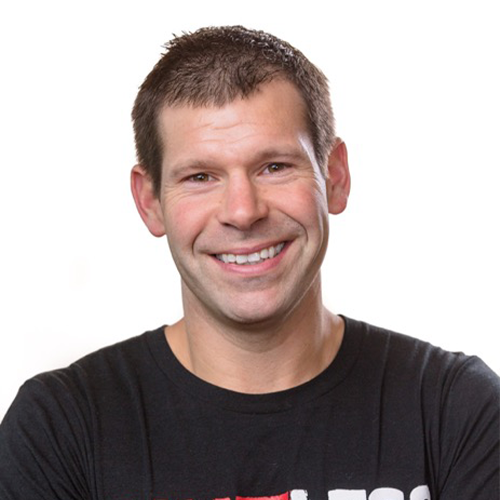
Adam is the founder and CEO of Adam Hergenrother Companies, which includes KW Vermont, Hergenrother Realty Group, BlackRock Construction, Adam Hergenrother Training, and Adam Hergenrother Foundation. Adam has grown these companies into a $1 billion organization by creating a culture where personal growth and work-life integration come first.
Adam thrives on taking on physical challenges including Bikram yoga, hiking, Ironman races, white-water rafting, skiing, and more. He fuels his mind and spirit with 40 minutes a day of meditation, and spends as much time as possible outdoors with his family and friends.
All of this is simple, but not easy. Life is hard. Business building is hard. There are daily struggles to overcome. It’s about finding the gift in all of life’s experiences and understanding that you have the power to unleash joy!
Adam lives in South Burlington, Vermont, with his wife, Sarah, and three children, Sienna, Asher, and Madelyn.
Welcome to the Athletics of Business, a podcast about how the traits and behaviors of elite athletes and remarkable business leaders frequently intersect. The real stories and hard lessons to help you level up your leadership and performance. Now your host, Ed Molitor.
Welcome back to another episode of the Athletics of Business podcast. I am your host and CEO of the Molitor Group, Ed Molitor. Now pay attention to what I'm about to say, because today's podcast episode, I mean, all of them are outstanding, phenomenal guests. Up and down the line, up and down the list of all these wonderful guests that I have been blessed to have on the podcast today, I'm going to tell you, our guest, Adam Hergenrother, pour so much value out there in each and every sentence. There's no way wasted time. A lot like the way he does things, right? Everything has so much value in it. So pay attention, turn it up, don't be distracted. Listen to it a second time, a third time, a fourth time. I am on my fourth listen, going through it.
I guarantee you will walk away and take something that's immediately applicable in your life. Adam Hergenrother is founder and CEO of Adam HergenRother Companies, which includes KW, Vermont Keller Williams, Vermont Hergen, Rother Realty Group, Blackrock Construction, Adam Hergenrother Training, and Adam Hergenrother Foundation. Now listen to this. In less than 10 years, okay, now this shows you he knows what he's talking about. In less than 10 years, Adam has built these rapidly growing companies into a $1 billion organization. That's a billion with the B. A one billion dollar organization. Through his commitment to thinking big and never giving up. Fearless and purposeful, unconventional and systematic. And Adam's gonna talk about all of that, okay? Adam sets a seemingly impossible goal, then quickly gets to work to develop leaders in order to close the gap. That's just a huge statement right there.
He sets a seemingly impossible goal, then quickly gets to work to develop leaders in order to close that gap. Adam thrives on taking on physical challenges, including Bikram yoga, which is no joke. I can attest to that. Hiking, ironman races, whitewater rafting, skiing, and more. He fuels his mind and spirit with 40 minutes a day of meditation and spends as much time as possible outdoors with his family and friends. And we're going to get into the Ironman racing and where he started the process and where he is now. And I think you're going to. You're going to love that. You'll be fascinated by that. And if you think that you can't do something physically, regardless of your age. Well, you're off your rocker, okay? Because he's going to prove you wrong. Now, all this is simple but not easy.
Isn't that something we talk about all the time? It's simple, but not easy. Life is hard. Business building is hard. There are daily struggles to overcome, and it's about finding the gift in all of life's experiences and understanding that you have the power to unleash joy. Now, what are we going to talk about today? Okay. We're going to talk about the impact that Gary Keller had on him and still to this day has on him. And it's similar, if you remember episode number 17 with David Osborne. David talked about Gary, the impact he had on him as well. Adam really is going to open up, and he talks and gets very transparent and holds nothing back, sharing his story with us. And we go back to his freshman year in high school when he was 100 pounds overweight.
He was into drugs, and we're going to talk about what he did, first of all, what the catalyst was to create that change. You know, we always talk about people change when the pain of failure becomes greater than the pain of change. Adam's going to share an experience with us and what he did in his senior year in high school. Get this, he was the captain of a state championship football team. Okay? He's gonna talk about what he did. He's gonna share with us five questions that you should ask yourself every day. The significance of being purposeful and what that has meant to Adam in his business and his personal life. And then he's gonna talk about the three things he looks for in people when he is hiring them.
Not just what he looks for, but what his organization looks for when hiring people. And I think this is very significant because think back to what I just said. He trains leaders, develops leaders to close that gap, that performance gap, right? And then here's something I love. We start talking about, you know, his passion for doing Ironman races. And Adam's going to share with us, and I don't want to give it away, but he's going to talk about before he started training for a half Ironman. He had never swam. I think he said he never swam a length of a pool before nonstop. He never done or had only done a 5k race. And the only biking he had ever done was mountain biking. Okay?
But he talks about that the key to his success in triathlons is the same as his key to his success in building a billion dollar business. And that's models, systems, and processes. Now, I didn't really give anything away because we all know that, but he's going to talk into how he leveraged all of those and how he executed everything to become so accomplished. Now, I'm telling you don't want to miss this. Enjoy it. And as I always say, I hope you enjoy this half as much as I enjoyed recording it. Adam, thank you so much for joining us today on the Athletics of Business podcast. I am humbled and I am fired up to spend some time with you.
Well, thanks so much. Before we jump in, Eddie, and I just want to thank you. I know how much time and energy goes into putting these things on in the valuable information that all of your guests are providing in the lives that you are changing. So from everybody who listens, thank you.
Well, I appreciate that, Adam, and, you know, I will put that right back on you, because the real superstar of this is our outstanding guest. And, Adam, can you just kind of take. Take us back to your journey and what brought you to where you are today and the massive success you're experiencing?
Yeah, you know, I always like to deconstruct myself and just bring it myself down. My always goal is to kind of bring myself down to a level that anybody's listening to this can just say, hey, you know what I can do? If this guy can do it, then I can definitely do it. Right? So up until I was about 16 years of age, Ed, I was, you know, at my peak when I was 16, I was 100 pounds overweight, a little over 100 pounds overweight. And I was in the drugs, I was failing classes, and I was really that role model student that you wanted your kid to hang out with, right? Yeah, exactly.
And, you know, one day I came home early on as a freshman, and I just started crying, and I literally just went to my room and I just, you know, decisions are made in seconds. But it was really 16 years of pain, insecurity, lying. Right. Because I just was always trying to be somebody else. I was trying to envision what other people wanted me to say to hopefully like them, because I just wasn't happy with who I was. And I can say it obviously a lot more articulate than I can now than I could back then. But I just knew that there was so much more to life. And I was just at a place where I didn't care anymore what the outcome was. I just knew I was not going to live this life anymore.
And a lot of people ask me when they're Interviewing this, and they say, what was that point? What was that moment? And all I can say is that I believe it was 16 years in the making to that moment. And then that moment, I just had so much pain that I saw two options. It was either. It was almost like I visualized me staying in this path and then to seeing myself be nothing or making a change. And I didn't know where I was going to end up. I had no idea I was going to be sitting here doing this. But I knew that there was something more, and I chose that option. A lot of us in life get to that point, and unfortunately, we are, too.
We don't have always the courage to jump through that circle to find out where life can really take us, right? So within a year, I lost £100. I stopped hanging out with all the people that I was hanging out with. And a side note on this is within two weeks of me hanging out with literally just the next day. Well, first of all, that night, I stayed up all night crying, visualizing, literally visualizing what I wanted my life to look like. And it's not like, visualizing, like, positive thinking, like, hey, there's weeds in the gardens, and there's no weeds in the gardens. It was more of, like, really just kind of getting clear image, like, in your mind's eye. Like, if I said, think of an apple, right? Everyone can think of an apple.
And it's funny is when I ask that question, people either think of a green apple or a red apple and then have emotions based on whether apple picking was fun for them. So you can have that mind's eye of what it is that you want to look for. And so I just started creating that image of what that looked like. And it was more on the athletic side. I wanted to get into that. So I stopped hanging out with them. And then in two weeks, they stole everything I had. They broke my car, they smashed my windows.
They.
Police were there. My dad showed up in the parking lot one day with a gun, right? Like, I mean, it was like, it got out of hand in high school. And then I was kind of floating because literally the next day stopped. This left all these people, and I kind of didn't have it. So sports was what brought me into this, right? That's why I have such an affinity for sponsoring. Our foundation sponsors kids and youth, because sports gave me an avenue to be able to become who I am today. So I ended up becoming captain of my football team over the course of a couple years, won the state championship. I lost 100 pounds. I found a new group to hang out with.
The funny thing is, the new group of people that I hang out with in my high school, a lot of them work for me now, which is the most hilarious thing in there. So it was really cool. And I love them. I love them dearly. And then so we kind of jumped through there. And so fast forward a little bit through high school. I got into college. And there's two important things that happened in college that will resonate with this story for people is one is the first time I felt leverage, because that's how you think it's important in business. And number one was I was a freshman in high school or in college at this time, and I had about $700 in my name.
And a friend of mine who was not in college but in college, if that makes sense to you, like, stayed on my room. Yeah, exactly. Right. One of those guys. Yeah. Came to me one day. Him and his dad had a car dealership, and he said, hey, look, I got this car I think we can buy for 1,000 bucks, and I think we can sell it for $1,500. He's like, I need $500 from you. And I had $700. Remember, I didn't have no income source. My parents weren't wealthy. Like, I just said $700. So I took $500 of it and I gave it to him, and he went out there, and like a week later, we ended up selling it for two grand. I think we made like a thousand dollars each. Made like 500 bucks. I doubled my money.
But the key fact, it wasn't even the money amount. I never saw the car. I never did any work to it. My money, my capital asset allocation worked for me. Right? And so that was a key. That was the first time I felt how money can work for you. And money is truly a tool in your life. There's a lot of. I believe that money represents a spiritual reflection of our inner thinking that's later on in life. But how I do now. But at that moment, I just felt that. So we ended up staying with this, and I kept rolling my money over, and I ended up making, like, 60 grand within a year. And I also learned about contracts because at some point in time, he's like, I don't need your money anymore, dude, so thanks. Right?
And he just started doing all this stuff. So I got to learn about contracts that way, too. But I took that money and I rolled it into. In my sophomore going in my junior year, I bought a Piece of real estate in college, pre construction. And I used that money to buy it. And then I ended up selling that piece in 2005 for a pretty large profit just because the market was up. And I was like, no wonder why everyone's in real estate. You put it in here and goes up and sell for $60,000 while I was in college. This is so easy, right? Of course, you know, on, like, the epic climb of the century, right? It didn't know that time. So, anyways, I got it, and I got into some commercial underwriting and selling. I started underwriting all these real estate deals.
I also worked interned down on Wall street for a little while, which was fun. But then I realized I wanted to stay in Vermont, and then I unwrite these deals. So I just started waking up one day and realizing that I was no longer going to make $32,000 a year. And I know that on your podcast right now, you're talking about nobody in your audience listening to that. Nobody really wants to be put in a box. When I was underwriting, making 32 grand a year, I remember this moment, and this is a pivotal moment in my life. I was asked to underwrite a deal. I did it in about a day, not because I was better, but just because I was just. I just want to get things done and move on, right?
And I turned it into my boss the next day, and she gives me it back. And it's about four months into my job. She goes, adam, let me tell you're making us all look bad because you keep turning these files in really quickly. You need to make this last a week. And I was like, what? I'm like, it just. It blew me away. And so I turned around and all these cubicles are out there. And I'm walking back to my desk, and I'm looking around, and I'm like, all these people are miserable. Like, they're great people, but they're miserable. They're going through these motions. And there's a box on my thinking, There's a box on my growth. So I was gone, and I just. And I was no longer in there. And that's when I jumped into getting my real estate license.
So I got my real estate license and made that happen and started becoming successful from there. But there's a key thing that also happened along my journey is in 2008. So it was about two years of being a realtor, two and a half years. I had this goal in my life, and I was really driven by money at that point. In my life, like a lot of us were, I was just. I was just driven by money. There's nothing else to say about that as was. And I hustled a lot, and I worked long hours, and I just. That was the phase of my life I hadn't. I wasn't married, actually. I just got. No, I was not married at that time. Yeah, I was dating Sarah, but not when I first got into it. And then.
And then I, you know, I had this goal of if I netted $500,000 income, that I was going to feel a certain way, like somehow. Like the money that I net was somehow going to give me a feeling or something like that. And so in 2008, I netted that. And I remember having this conversation with my mom, and I told her, and my mom doesn't care anything about money. And she said, well, that's great. And she moved on. And in that moment, I literally was like, wow, people really don't give a shit, do they? They really don't care about this. And so I actually got really depressed. And as I got depressed because I was having this linear progression that every time I made more money, I was supposed to feel happier. And then I was going to feel different.
And, like, every success ladder that I was climbing up, that I was going to all of a sudden be at this next rung, and I was going to feel great. And I actually felt worse because every time I climbed the ladder of success, right, I felt worse. And then when I finally got this pinnacle moment of this money that I just dreamt about, I felt at the worst part, I didn't like who I was becoming. And so for a couple of months, I got really depressed. And then I just. I started asking myself, well, there's got to be something more to life than this, just like I did about 12 years earlier. And so I knew from confidence I could get through it. And so then, of course, when you ask, there's never. There's never a lack of answers. There's a lack of questions.
So I asked a different question, and I started going inward. And that's when I got introduced to transcendental meditation and to journaling and a whole bunch of other things that I put in my life now. But I went on an inward journey. And the really cool thing, Ed, was when I went on this journey, that's when I started having massive success. That was the tipping point of massive success in my companies. It didn't come easy. Success is sequential, not simultaneous. So it's every couple years. I started A new business to bring stuff for today. But that's how I really. The background story and the kind of how it became. People say, wow, you're 37 and you're successful as you are. I said, yeah. You know what, though?
You got to look at the fact that I've really been working on myself since I was 16. So I just have a few more years than people. It's just like Tiger woods started golfing. He was three. And so I just made that a focal point of growing myself and learning since 16 to where we are today.
So I'm curious. It's so many questions I have. And there will not be a lack. I know it's awesome. And I promise you there will not be a lack of questions in this podcast interview. How has your definition of success changed with all that you. How you've evolved, everything you've gone through, how you've worked on things. And I'm going to follow us up with the question, but how has your definition of success changed over the years?
As I said previously, my definition of success growing up to that point was all about money. And money defined success. And now I define success of how well I feel inside, what's my joy inside. And so I just. I base my life on nothing. I don't want to use the external world to manipulate the external world to feel inwardly. And so now I just concentrate on inward. And so my definition of success is something that makes me feel awesome inside.
Okay, so what does make you feel awesome inside?
It's serving the 450 people that are in our organization. I've made and had the privilege of making enough money in my life that my goal now is to create a world large enough that everyone else can have the amount of money and live the life that they want to live inside my world so they never have to leave it.
That's gotta be pretty rewarding.
Yeah, I mean, it's the most reward. I mean, the secret of living is giving. I mean, you grow as a human being, right? I mean, you were a coach, you grew in basketball so that you could become a coach to give. Right. And so that's the essence of building a business. Now, I think a business is nothing but a conduit for our own personal growth. Right. You wouldn't go sign up for a lawsuit. Right. You wouldn't go sign up for a day that four people leave your company and they're key people, or your competition leaves you, or the government changes the restriction or adds a tariff that cripples your business. But we sign up for it because it gives us the opportunity and forces us to grow. And so we grow through experiences to give.
If you go run a marathon and it's your first marathon and two weeks later, and you come up to me and say, ed, you know, hey, I'm going to go run my first marathon, and you just go, oh, great, because let me teach you about it, right? And so you go start sharing about the experience. So I believe business is that corner of personal growth and that we grow to give, and that becomes extremely rewarding.
Speaking of marathons, we are going to get to the Ironman, okay, in a second. But I don't want to get off track with my train of thought. In terms of your two struggles. When you were 16 years old, okay, and you sat there and you cried all night, was that a bigger struggle? And I know they're two different monsters, okay. Two totally different monsters. Was that a bigger struggle then when you realize and you became self aware of the fact that the more money you made, the more depressed you became, which struggle was actually more challenging for you?
Yeah, you know, I've never been asked that question. That's an awesome one. It's clearly the physical one was much easier because it was. There was a change and it was done. The inward one was years of conditioning to think a certain way. In fact, when I say I went on inward journey, honestly, it was about eight or nine years before I actually felt that I made some significant changes. But I worked on that every single day. I mean, two to three hours of personal development. You had to recondition how I thought what I thought defined success for what? You know, how to not compare yourself to others. All of those things that make us feel uncomfortable or cause us to close our energy off, how to be reframed and reworked.
So when you go back to like, the physical is actually easier. Right. Than the spiritual and the mental and you feel. And that, that's so true.
See the change. Right, Right. Yeah.
There's immediate. There's immediate results.
Exactly.
Yeah. Yeah. Now, I, I'm curious as. So you become captain of your football team and you win. You win a state championship as captain, and you just kind of blew by that. You kind of did an oh, by the way on that. That's pretty damn significant. How big of a role in your journey? And I didn't want to call it your recovery, but in your journey, did your high school football coach make.
Well, you know what it was, I actually saw him about a year and a half ago. And he goes, you know, Adam, he goes, I saw the leader in you back in the day, which is why I made you a captain, and I knew that you always would do well. So I think him giving me the opportunity to learn how to lead and believing in me just like a lot of people can do in your life, gave me the ground to believe more in myself.
Okay. Because it's just pretty. It's. And I'm saying this tongue in cheek, but if you lost £100, you're over £300, you obviously change positions, right? And. And all of a sudden you start evolving into. You always an athlete, but you start evolving into this high level athlete, this high level leader. How did that feel to you?
Well, you know, it's funny, I went from being like offensive lineman to the fullback, right. Then a middle linebacker, right? So talk about two different, I mean, positions that you can have. So it's funny how you put that. You know, what it felt like was In control of my life. And I think a lot of people just feel out of control and they don't have the wherewithal to take direction of it, or they feel like they're living somebody else's life. The reason why I say like that is because for 16 years, I lived somebody else's life. I know exactly what that pain feels like. That's mediocrity, right? That's the. I'm living somebody else's life to try to make myself feel better.
And when you live that for as long as I did, you'll never want to go back to that point, which is why physical fitness is so important to me.
So how much is that crucible in your life? How much has that helped you with your empathy as a leader?
Well, it's helped me with the empathy aspect because I can appreciate what people are going through, which is why we have so many people in our. Like, I pay for anybody who wants a physical coach. I pay for my organization, right? We help. We pay. We're bringing 12, 13 people through next month into getting certified in transcendental meditation, right? Which is. Which I'm paying for it, which is really cool. And so, I mean, really what it does is it gives a perspective that people can change as long as they want to. And it's also, look, when somebody sends an email, that's not right or somebody takes a harsh tone, I always ask leaders, I say, well, what do you think the worst thing that could be happening in their life is?
And I always walk through and Ed, you may say, like, I don't know, like maybe they're just having a tough day. Like what else could be bad? Well, maybe they're having financial problems. What else could be that maybe his wife or husband wants to leave them? And I said, well, you know, if that was really happening, what do we need to do right now? They're like, I need to help them. So it helps you empathy, you know, what it really does is it allows you to never become your thoughts and your emotions. The problem with most people is that they become their thoughts and emotions and the minute you become them, you can no longer solve problems from above that place. You become the problem and therefore you react in that tone.
A leader's job is in order to maintain clarity, has to understand that there is a personality inside you. There is this thoughts and emotions, but you're not going to get rid of them, but you just don't become them. You sit yourself behind it so that you can actually have the clarity to solve the leadership problems that you need to.
And that's really cool. So all of a sudden how do we, you know, you don't want to become your thoughts and emotions until you make the subconscious conscious and you dictate what your thoughts and emotions are by what you focus your mind on. Correct. So how do you draw that line where you go from, hey, listen, you got to respond better than that. You can't become your thoughts emotions until it's time to become your thoughts and emotions. Because you drove those.
Yeah. I think the moment that you become your thoughts and emotions, it's typically a stressful event and you don't control it, then what you have to do is you have to practice not doing that in training. Just like if you're about to shoot a free throw, like, right. You rely on your highest level of training in that situation. Just like as a leader, you don't rise up to the situation in stressful situations, you fall back to the highest level of training that you have. And so what I would say to that is that every day you have to create a system and a process in your life to build emotional fitness and to create a system that forces you to continue to relax behind it. Let me give you a couple techniques for this. Right.
Number one is like if you're driving down the road, somebody cuts you off. That energy that you have, that anger that you feel for that person, right. The person in front of you is not feeling that you are, you're doing it to yourself. So when that happens, it's the kind of low hanging fruit there's like zero cost benefit from feeling angry right now. Right, Right. You have to get behind that. So allow that emotion to kind of get through you. That's just a very simple, low hanging fruit because you can't control it. And there's this. It just hurts you for being upset. And it's putting that practice into play. Emotional fitness every day that when the stressful event hits, then you recognize it, you're able to stay away from it because you've been practicing. That's when you solve the problem.
And how much has that showed up in your business world? Like I have to imagine quite a bit.
Yeah. I mean, this is literally what I train my leaders on right now. And this is where all of our language focuses on, is how to be a better leader. Because the biggest challenge I have in my life is making sure that I have the best people around me to continue growing our organizations. And so every day we focus on a system and a process through our five daily questions, through our conversations that we have. And just my. We spend a lot of. We have Adam, her other training purely to train a lot of our people and outside people on our process to make sure that we never. That we're constantly working on building the emotional fitness and becoming not the motion, but becoming behind it.
Now, how did you come up with the five daily questions?
So the five daily questions are a triangulation of leadership in my organization. So the first question is, what success did you have today? The second question is, people, if audience wants these, send them more to that and give to them. The second question is, what struggles did you have today? The third one is, how did you overcome the struggles? The fourth one is, on a scale of 1 to 10, what's your mindset? 1 being not good and 10 being awesome. And I don't care where it's at least be honest. And then the fifth question is, who's your replacement? And so those five questions were designed for a couple things. One is, Ed, at the end of your day when you go through this is an exercise for you. What success really did I have today? Right. What did I win on?
What did I struggle on? Then if I struggled, which we all do every day, how did I overcome it? So you're forcing yourself to overcome that. Then I get lost in thought. What do I do? You bring awareness around that. Then let's go 1 to 10. That's a pattern thing for me. So if I see somebody that you know, there's always people that are always tens and there's Always people that are never a 10 because they're like, if I'm a 10, then I can't get any higher. So they're always an eight, Right? So it doesn't matter what they are, but if somebody's always an eight, and then the next day I see them as a seven, I may see that. And then the next day after that I see them as a seven.
So then I'm stopping as a leader going, ed, hey, let's just have a conversation about this. You're always an eight. I noticed that you were seven two days in a row. What's going on in your life right now? That's our job, to remove roadblocks for people. The other side of what this does is if an event occurs in an organization, which it does every day, and I have three different leaders, and the first leader I talk to says, oh my God, did you see what Ed did? I can't believe the way he responded. This is crazy. And you're going, man, I can't believe Ed would do that. And then you go talk to Mary. And Mary's like, well, that's not how it happened. Ed did this and this. And you go, well, then why did. Why didn't she just tell me that?
And then you go talk to somebody else and they give you a whole different perspective on what was all being true, but all seeing different parts of the situation. So when I see what the struggle, they all label that and they all say something different, then I can triangulate information. Then as the leader, I can make the best decision getting all of the pieces of the puzzle. So I'm not just looking at one and having a skewed decision making process.
That's huge. And that's unbelievable. And that's kind of, I have to believe you have an incredibly high level of trust with your people. You know, reciprocal. You know, they trust you trust them, and that's got to play. Can you talk into a little bit about that relationship with your people and how critical the trust factor is?
Well, it's everything. I mean, creating a strategic partnership with your people is everything. I mean, at this point in the stand in my life, Adam Hergenrother companies is the name, but it's really my people. Right. I need them more than they need me now. Right. And so now I feel like, you know, they employ me in this organization and it's about trust on both sides. Meaning that I will always listen to them. Doesn't mean I'm always going to make that decision. But they trust that I'm hearing all the pieces of it and making the best decision for the organization. And if I fail, I'll recognize that. I will tell them that I made the wrong decision and I'll make another one and we'll just keep going forward with it. We don't diminish anything.
I also allow them, and I don't because I've worked on a lot of things personally in my life. Constructive criticism, feedback, telling me I'm an ass, whatever that means, it's not going to bother me. And they really know that. And so I pull that out of people like, hey, you're not going to hurt my feelings. Like, just what is it? I need to tell me what it is. And so I have a very open dialogue that way with my people that they can share anything they want at any point in time because I'm going to share it with you. And so it's kind of that radical conversations. And so we just built this organization. It's funny because we're always bringing new people in our organization every month. And they come from more of that corporate traditional world, even though we're corporate size.
They come in and they're like, wow, I've never worked for a company like this before. And we're so used to it now that we don't. We just forget how different we are and how different we act as an organization, but one that I love.
Well. And as you talk about corporate and something you and I talked about before we started recording, let's talk about your focus on the corporate athlete.
Yeah, yeah. You know, it's funny, when you study physical fitness and they looked at a bunch of NFL players and they studied like their blood cortisol and their stress levels, and then they studied a bunch of corporate athletes, the mom and dad who are working, who have kids, who are trying to get physical fitness in, and they measured their stress levels. And what they found is if an athlete working out six to eight hours a day had a 50% less stress level than the athlete, the corporate athlete, trying to do it all. And the number one reason why was because they built in recovery time in our world. We woke up and realized that.
So we said, well, hey, we've got to make sure that if we're going to play the corporate athlete, as business is our sport, then we need to build in recovery time, recovery methods for all of our employees. Right? And so because look, in order to rebuild a new skill or learning a new language or building muscle, you break down the existing muscle fibers or you Break down the neural cortex of the mind and you rebuild it with new muscle fibers to make it stronger or neurosynapsis, that makes your mind stronger. Either one of those. The only way it rebuilds is if you give it time to recover. So what we found is all these people just weren't recovering. So then we put a lot of systems in our life.
Like, hey, we have no set hours for any one of our employees, but we treat them like adults. So look, if you need a break at 10 o', clock, do it. If you need to sleep in until 11 o' clock and you're going to get your results, then do it right. If you want to get up at 4 o' clock in the morning and be here because you want to be on your boat at 1 o' clock because it's a beautiful day, do it. All of those components give them flexibility on their life so they can build in their own recovery time. Then we put methods in there. Like again, I just mentioned transcendental meditation. Getting people in meditation. We're doing, it's called herd fitness right now. And herd fitness is. We're doing it basically mimics the business, the Biggest Loser.
And we're giving out money for all the components of it. So we have this big group and we've got a bunch of people doing Ironmans or half marathons, everyone's life. So we built, I'm forcing them to build in this recovery time. And the way we classify this is that you are, I want you fully engaged while you're here. And when you're not here, I want you strategically disengaged. Because people play this middle line where they're half in, half out all day long and they never have any recovery. I would much rather have. Look, time is not the cheat, Ed. Right? We all have 24 hours in a day. So why people become more successful, whatever that means to you, isn't because of time. It's because of how they use their time.
So what we train our people is to start measuring their day in minutes instead of hours or weeks or months. And their life should be the same way. What does the next minute need to be? Just like you should measure your dollars and dollars, you should measure your life in minutes. And I promise you do that, you'll start cutting appointments down from 30 to 15, from 15 to 7, from 7 to walking in, having a 30 second conversation. Then everyone is fully engaged and present. It's a consistency over the intensity. So they do this. Then they can actually have time to strategically disengage that is.
I mean, that's unbelievable. And you go back to. And you talk about your commitment to fitness. I've got to imagine they came back from the journey you went through in high school, but you sort of took it to a whole other level as you got older. Right, let's talk. I mean, I almost feel ashamed to tell you that I do triathlons. I don't do Ironmans. My dad did an Ironman years ago, which is mind blowing. But tell me about the whole Ironman training, how that plays into your thought process and just give us that whole journey.
Yeah, well, don't ever be ashamed about whatever level of fitness people are at. Everyone has a different playing field. So about two and a half years ago, I was just bored and I wanted something else. Physically. I was still. I was doing some Spartan beasts. I was working out, I was doing that kind of traditional four to five days a week things. And then I was like, you know what? I need something to grow. And I was down in Texas meeting with a friend and he was like, did you do a half Ironman? And I'm like, dude, I don't know how to swim. I've never swam before. I don't know how to swim. And he's like, no, you should swim. You should do it with me.
So I came back, started looking up and I'd been mountain biking stuff, but I never ran a 5k. I never got into a pool and actually swam. Swimming, I could swim, right. But I never swam and I'd never ridden on a road bike ever.
You're kind of behind the eight ball starting out.
Exactly. I'd ridden on the road and stuff, but nothing like that. So I said, you know what? All right, if I'm going to do this. And one day I was mountain biking and I was like, you know, actually, you know what it was? I was coming back on a plane and of course I'm on a plane. I'm drinking caffeine. And when you're drinking caffeine, like, it's very easy to get amped up about things, right? So I'm like, I'm going to go do it. So I signed up for it. I'm like, buddy, I signed up for this half Ironman in Florida in like five months. And then I was like, I need a coach for this. Because obviously you need coaches for everything. And so I interviewed a couple different coaches. That's a whole other side of story.
Ended up getting an amazing coach that coaches just professional athletes. But I ended up convincing him to Take me on. Actually, it's funny that he was like, you know, let me refer you to one of my clients. Like, it sounds great, but like, you know, I only work with, you know, professional athletes. I'm like, look, this is a money thing. I'm gonna solve it for you. And he's like, it's got nothing to do with money. It's like a time. I was like, look, let's try the principles of somebody who's never done any of this stuff and see what we can do in a year. So I convinced him to do it, right? And. And so we did it. So I went out and I started getting a swimming coach. And the first I could barely swim 25 yards, right?
I could do all these things, but it forced me to do a couple things. I'll get to finish the Ironman story in a second. But it forced, you know, what it really forced me to do was to get really purposeful in my time. When you have a lot of things that are going on in your life, you start to get really intense on your time. And I bring this back to people who the day before vacation, how much do you get done? And the reason why you get so much, you get done is because you have this excuse to say no, you bring a different level of intensity. So I'm always forcing my situation to have this level of intensity. I get up between 3 and 4 in the morning. I didn't want it to impact my family's life. So I started taking.
At that time I was working five days a week and I started telling my ea. I said, look, Amy, just block off Friday, block off Friday. Because it's my long bike day. I didn't want to do this thing. And so often she's like, I'm just going to condense everything down to a four day work week. And I'm like, can I do that? She's like, you own the company, you do what you want. So what it did is it forced me to then go out there and figure out what was most important to me in those four days, which then made my businesses better, right? Because now I was more focused. I wasn't just in meetings for verification of feeling good, right? I picked the ones that were most importantly poured into that. So I started doing Ironmans. I ran my first 5K.
I ran the first mile of that 5K. I was like, I got this. And I completely bombed. I did all the things. My first half Ironman was in Florida. I never did open water swimming. I swam the first 400 yards, about as fast as anybody could swim it. And I went completely. I couldn't breathe. I literally went. I flip over. I thought I was dying. I forget what they call it, what you go into, but, like, I had my wetsuit on. I couldn't. I felt restricted. I was like, literally lying there. And I remember by the time I got water, I was the second to last person out of the water, which was awesome feeling. And then I thought you were out of the water. That's out of the water. I was out of the water.
And then I ran over there and I got on my bike. And I'd always been a strong biker, mountain biker. And so I started biking, and I just started just going as fast as humanly possible. And then I ended up having a good bike and I had a really solid run. Ended up coming third in my age group in my first half Ironman race, being second out of the water. So it's a good lesson to never give up, right? And just stay each discipline. Luckily, in the water, if you're the last person out, it's not like you're an hour behind, right? It's typically your 10 minutes, maybe or 15 minutes or whatever. So you can kind of make some of that time up to do it. So then I did my first half, and I said I got to do a full.
So I signed up for Lake Placid Fall, and I had this goal of wanting to qualify for a world slot within a year by being able to. Not because I was a better athlete, just because I wanted to follow models, systems, and procedures. And I got a coach who just every week we talked through it, we put in a system, we had a plan. And literally October, the year after October, I started, I qualified for the world championship, which was pretty cool. So it was a year into it that I was able to do it. Now it's just become a staple of my life. I didn't do it full this year because I did six halves, which I really enjoy a lot, but I've been doing a bunch of foals before that. So it's been a really cool journey.
And just getting people into from there, they see your experience and they, by the way, build such emotional fitness. I read about a book or two a week because I'm on my bike so much. I do almost all my training indoors, except for running. And so it's just been an amazing journey. So I'd encourage anybody that wants to go out there, just go out and do a triathlon or a half marathon or Something that pushes you outside your comfort zone.
So did you ever do a sprint or an Olympic distance triathlon? Did you go right to.
I went right to a half Ironman my first triathlon.
You realize how incredibly insane that is, right, Adam? Yeah.
Yeah. My coach was like, I don't think I've ever had an athlete do that before. What was in October is when I started. And then it became winter. Right. I'm in Vermont, where it's like just. It's all snow, and so I had to go down to Florida. That was like February. I went and did that. So it was literally like five months. And I just jumped right into a half. And I had no idea what I was doing. And it was just so.
So some. Some. I mean, that's nuts. Some of those. So much. So much respect for this. And some of those first long training sessions. How are those conversations inside your head? Was there a little bit of self doubt going on in there?
You know, it's so funny. I was. I was just speaking to about 10,000 people last week and doing an interview with them, and people are like, man, you must love exercising. And I'm like, let me tell you, 95% of every day, I hate exercising. What I'm addicted to is I'm addicted to the self mastery that I need to overcome. That voice in my head that says, no, you don't need to exercise today. This morning I had to get up early in the morning and I was like, the last thing I wanted to do was get up and actually go exercise. But you just force yourself to overcome it and you don't negotiate with yourself. And so I said it and I just followed that principle.
And so, yeah, there's the self talk is that every single day it operates that way and it doesn't go. It just becomes a little easier, but it doesn't go away. Right. You just learn how to deal with it better, and that's because you build more emotional fitness. But I'm addicted to the feeling that I get afterwards, and I'm addicted to the self mastery of it.
Yeah. Yeah. One of my favorite quotes is Dr. James P. Gill when he talks about he stopped listening to himself and started talking to himself.
That's awesome.
Yeah. When you really think about it, that's kind of a game changer for a lot of people. Well, that's fantastic. So what do you have in store next in terms of your physical fitness?
Well, I actually got a race in four days. I have an Ironman race on Sunday in Maine, which is super cool. So I'm in recovery week, which is nice. Then I got a race two weeks after that in Lake Placid, which I have about five people doing their first Ironman that I got into in this course. We have this leadership course. It's a full year long course for entrepreneurs. It's a full immersion for a year. In the first quarter of that you do physical fitness. And so I got a big group of the people that wanted to do Ironman for the first time. I got them into it. So we're all racing the 70.3 in Lake Placid, which I'm super excited for them because it's been such a journey for them so far.
That's really cool. So can you tell us a little bit about that leadership course for entrepreneurs?
It's called Project U. It's designed, you know, I had the privilege of being able to train and serve to a lot of people. And it's hard in a day to necessarily make a massive change in people. And so we created this course called Project U, which is four segments of your life. It's a year long course, year long commitment, and the first quarter is physical fitness. We actually give them coaches, you give them nutritionists to work on their diet. And look, you don't have to be doing ironman. That's just 5 of the people that are in it. Other people are walking or they're doing CrossFit and we give them a coach based on what they want to do.
Right.
And we also give them nutritionists so we can actually work on that with them. The second component of that is we go into a wealth building phase and we. I own about 900 units. So we teach them how to build wealth, not just money, by paying off their personal expenses, by getting on a personal budget, which is just the first thing that people are on is understanding their own expenses, how to what wealth. That money is really just a tool, what money really means. And then we make sure that everyone's buying a piece of real estate throughout the process. And we bring in all that's the core of wealth building. And then we get the spirituality component, which is we get people certified in transcendental meditation. We really go inward on this journey of what this means. What does success mean to you?
All the questions you ask me, we really work through, we dive deep into the spirituality side. Just don't get lost in the word spirituality. It's not like you're on top of some mountain, sitting there Indian style, like reciting haikus. Boat coming up. It's just you Just. It's just something beyond yourself. Right. So you focus on that. And then the fourth component of it is leadership and communication, which is your culture, which is your vision. Casting. What does vision mean? How do you provide clarity? How do you remove roadblocks for you and your life, your significant other, your partners, your kids? And so we really get into that whole communication style. And then the whole goal is Project U is all about that you will never be the same after a year of this course.
Yeah. And think about what you're doing. You're developing the whole person. Right. It's not just. It's not just a well side. You know, it's.
It's. Yeah, that's why it came. Sorry. That's why it came up was because that's. That's literally what we're doing with our. With our employees. And so then I just. And then I want. Our employees are. Some of our employees sign up for it. Like, they just. They wanted it more and they wanted more time, and these things cost money. So we just figured out a plan of, okay, how can we do that? To serve. To serve everybody. And it's exactly what you. It's. Look, people are waking up and they want that. They want the whole person, and they're recognizing that just not one sliver of.
Which is really what today's workforce wants, which is awesome. Right. They want to know that their job has meaning. They want to know that, you know, they're adding value, that they're needed and the work's important, but yet they also want to know that they're growing and they're developing as a whole person, which is awesome. So how much. And I just want to backtrack a little bit because I'd be remiss if I didn't bring this up. How much of an impact to working for? You know, at the beginning, just starting with Keller Williams, have on your life?
Yeah. I mean, Keller Williams had all of the impact on my life, except for when I was 16, because I wasn't in there. And some of those journeys, I was open to it. But Gary Keller is the. Is my number one mentor, and he is, for a lot of people. It's because he teaches you how to build a whole life. He teaches you how to build a business if you want to. It's not for everybody, but he will show you how to actually lead through people, which is really the idea of building a business is that you survives beyond you. And so he walks you through how to do that, how to incorporate those components in it. It's just been instrumental in my life.
Yeah. And, you know, you talked. You said something earlier that really struck me in terms of the first time you realized or you learned how to leverage. Right. And you have a book out and I really want to talk about the book the Founder and the Force Multiplier. And you partner with Hallie Warner on that. Can you tell us about that book and what it is and what that leads to?
Thanks. We actually hit the number one bestseller in three different categories this week, so I'm super excited.
Congratulations. Thank you.
Thank you. It's cool. We built. We wrote the book the Founder of the Force Multiplier. How Entrepreneurs and Executive Assistants Achieve More together. Because I have a blog called Hurt Life. So if anybody's listening, they want to read more about it. It goes out every week that I write. It's called. You can go to herglife.com h e r g l I f e.com or you can go to Adam Hergenrother. If you even type in someone of that name, my name will pop up and you'll see my website, it's got all stuff on there and all of our companies and open positions and stuff. But the. So last year, 139 different countries read my blog about 40,000 different people, which was cool. And the.
The top three ed blogs that were read were about the EA relationship with the founder or executive assistant and the visionary in the executive. So we tested it three different times, like 60 days and apart. And every single time, boom, 24 hours. I mean, it literally flooded. There'd be 7,000 people that read it in 24 hours. One of our blogs we wrote about the CO wrote together. So just like you test things out because there is a big conversation that needs to happen around. We call them force multipliers. That are people that are in your life that are. It's not like the Devil Wears Prada EA where they're getting coffee for you doing those things. Right. This is somebody who is. To sum it up like this, we talk about the 010 principle.
Whereas as a visionary, for me, I'm really good at taking something from a zero to a one, right. And then I get like paralysis or stuck from one to a nine. And so your force multiplier, you and them are doing the same job. It's just different parts of it. So you can expand your business. So I take it from a 0 to 1, Hallie takes it from a 2 to a 9, and then she brings it back from a 9 to a 10. And I take it from there. So it creates a model and a systems to how to have conversations to create a strategic partnership. What that looks like, who do you really need? A chief of staff, an ea, a personal assistant, or Anarchy of chaos, whatever. What do you need in that realm?
And then we show people how to have these conversations of who you are, who you need, then the model around that to build up there. And it's cool. It's one of those things that we've been doing it for so long to build a billion dollar company last year that people are just kind of waking up and going, hey, how'd you guys do that? We just took it for granted because we did it. And you asked earlier about trust. That is one of the most critical components in there. But then Hallie and I wrote it from two different voices. Right. It's really cool. So from Howie's standpoint and then from my standpoint so that you can read it together. It's a.
It's a bible that allows you to read it together with your ea, your chief of staff and your executive or the visionary or the founder, so that you can come together and use this as a working book to create a more strategic partnership and a better relationship.
Wow. So let me ask you this. Was there ever a point in your career, you talked about taking it from business 0 to 1 and then Hallie takes it from 2 to 9. Was there ever a point in your career where you felt this sense of I'm supposed to be the one that takes us from 0 to 9 or 0 to 10 and did that cripple you?
You know, there was a time that I was doing that, but I never felt like I should because I was horrible at it. Right, right. I did it because I was. I was the only person in the organization. But I. It's funny, in my early on in my career, I borrowed eight grand to start my first business. And I lived in a 4, 400 square foot apartment and I paid back eight grand was the first couple months. But I also went out there and hired an EA within like 90 days of starting my career, which nobody does in real estate. Right. Especially back then. Now its teams are different, but back then nobody did that. And I went through like six or seven different ea. I had no idea how to hire, no idea what it was.
I just knew that I wasn't going to do this stuff. And so for me, you know, I say this very clearly now, but this is what I was thinking at the time. Time an entrepreneur, a true entrepreneur. Right. There's like there's like, sole proprietors, there's intrapreneurs. Who are these people who love kind of working right underneath an entrepreneur? All of you then have entrepreneur tendencies, right? But a true entrepreneur wakes up and goes, I have a vision and I have an idea who's going to do it. And then over and over again, they just ask that question for every part of their organization. And that's just fundamentally how I approach business, which is why sequentially, you keep building organizations and building people up in there.
Because I always get an idea or there, and if it's something that we want to act on, I ask the next question, which is, who's going to do it? If they're in the organization, great. If they're not, who do we need to go hire?
That's so empowering, isn't it? I mean, all of a sudden, you take that off of yourself because you know what? Then you come up with the next creative idea. So how about speaking of creativity, over the course of your career, do you find yourself getting more creative as you keep diving more and more into transcendental meditation? And can you speak to. And I'm sorry we didn't get to it sooner in the podcast about your journaling, because I find it very fascinating how you have a journal for yourself, your wife and your children.
Yeah, well, the first one on creativity is, yes, you do. The more that you start settling behind it and having more clarity, you just become more creative. Right? You just naturally do. I also think the more that you are no longer in the business and you have more time to think, you become naturally more creative. So your force multiplier takes 80% of your job that you're currently doing off your plate to give you time to work on the business. That is, have clarity, thinking, reading. Look, if you want more output, you need more input, and people forget that equation. You can't just generate more output.
Right.
If you don't get more input. So part of my job is just to read. But, yeah, so every day I wake up seeing three and four. The first thing that I do is I meditate for 20 minutes. And people say, well, don't you fall asleep? I mean, yeah, sometimes I do, but, you know, typically I don't. It's just a process. I do. And then right after that, I go right into. I have a black cup of coffee and I go right into a journaling exercise. So the first journal I have is my gratitude journal. And I say to them, I'm grateful for the rain. I'm grateful for Waking up. I'm grateful for money, for the options that it can dust. And as we get into rhythm, maybe like 50 to 100, I'm grateful for things, right?
And then I get into a journal for each one of my kids. I have three kids, seven, five and three. And I don't know about you, Ed, but When I was 5 and 7 or 3, I don't remember who my parents really were or that much about it. So if somebody. As we all know, we're all over 100 in this world, which means we're all going to die at some point. If I were to die today, I would want my kids to know how I felt about them. And I want to leave them intangibles that maybe I couldn't teach them if something were to happen to me today or even in the near future. So I'm always taking something that they did the day before or that they said. I'm just journaling about their life.
And also when they wake up one day when they're 15, they can look back and say, hey, I'm December 3rd. And it's every day, 99% of all days, something in there. And I take photos a lot. And I use Evernote, so I just slide photos into their journal. So it's not only that, the wording, but they have the images and videos associated with their entire life. So every day since they were born, they have this journal about them. And also I'm teaching them intangibles. What they say, the mindset, all the things that we're talking about here today. I'm constantly weaving that in there. So if I were to die, they know how I feel about them and that they. They have the intangibles passed on to them in their life.
Then I have one for my wife, which is, you know, one thing I'm grateful for her, just a little about her life. And sometimes that takes me, like, 20 minutes to find something I'm grateful for. But, you know, it forces me to get out of the thinking that I'm in before she wakes up so that I don't ever bring negative energy to our relationship. And do I win on that? No, I. You know, I don't always. But I have a system to alleviate that as much as possible in my life. And then I get to my last journal, which is just a. I call it Adam's Journal, which is just getting my mind clear. This is my setting, the intention for the day, what's on my mind, what needs to get off this, What's Good, what's bad, what's ugly.
I tell myself the truth, right. I don't lie or try to negotiate in there. What do I need to do? So I set the intentions and I just get very clear on this and it just helps me bring more clarity to what I need to do every day to focus on and just to get rid of like thoughts that are going on in there and just help myself have more creativity. And then from there then I jump right into exercise and that's anywhere. Most days it's two to three hours except for on Friday and Saturday mornings, which are my long days. But other than that's the morning routine. And the cool thing is that I'm done usually around 8 or 7:30 to 8 I'm at my house and I ate breakfast, my kids and then I get to my office around 8:30.
Let me tell you Ed, by the time if you're doing all of this every day and by the time 8:30 rolls around, I mean you have crushed the day so far. I'm not even saying from like my standpoint, I'm just. Man, you're ready to. On the challenges of the day, the only thing I will say is that by 4:30 or 5 you're done. Least for me. Right. Like I just get to like I just hit a point and if people want to add some of that stuff in there, that was a slow process for me. So everything you heard me was 10 years in the making. So I used to sleep until 7:30 or 8. Right. And then I started just slowly kind of adding these components in.
So just that's what I would encourage you to do just under promise for some of the things you can do. So you actually stay with it.
Yeah. How many hours of sleep a night.
Do you try to get? 7 to 8? I go to bed early.
Right.
People ask a normal question, how do you go to bed? Right. In the wintertime, man, I'm in bed by 8:30 if I can. I usually tuck my kids in. I always spend time with them there. I go in there, maybe spend a few minutes with my wife and then I'm in bed and I'm ready. So usually by nine I'm sleeping.
That's an awesome process. Now I'm going to jump back seven, five and three. So we have a seven year old and a five year old. So I bring my daughter to second grade. They had the ice cream social the day before the book drop off and she has this new teacher. Ms. Roth is awesome. She just graduated from University of Iowa. She's a TA at our place last year, grew up in our town. So I walk in and of course the first thing that grabs my eye is she has this huge board for second grade and it says growth mindset. I'm like, you gotta be. You gotta be kidding me. So but here's the thing. I thought it was awesome until my daughter comes home yesterday and I pull out her homework. I said, okay.
I said, hey baby, do you want one day to help you with her growth mindset? She goes, what do you know about growth mindset? Fact that I talk about it every day. She goes, it's easy stuff. I said, oh yeah. Well, there goes that one right out the window.
That's so awesome. Yeah.
So you could appreciate it. You could appreciate that I can still.
See my daughter saying that.
Hey, but before I ask you the last question, I want you to go ahead and what you're about to tell us will be in the show notes where we can find more about you, about the companies, about everything, your blog, everything. And this will everything you shared will be as well as the five questions. I'll get those into the show notes. Okay, so go ahead. Where can we find some more information out about you?
Adam? Hergenrother.com will link to all the websites that we have. You can find the blog there, you can find our book there. The founder and the Force Multiplier has its own website which you can Google and see and you'll. It's on Amazon, it's on Audible, so you can go to any one of those things and you get it and you can just type it in there. But those are the best places to start. They link to everything.
Okay, that's awesome. So let me ask you this. What do you look for and what are your companies look for in a person in terms of are they coachable and if they're going to be in leadership roles, are they willing to and are they able to coach three things?
They have hunger, do they have humility and do they have people's smarts? The hunger you can't really put in somebody at least unless there's a. There's a major event that disrupts them in their life, like a death or divorce or something like that can kind of jump start people. But typically it's the hunger. Humility shows me that they're coachable. Right. It's that vulnerability piece. I want to see that they made mistakes and how they do it or that they are willing to listen and they don't need to be fighting me on the exact thing that they're saying that they're not. That they're actually putting me on. And then people smarts just is like, you know how to be a human being. Like, you know how to talk to people. You don't have to agree on politics.
You don't do that stuff, but you're just doing a talk to somebody.
Right, right, right. That's awesome. Well, Adam, I can't thank you enough. This was unbelievable. I mean, I really appreciate your time, all of your insight. We'll get all this stuff into the show notes. So thank you, Adam, so much.
Well, thank you for allowing me to serve your audience. I love what you're doing.
I appreciate it, sir. Adam, keep doing great work. Thanks.
Thank you for listening to the athletics of business. Be sure to give us a rating and review so we know how we're doing. For more information about the show, visit theathleticsofbusiness.com now get out there, Think, act and execute at the highest level to unleash your greatness.