

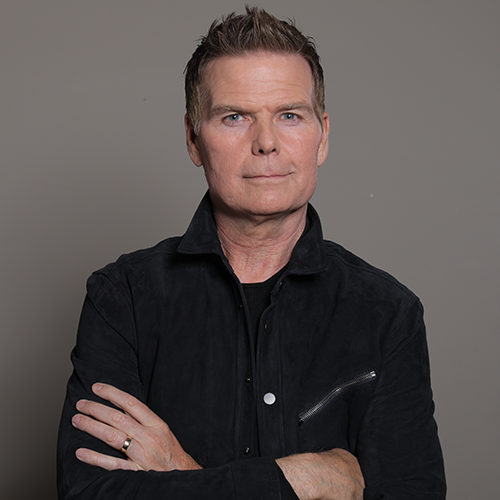
Speaker, performer, author Bo Eason started his career in the NFL as a top pick for the Houston Oilers. Continuing on with the San Francisco 49ers, during his 5-year career Bo competed beside and against some of the greatest players of his generation.
In 2001, Bo wrote and performed his one-man play, Runt of the Litter, which he performed on Broadway to rave reviews. The New York Times called it, “One of the most powerful plays in the last decade.” Bo toured with the play in over 50 cities. In his quest for excellence on the stage, Bo trained with some of the world’s most brilliant performance and movement coaches, Larry Moss and Jean-Louis Rodrigue.
Now in his third act, he speaks to and trains some of the most successful people in the world—athletes, artists, entrepreneurs, C-suite execs—on how to communicate for maximum impact and success. He has consulted for clients like Advisors Excel, Morgan Stanley, Dimensional Fund Advisors, Mass Mutual, Guardian, and Merrill Lynch.
His training programs on leveraging the power of personal story have transformed the way speakers communicate. Your story is unique from any other. Bo will show you how to leverage your achievements and your failures in a way that captivates and connects you with your audience every time.
His book, There’s No Plan B for Your A-Game, will be released September 2019 by St. Martin’s Press.
Welcome to the Athletics of Business, a podcast about how the traits and behaviors of elite athletes and remarkable business leaders frequently intersect. The real stories and hard lessons to help you level up your leadership and performance. Now your host, Ed Molitor.
Welcome back to another episode of the Athletics of Business podcast. I am your host and CEO of the Molotor Group, Ed Molotor. And what a conversation. It's the best way to describe today's episode. Just an unbelievable conversation with Bo Eason honored, humbled, fired up, couldn't wait to get this interview going. We've been working on getting him on the Athletics of Business podcast for some time now and I'll tell you what, it was worth the wait. You are going to love this. And before I share with you what we're going to talk about, highlight it a little bit. I want to tell you a little bit about what. Okay. And Bo Eason started his career in the NFL as a top pick for the Houston Oilers. And he shares a great story about how he got there.
From his time at UC Davis as a walk on. From his time as an undersized high school football player, from his time as a nine year old who wrote out drew out his vision of what he wanted to be and that was the best free safety in the world. Now after the Oilers, he continued on with the San Francisco 49ers. And during his five year career, Bo competed beside and against some of the greatest players in his generation. In 2001, talk about a really cool turn to his story. Bo wrote and performed his one man play Runt of the Litter which he performed on Broadway to rave reviews. The New York Times as a matter of fact called it one of the most powerful plays in the last decade.
Beau toured with the play in over 50 cities and I believe there was over 1300 performances. It is now being adapted as a major motion picture. In his quest for excellence on the stage, Bo trained with some of the world's most brilliant performance and movement coaches. Now Bo speaks to and trains some of the most successful people in the world, athletes, artists, entrepreneurs, C suite executives on how to communicate for maximum impact and success. He's consulted for clients like Advisors Excel, Morgan Stanley, dimensional Fund Advisors, MassMutual, Guardian, Merrill lynch and so many more. Bo's training programs on leveraging the power of personal story have transformed the way speakers communicate. Your story and your story being you. Okay, we're going to talk a lot about this today. Your story is unique from any other.
BO will show you how to leverage your achievements and your failures in A way that captivates and connects you with your audience every time. And another just blessing we have with having Bo on the podcast at this time is we are going to dive into his new book. I'm going to call it his first book because I'm going to go out on a limb and say he's going to write a second one. But his new book, there's no plan B for your A game. Be the best in the world at what you do is a national best seller. The book debuted on the USA Today and Barnes and Noble bestseller list and was named one of the four hottest new books of fall 2019 by Inc. Magazine.
Not only that, at the time of recording, it was on the Washington Post bestseller list, the Wall Street Journal bestseller list, the Publisher's Weekly bestseller list, social indie magazine bestseller list, and it was a number one release on Amazon. And inside of the book, we're going to talk about Bo's winning four step process, declaration, preparation, acceleration and domination. Bo is going to share some of his philosophy, some of his insights, some of his keys to his mindset, and two quotes I want you to listen for. Because there's great stories wrapped around this that really stuck out to me. First one being stay loyal to the right things, and the second one, vulnerability now is a new credibility. So I'm telling you straight up, listening to this podcast episode one time is not going to get it done.
There is so much unbelievable value, content, gold, whatever you want to call it, inside of this episode. So I hope you enjoy listening to Bo Eason's episode half as much as I enjoyed recording it. Bo, thank you so much for joining us today on the athletics of Business podcast. I mean, I am so fired up to have you here. I'm humbled and I'm ready just to jump into a great conversation.
Yeah, me too. Thanks, Ed. Thanks for having me.
I mean, you've been, you have been on a heck of a journey. And I, first and foremost, I want to congratulate you on the success of your book, which we're going to talk quite a bit about today. Plan B for your A game I'm holding in my hand here. Washington Post bestseller list, the Wall Street Journal bestseller, USA Today bestseller, social indie magazine bestseller, Barnes and Noble bestseller, Publishers Weekly bestseller, number one release on Amazon. How cool is that?
That is pretty cool. Pretty cool. If you would have told me that, you know, years ago when I was playing sports that I would be an author, I'm sure my English teacher right now is like going, how did this Happen.
Yeah. Well, you know, it's funny you mentioned English teachers and an author and all that, because everything you do goes back to the story you tell yourself. So let's talk about how significant, how important is, because you've told yourself now, you know, the story of being the best football player, the story of being the best actor, the story of being, I mean, so many best. Can you talk about how important it is for a person in the story they tell themselves?
Yeah, I mean, it really is. Most of us kind of adopt a story that comes from our family or comes from somebody close to us, and they just kind of hand us a story and then we live that story out for the rest of our lives. But that's not our story. Our story's, like, original. So we get to say, think of your life as a movie or a play. And you go, wow, I actually am the author of my own life. So if I'm going to be the author of my own life, I'm going to write a thriller, I'm going to write something that Tom Cruise wants to play. I'm going to write a romantic comedy, you know, something. A gold medal story, something like that, and then live that out. So that's what's really crucial. Most people just aren't taking that responsibility.
Most people are just taking the story that's given to them or that, like, you know, sit down through their family tree to them, and they're living that story out, and that's not really their story.
And why do you think that is? I mean, we all have crucibles in our life, right? And we all have things that we've gone through in different circumstances. Do you think it's the safe play for people just to be reacted to those circumstances instead of determining their own fate?
I do. I think it is a. It's a function of safety. It's a function of. Look, if you're the author of your own life, of your own story, the ultimate responsibility of your life falls on you, not anybody else. What you see a lot in the media, you see it in publishing, you see it in education, you see it everywhere now, where no one wants to be responsible for their own life. They want to blame, or they want to point fingers, or they want to point out who has stopped them or who has oppressed them. And all of that's just made up. You're the ultimate responsibility, but that once you become responsible for your life now everything is on you. Right? So no one, apparently. I like it. I like being in control of my own life.
I don't want other people telling me what my life is. But most people don't, apparently don't like that responsibility. They'd rather blame and then not have to do any work.
Right. So at what age did you start telling your own story?
The first time I made a declaration, I was nine. And I just, you know, I wrote it out, I lived it out for 20 years and it was to be the best safety in the world. And I drew the picture of what that would look like. The pictures actually, the declaration is actually in the book.
Page 32. Grab the book. It's on page 32. It's a pretty dang awesome drawing for a nine year old.
It's not bad for nine, right?
I'm 49. I couldn't make that drawing.
My kids always make fun of my drawing. When they see that, they're like, dad, you really look at your hairdo. You drew on yourself, man, that's really bad. So I was nine years old, I declared I wanted to be the best safety in the world. And look, I was really small, I was really not particularly athletic. But I knew that I had a dream. And I just followed the plan of the dream for many years. And then, you know, I went, I tried to go to college. 350 colleges in the United States play football. Not one wanted me, not one wrote me a letter, not one recruited me. So I invited myself to a Division 2 college that didn't give any scholarships. Basically, you know, it was small time football back then.
I did that and that got me, you know, they didn't even want me. And that got me, you know, drafted as one of top safeties in the NFL in 1984.
Yeah. Now let's go back to. They didn't even want me. So you had to keep telling yourself the story because they weren't sharing this story with you. Can you tell us a little bit about what happened at UC Davis when you first got there?
Yeah, when I first got there, they had these. I was little, right. I was probably 150, 155 pounds maybe. And I, you know, anybody can play there because, you know, there's no scholarships, it's Division 2 program. So if you walk on, they're going to let you walk on and play. Right. So I did that. I walked on and they gave me a uniform on day one. And after that first practice, on day one, they took away my practice uniform. And the equipment guys were these great classic guys that had been there forever. And if you've ever had A PE class or a tough equipment manager. These guys were the epitome of that. And they hated freshmen. And they didn't like that I weighed 155 pounds and they told me to get lost and they took my uniform away. But I taught.
I showed him the plan, and I talked them into giving me a practice uniform so I could just practice. And I snuck out to practice with an unmatching uniform. These guys agreed to give me one and they let me stay. They let me practice. And I think they figured I learned this years later, but they just figured, hey, if this kid's paying his own way, he's not bothering us. He's just taking reps. And, you know, he's out there in an unmatching uniform. He's got a good spirit to him, but he'll never play here, right? So I just stuck around and stuck around and eventually got in a game and made a play, and then they gave me a uniform after that.
And then after that, you know, four years later, I become, you know, one of the top players in the country at my position. And people always ask me, ed, they go, well, Bo, how do you do that? How do you go from like the worst player that, you know, 350 colleges do not want to the, you know, one of the best players at this position in the world. And I always say, you know, it's all. It's all the declaration that I lived. You know, I stayed. Most people stay loyal to the wrong things. I stayed loyal to the right things, which was my dream, which was my declaration. Most people would have gone home after they sent me home. I just stayed because that had nothing to do with my dream. I stayed loyal to my dream.
Most people stay loyal to other people's dreams. Like, hey, get out of my locker room, kid. You bother me. We don't have a uniform for you. And so now you stay loyal to their dreams, which is not your dream at all. I stayed loyal to mine. And I told them that. I said, look, I got this dream. I'm supposed to be the best safety in the whole world. I only got a few more years. You guys, I need your help. I need you to give me a uniform. And they thought it was cute and they eventually got on my side, you know?
Yeah. Yeah. That's awesome. Now, you've mentioned declaration a couple times, and in the book, there's no plan B for your A game. You talk about the winning four step process and declaration being number one. Can you talk a little bit more about that?
I will. Declaration. I love this word declaration. A lot of people like the word goals or mission. Those kind. I like those words too. But I don't like them as much as I like the word declaration because it reminds me of the Declaration of Independence. And if you look at my first declaration, it actually is 50 years old now, so it actually looks like the Declaration of Independence, you know, But I always thought of the Declaration of Independence like this. So our Founding Fathers wrote that document 250 years ago. Yet you and me, every hour of every day here in America, at least for 250 years, our people have lived that document, that Declaration into existence.
We've kept that declaration alive by the way we walk around our country with freedom, the way we speak, with freedom in our country, the way we do what we want to do with freedom in our country. So we didn't know these Founding Fathers, yet. We bring to life every single hour of every single day their declaration of our freedom. And I thought, now that's. I like that. That turns me on. Like that gets me up in the morning, right? And my declarations are all. I've made four in my life. My kids all have them and my son had his when he was 6. And the declarations are very basic. They're not like very. They're not ethereal, they're very. I want to be the best safety in the world. I want to be the best stage performer of my.
I want to be the best playwright in the world. That's how basic they are. The reason I like that, Ed, is because I want to know the guy who's living this Declaration into existence. I want to know whether I'm number one or I'm number two or I'm number 10, 50. And when you use this term called the best, you know right away there is no. There's no if, ands or buts. You know, if you the champion and you know, if you're the runner up, right. You know, it's apparent to you and everybody. So your quest is to be number one. Who knows where you end up? All that I care about is the quest, is the commitment to the Declaration over many years.
And what I have found through my kids, through me, through my family and my clients, is that somebody who makes a declaration, I haven't seen one not come true. Now, you don't know when it's going to come true, right? So I always give myself a 20 year window, but usually it happens before 20 years. In fact, every time I've done it, the Declaration came True. Before I ever got to the 20 years. But it does take some work, a lot of work. And it does take some time. A lot of time. So people that are listening to us today, that's one thing they've got to surrender to is this. These fake timelines that people have, or these what I call wimpy ass timelines, because they're just way too short to ever reach world class.
Yeah, you're giving yourself permission to give up. And we're not talking about making adjustments right. Or course correct, because we'll get into the course correction, how important that is. But we try to. As a society, we're very vague. We're afraid to say there's a winner, there's a loser. Either you're the best or you're not the best. And in your book, and you're referring to the Declaration of Independence, but I highlighted this because I love it so much. And you, if you think about it over the course of 20 years, or say it's 10 years, your declaration comes to fruition. But you talk about, this is who we are, this is how we live, and these are our values. This is what we believe. Think about how powerful that is.
Yeah, yeah, that's what's beautiful. Ed, what you're pointing out is. So say you and me made a goal. Like we go, okay, Ed, let's do a goal together, you and me, and let's be virtuoso violinists in 20 years. That means we're like the top 14 violinists in the world. And just so you know, Ed, what's cool about everybody listening today, that's totally doable, what I just said. If Ed and I or any of us on this podcast today wanted to reach world class virtuoso level of violinist, we could do it in our lifetime, we could do it in 20 years, within the next 20 years. Isn't that cool to know? And that's true across the board. That's true of most things.
Now, there are certain things that are out of our reach because of, maybe because of our age, you know, like I'm 58 right now, so for me to reach world class speed, I used to have that when I was younger. But at this age, that's going to be difficult, right? That's going to be really impossible to get there because of my age. But most things are attainable and we can all have them. Here's what's cool about it, when you declare you're actually living. So say we make a declaration to be the best violin player in the world. On day one of the Declaration, Ed, you and me are living in out that Declaration. We're bringing it to life on day one. We don't have to wait until the world announces that Ed and Bo are the number one violinists in the world.
We're not waiting for that. We're being it on day one and every day after that and just running the miles until the world catches up with your Declaration. Right, because, look, I was, you know, before, I was the best safety in the world. Like, I was a kid, right? I was too little to be the best safety in the world, but I was living. I was being the best safety in the world. Even when I was 10, 11, 12, 13 years old, I was already there. And then in 1984, when I was 21 or 22, the world said, oh, Bo, you're the best safety in the world. And I'm like, yeah, I knew that. I've been knowing that for years. That's how I've been living.
Well, and you talked about staying loyal to the right things, and you talk about, in your book, and I've heard you, in preparation for this, say this. If it didn't have anything to do with your dream, you weren't. You weren't doing it. It just, you know, you ran backwards for nine years, basically. So you could be the best safety in the world. That's right. That's what.
But everyone else gets. Gets thrown off course based on somebody else's opinion or based on somebody else's lack of belief in themselves. And, you know, that's what derails most dreams. And usually it's somebody pretty close to us. Like, it could be a family member, could be a friend, could be a cousin or grandfather even. Those are the people who usually, because they love you, they don't want to see you get hurt. So they kind of. They kind of want you to take. Have an option B, have a plan B, and as soon as you have a plan B, plan A is no longer going to happen.
Well, so let's talk about that, because you just. You segued very nicely into another story about declaration. And when you said you wanted to be the best stage actor of our time, okay, your very first performance, your brother and your first college roommate were there, if I'm correct. Can you share that story? Because I'm sure at that point, Tony tried to put his arm around and see and say, hey, brother. You know, I get it. It's cool. What's up? What's going on? You all right?
Yeah, yeah, I know you had seven.
Knee surgeries, but did we check the. Do we check the coconut up here? Do we check the head? What's going.
Right, right.
Hear that story with us.
It is very funny. Yeah. And I go in a lot of detail on this story, which in the book, because I think it's really important for people to know that, look, people are out for your best interest. They really are, and they're just trying to save you some pain. But we're just unreasonable enough, you know, you and me, whoever reads this book, that we don't listen to them. So after I got done playing football, I had my seventh knee surgery. I got into stage performance, right. And I was. I had no experience in it, right? So obviously I suffered at the beginning, right? So I started taking all these classes and I was terrible, right? But I improved and I got a little bit better and I got cast in a children's play in Sacramento, California. It was a play for kids.
It was like the Shoemaker and the elves play. And I was the mayor of this elf city. And I had a top hat and a fake beard and a pipe. You can imagine how bad this was. And so that's a good look, right?
Yeah.
I knew I had to start somewhere and that was it. And I thought I was doing really good. So I'm up there performing. No kids are even looking at me. And I make eye contact of my brother, who is an NFL quarterback, just, you know, led the Patriots to the super bowl, and my college roommate, Kenny o', Brien, who was the starting quarterback of the New York Jets. So these guys are best buddies. They came to support their chum in his new career, Right. This is like six months after my NFL career was over and. And they're looking at me. And the best visual of the whole thing was they were in. You know how, like when you go to children, they put you in those chairs that you can't fit in. So these big old 6, 4, 6 5, 230 pound dudes cannot.
They're taking up a whole row of chairs and afterwards, and they come up to me, you know, to like. And I'm thinking they're going to be all impressed and shake my hand and go, congratulations, Beau, on your new career path. You know, and they were just like looking at me shaking their head and going, oh, my God, what has happened to you?
Yeah. And I mean, I, I don't know why I had this visual. You know, you talk about them sitting in the chairs was the movie Elf. I just. The whole thing was Just, oh, yeah, it was a bad visual.
That's right.
But you know, the thing is, kudos to you because you knew what you wanted to do, right. And you knew that was part of the whole. You're going to go through that now. You, you make the call here because we're going to get to the story in a second. But there's a reason you were on that stage, right? There's a reason you try to get on as many stages as you possibly can. And it's related to eye contact you made with somebody else in your very first one man show.
Yeah.
Should we talk about that now or should we come back to that?
Yeah, no, we can talk about that. That's when I went from football, so I went from being the best saf. That's all I knew, was to make a declaration. So the second declaration, 20 years after I made the first, was to be the best stage performer of my time. Here's the problem. I had no experience in stage performance, but I took the principle of go find whoever is the best. Who was Al Pacino at that time? This was about 1990. I found Al Pacino. I asked him, I said, look, everybody in my class tells me you're the best stage performer of our time. I want that mantle. How do I get that? Tell me what to do.
And so I played pool with Al Pacino for about three hours and he broke it down for me and he basically said that I was going to spend more time on a stage than anyone else in the next 15 years if I was to be the best. And I was going to have to perform classics like Shakespeare and that kind of classical language and train and be on stage more than anyone else. And if I did that, I would be at the very top. So 15 years passes. I did everything Al Pacino told me to do. I did the same principles that made me the best safety, I applied it to being the best stage performer.
And you know, 15 years later, I come out in New York City of an opening night of my show that I wrote and I'm the only guy in and Al Pacino's sitting in the audience. I made eye contact with him. He. We Never spoke for 15 years. Never saw each other.
That's amazing.
But yet there he was in theater, you know, nodding his head and giving me the okay sign, and that was it. That was the best review I ever got.
That was the best review you ever got. How did you not. How did you not get off track there? How'd you not lose your.
I Did I? Totally did. I. You know, you're up there having an out of body experience to begin with because the critics are in the audience and I'm going, oh my gosh. And then you make eye contact with the best of his time and you're like, oh, shoot. And I remember, I couldn't even remember my lines. I was just trying to stay focused on what I was supposed to say next. But that was a great experience and really spurred me on for the next that play ran. I performed that play for another 15 years.
15 years and over 1300 performances. That's mind blowing. I mean, it really is. How, how hard was it to sustain your level of excellence with that?
It really, it's really hard physically to. Because you're performing so many times a week and it's live and it's brand new audience every day. So you're having to recreate that energy with people who don't know you and you have to recreate that rapport every single performance. Sometimes on the weekends we did matinees, so we do two shows a day. And so I thought the NFL was tough on my body. Performing a one man show for all those years. That was even worse on my body.
Yeah, yeah. I was going to ask you seven knee surgeries. You're up in that stage that much. I mean, did that ever come back into play, those injuries?
They did, yeah. My knees seem to hold up pretty darn good Ed, because I had really good surgeon, but you know, my feet, your feet start to really hurt, you know, and the injuries of compensation, you know, like shoulders and necks and concussions and those things started to creep back up because I didn't really have surgeries on those places yet until after the show. Then I started having shoulder surgeries and different other surgeries, but the knees held up nice. But the rest of my body, man, I just, I got really used to performing and then going right into an ice tub and recovering just like an athlete has to do.
Yeah, it's pretty amazing now. So there's a listener right now, I'm sure listening saying, okay, so Beau was a, you know, a great athlete, despite the fact that he started out small and weren't as athletic as you wanted to be. Was a great athlete, played in the NFL, incredible career. Just made a living out of beating people up. It must have been easy for him to tell his story and to open up about his crucibles and his struggles and his weaknesses. Can you talk a little bit into how people can overcome that fear of making Themselves vulnerable and opening up and sharing their story. Because really, isn't that where the power of your story comes from?
Oh, yeah. I mean, I think it's not only the power of your story, but it's the power of you as a human being. And you'll read this in the book. There's no plan B. And this is laid out pretty well, instruction wise is, look, vulnerability, your vulnerability, your ability to express yourself. Vulnerability now is the new credibility. So if you got this, if you have. Yeah. If you have the ability to express yourself and talk and tell the story of you, of the best advice you ever got from your mom or your dad or your grandpa, or you talk about the hardship of getting that bloody nose from being dumped at the prom, being cut from Little League. We all have those painful stories. If you have the ability to share those stories, you now have connected yourself to the rest of the planet.
And that's where all your power lies. Your power lies in connective tissue that you have. The best connective tissue is to share something personal. So if you want to marry the girl of your dreams or the man of your dreams, that's a good place to start by sharing who you are. If you want to be the best safety in the world, that is a good place to start because it connects you to people and it gives you ultimate power to not only tell your story, but to live it through and to get some resolve around it so that you can even go further so that. Think of your. Think of the world we live in right now where trust is at its lowest it's ever been. And they do a poll on this every year. Gallup does a poll on trust.
It is the lowest it's ever been recorded since 1974 when they began this poll. So whoever is going to rebuild that trust that has been eroded over time is going to be the leader, right? Is going to be the top dog. The only way to rebuild that trust that's been eroded is to share your story, is to share who you are now. You build trust. Now people will follow you. And to be world class, to be the best violinist, to be the best piano player, to be Mikhail Baryshnikov, you have to have a team around you, right? And your team has to see your voice, vision your story, and follow it and help you fulfill on it. If you notice, those are the people who always get to the very top.
If you notice when they win awards or when they're standing on top of that box at the Olympics, they're always trying to thank and Acknowledge the sources that got them there.
Right.
And it's because they had a vision for their life and they told a story that people connected to and then help them along the way. That's why I laid it out so vividly in the book, instruction wise, so that the readers can then do that and follow those action steps.
Yeah. And I'll tell you what. In the book, there's no plan B for your A game. I mean, it's like I said to you before we started recording, it truly is a handbook, a guidebook to success. You know, you're not paying a lip service when you say this. It is the how to achieve your dreams. Now back to telling your story. When I. When I first started writing my keynotes, I remember one of the challenges I had when I was making myself vulnerable and telling the deep part of my story was that, okay, I know the reaction I'm trying to get. And if I tell my story this way, maybe I'll get that reaction. Like I was setting expectations on the audience. Yeah. And it was all wrong because then I was limiting what my story. I wasn't being authentic because the true story.
Can you talk into how significant it is just to tell your story and let the chips kind of fall where they may?
Yeah. Never try to set the expectation for the audience. That's a bad way to. A lot of speakers do that because it's safe. Listen, you got to. This is what you know, a bad. I know you have all seen movies and I know you have all seen bad movies and you've seen great movies. The bad movies, the ones you hated and the ones you walked out of the tried to manipulate you as an audience member. They tried to get you to feel a certain way instead of allowing you the permission to feel how you wanted to feel. So I let my audience go wherever they want to go. I'm going to tell them the truth of me of my journey and the tough times and the good times. And they decide whether they like me or not. They decide whether it's funny or sad.
Let them participate. That's the ultimate human connection. If you'll allow your audience to be human, meaning they're in charge of their own life instead of being manipulated by me, the speaker or the storyteller.
Right. Right.
And that's. Now, that is powerful. And then you get the right people to get on your side, to get on your team, and the wrong people. Ed. Leave you. You know, which you don't. You don't. You don't want those people to begin with. Right. You can't. You can't go to the top dragging a bunch of anchors around with you. And those anchors will then hear your story and they will extricate themselves from you because your commitments and your vision for your life, your declaration, points their life out too much. It points out what they're not doing or what they're not up for. And so they don't want to be around you, which is fine. You don't need them.
Right. Right. So we have the declaration, and if we have a little bit of time here, I'd like to get into the second step, because there's some great stuff that you say about preparation. You have this declaration now you get into preparation. And to me, this has got to be a huge, or had to be a huge competitive advantage for you all over the years because of your insane work ethic and commitment to excellence.
Yeah. You know, I love being a basketball coach, Ed. You'll love this quote, but you probably know it from Bobby Knight, which was, everyone has the will to win, but almost nobody has the will to prepare to win.
Yep.
You know, and it's the athletes, the businessmen, the movie stars, the great speakers. Whoever is the top in their field, I don't care what discipline it is, whoever is the top prepares more than anyone else. It's just how it goes.
Right.
You know? Yeah, I played with Jerry Rice. You know, he probably the one first or second best football player in 100 years. I never seen a guy prepare like that. Never. And I've seen some greats. I, you know, I played with Joe Montana, Earl Campbell, Warren Moon. You know, I played with some greats. This dude was more prepared to score touchdowns than anyone I've ever seen. And here's the funny part about it, Ed. He wasn't like the best athlete ever. He wasn't the fastest. He didn't necessarily have the best hands, yet he's got the most touchdowns by a long ways. He prepared more than anyone else. He's just. Same thing Al Pacino. He basically told me, bo, you're going to have your. But on a stage more than anyone else in the next 15 years. And I'm like most people, they.
They take that as bad news. I take it like, oh, good, because I, where I lack talent, I make up for with timeline. Like, I mean, you have a shot.
You have a shot at doing what you want to do. Okay, thanks, Al. You just gave me a freaking chance to be the best. I love that.
That's Right. That's exactly right. Here's another thing about preparation, Ed, that I think people should remember. Some people go, well, Bo, I didn't come from a family of high achievers, or it's just not in my gene pool to be the best, or I wasn't born with money, or I wasn't born in this kind of family. And I'm saying to them, that is a lie. And let me just remind you. And I think this is what preparation is all about. We have to remember as human beings who we are, who we really are, because we know we're fed a bill of goods of who we are from the media and from every. You know, every. It's coming at us every day. And they keep telling us and they keep promoting to us that we're mediocre or that we're average, and that's all we can expect.
And in the reality of it, I always go in these kind of situations, Ed. I always go back to Mother Nature because I always think of Mother Nature as being undefeated, right? And you and me being elite athletes and coaches. I like winning, right? So. And, you know, it's not so much I like winning as I just hate losing, right? So I like being on the undefeated side, which is on Mother Nature side. So I go back to Mother Nature and I say, mother Nature, am I put on this earth to be mediocre or am I put on this earth to be. To be number one? And she says, I am number one. And she says, you are number one. Because the day that you and me were conceived, 300 million sperm were delivered on that day.
And 300 million to one odds that you and me would win that race. Yet we did, against all odds, we fertilize that egg. And I'm sure that was no casual swim. I'm sure that was violent, right? Absolutely right. With a million years of evolution and Design, teaching all us sperm, 300 million of us, to fertilize the egg, you and me and all of us listening today were the champion of the first race we ever entered against all odds. And now we're born into this earth. And now we're supposed to pretend and fit into this mold that we're mediocre? I don't think so. I don't think Mother Nature sees it that way. So I'm always. Whenever you question yourself or your declaration is too big, you have to go back to Mother Nature.
Because my favorite quote about Mother Nature is this, if you want to command Mother Nature, you must obey her. And I obey her. I don't fly in the face of her trying to be mediocre. I think it's in the long run, Ed. I think it's because my kids say this to me all the time. They go, dad, it's really hard to be the best. And I'm like, yeah, I know, but you should try being mediocre. That's even harder.
I love that. That's. It's miserable, by the way. But here's the thing, though. You know, often athletes will ask me, well, what happens if I really put it out there? What happens if I go all in and I. And I. And I make that declaration and I'm going to be the best, and I'm not? Well, then, you know what? You're gonna be pretty dang good, okay?
Hell, yeah.
You're not gonna be mediocre. You're not gonna suck. You're pretty dang good. So don't. Wouldn't you rather strive to be the best and fall short than strive to be mediocre and fall short?
Exactly. Yeah, exactly. And you'll use the principles that took you on that journey of being the best. Say you fall short. Those principles that you had to implore to get that far are going to be useful in the next endeavor. And that endeavor might be marriage, it might be parenting, it might be starting a new business. You'll be world class in everything you attempt because you already learned what it takes to get there.
Because as you mentioned in the book and as you and I talked about, you transfer those things that make you successful in one to being successful in the other back to preparation. In the book, you quote one of my favorite authors of the Talent Code and the Culture Code, Daniel Coyle, talked about Jerry Robinson. And how cool is it that we can talk about Daniel Coyle's books and Jerry Rice and all these great people in the same conversation. But practice is their big game. Talk about how significant it goes back to your conversation with Al Pacino. Get your butt up on every single stage you can get on.
Yep, that's right. That's right. You know, when I was. My kids were the ages where you. Where you put them to bed and you're reading like, the little, you know, Little Red Riding Hood and these little books like that. Well, I didn't really like those books, and the kids didn't seem to be too thrilled with them either. Right. So I. Funny enough, you bring up Daniel Coyle, I started reading them. Daniel Coyle's books. So there's that one chapter on practice. It's in the Little Red Book of Talent. It's in that one. It's just little. And I would read it to my kids and my kids loved. And I would read that over and over to them. Just that one little paragraph about what? Practice. Practice is the center of our universe. Struggle is a biological necessity.
My kids have those terms memorized, just like you would the three Bears memorized, because that is what I read them. And so now when the going gets tough in dance class or in cheerleading or in a basketball game, my kids know that when they're struggling that they are on the right path. They know when they're getting their butts kicked that they're about to break through and adapt to a new, higher level of that demanding situation. And that's the only way to improve. And that's in the end, it's the only way to reach the top. You got to improve every day. And to improve, you got to get outside the comfort zone and struggle. So that I love Daniel Coyle's that most people's center of their universe is the big game.
Well, for Daniel, what Daniel Coyle says is that the big game is practice is the center of our universe.
And you can speak to this as an athlete, as an actor, as a speaker. But how significant is it to make your practice, to make your preparation more difficult than the actual game itself, than the actual presentation itself, than the actual keynote itself?
Yeah. Well, it's so true. Once you put in the training, the rehearsal, the practice, and you know, when you've been coached by great coaches, they push you so far out beyond your comfort zone that the game or the performance is easy. It's not nearly as hard as practice was, because practice, the coach's job is to push you outside the comfort zone. So you have to adapt to a new, demanding situation. Well, that's the same goes for being a business person. Same goes for being a ballerina, Same goes for being a stage performer. You have to leave the comfort zone. And now when you get on stage for the actual performance, it's so much easier because you already been. Your butt has been hanging out for all these months and years, and now it's just a time to play.
Now, you talked about writing your own story. You talk about practice and preparation, visualization. And this just popped in my head. Visualization. How does that play into your success in each of your careers?
You know, a lot of people talk about visualization. You know, here in the last 20 years, that was always a part of my life, and I didn't know it was Something that you should be doing, right? I just kind of used to do it as a kid. I would see myself in the games, intercepting the balls, running faster than everybody else. I would kind of just go over it in my head, over and over, just kind of watching this movie of myself. And I've always made that a big part of my life. And then as I got older, I remember cutting out pictures of guys that I admired and put them in my locker at school. I put them on the wall inside my bedroom, everywhere. And I would look at these guys every day, and what's so crazy about it?
And you hear people talk about these kind of things. I actually saw it to be my life. I remember Walter Payton, and I know you're there in Chicago. I loved Walter Payton, and I grew up in California, so I really had no affiliation with him other than I just loved the way he played football growing up. And I put him in my locker. And for four years, every time I opened up that locker, which was like six to ten times a day, probably in high school, I would see Walter Payton, and I just loved Walter Payton. And then eight years later, I'm drafted by the Houston Oilers, and now I'm playing against Walter Payton. And not only am I playing against him, but I have to tackle him.
So I have to tackle the guy who is running at me in real life with the same photo that I have in my locker eight years ago in high school. It's the same exact. It's the same image. He's running right at camera. This is a Sports Illustrated picture. And in real life, he's running right at me, and I'm going. And my. You know when that happens. Ed, obviously a lot of your listeners will know this, but when. When you're. When your dream is about to come into fruition, your life goes in slow motion. And I'm running up to Walter Payton, and my whole life is passing before my eyes, and, like, I'm having this dialogue inside my head like, that's Walter Payton. I'm about to. I'm about to tackle Walter Payton. And sure enough, you know, I do tackle him.
And I was so shocked that I tackled him that I just laid on top of him for a while, just like, you know, just like, hoping that my mom and dad were watching TV on that day. And I. Shit, I just got Walter Payton on the ground. I hope my mom and dad just saw that.
Yeah.
And Walter Payton, he didn't like that, right? So he kicked me. He said, get the heck off of me. Right? And I go, oh, I guess it's that, you know, that fanboy is over. This is the real stuff.
That's awesome.
So that's that visualization, man. That stuff works well.
And you talk about that, right? You talk about. We're speaking of pictures. You talk about why it's so important to draw out your declaration.
Yeah, I've always. Not only do I write it, I draw myself. I draw like a self portrait of me 20 years into the future, like, with a helmet on, playing with my hair drawn how I want it to be drawn. In fact, when I did run to the litter, the play, I didn't know how to write a play. I didn't know how to perform a play. But I drew the stage. I drew what the stage might look like. And you know what? The stage was pretty damn close to that 20 years later.
That's unbelievable.
That is pretty wild.
Before we, before we wrap things up here and thank you again so much. This has been awesome. Can you go into where folks can find out more about. There's no plan B for your A game, obviously purchase on Amazon and all that stuff, but all social media handles and where they can find out more about the experience with Bo Eason and everything you want to share with our listeners?
Yeah, yeah. To pick up the book, it's Bo Eason. That's a great place to pick it up. You could also get it on Amazon, like Ed said, Barnes and Noble, wherever you buy your books. But if you go to boeasonbook.com you'll get a lot of free offers. Like, you'll get a lot of cool bonuses for going there to get it. Stuff where I train you, where I walk you through it, where you get a companion book. So do that. You can follow me on Instagram o eason21. But love for you to get the book and then actually do the book.
Like, let this book, internalize it, start to use it, and use the action steps at the end of each chapter so that you too can start to fulfill on your birthright, which is to be number one, like we talked about with Mother Nature. And the principles are all laid out in there. All you have to do is follow them. I do them, my kids do them, my clients do them. And everybody seems to fulfill on this dream that they have. So those are the places. Bowiesandbook.com or wherever you buy your books.
I love it. I love it. Well, the last question kind of is something I always let the last question evolve as the conversation goes on. And I'm really curious I believe self awareness is such a competitive advantage and self awareness stems from self discovery. And as you've gone on these different journeys, I'm curious, as you wrote them book, okay, there's no plan B for your A game. What sort of self discovery journey was? What did you learn? Just when you thought you couldn't learn more about yourself, was there something that jumped out at you that you looked at an experience differently or you had a thought? I mean anything that happened when you were writing the book.
Yeah, it did. You know what it really taught me? It's funny, I think the author, whoever authors a book, especially a book that's about training somebody of some method or some principles, you really have to examine your own principles, you know, because to me, most people who write books about success have never really had success other than making themselves famous for having success. But they have theories or they go around and they talk to high achieving people and they develop a theory. And my book is not that. My book is. This has come from the, you know, I wrote this from the dirt. You know, I used myself as a guinea pig when I was a kid. I used myself as a lab rat and I used my own theories and my own principles on me and on.
My brother and on your children now.
And now on my kids, which I actually thank them in the book for allowing daddy to use you as lab rats. And my kids are going through the same exact thing. And that's what I had to re examine about my own principles and my own life. And it taught me a lot and it taught me because I know how to do this for myself, but I didn't know how to tell other people to do it until I did it over and over again as I wrote the book and through many iterations and drafts. So now it is clear and it is concise and if you follow that roadmap, you're going to get to the top because it doesn't fail unless you quit. The only way out. I always tell my kids, sometimes they'll start crying because their dreams are really difficult.
And I'll go, oh, so do you want out of your dream? Do you want out of it? And they'll go, not really. Yeah, maybe, dad. Yeah, maybe. And I'll go, oh, so there's one way out. You have to quit. You have to quit your own dream. So you have to do that proactively and that is the only way out. You got to quit.
Yeah, okay, so I fipped you. That wasn't my last question. You just brought something up, though. We always talk about sacrifice, right, for our dreams. But one of the things I talk a lot about is your willingness to endure and how much you have to endure. How significant has that been to your success? You just talked about, do you want out of your dream? No. Okay, well, then you have to endure more. What does that look like to you?
Yeah, that looks like. Look, the hardest times when you. When I look back on my life and the ups and downs, obviously, right? There's more downs than ups. Right? And Mo. It's funny, on. All these years of trying to be the best at a certain thing, almost every day of all those years was rejection and an obstacle and a naysayer, and, Bo, you're just not good enough almost every single day.
And.
But here's the best part about it. They were all achieved. I got to the top, right? But most of the days in between, they were saying no or I was having a surgery or I was not feeling like working out, and I was off course for 99% of the time on the way to the top. I was not the best. I was off course. Here's what you have to endure. You got to be unreasonable, and you got to find the joy in the struggle and in the. In the endurance of it, in the obstacles of it. You got to find some success in there. You know, they. They asked the top 14 violinists in the world. They did. They studied them, and they asked them all one question. Why did you reach the very pinnacle of the violin?
Were you called to the violin by God? Were you born with special genes? What is it? And not one of the top 14 said that was true. Not one was called by God to the violin. Not one was born with special genes to play the violin. Every one of them said the same thing. They were handed the violin by a parent and were told to play. And the next question is, do you love the violin? And they. Not one of them said, yes. They said, I didn't. I don't love the violin. What I fell in love with was my improvement of playing the violin. Isn't that cool? So you gotta fall in love with that enduring thing that you're talking about, Ed, which is improvement.
Right? Right.
I don't. People. People always say. They go, bo, do you miss football? And I'm like, no, I don't. And they go, do you love football? And I go, no. I loved what football required of Bo. I love what the game demanded of me and what it made the character that it revealed that I was. That's What I love about it, I love the guys who play football, but I don't love football.
Right, Right.
I love the improvement of BO through trying to get to the. Be the best at that thing.
Yeah. Well, I'll tell you what I did love. I love this conversation. That was pretty awesome.
Thanks, Ed.
I tell you, there's no plan B for your A game. It is a compelling read because like you said, it's your story.
I mean, you.
This is your sweat, this is your blood, this is your tears. This was your handbook of how you did it. You know, this isn't just research, okay? Matter of fact, the only thing you research was the lab rat you. And I think it's just. It's a great handbook for success. I cannot thank you enough. Please go to iTunes, rate and review this incredible conversation with Bo Eason. And please feel free to share this podcast and you can find all episodes of the Athletics of business podcast and itunes. Stitcher and Google Play and bo, again, I can't thank you enough.
Yeah, thanks, Ed. It's a blast having this kind of conversation with you.
It sure is. Thanks. Take care.
Thank you for listening to the Athletics of Business. Be sure to give us a rating and review so we know how we're doing. For more information about the show, visit theathleticsofbusiness.
Com.
Now get out there, Think, act and execute at the highest level to unleash your greatness.