

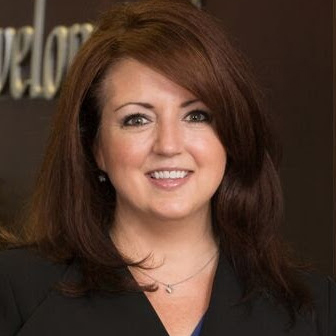
Dr. Brandi Plunkett is the Executive Director of the Center for Executive Development in Mays Business School at Texas A&M University where she is responsible for the overall financial performance and operations of the center as well as the strategic growth and quality of the Global Programs within the center. Throughout her 28-year career in the education and training field, Dr. Plunkett has developed programs or championed the expansion of programs across multiple areas. Her last 17 years working within the university system include graduate, administrative, and leadership roles at the system and college level, including graduate work with the Summer Seminar on Academic Administration for the College of Education and Leadership Development for the Institute for School-University Partnerships at the Texas A&M University System. As Program Director for the Emergency Services Training Institute, a division of the Texas A&M Engineering Extension Service that trains more than 85,000 students annually worldwide, Dr. Plunkett created and led the enterprise-based Leadership Development Program. In addition, her responsibilities included oversight of the division’s internal operations including the Curriculum Development, State and National Certification and Evaluation Programs as well as direction over the division’s marketing strategy and capabilities.
Dr. Plunkett’s other professional activities include lecturing in the Mays Business School for the Department of Management, working with student groups, public speaking in her community and executive coaching. She served on the Board of Examiners for the Texas Award for Performance Excellence in 2004 and became a member of Leadership Texas in 2008. She currently serves on the Council of Advisors for the Crestview Retirement Community in Bryan, Texas and the Advisory Board for the VETTED Foundation. Dr. Plunkett was a public school teacher for 10 years, during which time she also trained teachers on the use of continuous improvement tools in the elementary classroom in both Texas and the US. She returned to Texas A&M in 2000 earning a Master’s and Ph.D. in Educational Human Resource Development in 2006. She is currently in the process of becoming an ICF certified executive coach.
Welcome to the Athletics of Business, a podcast about how the traits and behaviors of elite athletes and remarkable business leaders frequently intersect the real stories and hard lessons to help you level up your leadership and performance. Now your host, Ed Molitor. Welcome to this episode of the Athletics of Business podcast and our guest today is Dr. Brandy Plunkett. Brandi is the Executive Director of the center for Executive Development in Mays Business School at Texas A and M University, where she is responsible for the overall financial performance and operations of the center as well as the strategic growth and quality of the global programs within the Center. Throughout her 28 year career in the education and training field, Dr. Plunken has developed programs or championed the expansion of programs across multiple areas.
Her last 17 years working within the University System include graduate administrative and leadership roles at the system and college level, including graduate work with the Summer Seminar on Academic Administration for the College of Education and Leadership Development for the Institute for School University Partnerships at the Texas A and M University System. As Program Director for the Emergency Services Training Institute, a division of the Texas A and M Engineering Extension Service that trains more than 85,000 students annually worldwide, Dr. Plunkett created and led the Enterprise Based Leadership Development program. In addition, her responsibilities include oversight of the Division's internal operations, including the curriculum development, state and national certification and evaluation programs, as well as direction over the Division's marketing strategy and capabilities.
Dr. Plunkett's other professional activities include lecturing in the Mays Business School for the Department of Management, working with student groups, public speaking in her community, and executive coaching. She served on the Board of Examiners for the Texas Award for Performance Excellence in 2004 and became a member of Leadership Texas in 2008. She currently serves on the Council of Advisors for the Crestview Retirement community in Bryan, Texas and the advisory board for the vetted foundation. Dr. Plunkett was a public school teacher for 10 years, during which time she also trained teachers on the use of continuous improvement tools in the elementary classroom in both Texas and the United States. She returned to Texas AM in 2000, earning a master's and a PhD in educational human resource development in 2006. She is currently in the process of becoming an ICF Certified Executive Coach.
Brandi, welcome and thank you so much for joining us today. I am humbled, I am excited. I am fired up for you to be here as a guest and this podcast is special for a lot of reasons, but most importantly because it's actually happening. Because we've had many obstacles to overcome to make this happen and we'll save that story for another time, but thanks for joining us.
Oh, absolutely. My pleasure. Happy to be here.
So let's talk about what is going on right now in your world and what you folks do and what you do as executive director for the center for Executive Development of Mays Business School.
Okay. Well, so the center for Executive Development at Mays Business School is. It's kind of a little bubble inside of the College of Business, which is what we call Mays Business School at Texas A and M. And our role is to leverage all of the talent and the research and all of the things that the faculty are generating in this college and use it to help organizations and individuals who understand the value of lifelong learning to continue to grow after graduation. So we don't deal with these students who are enrolled in maize. We are working with those people from all over the world, whether they've graduated from A and M or not, in organizations, to better in areas of business that they're working on.
So, for example, we might do a contract with an organization who's trying to build a pipeline of leaders and prepare for the next generation of leadership, or working to bring everybody to the same level from a financial perspective. So we use our faculty and leverage all that they're doing to create customized programs for people. And then we also offer open enrollment that individuals themselves can come to that are, you know, more general in nature and in static. They're not customized, but they're great opportunities for continued development after you graduate from college and you want to grow and continue to move up the food chain and, you know, become more valuable to your organization. Learn more.
And you mentioned something that you and I talk about in something that's very front of my mind is the continual learning, lifelong learning and how key that is to any level of success, high level of success that folks have.
Absolutely.
When do you see as they utilize time and resources to develop future leaders, when do younger folks really start to realize, okay, this is. We're never done learning? You know, do you. Is that something that these organizations are really emphasizing right now, right from the start, when they get these younger people in organizations?
I believe so. Of course, that's who we work with. But, you know, we know, you know, through research, through experience, through just talking with really effective, successful leaders, that all good leaders consider themselves learners? Anybody that understands the value of being successful and growing and continuing to do better knows that you can never, you never are at the magic place where you now know everything. You continue to learn. And leaders who lead successful Organizations understand the importance of that as well, and they encourage their organization to continue to learn. And that's who we see a lot from a standpoint of younger people understanding that. I believe that they do more and more, I think, because of the nature of technology and all of the options that are offered to people nowadays.
They realize that there's so much information out there and information is changing so quickly, you really can't stop learning. I saw a statistic the other day that said that managers are on an average, a manager for 10 years before they get leadership training. And we're talking about changing that because what's available to people through the use of online learning or different things is changing that statistic dramatically. And it's also allowing people to realize that it that the value and the importance of continuing to learn.
Right. When you start talking into the corporate world, as the pace and range of change is so rapid, your ability to not just learn, but learn efficiently is such a competitive advantage now with that pace and range and change. We were talking yesterday about your faculty. It has to be a pretty unique dynamic where, yes, they're out here teaching these courses and they're out here sharing their knowledge and their insights and their practices, but I have to think that they have a lot of takeaway from your clients as well. In other words, they're learning from. From the people that they are sharing their knowledge with.
Absolutely. Even if you go on our website and see our video, you see faculty talking about that, they say that all the time, that they learn as much or get as much from the participants in the programs as the participants get. Because when you bring people together, whether they're new managers or senior level executives, organizations don't. You don't often get the opportunity to be in a room full of people in your company who are facing some of the same challenges you are, but maybe in a different area. So you'll have, you know, operations and HR and finance and legal, all these people in the room together who have different perspectives on the organization, but who are all engaging in the same conversation in the same content area.
And so what they're able to share with each other as well as the faculty makes the class that much richer. And you don't get that unless you're willing to make the sacrifices of letting these people be away from work, spend some time together, spend some time with a faculty member to facilitate and pull out that knowledge, and then use it to kind of enhance and stretch them and take them to new places. And that's kind of the Chemistry of it. All our faculty are great at working with that.
That's very powerful when you think about it. And speaking of stretching and taking to new places, I want to talk about your journey because it is fascinating and, you know, I'm excited about this and you know, I'm trying to get to this point of the conversation. So can you share with us? Because I've got to believe when you first started. Well, I don't want to steal your thunder. When you first started your previous career, in your original career, many years ago, did you think that you would be sitting where you are today based on the normal or the expected career path?
Yeah, gosh, no. Absolutely not. We talked about that because. And it's so. It's fun when I get, you know, when I'm talking to students because when I was teaching a management class here, you know, a lot of times I still talk to individual students that come for advice. And one thing I always share with them is you have absolutely idea where you're going to be 20 or 30 years from now. Because my first career right out of college was teaching public school. I was an elementary school teacher. And if you had told me then that someday I would have a PhD and be, you know, sitting here in exec ed at Mays Business School, you know, I wouldn't have even been able to imagine that or what that would be like.
And so I've had an interesting career path with a common thread of development all the way through it. But yeah, it's been,
Hey, let's talk mission statements. Let's talk. How did this all start?
Okay, well, so when I was teaching, and I had been teaching, I guess for five or four or five or six years at this point. I'll just fast forward to when I was at a district in north of Austin, Texas, a great progressive school district, Leander Independent School District. And they were taking on the challenge of becoming a continuous improvement district from top to bottom, meaning from the level of the superintendent and the school board all the way down into the kindergarten classroom, first grade classroom, where I was. And when I say continuous improvement, I mean were adopting, you know, business principles in that continuous improvement methodology, being data driven as we make decisions. And this was in 1994, so this was a long time ago. Not a lot of people were doing that.
I mean, were learning about Deming and were learning about, you know, were collecting data by. We were testing our students three times a year just internally in the district. And it was the same test every, you know, all Three times. But were able to show growth. And so we had all of our competencies that we needed to cover in our grade level. And of course, so when you test kids at the beginning of the school year, they're obviously very low. But, but what we did was we put that in the hands of the students. So even in the first grade classroom, after we took our little test, you know, we would have bar charts and histograms and you walk through with the students what that means.
So if you're talking about, you know, math competencies, adding, subtracting or whatever, and they would learn, you know, that if the bar is short, that means we have a lot of work to do, the bar is high. That means we're really pretty good there. We just need to practice. And when you break things down like that, they begin to understand why we're doing what we're doing, you know, so why is it important for us to be working on this? Well, we want to get better at this and things like that. So it's that kind of concept and that allows you to get the students involved. And then when we would do student, we would do conferences. It wasn't parent teacher conferences, it was student led conferences.
So they could tell their parents what they were good at, what they were working on, how their parents could help them. I mean, it was great. So you were asking me the other day about the mission statement and I said yes, we did mission statements with, or I did with my kids and what that. So we once we created that every single day, we started off the day you say the pledge of Allegiance and then we would say why we come to school. And that was our mission statement. We didn't call it a mission statement, we called it our purpose statement. But, and people would say, you know, you can't do that with six year olds. Yes, you absolutely can. You sit in a group and you say, why did we come to school?
And we used a tool, just call it called the five whys. And you asked the same question, you ask why five times. So why do we come to school? And they would give, you know, the answer you would expect first grade kids to get. We come to school to, you know, play or have fun or learn or whatever. And then you say why? And so you're, you are walking them through the conversation more so than you would if you were developing a mission statement in an organization. But you're getting to the same thing, peeling the onion about what's the real purpose for Being here. And then once we figure that out, then we say, okay, you know, and I used to be able to recite it. It was, this was over 20 years ago.
But we come to school so we can learn, have fun and grow up to be good adults and take care of ourselves and our families. It was something to that effect.
I've worked with a couple companies that they can use that.
And you go through that every day. We say that every day. And so the way you use it then to help them learn to think about making decisions based on your mission would be. So as we're working during the day in the class and we've decided, well, we're, you know, we're going to be this is this fall, so we're going to do the apple unit, but here's all the things we're going to work on in reading and math. And they are fully aware of what we're, you know, we know why we're doing what we're doing. And let's say it's a rainy day and everybody's inside and it's getting a little rowdy. Well, I can call the class together and I could say, okay, hey, hang on just a second. Let's take a look at what's happening here.
Then I want you to look at that mission state, you know, why do we come to school? And they would be able to say it. And I'd say, okay, so is what's happening right now in this classroom going to help us accomplish that? And if the answer is yes, then we need to keep doing it. If the answer is no, then we either need to change what we're doing right now or we need to change that mission statement. Because we always want to be doing things that are going to get us to where our purpose is. And so it's a real simple way of doing the same things that businesses do. And that's where I began to, you know, get interested in business practices and principles and continuous improvement.
As I got to teach, as we did that more and more in our district, we had a time of year where we would take our teacher in service days and do a conference for ourselves and teach each other. Because to be data based and to convert a entire school district and change the culture requires a lot of different strategies for supporting teachers. And so one of the things we did is, took two days and we would teach each other what we would do. We do little sessions and you know, I would do a session and any teacher that wanted to come and sit in my session I would show them what I did with my kids with the mission statement. And so that became a huge conference over time, and people started coming from other school districts, they started coming from other states.
And so then I started getting invited to go teach in other places and help teachers learn. It's just a great. It really. It was a great experience. It changed my life. And I also learned so much from the leadership, our superintendent and our associate superintendents, the culture that they set up. I hear people talk about today that they're trying to accomplish that. And what these folks were doing in the mid-90s is just amazing. And I didn't realize it at the time until now. I'm here where I am, and I look back and I think, oh, my gosh, was.
Was the hardest part of changing the culture is a good question, I think. Was it the kids or was it the adults?
It was the adults, absolutely.
Because why do you think it's so hard at that age? Not that age, but you know what I'm saying. Why do you think it's so hard at the higher levels to change the culture?
Because people already have demands placed on them. They already feel like I'm responsible for accomplishing all these things. And now you want me to do all this new stuff that I don't really understand. It's not comfortable. If, you know, I'm really good at doing things this way, why do I want to stop doing those things that way? Because when I am comfortable and I'm good at what I do and you ask me to do something differently, then I lose confidence because I'm no longer doing that thing that I'm really good at. So what value do I bring? Because now I'm trying to do this other new thing, and it's clunky and it's uncomfortable, and I make mistakes and I'm uncertain. And I think. And especially when you think about what's put on teachers, you know, we always are under pressure.
And so to try new things, to get teachers who are under pressure because of testing and, you know, standardized testing and how your school is evaluated based on that, you know, they want to say, I don't have time for all this stuff. I've got to cover all these things so that we do well on our tests, because that the whole state sees. And our superintendent had the guts to say, you know what? We're not going to worry about the testing, he said, because if we're doing our job and doing it right, the testing will take care of itself. And he just removed that pressure he took that pressure from us. He had it, you know, and it was a reality.
But to say that to an entire school district that you do what we know is the right way to do things and everything else. I believe in what you. I believe in the people that are here. I believe in what we're doing. I believe in it so much that you do what. What we're encouraging you to do, and you let the results take care of themselves. There are not many people on this earth that have the guts to do that.
No. And to relate that to the corporate world, because you see this. I mean, we all see this is. That's hard to say when we don't have the immediate gratification, the instant gratification and the immediate results, when we know that the effort to change the culture is going to take much longer than when you start seeing the return on that investment. Can you talk into that a lot? Do you see that a lot? And you see people working on that at the corporate level?
I do. I do. And I think I see that, yes, especially in this day and age. Fast forward to 2018. People do expect results a lot faster because I'm talking about were doing things back when there weren't even smartphones yet. And so I think our culture now is we just expect turnaround so quickly. And so maybe there's more pressure. And I know corporations and for profit companies have stakeholders and shareholders to be responsible to be able to. You have to answer to them. And they're not always so patient. You know, there's a. There's a million things that affect somebody's ability to give people the room to come around to changes in time. We were blessed that we had a situation where the leadership of the school district allowed for that. So nobody was mandated to adopt continuous improvement methodologies in their classroom.
You were encouraged, you were supported. We had training all the time. But you were not mandated. Because we all know people come to change differently. And so, you know, I was probably an early adopter, but those of us that were early adopters were allowed to learn and try things, make mistakes, learn from those mistakes. And then we could teach our peers who were a little less quick to come to the table, but eventually they did. And I think because were able to do it that way, people were more committed to the whole philosophy and the whole way were doing things.
But it took a long time, and I'm sure it was very difficult for the leaders to watch some teachers doing things, you know, in an old school kind of way, when they're, you know, knocking themselves out to create the conditions where we could use data and put it in the hands of our students and encourage that independent thinking, even, you know, at 6 years old.
So let's talk about that a little bit. So you're creating an environment, okay. And it's a safe environment, not a soft one. I think people confuse, Right?
Yeah.
And you're creating a safe environment to execute, to make mistakes, to fail, to grow through. To failure to grow through adversity. How do you see that play out in the clients that you deal with or potential clients you deal with on a daily basis? Like, is there. Is there a challenge? And we just talked about this a little bit with the stakeholders and who they report to, but is there that. Getting on the other side of fear of the unknown and getting outside our comfort zone as leaders. Okay. To be able to encourage our people to go to that place where there is someone known, but we know things are going to be okay once they get to the other side of fear.
I think. Well, I don't think anybody's immune from fear, obviously. And I do. I see that, you know, there's obviously a lot more pressure and higher stakes on leaders in a business setting because, you know, you can be fired if you don't produce results in a period of time that somebody may predetermine. I see sometimes what I hear a lot from individuals is that. Or the feeling that expectations have been created and placed on them without the person that created them understanding what it takes to achieve what they've been told they need to achieve.
Could you say it one more time? Because that's.
I'm not even sure if I can, but I can try.
I just put you right on the spot there.
Oh, no, I'll try. I think what I hear often, not all the time, is that people may feel like expectations and an expectation for results is placed on them, but the person who may have determined, or the group that may have determined what those expectations should be and when they should be delivered don't necessarily understand everything it's going to take to produce those results. So there's sometimes a disconnect there. And I think that's. It's easy for that to happen because a lot of things, a lot of times what we also find is when people come to us, and it's fascinating to watch, especially when you're in a. An executive ed classroom where you have a room full of leaders. I mean, people that come here, they're already leaders, they've already Usually been identified as either high potential or they are already extremely accomplished.
They don't come with a lack of knowledge, they come with tremendous amount of experience. But you put them in a room with people that they don't interact with on a regular basis in their same company and they learn things they didn't learn before. So a lot of times we're showing, okay, when you make this decision in your division or in your area, once that decision leaves, you don't necessarily see the impact to the rest of the organization. So let's show that, let's work that out so that you can see when you make this decision here's the impact it has three, four, five steps down the road. And when there's a disconnect, the decision making is, you know, is being, you know, decisions are being made that may not, you may not understand the unintended consequences of your decision because you never see them.
And I think that is something we see a lot simply because organizations, especially large organizations, multinational organizations, don't necessarily have the ability to show that. And I don't know if I'm explaining that very well.
No, you are.
I think that's a common thing. It just happens because it's almost impossible for, you know, at once an organization is to a certain size or complexity or whatever that you can see all those things on a regular basis, you know, so what you end up dealing with is the pressures and the things that are right in front of you all the time. And it can be very easy to not think outside of that. And so that's one of the things we try to do, is open that up and challenge people. That's a higher level of decision making. A higher level of leadership is understanding not just how to deal with what's the pressures you're dealing with right now, but to think of long term consequences, unintended consequences, and how to factor that into your decision making.
So that speaks to, I mean, big time communicating up. And what I mean by that is as leaders we often communicate across and we communicate down, but having the ability, how significant is it to have the ability to communicate up in such a way that they understand?
You mean the senior level executives understand? Yeah, absolutely. It's very critical. And that I think that goes to. Sometimes we get asked to provide some executive presence training. And I think the genesis of that, or sometimes the request comes from the fact that they are wanting, they're wanting to prepare leaders or director level leaders to be able to think and communicate up and to be able to decide not only what needs to go up and when it needs to go up, but how to deliver it, you know, and so we talk about understanding, well, what's important to me and what I think about. And all of that is not necessarily everything that your senior level or anybody above you needs to know, but what do they need to know and when do they need to know it?
And how do you communicate it in a way that speaks not only useful, but will be heard, you know, and what's the relation? How do you work on that relationship? How do you work on your credibility and your ability to influence? And then how do you determine what you need to share? And all of that is critically important.
So let's talk about the next step of your journey, because your ability to do all of these things that we're talking about took you know, you didn't just jump into center for Executive Development right away. What was your next stop along the way?
Okay. So as I was teaching and doing these kinds of basic business principles in the classroom, and I began to actually took a class full of my first grade students and we presented at a conference, which is. That's a whole another set of stories that are hysterical.
We could talk for days.
Yeah, that's pretty funny. But anyway, so I began to start teaching other teachers and really learned, you know, sometimes you just don't know what you don't know. And I learned that. I really enjoyed that. And so I spoke to one of the people that was helping our district in terms of development was a professor from Texas A and M who would come to the district periodically and work with us on continuous improvement. And he has been at the university for 42 years. He consults with school districts and all over Texas. He was at one time involved with the Malcolm Baldrige Award and the Texas Award for Performance Excellence, all that. And I went up to him one day after one of his sessions and I said, you know, I'm really enjoying this teaching teachers thing. What if I wanted to do that full time?
Out of curiosity, what do I need to do? And he brought me an application to graduate school at Texas A and M. And he said, you need to come back and go to grad school. And. And so anyway, so that brought me. That's how I got out of the classroom and came up to A and M. Never intending to stay here this long. I was gonna come here year and a half, get a master's and go right back to Austin because that's where I. That's my area where I'm from that's what I love. But one thing leads to another and I'm still here 18 years later.
But in the process of finishing up my dissertation PhD, I needed to get a job because I was a graduate assistant for a long time anyway, so I ended up at one of the state agencies under the AM called the Texas A and M Engineering Extension Service. And we happen to have one of the largest fire training schools in the country, actually in the world. And so we train emergency responders from all over the world. Actually we train. I think, I know the numbers have changed since I was there. At the time were training about 85,000 people a year over 60 different countries. We did not just municipal firefighting, but industrial marine. We did response to terrorism. We had a huge like a $25 million federal grant to do all kinds of bioterrorism response. And we train rescue, all kinds of things.
And so I became, I started there working on curriculum, but over time promoted up. And when I left I was the first female program director. At that time the only female program director. And I was over curriculum development, certification evaluation, marketing, and then I started a leadership development program there. Fire chiefs. Yeah, I was a busy girl out there. Yeah. But it was great. And it was a whole nother level of learning from a business perspective because that even though were part of a state agency, extremely entrepreneurial and enterprise oriented, very like single digit amount of our budget came from the state. Everything else was we generated that income by being enterprise based. And so it was about. I had different kinds of budgets. I had a budget that was a state related budget.
I had internal funding from the division and then I had to a program that had to generate revenue. And so learned a lot there about. It really stretched everything that I had learned in graduate school about building programs. And again, it was a culture challenge because going out to a place where it's predominantly men, predominantly type A firefighter types, and you're coming in to change the curriculum and change what they think they bring to the table in terms of knowledge. And you're saying, well, you know, we want to take that 30 years of experience off the note cards that are in your back pocket and put them into, you know, a format that we'll have forever. You know, we met with a whole lot of resistance. And so how do you manage that?
How do you win trust and build relationships and create process that people can follow that's predictable, that gives them some sense of security and understanding of the importance of what they're doing. So it was a Whole other level of learning from different kinds of challenges.
So let's draw a parallel here, and I don't want to undervalue what you did because it's absolutely amazing. And again, we talked about this and why. It's one of the many reasons you're one of my idols. The ability to grow up a fireman's son. Also growing up a fireman's grandson and the son of a. You know, my mom, like you, in a whole different industry, though she was, you know, predominantly male, and she became a leader and rose to the ranks and had to earn their respect and trust. And it's not easy, and especially when you're going into trying to change culture and trying to make positive changes. And the way you went about it, which you share with me, was phenomenal because you didn't try to, you know, pound your chest and say, you know, I know the way. This is it.
We're going to do it my way, or it's a highway, whatever. But. But the way you built relationships and earned trust and garner trust. But let's draw a little bit of a parallel to younger folks getting in leadership positions that those on the outside looking in may say, well, I don't know if they're ready. I don't know why they're qualified. I don't know how that person is going to lead me when I have 30 years experience doing what I do. What are some ways they can go about earning the trust in a positive sense? Does that question. Does that make sense?
It does make sense, and I think. But I want to go back to something that has to be, in my opinion, has to be in place first. And that is, I had a job to do. And yes, not just me, by myself, because I didn't do anything that I've done by myself ever. But were. The tip of the spear was what I call it, the tip of the spear on change. But the thing that had to be in place before we could have been effective was very clear leadership, very strong leadership. Our agency director at that time was crystal clear that there were some things that were going to change in this organization. And he laid that out and he empowered the people underneath him to create the structure under which that would happen.
And so what I needed to accomplish was very clear to me, even though it might not have been clear to the, you know, I had to win some. Some. I had to build some relationships and win trust at the division level. Yes. But I was crystal clear on what the mission was and what my role was and what were supposed to do so. When you, when you don't have that clarity, it is extremely difficult to be able to do the other things you need to do because you don't know where you can push boundaries, you don't know where you're going to be backed up. And when you're trying to make a change and you know you're going to be making some people uncomfortable, you have to know where you need to stand your ground and if you're going to be backed up.
Because if you're not, you tend to not stand your ground and then you're wishy washy and you can't affect change that way. You need to, you need to have some clarity now. Within that clarity, then you have the ability to be flexible and you have the ability to be patient in some areas. And so because I knew exactly what we needed to accomplish, didn't exactly know how were going to do it, but I knew what were supposed to do and I knew the marching orders. And so that allowed me then to be able to say, okay, within those boundaries, what's the best way for us to do it at our division? Because our division is very different from another division in the organization. And I have to work with who's here, but I know what I'm supposed to do.
So that allowed it to be. There was some scaffolding, so to speak, of structure. And then, yes, then you're looking at, okay, in order for these things to happen, there is going to have to be partly process and eliminating uncertainty. And then there's got to be some culture change. And the culture change is going to take some time, but I've got it. We're going to do both at the same time. We're going to build a process and communicate that so people understand, you know, or gradually come to understand. At the same time.
I'm gonna have to spend some time watching these guys, you know, spit six inches from my shoe because they're dipping or, you know, drink coffee, you know, standing outside watching things burn and, you know, showing that I understand the value, even though I come from a extremely different background, that I not only am interested in what they're doing, but I value what they're doing. And I'm not going to, I'm not out to get them or hurt them or, you know, and that just that I think in this day and age is really difficult because we're always under so much pressure to do things quickly. And human relationships, they just take time. It takes time to build trust you.
Know, so what were some of the biggest challenges for you personally, in terms of. As you grew into that position? What were. What were some of the things that we would call the grind that contributed to the grind? You know, both.
Both.
Both physically, mentally, I should say all three. Physically, mentally, emotionally. That kind of, you know, were there days where you're like, what am I doing to.
Oh, yeah, several days a week, actually.
So how did you get through? How did you. How did you. What did you do when that happened?
Well, this is a podcast, so let me edit this. No, I'm just kidding. No, I think, you know, some days were tough. You. You. You need to have somebody you can talk to, obviously, and having a strong belief in what you're doing gets you through some of the difficult times. And then what that job really taught me was patience. And because, you know, sometimes you see. You see things that are going to happen, and you see it like a train coming down the track, and you want to warn people and you want to jump up and down and scream and yell, say, this is going to happen. This is going to happen. And if you don't have the credibility or the relationships or the trust or the position or whatever it takes, they don't listen.
And so one of the things that I learned, a manager one time told me, he said, brandy, timing is everything. And sometimes, you know, you have this idea and you see this, but if you can go right now and push this, and you're going to be pushing a boulder up a hill, or you can wait and let a couple of things evolve over time. Give yourself some time to build some relationships and let some things evolve. And sometimes you have to let problems bubble up. As much as you might hate that, you have to let that happen so people can understand. And then when you come in with your idea or your, you know, a new program or whatever, then they're at a place where they're ready to hear, if they're ready to accept it, and they're ready to talk about it.
And that's difficult to do. You know, when you. When you have your own set of pressures and standard. You know, it's hard to be patient sometimes. But I learned a lot.
Well, especially when you believe so much in what you're doing and what your thoughts are, and to be able to sit, take a step back and let things evolve, which is huge. It's not easy because we try to avoid. We try to avoid problems. I mean, you look at everything we do nowadays is avoiding adversity, avoiding confrontation, avoiding hard arguments. Avoiding difficult decisions.
Exactly.
So for you to excel in that type of environment is amazing. Which so now brings us full circle to where you are today and what we're doing on this podcast. And how was that transition from the Fire School to Center for Executive Development? Another much. I mean you just keep doing things like let's just do something completely different.
Yes, I know it's exhausting, but so. Well, one of the things I want to go back really quickly to the, at the, at the far field I had to learn to create up, to communicate up and communicate down. So you were talking earlier about communicating up. And so that meant from a communicating up perspective it was understanding, you know, were given like you have to do develop this many courses in this amount of time with this amount of money. And I looked at that and you know, second week of work and I realized that was virtually impossible, literally virtually utterly impossible to do 60 courses, 40 hour courses in one year. When I had two piece, two full time staff. It was just impossible.
And so as we just talked about that earlier, sometimes people feel there's a disconnect between what they've been told they have to do and what's possible. And so I had to learn to communicate up. And if I would have just gone in and screamed and hollered and said this can't be done, I would have been seen in a very negative light. So it became about, alright, who are these leaders that I've got to talk to and what do they look at?
And so it was about, we did a little capacity study and I just put it all on, in charts and graphs because you can't argue with that and showed them some ratios and some formulas and said here's the thing, if we can do this, we've done a study, if you want this done in this time frame, we need to quadruple our resources because you've got, you know, you've got time, quality and money is usually your variables that you're working with. And then in our case we also had resources. I said so we can do this but I'm going to need about quadruple the staff or we're going to need to cut this back. So it's basically demand and supply.
You know, if you want to not increase the resources then you're going to need to reduce your, what you expect us to do in a year. But let's bring these two plate two things together. So that was communicating up and then communicating out and down was the relationship part. And how do you get people to understand how we're going to, you know, you, I need you to come on board and make this happen. So understanding that has helped me as I've moved over to the business school, which is obviously a dramatically different environment where you have, you know, higher education and faculty who are brilliant at what they do, but they're not necessarily wrapped up in business where, you know, they're pricing things and marketing things. And you know, they understand, obviously they understand it all, but that's just not what they do.
Every day they're researching and teaching. So one of the things I said when I came over here, I had to shed a few scales because I was, had come from, you know, the leadership table at teex where it was me and 11 men every Monday morning meeting and making decisions for their 340 acre firefield to being over here. And it took me a while because it was starting completely over with, building credibility, building relationships, understanding where were and where we needed to be and how were going to get there. And it's been a whole different set of challenges. But Maize is a wonderful place with faculty who are tremendously supportive. They understand that we are, that this group has to, even though we're not a business, we have to operate like one. And they get that.
And so they are tremendously helpful in being flexible. You know, they realize that what we do is not what they do in their undergrad classroom or their graduate classroom, that it takes something different. And so we're really lucky that we have, I think, an exceptionally good kind of team environment in Mays Business school. And we have great leadership here and people are willing to help each other and work together. And so it's just been a little bit, it's been the same kinds of challenges, but at a more elevated level, I guess. Right.
And you talk about fun, you know, you talk about learning environment and what you create for your people as well as your clients. And you have a program that I love for obvious reasons. I think it's pure genius. And when we're done with this podcast, everybody will understand why. But you have a program that you put in place called Leading Champions. Can you talk about that a little bit?
Sure, sure. And we're building that, so we're really excited because it is one of our brand new programs. We did a pilot for it in 2017 just to kind of try to learn what will and won't work. This is a program though, where we're not just using mace business school resources, we're partnering with the athletics program here at Texas A and M. And anybody that's a sports fan, a college sports fan, knows about Texas A and M. You know, joined the SEC a couple years ago and have been incredibly successful, not just with football, but in all sports, men's and women's sports, everything from, you know, equestrians are 12 time national champions and things like that. So that's a tremendously successful program. They're very forward thinking. They've been able to. We've got the largest stadium, you know, around and it's highly technical.
We've got tremendous resources in their studios and how they market and how, I mean, they're just amazing. And so to be able to bring the strength of Mays Business School, one of the top business schools in the country with Texas A and M athletics is really exciting. And so basically the concepts are you still get executive education and so you've got Mays faculty talking about topics that are from a business perspective. And then we leverage AM athletics and we learn about those same kinds of topics from an athletic perspective. So how you build a successful athletic program and how you build a successful business, where the overlaps are, we get to talk about that. And so it's kind of an program that's got a whole lot of fun built into it. It's a whole lot of value. A whole lot of value.
It is brilliant and obviously you love it. I mean, you're on the Athletics of Business podcast right now and we've had some incredible conversations, but there's so much alignment and there's so there. It's great to see, you know, the corporate world step out of their environment. And it's great for the coaches that will share stories, will share methods, will share practices, and just to see how they interact. Because at the end of the day, we all want to win. And part of winning though, is serving our people. And part of winning is being a great leader and building some, you know, building sustainable success. So I think it's phenomenal you do that and I think it's so phenomenal that we have been blessed to co brand an event with you that we're doing in Kyle Field in the hall of champions on November 28th.
And it's been quite the journey to get to this point. And I just want to say, like, I am ecstatic about the fact that we get to share that day, you know, with what we're talking about. And for those of you who may not know, on November 28th, myself and Don Yeager are going to Share the stage for a full day where we will talk about leadership performance stories, lessons and processes and methods that are tried and true. It's going to be an incredible event. But why were you so comfortable? What about the event really attract you to say, you know what, that makes sense? Let's co brand this.
I think. Well, probably part of the same reason you did. I think there's. This is a nice kind of on ramp to leading champions. And so what you're trying to do is so much in alignment with what we're trying to do, which is to help people help, you know, people that are lifelong learners and interested in, you know, getting better, becoming better leaders, becoming better producers, being more strategic. You know, people that are interested in just moving forward, that are interested in what you're doing, are also interested in what we're doing. And so we're all on the same. We're kind of in the same. We're on the same track, we kind of have the same mission. We want to help people better and be more successful. We want to do it in a fun way that adds value.
And, and you know, I've just been impressed with your passion and your commitment and what you're accomplishing. And it's yours. You know, you're in your own category, but we're all moving the same direction and trying to accomplish the same thing. And so the fact that you were working with athletics already because you had done some things on your own, and we're going to be working with athletics and we're all talking about business and athletics and success and development. It just made sense that we would be able to support you and what y' all are doing.
Well, and we appreciate the support. And you just said something that I think is lost sometimes in the corporate world and really in any industry, but this is our vantage point that we're talking about is hard work and doing things the right way and having fun don't have to be mutually exclusive. We can enjoy the process of getting you look at your journey. I mean, I mean, I'm sure you had a little bit of fun along the way, whether.
Oh, yes, yes, absolutely.
Prior school and now here. And that's the whole thing. And it's so powerful when you are able to connect with people that think the same way, you know, have the same values and the same beliefs, but look at it differently. I just. From our friend, not from our friendship, we develop from our professional relationship, we develop with all our conversations. I've learned a tremendous amount.
Well, so have I. So thank you.
And this conversation alone, and forgive me, I should have told you, I've taken about four pages of notes. So I'm sorry about that as I'm looking at that, but it's going to be a fun day. But what are some of the takeaways that you have learned from putting together leading champions? I know it's still in the building process and we'll talk more about it on November 28. But what are some of the things that you've taken away in the development process?
Well, that when we did the pilot, we started off and we had the participants were in the exec ed classroom because we wanted to give them two distinct experiences. And, you know, I was happily surprised that many of them said they really valued what they got from Mace, even though we gave them this great experience in athletics. Right. And so both were very valuable. We just met with some of the athletic staff last week and an idea came up that I was kicking myself that I didn't think about this. But the. The deputy athletic director, Stephanie Rempe, was. She said, you know, we. The process of building Kyle Field into what it is today and the process that we have now of running that's all. That's stuff that never. That's not been done. You know, that's transformational. It's new and they've pushed boundaries.
And I thought, oh my gosh, it's sitting right here. And we didn't even think about that. You know, we're so caught up. And we, you know, we're going to use, we're going to work with the coaches and we're going to bring that in. But A and M athletics has a great story in just how they've built that program itself. And so all of the business and the leadership that has gone into that, it's like a gold mine of opportunity to show people these things. What makes people successful and how you build something is not just done in business and it's not just done in sports. It's a common thread. It's common threads that run through and that's what we're tapping into that are almost like fundamental truths. These things don't change whether you're in this context or that context.
And so let's have a little fun looking at that. And when we did a conference for firefighters that grew to be a really successful leadership conference, one of the things that made it successful is the same thing that this is doing. We looked at leadership, but we didn't just look at it from the context of emergency Response. We brought in military leaders, we brought in higher ed leaders, we brought in corporate leaders. And they were all talking about things that firefighters dealt with every day. But it was from a different perspective with a little bit different language. And that in and of itself is valuable because it helps you see things in a new way. So when we do leading champions, it's the same thing.
You've got faculty and business experts talking about, you know, recruiting in a tight labor market or building a team or, you know, motivating individuals. Well, when you are a business person and you're hearing how they did that from an athletic perspective, it's not that's not valuable because you're never going to be a coach. It's that you get to hear about the same thing with it from a different perspective. And it helps you think about things in a new way. And so there's tremendous value to hearing about, you know, things that you deal with on a regular basis from somebody in a totally different environment.
Well, and what Stephanie, you know, Stephanie, coming up with that thought process, which is brilliant because it is right in front of us, it speaks to that. You know, it's hard to see the picture when we're inside the frame.
Exactly.
That's what. When you, when you cross, when you bring these two worlds together, it's really, it's powerful, it's fun, it's engaging. It's a change of pace. It breaks the script. And I truly believe in the power of moments. And anytime you can break the script in a positive way, it adds so much value to everybody involved. So I'm excited to hear that. I'm excited to connect again. November 28th will be a lot of fun. Now, is there any timeline on leading champions or am I getting ahead of myself with bit?
We know we don't have a date yet.
Okay.
We. What I told them was we will cater to you because when you talk about recruiting, you're going across multiple sports and their recruiting seasons and their playing seasons. It's looking. It's looking like it'll probably be sometime in April, but we have not set a date yet because they've got to work on that. They've got to look at when coaches are here and when they're out on the road and what's the best time of year to be able to leverage what they're trying to leverage and bring these things together. But it's probably going to be in April sometime.
Well, and we'll be sure to put that in your show notes and we'll Also be sure to keep our listeners informed about that.
Great. Yeah, we'd love to have people.
And how could folks find out more about the center for Executive Development in Mays business School?
We have. They can go to our website and that is www.tamu. So for Texas A&M University, tamu exec.com. So tamu exec.com. That that's our website. And then you can get our email addresses, phone numbers and all from there.
Okay, that's fantastic. And. And to learn more about the events Unleashing greatness, that is the name and event that'll be November 28th. It'll be Don Yeager and myself. You can go to our website, the model tour group.com and there's a landing page on there. It' Unleashing Greatness. There's also contact information there how you can find out more. If you have some questions, you can register right there. There's two different. There's a full day event, general mission, then there's a VIP package. I do believe there's a few of those left. And you can find us on Twitter at the Molitor Group Instagram. I believe it's at Model Tour 1. And we do have a Facebook page, the Molitor Group Facebook page, as well as an Athletics of Business community.
And this is the Athletics of business podcast, which we do have our own website, which is theathleticsofbusiness.com and I want to thank you for listening. And most importantly, Brandi, I want to thank you.
Dr.
Brandy Plunkett. I want to thank you for being here and joining me today and for all the gold that you dropped for our listener.
Oh, well, thank you. It was really my pleasure. And it's an honor to be able to talk to you and to be able to represent my, my college Mays Business school in Texas A and M University.
It's a very special place. Very, very special place. And I'm looking forward to getting down there. You get to meet my wife. We'll, we'll.
Fantastic.
It'll be a great time. Okay, Brandi, thank you very much.
Thanks so much. Bye bye.
Thank you for listening to the Athletics of Business. Be sure to give us a rating and review so we know how we're doing. For more information about the show, visit theathleticsofbusiness.com now get out there. Think, act and execute at the highest level to unleash your greatness.