

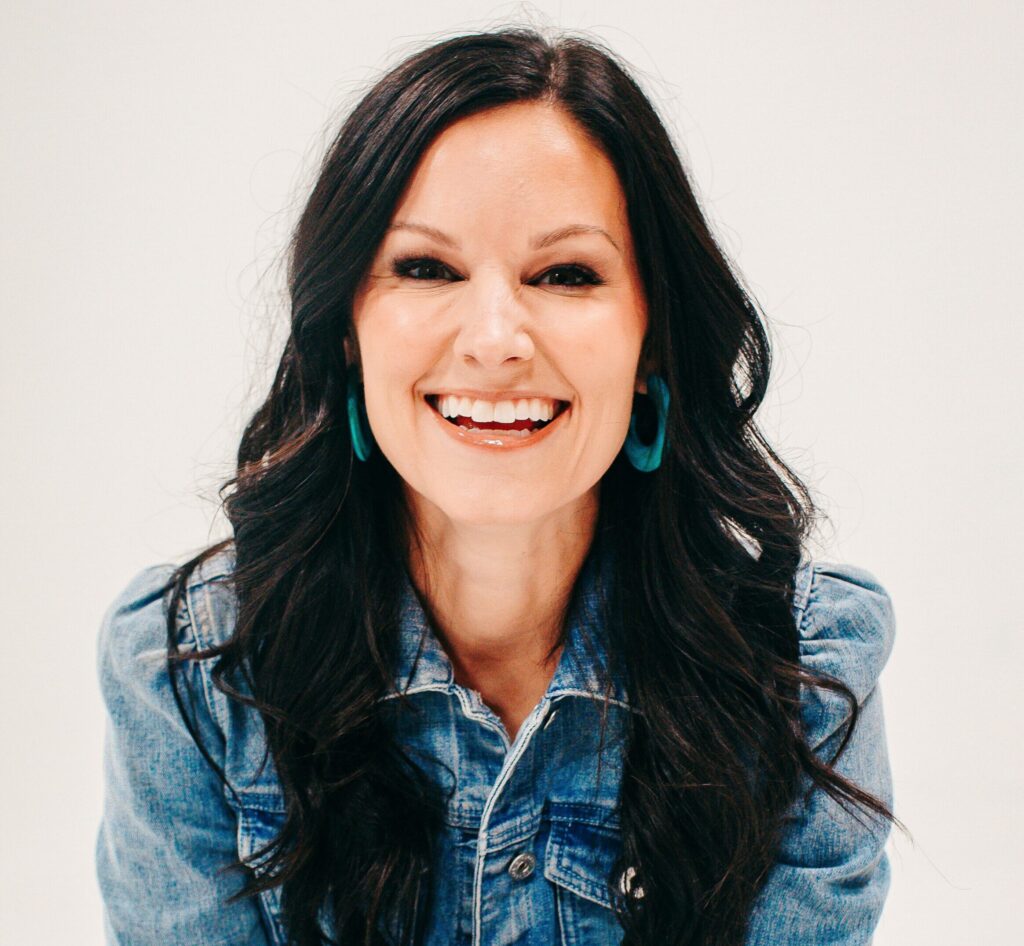
Erin “Big” Diehl is a Business Improv Edutainer, Failfluencer, Author and Keynote Speaker.
Through a series of unrelated dares, Erin created improve it!: a unique professional development company that uses improvisational comedy and experiential learning to sharpen leaders and teams so they can thrive in ever-changing environments, and do it with a whole lot of laughs along the way.
Erin Diehl is a graduate from Clemson University, a former experiential marketing and recruiting professional, and a veteran improviser from the top improvisational training programs in Chicago, including The Second City, i.O. Theater, and The Annoyance Theater.
Having spoken on global stages with companies, including Amazon, LinkedIn, McKesson, and the Obama Foundation, Erin has an energy and message to share with the world that creates lasting ripple effects for change. As a graduate of the Goldman Sachs 10,000 Small Business Program and member of The Chicago Innovation Awards Women’s Cohort, Erin is a living testament to the power of life-long learning, and how working to understand ourselves helps others to do so, too.
Erin is the proud host of a Top 1% Global Podcast, The improve it! Podcast, which you can find anywhere you listen to pods! She is also a first time author to the Amazon Best Seller & Top New Release book: I See You! A Leader’s Guide to Energizing Your Team Through Radical Empathy.
Among her many accolades, Erin is most proud of successfully coercing over 35,000 professionals to chicken dance.
When she’s not playing pretend or facilitating, she enjoys walking on the beach with her husband, son, and eight-pound toy poodle, BIGG DIEHL.
What You’ll Learn in This Episode:
Additional Resources:
Welcome to the Athletics of Business, a podcast about how the traits and behaviors of elite athletes and remarkable business leaders frequently intersect the real stories and hard lessons to help you level up your leadership and performance. Now your host, Ed Molitor. Welcome back to another episode of the Athletics of Business podcast. I am your host and CEO of the Molotor Group, Ed Molotor and we are joined for non core performance today with our special guest Aaron Big Deal. Aaron is the CEO of Improve It. She is a keynote speaker who has been on the stages of companies such as Amazon, LinkedIn, McKesson, the Obama foundation and so many more.
She is the host of Improve it podcast which is one of the top 1% global podcast and she is now the author of the Amazon bestseller I see you A leader's guide to energizing your team, your radical empathy. This is an unbelievable conversation and Aaron previously joined us on episode number 1 39. And where she was at then, physically, mentally, emotionally and where she is at now is radically different, even though back then you didn't know this. And she gets really vulnerable, really open with us inside of this conversation and we talk about some amazing things. And just to give you a little bit of context, we're going to talk about her three P's that led her to becoming the author of this Amazon bestseller icu.
We'll talk about the concept of energy, something we talk a lot about here, the energy in leadership as a capacity to affect others positively. Something else we'll jump into is how combining self love, selfless leadership can impact culture. As a matter of fact, the three parts of her book are broken down into those very things we talked about. Part one is self love, part two, selfless leadership. And when you combine those a self love and selfless leadership, you create a magnetic culture. So I'm going to stop here. I highly encourage you to go back and listen to episode number 139. Regardless, enjoy this episode with Aaron Deal. Aaron, thank you so much for joining us again on the Athletics Business podcast. This is going to be fun.
I mean it's always fun, but we have something so new and exciting to talk about in your world and what it's going to do for our listeners. Your book, I see you. There's so much to this I want to jump into. How did you get to this point? As if you didn't have enough going on in your world, which we talked about at length in episode 139 which will be in the show Notes. So we're not going to rehash everything that we talked about in that amazing episode. But how did you get to this? Like, where did this come from?
Oh, Ed. Okay. Well, first of all, it's so awesome to be back. You are the best. I'm thrilled to be here and it will be fun and. Okay. So much has happened since episode 139. So much life. And I'm not sure if we talked about the three Ps. We definitely didn't because this is new. I call the homecoming of this book an experience called myself coming. Out of the three P's, which number one was pivoting, pivoting, Pivoting. In 2020, as most of the world had to figure out, I had to take our completely in person, completely face to face, completely human to human professional development company, improve it completely virtual overnight in order to survive. That's the first.
You were still in Chicago too, right?
Still in Chicago? Yep. So had it. My son at the time was like not even a year old and he was a miracle baby boy at that. The second P was people pleasing, which leads me back to my miracle baby boy, my team. I was giving everything I possibly can to them and to their hopes and dreams with this organization. I was giving everything to my clients. I was giving everything to my peers who are small business owners who were closing their doors, laying off their teams. I was giving to my newborn baby boy and my family. I was giving to my mother who was recovering from a stroke. And I was giving and giving to everyone except myself. Which led to the third P, which was pain. And it wasn't like, ouch, I stumped my toe type pain.
It was chronic pain that developed in my back in 2020, 2021, 2022. I'm telling you, it was not diagnosable by doctors. I went to every single doctor known to man. I could not get it cracked by like every chiropractor tried to give its best crack. It would not go away. And it was pain that I later realized was really due to the unprocessed emotions that I did not allow myself to feel by going through this huge pivot in my life by having this miracle baby boy, by giving so much to other people, but really not allowing myself any time to rest. I used to think rest was unproductive. I thought I should be doing a million different things. So once I started healing myself, I went through this entire self healing journey of really unprocessing those emotions that I had sort of disassociated from.
I healed from the inside Out. And it was almost like this new person was born. And through that rebirth, I guess you could say, I received this nudge. Call it God, call it source, call it universe, whoever you believe in, whatever higher power you believe in, I received a message to write this book. To write it now. To write it for the small business owner who is giving to everybody else in their lives. The parent who is working, trying to figure out how to do both and is burnt out. The leader of an organization who is tirelessly trying to figure out how to get your P and L out of the red. But the person who has given so much to others in their life and has neglected to give to themselves, and that's really where the book came from.
And I promise you, Ed, this was a divine experience. I would get up an hour early and write every day for five months before my family got up. And I would just light a candle, have my coffee, and I'd take a deep breath, and I swear to you, this book just flowed out of me.
Pretty amazing what's inside you, right?
Yes.
How many words a day would it range from? Right. Like, you write for that hour. But how many words would it. Some days. Yeah, some days. Was it a struggle, or did you just flow all the time?
I took a course, actually, so this might be, you know, for anybody listening who is thinking about becoming an author. I took a course from one of my favorite authors, Gabby Bernstein. It's called Bestseller Masterclass, and she teaches you how to create a story bank and then create a really strong outline for your book. And so since I had this outline, I knew where I wanted the book to go, what my core message was, how I wanted it to flow. And so, really, when I started just filling it in with. After I had that outline ready, it flowed, Ed, like it was. I had to stop myself some days at 1500 words. And I really believe it was because I was. I. This was something bigger than me calling me to write it. I really felt aligned with the assignment.
You know, I was in alignment with it, and I had just healed myself. That's why I think the timing to write it was then. I don't think I could write the same book today. I think that timing was so divine, and it just came. A lot of writers want, you know, strive for this. I have a friend who owns a storytelling business, and she's like, this is every writer's dream. I never intended to be an author in my second that.
Yeah, you know, it can be an absolute grind. But I love the fact that it flowed out of you. I love the fact that you took a course in the story bank and you were very comfortable with what, how you're going to do. You already knew why you were doing it. Right. And then once you had the how, and you just nailed it. So let's talk about the book. Okay. I see you. A leader's guide to energizing your team through radical empathy now connected with me right away. Okay. And just a. A brief story was I was traveling and you and I connected on something, and I. And were trying to get you on the podcast again and trying to line our account. She goes, hey, my book's coming out, yada, yada. Why don't we do it right around that time?
And, oh, by the way, it's going to be in airports, certain airports, and I saw no hair. And then I land in Omaha. And Omaha, I didn't think was known for this amazing bookstore. It has an incredible bookstore. So I go in there and it's there and I take a picture I sent you. I was so happy for you, so proud of you. I know the grind it can be and how cool it was. And I started reading it that night sitting in my hotel, and I'm like, this is so spot on. It's amazing. And we talk a lot here about connecting, about trust, about psychological safety. Right. About the relationship and what is it that you're pouring into other people?
So I want to lead off with this, if I can, on page five, you define energy as it's defined by the dictionary, by Wikipedia, whoever. But then you do your improv and you pivot with yes, And. And you give your definition. If it's okay, I'd like to read it because our are the equation that we use that we found from Excel Institute that I just think nails it is relationship times the sum of order plus complexity equals the coaching experience which drives performance. So that relationship is a force multiplier. Right. And you talk about our. Yes. And definition of energy is connection, the transference of light to another human being, its vibration and being true to you, and then giving that vibrational frequency to another person. It's attracting, magnetizing, and bringing forth the goodness in others, using your own vibrational output as the compass.
Talk to me about this. Where did you get this?
Can I just. I'm laughing right now, Ed, because. Okay. Hearing you read those words, I'm like, I wrote that. Yes. I'm telling you, it was my hands to a keyboard and that flowed out. But I truly believe that, and I love that you connected it to the coaching relationship and how you can enhance performance. Because we don't allow ourselves to learn in a space of scarcity, in a space of fear. We have to feel from another person, another human connection and trust in order to allow ourselves to break down barriers, to remove the hypothetical masks that I truly believe we all wore to work and still do before 2020. We have to allow ourselves to feel safe and we have to allow ourselves to be seen. And that comes by allowing the human to human connection to be as real and authentic as possible.
It also comes from allowing yourself to be totally free of judgment. To drop this is yes, and at its finest, to drop judgment of yourself and to drop judgment of others and to surrender to the process of receiving information and giving information. And that's another pulled right from an improv stage kind of clarification there. Give and take is so huge. And so in any coaching or performance related relationship, if we aren't allowing ourselves to fully be seen, to give information freely without judgment and to receive information freely without judgment, we're not going to grow. Which is the entire point of the coaching and sort of L and D talent dev relationship.
What's really interesting about this, Aaron, it was 2021 when we recorded episode 1 39. We talked about power skills versus soft skills. This is it. This is such a huge part of the power skills. And connecting vulnerability and empathy and compassion, self compassion to a power skill seems to the average person a little bit contradictory. Is that even a word? But anyways, I digress. It seems like it's awful, but that's not it. That's the magic. The things that you're talking about, writing about, sharing with us is exactly what makes you a more powerful in the sense of impactful leader.
Thank you. And I have to tell you something. So I wondered when we last talked. So 2021, I was in the heart of that three piece. Like I was in deep pain. Like I was probably talking to you with my shoulders hunched and kind of shifting left and right because I had not freed myself of my own judgment. I was ultimately at war with myself when I was going through that. It's so interesting to even have this full circle moment for me because when we talk about skill building, when we talk about learning and growth and opportunity, most of the time our biggest hindrance is ourself. We cannot get out of our own way.
Is that ego? Is that stubbornness? Is it stubborn ego? What is it?
Yes, it is ego. And oh man, I heard this amazing acronym for ego recently. It's not coming to me right now, but when it does, I have to tell you. And the book I see you is written from a place of love, true love. And I even think in 2021, I was sitting pretty high in my ego and I had this comparisonitis disease. I was definitely comparing myself to others in my space, my industry. I had this perpetual people pleasing problem. Lots of P's right there. But I was leading from a space of. Again, I still have a lot of love in my heart. So I'm. I'm sure that this wasn't as apparent as I now see it in my. My leadership abilities and on. On your show when episode 1 39.
But I. I would dare to say if you listen to that episode and then listen to this one, it's almost like a whole new person exists.
Yeah. Hey, you know what? Improv is our thing right here. So we're going to improv for a second. And we talked about Pink Guy. Say hi to my friend Lee. We're doing a podcast right now. This is a little bit improv.
Is this Maddie?
This is Maddie. You heard a lot about stand up there.
Hi, Maddie. I've heard you're super athletic and you.
Are awesome and super old. You're 12 now.
Yeah.
So we're putting the eyedrops in on the Athletics of business podcast. Who knew?
There it is.
Better patient, Much better patient than your brother and mother, I'll tell you.
Oh, Maddie, I've had pink eye before. It is the pits. But you're doing it. You're doing it.
Nice day. Sorry for interrupting.
Love it. This was the best interruption ever. Bye, Maddie.
Later.
Oh, that was awesome.
Yeah, sorry about that. So, yes, the book. You could tell when you read the book it was written from a place of love. I mean, you can. And you can tell, like, it's that dance. Like you're not writing a book just to write a book. You're writing a book to make a difference someone doesn't have to go through what you went through or if they are going through it, they're a lot better at it.
Oh, my God. Yes. And, Ed, it kind of brings tears to my eyes because I know I said this to you before we hit record. If you are going through a time where you are burned out and you're just giving and giving, and you read this book at the right time, it's no coincidence. It's meant to basically fall off a shelf for you. And again, you know, I have a great community, a great support system, so. So Many friends and family and improve it peeps all read the book. But when I hear from a stranger who found the book in some way, shape or form and I have no connection to them whatsoever, and they take the time to write me and say, I saw myself in every word. I just received this from someone recently.
She's a police officer, actually, she's literally a police officer. And she found the book and she said, I saw myself on every page. This is exactly what I needed at this moment. I'm going to go through a career change, but I think my next one is with you. And I was like, yes, come on, please. We need some safety. Yeah. Safe space. Yes. She could be the fun police or the no police. That's what we could use her for. But it was honestly so transformational for me and that's what kept me going through the whole process because it was so vulnerable. And it was not the book that I think a lot of people expected. Improve it or to me to write. I equate it to standing naked on stage singing a high soprano Celine Dion ballad. That's what it felt like.
It was like, oh, you know, and then it's like, here's my diary. Boom.
And take all of me. That's it. This is what you're getting right here. Yeah.
So. And when it touches somebody else, when I hear that's. That's enough for me to say, okay, it was all worth it. If I could even impact a sliver of somebody's day week life, then it was all worth it.
When you know that they're going to pay it forward and they're going to share it too. They're not just going to sit on it. Right. It's too good to just sit on now. You broke the book into three parts. Part one, self love. Talk to me about that.
Yeah. So that's really where all of it takes place like that to me is you can't get to part two or three without a firm foundation in Self love. And the more we give to ourselves, the more there's these cliches, as we all know. Put your oxygen mask on first. You can't fill somebody else's teacup unless your kettle is full, yada. It's so true. And I never understood that until I went through my own healing journey, which I will say the 3Ps turned into what I call the 3Ps Remix. After doing a lot of those things with Self Love, instead of pivoting people pleasing in pain, I now live a life filled with my knowing My priorities, my purpose and peace. And that never happened in my four plus decades of walking this earth.
Priorities, purpose and peace.
And that's ultimately what that first section leads you to. And every chapter, as you know, ends with an activity you can do on your own or an activity you can do with your team. To believe in yourself more, to love yourself more, to give to yourself more.
You know, it's funny listening to you talk at the beginning of this podcast, you talked about I was just, I was giving to everybody, I was working. I thought rest was unproductive. Right. Often we're told that's what's made us so successful. That's why we are who we are and what's gotten us. I'll argue to an extent that's right. Like I'm. You look at my Clifton strength finders, you look at the way I operate, I'm huge on execution. Like, let's just get this done and do whatever it takes to get it done. Having children has changed that for me. Right. Training for half Ironmans has changed that for me. You realize how much rest, you know, mental rest, physical rest.
But was it a challenge or how challenging was it for you as you started to evolve and realize the way you're doing it wasn't working, Even though that's the way you've been told you need to do it your entire adult life and obviously prior to that, with all the success you had in your early adult years and in college, high school, et cetera, was that a challenge to really break through that?
Yes. And let me tell you something. When I actually learned to appreciate rest, when I took my first nap, I cried and I cried. I was like, what? So just a side story for you about that. I told you I wrote the book coming out of this healing journey. I From January of 23 to May of 23, I wrote the entire manuscript. May of 23, I turned it in to my publishing company, went on a trip for one of my friends birthdays to Costa Rica. And through the end of the book being turned in, I started to come back to some old patterns. I was over exerting myself. I was kind of putting more eggs in my work basket than in my life basket. And I went on this trip. I did a really smart thing.
We'll call it when your friends tell you to jump off a cliff. The answer is don't do it. I literally did it. I jumped off a 40 foot cliff in Costa Rica and I got a concussion and I had what is called post concussion syndrome for four and a Half months. I was walking around. Yeah. Like a zombie. Like my vision was pixelated. I had headaches, neck pain. So I. Was it.
Were you bungee jumping? Were you jumping in water or you just really being stupid?
Being.
I don't mean. That's a bad word. That's a bad word. You know what I'm saying?
No, it's not. No, it was dumb. It was a cliff diving, like excursion, which we thought it was a cliff hike, so we didn't know were jumping. So every hike kept getting higher and higher. And of course, because I'm me and I have to overachieve, I was the only female to go up to the 40th foot cliff and jump. But I. You're supposed to pencil jump. Like your hands are at your side, your legs are straight. I sat on the water, basically like sitting in a chair. My head went back, popped up. My concrete.
Like concrete, right?
Yes. And it hurt. And I was, I. It was a whole. It was an idiotic thing to do. However, I think what happened from like a spiritual standpoint was I was talking a great talk, writing this book, preaching these fundamentals, and I fell back into another pattern of overworking and over committing myself. And through that healing journey of the concussion, that's when I was editing the book. I actually really had to learn how to rest. There was no choice. I had to rest. I wasn't supposed to look at screens. I had to take breaks in my workday.
I had to find more balance in my life, my team and I, at the end of all of it, when I finally was healed, went to a four day work week, which is wild, which is not something I would ever say that we would do prior to that.
And how was that conversation out of curiosity? I don't mean to interrupt you.
Yeah.
The look on their face when you told them that. Or was that kind of in the works for a while? Or did you say, hey guys, listen, I've been thinking about this. Here's what we're going to do. I made a decision. What, what was that like?
So they, I think at first were concerned how would this affect my pay? I kept their salaries the same and we restructured our meetings and our time management of our workdays. Four days a week. We have a system on Fridays, we're off Fridays, where we all check email at 11 and 4. Whatever time zone we're in, we respond to urgent things. Well, we can do that from a beach, you can do it from a coffee shop, you can do it from wherever you want. And we read a book called Shorter, and they have a 90 day. It basically gives you a framework to develop this for your team. And it also gives case studies of tons of different industries and businesses who have done this and have found more productivity.
And so we set a qualitative and a quantitative goal for 90 days and measured. We hit both and we kept it after the 90 day experiment. And I would have never done that without the necessity of rest and sort of forcing that concussion made me do. So it was like I was talking the talk by writing the book, but I wasn't walking the walk. And now I do both.
Is it a bad dad joke if I say, had the concussion knocked some sense back into you? That was awful.
No, that's really good. You know what? That's. That actually is not a dad joke. That's part of an improv game called 185. And it's like, oh, no.
See, I'm a natural.
You're a natural. You would fit right on in. Come to the. You've been doing a workshop. Jump on in.
I have. And I did the chicken dance, right?
Yeah.
So self love, was it. Was it a challenge for you?
Yes.
Is it the feeling that you're never enough or you can always be more, do more? What. What was the issue? I think it's something we all struggle with. What's the fine line between pushing ourselves and not being soft? And then to really be compassionate with yourself and be like, hey, man, you got to relax a little bit. Like, go easy on yourself. How'd you. How'd you figure that piece out?
Lots of journaling, therapy, meditation. I will tell you, Ed, I moved a lot as a child. I mean, I guess every therapist starts off with, what was your childhood like? But I realized for me, that achievement got me attention. Achievement said good job achievement from others is what motivated me for a long time. I also had an internal motivation. I always wanted to make people feel good. That was always there. I knew that what had happened in my career as an entrepreneur and a business owner was. I was seeking outside validation and not embracing anything internally. It was never enough. And it. And that is sort of the sort of limiting belief that ran over and over in my mind. What I really got down to it was, I am not enough.
And when I finally had the sort of homecoming through this whole healing journey back to myself, I realized that, what am I spending all these hours for if I'm not enjoying it? What am I taking away time from my son for if I don't have inner peace? What am I? What is all of this for? And when I finally realized and connected to my purpose, which I know is to help people become the highest versions of themselves through play and laughter and joy. And I really served from that space. And it wasn't a selfish motivator for anybody to give me an accolade. It was because I genuinely enjoyed watching that transformation. And I. Great. I got value from it. The awards and the achievements aren't as important.
And the validation of purpose and being in alignment with what I'm here to do is what drives me now.
It's remarkable because often we let others be the author of our own stories, of our stories, not their stories, but our stories. And we also worry about what we think. Think other people are thinking. Right?
Yes.
So when you're going through this process of writing this wonderful book, and I had this challenge, as I continue to work on my first book, it's, God, I put that story in there. What are they going to think about that? Like, I don't want to hurt them. I don't want them to think that I And them being anybody. Like, I'm not thinking of anybody specific. Like, I don't want them to think I don't. I'm not full of gratitude for the role they played in my life, but the story can serve the reader, and that's what I'm after.
Yeah.
I'm not after to make everything okay in the past. I'm here to move forward and serve the people that I'm writing this book for. Did that challenge pop up at all with you when you were writing icu?
Yeah. It's so funny, and I'm so proud of you for writing your book. And I can't wait to read it. And I can't wait to help you spread the word. But, yeah, there's actually, in the second part, all about selfless leadership. Two different chapters. Talk about two different leaders. In the first one was Chad. Now, Chad, name and gender were changed to protect the innocent. Notice Chad does not have a last name. Chad was a really toxic leader for me. I'm gonna call it a toxic boss, because leader doesn't even cut it. And I knew, and I also changed a couple of other details. So if. If Chad were to ever read it, Chad may think that might not be about them.
But I had to have Chad in order to have the juxtaposition of the most selfless leader I've ever been, led by Jennifer d'. Angelo. And so I couldn't just tell the story of my success. Of being led by this amazing empathetic leader, Jen, without telling the reader and the audience how I saw that. It's like you can't have dark without. Or you can't have light without darkness, right? And so I was really nervous and I knew a lot of people who said they bought the book, who I worked with when Chad was my leader. And I had some nights where I really struggled because it was getting closer and closer to pub day and. Or to closer and closer where they had to send it to the printers. And I talked with my husband, I had him read it like it's specific parts.
And I just let it go because you know what? So many people identify with me in the book on the part about Chad, the part about the toxic leader that they wish they never had. And so many people also say they wish they could have a gen in their life. And I hope, I wish every person who has had a leader in their life could be led by a gen.
So amazing segue, yet unintentional to part two of the book, which is selfless leadership. And Jen, tell me about that.
Oh, man. I had a leader, Chad, who was horrible. And all Chad wanted to do was climb the corporate ladder. He would go over any step, any rung, any person to do that. My wellbeing was not even accounted for. It was how fast, how soon, how quick can we get? Can I get there? Not we can he get there. And I knew he valued me because he pulled me off a really big project and then pull me onto another project with him. But in doing so, he had me train another person who had a higher title than me and more pay to do my job. It was a very. It was an interesting place to work. In the book, I call it an advertising agency. Spoiler, it's a marketing agency. But it was really hard.
And my self worth, my self esteem, everything in terms of my career just felt horrible. And I felt horrible every day coming to work. And then Jen was, I say, the 10 that came in and dug her ladder of empathy into my career in life and pulled me out with empathy and love. Rung by rung. She believed in me. She made work fun. It wasn't just for me. It was for every single person who worked there. She encouraged me to build and prove it. She is the reason that I have a business because while working for her, she knew this became a dream of mine and she actually had me pitch the idea of improve it to one of our clients at our recruiting firm, which was United Airlines, just a small company that was my first client at Improve It.
Wow.
Yeah. And to this day, she is still one of the biggest cheerleaders in my life. She's like family. She knows my parents, my brother, my husband. She's. She's just a person who deeply cared for the people that worked for her and for the organization. And the ripple effect of great leadership is so strong. I pull so many things from my own team. For how she led me. I would have been a completely different leader. And Pruvit would be completely different if she never was my boss.
Did you realize that while she was your boss, was that. Were you keenly aware of. Obviously you're keenly aware of how different she was than Chad, but were you aware of, like, how much she was pouring into you and have an idea what that was going to mean to you down the road?
I don't think I had as strong of an inclination of what it would mean down the road, but I knew I had been led to her and I felt grateful every single day. She made work so fun. I genuinely loved work. I didn't really love my job, if I'm being honest. I loved working with and for Jen. And it was a transformational time in my life during that. I worked for her for five years. And in that time, I got engaged, married, and started a business. And I worked really hard at work while I was there, but I had balance. She cared for my interests outside of work, which was improv. And she would come, my whole team would come to my shows and support me.
And when I decided to build improve it, I entered this competition in Chicago called the Red Eye Big Idea Awards. And that's when it became public because the public had to vote to make your idea the best new big idea. And she and my entire team at work, my 9 to 5, showed up at that competition with signs and hand clappers and helped me win it. And I to this, I have goosebumps.
Yeah, that's really cool story.
She's the best. She's. And I mean, I talk to her all the time. Somebody, you know, again, when I hear from a stranger, like, I want to be Jen, I tell her and she's. She just cries like she. She, you know, and I told her, I was like, you didn't even know. You had no ego in this while leading me, you weren't thinking, please write a book about me and my leadership or anything like that. She just genuinely led from that space and still does. And I posted something on LinkedIn maybe two, three years ago before I even had the idea for the book about her, and it went viral because so many people love her and so many other people have been impacted by her leadership.
Yeah. Yeah, that's cool. And, you know, you talk about self love. You talk about selfless leadership. R3, your book is self love plus self leadership equals a magnetic culture. And I love that. Like, you and I like, we love words, right? We love.
Yes.
Bring out the emotional attachment to what you're trying to say. What in the world? Now, I read the book, so I know the answer. But I'm. I'm asking you. Cause I want you to talk about it. What is a magnetic culture? And how does it serve yourself and how does it serve the people that you lead?
Yes. Okay. So I'm. I have a toddler now. He's almost five. If you've ever seen a magnetiles creation. All right? And I talk about this in the book. Magna Tiles are these toddler toys. They're. They're shapes. They're all different sizes, all different colors, and they have magnetic little properties on the end. So you can build anything you want out of Magna Tiles. And so I create a magnetic, or I equate a magnetic culture to a Magna Tiles creation. You need all different colors, all different shapes, all different sizes. But what has to attract magnetically is the core of who you are. So that part of the book says if you can be loving to yourself, you have so much more energy to give to others. You become the selfless leader.
You start to attract people who also are selfless leaders, who also have a strong sense of self. When you identify your core values as a human or as an organization or as a team, and you hire and you measure performance by those core values, your tower starts to build and build and becomes so much stronger. And we celebrate the differences within that tower. But what makes that tower strong and standing is the foundation from what it is built on, which is who you are at your core. So that part of the book gives tips on finding and creating your core values, and then it gives tips and tricks on how to use those core values to hire talent and give you tips and tricks on how to retain that talent too.
I meant to ask this before we started recording, so I'm really curious about this. What is the feedback that you've gotten about the exercises in the book? Sometimes people read books, especially this time of year. They wanna go to the beach. They wanna go watch their kids at the pool. Just want to read books like this. You can't just read. You have to get involved in them. Right. You have to jump into them and lean into them. I mean, don't get me wrong, you could not do the exercises. Still an amazing book. But talk about the value that people have gotten out of intentionally going after those exercises and doing them.
Yeah. If you go to the book that gives you a website too, that has a resource guidebook that you can download for free. It's a fillable PDF. It's 60 pages, by the way, of all of the exercises in the book. But terms of value, I mean, so many people, there's. There's so many exercises, but it depends on where you're at and what speaks to you the most. One of the exercises is called an LSD day lightsaber day.
And that is where you commit to one day a month of giving yourself a day off, giving your team a day off, doing something that fills your cup or lights you up so that you're not going from this low wick, this low candle, you're not burning the candle at both ends and then celebrating that with your team, sending pictures when you get back to work the next day of what you did, showcasing yourself. So I've heard a lot of teams implementing those and really loving that. And then another huge exercise is at the end of a chapter that is really near and dear to me. It's called From Interning to An Interview with a Former President. And it's about our VP of client experience, Jenna, at ImproveIt.
And she was the shy, timid intern and she ended up being interviewed by a former president in front of 300 people and a ton of media on a client engagement that we had, and it changed her entire life. And so that chapter ends with an exercise called the Offer Letter, which it has. You write an offer letter to yourself, and it has to be set in a time in the future, so you can pick five or however many years makes sense to you. But you're writing an offer letter to your future self and basically manifesting what you want to come through. And I've heard that be extremely powerful for a lot of people. And when you take the time to actually do them, that's for me. Books have changed my life in so many ways.
Like Darren Hardy's Compound effect made me start and prove it. That's how I started the business. The Artist's Way by Julia Cameron is another book filled with exercises that help me understand that I need to live near water. I moved to Charleston, South Carolina, because of that book. There's so many books that I've dog eared and done the exercises and highlighted and posted. Noted that I knew I didn't just want this to be a read and you're done. I wanted it to have impact on your life. And that's the reason the exercises are there.
The offer letter is brilliant, by the way. I mean, it's pure brilliant. And the exercises are so phenomenal. Did you ever find yourself, as you put this together, being like, I wish I had this 15 years ago?
Yes.
I wish. I. I wish I. Yeah, I wish. God, I, I just. If I. If I could have had that 15 years ago.
Yes, yes. And I. I wrote that for the reader in mind. It. You could be at any stage in your career, really. The piece about Chad happened early in my career and I wanted that book to serve somebody who's early in their career, that piece in particular, who's afraid of changing careers. They might have the dream job at the dream place, but their leader is toxic. I wanted them to know they weren't alone, number one. And number two, they could change. And the grass is greener. It is greener.
Aaron, here's what we're going to do. We are going to put links to the books that you just mentioned as well as the downloadable PDF with the exercise, obviously the link to the book, everything else you provide, but tell the listener where they can find out more about you. Improve it Everything.
Oh, you're awesome. Okay. I would say the easiest way to find out more info about me is just go to my website. It's aarondeal.com its aaron deal d I e a j l dot com and then that'll get you to our Improve it website. But that website is Learn to Improve it. Com. Our podcast is on there, all of the socials are on there and you can find the book and all of the things there too. Ed, you are awesome. Thank you so much for allowing this conversation to take place. I'm like reinvigorated in my own day. This was amazing.
I love that. What I need to do is need to get the family out to Charleston. So I love the city. It's amazing city. Need to get them out there and hang a little bit and go do what you all do in Charleston. But I have to go back to Jen and the Obama and the offer letter for a second because you had a phenomenal post on LinkedIn today about that very situation. Just go ahead. I mean, let's wrap this up with that story because it kind of talks about Jen, your boss, right, who had an amazing impact on you. And now here you are putting Jen in a complex situation to get her outside her comfort zone because she was a little bit introverted, a little bit quiet, if I remember correctly. Right? This is like a big moment.
So go ahead, let's share that story.
Yeah. So this was 2018. So Jenna was an intern for us for probably a year at that point and was part time and she was so afraid to do anything sales related. We had a landline. Can you imagine a landline in an office that she would pick up and she would go improve it? Like she was so quiet, so timid. It was. But she was just this amazing human and we saw so much potential. And I knew once we got her over this fear that she would thrive. And so were asked by the Obama foundation to help with their first ever training day in Chicago, which is wild. Myself and my director of talent, Christy and I got to be facilitators for the larger session.
And we actually did somewhat of a train the trainer and trained 25 other facilitators who helped us train 250 citizens. Jenna got to be a part of this as a citizen of Chicago and be a participant. And they broke em into small groups throughout the day. And each small group was tasked with coming up with a project that could help implement positive change in Chicago. And then each group chose an idea and then what they didn't know was that each group's idea, whoever came up with the idea, would then be presenting it to all 250 participants. Jenna's idea was chosen. She had no idea she had to present to all 250 participants. And also no idea that the person she would be presenting it to would be Barack Obama. He walks out on the stage, I see her lose her mind.
And then I see her waiting in line to talk to Barack Obama because it was like two people ahead of her on a microphone. They pitched their idea. He had some feedback back and forth. And I am just sitting back there like Amy Poehler and Mean girls with the video camera, like holding my camera waiting for her to speak. So I was just sending her so much energy knowing this will change her life. She gets up there and she has a conversation with Barack Obama for 10 minutes. And I know it's 10 minutes because I have it on video. And she's laughing and he's laughing and they're cutting up and they're making jokes and she turns and looks at me. After she was done, she was the last person and she goes, oh my God.
And I just was crying, tears running down my face. So after she was done, the event was over, she rushes over to me, we're hugging, and all of a sudden, as she pulls back from the hug, she's whisked away from. ABC News. Channel 5 would like to speak with her now. She's the face of the Obama foundation for the next five weeks on their website. And literally after that moment, I watched her life change because we said, if you could do that, you can do anything. That was 2018. She became a client experience manager. She is now the VP of our entire organization, bringing in organizations from India, London, UK, Canada. We work with Fortune 500, Fortune 100. You know who they talk to? Jenna.
That's so cool. That's such a great story. What a wonderful way to wrap up just an amazing conversation. I can't thank you enough, Aaron.
I can't thank you. This was really awesome. I truly appreciate you taking the time to read the book, to support it, to have me on the show again. Ed, we believe in you and I'm so proud of you with all you've done with your business. And thank you. It just means the world to me.
Does and you know, and I appreciate our friendships and I do look forward. And if people read the book, they'll understand or they follow you. When they follow you, they'll understand. I look forward to getting the family in Charleston doing a chicken dance together.
Yes. All right. You got it. You have to. That's it. That's a for sure. And we're starting to do some showcases here, so we will time it. If you can come in September, we've got. September 4th is our first showcase in Charleston.
Youth sports throw a huge curveball into our lives, but we'll figure. We will figure something out. Okay, Aaron, thank you so much.
Thank you. You're the best dad.
Thank you for listening to the athletics of business. Be sure to give us a rating and review so we know how we're doing. For more information about the show, visit theathleticsofbusiness.com now get out there, Think, act and execute at the highest level to unleash your greatness.