

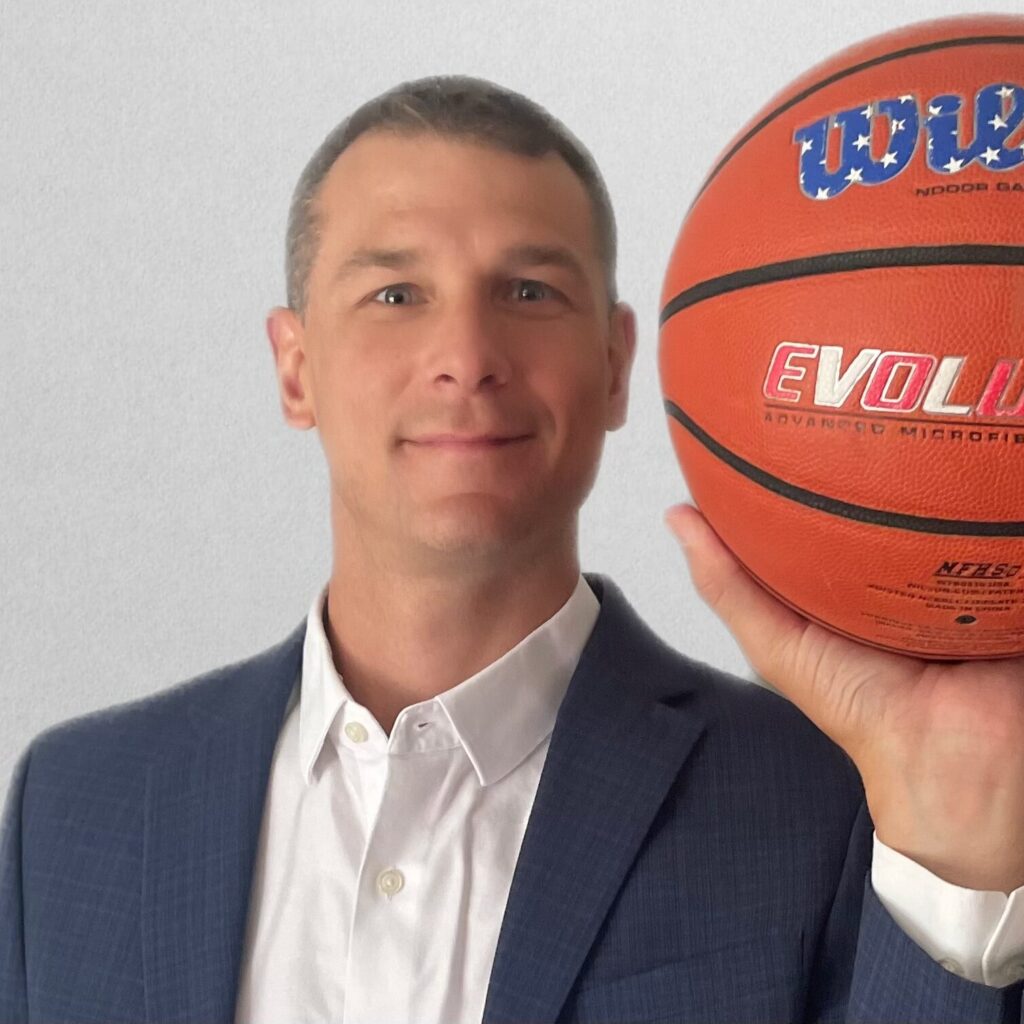
Pat Carroll is a devoted husband and father of four but also a storied athlete and a respected leader in the pharmaceutical and biotechnology industry. His journey began on the basketball courts of St. Joseph’s University in Philadelphia, where he played as a Division 1 athlete.
Pat was a key player on the legendary SJU team that achieved a perfect 27-0 record during the regular season, earning them the #1 national ranking and a memorable run to the Elite 8 in March Madness.
In his senior year, Pat’s hard work culminated in being named the Atlantic 10 Player of the Year and the Big 5 Most Outstanding Player. That season, he led the nation with an impressive 135 made 3-pointers and set the record for the all-time leader in career 3-point field goal percentage in the Atlantic 10 Conference.
Transitioning from the adrenaline of basketball to the fast-paced world of pharma and biotech, Pat has become a Commercial Director at Inizio Engage. His expertise now drives team development, sales strategies, and innovative practices in the industry.
Pat is passionate about sharing his knowledge and experience, regularly contributing tips and best practices on LinkedIn, where he also indulges in his love for the art of shooting—both on the court and in business strategy.
What you’ll learn in this episode:
Links to Additional Resources:
Welcome to the Athletics of Business, a podcast about how the traits and behaviors of elite athletes and remarkable business leaders frequently intersect. The real stories and hard lessons to help you level up your leadership and performance now your host, Ed Molotour.
Welcome back to another episode of the Athletics of Business podcast. I am your host and CEO of the Molotor Group, Ed Molotor, and if I sound a little bit than I normally am when I do, the introduction is because I am. We just have an incredible conversation to share with you today with our special guest, Pat Carroll, who is Senior Director of Virtual Sales at NZO Engage. Let me tell a little bit more about Pat the Person and add some context to why I am so excited to have him here with us today. Pat is a devoted husband and father of four, but also a storied athlete and a respected leader. And that's probably an understatement. Respected leader. Matter of fact, it is an understatement in the pharmaceutical and biotech industry.
His journey began in the Basketball courts of St. Joe's University in Philly where he didn't just play as a Division 1 athlete, right? Sometimes these bios just don't do you justice. He was an absolute star. He was a key player in a legendary St. Joe's team in the 2003 and 2004 season. I believe it was 270 perfect record during the regular season, then just lost an absolute heartbreaker in Elite Eight to Oklahoma State in his senior year. Pat's hard work culminated in being named the Atlantic 10 Player of the Year and the Big Five Most Outstanding Player. In that season he led the Nation with an impressive 135, made three pointers and set the record for the all time leader in career three point field goal percentage in the A10 conference.
Now 135 made three pointers may not sound like a huge amount, but that was in the era when people still believed in shot selection, right? And basketball high IQ was at an extremely high level. Now transitioning from the adrenaline of basketball to the fast paced world of pharma and biotech, Pat has become a Commercial Director at NZ Engage. His expertise is now drives team development, sales strategies and innovative practices in the industry. He is so passionate about sharing his knowledge and experience, which he does and I'll get into that a little bit about what we talk about here in a second. He regularly contributes tips and best practices on LinkedIn. Go to his profile. The link to that is in the show Notes.
We'll also talk about it here in the conversation and he also indulges his love for the art of shooting both on the court and in business strategy. And one of the things that we'll talk about a few of the things that we'll talk about deliberate practice. Right. It is no secret that his work ethic and his commitment to mastering his craft both in basketball and the business world is what has made him such a huge success. Pat talks to us about the importance of trust and vulnerability in building high performing teams, in that trust as a key component of a successful team. And and he talks about both trust earned through past performance and trust given in the present.
We're also going to talk about how overcoming adversity as a team can lead to a stronger, more cohesive and collaborative unit and how shared experiences can be a unifying factor within a team. As a matter of fact, he shares a great story about his senior year, the year after they were 27 in the regular season when they came out of the gates and they were just struggling. And coach Martelli, who is one of my all time favorites and coach Martelli, a master motivator, a great think you're an incredible basketball mind and such a connector. One of the things he used to bring the team closer together. And again we talked about the concept of deliberate practice and skill development, using repetition to master a particular skill.
And along those lines we talk about the value of focusing on micro skills rather than trying to work on too many things at once, which we're all guilty of, some of us on a daily basis. But anyhow, I'm going to get out of the way. I hope you enjoy listening to my conversation with Pat Carroll half as much as I did recording it. Pat, welcome to the Athletics of Business podcast. I'm really, I couldn't be more fired up to have you here. It seems like just yesterday were standing in the hotel in Nashville, talk about, hey man, we got to have you on the podcast. And here we are. It's been almost a year.
Can't believe it. I've been waiting for it to happen. So it was great to connect in Nashville. That was my first time there and it's good to have the connection.
The city never disappoints, nor does the company. We had some wonderful conversations. So much your story and your journey is beyond fasting. Obviously I remember you as a player. You know, St. Joe's coach Phil is one of my favorites. Watching your career, following you then to have you here now. But I have to ask you play professional basketball. How many teams did you play for. If you can walk us through. I mean, even take us back to the 2003, 2004 magical season when you guys were 27 and 0 elite 8, you should have been in the final four. You guys would have won the whole dang thing. Okay, but just walk us through, like, your journey and how you got to where you are today.
Yeah, it's. It's been a wild journey. So after St. Joe's and I guess, you know, starting with St. Joe's so that the 0304 team, it's something that changed my life because, you know, I still live in the Philly area, so anytime we're at a basketball event, you know, I have four kids right now, so that's. That's every weekend we're off somewhere, you know, in a basketball gym or on a baseball field, but there's always in the basketball circle in Philly. Everybody remembers that team from St. Joe's so it's an amazing experience, and I tell you, it's the best conversation starter anytime connect with somebody in Philly. And I just love what that year did to the alumni at St. Joe's and Just Philly in general. I think everybody was pulling for us in Philly and even across the nation.
I think the thing that stands out from that year was if you remember our point guard, Jameer Nelson, he was national player of the year. We had film or Talley coach of the year. Jameer. He was on the COVID of Sports Illustrated, and it said, the little man from the little school that's beating everybody. And it's like that. That summed up that team right there. It was just.
I just got goosebumps, by the way, when you said that, too. But anyways.
Yeah, but. But that was the essence of the team, you know, this little St. Joe school. I think we had about 3,000 students at the time, was out there ahead of the blue bloods, you know, Duke, Kentucky, Carolina. And we ended that season number one in the nation. For the regular season, were 27 and 0, and it was just like, holy crap. Like, I never imagined going to St. Joe's being on a team that was ranked number one in the nation.
Arguably, I. It's the best St. Joe's team ever. That's safe to say, isn't it?
Yeah.
When did you realize. Was it the year before, when you. When you saw yourselves, the way you guys were coming together, the way you were training, the way you're trying to. But when was it you realized, holy crap? Like, this is something we're onto something really special here. We're doing something really significant.
Yeah, well, so the year before, we had a good season. I believe were 24 and 7. So really good season. But we got knocked out the first round of the tournament from a really good Auburn team. But we knew we had something. We had a foundation that it's like, okay, that was a good year. We can do something special the next year. And the first game of that 0304 season, we played Gonzaga. I believe were ranked in the top 20. I think they were ranked in the top 10. We played them at the Madison Square Garden. So, you know, the perfect, the mecca of basketball. To kick off the basketball season, it was on ESPN, there was over 6,7000St. Joe's fans came up to the Garden and it was like a home game for us.
And there was, you know, just remember seeing the highlights and the hype of the game, the atmosphere was unbelievable. And we won that game at the Garden. And that just kick started the season. Like, you know what? This could be something special. And then we ran it off from there.
What was it about Coach Martelli? He, he's so good. What was it about him that made all of that possible? Like his disposition, his preparation, his. The way he connected with you guys, how he was able to foster that edge that you guys played with. What was it?
Yeah, the one thing that stood out with Coach Martelli is, you know, I had amazing coaches in high school, and then when I came to college, I remember seeing Coach Martelli, he comes walking out and he has every drill. So for your practice, every drill is detailed to the minute. So it's like, all right, for your stretching, for your warmup, you're doing this is going to be three minutes. Next five minutes, you're doing your shooting warmup. In his preparation, like when we would go, you know, he had this success routine where two days before a game, we would watch video of the other team, we would walk through their plays, we would prep in the practice. Then one day before, we would have our routine and then we would do the walkthrough before.
But he was so meticulous and so prepared and it opened my eyes of like, man, every time went into a game, were so over prepared. And you know, when you couple that with some talent and he built the chemistry of the team and he had the right people in the right places, it's an easy formula for success.
And we're going to come back to that. Cause I want to talk about how that's transferred and translated and shows up in your world now with you, St. Joe's amazing time. What happens, you go undrafted. Did you, did you think you're going to go undrafted or did your agent think you had a shot?
Most likely figured I was going to go undrafted. And then. Which is not for some of the people that get drafted late in the second round. May it's sometimes it's not the best thing because there's limited roster spots where if you're a free agent, your agent can pick which would be the best opportunity for you. Where do they have roster spots? So I kind of figured I was going to be undrafted, which I was. And then he set me up with the Houston Rockets for the NBA summer league team. And I played for them for two summers, the two out of college. And it was an awesome experience. If you remember the team they had there was Jeff Van Gundy was the head coach and that's when they had Tracy McGrady, Yao Ming, like they were loaded there.
And coach Tibbs, Tom Thibodeau, who's now the coach of New York Knicks, he was the head assistant. So when we came in and usually the head assistants get to be the NBA summer league coach. So Coach Tibbs was our coach there. And you would go down. We flew down to Houston for a week. It was the harder we did two a days. It was the hardest practice you could imagine with coach Tibbs. Like he is.
Oh, he's nuts.
I mean he is nuts. But I had my successful summer like believe I was top 10 in scoring in the NBA summer leg out in Vegas one year. And ironically on that team, the point guard was John Lucas Jr. So if you remember, he was the guy that I hated. He was the one that hit the game winning shot against us in the Elite eight. So they went to the final four, Oklahoma State. Oklahoma State. So I, you know, I, whenever I see their colors, it still bugs me to this day and stuff.
But I apologize because it's right here. We have orange and black right here. I apologize.
No, but it's funny though because going into that summer league team, you know, your agent hooks you up with the team. You don't know who's going to be on the summer league team with you. They just, they find the best spot. You fly down to the location, we're down in Houston. So when I walked into my first practice, you know, I go into the locker room, they have a practice gear, I put it on, I'm Going into the training room to get my ankles taped. I, you know, I still have no idea who's going to be on this team. Besides, they drafted Luther Head from Illinois. He was the only one I knew. So I walk into the training room, get my ankles taped. Who's on the table getting his ankles taped there? It's John Lucas Jr. And I'm like, you.
You know, just like. And he looks at me, we just started laughing and like, yeah, at the end of the day, he was one of the best teammates that, you know, I had the chance to play with. So he had a. He had a nice NBA career and now he's coaching, so.
That's awesome. That is funny. I remember you telling me that story. Well, I mean, but isn't it funny when things like that happen? It brings you right back. No matter how many years pass, it brings you right back to that moment though, right?
It does.
That was a great game. So it doesn't work out in the NBA.
Yep.
And then what do you do?
Yeah, so I signed with the Dallas Mavericks. So. Had a good summer league, signed with the Dallas Mavericks. It was a year after they lost to the Miami Heat. So Avery Johnson was a coach and they, you know, there was four people going for one spot and they ended up taking JJ Berea, who he had like a, I don't know, 12, 13 year career. So they made the right decision. But I said, okay, you know what, that's not it. Let me go overseas. And I started out in Italy first and then spent a season in France. And then after that I got married. My wife came over, played on four different teams in Spain and that was an amazing experience because, know, spending a few years in a country, you get to really, you know, just enjoy the people, the culture.
And we had an amazing time in Spain and then ended my career over in or. I spent one. One year in the. In the G League and played on a great team in Iowa. The coach there was Nick Nurse.
You know what, when I, I was going to ask you if it was Nick. Yes. He had a great run there with the Iowa Energy, didn't he?
Yeah. So we had a great team. We lost in the finals there with. With him, but he was phenomenal coach, obviously. It's funny now he's back in Philly with the Sixers and.
But you remember who his assistant coaches were.
So there's. There's Coach Nick and I'm drawing a blank on his last name. He was the head coach for the Pacers for a little bit, but he was a phenomenal assistant coach. Bajorkin, I believe the last name was.
Yes. Your basketball career winds down, right? And one of the big challenges. And every time I have a former elite, former athlete on the podcast, the struggle, because that's your identity. You work so hard, you spend so many hours. Your grandfather, is he still the winningest coach in Pittsburgh in the state of Pennsylvania? Is it right? Yeah. I mean, it's your life. Your dad plays football at Penn State, your brother, amazing basketball career. Like, this is who I am. This is what I have done. And now you come to this crossroads, like, you have to make a decision. What made you head into the direction of the pharma world?
Part of it was in Greece. I tore my acl. So I expected I'm going to be playing basketball till mid-30s and ride it out till then. Well, I was about 29 when my basketball career ends due to the ACL injury. So I didn't know what the heck I was going to do. So I reached out to a couple buddies. So my one coach, my two, you know, most impactful high school coaches. Waddle Strasky Coacho. He ended up passing away, but had such a huge impact on my life. His assistant coach Jimbo, we called him, his name's Jim Rayquan. He was a former football player, almost made the NFL, but amazing guy. I reached out to him, said, hey, coach, can you help me out here? Like, so he put me in touch with a few contacts. One of his.
One of his buddies was in the farmer world and so connected with him. And it's like, hey, he told me about it. I'm like, all right, that sounds interesting. But the decision I had to make at the time was, do I want to continue and possibly coaching in basketball or go into business? And I think, you know, after spending six years playing pro over in Europe, it was an amazing experience. It would never change anything, but it was like were away from family and in coaching, you know, better than anybody, you're bouncing around all the time, you know, new cities, new location. We had our first kid. At the time, I wanted to really establish ourselves, hey, let's live in Philly and start building a career here.
So that was one of the key pieces that kind of drew me into getting a job outside of basketball.
I really, truly respect that, appreciate that we come from a very similar value. Right? Like, that's the most important thing. But still, was it hard for you knowing, I mean, you would have been an amazing college basketball coach. Or regardless of whatever level you went to, you'd have been an amazing coach. Was it hard for you though, to be able to create that vision of, okay, here's what our future is like? And I say our. Because now you're married with the little one. It's about way more than you at this point. Right. Was that still a challenge to do, though?
It was a big challenge because there is a sense of, holy crap, I'm starting over from scratch now, you know, because I spent my whole life, you know, chasing, you know, how can I get better and better in basketball? And I built up all this knowledge and understanding of the game so I could translate that into coaching. And now it's like, I'm going to go into pharma sales and blow up everything I knew and start from scratch now. So that was one of the biggest challenges to accept. But at the end of the day, it's like, hey, it's a new challenge, right? And let's dive into it. But I think the one key piece.
And now as I moved on, I started as inside sales representative with Merck, went in the training management, you know, director, and as I moved on with each step, at the end of the day, it's about impacting people. So whether you're doing it as a basketball coach or you're doing it as a leader in sales or pharma or anything else you're doing, it's about impacting people, building strong teams. And that's what I love to do, regardless of what industry that we're in.
When did you see this? When did you see the athletics of business mindset actually show up? So this is like the traits and behaviors of high performing teams, elite athletes and high impact coaches are key to your success in business. We always heard it, but we heard it from more of a performance perspective. Work, work. Get numbers, make numbers work harder, work longer, work faster. But when did the big picture, like the ability to cultivate cultures and to build teams and see the impact it had not just on the bottom line, but on the individuals as a whole. Right. Their complete life. When did that all of a sudden take shape for you?
I mean, I would say pretty early on in the pharma career where you started to see. We started out, I think we had a team of 10 representatives. You had the manager and you started to see like, hey, there's some representatives that kind of bring the best out of their peers and you know, the other people they're working with but then you can also have an employee that it's that one toxic employee that maybe they're a stud in sales with what they're doing and they're driving sales. Great lone wolf, individual contributor, but they're toxic to the rest of the team. Right. And started looking into, like, man, you know what? Things that I saw in on the basketball court, they translate the same way in business and team development and stuff. So the.
The one piece, as I started up my job in pharma, I started thinking, like, all right, what's next for me? And that's where I applied to St. Joe's again. So I got my degree there, but then it's like, you know what I want to dive into? What is this team development stuff? And so I ended up. I applied to get my master's in organizational development and leadership, and that really opened my eyes to, like, holy crap. Like, people actually study and there's frameworks and models of team development, and I wasn't exposed to that. Like, I experienced it all throughout sports and basketball, but I didn't realize how much these concepts and stuff were studied. And it's like, now I can take what I'm learning and apply it for the business world. That's what drew me to it for the Masters.
The way you build teams in the business world. I mean, you go out, you get talent, right? You recruit the best, recruit ones that fit your culture. You might take a lesser talented person, but more of a fit. But the way you drive that culture and the way you exponentially increase the cohesiveness and the collaboration on a business team, I mean, there's no loose ball drills. Right. Like, we're not going to be in a defensive stance for 25 minutes to make you mentally and physically tougher. What are the things that you do with your teams to get them to that point where they're performing at their highest level? Yeah.
So there's a lot of different things. The, the most influential thing that, you know, I shared with some of the managers I'm working with is the book the Five Dysfunctions of a Team by Patrick Lencioni. The number one thing he talked about was the absent of trust. And I reflected a lot on the basketball teams. You know, the 0304 team that we had with St. Joe's there were so many different things that, you know, we had very clear roles and responsibilities on that team. But before we had that, it's. You had an element of trust among your teammates, among the coaches that you can have. And for me, as I started to study it a little bit more and get more in depth. Like I always look at trust in two different ways. So number one, you have trust that is earned, right.
And that's your past performance. Like in business, if you're going to assign, you know, a task or a project to a specific person, you have trust that based on what they've done in the past, they're going to execute and you know, get the results that you'd expect they would do. That's earned trust. But the other piece, and you know, Ed, I've heard you talk about it, about vulnerability and stuff. I call it the ego trust. One of the best examples I could think of is if you saw the Last Dance with Michael Jordan five times.
But we'll, we won't talk about that. That's an issue.
Yeah, you got to rewatch.
It's every episode five times.
Yeah, every time. Right. But you remember that time. So Scottie Pippen J. Jordan retires for the first time. Scottie Pippen is the head guy on the team. Well, at the end of the game they called the play for Tony Ku coach to shoot the game winning shot. And what does Scotty do? He backs out, he bails on his team.
Right.
And that's the ego getting in the way. That's the ego trust that you can't have on a high performing team. Right. And when you think about, same thing applies for sales for any of the managers, the sales leaders and stuff. If you have a representative on that team that again, they might be a great lone wolf and a great producer, but if they're not willing to share their best practices, if they're not willing to invest in their teammates and try to get the newcomers, build them up, share their best, you know, this is what I'm doing that helps me perform at my highest level. They're not willing to do that. It's going to erode the trust on the team and you have to start with building that trust.
So let me ask you this. If you have someone because we all know like we have our roles on the team, but then we have our roles. Like you're going to have the one that people go to when they have a struggle, right. And they can open up to, you're going to have the one that's sort of the proverbial like pick you up cheerleader, whatever he or she is, right. You're going to have the one that just puts their head down and just performs. Then you have, let's say you have a team of people who are kind of struggling, they're a little bit underperforming. And this person who's killing it's just not in their nature to reach out and help people. And it's not so much the ego that's getting away, it's just their. Their personality.
How do you encourage that person and what are the things that you do to show them, hey, listen, your numbers are great, but there's even more that you can add to this team and contribute. Here's what I need you to do. Can you talk about that a little bit?
Yeah. But I think first is having a discussion and understanding from them of do they want to. To be that person that is put in, you know, whether it's by title or not by title, put in a leadership position that they're actually sharing their best practices. If somebody really internally doesn't want that and it's not their personal desire, then it's like, okay, how can we take either somebody else on the team or yourself as the manager to expose those best practices? Then you can teach them to other people. But there's got to be a sense of sacrifice, too, on the team, right, that, you know, it's less so in sales, especially when you're individual contributors and responsible for your own territory. But the best leaders are ones that they can get everybody on the team pulling them.
They're committed to bring what's best to the team. But in sports especially, like, a lot of guys sacrifice to do what's best for the team, right? And even, you know, I think about, like Jameer Nelson, he was national player of the year and he got, of course, he got all the recognition, accolades, of course. But if Jameer wanted to that year in 03 04, he could have averaged 30 a game. He was that talented, he was that good. But he sacrificed himself. Say, okay, rather than averaging 30 a game, I'm going to average 20 a game in seven assists and get my teammates involved so that we can do what's best for the team. He knew that wasn't best by him averaging 30, even though he could. So I'm going to make my teammates better around me.
Was that Jameer's nature or did Phil facilitate that and kind of bring that out in them? Think both.
Think both. And you can see it even in his MBA career, Jameer is a, I think a lot of things in leadership and management, you can grow the skills, but I think Jameer, deep down has an innate desire to help people, help the team. That's in his personality. That's what he wants.
When you're interviewing somebody as a college coach, it was really easy for me to figure. Not easy, but it was easier to figure out if you're going to be a fit in our culture. Right. So if you come visit our school, I'm going to take you and you're going to have interactions with people who have no impact on the success you're going to have in college. It might be the one serving you food at the restaurant or in the cafeteria. Might be a person walking into the building in admissions, when I'm walking you there at the same time. And how do you treat them? Do you hold a door for them? Do you treat them with respect?
How are you able to filter out in the interview process whether someone's going to be a fit on your specific team, that they're not going to disrupt the culture that they're going to, you know, they're going to understand that they're a part of something bigger than themselves. What are some of the things that you need to do there?
Yeah, I think first and foremost is made plenty of mistakes in the past, so that's, you know, it's. You always got to learn from their mistakes. I think starting out with the interviews is, number one, just asking them, why do you want this job? And you can really pick up if somebody is like, I want this job because it's a paycheck and it's a job. Or I want this job because, did they prepare? Did they research your company? Do they really understand what you do and they want to be part of something bigger than just getting a paycheck? I think for me, kind of the three things I look for is, number one, did they prepare? Are they coming in? They understand a little bit about our culture and. And the values of what we bring as a company.
Number two is their why, what is their motivation for wanting this job? And you can definitely dig down into that. And then the third piece is there's got to be element of enthusiasm, right? Especially, you know, for any sales departments. If you're coming into a job and you can't bring enthusiasm into that interview. Again, I understand not everybody is this ball of fire and energy that they're going to show an interview. But if you don't show some type of energy and enthusiasm in your job interview, I don't know if it's going to be the best fit for you. I love that.
I mean, I absolutely love those three. And I'm going to segue that into my next question. I firmly believe, like, we always Talk about an interview process. We want to know if we can win with this person. Well, no kidding, of course we want to know if we can win this person. One of the things that I always look for, especially in the business world as I hired people, is can I lose with that person? In other words, can we go through adversity and come out the other side stronger, better, closer, more cohesive, or is there going to be a divide? Can you talk about that and all the success and you've had a lot of it on the teams in the business world, your athletic world, how significant that is to be able to lose together?
Yeah, well, overcoming adversity is literally everything. And it's funny, sometimes I'll laugh of, like, we desire for our weeks to go without any issues. Right. You know, when things are going good, hey, this is great. But it's like you have to expect, you know, that there's going to be fires you're putting out all the time. And rather than getting upset over it's like, hey, this is part of business, right? And the wins don't feel that great if you don't have those low points and the losses and the fires you're putting out. So I think one of my best memories of Coach Martelli is as far as, like, responding to adversity. So, you know, our 0304 season, it was magical, incredible season. 27 and 0 and the regular season, and we go into my senior year very next season. We start out 3 and 6.
Imagine you go from 2, 27, 0 regular season to starting 3 and 6 the following year. Obviously, Coach Martelli, he is beyond pissed off. And the players, you know, when you're not doing well, you know, you hit that adversity, you start turning on each other and stuff. So I remember were three and six. We got our butts kicked by San Francisco. We fly back home to Philly. We pull up on the bus and it was late at night, you know, probably 11, close to midnight. We pull up the St. John.
It's not an easy trip, by the way. No.
Well, when you're flying back home, it's.
It's not an easy trip. Sorry, I didn't mean to interrupt you, but it's just not an easy trip.
Definitely not. So. So we pull up, we get to the gym, and Coach Martelli is like, hey, meet me at center court. And we're thinking to ourselves, like, oh, boy, this could go really bad. Like, are we going to run? Is it sprint time? Like, what's going to go on. So he's standing there and he has trash bags in his hands.
What?
You know, okay, we're not running this is a good sign. And he starts handing out the trash bags. And he tells all of us, he goes, go in the locker room. You're going to clear out all of your gear in the locker room. Shoes, warm ups, everything. And, and at that time, college players, weren't paid. So what was the best currency to a college athlete? Gear, right?
A lot of gear. Yes.
A lot of nice gear.
You guys were Nike, right?
We were Nike, yeah. Yeah. So, you know, so it was nice, you know, so we start packing up our stuff and you know, we all have our trash bags. He brings us out and he's like. And this was during winter break, so, you know, there's really nobody on campus. And we didn't play game. Our next game probably wasn't for like a week and a half. So we had an extended time. You know how it is as a.
Coach that's just.
Yeah, it's not pretty. So were going through a lot of adversity. So he ended up, he kicked us out of our locker room. We couldn't use our locker room and weren't allowed to wear our St. Joe's gear because, you know, he's like, look, you guys, like, you don't deserve to wear St. Joe's on your chest right now. So we had to practice without it. Well, what ended up happening? Honestly, looking back on it, I'm like, coach, like, this was a master class in leadership. So we're hitting adversity as a team. We're three and six. So he puts us in this tiny press room because, you know, we don't have any games for a week and a half. That's our locker room. It's literally like a, probably like a 10 by 15 foot thing.
So you got 15 guys crammed up well over the course of the week. You know, he told us when he was handing out trash bags, he's like, you guys are plain selfish, all right? You're not screening for one another, you're not sharing the ball. He's like, you guys think about what were doing last year. Now look at it now. You guys are all selfish on the court. We're not playing as unit. So now we're sitting there, we're frustrated. Practice is, you know, is harder than ever. But we're sitting in this little box and all of a sudden, you know, after a couple days, people start putting up little Posters up on the wall, somebody brings a boombox. Now we're, you know, listening to music, messing around.
All of a sudden, this camaraderie, rather than being a selfish, like, disjointed team, all of a sudden, like, we start to unify as a team right over the course of day after day. And. And you know how it is. You're pissed off at the coach. So I think he intentionally, you know, looking back on it's like, okay, you know what? You guys were playing selfish and mad at each other. Well, I'm going to unify you. So, you guys, I'm fine if you're pissed off at me, but you will be unified and working as a group. So it comes out at the end of the day. That was one moment that really stood out to me over that week that we became a team. Our last 27 games that year, we. We were 21 and 6. We went on.
I think we're 14 and 2 in the 8 10, made the 810 championship game. We made the NIT championship game. And it was an amazing experience of how went from a 3 and 6, and then were 21 and 6 in our last 27 games. It was. It was a master class.
Honestly, that was probably. And I'm curious if you agree with me, that was probably a better coaching job than he did the year before when you guys ended 30 and 1.
100%.
Because first of all, it takes some courage to do Sims. Like, oh, God, that's genius. It takes some cojones, right? Like, it takes some intestinal fortitude to do that. And we know Coach Phil has a lot of that. Okay? So. But to do that, the hindsight, and then to sit there and listen, you said, guys brought posters, guys brought a boombox. You could see it. Did you get this feeling, like, as the cohesiveness started to take place, did you get this feeling like, okay, nothing bad can really happen to us here. Like, if we lose. We're going to move on. We're like, every single game, we're going to battle with each other, and the key for each other. Did you see that transition happen?
100%. Because in order to really change, like, you as much as a coach, like, you can tell people, hey, you got to act on selfish. You got to share the ball. You got to screen for your teammates. Like, you got to do these things. You can tell them all you want, but when you go through that shared experience, right, like, were hitting rock bottom as a team, and every one of the players, we all felt it right when we hit that rock bottom. And then we start to, okay, how can we dig ourselves out of here? It creates that, the unifying. But to me, it's about shared experience. So, like, whenever you go to, like a national sales meeting, you do a lot of the speaking ad and stuff.
But when you get the whole sales team in a room, it could be one, you know, maybe 500 representatives in one room, and you're sharing some of your stories that, like, that's creating a unifying experience. It changes people. Like, that's what can bring them together and create change. And that's what Martelli did. And I agree with you. He was national coach of the year before. I think he did a better coaching job that year.
And I always joke when I have my buddies call me and talk about how they're struggling, they're banged up, they're, we lost this kid. We're not talented. Hey, that's when you win coach of the year, that's when you do your best coaching job, is when you have the biggest piece of adversity. Tell me about it. What do you take the greatest joy in building teams and watching them succeed? What is it that really brings you joy in it?
I think just seeing people develop. Because when I think about my personal experience, so my two high school coaches, so Coach oh, and Coach Jimbo, I think the greatest gift a coach can give somebody is believe in that person more than they ever could believe in themselves. That's what I felt from Coach O. That's what I felt from Coach Jimbo when I was in high school, that even when my confidence was down, they had this belief in me that, hey, you know what? Like, sometimes you just need somebody else to tell you, this is where you can get to, and I'm going to help you get there. For me, whether it's like leading a team as a manager or director, whatever it is, you got to be motivated by providing impact to them, right?
And I think some people just the day to day, like, it's a grind. Anybody's job, no matter what job you have, it's a grind. But if you can remind them of, like, hey, I noticed with myself of any time I'm stretched a little bit. Like, not with excessive stress. You know, like people, there's moments that you can have excessive stress, but if you can have a little bit of stress and stretch yourself beyond your comfort zone, those are the days and those are the weeks that, like, you know, Friday evening comes and, you know, I want to have a beverage. Like, I feel like, hey, I achieved something this week because I was stretched beyond my comfort zone. And that's when I feel fulfilled.
At the end of the week, when you're pouring into your team and you can help them stretch themselves, grow, learn, and develop, to me, that's what success is.
And we know you only grow through discomfort. As coaches, we develop that trust, build that relationship where people are going to allow us to push them outside their comfort zone, whichever way it may be. And we're going to get to how you do it here in a second. But what I'm really curious about, you know, here in our partnership with Excel Institute, it's relationship times. The sum of order plus complexity equals performance, right? But you push these people outside their comfort zone, and you believe in them more than they might believe in themselves, which you are absolutely right, is the greatest gift you can give them. You let them go, you let them find their way. You let them get punched in the face and get themselves back up off the mat and try to figure things out and create that order.
But how do you draw that fine line when you let them struggle through it and when you need to step back into it and walk alongside and be like, hey, listen, can I give you a suggestion? Or pull your head out of your rear end, or whatever it might be, but how do you draw that fine line? Or what is that?
That's where the conversation is. It's got to be less telling them of what they need to do, and it's more of a discussion of helping them discover it themselves. You know, I call it direct coaching, where, like, you know, in sports, everything is urgent, right? Like, if you're in a basketball game, you don't have time to, like, hey, you know, hey, Jameer, take a couple minutes here and start thinking about that last play, which you did. Like, no, no. You got to tell them exactly what they did wrong and how. How they can correct it, right? You got to be very direct because there's urgency there. But in the business world, oftentimes when you're doing the coaching, that's where you can take them out for 15 minutes, and then that's where you're asking them the questions, right?
And whenever they can come to the conclusion, they're more committed to it, right? Because some people, they don't want to be told what they're doing wrong and what to do. You have to help them kind of discover it on their own. But you can be clear on, like, hey, here's the expectations. But what can you do to get to that point?
How do you. With the individuals on your team and even collectively as a team, how you do it with the team? How do you get folks outside their comfort zone in the business world?
It's not always easy. Number one, you have to be clear on, you know, we measure endless key performance indicators. You know, your KPIs, always measuring those. You have your sales results and stuff. But I think, you know, at the end of the day, it's like you have to have them sit down of like, what is your why with it? Right? Because you have the measurements, the KPIs and stuff. And, you know, some people might be motivated just by, hey, I just want to hit a number, you know, but if you can remind yourself, like, hey, if you want to grow into this new role, if you want to additional responsibility, like, remind yourself, write down that why. And you should be looking at that for a few minutes each and every morning just to keep that front and center.
Because we all know it's work is work. It's a grind day in and day out. But you have to be clear on your intentions and what is your why of, like, why are you putting in this time, this investment into yourself, your own growth and going outside your comfort zone? Nobody likes it. It's not enjoyable there, but it can be fulfilling.
You had a post on LinkedIn. I forget the exact day. Forgive me, but I remember when I was senior in high school, Brian Hamill was recruiting me from USC at the time. Then he came to Northern Illinois. He was with George Raveling. He was recruiting me until he saw me play live. Okay? And then that was the end of that recruitment process because Caroline was there, right? He's like, hey, man, you're a great kid, but you ain't garden Harold Minor every single day at practice and making him better. Okay, so, but what was really cool about Brian, what he did that to this day, and I haven't talked to him in years. And I'm. I'm not sure he even knows this, if I ever told him. But he still kept me on their mailing list. So they still hand wrote me notes.
They still sent me all, what you'd call back then, the creatives, right? A little bit different. They still sent me all those things. And one day he said to me, when he was a head coach at Northern, he goes, ed, I asked him. We were sitting, I'll tell you exactly where were standing at Kennedy King Junior College at a Public League all star game in Chicago. And I said, coach, what made you different? You're in this space where everybody wants the same kid. I go, what makes you stand out? And went through a couple different things, but then he resonated. Said something that so resonated with me that you post something very similar. And he goes, ed, I tell my assistant coaches to make one extra phone call a day and handwrite one extra note per day than they normally would.
So if we tell you to make five recruiting calls at night, go make the sixth, because you don't know what's going to happen in that sixth call. If you're going to write 10 handwritten notes today, write number 11 and see what happens. And if you do that over the course of time, you're going to find yourself with some really amazing relationships and some better talent. Can you talk about that? And can you talk about the concept of deliberate practice and skill development, how it translates from the athletic world into your world in sales?
Yeah, I could talk for a long time with deliberate practice. So the one piece about doing the extra reps. So the one high school coach Jimbo, you know, again, he was a football guy. He played at Kentucky and, you know, almost made the NFL. But here he is, he comes and he's helping a high school basketball team. So what was natural, not the basketball side, but it was the lifting side, right? So anytime we would lift with Coach Jimbo, his thing was, you know, let's say were doing three sets of 10, you know, on the leg press, he would always tell us, do one more, do one more. And then after you hear that over and over, like, it becomes part of you that, like. And it's. It's almost his mindset of, like, everybody else is doing 10 reps, I'm doing 11. Right.
And you just feel this, like, hey, like, I'm getting one step above right here. The same thing applies into sales. You have your KPIs, you might have to make whatever. If you're a field rep, you're making, you know, seven calls a day. Okay, well, I can make eight calls. And, you know, just that additional effort, it's going to. It may not be short term. In the long term, you know, it's going to lead to better results. It's more of a mindset of anything adding the one more. The deliberate practice. Like, when I got done playing basketball, then it was like, all right, I want to teach kids how to. How to shoot the basketball better. And then you really start, like in the master's program in the organizational development you know, you learn about the adult learning theories and that kind of stuff.
And I'm like, how can we help these kids become better shooters quicker? And the same thing applies in sales, right? Like, did a lot of the sales training. It's like, how can we make sure that, you know, they're improving quicker? And the one piece that probably my favorite, the favorite model, it's, you know, you've seen it. You have like the awareness and competence model and stuff. And you go through the four stages. And, you know, if we're ever talking to keep it simpler, whenever we're talking to kids, your first stage, you're not aware of what you're doing wrong or what you should be doing, and you're not good at it. You're not skilled, right? And, well, the first step is let's raise your awareness, right? So we got to be crystal clear. What does good look like?
And then what are you doing wrong, right? What does that gap look like? So you may not be good at it, but at least if we can raise your awareness now, we're going to move you on to the next step. You're aware, but you're not skilled. Okay, so let's. How are you going to get to the skilled part? It's repetition, repetition. And that's where know kind of doing one more, whether it's an extra phone call, whether an extra calling a doctor, it's an extra shots after practice, it all applies to get more reps so that you can raise your competency. And now you're skilled.
And then at the end of the day, it's like, I always believed with like, skill work as a shooter on the basketball court, if you're thinking about, oh, I got to have my elbow in, I got to make sure I'm following through. If you're thinking about that during the game, it is never going to work, right? Like, it's never going to work. And you know how it is that, like, same thing applies for sales. You know, you can practice on what are my discovery questions to uncover these with the customer. How am I closing this call with my customers? Like, if you're thinking about that and it's not coming from habit, then you haven't developed that skill enough, right? That you can be elite at it. So the fourth stage is you want to have no awareness, but skilled at it.
Because now it's just coming from, you know, from habit. It's muscle memory on the court. And that's the ultimate. Like the best shooters, you know, they're never thinking about Shooting. When they're on the court, they're just in the moment, they're in the present moment. You know, we call it flow. It's just things are looking great. Same thing applies to the sales reps of like, you want to have so much repetition on that skill that you never have to think about it when you're in a customer engagement.
And what's it like when you start to see the light bulb go on? Right. Like all some people, like, okay, I get this like, because that awareness piece and we have a saying painting on the wall here. Self awareness is the competitive advantage. Right. It's not a, it's the competitive advantage. And all of a sudden like they realize like, okay, I need to work on this and they commit to working on that. And now they, I don't want to say they master it, but they're working on their mastery of that skill. Then how do you get them to work on the next skill? How do you get them to share that with others? How does that work in the team picture?
Yep. I think number one, the biggest problem, I think a lot of us do is we try to work on too many things at once. So for example, like whenever we do our sales, like we do our virtual sales training here, we have four simple stages that you got to take the customer through. It's engage, discover, educate, close the call. You have this four stages. You can't just get good at sales just by saying, hey, today I'm going to practice sales, I'm going to get better at sales.
No, no.
You have to focus on the micro skill. So pick one of those of like, hey, we're just going to focus on how I'm opening my calls today. And then I'm going to get repetition, repetition. I'm going to build that skill. And then to your point, once you get to that mastery level, great. Now let's move on to discovery. What are some of the good open ended questions we can ask to engage and uncover their needs of the customer? I think that's the most important thing where we can't focus on two, three, four things at once. We got to pick out that micro skill and just get the reps, reps. So it becomes second nature. We master that and then we move on to the next.
They have the ability to do that in the world you live in because there's so many distractions. Right. And there's so many. You're being pulled in a thousand different directions. And then we have this thing called Our personal life too, which is freaking crazy that we'd actually think of having a world outside of like, you know, our professional career. How do you get people with the mindset to stay focused on the micro skill, to trust it? Right? To trust the process, stay loyal to that process, and then understand, like, that's the short term vision. Like, it's okay, we're going to get here, but right now we're here. What are the conversations you have around that?
Yeah, one of the pieces and we did it was just like overview of virtual sales training for a few of the teams. And one of the key things we talked about in there was power hours. And it's simply blocking out your schedule. Because back to the term flow. Flow is basically when you're in the zone, when you're maximizing your potential in that present moment. Right. Like, you're not thinking about the past failures that you had. You're not thinking about the future and what could go wrong, and you're anxious about it. You're so involved in the present moment. But I think the biggest challenge that many of us like, especially I lead a lot of the virtual sales teams, when you're working from home, you have a lot of distractions. This is probably the biggest distraction that we all have.
And it's like, I think the best tip for all of us. And I'm constantly learning, you know, I haven't mastered this skill for sure. But if you can blog off on your calendar one or two hours and say, hey, I'm going to deliberately work on this skill for this time. You remove the distractions, that allows you to, like, have the attention and the focus that I'm going to make my customer calls and really focus on my discovery questions. I'm really going to focus on the call to action and closing the call at the end of this one. And if you can get clear on that, then you're going to get the reps and you're going to get better and better at that skill. And at the end of the week, you're going to say, hey, I got better.
I grew and got better at sales and. But if you don't have that plan and you don't remove the distractions, like, it's a hard time for anybody, whether you're working from home or. Or out there selling in the field.
Now, before I ask you the last question is time absolutely flew. I can't believe we're almost coming up on an hour. Where can people find out more about Pat Carroll? Where can they find out more about Insio. Everything all related to you, social media, whatever it is. Yeah, the.
The best place is LinkedIn, so Pat Carroll and. And then you can't miss it. I updated the profile picture. It's got, you know, me holding the basketball because, you know, at the end of the day, like, my passion, like, three things I love are I love shooting, you know, basketball, but specifically shooting. So, you know, I love learning more about it and teaching people shooting.