

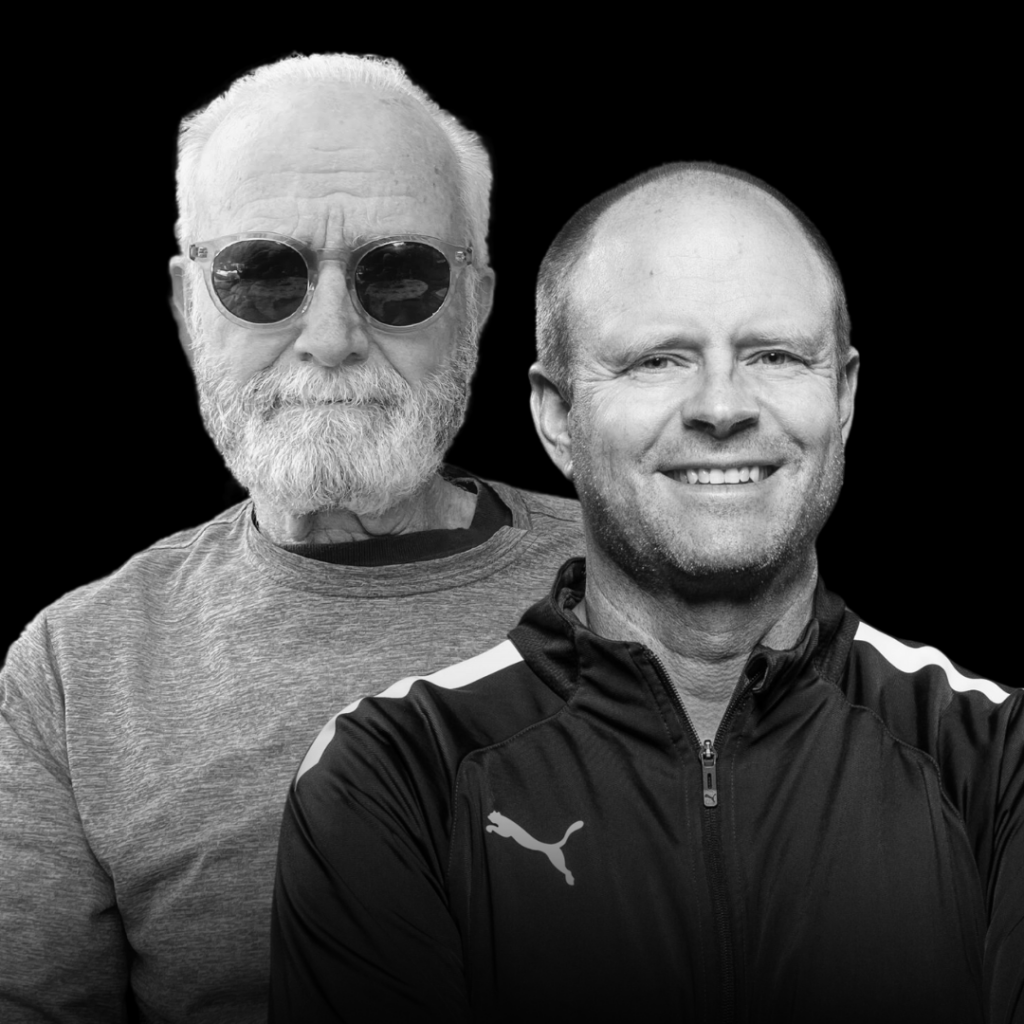
Captain: The Athlete’s Guide to Being an Exceptional Team Leader

John O’ Sullivan & Dr. Jerry Lynch

Episode 222:

OUR GUESTS

John O’ Sullivan

John O’Sullivan is an internationally known TEDx Speaker and the founder of the Changing the Game Project, which he started in 2012. 

He is the author of two #1 Bestselling books, Changing the Game and Every Moment Matters, and a leading youth sports blogger, while being a host of the Way of Champions Podcast, one of the top-rated podcasts in the world for coaches.

Former collegiate and professional soccer player, and has coached for over 20 years on the youth, high school, and college levels. He has consulted with US Olympic Committee, US Soccer, USA Football, US Lacrosse, USA Swimming, Ireland Rugby, Aussie Rules Football, and many more

John is on the National Advisory Board for the Positive Coaching Alliance and the National Association for Physical Literacy.

Dr. Jerry Lynch

Jerry first learned about extraordinary performance and excellence as a nationally ranked competitive athlete sponsored by Nike, running world-class times from 5,000 meters to the marathon, setting an American record in the half-marathon, winning a National Championship, and many other races against athletes half his age. 

He took what he learned about himself and life from his competitive days and parlayed it into a dynamic, successful career helping athletes and coaches in all sports to use his performance and leadership strategies to up their game and discover the best version of themselves.

Dr. Lynch has been recognized as one of the top five in his profession nationwide. He has worked with teams, coaches, and athletes in the NBA, Pro Lacrosse, Major League Soccer, with men’s and women’s basketball, lacrosse, soccer, tennis, golf, and other sports at the universities of North Carolina, Duke, Maryland, California, Syracuse, Stanford, Harvard, and Middlebury.

Dr. Lynch is the author of 18 books in over 10 languages and the founder and director of WAY OF CHAMPIONS, a human potential and performance consulting group helping others master the deeper inner game for sports, business, and life. Jerry is a dynamic, entertaining, inspirational, provocative, and humorous teacher and speaker with topics on leadership, coaching, team culture building, winning the relationship game, and core value development.

WHAT YOU’LL LEARN IN THIS EPISODE:

  • Why captaincy is a skill that can be taught, practiced, and developed.
  • Why the best player is not always the best leader on the team.
  • How coaches and teammates can identify real leaders through behaviors, traits, and trust.
  • Why influence comes from relationships, not titles or positional power.
  • How captains serve as the bridge between coaches, teammates, and the team culture.
  • Why great leaders must learn to have hard conversations with courage and respect.
  • The difference between being liked, being respected, being nice, and being kind.
  • Why self-awareness is the foundation of exceptional leadership.
  • How elite athletes like Tim Duncan and Kobe Bryant modeled servant leadership.
  • Why gratitude, joy, and service can elevate both leadership and performance.

John O’ Sullivan & Dr. Jerry Lynch

Ed Molitor

Podcast transcript

[] Dr. Jerry Lynch

I believe that captaincy has been a skillset all of my life. All of the teams I've worked with, we've had to recognize that it, I came from a place that this is something I can teach.

[] John O'Sullivan

Anyone can make the choice to do the right things every single day or make the choice not to. And I think that's the, one of the most important lessons of this book, is that every one of these things are choices.

[] Dr. Jerry Lynch

To be a captain and be effective, it's hard work, and a lot of people don't wanna take that on, and I don't blame them.

[] John O'Sullivan

The best player is taking criticism. The best player shows up. The best player stays after. The best player says, "What, what can I give?" And I think this is the essence of captaincy.

[] Dr. Jerry Lynch

Gratefulness is the key to joy and happiness. And let's face it, when you're joyful [00:01:00] and happy, you play really well

[] Ed Molitor

Every team says they want to win, but winning takes more than just stockpiling talent. It takes trust, discipline, hard conversations, and leaders who know how to coach people through pressure. I'm Ed Molitor, and this is The Athletics of Business, where the lessons of high-performing teams, elite athletes, and high-impact coaches become the playbook for more impactful leadership, stronger

[] John O'Sullivan

cultures, and sustained success

[] Ed Molitor

Guys, thank you so much for joining me again on The Athletics Business podcast.

[] Ed Molitor

It's been a minute since I had both of you here, right? I've had you, you know, on solo recordings. To see you two on my screen at the same time is a complete joy, and no better way to get this day started here.

[] John O'Sullivan

Thanks, Ed.

[] Ed Molitor: So congratulations on the new book, on the latest book, [00:02:00] Captain

The Athlete's Guide to Being an Exceptional Leader.

[] Ed Molitor

And as I mentioned, we were just talking before we started the recording, thank you. As the parent of two young athletes, growing up a coach's son, a, you know, former college coach, college athlete, this book has been needed for so long. And it really... And if it's presented to the athletes, young athletes in the right way, I truly believe now they can now give themselves permission to be the person to their teammates and their team that they want to be.

[] Ed Molitor

So thank you so much for that.

[] Dr. Jerry Lynch

Yeah.

[] Ed Molitor

Yeah.

[] Dr. Jerry Lynch

Yeah, we're hoping that if nothing else, this book will entice people to go inside and realize that we all have within us, all of us, we're all leaders, and as I was saying the other day to John, I said, "The problem is that it lies dormant in so many because it's not reinforced."

[] Dr. Jerry Lynch

I think there's a lot of bias out there, gender bias and stuff like that. Young men don't believe in themselves. They don't [00:03:00] get the encouragement. But it's real simple. We all have the leadership within us, and if we want to wake it up, this book is going to really help you wake it up for sure.

[] Ed Molitor

Yeah, I love it.

[] Ed Molitor

And John, you know, you talk in the book right at the beginning, I mean, you nail something that's so concerning. You know, in business we deal with, we elevate people based on their performance. For instance, sales reps, they crush the numbers, so we're going to give them a leadership role when they're absolutely not ready to be a leader, right?

[] Ed Molitor

And i- and it backfires. In athletics, oftentimes you'll see captains named who's the best looking, who's the loudest, who's the funniest, who's the most popular, who's the best performer, when the reality of it is you've got the Tim Duncans of the world out there that just might be the, you know, the silent assassins, so to speak, the ones that are very cerebral, very thoughtful, very caring.

[] Ed Molitor

So how is it that you guys describe or define what a captain is, what a captain isn't, and the role that a captain plays with their team?

[] John O'Sullivan

Well, I, I think, Ed, you know, it goes [00:04:00] back whatever it was, 10, 11 years ago when Sam Walker wrote The Captain Class, and he did this great book and a ton of research on...

[] John O'Sullivan

You know, he went out, set out to define who's the most successful teams of all time, right? And that was his original thing, and he came up with, you know, the Yankees in the '60s and the New Zealand All Blacks and their stretch, and I mean there was a Aussie rules football team, Collingwood, and Celtics and things like that.

[] John O'Sullivan

And then he said, "Well, let's define- what separates them. And he was thinking charismatic coaching or star player or things like that. And of course, they may-might have had those, but what he really found was it was these captains that oftentimes weren't the best player, right? Barcelona, you know, you had Messi on the team, but Carles Puyol was the captain, right?

[] John O'Sullivan

You had, you know, the US soccer team, and you had, you know, Amir Ham on the [00:05:00] team, but then Carla Overbeck was the captain or whatever. And so it turned out that these captains were the people willing to do the dirty work. One of my favorite things of this whole process of writing this book was Sheen Batti wrote us an endorsement, and he said, "We have to stop treating captaincy as a leadership trait and start realizing that it's a skill," right?

[] John O'Sullivan

And if it's a skill, it can be developed. And I think that's such an important thing. It's not-- being a captain is not a character, it's a skill. And so Jerry and I talked to so many college coaches and high school coaches, and they all say, "Where have the leaders gone?" And so we're like, well, um, if it's a skill and it can be taught, let's write something that makes it easy for coaches and parents to teach their kids.

[] John O'Sullivan

What does it mean to be a leader in sports? And really what it comes down to is behaviors, you know. And in a way, and, you know, the title, the subtitle is significant. It's not, you know, the athlete's guide to [00:06:00] becoming an exceptional team leader. It's being. It's a choice and a way that I decide to behave today on how I treat people, on my self-awareness, on how I model behavior, and that's what it means to be a captain.

[] John O'Sullivan

And it's an honor To be selected by your coaches, by your peers, but so many of those people who are selected are not given then any sort of information of like, "Okay, well now how do I do this?" And so that's what we wanted to write, and we wanted to make it fun and easily approachable, you know, by, from, you know, middle school, high school, college athletes and above.

[] Ed Molitor

And one of the things I loved about it were the questions at the end of each chapter. So my daughter's going to be a freshman in high school, and regardless of what level she plays at, you know, we talked to her about being a leader, and I don't know how comfortable she is in being an outspoken captain, so to speak, right?

[] Ed Molitor

And the conversation I try to have is that's something you can work towards, to Shane's point. It's [00:07:00] something that can be developed as a skill, and I love the questions in the book 'cause they allow you, even if you're not there yet, it allows you to ... Say you're a freshman and you're playing varsity, you're not gonna be the most outspoken person.

[] Ed Molitor

You're not gonna be the one people look to, but you certainly intentionally can work being that, work towards being that person by your sophomore year, by your junior year, and certainly by your senior year, and I love that about the book. Is that something ... When you, when you first started diving into the book and the work, was that something that was an aha moment to you, or is that something you always believed, that captaincy is actually a skill to be developed?

[] Dr. Jerry Lynch

You know, I've been at this game for a long time. I have close to 50 years now, and it's always been an issue. I just never thought about writing it till I met John, and he had this, an, a similar idea as I did. I believe that captaincy has been a skill set all of my life. All of the teams I've worked with, we've had to recognize that.

[] Dr. Jerry Lynch

I came from a place that [00:08:00] this is something I can teach. One of the things I used to love to do is go into a, an organization, a team, and one of the exercises we would do is I would, wouldn't talk about captaincy. We would just ask the team, "So in groups of five, come up with the top four traits of what you think a good leader is, period."

[] Dr. Jerry Lynch

And at the end we'd collect all these things, and there'd be a lot of overlap on and on and on, but the bottom line was we were teaching them immediately that look at the board up there. Look at the whiteboard. Look at all of those traits and qualities. And they would love it because they would see, "Oh, I didn't realize.

[] Dr. Jerry Lynch

You know, maybe I'm a leader. Look, I'm up there. That's my trait. I'm like that." So it was a educational process, and then at the end, to put the icing on the cake, so to speak, or the cherry on the icing or whatever direction you want to go with that, I believe that these athletes recognize [00:09:00] themselves on that whiteboard, and the question became Put down on paper the top three names on your team that you feel best represent those traits.

[] Dr. Jerry Lynch

Imagine, and don't put your name on it, it's anonymous, so it's not a popularity contest. And they would honestly put down, these are college kids, would put down the top three names who they thought represented those traits. And you know what? Those are the three that became captains. And it's amazing. It wasn't...

[] Dr. Jerry Lynch

Maybe it was a freshman. Maybe it was a freshman who was on the bench But a- but after practice, she's screaming at everybody, "Hey, come on. Pitch in here. Help up. Do this. Do that." You know? And so it's been a, a long process of helping people to understand what Jon was saying, which is it's a skill. We learn these things, [00:10:00] and I'm here to teach them.

[] Dr. Jerry Lynch

Jon's here to teach them. You are here to teach them, Ed. That's a realization that a lot of people don't have.

[] Ed Molitor

I love how you describe it in the book, right? The superpower. It's... First, let me back up. The connector between coach and teammates, it's a h- it's a superpower. It's a hidden force responsible for the team's ability to come together and be a cohesive unit with one heart, one soul, one purpose, and one goal.

[] Dr. Jerry Lynch

I always take from the, the Native American tradition of the circle, and in that circle is the shape of it. It's the letter O, and that's where I come up with the, uh, one heart, one soul, one purpose, one goal. And it's unified. It's unity. It's coming together. And I think what it does, it gives the team as a whole an idea that we're all in this together, and it is about togetherness.

[] Dr. Jerry Lynch

And in the circle, we remain together and connected. And captaincy, to take off on that, is a leadership role that has to [00:11:00] reinforce that. You know, that we're all in this together. And so the captain is a connector, as you said. It connects between the team and the coaching staff and bridges that gap. And one of the biggest responsibilities of the captain is to make sure that that one heart, one soul, one purpose, one goal, or the mission of the team, of the culture, is sustained, continues.

[] Dr. Jerry Lynch

And that's a huge part of the role of leadership, and we talk about that in the book real-

[] John O'Sullivan

You know, Ed, I just want to tag on to what Jerry said and tie it into your comment before that for so many teams, the captain is the best player, the best looking, the senior, whatever it is, right? And so they're given a position of power, but they don't have any influence because influence comes from relationships, right?

[] John O'Sullivan

And you know, Jerry and I's work for so many years has been about relationships, and it i- [00:12:00] influence comes by how you relate to other people, how you talk to them, how you treat them, how you lift them up, how they know that you have their best interest in mind, how you put yourself and your own needs aside.

[] John O'Sullivan

And so when a coach picks the best player and says, "Okay, now you're the captain," and that player doesn't work super hard in practice because he or she's the best, or that player shows up late or doesn't get to the training room on time You're reinforcing negative behaviors, and other people say, "Well, that's the captain, I guess I can do it, too."

[] John O'Sullivan

Right? Versus when you select that person who does everything right, who models the behavior, who shows up early, who stays late, who... Well, whatever your organization, your team values, well, then that's who people wanna play for. And this is the same for coaches, but, you know, for a team captain, I wanna play for the person who's making me better, who's treating me well, who's doing everything [00:13:00] right.

[] John O'Sullivan

And so I think this is just what so many people think is that captaincy is just positional. No, it's relational. And, and your influence comes from how you treat people. And as soon as people start realizing that, they're like, "Oh, I, I can lead differently now." And, you know, like yesterday I did a talk for 175 firefighters, right?

[] John O'Sullivan

Wildland firefighters, all the incident commanders in Central Oregon, right? Just getting ready for a big fire season. And I talked about this sort of stuff, and it was about the relationships and did some activities to show that. And then, hey, when the pressure's on, what are these qualities of a great leader that is the hardest for you to bring out?

[] John O'Sullivan

And I- afterwards, I was leaving, and one guy ran out who's, like, one of the head people, and he's just like, "Man, that was incredible." He's like, "I, I, you know, studied leadership in college. I have a certificate in leadership from Harvard and some [00:14:00] Georgetown or whatever." He goes, "That's it right there. Everyone in this room thinks it's about how much they know about firefighting, but no, it's how you understand people.

[] John O'Sullivan

And when you understand people and influence people, now you can lead."

[] Ed Molitor

Great. And when you hear someone like that who faces that pressure, especially the two of you being sons of fire chiefs, right?

[] John O'Sullivan

Mm-hmm.

[] Ed Molitor

That is what it's all about right there, when you realize that you've struck a chord and you've connected with them at that, at that level.

[] Ed Molitor

And, you know, I wanna talk into this a little bit 'cause I do think it's important. Part of the captaincy challenge, part of being a captain, the challenge of it is you are also the teammate that has to have the challenging conversations, the tough conversations with your teammates. You are also the one that has to protect the culture and the circle, okay?

[] Ed Molitor

And you have to be the one that leans into that. What kind of stories have you heard around that, or what kind of things, as you wrote this book, what kind of things did you hear how people went about handling that? part of being a captain?

[] John O'Sullivan

It's [00:15:00] definitely, you know, one of the things we did for this book was we surveyed a bunch of college coaches, high school coaches, team, and a lot of them then went and surveyed their team captains.

[] John O'Sullivan

And we came up with these like, what are the 10 biggest challenges? The whole part three of the book is the 10 biggest challenges, and, and the same five always came back, right? And then there was a few other in there. But w- you know, one of them was, like you said, holding your friends a- and peers accountable, having tough conversations in person, you know, being this bridge between coaches and team and maintaining the trust, leading when you're injured or on the bench, you know, leading from everywhere.

[] John O'Sullivan

These are the things that kept coming up. It's hard for us as adults sometimes to hold our friends accountable, to have those tough conversations. And what we talk about, and I'll give Jerry credit for this 'cause he put words to this for me many years ago, is that [00:16:00] it's not about being liked, it's about being respected, right?

[] John O'Sullivan

Because if you're trying to be liked, you're giving other people a, you know, agency over you. Because I don't choose whether Ed likes me or not. I can do, have a great podcast, and Ed can be like, "That guy's an idiot. Never coming on my podcast again." Right? I don't choose that. But I can choose to be respected by meeting the standards or exceeding the standards and the behaviors and how I treat people.

[] John O'Sullivan

And so even when you don't like what I say to you, you have to respect the fact that I always tell you the truth, and I do it from a, a good place. And I think this is an incredibly hard skill for teenagers to learn in this day and age where they can just do that via text, you know, or Snapchat. Yet it might be the greatest gift that they can get from their athletic experience that will serve them throughout the rest of their life.

[] Dr. Jerry Lynch

I'm here thinking to myself, what an opportunity for a coach and a [00:17:00] team to take it beyond the court, beyond the field, and really truly take a book like this and establish a program where the team meets, like, on a weekly or a monthly basis and talk about leadership and educate people. And, you know, look, raise your hand if you don't like to feel important, valued, respected, empowered, relevant.

[] Dr. Jerry Lynch

Raise your hand. No one raised their hand. Well, what does that say? It says that all these kids, regardless of their age, I don't care how old they are, they all want that. They all crave that. When they're marinated in an environment where the relationships, we go back to relationships and the importance of that, winning the relationship game, when we go back to that, that's what's important.

[] Dr. Jerry Lynch

Nobody goes anywhere without a good relationship. When coaches are complaining, "I've got great, talented kids on my team, but they're not listening and they're not going forward," I'm saying you have to look at yourself. You have to look at what you're [00:18:00] doing and what you're creating. And this is the opportunity for these youngsters to learn All the qualities that we're talking about.

[] Dr. Jerry Lynch

Because why? Because everyone wants them. There's not a parent that doesn't want this book for their kids, wants the qualities that we talk about for their kids, and there's not a kid that ultimately would disagree with what John and I are saying. Most kids, some kids wouldn't because they're afraid.

[] Dr. Jerry Lynch

They're afraid of taking on a new role or afraid of expanding. You know, it's fearful sometimes to change.

[] Ed Molitor

And you know what's really cool, even tying this back to the whiteboard exercise that we were talking about earlier, when you look at that list that's on the whiteboard, we did this exercise with our varsity basketball team here in town several years ago.

[] Ed Molitor

There was not one of those that said leading the team in threes, right? You know, best vertical, best free throw percentage, best defender. Fastest.

[] John O'Sullivan

Best

[] Ed Molitor

shooter. Fastest. None of that. Yeah, none of... That had nothing to do with the leadership. In other words, everybody can do it. If you're [00:19:00] winning the relationship game, if you're, if you have the work ethic, if you have the consistency in how you show up.

[] Ed Molitor

You know, speaking of which, I would love to jump in to, and forgive me for not doing this earlier, can you talk about how to read the book? And can you talk about the three parts of the book? 'Cause I think that'd be really- Yeah ... beneficial for the listener.

[] John O'Sullivan

Yeah. I mean, I think, so we broke it up and, and this was it.

[] John O'Sullivan

You know, I've ha- been mulling over this idea for a couple years, and then Jerry said, "Hey, we should write a book for captains," and we had very different ideas about how it should be laid out, and we went with Jerry's idea, which I really liked, which is like, "Hey, we have to write about..." So the three parts are, you know, the qualities of captains, the responsibilities, and then the third part is the challenges, right?

[] John O'Sullivan

So each one has 10, and of course there's more than 10 or whatever, but what are the 10 big qualities? What are the 10, you know, big responsibilities? What are the 10 biggest challenges? And that's how we laid it out. And like you said, you know, the, for anyone who's read our Champion Teammate book, you know, the chapters are a couple of pages, [00:20:00] three pages.

[] John O'Sullivan

They're, they're, you can read them in four or five minutes, and then it, they have four or five questions at the end. The book's laid out where there's, you know, you can write in the book. It's kind of like a workbook for you as well. And- It all starts with a story. So this book is filled with stories of athletic leaders from the Karla Overbecks and Simone Biles and Carlos Puyol and Tim Duncan and Shane Battier and Steve and Phil and, you know, Chris Armas and, you know, like tons and tons of team captains that, you know, so it's like, "Hey, here's a story hopefully you can relate to.

[] John O'Sullivan

Here's some ideas behind it. Here's some questions so you can reflect on this on your own." And I just also wanted to say one thing we did in this book, which we hadn't done others, is at the end of the book, there's a little QR code, and anyone who gets it can download a 10-session teaching curriculum [00:21:00] for free.

[] John O'Sullivan

So how do I take this and s- because a lot of coaches say, "Oh, great, but what do I do if my kids read it?" And it's like, no, you know, here's your 45-minute meeting once a week for 10 weeks or once a month for 10 months, and you talk about, and you go through a couple of the chapters each time, and then it actually asks even more probing questions beyond what are in the book and activities to think about, like, okay, this is what it means.

[] John O'Sullivan

So it really helps a coach or an athletic director or someone at a school who's in charge of educating captains and teaching leadership to kinda go through a whole school year and develop captains and develop leaders and stuff. So there's a whole curriculum in there that you don't even have to think about it.

[] Dr. Jerry Lynch

Yeah. And you know, the other thing to coattail on what John said, Ed, you know, coaches are busy That's one thing I've learned. So when they're busy, they can't read a lot. They can't read tons [00:22:00] and tons of books. So we make the chapters short for that reason, and for the kids too, it's a lot easier. But you know, the thing is, coaches have so much going on.

[] Dr. Jerry Lynch

I mean, I remember my son coaching at one of the universities, and his day was so occupied with a billion details. Like, "Don't give me one more thing. Hey, this thing... Yeah, it'd be nice if we had a couple of captains," but, you know, they sort of come out themselves. There are some kids on the team that will show up as captains, and it'll be obvious that they're the leaders of the team right now.

[] Dr. Jerry Lynch

But we're not interested in that. That's gonna happen anyway. What John and I are interested in is we wanna educate the coach in not being intimidated by taking on this responsibility by having a workbook that's really simple to use and very powerful, and at the same time, they don't have to worry about preparation and how to get this point across, and we have it all outlined.

[] Dr. Jerry Lynch

But mostly, I think [00:23:00] it's education for every single player on that team. The 14th person on the bench, you know, on a basketball squad is a leader, and by educating them in this way, you'll have a team that will all see themselves in some way or form as a leader, and that's gonna help you. And so that education process goes beyond just becoming a captain.

[] Dr. Jerry Lynch

It's for everyone to be a captain. Right. Even if you're not named, per se, the captain of the team

[] Ed Molitor

Well, it's so significant. You know, it goes back to, I forget exactly how many years ago I first came upon it though, John, is your interview when you talked about your, your influence is never neutral, right?

[] Ed Molitor

And you think about, you know, even if you're not, don't have the captain title, to your point, Jerry, y- you think about the guys at the end of the bench, or you think about the guys that are always on the practice squad, okay? What is their commitment to the standards each and every day when they're showing up?

[] Ed Molitor

Do they understand their, their obligation and their [00:24:00] responsibility to get the top seven, top eight, top nine ready? And then in doing that, they elevate themselves and others around them. And that's why I love ... This book doesn't discriminate in the sense of it doesn't matter how good you are, it doesn't matter how long you've been considered a leader.

[] Ed Molitor

It gives you the roadmap to becoming that leader that you're capable of becoming.

[] Dr. Jerry Lynch

Yeah, so that when you go out into the world- Yes ... the big world, you'll have these qualities developed that you won't be intimidated by that option and that opportunity that's been given to you by saying, "I'm not a leader," or blah, blah, blah, blah, blah.

[] Dr. Jerry Lynch

It's like, "I know what it takes to be a leader, and I'm gonna be that leader, even though it requires this much work. I'm gonna be really, uh, totally on board with it." And so later on in life, these things start to pop up. I'm sure my leadership is the result of a lot of things I learned as a kid about leadership, and I think it is a learned skill that we can teach.

[] John O'Sullivan

You know, Ed, what's cool is, like, we, we, we [00:25:00] just had, and this didn't make it in the book, but we just had Ryan Warsofsky of the San Jose Sharks on the podcast. And, you know, he talked about Macklin Celebrini, right? 19 years old right now, captaining Team Canada at the World Championships. And he talked about Macklin, and he said he came in He's the fittest guy at camp.

[] John O'Sullivan

And his words were, he treats every practice like it's the last practice of his life. He plays every game like it's the last game he's ever going to play. He just competes with such urgency and does so many things right that it doesn't matter that he's 19. And he doesn't even need an armband. But he, he was telling us the story, they go to the world championships and, you know, he's named the captain of Canada, and Sidney Crosby, he's like, "I don't wanna tell Sidney Crosby what to do.

[] John O'Sullivan

You know, this guy's been around for decades and is the best player in the world." And he said Crosby was like, [00:26:00] "No, you're the captain. Do it." You know? And it's like, so I think this is just, like it all starts with understanding yourself, and then, like anyone can make the choice to do the right things every single day or make the choice not to.

[] John O'Sullivan

And I think that's the one of the most important lessons of this book, is that every one of these things are choices. You don't have to run fast or jump high or whatever to be grateful or to be selfless or to lead by example or to be humble. Like those are just things that you wake up in the morning and decide to be

[] Ed Molitor

And you said something in there, understand yourself, and in the book you dive right into what I believe is the competitive advantage.

[] Ed Molitor

We've talked about this time and again, right? And that's self-awareness. Can you guys talk about constructing that chapter and the stories that you share in there? And obviously, knowing yourself is a true secret of extraordinary leaders. Just jump right [00:27:00] in that.

[] Dr. Jerry Lynch

Well, John, I could, uh, I could start with that one.

[] John O'Sullivan

I hope so. You wrote that chapter too.

[] Dr. Jerry Lynch

Did I write that chapter?

[] Ed Molitor

That's why I looked

[] Dr. Jerry Lynch

at

[] John O'Sullivan

him. Mm-hmm. I think we wrote that one together. You got

[] Ed Molitor

a little bit of experience with that, Jerry.

[] Dr. Jerry Lynch

I've been on a life journey of self-awareness myself. I'm not even halfway there, as I like to tell people, but every day I seem to be a better version of myself because it's intentional.

[] Dr. Jerry Lynch

And that comment was just made out of nowhere, but it's related to what you're asking, and that is self-awareness. I wanna be the best version of myself, and that's what good leadership is all about. In fact, I don't know any leader that I respect, and I'm very demanding in what the qualities are of a leader, of what it takes to be a good leader.

[] Dr. Jerry Lynch

I n- don't know anybody that is shying away from finding out who they are and asking the question, "Who am I?" And it's a very important question because to me, I ask that every December, and when I get in touch with that, then I [00:28:00] can really understand where I need to go, who am I gonna take with me, and what is this journey all about.

[] Dr. Jerry Lynch

When we start this book with self-awareness, it's because self-awareness is probably the number one most important quality that a coach or a great leader needs to understand, and we help them with that in the book. And we, you make it real clear that self-awareness is where it's at. We talk about, you know, we use a lot of ancient philosophy.

[] Dr. Jerry Lynch

One of the books that all leaders should read if you haven't already, it's the second most read book other than the Bible, I understand, and that is The Art of War with Sun Tzu. And in that book, he says from The Art of War, you know, there's many things you need to know as a leader. One of the things you need to know is you need to know your enemy.

[] Dr. Jerry Lynch

You need to know your opponent. Number two is you need to know the territory in which [00:29:00] you're gonna be operating. You know, maybe that's a locker room, maybe that's a soccer field, but you need to know your territory and what that's about. But the most important thing, and without which the others don't matter, is you gotta know yourself.

[] Dr. Jerry Lynch

You have to know who you are. And you ask the question, who am I? You know, "Oh, I'm a psychologist." No, I'm not. I just happen to be trained in the field of psychology, and I use psychology, I use philosophy, I use a lot of things. But I'm not a psychologist, you know? I'm a human being. Let's start there. Not a human doing.

[] Dr. Jerry Lynch

So what we do in this chapter is we set it up to un- for people to understand is this is gonna be a journey. It's gonna be a journey where you're gonna find out, uh, when you finish this book, when you get, you dive into the better part of yourself as a leader, you're gonna learn so much about yourself, and you're gonna grow, and it's all about expansion and growth.

[] Dr. Jerry Lynch

And to accelerate that, we write the book. Otherwise, a lot of it will [00:30:00] stay dormant, and a lot of people will still be electing people who are the best-looking. I always had that problem.

[] Ed Molitor

How did I know that was coming?

[] Dr. Jerry Lynch

Yeah, you know, I mean, I was never the most talented, but I was always the best, best-looking.

[] Dr. Jerry Lynch

But I never got elected captain, though. But the thing is, I know that the self-awareness piece for me in my life has been pivotal. If I don't know who I am, I can't sit here and talk with you guys. If I don't know who I am, how am I gonna lead other people? If I don't know who I am, how can I raise a family?

[] Dr. Jerry Lynch: And so if that's confusing to anybody, know this

this book will start you out on the right track, getting to know who you really are and opening up to your best self.

[] John O'Sullivan

And you know, Ed, like, I'll just go, I'm just looking at it here. You know, the questions at the end of that chapter, and they might be the hardest questions of any chapter of the book because these are things we're going over.

[] John O'Sullivan

But, like, who are you beyond the roles that you play? Like, how would you describe the essence of [00:31:00] who you are? What values are important to you, and how can you implement them? What are your strengths? What are your weaknesses? What's your ideal image of yourself as a captain? And every leader is self-doubt.

[] John O'Sullivan

What do you doubt in yourself, and how do you overcome that, right? And so these are all really powerful questions that I, again, if someone takes the time to think about. You read chapter one, you're a better leader right out of the gate, and, and probably a better human being as well.

[] Ed Molitor

Yeah. Yeah. And if you read it and you follow through with it, a more intentional human being as well.

[] Ed Molitor

Yeah. Which contributes to everything.

[] Dr. Jerry Lynch

And John used the word choice before, and two of my favorite words, one is choice, the other is curiosity, and your curiosity can lead to coaches. I think this book will stir up a lot of curiosity about leadership for not only for the kids, the athletes, but the coaches and the parents as well, you know.

[] Dr. Jerry Lynch

And to see what their, their children are, are learning. But this idea of [00:32:00] choice to me is important, and I just want to make this clear because there's a lot of people listening here that they go, "Well, I don't want to be a captain." That's fine. That's your choice. And I think that has to be s- understood, and I think the kids need to know that, "Don't worry.

[] Dr. Jerry Lynch

Don't be afraid. We're not gonna put you in a position that you're uncomfortable with." And to be a captain and be effective, it's hard work, and a lot of people don't wanna take that on, and I don't blame them. You don't wanna coast through it, and so you have to give people the choice. And even though you talk about it and you expect leadership from people, they might not wanna be put in the designated role of captain and leader on the team, and that's an important thing.

[] Ed Molitor

In, in, you know, the conversation Somewhat building on that, that I used to have with our players is like, "Hey, you know, I get the struggle for you is that you really wanna be liked. You know, you really wanna be friends with your teammates, and I get that. But at the end of the day, when your back's against the wall and they need to lean [00:33:00] into somebody, they're not gonna-- they might not lean into you if they don't have that level of trust and respect.

[] Ed Molitor

That they like you, they think you're funny, they think you're great, they wanna hang out with you on Friday night is totally different. What's gonna be more fulfilling for you as a human, to be there in their toughest times or to be there when things are really easy? You know, to know that they can count on you because of who you are as opposed to, you know, running with you on Friday nights just 'cause of what you are."

[] Ed Molitor

And I think this book really helps get the young athletes to that point. And honestly, those don't need to be mutually exclusive. Some of my closest and dearest friends are the ones that I've been through it with, right? Yeah, yeah. And come out the other side even closer. And I think this book helps facilitate for the young athletes, which is awesome.

[] John O'Sullivan

I think also an- another important nuance and distinction is that teaching kids is the difference between being nice and being kind. And, and, and we talk about that in the book, right? Nice being, [00:34:00] you know, telling people what they wanna hear, and kind being telling people what they need to hear, right? And there's gonna be moments where, you know...

[] John O'Sullivan

A- and being kind and telling people what they need to hear doesn't mean that you beat them down when they're already really beat down, right? It-- That's-- Kindness also includes taking into account your and other people's emotional states. But it's, kindness is telling the truth, right? And as parents, you know, you know this, and Jerry and I know this, right?

[] John O'Sullivan

Like, there's moments when, you know, you just wanna give your kid what they need in that moment, which is maybe some comfort. But kindness is also telling them, "But the reality of it is, you're not getting it done," right? "You just got cut from a team. I know you feel terrible right now. Let's go get some ice cream.

[] John O'Sullivan

Take a deep breath," right? But then when the emotion's gone, then the kindness is, "Now let's really look at what it's gonna take to get to that next level. You say you [00:35:00] wanna play in college. What do you think a college player is doing right now, or someone who wants to play at that level? Are you doing that?

[] John O'Sullivan

Honestly, are you doing those things?" And that's kindness. And so a good leader also has to pick and choose when he or she delivers and how they deliver information, but you gotta tell the truth

[] Dr. Jerry Lynch

John, I just wanna s- say this. You have a great story that you should tell, it's so fitting right now, about your dad.

[] Dr. Jerry Lynch

When you brought home some kind of a report or some kind of... Right? You know what I'm talking about, the story?

[] John O'Sullivan

Yeah.

[] Dr. Jerry Lynch

That's a perfect example of your dad being kind. Yeah. But you didn't wanna hear what he had to say.

[] Ed Molitor

Now you have to share.

[] John O'Sullivan

Well, yeah. This is a story I tell a lot when, you know, Jerry and I talk about rule of one moments, right?

[] John O'Sullivan

A comment, a, one comment, one thing you say can change someone's life. And so this was a life-changing moment for me that my dad's kindness reinforced. I went to a [00:36:00] big Catholic high school on Long Island, and I was, got a big r- you know, 11th grade English teacher, Brother Jeff Peterson, and I got a big F, red F on my paper back.

[] John O'Sullivan

And I was like, "Brother Jeff, come on, man. There's no way this is better than other people's. There's no way this is an F." And he said, "John, I- I didn't give you an F based on what they can write, I gave you an F based on what you can write, and this is junk." And then because it was the '80s, he, you know, took my books and threw them out the third story window and said, "Get out of my class and don't come back until you're willing to give me your best effort, because John, you are a great writer."

[] Ed Molitor

Wow.

[] John O'Sullivan

So I went home that day, and, you know, w- I was upset and whatever. Now, this wasn't the first day of class, right? Brother Jeff and I had a very long relationship. We were wonderful. You know, I knew he cared deeply about me, and I... And my dad knew that too, and I got home and I was complaining on how dare he throw my books out the window, embarrass me, and my dad's like, "Well, was he right?"[00:37:00]

[] John O'Sullivan

And I was like, "Well, what do you, what do you, what do you mean?" Pretty simple. Yeah. "The, do you, was that the best effort that you could have given on that paper?" I'm like, "Well, no." He's like, "Well, then what are you complaining about?"

[] Dr. Jerry Lynch

Yeah.

[] John O'Sullivan

Right? That's, he, it's 'cause he cares about you, it's 'cause he loves you, right?

[] John O'Sullivan

And so that moment, you know, I dedicated my first books to Brother Jeff, the person who made me believe I could write. But if my dad immediately called the school and said, "How dare Brother Jeff throw John's books out the window," the whole lesson would've been lost.

[] Ed Molitor

God, yeah.

[] John O'Sullivan

Um, and I've written books because of someone who made me believe I could write, and that was tough love.

[] John O'Sullivan

That was tough love, and I needed it in that moment.

[] Ed Molitor

That's an awesome story. Gerry, thank you for, for

[] Dr. Jerry Lynch

pushing it. Of course, yeah. I didn't wanna miss that opportunity.

[] Ed Molitor

No, that is a great- That was a story

[] Dr. Jerry Lynch

well told. I love it.

[] Ed Molitor

Hey, but I gotta give you kudos, John, because I don't know if I was that age and my dad says, "Was that the best you could do?"

[] Ed Molitor

I don't know that I could've been as, as forthright as you were by saying, "No, it wasn't." I might've danced a little bit on it.

[] John O'Sullivan

I don't know. You know, I was raised, I [00:38:00] was, I was talking about this yesterday, you know, again, talking to those firefighters because, um, my, you know, again, my dad was a fireman and Gerry's dad was a fireman, and I was raised in this really blue collar, like, work ethic.

[] John O'Sullivan

And you know, I, when I was 13 or 14, I went to work on commercial fishing boats, right? And you know, that was my summer job. And most days I would get there at 6:30 in the morning, and sometimes there was a second trip. I would work till 10:00 at night, right? And me and my mom would come down and bring me a sandwich in between shifts or whatever.

[] John O'Sullivan

And I would do that, like, six days a week. And then on the seventh day, I'm like, "I'm sleeping." My dad's like, "That lawn's not gonna mow itself." You know? And I'm like, "Come on, man." He's like, "Hey, this is life. This is responsibility." So I think I was raised in a way that, like, you just, you don't make excuses, you don't blame other people, and you get stuff done.

[] John O'Sullivan

Like, we have responsibilities in life. So, so that moment [00:39:00] for me wasn't the moment of like, oh, this is the first time I've been held accountable. I mean, I'd been held accountable my entire life, and so that, that probably wasn't anything new

[] Ed Molitor

That's interesting. You know, I wanted to dive into the Kobe story in the self-awareness chapter, but as we-- as usual, time flies with us.

[] Ed Molitor

I wanna touch on something that you talk about in chapter two to lead by example. I have a slide that I show, one of the last slides in many of my keynotes or workshops, is fill their cups. It's a story about Gregg Popovich when they lost in game six to the Heat in Miami, and instead of canceling the d-dinner at Il Gabbiiano, he, you know, made sure they went, and he walked around the room despite, R.C.

[] Ed Molitor

Buford tells the story the best, but he, he despite how he felt inside, he made sure each player got what they needed. And the picture that I use in that slide, though, is of Tim Duncan's last home game, okay? And there's this amazing picture of Tim looking down. I get choked up every time. You know, Tim looking down at Pop, [00:40:00] Pop looking up at him.

[] Ed Molitor

Has there been a better example, no pun intended, in professional sports and leading by example than Tim Duncan? I mean, can you talk about the significance of having a captain who might not be the loudest voice on the floor or in the locker room, but just about how they go about doing things, right?

[] Ed Molitor

Their mindset, their effort, their self-awareness as Shane Battier talks about, but how that showed up for Tim Duncan.

[] John O'Sullivan

Yeah. This was funny, and we wrote this story in, like, the intro to part one of the book about Tim Duncan, right? And just I, I think he won five championships and fifteen time All-Star. So let's face it, you had a guy who did all the right things and was a phenomenal player, right?

[] John O'Sullivan

So i-it's really hard to be like, when the best player does all these things, this is like Kobe as well. When Kobe's showing up at four AM, it's hard to be a rookie going, "I'm gonna show up at ten," you know. And so, you know, Hall of Famer. But I, I thought this was a really cool thing that we learned doing the [00:41:00] book.

[] John O'Sullivan: When he was a college player, he was a psychology major. And it was during his senior year, and he co-authored this paper. I'm just looking up here. "Blowhards, Snobs, and Narcissists

Interpersonal Reactions to Excessive Egoism." Right? And so, like, he had actually studied, you know, people who made it all about themselves.

[] John O'Sullivan

And when he was with the Spurs and identified as sort of this ideal captain, didn't get mad when the coach g-- when Pop gave him a hard time when he didn't play well and everything like that. You know, like, that's it, right? So you're sitting there, and the best player is taking criticism. The best player shows up.

[] John O'Sullivan

The best player stays after. The best player says, "What can I give?" And I think this is the essence of captaincy, is that being talented is now not the excuse to not do the right things. If you really wanna be next level, if you really wanna [00:42:00] be, let's use the word elite, 'cause Tim Duncan was elite, then you take all those talents that you've developed or that are God-given, and then you layer on all the behaviors that it takes to truly be great.

[] John O'Sullivan

That's how you become Kobe. That's how you become Tim Duncan. And, you know, I think those guys, Tim Duncan figured it out pretty early. Kobe, it took a while, and, you know, Jerry, I mean, I know, you know, Phil gave him one of your books when Kobe was, like, a rookie or something like that, of like, "Hey, here's what it means to be a champion."

[] John O'Sullivan

Maybe you wanna touch on that.

[] Dr. Jerry Lynch

Well, he was having a hard time. It wasn't a rookie, John. He was well on his way, scoring 40, 50 points a night. And, and, you know, Phil took him aside, and I'm just ad-libbing here on this quote, but he basically said to him, he said, "If you really wanna be great, it's not gonna be by scoring 40 points a night.

[] Dr. Jerry Lynch

It's gonna be about how well you bring your teammates along." So he did give me-- [00:43:00] he did give him a copy of The Way of the Champion, and in the last section of that book, it's all about leadership and giving and being a good leader. And so he basically learned the traits. Learned, again, this is, you know, it's taught, and it could be learned.

[] Dr. Jerry Lynch

So Kobe is a quick learner, was a quick learner, and he adapted those traits, and you could vis-- palpably see the change. He went through this amazing change of really helping all of his teammates be better versions of themselves, and his game elevated, you know? But I wanna say this, I just wanna throw this in there.

[] Dr. Jerry Lynch

Look, whether it's a Kobe, whether it's a Tim Duncan, whether it's a Steph Curry, I can go down the list. I can name 25 c- athletes right now All right? And what they have is they have the first 10 chapters in our book, every one of them. When you think of Tim Duncan, he was self-aware, he led by example, he was a competitor, he loved his teammates, he gave selflessly, he was [00:44:00] an effective communicator, he was grateful, he had humility, compassion, and vulnerability.

[] Dr. Jerry Lynch

Those are the first 10 chapters. He was emblematic of every one of those chapters. He had within himself the ability to give to others. He, he felt like he was a servant. And like all great leaders, you know, this, this phrase servant leadership gets thrown around a lot, but really it's all about giving. And the more I give, the better and more effective I am as a leader.

[] Dr. Jerry Lynch

The better I make you feel, the more power I have to influence you. We talk about the power of influence, right? The more I give to you, the more I show my feelings and create this environment like these great athletes do, they're gonna be great. That chapter on gratefulness, we'll talk a lot about that in our upcoming, uh, conference in Colorado, John and I, and gratefulness is the key to joy and happiness.

[] Dr. Jerry Lynch

And let's face it, when you're joyful and happy, you play really well. You bring out your best. So feelings, [00:45:00] again, equal function. Feelings are the performance level. We don't have to deal, dive into some psycho mumbo jumbo and give everybody all these, uh, great psychological techniques and strategies and tools.

[] Dr. Jerry Lynch

What we need to do is we need to have leadership that creates an environment coming from the students, coming from the student athletes or the professionals, it doesn't matter, where we have these qualities and we demonstrate them by serving our teammates. He was an amazing servant. He's the epitome, the, he's emblematic of servant leadership from an athletic standpoint.

[] Ed Molitor: Well, before we wrap up, and I love how you wrapped a bow on that, Gerry, thank you. Before we wrap up, where can the listener find everything about The Way of Champions podcast? And we'll pull out a, we'll pull out a links in our show notes as we always do. But if they wanna go right now, where can they find The Way of Champions podcast, more information about all the incredible work you do, and where can they find the book, Captain

The Athlete's Guide to Being an [00:46:00] Exceptional Leader?

[] John O'Sullivan

Yeah, I mean, I, you know, first of all, Gerry's website, wayofchampions.com, my website, changingthegameproject.com. Those would be the motherships and links to the podcast. And the podcast's certainly on every platform, so Apple, Spotify, wherever you listen to your stuff, and also on YouTube. So the last year and a half, we've just, we've, we started posting the video ones as well.

[] John O'Sullivan

You know, I think the, you know, the book, Amazon, and you know, we do extended distribution, so it should be available on the Barnes & Nobles and stuff, but Amazon's always the place where it's definitely available or one of our websites and stuff like that. And like I said, that curriculum comes free with the book.

[] John O'Sullivan

It's just a little thing to scan and download, so you don't even have to get that. But there'll be a printed version available as well if you just don't feel like printing out a curriculum. So yeah, I mean, that's everything.

[] Ed Molitor

If we had someone who, say, wants to donate a box of books to the boys' and girls' soccer team [00:47:00] or basketball team at the local high school, do they go to the website to get a group discount, or how does that work?

[] Ed Molitor

Can they do that on Amazon? The

[] John O'Sullivan

best group discount is just email me directly, john, J-O-H-N, @changethegameproject.com. We start at 25% off, and then we go from there, depending on more and more books. We try to make this very accessible and available, and I mean, since the book has been available to order, the amount of bulk orders have been great.

[] John O'Sullivan

Very few people are buying one, or some are buying one so that they might buy five, or they might buy six or whatever. But if anyone wants 10 or more, just email me directly, and we'll take care of it for you that way.

[] Ed Molitor

Thank you, thank you, thank you for all you guys do. And I mean this sincerely, and Gerry, you and I have talked about this recently.

[] Ed Molitor

I would not be the father or the youth coach or have the mindset that I have had I not been fortunate enough and blessed enough to somehow trip and fall into your guys' orbit and pull you guys into mine. So thank you so much. I appreciate that. [00:48:00]

[] Dr. Jerry Lynch

Yeah, well, equally so for me. Your energy is contagious, and you do some great work, and I wanna be there to support you and see that I can share with what I've learned.

[] Dr. Jerry Lynch

With you so that you can make your world a better world as well.

[] John O'Sullivan

Yeah.

[] Ed Molitor

Well, thank

[] John O'Sullivan

you. Thanks. Thanks for the kind words, Ed, and obviously the feeling is mutual, and I've enjoyed our coffees together and these conversations virtually as well. So keep up the great work yourself, and thanks for having us on.

[] Ed Molitor

Thanks, guys. Love it.

[] John O'Sullivan

Thanks, Ed. Appreciate it.

[] Outro

Thank you for listening to The Athletics of Business. Be sure to give us a rating and review so we know how we're doing. For more information about the show, visit theathleticsofbusiness.com. Now, get out there, think, act, and execute at the highest level to unleash your greatness.