

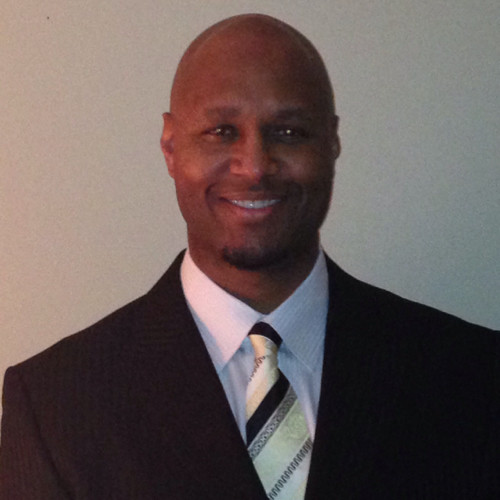
At Synchrony Financial, Claude Royster is the VP of Emerging Markets where he is responsible for driving dealer enrollment, sales growth and credit integration. In this role, Royster Provides innovation and thought leadership to drive profitability through managed portfolio industry segments, develops segmented sales, marketing and servicing strategies, and negotiates multi-year contracts for key programs. He also leads and develops teams of sales managers (direct reports) and matrix management.
Welcome to the Athletics of Business, a podcast about how the traits and behaviors of elite athletes and remarkable business leaders frequently intersect. The real stories and hard lessons to help you level up your leadership and performance. Now your host, Ed Molitor.
Welcome back to another episode of the Athletics of Business podcast. I am your host and CEO of the Molotor Group, Ed. Ed Molitor. Man, do we have an unbelievable episode for you today. I've said it time and again that I have been blessed to have some amazing role models, mentors and friends in my life as a result of athletics. And I love how fortunate I am to be able to share their journeys and keys to success and their professional careers with you many years after the ball stopped bouncing. Our guest today just happens to be one of those people, Claude Royster. And Claude was a very significant role model, mentor and friend early in my playing career in high school. Claude and I go back. Let me share a little bit of a backstory with you.
Claude and I go back to his freshman year at our alma mater, Palatine High School, which would have put me in seventh grade and that was 1982. Not to date either one of us. And there's no dating Claude, because if you saw him today, he looks like he can still play every down in a college football game. Okay, so Clyde, why did I admire Clyde? It's the same reason he is such a success in business now. It was just his demeanor, the way he carried himself, his selflessness. I mean, he would do anything his coaches asked of him. He was a great teammate. I love the way he treated people off the floor. With me being two years younger, I mean he just had this thing about him that you wanted to emulate and a lot of it was his warrior mentality.
I mean an absolute warrior mentality on the court, on the football field. So I, I have not been shocked at all by the success he has had in his professional career in the business world. And, and so what's Claude doing now? Well, Claude is vice president of client development for Synchrony Financial where he is responsible for the strategy and asset growth within their music and sport industry credit card programs. Now those programs that he is in charge of have a portfolio size of this one billion. That's billion. With the B. $1 billion in annual sales. Claude partners with cross functional stakeholders to develop strategies to drive profitable sales and revenue growth and obviously the return on investment, the roi. He leads new client implementations, periodic planning sessions, reporting, communications, portfolio profitability analysis. Now try saying that 10 times real fast.
Portfolio, profitability analysis, operational training and product management, all the while leading a high performing sales team. And that's just what Claude's a part of his entire career is, high performing teams. Okay, what are we going to talk about today? I'm going to tell you what, get your pen and notebook ready because we're going to talk about his personal brand. Okay. That's just something we got into through the conversation. And his personal brand is live, love and lead. Live every moment, love beyond words, and laugh every day. And we talk about where that came from and how he lives that out every single day. And Claude's going to share with us why it is important for a leader to personalize the experience for his or her team.
The significance of having a vested interest in your people as a leader, why it is important to have a clear definition of success as a leader. Claude talks about one of the things he did early on was define success and how it looks and feels to him. And then he's going to share with us the importance of believing in yourself as a leader and having the ability to leverage that belief to make the decision to course correct when necessary. And there's a whole lot more. So go ahead and enjoy this unbelievable episode with Claude Royster. Claude, thank you so much for joining us today on the Athletics of Business podcast. This has been a long time coming. It's well overdue and I am humbled and fired up to have you join us today.
Hey, well, thank you. I know we've talked about it, now we're making it real. So I'm really excited about it. So let's get at it.
Absolutely. Let's jump right into it. Claude, tell us about your role as VP of Client Development at Synchrony bank, what you do.
Sure. So I've been with Synchrony now for the last four years and VP of Sales. And my responsibilities are simply I work with two different distinct industries. One is the music industry as well as the sport industry, which comprises of several different types of sports enthusiasts, whether it's sport bikes, whether it's fitness equipment, outdoor sporting activities, things like that. So I build relationships with retail locations across the country, basically establishing retail financing programs. So a lot of their items for the enthusiasts tend to be bigger tickets, you know, couple thousand dollars. So we provide them with the means to be able to finance those products on our cards and really drive those customers back to those retail locations. So in this industry for almost 30 years now. So yeah, I've been doing this basically since I got out of college.
So it's very exciting and Synchrony is obviously an awesome company to work for, so I'm very excited to be here.
So speaking of college, you played college football in Northern Illinois. You get done with your playing days. And were just talking before we started the podcast that you. You had some sniffs from the NFL, you had some potential opportunities, but you knew that it was time to take the next step. Right. Like, you knew your body was shutting down, it was time to take the next step. Did you have any idea this is what you'd be doing 30 years later?
Actually, it was. You know, I had always aspired to be in the business world and, you know, coming out of high school, I played, I was two sports and played basketball and football where I had an opportunity, fortunately for me, to be able to go to, you know, school that I. But, you know, I ultimately chose football and, you know, I was, you know, I wasn't, you know, I'm much heavier now than I was in my playing days, but at the same time, I didn't have the athletic ability to really take it to that next level. So, you know, it was easy. It was easy decision for me to get myself prepared for what's next for Claude, which was the business world. So, you know, it really wasn't a tough decision.
You know, I had a great career in college, but at the same time knowing that, you know, that was really the ceiling for me.
So you graduated from college, you graduated from Northern. Take us through your journey to get to VP of client development and synchrony.
Sure. So right out of college, came back to the northwest suburbs and ultimately, you know, just really started looking for a job. And my first job was actually with a company called Household Retail Services, was my first full time job. So they hired me on to be a underwriter for retail finance. So I actually wound up underwriting motorcycle loans for the likes of Harley Davidson, Suzuki, Kawasaki, all those guys. And it was a good experience. And, you know, I was fortunate enough that the leadership saw potential in me early on and they placed me in a management leadership program. And this is really my first exposure to executives across the organization and working on different assignments, reporting back out to the leadership team and really starting to build a brand and get that exposure to the business world.
And, you know, during that time I was actually promoted to supervisor of the underwriting team. So starting my journey into the managing part of the business and managing people. So I did that for about a year. I graduated from the management leadership program and had a second promotion Come up within two years, in which they moved me over to the revolving side of the house, which is consequently what I'm doing today. So I ultimately wound up overseeing a group of 50 underwriters that basically underwrote all the different industries, whether it's furniture, electronics, jewelry, etc. So had the opportunity to meet people and ultimately try to provide mentorship and help them improve their responsibilities. Did that for a couple years and then I moved over within st house, still that household.
A couple years later, I moved over to merchant services, which really is just really servicing clients. Whether you're onboarding a new client or whether you're supporting or managing relationships with an existing client, just really help to help facilitate the experience for those clients and really make sure that things went smoothly from a program perspective. Six years in, I had an opportunity to take what I consider to be a pretty bold step in my early 20s, which was to move to Minnesota to help start up a retail card program with a company called Green. I had never moved. I had never been out of the state outside of playing football. So to me, one, it was scary and at the same time was pretty exciting because I had an opportunity, one obviously to make more money, more importantly to gain more experience.
So took a leap of faith, moved up to Minnesota, and it was a very interesting experience in the sense that I had no damn idea what I was getting myself into. I walk in, I'm thinking, okay, I'm going to start up this program. I get to my desk and there are 20 binders on the desk. What they didn't tell me is that when they said startup, it was starting from the ground up, meaning that I had to do the coding, I had to do work with it. Folks, I was way over my head, to be honest with you. I just, you know, I did it, but I was way over my head. But, you know, the thing that was training about it is, you know, I could have. I could have ran away and, you know, ran away from the opportunity to learn.
But I took it as an opportunity to. To really learn the business from the ground up. And as I started doing this quote unquote coding as well as building out this infrastructure for a credit card platform, I started learning things that I just had no clue about. And to me, it's awesome, you know, And I look at that from a sports perspective, you know, it's all preparation for where you're trying to go, and it's little small steps that you need to take to learn, really. It's like learning plays, you know, I Don't need to. You know, it's like football or any other sport. Everybody has a pivotal role and all these things come together to formulate what we know as a team. That's what this was.
I'm building out a platform that ultimately is going to be sold out to clients that are going to help them drive and grow the business. So it allowed me to put the pieces together, and I did. Took about six months to a year to get it off the ground. But fortunately, now that same platform 30 years ago is part of the infrastructure of the company that I'm with right now, which is Synchrony. Synchrony ultimately bought Green Trees, so all of this stuff played out in my favor. So pretty exciting stuff.
So tell us about Synchrony. Tell us about the culture of the organization.
Yeah, so, you know, we have just. Margaret Keene is our CEO of the company, and I have so much respect for her in the sense that, you know, I've had an opportunity to talk to her a few times and learn about her journey. And what's inspiring to me is that her journey is very similar to mine in that she started with Citi in call centers and worked her way up to becoming a great leader, great CEO and really setting us up for our future. So, you know, she's building a culture around her of leaders that are visionaries that stand behind the principles of the company, as well as really trying to bring forward other leaders within the company. So it's really exciting one to be a part of it, but to watch it all unfold.
And I've had the privilege of seeing the diversity that is taking place within our organization. I know that's very cliche. Ish. But when I see what's happening in our business, there is a very concentrated effort of bringing diversity and inclusion into the business. And that's exciting to me because that's where you're going to get a lot of your ideas. Your differences are not necessarily all of the. This can be an advantage in our space. So I think bringing that together and having, you know, a mixture of people from all different backgrounds, races, etcetera, all focused one common goal, I think that's one of the things that really excites me about the organization and has allowed us to be successful.
I think that's awesome. And one of the things we talk about a lot on this podcast and I work with a lot of my clients is creating that culture and that environment that's safe. Not so much soft, but safe. In other words, you can get outside your comfort zone. Right. And that's one of the challenges with inclusion. Bring all these different folks in different backgrounds and what have you. And they need to get outside their comfort zone. A, showing up to work every day in an environment they might not be used to, and B, taking those risks and maybe failing, but embracing the fact that they're going to learn from that, they're going to grow through adversity, and they know they have a team of people that will support them. How do you go about at synchrony doing that with your people?
I think we have a couple different things that we do. So we have what we call diversity networks. They're all part of this body, which is called eni. So it's diversity and inclusion. But nonetheless, we have different networks that work individually and collectively. So I'll give you an example. We have Hispanic network. We have an AAN or African American network. We have lb. I always screw this up. LBGTQ network. We have. We just, we just recently added an Indian network. So we have. We have about eight distinct networks that work individually, but both collaboratively. And again, that's, you know, you think I'll use the African American network, which I'm a part of, but it doesn't necessarily. That's not an exclusive network. In fact, the leader of the executive sponsor of the network is a Caucasian, you know, and then that's.
That's good for everyone because we're learning about each other and it's inviting ideas from outside in and vice versa. So those are the kind of things that we try to focus on to make sure that we're bringing forth people that aren't afraid to step out of their own skin. You're going to learn a lot about yourself, but more importantly, you're going to learn about a lot about the people you work with and the culture that you're trying to embrace within the synchrony organization. So it's been pretty exciting.
That's cool. And one of the things, you know, you talk about is making a positive impact with your clients and your customers. Right? And we talk a lot about. We want to make things transformational relationships transformational, not transactional. And in your industry, that's not always the easiest thing to do. What are some of the ways you're. Or some. Some of the things that you're intentional about with your clients as you. You sit down and you start to connect and you start to build out these relationships? How do you go about doing that?
I think two things that are very important for Me one is to listen. I think you always have to listen and understand the needs of your clients in order to affect those needs and then be transparent. I've been doing this business for a lot of years and transparency and authenticity are very important. You know, you always hear the word, the customer is always right. I don't necessarily believe that, but I also try to figure out ways to make things right and what's best. And having that respect for one another and really focusing on the common goal and the common good, I think are really what prevails at the end. But I think, you know, for me it's really just trying to listen and understand.
If I don't understand what my clients strategic goals are, both short and long term, how can I help them get there? And I think that's part of the process is really trying to get in deep with the clients and understand and build relationships. How do we impact the customers and their bottom line and then take those back to the lab and build strategies that are going to allow them to be successful because their success is my success.
I've got to think there are times when you sit down and you start peeling away the onion, so to speak. With clients like really trying to get to what their needs are, it's gonna be a case by case basis. Have there been some times when it's a little bit more challenging than others? And when that's the case, you know, what's your approach with them?
Hey, there's been times where I've gotten kicked out of the room. So yeah, there's definitely times like that. You know, again, it starts with respect. As long as you're respecting one another, you really just have to focus. You always go back to what's the goal, what's the purpose and what's the vision? What are we trying to achieve together? We may have to take a different path to get there, but at the end of the day, that's where the focus should be. And then times we've had to bring in outside consultants to try to help bridge the gap. But over my career, I think, you know, you really have to stay focused on, you know, what's the prize, what's, what's success look like for the business and how do we collaborate together to get there? And it's not always easy.
I mean, sometimes it's just a dog fight. But the reality of it is we're both here for a very specific reason, which is to profitably grow each other's business. And that's really the end game.
You talked a little bit about authenticity. And when I work with my clients, whether it be the executive coaching clients, corporate clients, I break that down into honesty. In other words, being honest with yourself. Integrity in the sense that your values and behaviors are aligned and not just with your own values and behaviors, but also the company's values. And you sent me something, and that's one of the great things. I get to know each guest so well. But obviously, you and I go way back. But you sent something to me when we're preparing for the podcast. And one of the questions on there was, what is your brand? And you said, live, love and laugh. Live every moment. Love beyond words. Laugh every day. Tell me how that lines up with the.
With the culture at synchrony and the way you go about doing things with your clients and customers.
Absolutely. So, you know, that's. That's something that's really stuck with me. And those that know me, that are friends with me on Facebook, I wear this hat. It's called. This company called Black Clothes. Give them a little commercial here. But it'll get.
We got to make sure this recording gets in their hands, by the way.
Absolutely. And the brand is Black Clover, and their slogan is Live Lucky. But it embodies what I try to actively portray every day in my life. You know, live up and laugh, you know? You know, I wake up every morning feeling blessed because I woke up, you know, so, you know, but more importantly, every day is an opportunity, and I try to seize every moment I can in terms of, you know, being a better person, being a better husband, being a better father, being a better corporate partner. All of these things are things that I think about and I reflect on and to ensure. So, you know, but there's more to life than just work. I try to have a good balance in life, and our company tries to focus on balance in terms of really just, you know, it's.
We work and we play and we have fun. You should enjoy what you're doing, otherwise, why are you doing it? And I've been doing this for 30 years, and, you know, there are a lot of people around me who enjoying it even longer. And we love what we do, and we try to present that passion internally and externally with our clients. And I think that's one of the reasons why we've been so successful, is that we live those values and, you know, love what you do. You know, whether it's, you know, all the functions, some of our. Some of the responsibilities are thankless, you Know, you have somebody who's serving a customer day in and day out, but you know, they do it because they love it.
They love making the customer feel satisfied when they get off the phone and they're answering their inquiry or solving a problem or addressing any needs that they have. You have to embody that in order to be successful because you're the first perception that consumer is going to have when they're on the phone. And if you can resolve that the first time, trust me, you know, with all the different medias we have today, social media, if it's a shitty experience, guess what, it's all over social media. If it's a great experience that could be on social media from a different perspective. So you have to make sure to keep that in perspective. And then laughing. You know, one thing I told my, you gotta laugh. Not just laugh outwardly, but laugh in, laugh at yourself.
You know, I do a lot of stupid things, you know, but at the same time, you know, I try to be good natured. And that's our culture is, you know, we try to share each other's experiences and we laugh, we work hard, but we also play and we also enjoy each other as people, as friends. My boss, he's a great boss, but he's also a good friend. He's somebody that I feel like I could go and talk to if I had something going on in my life that I needed to share with someone. And that's similar, that's how I lead in terms of my values. So people that work for me, who have worked for me or peers, I try to embody those and project that out to them as well, you know.
And it's interesting you just said something that really resonated with me because when, when were playing, right, we always heard, you know, if you take care of things off the court, you'll take care of things on the court. Now we live in this day and age where there is no personal life in business. I mean, our worlds are one, they just blend together. So, you know, people want to have a good job, they want to have a job, which is awesome. They want to have a job and that has purpose and know that they're important and what they do is important. So can you talk to me a little bit about how you're able to get your people to buy into the fact that, you know, they can trust you, that you have the ability to be vulnerable.
In other words, let's say there might be a gap in a solution like, here's what you know, here's what you need to know to come to a solution. But you are able to make yourself vulnerable and talk to your people. In other words, how do you express to your people that you're human, like the things we just talked about, Able to laugh at yourself. You know, you have to balance your personal life and your business life. How do you, how do you go about doing that?
You know, that's a great question. So a couple different ways, you know, for people that actually work. For me, you know, part of that is I like to set up time one one to really personalize the experience with my people so that they, one, feel like I'm a person that one they can respect and they trust. But more importantly, I want them to know that, you know, we're in this together, you know, that we're a team. I may be your boss, but as far as I'm concerned, we're on the same team and peers. And I'm going to work with you because again, your success is also my success. And I have a vested interest in my people to make sure that they are successful in everything they do.
And, you know, part of that trust is, you know, I have to walk talk, I have to help break down barriers that are getting in the way of progress, getting in the way of success. I also have to be very clear in defining what success looks like based on where the organization is going. So providing that guidance to my team and having that regular feedback loop with them to make sure they know that they're on course, they're going above and beyond, or if they're off course, I have to course correct and make sure that they're doing the things they need to do to be successful, you know, and the same thing with clients.
You know, to me, you know, communication is the key to driving and forging those relationships forward and, you know, again, establishing clear and concise goals, regularly monitoring those goals and having a feedback loop with them so that if we do have to pivot, of course correct, at least it's still pushing us forward. And if we fall, we're going to fall forward, we're going to fall fast, and we're going to keep moving.
I love that. Now, let's talk about mentors for a second, because a lot of things are going through my head that you just said, who have been some important mentors to get you to this point, because, I mean, all of this stuff is just. It's so powerful and you say it with such conviction. It's obviously something that you live every single day, who's made a big impact in your business career. And it could even go back to athletic coaches.
Well, you know, I was going to say you already know one. He happens to be your father. So, you know, I, I can tell you know, you know, growing up in a single parent home was a challenge, you know, for me. You know, I, I moved from, you know, early age, moved out from Chicago to Palatine and you know, obviously coach shot, you know, and, you know, this is a funny thing, true story. You probably only noticed, but I was a baseball player when I first started out. I was probably better at baseball than any other sport. Okay, Yeah, I was, you know, I was pretty damn good. But, you know, nonetheless, you know, I, I transitioned into basketball games. Really had nothing, really didn't know enough about Palatine and their sports programs.
And my mom wouldn't even let me play football until I was a sophomore in college. I'm sorry, sophomore in high school. You know, I had to beg to play football. But, you know, your dad was. And coach Joe Patricka were, they were not just mentors, but they had father figures for me and the life lessons that I learned from them. That's, that's not about sports. That's about life. And you know, it's funny because you reflect back on that, you know, 35 plus years, I was young and dumb, you know, I understood enough.
But when you really reflect back on what coaches were saying to me and the team around work ethics, setting goals, having vision, you know, working hard, all those different things, they resonate now more than ever because those are the same principles and values that have allowed me to be successful in my life. And it doesn't matter what I'm doing, all of that's applicable, whether it's at work, whether it's in my family life, anything, it's all applicable to me. And there's a quote that your dad said, you know, in practice, and I don't know who said it, I'm terrible with names, but very simple. If it is to be, it's up to me. And, you know, that's something that has always stuck with me because at the end of the day, the one person I always have to be able to count on is myself.
Again, in a family where it's predominantly women, nothing against that, but, you know, not having a lot of male role models, I was the first one in my family to get a college degree. So, you know, I wouldn't be where I am today without, you know, Eddie Mahler and Joe Petrika and, you know, fast forward that I've always tried to gravitate towards mentors that, you know, that give you that tough love, so to speak, that give you the kick in the ass when you need it, you know, that realness about them. And that's something that I've always had and I've always appreciated. And as we talked about mentors, one of my mentor first mentors is a gentleman by name, Mike Rafferty. He works for Household Capital One now, but he was a fantastic mentor.
We had a common bond that we both played college football. He played at North Dakota State, Division 2, but they're a powerhouse. But great guy. And, you know, he taught me about the business and really how we make money in the business. You know, it's one thing to do your job. You're 21 years old. I think you're concerned about the damn paycheck, you know, not how the company makes money, but how am I going to make.
Yes.
You know, he really taught me how to learn the business and how the business makes money. And, you know, nobody really took the time to do that. And he really pushed me to not only leverage my leadership skills, but also immerse myself in learning the business from the ground up. And that's, you know, those guys have been tremendous to me in terms of where I am today, how important.
And I'm going somewhere with this. How important is trust to you in leadership?
It's, it's critical. I think if you don't have trust in someone, I think you wind up questioning everything about what that person says. You lose clarity on the vision. But if that person is trustworthy, and I think that it's going to one, it enables me, but it actually motivates me because I know that I have somebody who has my back and is in it with me for the long haul. So trust is absolutely important. And it's hard to build trust, very quick to break trust. And you always have to remember that when you're talking with people and working with other people, because you don't get a lot of second chances once you break that trust. And you have to remember that as you go through life, whether it's work or whether it's in the home front.
Yeah, and here's the reason I asked. I mean, obviously we've talked about that before, but you. One of the things that's always impressed me about you from the time you were playing varsity basketball as an underclassman to now you sign with Northern Illinois, right? Go play football, wide receiver. You're going to have this unbelievable career. You had some of the best hands I've ever seen. And there's a coaching change. And now they ask you to do something that you had never done before. Correct. They asked you to play tight end for four years. All right, I mean, first of all, if that happened nowadays, you'd have probably transferred. Not you personally, but these kids were transferred five times by now. Okay, but you bit the bullet and you said, okay, this is what they're asking me to do.
I mean, where did that come from and how hard was it? How big the challenge was it? And then on the back end of that question, how did that prepare you for the business world?
It's interesting. So I'm still pissed that I didn't get to play receiver. That's all. It's all good.
You had some mixtin.
I thought I had good hands, but I wasn't as quick as some of the other guys on the team. But, you know, it's interesting. So, you know, when I got breast surgery as a freshman and you know, during that time I actually tore up my ankle pretty good. So, you know, there was a need for, we needed some depth at the tight end. We ran a wishbone offense, which is a lot of running and blocking. And I, you know, coaches wanted me to put on some weight. You know, obviously I had the athletic ability to play tight end and move out to a receiver position, but, you know, if I wanted to get on the field more frequently, you know, I had, you had an opportunity to play tight end. And you know, to me it was.
Sure, it's disappointing because, you know, coming out of high school, you know, I felt good about myself, but at the same time I just wanted to play, I wanted to contribute. You know, I felt like I had the potential to be out on the field. So it wasn't really that difficult of a transition for me. I think the bigger transition for me was, you know, in high school we ran more pro set and then in college we ran a wishbone, which is again, a predominantly run offense. A lot of skill positions, and in the tight end position, you're doing a lot of blocking. And you know, think about this. I graduated from high school, I was probably 175at soaking wet. I had to put on almost 40, 50 pounds to play tight end.
And you know, obviously when you put on that kind of weight, it's going to slow you down and. But that was okay. So I wound up, you know, I wound up blocking a lot in my career. The great thing about it is nobody expect me to offer a pass. So usually when I went out for a pass was over 25 yard catch. So that was the only cool part. I just, we didn't throw the ball.
Now, I mean, I know you're not going to give yourself props, so I'm going to do it for you. If I remember correctly and I did not look this up and that poor, you know, shame on me for not doing this, but I might nail this. This. You had four catches your senior year. All four for touchdowns.
Yeah.
Yeah. There you go. How about that?
Yep. Yeah, yeah, that's, I mean that's exactly right. And that's, that's, I mean that's the beauty of the offense. But you know, I, I, you know, I was rewarded to go out and catch a couple passes. But you know what was exciting about me is, you know, my junior year were the leading rushing team in the country. You know, back in those days you had the Oklahoma's of the world. You had all these powerhouse teams and were the leading rushing team in the country. Just a small school out corn fields at DeKalb, Illinois. We had a great team, we had a great offense. We're 9 and 2. We got screwed on a bowl. We didn't get to go bowl game because weren't in a conference.
But you know what, that was one of the proudest moments and I love those guys to death because, you know, we set ourselves up for success and we had a fantastic year. Great quarterback, it was just a great team. But you know, I embrace everything about, you know, the position, knowing that, you know, I wanted to play a role in our success. And you know, fortunately my teammates and my coaches saw that and I was blessed with being voted captain my senior year, which to me is just, you know, you talk about trust and respect and you know, I think by hopefully I lived up to those based on what I did on and off the field.
Well, and it speaks volumes about you and being a part of something bigger than yourself and accepting, you know, accepting the role they gave you and then maximizing your ability inside of that role. One of the things that I know you and I bond on and we talk about is having a culture worth fighting for, right? In football or basketball, those are your brothers. There is love. You love each other. You may not always like each other, you may not always get along off the field, but you always have each other's back. And you create this culture that the great coaches, the great leaders create a culture that's worth fighting for. What are some of the things, as a leader that you do with your people?
You know, for me, I try to really. I want to learn more about them, not just from a professional perspective, but more about them as a person. You know, what are some of the things that make them tick and really immerse myself into that because, you know, I don't want to just build successful business people. I want to build successful people. You can put any adjective in front of that you want, but, you know, for me, these. These are people that I'm going to go to battle with day in and day out. So really understanding, you know, what makes them tick, how, you know, what are their goals? How can I be. How can I help them be successful? How can they help me be successful? I think that's. That's very important. But, you know, just.
Just, again, being authentic and having those kind of relationships. I'm a relationship guy, and I love building relationships with people. And just, you know, I could sit on the phone for an hour with my. One of my employees, and I could talk about everything but business. So that's the kind of relationship I want. You know, obviously, I have to get back to business, but at the same time, if there's something that's going on, I want them to feel that they can call me anytime and just talk about whatever's on the money.
Right. And speaking of talking to whatever's on your mind, sometimes you need that other person, right? That other vantage point, that other nudge. In terms of. When we talked a little bit about before we started the podcast, working with an executive coach, how significant has that been in your success over the years?
I wouldn't be where I am without executive coaches. It's funny because probably 30 minutes before this podcast, I was talking with my mentor at Synchrony. And it's funny because this is a person who I've grown up in this career with. We're the same age. Matter of fact, he played basketball at Glenbart north, and we played against each other when your dad was coaching and spent summer league in summer league. So we. We've gone. We followed similar paths, and now he. He's had a very successful career. He's just moved to a different level and executive level. So he's my mentor. And, you know, he's somebody one I respect, I trust. I've watched him grow in his role. So we have very similar paths. And so it's. It's. To me, it's. It's, you know, being.
I'm only four years into synchrony, it's important for me to understand what's going on across the business, how can I build my brand throughout the business and continue my path to success as well. So I tapped him on the shoulder. I want you to be my mentor. There's no ego here. This is just about me trying to get better and trying to serve the business and serve our clients. And you're obviously making inroads. So that's been tremendous help for me. Not just this example, but I've had many other executive mentors that have, you know, given me that feedback loop. And again, they're not just executive mentors. They're now friends.
There are people that are very important in my life that if I'm driving home one day on a long drive and I want to venture or I just want to talk, I can pick up the phone and call them at any time. And I hope that I'm serving the same purpose for people who I mentor, which I'm very proud of doing as well.
Right. You know, one of the other things were talking about along those lines is as were athletes and, you know, we talked about my dad. He would bring folks in like you would come back when you were playing college football. I remember you coming back talking to us my senior year. But he would bring guys from the military or bring in doctors or bring in lawyers or businessmen, but he'd bring in outside voices that would talk about the same things that they talked about. Right. So the work ethic, the teamwork, the. The loyalty, the trust, the communication. But it was an outside voice and it was a different vantage point. How important is that in the business world and how key has that been to the success of the teams that you've been with?
It's critical. I think hearing that journey from outside of your own lens is absolutely critical. And I've had the privileges of having different speakers from all different walks of life. Folks from the military, folks from the medical field, all the people that write books. It's just been tremendous just following the journey. And what's interesting now is if you fast forward to the last 10 years and all the innovations that have taken place in technology, it's just been fascinating to see, you know, some of these folks are, you know, fresh out of college and, you know, they're making. Coming up with all these startups and, you know, selling them and make becoming billionaires overnight and, you know, Hearing those journeys and having that outside voice. You know, it's funny because it's. They're not doing anything any differently than what people have done in the past.
You know, outside, they're taking older steps, they're believing in themselves, and, you know, they have a vision on things that they want to see in the business world. And it's helped us because it helps us to put these in perspective. Sometimes we get organizations like Synchrony and some of the other bigger banks. You get so big that you know, and you have such a captive relationship with clients that you may miss opportunities to be as nimble as you want to in our space. And that's what allows others to come in and fintechs of the world to come in and come up with creative. These sexy, sweet products that are really more disruptive than anything, whether they're sustainable or not, you never know.
But that's where the outside voice, I think, really lends itself to us, in that we hear it from a different vantage point that you wouldn't necessarily think about if you're hearing it from somebody internally.
Well, this has been great. I wish we could talk forever. Matter of fact, I'd love to have you on again in the future down the road, if you could carve out that time, that would be awesome. And before I ask you the last question, where can folks find out more about Claude LinkedIn, any social media handles you have? And where can they also find out more about Synchrony bank, whether it be as an employee, as a. As a client, whatever.
Well, I'm on LinkedIn, so you can find me Claude Royster. I think it's@LinkedIn.com, but you can find me on LinkedIn. And as far as Synchrony does have a branded website. You can go to www.great. Again, great company. Doing a lot of things in the community. We're doing a lot of things in the college world and bringing people in for internships and things like that. But, you know, certainly the social media is probably the best place via the websites.
Okay. All right, great. So, Claude, you are still a young man. A matter of fact, as you sit here and I'm looking at you and your Nyu. Niu. Not Nyu. Excuse me? Niu. Sure. You look like you can still play a few downs, huh?
You can see the shoulders, you can't see the belly.
That's all that matters. You could have just said yes for the love. Hey, but. But you're not done yet. I mean, you're still ascending the corporate ladder, and I. I'm gonna have a couple questions tied into the last question, but I. I really admire that you have this focus of getting to the executive level and doing it the right way. Right. You don't identify who you are with your title, but how challenging is it? And how do you stay so focused on the process of building these relationships with your clients, making a positive impact on your clients as well as your people?
It starts with the corporate vision. It starts with our vision and our responsibilities to our clients. And as long as I share that vision, it really makes it easy for me because I, you know, I know the direction that the company is going, and I believe I know what it. What they're looking for in leadership to help get there. Now, you know, I still, you know, in my current role, I still have very specific responsibilities to help the organization. I just feel, you know, given my experience and skill set that, you know, there's more. I'm still hungry. There's still more that I feel like I can do. There's still more contribution than I can give to this organization, just as they've given back to me. So it's just. It's just a hunger.
It's just something that when, you know, I set out on this journey, I see myself sitting at the seat of the table with other executives and leadership, and that's. That's really been my goal, and that's what I'm striving.
I love that. Claude, this has been awesome. I cannot thank you enough. And please rate, go to itunes. If you're not listening to itunes, get to itunes. Rate. And this episode, rank this episode. It's very important so we can expand our reach. Claude, we are. We are in 20 countries right now. The Athletics of Business podcast. It's awesome. I mean, everything is. Has been unbelievable. So please do that. You can also find previous episodes on itunes, Stitcher, Google Play, and of course, The Athletics of Business.com, our website for the podcast. To learn more about what we do at the Molotor Group, go to the molotorgroup.com that's M O L I T O R group.com themalitor group.com and there's information there about our executive coaching, our leadership coach consulting and corporate training, as well as keynote speaking. Claude, I cannot thank you enough.
It has been an absolute blast.
Oh, it's been a pleasure, brother. Thank you very much for having me. Appreciate it.
We're going to do this again, no doubt.
Thank you for listening to the Athletics of business. Be sure to give us a rating and review so we know how we're doing. For more information about the show, visit The Athletics of Business.com now get out there. Think, act and execute at the highest level to unleash your greatness.