

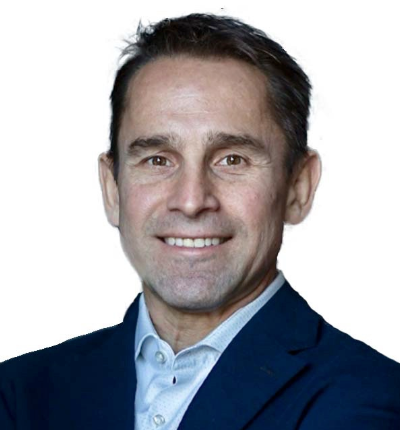
On Sept 7, 2018, Dr. John Alverdy and The University of Chicago founded Covira Surgical – a biotech company focused on novel therapeutic alternatives to prevent postoperative (surgical) infections. In Feb of 2020, Peter Farmakis joined Covira as the Chief Executive Officer, during a time when our work to prevent infections has never been more important.
Peter is an accomplished executive with diversified leadership experiences in the life science industry including; biotech/pharma, medical devices, and diagnostics/molecular diagnostics.
Throughout his career Peter has held multiple commercial leadership positions with two large industry leading diversified life science organizations Johnson & Johnson and Abbott Laboratories, and five privately held early-stage/start-up companies including Covira Surgical, VitaHEAT Medical, OraPharma, Unimed Pharmaceuticals, and DynaSplint Systems.
Peter completed the General Management Executive Development Program from Northwestern University – Kellogg School of Management. Peter attained his MBA in Marketing and Strategic Management from the University of Illinois at Chicago, and his BA in Pre-Physical Therapy and Psychology from the University of Illinois at Chicago.
Peter’s board experience includes Co-Chairman of the Board for Covira Surgical, CEO Leadership on the Ops Team for Smart Health Catalyst, and multiple Boards of Director roles including VitaHEAT Medical, Three Squared, and Health Industry Supply Chain Institute.
Welcome to the Athletics of Business, a podcast about how the traits and behaviors of elite athletes and remarkable business leaders frequently intersect, the real stories and hard lessons to help you level up your leadership and performance. Now your host, Ed Molitor. Welcome back to another episode of the Athletics of Business podcast. I am your host and CEO of the Molitor Group, Ed Molitor. Now, to set the stage for today's conversation, I need to go all the way back to September 7 of 2018, when doctor John Alverde and the University of Chicago founded Covera Surgical, which is a biotech company focused on novel therapeutic alternatives to prevent post op infections. Now, why am I telling you this?
Because in February of 2020, today's guest, our special guest, my great friend, someone I have a ton of respect and admiration for, ive learned so much from him, Peter Farmakis. He joined Covara as the CEO during a time when the work to prevent infections has never been more important. And before I jump into some of the things we talk about, let me tell you more about Peters background, because he absolutely lives and breathes the athletics of business brand Peters, an accomplished executive with diversified leadership experiences in the life science industry, including biotech, pharma, medical devices and diagnostic molecular devices. He has held multiple commercial leadership positions. And we really get into his journey from one step to the next. And the things he learned that would keep him climbing throughout his career.
And held multiple commercial leadership positions with two large industry leading diversified life science organizations, which I am sure you heard of, Johnson and Abbott Laboratories. And heres whats really cool. Also with five privately held early stage startup companies, including, as we mentioned, covera surgical, vita heat medical or pharma unamed pharmaceuticals and Dyna Splint systems. So what are we going to talk about? Theres a lot here and theres so much that Peter offers us. And he talks about why learning vicariously through others is so key to your success. Peter will share with us the best piece of advice that he received from one of his mentors.
And although it seems a bit humorous, there's a lot of power behind what he told him and how Peter has gone about creating a comfortable, not a soft, but a comfortable environment for his teams to get outside of their comfort zone and to learn and grow and to reach the highest level of success possible. Peter also will talk about why having the ability to admit what you don't know is so important. And you think about that when you come from someone in Peters position and what he's done throughout his career and all his successes and still having that ability to be vulnerable and to admit what you don't know is quite powerful. Again, so much more. I'm going to stop right here and let you listen to this wonderful conversation with my good friend Peter Farmakis.
Peter, thank you so much for joining me on the athletics of business podcast today. I am extremely fired up to have you here.
Thanks Ed. Happy to be here.
And we have a lot to talk about. There's so much going on in your world. There's so many things that we've talked about over the course really of the last two years, navigating our way through your journey and our journey here to figure out the best time for you to jump on. I couldnt think of anything better than right now with what you have going on. But before we get into that, lets talk about your journey. Its pretty amazing and what youve done as a leader at a very high level for different types of organizations in the life science. And first, you work for two large diversified companies along with five newer or startup companies. What has been the difference in what have you taken away from those experiences with the two different types of organizations?
Yeah, well, first of all, I think the benefit I had is coming from a really strong foundation, that of which we both grew up in Palatine, both from the people that we grew up with and the experiences and opportunities we had given to us. That led me into opportunities to work with primarily Johnson and Johnson as a large diversified healthcare company for eight years and a chance to go through their management development program, and then also an additional eight years spending time with Abbott Laboratories diversified healthcare company in a very different scenario where we're doing more of a turnaround effort.
What I learned from all of those experiences, and was fortunate to be promoted a number of times throughout each of those two diversified life sciences companies, is that you really have to pay attention to the leaders you're working with, both in what they're doing really well and also maybe the things that you're observing that you don't think they're doing well in, because that really helps shape what your leadership qualities are going to look like.
And then when I've had the opportunity to take some of those experiences and leverage them into more senior leadership roles and also leverage those into startup environments, like the four startups that I worked at prior to the one I'm to in now, and the current experience with Kuvira, really the diversification of learning from the others that I worked with and making sure that I from that really drove unique culture in our companies both in the large companies and in the small companies to make sure people were empowered, and they felt like in those empowered moments, that they could be successful.
So going back to what you said, right, the foundation that was laid for you all the way at the beginning, and when you got into the large organizations, was it front and center that you wanted to climb the ladder and get to a high level of a leadership role? Is that sort of when you started navigating your way through your journey, that you had that focus in mind, or was that something along the way that just seemed to pop up? Yeah.
For me, it was something that I looked at it as like a competitive situation of I'm going to do well so that I get incremental opportunities to be successful. And so I just worked as hard as I could, learn as much as I could to put myself in a position to have those opportunities. So for me, it was right away.
Well, let me ask that, because, I mean, you're one of the greatest competitors I know, and that includes when you play cards. Okay. But my question is, so you have that competitive nature, and as you work on empowering people to put them in position to be successful and maximize their level of success, is it challenging sometimes as a leader, when they might not see as much potential themselves as you see in them, or they might not want it as bad as you wanted for them? And here's what I mean by that. There's times when I was coaching college basketball that sometimes you believed in the player more than he believed in himself. Right. And there are some times that maybe you wanted it for him more than he wanted it for himself. Does that ever show up in leadership?
It does, and it definitely showed up a number of times for me throughout both my large company and small company experiences. What I did to really dig into that was really understand from each person's perspective what their motivations were. So as I progressed in the senior managers roles and I was working with people that were managing others, I really wanted to tap into what was important to them, because sometimes it wasn't about necessarily getting to the next level. Sometimes it was having more balance in their life, and that would be a measure of success. So it was really helping them figure out what was important to them and then helping them get there. And so while I may have looked at it as I could see you in the next level role, they may not have wanted that, you know?
And so I didn't want to force that issue. Now, that was more of a learned leadership, I would say takeaway for me because when I started out, I didn't always think that way. I thought like, hey, work harder, get promoted. Work harder, get promoted. And everybody's thinking the same way. But it's, it really takes a good set of experiences to step back and understand what your team is really looking for an individual level and then helping coach them to that level. So as an example, you know, if you were to look back at your coaching days, you know, some people might not have wanted to take all the shots on the court and score multiple points.
Maybe they wanted to be more of a facilitator and, you know, and help the team to get to more to victories, you know, so there's all the different aspects of it, right?
What is your science behind how you figure out what makes your people ticker or how you figure that out over the course of time? In other words, you know, do you learn more about their story? Do you watch them in certain situations? Do you put them in certain situations and see how they respond? How did you go about doing that?
Yeah. So one of the things that was really driven into me through the management development program at J and J, and then really, quite frankly, was also executed well at Abbott, was to make sure there was consistent one one meetings set up with your direct reports. And in that direct report setting, it's a goal establishment and review, and then you also hit on it.
The other thing is not just in those one settings, but when you're observing those individuals, not just in a one conversation, but when they're amongst their peers or amongst the people that they're leading or managing, you can pick up uncertain cues of what they're comfortable with, what they're not comfortable with, and really bringing that then back full circle into those one conversations, helping coach them and lead them in a direction that is tapping into their natural talents and then also maybe pushing them a little bit so that they're not completely comfortable all the time just to see where you can get them to go. And so that continual cycle, I don't think there's any magic bullet to it. It was more about a consistent process.
And in that process, making sure that you're consistently digging in and challenging the goals and objectives you laid out and trying to push forward to see what further you can get out of each of the individuals.
In the areas that you have operated in your industry and the spaces that you played, you talk about consistency. How hard is that? With the pace and range of change, like the consistent focus, the consistent energy, the consistent communication, the consistent messaging. Was that a challenge?
At times it was, and I think back to my days at Abbott probably the most for this. Abbott was a very different experience for me because it was my first time going into diagnostics and it was my first time working in a turnaround environment. And what that really meant was the business wasn't doing well. And were consistently trying to reformulate the size and shape of the organization. And there seemed to be quite a bit of pressure on us all the time to make sure we achieved our financial performance during this course of time. And what it initially led me to see a lot of, both in myself and in my peers and in my direct reports, was people working 1012 hours a day and really pushing really hard.
And it got to a point where I just paused and said, is this really getting us to where we want to be, or would we actually be in a better situation if were a little more balanced? Maybe people were working seven, 8 hours a day and spending one of those hours at the end of the day doing something that was a little more on the planning or important to them aspect, and so that their life was a little more balanced. And so one of the things I led at Abbott with our environment was really to restructure the senior leadership teams effort. As we looked at what is the outlay of what a successful person does and how do you execute against that? To me, working 12 hours a day isn't a measure of success.
The true measure of success is, are you being productive in the goals that you've established? And are you doing that because you're coming into work energized, you're well rested, you're excited about your day? Are you doing it because you're in this hamster wheel that's 12 hours a day and you're clicking in. And I saw a real big difference. And so for me, it was an observation I mentioned earlier about I learned from everyone I work with on things, what to do. There I was learning on what not to do. And one of the people in particular was one of my managers at the time. But it was a real enlightening experience for me because I hadn't quite seen that as clearly before.
What was that like when you started to learn vicariously through others mistakes or others shortcomings or other's challenges, and you admired them, you looked up to them, you respected them, and they were, so to speak, in the pecking order, you're superior, but you knew there was a better way, right? Like you knew there was a different way that could be more productive and be more effective. Was that a hard first step to take in terms of the change?
No. I'll tell you that one of the people that I respected the most, who's continued to go on and be successful, I learned great things from this individual and then I saw things that I did not think were the correct way to go about it. And you know, this person was a senior leader at Johnson and Johnson when I had worked with them. And you know, he gave me one of the best pieces of advice I think I could have received early on when I was in more of a senior leadership role, managing others. And I spent quite a bit of time trying to take someone and fix them and make them a productive employee. And at the end of the year of my performance review, this individual said to me, you did a great job of trying to fix that person.
You spent a lot of time and effort. I'm not sure if you could have done any better, but I want to give you some advice. I said, well, what's that? And he said, listen, you can't polish a turd. And it really stuck with me because I literally had at that point in my career, I thought, gosh, I can fix anything, I can make anybody successful, and it's just about work and effort. But his point was, you could do that and you could spend all your time and effort doing that, and you may or may not be successful, or you can focus your efforts elsewhere and you can probably be a lot more productive for the business overall. And maybe that person could be suited in a different job, maybe they would be more successful in that regard.
So I will say that was one of the things that he taught me that was really helpful. It's really made me do a better job of screening as I'm going through the hiring process in the future, especially when you're getting into higher level management positions, you wanna just make sure that process really filters through correctly. On the flip side, I saw the same individual driving the organization to work, even on the weekends at times to hit some of our financial numbers. And I looked back on that and I just said, well thats not even right. Even from a perspective of, and in fairness to the situation, were a startup that was acquired by j and J, so were still operating more in the startup capacity versus the j and J world. But I saw that as, gosh, that's not right.
You're basically communicating to the world who's invested in your organization, that your people work 8 hours a day, maybe a little bit more, but you work Monday through Friday. We're not a business that people are out there working on the weekends. And so to have that as part of our equation of success to me was really false success. It wasn't the success that were supposed to be projecting. So I learned that as maybe what not to do, even though it was the same individual on the, that gave me feedback on both ends.
I love that. And as you talk about success and you define success for you and the culture that you're trying to build. And you and I have had some amazing conversations. We, you know, I talk a lot about building a culture worth fighting for. Right. And protecting that culture. What is the ideal culture for you, Peter? I mean, what is, like, if you said, okay, we're going to build this, as you're building this, we're going to build this, and here's what our culture is going to look like and here's how we're going to go about doing it. You've hinted at that and alluded to it a lot, but just in a snapshot, what would that be?
Yeah, it would be a commitment to excellence and a comfort level with rewinding and looking at what you've done, especially in the situations where you failed, and to set up an environment where it's comfortable for those things to take place. And I'll give you this as a learning from my post MBA executive development program at Kellogg. So when I was at Northwestern, it was a two year cohort program, and one of the things we really focused on was learning from activities around us. And one of them at the time was eBay. And it was this strange exercise that went through and it was like, gosh, you're just sending money off to, you don't even know who it is and you're expecting that you're going to get what you have ordered. And went through this exercise and we're like, gosh, this works.
This works a lot. Like you're getting great deals, like 90 plus percent of the time, and every now and then you get screwed.
Right?
But what we attributed that to, we then paralleled that to the business world and our employees and the culture you want to set up. It's a strong signal to really trust and empower your people. And when you do that, the large majority of time, it's going to work out. It's going to work out successfully and you're going to be much further ahead than if you were to not have that trust infrastructure built in. And you didn't take that risk, if you call it that out with, like, the eBay example.
Right? And you talk about creating a comfortable environment and knowing you like I do. You do not mean soft by any stretch of the imagination, you know, but you mean comfortable in an environment where people can grow, get outside their comfort zone and operate that way. And you talk about trusting and empowering your people. And in order to do that, and in order for them to maximize that opportunity, they have to trust you, right? Correct. They have to trust you as well. One of the things I love about you, Peter, is you're so authentic.
Right?
There's the honesty, integrity and vulnerability piece. Where did that start to show up in your leadership journey? Because what happens a lot, and you mentioned it, when we're younger, we think, right, perform, get promoted. Perform, get promoted. Perform, get promoted. At some point, you take a step back, okay, how am I working on me? So my people will work on themselves and they'll grow, and then they'll impact the bottom line and they'll impact our team's success. When did you start to realize that correlation between the more they trusted you, the higher level of performance you would get from them?
Yeah, I think it was back in the J and J days, going through the management development program. That program in particular, really got me out of my comfort zone in a lot of areas. But then it also gave me enough foundation of confidence and comfort through that training program to really be authentic, as you say, and really just go with what my gut is thinking and being honest and transparent. I think the last one there, the transparent part, was the one characteristic that really set me apart from a lot of my peers and maybe one of the reasons why I was promoted fairly aggressively early on in my career. I had a level of transparency with my employees, with my teams, as much as I could, because I wanted them to be invested.
And so I really think it was that early J and J Foundational experience, the manager, just to give you some perspective on it, the management development program, what they did is they purposely put you in situations that were unique from your job, but you were still doing your job at the time. So while I was in frontline sales early on, they would put you in training, they put you in marketing, they put you through media training, they would put you in scenarios with market development activities, just things that were different. And they got you out of what you're comfortable with, but it gave you a lot of perspective. And then your perspective was then shaped by, okay, it's not just about you and what you're doing out here. It's all these other people.
And then how do all these other people perform against the same objective? Well, one of the ways is you're transparent about what's going on across the board, and you from that can then set goals that everyone can align to because they're able to see. I do want to add one other piece in here as it relates to goal setting. This was a really important, key learning early on in my Abbott days. So I was brought into Abbott, and within about six months, ge came in to buy the diagnostics division that I was a part of. So the core lab diagnostics division. And so I had a real strong working relationship with GE and their healthcare division for about a year.
The deal ended up not going through, but my key learning from that was how the GE executives came into every meeting and what they did. And so what they did, it was very simple, but it was this continual process that they did. They would show one slide at the beginning and they would say, these are the objectives we outlined, and they would be very high level bullets, sometimes two or three bullets. And they would say, does everyone still agree that these are our high level objectives? These are the goals that we're shooting for. Then they would ask another question, has anybody learned anything in the last week or since our last meeting that would want us to modify or change these objectives? And sometimes there would be some dialogue. Most of the time it was no, and then we would move forward.
But it was that level setting against that goal where everyone was tied in that. I've really tried to pull into my leadership repertoire as we move forward here because I think it's that continual alignment on what's important, especially when you're in early stage startup companies like I'm in now. And there's a plethora of things you could focus on and things you can do. If you're not aligned on the core objectives, you start to get a little bit loose on what your resources are doing. And so it's something I definitely took out and learned from that experience.
I love that. And did it ever seem in those meetings, when they asked the first question, then the second question was there, did it ever feel like there's a little bit of shakiness in the alignment, or were they spot on every single time?
I never felt shakiness in the alignment, but there were, in fact, things that were learned along the way. This is a very detailed component, but were, we hired a consulting company to help us with transitioning, and there's these things called tsas or transition service agreements. So it'd be an agreement between Abbott and between GE and how you're going to effectively pull things apart and then help the other party so that they could be successful. Right. We got to a point where we had so many transition service agreements, it was crazy. Like we couldn't really quite effectively manage it. So then we started to ask ourselves against one of the objectives, do we really need all of these transition services agreements or is there another way? So sometimes it just helps shape or redefine the objectives.
I don't know that we ever completely modify the objective, but it helped give a little clarity on how better to address the objective.
And that's a great segue to my next question because I was going to ask you, and you talked about when they came in, these are the overall objectives. Sometimes we're talking about goals as things change in the circumstances in the environment, in the industry. Were there times when you had to reevaluate your goals, whether they be lag goals, lead goals, short term, mid range, long term goals, and you had to change your goals, you had to line your goals with what you're able to accomplish and how were you able to do such a great job of that? Balancing your competitiveness, balancing your desire to be successful at the highest level with the fact that, you know what? We might not be able to attain this, but we definitely can attain this. Let's re, let's restructure our goals.
Yeah. And I honestly believe that this all starts from the foundational experiences that you have when you're growing up. And specifically for me, growing up in Palatine and going to Palatine High school and having a chance to play football with Joe Patrick and having a chance to wrestle and the other activities and the friends and the foundational, the overall foundation that was laid. And then I then leveraged that foundation to go into the business world. And then I was really fortunate in the business world to have both startup experience as well as big company experiences and a lot of different perspectives, a lot of great leaders, obviously great companies with J and Abbott.
And those foundational experiences just give a lot of confidence, or gave a lot of confidence to me when those situations arose to be comfortable, to take a little bit of a risk. So I'll give you the biggest example that pops into my head when you're asking that question was I had been a part of J and then avid. And I had assumed when I moved from J and J to avid that I would be at avid for the rest of my career, and I progressed well at the organization. I was helping to run the US molecular diagnostics division at Avid at the time. And there was a situation where the business was going through a restructuring, and both my position and my team's positions were all going to be eliminated.
And the feedback to me was, if you want to continue to progress at Abbott, we want you to go get global experience. And it wasn't about the global experience I got in leading a global team. It was about moving to a different country and running a country. And it really wasn't something that I was interested in at that time in my career. So I had to really look at, okay, what are the options here? I could continue to stay at the level I'm at, or I can look for something outside of Abbott as this restructuring is taking place. And it was probably, you know, although it felt uncomfortable at the time, it was probably the best thing that's happened to me because it really gave me an opportunity to look outside of Abbott and to leverage all the experiences I had prior.
So I had been a part of three startups. I had been a part of two large corporations. I really didn't understand the value of those skills. And then I had an opportunity to move into three different positions within 90 days. And the one I chose actually was probably most atypical to what I thought I would have chosen. It was really to take on my first CEO leadership role in an earlier stage, startup company in the medical device area. And I'm so happy that I had that opportunity. It was four years of successful learning for me and working with a very diverse group of board members and a great new environment for me.
And it really helped me to have a lot more confidence on what I could do moving forward, because it was me at the helm and the CEO role and in an environment that didn't have a lot of structure, didn't have a lot of resources, and really trying to figure everything out. So, you know, so that situation really put me in a scenario where I had to, you know, lean back on all my prior experiences, all the way down to my foundational experience, as I mentioned. And I was able to do that just because of my confidence in the experiences I had prior.
So what has been your. It's hard to just throw down one, but what has been one of the bigger challenges that you've had throughout your career, and how did you go ahead and navigate those waters?
Biggest challenges.
And when I. And when I say biggest challenges, I should word that better. Biggest leadership challenges. Right. Like, I think back to the organization, you're just talking about in the not dysfunction, but lack of organization, lack of focus, kind of all over the place with certain things and trying to do things a certain way. And how did you know that challenge maybe compare to something you went through at J and J or you went through at Abbott or wherever on your journey, but what was it and how did you go ahead and lean into the things that you had taken away from your previous experiences and the foundation that you just talked about?
Yeah, I think the largest challenges came when I was building something new within the structure of the large corporations. And the first time I did that was at JJ when we built a corporate accounts team. The challenge was that were building something from scratch and were able to do that extremely effectively and we had a lot of success. And you would think that's a success story, but that success actually brought a lot of challenge back to me and my team, basically stating things like, well, this happened because of this, or this happened because of this, like, not quite giving the team full credit. And that was early on in our success.
And so to keep my team grounded and to keep the corporate account managers focused on the future, I had to explain to them, you know, this is no different then if you're watching a football game and, you know, you're looking at Tom Brady and he has struggles in one game, or if they're making up excuses as to why the team won the game because the defense helped out or whatnot, you know, when you have a lot of success, people take a lot of shots at you. And that was the first time I actually learned that. And it really was at first a defensive mechanism that kicked in to protect me and my team. But then I really took a step back and said, gosh, guys, you know what? This is great. People are really trying to figure out, why are you so successful?
Isn't that amazing? And then we only had so much success thereafter that people weren't getting as much pushback and such. Now, I will say that same activity of building a corporate account type structure at J and J, I was able to parlay that into experience at Abbott, and it was a different challenge there. It was doing it in the US market, but then also at a global level and trying to coordinate things on a global level that are more standardized and really trying to give more of a one size fits all model for people to be effective in their own country. Like, hey, we're in the US. This is how we did it. And now we're going to do this on a global level and this is how you should do it. It doesn't work that smoothly. That was a huge challenge.
A very different challenge, though. It was one in which you really had to understand the culture and the motivations of each of the different countries and their operating mechanism. Because in fairness, they weren't just pushing back because were coming from the US to deliver information. It was that their structure and the way people purchase and the operating rhythm in their countries in many cases is very different. There's some things that are similar, but in many cases it's very different. So that was probably one of my big learnings. And I also obviously understood why they were interested, they being habit as to why they want their most senior leadership to work in other countries, to really get a flavor for what it's like to live outside the US and then to manage a multi, very large corporation that goes across the globe.
Preston, you take all these experiences and who knew that you'd be having so much fun right now with covera all these years later? I want to jump into tell us about covera. Tell us about the journey with Doctor Al Verdi. You know, I mentioned it. I didn't want to misspeak in my introduction. So I would just love for you to take us through this journey and what you're doing and where you're at in the process right now. Yeah.
So I do want to underscore how you started that because you said fun. I focus on fitness, friends and family and fun. Those are the three core fundamentals that I focus on. And I put work in the fun category. And I purposely do that because if I'm not having fun at this point in my career, it's really not worth doing. And I will tell you that I absolutely love what we're doing. I love what we're doing at Covira because it's a startup, it's an early stage biotech company. It has a lot of challenges. It's new learning for me, but I could also leverage the experiences I've had in the past. More important than that, I love what doctor John Alverde, who's a professor of surgery, he's a GI surgeon, he's a scientist out of the University of Chicago.
I love what his focus is and what he's trying to do. In simple terms, Doctor Alverdi really kept asking himself this question, why top rated hospitals with top rated surgeons are people going through a surgical process and in many cases still coming out on the other end with a postoperative infection. Why are they having an infection after surgery? Were giving antibiotics. We're having sterile environments in the operating room. We're double gloving or washing our hands or sterilizing the equipment. Why is this still happening? And then he dove in from a scientific perspective, and he really took a different angle on it. He said, well, there must be something going on from the body's own response from a biological perspective. And he dug in, and he spent literally the last 30 years working on this.
Discover that when the body goes under surgical stress, and what that means is you're going into surgery the next day, you can't sleep the night before, you're physically and mentally stressed, and you're not able to eat, you're sleep deprived, you're given a dose of antibiotics, and your body is going under all the stress going into surgery. Oh, when that happens in your gut, microbiome, the bacteria that normally regulate everything, the phosphate is depleted. It goes to your brain, your heart, your kidneys, to regulate the environment. And what he said is, well, if that's the case, why don't we give them phosphate? So they figured that out at a much deeper level, molecular level, and they tried to give them phosphate, and there was no way to just give them phosphate because it was getting cleared through the system too quickly.
So then they worked with the Pritzker School of Molecular Engineering and Argonne national labs and Matt Terrell, and they came up with a way to deliver, through a peg, polyethylene glycol, the phosphate, so that the phosphate was continuously delivered to the bacteria. And what that did is it kept the bacteria happy and then stopped the postoperative infections from occurring. And so Doctor Alverdi's success, both in discovery of what I explained as well as the product development, led to the University of Chicago and Doctor Alverdi filing for some patents. And then when they saw that the patents were progressing, they formed a company. So they spun out Covira in September of 2018. And then I had a chance to join Covira in February of last year, one month before a global pandemic. But in summary, Covira is a company.
It's an early stage biotech company that's focused on infection prevention and specifically focused on preventing infections that occur after surgery.
It's absolutely amazing when he did. Now, what stage? And I know you're at the early stages of the process, but like, to put it in layman's terms, how long till Colvera is available? Like how many months? How many years? What's like from here, what goes forward with the FDA and in science, in the medical industry? Yeah.
In the worst case scenario, it'll take five years from now until we have an FDA approval and then we can get it into patient's hands. There are some possibilities that working with the FDA, things can move along a little quicker. I don't know that's a guarantee, but here's what I will say. Over the next 24 months. What we're focused on is filing an investigational new drug with the FDA, an application that allows us to go into human testing. And then over the next five months thereafter, we'll be testing in humans for the first time. And so in the first two years, we'll have a compound that's been tested to be safe in humans, and then we'll go into formal clinical trials in the patients that are actually going through surgery.
And it's at that point, really when the company is going to be at a critical point to make some decisions, because there's the opportunity to go public at that point. There's an opportunity to partner up with strategics or sell to strategic companies like a Pfizer or J and J type. And then there's also the opportunity to continue to raise money and keep it private and stay on our own. And so we're focused right now on between October of now and 24 months later, this next 24 months of raising money to get us. It's a $5 million raise we're working on right now to get us from point a to point b. And then the next step will be the remaining three years of that five year journey.
How much fun are you having? I mean, you talk about fun and work, but to be able to create something, to be a part of something thats so amazing and to know youre solving a huge problem thats going to help hundreds and thousands, if not millions of people at some point along the way, as opposed to going into an office every day and, like, grinding it out and fighting the fight of politics and bureaucracy and stuff like that. Like, how much fun are you having right now telling this story every single day to people?
Yeah, I love it. I love that we don't have a lot of constraints and that I can leverage all of my prior experiences to help build this. I also love it because it's personal. My sister flipped over an atv, shattered her ankle. Within a month, she was back in the hospital because she had to have a secondary surgery. Why? Cause she had a surgical side infection. The product we're working on, you mix it with water, you drink it before and after surgery, and it prevents that from happening. Another mutual friend of ours had a prostate biopsy, and that procedure alone put him in the hospital with sepsis, and he almost died. And that's a situation that we could also prevent.
So to know that we're working on something that could help millions of people, something that could help just the US alone with a current expenditure and surgical site infections of sepsis alone of $34 billion cost structure per year, just knowing that there's a personal level and then there's this global picture level, you know, and. And really to help Doctor Al Verdi, really, to see his vision through which his vision is really to get this product, we currently just call it Pipeg. To get our pipeg product in patient's hands so that it can prevent those postoperative infections is really important. You know, as we all age a little here and we think about things are gonna happen, then you're gonna, you know, in many cases, have to go into surgery. That's bad enough.
Yeah. Thanks for pointing that out.
Surgery to be successful. Yeah, right.
I appreciate it.
Yeah. And then, I mean, the last thing you want to do is, you know, come out of a surgery that was successful and you went through that process, then you have to have another surgery, or God forbid, it leads to something worse where you could possibly die from it. And then, you know, with everything else that's going on in the world, the global pandemic and COVID and such, there's other things out there that are put you at even a greater risk if you get a post operative infection. So we really want to make sure that we can do our part and really help that secondary surgery, or, God forbid, something worse for those patients that are already going through the surgical process.
And we'll put a link on the show notes. Okay. On the athletics business show notes for your episode where people can go find out. Go and find out more about Kobera. At what point are there opportunities someone could be listening right now? Like, I want to get on this at ground level. At what point will there be opportunities for people to jump on board in terms of investment opportunities?
Yes. So there's two possible points. One is right now, we did open up a friends and family round through a ReGCF offering. And what that basically means is if you go to start engine and you look for Covira surgical specifically could invest through a regulation cf offering that we have up there now, Doctor Olverdy and I purposely opened that up for our 1st $1 million, and that's available, and it will be available here for the next few months or until the shares are taken. The only other opportunity could come is if we actually go public. You know, at some point down the road in the next one or two years, if we do go public, there could be an opportunity there. We're not 100% sure if that'll be our path, but it is something that we're considering for sure.
So, yeah, if somebody is interested, they could reach out to me directly or if they want to check it out, you know, independently through sting, and you can see it there.
And I'll grab a link and put that in there as well, along with your contact information. And I just want to. I just want to make it very clear that this opportunity for friends and family is exclusive to listeners of the athletics of business podcasts. When it comes to the podcast world, no, but I'll tell you what, when you and I first sat down, we have lunch. Not often enough, but as much as we can, we first start sat down and start talking about this opportunity that you're in and this journey that you're on. I'm like, of all the things that we've discussed, to see your face light up and just your body language, you were waiting for the next question, right? You're waiting for the next piece of curiosity from me. Just to see your passion for it is so cool.
And it's just something that I think for some of us in our world, it's considered a long play. But for others, I think as you follow the growth and the trajectory of Kovera is something that's going to be very rewarding.
Yeah, absolutely. And I appreciate you asking the question and giving us an opportunity to share about what we're doing here with Kuvera. For me, it's been a great experience to work with really talented individuals out of a world class university like the University of Chicago and have a chance to work with Doctor Al Verdi and his staff and to work with folks like Matt Terrell. It's just been incredible to see what they're doing on a scientific level. And that scientific foundation that they built for me to have an opportunity to help translate that into product development, to get a product to market, it really is a dream job for me, and I'm really excited about what we have here for Kovir and for the future.
So how do you, with all that you have going on? I mean, you've worn so many hats so far in this as you progress and as you bring more people on and you continue to spread the message about Covera how do you satisfy that competitive edge that you have? In other words, do you celebrate the small wins? Right? Like you set the incremental goals, x amount of dollars by a certain date or introductions to certain level people who might have an interest. How do you do that? How do you gauge that?
Im focused on a couple of things here. First of all, it's really a long journey, and it's not one that comes always in the timeline that you currently establish that you first established. And hit me right away when I walked in February and then in March, I couldn't even go down to the lab at the University of Chicago anymore because of the pandemic. So you have to be comfortable that you're continually making progress and you may have to reassign, assess the goals. But we do have a really good arm around what we want to do now.
After me being in it for a year and a half and going through the global pandemic, that these next two years are really about filing our InD and getting into humans, what I will say is we are continually making progress, both from the scientific path, the financial path, the building of the business, the gaining of the opportunity to educate others on what we're doing and the recognition and rewards that are coming from that. So I feel like there's constant positive feedback coming in. Doctor Alverdi literally is a world expert on postoperative infection. He is the world expert one of our indication types within that umbrella, anastomotic leak. And so we constantly have people coming into us from either large strategic corporations or other partner organizations looking to collaborate with us.
One of the things we recently just started doing is we created a what's news? Covarious surgical communication that we're starting to put out every few weeks here. And then we'll probably broaden it out to once a quarter just because there are a lot of positive things and we just want to make sure that our personal contexts are aware of that. But it's also getting us ready as we do expand into a broader set, you know, whether we go in public or partnering up with others to make sure we have that information shared with a large number of people and we practice sharing that information. So that's on the business side. And then I'll just say on the personal side, I will say that when you are building something from scratch and there are no time limits, it's tough to shut it off.
So I have repositioned my own personal goals. Remember I said it was fitness, family and friends, and then fun with work just to make sure that I'm focusing also on the health and fitness part of it and not leaving that to the end of the day and then doing more work and not having that time. So, you know, there's other priorities that I had to circle around with to make sure I'm balancing my effort here and not falling into what I saw. You know, in the example I gave earlier with Abbott where people were working 1012 hours a day and there wasn't balance and that excitement, you know, wasn't there anymore. That's been the trick, you know, is to pull back and make sure that balance is there.
But yeah, we're having a lot of positive momentum and it's been a lot of fun to this point.
Well, I'm going to tell you what the real trick is, Peter, is all the stress that you go through and all the challenges that you deal with this. And every time I see you seem to look younger. How in God's name do you do that?
I think it's just because greek and the greek genes are helping out.
I know, I know Greece. That would agree with you too. You know them as well. Yeah.
I think we're just fortunate there now.
Why? Hey, congratulations. I mean, what you're doing is pretty amazing and who you're doing it with is even more amazing. And I just want to thank you for sharing it. And, and your leadership is something ive always admired. And watching your journey from where you started after college and how you got into the space that you were in your twenties and progressed through your thirties and the value you add people in our inner circle, our friends, our families and mutual friends that weve had over the years, its always been great. I was so excited to have you on because how many times are we sitting there at lunch and I say, God, I wish were recording the podcast right now because that was awesome, you know, so. And we're going to have you back on periodically to gauge the progress of Kobe.
I would love to do that if that's something you're open for.
Absolutely. And I also want to thank you not just for having us here today, but also for you being a pacesetter, Ed. You know, you've done a lot of things here lately with your current business and the things you've done, even your extra efforts in running, biking and swimming, to make sure that we all have a person to pace ourselves against, make sure we're all keeping ourselves visit and enjoying life the same. So thank you for being the pace.
Center I appreciate that. But the real pace setters that we need to thank our EJ and Matty, my nine year old and seven year old. I'm just, I'm just busy chasing them.
I just want that energy.
That's what I want. I just want that energy now. Peter, thank you. I appreciate you and I appreciate everything you're doing, man. It was great to have you.
Thanks for having me.
Thank you for listening to the athletics of business. Be sure to give us a rating and review you so we know how we're doing. For more information about the show, visit theathleticsofbusiness.com. Now get out there. Think out.