

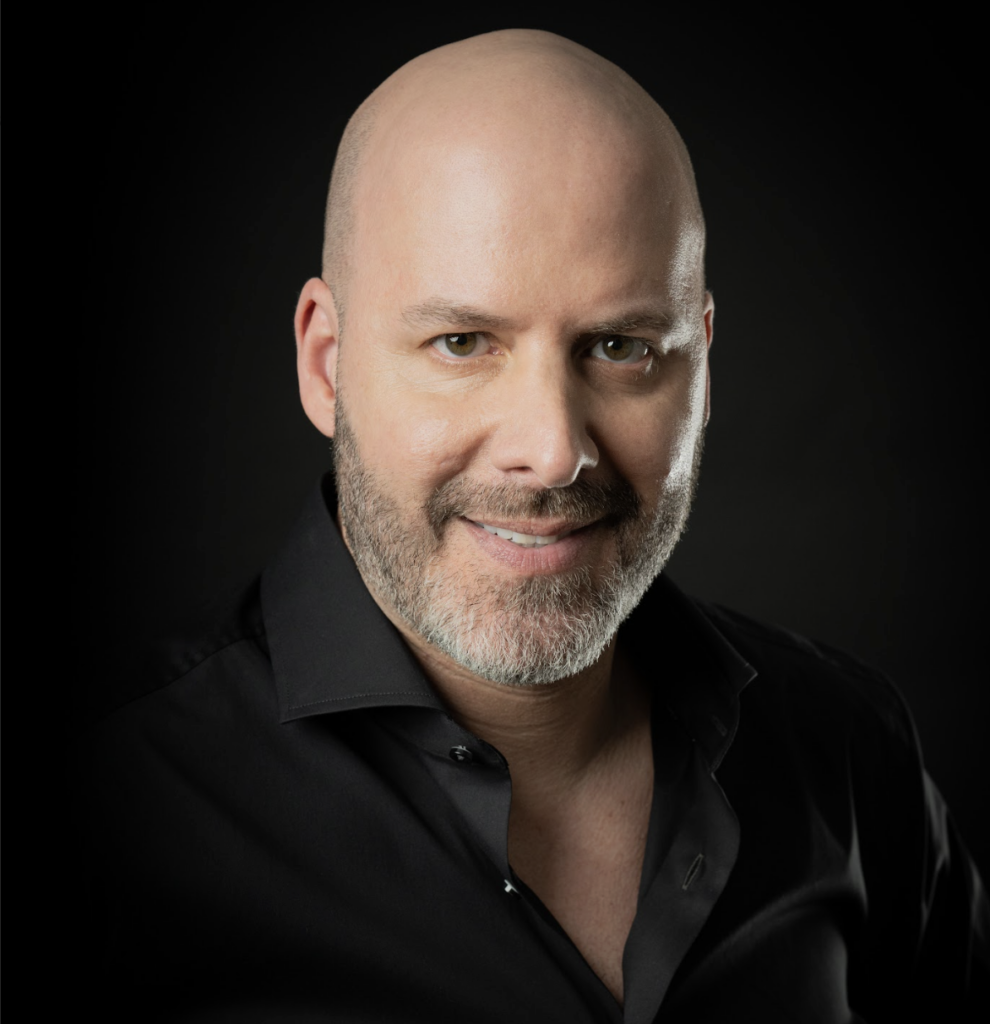
Paul Bramson is a global keynote speaker, elite leadership trainer, and author of Connecting Like A PRO® – Unleash Your Superpower.
For more than two decades, Paul has worked with leaders and high performers inside Fortune 500 companies, healthcare systems, technology and SaaS firms, and global sales organizations, helping them elevate communication, strengthen leadership, drive sales performance, and build stronger connections that drive results.
Over the course of his career, Paul has delivered keynotes and training programs to more than 500,000 professionals and partnered with some of the most recognizable organizations in the world.
His proprietary Connecting Like A PRO® framework reveals the underlying motivators that drive how people communicate, make decisions, and perform when it matters most.
Through his practical leadership, sales, and communication programs, Paul inspires people to raise their game by learning how to connect more effectively with the people around them.
People are naturally wired to do things well. Unless they're naturally wired to be able to emotionally pivot, there's no awareness. The skill part is, do they understand how to do something better?
Underneath order is the communication and structure, underneath complexities of skill development and challenge. Right? So all of those contribute to your ability to connect with the people that you lead.
We talked about emotional intelligence, the self awareness, self regulation, motivation, empathy, social skills. They need work in all of these to be an effective leader. As a leader, your first thing when you wake up, other than your family, of course, you better be thinking about your people because they're thinking about you and how can you better their experience. And that takes training and coaching.
Welcome back to another episode of the Athletic Business podcast. I am your host, Ed Molitor. Joining us today, Ed, is our special guest, Paul Bramson, leadership trainer, keynote speaker and author of Connecting Like a Pro. Paul has spent more than two decades helping leaders and high performers understand something that too many people overlook. Connection is not soft. It is a real leadership skill. And when you understand what drives people, you lead with more clarity, more trust, an exponential amount more of impact. And this is something we talk about, you know, week in and week out, if not day in and day out. Now, Paul has worked with organizations around the globe, reached more than 500,000 professionals, and built his work around helping people communicate and perform at a higher level.
In this conversation, we are going to talk about what it really looks like to understand the people you lead. We'll dive into trust, self awareness, and the motivators underneath. How people respond, communicate, and show up when the pressure is on. And more than anything, we talk about how leaders create stronger relationships when they slow down, pay attention, and meet people where they are. I hope you enjoy listening to this conversation half as much as I enjoyed recording it. Paul, thank you so much for joining us on the athletics of business. I cannot not tell you enough how much I appreciate you taking the time because I know this has been a crazy quarter for you.
It has been. Appreciate you having me, Ed. And what better time than during March.
Madness, Ed, it's funny how you get connected to people and sometimes you find folks in the universe that you aren't even looking for, right? You just stumble upon something. And I came across your book, Connecting Like a Pro. We'll talk more about that. First of all, thank you for writing this book. It's everything that people need. You simplified what I believe is one of the most important skills that leaders can have, and that's the ability to connect with themselves and connect with others.
I appreciate you saying that. I think you and I being the.
Same generation, literally, like five days in.
A week apart in same year for leaders and candidly, for humans, that the communication is so important, both professionally and personally. So I was compelled to do it.
Yeah. You know, it's funny how, you know, things line up and. Yes, it is. March Madness tournament starts this week. As we're recording this. One of the things I've always believed in, course, growing up the son of a coach from the Catholic League and observing. Right. Just learning so much from overhearing and observing that what sets the great coaches apart from the good ones is their ability to understand what makes their players tick and at the same time, their ability to understand what makes them tick and how they respond in certain situations to a point where they can anticipate situations and basically script the response.
You're not talking about emotional intelligence, are you?
By God, I am. Yeah.
So if I can interject here, to me, what you just described is the ability to be emotionally agile, which is something. You talk about it from a coaching perspective. It's a real challenge in the business world today. I notice when I do coaching programs, as I'm sure you do, that it's. People speak from their own optics, how they're built, and they don't emotionally pivot to the person they're talking to, which to me makes it less of an experience from a coaching perspective. But I'd be curious to get your thoughts. But that's how I see it. They lack the emotional agility, and they do.
And why do you think that is? I mean, I know there's a number of reasons, but what are some of the common ones that you've seen?
So I'll go. I'll give you three so. Well, reasons. First of all, they've never been there. There's a lack of an awareness. They've never been taught. I look at three things. Talent, skill, and motivator. People are naturally wired to do things well. Unless they're naturally wired to be able to emotionally pivot, there's no awareness. The skill part is, do they understand how to do something better? Well, how many people have training on hey or coaching on hey. Do you understand how to pivot to somebody so your message resonates with them? Do you know how to use words and phrases? I mean, how often do people get that coaching or training, real time, by the way, and. Or just a program? Hardly ever. And then there's that motivator aspect, which I get into the book There's a. There's an underlying, there's a beneath.
There's a surface thing that we have. There's things that we do that influence how we react, how we communicate, how we respond, how we behave. And it's. You take a look at reasons why people don't do it is they don't know how. They've never been taught. They're not built that way, at least initially.
Let's jump into that motivators piece because when I first read that in the book and I thought about it and I answered the questions that you ask, right? I'm like, man, like, as simple as this seems, there's a lot there. So what are the four motivators, by the way?
There's a lot to unpack. I was with a group of leaders in Minneapolis last week and we did a whole two day full blown sales training with a lot of different concepts. And they said, boy, the underlying motivator one really challenges the workforce, really challenges the sellers that I was working with.
And so when you're there and you're in the middle of the workshop and you look around and you're watching them go through the exercises for the underlining motivators. Yeah. What do you see? Do you see, like, curiosity?
Do you see curiosity? This is what I see. Now I know why my significant other acts the way they.
What it's really about.
Yeah, no, that's typically the. That's. I get a lot of the Dr. Phil type question that kind of goes.
Back to our conversation before we started recording. Yeah, a little bit.
Exactly.
Yeah, exactly.
So I got back to the four motivators.
Yeah.
Need to be liked. Need to be safe. Need to be right. Need to look good. Need to be. Need to be safe, liked. Right. Need to look good. Those are the four underlying motivators. There's a primary motivator that we're all born with. And then you can be a combination of all these. There's secondary as well. These show up situationally. But you have one primary.
You know, a question I'm going to ask you. But we have the coaching performance equation, right? Which is R, which is relationship plus order plus C equals. Right? Your coaching effectiveness, the experience, the performance that you drive. Now, underneath relationship is the connection piece and the psych safety. Underneath order is the communication and structure. Underneath, complexities of skill development and challenge. Right? So all of those contribute to your ability to connect with the people that you lead. I develop that trust. So that relationship, I truly believe is a force multiplier. Okay. I believe you know, the quality, the. Your coaching effectiveness is in direct correlation to the quality of the relationship you have with the people that you're leading. Right.
And the quality of that relationship is built on the connection you've developed?
Yes. It is built on a foundation of trust.
Yes.
So my question for you is, where does trust fit into this? Does it fall underneath multiple motivators? Does it fall under one specific motivator? How do you figure that out?
I would say it falls onto multiple motivators, for sure. You could argue it falls into all four of them. Because if any of these four don't trust you, that means the coaching conversation is not going to resonate.
Right.
So it's going to fall into all of them.
Yep. And what about you as a leader? What your need is, what your motivator is? That need for trust. Right.
So are we talking about the effectiveness of the coaching conversation or just in general?
Let's go in general.
For now, we have to be able to trust the responses we get from the person that we're coaching. And that's built on the connection by the words and phrases that they use to connect with us. Hopefully, they're doing that because each leader has their own underlying motivator. But in the coaching conversation, and I talk about this with the leaders, the onus is on the leader to create the trust with the employee to have the candid conversation. And a lot of leaders, like, wait, well, we have to trust them, and they have to do their part. Of course they do. But you're the one who has to lead it. So you have to model this behavior. You have to show them what being connected means or being connected appropriately means.
I should say, what's it like when someone. And you're going through the motivators exercise, underlying motivators, and they're thinking about their team. Okay. And all of a sudden someone realizes, man, I totally missed the mark. Oh, like, yeah, talk me through that a little bit. What? That. What happens?
So typically, the responses I get are, wow, now I know why they react the way they do.
Wow.
I can see why they push back. Well, I can see why there's a disconnect. Or I can see why they look at me with a smile and they do. With a head nod, and they do something exactly differently than what we just discussed. It connects the dots for them, Ed. The minute they see, wow, I've been handling this or collaborating or leading or coaching in a way that's only for my own benefit, not for the benefit of the person that I'm Coaching. So the minute they see that disconnect because they're not using the words, the phrases, and the behaviors to connect, the light bulbs go off. You get a lot of the head nodding, or you get a lot of this, like, the head's going this way, meaning, boy, I see where I missed. I will tell you.
It's a big digest for the leader's. Ed, I know you can appreciate that anything that emotionally challenges them, especially as they become older and more experienced and more distinguished, it really stretches them to better.
Forgive me. I'm looking something up in your book here. Please, you say something. Throughout my career, I've learned that life offers moments like, we believe in the power moments, right? Yeah. Life offers moments so powerful, so transformative, that they change every interaction you'll ever have. And we're talking about that very moment right now inside your workshops. But you go on to say, for me, that moment arrived when I uncovered the hidden forces driving human connection. How did you get to that point? Like, when did all of a sudden that light bulb go on? You're like, this is it.
This is a great question, by the way. I love when people read phrases out of the book.
As a side note, you can probably.
Tell what my underlying motivator is. Probably talk about that. We'll go at the end. I'll guess your eyes. You can guess.
Yes.
So I would say around the late 2008, 2009, after the financial crisis, by the way, I started doing more leadership workshops, and I started to notice, wow, there's a lot of scripts that go on. There's a lot of processes and procedures. Where's the human element? Like, where is the human element of connection? And that's when I sat down with my instructional designer, who had a lot of behavioral experience. We said, I got to talk about. In order to get people to listen. Isn't there a connection piece that's missing here? And that. That was the light bulb that went off during those programs, Ed, that says, you know what? We need to better from a human perspective when we're coaching, when we're leading, when we're conversing in order to better connect. Otherwise, people aren't going to listen to you.
Or their mind goes off while somebody's talking to them. And then. And they're saying, boy, that really upset me, or that didn't motivate me, or that inspired me or that motivated me. I think there's something here that we're missing. That was the motivation. And then, by the way, that was easy to go from leadership to sales to all types of communication.
Right.
It's an easy transition.
Well, at the end of the day, everybody wants to have, you know, it goes back to, you know, people always remember how you made them feel. That's right. Always. And everybody wants to be connected. Some may know that they're not very good at the one doing the tactic. You know, interesting situation with my daughter. If her teachers don't connect with her, she's done. She shuts down. And I don't agree with that. Like. Right. Like, I don't think it's right. And we try to coach her through it and have conversations about it, but that's it. Like, she don't trust you if she doesn't connect with you. And if you teach her like you teach everybody else, then. Right. And here you teach her or you talk to her or that's even. Yeah, talk to her. Okay, here's the thing that.
Here's the thing I learned through that situation with her about myself as a business leader and as I coach, you know, business leaders.
Sure.
The thing I realized was, like, oftentimes when someone's been doing something for so long, their default behavior and thought process. Okay, is this is what your motivator should be? Because on the surface, that's how it appears. Everyone thinks the way to connect with my daughter is to talk about basketball or soccer or sports in general, because she's athletic and she loves sports. Love, specifically soccer, basketball, and she's decent. I know a few of her teachers listen to this podcast that are probably rolling their eyes at me, but that wouldn't be the first time I had teachers roll their eyes at me. But what often happens is they might not know that connecting with a student or connecting with somebody lead. It's that safety piece. Right. That's what makes them tick.
Like, in other words, I need to know that I can do this if I put in the time. Like, I need to know that it's gonna be okay. Not meaning I'm gonna get an A, but if I don't do well, that's all right. But I'm gonna put the work in so I can do well. Like, in other words, sometimes I finally.
You just described a really strong underlying motivator.
You know that?
Right.
And what would that be?
Need to be safe.
Yeah.
Process, procedure, protocol, discipline.
Yeah.
Guardrails.
And for us, that's the structure piece in the coaching relationship. Right. Like, that's the order, and that's where that need to be saved falls into. But it's. How do you when you work and someone, their default and hey, I'm guilty. I was guilty of it when I was coaching college basketball, like, especially when I was young, like, I thought I was still a player. I thought what made me tick should make you tick. Right. It took a proverbial.
I mean, that's the same as leaders. Leaders take the same with their employees. Yeah, I was a great, strong individual contributor. You should be doing what I do in your work.
Is it hard for people to make that shift and if they do make that shift to like, no. I'm committed to understanding what your underlying motivators are. And I'm going to be incredibly aware as I go through this process with you. Is that a hard habit? Very hard, yeah.
You are rewiring, reconditioning. Now, what's really impressive is when somebody says, I get it. I can see why I do what I do. That's a huge moving of a mountain. Now, the complicated or the comprehensive aspect is to catch yourself in motion real time. To be like, okay, I know why I lean in. Or I choose content over relationship, or I choose relationship over content. When I talk to somebody, it's getting them to better is the hard part. It's like me and my best friend, we constantly talk about this. She's the need to be right. I won't tell you what I am yet. And we say, hey, I said, oh, you just pressed a button here. I need you to change the words or I'm not going to listen. You see what I'm doing? She's like, now she's got me in years.
She has to recondition how she talks. So to answer your question, it's incredibly difficult to pivot or adapt to being better because they're stepping away from themselves. Ed, wait. I'm not going to talk the way I usually talk. I have to talk the way Ed wants me to talk. Think about how complicated that can be, but how powerful that could be at the same time. So the big catch is, wow, I get it. I hear them say that means there's room for growth. Some people are like, I don't see it yet. I got to go home and talk to my significant other about it. And they get verification. That's usually when it happens.
You go back to the needs and you talk about, you know, safety, like, look good. Can you talk a little bit about how as a leader, when you understand the motivators of your team members, all the different types of people and types of underlying motivations that you have, when you can Figure that out. What does that do for an organization that operates under pressure most days?
Momentum. I mean, you create momentum. You get everybody paddling the same, everybody moving the same motion. When you have a leader that shows that type of awareness, I'll go back to the word you've used multiple times. You create that trust. That means that they're going to want to run through walls for you because you are literally adapting your style or your approach to the individuals. And people can see that. People are funny. You ever run on groups like once adults become adults, they don't change? They're not astute? Oh no, they're very astute. They may be difficult, it may be difficult for them to change, but they're plenty aware when a leader is able to use the underlying motivators appropriately, prepare conversations.
So when I know that I'm going to talk to you and I know that you're going to say something that's going to trigger me, but I'm not going to show it creates momentum. It's a powerful skill to get really good at, which most people struggle at.
Let's dive into that for a second because you just said something I think would really resonate with the listener. I know I'm about to go have a challenging conversation. Whether it's cross functionally, whether it's my peers, it's at the same level as me. Whether it's conversation up, I know. And I also understand that I'm frustrated about the way things are and I'm in execution mindset right now. But I'm aware enough to know that I have to dial into the underlying motivators and the things that could trigger me going into this conversation. How do you prepare for that conversation and how do you stay fully aware in the moment? Like when you work with folks. What's that like?
So preparation's key. If I'm entering into a conversation like that, I have to write down knowing this person's underlying motivator. What could this person say to me that will trigger me in a negative way and or trigger me in a positive way? You could trigger somebody in a positive way too, even though triggers a negative connotation to it.
Right.
I'm going to write those things down and I'm actually going to put them in front of me. I'm not going to try to remember them because you just said something. And being a former high performing athlete, you can appreciate this. You get pressure tested quickly and underlying motivators, your underlying motivator will show up immediately. When you're pressure tested, I call it the kryptonite or your shadow shows up very quickly. Meaning, and I gotta tell the audience this, I'm gonna need to look good if anybody's wondering. And I know, I'm sure you're not surprised, I know that somebody can say something to pressure test my brand the way I see myself. So I have to write these things down. I'll put them in front of me. It's easier virtually than it is in person, by the way, Ed, to put it in front of you.
I know that I can get pressure tested. And I have to remind myself, don't go there, because once you get pressure tested and the kryptonite of the shadow shows up, the trust will end in that conversation because I'll go into defense mode as it need to look good. So the preparation is absolutely key. Hope this is answering your question.
No, it absolutely answers my question. So when you do get pressure tested though, right, like, you know it's coming. I relate this to, you know, when you're coaching, you walk out, you see the three officials and you're like, here we go, or hey, you know, Chris and Luther, they're good dudes. Bob on the other hands, a piece of work. Well, who are you focused on? The rest of the game? You're focused on all Baha's mistakes, right? Instead of understanding, this is what you're getting, this is the reality of the situation. How can I take two minutes here and prepare myself for what's about to happen?
You know, you step away from, you're stepping away from what you would normally do to better is what you're saying.
Yep, yep. Well, and here's where I was going with that. Right? So now the pressure starts, the game's on the line, last three minutes, and all of a sudden Bob blues a call, but that call is magnified in your mind. More than three he blew in the first half. You know, it was a back and forth game, but preparation, to your point, so critical to be able to prepare for that moment. Now, do people get frustrated when they really buy in? They're focusing on the, you know, the underlying motivators. They're dialed into their E. Okay. Like they've never been before. And things don't quite go the way they want to the first few times. How do you talk to them about persistence and resilience?
You know, when you're talking about things like emotional intelligence and underlying motivators, like, how do you talk to them about that?
You talk about how you Talk to leaders about that.
Yeah, yeah.
So one of the things that I talk about is you want to use your superpower of your motivator. And sometimes people are going to pressure test you. They're not going to do exactly what you want them to do. They may say they're going to do something, it doesn't happen. You need to come back to that conversation. You need to use your poise, your composure, you know all about those characteristics and you want to focus on what are, look at your motivator. What are the superpowers of your need to be right, like safe or look good. And the second you get away from those are the superpowers. There's a list of them. The second you get away from those and you start to get into your shadow, your kryptonite, that's when trust can break. You stay the course is essentially what's happening.
You stay the course with the things that work for your motivator perspective. It's when the other things start to show up, is when that trust breaks. And then that's where the coach is going to really hit some speed bumps big time.
The Coaching Effects Summit is not just any leadership conference. It is annual event where high performing leaders come to grow through research, relationships and real coaching work. Join our co effects team and hundreds of business leaders on May 5th and 6th at the brand new to Nesca center in Orange, Omaha, Nebraska. Two days packed with powerful keynotes, interactive sessions, meaningful networking and a night at let it fly that you won't soon forget. This year's theme, driven by data empowered by people, is grounded insights from over a half a million coaching interactions revealing exactly what high impact coaching leaders do to drive performance. Here's what you can expect. The latest coaching of leadership research, framo and informal learning opportunities, a supportive community full of networking opportunities and absolutely just a ton of fun. Curious.
Yeah.
Have you ever had someone raise their hands at a workshop and be like, this is great, I love this, but for me, my underlying motivators are reciprocal. How do you respond? What do you mean by that?
What do you mean reciprocal?
In other words, I'll give it to you, but I need you to give it back to me.
Well, there's only two underlying motivators that would say that right? And look good. Those are the only two that would ever say that. So if they said that to me, I'd be like, okay, so who's that benefit, you or the person you're coaching? And they're going to be like, well it should both. Affect both of us. No, that benefits you. Remember, you, as the leader, have the onus to create that connection and that trust. You have to stay as the leader. You could say that to someone. I could say to you as. Let's say you were the employee. Listen, I'm gonna need to look good. I need you to use words and phrases like this in order for me to want to listen to you when you talk to me. How do you think that's gonna go? Not well. Not well.
So I will typically push back with finesse on this to say, let's unpack what you just said. Why do you need that? In order to have an effective coaching conversation. That's what I would say.
Yeah. Now let's. I'm gonna ask. We could talk for hours and I know.
Yeah, Yeah. I love it. I love it. I love these questions.
One of the things that I learned, Clifton, Strength finders.
Yeah, yeah.
Working with.
What's your number one? I know. Do you remember your number one?
Do I remember my number one? I have it right up there. Transformation.
That's a good one.
My value.
It's not as good as mine, but it's good.
Leader, Leader. Belief.
Very good.
Focus.
Yep.
Individualization.
Nice.
And achiever.
Nice.
Yeah.
You know, my. I'm very proud of my number one. I'm proud. Who. That's funny. It's three. Maximizer.
Wow.
I'm sorry. Maximizer is not in your top five. I'm surprised.
And I appreciate that. I'll take that as a compliment. But here. Yeah.
I love this great one. I love it.
So I consider myself a pretty positive person. So the first time I take Clifton Street Finders, it's like number 15. I'm working with Maureen. Maureen is amazing. And I said, maureen, bullshit. I go. I don't. I just got lost on this. She goes, what are you talking about? And Maureen is the best. And I said, I'm a very positive guy. But positivity is number 15 for me. Like, I don't get it. And that was an aha moment for me. She says, because you're just not leaning into that right now because you're really in execution mode. This is the first time I took it right. Like, these are my newer ones. That was when I started the business 10 years ago, 11 years ago. And then we retook it. Because over time, your strengths, certain strengths will rise to what's going on in your world.
My question to you is, does that happen with the underlying motivators, with people? Right.
Does it change?
Not. Does it shift A little bit. Right. Does it shift? Like.
Great question. You ask very astute questions, by the way.
Well, I appreciate that.
I actually mean it. Not because I'm on your podcast. I actually.
You do sound surprised, by the way.
I'm not surprised. See, your primary underlying motivator never changes, but other motivators can show up situationally. Like for instance, you could actually have your secondary become your primary at work, but your primary shifts back differently when you go home. So it can show up situationally different, but your primary is always the primary. You just pivot or adapt as you get older.
I'm gonna ask you a question now that we haven't even talked about. We may have a few months.
Nothing's off limits.
Have you. Have you ever read the book Legacy, what the All Blacks can teach about business in Life?
No.
It's an amazing book about the New Zealand All Blacks team and when their culture went to Helena hand basket and know they had to rebuild it and go back to what their purpose was and everything. It really is a great book and I will send you a copy of it. But inside of the book they talk about the significance of authenticity and what really. As I started to read it, and this is early in the days of building the business, I realized like I'm reading something that significantly impacts these rugby players, the greatest rugby players on earth who are nuts, who are crazy. Right. In a good way. I mean, you know, we love guys wired like that, but if they can talk about what some people think is a soft skill, authenticity.
So I started to really dive into how can I implement that into the athletics of business and the Molotov and things like that. And now cofx. And what I started to realize, the three things that kept showing up in authentic people for me was this honesty, your ability to be honest with yourself and with others, but really your ability to be honest. Okay. Number two was integrity. Not morality, but integrity. So you do what you say you're going to do, when you say you're going to do it to the best of your ability. How you said when. Right. And then the third piece, and this is where I really want to dive into this with you because I think it's so key with the underlying motivators in discovering what makes your people tick on your team is vulnerability.
Like, how do you get leaders to understand Sometimes the way to figure out underlying motivators. Not sometimes. 90% Of the time, I would guess is you got to ask the questions that you don't know the answers to about them.
You talk about asking vulnerable questions to them or you being.
Being vulnerable? Just admitting, like, hey, I listen, I'm curious about this. Like, how do you feel about this? Or how. How do you like me to show up as your coach?
I love that question, by the way. Now, the vulnerability is a fascinating one. Which one of the underlying motivators of the four do you think shy away from vulnerability? I'll give you a hint.
It's not going to be looked good.
Oh, yeah, it is.
It is. Yeah. Yeah. But see, I consider you a vulnerable person, so that's why I.
What about me comes across as, wait, candid or vulnerable? There's a difference.
But you ask great questions, too. Like the conversation.
Does that make me vulnerable?
No, that's true. It doesn't. But I bet. I love.
I love the. I love what you talk. This is a great subject.
I do bet I could get you to a vulnerability piece with certain questions.
I think you could. Because I trust you. There's a trust. Because I trust.
Trust.
That's right.
Why don't we. Why don't we try an example? Right. Okay. What was the biggest mistake you made as a business leader and what did you learn from. It means I know you learned, and it doesn't. Let me rephrase that. So you don't have to think. Not what the big. What was a big mistake that you made? Like a significant mistake you completely missed. Right. Like, so an early.
Early. So I've had. So I'm celebrating year 24.
Congratulations on that because that is amazing. Thank you. That's a lot.
Thank you. That's when you and I were younger.
Well, especially 24 years into, what, 32. You turned 32.
So this goes back. This will go back to the early stages. I'm thinking about my motivator. Got in the way when I was young because it was all about Paul's performance and not about the experience. So I learned very early on, as though I love performing, which is one of the reasons why I went on my own. I love speaking in front of audiences. I think you know this about me. I've probably figured it out. But when it became the Paul show. Not about the experience.
Yeah.
I could turn people off very quickly, and I had to learn pretty fast. I lost some big clients early on. Very big.
Was there. Was there a watershed moment or was this kind of a culmination of you, like, reflect to be like, I did this then and that happened. I did this then. Or was there something significant that happened?
It was a culmination. It was a Culmination. It happened a few times and I thought to myself, I need a pivot or this is going to be a problem. That's hard for me. And it stems from my sarcasm. It's the Boston, Ed. It's the Boston.
You love sarcasm though, right?
We definitely love it. Chicago, you can appreciate this, but it's a double edged sword. Making jokes about people or humor about people. It could be funny from a comedic perspective, but it could hurt somebody's experience.
Yeah. And I can see that as we both somewhat joke, tongue in cheek about how we're getting older, we're getting wiser,.
More finesse as we get older. More finesse?
What's that?
More finesse as we get older.
My wife would argue with you.
Fair enough. Well, social and professional can be different though.
Yes, go ahead. But you don't like the thing that I learned over time. And I wish I knew this when I was in my 20s, as a college coach in my 30s, what I was saying to a kid at the moment might not technically have been wrong, but the how could have been complete.
Oh, yeah.
Especially if I didn't know what was going on in his world that day. Like I might know. Like sometimes I think we forget as leaders that day really matters. Like I might know everything about you. I might not know. I might know all your struggles at home, all your successes, what's going on in your life. But if I don't take time to understand what's going on now, like in this moment, then I really can hurt you.
That's really interesting. And think about when we started working in the early 90s. I mean, that was an awful. Nobody talked about any of that.
No. Yeah, no, insert. What's up? Awesome.
Ed, remember, leave your personal life at the door.
Yeah, check it at the door.
If we have a complete dichotomy now,.
I don't think there's work, life, balance.
I think it's alignment, integration, alignment. I totally agree with you. You know, Ed, you said something. It's really fascinating is. And this is a whole different topic. You know, we put people in leadership positions that aren't ready.
Yes.
Emotional, emotionally. We talked about emotional intelligence, the self awareness, self regulation, motivation, empathy, social skills. They work on all of these to be an effective leader. And certainly the underlying motivator is just. It hasn't even crossed their mind yet. And we're putting people's livelihoods in their hands. I know you can appreciate this. So I'm not going to pontificate. It's a. Being a leader.
I always Say it's great for the listener.
As a leader, your first thing when you wake up, other than your family, of course, you better be thinking about your people because they're thinking about you and how can you better their experience. And that takes training and coaching.
Ed. It does, unless you.
And why that way?
You just said something that I wanted to get to, so thank you for reminding me. At Co Effects, we have an amazing emerging leader program. When I first started reading the book, I'm like, God, these underlying motivators, like we have all this structure around as an emerging leader, here are the things you need to learn about leadership. But right, like leadership coaching is there's an art to it and there's a science to it. And part of this, although there's science about is the art of coaching, right? So as you are an emerging leader, as you are thinking through and trying to figure out what your career path is, you can still on a daily basis identify your teammates, underlying motivators, your boss's underlying motivators, your cross functional peers, underlying all of it.
I don't know that we talk about that enough in terms of hey, what's the obligation you have? Your organization is giving you all these things to get you ready for that next level. What's your obligation? What's your commitment every single day to exercise this muscle, right? To work this muscle out and understanding others underlying motivators. Can you talk into like what that would do for someone that might not be in a leadership position but how that would help them become a better teammate.
So assuming they understand the underlying motivator,.
We're going to assume. Presume. We're going to presume we don't assume because you and I certainly aren't asses, most of us, right?
That's right. We'll presume they have the knowledge base. Listen, when you are somebody that converses in a way, collaborates in a way, acts in a way where your conversations connect with all different types of people, your trajectory in life is straight up. Straight up. If you are somebody that rubs people the wrong way, doesn't get along with everyone, can't find a happy medium against the grain, you are going to hit a ceiling. So to your point, if you are somebody, a strong, high performing individual contributor that wants your career and your life to keep evolving in the right way, in the right direction, you want to start to assess people that you work with, both your peers above you, whatever it may be, under assess their underlying motivator, know what resonates with them to be sure you're not going against the grain.
Because when that happens, people say to themselves, especially people in leadership positions, Ed gets it. Paul gets it. And the reason why they're saying that is not necessarily because of what's coming out of your mouth. It's how you make them feel. This goes back to what you say, how you make them feel when they converse with you. And when you converse with a need to be right, like safe and look good, they all feel something different. I want to be clear about something. You can use the same phrases with them, and they all feel something different. So if you're somebody that wants to move ahead in the business world and become a leader someday, by the way, whatever that means, you want to get good at this.
Yeah, yeah. Let's say you're struggling with two underlying motivators. Right.
Which ones do you think are the toughest, by the way?
Oh, that's a great question.
And by. When I say tough, they're all very good. They're all very strong, and they all have some tough kryptonites, but some of them from a collaboration, from the need.
To be liked and the need to be right.
Okay, so you got one of those right, by the way.
Well, no, when I say. When you say. I'm sorry, I took your question, because what I was going to ask you is.
Go ahead.
When you said which ones you think are tough? So I thought you meant, like, to.
Go, oh, very well, we can talk about that if you want. That's.
Well, that's what I was gonna ask you. So you consider those conflicting underlying motivators, or do you consider them competing? Like, oftentimes in life, we'll be in a situation that we have competing values. Like, we have two values that want to show up. You know what I mean? What happens when it's the motivators? Is that a conflict or is it just they're just pulling you?
Can I add this into this conversation? I really like this. There are some combinations that work really well together, and there are some that can become very difficult. Is this in the same vein, Ed?
Yes, it is. Yes.
So I always ask audiences, raise your hand if you are a need to be liked. I just did this in Chicago, 800 people. I said, raise your hand. I got a group of, let's say, 100. Raise your hand of the need to be liked. How many of you are married to or have a significant other that are need to be right? And they raised their hand. I said, okay. I also want you to raise your hand if how many somebody Tell me that they. There are times in a given week, a day or a month that they upset you and you say absolutely nothing. Raise your hand. The reason why I bring this up is, by the way, need to be liked and need to be right can have a healthy relationship. The issue is need to be liked, stay quiet.
And a need to be right might lean in and they don't stay quiet. They know they do not. They do not. And they can think everything's okay and they need to be like. So it's a very challenging situation, but it doesn't make a need to be right a bad human. By the way, this is not. No, it's a very difficult dynamic. By the way, I said raise your hand. I'll give you another difficult dynamic that can be incredibly. Can be a power couple. But a very difficult dynamic is need to be right with need to be look good. Because a need to look good has a sensitivity to how people talk to them. And this can be very toxic at times, by the way, I'm talking about even a business relationship, Ed. But if they.
To your point, if they talk, they coach each other, they know what better looks like for both. It can be very healthy. But that's not a. How conventional is that, Ed? Hey, hey. Let's have a. Let's have a healthy dialogue to see what works for me and what works for you. It's very unusual in life. It's very unusual.
Right.
By the way, need to be safe with need to look good can be great. Need to look good with need to be liked. Great like and like great right and right tough.
There's only one person can be right if they're not saying the same thing.
And I want to say something about the need to be right. The tremendous attributes, very bright, pragmatic, linear logics. Listen, I need all the need to be rights out there to know something. Thank you for building my bridges, the airplanes, nuclear plants. By the way, I need. I spoke to the University of Kansas about the engineers. Thank you for doing what you do.
And I'm sure they enjoy that too.
I'm sure that they did after they said Rock Chalk. Jhawk. Yeah. But I will say this. I will say this. They also agreed that they. They can be tough in conversation because they choose. It's not a malicious intent. They'll choose content over relationship. Meaning if you say something, Ed, and I don't agree with it, I'm going to lean in quickly and not worry about my relationship with you first. Where the other ones will worry about relationship for like Lean to be like will worry about the relationship first before they would lean in about the content.
Yeah, yeah. It's interesting. There's so many things running through my head personally, professionally, just so, you know, socially. The thing that I, I see people sometimes struggle who are genuinely great people and they genuinely care about their team members, their peers for sure. But damn it, they want to get things done and they want to get things done now. And sometimes they get pushed to the extreme where that underlying motivator. Okay. Might come up as a little bit more brash in their delivery in a conversation.
They are pressure tested and that's when it comes up. You're right.
Yeah. And then the other folks see that as a threat. They see it as an insult. They see it as, you know, not communicating in a positive effect.
Correct, Correct.
When the reality, what I've tried to do with folks like that, like, okay, there's a reason that's not normally how they respond. There's a reason in this moment and with this topic and in this environment that this is happening. What is that? And then I've got to think it gives you a competitive advantage if you understand what that person's underlying motivator and secondary motivator is.
You talk about the person that was pressure tested. Yes. So agreed. One of the coachings that I give to people that can get that way, because I can get that way at times and I'm sure, Ed, with your success, isn't it that can get that way. I use analogy. That leader that gets pressure tested, that reacts that way, needs to do a self reflection and catch themselves before it happens. So there's some self awareness and self regulation involved. But the example I use is if I'm on a connecting flight and I land and I get to the gate where I need to get to and the door is closing while I'm right there. I'm about to lose it. Anybody with me on this?
Ed?
I'm about to lose it.
Okay.
It's happened to me a few times. Not a lot, but a few times. I do know how I can get. When I get intense, what I say to the person that I'm about to talk to about that incident is, listen, I need you to hear me out about something. This has nothing to do with you personally. I'm not attacking you. My intention is that you just hear me. So please vet through my delivery and understand my message. That's all I want you to do. And then I give my message. My point of saying this is sometimes we are pressure tested Sometimes if we let the audience know, listen, I'm about to get intense about something, but it's not about an attack on you personally.
I need you to understand my intention with this message and vet through the delivery because some of us, it's hard when we get jacked up. It's hard. So my coaching to that leader would be that. But obviously they need to work on their reaction. But sometimes it's because people don't understand the intent of what's going on.
And it's interesting you mentioned the word intensity. You mentioned the word intense. And sometimes intensity can be misconstrued when internally your intent is correct. That's what the way I think about it as a leader. Like we talk all the time about being the face and voice that your team needs or in the face and voice that situation needs. Right. We operate within your leadership team. I mean this is amazing. Now one of the things going back to when you talk to the group of engineers at Kansas and your time in Chicago, you give a 20 question assessment. I mean your keynotes. This one of the many things I truly am fascinated enjoy so much about you. Your keynotes are customized like you're speaking. Even if it's 800 folks, you're speaking directly to the results that you saw inside of that 20 question assessment.
Talk to me about how big of a difference maker that is for you.
Oh, it's a unique part. I call it a 360 degree experience. You're going to take an assessment before you walk in. So it creates a buzz. Everybody gets talking about some people. Who do you think disagrees with the results by the way? Which underlying motivator.
Whoa. Which need to be right?
Yeah. So I always thought, Reggie,.
If you need to be right, really that would have been a blow if I got that wrong.
I knew you were going to get it right. That's why I asked you. It creates that buzz. So the thing that allows me to do in my keynote because the other thing that makes it somewhat different is I love to engage the audience from the get go. It's not a one way conversation. So the assessment allows me to assess the audience very quickly and then I get them to raise their hand and I start a dialogue that way. That allows me to get into the Connecting Like a Pro, Unleash youh Superpower. So the assessment is the real. It's the assessment, the keynote itself with the education and the interaction. Then of course the Connecting Like a Pro book.
Let's talk about applying this in real life to folks that are listening. Our listener avatar is, let's say you're new head of sales. Okay. And you have a new drug launch. You build out a commercial team, Bring the team together, and you want them to get to know each other intimately. Like you really want them to take time. Not social hour, not over just cocktails or dinner.
Those.
Those things are important. But you want to do things intentionally in your half day together, your full day together that you can also carry over when you're back to the office. Okay, what are some of the things you recommend that these leaders do?
I mean, they need to be observant. You're talking about how they would discern.
But how can you get that team connected with using connect like a pro and the underlying motivators and the other things that go into it? Right. So if a leader picks up, and this is why I'm asking, leader picks up this amazing book, right? Yep. Are there things in there that they can take from. I know the answer, obviously, the things they take in there and they say, okay, you know what, man? This is what I want to do. I'm going to nail this with these guys.
I would ask them questions to discern their underlying motivators, to get them talking about it. So if they're reading the book, you talk about the leaders, the leader reads the book, and the leader doesn't say, hey, everybody, I want you to read this book. Although that would be great. That would be great.
And I know where you can get some copies.
Yeah, I know exactly where to get it. I would say the leader needs to start modeling this. Like, ask them questions about, hey, what's more important to you? Like, there are life questions. They could ask them, hey, processes and procedures, those more important to you, or asking things about how important is their brand to them, or how important is relationships to them, or how important is somebody. How important is it that somebody is logical and shows proof on things? I think they need to start asking questions to their individual employees to get them thinking about this. Because here's the thing, Ed, in, especially in the life science, they got to work with healthcare providers, by the way. And with healthcare providers, there's going to be two big underlying motivators. There's actually three Safe, like and need to be right. Especially with the physicians.
I would say the leaders need to start having the conversations with them. But also being super observant, hey, I noticed you just did something or you just said something. Would you classify yourself as. They can even start throwing out the underlying motivators do you think you have a more of a tendency or a proclivity to be right about something like digging on content? Is that important to you? Or hey, let me ask you. I noticed that you do a lot of Instagram, a lot of social. Your brand's important to you. Tell me about that.
Yeah, yeah.
These are conversations we would have never had the 90s, by the way.
No, no.
Not even early. Not even early 2000s. No chance. I think to me just start tapping into that.
Yeah. I have so many more questions for. But I have one specifically because we're out of time.
Let's do it.
But I want you before I ask that question, please share with the listener where they can find out more about you, where they can find the book, where you're socially, what your website is, things like that. Obviously we'll put it in the show notes as well. So.
So website for sure. Paul Bramson.com website has everything from the keynote, the training, lots of information also about the book. The book is on Amazon, of course there is any hard copy, soft copy, Audible. You can get any. You can get the audible obviously on Amazon, but there's also audible on 85 different platforms.
Did you read the book yourself on Audible?
That is it. I bookended it.
Okay, that's perfect. I absolutely am not reading my book. There's no.
Oh, can I tell you.
Can I listen to this voice for you?
Got a good voice, Ed, by the way.
Well, I appreciate this.
So the reason why I didn't do.
A face for radio, though. No comments.
I bookended it. It's really hard to do. Yeah, really hard to do. Like, I'm pretty good communicator. That is a different craft, Ed. But I bookended it.
That's awesome. And we're gonna put. We're gonna put the links for your. Your YouTube speaking clips too.
Yeah, YouTube. And by the Instagram official Paul Bramson, please. Building that LinkedIn for sure under Paul Bramson. It's all out there.
That's awesome. That is so great. So the last question.
Yeah.
Me, when I say when I hear. Need to be right. Need to be liked. Right. Need to look good. I do not take that as a negative connotation, but there was a time in my life when I would have.
Which one?
Any of them. Like you're telling me what I need to be or I'm trying to.
I've heard this, by the way. I've heard this.
Oh, I'm sure you have. And I'm sure not.
Oh, yeah.
Times either. Yeah. How do you? Or how do I get to a point like, I love where I'm at in my life now? Maturity, I think they're spot on. But when someone does push back and I like it, I get that I qualify for the need to be right. But, God, I swear to you, I don't feel like I always need to be right. And that's the person that always needs to be right.
But how do you. The fact that you just said that. Yeah, they just said that.
Now they think they're right. That they don't need to be right. Yeah. So how do you handle that? How do you handle that conversation, though, when people take it as a negative?
Oh, so first of all, the way you answered it is perfect. About. As you've gotten older, we've matured. We own things that we need to own. Listen, I say to them, what bothers you about that? I don't like. I don't like the label. Okay, take the label away. Do you feel like you fit certain characters? Since I do, call it whatever you want.
I say call it, you attack whatever you. We're gonna white label this for you. You call it whatever you want. You call me, have those characteristics.
But I'm gonna say. I always say this, but I say this to you. Own it.
Own it.
Get better at it. Okay, yeah. You don't like to look good, fine. Call whatever you want, I said. But own it, because that's who you are. I said make sure you maximize. You leverage the strengths, minimize the kryptonite. I don't care what you call it. My goal is not to label you. My goal is for you to understand you so you can be a better you.
I love it. And that's a great way to wrap.
It up, by the way, Ed, before I forget, which one of you. We have to talk about this.
Oh, I'm not going to guess. You were going to guess which one I am.
I'm a guru at this. I don't know if I could get this right.
Well, I would like to think so.
I think so. You have some interesting characteristics of two, for sure. I don't think you need to be right, by the way. I don't. I think it could show up situationally, but I don't think that's your primary. I think you're one of two. I think you're either look good or safe.
Yeah. And I think part of that. Safe.
Do you agree or disagree? Do you agree?
No, I agree. I do agree. Because here's the thing that need to be right. I Transferred over into a need to be understood, which I think fits.
Is it more important that people understand you and more people that people respect you?
Respect. But I think that's a little.
That's a look good comment.
Yeah. But in terms of the business execution piece, in significant conversations that have something to do with our output, that is definitely a need to be understood because I put it on me. Maybe I'm not communicating it the right way. Maybe I'm not articulating my ability. Maybe I didn't approach this. This conversation the right way. Or to your point, maybe I wasn't as prepared emotionally as I should have been for the triggers. So then when I walk away from a conversation and don't think that they understood what I was trying to ask or what I was trying to say, then I feel like I, you know, I didn't do my part.
But you've been a high performer your whole life. High performance is important to you, correct?
Yeah.
And by the way, I look at the way your setup is. It's perfect. Got the well groomed hair.
Well.
And you would like.
We're not going down that path right now. But I have something here on my wall that fits so well into this. It's self awareness is the competitive advantage. No, competitive. It's the. To me, it is the number one competitive advantage.
It is. I gotta throw in one thing, though. Self awareness with self regulation is the competitive advantage.
I would argue. Man, I gotta get that repainted.
I would argue.
I would argue.
This is great stuff, Ed.
Great stuff. Paul, I appreciate the time. I appreciate you, my friend. And you know what? We're gonna have to do this again because there's still a lot on the table that we should be talking.
Love to. Love to.
Thank you for having me on that.
Appreciate it. Thank you for listening to the athletics of business.
Be sure to give us a rating and review so we know how we're doing. For more information about the show, visit.
Theathleticsofbusiness.com now get out there, think, act.
And execute at the highest level to unleash your greatness.