

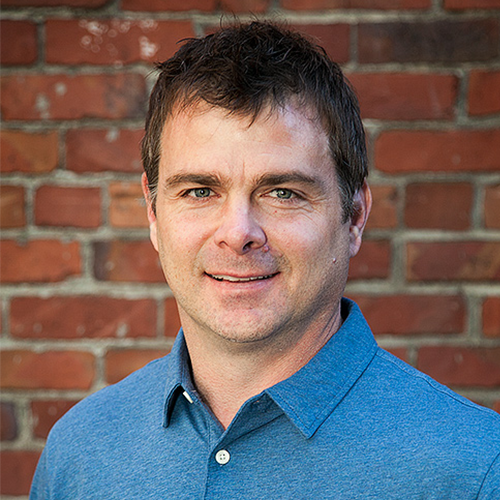
Dave Sharkey has been a full-time real estate developer for the past 20 plus years and owns and manages a portfolio of 285 apartments in Seattle, WA. Dave has an intimate knowledge of the construction trades having acted as the general contractor for the first 16 years of his career. The focus of his projects has been the value-add rehabilitation of existing apartment buildings. The renovations are all extensive and they typically equal the cost of purchasing the building and always include new bathrooms, kitchens, plumbing, and all systems. Dave has added units to existing buildings 10+ times and has installed 20 new foundations under existing buildings. As the scope of the projects has grown, Dave has shifted his focus to development analysis, constructability review, and construction management. Dave visits the construction sites on a regular basis throughout the project to ensure that schedules are met and that construction is carried out as planned. Dave has raised capital for the last two micro-projects as well as for Anew Holdings I, LLC, a real estate fund designed to build 550 micro-apartments in core neighborhoods in Seattle. The six syndications he has managed are listed below along with one, solely owned 18 unit that was purchased in 2005. The properties are currently 100% occupied across all of the properties. Dave has also recently embarked on his first ground-up project on a prime corner lot at Broadway and Jefferson on First Hill.
Welcome to the Athletics of Business, a podcast about how the traits and behaviors of elite athletes and remarkable business leaders frequently intersect. The real stories and hard lessons to help you level up your leadership and performance. Now your host, Ed Molitor.
Welcome back to another episode of the Athletics of Business podcast. I am your host and CEO of the Molitor Group, Ed Molitor, Molitor and man am I fired up to bring you today's special guest, Dave Sharkey. Now, I have no option when I describe our friendship over the years but to date ourselves. Because Dave and I first met 35 years ago sitting in Jim Kohler's business exploration class at Palatine High School. It was our freshman year and it is amazing to me that today we're sitting here talking the Athletics of Business podcast, my podcast about leadership and high performance and all the great things that we'll be talking about, which I'll get into in a second. But before I do, let me tell you a little bit about Dave and what he's done and what he's doing.
So Dave is the co founder of a new apartments in the greater Seattle area as well as a principal in Sharkey Properties which he has held since 1997. He is also the managing partner in a few other LLCs. To go into more detail, he's been a full time real estate developer for the past 20 plus years and he's owned and manage a portfolio of 285 apartments in Seattle, Washington that he's built over that period over that timeframe. Now Dave has, and you'll get this as we talk on the podcast, an intimate knowledge of the construction trades. Having acted as a general contractor for the first 16 years of his career, the focus of his projects has been the value add rehabilitation of existing apartment buildings. Really cool properties, the renovations.
Now they're all extensive and they typically equal the cost of purchasing the building and always include new bathrooms, kitchens, plumbing and all systems. He's added units to existing buildings over 10 times and installed 20 new foundations under existing buildings. As the scope of his projects has grown, he has shifted his focus to development analysis, constructability review and construction management. Because remember, these are renovations, right? So he visits the construction sites on a regular basis throughout the project and ensures that schedules are met and that the construction is carried out as planned. Here's something that's extremely impressive, a long line of impressive things about Dave, but he has raised capital for the last two micro projects as well as for a New Holdings LLC, a real estate fund designed to build 550 micro apartments in core neighborhoods in Seattle.
The properties are currently 100% occupied across all of the properties. He has also recently embarked on his first ground up project on a prime corner lot at Broadway and Jefferson on First Hill in Seattle. Now, what are we going to talk about today? We don't talk about all real estate. We talk about his projects, we talk about the process, we talk about the mindset. But we're going to go all the way back to after Dave left Palatine, he went on to play football at Dartmouth and then when he got back to Chicago and ran a painting company, then ventured out to Atlanta and got into the Italian ice business. And we'll talk about through those experiences, how he grew through adversity. He learned from failure. You know something I've always admired about Dave, he always earned everything that he had, right?
I mean, there's nothing was ever handed to him, including in football. And he's paid his dues and he's paid his dues in his business and in the business world. And we'll talk about that. And we're going to talk about what Dave's driving force was. I mean, sometimes when you watch Dave operate, it's almost as if he has blinders on. And that's intentional. And that's not to mean he locks everything out that goes on around him. But what he does block out is the naysayers. Because all of us have experienced at some point or other in our careers where even those closest to us, the ones that love us, our family, our great friends, doubt us. And that's when self doubt can creep in, can almost be a blind spot. And how Dave battled that and stayed focused and stayed dialed in.
Another thing I always loved about Dave was his edge. He always had this chip on the shoulder to the point where you might think he's a jag, which he's not. All right, He's a great person. But as we've gotten older, right, our purpose change and things that fulfill us change. And Dave talks about how he's able to maintain that edge, that competitive advantage and his ultra competitive industry while being able to embrace those things that fulfill him now. So I hope you enjoy listening to this half as much as I enjoy recording this. Dave and I, friends for years and just a great conversation 35 years later. Dave, thank you so much for joining us today on the Athletics of Business podcast. I cannot tell you, well, two things. A, how fired up I am to have you and B, this is long overdue.
Thanks for joining us, Dave.
Great to be here, Ed. Thanks for the invite. Interested to tell you my story.
Well, let's jump right into it. Tell us what you are doing right now with the new apartments and we're going to walk it back after that and kind of reverse engineer your journey. But let's start with what you have going on right now out in Seattle.
The last five years we've been building micro apartments. And out here in Seattle we can build units as small as 80 or 100 square feet, as long as it has a sink. And that's not what we're doing. We're building units with small kitchens, full bathrooms and average a little under 300 square feet. We're trying to create as much of a real unit as we can in a small space in these locations. Everybody knows location is the most important thing in real estate and Seattle's a great location, but for these type of properties where the amenities in the community have to be right outside the door and there's no parking requirements and so they really have to be very close to transportation. Where we have about 600 micro units now across nine properties and they're all within three to seven blocks of Amazon World Headquarters.
So it's even more location centric.
What part of someone who's not familiar with Seattle and where the Amazon headquarters are, what neighborhoods are those in those micro apartments?
Our apartments are in First Hill and Capitol Hill, which is anywhere from two to seven blocks from the central business district. And Amazon World headquarters is just part of this cbd. And then also a little north of the CBD area that's called South Lake Union and Denny Triangle. It's just a little north of the main downtown like business district.
Okay. And you and I talked about this, you know, prior to the podcast. Obviously a lot of food, a lot of nightlife in the area. But what was it that really hit you when you realized there was a demand for these micro units in those areas?
Well, we're renting a boarding house on this Capitol Hill, a rooming house, boarding house that we had just purchased and we had a couple units that had full bathrooms and I was still doing my own showings at the time and getting all the calls. And I remember telling people that I got 300 voicemails over like a 30 day period for these $950 entry level units. When an average one bedroom in Seattle at the time was 17. Now it's like $1900. And so that's when it kind of hit me in the face that there was this demand. And at the same time, the city was phasing out the ability to build many of these small units.
And we've found a little niche, kind of a hole in the code, say, where we can still do these very small units, where most of the market is now producing a slightly bigger version, 350 to 450 square foot, that costs 30 more, and it's just less affordable. So we're trying to capture the, say, the high end of the low end, if you will.
Okay. How hands on are you? I mean, you were someone that always had a hand in everything that was going on, whether it was as a quarterback. I mean, you knew every single thing that everybody was doing. How involved are you in each project?
You know, going way back, I did my own work, and I say on my first project, I did all the labor, and then I. I paid for the expensive stuff. And then I figured out that I was going to pay for the labor. And then for the next five or seven years, I was doing my own plumbing and electrical, and I was my own general contractor until 2010, once I stopped swinging the hammer. And then over the years, generally phased that out. We started hiring a larger contracting company when our projects got bigger and it just moved more to management. But until five years ago, I was still doing my own showings and were completely vertically integrated for years. My wife and I work together. She does the back office stuff, and we're very much a team.
And everything that I've done the last 10 years has been with her, which is the majority of the growth of our business.
That's got to be pretty rewarding working with your wife.
It's awesome. She was a little resistant to it at first, and lots of people in our family were like, hey, isn't being your partner enough? But I really wanted to get her out of that rat race, and I needed help. And she has her MBA from mit, so I didn't need my MBA anymore. She really brought our business into the future and allowed me to focus on the stuff that I'm good at, which is finding the properties and figuring out what they're, you know, how I can develop them and then what they're worth. That's the. That's the real important sauce.
So take it. Take us through your business model. Take us through how you came about. It's going to be, you know, obviously this will be a story that goes back many years. You. You graduate from Dartmouth, and I guess I should ask, when you were at Dartmouth, did you have an idea, any idea that this is what you would be doing 20 something plus years later.
I really didn't. I had a driving force inside me that I wanted to work for myself. And my plan was to go get some experience on someone else's dime for a little while. And that didn't, you know, were kind of in a little recession, especially in New England when I came out of school in 92, maybe coming out of it a little bit, but there weren't really many job prospects. So, you know, I started a company right then and did end up getting a job later, but it was more. I was always thinking about what I was going to do with myself. I was, at one point I was like so committed to not working to some for somebody else that I was ready to move to like southwest Colorado and just like live a simple life.
I was really my cousin and I discussed that and I just decided I had to do my work first and I would rest later and then went for it from there, but I just had to work for myself. I just, I wanted to come up, control my own destiny. And my time was always, everybody knows now, especially as we're getting to 50, but I've always said that my time is my most important asset, most important, you know, the thing you have least of and what you can't get back. And, you know, that's what I wanted, my time.
Where did that whole entrepreneurial spirit come from? And you talk about controlling your own destiny. You've always, you've always, and I mean this in a positive way, operated with a chip on your shoulder, right? A little bit of an underdog, whether it be in athletics, in high school, starting out, you know, and then going to Dartmouth and then getting out in the real world and realize you wanted to start your own business. I mean, where did that whole concept, was it watching your parents, was it watching other people in your family and realizing, hey, that's not what I want to do or what exactly happened?
I mean, you know, I had incredible parents, gave me every opportunity like you. And I saw my dad traveling three or four days a week, and he always managed to make it to my game somehow. Back in the day when you could leave Palatine 25 minutes before flight left at O' Hare and leave your car at drop off or whatever, which he used to do. But yeah, I don't know, I just knew I always wanted to work for myself.
Okay, so let's talk a little bit about your first business and what you got into and how that went and what are some of the lessons you learned from it?
Yeah, well, first, real business. You know, I kind of had businesses all growing up and I was just thinking, were you in business with me freshman year and Jim Kohler?
Yep, absolutely. Business explorations.
Just remember that, dude, because you're asking me this question and like the first day of class. Do you remember this?
Yeah.
Kohler goes, hey, you're that paper boy. Because I lived right on the main. And you know, he was a bus driver.
Yeah, you were in Cunningham.
Yeah, over on Cunningham at that time. And I had a weekly and a daily. He's like, he goes, you know what you are? He goes, you're an entrepreneur. He's the first one who ever called me an entrepreneur. And I never forgot that. So I think I did have it in me from the beginning. And.
Yeah, yeah, that's funny. How about that class? I could actually tell you, I mean, I could tell you who sat around us. I mean, we can go, we go, Jody Weintraub, Ernie Esposita. We could go down that. That was unbelievable. I, I mean, that's pretty amazing. You remember that. So now get back to your.
No, you know, I haven't thought about that in years. I think maybe I'd keep a couple more concussions than you did because I, I remember Ernie and Jody, but I don't remember sitting in that class. So after college I cut, you know, I ran like five painting crews in Chicago. And then I got one job and you know, I did well, but I got, I was in la. I was like, I'd done well enough where I was like, please move me out of this place. Not my place. I said, please send me to Portland, Denver or Seattle. And within about two months they sent me to Seattle. And then I promptly left that job and went down to Atlanta to start this soon to fail Italian ice business and ill fated idea.
And I actually like, it wasn't many years before I looked back on that and said, man, I'm so lucky that did not succeed because then I would have been in Atlanta, just not where I wanted to be. And how many Italian ices would I have had to sell for me and five business partners to make a living. There were six of us.
You're young.
We learned. You know what I learned? I learned so much. I learned maybe most important, how easy it is to lose money. And like I say, oh yeah, you can lose money just like that. Super easy. It's nothing like making money. You know, anybody can lose money. It's Very simple. And.
And you can get really good at doing it too, can't you?
Oh well, that's the only time I ever done it. So I'm that, you know, I was telling you before this, my business model was born out of that experience because it was so painful. I was a saver. I worked since I was 10 years old. And I basically I say I would have been better off putting my 75 grand that I lost personally down on black. I'm not a gambler in that way, but I would have been way better off because looking back, there's just absolutely no way that what we did was going to work. And we learned so many lessons. And I remember verbalizing at the time like this couldn't have happened to me at a better time. I got no kids, no family, I didn't even have a car payment, I didn't have a mortgage.
And you know, I just started over and dug myself out. And my. Our business, our real estate development model is we, I consider very conservative where you know, we're at the low end of the market now with our micros. So when the market goes down, you know, there could actually be similar or more or maybe just a little less demand for our product because people are trading down. During the last recession, during The Great Recession, 10% of all renters moved in with somebody. So it's half and half. 150 million. 150 million. So 15 million renters moved in with somebody. These are the people that we're trying to capture in what we believe is one of the best markets to invest in real estate in the country and the world. I mean we get rated like that now.
But I've always done redevelopment of existing properties which is, you know, if something goes bad, if you don't get your construction loan, if this, if that, you have an existing building. So just by nature it's less risky than a new development. So all this is born out of that experience of losing all that money. You know, it hurts three or four times as much psychologically to lose money as it does to make.
I want to get back, I want to get back to Atlanta and the Italian ice in a second. But I'm curious. It has nothing to do really with what we're talking about in terms of the athletics of business, but it does. You talk about being at the lower end of the market and in case there is a recession, if something does happen, you don't think you'll lose as many people because there'll still be somewhat of a demand Similar demand, if not.
Just a little, or rents won't go down as much. You know, they always go down at the higher end.
So. So my question is this. Was that intentional because you were sort of at the forefront of the micro units, were you not?
Well, Seattle's at the forefront and because of what our code allows for, and we're one of the three, I think, biggest micro developers in Seattle, and Seattle has more micros than the rest of the country combined, built since 2000. Like, we're really in front of everybody, and we are one of the leaders here in Seattle for sure.
But it was intentional on your end, in other words, to kind of position yourself at the lower end as these people came in and tried to, you know, improve on what you did or try to one up you or what have you, whatever you want to call it.
Yeah, I mean, it's a. It's a basket of reasons, but we, like, we. We thought there was a real need under. Under met demand, and it seemed less risky to us for these. For these reasons. Cause you're at the lower. The lower end of the market. Yeah.
Okay, now back. Back to, you know, Atlanta and the Italian ice. So at what point, at what stage of the game did you start getting an inkling that, you know what, this isn't really going the way we thought it was going to go. And, you know, maybe we made a mistake. And when that did happen, how did you handle?
Was devastating. It happened very quickly. That's why I was like, it happened so fast and it was. It was tough. You know, that was like probably the closest or worst, you know, depressive period I've had and just had to dig yourself out. That was basically it. And I was eating for years. I remember saying I was, you know, dinner was freaking bushes, beans out of a can, and my dessert was that freaking piece of bacon that you would get in. That was the truth, man. There was no vacations for close to 10 years.
So what was that process we talk all the time, right, About? You know, people have a tendency to just say it like it's nothing, but it's so significant. Learning from failure.
Right.
And what was that process like to be able to. I mean, you knew the lessons were there and you knew you had the ability to grow through adversity. But you had said something to me earlier about you took a year to unwind. Can you talk a little bit about that process?
Yeah, well, the business took a year to unwind because we had storage facilities and product and, you know, Small machinery and trucks and trailers and we had 25 employees and you know, the employees were fine. They weren't around for very long. But it just, it was amazing. And it is one of the truths of business that it's a lot easier to start a business than it is to wind up and end the business. There's a lot of it trails on and on for, you know, can be years. And I see that with properties, you know, even though when I sell property it's pretty clean cut way to end a business. But you still have stuff happen and have bills come in. People, you know, but it was as like a manufacturing, like a food product. It was even more significant.
So what have been, you know, we talk all the time about that. One of the things people look for when they hire new people is an entrepreneur spirit. And people talk about that all the time. You take your entrepreneurial spirit and inside of that, what have been the keys to your success?
I think you got to have blinders on.
In what way do you mean that?
Like I just, I don't listen to. Look, I listen to all information but detractors and naysayers and people that aren't on board, they're just, I don't listen to that stuff. I have my focus. I know what I'm going to do. And especially back in the day when it was less clear, I mean there were, you know, people in my own family that wished that I would get a job. And I just, it goes. Why I stuck with that goes back to my time. I wanted my time and I was willing to go live in the mountains and live off the land if I had to get my time, I just didn't. I just had that driving force.
And when people ask me like well or I tell people they're thinking about going to work for themselves, I say if the time is really important to you, then I think you'll find a way. I think it's. And I've seen examples of that and I've read like every motivational book like in my 20s and 30s obsessive about that stuff. You know, think and grow rich and rich dad, poor dad and all these mindset. And I set my mindset in my twenties for what I was going to do and you have to be willing to shift. You have to be. And it has definitely shifted. But we're basically on the same course for the last 25 years. And I just believed I was going to get there and I just persevered.
So was it a challenge for you and we've all been there, right? We've all been in a situation when people that you're close to, they don't want to admit that they're doubting you. But you know damn well that there's that tinge of doubt, right, that all in attitude they had with you. When you first started out in the business and you first decided this is what you were going to do, there was the, you know there's always a support, there's always that, yeah, you can do it. But then as it takes longer, right, you start a business, it takes twice as long and it's twice as expensive and that starts happening. And you were prepared for it, but they might not have been prepared for it.
Did that self doubt ever creep into your head or did you always hold fast to what your vision was?
I always held fast, but I think everybody has doubts. And you know, when you go through a couple recessions and you have a couple learning lessons on projects that take you, like you said, twice as long and cost twice as much, and then you waste two years and you don't really make any money over that period. But that's a learning experience too. You know, I learned to choose properties better and how damaging it was to my career and time to choose a project that wasn't profitable. I just. So you got, you learn obviously, all from every, from every step you have to.
Okay, so let's go back to your keys to success. Have the blinders on. In other words, you're focused and you don't, you don't listen to the naysayers. Let's talk about mentors. Have you had some mentors in the business? More just mentors in terms of the type of person you are. You know, we go all the way back, whether it be a coach, Patricia, in your life or somebody like that.
I mean, I've had so many mentors. It's why I try to mentor. You know, I'm mentoring five or eight, you know, kids these days, helping start businesses. And I had so many going back to all the coaches, Joe, and I mean even being around your dad, even though I didn't play basketball and my parents obviously. And then it was quite a while where I didn't have mentors. I was like on my own. And then I found a real estate mentor in like 2003 and then in like the last five years I've had like two, three, four mentors and those have been some of the best experiences I've had. And I've learned so much and I should have started seeking out mentors earlier and I, it's one of the things that I mentors that weren't my coaches.
You know, I should have had more business mentors, you know, would have, I would have gotten forward more quickly because having those mentors has been the last 10, 15 years has been incredibly valuable to my business and just my personal growth.
That's awesome. So what is next, like what's the next big project? What's coming up here for a new apartment? Can you share that with us? I mean is that in a sealed envelope or what do you got going?
Well, we are just kind of stabilizing what we have right now. We a couple of years ago we raised our first blind pull fund, $25 million equity fund and then went out and deployed that and bought seven more of these micro buildings. We've got two of those, one under construction, five existing buildings that we're going through and we're renovating the units. So we have about almost 300 renovations to do across those five properties. And then we're building out an 86 unit amazing location in Seattle and right next door next year we'll break ground on an eight story, 105 units. We'll have 200 units right there next to each other on Capitol Hill, first hill. So we got our work cut out for us for the next couple years and really not looking at much.
We're 100% focused on now that we've deployed the fund that we spent two years raising and then a year and the year and a half finding properties and purchasing. Now we're at the fun part. Now we get to go develop those properties and stabilize them. The goal is by summer of 2022 and then we'll be looking at other stuff.
Will you ever do anything outside of the micro apartments industry out of that space? Do you have any?
Yeah, I mean were historically normal studio one bedroom, two bedroom apartment developers and we may go back to that. It's getting tougher and tougher to build micros but we obtain these buildings and yeah, we're open to other development. We've just been found this little niche that we like the economics of it and went for it the last couple years. But we've done all types of residential real estate development over the last 20 plus years.
Okay, well before I ask you the last couple questions, where can folks find out more about in new apartments?
Can look at our website, anew apartments.com you can see a Couple of our existing buildings. And I'm happy to talk to people that reach out to you or you're welcome to give them my email and.
Yeah, we'll put all that in our show notes. You're also on LinkedIn. Are you active on LinkedIn? Okay, so you're on LinkedIn and all of your information will be in our show notes. So last couple of questions. First of all, you said you used to be obsessed with motivational books. Give us your top three.
Well, I think all motivational, modern motivational theory and Tony Robbins and all these guys come from Nathaniel Hill, Think and Grow Rich. And that's the only book I've ever read twice. And I think I read that book 20 times and I already believed everything in there. But in my mid-20s it really solidified in my head how what was going to make me successful. That's my number one, two and number three. I think that's the best book right there for me.
I tell you it's funny because I read it early, right. I read it in my 20s when I was still coaching and you read it and it's. When you're coaching you're just trying to figure out like you where's my next meal going to come from? Right. And where's our next coaching gig going to come from. But then I did a deep dive study on it like five years ago and that book is so full of just unbelievable powerful value. It's unbelievable. And I don't, you know, it's way, it's in wealth is about way more than money. Right. And the whole law of attraction and then the whole, and we've always been into the visualization to the mind, you know, the mindset and all of that.
And it just, yeah, the rich is not about money. It's whatever, it's whatever you want it to be. I remember when I got that book I was like, oh, that's a little bit weird title. But I got over that quickly. I took so much from it over the years and given it to so many people. And I got it from my uncle who was the only entrepreneur really in my family.
Yeah, that's awesome. So, last question. You know, one of the things I remember about you Dave, is you are competitive as hell and it didn't matter if were playing wiffle ball, if you were actually on the baseball field, if you're on the football field, I mean you competed your lips off, right? So now you're this chill person in this micro apartment real estate industry. And in my Mind, in my honest opinion, you're killing it, right? You're doing very well. You have this wonderful family. Where, where's that edge, man? How do you get that competitive juices going?
I mean, the stuff that we do fulfills it. You know, I get to work with my friends and we're out there competing to, you know, to make them Money the last 10 years, which has been awesome, working with friends and family and we have done well for them. And you know, at this point, it would hurt a lot more to lose other people's money than my own money. And we, you know, there's like nothing that we take more seriously. So that's enough of an edge for us to think to deal with. You know, it's just incredible that people write us big checks and say, we trust you, Dave. You know, it's the greatest compliment that people can give me and my wife and I take it very seriously. So there's no lack of fire.
We've just learned how to focus it in that, in a little better manner.
Love it. And you know, I lied to you. I got one more question. So you're sitting there and you're in front of a bunch of 20 something year olds and then they want to follow their dreams. They had the entrepreneurial stuff spirit. What, what advice would you give them? And that not necessarily in your industry, but just the whole concept of believing in yourself, putting in the work, you know, developing the grit, staying true to yourself, locking into the, all of that stuff that, you know, one of the things I have found with this podcast and just all the conversations I've had over the years, the most successful people I've talked to, they always go back to paying their dues early.
I was going to say, I think it's just be patient. I always say the 20s was my worst decade. It was tough finding my way. I didn't know what I wanted to do except where I wanted to work for myself. And what I realized is that I didn't have any experience in anything. So whatever you can do, just get some experience. And any experience you can get in your 20s is you're getting yourself ahead. And just don't expect it to happen fast. It's not happening fast in your 20s. It was not lost on me that I think we're both pretty high achievers. And I was like, man, how tough is it for people that are not high achievers? I'm very empathetic for how difficult it is to make it out there.
And I'm always Talking about the nominal wages have not gone up since 1970 when you take out inflation. And it's incredible the division that we're creating in this country. But for me it leads to entrepreneurialism. This is a totally different discussion. But nobody's making money in this. The American dream is gone. There's only three kinds of people that are making money. It's business owners, C level executives, and these super lucky people that get high tech jobs. And there's just a really small percentage of the population. So I think it's, for me, it's a call to entrepreneurialism. The what's happened to corporate America and the lack of how wages have stagnated since for almost 50 years. And then total compensation packages are down 40% since 1970. There's just no way to make it. And I never wanted to struggle.
So it's like I didn't want to have kids and struggle. It's like I want to, I wanted to travel, I wanted to do that, do the stuff I want to do. And it's very difficult, I believe, to do that in a regular job these days.
Well, Dave, hey, thanks for your time. Another great podcast. Please go to iTunes Rate and Review this podcast. The more ratings and reviews we have, the more people will reach. And we are now currently. Dave, I don't know if I told you this, we're being downloaded in over 20 countries now, which is awesome.
Awesome.
Yeah, it's really awesome.
So congrats on your success, Ed. Thanks for having me on.
Absolutely, absolutely. And you can also find this episode, past episodes on itunes, Google Play and Stitcher as well as the athletics of business.com that's the podcast website. And to find out more about what we do at the Molitor Group, go to the molitorgroup.com and feel free to reach out to me at ed@themolitorgroup.com Dave, thanks a ton.
Thanks, Ed. Thank you for listening to the Athletics of Business. Be sure to give us a rating and review so we know how we're doing. For more information about the show, visit theathleticsofbusiness.com now get out there, Think, act and execute at the highest level to unleash your greatness.