

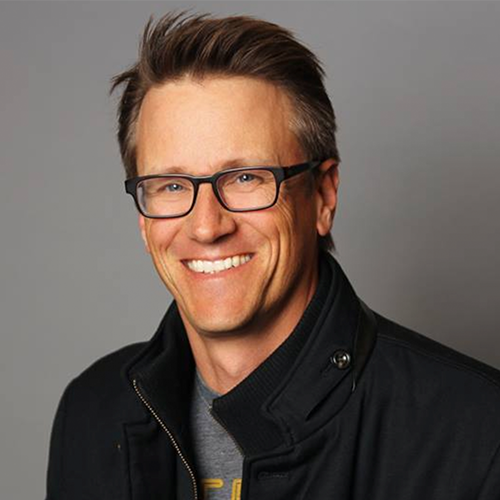
David Osborn is a self-made multi-millionaire, serial entrepreneur, and author of New York Times bestseller Wealth Can’t Wait and Miracle Morning Millionaires. He has become a passionate educator, sharing with candor his journey to financial freedom and the well-cultivated methodologies that helped him get there. Shortly after entering Corporate America, David quit his job and sold all his belongings, embarking on a two-year hitchhike around the world. He returned home jobless and penniless, but with a hunger for success. He channeled his motivation into the world of real estate, yielding phenomenal results. Today, David has built one of the top real estate brokerages in the world with more than 5,000 agents and annual sales volume exceeding $12 billion per year. He has also founded over 50 companies with at least 25 that are ongoing profitable concerns. David’s continued success allows him freedom to pour time into his priorities: being the best father and husband to his wonderful family, giving back to others, and teaching people how to achieve success so they, too, can live a life of abundance.
This is the Athletics of business podcast, episode 17.
Welcome to the Athletics of Business, a podcast about how the traits and behaviors of elite athletes and remarkable business leaders frequently intersect. The real stories and hard lessons to help you level up your leadership and performance. Now your host, Ed Molitor.
Welcome to the Athletics of Business podcast. I'm Ed Molitor, CEO of the Molitor Group and your host. We have an extremely special guest today and today's special guest is David Osborne. David is a self made multimillionaire serial entrepreneur and author of New York Times bestsellers Wealth Can't Wait and Miracle Morning Millionaires. He has become a passionate educator, sharing with Kander his journey to financial freedom and the well cultivated methodologies that helped him get there. Shortly after entering corporate America, David quit his job and sold all his belongings, embarking on an amazing two year hitchhike around the world. He returned home jobless and penniless, but with a hunger for success. He channeled his motivation into the world of real estate, yielding phenomenal results.
Today, David has built one of the top real estate brokerages in the world with more than 5,000 agents and annual sales volume exceeding $12 billion per year. He has also founded over 50 companies with at least 25 that are ongoing profitable concerns. David's continued success allows him freedom to pour time into his priorities. Being the best father and husband to his wonderful family, giving back to others and teaching people how to achieve success so they too can live a life of abundance. David, thank you so much for joining us today on the Athletics of Business podcast. I am pumped, I'm excited and I'm humbled to have you on today. How are we doing, Ed?
It's great to be with you my friend. I'm looking forward to it.
There is so much to get to with so little time, so let's jump right in. I want to thank you for sharing what you're about to share here today. If we could talk about your journey and how you got to where you are right now, because it is as interesting of a story as I have heard in a long time.
Sure, my dad was a hired killer. He was a Green Beret colonel. He used to call himself a retired killer once he was out. And that meant he was in counterterrorism. He was behind enemy lines in Vietnam. He went to Afghanistan, he went to Angola. He had quite the background. He was a soldier through and through. Seven generations of soldiers in my family fought in every war up until the Gulf War, which is when my generation came along and I decided not to go. My mother was a real estate agent and she was a housewife until she got into real estate. And that was when I was 14 years old. Until then she just stayed at home and looked after us. I moved around the world a lot as a kid. My dad was based all over Germany and England.
I didn't get to America until I was 14 years old. Then he retired. He was originally from San Antonio and we moved to Austin, Texas. Yeah, go ahead.
No, no, I was going to ask you. I was going to try and get you to pause at your time at the boarding school in England and if you could tell us about Dirt Perry.
Sure. Gosh, you have done your research. So one of my dad's decisions was to send me to an all boys boarding school in England from age 7 to 13. And it was like a military school. We had to wear a uniform, we had to make our bed shine. Our shoes had inspections and stuff like that. It was very regimented. It also had corporal punishment, something kids would be shocked at today. And if we misbehave, we got spanked with a slipper. And the slipper was called Dirty Harry. It was actually a size 17 training shoe trainer we called them back then.
Right.
And yeah, the most you could get was six of the best.
Right.
And I certainly had a black and blue bum several times. That's the English term for a. For a butt. We called him a bum. So, yeah, I got smacked quite a few times and probably deserved it.
So what year was that when all of that took place?
Oh, that would be 70, I believe. 70? Yeah. I got out of that school at age in 1970. So that was legal back then. It was a long time ago.
I feel you there. I was brought up and raised in the Catholic school system. So you tell stories, but so you move back to Austin, Texas, where it's a whole different world. Right. Your dad's retired. It's a whole different world. What was it like getting into the system, so to speak, of the United States and the school system and your view on how things should go?
So it was crazy for me. I came from, I think we had two half hour periods a day of free time in that English system and we never got to go home. We were at school 60 to 70% of the year, three terms in England, no big summer vacation and only allowed two weekends each term to go see your folks. So I come America and I'm thrown into American schools and I'm like, really? Six hours of class, that's all you got?
That's it.
And then free time.
Right.
My folks originally sent me to a boarding school in Austin, and I rebelled a lot. I had a really hard time in staying in the lines at school. I was. My dad was kind of a. I was afraid of my dad, but nobody else. He ran our house like a drill sergeant. And he was definitely a military guy. And so when I'd get to school and I would kind of talk back a little bit, the teachers didn't have that level of authority. And so that encouraged me. I was kind of a rebel without a clue. I'm not really proud of that. I certainly hope my kids don't go through it. But it ended up asking. You know, three schools asked me to leave. Not quite the same as getting kicked out, I guess, but maybe it is.
And the two of them let me finish the semester. And one of them just sent me home in the middle of the year and said, he's not a fit for our school. And I think it was just because I was a. In private schools, which my dad and mom believed in sacrificing for us and spending for what they thought were better schools. So it's easier to get removed from a private school. And then secondly, I was just. I just had a little attitude, a little chip on my shoulder, and I didn't really know how to contain that. So I rebelled against everybody, often with no reason. And I also thought the school system here was really easy. I mean, I took Latin and French from age 7, and in spite of all my troubles, I still graduated at age 17.
I had 22 hours of advanced placement with a 3.64, and I ended up going to the University of Texas. So in spite of all those. Those troubles, I still had a good education to rely on, thanks to my parents sending me to that English school early. And then I got the one saving grace, I guess for me is that I worked. I worked in the summers and I loved working. I worked construction. First I was a bagger in a grocery store, and then I started a lawn mowing business. I really enjoyed working. I enjoyed getting stuff done from a young age. I made $20,000 as a 17 year old living at home mowing yards.
You were loaded.
I was loaded. Man, that's a lot of money for a 17 year old. I didn't. I didn't pay taxes. I didn't do it because I was a criminal. I didn't even really know you were supposed to pay stats. Tax, taxes. I don't think my folks thought I was gonna make that much money. So it was all cash and, you know, it was $20,000. No rent, no meal and edge. You know, all I had to pay for was my trucks. I ended up having three trucks working for me and three different crews. It was fun.
What was that like? What was that like running your own business at that age?
It was crazy. I mean, everything in hindsight looks wonderful, but when I really think of what it was like, it was chaos. I didn't know what I was doing. I didn't really know how to lead people. I certainly didn't know how to hire people. One of the guys stole my truck and all my tools that I hired. I knew how to do a good job myself, but I didn't necessarily know how to scale the business. So it was fun and it was challenging. One of my guys did a hit and run on a car and I had to go find the car that he hit, help him turn himself back in. Because I, of course they got his driver's license number. I mean, his license, he's like, yeah, but I just bought this car. I haven't transferred it.
I'm like, man, they are going to connect threads, dude, you're way better to go walk into this trouble. And that's one thing I got too from my dad is he always taught me to walk into trouble. So if I got in trouble, I would walk right in and said, yes, I did it, I apologize and own up to it. And I guess I helped that kid out. It was like babysitting. But I also was a baby, so I was a baby, babysitting babies. And when I got done with it, I was. My dad said college marines are out of the house and I wanted to run my lawn mowing company for a year and keep building it. But he basically said, you got three choices. So I decided to go to college and to get revenge on my dad. I failed every class.
How did you do in the social life though?
You know, I was a terror, man. Again, I was a mess. Like, I think also being in an all boys school when I got to America and there was all this, there was girls around and there was, you know, more access to illegal substances and beer. And I just went a little crazy. And I think I was crazy in college. And so, yeah, I had a very active social life again that I, if I could craft the life for my kids, I wouldn't want them to live the way I did. It was the same level of kind of over crazy that I was pursuing. But I got it all out of my system. So I'm Glad I did it. But I wouldn't want other kids to necessarily go through the craziness that I did at that time.
I, I got a girl that was a couple of years ahead of me pregnant in school and I have a beautiful 31 year old daughter because of that. And we have a great relationship today. But it wasn't the ideal situation to have happen and it's not what you would wish on anybody. Again, I don't see it as much today. The kids seem more sensible, they seem maybe a little bit lower aggression and I don't know that's good either. But I remember being described one time as like a rocket ship without a pilot. And I think that was a very good description of me. Like a firework just shooting all over the sky. And a lot of that was in reaction to that upbring, moving all the time. And also being a little bit of a smaller kid.
I think I had a chip on my shoulder for that reason. I didn't have sports as an outlet. I wished I was a better athlete. They put me out there and I just wasn't that good. And I tried hard, I just wasn't that good. So all of that annoyed me too. So I had to go through all of these painful experiences that I think kind of formed me but I wouldn't necessarily wish on my kids. Like I keep saying.
But here's the thing. Through all those times in college though you continue to work, I mean you've always been a worker. Can you talk a little bit about that?
Even in college I worked at a floppy disk store and I was a really good employee. Like I was, yeah, we used to rent out video games and I've just always liked the joy of work. I never understood school later, now I do, but I didn't then, but I understood like, okay, I do a job, I get paid. I really understood that. And the better I do, the more I'm going to get paid. I loved that from an early age. It gave me a sense of freedom, it gave me a sense of power because I got money in my wallet, I could go do stuff. I was empowered and so I was a good worker. I wish I'd applied that to school. But I wasn't a good student then.
But once I got into the business world, I became the best student you'll ever see. In fact, I would say today I'm one of the best students of life of anybody I know. I work harder at learning and being smarter. I'm reading books all the time. I'm listening to podcasts like yours. So today I'm a massive student of life. I just didn't get it in college.
Well, and I heard you say something that was really interesting to me, that the thing in college they're trying to teach you to do is they're trying to teach you how to learn. And do you think subconsciously that may have impacted your. Where you're at nowadays being a continuous learner and having a learner mindset?
You know, that's what I say is a kid said to me one time, a high school kid, everything they're teaching me, I won't ever use in life. And I said, yeah, that's true, but what you're learning is how to learn. Like, I. I meet guys today that have, like, finance degrees and they can do stuff that I wish I could do, analyzing a property because I didn't take the time to learn how to learn, and it becomes second nature to them. And so I don't know what college did for me other than show me, you know, if I had a good teacher, I did pretty well in those classes, one that I liked and related to mainly because I wanted to bond with the teacher. So I was good that way. But.
But I don't know what it created for me other than I don't even know if kids have to go to college today. Like, I look at my kids and I'm like, do you need to go to college? It depends if you want to be a real estate investor like me, maybe not, right? If you want to be a. If you want to be the next technician that builds iPhones, heck yeah, you got to go to college. If you want to be a doctor, of course you got to go to college. So. So, yeah, the learning, the love of learning really came much more when I saw the practical benefit of learning something applied to life.
So when I got into sales and I learned a script and the script made me a more effective salesperson, I was like, w. Learning scripts makes me better at my job. When I ran a business and I learned how to set up a correct business plan and I got better results because of that business plan, or I learned to set correct actions and goal set and have a way of moving forward and became an avid goal setter, and I got better results because of that. Really, for me, I had to see evidence that the learning was benefiting my life for me to become an avid learner. And in college, unfortunately, I never saw that. And when I see these kids, I love them.
I'm so impressed when you'll see a kid who's like 19 years old, like, I'm going to go be an ergonomic engineer. I'm committed to that path and these are the classes I have to take. I just wasn't that kid. I just knew I wanted to make money, I knew I wanted to work hard, and I didn't know quite where I fit in the world. But fortunately, I found it.
Well, before you found it, though, let's talk about that first job you had out of college.
So my first job out of college was door to door sales for a computer company. So I'd have to walk into a skyscraper, you know, and walk right by the no solicitation sign, go right up to the girl in the front desk. I had a second to make her happy or him happy. And wow, what a pretty dress you have. Hey, who's in charge of purchasing here? Like, it was a battleground by fire. And it was a great. You meet people that were Xerox, copier salespeople or anybody that had to sell door to door, Cutco or anything like that. And it's such a training ground, such a proving ground because it's so hard. And you learn to overcome a lot of fears and get your energy up every day, right? So that job was good.
I was one of the top salespeople every month in that company. And then, and then my boss, who was 10 years older than me and a lady, she wanted more for me than just sales. She wanted my body as well, which was a difficult situation and kind of discouraging, and especially since, you know, I guess today would be the me, him too movement. But back then, it was just life. It was just something I had to deal with. It wasn't comfortable. And after working there for a year, I decided to quit that job and move. And it really was a blessing. Like so many things, like when you're forced out, it becomes a blessing because my best friend was one year behind me and his family had a history of traveling around the world.
And he said he'd asked me to go around the world. I said, no, man, I'm getting on with my career. I want to go make money. But because this experience was so uncomfortable and so unpleasant that when I rejected this woman's advances, she kind of applied so much pressure to me at work, like the classic textbook case of wrong abuse of power. So, you know, I said, yeah, I'll go hitchhike around the world with you. I sold my car, sold all my possessions, and I went hitchhiking around. I moved in with my folks the last few months so I could save up every penny, stop paying rent, and I sold. I went around the world. I had $10,000 to my name. The ticket cost 3,000, and I had seven grand for one year hitchhiking around the world. And it was epic. It was amazing.
How long did you guys do that for?
Two years and three months. So their original term was one year. I got separated from my buddy about halfway around. I fell in love and I extended out the trip for two years and three months. It was really a long and amazing time. And in hindsight, I'm kind of flabbergasted at it because again, if I look back at myself, I was a dorky, kind of goofy kid. I was definitely not the cool kid. I was definitely not Ferris Bueller from Ferris Bueller's Day Off. I was just this kind of. I was just nervous energy and I would just move really fast and do a lot of crazy stuff and never felt fully comfortable in my own skin. But in spite of all that, I had just incredible adventures. And I'm very grateful that I did that, and I'm grateful that I.
The first job didn't work out because of that.
So how did this all lead to your incredible real estate career? You get back from your world travels, you're back home, and then what happens?
So I get back home and I. First off, I went and got another job in high tech sales. And I'm filling out all their paperwork and one of their contracts says anything I thought of, dreamed of, imagined at work or at home or at night, belong to the company. And it was an intellectual property agreement and I just couldn't sign it. I looked at it, I read it a couple times. Keep in mind, I'd hitchhiked around the world for two years, right? So I just stood up and I quit the job. I'd gotten through all the interviews. I've been hired, it was by Novell Systems. And then I quit the job right then and there. And I felt elated for 24 hours. And then I realized I was minus $1500 net worth.
My credit card would run up 1500 bucks on this trip, and I had no money and no job. My mom was a realtor and I never thought I'd get into real estate. And she just said to me, hey, hon, why don't you come work for me for temporarily while you look for a job? And I said, okay, mom, but only while I look for a real job. Because real estate is not A real job. So I joined her. And I bet that made her feel.
Real good too, because she was working her lips off and you know, and all of a sudden you call it not a real job.
You know, she was. My folks are awesome. My mom especially. My mom's my hero, my mentor. And my mom. Everyone has heroes, everyone has mentors and everyone has moms. But I got all three in one. And my dad was amazing too. He's dead now, God rest his soul, but he was a killer. And that came through clear and clear. But my mom, she brought me on board and she's very patient. And we started selling and I took out a client who was an old buddy and he bought a house. I made five grand. I thought, man, this is easy. I like this a lot. And so I went all in. And it was great too, that my mom had a great reputation. She was a woman of integrity. And she wasn't really business minded. Didn't have a really business minded thing.
Like, so she didn't follow up well. She didn't have systems. She just created incredible loyalty with her work ethic and her relationship skills. So I was able to kind of build some systems and hire some people. And I had great mentors at the company. Gary Keller, who's a billionaire today, ran the company. And I think, you know, I'd be in a class with Gary and 10 other people today. He teaches a room full of 7,000 to 10,000 people. But I had all this one one time with a future billionaire, which was just a blessing. But I was able to build this business around her. And in three years, we became the number one sales team in all of the company.
That is awesome.
And it was. Yeah, and it was. We weren't that big a company then. So today the number one guys are like way bigger than we ever were. But it was super fun. And then I remember after three years, I was driving down the same street for the third time on the same day saying the same thing to the third set of clients for that day. And I was like, man, there's got to be something more than this. The company was also expanding aggressively then. I think when I joined, there's about 800 people. Today, there's 180,000 people. And so I kind of put, you know, I was like, okay, I put my hand up. I'm like, I'd like to go do something else. And, you know, the CEO of the company, Mo Anderson, at the time took an interest in me.
Another great mentor in my life. I've had, you Know Mark Willis, Gary Keller, so many. She said to me, well, why don't you go up into North Texas, New Mexico? So my folks that invested in the North Texas region, again, what people don't understand, because today Keller Williams is a juggernaut. Back then, you couldn't give these things away. Nobody, you know, they weren't in demand. Everyone that bought them failed. It was just, it was like this unconquered territory. So I went up to Dallas with my folks money behind me. I still had, I think I had 35 grand in my name at that point, and a house. But we just started opening real estate offices and recruiting to Keller Williams. And that's what I did.
I was terrible at it at first, and my job was to sell franchises and to keep under my development schedule, I had to keep buying franchises. I was 29 years old. But I did it. I got very aggressive. I opened, I opened. I learned how to hire. Gary Keller at the same time was struggling with the growth of his company. So he hired some incredible consultants that came in and taught him the recruit select process, how to hire, how to train, how to motivate. And I got to be in the classes taught by these consultants with like 10 other people. Again, it's unheard of. Gary Keller would be a student just like me, or certainly was around the classes all the time. And so that class was like, this is where I began again, to learn the love of learning.
Because they taught your business is only as good as who you hire and how to run a budget and how to build an economic model and how to hold things accountable for rates of return. And all of this training was pouring into me exactly as I happened to be opening franchise after franchise. So after, over a period of time, as happens in life when you throw yourself all in. And really I threw myself all in. I remember my first franchise was losing 5,000amonth, and I had 35 grand on my name. So I had 7,000. I had seven months before I would go belly up. Now, I did have my folks behind me, but to be clear, my dad was a soldier, my mom was a realtor. We weren't rich. There wasn't a lot of money there. But we started to get some traction.
Keller Williams was a great company to be involved with. The model really worked. And as I kept buying these franchises, two things occurred. I got better at running them and I got better at selling them. So pretty soon I was able to build the number one region in all of Kent, Keller Williams. And because of that, I was able to Buy other master franchises. So I bought west side la. I bought North Florida with some partners. And then from there it just grew and became a very large enterprise. I had no idea it was going to be as big as it was. And then a few years ago there was an up and comer from inside the region and he and I merged and we became partners in our residential real estate practice.
Since they were the fourth largest real estate company in the U.S. according to real trends, we sell about over 10 billion a year in real estate, 37,000 transactions. So that's been quite the journey. And yeah, I feel very lucky to be here.
What do you attribute all your success to at such a young age? After all your experiences that you had, what was going on? When did the light bulb moment, besides taking your friend out and making your first $5,000 and realizing that this could be a pretty fun business, what was it you said, okay, if I do this? You know, you got with Gary Keller, which is amazing. I mean, you were there at the ground level because I don't, you know, you mentioned it, we kind of passed over it. Keller Williams was nothing back then like it is today. Out of curiosity, were you up in the Plano, Texas area, north of Dallas?
Okay, yeah, that's exactly where I was. I lived in Plano for 10 years.
So you got up there and when that just blew up. So how did you all of a sudden keep up your pace of learning and developing new skill sets with the growth of that area?
So I think you asked for a light bulb moment. There was a series of light bulb moments. I will tell you that three years into building this, I had a mini nervous breakdown. I couldn't handle the pressure of everything I was creating. I actually got shingles across my chest from stress. Age 31 or so I went to the doctor and they're like, wow, normally 50 year olds have this. I don't know why you have it at age 31. It was a recurrence of chickenpox, extremely painful, caused by stress. And literally during that process, I went to my investors and I said, hey, I'm resigning from this job. It's killing me. I'm not going to keep doing it, but I will find a replacement. I won't leave you guys hanging. And then in the meantime, I went and did a lot of personal work.
I think I was maybe 30, 31 right around there, which is a big time in a man's life. It's kind of when you get into adulthood in many ways. So during this deep work That I did. I learned a ton. And one of them was, if you treat everything as equal, then you will get poor results. But if you only focus on the significant few things to do, you'll get amazing results. Even though I knew this conceptually, people say, 80, 20 rule, yeah, do the most important stuff, you get all that. But when you literally have a rash on your chest from shingles and you're having a nervous breakdown, you can't handle the pressure, it really sinks in at a level I can hardly explain to you.
I came back from that after about six months of rebuilding myself, or maybe four months of rebuilding myself. While I was looking for my replacement, I took the advice that I'd learned. I only did the important stuff. Two things happened. One is, I got better results. And second one is I had more fun. So I literally found my replacement. It was me. And I started building from there. And that was a light bulb moment for me. And I remember an older mentor of mine said it was like you were Clark Kent. You went in the phone booth, and he came out as Superman. That's a very kind thing, him to say, but I definitely changed radically as a human being.
And we all have moments in our life where we get a little bit of clarity by something that happens or something that somebody says to us, and it just clicks, and we can't really explain it, you know? And I'll never forget in my life personally, I was going through a real challenging time, and a guy looked at me and said, hey, I get it. You did not choose to have this situation. And here I am thinking, like, he sucked me, and like, he's buying into my, you know, my emotions. Poor me. You know, this is. This is brutal. I didn't choose. And he says, but you do have a choice, what you do with it.
Yeah.
And all of a sudden, the responsibility is on me. But for you take a few months off, you take four months off, you do some personal work. When was just.
Just to be clear, I worked the whole time.
Not off. But you. You were very intentional about your personal growth, correct? That's an issue. I'm sorry. That's what I should say. So when was it? How were you able, though, to make that mind shift? Because I think, like you said, we all get it. We all understand the 80, 20. We all understand focus on the important. But how did you get to that place of getting outside your comfort zone, into the other side of fear and actually commit to doing it?
You know, I never quit on me. And one of the things I admire about myself, in spite of all my goofiness, is I got discouraged, I got down. But I never really quit on my potential, on who I was internally. So I remember saying to myself, why can't I do it like other people are doing it? Why not me? I took that into everything I did. And when I was having this kind of breakdown, I knew I needed a new path, and I just didn't know which way to go. And there's a saying, when the student is ready, the teacher appears. I really think that the number one thing I try to foster, even to this day, is awareness and willingness to learn and willingness to receive new information.
Honestly, it gets harder and harder as you get older because you've got it figured out. You know what works. You want to get set in your ways. But I was open to new information because I was open new information came. And because I kept trying new things, I was able to find out what worked. So, you know, I remember a multimillionaire said to me, my secret to success is writing down the seven things I want to do each day that are important and then just doing the most important three things. That simple. Just do the most important three things every single day. And most people don't do that. They waste time, you know, doing the laundry or doing, like, calling back. Somebody didn't really need to call. And once I started doing that as well, like, I was like, holy crap, man.
You can make amazing things happen if you just do the most important stuff. And that's all. You can actually blow off so much stuff. And after I learned all this, I remember my electricity got shut off one day because I just stopped paying my bills. And I was like, wow, I got to fix that. And then I learned about delegating. So I hired a bookkeeper to come once a week to my house. 35 bucks an hour. That's all they charge. And they'd pay all my bills and give me a bank statement. I'd be like, wow, that just took a whole lot of stress off my life. Hired someone to cut my yard, which, you know, I used to be a lawn cutter, so I should have at least done that earlier.
I hired somebody clean my house, and I just learned how to delegate to other people. And all of this was training. And if you do what you do best and you let other people do what they do best, your life will grow amazingly. And I tell my wife, to this day, I'm like, honey, don't expect me to do any manual labor. If I do anything around the house, you should be surprised and grateful because I'm not going to do a lot of it. And fortunately for me, she's kind of a tomboy and she's really good at hanging pictures and, you know, putting up shutters and whatever needs to be done, but I'm not doing it. And if. And I told her, that's the deal. I'll pay for you to have anything done.
But I want to spend my energy building my businesses and doing what I do best. And that's what I do. And it's been just. It's just game changing when you focus on your agenda for your life. And I don't know any successful people that don't do that.
Let me ask you a quick question, because a lot of this speaks to what I'm about to ask you. Think and grow Rich. What type of impact did that have on your career and your personal life as well?
Yeah. So people always ask your favorite three books. And Think and Grow Rich is always one of my books. And I got it early again, like. And when I say early to me was right after college. I really didn't do anything with my formal education. But the idea of a mastermind, the idea that all things are possible, anything that could be conceived in the mind can be achieved. The idea of think and then grow rich, the idea of imagining it and seeing it ahead of yourself. That book was hugely influential in my life and I love it. And I've followed it religiously, so much so that it's deep in me. And sometimes, like when I wrote my book Wealth Can't Wait, there's a lot of think and grow rich in it.
And I didn't even realize that until I go back and read it and compare it to, you know, to the actual original teachings of Napoleon Hill. What an amazing book that one is.
It's. So here's my question for you. Did you just read it or were you in a group? Did you study it? Did you do a mastermind wrapped around it? Because I had read it a couple times and I thought I got it right. I thought I understood it and I had my arms around it. And then I did a deep dive. And I'm going to tell you what it was. It was like I was reading a different book.
Yeah, I probably read it eight times. A guy gave it to me, I remember, and I was like, holy Toledo, this is it. And I underwrote it and underlined it and then I listened to it on audio tape when, you know, back then it was actual tapes that we had to carry around. I don't know, you know. And then I got into masterminding. And I got into masterminding because a guy called Fred Gross taught a masterminding class top agents. And one of the things how he would lead into his program is he'd say at a gnar conference, he'd say, close your eyes and you take you through a guided meditation into the future and you meet yourself and what do you learn from yourself? Which in a way is auto suggestion or the power of the subconscious mind.
So I got into that mastermind group and for six years I was in a mastermind group where all we focused on was the subconscious mind and a lot of the stuff from. From Think and grow Rich. I can't say that I got into a group where we just went into that book. But like anything in life, success has a language. And if you get to be successful. The reason I could come from many different walks of life of all my peers and be in our gobundance tribe and we all have this commonality is because the language of success is a common language. And Think and grow Rich is really the first ever covenant to that language or the first ever set of commandments. So, you know, it bleeds through all things Tony Robbins. I was a big Tony Robbins guy when I was younger.
Walked on fire, broke wood and all of that. And a ton of Tony Robbins is similar to Think and grow Rich. So I didn't specifically mastermind on the book, but it permeates everything around us.
Absolutely. Talk a little bit about gobundance if you will.
Gobundance is a tribe for healthy, wealthy, generous men that choose to live epic lives. My mastermind I talked about, we had two. We were told to find someone to hold you accountable. So I had a guy, Pat Hybe, and helped me at Accountable from Maryland, and a guy, Tim Rhode, held me accountable from California. And the three of us would hold each other accountable in all these areas. Health, wealth, relationship, being the best dad and the best husband you could be, contribution, giving back money, bucket list adventures so we can have an exciting and amazing life. And we wrapped all of that in extreme accountability. And we'd done this for years, like eight plus years, me and Pat, probably 12 or 14 years. And honestly, were just getting sick of each other. We were like, I've heard every story you've ever got to tell.
And so we said, well, why don't we invite like eight other people and see if they like our format to our group? And they came to my house and Steamboat, I think in 2013. And we started a movement and they loved it. And so we expanded. The next year we had 25 members, the next year 50. Now we've got about 180 members. And it's all people that own their own business. You have to have a certain, you know, net worth to be in it, just so that we have common conversations. There are apprentice programs and different things for people that are aspiring. And today it's a tribe of healthy, wealthy, generous men. And we focus on authentic relationships. Best father, best husband you can be. Genuine contribution, finding a cause to give back on financial freedom, age defying health and bucket list adventures.
And this year I went with the group to Japan and we had an incredible vacation in Japan. The year before that went I think to Vietnam or maybe it was somewhere South Africa was them. I didn't go that one year. It's the only one I've ever missed. The year before Vietnam we rode motorcycles, we slept the night in a cave. We just did incredible things. And we do this while talking business, while talking about our life plans, while sharing our struggles. And it's an opportunity for men to come together with men and mastermind, just like Napoleon Hill said, and have accountability and have authenticity and have transparency with people they respect and can learn from.
And that's very powerful. And can we go through. So you have abundant mindset, right? Can we talk a little bit about the abundant versus scarcity mindset and how important that is to you?
Yeah, I mean, you've got to think that. I love the term pronoid. There's a paranoid who thinks the world's out to get them. A pronoit thinks the world is out to help them. And I think you've got to develop that positive mindset. You know, for me, abundant thinking is giving away money. For instance, I gave away a large amount of money. I don't try to hoard it or keep it to myself. I try to tip people. Well, abundant is that things are. There's plenty of resources for everybody. You don't have to take away from anybody for you to win. And so if you have that mindset, I think you create opportunities and things fall to you in a positive way. It's like being lucky. I always say to people, I'm lucky. I've been incredibly lucky. I joined Keller Williams. That was lucky.
I got back to America, that was lucky. I got into real estate right before a 12 year boom. That was lucky. In the downturn, I was able to buy a bunch of distressed assets that did really? Well, that was lucky. I've met great mentors. I was taught by a billionaire. That was lucky. And I keep reinforcing that concept because given a choice, would you rather be lucky or unlucky? So whatever you say you are first in the mind and then in life is how things go. So abundance, luck, all those things, you want to have all of that, somebody's got to be lucky. So why not you Vision.
How important is it to have a compelling vision?
It's the most important thing for me. I mean, once you realize you're going to get almost anything you want in life, if you focus on it and are willing to work for it, then all the thing that matters is crafting a really good vision. So I spend a lot of time doing a five year vision. I have it with me right here in my. I got my red book and somewhere I got my orange book and if I flipped it to the back of the page it would say, hey, it's 2022 and here's what my life looks like in 2022. And I always start with my family, my kids, my wife, I kind of imagine their ages, what my life looks like. You want to create your own destiny, you want to co architect your life, you want to co author your life.
So your goal in life is to live the life of your dreams. And if you don't choose any dreams, then you get what you get and you don't get to throw a fit. If you want to actively participate in life, then you need to have a vision for where you want to go. And I said earlier that all successful people are goal settings and they're purposeful and most of them have a vision for their lives. And for me, what helped in that Ed, is I really building my businesses, the skill set I did that didn't help me be a great husband. You'll be very surprised that to be a great husband you can't just say to your wife, hey, let me tell you exactly what's going to happen today. This is your goal, this is your objective. That's not how it works.
It's like it totally. And to be a great father, the awareness, the willingness to learn, the growth mindset that we talked about earlier has helped me have the best relationship I've got with my wife right now and our entire relationship really be close to my kids and just constantly work on that. And there are times I fall off, like if I get really busy at work and I'm 10 or 12 days go by and I'm working these Long days. But my awareness is up. Like, what's more important? More work or being a good dad? And I remember that. So I fall back into my kids, and my son and I just had an incredible weekend, and he's following me all around the house now. And I can tell it's good. It means I've done something right.
And the other thing I do is book a vacation every quarter with my family. So we do at least four killer family vacations a year. It doesn't have to be expensive, but there's four times we're just with the family and concentrating on each other. And all of that comes from the growth mindset. Because, by the way, that's not what work is. Right. Work is all in all the time to try to make stuff happen and get to results. But once you have a family, you got to balance that. Health is the same way. You have to put the time into the health. I bruised my ribs right now, so I'm really limited on my workouts, and it's driving me crazy. But I didn't used to work out at all. I built that into my life because that's what healthy, successful people do.
And all of this comes from awareness and having the ability to conceive of what the ideal life looks like, putting it into your vision, taking it from your vision into your goals, and then walking towards that. And it's quite easy if you're willing to do that. It sounds hard, but it's really not hard. Anyone can do it. A fool like me can do it. I got a 2.3 GPA, right? So if I can do it, anybody can do it. Doctor.
Hey, let's talk about your goals. I mean, you're an amazing goal setter and how that has evolved over the years. And I'm guessing in your red book, they're taped in the back along with your vision. You have your goals in there as well.
Actually, my orange book, but I don't have.
Okay, that was my next guest. The orange book. I'm fascinated, and I love with how you have your goals broken down into different areas of your life. Can you do me a huge favor? Do us a huge favor and share that with us?
Yeah, sir. And by the way, if your guests want to listen to go to thegoaltemplate.com I'll give them a copy of my blank goal sheet. So. So thegoaltemplate.com and that will be on.
We'll put that on your show notes.
Okay, perfect. And so I have what I call the eight gardens of life and because I don't have it in front of me, there's a chance I'll forget one of them. But I always start with family relationships. I put that right at the top. Why? Because being a great husband and a great father is so important to me and it's something that I can sacrifice. Honestly. I like work like a lot of a type personalities and so I make sure I put that up front. Date nights 24 with my wife. 4 daddy daughter dinners where I take my 9 year old and we just have a dinner. Like I get to treat her like a queen. Four family vacations. My wife and I doing deep work five times which would be a. We're doing a seminar on love right now.
We read a book together. We're reading Daring Greatly by Renee Brown which is a book about not using shame to raise your children's great book. Then secondly I move on down to contribution giving back. I make sure I'm giving away a certain percentage of my income or a certain amount of money. I make sure that I'm volunteering on a couple boards constantly being on the lookout for areas that I can help other people and make a difference for others. The third thing I put down then would be my health and that would be working out a certain number of times. Yoga eating right. We have an organic chef that comes cooks for us now and cooks us healthy food. So I'm trying to make health be easy and the way to do that is to make, you know, keep a healthy environment.
So that's important to me. I've got a lot of work in that.
How many workouts a year?
240 is what I aim for. I'm behind this year so I'm at 170 through October. I think I'm at 175 right now. So I've got a lot of work to do if I'm going to make it. It's hard to do with bad ribs so I literally can't do anything right now. I'm three weeks into this. It should be healed in another couple weeks. I did try early, too early and I re aggravated it so I'm definitely going to wait on that. So I may have to do a lot of two a days. A lot of times I'm ripped at the end of December because I've been doing two a days to make up for my goal. But I've also dialed that back a little bit getting older. I'm trying to keep the injuries to a minimum.
So going forward from there then it would be environment tribe. So who you hang out with, what's your environment look like? I don't want a cluttered environment. I want a car that I love. I didn't get this at first. I used to be kind of cheap and had a bare spartan house. But I've come to realize that your environment matters. The shirts you wear matter. Everything around you either inspires you or takes away from you. Like I see your little kid skis in the background and makes me want to go ski with my kid. That's all part of environment, right? So that reminds me. Reminds me of a beautiful experience I have with my kid, which is skiing. So all of that, like, to me is, why not recreate positive triggers in every aspect of your life? Keep your car clean.
If you don't like to clean it, have someone clean it for you. Keep your house clean, keep your food, your kitchen uncluttered. So that's the environment. And then the tribe is. One of my goals this year is I try to meet a billionaire every year and ask him advice. I've been trying to meet Peter Thiel for a while because I thought One to many. What was his book? The Power of one or One to Many? I can't remember, but it was a great book. And who else did I want to meet? I want to meet Jeff Bezos. One day would be awesome. So I just got the list of characters I'd like to meet, and that's environment tribe. And then you've got lifestyle adventure. And I'm lucky because I hitchhiked around the world, so I got this.
But if you're not indulging yourself in amazing adventures on a regular basis, you're really telling your spirit that you don't need a lot of resources. That's my belief. And I'm not suggesting you be stupid and spend all your money, but I'm suggesting that if you always want to go to Italy and you haven't gone and it's been on your wish list for five or ten years, for crying out loud, just book the trip and go. It'll never be the perfect time. Too many people are waiting to live life. And it doesn't have to be a lot of money to throw your kids in the car and drive to go see the Grand Canyon. I mean, there's so many things you can do, but if you're not doing them, you're preventing energy from circulating through your body. So bucket list adventures.
Lifestyle is just doing really cool stuff. Intellectual property and education is another one. I want to read 30 books a year, by the way. I've brought that down every year. Used to be 50. I don't know what it is about getting older, but I love reading and I'm probably through 20 right now. So I'm gonna have to do a little bit of work to get the last ones done in the last two months. But fortunately the Christmas holidays is a slow good time to read. So that's five. Then there's material financial, which is basically, you know, how much money I'm going to save, what I'm going to invest it in. And then the whole other side of my sheet is businesses and the different businesses I own. I own a tremendous amount of different little startups that I've got going.
Probably I need to do a better job of codifying this, but it's probably over 50 income generating businesses right now of various types and causes. Some take a lot of my time, some take very little of my time. And I generally set goals for all the major ones.
What timeframe on your goals are we talking about?
One year. Everything is a one year. And I review quarterly. So in my book, and I wish I brought it, but I don't have it every quarter I print it out, updated and I move it forward. Then I print it out, updated and I move it forward. That's why I happen to know that I've done 174 workouts. Because I just finished October and I knew that I was at 153 before October and I did 21 workouts in October. So I can keep all this stuff in my head. And my favorite goal, by the way, is to review my goals 50 times. So I review it constantly.
So that's my question. You say Review my goal 50 times. Are you talking per day or are you talking week? Are you talking monthly?
I'm just saying once a week.
Once a week.
I usually do it about 60 times. And you're thinking, well, that's not very much. But the reality is sometimes it's three times in a week. But man, reading anything 50 times is boring. Your goals better inspire you because if you're going to read it 50 times in a year, they better be pretty aspirational goals. I highlight things when I accomplish them so it gets easier and easier towards the end of the year. But as an example, I mean, when I went to Japan for 10 days this year, I didn't reread my goals once. I was busy living life to the high level. So the reason it's only 50 times. And I would say if you're younger it should be every day. I used to post my goals on the wall of my mirror. I'd be brushing my teeth, looking at my goals.
But today I'm really pretty good at getting what I choose to go after. And it's just a lifetime of discipline and really a lifetime of evidence that setting goals and going after them works has caused me to become extremely disciplined as a highly undisciplined person. Like, I am not that guy that woke up every day and said, hey, I'm going to go do my homework, for instance, obviously. But what I found is the evidence is when I review my goals on a regular basis, I get an incredible abundance and bounty in my life. And that's what I'm going after. If it wasn't for my goal to set to be a great father and a great husband, I could easily be divorced. Like anyone. I've had those moments. I've been with my wife now 17 years.
I've had those moments where our lives where we're just pulling apart and it could have gone either way. Like, I think almost every listener can relate to. But because I had on my goal be a great husband. I read the books on how to be a better husband. I booked the trips, and I, you know, I had my wife read a book with me if she was willing. I invited her to and just made sure I spent time having the date nights. And that's kind of brought us back together. So in spite of all the troubles and the frictions we have as married couples, I've been able to kind of pull it back together. And it's a constant work. But all of that goes back to my goals and my awareness.
And if I didn't have those goals, yeah, I just don't think I'd be as good at anything as I am.
So reading. What are you reading right now?
So right now I'm reading Daring Greatly by Renee Brown, which is all about vulnerability. And she has a killer YouTube video, so if you Google that, you'll see it. It's about being open and vulnerable, and it's really meaningful to me. I am reading. Let's see. I'd have to look up on my Kindle. Oh, I'm reading a book called Blitzscale, which I really enjoy. It's a business book, and it's all about how these companies show up today, like the Amazons and the Airbnb's, and they never make money. They get a little something that works and they raise money, grow, Raise money, grow. Raise money, grow, raise money, grow. They Never think about making money till way at the end, once they've dominated the marketplace. And for me, I'm a sticks and bricks guy, and I like to make profit on everything I do.
And it's so contrary to everything I've ever done. And yet, obviously, you look around and you see the Jeff Bezos and you see the Peter Deals and you see the Elon Musk, and you're like, it obviously works. It's obviously a great way to build a lot of wealth. I'm really enjoying it from a pure, like, rock my brain kind of perspective. I think one of the things in life that happens is our minds get rigid, and you've got to try to keep it flexible. And one way to get it flexible is to read something totally contrary to your experience of life. And this book is definitely that. It's a good book. Blitzscaling.
And so those two books, Outstanding. And you mentioned that you have lowered the number of how many books you read per year. I'm curious, was it hard for you to keep up with your reading as you wrote your two books?
Oh, my gosh, yeah. The first book took me seven years to write, and it cost me $700,000 with my co author. I was so stubborn on my first book, Wealth Can't Wait, that I wanted to put every word in myself. And, you know, some of it was pretty good, but a lot of it was just crap. I mean, it's written, like, by a C student, you know, so there would be good ideas. And it just. I got this editors. You have to hire these editors. They're like, it's too little, too little. And so like, okay, it's too much. And then they had to edit it down, and it took forever. And, yes, that affected me in so many different ways. It was so frustrating, and I'm so glad I did it. And then the set.
Let's talk about. Can we talk about that book for a quick second? Tell us a little bit about that.
So it really probably should have been five books, but it's everything I've learned on how to be successful in life and with Paul Morris, my co author. And it's really five sections. And the first one is, life's just a choice. You just have to choose to build wealth. And if you chose to be healthy, you would be healthy. And if you eat right and you'd exercise and wealth is the same way. It's just a choice. It has to start with a choice. And then secondly, we talk about the mindset. Like, people are always like, well, why don't you get to the how? Well, the how doesn't matter if you don't have the mindset. You know, there are athletes all the time that get paid $50 million and then file for bankruptcy. Why? Because they didn't have the right mindset for wealth.
So we focus on that a lot. Then we get into the habits. Wealth is your life is really a reflection of your habits. So we get into the habits that build wealth and then help to take it to a whole new level. It's developing a business that creates wealth. And then the last section is on momentum, because once you get wealthy, it's about creating momentum around wealth and keeping it going. So it's a great book. I'm really proud of it. It has a ton of information on it. We get people who said their lives have been changed, but it really probably could have been five books.
Okay, and then the other book, I really want to dig into this one too for a second.
So my good friend Hal Elrod and I, our kids go to school together. He's the best selling author of the Miracle Morning. We wrote Miracle Morning Millionaires together. He has a series of books. I wanted to do one with him. So we did Miracle Morning Millionaires. And what I love about this book is Hal has the Savers, Silence, affirmation, visualization exercise, reading and scribing. I try to do that every morning. Once, you know, I was already doing a lot of it in different ways, but now I have it in a package called the Savers. And all we did is took the Savers and we focused them on wealth building. So in the silence, you know, I pray or meditate. The affirmations are, you know, today's going to be a great day. I'm going to meet some. I usually think of my appointments.
I imagine them going very well. Imagine being on your podcast and doing a great job for your listeners, being of service to the people that are on board. Then I'll visualize some things. Same thing. I'll see myself in the meeting with my team maybe, and seeing us having abundant meetings, see each member of the team enjoying and contributing to the group. All of this is like usually while I'm laying in bed beside my wife who's still sleeping at 5:30 in the morning. And what I did with the Savers is I just geared them towards building wealth. So the Savers are not necessarily for wealth, it's for how to have a more fulfilled life. But the Miracle Morning Millionaires is that. So if you're struggling in any way with getting going or starting your life or figuring out the basic habits of success.
I think the Miracle Morning Millionaires is such a great book anyway, so it's been an adventure. This one took seven months and seventy grand to write. That's how I multiplied my capabilities. So seven years, 700 grand, and then. And then seven months, $70,000.
Don't write the next one for so long. Dang it.
I'm already working on another one. It's part of gobundance. It's going to be amazing. I can't wait to finish it. So, yeah, intellectual property to me is a way of contribution. I'm not. So far I'm negative on that. Those businesses, I won't make the money back. I think the Miracle Morning Millionaire will pay for itself eventually. It'll be hard for wealth. Can't wait to make all of that back. We made back about 400 so far, so we're minus 300 so far. But it's still. It's a mountain decline, but I just enjoy it from a point of view. The reason I started writing is my dad got sick with cancer and he ended up dying from Agent Orange and things that, you know, he'd been around in the military. And I just thought, you know, he's taking his entire legacy with him. Like I've got.
He has a ton of funny stories. I'm not going to remember them all. Then I thought to myself, what could I do to leave a legacy? And that's the journey of writing my first book began. And today I want to keep doing it. I want to keep leaving a mark and leaving a legacy for my kids and their kids and. And if they're the only ones that read it'll be worthwhile.
Well, thank you for doing that. I mean, that is unbelievable. It's funny you say that. Leave a legacy for the kids. My father, who along with my mother was my big inspiration, every month he writes an email to my children on their birth date. So my daughter's 6, my son's 4. So every single month on their birth date, it pops up and I have a whole file put together. So it's just something that. That I think is very significant and very cool that you do.
Thanks, man. I enjoy it and hopefully makes a little difference with someone. There's, you know, more than currency or money is somebody sending an email saying, hey, I read your book and I'm so grateful you wrote it. And I've had lawyers making $700,000 a year write to me and say, man, I was Chasing the wrong cat. Like, I'm just trying to make money on my hourly billing. What I realized from reading your book is I need to invest in real estate. Thanks for giving me the path. And then I've had other people read me just recently. Guys said, hey, I've been doing the savers now for 60 days. It's changed my life. Thank you, David and Hal, for writing the Miracle Morning Millionaires. And that's worth more than currency.
That's very cool. So as we wrap up here, the gold template.com, the goaltemplate.com wealth can't wait. Miracle Morning Millionaires. We'll put all the links to all those in the show notes for you.
And then just David Osborne.com, that's my personal website.
And then Davidosborne.com you can find more there. And I cannot thank you enough. This has been an absolute incredible conversation. I appreciate your time. I appreciate all the value that you add to our listeners.